Bun B and Statik Selektah are back with TrillStatik 5, the latest chapter in their annual live-recorded series. This time they’re setting up shop in Miami, building the album from the ground up right on the live stream, just like they do every year.
The formula stays true: Bun B’s classic Southern delivery over Statik’s signature boom-bap production, creating that easy, natural chemistry fans expect. As always, a lineup of guests will drop in throughout the session — no advance announcements, everyone gets revealed as they walk into the studio.
Simple, raw, and made in real time. TrillStatik 5 continues the tradition with a new city, new vibes, and the same spirit that makes these sessions special.
The third studio album from Bradford’s New Model Army, The Ghost of Cain is a definitive landmark of 80s alternative rock and post-punk. Produced by the legendary Glyn Johns, the record traded the band's earlier raw punk edge for a more expansive, brooding sound. It is most famous for the blistering anthem "51st State," a scathing critique of American influence on British culture. Reissued on Black Vinyl
Recognised as the first release to showcase the distinctive sound that would become synonymous with The Stone Roses, Sally Cinnamon remains a pivotal moment in the band’s early catalogue. This EP brings together the 12” single mix, the full collection of B-sides, and additional live recordings, presenting these tracks in a definitive configuration for collectors and fans. The vinyl edition is pressed on heavyweight 180g cream vinyl and produced to the highest audiophile standards. It has been half-speed mastered for enhanced clarity and depth, and Direct Metal Mastered (DMM) to deliver exceptional sound quality. Each record is housed in a protective polypropylene inner sleeve, creating a premium collector-focused physical release. Alongside the vinyl edition, this release also marks the first ever CD pressing featuring this complete track configuration. The CD is manufactured using a black polycarbonate “vinyl effect” disc, giving it a distinctive appearance that complements the collectible nature of the release. Combining high-spec production with a historically significant recording, this package offers a premium catalogue release centred around one of the earliest and most recognisable recordings from The Stone Roses.
Bitter Honey is the new album by Eric Silverman. Produced in collaboration with Damien Lewis, the album finds Silverman leaving behind the acid-fried desert rock of 2023’s Stay In It for something far more lush and expansive—a collection of ten psychedelic rock, pop, and folk tracks inspired by Peter Gabriel, John Cale, and Jeff Tweedy. Fittingly, the album is named after the “mad honey” of the rhododendron flower, a rare and potent hallucinogenic found high in the Himalayas.
The process of writing and recording the album started in early 2023, when Silverman and longtime collaborator Lewis retreated to a cabin near Nevada City, CA. Over the course of a week they sketched out the bones of nearly half the album, with Silverman recording the guitar solo for album opener “Anthropocene” live in one take during a particularly inspired moment. Meanwhile, “Get In Where You Fit In”, inspired by a bumper sticker Silverman saw heading up the mountain, was recorded on Jerry Garcia’s old 8-track tape machine and features pedal steel by Jake (Freeman) DeJongh. While at the cabin they also captured the field recordings that bookend the album, starting with the intro of “Anthropocene” and ending with the outro of “Bitter Honey” - an infinite loop.
Later on they decamped to Palomino Sound in LA for a round of sessions – tracking “Light Me Up” and “Trapped In Reverse” while making use of the prodigious assortment of vintage instruments at their disposal, including a 65’ Wurlitzer electric piano that became the centerpiece of a number of tracks. Eventually the pair ended up at 2200 Studios (formerly The Record Plant) in Sausalito, CA—a legendary studio where Prince, The Grateful Dead, and Fleetwood Mac made classic records. It was there that they tracked “New Light”, featuring strings by brothers Graham and Lewis Patzner; recorded all of Adam MacDougall’s (The Black Crowes, Circles Around the Sun) overdubs, including his synth leads on “Living the Dream”; and mixed the album in Studio A.
In a lot of ways Bitter Honey is Silverman’s first proper studio album. It’s also the first time Silverman has sat in the producer’s chair, this time around sharing the credit with Lewis. While his debut album was a product of its environment, all first takes and raw energy, Bitter Honey is thoughtful and focused, the best work Silverman has done and the culmination of his decade plus creative partnership with Lewis.
Highly anticipated sophomore album from Eric Silverman. Press coverage includes reviews and features in Raven Sings the Blues, and more.
“...threading the quicksilver needle of psych, AOR, and ‘70s Cocaine Cowboy territory.” - Raven Sings the Blues.
One of the first Grunge Records ever released. Sourced from the original 1985 Master Tapes. Includes Unreleased Bonus Track. Mark Arm & Steve Turner of Mudhoney, Jeff Ament & Stone Gossard of Pearl Jam. Features Studio Master Tape Box image w/ lyrics. Released in 1985, Green River “Come On Down" was a record existing in its sonic universe out of step with its own time. Was it glam? Was it punk? Was it metal? Was it cool? We now know it was one of the building blocks of what Mark Arm would coin as "grunge" but in 1985 this record was a silent groundbreaker. It was not only the raw, sludgy, slower guitar sound that makes this band important in its place in rock history, but the members of Green River would go on to lead some of the biggest names in the genre: Mudhoney and Mother Love Bone, the latter of which also contained the roots of Pearl Jam. The record includes the iconic original cover artwork, now pressed on black vinyl, and includes a printed inner sleeve with lyrics and photo of the original master tape box, plus an unreleased rare bonus track!
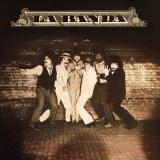
Soul, jazz-rock, candombe and funk blend in the cocktail of La Banda's first and sole album. Often regarded as Argentina's first supergroup, the ensemble built a reputation on their explosive live performances during a time of political repression. Short-lived but unforgettable, the six-piece brought together top-tier jazz musicians—five Argentinians alongside Uruguayan icon Rubén Rada—to deliver a deep, hard-hitting sound that resonates far beyond its era.
Rada arrived in Buenos Aires bruised — a romantic disaster and a string of empty concert halls back in Montevideo had pushed him to start over at 35. Behind him lay a remarkable journey: from inventing candombe beat with El Kinto, to leading the Latin rock powerhouse Tótem, to recording cosmic jazz with Opa alongside the Fattoruso brothers. Trumpeter Benny Izaguirre, the band's architect, gathered around him a cast of heavyweights: pianist Jorge Navarro, an essential figure in the Buenos Aires jazz scene since the 1950s; saxophonist Bernardo Baraj, forged in Alma y Vida, Argentina's jazz-rock champions; and the irresistible rhythm section of bassist Ricardo Sanz and drummer Luis Ceravolo, both veterans of Astor Piazzolla's quintet. All three — Baraj, Sanz and Ceravolo — were simultaneously part of Banda Spinetta, the jazz-oriented project of Argentine legend Luis Alberto Spinetta.
The sessions also drew in two guests who needed no introduction: guitarist David Lebón — veteran of Pappo's Blues, Pescado Rabioso, Color Humano and Serú Girán, one of Argentine rock's true giants — and guitarist and producer Daniel Homer, a quietly indispensable figure across Buenos Aires' jazz and rock scenes.
Recorded in 1979 and gone almost as soon as it arrived — La Banda's brief existence and this sole album are what Buenos Aires sounded like when it was allowed to breathe. Between raids, between disappearances, in the stolen hours when music was louder than fear.
The masterpiece dance anthem that set 1990s Japan ablaze is finally available on vinyl!
Still shining as a J-POP dance classic, the dance & vocal group ZOO's signature song “Choo Choo TRAIN” is finally released on 7-inch vinyl. A track that swept Japan's club scene with its lighthearted beat, uplifting synth phrases, and an ear-catching chorus. Long-beloved classics from across Japan, now on vinyl!
Sad Daddy emerges straight out of the Ozark hills in 2026 with their fourth studio album, Ozark Shine, highlighting the band's songwriting and harmony vocals Their 2022 release, Way Up in the Hills, took the nation by storm with its down- toearth, raw old- time country and jug band vibes, paired with relevant subject matter. Carrying a similar sentiment and back-to-the-country message, Sad Daddy once again captures the pulse of America and proves they are ahead of their time with this new collection of original material. The songs range from stocking up for the next weather disaster, to buying a peaceful piece of land with a cabin, to playful tales of returning home to check if the stove was left on, and even digging a backyard hole to bury a lame partner--offering a diverse palette of stories that feel real and relatable today
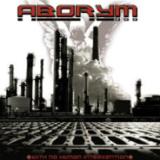
Compared to their debut, the band pushes even further the fusion between black metal and industrial electronics, resulting in a colder, more mechanical and chaotic sound. Extreme guitars and traditional black metal vocals are intertwined with drum machines, abrasive synths, and digital noise, creating the impression of a kind of "dehumanized" music, as the title suggests. The atmosphere is dystopian and aggressive, far removed from traditional metal: it does not aim for melody, but rather for a dense and oppressive sonic impact, where everything feels filtered through a technological lens. In short, it is a record that pushes the idea of black metal to its limits by placing it within an industrial, cyberpunk universe, becoming one of the band's most representative works.
Compared to their debut, the band pushes even further the fusion between black metal and industrial electronics, resulting in a colder, more mechanical and chaotic sound. Extreme guitars and traditional black metal vocals are intertwined with drum machines, abrasive synths, and digital noise, creating the impression of a kind of "dehumanized" music, as the title suggests. The atmosphere is dystopian and aggressive, far removed from traditional metal: it does not aim for melody, but rather for a dense and oppressive sonic impact, where everything feels filtered through a technological lens. In short, it is a record that pushes the idea of black metal to its limits by placing it within an industrial, cyberpunk universe, becoming one of the band's most representative works.
PRESENTED ON NUMBERED VINYL. Peaceville presents a very special collection of tracks from the more black metaloriented acts on the label, featuring a variety of new & recent bands, among firmly established legendary acts & influential names, with plenty of great showcases for what is to come in 2023, & also including a majority of exclusives. This pressing of 'Dark Side of the Sacred Star' is presented on limited numbered vinyl.
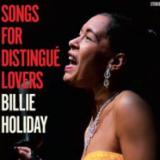
Contains new specially prepared liner notes by Penguin Guide to Jazz 's writer Brian Morton and by Paris' prestigious Jazz Magazine. The first popular jazz singer to move audiences with the intense, personal feeling of classic blues, Billie Holiday (1915-1959) changed the art of American pop vocals forever. Songs for Distingue Lovers is one of the best albums from her late period and finds her surrounded by important instrumentalists, including Ben Webster and Harry "Sweets" Edison. The album received a four-star rating in Down Beat upon its release. Bonus tracks: 'We'll Be Together Again' and 'April In Paris'
With Love Is Simple, Jeremy Pelt returns to the art of balladry, distilling eight deeply felt performances into his first vinyl-only anthology and shining a light on one of the most quietly persuasive sides of his artistry Drawn from his HighNote recordings, the set favors emotional honesty over grandstanding, pairing a few familiar titles with lesser-known gems that reward close listening.
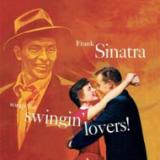
With Frank Sinatra under pressure on the singles chart, conceptional albums became his 'weapon of choice' for continuing success. Songs for Swingin' Lovers!, conducted and arranged by Nelson Riddle, came out in March 1957 and was soon at #2 in the Billboard chart where it remained for a year. In the year 2000 the album received inauguration into the Grammy Hall of Fame. Includes the bonus tracks "Love Is Here To Stay", "When You're Smiling", and "Chicago". "Arguably the vocalist's greatest swing set. Sinatra is supremely confident throughout the album, singing with authority and joy. That joy is replicated in Riddle's arrangements, which manage to rethink these standards in fresh yet reverent ways. Songs for Swingin' Lovers! never loses momentum. The great songs keep coming and the performances are all stellar, resulting in one of Sinatra's true classics." - ***** Stephen Thomas Erlewine, AllMusic (2002)
The recordings were made in a single day in New York City with a team of extraordinary musicians. He'd already established a firm creative partnership with bass legend Cameron Brown and award-winning pianist Russ Lossing over the past year during their time as recording artists in NYC, and he renewed his fruitful association with outstanding drummer Billy Mintz (Lee Konitz, Charles Lloyd, Alan Broadbent) to complete the quartet. These three have been vital to Kazuki's compositions that tell the story of his enforced absence from the scene during the pandemic and how he sought to centre himself in the midst of the disruption through contemplation and the development of an inward strength. Each track complements the next, alternately celebrating the deep jazz tradition and pushing hard at its boundaries, allowing each member of the quartet to display their extraordinary musicianship while creating a harmonious whole.
While both draw their influences from jazz, contemporary classical music, and extended improvisations, they use preparations and extended techniques to bring a sonic vocabulary to their respective instruments that sounds otherworldly. As vocalists, they blend these elements with singer- songwriter and pop influences to create long, flowing sonic arcs encompassing abstract soundscapes, simple songs, angular rhythmic bursts, and more. The result is touching, captivating, and never predictable for the listener. Voices and sounds merge into a unique musical world that is greater than the sum of its parts
Originally conceived as a massive multi-band, multi-volume covers project, this album saw Streetlight tackle eleven songs that influenced Kalnoky’s musical development. The tracklist is a genuinely eclectic mix, ranging from Radiohead and Bad Religion to Paul Simon and a 1950s Louis Jordan number. Rather than simple recreations, the band fully transforms each song through their own lens, making the covers feel like natural extensions of their catalog. Only one volume was ever released, leaving the larger 99-song concept permanently unfinished.
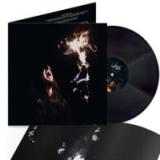
São Paulo-born, Brighton-based artist Lau Ro presents their second album Lau, a tender, deeply introspective collection of orchestral psych-pop songs borne from discomfort and disorientation. Recorded and collaged together amidst a period rife with physical and emotional challenges, Lau is naturally cerebral yet radiant, compassionate, and, above all, honest, suffused with an enduring love for bossa nova, tropicalia, and Música popular brasileira.
Crimson Buffalo is a narrative-driven album built as a fragmented story following Asagaya through a shifting parallel world shaped by conflict and transformation. Blending cinematic composition, diverse musical influences and collaborations with vocalists including Hannah Williams, Gaye Su Akyol, Moonlight Benjamin, Odile de Mainville, Mary May, Days and Alanna Matty, the record unfolds as a continuous arc where each piece contributes to a broader story. More than a collection of songs, it forms a constructedworld shaped by sound, contrast and progression.
artist bio
Asagaya is the project of French multi-instrumentalist David Kern. Through cinematic and narrative-driven songwriting, his albums unfold as cohesive stories centered on fictional characters.
Drawing from late 60s/70s aesthetics, 90s genre-crossing influences and a wide range of global musical traditions, his work blends live instrumentation, layered production and diverse sonic textures, shaped through collaborations with vocalists and musicians.
In those early conversations, when I laid out the future I sought to create, and recall sharing the concept of a stripped, atmospheric interpretation, supported by the haunting resonance of strings-- cello or violin. At the time, the notion was met with skepticism, perhaps even dismissal. Yet it was an idea I knew would one day take form. It had to. UADA has always drawn from a wide spectrum of influences--many of which extend far beyond the traditional boundaries of black metal. With Interwoven, we sought to peel back the layers and reveal the vastness of these realms; to immerse the listener in both the foreign and the familiar, in textures that challenge and comfort in equal measure.
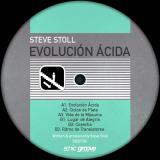
Steve Stoll - Acida Evolucion - Sonic Groove
Two pillars of New York techno finally collide as Steve Stoll makes his debut on Sonic Groove.
Stepping out from a recent low-profile streak, the NYC veteran delivers a superacideferocious 6-track mini-LP. This is Stoll at his rawest: deep, hardware-heavy 303 minimalism designed to melt minds and dancefloors alike.
Pure analog 303 intensity.
out of Stock
Last delivered 5 days ago available to reorder, subject to availability
IBOGA Africa Edits and Overdubs by Joaquin Joe Claussell Feat Long Versions and Unreleased Afro Centric Compositions Special White Color Vinyl 7inch W Full Color Jacket
IBOGA by Joaquin Joe Claussell
Straight from the acclaimed IBOGA EP series, Joaquin Joe Claussell returns with a powerful limited-edition 7-inch pressed on colored vinyl. This special release features the long-awaited extended version of “Dark Eyes,” alongside two brand-new Afro-centric edits.
Included are “Egbe Awan Okurin,” a deep rhythmic journey inspired by African cosmic soundscapes, and “Mochate,” a reimagined 1970s Afro-disco edits enriched with fresh overdubs and signature Claussell energy.
Crafted for DJs, collectors, and selectors alike, this essential 7-inch delivers raw groove, spiritual rhythm, and dancefloor-ready Afro-inspired sounds.
out of Stock
Last delivered 69 days ago available to reorder, subject to availability
“El Compuesto Desconocido” by Absent Corps. A powerful 12” featuring five tracks that capture the spirit of 90s New Beat, blended with touches of Electro, Italobody, shades of Dark Disco, and strong influences from classic sci-fi cinema.
out of Stock
Last delivered 12 days ago available to reorder, subject to availability
"Follow the Sun" are Elisa Pambianchi, Fabio "Produkkt" Sisti and Luciano Lamanna. Hailing from the Italian capital, they deliver 5 dark, enclosed, hypnotic tracks. Fast-paced, slow-burning sounds that creep forward with tension. Industrial and intimate atmospheres, like being alone on a somber dancefloor where loudness presses in and alarming figures crawl closer. Mick Wills and Blackmoon77 add a monstrous, clockwork remix of the title track, perfect for darkrooms.
out of Stock
Last delivered 3 months ago available to reorder, subject to availability
The second chapter from Alfabet Records unfolds in two movements: Bread&Butter and Jay Tripwire — a dialogue between emerging form and decades of refinement, where minimal structures drift through groove and time.
out of Stock
Last delivered 3 months ago available to reorder, subject to availability
For several decades Norway has had a healthy tradition for prog, psych and jazz fusion – yet, there's something very different about the ensemble that is Fra Det Onde (”From Evil”). The group is comprised of one of Europe's finest jazz drummers Olaf Olsen (Needlepoint, Motorpsycho, Bigbang and others), bassist Rune Neergaard (Bushman's Revenge, Exoterm) and trumpeter Erik Kimestad – one of the brightest young stars in current Scandinavian jazz. And they have a secret weapon in the form of sonic wizard Emil Nikolaisen, known for his pioneering noise rock in Serena Maneesh, as well as a collaborative album with Todd Rundgren. He's currently a member of The Brian Jonestown Massacre. Emil not only contributes Farfisa and weird electronics to the group's free flowing streams of sound, he's also responsible for the innovative album mix that expands the ensemble's vision into new and astonishing territory.
Smilet Er En Flyktig Tilstand is one of those rare records that manage to absorb the spirit of the past and transform it into something new and exciting. Listening to the suite that makes up most of the album, one can sense the cosmic energy of 1970s Don Cherry, or the sonic adventurism of Can in their prime – but Fra Det Onde pushes these aesthetics into the extreme. Labels such as ”fusion” or ”psychedelic jazz” don't really come close to describing the rush of energy and kaleidoscopic sonics that's taking place on this record.
Vinyl-only, limited to 500 copies, no digital release.
File next to: electric Miles Davis, Can, Don Cherry.
The mighty Drumcode machine rolls on.. back again with the highly collectible DC4 Series now on its third volume. The DC4 series showcases a selection of four tracks from rising and established artists within the modern techno scene.
The EP features high-energy, peak-time techno tracks designed for dancefloors.
Odysee’s vinyl release schedule for 2026 kicks off with this superb 3-track E.P. from none other than the labels founder, T-Mirage. Following up from his 2024 release Dark Rhodes, this E.P. is an embodiment of the raw Mirage sound; a melting pot of Atmospheric D&B with hard hitting dance-floor sensibilities, where 70's OST & Film Noire sounds are blended with deep Techno and electronica elements.
From the blistering amens and deep textures of 'Expressive Thoughts', to the dreamy atmosphere of 'Dawnbreaker' and the dystopian menace of the breakbeat-driven 'Machines Of London', this E.P. is an absolute must for all true Odysee fans!
In 1994, Tilla was just 17 years old, and an integral part of the original St Albans collective that comprised Jim Baker & Phil Aslett (Source Direct) and Rupert Parkes (Photek), when he set up the Odysee imprint and released the first Source Direct record (Future London/Shimmer). With a follow-up release from Photek (Phaze 1/Try A Style) and a second from Source Direct, the profile of the label began to grow exponentially.
It was the 3 Mirage releases however that really put the label on the map. These tracks were engineered by Jim Baker but heavily co-produced by Tilla himself with a major focus on his keen ear for dark 70’s Noire samples and eerie abstract electronica pitted against soulful R&B vocals. In hindsight, the impact of this rather different soundscape on the Source Direct material that followed is unmistakable.
Acid Jazz presents the second volume of their Jazz Sessions series with the first album from the Matt Berry Trio, with Matt Berry joined by band members Phill Scragg and Graham Mann on ‘Everything’s Peachy’.
When not creating numerous indelible characters on the screen, Matt Berry has forged a remarkable, diverse and acclaimed career as a recording artist. Following the widely lauded ‘Heard Noises’ (2025) and a collaboration album with KPM ‘Simplicity’ (2023), he returns in yet another musical guise as leader of a studio-based mid-century jazz adjacent trio.
‘Everything Peachy’ is a 12-part instrumental suite, inspired by ‘the Sky King’ (American folk hero Richard “Beebo” Russell), who stole a large aircraft with no flight training, performing stunts and manoeuvres, before crashing to his own demise, and takes its name from his response to air traffic control.
Conveying variously the chaos, nostalgia, regret and acceptance of Russell’s maiden flight, it is an open, freeform and flowing composition, drawing influence from the electronic experiments of Miles Davis and the melancholy of Satie, to create another moment of musical beauty from Matt’s curious and ever-moving musical mind.
The Jazz Sessions series was conceived by Acid Jazz founder Ed Piller as a return to the jazz roots of the label. The first release came from former Style Council drummer Steve White, with his first album as leader ’Soul Drums’, further releases will follow over the next year.
For nearly four decades, since its founding during the mid 1980s, the Belgian imprint, Sub Rosa, has continuously plumbed the depths of numerous, radical creative histories, assembling a catalog of releases that has almost no equivalent, while remaining nearly impossible to nail down. That said, for most of its run, Sub Rosa has been primarily recognized for its rigorous explorations of the lesser explored shadows of experimental sound practice (sound-art, sound-poetry, early electronic and electroacoustic music, free-improvisation, etc.), delivering a remarkable body of artifacts that have collectively helped to rewrite history in their wake. While it's always been impossible to anticipate where the label might take us next, threading their catalog are plenty of releases that throw further wrenches in the cogs, expanding our understanding of what they pursue, as in the case of a handful of titles, appearing as early as the 1980s, dedicated to ethnographic field-recordings from various parts of the world. Among the most striking and celebrated of these was 2017's Ethiopian Urban And Tribal Music: Mindanoo Mistiru / Gold From Wax, comprising an astounding body of recordings made by Ragnar Johnson and Ralph Harrisson in Ethiopia during 1971, reissuing material originally released by Lyrichord the following year. Now, Sub Rosa returns to the incredible work embarked upon by the pair and captured on that same trip with Ethiopian Musics 1971, comprising the recordings originally released by Ocora shortly after their completion, expanded in this edition to include an entire disc of never before released music. Widely regarded as some of the most important field-recordings ever made of indigenous Ethiopian folk music (as captivating and intoxicating as they are revelatory: providing insights into the roots of the country's singular traditions of popular music and jazz that have come to be celebrated the world over), this incredible collection is issued by Sub Rosa in a beautifully produced 2LP edition, complemented by a four page insert providing detailed descriptions of each song, as well as notes by the ethnomusicologists and recordists, as well as a 2CD edition, with a twelve page booklet. Insanely good and absolutely essential for any fan of field-recording, ethnomusicology, the music of Ethiopia, or the label's mission at large. Once again, Sub Rosa has defied our expectations and delivered a remarkably important intervention in the history of recorded sound.
Located in the Horn of Africa region of East Africa, few cultures are distinctly singular, while being so diverse (containing 80 distinct ethnic groups who speak 70 languages and 200 dialects) as that of Ethiopia. The home to some of the oldest surviving sects of Judaism, Christianity, and Islam (each contributing important aspects of its collective cultural body), particularly the country's culinary and musical traditions have become celebrated the world over, and (generally speaking) feel entirely independent of those of its neighbors. Given this, it's unsurprising that, during the summer of 1971, the young ethnographer, Ragnar Johnson, accompanied by Ralph Harrisson, traveled to Ethiopia to begin his brief career as a field recording ethnomusicologist, capturing material on reels of magnetic tape that would be subsequently released across three LPs for Lyrichord and Ocora, respectively, coming to form a cornerstone of documentation and study of the country's many indigenous musical traditions, as well as providing wide, global access to them for the first time. While Johnson's recording career was relatively brief, ending toward the end of the decade when he began to focus more on teaching in UK universities, with a focus on the anthropology of art and social anthropology, his impact on the field was lasting. Between 1971 and 1979, in addition to those he made in Ethiopia, he made hugely significant recordings in Yemen (also issued by Lyrichord before being reissued by Sub Rosa) and Papua New Guinea, which were originally released by David Toop's Quartz Publications to wide celebration, before being revisited by Ideologic Organ in 2023.
While it's worth noting that commercial releases of ethnomusicological recordings by labels like Folkways, Lyrichord, and Ocora were still in their relatively early days when he entered the field, Johnson's recordings quickly stood apart for their vivid qualities and clarity of space, allowing them to stand the test of time. As he later stated: "I used a Uher Report L stereo tape recorder, BASF quarter inch tapes at a recording speed of seven and a half inches per second with two directional microphones mounted to record an isosceles triangle of stereo sound," he reveals. "The location of the microphones and musicians was critical. The musicians were fully informed of all aspects of the recording process."
Johnson's recordings are extremely vivid, there is a clear sense of space and the cries of the flutes exist across the entire stereo field. It's a reflection of Johnson's skill as a field recordist that his recordings continue to be reissued over forty years later. "I used a Uher Report L stereo tape recorder, BASF quarter inch tapes at a recording speed of seven and a half inches per second with two directional microphones mounted to record an isosceles triangle of stereo sound," he reveals. "The location of the microphones and musicians was critical. The musicians were fully informed of all aspects of the recording process… I used to enjoy being in the moment and hearing something wonderful despite the stress of the vigilance required to ensure that the recordings were accomplished according to plan. The responsibility is to record and document the music as effectively as possible so that it has been preserved for posterity. It is better to actually record music than to sit in a seminar room debating the ethics of recording music." It is this very ethos and sense of clarity that can be encountered across the length of Ethiopian Musics 1971.
For the sake of clarity, the two LPs of material that comprise Ethiopian Musics 1971 should be regarded as a single body of recordings alongside those made in Ethiopia by Ragnar Johnson and Ralph Harrisson during the summer of 1971 (previously issued by Lyrichord and reissued by Sub Rosa), and as two that have, until now, remained historically distinct. The first LP gathers that material released by Ocora during the early 1970s on Musiques Ethiopiennes, while the second comprises (as far as we can tell) twelve never before issued recordings, expanding the journey and making this the definitive edition of the release with its incredible total of 23 recordings of songs, allowing it ever greater scope to achieve the recordists' modus operandi of capturing the broadest and most diverse cross section of Ethiopia's many musical cultures, ranging from different forms of urban music captured in Addis Ababa, documenting largely orally transmitted idioms within which lyrical content is given greater emphasis than the instrumental components (played on masenko fiddles, craar and bagana lyres, washint flutes and kabaro drums), to folk idioms hailing from the Danakil desert and the border regions with Sudan and Kenya. There are songs sung and played in bars, divination chants, laments, dances, Christian songs, and Amharic sung poetry, to only begin to scratch the surface.
Ethiopian Musics 1971 is one of those rare albums where each musical moment is pure, intoxicating gold, while also being greater through the sum of its parts. There are the many songs, forming a rich tapestry of remarkable range across the respective two LPs/CDs (moments that wondrously flirt with sonic abstraction; hypnotic rhythms; pulsing chant; melodies that, in structural arrangement and tonal combination, help us reframe how such a thing might be understood, and a great deal more), each imbued with a remarkable directness and emotive sensibility, and there is the stunning quality of these recordings themselves, transporting each sound to our ears as though we intimately share its creator's space, while being imbued with the pure heart and remarkable spirit with which they were made. As we said before, it's little wonder, once heard, why these recordings and this music feels as fresh and relevant (enduring more than 50 years) today as when they were made. Once again, Sub Rosa has raised the bar with this essential addition to the incredible work that Ragnar Johnson and Ralph Harrisson did back in Ethiopia during 1971, radically expanding our access to the sounds that they captured with these stunning, beautifully produced 2LP and 2CD editions. Absolutely engrossing from the first sounding to the last, this one can't be missed.
Another haul of hard hitting house gems from Duster Valentine’s debut album pressed to vinyl for the first time.
A love note to formative years in the ‘80s and early ‘90s, off his chops at The Haçienda and other legendary Manchester clubs, it’s a masterclass in demonstrating the flavours-within-a-theme that emerged from the Chi, 313, and NYC during that pivotal era, and would light the touch paper of a UK club revolution.
In Duster Valentine’s hands the sound is presented stripped to salient fundamentals, prizing the sound before it went commercial, ranging from sampler-knuckling garage-house stabbers thru haughty canter and plushest, pendulous grooves. He homes in hard on that point when hip hop and electro gave way to house in the Todd Terry-via-Pal Joey style jam »Getting’ Dub«, and gives a big salute to Chez N Trent’s rugged, chord-riding haughtiness via Levon Vincent in »Hit Me From Behind«.
»Strobelight Honnies« leans into the sound’s deepest ends with perfectly weighted bassline, cold drums and sublime string tension dubbed with hypnotic elegance, where »The KatG Chord« follows with shimmers of Anthony Shakir via Michael J Blood. Suffice it to say they’re all perlers and bang on the £ if you know what’s good.
out of Stock
Last delivered 42 days ago available to reorder, subject to availability
R&B outsider Zsela joins forces with inc. no world's Daniel Aged and film composer Taul Katz on '4 Dreams', a billowing ambient-neoclassical hallucination that'll tickle fans of Mary Lattimore, Malibu, Nala Sinephro, Gigi Masin. If you only know Zsela thanks to her dramatic 2024 debut album 'Big For You', the mostly beatless, fully reflective '4 Dreams' might come as a surprise. But look a little further back in her catalogue and things will fall into place; remember 'Angels Pharmacy' and Remembrance' from Actress's 'Karma & Desire'? That was Zsela on vocals, so she's got priors. '4 Dreams' started life as the soundtrack to 'Seven Heavenly Senses', an art exhibition from last year at Paris's Hôtel de la Marine, but has since taken on a life of its own. Zsela's breaths are stretched and sculpted into warm, washing biomechanical pads on the opening dream, left to weather tinny arpeggiated FM synths and muggy bass drones. So far, so predictable. But Zsela muddles proceedings with her confident delivery, layering her voice into jazzy, R&B inflected key changes that keep you guessing. Imagine an astral plane answer to Dawn Richard's ambient-inflected pop and you'll have some idea of where this is headed.
Then 'Dream 2' takes an unexpected diversion, the vocals replaced by swirling harp flourishes and the kind of floating synth stabs that draw a core logic from classic Ambient - Harold Budd, Laraaji et al - then adding extra colors just where necessary. And on 'Dream 3', faint, almost folk-y strings enter the frame, calling out from beyond the horizon, almost blotted out by a synth part that's in the thrall of Gigi Masin's legendary 'Clouds' - the track that ended up being repurposed by Björk on 'It's In Our Hands'. Zsela, Katz and Aged keep that momentum for the final track, too, letting cinematic strings echo around subtle synths and vanishing rhythms, hitting those hypnagogic, tranquil notes that so much contemporary ambient music seems to avoid. 'Cause at its heart, '4 Dreams' is deeper than that, a record that's entrenched in jazz, soul and classical minimalism rather than throwaway numbing music, of the contemporary variety.
Mannequin Records presents Electronic Corporation 1998–2006, a compilation bringing together rare and long unavailable recordings by the German electronic projects H.E.I.M. Elektronik and MAS 2008.
Active around the turn of the millennium, both projects share the involvement of producer Ive Müller while developing distinct collaborations and approaches to electronic music. H.E.I.M. Elektronik was founded in 1996 by Holger Erlenwein and Ive Müller (after the two artists split in 1999, Müller continued using the name), while MAS 2008 is the project of Ive Müller together with René Kirchner. Though separate entities, the two projects explored a similar sonic territory: stripped-down electro, minimal electronics and machine-driven body music shaped by analog hardware and a raw DIY production ethos.
The roots of Müller’s work go back to the final years of the DDR. As a teenager he worked as a licensed DJ — officially known as a “Schallplattenunterhalter” — operating a travelling disco across Saxony. With limited access to official Western releases, music circulated through cassette recordings taped from West German radio stations such as RIAS Berlin, NDR2 and Bayern3. Together with friends he travelled between youth clubs and discos around Leipzig with a “rolling discotheque”: a Russian Wolga pulling a trailer loaded with Electro-Voice sound systems sourced through the black market.
At the turn of the 2000s this background in underground electronic culture resurfaced in a series of recordings rooted in electro, EBM and minimal machine music. The tracks collected on Electronic Corporation 2000–2002 capture this moment: cold sequences, driving rhythms and stark synthetic textures produced with a direct and uncompromising approach.
Compiled and remastered by Rude 66 from the original sources, Electronic Corporation 2000–2002 documents a small but fascinating chapter of German underground electronics from the early digital era.
out of Stock
Last delivered 69 days ago available to reorder, subject to availability
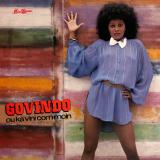
Disco Segreta proudly presents the reissue of one of the most elusive and sought-after gems of underground italo disco, Govindo’s “Ou Ka Vini Com Moin”.
Originally released in 1983 on the obscure “Gala” label and quickly withdrawn from the market, this hypnotic, space-tinged cosmic italo disco bomb remained virtually unknown outside a small circle of hard core italo disco collectors — until now.
Wriitten by Mario Baldoni aka Miro and recorded during a journey across the French Antilles, the track was laid down in Fort-de-France, Martinique, capturing a unique cultural and musical intersection. Its title comes from a typical Martinican Creole expression—”U Ka Vini Co Muè”—meaning “C’mon, come with me.”
The track’s lush arrangement, crafted by Gregorio “Greg” Puccio, is a quintessential snapshot of analog italo disco at its finest: Roland Juno 60, JX-3P, Korg PolySix / Poly800, and LinnDrum LM-1 create a dreamlike, deeply atmospheric soundscape.
For the first time, this edition presents the original 12” full-length versions (vocal/instrumental), alongside the shorter 7” vocal version, remastered directly from the actual analog master tapes, plus two new remixes: the Marcello Giordani Hypnomix – a future electro synth classic from one of Italy’s finest producers and the Miro’s Fort de France Sunset – a balearic downbeat contemporary reinterpretation by the original artist 42 years after.
out of Stock
Last delivered 50 days ago available to reorder, subject to availability
‘Falling Backwards’ is the debut album from Him & Earl via Wah Wah 45s, serving up a mystic brew of desert blues, English folk, Americana and stirring southern soul, with tentacles stretching out into psychedelia and prog, across 11 hot and hazy tracks.
Singer-songwriter Olly Him and DJ, producer and composer Wyndham Earl both have deeply-dug roots in the south coast of England, with the former making his name as a solo artist before exploring his soulful folk/prog sound with a number of live acts, and the latter collaborating on albums and sharing stages with Bonobo, Khruangbin, Alice Russell and TM Juke, having remixes released by Tru Thoughts and Mr Bongo Records and releasing his solo projects on his Time Spun imprint.
The pair first met in 2015 when Wyndham produced some songs for now defunct hypnotic Afro-folk outfit Creatures Of The Deep, of which Olly was a founder member. They instantly clicked, but after the group broke up it was a few years before serendipity brought them back together; a chance encounter at a gig saw them begin hatching plans to make a full album under the name Him & Earl with Olly writing the songs and Wyndham arranging and producing the project.
After so long floating in the creative ether, the connective power of these songs has been strikingly immediate. The debut Him & Earl live show in early 2026, before any tracks had even come out, blew Olly and Wyndham’s expectations out of the water as their five-piece band found themselves toe-to-toe with a sellout crowd – a sweaty room full of happy music fans, on an otherwise bleak January night, throwing shapes to live percussion showdowns, losing themselves in psychedelic guitar and bass wig-outs, and singing along to choruses they’d never heard a note of before.
Since then, the first two singles “Bottled Up” and “Away” have had high profile airplay from the likes of BBC 6 Music’s Huw Stephens and Cerys Matthews, and Radio X’s John Kennedy, adding to widespread tastemaker and specialist support around the world, as excitement builds for the album.The LP’s introspective and philosophical lyrics are brought to life by a sonorous yet strangely uplifting sound palette that morphs by stealth into a darkly propulsive, psychedelic and bluesy trip.
Opening song “Away” taps straight into a key theme of the record – journeying, in both a physical and mental sense, and the quest to move on and embrace the unknown – and its sunny guitars, trumpet and violin barely even hint at the tumultuous sonic adventure that’s set to unfold. A stronger indication comes in the title track,“Falling Backwards”, as its elegant web of staccato finger-picked hook, fluid piano melodies and strings unfurls into a six-minute exploration of what Olly describes as “going through every day normality while feeling close to chaos and like things could fall apart at any moment… when there is a myriad of different things holding everything together and if one thing goes wrong everything can fall apart around it.”
“Better Days” swiftly restores a sense of upbeat calm, with lively Kora and Afrobeat-inspired guitar licks, atmospheric trumpet and a harmony-clad mantra of hope on the horizon; the folky “Bottled Up” continues that blissful notion with undulating finger-picked guitar, earthy clarinet counter-melodies and celestial murmurations of delicately plucked strings. The magnetic pull toward more mysterious horizons comes via the dusty twang of Wild West-esque guitars on “Open Road”, a nomadic journey of self-discovery through spacious sonic plains embellished with eerie flickers of flute and clarinet. This leftward turn gathers pace in the trancelike
psych-prog depths of “Preside”, an instrumental cut at the album’s pivotal halfway point. Hypnotic, guttural desert blues-infused riffs on “Inside” channel the feeling of a psychedelic or spiritual trip where, in Olly’s words, “something clicks and you understand things on a different level – it makes you see inside yourself and see things in a different way.” “Shadow overhead” brings a lighter touch to a darker subject – the feeling of paranoia and being locked away from the world – drawn from Olly’s own experience and also his years of working in and around mental health.
Exuberant horns lend hope to loosely looping suspense on “Blindside” (about being caught out by the unexpected, and searching for something to see or hear to pick you up again) and then mesh with urgent strings, low-slung guitars and subterranean bass on “Around Again”, which explores the modern fight to stay afloat amid the endless churn of information and distractions. Still plumbing the bassy, bluesy depths of this journey into the psyche, “You Can Only Know” is a dreamlike revelation about finding someone or something that helps to make sense of the world. Luminescent synths duck and weave, while a rock-solid bass riff is tracked by a soul-soothing four-part “hey hey” harmony, reassuring as a glowing lamp in the window at the end of a life-changing trip.
Discotchari unveils a full deadstock run of this rare 7 inch from 1970, found in original factory boxes and reissued as the first release of the label. It features previously unheard material from oud virtuoso John Bilezikjian and percussionist Raja Zahr, a Burbank via Beirut collaboration. The record will be available on vinyl and digital platforms from November 3rd, 2023.
Recorded under the name Something Different, the duo produced a single 45 RPM that was shelved as their solo careers took off. At just 21, Bilezikjian handles oud, bass and harpsichord, while Zahr delivers rich and inventive percussion.
Side A, Zulu Man, blends late 60s psychedelia with a more experimental edge, closer to underground acts than mainstream rock of the era. Carried by evocative vocals and expressive oud lines, the track unfolds like an epic narrative.
Side B, Chemical Reaction, is harder to define, moving between cinematic moods and rhythmic tension. The track evokes shifting landscapes and contrasting atmospheres, making it as intriguing as it is unpredictable on a dancefloor.
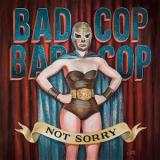
The 2015 debut album from female punk super-group back in print on new burgundy colour vinyl! NOT SORRY is the first full-length album from all female super-group BAD COP BAD COP. Aptly titled, NOT SORRY brazenly blasts out some of the most vibrant pop-punk around today. Laden with catchy hooks, three-part harmonies that'd make The Beach Boys jealous, and tons of attitude, all 13 tracks showcase BAD COP BAD COP's uncanny ability to blend aggressive instrumentation with polished vocals. A quick glance at the band's collective resume (Compton SF, The Radio Sweetheart, The D'Maggs, The City, Angry Amputees, and Cunt Sparrer) will disabuse any doubters of the notion that BCBC can't hand with the boys. From front to back, NOT SORRY brings the rock. Tracks like "Old Dogs", "Nightmare", & "Support", display the bands' hard playing style and strong sense of melody. One listen to NOT SORRY and you'll know why BAD COP BAD COP have generated so much buzz! "This badass bunch of melodic punk rock ladies have been releasing infectious 7" records for a couple years that just play too damn quickly... The album dashes by like a vacation_over sooner than you'd like." _New Noise Magazine "California's Bad Cop Bad Cop lay down the law with an incredible authority: the tunes are concise and compact melodic punk blazers, filled with equal amounts of bite and sugar-sweet harmony." _Alternative Press "These songs are full of three-part harmonies that can make Bad Religion's Greg Graffin and Brett Gurewitz retroactively jealous, and they're catchy enough that they could easily fit onto any of the early Fat Music comps." _Dying Scene Produced by Fat Mike (NOFX) & Davey Warsop (Suedehead) For Fans of: NOFX, Dance Hall Crashers, Masked Intruder Ongoing social media push via artist and label channels Social Media and Digital marketing campaign See Bad Cop Bad Cop on tour in Europe