Charlotte de Witte, without doubt one of Belgium's fastest rising talents in the techno circuit, and known from two strong EP's on Tiga's Turbo label, makes her debut on OFF.
The EP starts off with 'Trip', aptly name due to its cinematic sound design and arrangement. Charlotte's trademark use of vocals ooze character, and haunting synths complemented by a laidback but steady drum-foundation are the ingredients of this track.
Sweden's Techno-legend Cari Lekebusch delivers the first remix, a functional and linear interpretation, which is sure to be heard on festival dancefloors during the late summer.
TWR72 of Amsterdam, themselves very much what you would call a 'current breakthrough act', are responsible for remix number two, a contemporary interpretation based on syncopated rhythms.
The EP is completed with 'Repeat', a reduced drum-tool built around a repetitive vocal hook.
Altogether a strong statement of a promising young artist and another proof of the ongoing evolution of OFF Recordings.
Meiosistosis is a unique and creative descriptive innerstanding created by DemoDc taken from the scientific terminology of Mitosis - a splitting of one cell to create 2 identical cells and Meiosis - a splitting of 1 cell to create 4 very unique cells. Combining these 2 findings to create its own unique expression of what Demo feels earth herself is potentially going through in what most humans refer to as 'crazy mad' times.
‘Call me mad or crazy yet my artistic take on all this madness of change, coming from a more spiritual aware perspective, I feel its very possible and plausible that earth herself is shifting from an energetical vibrational frequency resonance, shifting from a lower to a higher frequency that has souls who inhabit at this present time on Earth, have choices made available to either shift to these higher frequencies of perception or to chose to remain in the lower frequencies of perception’
….says Demo when explaining the meaning of the titles chosen for his brand new releases. Hence, from this perspective it would give more purpose and meaning with the Earth splitting itself from 1 earth into 2 with the merging of it being identical and unique all at once.
True or not, through creative expression can we all individually make sense in our own rights, which then gives more power to the inner-standing of what co-creating with any greater power outside of ourselves, is. Each track holds its own unique expression to what has been described here and of course gives each listener a chance to give meaning to what is embraced in their own connection made when absorbed in the creations these ep's offer.
After a couple of solo EPs to start the label, FAC-3 is comprised of four different artists, each with their own unique sound. Although a mix of up-and-coming and established producers, old and new music, there’s a common thread running through the EP.
First up, Justin Zerbst’s Waverider is an atmospheric nod to Detroit. Unearthed from a 90’s DAT, it’s built around some heavily modulated chords and 808 percussion which carry the track through to its string-laden climax.
Italian mainstay Luca Piermattei’s Venice is distinct end-of-night fare. Haunting pads sit atop a deftly-programmed bass which provides most of the movement over a tight drum groove.
While the A side has a undoubted warmth to it, the B dials things back and ups the intensity with two techier cuts. UK producer Skelter’s first release is a spacious acid groove, with the bassline taking centre stage amidst a nervy backdrop of percussive textures and reverb hits.
Finally, Brisbane’s Loif rounds things off with the simmering Digiburra; a dense, electro-tinged breakbeat aimed squarely at the dancefloor.
Ava Max is ready to take her already extraordinary rise to the pinnacle of pop success to even greater heights with her first new single of 2022, “Maybe You’re The Problem,” and her upcoming album DIAMONDS AND DANCEFLOORS. With over 11B worldwide streams, an array of smash collaborations, and multiple RIAA gold and platinum certifications in the US alone, the first-generation Albanian American artist has fast proven a true pop superstar, hailed for her seismic voice, idiosyncratic high fashion mindset, and undeniable knack for cinematic, theatrical popcraft. 2018 saw Max make her explosive arrival with the blockbuster success of the RIAA 3x-platinum certified hit, “Sweet but Psycho.” Currently boasting more than 3.5B global streams, the track took the world by storm, spending three weeks in the top 10 on Billboard’s “Hot 100” while reaching #1 in more than 20 countries around the world and earning diamond certification in Brazil, France, Poland, as well as multi-platinum certification in Australia (5x), Austria (3x), Belgium (2x), Canada (6x), Denmark (3x), Germany (2x), Italy (3x), the Netherlands (2x), New Zealand, Norway (9x), Portugal (2x), Spain, Switzerland (4x), and the United Kingdom (3x). Joined by an official video that has now garnered over 770M views, “Sweet But Psycho” further earned Max a long string of international honors, including the 2019 MTV Europe Music Awards’ coveted “Best Push Artist” award, “Best New Artist” nominations at both the 2019 MTV Video Music Awards and the 2019 MTV Europe Music Awards, and an iHeartRadio Titanium Award marking over 1B spins in 2020 alone.
Max kept up the pace with a series of smash singles, including the RIAA gold certified “So Am I,” “Salt,” and “My Head & My Heart,” as well as the platinum certified title track to her acclaimed full-length debut, Heaven & Hell. The RIAA gold certified album made spectacular chart debuts around the globe, earning over 11B worldwide streams and gold, platinum, and multi-platinum certifications in over a dozen countries. 2021 saw Max unveil “EveryTime I Cry,” declared by PAPER as “an undeniably uplifting banger.” What’s more, Tiësto & Ava Max’s worldwide hit anthem, “The Motto,” has proven an undeniable international blockbuster since its November 2021 release, reaching the top 5 on Billboard’s “Dance/Electronic Songs” chart while earning close to 500M worldwide streams thus far.
Named to Forbes’ prestigious “30 Under 30” list in 2021, Ava has been feted with a wide range of media attention from such high profile outlets as VOGUE, Rolling Stone, Vanity Fair, Billboard, PAPER, to name but a few, while also delivering a long run of show-stopping performances on CBS’s The Late Late Show with James Corden, NBC’s TODAY, ABC’s Jimmy Kimmel Live!, Good Morning America, and Dick Clark’s New Year’s Rockin’ Eve with Ryan Seacrest 2020, the MTV Europe Video Music Awards, and more. A truly international artist, Max has teamed up with a stunning assortment of diverse musicians around the world, spanning Norwegian DJ/producer Alan Walker and Spanish superstar Pablo Alborán to David Guetta, Jason Derulo, AJ Mitchell (for the RIAA gold certified “Slow Dance”), and country stars Thomas Rhett & Kane Brown (the RIAA gold certified “On Me”). Now, on “Maybe You’re The Problem” – and more exhilarating new music to come – Ava Max is poised to push pop even further, setting a direct course toward the top and beyond with her newly announced upcoming album DIAMONDS AND DANCEFLOORS, out January 27th2023.
For this uniquely personal retrospective spread over twelve vinyl discs, Sven Väth takes us back to the early days of his DJ career. On What I Used To Play we meet great pioneers of electronic music, gifted percussionists, obscure wave bands, and innovative producers of a bygone 'new electronic' era. Rough beats and irresistible grooves from the identification stage of house, techno, and acid remind us not just how far electronic music has evolved over the past four decades, but how great it was to dance to EBM, techno, and house for the very first time.
If there is one protagonist of the electronic music scene who has remained curious, innovative and at the very cutting edge of music for over four decades, it's Sven Väth. His multi-layered artist albums and Sound of the Season mix compilations have been defining the genre for over two decades, and even today, he is constantly on the lookout for the next top tune to add to the highlights of his next set. At least, that's the case when he's not producing them himself as an artist or remixer. "Actually, it's always been part of my DNA to think ahead," and nothing had been further from his mind than looking back at his past, but when in spring of 2020 the international DJ circuit had to be scaled down to virtually zero, the 'restless traveler' suddenly had time. Time to stop and reflect on "how it actually was back then, at the very beginning of my career..."
"It was a great trip and with every track, beautiful memories came flooding back".
In the London apartment, he had just moved into, Sven has set up a "little music room", where he cocooned himself for several days, "to look way back for the first time and review my musical journey through the eighties, so to speak."
The interim result was six thematically oriented playlists with a grand total of 120 tracks from 'early 80s' to 'Balearic late 80s', together with excursions into afrobeat, European new wave, and EBM sounds and a few epochal techno/house tracks from the USA in between. From these 'Best of Sven Väth's favorites', the project What I Used To Play crystallized. Sven remembers how the Cocoon team reacted to his proposal: "They found the idea of making a compilation out of it MEGA from the beginning and everyone said 'Sven, go for it', but then, of course, the work really started, namely, to clear the rights and to get clean sounding masters of the up to 40-year-old tracks. There was also disappointment, of course. We couldn't clear certain titles because the rights holders in the USA had fallen out with each other or simply disappeared from the scene. In short, it wasn't easy, but now I can safely say we got the most important tracks."
Finally, after two years of research, curation, design, and administrative fine-tuning, the "little retrospective" from 1981 to 1990 is available. The exquisitely packaged, and three-kilo heavy box set is not only physically impressive, WIUTP is also the definitive record of Sven Väth's musical development. On each of the twenty-four sides of vinyl, you can trace track by track, what influenced him during which phase, and how he took off as a DJ from his parents' Queen's Pub straight into the spotlight at Dorian Gray. There and at Vogue (later OMEN), Sven became the style-defining player in the DJ booth that he still is today.
1981 - 1990: Future Sounds of Now
In the early eighties, the crowd in clubs like Vogue and Dorian Gray danced to what nowadays we call 'dance classics' - mainly disco, funk, soul, and chart pop. It was up to a new generation of DJs, including Sven Väth, the youngest protagonist in the Rhine-Main area at the time, to create their own club-ready music mix. Good new tracks and potential floor-fillers were rarities that had to be sought out and found, in order to prove oneself worthy.
Without MP3s, internet streaming, or other digital download possibilities, music didn't just gravitate to the DJ, instead, it had to be tracked down. In well-stocked record stores in Frankfurt and Wiesbaden or even in Amsterdam, London, or New York, Sven and friends sourced the material for countless magical nights. On WIUTP we can follow Sven's very personal journey through this wild, innovative era in which synth-pop, funk, hip-hop, and disco were successively replaced as 'club music' by house, techno, acid, and breakbeat. By the end of the decade, it was clear to see that these once exotic 'fringe' phenomena would soon become 'mass' phenomena.
Early 80s
Dirty Talk by the Italian-American duo Klein & M.B.O. represents the most innovative phase of the Italo-disco genre in the early eighties like no other track. Mario Boncaldo (I) and Tony Carrasco relied entirely on the original synthetic drum and percussion sounds of the Roland TR-808, coupled with the raunchy vocals of Rossana Casale and guitar accents of Davide Piatto. Of course, other tracks from this period were also influential in style, most notably Unit by Logic System, which worked as the perfect soundtrack to the laser lighting system at the legendary Dorian Gray club. With stomping beats and robotic rap interludes, Bostich by Yello also belongs on Sven's eternal playlist - after all, it caught the attention of Afrikaa Bambaataa, who invited the Swiss duo to perform at the Roxy in New York in 1983.
EBM Wave - Mid 80s
From today's point of view, the almost ten-minute-long, downtempo track Giant by Matt Johnson's band project The The, would probably not be considered an obvious club classic. However, a closer (re)listen reveals the rhythmic intricacies of the percussion overdubs by JG Thirlwell (aka Foetus) on Johnson's composition, and it becomes clear why this exceptional piece of music is one of Sven's absolute favorites. Other classics from this phase include Kaw-Liga by the mysterious The Residents, the hypnotic-synthetic Our Darkness by Anne Clark (and David Harrow), and last but not least, the somber, monotonous anthem Where Are You? by 16Bit, one of Sven Väth's projects together with Michael Münzing, Luca Anzilotti from 1986.
US House - Late 80s
You certainly can't talk about Chicago house without mentioning Frankie Knuckles. The resident DJ at the Warehouse not only gave the name to an entire genre, but also produced epochal floor fillers on the Trax label like the timeless Your Love, sung (and moaned) by Jamie Principle. Acid house protagonists Phuture also hail from Chicago, and on We Are Phuture (also released on Trax) we hear the chirping acid sounds of the legendary Roland TB-303 in full effect. Another featured classic is No UFO's by Detroit's Model 500 aka Juan Atkins, who is rightly considered the 'Godfather of Techno' even if the genre-defining track from 1985 still breathes with the spirit of hip-hop and electro from the first breakdance era.
Afrobeat
Le Serpent, by Algerian-born Abdelmadjid Guemguem, is a track that sounds completely different from everything else on WIUTP. Made in 1978, it's a monumental, rousing groove created without bass or synths, just with five congas! Even though Guem sadly passed away in 2021, his immortal, acoustic beats are understood all over the world and will continue to enrich many thousands of DJ sets for years to come. Another classic that not only Sven appreciates beyond measure is Hugh Masekela's Don't Go Lose it, Baby. In addition to being one of the most important jazz pioneers, the trumpeter and freedom fighter from Johannesburg was very experimental, integrating electronic sounds into his music in later years, in a similar vein to Miles Davis and Herbie Hancock. Dutch jazz pianist Jasper van't Hof's afrobeat project Pili Pili has also aged well. The trance-like, almost sixteen-minute-long track of the same name, manages to fill a whole side on the seventh of twelve vinyl discs in the WIUTP box.
UK-US-Euro - Late 80s
Time for a change of scene, in the truest sense of the word, and from a musical perspective, this section is like landing on another planet. First up is Andrew Weatherall's classic remix of Primal Scream's Loaded, featuring the iconic Peter Fonda sample (lifted from the 1966 biker film Wild Angels) that came to personify the mood triggered by the British Second Summer of Love in the late eighties: "We wanna be free to do what we wanna do, and we wanna get loaded...". This period also saw the emergence of M/A/R/R/S whose only single, 1987's Pump Up The Volume, became a club classic with support from DJ legend CJ Mackintosh. In this most eclectic of sections, we also encounter New York house and reggae producer Bobby Konders and his seminal Nervous Acid.
Balearic - Late 80s
Those who know him, know that Sven had already lost his heart to the 'magic island' of Ibiza as a teenager, so with that in mind, the WIUTP project couldn't end without a Balearic chapter. Inspired by Manuel Göttsching's E2-E4, the immortal, eponymously titled Sueño Latino belongs in there without question. Equally popular on the island was, and still is Break 4 Love by Raze, which thinking about it, would also fit perfectly into the house chapter. Last, but not least, there's an overdue reunion with Sven Väth himself, in his role as frontman of the successful Frankfurt trio OFF. Together with Michael Münzing and Luca Anzilotti (later of Snap!) this 'Organization For Fun' created the off-the-wall club hit Electric Salsa in 1986 which incidentally turned into an international chart smash, putting Sven in the enviable position of having to decide between pop stardom and a DJ career. Well, we all know how that decision turned out and the rest, as they say, is history. A not insignificant part of his story is What I Used To Play. Enjoy!
From a research work started in full lockdown three years ago, finally sees the light (or darkness) Echi Senza Fine, a remastered collection of sound material by Tasaday. Inspired by the controversial media story in 1971 of the discovery of a tribe in the Philippines that apparently had technology that had stood still in the Stone Age, the project officially borrows the name Tasaday in 1984 from the evolution of Nulla Perreale, in turn union of Die Form (musical part) & Orgasm Denied (performative part).
To put it in the words of Marcello Ambrosini, the Tasadays find in Die Form the controlled destruction of the form after its careful design and construction, while in Nulla Iperreale the spontaneity free from any possible superstructure. They declare themselves new primitives, not in the perspective of a nostalgic return to a pre-industrial or prehistoric external world, but in the exception of an inner experience in stark contrast to the leviathan of the single utilitarian thought that has dominated the West for centuries.
Their production-action does not allow itself to be tempted by the repetitiveness used by many industrial groups of those years, thus resulting seminal in the evolution of the scene. Their impulse to go further and not remain caged in the format of the new wave is witnessed by their particular sound vocabulary that sees, along with the use of conventional instruments, the use of DIY tools such as Chopper Vox and highly sui generis tools, like the Camolofono, cariole loaded with sheets, stones, tubes, chains and “garbage” of various shapes and sizes.
A discography dotted with primordial electronic experiments that reaches the new millennium through several vinyl records and an endless number of cassettes. From this undefined and mysterious number of tapes that is born Echi Senza Fine: 14 tracks (+ 2 digital bonuses) remastered, collected by Asymmetrical, who also edited the release insert, a collage of visual and textual material from their fanzines. A series of 300 transparent vinyl + Insert.
Tod Dockstader's Aerial series, an electronic/drone masterpiece, is cherished among fans of the artist's work and this second volume is available in an audiophile quality double LP edition.
Tod Dockstader's Aerial series is sourced from his life long passion for shortwave radio. Dockstader collected over 90 hours of recordings, made at night, and comprised of cross signals and fragments plucked from the atmosphere.
Opening with airwave drones, Dockstader gradually allows elements to slowly come and go, summoning an ominous atmosphere of ethereal cloud clouds. Malignant placidity continues, giving the feeling of eavesdropping upon late-night audio activity not unlike discovering number stations while sweeping the dials. These sounds pull you in as their density and rhythms come and go.
Backward voices, deep echoing choruses of conversations flowing under the surface, ocean sounds, pulsing electro-rhythms, all seem to be created via the collaging of many hours of source recordings. A masterwork of collage and juxtaposition by an overlooked pioneer of American electronic music.
Artwork by John Brien (Imprec) is inspired by the propagation of shortwave radio signals throughout the earth's atmosphere.
"This return of Dockstader is something to cherish, not just because his output has been so limited and scarce but because what we do have is so intriguing, persuasive and cliche-free; the music of an inspired explorer who trails in nobody's slipstream." The Wire
"One of the great figures of musique concrete composition." Dusted
The Aerial project
I've written before of my interest in shortwave radio, in the notes to the Quatermass CD. Also, in the notes to the Omniphony CD (which has my first "Aerial" mix, "Past Prelude," in it), I mentioned "The Aerial Etudes," which was my working title for what became the three CDs you have. And, at the end of an interview with Chris Cutler (which can be found in the "Unofficial TD Website"), the piece I mentioned I was starting to work on at the time became Aerial.) When I was very young, people got most of their entertainment from radio. They called it "playing the radio," as if it were a musical instrument. That's what I've tried to do in this piece. About this time, a few people encouraged me to look into using a computer for this work.
I'd never used one, but I saw it would allow me to keep my mixes digital - no more transfer losses. So, at the end of 2001, I got a computer and an editing program for it, and spent what seemed a long time learning it. I began selecting mixes and loading them into the computer in late March, 2002. Out of the 580, I selected 90 "best" mixes - eventually reduced to 59, the ones on the CDs. Finally, in assembling the CDs, I followed David Myers' suggestion to allow each piece to flow into the next - making a continuous journey to the end. Tod Dockstader, 14 september 2003
About Tod Dockstader: Dockstader moved to New York in 1958 and became a self-taught sound engineer and sound effects specialist and apprenticed as a recording engineer at Gotham Recording Studios. It was around this time that he started to use his off-work hours to experiment with mixing and manipulating sounds on magnetic tape (musique concrète). By 1960 he had amassed enough material to assemble his first record Eight Electronic Pieces which was released on the Folkways label in 1961 (this would later be used in the soundtrack of Fellini’s Satyricon). The last of the eight pieces was later re-worked into his first stereo piece. In 1961 he applied to use the facilities at the Columbia-Princeton Electronic Music Center and was denied access by Vladimir Ussachevsky. Ussachevsky’s official reason was the “overstrained” scheduling of the studios, although many suspect that Dockstader’s lack of academic training was a factor in the decision. He continued to create music throughout the first half of the 60s, working principally with tape manipulation effects. His last piece at Gotham was Four Telemetry Tapes in 1965, after which he left to work as an audio-visual designer on the Air Canada Pavillion at Montreal’s Expo ‘67. It was around this time in 1966 that some of Dockstader’s pieces were released on three Owl L.P.s, and his work became known to a larger audience. He achieved modest recognition and radio play alongside the likes of Karlheinz Stockhausen, Edgard Varèse, and John Cage.
It is a huge honour to present the Disco Gospel 12”, curated and edited by Chicago's Marc Davis and Sadar Bahar. Featuring two under-the-radar disco / gospel fusion tracks that have been given a new lease of life courtesy of these masters of their craft.
We first came to know Marc through his always on-point Black Pegasus record label, which he’s been running since 2006. As a renowned international DJ, record collector, and an integral part of Chicago's underground music scene, we knew anything he sent our way was going to be serious and he didn’t disappoint. Joining forces with Sadar Bahar (Soul in the Hole), who is himself a gospel and disco legend and a DJ's DJ favourite across the globe, they dug deep and put us onto two absolute gems from their beloved collections. As DJs who play a wide range of genres, their ability to spot the real heat within any sound has placed them at the top of their game. As Sadar puts it, "We are always digging for records and these fit the criteria of disco and happen to be gospel”.
First up is the feel-good joint 'I'm So Happy' by Fountain of Life Joy Choir Under The Direction of Kevin Yancy. Originally released in 1978 on a subsidiary label of T.K. Productions entitled Gospel Roots, the clue is in the title with this one. It's an unadulterated, uplifting, joyous dancer. Marc and Sadar’s fizzing edit brings out the best elements of the song and extends them. Working the addictive vocal hooks and building the funky instrumental grooves produces a spirit-lifting mood that is bursting with enough energy to light a fire under any dancefloor.
'Optical Illusion' on the flip, takes the tempo down, but doesn’t let up on the vigour. It’s a driving, stomping anthem that features another lung-busting vocal performance. Working with a live recording of Rev. Charles H. Nicks and The Baptist Assembly Of Free Spirit Churches Mass Choir, this one proves to be the perfect accompaniment to the ecstatic vibe of the A-side. The duo has condensed and heightened the drama of the song and added some light-touch production elements to clean up and enhance the sound. We guarantee this will be filtering its way into the sets of discerning DJs worldwide.
Marc described the selections best when he succinctly put it like this, “We both knew these were two heaters on our first listen”.
We completely agree, and with recording and engineering contributions from Tone B. Nimble (Soul Is My Salvation) and Rahaan, here we have Chicago royalty creating an unmissable release that celebrates the crossover of dance music with the musical traditions of the church.
His album '2020Radio', published at the beginning of 2022, marked a turning point in the long and intense career of Pamplona DJ and producer Javier Suescun. The sensational reception he received from the specialized press and the public encouraged him to continue working with him and this '2020Radio Remixes' (Müsex Industries) is his continuation. To this end, Suescun put some of the best songs at the service of a "second reading" by some national and international artists from his environment and iconography. Finally, Matthew Herbert, FatCat, Rafa Santos and Orlando Voorn were chosen, substantiating a cast as underground and exquisite as it is privileged, such as Suescun.
The debut studio album from multi-platinum singer RAYE. Featuring number one single Escapism feat. 070 Shake.
Four times BRIT nominated, RAYE is one of the most streamed artists in the world with over
2.3 billion streams of her music. She has a double-platinum, four platinum, two gold and
three silver singles to her name. She is also indisputably one of the UK's premier
songwriters. Her songs have amassed over 3 billion streams, having written for some of the
world’s biggest artists including: John Legend, Ellie Goulding, Khalid, David Guetta, Diplo,
and Beyonce. In 2019 she was awarded The BMI Impact Award in recognition of her 'groundbreaking artistry, creative vision and impact on the future of music, in 2022 she was
nominated for the Ivors Songwriter of the year, landed R1 Brits List and made her debut solo
TV performance on Jools Holland. During the summer of 2021, her cries of frustration for not being able to release her album were heard worldwide, leading to a mutual separation from her label and allowing her to
carve her own path. Having made her public tirade, followed by her personal 'declaration of
independence', Raye in effect has obligated herself to deliver the ground-breaking first
album that her 2019 BMI award prophesied.
Lisbon’s Welt Discos brings you the latest charming confection from Rory Bowyer, whose Rube Goldberg Series label has become synonymous with this strand of upbeat, modern house music. Following hits on Partisan and Free Voyage, the Bob’s Your Uncle EP features big 4/4 groovers on the A and delicately poised breaks and downtempo on the B. Restraint and flare are here in equal measure – check the patient build-up on the title track or the blissful breakdown in the monster ‘Horizontal Horizon’. Musicality, groove and a quick wit – Rory’s recipe for any occasion.
After we have been rolling out three singles and two remixes, it’s time to present to you the full album by the Belgium duo Pelace, titled ‘Echoes’. The digital version drops October 7 and to make it even better, the album will appear on vinyl too at end the of 2022, which will be the first ever vinyl release on Infinite Depth.
The album represents the energetic sound of Pelace (Jordy Cosemans & Janick Warnier), hailing from Hasselt. Besides being Pelace they are very good friends in life, which is playing big part in their tracks. They dug deep into their own experiences and emotions that have been influencing their lives and this resulted in the album. The careful composed collection of tracks forms a 10-track story of uncompromising breaks, deep and compelling melodies and beautiful repetitive vocals.
The album starts off with ‘Trapped Forever’. An ambient intro to immediately show their characteristic raw and uplifting synthwork. When it stops it makes sure you want to carry on listening. After the intro, ‘Deep Sea Dreaming’ follows, through which they bring forward their strong breakbeats and firm basslines. Where ‘Deep Sea Dreaming’ is pretty low-key, the next one titled ‘Patterns’ is one of the more compelling tracks on the album. Long-stretched bass lines are forming a solid base, on top of which uplifting arps and pads are making this track very lively.
The fourth track ‘Kali’ goes a bit deeper. The track was written and produced when there was the news that clubs were allowed to open in Belgium again. A hard 4×4 kick, raw percussion elements and a driven bass are the key elements. After this it goes through to ‘Forever Together’. This one is about always being Pelace together. It’s a break track with a suppressed, but also very special energy.
‘Break Ups’ represents the more calm and dreamy side of the album. The regular beat gets broken up by a breakbeat, after which it continues in its lo-fi focused four-the-floor pattern. Throughout the track harmonious pads are melting together with high pitched synths, giving you a hopeful and warm feeling. The main song ‘Echoes From The Past’ defines the signature sound of Pelace, a blend of all kinds of electronica. Broken beats, intertwining synths, an appealing repetitive vocal and a reese bass, combined to evoke intense moments on the dancefloor.
The eighth track is called ‘Floating’ and refers to old-school no-nonsense electronica. A pulsing and stabby synth, a powerful jungle kick and the up-tempo rhythm are providing a powerful energy. ‘Pushing You Away’ brings us back to the duo’s characteristic drum parts and vocal use, but with a deeper lower part and a somewhat trancey and ravey higher part. Then the cooling-down begins in the form of the outro ‘I Won’t Hesitate’. A very hopeful end to this story told by Pelace
UV1 is the debut release by Unity Vega. Scaling BPM's from 140 through 210, the EP reveals a one of a kind sonic vision. Head-spinning percussion and higher dimensional synths mesh with club-ready rhythms across all four, deftly spanning many moods and eureka moments.
Second EP from Eros, and it's another mindblowing 4 tracker of lost classics from the raw, decadent and formative birth of club music
re-programmed for modern floors
In October 1974, the first number of “L'Indépendant du Jazz”, a small self-produced magazine DIY -before punk supposedly invented the concept- was launched by Jef Gilson, Gérard Terronès, Jean-Jacques Pussiau and a few other specialists of a different kind of jazz in France, it looked at the already long career of Jef Gilson and in detail at the album with saxophonist Philippe Maté:
“The ‘Workshop’ is, with Philippe Maté (alto-sax), an undeniable success. Maté is genuinely ‘the’ most inventive French saxophonist since Michel Portal burst onto the jazz scene (who has also worked with Jef Gilson on both “Enfin” and “Gaveau”).”
Even though the author of the article is a mysterious I.H. Dubiniou, and it is difficult to know if it is a real person or a pseudonym used by one of the merry bunch, it is also tempting to hear it as what Jef Gilson really thought about his new discovery. Even more so as the two men would work together over a long period, as Maté became one of the key figures of Gilson’s Europamerica orchestra up until the 1980s.
Philippe Maté had started to make a name for himself with the Acting Trio when they released an album on the BYG label in 1969, and he was also one of the regular sidemen for the Saravah studios (he can notably be heard on albums by Higelin, Fontaine or his cult duo album with Daniel Vallancien).
The album was recorded on 4 February 1972, at the Foyer de Montorgueuil, where Gilson had set up his studio, with more or less the same team found on “La Marche Dans Le Désert” by Sahib Shihab + Gilson Unit (recorded ten days later). This was drummer Jean-Claude Pourtier and pianist Pierre Moret (regular Gilson accomplices since “Le Massacre Du Printemps”), alongside Maurice Bouhana and Bruno Di Gioa on various percussions and/or wind instruments. On bass is Didier Levallet, of the now mythical Perception, (Jean-François Catoire would replace him with Shihab) and Philippe Maté who took top billing, rather than the American saxophonist afterwards. The two albums are however quite different. This “Workshop” is more abrasive, more free. Made up of two long improvisations each of over 22mn, “L'Œil” on side A and “Vision” on side B (Gilson specialists would recognise the nod to one of his albums from the 60s), the album plunges you into the depths, attempting to drown you in electronic waves, dragging you back to the surface by the collar, giving you a good shakedown, before showing you the light, leaving you breathless on the shore after 46mn of the most intense music French has to offer. “An undeniable success”, they said. (by Jérôme "Kalcha" Simonneau)
August Greene culminates years of mutual respect and friendship, channeling the musicians’ various talents into a cohesive project. The perfect marriage of jazz, hip-hop and soul, it’s music that just is. This is black expression the way God intended: earnest, unfiltered, and harmonious. Throughout August Greene, you feel the abundance of Glasper’s rolling keys, the sheer honesty of Com’s lyrics, and the nuanced subtlety of Riggins’ drum work. It’s a fluid sound that’s sorely needed in today’s landscape, and a teachable moment for the next wave of creators. “I feel like we need to set the bar for this generation of musicians and producers,” Riggins says. “There’s a lot of computer-driven music. This is the opposite of that. We’re showing you can still use your creative muscle on an instrument to generate your own sound.” August Greene is a meditative offering that stands tall against the era of “fake news.” “They body snatching black girls in D.C. / Politics and propaganda on the TV,” Common observes on the opening track. On “Nirvana,” the lyricist uses a stuttering percussive loop and faint piano chords to search his inner being: “Thought I was gonna fly when Obama became the king … when it’s all done, will I have heaven’s dress code, and been able to let God and let go.” As Com puts it, Glasper and Riggins’ soundtrack allowed him to open up in ways he hadn’t done previously. Like on “Fly Away,” for instance, where he riffs on the public relationships he’s had. Other songs, like “Black Kennedy,” feel spacious and scenic. “I got to go new places with the music, and it didn’t have to fit within a genre for me to participate on it,” he says. “This gave me an experience I haven’t had in a long time, so I want people to feel that. I want this to be a cleansing of whatever doesn’t feel good or inspiring.” In the end, August Greene speaks to those pushing through the dark for brighter days. It's a masterpiece from which virtue can shine. “I want people to go on the ride and be open,” Glasper says. “We just created and it became a sound. I want people to approach this with an open mind and without expectations.” —Marcus J. Moore
It was in the year 1981 when Belgian electronic musician Michel Huygen and his Spanish colleague Carlos Guirao, both better known as Neuronium, met with Evngelos Odyss as Papathanassou, better known as Vangelis, to record a joint session in London.
Michel Huygen remembers: "The music we played together starting from my score, was flowing, flowing so fast and smoothly between the 3 of us, that I can now, many years after, say: We recorded all the music's parts in one single "shot", since the result was absolutely what we all wanted and Vangelis told us: "Don't touch what we have recorded, it is lovely " and so we did."Now, after some rather unofficial releases, the opus "In London" is finally released for the first time in its entire length, titled "In London - The Platinum Edition", fondly reworked, remastered and sonic refined to perfection exactly 45 years after Neuronium released their first album on the famous Harvest label.
Michel Huygen had intended to celebrate this anniversary with Vangelis in Paris. But fate had other intentions, on May 17, 2022, Vangelis died as a result of a Covid-19 disease.
Huygen: "I feel honored to have been able to meet him, to play music with him and to have him as a funny friend too. And mainly to have been able to meet a huge musician, a classical composer for the forthcoming generations, without doubt. R.I.P, dear Vangelis."
Mystical, minimal house offering hailing from South Africa in the mid-2000s courtesy of Cape Town indie labels Sharp-Flat and Roastin' Records.
RockArt was a hybrid-electro performance art project that emerged during a golden age for electronic music in the Cape, the post-Y2K scene spurred by the maverick African Dope record label that marked the rise of cult outsiders Felix Laband and Tudor Watkins Jones. Harnessing the combined powers of seasoned jazz musicians Hilton Schilder and Alex van Heerden, RockArt cooked up a signature futurist formula laced with musical bows and voice samples that was unmistakably indigenous. Intended as a companion to the group's Future Cape album of 2006, House was conceived as a long-form soundscape of tribal electronica that could stand alone on its own merits but also provide a backdrop for live instrumental improvisation. The project was shelved following the untimely death of Alex van Heerden in 2009 but emerges from Hilton Schilder's archive as a reminder of the duo's profound collaborative alchemy.
Running at 28 minutes over two sides of 12-inch maxi cut at 45RPM, House is available as a boutique vinyl offering with a psychedelic art sleeve pressed in a first edition of 300 copies.
Polyverse is the new debut album of the very exciting and fresh sounding Kosmogonik. Nine driving and atmospheric tracks that vibrate all the way from heavyweight techno to cosmic ambient.
YAME is a unique electronic duo that is blowing up modern dance floors with their signature music in the style of cosmic indie dance.
Victor Kiriiakidi and Oleksandr Seletskyi set modern musical trends in Ukraine and raise the country's electronic dance culture to a worthy world level.
YAME has already received support and high quality ratings from the masters of the global electronic scene. Their performances take place in (hybrid dj-set) mode, including live vocals using a processor, as well as two synths with futuristic effects.
DJ support:
Solomun
Kolombo
Moscoman
Sebastian Leger
Yolanda Be Cool
Phonique
The Organism
Bernard Szajner is a French composer, musical theorist, visual artist. He is credited with the invention of the laser harp, which he patented.
Between 1979 and 1983, Szajner released five albums of innovative and Avant-garde electronic music. He became renowned as a light and visual effects technician with artists such as Magma, Gong, Stomu Yamashta and The Who.
During the 1970s, he became a pioneer in the field of using laser technology as an artistic tool. As a measure of his success, he became renowned by his work with companies such as Cartier and Renault. In 1980, inspired by the novel, Nova, by Samuel R. Delany, he first created the laser harp. The laser harp became so successful that Jean-Michel Jarre ordered a version from Bernard Szajner for his tour of China. Despite all this, Szajner would only occasionally use this instrument in his own performances. He has stated that he would rather the public not know him solely for his work on the laser harp, and that it not be allowed to take precedence over his work in musical composition that it enables. This is also why he continues to develop other instruments which use other innovative methods of interaction, such as tactile or holographic.
Towards the end of the 1980s and disgusted with the music industry, he chose to abandon music entirely, and shifted his focus towards digital and visual arts, and theatre.
From Bernard Szajner : “These tracks are my preferred ones .... Ever ! ... For a long time I've been waiting for a record label to release what corresponds to what I like playing these days... Until Sleepers records decided to release this compilation which contains most of the tracks I enjoy playing live on stage ! At last my wish is fulfilled !”
'Intensely textured, interlocking guitar riffs weave together on New Bright Object, the debut album from Berlin and Edinburgh-based duo I’m Not You.
Working under the name I’m Not You, artist Alex Gibbs (bass & vocals) and sound designer Niall McCallum (guitar & drums) have honed a sound that draws in equal measure from jazz funk of Weather Report and the math rock of Don Caballero. Their debut album, New Bright Object is their most developed statement to date, an intricate, robust and unique collection of songs born from serpentine jam sessions in rural idylls.
The duo make no secret of their admiration for bands like Battles and Tortoise. They reference Jim O’Rourke’s lounge numbers and the droll lyricism of Modern Lovers’ Jonathan Richman. There’s a touch of Vini Reilly in their sparse and serpentine guitar lines. A hint perhaps of Mogwai. All these names place New Bright Object within a constellation of albums made with bigger budgets for wider audiences.
New Bright Object opens In a flash of light, comet-like, with the sound of ‘Mr. Wind- Up Bird’. The threads they weave are full with intent, as moments of density rise like hills from the track’s quieter valleys. It’s easy to imagine the pair looking out over the rolling fields of the garden studio in East Lothian where they recorded the album, as they assiduously try and draw their own landscapes in sound.
Similarly, there is a crispness to ‘A Certain Arrangement Of Atoms’ - every clipped hat, rim-shot snare and tightly wound tom a fine-tipped mark on the score. It is intricate and precise, a result perhaps of Niall’s attention to detail. Then there is the piano, Alex’s grandmother’s, slightly out of tune, which adds a few expressionist strokes to this pointillist composition. The piece loosens, until all we’re left with is the bass.
Although the album orbits around the pendulum sway of ‘The Older I Get’, it is ‘What Cats Think About’ that stands out most. That it does is by design – a nod to the Sun City Girls and albums that like to throw their listeners a curveball every now and then. Pleasantly ramshackle, confusingly domestic, agreeably strange.
All this speaks to the spirit of the album and the creative relationship between two best friends whose differences seem to have been the only things they could agree on.'
Originally released in 2023, Vakula’s 108 Mysteries is available again through a limited warehouse find of copies from the original pressing. The double vinyl marked the 25th release on Arma and brings together nine tracks from the Ukrainian producer, including collaborations with vocalist Amrita Ananda.
Philosophical and meditative, 108 Mysteries represents a distinctive chapter in Vakula’s discography. Across the album, he moves through deep electronic textures, hypnotic rhythms and spacious arrangements, combining his experimental approach with a strong sense of atmosphere.
Tracks including “Highest Love”, “A Breath Of Life”, “Щедрий Вечор” and “Spirit Okarine” bring together electronic production with Eastern and Ukrainian folk influences, creating an unusual but cohesive mixture of traditional elements and contemporary sound.
Over the course of her lush, expansive, defiantly sprawling new album, “Sometimes I Might Be Introvert”, released on Age 101, the
Ivor Novelloaward-winning, Mercury nominated Little Simzdelivers an
undeniable modern classic, effortlessly condensing any number of
disparate styles and genres into music which thrillingly broaches the gap between urgent modern treatise and hip hop.
A bold, quantum leap forward from the critically beloved “Grey Area”, this is hardly music aiming simply for the pop charts; rather, it is turbo charged with the kind of fury and potency, confusion and anxiety that make up the modern experience of being Black, British and female at this particular point in time.
This is no mere philosophical exercise, however - the result is her most ambitious and soaring body of work to date, one which operates at the very heights of what rap can be.
Reissue of a traditional French Experimental/Folk rarity.
Be ready for a spaced out trip through French medieval times. Ancient instruments, musique concrete, spoken word, old Occitan dialect minstrel songs, drone, from dark ambient and minimal percussive tracks to Middle Ages fuzz delirium. File under : medieval folk / ambient / experimental.
Fan favorite dark dance outfit Boy Harsher have contributed a sumptuously eerie track for the David Gordon Green directed finale to the iconic Halloween franchise. Sacred Bones and Nude Club (Boy Harsher's imprint) are joining forces and releasing a proper 12" maxi single containing four versions of the track "Burn it Down," to be released in tandem with the original score provided by John Carpenter, Cody Carpenter, and Daniel Davies. Boy Harsher said of the experience: "During an extremely brief period of rest between tours, we got this call from the music supervisor of Halloween. The director, David Gordon Green, had listened to our music and wanted to use something for the final installment in the trilogy - Halloween Ends. We flew to New York the next day to meet the team and discuss the possibilities. It was totally surreal. Obviously we're huge fans of Carpenter and the franchise is a fav, but to work with Gordon Green was also so special, his early films (George Washington, Undertow, Snow Angels) were heavy influences on our work. The real kicker is that Halloween Ends was shot in Savannah, GA - the birthplace of Boy Harsher and where we met. Unbelievable. It all felt too synchronous, and we knew we had to make something work although we were about to leave for a multi-month tour that week. We flew home to Massachusetts, dug through old demos, and found "Burn It Down". In the end it was the perfect energy for the bittersweet love affair between Allyson and Corey, so during a couple days off - we cleaned it up and made it come alive."
Italian pop-rock/reggae studio album by brothers Alberto & Gianni Tirelli from '81, wide range of pop related genres covered, beautifully recorded, remastered.
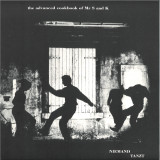
Andreas Koeper is a German contemporary/experimental composer and drummer with a background in Philosophy and Art history. “Niemand Tanzt” was originally released in 1989 and in the past years it has become a sought after obscurity amongst diggers ever since Chee Shimizu put it on the radar after unearthing it throughout inspection rounds in Berlin record stores. Although the A-side might have been the essence of the single at the time, it's the B-side's “Pink Rhythm” that puts this release on the map for DJs, the track's gradient from an empty half tempo to rich 4 on the floor patterns serves any well versed DJ as an on-ramp for new gears to be put into place as the track grows into various ramifications of Andreas' studio production techniques: playful percussive elements, provocative guitar riffs over a solid rhythm section. Freshly remastered by manmade in Berlin.
Following up on the worldwide success of their new album Education & Recreation, Surprise Chef drops a must have two-sider for those of us who can't get enough 45s. The A side, "Money Music" is a bassline driven mid tempo tune that catches you from the first note and carries you through all the gorgeous changes. Piano, vibraphone, and guitar trade places over a watertight drum track that builds up, drops down, builds up again, and changes to half time to take it all home. The B side "Suburban Breeze" kicks in the door with an intro that is bound to be sampled and will get your blood racing and your head nodding. They lure you in with the neck snapping intro that is bound to be sampled and bring you from mood to mood as they change the energy from tough as nails to floaty and groovy, and back to tough as nails. Also Available From Surprise Chef: Education & Recreation LP / CD, Velodrome b/w Spring's Theme 7”.
Official AFRODELIC reissue of the ultra-rare Tunde Mabadu’s debut album. Originally released in 1978 on Blackspot label (DECCA’s West Africa division), Bisu, which includes the supergroovy ‘Red Jeans’, differs from the later 1980 ‘Viva Disco’ album by a much more pure African style.
A beautiful and soulful production in which Tunde’s deep voice and sax move on the excellent horns arrangements, percussions, the wahwah rhythm guitar and weird keyboards and synths (at times psychedelic as in the ‘Blue Bird’ 9 minutes).
As wrote on the original liner notes of the era “His music will mesmerize you from the first track. A dedicated Musician especially to his African Roots with so much to offer Musically”.
Franco Esse is the moniker of Francesco Semproni, who in the late 60s began working as a music and recording assistant in major recording studios in Rome, Italy. He started out at Dirmaphone (then located in Via Pola) under sound engineer Gianni Fornari, before following him to the Emmequattro studios in Viale Mazzini, which at the time were the headquarters of Edipan, the record label founded by composer and conductor Bruno Nicolai after parting ways with friend and fellow composer Ennio Morricone.
Semproni tried to become a singer-songwriter in the early 80s, when he recorded a number of demos with the session musicians who gravitated around the studios. None of these demos was ever released though, for reasons that are still unclear today – his thorny and stubborn personality may have been a factor, since it apparently made him reluctant to compromise with the major record labels of the time.
The unsuccessful efforts to launch his solo artist career led to a personal crisis, and Franco Esse eventually quit music to go to work as a sales assistant in a toyshop in Rome's Prati neighbourhood.
Today he seems to have vanished without a trace, but after extensive research, we managed to dig some of his demos out of an abandoned archive and miraculously bring back to life two semi-instrumental tracks he recorded in 1983.
Both of them reveal Franco Esse as a refined musician with a reserved personality, an almost minimalist approach to lyric-writing, and a strongly cinematic synth-pop style that is in line with the musical trends of the time and gives a nod to the soundtracks of Fabio Liberatori, falling somewhere in between slow-wave and new-romantic.
These two ballads would have been the perfect soundtrack to cold winter nights in the early 80s, with snowflakes floating down on ski slopes, people clad in puffy down jackets, and music pouring into headphones from walkmans kept in back jean pockets.
Samuel L Session and Van Czar drop a four-track techno EP on Unrilis that showcases a deeper and more hypnotic sound with dystopian atmosphere and driving percussion. Rino Cerrone launched the Unrilis record label over 15 years ago, and part of the label's back catalogue is its iconic Rilis series. 2022 sees the relaunch of the Rilis series that has a focus on underground DJ tools with raw analogue sounds. The Rilis series was originally launched in 1999, and was restricted to a concept on only 10 releases, each pressing a limited run of vinyl. It was hugely popular with each one often selling out in only a week and picking up DJ support by people ranging from Jeff Mills to Richie Hawtin. Those first 10 releases were focused on Rino Cerrone's own music, but since his retirement from the industry, the revitalised Rilis series will welcome other artists whose sound matches the label's underground concept.
This latest release in the Rilis series features collaborative tracks by Samuel L Session and Van Czar who have previously teamed up for releases on other imprints ranging from Marco Bailey's MB Elektronics to Ben Sims' Hardgrooves. Both are also successful solo artists, Sweden's Samuel L Session being well-known for his headline DJ sets at clubs around the world, along with the music he has released via iconic imprints such as Slam's Soma, Shlomi Aber's Be As One, Len Faki's Figure and Emmanuel's ARTS plus his own imprints SLS, Cycle, New Soil, and Klap Klap Belgium's Van Czar is also an accomplished DJ who is well-established across Europe and he has also released music on respected record labels ranging from Kevin Saunderson's KMS Records as well as the classic imprint, Yin Yang.
'Air Raid' opens the release with its eerie pads, spine-tingling melody loop and machine-driven percussion. It's got a raw aesthetic with dramatic claps and snare fills that add to the building suspense.
'18-022' is a dark and stripped back track with modulating synth textures layered with fast-flowing high-end percussion. Its pounding kick drum and clap rhythms add rigid structure to its expansive atmosphere and dance floor focused groove.
'Route 200' has thrashing cymbals punishing claps and rippling pads that create a stripped back groove submerged in deep atmosphere. Rich with analogue textures and gritty sound design, its relentless energy is tailor made for club sound systems.
'Objectivism' closes out the release with it's funky bassline and bleeping melody. Whirling textures and fluttering percussion maintain an unrelenting tension that's driven forward by the pounding kick drum.
18 track compilation of cult '80s French rock band Les Calamités,
includes their biggest hit "Vélomoteur" and tracks with the bands the
Dogs and The Barracudas Available as a digipak CD with 36-page booklet and vinyl with 8 page booklet and download code, with liner notes in French and English. Wouldn't it do them justice to rid Les Calamités (literally "the calamities") of the embarrassing phrase "girl band", durably stuck to their skins and plaited skirts? It's nothing but a pink puffy cloud obscuring their true importance as a "band" full stop, as well as their fleeting though mind-bending trajectory. In just a few months after going on stage with a handful of original songs recorded here and there, they became, from Dijon to Rouen, Paris to Toulouse, Bordeaux to Strasbourg, the darlings of an uncompromising rockers' demanding scene. Tolerated by some, maybe, they were also consecrated, certainly (should they have needed the accolade). The trade-off was a succession of quick and distinctive verse-choruses for which the adjectives "fresh" and "light" seemed to have been invented again.
They delivered just as many covers, which gave an idea of the origins of their songwriting: one foot in the fifties (on the dancefloor), the other in the sixties (in the garage). All of this leading to their final hit, a successful incursion in the top sales with a popular song for everyone to hum at ease, from seaside campsites to the cool kids of the capital.
Everything the Calamités touched, with their classy, rigorous, casual ways - plus just enough amused detachment - turned into gold.
CURRENT RAGE - The missing musical link between Athens and Atlanta
To celebrate the 40th Anniversary of the out-of-print forgotten classic, Propeller
Sound Recordings is set to release and remastered and expanded edition of
"Seven Songs". Fully immersed in the do it yourself aesthetic of the early-R.E.M.
era, Current Rage's sole indie record is highly regarded by record collectors
seeking out early eighties DIY releases. The relative scarcity of the original EP
today suggests the item does not circulate on the marketplace very often making
it ripe for reintroduction to the current marketplace with this expanded version.
Anthony DeCurtis of Rolling Stone wrote, "an enviable and impressive explosion
of new music was emerging from the Atlanta Athens area at this time" Current
Rage drew inspiration from Talking Heads, Pylon and R.E.M.
I am proud to present the first EP featuring artists from my Patreon community on Electric Ballrom. A project very close to my heart, Patreon is a place where like minded people from across the globe meet, share knowledge and help each other grow. The first result of this a joint effort, every track a road tested gem, showcasing the raw talent and dedication of the artists. (Thomas Schumacher)
Fukuinn's 3rd release on vivid blue color vinyl. A1 is edgy electro sounds from Bristol's "Lost Signal" resident trackmaker Fazack. A2 is a deep and floating track by Relaxant. He's released an EP on Florklang Records and is one of the hottest young artists out there. On B1, Böhm, known for his acid and bleep sounds, surprises with an acid-heavy masterpiece. His successes and releases in recent years have been very inspiring. Lyon's genius, Foreign Sequence, played the best bizarre sound with pleasant melody on the last track.
If you decide to look up the strict definition of outsider in any dictionary, you'll find that the term is understood as "a person who is not involved with a particular group of people or organization or who does not live in a particular place".
Perhaps this is the most accurate description of Santiago Merino. For a long decade and from his native Medellín, this DJ and producer has always tried to keep his sonic spectrum open. An interdisciplinary artist capable of freely navigating through a myriad of genres is rarely encountered, and that may be the reason why Santiago enjoys a non-negotiable respect in the different scenes that make up the music circuit of his city. On this occasion, Back Door Records is pleased to serve as host to receive one of the most anticipated facets within the range of music produced by this Colombian artist.
The Outsider marks the debut of a new project signed by Merino, a new hunch in which house takes the helm of an EP entitled 4 Club Use. Composed of five tracks, 4 Club Use seems to show us the true essence behind a genre that has almost been trivialized over the years. In this case, El Outsider decided to take the basic ingredients of tech house to produce a recipe much richer in flavors, textures and melodies. "Fire People", for example, leaves the window open for the airs of Detroit techno to come in and cool off any sunny afternoon. "Outsider" and "The Heat", on the other hand, are seasoned by the purest amen breaks, as if it were a blessing intended solely for the dance floor.
But the real deal across 4 Club Use is definitely El Outsider's own edit of Merino's track "Those Days". Raw and forceful kicks, meticulously sampled vocals and pads that seem to wrap them magically, make this bomb one of the candidate tracks to take the absolute podium of 2023.
Taken from “What Goes Up Remixed” LP from 2019, licensed exclusively from Future Rootz in Chicago, Dinked Records are pleased to commit two of the standout remixes to 45 with Cut The Infection edited down to fit our favourite format. Guaranteed to rock your dancefloors this festive season – if these bangers don’t get your head nodding then nothing will!








![Current Rage - Seven Songs [40th Anniversary Expanded Edition]](https://www.deejay.de/images/l/2/8/1009328.jpg)