The long-overdue revival of Bim Sherman’s catalog begins here. These essential recordings will become widely available again for the first time in decades, opening a new chapter in the appreciation of one of Jamaica’s most distinctive voices and representing a major moment for reggae and dub aficionados around the world. This reissue series will not only preserve his legacy but will also offer listeners the chance to experience the depth and timeless resonance of Sherman’s work in its full glory.
Bim Sherman—born Jarret Lloyd Vincent, in Westmoreland, Jamaica—holds a unique place in reggae history. Emerging in the mid 70s, his ethereal, haunting vocal style quickly set him apart from his contemporaries. He was soon collaborating with the top producers and musicians of the era, including Adrian Sherwood and the On-U Sound collective, bridging the gap between roots reggae and experimental dub and laying the groundwork for the fusion of Jamaican sounds with the vibrant underground scene in the UK. His career, from Kingston to London to Mumbai, was marked by an artistic daring and spiritual intensity that has earned him enduring respect across generations.
The centerpiece of this reissue campaign is Ghetto Dub from 1988, a record that distills Sherman’s artistry into its most potent form. Originally released in a limited number, the album embodies the stark yet soulful beauty of dub production. With its reverb-drenched drums, cavernous basslines, and echo-laden atmospherics, Ghetto Dub transforms Sherman’s various tracks into spectral presences that drift in and out of the mix. The arrangement and production—minimal yet profoundly textured—captures both the raw urgency of Jamaican street culture and the forward-looking experimentation of the UK dub scene. Each track unfolds like a meditation, balancing grit with grace, density with space. Ghetto Dub is more than an album; it is an immersive soundscape that reaffirms Bim Sherman as one of reggae’s most otherworldly and visionary figures.
Buscar:füse
WRWTFWW Records is pleased to announce its fifth collaboration with NY-LA ambient / jazz / downtempo musician Danny Scott Lane with the first ever vinyl release of his 2022 full-length album Holy Goodnight, available on limited edition LP (500 copies worldwide) housed in a heavyweight sleeve.
After Home Decor, Shower, Caput, and Songs For Sex, here’s another Danny Scott Lane classic. On Holy Goodnight, he handles synths, keyboards, bass, guitar, percussion, and field recordings for a smooth nightride through city pop, contemplative jazz, vaporwave, slow funk, cozy ambient, library music vibes, and relaxed moods.
Holy Goodnight feels like cruising through a half-asleep city with the windows down and the radio low—lush harmonies and soft grooves guiding the way. It’s warm and hazy music for late hours and early mornings, introspective, comforting, cinematic, intimate…
Following the release of chillout staples on WRWTFWW, Danny Scott Lane further cements his unmistakable sonic universe. Complete the collection and sink deeper into the night.
Points of interest
For fans of ambient jazz, city pop, downtempo, smooth funk, vaporwave, library music, night drives, neon lights, quiet introspection, cozy late hours, and peaceful goodnights.
Super limited edition vinyl (500 copies worldwide) of Danny Scott Lane’s Holy Goodnight, available on vinyl for the first time ever.
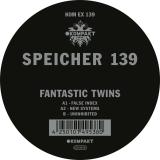
“It’s been on my wishlist for a while that the incredibly talented Julienne Dessagne does a techno EP for us,” Michael Mayer says. You can hear why, straight up, on Speicher 139, as Dessagne’s project Fantastic Twins is finally let loose on Kompakt’s storied series. The key words: psychedelic acid trax. “False Index” is peeled back to core: a fearsome rhythm, with an endlessly helixing synth pattern twisting around your skull, crinkling like cellophane and warping like burnt plastic, while Dessagne’s Sprechstimme floats above everything – detached but effortlessly perceptive. “New Systems” is a new kind of Europe Endless – hypnotic and lush, its deep drones pinpricked by sonar bleep. “Uninhibited” is catchy in a way that only Dessagne can make possible, its vocal tattoo burnt into your mind as it echoes through massive architectures, tones dropping from scaffold and splashing at your feet as glitch-work burrows its way up through the floor, directly into your earholes. Uninhibited? Everything here’s simultaneously under control, all under the watchful, guiding eye of Dessagne, and playfully, wildly out of control, little arrangements of phenomena let loose to build new worlds. Organised chaos, and chaotic organisation.
„Es stand schon seit einiger Zeit auf meiner Wunschliste, dass die unglaublich talentierte Julienne Dessagne eine Techno-EP für uns produziert“, sagt Michael Mayer. Auf Speicher 139 kann man sofort hören, warum, denn Dessagnes Projekt Fantastic Twins erscheint endlich in der legendären Serie von Kompakt. Die Schlüsselwörter: psychedelische Acid-Trax. „False Index“ ist auf das Wesentliche reduziert: ein furchteinflößender Rhythmus mit einem sich endlos windenden Synth-Pattern, das sich um den Schädel dreht, wie Zellophan knistert und sich wie verbranntes Plastik verzieht, während Dessagnes Sprechstimme über allem schwebt – distanziert, aber mühelos wahrnehmbar. „New Systems“ ist eine neue Art von Europa Endlos – hypnotisch und üppig, seine tiefen Drones von Sonar-Pieptönen durchbrochen. „Uninhibited“ ist eingängig auf eine Weise, wie es nur Dessagne möglich macht, ihre Stimme brennt sich in dein Gedächtnis ein, während sie durch massive Architekturen hallt, Töne fallen vom Gerüst und spritzen an deinen Füßen, während sich Glitch-Work seinen Weg durch den Boden bahnt, direkt in deine Ohren. Hemmungslos? Hier ist alles gleichzeitig unter Kontrolle, alles unter dem wachsamen, leitenden Blick von Dessagne, und spielerisch, wild außer Kontrolle, lassen sich kleine Arrangements von Phänomenen los, um neue Welten zu erschaffen. Organisiertes Chaos und chaotische Organisation.
This first-time reissue of Quinteplus’ 1971 album revives a key moment in Argentine jazz, featuring crisp trumpet and tenor sax, electric piano-driven funk and modal grooves, and a tight, spacious rhythm section. It showcases prominent figures like Jorge Anders and “Pocho” Lapouble.
==================================
Quinteplus was born in Buenos Aires at the end of the 1960s, emerging directly from the ideas and experiments of the legendary Agrupación Nuevo Jazz. Founded in the early ’60s, this collective brought together some of the most forward thinking figures in Argentine jazz functioned as a creative lab where musicians questioned where jazz could go next. Among the key ideas discussed was the fusion of jazz with Argentine folk styles such as zamba, chacarera, malambo, cueca, and candombe, as well as a deeper look into African rhythms as a bridge between musical worlds.
Two members of that collective, keyboardist Santiago Giacobbe and bassist Jorge “Negro” González, carried those ideas forward when they formed Quinteplus in 1969. The group came together naturally: all the musicians already knew each other and had played in different projects around the Buenos Aires scene. They shared a strong admiration for Julian “Cannonball” Adderley’s quintet, along with a clear goal—to develop a modern jazz language grounded in local Argentine rhythms.
From the start, Quinteplus stood out for its openness and adventurous spirit. Rhythm was central, and so was experimentation. The band belonged to a generation of Argentine jazz musicians eager to explore electric instruments and new textures, anticipating what would soon be known as jazz-rock. This was happening in Buenos Aires at the very same time Miles Davis was opening new doors with “In a Silent Way” and “Bitches Brew”. Giacobbe introduced one of the first Fender electric pianos in Argentina, while González pioneered the amplification of the upright bass and even developed a hybrid electric, boxless version of the instrument. Trumpeter Gustavo Bergalli, meanwhile, maintained close ties with the emerging Argentine rock scene, collaborating with Luis Alberto Spinetta and appearing on Almendra’s first album.
In 1971, Quinteplus recorded its first and only studio album for EMI. The original lineup featured Jorge Anders on tenor saxophone, Bergalli on trumpet, Giacobbe on keyboards, González on upright and electric bass, and Norberto “Pocho” Lapouble on drums and percussion—who also illustrated the album’s iconic sleeve. The record is a refined showcase of the band’s musical vision: original compositions, fluent jazz language, folk-derived rhythms, funky electric textures, tight ensemble playing, and standout brass solos. Though critically praised, the album received little label support and sold modestly, eventually becoming a sought-after collector’s item.
Quinteplus disbanded in 1973, their music was perhaps too bold and unconventional for its time.
Returning with his first artist album in 13 years, revered techno innovator Mike Parker continues to shape out his explorations around 170 with his latest work for Samurai Music, Echo Disintegrator. Transcending genre lines with his unmistakable sonic stamp, the seasoned US producer crafts an extended trip through his exacting, lithe frequencies and brutalist rhythms. As evidenced on recent EPs Envenomations and Sabre-Tooth, Parker can comfortably slip into a hard-stepping D&B structure and make it his own. 'Earth Energy Imbalance' leaps forth with precision and purpose, wrapping atonal synth shapes around the stark beat in staggering high definition. 'Positronic Tentacles' finds a similar rolling momentum, even threading ruthlessly trimmed vocal snatches into the lyrical pulse of the lead tones. 'Radiative Force' teases its own mutant funk out of the envelopes shaping the molten sonics coursing through the middle of the frequency range. Elsewhere, Parker explores a variety of accented grooves around typical D&B tempos, remaining reliably broken while dipping into half-time space on 'Lunar Nocturne' and finding a low-slung swagger in the carefully deployed pressure of 'Ghost Rain' and 'Echo Disintegrator'. 'Beat Activator' pivots on a dense bed of bass with a crooked, off-beat slant before 'Dragon Bravo' casts a similarly dembow-informed beat into a dense tapestry of cyclical machine shrieks and snarls. There is a ruthless consistency to Parker's approach across Echo Disintegrator, riding the loops without flinching and forcing the focus deep into the minutae of every sonic element. Both brilliantly functional and profoundly subtle, there's a visceral, physical quality to the sound design that makes it a listening experience like no other.
ICONYC steps into new territory with Traffk, a spellbinding EP from UVITA, Twiins, and Motip White. Built around two deeply immersive compositions, Traffik operates as a threshold rather than a destination — a carefully measured passage into unfamiliar territory where tension is curated, expectations are subverted, and every detail feels deliberately withheld until the right moment.
At the center lies the title track, “Traffik,” a commanding convergence of three distinct creative voices distilled into a singular, unsettling vision. Suspended between austere minimalism and intricate design, the piece unfolds with a forceful rhythmic backbone that plunges into subterranean depths. Twisting brass motifs flicker and bend like fractured light across polished surfaces, creating an atmosphere that is both tactile and elusive. As the groove locks into a hypnotic oscillation, a spectral vocal presence emerges, injecting a sense of weight and foreboding before the track fractures inward, collapsing into a violent release that ejects us from its vortex with uncompromising intensity.
On our B-side, UVITA and Twiins reconvene for “Lucy Tried For It,” a continuation that trades overt drama for a slow-burning psychological pull. Anchored by a prowling low-frequency current and a relentless percussive drive, the track draws us deeper through carefully placed sonic detonations that expand its spatial dimension. Gradually, malfunctioning mechanical textures and distant, almost feral cries seep into the framework, setting the stage for an introspective spoken-word moment that nudges the piece further into the subconscious. As fragmented melodic elements begin to surface, “Lucy Tried For It” reaches a moment of suspended reflection before surging forward once more, closing the EP on an emotionally charged and resolute note.
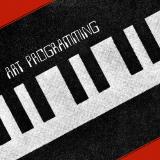
We are excited to continue our work with Art P / Art Programming by finally offering the first full-length work from this Bremen-based electronic group. Originally released only on cassette in 1983, the self-titled album has now been fully restored and remastered, complete with bonus tracks and unreleased mixes unearthed from a rare demo.
The LP opens with "Wesen vom anderen Stern" ("Beings from Another Planet"), a downtempo, 808-driven electro synth wave track with German lyrics telling a story of aliens capturing earth, becoming the new "Herren" (lords), while humans are reduced to mere "objects." Art Programming founding member Jens-Markus Wegener notes that this track has always been a favorite during live performances, and it's easy to imagine how the futuristic sounds would have blown people away at the time.
Next is the electro/proto-techno title track "Art Programming," which we previously issued on a limited 12" in its full-length form. With its straightforward Roland 808 rhythms, catchy synth lines, and vocoder vocals, it's a classic example of German electro, and one of the earliest proto-techno tracks - long before Cybotron claimed the techno mantle. Its extensive break and electronic twist make it an early precursor to the genre. Wegener recalls that this track was created exclusively by him and Grotelüschen, with Grotelüschen contributing most of the melodic elements, while Wegener focused on drum machine programming and vocoder vocals.
On "That's Me," the album welcomes back singer Claudia Roebke. Although it's an electronic composition, Roebke adds a rock-infused, almost psychedelic vibe to the song. The lyrics, written by Wegener, depict a person obsessed with their appearance, using irony to critique societal beauty norms, questioning the obsession with perfection and attraction.
The album continues with a series of uptempo electro tracks: "Videoscreen," "La Gare," and "Genscher Pull 'N' Push." The first two feature slightly different mixes from an earlier demo that we personally prefered over the versions that were available on the final cassette release. "Videoscreen" expands on the theme of social isolation, with lyrics reflecting on a world obsessed with watching video all day - a topic that resonates strongly with today's culture of doom scrolling and social media addiction.
Next up, "Genscher Pull 'N' Push" is an incredible electro/wave/proto-techno track recorded in October 1982 with a political edge. Originally omitted from the album, it was only available on the demo cassette we mentioned earlier. The song takes aim at German politics, with lyrics that shout "bitte geh nach links / bitte geh nach rechts" ("please go to the left" and "please go to the right"), referencing the shifting political allegiances during the 1982 coalition change, when Genscher's party, the FDP, left the Helmut Schmidt cabinet to join the CDU/CSU opposition. The track was never released as the political topic had become outdated just a few months later.
The album closes with "Light and Fire," which originally served as the album's opening track. Its quirky, upbeat vibe now makes for a fitting outro.
The gear used on this album reads like a dream list for early 80s electronic music production: Roland Jupiter 4, TR 808, TB 303, System 100, SVC 350, Korg Mono/Poly, Moog Prodigy, FRICKE-Sequenzer, Roland CSQ-100 Sequenzer, Coron DS-8, MM 12/2, Sony TC 399, TEAC-244 Portastudio, Ibanez DM 1000, EH-Electric Mistress, EV-Micro. This unique lineup of equipment sets the album apart from NDW releases of the era, lending it a distinct sound with heavy proto-techno leanings and that straightforward electro vibe we all love.
The album is being released as a very limited edition of 300 copies on transparent red vinyl, complete with a full picture sleeve and lyrics inlay. This is yet another rediscovered and restored 80s gem on our label that you definitely don't want to miss!
- A1: Countdown
- A2: Schön Ist Ein Jugendtraum
- A3: Sozialpartner-Blues
- A4: Streikposten
- A5: Kalte Wut
- A6: Wenn Ich Einmal Reich Bin
- B1: Streikposten
- B2: Gonzales
- B3: Karl Liest Ein Flugblatt
- B4: Die Wirtschaft Ist Jetzt In Gefahr
- B5: Der Imker
- B6: Streikposten
- B7: Deine Freiheit
- B8: Vergleiche
- C1: Der Löwenthatler
- C2: Was Ein Kommunist Trinken Darf
- C3: Streikposten
- C4: Wenn Es Brennt
- C5: Streikposten
- C6: Lüge Zum Abschied
- D1: Freie Marktwirtschaft
- D2: Wenn Dich Jemand Fragt
- D3: Für Die Zukunft Sehen Wir Rot
- D4: Unternehmerrätsel
- D5: Saurier
- D6: Aktionseinheit
- D7: Wir Sind Millionenmal So Stark
Floh de Cologne – Lucky Streik ist ein Klassiker der deutschen Krautrock-/Rockgeschichte, erstmals veröffentlicht Anfang der 1970er Jahre und nun wieder als 2LP-VinylEdition erhältlich. Die Platte vereint politisch engagierte und experimentelle Rockmusik mit gesellschaftskritischen Texten, für die die Band bekannt ist
- A1: Status Quo - Rockin‘ All Over The World
- A2: Rainbow - Since You Been Gone
- A3: The Rubettes - Juke Box Jive
- A4: Blondie - Heart Of Glass
- A5: Roy Orbison - Only The Lonely
- A6: Dion - Runaround Sue
- A7: Ray Charles - Hit The Road Jack
- B1: Secret Service - Oh Susie
- B2: Buggles - Video Killed The Radio Star
- B3: Bruce Channel - Hey! Baby
- B4: Hello - Till Him
- B5: Elvis Presley - It‘s Now Or Never
- B6: Fifth Dimension - Monday, Monday
- B7: Brian Hyland - Sealed With A Kiss
Vol. 1[13,87 €]
Mit „Golden Chart Hits Of The 60s & 70s Vol. 2“ erscheint eine sorgfältig zusammengestellte Vinyl-Compilation, die die größten Chart-Hits zweier legendärer Musikjahrzehnte vereint. Diese Schallplatte lässt den unverwechselbaren Sound der 60er und 70er Jahre wieder aufleben – voller Nostalgie, Lebensgefühl und zeitloser Melodien.
Die Auswahl reicht von mitreißendem Rock über eingängigen Pop bis hin zu unvergesslichen Evergreens. Mit legendären Künstlern wie Status Quo, Rainbow, Blondie, The Rubettes und Secret Service bietet diese Compilation eine abwechslungsreiche Mischung aus internationalen Klassikern, die Musikgeschichte geschrieben haben.
Das warme, authentische Klangbild der Vinyl-Pressung sorgt für ein besonderes Hörerlebnis und macht diese Zusammenstellung zu einem echten Highlight für Liebhaber analoger Musik
Since debuting his Black Eyes project on Lost Control 2097 back in 2022, Matthew Jesus has developed his own trademark take on deep house - a suitably aquatic and psychedelic affair that he calls 'Hydro-Trip'. Elements of that sound can be heard on his Selections label debut, alongside nods to Motor City deep house and more soulful flavours. For proof, check gorgeous and tactile opener 'Honeyfish' and the even more soulful warmth of 'Motor City Surfin', which doffs a cap to the likes of Alton Miller and Rick Wade. 'Seaweed Tongue' is a more drowsy, jazzy and immersive deep house workout with more sampled vocalisations, while 'Trippin' In Waves' pairs rubbery drums and P-funk bass and plenty of spacey electronics. Haf S reworks the latter via his 'JEEPMIX', a dreamy, hypnotic and spaced-out sunrise-ready delight.
The earliest foundations of the Detroit Harmony group ‘The Gaslight’ came when future lead singer Oliver “Butch” Cheatham via an introduction by his sister Jackie joined a group known as ‘The Young Sirs’ who recorded, “There’s Something The Matter (With Your Heart/African Love” for Magic City during 1969. The group included Oliver’s future brother -in-law Allen Cocker (Jackie’s future husband).
Oliver and Allen went on to form a new vocal quartet with Curtis “Kippy” Anderson and Michael Eatmon. Under the group name of ‘The Gaslight’ they signed to Uptight Productions Incorporated, a local production company founded by local businessmen Marvin Figgins and Arnold Wright. The Gaslight were the only vocal harmony group signed to Uptight Productions and as such, it was they who made the most recordings across two label imprints Grand Junction and Black Rock. The Gaslight’s first single “I Can’t Tell A Lie/Here’s Missing You” was released on Grand Junction (GJ1001) in 1970, For the groups second single Figgin’s placed them under the guidance of legendary producer/songwriter, the late George McGregor under whom they recording “Drifting Away/If You See Her” Grand Junction (GJ1002) released in 1971 For their next release Figgin’s switched the group to his Black Rock label to record “Out Of My Hand/I’m Only A Man” Black Rock (2002) under the pseudonym of Butch & The Newport’s With “Butch” being Oliver’s nickname. A later, second release of “I’m Only A Man” but with a different flip side “I’m Gonna Get You” came out on Grand Junction (GJ1100) in 1973 with the performing artist credits reverting back to ‘The Gaslight’.
Upon leaving Uptight Production’s the group found a new home when George McCregor took them to a new fledgling label T.E.A.I (an abbreviation for “Tellin’ Everybody About It”) owned by ‘The Dramatics’ Road Manager Charles Underwood. ‘The Gaslight’s’ first and only release for T.E.A.I, was the mellifluous 1975 double sider “Just Because Of You/It’s Just Like Magic”. Underwood had precured a working relationship with Polydor Records who picked the release up for national distribution three months later. As good as the record was due to poor promotion it failed to make any notable noise and eventually sank with the group soon after breaking up.
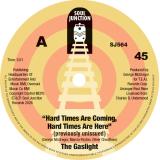
During Soul Junction’s later dealings with the late Oliver Cheatham, respected UK Collector Andy Rix mentioned he owned a three track acetate containing the two mentioned T.E.A.I/Polydor tracks plus a third unissued dance track “Hard Times” which through a licensing deal with Charles Underwood Soul Junction now present to you on a three track 45, released under its full title “Hard Times Are Coming, Hard Times Are Here” backed with a previously unissued mix of “Just Because Of You” alongside the issued 45 version of “It’s Just Like Magic”.
The fifth transmission in the XTRICTLY ELEKTRO series connects the past and future of the genre in one powerful statement.
Side A channels the sharp, forward-driven pulse of the new school — EC13, Elektrotechnik, and Parand deliver cutting-edge vibes built for the modern floor. Side B pays tribute to the roots with Calagad 13, DJ Overdose, and Motorobot — a legendary alliance between Bass Junkie and Dynamik Bass System, returning for only their second-ever collaboration.
A bridge between eras: classic heritage meets futuristic sound design — timeless, synthetic, and deeply interconnected.
Limited edition of 150 copies.
RAWAX proudly welcomes Mike Dehnert to the artist Family! We are very happy to present
you this great Producer/ DJ from Berlin on the RX Series. Starting with "Freiraum EP" which came out originally on Mike's onw imprint, called Fachwerk in 2008.
You will hear in future also new music from Mike on RAWAX.
Stay tuned!
- A1: Water
- A2: Come Back
- A3: Fighting
- A4: Wicked Boy
- A5: Candy
- B1: Mis
- B2: Master
- B3: New
- B4: Know Now
- B5: Rules
- B6: Message
VERY LIMITED TRANSPARENT PURPLE COLOURED VINYL - 100 UNITS ONLY FOR EUROPE
Lucky Number are thrilled to announce the release of both TRICK and RULES the latest albums to be released by the Philadelphia-based songwriter Alex Giannascoli, more commonly known as Alex G. Trick and Rules follow on the acclaimed heels of the November 2014 international release of Alex's fifth album, DSU. Recorded prior to DSU and previously only available via Alex's Bandcamp account, the albums have now been professionally mastered and are being made commercially available for the very first time.
Rules is soaked in the distinctive personality that is Alex G, the professionally mastered versions of these tracks further highlight that Alex has a serious knack for melodic songwriting.
In addition, Lucky Number are also thrilled to be releasing Trick, Alex's fourth album. Written and recorded just a few months after Rules, they both harbour a similar charm that makes it feel right for them to be released together.
Both Trick and Rules continue to showcase a prodigious song-writing talent, reaffirming that Alex G is one of the most promising and prolific American musicians today.
- A1: Donna Summer - Hot Stuff
- A2: Thelma Houston - Don‘t Leave Me This Way
- A3: Barry White - You‘re The First, The Last, My Everything
- A4: Rose Royce - Car Wash
- A5: Dollar - Shooting Star
- A6: New Paradise - Showman
- A7: One Hundred Ton And A Feather - It Only Takes A Minute
- B1: Blondie - Sunday Girl
- B2: Gloria Gaynor - Reach Out I‘ll Be There
- B3: Tommy Hunt - Loving On The Losing Side
- B4: Stevie Wonder - Signed, Sealed, Delivered (I‘m Yours)
- B5: Kool & The Gang - Too Hot
- B6: Roots - What Are You Doing In Casablanca
- B7: D D. Sound - 1, 2, 3, 4, Gimme Some More
Tauchen Sie ein in das glitzernde Lebensgefühl der 1970er Jahre! Mit „70s Disco Hits Vol. 3“ holen Sie sich die größten Dancefloor-Klassiker einer unvergesslichen Musikära direkt nach Hause – energiegeladen, zeitlos und voller Groove.
Diese exklusive Vinyl-Compilation vereint ikonische Künstler und Welthits, die die Disco-Welle geprägt haben:
• Donna Summer – Die „Queen of Disco“ begeistert mit ihren elektrisierenden Hymnen und unverwechselbarer Stimme.
• Barry White – Samtweiche Soul-Vibes und unverkennbarer Groove.
• Blondie – Disco trifft New Wave mit ikonischem Sound.
• Stevie Wonder – Funkige Rhythmen und musikalische Meisterwerke.
„70s Disco Hits Vol. 3“ bringt das Gefühl von Spiegelkugeln, Plateauschuhen und durchtanzten Nächten zurück – eine musikalische Zeitreise in die goldene Ära der Disco.
Let the music play – und machen Sie Ihr Wohnzimmer zur Tanzfläche!
This album brings together key tracks from Doug Carn recorded for Black Jazz Records in the 1970s.
Doug Carn is one of the most-important (and least-recognised) forces in the creation of the canon of 'deep and spiritual jazz music' - full of powerfully emotive intensity, consciously-uplifting lyricism and addictively beautiful melodies.
All of his LPs during this period have since achieved cult classic status including 'Infant Eyes', 'Adam's Apple', 'Spirit of the New Land' and 'Revelation'.
Aside from his songwriting and keyboard skills, many of the tracks here feature the stunning and powerful 5-octave range vocals of Jean Carn (later Carne), his wife at the time.
Musicians featured on this album include Alphonse Mouzon, Charles Tolliver, Henry Franklin, Michael Carvin, Walter Booker, Ronnie Laws and others. Aside from Carn’s compositions there are also striking interpretations of music by Lee Morgan, Miles Davis, John Coltrane, McCoy Tyner, Bobby Hutcherson and Wayne Shorter.
Black Jazz became one of the defining labels of independent and conscious jazz music in the 1970s alongside other important labels such as Strata-East and Tribe Records. As well as this Best of Doug Carn release, Soul Jazz Records are also releasing a Best of Black Jazz Records collection at the same time.
- 01: U Can't Come Home (Feat. Ts Graye)
- 02: Quakin’
- 03: The Right (With Confidence Man)
- 04: If This Is It (Feat. Dan Whitlam)
- 05: Turning The Page
- 06: Of Joy (Feat. Ary)
- 07: The Wave (Feat. Just Lil)
- 08: In The Morning (Feat. Moyka)
- 09: Everything U
- 10: Something That I've Never Known (With Sg Lewis)
- 11: Our Mother’s Walk
- 12: If This Is It (Lake Erie Mix)
Green Vinyl[25,63 €]
With his highly accomplished third album If This Is It, DJ Seinfeld (Armand Jakobsson) evolves further into the artist he always set out to be, refining his emotional, club-leaning sound across nostalgic house, UKG, and 2000s-tinged trance.
The 12-track LP — featuring SG Lewis, Confidence Man, TS Graye, Dan Whitlam, ARY, “Norwegian pop witch” Moyka, and Barry Can’t Swim affiliate just lil — explores letting go in a world that can often feel overwhelming.
“A million ideas turned into a few, a few turned into no ideas at all, and no ideas eventually turned into one,” says Jakobsson of the album, which he began the week his acclaimed 2021 record Mirrors was released. “Through writing it, I’ve tried to turn long-held anxieties into acceptance, and I hope listeners can take their own meaning from it.”
- 01: U Can't Come Home (Feat. Ts Graye)
- 02: Quakin’
- 03: The Right (With Confidence Man)
- 04: If This Is It (Feat. Dan Whitlam)
- 05: Turning The Page
- 06: Of Joy (Feat. Ary)
- 07: The Wave (Feat. Just Lil)
- 08: In The Morning (Feat. Moyka)
- 09: Everything U
- 10: Something That I've Never Known (With Sg Lewis)
- 11: Our Mother’s Walk
- 12: If This Is It (Lake Erie Mix)
Clear Vinyl[25,63 €]
With his highly accomplished third album If This Is It, DJ Seinfeld (Armand Jakobsson) evolves further into the artist he always set out to be, refining his emotional, club-leaning sound across nostalgic house, UKG, and 2000s-tinged trance.
The 12-track LP — featuring SG Lewis, Confidence Man, TS Graye, Dan Whitlam, ARY, “Norwegian pop witch” Moyka, and Barry Can’t Swim affiliate just lil — explores letting go in a world that can often feel overwhelming.
“A million ideas turned into a few, a few turned into no ideas at all, and no ideas eventually turned into one,” says Jakobsson of the album, which he began the week his acclaimed 2021 record Mirrors was released. “Through writing it, I’ve tried to turn long-held anxieties into acceptance, and I hope listeners can take their own meaning from it.”
Geoglyph is the new duo project by Alohn and Khey Mysterio, a convergence of two deeply singular practices into a single subterranean signal. Their debut album arrives as the eighth reference on Organic Signs, not as a collection of tracks but as a carved artifact: six inscriptions pressed into vinyl, mapping a sonic territory where time, rhythm and texture are no longer linear, but layered like geological memory.
Through Geoglyph, Alohn and Khey Mysterio convey a message from below, or beyond. A pulse engraved from forgotten times in the basement of reality, reactivated by abyssal basses, vibrating layers and fractured textures. Exhumed from the subterranean strata where psychedelic dub, mineral techno and fractal dubstep fuse into raw energy, their music becomes a point of contact: every beat, every silence, every oscillation acting as a coordinate toward another perception. What unfolds is not simply sound design, but an invocation, rhythms as sigils, timbre as gnosis, signals that seem to arrive already charged with intention.
Across the album, Alohn’s guitar notes fall like cascades through the mix, dissolving at times into controlled feedback and crystallizing into melodic fragments that hover between tension and release. These organic gestures are interwoven with Khey Mysterio’s dense low-end architectures and rhythmic frameworks, creating a constantly shifting terrain: from weightless transmissions and ritualistic voices to moments of overwhelming propulsion where the music suddenly breaks open with tectonic force. The record moves fluidly between meditative suspension and explosive motion, never settling into a single state for long.
A strong undercurrent of what has come to be known as “druidstep” runs through the album, a term coined within the 95 Open Tabs universe to describe a form of dubstep untethered from genre convention, rooted instead in bass as ritual, in groove as invocation. Here it meets dub-techno pulse, psychedelic echoes and high-velocity 4×4 pressure, drawing subtle influence from underground bass cultures without ever becoming referential. The result is a body of work that feels both ancient and forward-leaning, cyclical rather than linear: a living geoglyph that reveals different meanings depending on how (and where) it is read.
As the final movement accelerates into its closing phase, the album releases its energy outward, with frequencies stretched toward their limits, leaving behind the trace of a completed ceremony. In this sense, Geoglyph’s debut stands as a defining moment within the Organic Signs continuum: a record that unfolds rather than explains, offering an experience to be entered, absorbed, and carried. With this release, the label continues to explore new sonic spaces, evolving and expanding while giving deeper meaning to its own essence. A message from beneath the surface, waiting for those willing to tune in.
Más de este género