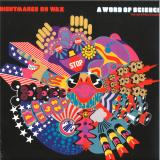
After previously releasing Starship Commander Woooo Woooo's - Mastership LP, Left Ear Records have continued excavating the archives of the artist more formally known as Omer Coleman Jr. The result is two handpicked mid 80's instrumentals salvaged from the original master tapes, as well as an extended vocal edit on the flip for good measure.
.
After laying his alter ego to rest Omer made a handful of electronic releases on his own Kansas based 'Remo' label. Of these releases Left Ear has selected their two favourite instrumentals: 'Lovin 'Babe' Sure Is Fun' and 'So Good'. 'Lovin 'Babe' Sure Is Fun' was originally released in '85 and was created to celebrate a time in America where 'the economy was good, people were happy and love was in the air', the essence of which Omer captured using his Roland 808 and 303 in what may best be described as Acid-Boogie. 'So Good' on the other hand is a sensual downtempo cut shaped with heavy-bass, telephone samples and guitar solos that conjures images of late Night Rendezvous and compromising scenarios.
Search:fun
HOGG returns to SCRAPES with a full-length recording made at Electrical Audio. Self-Extinguishing Emission captures the physicality and energy of a HOGG performance over the last several years, while the song-writing and production show a refinement and development that is uniquely HOGG. The songs are built around a spare foundation of heavy electronic pulses punctured by occasional stabs of distorted guitar, floor tom, and biological samples. Dueling vocals of diverse sonic and emotional quality render each song into a pleasurable exploration of internal conflict within a brutal psychological atmosphere
This is the only album from The Tutt Band known to ever be recorded. The ultra rare and sought after boogie-funk LP on Spoonful Records out of Phoenix, Arizona was released in 1988, but style-wise it sounds much more like being recorded in 1983 or 1984. It contains ten very solid and good tracks - both club tunes and slow jams - that all hit the required spot. There's also some treats for all Roger Troutman and vocoder lovers. Head straight to the ultra dope tracks 'Get It On' and 'She's Got It Going'. In retrospect The Tutt Band has been one of the little known but essential groups whom created the funky and beat heavy new jack swing sound that dominated American r&b from the mid eighties and early nineties.
Arctic Monkeys Veröffentlichen Ihr Sechstes Album, Ein Zeitloses, Virtuoses Und Reifes Werk Abseits Aller Indierock-kategorien Und Jenseits Aller Erwartungen.
Tranquility Base Hotel & Casino, Das Sechste Studioalbum Der Arctic Monkeys Und Tritt Die Nachfolge Des Bislang Erfolgreichsten Longplayer Des Britischen Quartetts, Am, An. Tranquility Base Hotel & Casino Ist Ein Ebenso Gewagtes Wie Brillantes Album, In Dem Sich Die Immer Weitumfassenderen Kreativen Ideen Turners Perfekt Widerspiegeln. Was Dabei Entstanden Ist Bewegt Sich Weit Jenseits Aller Indie-rock Kategorien Und Widersetzt Sich Virtuos Und Eigenwillig Dem Erwartungsdruck Einen Gebührenden Nachfolger Für - am Zu Veröffentlichen.
Keyfacts:
- Cd In Card Pack
- Schwarzes Heavyweight Vinyl Inklusive 4-seitigem Booklet Und Mp3 Downloadkarte
Having pinned to perfection the sonics of the Adriatic, Croatia's Love International Festival bottles up their blissed out rhythms and sunrise sessions for the inauguration of Love International Recordings, fittingly, with a first release from UK producer Begin.
Bringing the Love International feel to wax and digital, the label will encapsulate the range of music the festival's secluded party paradise has become renowned for. All the way from the balearic tinges of this first release, to the meatier house, techno and electro selections on show at Barbarellas.
Begin aka James Holroyd has a long history with Love International. Dating back to the early 2000s, Holroyd was one of the first guest DJs at the old Garden festival on the former festival site in Petrcane. Long serving Chemical Brothers tour DJ, Back to Basics resident since the 90's and Bugged Out co founder, Begin has long paid his paid his dues to the scene. In the words of Dave Harvey: 'he's been an absolute workhorse in dance music for time'.
Love International 001's tracks seemingly fit the festivals own daily lifecycle. From the docile guitar picking of meditative EP opener 'Wood Trees' to the slow daybreak funk of 'Daypulse' where synths pierce through the track like sun rays through the Adriatic dusk, the EP is a holistic reflection of what one might hear at one of the festival's fabled sunrise sessions. 'Garden Interlude' ushers in a fresh burst of energy, with the revitalizing sounds of piano house, paired with warming neo soul vocals. 'Into The Fun' is a self fulfilling prophecy, closing the EP on a quintessentially balearic note.
Soundway Records presents the debut EP from Amsterdam based The Mauskovic Dance Band - a potent, modern blend of Afro-Caribbean rhythms and space disco, destined for bustling dancefloors.
.
The Mauskovic Dance Band is the brainchild of the Amsterdam-based producer and musician, Nicola Mauskovic. A seasoned drummer, he finds himself constantly in demand - as part of Turkish psychedelic outfit Altin Gün, a recent tour with the revival of Zambian legends W.I.T.C.H., and a worldwide tour with psych-pop artist Jacco Gardner, with whom he then went on to form the dance-oriented duo Bruxas (released on Dekmantel). Throughout this hectic schedule Nic still found time to begin studio experiments that would eventually lead to several 7' singles, released on Swiss label Bongo Joe Records in 2017 under the name The Mauskovic Dance Band'.
Re-issue of the seminal 'Dust On Common' LP, from Led Er Est (Sam De La osa, Shawn O'Sullivan and Owen Hutchinson) was originally released in 2009 by the seminal Brooklyn based record label Wierd Records.
.
The band's first full-length release showed the three piece clearly breaking out of the minimal synth underground they have been a vitally integral part of since its inception in Brooklyn to create an undeniably contemporary set of highly crafted and restrained, icily psychedelic pop songs.
Synthesizing countless disparate musical influences from first wave British industrial music to house, disco, and the largely unknown cold wave (aka 'La Vague Froide') tradition in Northern Europe, the trax on Dust fly by, straight out of the frozen hot, lonely cold plains of vocalist Samuel Kklovenhoof's native central Texas. After digesting a few songs of this rich dust, the listener can do no other than lie down in the wild weird Laredo bunker to revel in the refreshingly brisk blast of hedonistic analogue pleasure dancing through the airwaves in the sky above...
Blondie return with 11th studio album Pollinator lighting up 2017 with an incredible new record befitting one of the world's greatest bands. Produced live in the studio by John Congleton (St. Vincent, John Grant, War On Drugs, David Byrne). The last album recorded at New York's legendary Magic Shop studios before their closure. Blondie's classic writing duo of Chris Stein and Debbie Harry are at the heart of the creation with an impressive list of song writers on the project including Johnny Marr, TV On the Radio's Dave Sitek, Dev Hynes (Blood Orange, Lightspeed Champion) Adam Johnson aka An Unkindess, Sia and Charli XCX. Studio appearances from Joan Jett, Laurie Anderson and The Gregory Brothers.
Fall of 2016 sees Midnight Magic ready to enchant us once more with the much-anticipated birth of their 2nd studio album, the wondrously eclectic Free From Your Spell. Going back to their roots in Los Angeles, Morgan Wiley, and Tiffany Roth, alongside the rest of the boogie nonet, have prepared a refined feast of genre-bending songs. The ever so diverse moods of Free From Your Spell make it a seductive journey. With each song mixed seamlessly into the next, the record coalesces into one long disco odyssey, reminiscing Giorgio Moroder and Donna Summer's concept albums "Four Seasons of Love" and "A Love Trilogy". Moods, genres, and styles intertwine like an aural kaleidoscope, the album electrifying with its striking harmony. Whilst exuberantly borrowing from past decades, Free From Your Spell more than holds its own as a self-assured, innovative body of work. Midnight Magic's Free From Your Spell is an offer one can't refuse. An attractive deal in the form of disco escapism, traveling through its various shades, emotions, and incarnations, a comprehensive revival of the genre for modern ears. It's Studio 54, It's Moroder,Amanda Lear, Gino Soccio, and Grace Jones. It's a whole palette of 1980's R'n'B and cosmic funk. Despite all the music references of past eras Free From Your Spell is very much a current album, a mature demonstration of genuine skills in songwriting, a multi-instrumental banquet of sounds, a coherent collection of ambitious dance tracks and a beautiful celebration of eclecticism. Add to this some of Tiffany Roth's most memorable vocals to date and you arrive at one of the year's most exciting releases. There is a strong reason for both "midnight" and "magic" in the name of the band after all.
A sweet groover from the Italian scene of the 70's - music that's got a lush feel, but a funky one too - a great mix of strings and electric instrumentation that rivals the best cop/crime work of the time - yet also has a nice sexy feel too! There's almost a blaxploitation vibe to the record at times - and although some instruments solo at points, the real groove lies in the tight vamping of the orchestra - which hits all the right notes to really send the whole thing soaring - often with a nice use of tone and color too!
Remastered from original tapes- 2 LP + CD - DOUBLE WHITE VINYL, CD INCLUDED + 4 Pages Poster ! This LP+CD will be the only physical edition (no cd available for sale) . For the 1st time eve, the best Kongas tracks are collected trough this best of vinyl+cd. Kongas were the band Cerrone's started to play music with, as a drummer. Famous french A&R Eddie Barclay saw them & signed the 2 first albums. Cerrone left Kongas to start his solo carrer, and produced & signed on his label Malligator the next Kongas's albums. Double white vinyl. Features the Cd. KONGAS 'The Best Of'
The Viennese duo, otherwise known as Tosca, confound expectations on their new album, 'Outta Here'. The sonic collages and smooth downbeat jams with which they made their name are replaced with a soul/jazz/blues confection that's closer to a band like Brand New Heavies than anything else. 'It's called 'Outta Here' for a reason,' explains Rupert Huber. 'The title stands for change, a change to the concept we've had so far. It refers to a change in energy and dynamic. We've been know for an almost ambient sounds. The new songs are much more beatoriented and direct. Basically, it's just a lot more energetic.' it certainly is that. See tracks such as 'Crazy Love' for evidence. Built on a muscular bassline, it sees Rob Gallagher (ex-Galliano) doing his slinky, soulful thing, while keyboards and muted sound effects flare in the background. The rare groove revival starts here. 'Swimswimswim' reworks the same elements, with the addition of Cath Coffey (Stereo MCs) into a irresistible pulse of feel good vibes. Meanwhile, the title track, 'Outta Here', sounds like a lost gem from the early '90s acid jazz era. 'It was a natural evolution,' says Richard Dorfmeister. 'In the past, we were very focussed internally because we were in a studio on our own, working slowly making sonic collages. This time, because we were working more with singers the process was naturally quicker and the results more instant and upbeat. In that sense the title 'Outta Here' literally means that we got out of our studio.'
Do Tosca think the new sound will wrong foot their fans 'It's not completely different. It's still our style and mood, it's just more direct,' says Richard Dorfmeister. 'People always have a picture of you and it can take a long time to change that. You stand for something and that's how they see you. I think people see us in that laid-back and chilled kind of way. Over the last 20 years we've been described as lounge, chill out, downbeat. We always ignored it because we felt it was more about the music. We've always seen ourselves more in terms of being an alternative to commercial music. That's still what we're doing, just in a different, more direct kind of way.'
- A1: Les Masques - Il Faut Tenir (1969)
- A2: Isabelle Aubret - Casa Forte (1971)
- A3: Christianne Legrand - Hlm Et Ciné Roman (1972)
- A4: Jean Constantin - Pas Tant D'chichi Ponpon (1972)
- A5: Billy Nencioli & Baden Powell - Si Rien Ne Va (1969)
- B1-: Marpessa Dawn - Le Petit Cuica (1963)
- B2: Jean-Pierre Sabar - Vai Vai (1974)
- B3: Sophia Loren - De Jour En Jour (1963)
- B4: Isabelle - Jusqu’à La Tombée Du Jour (1969)
- B5: Sylvia Fels - Corto Maltesse (1974)
- C1: Frank Gérard - Comme Une Samba (1972)
- C2: Ann Sorel - La Poupée Des Favellas (1971)
- C3: Charles Level - Un Enfant Café Au Lait (1971)
- C4: Andrea Parisy - Les Mains Qui Font Du Bien (1970)
- C5: Audrey Arno - Quand Jean-Paul Rentrera (1969)
- C6: Aldo Frank - T’as Vu Ce Printemps (1970)
- D1: Christianne Legrand - Cent Mille Poissons Dans Ton Filet (1972)
- D2: Clarinha - Lemenja (1970)
- D3: Hit Parade Des Enfants - Aquarela (1976)
- D4: Jean-Pierre Lang - Tendresse (1965)
- D5: Magalie Noël - Une Énorme Samba (1970)
- D6: Françoise Legrand - La Lune
Ever since the late 1950s bossa-nova revolution, Brazil’s influence on French music has been undeniable. Pierre Barouh, Georges Moustaki and a vast array of lesser known artists, all made the Musica Popular Brasileira (MPB) an axis of promotion at the service of a cool and metaphysical, modern and mixed Brazilian lifestyle. Some were seduced by the poetic languors of the bossa, some were looking for fun, and others just loved the American hybridization of jazz-bossa, jazz-samba.
What is bossa nova? One of its creators, Joao Gilberto said: "Its style, cadence, everything is samba. At the very start, we didn't call it bossa nova, we sang a little samba made up of a single note - Samba de uma nota so .... The discussion around the origins of bossa nova is therefore useless”. It is nevertheless useful to remember that these magnificent Brazilian songs, which the guitarist describes as samba, were shifted and balanced around improbable chords. "I like things that lean, the in-betweens that limp with grace," said Pierre Barrouh, quoting Jean Cocteau.
With emotion, arrangements for violin and supple guitar licks, bossa nova rapidly changed. A transformation that can be heard in the Tchic, tchic, French Bossa Nova 1963-1974 compilation, the result of a cultural reappropriation, which traveled through the United States and supplemented itself in France.
A musical revolution that has remained significant, bossa nova was born in Rio. From 1956 to 1961, Brazil lived through its golden years. In five years, the country had invented its modernist style. Elected president in 1956, Juscelino Kubitschek de Oliveira, an elegant man with a broad forehead, brandished a promising slogan: "Fifty years of progress in five years". He quickly got to work. Not worried about increasing debt, he launched the project for a new federal capital, Brasilia, designed by the communist architect Oscar Niemeyer. Volkswagen opened state-of-the-art factories and created the “fusquinha”, the Beetle. In Rio, the Vespa made its first appearance. The Arpoador Surf Club crew run into the “girl” from Ipanema, Helô Pinheiro - the tanned garota ("chick"), between a flower and mermaid, who at 17 walked by the Veloso bar, where the fiery author and composer, Tom Jobim and Vinicius de Moraes, were getting drunk on whiskey. From then on, bossa symbolized cool.
In 1958, Joao Gilberto recorded Chega de Saudade, which the directors of Philips denied, calling it "music for fagots". The marketing director, who believed in it, secretly pressed 3000 78-inch vinyls and distributed them at schools around Rio, creating a tidal wave.
American jazzmen then took over. In particular, trumpeter Dizzy Gillespie and guitarist Charlie Byrd. In November 1962, the Brazilian Ministry of Foreign Affairs funded a "Bossa-Nova" concert at Carnegie Hall in New York, inviting the genre’s pioneers. Unprepared, the show soon turned to disaster. But the troupe was invited to the White House by Jackie Kennedy. The first lady loved "the new beat" and in particular Maria Ninguem, a song by Carlos Lyra, later covered by Brigitte Bardot.
In Brazil, the 1964 military coup quickly ended this euphoria. The destructive atmosphere that ensued pushed many Brazilian musicians to leave, if not to exile. Thus, Tom Jobim, Sergio Mendes and Joao Gilberto arrived to the United States. In New York, Joao Gilberto met saxophonist Stan Getz. At the time, he was married to the Bahianese Astrud Weinert Gilberto, who had a German father. She had never sung before, but she knew how to speak English. Getz therefore asked her to replace her husband on The Girl From Ipanema. The Getz/Gilberto record with Tom Jobim on piano, was released in March 1964. Phil Ramone, the "pope of pop" was in charge of sound.
Bossa nova arrived in Paris through the classic “guitar-voice” channel (Pierre Barouh, Baden Powell, Moustaki…) But France loved jazz and Paris had already welcomed its American contributors. All these good people were to pass through Saint-Germain-des-Prés. The cabaret l'Escale became the Mecca of Latin American sound where one could find Pierre Barrouh and his friends, such as the Camara Trio, samba-jazz aces, whose only record was published by the Saravah label. With a band strangely called Les Masques (a band that included Nicole Croisille and Pierre Vassiliu, among others), the Camara Trio recorded an interesting Brazilian Sound, including the track Il faut tenir which is present on this tasty compilation of rarities.
Other enlightened musicians can also be found on the compilation, such as Jean-Pierre Sabar (songwriter for Hardy, Auffray, Leforestier ...) and the French pop rock organist Balthazar. In 1975, Sabar recorded Aurinkoinen Musiikkimatka on a Finnish label, which featured the crazy Vai, Vai, included on this record. We are now following the footsteps of Brazilian electronic musicians such as Sergio Mendes, Eumir Deodato or Marcos Valle who created funk and disco sounds on their keyboards and synthesizers. A style that influenced Véronique Sanson when she wrote Jusqu’à la Tombée de la nuit in 1969 for Isabelle de Funès, the niece of Louis and a great friend of Michel Berger - Sanson did end up singing this track on her 1992 Sans Regret record.
The pinnacle of exoticism and travel, Sylvia Fels’ Corto Maltese includes bongos, sea mist and ocean sounds. The title was taken from Jacky Chalard’s concept album written in 1974, Je suis vivant, mais j’ai peur (I am alive, but I am scared), based on Gilbert Deflez’s science fiction novel.
However, bossa nova extended the scope of popularity. "In the 1970s, I was a fan of Sergio Mendes, Getz / Gilberto. I fell in love with this music that I knew because I had been an orchestral singer, " explained Isabelle Aubret, who in 1971 delivered a composite record of covers by the very funky Jorge Ben, Orfeu Negro, Tom Jobim, Vinicius de Morais and Jean Ferrat. "I recorded this album for Meys Records in Paris, far from Brazil, with wonderful musicians, François Raubert, Roland Vincent, Alain Goraguer...". The latter wrote the arrangements for Casa Forte, a very percussive title borrowed from Edu Lobo, one of the initiators of the bossa who spent time in California. "Jazz and bossa came together and produced very rhythmic music. I love singing, it allows me to dream, to have fun, to feel a high on stage, and these songs brought me joy, made me swing, my singing felt like a dance.”
The world tours of French singers and their desire for the tropics, often brought them to Rio with its hills, forests, caipirinhas and tanned bodies. There are surprises though, like this Iemenja (Iemenja is the goddess of the sea in the Afro-Brazilian candomblé religion). Not unlike the composer and musician Jean-Pierre Lang, based in Sao Paulo, Claire Chevalier taught Brazil to Brazil. In 1970, the singer and painter published a 45-inch vinyl, Mon mari et mes amants (My husband and my lovers), under the improbable pseudonym of Clarinha (little Claire). She was then living in Rio, with her husband, Joël Leibovitz, who founded a band called Azimuth, and who owned a record label specialized in "sambas enredos" songs for samba school parades.
For its B side, she asked Pierre Perret to come up with lyrics for a song composed by Carlos Imperial: "Oh goddess of the sea, o goddess Iemenja, I bring a white rose to adorn your long hair ..." . "Perret came to see us, and we had fun, remembers Joël Leibovitz. We wrote Lemenja for fun, we recorded it at the Havaí studio, behind the Central do Brasil the central station. Erlon Chaves, the arranger who worked with Elis Regina, joined us" adding his share of Afro-Brazilian percussions and funky brass to the mix.
There is a common misunderstanding in Franco-Brazilian history: that bossa, admittedly hedonistic, is perceived as funny, even though the poets who wrote the texts are often philosophizing on the human condition. Its French interpreters pull it towards a carnival inspired universe, far removed from its fundamental essence. Thus, Jean Constantin covered the famous Samba da minha terra, an ode to the art of samba written by the classic Bahian composer Dorival Caymmi, renaming it with the enticing title of Pas tant de tchi tchi pompon: "On your pier there is no tchi tchi / when you arch your back, you know everything is alright ”(lyrics by Gérard Calvi). This expedited bossa aims for the absurd, but retains a certain elegance.
Indeed, Jean Constantin was not an idiot, the rather large man had a huge mustache and liked fantasy, (Les pantoufles à papa, Le pacha, inspired by cha-cha-cha-cha, salsa and jazz) but he was also the lyricist of Mon manège à moi interpreted by Edith Piaf, the composer of Mon Truc en plume by Zizi Jeanmaire and the soundtrack of François Truffaut’s 400 Blows. Le Poulpe, published in 1970, from which this bossa is extract, was arranged by Jean-Claude Vannier, an accomplice of Serge Gainsbourg’s Melody Nelson. In short: "There is enough of samba / By looking at the parasol / Because my poor cabeza / Is going to die in the sun".
Even the American actress Marpessa Down, who was at the heart of the bossa nova revolution with her role as Euridyce in Marcel Camus’ film Orfeu Negro, winner of the 1959 Cannes Palme d'or, fed the clichée with Je voudrais parler au petit cuica - "Tell me how you manage to always make people want to dance / It's true, I must admit that I cannot resist your magic" - in consequence, once can hear the cuica, a little drum inherited from the Bantu.
But bossa nova had many angles. Societal, of course, pushing actresses who were symbols of women's liberation like Brigitte Bardot, Jeanne Moreau, or Sophia Loren to engage in the exercise of accelerated bossa. In February of 1963, Sophia Loren made a record in French in Rome, Je ne t'aime plus, featuring the song De jour en jour, a bossa written by two Italians, Armando Trovajoli and Tino Fornai, which was released a little later by Barclay. Bossa accompanied the 1960s, a decade of moral liberation. Ann Sorel, who interpreted La Poupée des favellas, caused a sensation with L’amour à plusieurs, a provocative song written by Frédéric Bottom and Jean-Claude Vannier. As for the actress Andrea Parisy, she displayed her bourgeois cheekiness in Marcel Carné's Les Tricheurs before interpreting Les mains qui font du bien. And Magalie Noël, the friend of Boris Vian, who sung Johnny fais-moi mal, was hired to sing Une énorme Samba, composed by Alain Goraguer (arranger to Gainsbourg, Bobby Lapointe and Jean Ferrat) with lyrics by Frédéric Botton.
But in the end, of what wood is bossa nova made of? The answer is given by Christianne Legrand, daughter of Raymond the conductor, and sister to Michel the composer: "With me, with jà" - jà means "immediately" in Portuguese. In 1972, the singer, an expert in vocal jazz and a member of the Double Six, published Le Brésil de Christianne Legrand. Two songs included on the Tchic Tchic compilation that demonstrate how bossa, jazz, funk, rock, etc. work like a swiss army knife: the music is used to denounce broken systems, or miracles, HLM et ciné roman, Cent mille poissons dans ton filet, two songs from the O Cafona soundtrack, a successful telenovela broadcast, at the time in black and white, on TV Globo. The first was adapted in French by the fighter and friend of the Legrand tribe, Agnès Varda. The second is content with a play on words, jostling them into a summer fun.
Véronique Mortaigne