The Błoto quartet had made a comeback six months ago with their first singles in over two years dropping “Szlam” and “Ścieki”. These tracks were pressed on a 7-inch vinyl by Astigmatic Records, but this only whetted the appetites of the band’s mud-loving fans, as the singles sold out instantly. And so, the band's musical onslaught continues. Ahead of their upcoming LP “Grzybnia” set to release in autumn 2024, Błoto is putting out another bacteria-laden 7-inch to conclude this brief series of singles. This time, the release features a remix by none other than the modern funk maestro DāM-FunK, hailing from sunny Pasadena, California.
Wading through the sludge of sewage, one can encounter colonies of bacteria. They are well-known for their dark side – causing serious diseases. Nevertheless, they are with us all the time. They exist in humans and all other living organisms – fungi, plants, and animals. They can be found in soil and water. They are even present in radioactive areas, proving that they are truly hard to eliminate. Such is the music of Błoto. Like a post-apocalyptic bacterium, it’s capable of surviving in the harshest conditions.
Sinister, biting, and primitive – just like colonies of microorganisms. This is Błoto's latest single. Drawing heavily from classic acid house, it can truly infect the mind, inviting you to join a rave in Błoto on the eastern flank of Europe. Quartet’s “Bakteria” is a direct continuation of their first 7-inch release. However, this time, during their collective improvisation at Studio Pasterka, the band has entirely forsaken acoustic instruments in favor of a full array of synthesizers accompanied by drums.
Certainly, the dichotomous nature of these organisms presents a paradox. While capable of causing harm, without bacteria, life as we know it would cease to exist, and human civilization would not have reached its current state. Bacteria fulfill numerous essential roles. They serve as decomposers, crucial in maintaining biogeochemical cycles, and contribute to processes such as fermentation and decay. As symbiotic organisms living within other organisms, they are vital for functions like digestion. Their versatility extends to diverse applications, from biological wastewater treatment to the production of various food products.
Such are the properties of the beneficial probiotic titled “Bakteria Re-Freak” by DāM-FunK (renowned for his classic albums released on Stones Throw, like “Toeachizown” and “7 Days of Funk” with Snoop Dogg). It offers a 180-degree transformation of the dark atmosphere of the original version. The track evolves towards G-Funk, brimming with sunny synths and a drum machine. It portrays a vision of a biopharmaceutical bacterium lazily roaming the streets of warm yet perilous Los Angeles.
The 7-inch will be released on July 19, 2024, by Astigmatic Records. The vinyl single is limited to 700 copies.
Buscar:funk function
- A1: Saylo
- A2: Can't Take The Hood To Heaven
- A3: Attack Of The Dreadlocks (Feat Rae Khalil)
- A4: Lynn's Lullaby (Interlude)
- A5: Brownskin Cinnamon
- A6: Grey Seas (Feat Reaper Mook)
- A7: Cowboy Leather (Feat Pink Siifu)
- A8: Overseas Sam
- B1: Bullets From A Butterfly
- B2: Pearly Gates Playlist
- B3: Things Grandma Told Me
- B4: Bygones
- B5: Lagonda (Feat Goya Gumbani)
- B6: The Card Players (Feat Jayellz)
- B7: When I Met Rose
Cassette[10,88 €]
Forest Green Vinyl
Seafood Sam is a futuristic artifact. If that description might sound confusing at first, it matches the eclectic dualities found in true originals. With his effortless cool and timeless style, the North Long Beach native defies convention and exact comparison. He's a virtuosic rapper, a stop-you-in-your tracks singer, and a symphonic producer. Welcome to the lavish life of a laid-back transcontinental man of mystery, rolling in old school Cadillacs, eating caviar with a blade in his pocket, and making plays in vintage Pelle Pelle gear. A blaxploitation icon for the Instagram age, blessed with the bars of a `90s legend and 23rd century swagger. Seafood Sam is a true hero of modernity. On his full-length album debut for up-and-coming label drink sum wtr (Kari Faux, Deem Spencer, Aja Monet) debut, Standing on Giant Shoulders, Sam splits the difference between Snoop Dogg and D' Angelo, Curren$y and David Ruffin. The songs reveal a forward-thinking sensibility rooted in ancestral soul. He creates spiritual hymns for the streets that tap into universal ideals and irrepressible groove. In an era plagued by short-term thinking, his ambitions reveal a crate-digging depth of music history and a meticulous ear for detail. The giant shoulders in the album's title refer to James Brown, Bobby Brown, and Miles Davis - the holy trinity who inspired Sam's process. From the Godfather of Soul, Sam took a perfectionist's rigor and focus. The example of Bobby Brown lent an unshakeable confidence and self-belief. While the constant artistic left turns of the trumpeter that birthed Ccool offered an aspirational archetype. The story starts in the glory days of Long Beach hip-hop. As a young child, the G-Funk era soundtracked rides in Sam's father's car. Some of his earliest memories are trying to memorize Snoop's verse on "Nuthin' But a "G" Thang." Beyond gangsta rap, the LBC has historically doubled as a capital of lowrider soul and carwash oldies. At any intersection, you could hear Dogg Food or Brenton Wood, Warren G or Barbara Lynn. This too was absorbed via osmosis. It also just so happened that the art of performance was always in Sam's blood. So at family functions, he and his sister supplied entertainment by singing karaoke renditions of The Isley Brothers. While his Harlem Shake remains a thing of local lore. Long Beach is a culturally diverse mecca of skate parks and gang life, street fashion and tricky dance moves. This is the place that raised Sam on a diet of Wu-Tang and Nelly Furtado, Lil Bow Wow and Allen Iverson. He was the middle ground between his two older brothers: one who gangbanged, the other who graduated with a master's degree from UC-Santa Barbara. But it wasn't until the end of high school that Sam started to take rap seriously. Alongside long-time collaborators like Huey Briss and Reaper Mook, Sam's name began to make waves on the northside of the city, but he was partially distracted by a modeling career that paid the bills and took him all to way to walk in Paris' fashion week. The first turning point arrived with 2018's "Ramsey," a self-produced, slick-talk anthem with over 10,000,000 streams across all platforms. With each subsequent release, Sam showcased his peerless consistency, building buzz both online and in the city streets. Spin hailed his "smooth and unhurried cadences and understated lyricism_ that sounds like nothing else in Long Beach." Clash raved about Sam's "evolution as an artist, cruising through nostalgic production with slick, witty rhymes." The culmination arrives with Standing on Giant Shoulders. It's the evidence of a master, a young sensei in the model of Quincy Jones. All rhymes, singing, production, and arrangements were handled by Sam - with an assist from his close Long Beach kinsman Tom Kendall from the group Soular System. It's hard-edged and lyrical enough for disciples of Larry June and Roc Marciano, but orchestral and melodic enough for fans of Anderson .Paak and H.E.R.
Early DJ Support: Marco Carola, Jamie Jones, Chris Stussy, Seth Troxler, Brawther, Raresh, Joseph Capriati, Laurent Garnier, Samuel Deep, Saoirse, Janeret, Richy Ahmed
UK talent ADMNTi makes his FUSE debut and opens the label’s 2024 schedule with ‘Vibrations’, featuring a remix from Vigenere boss Malin Genie. Whether serving up his take on minimal-leaning house across a wealth of the capital’s key venues, or front-left on the dancefloor himself, London’s ADMNTi has been shaping a sound and curating his ear for years to become one of the city’s most well respected emerging tastemakers. A regular at FUSE over the years, with his sound palette harnessing his roots within the city, his releases on Dansu Discs, Beeyou Records and Caposile Music have seen him rack up love from the likes of Petre Inspirescu, Raresh and Voigtmann alongside mentor Enzo Siragusa. And it’s Siragusa who now welcomes him to his iconic FUSE imprint for the very first time as he makes his longawaited label debut to open the 2024 schedule with four originals across his ‘Vibrations’ EP - with Mandar favourite Malin Genie also joining the package on remix duties. Skippy and armed with a menacing bassline at its core, ‘Vibrations’ brings the heat from the off as slinking percussion warps around hazy pads for a lively opener, while ‘Infinite Function’ brings a paired-back and tumbling groove full of squelchy interludes, bright electronics, resonant organ melodies and subtle chords. On the flip, B1 ‘Original Sin’ is a spacey and cosmic trip into acid-tinged soundscapes, before Malin Genie’s remix of the title cut brings a funk-fuelled and deep dive into the early morning hours as he crafts a slinking groove that captures the imagination instantly.
Australian producer JXTPS brings his deeply heady and unquestionably groovy techno to Palinoia with his Hypogean EP. Having previously released on Planet Rhythm and Voodoo Down (and sending me other tracks for a few years now), this four-track vinyl is purpose-built to melt brains and move feet on all dancefloors. While the A-side keeps it largely functional, funky is the star of the flipside.
The Minneapolis-raised DJ/Producer’s second album following 2014’s ‘Monoliths’ lands on Radio Slave’s Rekids imprint in November.
Although based in Berlin for several years, Dustin Zahn has continued to exert influence over the fertile but steadfastly underground Minneapolis techno scene as part of the Intellephunk collective whilst cultivating a worldwide rep via releases for Blueprint, Token and his own Enemy Records. The ‘Gain of Function’ LP sees Zahn channelling the groove-fuelled techno of the late ’90s and early ’00s and shaping eight powerful but funky contemporary techno tracks that display the decades of experience under his belt.
Forged from a series of live jams with two drum machines and two synths, the album is a refined collection of raw, purist techno brilliance. Across the A-side ‘Tell Me About Paradise’ brings shimmering staccato chops under bright and airy percussion before ‘Tangie Groove’ picks up the pace with floating pads, vocal slices, and a rumbling bassline. On ‘Lucid Dreams’, scattered percussion plays with hypnotic synth licks, while ‘Smoking in Silence’ sees off-kilter leads dancing between emotive vocals and evolving drum loops.
Opening the second disc is the deep and shuffling ‘Crimson Cheeks’, with trance-inducing samples nestled between sharp drum hits and rolling synthesis, and ‘Days Like These’ takes a darker turn as twinkling arps and droning pads carry the track. ‘Shark Rodeo’ featuring Jeremy Black mangles samples into a dense rolling affair, before closing number ‘Next Level Looseness’ drops the 4/4 pattern for a raucous club track, combining oddball sound sources and unruly production techniques for a trippy finish to the album.
Since the late ’90s, Zahn’s hypnotic and driving techno has consistently caught the ears of top DJs and labels worldwide, with anyone catching his marathon sets at the likes of Berghain exposed to expansive sets. In addition to his techno-heavy catalogue and DJing prowess, Zahn has lent production and engineering skills to bands and singers, recently working with Poliça and on Carm’s Pitchfork approved eponymous album. Beyond this, his vital work with Intellephunk includes the nearly two decades long running Communion after-hours events, cementing his invaluable contributions to the scene.
Repress
Modularz Label owner Developer presents his first LP Sold in Three Parts A,B&C
The Title named "In Pure Form' is a real wealth of work that developer has been creating over the last year. Its a fairly large catalog of music focusing on raw rhythms, strong tools and powerful funk fueled techno.
We do advise that this is not your average concept album with ambient and break beat type pieces that the market is flooded with - but instead a more straight to the point no filler type of LP.
This is a massive selection of functional tracks direct from the Developer factory of techno. Already a huge amount of support and positive feedback received on this release from the global heavyweights currently playing a selected amount of tracks from this killer release.
First pressing CLEAR vinyl
Repress
Modularz Label owner Developer presents his first LP Sold in Three Parts A,B&C
The Title named "In Pure Form' is a real wealth of work that developer has been creating over the last year. Its a fairly large catalog of music focusing on raw rhythms, strong tools and powerful funk fueled techno.
We do advise that this is not your average concept album with ambient and break beat type pieces that the market is flooded with - but instead a more straight to the point no filler type of LP.
This is a massive selection of functional tracks direct from the Developer factory of techno. Already a huge amount of support and positive feedback received on this release from the global heavyweights currently playing a selected amount of tracks from this killer release.
First pressing CLEAR vinyl
Musik Krause, the label with that special funk and the wide view releases the fourth album in their 10-year history. The circle is complete. In 2002 they started with Metaboman. Now there is the album. As a part of the record-spinning Krause Duo he's known a number of escapades having to do with the 'bash' or rather party culture. Inventively they go about things on a winding path. The have a developed a completely singular metaphoric like a Krauzy schroud and trashno effect. Even if on this long player there is a good deal of gravitation and disengaged handbrake, the beloved notorious krause-vibe swings in every beat, as Metaboman forges the iron. He wants to go further and let himself be taken away, and above all with the musicians he has won over with his live-project to massage the masses from the stage. Krause Duo remains. The album comes in this regard as a gesture providing the direction. Solo here is the conductor, the arranger and the composer in one. Various artists is the keyword, good ol' Metaboman. On all ten songs our friendly neighborhood sonic meister sets the notes and vibes between the skillful, grooving rhythms. In this way there is a bonafied club album in the room that understands rhythm-feeling. Music that in the club context brings an attribute that stands far above the plain acoustic shock and scream. Party But of course, yet still both feet in the game with not a little insubordination, depth, plumes of smoke and indulgence. Metaboman has always had his own vision, which plays out and mirrors his own authentic uniqueness. He doesn't find sounds. He finds shapes and forms and that is the progressive aspect, not the new sounds but rather the new forms. He 's not merely about the subteranean bassdrum, but rather telling his own story. He gives his pieces space and depth. The music itself is positioned somewhere within a sonic cosmos. The listener can functionally hear the record in a club. A freak and his freaks invite you and in your heart you know long before it is apparent that you belong. You can clearly hear that this dude and his folks want me to be there! This album encompasses the moment and keeps it safe for posterity. This music is the language of Metaboman and it is the understood. inkl. digital download code
- 01: Taste This Sound
- 02: Make Me Dance
- 03: Go Let Your Freedom Grow
- 04: Fight!
- 05: Tic Toc
- 06: No More
- 07: Once Again
- 08: Feel It
- 09: Aria
- 10: Falling Down
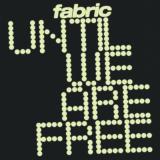
Until We Are Free is the debut album from fabric, a collective of musicians from diverse backgrounds united by a shared goal: to fuse irresistible rhythms and grooves with a direct, socially conscious message that draws vital attention to the contradictions of modern life. The project's name itself evokes the idea of a living, dynamic ensemble—a creative intertwining of different threads, from musical genres to founding musicians and guest collaborators, all actively woven into the social fabric.
The record blends funk, soul, and Afrobeat with a sharp, contemporary urban attitude, resulting in a sound that functions simultaneously as sonic resistance and an invitation to the dancefloor.
It finds its place in a lineage that runs from Fela Kuti and ESG to The Comet Is Coming, Sault and Jungle.
At its core is the conviction that music and civic engagement can coexist seamlessly without being didactic. While the lyrics—entirely in English—tackle themes of rights, equality, and freedom, the groove remains the heartbeat: constant, pulsing, and relentless.
Mixed by Tom Campbell (whose credits include Sault, Little Simz, Adele, Michael Kiwanuka, and Jungle) and featuring art direction by Raissa Pardini, Until We Are Free is a soundtrack for complex times. It is an invitation to refuse neutrality and isolation, and to imagine—together—new possibilities for movement, resistance, and the future.
fabric's singles "Taste This Sound" and "Fight!" have been featured in FIP's Spotify Playlists "FIP Radio (en live)" and KEXP's "New This Week" and "KEXP Rotation".
Driveline Records launches its catalog with a focused four-track vinyl EP built for the dancefloor, presenting four distinct yet cohesive techno cuts driven by groove, atmosphere and functionality.
The A-side opens with Invexis - "Roots", a hypnotic builder that slowly unfolds into a funky-driven rhythm. Tight hi-hats and rolling basslines carry the track forward, culminating in a subtle yet engaging melodic progression that lifts the energy without losing tension.
Next, Pylot - "Observation" delivers a highly functional club tool based on steady loops and an aquatic sound design. Aggressive low-end and raw basslines support an atmospheric and hypnotic flow, making it a solid choice for mid-set pressure and long blends.
On the B-side, Berlin-based duo Disguised contribute "Gitty (Dub Mix)", a dub-influenced and dreamy track designed to keep the dancefloor moving while creating a floating, immersive mood. Deep grooves and spacey textures balance rhythm and emotion.
Closing the EP, Shadow Hrym - "Delia" explores more melancholic territory, combining tribal and funky rhythms with emotive soundscapes, offering a powerful and memorable ending to the record.
A strong debut statement that defines Driveline Records' sonic vision: DJ-oriented techno with depth, groove and atmosphere, pressed on vinyl for dedicated selectors.
Roman Khropko delivers four cuts balancing precision club mechanics with flashes of emotion. The record moves between stripped minimal techno and warmer electro, designed to unfold gradually.
The A side opens with Glimpse, a straight-forward roller driven by tight drums and a suspenseful build. Piece of Truth follows with a funkier swing, blending elastic basslines with subtle tech house inflections that keep things in motion.
On the B side, Fractum settles into a hypnotic minimal tech mood, laying steady groundwork for an extended club stretch. The closing track, Among The Machines, shifts into emotional electro territory, carrying melodic tension that leaves a melancholic aftertaste.
A concise and functional toolset for the dancefloor. This is one to stay in your bag for a long time.
London's PRESTi lands on Shall Not Fade's Time is Now imprint with four dancefloor weapons that feel like they forked from the hardcore continuum at the point El-B, Horsepower and Artwork's dark garage was becoming proto dubstep.
EP title Track 'As We Move' is everything that is special about that time; bassweight, space and rudeboy swing. On "Big Ting" PRESTi reaches for more classic UKG groove but fuses it with yet more spacious wobbling low end precision. "Baile Pulse" pivots... channeling in grimey pulse basslines and 4/4 baile funk techno this time. "Get Back" is just the fait accompli for a producer clearly enjoying such fertile ground, a peak time speed garage warper ready to cause damage at any function.
Essential dancefloor gear from a producer growing tall and widening the cracks.
Oakland's DJ Mes returns with a fresh dose of jacked-up house in the 'D3w W3rk' series. Volume three blends gritty funk and rawness into fun, functional sounds. The EP opens with 'Detroit Ratchet City,' a bold, chunky anthem for pumping up the sweat before moving into the loopy 'For The People' where slinky percussion and soulful vocal hooks build a bristling arrangement. 'Look at Ya Shine' turns up the heat with a sleazy, slamming low end and then 'Peace of Mind' closes on a steamy, old-school tip with filtered synths, hooky male vocals and a retro charm that proves DJ Mes knows how to work the floor by joining the dots between the past, present and future.
- A1: Get Up I Feel Like Being A Sex Machine
- A2: Brother Rapp (Part I & Part Ii)
- A3: Bewildered
- A4: I Got The Feeling
- B1: Give It Up Or Turnit A Loose
- B2: I Don’t Want Nobody To Give Me Nothing
- B3: Licking Stick
- C1: Lowdown Popcorn 9.Spinning Wheel
- C2: If I Ruled The World
- C3: There Was A Time
- C4: It’s A Man’s Man’s Man’s World
- D1: Please, Please, Please
- D2: I Can’t Stand Myself (When You Touch Me)
- D3: Mother Popcorn
James Brown wants to know one thing before he and his band begin Sex Machine. “Can I get into the thing, really?,” he asks. His cohorts enthusiastically respond in the affirmative. And for the next hour and change, Mr. Dynamite gets into it and more, turning in a sweat-soaked, feet-moving, hip-swiveling, emotion-purging, in-the-red, drop-everything-you’re-doing-and-dance performance for the ages. Ranked by Rolling Stone among the 500 Greatest Albums of All Time, the sweeping 1970 effort towers as a testament to Brown’s inimitable legacy as well as the peak powers of his voice, vibrancy, and bands.
Sourced from the original master tapes, pressed at Fidelity Record Pressing, and housed in a Stoughton gatefold jacket, Mobile Fidelity’s numbered-edition 180g 33RPM 2LP set presents Sex Machine in audiophile sound for the first time. It explodes with the energy the lightning-strike music demands. Dynamic, immediate, present, airy: Everything from the brassiness and fluidity of the horns to the snap and decay of the snare to the swell and carry of the organ comes across in full-range perspective.
Then there’s Brown’s superhuman singing, which here emerges with a purity, naturalism, and transparency that ensure you feel everything. Screeching, shouting, pleading, moaning, preaching, stinging, commanding, testifying, crooning, humming: The Godfather of Soul contributes one of the finest vocal performances known to man. This definitive 55th anniversary reissue of Brown’s monster funk statement further exhibits a combination of clarity, solidity, separation, and imaging that helps bring to light what he and his crack ensembles committed to tape. Both in the studio and on the stage.
Just how lifelike does this reissue sound? Senior Mobile Fidelity Sound Lab engineer Krieg Wunderlich, who handled the remaster, notes: “There were some artifacts that sounded a bit like mistracking. But they turned out to be breath blasts on the vocal microphone. That is part of history. JB was workin' hard, and breathin' hard. And there was an edit the timing of that was truly strange. Again, a part of history.”
Originally marketed as a live album, Sex Machine contains six songs recorded in the studio and later overdubbed with canned crowd noise and reverberation. Save for “Low Down Popcorn,” the tracks on the latter half stem from a phenomenal performance captured in October 1969 at Bell Auditorium in Brown’s adopted hometown of Augusta, GA. The special relationship between the singer, the audience, and the location is palpable.
As the 1960s gave way to a new decade, Brown experienced immense success and dealt with unexpected change. Soul Brother Number One soon expanded his idea for an official live album captured in Augusta when the ensemble that backed him on that date morphed into the original version of the world-famous J.B.’s just months after the show. The virtuosic abilities, sticky chemistry, and rhythm-forward nature of the J.B.’s prompted him to book a one-off session in Cincinnati, OH, on a late July night.
Anchored by brothers William “Bootsy” Collins and Phelps “Catfish” Collins, the group — as well as two different drummers — laid down a nearly 11-minute rendition of “Get Up I Feel Like Being Like a Sex Machine” and a thrilling medley of “Bewildered,” “I Got the Feeling,” and “Give It Up or Turnit a Loose.” A pair of then-recent studio singles cut in separate locations in 1969, “Brother Rapp” and “Low Down Popcorn,” each featuring his prior group, took care of the second LP worth of material that complements the originally planned live set.
Complicated? Somewhat. Unusual? Definitely. But just as he elevated the expectations for all present and future R&B artists, Brown not only makes it all work. He makes it positively electrifying.
“Get Up I Feel Like Being Like a Sex Machine” is alone deserving of a dissertation on the art of funk music, seeing it moves up and down akin to an oil derrick, witnesses Brown unleashing a trademark series of grunts, squeaks, and “good god” asides, and glides to a hypnotic groove that won’t quit. Or look to the syncopated rhythms of “Brother Rapp (Part I and Part II),” one of multiple pieces here that signify the point where Brown began viewing every instrument as a percussive tool. Brown closes the three-song medley with his new band with a skedaddling “Give It Up or Turnit a Loose,” which provides jolts on the order of sticking your finger into a socket.
Not that the actual live material falls short in any way. Setting an insistent tempo for the vitality that follows, “I Don’t Want Nobody to Give Me Nothing” positions Brown as a role model, leader, and self-sufficient entrepreneur. All simmer and boil, the short and sweet “Licking Stick” dares you to keep pace. The floating, almost comforting “Spinning Wheel” spotlights the instrumental prowess of Maceo Parker and company, and functions as a seamless segue into the tender, horn-saluted “If I Ruled the World.”
And Brown and his mates still aren’t done. Just try to resist the one-two closing punch of “I Can’t Stand Myself (When You Touch Me)” and “Mother Popcorn.” Mercy.
Ain’t it funky? Sure ‘nuff.
In an intricate lattice of ever-evolving electro exploration, Samuel Van Dijk is back on Delsin with a new EP. Under his VC-118A alias, the Helsinki based producer presents a richly textured, cinematic strain of machine funk that reaches beyond dancefloor functionality to test the expressive potential locked within electro's crisp rhythmic framework. There's a melancholic mood hovering over Avian as Van Dijk allows a subtle edge of distortion to creep into his flickering drum programming. The end result is a pensive sound that touches on the moodiness of orchestral composition, unfurling patiently across extended run times without losing focus. With his characteristic attention to detail and broad dynamic range, Van Dijk continues to offer up a sophisticated, emotionally-charged strain of electro like no other.
Livity Sound welcomes Joe Milli to the fold with an assured EP of crisp club workouts that land between techno's evocative depth and UK funky's offbeat, drum-focused functionality.
Over the past few years Milli has been establishing his sound across a swathe of radio shows, guest mixes and releases, and he lands on Livity with a timeless take on the label's commitment to stripped back, atmospheric soundsystem music.
There's variety across the Deep Forest EP, ranging from the balmy bassweight house of the title track to the deep-diving dub pulses and bruk drum science of 'Look Again'. 'Keep That Wire' draws nervous energy from its synth hooks and the taut, angular beat before the rolling Detroit techno pulse of 'Expressions' brings the EP home in punchy, percussion-loaded style.
In line with past releases from the likes of Bakongo, DJ Polo and Tribal Brothers, Milli's strength lies in his ability to bend the UK funky formula to different styles, all precision-tooled for the club.
Livity Sound is a label set up by Peverelist in 2011 as a vehicle for a raw and exploratory strain of UK techno, rooted in the heritage of UK dance music and sound system culture. It has since become one of the UK's foremost protagonists for cutting edge underground electronic music.
- 1: Coyote
- 2: Amelia
- 3: Furry Sings The Blues
- 4: A Strange Boy
- 5: Hejira
- 6: Song For Sharon
- 7: Black Crow
- 8: Blue Motel Room
- 9: Refuge Of The Roads
Mobile Fidelity's UltraDisc One-Step 180g 45RPM 2LP Set Plays with Authoritative Tonality, Airiness, and Clarity:
Pressed on MoFi SuperVinyl and Strictly Limited to
3,000 Numbered Copies
1/4” / 15 IPS Dolby A analogue master to DSD 256 to analogue console to lathe
Joni Mitchell is the only artist who could’ve made Hejira. The legendary singer-songwriter said as much when discussing the album decades after its release. Yet that fact seemed obvious from the moment the gold-certified effort streeted in fall 1976. An adventurous travelogue, probing narrative, and offbeat homage to freedom, Hejira remains an inimitable entry in the catalog of recorded music — a spare, gorgeous, meditative series of sonic vignettes comprised of floating harmonic pop, cool jazz, soft rock, and sensitive vocal elements that beckon feelings of motion, discovery, and self-examination.
Sourced from the original analog master tapes, pressed at Fidelity Record Pressing on MoFi SuperVinyl, and strictly limited to 3,000 numbered copies, Mobile Fidelity's UltraDisc One-Step 180g 45RPM 2LP set presents the record ranked the 133rd Greatest of All Time by Rolling Stone with definitive detail, richness, accuracy, and directness. Marking the first time the revered LP has received audiophile treatment, it's one of six iconic 1970s Mitchell records Mobile Fidelity is reissuing on vinyl and SACD.
Playing with a virtually nonexistent noise floor, dead-quiet surfaces, and superior groove definition, this collectible reissue reproduces in enveloping fashion the tones, textures, and craftsmanship that help Hejira function as the equivalent of a liberating trip down an open road with nothing but blue sky, natural landscape, and fresh air in the immediate vicinity. Passages bloom, carry, decay as they do amid an acoustically optimized environment. Soundstages extend far, wide, and deep, with black backgrounds and pinpoint images adding to the realism.
The reference-grade immediacy, airiness, and presence put in transparent perspective Mitchell’s dense strings of words, stream-of-conscious-like phrasing, and unhurried albeit forward momentum. Likewise, the instrumental contributions of her A-list support musicians — a cast that includes L.A. Express members John Guerin, Max Bennett and Tom Scott, plus Neil Young, Victor Feldman, and Abe Most — emerges with breathtaking clarity and dimensionality.
While Mitchell, whose intimate vocals and abstract guitar parts center everything, Mobile Fidelity's restoration of Hejira further reveals the visionary breadth of guitarist Larry Carlton and bassist Jaco Pastorius. Though heard on only four tracks, Pastorius' fretless bass epitomizes the fluid, subtle, flexible, roomy, and shape-shifting characteristics of songs that often appear to transpire out of nowhere akin to the formation of a puffy cumulus cloud overhead. In sync with Mitchell’s voice, Pastorius’ fusion hovers and floats, suspended in a fog you want to deeply inhale. The "grace notes" Mitchell desired on Hejira can now be heard in full. Ditto the luxurious tapestries of alinear lines, fills, and supplements unreeled on Carlton’s six-string.
Visually, the packaging of this UD1S set complements its identity as the copy to own. Housed in a deluxe slipcase, the LPs come in foil-stamped jackets with faithful-to-the-original graphics. This version is for listeners who desire to become immersed in everything about Hejira, including the unforgettable album cover — a pastiche of 14 different photos Mitchell used a Camera Lucida to assemble into one image that’s anchored by a portrait of her in a stoic pose — and the interior shots of Mitchell skating on a frozen Wisconsin lake wearing a pair of black skates, black shirt, and fur cape.
The notion of skating, feeling an awakening wind whipping against your face, and losing yourself to the surroundings are extremely apt for Hejira, which Mitchell wrote after a sequence of trips and relationships prompted her to reflect on the complicated conflicts between independence and marriage, success and satisfaction, duty and desire — and, more specifically, “the cost of being a woman.” The Canadian native delved into such themes before. But never as she does on Hejira, whose liberating, running-away aura doubles as another of Mitchell’s rejections of tradition as well as a suggestion of a better alternative.
At once observational and personal, expansive and insular, cheerful and poignant, Hejira spans a sea of human conditions, emotions, and circumstances. It addresses drifting, isolation, pleasure, place, time, and surroundings with strikingly poetic discourse matched with music that, save for the crooned ballad “Blue Motel Room,” forgoes conventional structures and choruses.
The jazz-based arrangements, marked by scaled-down percussion and all manner of bent, rounded, and unsettled notes, hint that Mitchell has no exact destination in mind. Excursions such as the moody “Furry Sings the Blues,” funky “Coyote” and edgy “Black Crow” throw open previously locked doors to possibility and journey. They signal it’s time for a welcome departure from norms and the past, one that leads to a heightened sense of clarity and perspective. Or, as Mitchell said upon choosing the album title, it’s time for “leaving the dream, no blame.”
- A1: Pharoah Jones
- A2: Ghost Gospel
- A3: Ill Feeling
- A4: Capital Punishment
- A5: Do Not Adjust
- A6: Cool Green Trees
- A7: Chill Scratch
- A8: Poisonous Fumes
- A9: Welcome Aboard The Starship
- B1: Keep On Runnin
- B2: Sounds Impossible
- B3: Painted Faces
- B4: The Knew Style
- B5: Chicken Wing Blues Sauce
- B6: Kool Breeze
- B7: Sexx Bullets
- B8: Soul Child
- B9: Take Off Runnin
- B10: Centurian
- B11: Bozack
- B12: Church
- B13: Splash One
- B14: Hank
- B15: 73 Goatee
"Chasing the funky symphonies that filled my head and my dreams..."
December 25th, 2023 - an Instagram post. Stimulator Jones shared half a dozen FIRE tracks from his beat tape archive. We were immediately drawn to the rough hewn boom bap.
"I'd release that", Rob commented.
Hours of material was shared and the result is this: Cool Green Trees (1999-2005). A collection of beats and loops Stimulator Jones created between the ages of 14-20 at home in his basement, bedroom and computer room in Roanoke, Virginia.
You will not believe the profound soulful genius contained within these naive schoolboy melodies.
December 25th, 1998 - 25 years ago to the day and his much-coveted Yamaha SU10 sampler was finally bestowed upon young Stimmy AKA Sam Lunsford: "I immediately hooked up a CD Walkman to the input jack and looped the beginning two bars of Grover Washington Jr.'s "Mercy Mercy Me". I don't know what exactly was so thrilling about hearing two measures of music repeating over and over but it was so infectious and hypnotizing and enthralling to me. I'll never forget that ecstatic rush of making my first loop - an uncontrollable, gleeful smile plastered all over my face." When you hear the pocket breakbeat symphonies featured here on Cool Green Trees, you'll feel the same sense of frisson.
In the wake of his Stones Throw breakthrough - Exotic Worlds & Master Treasures - Stimulator Jones was pegged by many as a 90s throwback artist. However, he literally IS a 90s artist. He's been recording music most of his life and he's now 40. He created the bulk of Cool Green Trees as a teenager. Everything before 2004 was recorded when Sam was still in school. He was in 8th grade when he made the 1999 tracks - he didn't even have his learner's permit. This album is a snapshot of a young man in a simpler time. Things were still mysterious back then and he was flying blind, relying on his ears and having to figure things out for himself: "I had no road map for becoming a beatmaker. I have been collecting music since I was a kid, I am a lifelong digger and seeker of cool and interesting sounds. I was there in the golden age of Hip Hop, and while I may have been a suburban white kid in Roanoke, Virginia, I was tuned in and I bought so many classic albums when they came out. I was attracted to Hip Hop because of the musical and poetic quality. I was hypnotized by the rhythms, partially because I was a drummer. I didn't brag about collecting my breakbeat records or making beats - it was something I did in isolation. It wasn't something I generally wanted to bring attention to and it didn't really score me any cool points. I certainly wasn't flexing on social media about it."
Hell, he can do that now!
Opener "Pharoah Jones" was inspired by Yesterday's New Quintet and Madlib's ability to capture that classic 70s sound whilst playing all the instruments. Sam created this one stoned afternoon by laying down a 2 bar loop and a shaker loop on his Yamaha SU700 sampler. He hung a microphone from the ceiling and played his Yamaha Stage Custom drum kit over the top before adding ender Rhodes and playing his dad's Selmer tenor sax through an Electro Harmonix Memory Man echo pedal. Yes! Up next, "Ghost Gospel" utilises a dope loop from a gospel record and adds some soul-funk drums overtop, whilst working that filter knob. Says Sam: "The loop reminded me of something Ghostface would rap over. The sample was in 3/4 waltz time but I flipped it for a 4/4 groove, a technique I picked up from RZA. "Ill Feeling" uses sped-up pieces from a dusty old funk record and putting them over a classic NOLA drum loop; gain chopping up a slow, bluesy 3/4 time signature and bending it to a 4/4 groove. Classy shit. "Capital Punishment" features drums tapped in live, inspired by MF Doom's Special Herbs series. "Do Not Adjust" consists loops found on a compilation of 70s French music at Happy's Flea Market, a classic Roanoke digging spot.
The sublime, evocative title track, "Cool Green Trees" was created when Sam was still living at home. He dumped samples off his SU10 into the family desktop and arranged them in a demo version of Pro Tools: "This track was sort of my ode to the DJ Shadow style of sample based production. Super spacey, slow, and moody. The heavily filtered drums were inspired by Alec Empire's 'Low on Ice' album. I later added some scratches and sounds from a Spider Man storybook record." "Chill Scratch" snags the final bit of a bossanova record and pairs it with a drum loop before adding experimental scratching run through an Electro Harmonix Memory Man echo pedal. "Poisonous Fumes" was made using a sampler, mixer and a turntable; a kind of mixtape beat collage with added scratches and sounds from various records. Using dialogue from superhero records was a nod to Madlib. "Welcome Aboard The Starship" is dark, downtempo trip-hop with a spooky bent. Sam paired a slow, hard drum loop with a guitar sample grabbed off a psychedelic rock record. To finish, he added various backwards sounds and weird atmospheric effects and a little scratching. Swoon.
Side B opens with "Keep On Runnin", made on a borrowed Roland SP202 sampler. Having always loved the sound of the Lo-Fi filter on those machines, reminiscent of the Emu SP1200, Sam always imagined Del or another of the Hieroglyphics crew rapping over this beat. You can certainly hear why. "Sounds Impossible" sees Sam experimenting with layering multiple kick samples at different volumes to create patterns similar to those heard by Showbiz and Lord Finesse during their God-level 1995 period. "Painted Faces" was made by chopping up a REDACTED record which he had gotten from Happy's Flea Market and paired it with a REDACTED drum loop. By the time Sam recorded "The Knew Style", he had acquired a shitty old 1960s portable turntable off eBay. It didn't function properly when he bought it but his brother opened it up, cleaned it out and got it working: "I remember he told me that there was a bunch of sand inside of it when he opened it up, as if its previous owner had taken it to the beach. I would take that turntable on my Happy's Flea Market digs so I could preview records...that's how I found this loop."
"Chicken Wing Blues Sauce" loops up a classic blues joint and pairs it with some REDACTED drums. A bit of filtering and arranging et voilà! "Kool Breeze", from 1999, is one of Sam's oldest surviving beats, as is "Sexx Bullets". The Roots sampled the same record, leaving Sam frustrated yet vindicated. "Soul Child" was an early SU10 creation, looping a dusty old Soul Children 45 and pairing it with 70s rock drum loops to great effect. "Take Off Runnin" was another loop found digging with a portable turntable. Paired with some boom bap drums it makes for a hypnotic head-nod groove. "Centurian" was intended to be a little beat interlude a la Pete Rock. The sample is from a sun-dappled soft-psych record and it's paired with a Robin Trower drum loop that just happens to fit perfectly. Sometimes you slap things together kind of haphazardly and magic happens. "Bozack" was the first beat Sam made using Pro Tools, his first foray into using chopped sounds instead of loops, an exciting new world. "Church" is beat interlude using a Phil Upchurch loop with the "Long Red" drums - a favourite break of Dilla et al. Sam was really on a tear in late 2004, probably because he was unemployed and phoneless and able to just make beats all day. He made "Splash One" on a borrowed Yamaha SU700 and again was experimenting with tapping the drums in live with his fingers, instead of using a loop or sequenced pattern. Channeling 9th Wonder, Sam used a water splash sound effect from a Batman record as a percussive element, hence the title (also a 13th Floor Elevators reference). The main loop is a backwards portion of one of his favourite Roy Ayers songs.
"Hank" is another fun little beat interlude thing, created on a borrowed Roland SP202 sampler with the fantastic Lo-Fi effect that resembled the Emu SP1200 at a fraction of the price. "73 goatee", from 99, is another of his oldest surviving beats, created in his bedroom with his Yamaha SU10 and his brother's Vestax MR-300 4-track recorder: "This one will always feel special. I can remember having a feeling all the way back then on the night that I created it that this was a solid beat with a catchy loop. There was something in the Fender Rhodes melody that resonated with me emotionally, and I had never heard a producer sample that portion before. I felt like I had found my own unique sound, my own unique loop. It came from an Ahmad Jamal '73. I actually even recorded myself rapping and scratching over this beat way back then, I still have that version in all its imperfect sloppy glory."
Sam explains just how much these tracks mean to him: "They all have immense historical and sentimental value and I'm proud of them. These beats come from an innocent, simple time when I was just figuring out how to craft these sounds. They're something very personal to me. They are the initial part of a journey that I really was taking *alone*. There was no YouTube. I couldn't Google shit. I didn't even know any other beatmakers, producers or DJs in my town that could teach me anything. It was always just me, alone, in a room with some equipment - chasing the funky symphonies that filled my head and my dreams. What I was doing wasn't cool. Most of my peers thought I was a weirdo and couldn't care less. Creating these sounds was an anti-social endeavour. In a sense, I felt like it was me against the world, and all I had to instruct and assist me were the recordings produced by my heroes - RZA, DJ Premier, Erick Sermon, Beatminerz, Showbiz, Diamond D, Beatnuts, Prince Paul, The Bomb Squad, Pete Rock, Q-Tip, E-Swift, Mista Lawnge, DJ Shadow, Cut Chemist, Peanut Butter Wolf, El-P and so many more...I dedicate this collection to them, and to my older brother Joe who has always been a musical and technical guiding light for me.
This was a time before every kid was a self-described producer and beatmaker, before everyone had a DAW, before Kanye and "chipmunk soul", before Red Bull beat battles, before there was any social media beyond chat rooms and AOL Instant Messenger, before Soundcloud, before SP-404 mania, before lo-fi beats to study to, before Splice, before targeted ads for MIDI chord packs, etc. In 99 when I told people that I had a sampler and made beats I was mostly met with bewildered confusion and indifference. Kids and adults alike would wonder why I got this weird machine for Christmas instead of something worthwhile like a Playstation or a mountain bike or even a guitar for that matter because at least that could be used to make "real music". Back then, sampling was still not widely respected as an art form - it was seen as lazy, talentless and unoriginal at best and outright criminal theft at worst. I had gotten respect for playing drums and guitar and things of that nature but this was a step in the wrong direction in the eyes of many."
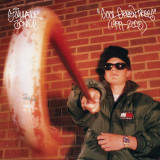
The cover photo is a picture of Sam standing on his back porch in the latter part of 1998, just before he got his first sampler. He was 13 years old, in 8th grade. His dad took the picture with his 35mm film camera: "I actually wanted to be pointing my dad's .22 pistol at the camera lens but he wouldn't let me. He gave me an old walking cane to use instead. The Tommy Hilfiger puffer jacket came from the lost and found at William Fleming High School where my mom worked as a secretary. I was thrilled when she brought it home because we never spent money on expensive name brand clothing like that - we were for the most part strictly a sale rack, bargain bin, thrift store, yard sale, flea market kind of family when it came to clothes. My watch is some cheap off-brand fake gold department store watch." Mastering for this vinyl edition was overseen by Be With regular Simon Francis and it was cut by the esteemed Cicely Balston at Abbey Road Studios to be pressed in the Netherlands by Record Industry.
Part 2[11,72 €]
A noughties classic, an earworming anthem, an eventual schoolyard ringtone favourite; Roman Flügel’s once inescapable ‘Geht’s Noch?’ celebrates turning 21 on Running Back, refreshed and remixed by a scene-spanning set of artists paying keen tribute to its absurdist energy.
Casually released as part of a Cocoon Records compilation in 2004, ‘Geht’s Noch?’ rose from the depths with the support of Sven Väth, becoming an international phenomenon, conquering and uniting the dominant scenes of minimal and electroclash alike. Some have said it laid the foundations for the ‘Dirty Dutch’
house scene, albeit from over the border in Germany.
Well known for injecting much-needed levity into the contemporary club landscape via her Live From Earth parties, DJ Gigola adds additional firepower to ‘Geht’s Noch?’, inducing a planet-shaking kick drum, before sending the track’s signature bleeps into nonsensical Morse code for even greater pleasure. Another rave
culture connoisseur, Luca Lozano, offers two alternate takes; his ‘Technocs’ mix rolls deep with additional cowbells, robotic voice commands and stadium-sized claps. Meanwhile, the ‘Gehts Garage Remix’ draws a savvy connection with the original’s as-yet-untapped UK funky potential.
Peder Mannerfelt, who straddles the line between innovation, functionality, humor and seriousness quite like its original author, takes ‘Geht’s Noch?’ to truly wuthering heights. His remix builds unexpected drama and catharsis around the enduring riff, before a collaboration with studio partner Par Grindvik as Aasthma
spins the club out with a glossy, anime-tinted take, full of whimsy and colour.
And while the digital release of Geht’s Noch? also spans interpretations from Audion, Domnik Eulberg & Moguai, this vinyl release presses Steve Angello vs Who’s Who remix to wax, that which helped take ‘Geht’s Noch?’ out of the underground and into the stratosphere. Twenty years on, and Flügel’s offbeat hit is
always ascending. Love it or hate it, ‘Geht’s Noch?' will still get you good.
Words by John Loveless
2023 Repress
Robag Wruhme, working on the material. On the very same piece. And performing two different movements. First, thinking in category Album: who will hear it where? also: mood, position, length. Second, thinking in category Maxisingle: a spinning-tool for the club – another form of another functionality: accelerating the rhythm, lowering the harmonicmelodious, still preserving the nature of the song. And each version should make you HOT for the other!
Nata Alma, a voice loses itself in the infinite, a car brakes, a horse whinnies, the sun scorches relentless. Further, further on, towards the flickering, stoically. Water, flames on the horizon, Fata Morgana, a mirage. »And you might say, we've got no place to go?« - okay? no notokay at all!: Shuffle!
Nata Alma, melancholic Eight-minute-forty. A love song, a wave good-bye: »And you might say, that you need me no more?« sings Sidsel Endresen alongside Bugge Wesseltoft's swells and ebb-aways – metal never sounded so longing; a buzzing swing, a siren call from afar.
Robag Wruhme takes a seat at the organ and plays minor bass notes. He gets up, leaves the room and lays down a dry rock of funk: wooden kick on wooden snare, tight-cut voices, driving hi-hats and shakers, gated synth danglers and percussion loops. Relentless, stoically. »And you might say, that it's over?« – relentless, maybe, but that's how he creates the Further: keep going! dance it off! a new day rising!
And right here. Flip it and keep on moving: Venq Tolep. A summer meadow, grass-stains, a gentle breeze, an early smell of hay. Venq Tolep. Endorphins tickle under the skin. A
percussive spectacle, dance of the insects. Hopping around in flat shoes, the beat is phat and reverberated by a cluster of trees. Stabs on the e-piano set in, picturing the euphoric moment when Loving-feelings walk hand-in-hand with a Hint of Melancholy.
Robag Wruhme, Nata Alma and Venq Tolep - music for dance floors, inside and outside, music for the summer, day and night, and for convertibles on the way there.