Bartees Strange begann die Arbeit an "Horror" in seinem Homestudio. Eine Session mit Yves und Lawrence Rothman (Yves Tumor, Lady Gaga) lieferte das rhythmische und klangliche Rückgrat für große Teile des Albums. Nachdem Bartees Strange Jack Antonoff (Taylor Swift, Lana Del Rey...) kennengelernt hatte und die beiden schnell Freunde wurden, arbeitete Strange an Material für Antonoffs Band Bleachers und Antonoff an "Horror". Die beiden beendeten die Arbeit am Album gemeinsam, indem sie die Songs roh bearbeiteten, editierten, arrangierten und sie in Kleidung kleideten, die Angst einflößt. Während des gesamten Albums legt Strange eine schwierige Wahrheit nach der anderen ab. Auf den 12 neuen Tracks des Albums finden sich genreübergreifende Fäden der Musik, die sein Vater ihm nahegebracht hat - Parliament Funkadelic, Fleetwood Mac, Teddy Pendergrass und Neil Young - die mit Stranges Interesse an Hip-Hop, Country, Indie-Rock und House verschmelzen. Seit dem Release seines 4AD-Debüts "Farm to Table" (2022) spielte Bartees Strange neben eigenen Headline-Touren (und einem Auftritt beim letztjährigen Reeperbahn Festival) im Vorprogramm von Acts wie boygenius, Clairo, Dijon und The National. Während eine Tour zum neuen Album noch angekündigt werden wird, gibt es schon eine Reihe von Release-Shows in 2025 in New York, Los Angeles, Washington D.C. und London. Geboren in Ipswich, England, als Sohn eines Militärvaters und einer Opernsängerin, verlebte Bartees Strange eine Kindheit, die geprägt war von diversen Umzügen bevor er sich schließlich in Mustang, Oklahoma, niederließ. Später spielte Bartees Strange in Hardcore-Bands in Washington D.C. und Brooklyn, während er in der Regierung von Barack Obama und der Bewegung für Umweltschutz arbeitete. In letzter Zeit wurde seine Musik auf mehreren populären TV- und Film-Soundtracks verwendet, darunter bei The New Look von Apple TV und I Saw The TV Glow von A24-Studio.
out of Stock
Last delivered 19 months ago available to reorder, subject to availability
Our 2022 reissue of Don Julian and the Larks’ 1974 LP Super Slick made fans of rare ‘70s soul and funk very happy, and this release is gonna do the same. Bandleader Don Julian followed the lead of Isaac Hayes, Curtis Mayfield et al. in scoring the 1973 blaxploitation film Savage!; the reasons Julian’s score didn’t hit like Superfly or Shaft are, one, the film didn’t do as well, as it was a Philippine-based B-movie funded and distributed by Roger Corman’s New World Pictures, and, two, the soundtrack came out on the lightly-distributed Money Records label. Dig the fantastic flute work from Jimmy Vinson…and the ten-plus minute title theme is just plain funkin’ filthy. Blood orange pressing limited to just 750 copies!
„Life has never been easy, so keep moving“ is the opening line of Making moves, the title song of SANTROFI‘s new album. Four years ago their celebrated debut ‚Alewa‘ introduced this 8 piece Highlife collective powerhouse from Accra to the world.
After five solid years on the road, SANTROFI is now ready to release some fresh material. co-produced and mixed by four-time Grammy Award winner Jerry Boys (REM, Ali Farka Toure, Buena Vista Social Club, Orchestra Baobab, Kronos Quartet). The band has continued an intense tour schedule, with 2024 seeing their first shows in the USA as well as a Japan tour of with 13 sold out shows 2024. where.
Making moves is both a celebration of SANTROFI’s roots and a leap into the future of Highlife. The opening track Amina is a Ghanaian childhood game turned Highlife Funk. It draws from the past, pushing it into the future. The title song Making moves sees Santrofi team up with the current booming Afrobeatscene in Ghana: It features Ghanas Newcomers Kofi Jamar and Arathejay. The song talks about trying to survive on the sometimes crazy streets of Accra without loosing your mind. Su nkwa sees Santrofi celebrating their love for typical Sikji Highlife music. And the nostalgic No money, no honey sums up yet another common truth from the streets of Accra. From the opening Highlife funk of Amina to the Ghanaian-childhood-game-turned- boogie-banger Gyae me how, this record will get you dancing.
Led by producer-bassist Kojo Ofori, SANTROFI unites 8 of Accra’s most gifted musicians with a passion for both vintage highlife grooves and a hip hop sensibility. Members of the band have played with leading Ghanaian artists including Ebo Taylor, Pat Thomas, Ambolley, AK Yeboah and highlife pioneer AB Crentsil with whom they recorded just before he passed away - watch out for that!
SANTROFI have shared stage and studio with rising stars of Ghana’s vibrant urban music scene such as Kidi, Yaw Tog, Black Sherif, AratheJay and even Nigerian superstar Wizkid (who has made Accra his second home). The upcoming album sees the band teaming up with some of the most exciting talents in Ghana‘s such as AratheJay and Kofi Jamar.
If you think it is impossible to play a funk groove (or even drill) over a pulsing Highlife clave: SANTROFI will prove you wrong. Listen to the phrasing of SANTROFI‘s horn section, hear the Highlife clave running through every bar of their music. Santrofi are pushing Ghanas Highlifegrooves into the future without loosing its sweet soul. And don’t forget to come and see them Making moves live in your city.
Generally regarded as the first true 'new age' record, Steve Halpern's 1975 private press LP has long been in demand by collectors. In particular, the very first pressing of the album included an extraordinary long-form jazz funk track called 'Something for Every Body Suite' that was removed from subsequent versions. Eating Standing is proud to reissue Halpern's classic long-lost original version of the album, officially licensed from Halpern himself that includes this heavy groove-laden masterpiece. This is the very first ever full reissue of the first press album with full reproduction of the artwork. Original copies cost over $700 (assuming you can even find one) but now this incredible landmark album is available once more to enjoy. "Reissued for the very first time since 1975 in its original format and track listing, a legendary album that is considered a game-changer in music. Steve Halpern's landmark album 'Christening For Listening (A Soundtrack For Every Body)' is considered by many to be a crucial and defining album that pointed the way ahead. Predating the ambient/experimental work of Brian Eno, Steve Hillage and even Mort Garson's 'Plantasia', Steve Halpern's 'Christening For Listening' was the first album to explore what became known as 'new age' or ambient music, exploring the effect of tones and rhythms on the human body and mind as well as plants and other organisms. Originally issued as a private pressing in 1975, the very first issue of this album had an extraordinary extended jazz funk track on the B side, a DJ/Samplers delight – DJ Gaslamp Killer is a huge fan. This track, 'Something For Every Body Suite', was never included on any of the subsequent represses making the very first pressing incredibly rare and almost impossible to find. It's reissued here for the very first time, with full repro of the original artwork plus a Q&A by Tony Higgins with Steven Halpern himself.
The Dutch band Time Bandits, formed by Alides Hidding, had national and international success. In 1981 the Time Bandits scored a big dance hit with “Live it Up”, which ended up in the number 1 spot of the American Dance Charts.
Characteristic of the Time Bandits is the professional sound of funk, disco, soul and rock and the unmistakable voice and guitar sound of Alides Hidding. In 1983, the song “I’m Specialized In You” came in second in the dutch top 40. It was a monster hit with more than 90,000 copies sold in the Netherlands and 450,000 in France. The following single “Listen To The Man With The Golden Voice” also made it to the top 10.
In October 1983 the single “I’m Only Shooting Love” reached the top 10 while the band also continued to break through internationally. The single did very well in France, Portugal, America and Australia and reached the number 1 spot in the New Zealand single charts. The Time Bandits went on tour to Australia and New Zealand and another string of hits followed.
The “Endless Road” music video was filmed in Australia during the band’s 1985 tour. The video has been viewed over 2,5 million times on Youtube.
The vinyl edition of Greatest Hits features all their hits, various remixes and 3 fan-favorite bonus tracks; “Reach Out”, “Dancing On A String” and “Endless Road (High Energy Dance Mix by Ben Liebrand)”.
This is limited edition of 500 copies, pressed on transluncet pink coloured vinyl. This 2-LP set includes an insert.
out of Stock
Last delivered 20 months ago available to reorder, subject to availability
It’s written in the Agreement Terms. There’s no getting out alive in Life. And yet, mankind keeps striving for eternal life; through art, through power, through cryogenics, through singularity. In that misguided quest against the inevitable, we all fall into the category of lost travellers. No one is exempt. In that understanding, Confucius MC and producer Bastien Keb offer no misgivings about the destination on the somber “Time Will Come”: Time will come for all of us / try to take your time.
Songs For Lost Travellers is a collaborative album by Con and Bastien Keb that merges unexplored pathways between rap, folk, and jazz into a spiritual triumvirate. Each genre is a balancing force within the record. The result is an album unlike either artist have made previously, possibly unlike any record in existence. Songs For Lost Travellers opens with bedtime stories and fairytales. Both “Tell Me Lies” and “Fairytale” present the creature comforts that trick us into forgetting the truth. Con’s first words spoken are “tell me lies ‘til I swear I can’t remember” over Keb’s lo-fi plucking that feels like it was lifted from a handheld recorder capturing a nursery mobile above a crib. Third track “Time Will Come” resets the album after acknowledging on “Fairytale” there’s “no nourishment in half-truths / no sustenance in eating lies.”
Honest and direct, Con and Keb imbue Songs For Lost Travellers with knowledge and truth from their lived experiences. There is grief hidden in the notes, an inherent sadness that is balanced with an awareness that grief is a protest against the social machinery of remaining numb. The record lingers in a meditative state, unafraid of restlessness and embracing solitude, with the expectation that peace is just as imminent as death.
The production contains a complimentary authenticity. Neither Con nor Keb bothered much with the professional studio in making Songs For Lost Travellers. Instead they opted for the raw state of their home recordings and first takes, matching the intimacy of being alone and reflective in their creative energies. Room static on “Tell Me Lies” makes it feel like you’ve entered their apartments. The immediacy continues on “Gutters,” as Keb plays guitar while watching the tele and Con hums along to the vocal melody in search of the proper pocket for his verse. Someone snaps their finger to mark a cue, but the snap never returns to the mix to keep time.
More drawn to Keb’s recent folk recordings on the Songs For Lilla EP than his funk roots circa Dinking In The Shadows of Zizou or the cinematic soul of The Killing of Eugene Peeps, Con leaned into the spacial freedom he heard in Keb’s lo-fi production cobbled from field recordings and voice notes. Both artists placed their families into the tableau. Con wrote “Little Man” for his son, hoping to add a positive contribution to the canon of parental rap songs. Later, his son appears at the end of “Paramount” to deliver a passage from Kahlil Gibran’s The Prophet. Keb secretly recorded his mum playing saxophone and sampled his cousin playing sax as well. The result is a near-drumless album (save for “Toulouse” and light tapping on “It Would Speak”) in which Keb’s raw production (plus a few sessions with Kofi Flexxx) gave Con a liminal zone, unencumbered by beats per minute, to craft melodies that turn his philosophical rhymes into mantras.
Perhaps there’s a message in the presence of family? It would be one of many. Con and Keb’s reflective, somber approach to Songs For Lost Travellers does not wallow in the mire. Music is action and it’s taking them through a portal to the other side of grief. We are welcome to join (which is also in the fine print of the Agreement Terms), but first there’s a password in the final song, a single request to answer: Tell me what you care about.
Possessing lyrics heavily focused on political and social justice, inspired heavily by West Coast gang culture and Islam, Da Lench Mob made waves throughout the hip-hop scene when they first appeared on the track "Rolling With Da Lench Mob", off Ice Cube's famed 1990 solo record AmeriKKKa's Most Wanted. Initially, the titular "Lench Mob" of the track namesake referred to Ice Cube as well as the other participating rappers, but J-Dee, Shorty, and T-Bone would adopt the name for their own in time. Their standout appearance on the Ice Cube track would earn the trio critical interest, (as well as shout-outs on Ice Cube's 1991 follow-up Death Certificate) and generate palpable anticipation for a studio album of their own. Guerillas In Tha Mist, their 1992 debut record, was recorded in the wake of the Rodney King riots, taking its name from infamous comments made during the riots. The record was uncompromising and confrontational in its depictions of urban decay and an unjust system wreaking havoc on an economically disadvantaged Black population. It was starkly realistic (bordering on abrasive) in the content of tracks like the armed revolution-advocating "Freedom Got An A.K.", the kill-your-idols style of "You And Your Heroes", and the anti-pusher anthem "All On My Nut Sac." These harsh manifestos were made all the more smooth via Ice Cube's jazzy G-funk and Bomb Squad-influenced production, which sampled heavily from classic songs by Parliament, Kool & The Gang, The Incredible Bongo Band, and even Vangelis. Cube himself would make guest appearances throughout the record, as well as an appearance by B-Real of Cypress Hill on the track "Ain't Got No Class." Guerillas In Tha Mist was a Billboard success upon its release, reaching #24 on the Billboard 200, and rendering rap radio hits out of its title track and "Freedom Got An A.K.", but Da Lench Mob would fall into obscurity over the years, eventually going their separate ways after creative differences, financial rifts, and the life conviction of rapper J-Dee for suspected murder in 1993. Despite their loss of commercial fortunes, Guerillas In Tha Mist would develop a strong reputation as an unheralded gem among hip-hop heads, and would be considered one of the great lesser-known releases of the era among critics (in 2018 Complex would declare the title track as one of the 100 Best L.A. Rap Songs). Decades after its initial release, and in tribute to the memory of Da Lench Mob member Shorty, who passed in 2019, Get On Down now presents an exclusive LP reissue of Guerillas In Tha Mist, which previously was only released officially on wax in Europe. The LP is pressed on a deluxe Green and Orange Splatter-colored vinyl, and features remastered audio and a painstakingly recreated full color jacket.
Bartees Strange begann die Arbeit an "Horror" in seinem Homestudio. Eine Session mit Yves und Lawrence Rothman (Yves Tumor, Lady Gaga) lieferte das rhythmische und klangliche Rückgrat für große Teile des Albums. Nachdem Bartees Strange Jack Antonoff (Taylor Swift, Lana Del Rey...) kennengelernt hatte und die beiden schnell Freunde wurden, arbeitete Strange an Material für Antonoffs Band Bleachers und Antonoff an "Horror". Die beiden beendeten die Arbeit am Album gemeinsam, indem sie die Songs roh bearbeiteten, editierten, arrangierten und sie in Kleidung kleideten, die Angst einflößt. Während des gesamten Albums legt Strange eine schwierige Wahrheit nach der anderen ab. Auf den 12 neuen Tracks des Albums finden sich genreübergreifende Fäden der Musik, die sein Vater ihm nahegebracht hat - Parliament Funkadelic, Fleetwood Mac, Teddy Pendergrass und Neil Young - die mit Stranges Interesse an Hip-Hop, Country, Indie-Rock und House verschmelzen. Seit dem Release seines 4AD-Debüts "Farm to Table" (2022) spielte Bartees Strange neben eigenen Headline-Touren (und einem Auftritt beim letztjährigen Reeperbahn Festival) im Vorprogramm von Acts wie boygenius, Clairo, Dijon und The National. Während eine Tour zum neuen Album noch angekündigt werden wird, gibt es schon eine Reihe von Release-Shows in 2025 in New York, Los Angeles, Washington D.C. und London. Geboren in Ipswich, England, als Sohn eines Militärvaters und einer Opernsängerin, verlebte Bartees Strange eine Kindheit, die geprägt war von diversen Umzügen bevor er sich schließlich in Mustang, Oklahoma, niederließ. Später spielte Bartees Strange in Hardcore-Bands in Washington D.C. und Brooklyn, während er in der Regierung von Barack Obama und der Bewegung für Umweltschutz arbeitete. In letzter Zeit wurde seine Musik auf mehreren populären TV- und Film-Soundtracks verwendet, darunter bei The New Look von Apple TV und I Saw The TV Glow von A24-Studio.
"If There's a Will, There's a Way" was written by Don Covay and Donny Hathaway and released in 1972 on the American Janus Records label. Covay, a key figure in the 1960s and 1970s soul scene, was known for his gritty voice and songwriting for artists like Aretha Franklin and Wilson Pickett. Hathaway, on the other hand, was an influential soul singer, composer, and pianist often celebrated for his collaborations with Roberta Flack. This song blends both of their distinct styles: Covay's raw, Southern soul vibe and Hathaway's sophisticated, jazz-influenced arrangements. Like Donny Hathaway's live album released that same year in 1972, this track grabs you from the very first notes. A classic soul groove, with a powerful vocal delivery!
Notably, this track was later sampled by Pete Rock in his remix of "Lots of Lovin'" with C.L. Smooth, bringing the soulful essence of the original into the realm of 90s hip-hop.
On the b-side, another track from the fantastic Janus Records catalogue. Harvey Mandel's "Baby Batter," originally released in 1971 is a blend of funky blues and psychedelic rock vibes representing another popular genre from the early 70's in the USA. Mandel's signature guitar work shines throughout the track and the drum break in the introduction will please the hip-hop heads and 45 DJs out there.
out of Stock
Last delivered 20 months ago available to reorder, subject to availability
Original artwork / Black vinyl / 400 mcn paper / Gatefold Sleeve / 4 page 30 x 30 cm insert printed on 300 mcn Shiro Eco paper with condensed interview to Riccardo Randisi and exclusive pictures / Exclusive poster printed on 90 mcn Fedrigoni Constellation Snow Vergato Paper.
Personnel:
Enzo Randisi - Vibrafono e Percussioni
Riccardo Randisi - Rhodes Piano e Sint. A.R.P.
Giuseppe Costa - Basso Elettrico
Enzo Palacardo - Chitarra Elettrica
Franco Lotà - Batteria e Percussioni
Mimmo Cafiero - Congas e Percussioni
Notes:
This is the lost gem, this is the most secret album coming from the ancient land of Sicily No Holy Grails here, we are not at the crusades, but in the presence of one of the busiest ensembles on the Italian scene during the 70s and 80s of the last century. Enzo Randisi and his son Riccardo, who signs the only unreleased song on the album, take us into a world of visionary jazz, ambient atmospheres of the track Windows, an opening towards a modern vision, a watershed between the live performances of standards American music at a new rate also in tracks like the 3/4 "Etna Sud" written by Riccardo Randisi for the album with digressions into Jazz Rock Rhythm à la Gary Barton and Bloody Funk which has its peak in the cover of the Czech musician Karel Ruzicka and his "Probu Zeni" a killer cub track that will smash your audio set-up! The very last mystery from Italian jazz scene available for the first time in a precious gatefold sleeve handcrafted in Italy with special insert and Poster for the first 100 copies.
Brother II is an incredible synth boogie band from the early 80's made up of brothers J. and M. Soso. The title You was born is a true masterpiece of the original boogie funk sound of the 80s when synths dominated the sound of the music scene. The excellence and flow of the bass line that moves all the atoms in the hips paired with the present and dominant synth electronic atmosphere makes this title as one of the first three letters of the boogie alphabet. So fans of the original synth boogie genre, don't waste time and order this forgotten boogie gem right away.
Watch out! You are holding the 125th (one-hundred-and-twenty fifth!) album on Tramp Records in your hands! We are honored to celebrate this impressive anniversary with the tenth volume in the Praise Poems series. This time, too, we go on a journey to discover previously unheard regions of jazz, folk and AOR from the 1970s and 80s.
Praise Poems Vol.10 presents sixteen (almost) forgotten rare groove gems, all released between the years 1970 and 1984. One of the many highlights is the opening track: "Fields of Laughter" by Color Me Blu - originally released on an acetate only of which two copies exist worldwide. But there is much, much more to discover. This brandnew volume features a wide range of genres, from AOR (Whiz Kids, Ross Miller, and another previously unreleased track by Harve & Charee) to Latin-Rock a'la Santana (Color Me Blue, Tribal Sinfonia, and Apple) to Soul-Jazz (Ernie Lewis Trio, Joe Bozzi Quintet or Dutch saxophonist Frits Kaatee). Right at the end, one track in particular stands out: the wonderful "It's Good Not To Forget" by George Melvin and his quintet - a fabulously dreamy, thoughtful instrumental piece in the style of Ramsey Lewis with catchy tune potential.
Not many compilation series make it to a tenth edition. And if they do, then you often notice that the quality of the songs goes in the opposite direction to the increasing number of series: namely decreasing. Not so with Praise Poems Vol. 10, which the creators prove in an impressive new way. They have found tracks that were originally either a) pressed by the musicians themselves in very small editions or b) released by small, regional labels. It is understandable that neither the musicians nor these small labels had the necessary knowledge or budget to market their albums or singles professionally. The majority of the bands therefore did not manage to reach a large audience - although they certainly had the potential for the big stage.
"Praise Poems 10 - A journey into soulful jazz and funk from the 1970s" makes these almost 50-year-old treasures accessible to a new audience. We hope that you enjoy discovering your personal favorite song(s) and we are already looking forward to many more releases!
out of Stock
Last delivered 17 months ago available to reorder, subject to availability
Hidden Harmony presents the first full-length LP from Estonian composer and keyboardist Volodja Brodsky. The six compositions on 'Whispering Ln.' were entirely recorded during Brodsky's trip to the USA in 2018-2019 and showcased his passion for the transformative power of minimalism as an art form. The follow-up to his keyboard duties on psych funk/rare groove Estonian outfits Estrada Orchestra, Centre El Muusa, Misha Panfilov Septet, on ‘Whispering Ln’ Brodsky reinventing himself as a minimalism evangelist in his own right. From space age pop shimmering sonatas to the monolithic drone/overtone hypnotics, Brodsky created an ascetic yet complex sonic landscape where less is more.
"During this period, I was deeply engaged in the study of this art form. The compositions are meticulously distilled to their most primitive form, crafting an immersive experience that beckons to embark on a journey into the very core of emotions and thoughts. Every pause and each meticulously chosen sound within the album serves a purpose, orchestrating a delicate interplay between simplicity and depth. I hope this music carries you to a place of introspection and serenity, where you may discover the profound beauty within the plainness of life" – Volodja Brodsky
out of Stock
Last delivered 16 months ago available to reorder, subject to availability
Emmanuel Mario returns to Karaoke Kalk with his third album under his Astrobal moniker for the Berlin-based imprint. »L’uomo e la natura« (»Man and Nature«) sees the prolific drummer and producer, who has worked with artists such as Laetitia Sadier and label mate Pink Shabab, take a different musical route than before. The French electronic music composer pays homage to the spirit of library music while also making concessions to different strains of pop and even classical music. With only two of the ten songs putting words to the music, »L’uomo e la natura« is a masterful exercise in the evocation of atmospheres: expressing much while saying very little outright—show, don’t tell.
The album was born out of a desire to push the envelope. »I wanted to make music that was both pop and ambitious in its chord progressions as well as surprising in its construction,« explains the Paris-based artist. Taking inspiration from library music artists such as Alessandro Alessandroni or Bruno Nicolai as well as the more cosmic strains of electronic instrumental music, he strove »to create a soundtrack that would immediately bring to mind outer space.« The first of the three singles released ahead of the full album, »L’abeille pourpre,« captures this spirit with funky rhythms and an overjoyed interplay of different melodies, all tied together by wordless yet terminally catchy vocals.
The second single, »Miami 2064,« traverses through many different moods in its six-minute run-time: Starting off as neo-noir synth-wave piece, it then proceeds to pay its dues to the masters of the cosmic music tradition such as Tangerine Dream or, of course, Jean-Michel Jarre before slowly descending back to Earth with guitars and dreamy synthetic vocals, playfully punctuated by a plethora of wistful melodies. It is the perfect encapsulation of the open-ended approach Mario follows throughout the entire album, taking full creative licence in regards to songwriting and arrangements. »I wanted to surprise myself,« he shrugs. He succeeded.
»L’uomo e la natura« rewards multiple listens not only emotionally, but also intellectually. »I also wanted to talk about politics and ecology, because it’s impossible not to,« Mario notes. Some of the track titles express this more openly than others and the two title tracks sung by Mario and Nina Savary use French and Italian lyrics, respectively. However, as a whole the album leaves things open to interpretation. Does »The End of Capitalism« sound elegiac or triumphant? And what do you actually make of this musical vision of the Floridian metropolis, whose mere existence is threatened by climate change already today, four decades from now? Mario doesn’t necessarily answer these questions—he doesn’t tell, he shows.
out of Stock
Last delivered 9 months ago available to reorder, subject to availability
This compilation is more than a selection of songs from Willy Nfor’s solo career in Nigeria—it’s the story of a man’s determination to live his dreams. Known as Willy Ngeh Nfor, he was a founding member of the Mighty Flames. One morning, Willy and his bandmates packed their instruments, grabbed a few clothes, and headed from Cameroon to Nigeria. Crossing the border on foot, they made their way to Onitsha.
“We left Cameroon with no contacts in Nigeria—it was an adventure. We’d heard about the FESTAC Arts Festival and felt we had to be part of it. Our first band in Nigeria was Pentagon Funk Band, sponsored by the 5th Brigade in Port Harcourt. Later, we moved to Onitsha and signed with Right Time Stores, recording Sweet Love (RTLPS 011) as The Mighty Flames. The sessions were at Decca Studios in Lagos, with a 16-track analog system. It was intense—no room for mistakes. We rehearsed endlessly before recording each take.” (Vincent Ekedi, Drummer, Mighty Flames)
Willy’s journey was shaped by his resilience and talent. Losing his mother early and facing family struggles, music became his escape. Inspired by funk and jazz-rock greats like Bootsy Collins, Jaco Pastorius, and Stanley Clarke, he honed his skills on bass and composition, playing with local bands alongside musicians like Vincent Ekedi. Together, they refined their grooves, dreaming of brighter futures.
After his time in Nigeria, Willy moved to Paris, becoming a session bassist for legends such as Manu Dibango, Mory Kanté, Tony Allen, Akendengue, Ray Lema, Jean-Luc Ponty, and Kanté Manfila. Touring extensively, he lived the “Star Life” (Star Life, Cornerstone Records, Feel So Fine, 1981), playing funk grooves with giants in grand venues, fulfilling his dream of the spotlight.
Swiss DJ and composer Dexter Troy has made a name for himself with notable productions on labels such as King Street Sounds, Groove Culture, and Mood Funk Records, alongside iconic artists like Kerri Chandler, Dennis Ferrer, Masters At Work, Satoshi Fumi and Dimitri From Paris.
For over 15 years, he has shared his passion for electronic music in bars, clubs, and festivals in Switzerland and abroad. His rich and diverse musical universe draws from multiple influences :house, funk, disco, all enhanced with a touch of electro-techno.
out of Stock
Last delivered 13 months ago available to reorder, subject to availability
Volume 1 of this expertly curated project of 90s Italian House - put together by Don Carlos.
If Paradise was half as nice… by Fabio De Luca.
Googling “paradise house”, the first results to pop up are an endless list of European b&b’s with whitewashed lime façades, all of them promising “…an unmatched travel experience a few steps from the sea”. Next, a little further down, are the institutional websites of a few select semi-luxury retirement homes (no photos shown, but lots of stock images of smiling nurses with reassuring looks). To find the “paradise house” we’re after, we have to scroll even further down. Much further down.
It feels like yesterday, and at the same time it seems like a million years ago. The Eighties had just ended, and it was still unclear what to expect from the Nineties. Mobile phones that were not the size of a briefcase and did not cost as much as a car? A frightening economic crisis? The guitar-rock revival?! Certainly, the best place to observe that moment of transition was the dancefloor. Truly epochal transformations were happening there. From America, within a short distance one from the other, two revolutionary new musical styles had arrived: the first one sounded a bit like an “on a budget” version of the best Seventies disco-music – Philly sound made with a set of piano-bar keyboards! – the other was even more sparse, futuristic and extraterrestrial. It was a music with a quite distinct “physical” component, which at the same time, to be fully grasped, seemed to call for the knotty theories of certain French post-modern philosophers: Gilles Deleuze, Félix Guattari, Paul Virilio... Both those genres – we would learn shortly after – were born in the black communities of Chicago and Detroit, although listening to those vinyl 12” (often wrapped in generic white covers, and with little indication in the label) you could not easily guess whether behind them there was a black boy from somewhere in the Usa, or a girl from Berlin, or a pale kid from a Cornish coastal town.
Quickly, similar sounds began to show up from all corners of Europe. A thousand variations of the same intuition: leaner, less lean, happier, slightly less intoxicated, more broken, slower, faster, much faster... Boom! From the dancefloors – the London ones at least, whose chronicles we eagerly read every month in the pages of The Face and i-D – came tales of a new generation of clubbers who had completely stopped “dressing up” to go dancing; of hot tempered hooligans bursting into tears and hugging everyone under the strobe lights as the notes of Strings of Life rose up through the fumes of dry ice (certain “smiling” pills were also involved, sure). At this point, however, we must move on to Switzerland.
In Switzerland, in the quiet and diligent town of Lugano, between the 1980s and 1990s there was a club called “Morandi”. Its hot night was on Wednesdays, when the audience also came from Milan, Como, Varese and Zurich. Legend goes that, one night, none less than Prince and Sheila E were spotted hiding among the sofas, on a day-off of the Italian dates of the Nude Tour… The Wednesday resident and superstar was an Italian dj with an exotic name: Don Carlos. The soundtrack he devised was a mixture of Chicago, Detroit, the most progressive R&B and certain forgotten classics of old disco music: practically, what the Paradise Garage in New York might have sounded like had it not closed in 1987. In between, Don Carlos also managed to squeeze in some tracks he had worked on in his studio on Lago Maggiore. One in particular: a track that was rather slow compared to the BPM in fashion at the time, but which was a perfect bridge between house and R&B. The title was Alone: Don Carlos would explain years later that it had to be intended both in the English meaning of “by itself” and like the Italian word meaning “halo”. That wasn’t the only double entendre about the song, anyway. Its own very deep nature was, indeed, double. On the one hand, Alone was built around an angelic keyboard pattern and a romantic piano riff that took you straight to heaven; on the other, it showcased enough electronic squelches (plus a sax part that sounded like it had been dissolved by acid rain) to pigeonhole the tune into the “junk modernity” section, aka the hallmark of all the most innovative sounds of the time: music that sounded like it was hand-crafted from the scraps of glittering overground pop.
No one knows who was the first to call it “paradise house”, nor when it happened. Alternative definitions on the same topic one happened to hear included “ambient house”, “dream house”, “Mediterranean progressive”… but of course none were as good (and alluring) as “paradise house”. What is certain is that such inclination for sounds that were in equal measure angelic and neurotic, romantic and unaffective, quickly became the trademark of the second generation of Italian house. Music that seemed shyly equidistant from all the rhythmic and electronic revolutions that had happened up to that moment (“Music perfectly adept at going nowhere slowly” as noted by English journalist Craig McLean in a legendary field report for Blah Blah Blah magazine). Music that to a inattentive ear might have sounded as anonymous as a snapshot of a random group of passers-by at 10AM in the centre of any major city, but perfectly described the (slow) awakening in the real world after the universal love binge of the so-called Second Summer of Love.
For a brief but unforgettable season, in Italy “paradise house” was the official soundtrack of interminable weekends spent inside the car, darting from one club to another, cutting the peninsula from North to centre, from East to West coast in pursuit of the latest after-hours disco, trading kilometres per hour with beats per minute: practically, a new New Year’s Eve every Friday and Saturday night. This too was no small transformation, as well as a shock for an adult Italy that was encountering for the first time – thanks to its sons and daughters – the wild side of industrial modernity. The clubbers of the so-called “fuoriorario” scene were the balls gone mad in the pinball machine most feared by newspapers, magazines and TV pundits. What they did each and every weekend, apart from going crazy to the sound of the current white labels, was linking distant geographical points and non-places (thank you Marc Augé!) – old dance halls, farmhouses and business centres – transformed for one night into house music heaven. As Marco D’Eramo wrote in his 1995 essay on Chicago, Il maiale e il grattacielo: “Four-wheeled capitalism distorts our age-old image of the city, it allows the suburbs to be connected to each other, whereas before they were connected only by the centre (…) It makes possible a metropolitan area without a metropolis, without a city centre, without downtown. The periphery is no longer a periphery of any centre, but is self-centred”.
“Paradise house” perfectly understood all of this and turned it into a sort of cyber-blues that didn’t even need words, and unexpectedly brought back a drop of melancholic (post?)-humanity within a world that by then – as we would wholly realise in the decades to come – was fully inhuman and heartless. A world where we were all alone, and surrounded by a sinister yellowish halo, like a neon at the end of its life cycle. But, for one night at least, happy.
out of Stock
Last delivered 85 days ago available to reorder, subject to availability
The second album by Wini, Mops, and DJ Pete, the group FOREVAYANG from Germany and Poland. Before we kill the child within us, let’s dance one more time.
26 tracks released on 3 vinyl records in a GATEFOLD sleeve.
Uncompromising lyrics paired with unique humor, set to exceptional arrangements, guarantee a hip-hop journey like you've never experienced before. On the albums guests around the world such as, Michal Urbaniak, Ola Duong, Ceci Loel, D.White, Cool P & more
In 1971, film producer David Gil and his business partners Robert S Sinn and Paul Frankenberg launched a film company called GSF. Over the next few years, it would be involved in a small number of productions. But, in 1971 the movie business was kind of old-hat, music was where it was at, and so GSF Records, a well-funded label, headed by Larry Newton was formed. Today Newton is largely remembered for his attempts to prevent Louis Armstrong from recording 'What A Wonderful World' but that didn’t stop him from growing ABC from a second division company to an industry leader. As he approached his 52nd birthday he was unveiled as GSF Records’ president a full-service music company, involved in records and publishing across all genres. Through a joint venture with drummer Bernard Purdie the label targeted the R&B charts and soul & funk dominated GSF's release schedule.
Black music ruled and this was reinforced by the hiring of Lloyd Price as head of A&R (veteran R&B star), and producers George Kerr (All-Platinum), Mickey Stevenson (Motown) and Jerry 'Swamp Dogg’ Williams. No wonder then, unintentional as it was, that GSF left behind such an extraordinary legacy of rare soul treasures.
NEW YORK’S BEST KEPT SOUL SECRET Features legendary Northern Soul classics courtesy of Anderson Brothers, Skull Snaps and Connie Laverne Produced by hit makers George Kerr and Motown veteran Mickey Stevenson Starring the Whatnauts and Eddie “Hey There Lonely Girl” Holman
Here it is, the sixth chapter in the sonic journey of Mr. Mangiadischi.
Continuing the dance-floor assault, MD006 delivers four tracks, each with a unique story but all with the same aim: to make you move to the rhythm.
• A1 - Mamma
A Balearic groovy deep house nostalgic tribute to the most important person we have in our life. This track blends warm melodies with heartfelt emotions, making it the perfect homage.
• A2 - Genug Vans
Intergalactic soul/post-disco space-tech. A cosmic voyage through pulsating rhythms and celestial sounds, designed to take you on a dancefloor odyssey.
• B1 - Fenel
A very modern interpretation of this '76 Algerian artist's funk/pop/world/country mesmerizing masterpiece. This track merges elements of funk, pop, world, and country in a blend that transcends genres and eras.
• B2
A disco/funk/pop-rap in its most modern and groovy version. Infectious beats and catchy hooks make this track a surefire hit for any set.
out of Stock
Last delivered 26 days ago available to reorder, subject to availability
Radioactive Man (Keith Tenniswood) presents his 6th album ‘Jam Out The Kicks’ released on self-operated label Asking For Trouble this November 28th. Written while immersed in the throes of touring over the last four years - the album showcases Tenniswood’s singular sound, honed for the international dance floors that he is charged with. Jam Out The Kicks will be released on a triple 12” vinyl package with artwork by renowned artist Lung.
Working together UK rave, jungle, breakbeat and Detroit electro and techno the album plays between these different genres and styles. It brings the grit, joy, grime and funk but also with a big lot of heart in its sensitive softer elements and moments. Opening track ‘Under The Counter’ has been the lead to his live performances - soft and gleaming and with deep warm bass tones it’s his reset track to set the tone for the set. We then move into slap bass funk on ‘See Above’ and through the many sounds on the release - from dense textured and kicking techno to bass heavy rave. Curveball on the release is ‘Sinkhole’ starting out as a collaboration with Suade Bergemann, vocallists Ali Love and Chloe Raunet (C.A.R) both put their touch on it. It’s just one example of Radioactive Man’s desire not to want to be held down to any one sound and to always be developing and moving forward.
out of Stock
Last delivered 12 months ago available to reorder, subject to availability
PPU RE project taken from GL's 2014 Love Hexagon EP.. songs we haven't stopped playing since their initial release, bringing them back now for the 10 year anniversary.
GL, two mates from Melbourne (AUS), originally released the tracks 'Won't You See' and 'Take Me Back' in 2014 as part of their debut 'Love Hexagon' EP/cassette - a homemade homage to chart-unfriendly funk and 80s romance-dance.
out of Stock
Last delivered 66 days ago available to reorder, subject to availability
DJ Support: Carlita, Dar Disku, Disco Arabesquo & Moving Still
Melbourne-based producer Rami Imam unveils Safara, the latest release on his own label, Ponda Records, which he founded in 2020 as a platform for his cross-cultural sound explorations. Drawing from the rich traditions of the Middle East, North Africa, and the Mediterranean, Safara is a six-track odyssey of energetic and euphoric house and disco house, deeply rooted in both nostalgia and innovation. Safara is the culmination of Imam's immersion into the golden eras of global music, channelling the soulful rhythms and melodies of Afro-Funk, West African Highlife, Arab Disco, Bollywood, Afro-Cuban Jazz, Libyan Reggae, and Algerian Rai. By blending these timeless influences with a modern, dancefloor-oriented focus, Imam creates a sound that is both steeped in history and refreshingly new.
With a sonic palette that includes iconic synths such as the Juno 106, Super 6, SH 101, Moog Model D, and the 303, Imam weaves the analog warmth of these instruments into lush, modern productions. Piano and strings—his favourite classical instruments—add an organic layer of emotional depth, connecting the pulse of the dancefloor with the timeless elegance of traditional composition.
Safara is more than a collection of tracks; it is a journey across continents and eras, where the pulse of the past meets the driving force of the present. Recorded in Melbourne but influenced by sounds from around the world, Safara invites listeners to traverse vast musical landscapes—from the hypnotic grooves of North African rhythms to the sun-drenched melodies of Mediterranean shores—culminating in a transportive experience that lingers long after the final beat fades.
By balancing the ancient with the futuristic, Imam has crafted a record that feels both comfortingly familiar and daringly innovative. Safara is a testament to the endless possibilities of blending cultures, genres, and eras into something that is not just heard but felt—music for the soul as much as for the dancefloor.
out of Stock
Last delivered 64 days ago available to reorder, subject to availability
Special edition repress of the groundbreaking ‘Nigeria 70’ compilation, now available on translucent green vinyl 3LP to celebrate the label’s 25th Anniversary.
Originally released in 2001, the collection set the benchmark for a new generation of archive labels and releases mining the vaults for rare Afro funk and Afro jazz fusions and helped to paint the wider picture of the 1970s Lagos scene beyond Fela Kuti's catalogue for a legion of soul, funk and dance music enthusiasts. Check!
out of Stock
Last delivered 20 months ago available to reorder, subject to availability
Azymuth JID004 is the fourth installation in the Jazz Is Dead catalog. This album features newly recorded songs by Adrian Younge and Ali Shaheed Muhammad and Azymuth, the beloved Brazilian samba funk trio. Azymuth JID004 showcases the trio's distinctive sound as the bedrock for some of the greatest Brazilian albums of the 1970s (Hyldon, Marcos Valle, etc.) All songs produced by Adrian Younge & Ali Shaheed Muhammad. Recorded and mixed by Adrian Younge at Linear Labs, the preeminent analog studio of Los Angeles, CA.
out of Stock
Last delivered 17 months ago available to reorder, subject to availability
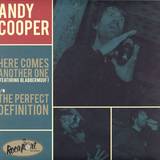
This rare 12" outing from Rocafort Records features the rapping and production talents of Andy Cooper (Ugly Duckling/The Allergies). Taken from the forthcoming album 'The Layered Effect', both tracks throw you around the hip hop boxing ring, slapping you hard with the prerequisites needed for microphone supremacy. Lyrically tough and musically nimble, Andy swings at you somewhere between the artful dodger and a heavyweight pugilist.
The irresistably bouyant 'Here Comes Another One' opens by means of an elegant old jazz trumpet whose player states "rhythm is my business". Get the picture It's a choppy, jazztastic journey. Cleverly underpinned by a gorgeous jazz piano, horns, sharp beats and aural treats, suddenly mashed up by a reggae toasting session on speed courtesy of Blabbermouf.
'The Perfect Definition' has a heavier step and a more serious punch. Fresh and funky attitude meets a deeply earnest reverence towards microphone art, a theme echoed throughout the LP and cherisheddearly by Cooper.
Two tracks that certainly roll with the punches.Out in November. A sure tonic to the winter blues.
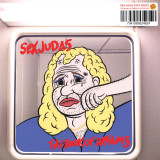
Oslo’s Sex Judas feat. Ricky announces 2 x LP for Norway’s Snick Snack Music
The band’s varied concept album portrays a break-up of epic proportions and releases Jabnuary 2025
Digital Release Date: 3rd May 2024
Vinyl Release Date: Jan 2025
“Are you ready for the big disaster? The moment when everything unravels?
On their third album, Sex Judas feat. Ricky portrays a break-up of astronomical proportions. The band's mascots, Sex Judas and Ricky, embodied by artist Sindre Goksøyr, find themselves in the midst of a separation, and their feelings are sprayed all over the big screen.
But what is actually going on? Sex Judas feat. Ricky consists of the musicians Tore Gjedrem (Ost & Kjex), Sidiki Camara, Ivar Winther, Tracee Meyn, Tore Brevik, Kristian Edvardsen and Linn Nystadnes, a stellar team part of Oslo's musical underground. Together, they play a mixture of funk, disco, post-punk, traditional music from Mali and electronica that always moves the dance floor, with two previous critically acclaimed albums on the Scottish Optimo Music and a Norwegian Grammy to show.
Sex Judas’ third album, ‘The Book Of Dreams / After Sex’, is a double disc and a two-part musical affair. In the first part, Sex Judas' version of the breakup is depicted in a band format, with music inspired by the alternative 80s. Think Grace Jones, Tom Tom Club, DAF, No Wave, and the Compass Point Studio backing band in a blissful cocktail.
In part two, depicting Ricky’s breakdown, the band has created their most experimental music to date in close collaboration with contemporary composer Ole-Henrik Moe. The songs influenced by Ole-Henrik's tones are fluid and beautifully ambient, with inspiration ranging from 30s and 40s film music, Norwegian folk, contemporary electronica and IDM topped with Moe’s modern string arrangements.” - Snick Snack Music
out of Stock
Last delivered 20 months ago available to reorder, subject to availability
Introducing the latest sensation from Hamburg's vibrant music scene – Automart's brand new Funk/Boogie 7" single, released on the esteemed Born To Shine Records!
This 2 electrifying tracks are a perfect blend of infectious rhythms and soulful melodies that will have you dancing from the very first beat. With his unique sound, Automart captures the essence of classic funk while infusing it with a modern twist, making it a must-have for any vinyl enthusiast or party playlist.
Whether you're a long-time fan or new to their music, this single promises to elevate your spirits and get your feet moving. Don’t miss out on the chance to experience the magic of Automart – grab your copy now and let the good times roll!
Let’s keep the funk alive!
out of Stock
Last delivered 20 months ago available to reorder, subject to availability
Magic Source is back with an exclusive 2 tracks single filled with their special rootsy cosmic funky touch.
Led by producer & notorious tape operator Björn Wagner (of Mighty Mocambos, Bacao Rhythm & Steel Band and Mocambo Records), the group follows up to the release of their 2nd LP last year, Voyage Spectral. This time again, the German band dives into the Tropical and international aspects of Disco and Funk music, always using 100% organic production and recordings material.
On this 2 tracks single, you’ll first find a blazing and unexpected covers of “Voodoo Ray” the classic acid-house track by A Guy Called Gerald, with special vocals by Mounam & Gizelle Smith. Following up to this already dancefloor classic, comes “Interplanetary Bounce”, a new and exclusive composition from the band also tailored to make you move, with its Boogie touch and heavy breaks.
out of Stock
Last delivered 8 months ago available to reorder, subject to availability
Welcome into the world of scarse music for the ultimate connoisseurs, fine taste beatmakers and holy grails collectors.
You made a step close to The Edge.
From cult Italian soundtrack and 80's iconic anime, English and French library music, to tunes that made Hip Hop iconic anthem, Medline picked 10 compositions to cover, among his favorite crate diggers treasures.
With a 30 years Dj's culture, he unite on vinyl a collection of underground classics.
When other musicians sample, as former beatmaker, he found his fulfillment by playing the entire tracks, as homage to these composers.
In 2018 Solstice has set the corner stone of this unique artwork at the cross road of Jazz, Funk, Soul and Hip Hop worldwide culture.
With The Edge, the out of boundaries producer, placed the level even more higher.
The whole work is incredible, for a man alone, without music theory knowledge but playing flutes, horns, keyboard, guitar and many more instruments... creating in his little home studio the sound of a 70's orchestra.
Challenging and epic:
Epic for covers like A Day In The Life, Beatles cover by Les Demerle, took by Buck Wild for O.C. Time's Up and of course the eponym David Axelrod's The Edge on David McCallum album.
Challenging, for library anthem like Hot Dog, Ghetto or Keep Quiet by Jacky Giordano, sharp and definitely audacious.
Despite the variety of the ten themes, the man's touch is present each time, into the texture, sound taste and balance. Like a chef bringing up to date magical recipes.
The archetypal type of records My Bags loves to release, "The Edge" is built as a crate digger paradise, a timeless record linking past and present into a highly concentrate of divine grooves.
out of Stock
Last delivered 19 months ago available to reorder, subject to availability
Slum Dunk Music is proud to re-release Tropical Punk - a 12" EP by Brazilian mutant punk funk duo Tetine formed by Sao Paulo-born artists/musicians Bruno Verner & Eliete Mejorado, originally released in 2010 - and featuring 4 warm dance punk numbers taken from their the album "From A Forest Near You". The opener "Tropical Punk (Mutant edit)" comes with a brand new mutant funk re-edit with more percussion, more analog synths, warm drum machines, and a funky bassline. The result is a mid-tempo South American cannibalistic disco-pop with catchy lyrics & beautiful half-sang/half-spoken melodies. "Yr Daugther Lies" is a cosmic, experimental/new wave piece with plenty of old school synths, processed vocals, percussive drum machine & spooky live electronics flying around in the mix. It marks Tetine's first collaboration with L.A. electronicists Howardamb. On the B side, "Shiva" comes as a percussive tropical mutnat punk-funk number led by a swinged bassline & Eliete Mejorado's distinct post-feminist spoken word vocals on sordid domesticity set against organic drum beats, dissonant soundscapes, a lost trumpet & some great interplay of raw guitars. The last track "O Espaco" is a relaxed 6-minute cosmic disco piece of Brazilian tropical punk funk on the dangers & delights of being lost in the jungle - sang in Portuguese by Bruno & Eliete - & permeated by a discordant interplay of ultra-funky guitars, abstract synth-bass plus all sorts of FX & live electronics. Tropical Punk finds Tetine celebrating their art-punk roots back to the underground of Sao Paulo with a collection of wild & raw unconventional dance tracks.
1/4" / 15 IPS / Dolby A Analogue Copy to DSD 256 to analogue console to lathe
Carlos Santana and Company Return to a Dynamic Blend of R&B, Latin, Funk, and Rock: Amigos Aims for the Hips, Spreads Joy, and Includes “Europa (Earth’s Cry Heaven’s Smile)” Amigos has been beloved for decades by both long-time and recent Santana admirers, with multiple generations of fans drawn in by the record’s contagious blend of R&B, Latin, rock, and funk elements. As well as its immense accessibility. Coming off a series of albums that heavily leaned into jazz fusion, the band returns to the more dynamic and concise approaches of its earlier works without losing the sense of adventurousness, craftsmanship, and virtuosity that turned it into a juggernaut embraced by both the mainstream and experimentally minded communities.
Mastered at Mobile Fidelity’s in-house studio in California, pressed at Fidelity Record Pressing, and strictly limited to 3,000 numbered copies, Mobile Fidelity’s 180g 33RPM LP of Amigos presents the 1976 album in audiophile sound for the first time on a domestic release. Part of the reissue label’s Santana series, this collectible version features quiet surfaces and black backgrounds that help reveal the intricate details, distinguished tones, and cohesive interplay that cause Santana’s music to take flight.
The enhanced aural perspectives extend not only to Carlos Santana’s intoxicating fills and solos, but to the rich tapestry of the rhythmic, melodic, and vocal elements that help Amigos feel as fresh today as it did several decades ago. This LP shines a beaming light on the surrounding musicians that simultaneously feed off and inspire their bandleader. The solidity and depth of the bass lines; the wash of the organ; the scope and carry of the vocals; the grip and weight of the low-end frequencies; and, possibly the most enticing traits, the textures of the acoustic guitars, numerous percussive devices, and then-modern synthesizers: all come across with tremendous presence and energy.
Entirely appropriate for a set that kicks from the start, with the opening “Dance Sister Dance (Baila Mi Hermana)” true to the song title’s combination directive-invitation meaning. Tropical, soulful, upbeat, and liberating, it beckons hips to shake and delicious libations to pour. Clinking cowbells, spirited background vocals, hand-tapped congas, and Carlos Santana’s six-string magma pour forth with abundance. The song sets the mood and expectations for a record that contains not an ounce of filler, and which inspires and spreads joy at practically every turn.
On the gold-certified Amigos, the ensemble never seems to run short of zest or happiness. Key in on the Latin bite and searing guitar architecture of “Take Me With You,” an instrumental that shifts tempo at its midpoint and sparkles with a samba-like outro that aims to put everyone in earshot on the dance floor. Surrender to the slow-burn of “Tell Me You Are Tired,” sent up with Greg Walker’s sympathetic vocals and spun around with whirling funk accents. Marvel at the Spanish guitar introduction, Mexican folk foundation, group vocals, and extroverted grooves of the forward-propulsive “Gitano,” with lead singing by conga/bongo expert Armando Peraza.
Having reached the Top 10 in the United States and spawned the hit “Let It Shine,” Amigos marked the final stint for bassist David Brown, the last of the group’s famed Woodstock lineup to depart. His contributions feel especially spirited throughout the album, compass readings that the group uses to chart their course. Just listen to how his passages pop on “Let Me” and frame the can’t-get-it-out-of-your-head “what you need is what you want” refrain. And while Carlos Santana remains the centerpiece of the brilliant and meditative “Europa (Earth’s Cry Heaven’s Smile),” Brown serves as a trustworthy anchor and friendly advocate.
Impex has always had a special place in their hearts for Shoji Yokouchi’s Greensleeves. Standards, original tunes, and traditional pieces (like the title track), are interpreted in unexpectedly funky, soulful ways. The master guitarist is given immeasurable support by organist Yuri Tashiro. Her playing is alternately moody and spry, fiery and funky. Impex’s vinyl reissue preserves the original’s clear, exacting sound (check out the bass on Tashiro’s organ!) while improving surface noise and presentation. This rare gem of Tee Fujii’s repertoire is yet another entertaining listen for Three Blind Mice fans from their friends at Impex Records!
"I cannot understand how Chris Bellman got 100% of the dynamics, power, subterranean deep powerful bass, delicate guitar, bass riffs, and drums all on a 33 RPM release without the instruments colliding into one another. I am shocked by the RTI pressing of such utter quiet and explosive punch... harmonics and layered realistic textures lived in the room as the needle found its groove. Imaging is pin-point stable and precise, and dynamics never overload."
"If this is not the ultimate audiophile demonstration LP released this year, then none will be released. I dare you to stop listening to this LP once the first cut has commenced! With mostly standards jazzed up for the brilliant musicians to love to play, I was constantly tapping my toes and reminiscing on when I first heard a certain melody. What great fun!"
" ...Packaged by Impex in slick classy gloss and full color, Greensleeves is a high-quality production for a top jazz collection. Prediction: this release will triple in price! For those smart enough to buy multiple copies and put extras away, a bonus awaits them! This is the best audiophile system demonstration LP I have heard in ages, and a must-own. Thank you Impex! Greensleeves receives my highest BUY recommendation!" - Robert H. Levi
2025 marks the vinyl release of Changes 2, the pioneering album by legendary vocalist, keys player and composer Mike Lindup.
A remarkably engaging body of work with wide ranging elements, Changes 2 plots a course through upfront soul, deep funk, jazz riffs and disco vibes, tied together with the melodic magic and engaging vocals for which Mike Lindup is widely known.
As an internationally renowned musician with decades of achievements and accolades, Mike Lindup's outstanding career has taken him on a unique journey. With the band Level 42, he consolidated a place in music history with some of the greatest hits of the era, gaining a dedicated fanbase that see the band still touring to this day. As a soloist, the first Changes album and a notable release on Naim records, as well as his work with UK/Brazilian outfit Da Lata, have all allowed further development of a burgeoning creativity, now ultimately culminating in Changes 2 - an enthralling representation of where Mike Lindup is today.
Changes 2 features various excellent guest artists that demonstrate the diverse nature of the album, including the stellar vocals of Omar and Tony Momrelle, bass magic from Yolanda Charles and even an appearance from the comedian and impressionist Jon Culshaw! The album has also inspired two funk- fuelled dance remixes from Dave Lee and the inimitable Louis Vega. All of these talented individuals enhance the project greatly, making valuable contributions to Mike Lindup's distinguished work.
Speaking about the album, Mike Lindup says: "Changes - so many since I began recording this album, and as the saying goes, the one thing you can be sure of in this life. During the four years of making this album I've been reflecting on the world as I see it, the actors and actions on this grand stage of life, love, death, prejudice, politics, separation, longing, hopes and dreams. Musically, many of the seeds of these songs took hold a while ago and wouldn't let go, but to be fulfilled they needed input and inspiration from my producers Toni and Mike, and the talents of the singers and musicians that are featured within. My wish is that some of these themes will resonate with you."
With Gilles Peterson, undoubtedly one of the UK's most influential DJ's and tastemakers describing Mike Lindup as "one of his all-time favourite vocalists" and high praise from many other leading music broadcasters and writers, Changes 2 destined to be enjoyed by a multitude of discerning music and vinyl lovers the world over.
First Word Records is extremely proud to welcome aboard Takuya Kuroda.
A highly-respected trumpeter born in Kobe, Japan, Takuya is a forward-thinking musician that has developed a unique hybrid sound, blending soulful jazz, funk, post-bop, fusion and hip hop music.
After following the footsteps of his trombonist brother playing in big bands, he relocated to New York to study jazz & contemporary music at The New School in Union Square; a course he graduated from in the mid-noughties. It was here that Takuya met vocalist José James, with whom he worked on the 'Blackmagic' and 'No Beginning No End' projects.
Following graduation, Takuya established himself further in the NYC jazz scene, performing with the likes of Akoya Afrobeat and in recent years with DJ Premier's BADDER band (also including acclaimed bass player, Brady Watt). Premier said "The BADDER Band project was put together by my manager, and an agent I've known since the beginning of my Gang Starr career. He said, 'What if you put a band together that revolved around a trumpet player from Japan named Takuya Kuroda? He's got a hip-hop perspective and respect in the jazz field…"
Takuya Kuroda is already incredibly prolific, releasing five albums in the past decade and fortifying a solid reputation in the global jazz scene. 2011 saw the release of Takuya's independently-produced debut album, 'Edge', followed by 'Bitter and High' the following year and 'Six Aces' on P-Vine in 2013. Takuya was signed to the legendary Blue Note Records in 2014 for his album 'Rising Son', as well as appearing on their 2019 cover versions project, 'Blue Note Voyage'. He released his 5th album 'Zigzagger' on Concord in 2016, which also featured Antibalas on a reimagining of the Donald Byrd classic 'Think Twice'.
Late Summer 2020, Takuya Kuroda returns with his sixth album 'Fly Moon Die Soon'.
In his words, "this album is about the irony between the greatness of nature and the beautiful obsceneness of humanity. Melodies and grooves fly back and forth from being spiritual to being vulgar."
It took two years to make this album. In 2018, I decided I just couldn't make albums the same way I had been in the past anymore. As a birthday treat to myself, I booked a studio in Brooklyn for two days, with only myself and an engineer, Todd Carder. I brought along some tracks I'd been building at home to see if we could complete them within that time. We began replacing sounds and adding texture, sampling noises from all over the studio; me sipping coffee, hitting a 26" kick drum, speeding up snares. At the end of the two days we were like "wow, I didn't know we could make tracks this good in this way". This is how the process of the full album started. Everything was based on my beats I made at home, inviting musicians in one by one, adding or replacing parts. I was very careful when developing these tracks; just note by note, part by part. I wanted to make the music effectively from a blend of two different recording methods; one very slickly produced part and one very organic part played by live musicians. I remember mixtapes from when I was kid, and wanted to make an album that wasn't just a bunch of flashy singles, trying to catch people's attention in the first 30 seconds, or full of guest features. Instead, I'm essentially just trying to let the grooves breath."
The album consists of nine tracks of excellence. The uptempo jazz-funk of 'ABC' and 'Moody' sit alongside soulful jazz cuts like 'Fade' and 'CHANGE', also featuring Corey King on vocals. The title track is a downtempo groove lead by a heavy Moog bassline, whilst 'Do No Why' contains an infectious piano riff throughout. Aside from Takuya's original compositions, he revisits two classics from Ohio Players ('Sweet Sticky Thing' featuring Alina Engibaryan on vocals) and Herbie Hancock ('Tell Me A Bedtime Story') whilst the album closes with the epic 'TKBK'.
Takuya adds "this special cover was inspired by the Golden Moon I saw during a photoshoot in Death Valley with my homie Hiroyuki Seo".
Takuya Kuroda is a truly unique talent, and this album is a realisation of the evolution of his sound.
'Fly Moon Die Soon' is released on Worldwide Award-winning UK label First Word Records on vinyl & digital in September 2020.
out of Stock
Last delivered 18 months ago available to reorder, subject to availability
WRWTFWW Records is in a state of total bliss as it announces the release of the Pitstop Box compiling all 24 tracks from Japanese house music pioneer Shinichiro Yokota’s two acclaimed albums Do It Again and Again (2016) and I Know You Like It (2019). The collection, available on vinyl for the first time ever, is presented as six 45rpm-cut 12inches housed (!) in a superb slipcase box set created by Lopetz, designer, illustrator, typographer, and co-founder of Swiss graphic design studio Büro Destruct. Included as bonuses are two sticker sheets.
Previously only available on CD in Japan via cult electronic label Far East Recording, Shinichiro Yokota’s album discography finally gets a long overdue vinyl release in the form of a limited-edition box set housing (!) six 12inches and a total of 24 songs showcasing the house legend’s celebrated sound. With a production style drawing from a rich blend of funk, hip hop, electronic, and Japanese influences, Yokota’s music is loved for its simplicity, its hypnotic quality, and, most importantly, its SOUL – homegrown 90s soulful melodic club music…pure love!
The Pitstop Box, full of dancefloor treasures and sprinkled with downtempo gems, not only defines Yokota’s personal journey but also resonates as an essential contribution to the house genre and Japanese music in general. It includes his house hits (“Right Here Right Now”, “Night Drive” and the list goes on), a cover of “Simoon” by Haruomi Hosono’s Logic System, and a collaboration with his longtime partner and electronic music hero Soichi Terada.
Shinichiro Yokota began his musical history in Tokyo, inspired by electronic music giants such as Yellow Magic Orchestra and Kraftwerk. He co-founded Far East Recording with the great Soichi Terada (who also worked with WRWTFWW for the Omodaka compilation) in 1990. After releasing the now highly sought after Far East Recording album with Terada in 1992 (from which his viral hit “Do It Again” is from), he took a hiatus from music and, most notably, brought his passion for sports cars to the next level by launching Night Pager, a company he started with his wife, specializing in tuning sports cars and modifying limiters for competition racers. It’s this side of Yokota’s life which has inspired the design of the Pitstop Box. He triumphantly came back to music with the album Do It Again and Again in 2016, consisting of unreleased 90s recordings as well as new material, and followed it up with I Know You Like It in 2019. His work has influenced generations of producers, and has expanded Japanese house music's reach on the global stage. Experience it on vinyl now.
Full unadulterated pleasure forever - from night drives to dancefloors.
out of Stock
Last delivered 20 months ago available to reorder, subject to availability
It’s safe to assume no one in the audience at Carnegie Hall on March 30, 1974 anticipated what Miles Davis would play at the concert documented on Dark Magus: Live at Carnegie Hall. Recorded near the tail end of his electric period, the double album remains the darkest, most ferocious statement of Davis’ career — a visionary effort that foresaw developments in jungle, noise-rock, funk, and drum ‘n’ bass.
Initially issued in Japan in 1977, Dark Magus waited two decades for U.S. release. Now, more than 50 years after Davis and his ensemble blew minds at the famous New York venue, it gets its first-ever domestic issue on vinyl — and on a definitive-sounding pressing at that.
Mastered at Mobile Fidelity's California studio, housed in a Stoughton gatefold jacket, and pressed at Fidelity Record Pressing, this numbered-edition 180g 33RPM 2LP set of Dark Magus invites you to pull up a seat and wrap your head around an exhilarating performance that simultaneously functions as an audition, experiment, release, and magnificent explosion of jazz-rock fusion. We hope your turntable and speakers are up to the challenge.
This collectible reissue presents the improvisational magic that unfolded onstage — the skronking tonalities, wah-wah-pedal bluster, acid-washed effects, furious drumming, run-the-voodoo-down grooves, menacing riffs, crashing cymbals —with incredible detail, color, and pace. It also captures the band’s unbelievable energy, rendering both instruments and on-the-fly changes with revealing depth, definition, and dynamics. At its core, MoFi’s audiophile set takes you deep into the boundless mystery, promise, and uncertainty of Davis and company’s efforts like never before.
The story behind Dark Magus is nearly as unbelievable as the spur-of-the-moment compositions that resulted when Davis brought drummer Al Foster, bassist Michael Henderson, percussionist James Mtume, horn virtuoso Dave Liebman, and guitarists Pete Cosey and Reggie Lucas together, and, in a new twist for the concert’s second half, added guitarist Dominique Gaumont and tenor saxophonist Azar Lawrence to mix. That the latter two instrumentalists had never seen each other until that night adds to Davis’ legend — and penchant for bold, unorthodox moves.
Ditto Davis’ own actions that spring evening, which reportedly included showing up to the show an hour late and taking the stage with his back facing the crowd. The strategy worked. Davis inspired the group to play in a bold manner that few, if any, had heard before. Dark Magus is a rhythmic bonanza. Rooted in Afro-centrist techniques, avante-garde sensibilities, and exploratory moods, the songs eschew set arrangements and solos, and, for the most part, melodic devices.
For Davis, Dark Magus represented a personal triumph amid a period marked by health issues, addictions, and critical decline. The latter slight would be corrected, but not until decades later when Dark Magus saw Stateside release in 1997 via a CD reissue. Of course, the free-form patterns, unpredictable passages, dense structures, and distorted blues that course through the songs — titled after Swahili numerals — are not for everyone. And certainly not for the fainthearted. Though Dark Magus contains majestic moments marked by quiet restraint and something on the level of balladry, its rich and radical concoction of tormented thwacks, thumps, cracks, clatters, wails, bleeps, burbles, stomps, and enigmatic beats remains its adventurous heart and soul.
Primal and enigmatic, fierce and jagged, forceful and revolutionary, jolting and terrifying, Dark Magus seemingly attacks from any and all directions. Turn it up loud and let the prophetic brilliance of this inimitable and relentlessly funky album wash over you.
140g LP re-issue + original sleeve artwork, originally released 1979.
There can be little argument that CHIC was disco's greatest band. By the time CHIC appeared in the late '70s, disco was already slipping into the excess that eventually caused its downfall. CHIC bucked the trend by stripping disco's sound down to its basic elements. CHIC's distinctive approach not only resulted in some of the finest dance singles of their time, but also helped create a template for urban funk, dance-pop, and even hip-hop in the post-disco era. 'Les Plus Grands Succes de Chic' includes 'Le Freak', 'I Want Your Love', 'Everybody Dance' and 'Good Times'
Ahead of a full-length album coming on Glitterbox Recordings, the king of disco re-edits Dr Packer presents four of his versions of soulful dancefloor favourites old and new, giving a flavour of what's to come from the LP. 'Different Strokes' kicks off with a re-rub of the MK-produced LaTrece 'I Want To Thank You', itself a house cover of Alicia Myer's soul classic from 1981. Dr Packer pulls back on the tempo, making way for keyboards that echo the vocal melody and enhanced percussion. Next, he remixes 'Still In Love' by Shuya Okino, a contemporary nu-disco classic with gorgeous string instrumentation and a tight guitar riff. In true Dr Packer style, his version has plenty of extra funk, fleshing out the bassline to suit a dynamic disco set. A remix of ATFC's 'Bad Habit' is next, again given the effortlessly laidback, groove-laden Dr Packer treatment. Finally it's Soul Rebel's 'I'll Be Good', a vocal house classic from the mid-noughties, reinterpreted masterfully for today's Glitterbox dancefloor.
This is an outrageosly brilliant EP. Indie-spirit, early industrial noises, a bold handling of white noise / filter effects and vocoder vocals, virtuously mixed together in a funky acid dancefloor stomper. Jörn’s unmistakable trademark is deep electronic coolness, combined with a good dose of humoristic winks, sophisticated and puristic at the same time - and of course highly recommended. The B-Side contains a remix of Thee Church Ov Acid House, a project by Wuttke together with his longterm recording partner Oliver Bradford.
They offer an intense100 BPM version in an early 90s “post-rave” fashion.
Oscillating samples, drenched in fuzz, skirt around classic organ keys and balearic percussions. A great set opener, closer or, as intended, something to put on when you get home from the rave, while the sun is rising but you’re not quite ready to go to sleep.
Info-text : Miriam Schulte
out of Stock
Last delivered 18 months ago available to reorder, subject to availability