Niels Orens is an electronic producer and live performer working at the intersection of acoustic instrumentation and immersive electronic sound design, creating deeply textural compositions that prioritize atmosphere, space, and emotional weight overtraditional song structures. "Never Again EP" expands on the introspective tone of slow night/s, pushing further into rhythm and sonic detail while exploring themes of alienation, loneliness, and quiet internal violence.
After successful collaborations with Max Cooper, the new EP marks a pivotal moment in Orens' evolution. "Never Again EP" forms the foundation of a new live chapter currently unfolding across Europe, while signaling a deeper dive into experimentation, texture, and the evolving dialogue between acoustic sound and electronic manipulation.
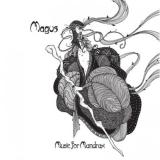
A magus is a wizard…a sorcerer. Magus, the band, is certainly interested in such things (who isn’t), but the name is especially apt due to the band’s approach to alchemy, the blending of rock, gothic, proto metal, and psychedelic styles to create a sound that is, ultimately, unique. Part of that uniqueness comes from the instrumentation. While guitar is often a dominant instrument of the rock oeuvre, the Fender Rhodes generally plays a supportive role. Not so here, where Jessica Weeks’ deft use of the keyboard dovetails with Greg Weeks’ more standard six-string approach. Not standard is the band’s sound. Doomy yet inspirational, dour yet vibrant, the duo’s tunes map sinister realms whose subjects span metaphysical creatures to enigmatic portals. You know, the typical stuff that rubs elbows with a magus.
Formed in late 2024, Magus sprung from a desire by both artists to experiment with darker, heavier sounds. Long enamored of artists like Flower Travelling Band,, Black Sabbath, and Deep Purple, the duo delved deeply into trance like riffs and euphoric solos to create the backbone of what has become their debut album, Music for Mandrax. This thirteenth Language of Stone offering features grounded, metronomic grooves, organic, lugubrious synth lines, and tandem vocals (supplied by both Weekses) that, in total, weave a heavy, trancelike spell sure to entice fans of bands as disparate as Sabbath is to Pink Floyd. Recorded at Weeks’ Hexham Head studio (to analog tape, of course), the band enlisted long-time counterparts Jesse Sparhawk (bass) and Ben McConnell (drums) to round out their sound and lock down the grooves that propel the album.
Mixed by Brian McTear and Amy Morrisey at Miner Street in Philadelphia, the band’s fully realized vision came to fruition, which left only the album art to contemplate. The band, wishing to further the gothic aesthetic of their sound, enlisted fashion designer and artist extraordinaire Hogan McLaughlin (Game of Thrones) to create the starkly beautiful line drawings of the front and back covers. The duo travelled to Salem, MA to complete the package with Courtney Brooke Hall, who shot the moody and evocative photographs that grace the gatefold release’s inner panels.
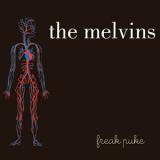
`Freak Puke' (2012) saw Melvins Lite_featuring Buzz Osborne, Dale Crover, and upright-bass virtuoso Trevor Dunn_offering a leaner, more nimble twist on the band's heavy-rock sound. The use of acoustic bass lends an elastic, jazz-tinged punch to otherwise sludgy riffs, while the songwriting remains both off-kilter and surprisingly tuneful, further proving the group's capacity for reinvention.
For the first time ever, Roxette release ‘Baladas En Español’ on vinyl. The relationship between Roxette and Spanish-speaking audiences has been a love story since the early ‘90s and this release celebrates that special relationship. The release is timed with Roxette’s 40th anniversary and their return to South America for live shows in April. The album will be available on vinyl and CD, featuring 4 bonus tracks compared to the original release. The vinyl will be released in both a limited coloured edition and standard black.
Roxette have some exciting plans to celebrate their 40th Anniversary this year, including extensive touring, further anniversary re-releases, video upgrades, contemporary remixes and much more!
Intense and intensely personal, The Dead Ones marks The Last Ten Seconds of Life’s Metal Blade label debut. 10 original tracks of pulverizing deathcore produced by Carson Slovak and Grant McFarland of Pennsylvania’s Atrium Audio. In creating The Dead Ones, “everyone took what we learned from the past two releases and assembled what we thought would bring out the best of us from song structure, tonality of instruments, the mix/master, and the lyrical themes,” furthers McLaughlin.
The end result reflects a more personal and human experience rather than the philosophical and fictional approach used on earlier releases. The Dead Ones follows 2024’s acclaimed No Name Graves in the theme of death and rebirth, but in contrast, is directly focused on the human experience and the band members’ own struggles.
Free As You Wanna Be", the first album by drummer Bubbha Thomas and his band The Lightmen, predates the deep-set, maverick jazz issued by the likes of Tribe and Strata East: This album is a harbinger of the collective voice of resistance to the musical and cultural status quo that emerged in the 1970s jazz underground. Drummer, bandleader and activist Bubbha Thomas had toured America with R&B revues, served as a session musician for peacock and back beat records, and played straight ahead jazz with legends before the political and social upheaval of the late 1960s led him to a path first charted by Coltrane. Most of the tracks remain strongly groove-based with a clear sense of cohesion, but a few of the performances push further out than you might expect from later Lightmen releases, revealing the band's deep roots in avant-jazz. This lineup includes a very young Ronnie Laws sounding noticeably removed from the jazz-fusion style he'd adopt in the late '70s. Alongside Thomas on drums, the ensemble is rounded out by Doug Harris on tenor sax, Carl Adams on trumpet, Kenny Abair on guitar, and Joe Singleton on trombone.
For the first time ever, Roxette release ‘Baladas En Español’ on vinyl. The relationship between Roxette and Spanish-speaking audiences has been a love story since the early ‘90s and this release celebrates that special relationship. The release is timed with Roxette’s 40th anniversary and their return to South America for live shows in April. The album will be available on vinyl and CD, featuring 4 bonus tracks compared to the original release. The vinyl will be released in both a limited coloured edition and standard black.
Roxette have some exciting plans to celebrate their 40th Anniversary this year, including extensive touring, further anniversary re-releases, video upgrades, contemporary remixes and much more!
For the first time ever, Roxette release ‘Baladas En Español’ on vinyl. The relationship between Roxette and Spanish-speaking audiences has been a love story since the early ‘90s and this release celebrates that special relationship. The release is timed with Roxette’s 40th anniversary and their return to South America for live shows in April. The album will be available on vinyl and CD, featuring 4 bonus tracks compared to the original release. The vinyl will be released in both a limited coloured edition and standard black.
Roxette have some exciting plans to celebrate their 40th Anniversary this year, including extensive touring, further anniversary re-releases, video upgrades, contemporary remixes and much more!
April Records proudly presents the new album from Danish trombonist and composer Lis Wessberg. Her most personal album to date, In The Wake of Blue is a song-driven work exploring transience, love, and transformation. Expanding her writing while remaining rooted in her distinctive instrumental voice, Wessberg creates an intimate musical landscape where lyric, melody, and texture carry equal weight. Wessberg has established herself as a leading voice on the European jazz scene through her band Yellow Map and a series of acclaimed releases on April Records. Her previous album, Twain Walking (2024), marked her first step into English-language songwriting and earned a Danish Music Award nomination in 2025 for the track Behind the Walls. In The Wake of Blue develops this direction further. The album draws on images from nature - sea, tides, clouds, mist, and birds - used as emotional anchors rather than abstractions. These elements frame songs that move from uncertainty and loss toward openness, connection, and renewal. The title reflects this arc: "blue" as melancholy, depth, and memory, and what emerges in its wake. Vocalist Veronika Rud is central to the album"s sound, bringing vulnerability and clarity to the songs. Rather than a traditional singer-led project, the music unfolds as a dialogue between voice and trombone, with Wessberg"s warm, airy tone mirroring and extending each song"s emotional core. At times the two move in close unison; elsewhere, they diverge and reconnect. The core ensemble - Steen Rasmussen (piano and keys), Lennart Ginman (bass), and Jeppe Gram (drums) - provides a responsive, understated foundation, while string quartet Live Strings appear on two tracks, expanding the ensemble"s depth and resonce. In The Wake of Blue offers a quietly assured statement from an artist continuing to refine a voice that speaks as clearly through brass as it does through words.
Drumcode returns with its flagship A-Sides series, led by a huge new Adam Beyer single that highlights the 20-track compilation.
If you want a snapshot of techno in any given year, look no further than Drumcode’s annual A-Sides compilation. The release broadly charts the evolution of the genre, while giving a platform to standout demo’s Adam Beyer has received across the course of the year with many emerging artists finding their music on Drumcode for the first time. Case in point – Wehbba, Charles D and Raxon who all debuted on the label via a track on the A-Sides series and have gone on to become regular contributors to Beyer’s influential labels.
This year’s compilation features an exciting mix of established heavy-hitters, alongside a slew of new faces set to make their mark on the genre. ‘We Don’t Say Please’ – is emblematic of Adam Beyer’s sound in 2025 – fresh, experimental and thriving on cross-genre pollinations, as elements of bass music, rap and techno collide, underpinned by a distinctive UK vocal. The results are inspiring.
Elsewhere, the 20-track compilation brims with highlights. HI-LO’s ‘NYC to Amsterdam’ has inflections of New York house fused with driving techno elements. Nicole Moudaber returns to DC in cahoots with the rising ZLATA for the super-charged ‘Report to the Dancefloor’. Oscar L & Charles D mint a new collaborative partnership with the immersive, spacey cut ‘Lift Me Up’. LUSU continue their red-hot run following the recent ‘Move 2 the Groove’ EP, and craft a straight-up mind-mashing single ‘LIKE THIS’. Mark Reeve is in trademark strong form with hypnotic ‘My Mind’, which comes to life via a massive synth led. The fantastic Kaufmann shares her ‘People are Strange’, a nod to a classic vox, re-contextualised for a modern techno audience.
As is tradition, a troupe of ascendant producers land on Drumcode for the first time. They include Uruguay’s Enzo Monza, who delivers the crisp ‘Late Night’ – a favourite of Beyer’s; Mattia Saviola, whose ‘Parallel Dimension’ is a powerful cut with fantastic sound design; Romanian artist Tao Andra, who shares the celestial ‘Unity’; and long-time industry stalwart AdamK, who makes a richly deserved Drumcode debut in partnership with Vikthor feat. MC Stretch on the stunning ‘Silence + The Sound’.
With Dispersion, Loom & Thread return to the volatile architecture of the expanded piano trio - and quietly fracture it from within.
Daniel Klein (drums), Tobias Fröhlich (double bass) and Tom Schneider (keys, sampler) remain the sole agents on stage and in the final recording. The triangle holds. And yet, the field has expanded. For their second studio album, the trio fed their improvisations with the timbral signatures of guest saxophone and vibraphone players - not just as additional voices to be featured, but also as material to be absorbed, atomized and redistributed. The result is not augmentation but thorough refraction.
Where the debut album explored the recursive labyrinth of Schneider's live sampling of his own piano, Dispersion introduces an external grain into the feedback system. Breath and metal. Reed turbulence and struck resonance. The trio sampled extended improvisations by saxophone and vibes players: Victor Fox, Asger Nissen, Volker Heuken, and L&T's own Daniel Klein; dissected their attacks, overtones and decay curves, and integrated these fragments into the trio's internal circuitry. What emerges is a play of presences without bodies - instrumental ghosts circulating through the dense weave of rhythm and keys.
At first, one might hear the familiar relational tension: Klein's polyrhythmic elasticity interlocking with Fröhlich's tensile double bass figurations, Schneider poised at the hinge between tonal field and percussive impulse. But soon, the surface splinters - again. A vibraphone shimmer appears, yet no mallets are visible. A reed multiphonic surges through the texture, bending space between bass and drums. These events are neither quotations nor overlays; they are redistributed energies, dispersed across the trio's grammar. A digital multidimensional interplay ensues.
If the first album unfolded as a two-tiered game - live phrase and sampled reflection - Dispersion adds a further axis. The sampled materials from other improvisers are stripped of their erstwhile two-way interaction and reconstituted as malleable particles. Signifier detached from origin, resonance detached from gesture. The trio navigates a constantly shifting topology in which acoustic memory and electronic manipulation are indistinguishable.
Crucially, the album never abandons the physical urgency of three musicians reacting in real time. The additional timbral layers do not thicken the texture into opacity; rather, they introduce stark points and arrows of diffraction. Density opens into prismatic clarity. Lines splinter and regroup. What seems like a quartet or quintet collapses back into three bodies negotiating an expanded field.
Dispersion is not about addition but about distribution - of agency, of timbre, of temporal perspective. It is an album in which the trio setting becomes a site of multiplicity without surrendering its immediacy. A dissolution not only of the divide between present experience and memory, but between inside and outside, self and other.
Three musicians. Countless vectors. A music that fractures in order to cohere.
CREDITS:
Tom Schneider: piano & sampler
Tobi Fröhlich: double bass
Daniel Klein: drums & percussion
sample sources:
Victor Fox: tenor saxophone
Asger Nissen: alto saxophone
Volker Heuken: vibes
Daniel Klein: vibes
Recorded by Martin Dressler at Bauer Studios, Ludwigsburg.
Mixed & mastered by Martin Ruch.
Artwork by Viet Hoa Le.
out of Stock
Last delivered 6 months ago available to reorder, subject to availability
Bleaching Agent and Miles J Paralysis are two artists who operate steadily in their own lane. They collide on this release to deliver two contrasting originals, each handed to the other to be reimagined.
Both based alongside us in West Yorkshire, we are thrilled to present this shared vision in the form of the first Dream Space 12”.
Bleaching Agent’s Hollis captures the spirit of the bleeps & bass forged in the industrial north of years gone by, elevated with lush harmonies and slick vocal work. One that’s fit for late-night floors and hazy summer evenings alike.
Miles J Paralysis takes Hollis into a different space, chopping the melody into an infectious and hypnotic flow. All melded together with his signature dub-tinged, grooving percussive work.
On side two, Miles drags us into deep territory with Inhibited Orgy. Further exploring the otherworldly sound of his Paralysis moniker, that many of you will now be familiar with after a breakout year.
Bleaching Agent closes off the record with his own take, stoking the energy levels to create a stomping, anthemic chugger that is sure to ignite any dance floor.
Limited to 150 copies.
out of Stock
Last delivered 3 months ago available to reorder, subject to availability
José González has delivered a new album, Against the Dying of the Light, a companion and further meditation on the themes of his critically acclaimed album, Local Valley. Where Local Valley turned inward toward place, language, and personal reflection, this new record widens its gaze, becoming an urgent call to preserve the light of humanity with all its flaws, at a moment when, technology increasingly shapes how we think, feel, and relate to one another.
While José has always embraced technological advancement, he questions the assumption that every new possibility must be pursued to its maximum potential, especially when progress comes at the expense of human flourishing, attention, and empathy.
Keeping in the tradition of folk music as protest, José’s new single — sharing its title with the forthcoming album — urges listeners to resist systems that dehumanize and divide: “Disconnect from every algorithm, every perverse incentive that drags you down. Let’s rebel against the replicators, against the dying of the light. Kill the codes that feed the hate, keep the codes that make you thrive, celebrate the **king fact that we’re alive.”
Across the album, González works within a deliberately minimal framework, pushing his familiar palette to new heights through subtle variation, restraint, and detail. Each song unfolds with its own distinct character, proving how much emotional and musical range can be achieved within self - imposed limitations. Written in English, Swedish, and Spanish, the record reflects his Swedish - Argentine roots and frames its humanist message as a global one rather than a purely personal or political statement.
José González is one of the most quietly influential artists of our generation. The Swedish - Argentine artist has built a singular musical world from hypnotic, minimal guitar work and his unmistakably gentle voice — a sound that has become deeply personal to millions of listeners worldwide. With billions of streams across platforms and hundreds of thousands of physical records sold, González’s songs often act as emotional landmarks. Ask almost anyone, and they can name at least one of his tracks tied to a defining moment in their lives.
out of Stock
Last delivered 6 months ago available to reorder, subject to availability
On Psalm Funk, Bnnyhunna deepens the artistic language he first articulated on his celebrated debut Echoes of a Prayer. Rather than retracing familiar ground, the Amsterdam-based composer and producer expands his palette, allowing rhythm and space to carry as much narrative weight as harmony and lyricism.
While Echoes of a Prayer felt personal and devoted, Psalm Funk opens things up. Gospel harmonies stay central to his music, but now they are energized by smooth funk rhythms and heightened by the flexibility of jazz improvisation. Bnnyhunna moves between styles effortlessly, in a way that nothing seems borrowed, but everything feels lived in.
At the center of the record is an understanding of space. Silence acts not as an absence but as a structure. Breath, restraint, and patience shape the music just as much as basslines and backbeats. This awareness of dynamics allows the album to grow without losing its focus. It signifies a subtle but important change in Bnnyhunna as an artist, moving from inward reflection to forward momentum, from prayer as personal dialogue to prayer as a physical expression. The clarity, discipline, and emotional depth that marked his debut remain, now directed into something more rhythmically confident and spiritually uplifting.
Fusing gospel, funk, jazz, and African rhythmic traditions, Psalm Funk serves as both a meditation and an outpouring. It invites deep thought while demanding a physical response.
The album includes collaborations with American saxophonist Braxton Cook, trumpeter Sheila Maurice-Grey of Kokoroko, 3DDY, and Reggie Dartey, among others. The singles "Sorry Not Sorry" and "Waiting For You" have already hinted at the project's range, while the latest single, "The Heart Part 2," further expands on the album's dynamic and emotional scope.
To celebrate the release, Bnnyhunna will tour the Netherlands in April, with performances in Amsterdam, Rotterdam, and Nijmegen before heading to the UK for a show at The Great Escape.
Released in October 2024, Bnnyhunna's debut album Echoes of a Prayer was created as a dialogue with God, a personal call expressed through sound. The record resonated both with fans and media, gaining support from platforms like 3voor12, Rolling Stone Africa, and Afromixx. It reached the airwaves of BBC Radio 1 in the UK, KEXP in the US, J-Wave in Japan, and 3FM in the Netherlands, and landed in playlists such as BUTTER, Morning Rhythm, and Vanguard.
In 2025, Echoes of a Prayer earned the Edison Pop award for Soul/R&B/Funk and received Grammy consideration for Best Alternative Jazz Album. On stage, Bnnyhunna established his presence with performances at festivals such as Lowlands, Couleur Cafe, Brick Lane Jazz Festival, Dour, and Super Sonic Jazz, as well as his first tour in Japan.
Upcoming live shows:
10/04/26 - BIRD, Rotterdam (NL)
11/04/26 - Doornroosje, Nijmegen (NL)
12/04/26 - Tolhuistuin, Amsterdam (NL)
13/05/26 - The Great Escape, Brighton (UK)
New album from Pictish Trail, AKA Johnny Lynch, known for his wildly inventive electro-acoustic psych-pop. Life Slime is the sixth full-length album by Pictish Trail (AKA Johnny Lynch) - a strange, tender, psychedelic electro-pop record shaped by transformation, exhaustion, hope, guilt, and renewal. Written at home on the Isle of Eigg and recorded at Mike Lindsay's studio down in Margate (Tunng / LUMP), the album follows 2022's critically acclaimed Island Family, further refining Lynch's world of lo-fi electronics, warped pop melodies, baggy psych rhythms and emotionally direct songwriting. It's a record that balances woozy synth-pop, motorik propulsion and intimate acoustic songwriting, all infused with the emotional messiness that gives the album its title. Across the album's singles - the guilt-stained psych-pop ballad 'Hold It', the life-affirming shimmer of 'Infinity Ooze', the late-night confession of 'Torch Song', the expansive eight-minute centrepiece 'Another Way', and the cinematic closer 'Werewolf Ending' - Life Slime charts a journey from emotional fracture to uneasy release. 'Sorry Eyes' brings a punchy electro-pop strut with a sharp emotional edge, 'Crystal Cave' drifts through crystalline guitars and shoegaze haze into transformation, and the title track 'Life Slime' moves with a slow, weary swagger toward bittersweet acceptance. Together, these tracks form a cohesive album statement about surrender, resistance, change and renewal. "Wonderfully weird pop"- Brooklyn Vegan For fans of Hot Chip, The Flaming Lips, Liars, Mercury Rev, Beck, John Grant, Empire of the Sun, Grandaddy. Colour vinyl and digisleeve CD
Celebrating 20 years of Frank Turner’s solo debut EP ‘Campfire Punkrock’, Xtra Mile Recordings are excited to release a special anniversary extended edition of the seminal release. Featuring the original EP with two added songs (The Real Damage and The Ballad Of Me & My Friends, both of which were included on the US version in 2007), plus 7 further live tracks recorded from Frank’s 50th solo gig in London 2006 - taking listeners right back to where it all began at the very early days of Frank’s incredible solo career. The 12” LP features new reworked artwork with shiny gold campfire on matt black cover plus coloured vinyl.
The original EP was recorded by Frank's guitarist Ben Lloyd at the Oxford home of Turner's bass player Tarrant Anderson and mixed by Tristan Ivemy. If features fan favourites ‘Nashville Tennessee’, ‘The Real Damage’ and ‘Ballad Of Me And My Friends’. Throughout April, Frank will tour UK performing tracks from Campfire Punkrock and the early years of his solo career. All dates are sold out including two nights at London’s Scala.
With Variations for Light Waves, Swedish composer Linnéa Talp deepens the focus and intensity that shaped her 2022 debut Arch of Motion. Once again, the breath and hum of the pipe organ form the album’s core, but here she pushes further into deep listening and sonic nuance. Across seven pieces, she lingers on the instrument’s most resonant points, allowing its character to reveal itself slowly and patiently.
Talp’s path to this work has unfolded with similar steadiness. After first emerging with her project Deerest, she shifted toward improvisation and minimal composition, guided by an increasing sensitivity to sound and perception. Careful listening is now central to her practice, informing both her methods and her musical language.
The album was recorded over four years on pipe organs across Sweden, including a small funeral-chapel instrument in Lötsjökapellet—an environment Talp describes as an exceptional space for listening. Several pieces feature Christer Bothén (contrabass clarinet) and Mats Äleklint (trombone), whose playing blends seamlessly into her aerated organ tones. The improvisation “Air On Both Sides,” recorded in 2022 with Bothén, became the project’s starting point, an immersive bath in glowing harmonics. At times she interweaves Buchla recordings, setting electronic breath against acoustic resonance.
Talp’s fascination with quietness and delicacy is balanced by an interest in sonic brittleness. The closing title track gradually dismantles a downward chord progression, drifting into gentle collapse, while the brief opener pushes the organ’s pipes into gasping strain. These moments create a music open to chance, instability, and transformation.
Threads running through the album include an interest in chords, subtle improvisation, light, and memories of coastal landscapes. Talp also connects the work to the “thick white fog” surrounding her daughter’s birth. The result is music that envelopes like mist yet continually reveals new shapes—a world o
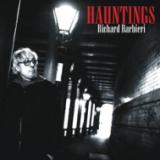
JAPAN & PORCUPINE TREE SYNTHESIST RICHARD BARBIERI RETURNS WITH NEW STUDIO ALBUM 'HAUNTINGS' GATEFOLD 2LP EDITION, PRESSED ON CLASSIC BLACK VINYL. Richard Barbieri remains one of contemporary music's most distinctive voices. Emerging as a key architect of the late '70s/'80s synthesiser revolution with David Sylvian's art-rock ensemble Japan, his visionary synthesiser programming expanded the horizons of electronic music & left a lasting mark on artists from The Human League & Duran Duran to Gary Numan & Talk Talk. His subsequent & ongoing tenure with Steven Wilson's legendary progressive outfit Porcupine Tree across albums such as 'In Absentia' (2002), 'Fear Of A Blank Planet' (2007) &, most recently, 'Closure/Continuation' (2022) further affirmed his status as one of the most intuitive & unique musicians of his generation.
'Hauntings' is Barbieri's first studio album since 2021's 'Under A Spell', deepening the pensive, dark instrumental aesthetic of its predecessor. A diverse collection of immersive sound worlds, both dark & uplifting in equal measure, 'Hauntings' is influenced by a nostalgia for the past & future, & for things that didn't happen yet still manage to haunt the mind & soul. What is real & what is simulation? The album finds Barbieri at the height of his powers, his deft keyboard & sonic architecture conjuring a shadowy, creeping Lovecraftian atmosphere. The music wanders through the streets of a gloomy lamp-lit Victorian London & drifts into grain-speckled snapshots of Belle Époque Paris. These journeys into the past are contrasted with nihilistic but euphoric forays into the future, "Traveler" & "A New Simulation" bristling with the itchy modern anxiety that often runs through his best work. Contrasting the sound designs & electronics of Barbieri, the album features performances from renowned musicians Morgan Agren (drums & percussion), Percy Jones (bass guitar) & Luca Calabrese (trumpet). This 2LP 45 RPM edition of 'Hauntings' is presented in gatefold packaging & pressed on classic black vinyl.
Playing further in the conceptual universe of Ginger Root came Nisemono EP. In the universe, Cameron is now writing and producing for a new Japanese Idol named Kimiko Takeguchi. At the last minute before Kimiko debuts on national TV, she quits and Cameron is thrust into the spotlight to perform the song ‘Loneliness’ which launches him into stardom.
This cycle included music videos for each track on the album and narrative videos of a fake news station “Juban TV” which reported on the story of the rise of Ginger Root. The episodic rollout on Ginger Roots YouTube was filmed in the same 80s noir style of the City Slicker videos with a much bigger narrative undertaking to provide a creative backdrop to the EPs storyline. The EP was lauded by old and new fans for its captivating storyline and nostalgic visuals. Ginger Root went on to tour the US, Europe, and Japan for the first time where he sold out every show. Nisemono was ranked by music critic Anthony Fantano as his #1 EP of 2022.
Some years ago, Kjell Bjørgeengen and Keith Rowe attempted to convert video signals into sound by setting up Rowe’s pickups next to an old CRT monitor, turning its magnetic field into a sound generator. Rowe further developed the system with David Jones at Alfred University, slimming down the setup using a copper coil, a circuit board, a video input, and a telephone pickup. Jones named it the »Flood Coil«, and it’s that instrument you can see on the album’s front cover and that lies at the core of these recordings, made without any physical live input from the artists themselves. In essence, it’s generative music in its purest form.
Bjørgeengen’s video feed is generated by oscillators, then routed into Marhaug’s pedals and then back into the Flood Coil, so any visual shifts alter the sound, and any modification to the sound changes the video. The duo have played this setup live many times, but for this studio version they left the system to do its thing without any intervention for two minutes at a time before moving onto the next idea. They recorded hours and hours using this process and then selected 18 highlights for this album, extracting harsh noise, power electronics, lulling feedback drone, and peculiar rhythmic snippets to show the scope of their technique.
A wall of growling, hi-octane Pulse Demon-style noise opens the set, gradually exposing us to more asymmetric textures, shifting through unstable repetitions that transform Merzbow’s metal-inspired screams into »Aaltopiiri«-era rhythmic noise. It’s remarkable, actually, how much Marhaug and Bjørgeengen can squeeze from the system, chancing on shivering, lower-case chugs and pops, galloping drums, soundsystem subs, and grinding blast beats that sound like Napalm Death’s »Scum« piped through a broken amp stack. It ain’t pretty, but noise/industrial freaks will revel in the fierce delights inside.
We've got a bit of an obsession with Hozan Yamamoto here at Mr Bongo! A legend of Japanese jazz, he is rightly regarded as a true master and was recognised as a "living national treasure" by the Japanese government in 2002. Over five decades he pushed the genre into new directions, absorbing fusion, funk, spiritual jazz and many other sounds, resulting in a discography studded with gems of rare beauty. Exploring his back catalogue has taken us on an engrossing journey that now sees us reissuing another work from this ground-breaking musician.
Though not translating perfectly into English 'Akuma Ga Kitarite Fue Wo Fuku', (kitarite has not been a modern expression in Japanese) roughly means 'The Devil Comes Playing The Flute' / 'The Devil Is Coming While Blowing The Whistle' or 'Devils Flute’. It is the original soundtrack to Kôsei Saitô’s 1979 mystery and suspense movie, ‘Devil’s Flute’. The film is based on a story by the famous author, Seishi Yokomizo, and is centred around a much-loved fictional Japanese detective, Kosuke Kindaichi. A Japanese Sherlock Holmes that has been popular for generations.
Hozan Yamamoto was invited to compose the soundtrack directly by the producer of the film, Haruki Kadokawa. Mr Kadokawa also hired keyboard player and producer Yu Imai as assistant producer on the project, resulting in a stunning cosmic, breaks and beats-laden, funk, disco soundtrack extravaganza.
When it comes to the soundtrack and the technology of the time, Hozan Yamamoto and Yu Imai got inventive, tripped out, funked up, and experimented, creating a quirky soundtrack masterpiece that needed to be heard more outside of Japan. Differing from the more traditional Japanese music orientation of some of his other albums such as 'Beautiful Bamboo-Flute' (also released on Mr Bongo) the album showcases a number of genres, from lush atmospheric incidental music to disco and funk grooves, experimental nuggets, drum and flute workouts, to neo-classical and more.
A special record that showcases the further depths of this wonderful musician's talents.
VERY LIMITED TRANSPARENT PURPLE COLOURED VINYL - 100 UNITS ONLY FOR EUROPE
Lucky Number are thrilled to announce the release of both TRICK and RULES the latest albums to be released by the Philadelphia-based songwriter Alex Giannascoli, more commonly known as Alex G. Trick and Rules follow on the acclaimed heels of the November 2014 international release of Alex's fifth album, DSU. Recorded prior to DSU and previously only available via Alex's Bandcamp account, the albums have now been professionally mastered and are being made commercially available for the very first time.
Rules is soaked in the distinctive personality that is Alex G, the professionally mastered versions of these tracks further highlight that Alex has a serious knack for melodic songwriting.
In addition, Lucky Number are also thrilled to be releasing Trick, Alex's fourth album. Written and recorded just a few months after Rules, they both harbour a similar charm that makes it feel right for them to be released together.
Both Trick and Rules continue to showcase a prodigious song-writing talent, reaffirming that Alex G is one of the most promising and prolific American musicians today.
Cory Wong's eagerly awaited new studio album, Lost In The Wonder! The collection spotlights Wong's remarkable gifts as a producer, writer, arranger, band leader, and master of modern pop craftsmanship, while of course never losing sight of his trademark guitar virtuosity. Lost In The Wonder further affirms Wong's enduring love of musical collaboration, boasting a truly eclectic range of guest artists that includes Taylor Hanson, Devon Gilfillian, Stephen Day, Cody Fry, Yam Haus, Louis Cato, Ellis, Elysia Biro, Benny Sings, Theo Katzman, and Magic City Hippies.
out of Stock
Last delivered 6 months ago available to reorder, subject to availability
Glasgow, Scotland duo Thomas + James deliver their silky-smooth dub laced sounds for Federsen’s Alt Dub with the four-track ‘Realtime’ EP.
Thomas + James are a Glasgow-based DJ and production duo whose sound reflects a deep immersion in electronic music. Raised in the city’s west end and shaped by early exposure to techno pioneers like Luke Slater, Slam and Jeff Mills alongside the atmospheric legacy of ’90s drum & bass, their productions lean into a dub infused, forward-looking aesthetic.
Drawing equally from house traditions via influences such as St Germainand Laurent Garnier, the pair blur the lines between dub techno, deep house, acid and minimal.
Their new EP onFedersen’s Alt Dub captures that hybrid vision with a maturity that belies their years, being born in 2006,marking them out as a quietly compelling new voice from Glasgow’s next generation.
Leading the release is the original title-track ‘Realtime’, setting the tone with a sturdy yet pared-back rhythm section, oscillating synth flutters, bouncy sub-bass and hazy textures that subtly shift across the arrangement.
Label boss Federsen steps in next with his interpretation, reducing the track to its deepest foundations and recasting it as a delicately drifting soundscape of evolving spatial echoes, weighty low-end pressure and restrained, muted drums.
On the flip, Thomas + James return with ‘Armonia’, an ethereal, dub-leaning deep house cut propelled by billowing pads, delayed vocal chants, fluid dub chords and a heavily swung, minimalist groove.
The EP closes with ‘X-Intense’, further highlighting the duo’s groove-driven signature sound as reverberant, airy stabs weave through breathy vocals and shuffled percussion to bring the release to a hypnotic conclusion.
out of Stock
Last delivered 3 months ago available to reorder, subject to availability
Collateral Intelligence's Butterflies in Funerals is widescreen, sometimes dark, often hopeful electronica with one eye on the stars, but grounded in the sheer cathartic necessity of its creation.
The new moniker from Maltese wunderkind Neil "Acidulant" Hales, the album was formed during a turbulent period in the artist's life, when his father was seriously ill in hospital. Butterflies in Funerals is his way of expressing the complexity of emotion he was going through at the time.
"To me it all looked like a very dark movie," he says. "That's why the tracks are are at times cold or have a sad, emotional, or hopeful feeling."
Drawing on his impressive background in acid house and electro – with releases on Balkan Vinyl and Jack Trax – the album takes in mutant breakbeat, battle-scarred ambient, and tripped out 303 grooves, but pushes his sound further and deeper than ever before.
The album cover features specially designed artwork by rising star Fei Meng, who will be exhibiting at the Royal Society of British Artists later this year.
So in 2021 join Collateral Intelligence on a journey into the recesses of the soul, and emerge, purified, and ready for the rest of the trip.
out of Stock
Last delivered 5 months ago available to reorder, subject to availability
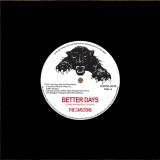
“Better Days” is a strikingly beautiful anthem built around the Carltons’ breathtaking harmonies and a patient, rolling,
minimalist Reggae rhythm made of syncopated drums and a gentle horn section in background, hence serving the
strong vocal delivery even further. Without forgetting the equally beautiful lyrics delivering a powerful message of
resilience, optimism and faith. Beautiful harmonies, minimalist rhythm and uplifting lyrics all together make
“Better Days” one of the Shoes most enduring performances and a Reggae masterpiece that invites to both reflection and musical delight...
“Station Underground News” was in fact the A track on the original 1973 single with Lee Perry credited as “King Koba”.
It is a subterranean journey through Perry’s imagination. Built from a skeletal rhythm track, the piece unfolds as a series of
musical interventions: echoing vocals, fractured percussion, Funky manipulations and more.
This little know tracks capture perfectly Perry’s trademark blend of Jamaican musical textures, off kilter rhythms,
experimentations and unbridled whimsy and creativity…
As with the band’s 2023 release of the same name, Refreshing Part 2 is a decisive and fierce collection of percussive techno that nonetheless travels its path with a heightened level of funkiness.
The Italian duo describe the concept behind this collection as being “not about resetting, but about balancing. Refreshing means reconnecting with the present and with the future…focusing on one’s own way in order to prevent the flow from becoming automatic, uncontrolled, and
without orientation. It is more a direction than a path.”
The four tracks on the 12” are hypnotic dives into a full spectrum of club music: the rhythms and sound design guiding the subconscious into visions of past, present and future intermingled, a reminder that all moments co-exist simultaneously.
Side A passes from the stripped-down intensity of The Way through to Elisir (Elixir), which manages to pull off a trick of feeling light and floaty while maintaining the power of its predecessor. The flip side opens with the forceful drive of Activate before making way to the
percussive elasticity of Family Tree, a track which closes out the EP by recalling, in both name and sound, how that which came before deeply affects the now, though often in ways only subliminally perceived.
Digital-only track Fixed in Flux continues this concept, and the overall themes of Refreshing Part 2, with further evocations of intent and movement; remaining present in change, without resisting it, yet without dissolving into it.
out of Stock
Last delivered 3 months ago available to reorder, subject to availability
Stacey Kent is an American jazz singer in the mould of the greats, with a legion of fans, a host of honors and awards including a Grammy nomination, album sales in excess of 2 million and more than one billion streams, and Platinum, Double-Gold and Gold-selling albums that have reached a series of chart-topping positions.
Stacey, a comparative literature graduate with a passion for music, travelled to Europe to further her studies after receiving her degree from Sarah Lawrence College in NY. Through a series of twists of fate, she found herself in London where she enrolled in a graduate music program at the Guildhall School of Music and Drama, where she met her future husband and musical partner, Jim Tomlinson.
Kent's musical journey began with childhood piano lessons. A keen ear and true voice lead her to search out opportunities to express her love of music. However, nothing suggested the shift from the academic path to the one that propelled her to international recognition as one of the foremost jazz singers of her generation. With a catalogue of 13 studio albums, including the Platinum selling, Grammy-nominated Breakfast On The Morning Tram (Blue Note/EMI 2007) and an impressive list of collaborations, Stacey has graced the stages of nearly 60 countries over the course of her career.
Her worldwide fan base is testimony to her ability to express the emotional heart of her songs with delicately nuanced interpretations that transcend borders and defy categorization. Her unique multi-lingual repertoire includes standards, chanson, Bossa Nova, and originals written by Jim Tomlinson, her saxophonist/producer/composer/arranger husband in collaboration with the Nobel Prize-winning author, Kazuo Ishiguro with whom they have worked since 2006. She has also recorded with Brazilian legends, Marcos Valle, Roberto Menescal and Danilo Caymmi, and the celebrated French string quartet, the Quatuor Ébène.
Stacey's last studio album, Summer Me, Winter Me, was released in November 2023 on Naïve Records. A collection of fans' requests from her as yet unrecorded concert repertoire, Summer Me, Winter Me entered the French jazz charts at number 1 and has quickly established itself as a new highlight in her discography. She now returns with A Time For Love.
Portland-based krautrock band Motrik formed in 2013, its four members united by a pledge to modernize their beloved genre. Sharing a passion for pioneers like Can, Kraftwerk, and Trad Gras Och Stenar, the group has demonstrated its ability to deliver over a series of EPs and albums, most recently 2020's acclaimed Artificial Head. As they continue to experiment by incorporating additional influences ranging from funk and jazz to psych and prog Motrik's third full-length, a double LP titled MOON: The Cosmic Electrics of MOTRIK, is a further continuation in the story of an historic genre befitting of the album's cosmic artwork.
Motrik boldly takes full advantage of the space that four sides of vinyl allow on this latest offering. The middle of the album features two long suites that feel typical of the groups dynamic live performances, which frequently feature fog cannons, lasers, and other prop homages to Kraftwerk and company. The 13-minute "Stabilize" emerges from a haze of synth pulses and guitar tones, settling into a steady NEU!-like chug that swells and recedes like an ecstatic wave. On "Space Elevator", the motorik drive from which the band take their name evolves into an insinuating and sensual disco-like throb before the perfect proggy comedown in the final minute.
Rolling Stone calls award-winning Florida musician Selwyn Birchwood “a remarkable, contemporary bluesman…a powerhouse young guitarist and soulful vocalist.” Now, this mesmerizing guitarist, lap steel master and cinematic songwriter unleashes the powerful new album Electric Swamp Funkin’ Blues, further blazing his own musical trail.
Birchwood’s sound is an intoxicating mix of deep blues, blistering, psychedelic-tinged rock, booty-shaking funk and sweet Southern soul, played and sung with true blues passion. From an emotionally devastating whisper to a soul-baring scream, Birchwood’s vocals command attention. Schooled in the blues' storied traditions (he toured with and was mentored by the famed Sonny Rhodes), Birchwood maps out a dazzling future for the blues with his visionary music.
Selwyn Birchwood is one of the hardest-touring artists on the Alligator roster, and will support the new release with shows throughout the U.S. He's no stranger to European stages either, with plenty of tours there under his belt, and having just completed over a month's worth of European dates, 27 shows in all, with 24 taking place in France, three in Belgium and one in Czechia.
Death Is Not The End present a further volume of Arja Kastinen's eerie amalgamations of 110 year old wax cylinders with her own meticulously transcribed takes, this time focussing in on Armas Otto Väisänen's field recordings of kantele player Iivana Mišukka (b. 1861 d.1919).
"Ivana Mišukka (1861–1919) was one of the Karelian kantele players recorded by the folk music researcher Armas Otto Väisänen on wax cylinders in 1916 and 1917. In the early 20th century, the remote areas of Border Karelia were undergoing the final phase of a transformation in musical culture, with the ancient runo song tradition giving way to newer forms of music. This transition is reflected in Mišukka's repertoire and choice of instrument. The ancient small kantele, hollowed out of a single piece of wood, was already rare at the turn of the century. Mišukka's kantele was a new type of instrument with 26 strings, constructed of several parts, but he played it using the traditional plucking technique. Like other Border Karelian kantele players, his repertoire consisted of music rooted in runosong culture, as well as newer dances and songs from the east and west. Most of the recorded material falls into the latter category.
Ivan Bogdanov Mišukka was born out of wedlock in Suursara village, Suistamo, on 1 May 1861. He began playing the kantele at the age of five or six, quickly mastering the instrument. In adulthood, he was considered one of the area's best master players. Mišukka was landless for most of his life and lived in different parts of the Suistamo parish. His first wife, Tekla Markintytär, died in 1897 at the age of 40, and his second wife, Jevdokia Filipintytär Jeminen, died in 1907 at the age of 50. Seven children were born from the first marriage, two of whom died young. The third wife, Maria Ignatintytär Gurnan (Kuurnanen), was a well-known master of lamentations. Together with Maria, Iivana Mišukka worked as a tenant farmer in the village of Suursara. Mišukka suffered from rheumatism, which prevented him from participating in physical work like Maria. This was apparently partly the reason why Iivana Mišukka went to earn extra money by playing the kantele on gig trips. He often had other traditional artists from Suistamo as his travelling companions, such as the runosingers Konstantin Kuokka and Iivana Onoila. Iivana Mišukka died in Leppäsyrjä village, Suistamo, on 18 May 1919 at the age of 58, and his kantele was donated to Teppana Jänis.
Mišukka only used 14 of the 26 strings on his kantele, playing the same tunes either a fourth higher or lower. He tuned his kantele to the major scale using fifths, except for a low seventh scale degree on the upper strings, but not below the fundamental. Since he did not use the seventh note of the scale on the upper strings at all, he could use the major scale both lower and a fourth higher with this tuning. According to Mišukka, the sound of higher, or 'finer', strings is 'more beautiful', while that of lower ones is 'greater'. Among runosingers, the size of the thirds varied, ranging from major to minor to neutral. A similar phenomenon can be observed in kantele tunings, where the third, sixth and seventh scale degrees vary in a comparable way.
During a meeting, Väisänen suggested that Mišukka play the smaller kantele belonging to Konstantin Kuokka. The idea was to bring it closer to the horn to improve the recording quality. However, the kantele was completely out of tune, and now Mišukka tuned it to the Lydian scale (track 18).
Using the old plucking technique, Mišukka placed his right middle finger on the fundamental tone, his right index finger on the second scale degree, his left middle finger on the third scale degree and his left index finger on the fourth scale degree, and his right thumb on the fifth. The thumb also played the notes above the fifth note of the scale. As Mišukka remarked to Väisänen: 'Peigaloll' tuloo enemb ruadoa' (the thumb has to do more work). However, he did not use the seventh note of the scale on the upper strings at all. Below the fundamental note, he played the seventh and sixth notes of the scale with his right middle finger of and the fifth note of the scale with his right ring finger. This fifth scale degree below the fundamental is almost always used as a drone. Sometimes, when the melody required it, Mišukka, like other players, also varied the fingering. He would also occasionally strike the same string with the side of his fingernail after plucking it.
The wax cylinder recordings of Karelian kantele players are kept in the archives of the Finnish Literature Society in Helsinki, Finland. Copies were made of them onto reel-to-reel tapes in both the 1960s and 1980s. The 1960s copies are mono and the 1980s copies are stereo. However, not all kantele recordings from these decades have survived.
The sound of the kantele is difficult to hear in wax cylinder recordings due to its low volume, and it occasionally becomes completely obscured by noise. During the copying process, the cylinder sometimes rotates unevenly, resulting in breaks or jumps in the music. Additionally, the rotation speed of the cylinder in the copies does not correspond to the performance speed of the original music, which alters the pitch. However, since Väisänen's precise notes are available in the archive, it is possible to deduce the melodies, their speed, and the tuning level of the kantele in the recordings. Of the copies of the original recordings from the 1960s and 1980s, I have selected the one that best met the requirements of this publication and adjusted the speed of the recording to align with Väisänen's notes. To enhance the listening experience, I have replayed the songs, which now partly overlap the old recordings on this release."
Death Is Not The End present a further volume of Arja Kastinen's eerie amalgamations of 110 year old wax cylinders with her own meticulously transcribed takes, this time focussing in on Armas Otto Väisänen's field recordings of kantele player Iivana Mišukka (b. 1861 d.1919).
"Ivana Mišukka (1861–1919) was one of the Karelian kantele players recorded by the folk music researcher Armas Otto Väisänen on wax cylinders in 1916 and 1917. In the early 20th century, the remote areas of Border Karelia were undergoing the final phase of a transformation in musical culture, with the ancient runo song tradition giving way to newer forms of music. This transition is reflected in Mišukka's repertoire and choice of instrument. The ancient small kantele, hollowed out of a single piece of wood, was already rare at the turn of the century. Mišukka's kantele was a new type of instrument with 26 strings, constructed of several parts, but he played it using the traditional plucking technique. Like other Border Karelian kantele players, his repertoire consisted of music rooted in runosong culture, as well as newer dances and songs from the east and west. Most of the recorded material falls into the latter category.
Ivan Bogdanov Mišukka was born out of wedlock in Suursara village, Suistamo, on 1 May 1861. He began playing the kantele at the age of five or six, quickly mastering the instrument. In adulthood, he was considered one of the area's best master players. Mišukka was landless for most of his life and lived in different parts of the Suistamo parish. His first wife, Tekla Markintytär, died in 1897 at the age of 40, and his second wife, Jevdokia Filipintytär Jeminen, died in 1907 at the age of 50. Seven children were born from the first marriage, two of whom died young. The third wife, Maria Ignatintytär Gurnan (Kuurnanen), was a well-known master of lamentations. Together with Maria, Iivana Mišukka worked as a tenant farmer in the village of Suursara. Mišukka suffered from rheumatism, which prevented him from participating in physical work like Maria. This was apparently partly the reason why Iivana Mišukka went to earn extra money by playing the kantele on gig trips. He often had other traditional artists from Suistamo as his travelling companions, such as the runosingers Konstantin Kuokka and Iivana Onoila. Iivana Mišukka died in Leppäsyrjä village, Suistamo, on 18 May 1919 at the age of 58, and his kantele was donated to Teppana Jänis.
Mišukka only used 14 of the 26 strings on his kantele, playing the same tunes either a fourth higher or lower. He tuned his kantele to the major scale using fifths, except for a low seventh scale degree on the upper strings, but not below the fundamental. Since he did not use the seventh note of the scale on the upper strings at all, he could use the major scale both lower and a fourth higher with this tuning. According to Mišukka, the sound of higher, or 'finer', strings is 'more beautiful', while that of lower ones is 'greater'. Among runosingers, the size of the thirds varied, ranging from major to minor to neutral. A similar phenomenon can be observed in kantele tunings, where the third, sixth and seventh scale degrees vary in a comparable way.
During a meeting, Väisänen suggested that Mišukka play the smaller kantele belonging to Konstantin Kuokka. The idea was to bring it closer to the horn to improve the recording quality. However, the kantele was completely out of tune, and now Mišukka tuned it to the Lydian scale (track 18).
Using the old plucking technique, Mišukka placed his right middle finger on the fundamental tone, his right index finger on the second scale degree, his left middle finger on the third scale degree and his left index finger on the fourth scale degree, and his right thumb on the fifth. The thumb also played the notes above the fifth note of the scale. As Mišukka remarked to Väisänen: 'Peigaloll' tuloo enemb ruadoa' (the thumb has to do more work). However, he did not use the seventh note of the scale on the upper strings at all. Below the fundamental note, he played the seventh and sixth notes of the scale with his right middle finger of and the fifth note of the scale with his right ring finger. This fifth scale degree below the fundamental is almost always used as a drone. Sometimes, when the melody required it, Mišukka, like other players, also varied the fingering. He would also occasionally strike the same string with the side of his fingernail after plucking it.
The wax cylinder recordings of Karelian kantele players are kept in the archives of the Finnish Literature Society in Helsinki, Finland. Copies were made of them onto reel-to-reel tapes in both the 1960s and 1980s. The 1960s copies are mono and the 1980s copies are stereo. However, not all kantele recordings from these decades have survived.
The sound of the kantele is difficult to hear in wax cylinder recordings due to its low volume, and it occasionally becomes completely obscured by noise. During the copying process, the cylinder sometimes rotates unevenly, resulting in breaks or jumps in the music. Additionally, the rotation speed of the cylinder in the copies does not correspond to the performance speed of the original music, which alters the pitch. However, since Väisänen's precise notes are available in the archive, it is possible to deduce the melodies, their speed, and the tuning level of the kantele in the recordings. Of the copies of the original recordings from the 1960s and 1980s, I have selected the one that best met the requirements of this publication and adjusted the speed of the recording to align with Väisänen's notes. To enhance the listening experience, I have replayed the songs, which now partly overlap the old recordings on this release."
British rock singer Chez Kane is back with her third studio album, “Reckless” — an explosive blend of arena-ready hooks, slick guitar work, and unapologetic 80s-style swagger. Following the success of her first two records, Chez levels up with a collection that’s bigger in sound, richer in emotion, and packed with pure melodic firepower. Once again written and produced by Danny Rexon, frontman of Swedish hard rockers Crazy Lixx, “Reckless” channels the golden age of melodic rock while injecting it with fresh energy and modern production. The chemistry between Chez and Danny continues to shine, resulting in a record that blends 80s-inspired anthems, infectious hooks, and soaring vocals into a modern rock statement with attitude.
From glam-infused bangers to emotional slow-burners, “Reckless” showcases Chez’s growing confidence and undeniable charisma, proving she’s not just riding the revival wave — she’s leading it. If you’re craving fist-pumping choruses, soaring vocals, and a no-holds-barred throwback to the glory days of rock, look no further. Chez Kane’s “Reckless” is melodic rock done right — bold, catchy, and undeniably alive. Turn it up loud. This one’s recklessly unforgettable.
British rock singer Chez Kane is back with her third studio album, “Reckless” — an explosive blend of arena-ready hooks, slick guitar work, and unapologetic 80s-style swagger. Following the success of her first two records, Chez levels up with a collection that’s bigger in sound, richer in emotion, and packed with pure melodic firepower. Once again written and produced by Danny Rexon, frontman of Swedish hard rockers Crazy Lixx, “Reckless” channels the golden age of melodic rock while injecting it with fresh energy and modern production. The chemistry between Chez and Danny continues to shine, resulting in a record that blends 80s-inspired anthems, infectious hooks, and soaring vocals into a modern rock statement with attitude.
From glam-infused bangers to emotional slow-burners, “Reckless” showcases Chez’s growing confidence and undeniable charisma, proving she’s not just riding the revival wave — she’s leading it. If you’re craving fist-pumping choruses, soaring vocals, and a no-holds-barred throwback to the glory days of rock, look no further. Chez Kane’s “Reckless” is melodic rock done right — bold, catchy, and undeniably alive. Turn it up loud. This one’s recklessly unforgettable.
With „Darkness Is My Crown“, DEFACING GOD present their most personal and intense album to date. The Danish extreme metal visionaries once again fuse blackened death metal, symphonic darkness and occult atmosphere - this time with a strong focus on inner conflict, loss, transformation and resilience. The album stands as an unfiltered reflection of confronting darkness head-on and reshaping it into strength, identity and purpose. „Darkness Is My Crown“ is a powerful artistic statement, defined by authenticity, emotional depth and uncompromising vision, further solidifying DEFACING GOD’s place within the modern extreme metal landscape. The album will be released on March 27, 2026, and was mixed and mastered by Tue Madsen (Heaven Shall Burn, Babymetal, Belphegor …) at Antfarm Studios.
WILDFIRE is the long-awaited new studio album from Loreen, set for release on 27th March. Marking her first full studio album in nearly a decade, WILDFIRE is a powerful and intimate body of work that explores emotion, perception and inner transformation, a record that allows the full emotional spectrum to exist, from vulnerability and pain to freedom, love and truth.
The album features the global phenomenon “Tattoo”, alongside fan-favourite “Is It Love” and the transcendent new single “Feels Like Heaven”, co-written with Sia. Together, the tracks reflect Loreen’s unique ability to fuse raw emotional honesty with cinematic pop, creating music that is both deeply personal and universally resonant.
Loreen is the only female artist to have won the Eurovision Song Contest twice and has amassed over 9 billion streams worldwide. “Tattoo” topped radio airplay and singles charts in five countries, further cementing her status as one of the most distinctive and influential voices in modern pop.
With WILDFIRE, Loreen returns with an album that is fearless, expansive and profoundly human
Here comes the first appearance on vinyl of Elf Bagatellen, a 1990 FMP classic from the legendary Schlippenbach Trio where the group achieved fever-dream beauty through self-imposed temporal limitations. The trio deliberately shaped the music, opting for more concise pieces rather than concert-length performances that had become standard practice. Those durational limitations clearly inspired them, bringing a jewel-like, compositional flow to many of the works, although even when the trio seems to be playing a tune in a piece like "Analogue: Scaled" the performance moves so rapidly into the next event any such notion is banished. And yet some of Schlippenbach's older themes resurface in abstracted ways, whether it's Pakistani Pomade's "Sun-Luck Night-Rain" appearing as quicksilver line in "Sun-Luck: Revisited" or Globe Unity's "The Forge" sneaking into "The Forge: Rebellowed." The concision of shorter pieces, including several solo works, arrive as a kind of fever dream in the usual context of free jazz. Schlippenbach Trio soon snapped back into its working methodology on its follow up album, Physics, in 1993, which further elevates the singularity of Elf Bagatellen. The album captured a different side of the trio and helped inform the modern classical tilt in European improvised music. Cien Fuegos is delighted to reissue this undeniable classic, making it available on vinyl for the first time ever, freshly remastered by Martin Siewert. Evan Parker - soprano & tenor saxophone - Alexander von Schlippenbach - piano - Paul Lovens - selected drums and cymbals This album was released as a cd on FMP 1990, remastering for vinyl by Martin Siewert 2025
As collaborative projects often do, 33 has in time found a more fixed form, a kind of structure that turned it from a loose collection of collaborators gravitating around founders Bill John Bultheel and Alexander Iezzi into something resembling more of a traditional band. Not that there is anything conventional in their creative process tho, nor in the music itself… Nontheless Tripolar - their second album and first for Haunter - seems to take them closer to song territory than ever before.
The (progressive) graduation of multi-instrumentalist Cem Dukkha and vocalist/clarinet player Ivan Cheng from collaborators to full-time members has brought 33 to a more refined awareness of their possibilities as a creative unit, although their compositional process has retained a high level of spontaneity and musical madness. Tripolar was in fact assembled by editing hours of improvisation that Bultheel, Iezzi and Dukkah recorded with no specific endgame in mind. The sessions saw them exchange a variety of acoustic, electronic and electric musical instruments: percussions, guitars, strings, piano, hurdy gurdy, synthesizers and even CDJs as a tool of live sampling manipulation.
By molding the pieces into what they are now, the band managed to concoct some beautiful vignettes of contradictory mental and emotional states, as sonically playful as a renaissance fair happening within a broken timestream. Cheng’s lyrical and vocal contributions helped them coalesce even further into proper songs, adding a melodic presence that’s at once seductive and uncanny. But vocal duties are often ceded to guests, namely Danish pop-neoclassicist Astrid Sonne, Kenyan metal guru Lord Spikeheart, Irish goth raconteur Olan Monk and Japanese body-poet Golin.The amount of different sounds arranged into each of the tracks produces a unique sense of awe and bewilderment, a testament to the incredible talent and craft the musicians have employed into putting together such a broad range of influences and approaches into a coherent and extremely effective musical journey.
An equally erratic thematic thread seems to run through all the tracks, one ultimately preoccupied with mental health and its ramifications. Without turning the project into a concept album, 33 and their collaborators have sprinkled it with references to personality disorders and mental conditions that are all too relevant to the contemporary age, reflecting on the lineage of human inner life. A wide display of lyrical and musical tools is employed to explore these themes, ranging from Sonne’s expressionist depiction of ADHD in the opener, to Cheng’s queer-themed reinvention of an Irish murder ballad in closing track ‘Babymusicc’. Tracing lateral trajectories for introspection, Tripolar is not only highly captivating, but it ultimately sounds esoteric in the best possible way: progressively revealing layer after layer of incredible aural magic, its true meaning living in the form and in its manic scope of energies.
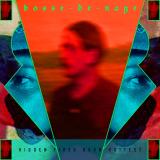
There's a tendency in metal to mistake aggression for honesty, volume for depth. To confuse the performance of darkness with its actual weight. Hidden Fires Burn Hottest, the new album from San Francisco-based post-black metal band Bosse-de-Nage, sidesteps this entirely. It’s the group’s most fully realized work yet, precisely because it refuses to be pinned down.
Bosse-de-Nage have been working with The Flenser for over fifteen years. They were one of the first bands the label ever partnered with and have the longest active relationship in the label's history. But unlike most bands who build momentum through constant touring and visibility, Bosse-de-Nage has largely existed apart from the music world's usual machinery. They've evolved on their own terms, in relative isolation, allowing the work to develop without outside pressure or influence. What began rooted in black metal anonymity has mutated into something that actively defies categorization. The aggression is still there, but it's no longer the point. Hidden Fires Burn Hottest finds the band treating emotions like physical objects, feelings with spatial properties. “No Such Place"" describes a space that can't exist but does anyway, somewhere between thought and location. ""Immortality Project"" examines infinite possibility not as promise but as problem, endless options collapsing under their own weight. These songs don't use metaphor to describe emotion. They make emotion into something you could theoretically touch.
Tracked by Jack Shirley (Deafheaven, Oathbreaker) at Atomic Garden East and mixed and mastered by Richard Chowenhill of Agriculture, Hidden Fires Burn Hottest was years in development, with some tracks beginning in 2018.
The long writing process offered time that most records don't get. Time to live with ideas, revise endlessly, to let structures settle. For the first time, lyricist Bryan Manning wrote everything in advance, creating a surplus to pull from rather than working under deadline pressure. The difference shows.
Coming off Further Still, an album built on constraint and economy, Bosse-de-Nage sought the opposite: sprawl, strangeness, fewer rules. Space for ideas to develop without rushing them. Dynamics that move through quiet as much as noise. Presence earned through atmosphere instead of volume. The record even includes ""Mementos,"" which might be considered the first love song the band has ever written.
Nothing here coheres into a theme. These are pieces pulled from low moments and private feelings made public through sound. The band has never been interested in positivity, in music that resolves cleanly or offers comfort. But bleakness doesn't mean humorlessness. There's something darkly funny running through much of it, even when it shouldn't be.
Hidden Fires Burn Hottest doesn't explain itself. It just insists: what you feel is as real as what you can see."