Sababa 5 continues their musical journey following the success of their acclaimed self-titled debut album, which fused deep funk and Middle Eastern grooves. Their latest offering, still under the Batov Records label, ventures into more explorative and experimental instrumental compositions. While evolving their musical direction, "Aspan" delves into the realm of psychedelic rock while retaining the essence of the band"s signature Middle Eastern groove.
out of Stock
Last delivered 19 months ago available to reorder, subject to availability
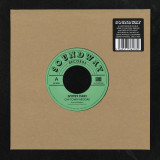
Reissue of the highly sought-after 7” from 1979 by Chicago
reggae outfit Gypsy Fari.
Gypsy Fari was a project born in the south side of Chicago
after a chance meeting between St Kitts expat Leroy Webster
and local music grad Kevin Coleman. The pair set out to blur
the boundaries of genre with their unique brand of music,
spearheaded by Webster’s Caribbean roots and fused with
the soul and blues the midwest is famous for.
A striking stand-out of the band’s repertoire comes via their
debut recording, laid down at Curtis Mayfield’s legendary
Curtom Studios. The EP opens with Chi-Town Reggae - a
super-charged blend of reggae and disco, led by Websters
infectious vocal, steeped in soul and powered by a relentless
rhythm section. Hail Jah follows closely, written on the hilltops
of the outskirts of Kingston, Jamaica, it’s a deadly roots reggae
missile that pays homage to Websters beginnings.
Once dubbed by a local news outlet “Gypsy Fari are to
Chicago reggae what Muddy Water is to Chicago blues” -
now remastered, repackaged and made available again for
the first time since its initial release
out of Stock
Last delivered 2 years ago available to reorder, subject to availability
Unknown Mortal Orchestra came to life in basements and bedrooms, the musical vision of Portlander-via-New Zealand Ruban Nielson that fused guitar-god riffs, choppy percussion, soul and funk. II, the sophomore album from UMO, emerged in an era rampant hedonism and isolationism and became the blueprint for everything Nielson has become renowned for. It was, and is, the solidification of Unknown Mortal Orchestra as an endlessly intriguing, brave and addictive band. Ten years on, it's back with an expanded edition. Written during a punishing, debauched touring schedule during which Nielson feared for both his sanity and health, II illustrates the emotional turmoil of life on the road, painting surrealist, cartoonish portraits of loneliness, love and despair. These conflicting themes are evident immediately; on the album's sleeve is an unnerving image of Janet Farrar, the famous British witch, Wiccan, author and teacher of witchcraft. The chilling refrain of opener "Into The Sun" sees Nielson deliver the line "Isolation can put a gun in your hand," softly, his words starkly intelligible above a warm, slow-burning melody that quickly brands itself onto your brain. His playful imagery ("I'm so lonely I've gotta eat my popcorn all alone") mirrors the melody, before a solo that borders on psychotropic ends II`s introduction. UMO is unafraid to dig deeper than the rest, their intoxicating, opiate groove bringing rock'n'roll's exaggerated myths to life. And as it unfolds, II does find Nielson reenergized. "One At A Time" and "Faded In The Morning" boast dizzying choruses and instrumentals; these crusty hunks could have been excavated from a lost 1960s treasure trove. "Monki" unravels over seven minutes like the yarn from a stoner's cardigan with an eye-frying pattern. "Dawn" is a minute of disconcerting noise that stands out between the nooks and crannies of the choruses, guitar solos, groove-heavy bass and drums that were recorded live by newly-recruited drummer Greg Rogove and Kody Nielson in a move away from the electronic percussion employed on album one. II closes with "Secret Xtians," a tender observational puzzle that fizzes to a satisfied end. In celebration of the album's 10th anniversary Nielson's complete collection from the II era is finally available in one compilation, and features the five acoustic tracks from the Blue EP as well as two additional B-sides. Unknown Mortal Orchestra was once Nielson's closeted concern. With an album that uses his singular musical imagination and extraordinary talent to parade his emotions with unyielding honesty, it is now a fully realized band operating at the peak of its powers ten years on.
Sababa 5 continues their musical journey following the success of their acclaimed self-titled debut album, which fused deep funk and Middle Eastern grooves. Their latest offering, still under the Batov Records label, ventures into more explorative and experimental instrumental compositions. While evolving their musical direction, "Aspan" delves into the realm of psychedelic rock while retaining the essence of the band"s signature Middle Eastern groove.
Neil Hamburger presents a new work from the songwriting team of Gregg Turkington and Erik Paparozzi. Seasonal Depression Suite is an album-based musical, sung by an all-star cast whose voices embody various guests stuck in a perfectly average chain-hotel, wallowing in self-pity and paranoia, re-living personal catastrophes both real and imagined, or simply trying to use the hotel vending machine. Expert music played by an all-star band, to boot! To sing these parts, a once-in-a-lifetime all-star cast was assembled - including Neil Finn (Split Enz, Crowded House, Fleetwood Mac), Annabella Lwin (Bow Wow Wow), Alan Bishop (Sun City Girls), Bonnie Prince Billy, acclaimed singer/performance artist Puddles Pity Party, voice actress Natalie Peyser, J.P. Hasson (Pleaseeasaur), enigmatic vocalist (and Frank Sinatra"s granddaughter) A.J. Lambert, Paparozzi himself and, of course, Neil Hamburger. Among the many musicians accompanying the cast were Scarlet Rivera (Bob Dylan"s Rolling Thunder Revue), Danny Heifetz (Mr Bungle), Bär McKinnon (Mr Bungle), Prairie Prince (The Tubes), Atom Ellis (Dieselhed), Jason Schimmel (Secret Chiefs 3), and Alex Jules (The Monkees band) - an international assemblage whose talents give Seasonal Depression Suite its epic sweep. With all hands on board, Turkington and Paparozzi created their own kind of masterpiece, like Sinatra"s late-period concept album Watertown fused with the misfit comedy of Neil Hamburger - a work that looks at a cast of characters both ordinary and bizarre, as they make their way from one grievance to another, traveling from place to place, hoping to live, while waiting to die.
The avant-garde Kraut ensemble Supersempfft laid the foundation for their techno-tropical pop music in 1979 with their debut album "Roboterwerke." In 1981, they followed up with the album "Metaluna," which is now being honored through a re-release on Bureau B. The group, consisting of Dieter Kolb, Franz Knüttel, and Franz Aumüller, fused global influences, experimental sonic landscapes, and surreal lyrics into a unique sonic cosmos. "Metaluna" stands out with its meandering sequences, unconventional rhythms, and psychedelic songwriting that remains groundbreaking even decades later.
More Fun Than An Open Casket Funeral is Accused's second full-length release from 1987 The Accused created a genre of music called "splatter- rock" which was screaming, speeding punk/ metal. Led by their blood thirsty, knife- wielding, avenging mascot, Martha Splatterhead, The Accused plays an original style of ghoulishly fused punk and thrash metal. Their lyrics range from politics to horror, death & destruction. First reissued on Unrest Records back in 2011, More Fun Than An Open Casket Funeral has been out-of-print on wax for years and now due to popular demand it's being repressed on vinyl and packaged in a gatefold sleeve with a huge 60x60cm poster!
Since his first Submorphics release on The North Quarter, the Detroit native has tenaciously developed his unique brand of lo-fi, deep drum & bass. With his new six-track EP ‘Verona Highway’, the Den Haag-based producer has created what he calls “a late night Detroit to Chicago road trip aesthetic”. Rooted in the underground, this project is an assemblage of techno, footwork and soulful house influences fused with his own signature earworm melodies, deep minor chords and the modern North Quarter drum & bass sound. The result is an EP that feels emotive and nostalgic while maintaining a modern atmosphere.
'Verona Highway’ marks the return of Submorphics to The North Quarter, just over a year after his critically acclaimed Newport Magnetic EP. Reminiscent of night time drives and peaceful after hours, the EP is a collection of warm, dreamy and sentimental music and is the ultimate soundtrack for serene summer nights.
out of Stock
Last delivered 3 years ago available to reorder, subject to availability
CNTRL presents his latest EP, "NRG BRKZ," a captivating exploration of the UK garage sound fused with minimalistic broken beats.
Opening the EP is "GT DWN," an track that features a athmospheric choir. It sets a grandiose tone, instantly captivating listeners with its powerful energy and rhythmic drive.
Moving to "8cl NRG," CNTRL infuses the track with breaky energy, masterfully blending broken beats and mesmerizing synth stabs. The result is an infectious and irresistible groove that will have listeners moving to its compelling rhythm.
"NDRSTND" takes a more stripped-back and deep approach, showcasing CNTRL's versatility. It features a solid foundation of minimalistic beats, allowing haunting melodies and subtle harmonies to create an introspective and ethereal atmosphere.
Closing out the EP is "BRKZ," a homage to UK garage. CNTRL expertly layers broken beats, driving sub basslines, and spooky atmospheric synth work, paying tribute to the genre while infusing it with his unique touch.
out of Stock
Last delivered 2 years ago available to reorder, subject to availability
Back in print - on white vinyl - for the first time since 2003, ‘The New Romance’ by Pretty Girls Make Graves, is the latest instalment of Matador’s ongoing catalogue series Revisionist History. Pretty Girls Make Graves formed in Seattle in 2001, fused together out of the still glowing embers of nearly a dozen important groups. Andrea Zollo and Derek Fudesco had played together in Death Wish Kids and Area 51 along with Dann Gallucci, with whom Derek formed Murder City Devils. Shortly before the Murder City Devils called it quits, he and Andrea started Pretty Girls Make Graves with J. Clark (who was in Kill Sadie and Sharks Keep Moving) and Nick Dewitt and Nathan Thelen (both in Bee Hive Vaults). Brilliantly produced by Phil Ek (Modest Mouse, Built To Spill, Les Savy Fav), ‘The New Romance’ magnifies Pretty Girls Make Graves’ songcraft and technical prowess while letting some air into their songs and keeping things in crisp focus. Every song on ‘The New Romance’ is an anthem, yet without traditional verses and choruses. Tension builds and shifts without conventional release, as moments of glassy beauty and rousing aggression trade sides. White vinyl LP.
Multi-disciplilnary Swiss artist Zimoun makes large-scale installations of noise and movement from cardboard, DC motors and other industrial objects. He has shown them in prestigious museums and galleries across the globe and now in his new album ModularGuitarFields I-VI he has relied on just one instrument, the Tenor Baritone Guitar, which he has then fused with elements of a modular synth setup and a vintage 1960s Magnatone Amp. It is a deliciously atmospheric work of raw sound, hints of psychedelia and gritty microsounds that are like scone sculptures that evolve as you listen and make for a hypnotic experience. Each new listen reveals a fresh layer to get lost in and as such makes for a fascinating album.
out of Stock
Last delivered 2 years ago available to reorder, subject to availability
The story of the phenomenon that is Kraftwerk, and how they revolutionised our cultural landscape
'We are not artists nor musicians. We are workers.' Ignoring nearly all rock traditions, experimenting in near-total secrecy in their Düsseldorf studio,
Kraftwerk fused sound and technology, graphic design and performance, modernist Bauhaus aesthetics and
Rhineland industrialisation - even human and machine - to change the course of modern music.
This is the story of Kraftwerk the cultural phenomenon, who turned electronic music into avant-garde concept art and created the soundtrack to our digital age.
Antônio Carlos Jobim was a primary force behind the evolution of bossa nova and his 6th studio release Stone Flower is an absolute classic. The album is emblematic of 70’s bossa with it’s seductive samba beat fused with elements of modern jazz provided by a star-studded supporting cast of Ron Carter, Hubert Laws, Airto Moreira, and Joe Farrell. Stone Flower was recorded by Blue Note engineering virtuoso Rudy Van Gelder and arranged by fellow pianist and guitarist Eumir Deodato; the fidelity and musicality is so well cared for that it effortlessly carries listeners away.
ENG Dark, atmospheric heavy Americana from Austin, TX, haunting, psychedelic ghost-town sounds for fans of Woven Hand, Russian Circles, and Dead Meadow! Lord Buffalo is a mud-folk band from Austin, TX. They make music together under cover of darkness. Their songs are bricks with which to build a house slowly. They will not be rushed. They will not be quiet. They are the trees clapping, the rocks crying out, the whistle in your snore. Imagine the haunted sensibility of artists like Chelsea Wolfe, David Eugene Edwards (Woven Hand, 16 Horsepower) and Ian Astbury (The Cult) fused with the spacious, expansive psychedelics of Dead Meadow and All Them Witches. Lord Buffalo creates somber, crashy, ghost-town Americana on new album "Tohu Wa Bohu," thick with captivating intensity and brooding heaviness of the soul. 'The sound of Lord Buffalo - that atmospheric diving headlong into the very heart of darkness - is unsettling. And it's magnificent.' _Laurie Gallardo, KUTX Brand new 2023 pressing on sleek transparent coke bottle-green vinyl!
Long Island Sound follow up their acclaimed debut album and accompanying remix EP with Don’t Let Me / Air a limited white label release featuring 2 brand new dancefloor-certified anthems that signal a new era for the duo in both style and effect, while certifying them as masters of their house domain.
The Dublin-based duo of Rob Roche and Tim Nolan have made impressive strides as Long Island Sound for close to a decade now, honing their swooning dance craft via beloved EPs on their Signs Of Space imprint while becoming mainstays of their island’s club and festival circuit thanks to multiple acclaimed DJ sets.
Last year, they reached an impressive feat that few Irish dance acts have before them by releasing their debut album Lost Connection.
A 7-track opus that fused dynamic electronic sounds with contemporary styles of house, techno, and breaks, it signalled an exhilarating new direction for the duo that showcased their exceptional artistry in melody and production and subsequently earned them great acclaim.
An accompanying 5 track remix EP followed this year, featuring quality club reworks of various album cuts from producers Cromby, James Shinra, Mor Elian, and Benjamin Damage.
Signing off on that notable era, the duo moves swiftly on with this limited 2 track white label of unadulterated festival-ready house epics that have been highlights of their sets over the past year.
Don’t Let Me glides along a chromatic world of lasered synths, pitched diva croons and shuffling pistons before a breathtaking swell of cinematic rave harmonics reaches a magnificent combustible peak that’ll have you gasping for Air.
The flip cracks the window open, dialling down the frenzy with a magnificent swooning melody sits on top of a growling Reese bassline and mechanized 2-step beat where a romantic ambience grows.
Limited stock. First come first served!
DJ Support:
Pete Tong Radio One Support 21.07.2023
Tim Sweeney supports 'Don't Let Me' on his Beats in Space podcast on Apple Music
John Digweed supports 'Air' on his recent Compiled and Mixed podcast for Apple Music
Jenny Greene 2FM Ireland supports 'Don't Let Me'
Long Island Sound Guest Mix on Jenny's 'The Greene Room' on 2fm Ireland
out of Stock
Last delivered 20 months ago available to reorder, subject to availability
Elysian Park is a slice of unaffected paradise found in downtown Los Angeles. Home to countless birds and (what feels like) infinite layers of greenery, the park plays the role of muse for tstewart’s 21 track album, Elysian. With each track named after his favourite nooks of the Elysian, tstewart likens his crescendos to the grand, never-ending steps found just before the park. As the new project from tstewart (aka MachineDrum), the artist whose credits include Azealia Banks and A$AP FERG, he has signed to Mercury KX with a diverse, piano-led sound that juxtaposes his previous glitchy, pop-fused work.
No shortage of colorful characters emerged from Cameroon’s bikutsi scene in the 1980’s and early 90’s. Gibraltar Drakus is one of the most enduring and enigmatic of the artists who helped transform bikutsi into a beautifully endless fabric of triplet rhythms that eventually reached ears around the world.
Following the advent of Cameroon Radio Television in 1987, bikutsi began to supplant makossa and soukous for domination of the local airwaves and the attention of cosmopolitan, thrill-seeking residents of Cameroon’s capital Yaoundé and beyond. Biktusi perfectly fused Beti traditional music and increasingly electronic, highly rhythmic guitarbased bikutsi. Mimicking the sound of village-based xylophone music by rigging a mute to electric guitar strings, bikutsi artists provided a relentlessly energetic dance format for those with a taste for music steeped in their hometown sensibility (countering the popular makossa that many felt sounded less indigenous).
By the early 1990’s, Les Tetes Brûlées were indisputably the most famous and influential artists in bikutsi, due in part to the innovations of their incendiary guitarist Théodore Zanzibar Epeme. Following their first European tour in 1987, the band blew up internationally but Zanzibar tragically, and mysteriously, passed away, which nearly brought an end to the band completely. In hindsight, the consensus among most Cameroonians is Zanzibar’s contributions to biktusi were transformational and immeasurable.
“Zanzibar is the one who taught me how to compose a song, and I learned a lot from Zanzibar musically. We spent whole nights working on methods and other approaches to compose beautiful songs. I owe half of everything I have today to Zanzibar!”
Swept up in all this was Gibraltar Drakus, who was the youngest member of Les Têtes Brûlées and was also the protégé of his biggest supporter, Zanzibar. So it was fitting that he dedicate his 1989 debut to their groundbreaking late guitarist who had meant so much to him. Drakus literally exploded from his first album Hommage A Zanzibar (1989), which sold over 100,000 copies despite rampant piracy. For the recording, Drakus made sure he engaged prolific producer Mystic Jim to record and mix the album. The innovation musically rests both within the guitar interplay and the discipline in the orchestration, which result in a mind-bending clockwork of cross-rhythmic harmony.
The summer of 2016 marked the fortuitous meeting of two talented musicians, Zaidi Kiggundu (Ziggy Funk) and Jamie Mcshane, at a music festival. Sharing a love for Funk, Jazz, and Soul music, the duo knew they had to collaborate on a project together. Both Zaidi and Jamie had established music careers, bringing their unique backgrounds and experiences to the table. They also had their own music labels, contributing to their respective scenes.
Their collaboration began with a series of demo sessions at Jamie's studio in Scotland. Together, they laid down the foundation for their debut album, which they named 'Fortuitous.' This album fused Funk, Jazz, and Soul with a contemporary touch, paying homage to the classic albums of the past that deeply inspired them. Despite facing challenges such as scheduling conflicts and the disruptive impact of the COVID-19 pandemic, Zaidi and Jamie remained committed to completing the project.
To bring their musical vision to life, they enlisted the help of top-notch musicians on horns, including Ewan Mains, Konrad Wisniewski, and James Steele. With their contributions, the album 'Fortuitous' delivers solid grooves and captivating arrangements, showcasing the duo's dedication to their craft. The quality of the music caught the attention of Splash Music, who eagerly embraced the project. What started as a chance encounter and a few simple ideas many years ago has now transformed into a fully realized album, ready to be released to the world for everyone to enjoy.
out of Stock
Last delivered 18 months ago available to reorder, subject to availability
Taiwanese label JIN records enters autumn 2022, with a new promising release by South Korea’s Yetsuby. As always searching for gems in the pan-Asian domain, JIN is delighted to have Yetsuby for its latest/6th release.
On this EP, one-half of the ambient duo Salamanda, Yetsuby showcases her expertise in mood setting soundscapes, taking listeners on a sound journey across a wide array of musical spectra.
Opening on A1, Yetsuby reinterprets a traditional Korean folk story of a bear devouring garlic and green onions, transforming the animal into a human being. Aptly named ” Bear Becomes The Human,” she transforms the transformed, turning the bear into a buzzing modern drum & bass-fused energetic tune. It turns out garlic is a powerful source after all.
B1’s “Jelly” showcases Yetsuby’s talent for stripped-back glitch music: With a minimal bass and drum pattern, the track gently muddles along and presents itself as well suited warm-up track for the earlier hours of any party.
For the remix sides, Cleveland delivers a vinyl only remix of “Bear Becomes The Human” with a futuristic house tune filled with jungle like drum pattern and techy yet smooth atmosphere on A2.
On B2, New Zealand’s Eden Burns takes an entirely different path on his reinterpretation of Jelly. Embarking from the original pattern, he turns the original into a slow brewing psychedelic trance cracker that seems most suited for the early morning after hours that need an energy boost.
out of Stock
Last delivered 3 years ago available to reorder, subject to availability
Exotica, ye-yé cumbia, guaracha infused twist, rock’n roll mambo, Spanish rumba, boogaloo beat, tropical garage and other unexpected bastard genres are featured in this festive compilation of bizarre hits taken from the glorious catalog of records released during the 60s and 70s on the Peruvian label Discos MAG. Some clearly unite genres, others are projects with creative names, but all are bold musical initiatives that got and will always get people onto the dance floor. “Sabroso Go Go” brings together fourteen musical mixes created in the recording studios of Manuel Antonio Guerrero (MAG), in which music directors combine rhythm with alchemy in a quest to find the philosopher's stone of the dance. Exotica, ye-yé cumbia, guaracha infused twist, rock’n roll mambo, Spanish rumba, boogaloo beat, tropical garage and other unexpected bastard genres are featured in this festive compilation. Although this compilation begins in 1957, experiments like this (some more memorable than others) were not new in Peru. The songs on this album were however much more successful hybrids. Some clearly unite genres, others are projects with creative names, but all are bold musical initiatives that got and will always get people onto the dance floor. At the end of the fifties, rock music shook the foundations of Peru, and orchestras rushed to cover hit songs and explore the possibilities of mixing them with tropical music. Lucho Macedo's orchestra took up the mantle and reinterpreted a well-known guaracha by Celia Cruz ('Rock and Roll') in mambo style, renaming it 'Rock and roll Mambo'. 'Maestro de Rock and Roll', a hit by the Cuban Conjunto Casino, received similar treatment. Another mix in this vein is the rock tune 'El Rock de los Chinos' by the Mexican Manolo Muñoz (author of 'Speedy González') recorded by the Chilean Choche Mérida for MAG in 1961. The following year, Chubby Checker’s 'The Twist' hit the scene and was immediately fused with guaracha by maestro Nelson Ferreyra. A legendary MAG musician, Carlos Pickling, composed 'La Charanga del Espacio' in 1963. The space sounds are produced by Pickling and his inseparable Hammond. He himself is the one who leads the orchestra that accompanies Benny Del Solar, Lita Branda and Pablo "Melcochita" Villanueva in the tropicalized version of Spanish Rumba, when the beats of the Iberian rumba were still exotic in South America. Around that time, the Chilean Willy Marambio was already living in Lima. In the track included on this album, the go-go style showcases his virtuosity on the trumpet. Another outstanding trumpet player, Roberto "Tito" Chicoma from Chiclayo, played as a session musician with MAG from 1959. A few years later, he became one of the most popular Colombian cumbia players, a talent he demonstrates in the song on this compilation, which blends the fun of go-go with yé-yé beats. 'Batijugando' was a hit from Mexico and was played in all the rhythms played across the Hispanic world since 1967. Inspired by the "Batman" series, it was performed at MAG by the Betico Salas orchestra, with vocals by the Panamanian lady crooner Nallye Fernández. 'Computador Electrónico' is another surprise on this album, performed by Panamanian vocalist Patty Pastel, it is the only known version in Spanish of 'Der Computer Nr. 3', originally sung in German by France Gall. Two other songs feature Edgar Zamudio. The versatility of Zamudio y Los Vikingos (originally a Chilean group) is demonstrated in the guitar-heavy song composed specifically for the late sixties skate fashion ('Go Go en Patines') and in his idiosyncratic protest song ('Día de Pago') performed in beat style. In the mid-seventies, Los Kintos, led by guitarist Francisco Acosta, developed different harmonic ideas in an instrumental track that veers from boogaloo to salsa, the fashionable rhythm of the day. Finally, in 1976, when the bumping hips dance craze swept the continent, Manuel Guerrero was quick to jump onto the bandwagon, composing a Bump song, together with his son Carlos. The Italian musician based in Lima, Luciano Luciani performed the song 'A Bailar Bump' backed by his band of local musicians Los Mulatos.
out of Stock
Last delivered 3 years ago available to reorder, subject to availability
Laura Poitras’ Oscar-nominated film »All the Beauty and the Bloodshed« is an epic, emotional and interconnected story about internationally renowned artist and activist Nan Goldin. Told through intimate interviews, photography, and footage, central to the story is her personal fight to hold the Sackler family accountable for the opioid crisis. The film cuts to the bone with its incandescent celebration of life and condemnation of those who threaten it. Art and activism are one and the same.
Helping to interweave Goldin’s past and present, multi-disciplinary duo Soundwalk Collective soundtrack her personal and political struggles to sublime effect. The contemporary sonic arts platform of founder and artist Stephan Crasneanscki and producer Simone Merli, the pair work with a rotating constellation of artists and musicians, developing site-and-context-specific sound projects through which to examine conceptual, literary, or artistic themes. And for all the beauty and the bloodshed on show here, the duo strike the balance just right; their compositions in collaboration with Zacharias Falkenberg and Johannes Malfatti producing a trance that oscillates between grace and madness.
Within the score, Crasneanscki draws connections with the life and work of German poet Friedrich Hölderlin, who was removed from society through confinement in institutions. In his last poems, written as fragments while he was plagued by mental illness, Hölderlin renders nature, in all its fragility and ephemerality. Similar themes merge in Laura's portrait of Goldin and serve as an inspiration for the composition of the choral songs and cantus within the soundtrack. Through the repetition of words and the layering of voices, the lyric scansion operates like a language possessed, echoing various styles from sacred music to modern minimalist techniques. The music is characterised by quivering strings and swells, de-tuning and lingering, shifting around the surreal, and creating a spectrum of musical experience. Exerts of Nan’s narration are featured in two of the tracks, her powerful narration offering a more direct approach to the storytelling.
In »All the Beauty and the Bloodshed,« Poitras shows protest is really Goldin’s great artwork: Her entire life had been leading to this moment of passionate expression, an inspired situationist gesture which fused the personal and the political. Art can change the world, which Poitras and Goldin tell us with powerful results. While there are multiple threads in this remarkable portrait which could have carried entire films, the soundtrack provides a sonic identity that helps keep track of proceedings. Utterly unique in their approach, Soundwalk Collective have delivered a gripping and thoughtful score, helping turn Goldin’s personal pain into culture-rattling impact.
For Fans Of... The Budos Band, Antibalas, The Sure Fire Soul Ensemble, Ikebe Shakedown. Sophomore LP out on Colemine Records in Fall of 2023. Debut LP 'Undying Thirst' charted on Billboard's Jazz Charts. Recently celebrated 10 years of the band. Black Market Brass are back with two new heavy hitters. With a fresh take on afrobeat fused with heavy, hypnotic, and sci-fi sounds, BMB gears up for their forthcoming LP, set to release in Fall of 2023 on Colemine Records.
out of Stock
Last delivered 3 years ago available to reorder, subject to availability
For Fans Of... The Budos Band, Antibalas, The Sure Fire Soul Ensemble, Ikebe Shakedown. Sophomore LP out on Colemine Records in Fall of 2023. Debut LP 'Undying Thirst' charted on Billboard's Jazz Charts. Recently celebrated 10 years of the band. Black Market Brass are back with two new heavy hitters. With a fresh take on afrobeat fused with heavy, hypnotic, and sci-fi sounds, BMB gears up for their forthcoming LP, set to release in Fall of 2023 on Colemine Records.
out of Stock
Last delivered 3 years ago available to reorder, subject to availability
First released back in the fall of 1989, the In Order To Dance album was a compilation LP that pulled together tracks from a
select band of electronic producers, pushing the boundaries of the house and electronic music that was in its infancy stage.
Released on the R&S Records label, the IOTD series would become pivotal in the development of the electronic music scene
at large.
The world of music is a constant shape shifting, trend moving behemoth. Style may come and go (and come back around
again), stars are made, stars can fall. But the ethos behind In Order To Dance remains the same as it ever has, with a fierce
independent spirit, and a pledge to bring forward the next generation of young artists and their music. And so, here we arrive
at a new collection, fresh for 2023, and just in time for the labels 40th anniversary year, and with the ardent A&R’ing of label
founder Renaat Vandepapeliere, a selection of new tunes is assembled to reinforce the strength and power to be found within
music.
Across thirteen tracks, a squad of refreshingly contemporary producers from around the globe are brought together under the
In Order To Dance banner. Ushering the series into a new era, new variations on the electronic genre and fresh ideas are
fused into a delightfully engaging collection of tracks. There’s deep breakbeats courtesy of UK producer Dharma, smooth and
dubby live action from Saytek and complex bass heavy rhythms from Vromm. There’s esoteric electronics from Hyphen, epic
piano driven deep house from Dino Lenny and swinging jazzy breaks from Nphonix & Matrika. Paul Roux’s melancholic
‘Bapteme’ unfurls waves of deft pianos and guitar swirls over taunt beats, and a driving electro tone is set on Acidulant’s
contribution. Intoxicating rave tropes and hefty breaks come courtesy of Pascal Nuzzo and Adam Antine delivers a wall of
sound anchored by shuffling, funky beats on ‘Sortavala’.
And to accompany the new wave of In Order To Dance, a series of music videos have been produced. Acclaimed artists and
video directors, including Alessandro Amaducci, Ben Marlowe and Gala Mirissa, have all stamped their digital artistic
visions onto these stunning compositions, synching audio and visual for a multi-sensory experience!
‘In Order To Dance 4.0’ by Various Artists is available on R&S Records from 14th April 2023 on 3LP vinyl, download &
streaming services.
out of Stock
Last delivered 8 months ago available to reorder, subject to availability
Volume 7: most iconic reworked, retouched, and edited tracks out from the unique and magic poolside of Pikes hotel (Ibiza). Jazz n palms is the brand commissioned to warm the monthly exclusive Ronnie Scott’s (London) jazz concerts.
Jazz music fused sartorially with Latin, funk, rock, and international sounds to be enjoyed under the palms and the sun of the Mediterranean Sea.
out of Stock
Last delivered 15 months ago available to reorder, subject to availability
RED VINYL EDITION On the 15th anniversary of its original release, Mais Um revisit a lost classic fromthe catalogue of one of Brazil's most regarded and influential contemporarysongwriters, Lucas Santtana. Presented on vinyl and on streaming platforms forthe first time ever (remastered by German dub shaman, Stefan Betke/Pole) andfeaturing Tom Zé and manguebeat pioneer, Gilmar Bola 8, Lucas Santtana's 3Sessions In A Greenhouse fused psyched-out samba and baile funk with originalBlack Ark-style studio distortion and spiritual dub dread, laying the foundationsfor his seminal Sem Nostalgia LP five years later, and in the process,establishing Santtana as an elemental force of Brazil's current new wave.
The first ever complete overview of Goth culture will be released in 2023.
Finally, after a decade of work, countless interviews and immersing himself into the culture, John Robb's definitive book is a journey far into The Art Of Darkness. The first in-depth book on Goth is a deep dive into the enduring culture and the social, historical and political backdrop that created the space for The Art Of Darkness to thrive.
680 pages with interviews with the likes of Andrew Eldritch, Killing Joke, Bauhaus, The Cult, The Banshees, The Damned, Einsturzende Neubauten, Danielle Dax, Johnny Marr, Trent Reznor, Adam Ant, Laibach, The Cure, Nick Cave and many others, this is a deep
dive and walk on the dark side and into the very heartland of Goth.
Every generation has got to deal with the blues - embrace the melancholy. Find a beauty in the darkness, a poetry in sex and death...Whether it’s the Roman love of ghost stories, European macabre folk tales of the Middle Ages, Romantic poets, or the original Gothic tribes sacking the Eternal City, a walk on the dark side has always had its attractions. In the post-punk period, Generation Xerox saw music, clothes and culture come together to create one of the most enduring pop cultures of them all that still resonates to this day..
Goth.
It may have been a retrospective term for a scene that was already thriving, but its back story goes back millennia. The book starts with the fall of Rome and ends with Instagram and Tik Tok influencers, taking diversions through Lord Byron, European folk tales, Indian sadhus, Gothic architecture, Romantic poets, philosophers and idealists before coalescing through the dark end of the Sixties’ youthquake, and then blooming like Baudelaire’s Les Fleurs Du Mal in the post-punk period.
Defying the broken heartland of the post-industrial cities, the semi-forgotten satellite towns and the grim real politic of the Thatcher years, this was a post-punk culture full of dark dance and a death disco. The music soundtracked the style and a Stygian obsidian soundtrack fused the many fragments of culture that had been flirted with in the post-war pop narrative; a darker culture that began to coalesce around the holy trinity of the Doors, the Velvets and the Stooges in the late Sixties before flirting with glam rock, being amplified by punk, exploding as Goth, and then splintering into electronic dance music, industrial, psychobilly and new Goth, before finally filtering through dystopian Hollywood blockbusters, modern literature and throughout the modern world.
In the late Seventies, Goth culture emerged around a clutch of bands who found a new form of beauty in the apocalyptic foreboding, as a new youth tribe took glam rock from the catwalk to the cobbles and onto their own dance floors, creating their own art of darkness.
Hey Joyce (BlackCash & Theo Edit) by Lou Courtney b/w Soupy (BlackCash & Theo Edit) by Maggie Thrett | Galaxy Sound Co. — GSC45-36 If you know, you know. & I know many of you have been digging for the very rare donut “Hey Joyce” by Lou Courtney. Even if you first heard it back in the day via #CutChemist & #DJShadow, this gem has long been popular amongst #raregroove dancers & dusty-fingered hip-hop DJs/beat-makers. “Hey Joyce” is a rare 1967 single from soul man Lou Courtney. Featuring a rasping, impassioned lead vocal from Courtney, sweet female backing vocals & the kind of semi-stomping beat that's so beloved by Northern Soul heads. In 1991, Main Source sampled it on their track “He Got So Much Soul (He Don't Need No Music)”. & thanks to the fine folks at @galaxy_sound_company you can cop it all for yourself.
On the flip, we have another lost funk jam, “Soupy” by Maggie Thrett, that has been sampled by #PrincePaul & #DeLaSoul for 1989’s “Jenifa Taught Me (Derwin's Revenge)”. Black Cash & Theo do the track right with a proper edit that'll put smiles on faces all across the dance floor. Like the A-side, “Soupy” is also a fave of Cut Chemist & DJ Shadow, as evidenced by their live sets & sample of it for their 2008 track “Fused Of Course”.
As with all GSC45s, another true must-have treat & 45-crate essential.
out of Stock
Last delivered 2 years ago available to reorder, subject to availability
It"s 2023, and even the turn of century seems a long time ago now - but oddly, Purling Hiss"s guitar-band ethos feels ever more timeless. The Hiss aren"t just a simple part of the tradition going back 50-odd years Their DNA, pulsing in waves of punk and classic radio rock, grunge and slacker, is ineffably, re-singably music - but their signature crushed guitar harmonics, fused with deep soulfulness, meld into something that cuts us with fresh heartbreak, an eternal recurrence that seems to be happening right now today, as it pours off the turntable and runs down the street. Drag On Girard, the first Purling Hiss album in six years, cruises through these states of mind and places in time. As before, but with new twists, Mike Polizze and his gang let loose with the chaos and noise implied by their name, applying high-end splatter and slow-rolling low end to eight vehicles, running the gamut from gleaming pop gems to head-cleaning epic jams before they"re done. One of the unique qualities of Drag On Girard is a specific lead-rhythm arrangement of the guitars, emitting the expected formidable roar while setting a certain type of rhythmic strut for the band. The two guitars style also trips power-pop impulses in the tunes, with sung-along harmony vocals that evoke classic collective magic and burnish the tunes one by one. Once this vibe"s established, side two turns around and stretches out with the molten flow of Purling Hiss at their very most epic; couched within loose improvisatory structures, the title track and "Shining Gilded Boulevard" play further with the yin/yang of nostalgia and truth as they trade places looking meditatively back to them old days and all their harshness and beauty.
A new collaboration of Philoxenia Records founders Luigi Di Venere and Neu Verboten, Affekt Unit is informed by an aim to "spark new feelings on the dancefloor". The three track Discorgy EP celebrates their musical obsessions - Italo house, Frankfurt EBM-house and trance - with the result proving an electrifying crossover of these classic genres together with surprising new sounds. 'Oct-Opus' boasts a serious electro component, fused with progressive trance, UK bass, techno, transcendental rave and even a climactic outbreak of rave-era breaks. The title track 'Discorgy' draws from Euro dance and EBM, experimenting with a polyrhythmic bass line and bringing the kind of 'stadium house' that The KLF were always aiming for. Closing track 'Dreams Of Wrestlers' is cosmic house at its sweetest and beefiest, spruced here and there with Italo stabs and pianos, drum machine fills and some lovely subtle filtering. Not so much a case of something for everyone than everything from everyone, you might even say.
out of Stock
Last delivered 23 months ago available to reorder, subject to availability
On Al Hadr, Sabrina Bellaouel taps into myriad influences: from spirituality, astrology to club culture, romance, the body and self-love. Creating a balance between places, identities and sounds is a huge part of the charm of Al Hadr. As a true Libra, she’s finding a balance between honoring her roots and carving out her future.
Following two solo EPs, also on InFiné — 2020’s We Don’t Need To Be Enemies and 2021’s Libra — the French-Algerian producer and vocalist’s unique style of electronic R&B blossoms with Al Hadr, a 13-track album featuring collaborations with dance producer Basile3, experimental club DJ and writer Crystallmess, jazz musician Monomite and pop singer Bonnie Banane, among others.
Born, raised and based in Bagneux, outside the southern périphérique of Paris, Bellaouel lives between worlds. At home, her Algerian heritage and Muslim faith have fused tight familial bonds and a keen sense of history and culture; as “Berbers”, she speaks French and Arabic. In her headphones, she finds comfort in the sparse experimentalism of Radiohead and romantic tales of Jill Scott. On the hot club dance floors of Paris, driving house beats connect her to her body.
In swirling these private and public passions together on Al Hadr — which translates from Arabic as “the present time” — Bellaouel is the most vulnerable she’s ever been on record. Classic neo-soul and silken R&B blend with club electronics. Tender harmonies are sung and rhymes are spoken in English, French and Arabic, exploring love, faith and identity. Samples of drum machines are the backbone for wisps of woodwind, strings, keys and environmental ‘found sounds’, including Bellaouel’s own live recordings.
Creating a balance between places, identities and sounds is a huge part of the charm of Al Hadr. As a true Libra, she’s finding a balance between honoring her roots and carving out her future.
out of Stock
Last delivered 3 years ago available to reorder, subject to availability
David Löhlein debuts on the new Vision Ekstase label with four hypnotic techno tracks entitled
„VISION I – NYSA“.
The club-oriented and rhythm-heavy EP opener „Altai“ features a hypnotic vocal sample fused with stabbing modulations maintaining a constant drive best suited for peak-time purposes before ‘Morava’ continues with vibrant synth walls and stabs, euphoric pads in the distance and resonating frequencies.
On the flip, „Red Code“ starts with clap-heavy and groove-infused percussion above the growling oscillations throughout until „Six Nine“ rounds things off with innovative synth compositions, stirring resonations and clattering drums providing a driving rhythm within.
out of Stock
Last delivered 16 months ago available to reorder, subject to availability
Kirk Degiorgio is becoming somewhat of a mainstay on the Belgian De:tuned label. Here he returns with 'The Unveiling'. The title track stands out with a classical synth progression and beautiful harmonies, resulting in an uplifting Detroit fused techno cut. 'Descent Module' takes you on a driving acidic trip and has all the characteristics of a hypnotic floater for the after-hours. On the flip you'll find two exclusive remixes from Kirk's 'Communion' album on De:tuned. Ian o'Brien showcases his vast musical talent and opens up his soul with a warm and lengthy retake of 'The Ladder'. Luke Slater debuts strongly on De:tuned and provides a rare The 7th Plain remix of 'Absorption Spectra'. Luke's take is a sentimental and lush ambient techno interpretation where its unique sound oscillates between a melancholic state of nostalgia and modern escapism.
Kevin Foakes (Openmind, DJ Food, Ninja Tune) created all the graphic work. Mastered by Matt Colton at Metropolis and pressed on 180 gr vinyl. A separate digital release will also be available at the usual digital shops. Stay tuned!
out of Stock
Last delivered 11 months ago available to reorder, subject to availability
Kirk Degiorgio is becoming somewhat of a mainstay on the Belgian De:tuned label. Here he returns with 'The Unveiling'. The title track stands out with a classical synth progression and beautiful harmonies, resulting in an uplifting Detroit fused techno cut. 'Descent Module' takes you on a driving acidic trip and has all the characteristics of a hypnotic floater for the after-hours. On the flip you'll find two exclusive remixes from Kirk's 'Communion' album on De:tuned. Ian o'Brien showcases his vast musical talent and opens up his soul with a warm and lengthy retake of 'The Ladder'. Luke Slater debuts strongly on De:tuned and provides a rare The 7th Plain remix of 'Absorption Spectra'. Luke's take is a sentimental and lush ambient techno interpretation where its unique sound oscillates between a melancholic state of nostalgia and modern escapism.
Kevin Foakes (Openmind, DJ Food, Ninja Tune) created all the graphic work. Mastered by Matt Colton at Metropolis and pressed on 180 gr vinyl. A separate digital release will also be available at the usual digital shops. Stay tuned!
out of Stock
Last delivered 3 years ago available to reorder, subject to availability
Cypress Hill is widely respected and considered to be amongst the main progenitors of West Coast rap and Hip Hop in the early 1990s. With mega-hits like "Insane in the Brain", "I Wanna Get High" or "Tequila Sunrise" they crossed-over to mainstream breaking all records for a rap band up until that time. Cypress Hill were the first Latino-American hiphop group to have RIAA Certified platinum and multi-platinum albums. As musicians they became famous for the crazy sounds produced by DJ Muggs and Bobo and the stoner sympathetic lyrics of B-Real and Sen Dog. They redefined and shattered the boundaries of hip-hop, crafting gutter-dirty tracks that fused deep bass lines with blissful, stoned-out melodies and aggressive hard rock riffs, creating a unique imprint. This is an esential and powerful weapon for all the Hip Hop creators and djs.
out of Stock
Last delivered 2 years ago available to reorder, subject to availability
The Art and Soul of Network is well and truly captured on this beautiful collection.
Fittingly for a remix selection, Network’s iconic artwork is reconstructed by Trevor Jackson, the designer of those original graphics. He has lovingly reworked the maverick indie house label’s distinctive branding for this 2 x 12 double album selection which rewinds to some of Network’s finest moments.
Network was based in Birmingham but as this release demonstrates had an international outlook and an alchemist touch for joining together disparate talents which lent itself well to the world of remixology.
Dave Lee’s remix,when he was working under his Joey Negro pseudonym, of The Reese Project’s awesome Direct Me is arguably his finest ever work. The original track fused Detroit electronica with the Motor City’s ever present Soul Music stirrings. Dave simply made the superlative perfect . The result was not only an iconic Network release but one of House Music’s greatest recordings.
There was possibly no better example of Network’s deft touch when it came to selecting unlikely combinations of people to work together than Day By Day. . Andrew Pearce, a raw but incredibly gifted 18 years gospel singer, was plucked of the streets of Wolverhampton and promptly despatched to Detroit where producer Kevin Saunderson and songwriter Ann Saunderson gave him the complete Reese Project template on the mesmerising Day By Day. Then Chez Damier & Ron Trent were drafted in to create their Urban Sound Gallery masterpiece of a remix. It truly is a gem.
Ann Saunderson is also central to Surreal’s hypnotic Happiness, not only as songwriter but as the vocalist too. Network then did their “let’s try this” thing by letting loose Italian house godfathers The Fathers Of Sound on the track parts. They threw down and created a progressive (but dreamy) house anthem that is to this day massively in demand.
Slo Moshun’s game changer (House slows down into Hip Hop then ramps up back into House) Bells Of New York was produced by Mark Archer & Danny Taurus.It became huge literally overnight. Various attempts to remix it were tried but in the end it was back to Mark who demonstrated that sometimes the original creator of a track is best able to re-imagine it by coming up with his much loved Beefy Bells remix.
Inner City’s stark and brutal Ahnonghay saw Kevin Saunderson going back to his Detroit Techno roots. Fittingly it was one of the UK’s disciples of that innovative Belleville Three era,Dave Clarke, who supplied the awesome remix contained here.
Rhythmatic’s Mark Gamble created a British Bleep House anthem with the sledgehammer Demonz. The original won the support of John Peel with repeated BBC Radio plays underlining incessant club plays. Again it’s the original artist who does that remix thing best with Mark’s Sequel mix managing to improv his classic original.
Neal Howard’s Indulge was the debut Network release. His music sounded like it was from another planet and he was hailed as Chicago’s answer to Detroit genius Derrick May..Here we present Derrick’s Mayday remix of To Be Or Not To Be which was the flip to Indulge. This was Network’s debut release, and it is hard to imagine a label having a more euphoric greeting card.
The album concludes with a remix of a track recorded at a live concert in 1989.. To be clear THE TRACK that defined that year’s Acid House cultural revolution. Derrick May brought along Carl Craig to perform with him as Rhythim Is Rhyhim when invited to support Inner City at London’s Town And Country Club . Luckily Kool Kat - the predecessor to Network - recorded for posterity an historic rendition of Strings Of Life. Roll on a few years and Network went into the vaults and asked Ashley Beedle to work on the tape. He completely remoulded it and conjured up a new incarnation of Strings Of Life.
Network - we coninue…
out of Stock
Last delivered 8 months ago available to reorder, subject to availability
Wunderblock Records and La Notte Di Architetto label are proud to present a debut release of a new project, Urstadt, ruled by Michael Teplov of Wunderblock and Nikita Melnikov, also known as Relic Radiation. Been released on the Planet Rhythm label before, and now the duo appears in a pure new form with fresh techno material.
The EP is called "Ritornels Of Decay" and presents the Urstadt duo's view on the state of the electronic music scene during the post-Covid times, through the prism of classic Detroit and Birmingham techno grooves. As a special VIP guest featured Andreas Sandoval, also known as Developer, with a hyperkinetic, ultra-minimalistic rework of the first track.
Overall, all the tracks of the EP are like polyrhythmic, slowly developing mechanospheres with a touch of cold-euphoric and dreamcore harmonies, fused altogether in a modern superhybridic way. For true techno believers.
out of Stock
Last delivered 3 years ago available to reorder, subject to availability
Patti Smith, “the first published poet to move her poetry completely into rock 'n' roll and to entice experimental rock fans into the forbidden cinema of her hallucinatory fantasy” (New York Times), began her musical career unconventionally. It took off at a poetry reading where she was backed by Lenny Kaye on guitar; later star photographer Robert Mapplethorpe financed her punk-rock cult single "Hey Joe". In 1975, encouraged by her success, Patti Smith released "Horses", an album in which she fused rock riffs and spoken rhythms to create a punk-trash sound. The rock scene was electrified, raging about ”the best garage sound of the 70s” (Creem Magazine) and conjectured that Smith had “drawn up material from Rimbaud, Burroughs, Dylan and Velvet Underground into a hot needle and injected it under the skin” (Sounds Magazine). Later productions were dismissed as sentimental and self-loving outpourings, since the rock-poet didn’t continue in the same vein as "Horses", with its metallic harshness and raw language. That’s why this recording remains an impressive unique production by a visionary rock ’n’ roll singer.
Deniz Cuylan set out to explore his own distinctive sound on his 2021 solo debut album 'No Such Thing As Free Will.' The album signaled the Turkish musician's first bold step into the spotlight following a winding 15-year path in the music industry playing in multiple bands with home bases dotted all over the globe - Stockholm, NYC, Istanbul - and tackling a wide array of styles both on the stage and in the studio. Now settled into his current home in Los Angeles, Deniz lends his instrumental talents to create scores for independent films and recurring Netflix original series, yet these projects inevitably fulfill the sonic backdrop for another artist's vision. Looking inward on his own for the first time, 'No Such Thing As Free Will' laid the groundwork for his own personal soundtrack, one that fused his love of classical guitar, introspective jazz, and ambient expressionism with his whimsical compositional ear. Over a magical 6-track journey, 'No Such Thing As Free Will' painted a lush cinematic narrative with Deniz's guitar as its guide, delivering an album that "seems to invent new languages for the guitar" (The Guardian) and receiving glowing comparisons to legends like Steve Reich, The Durutti Colum's Vini Reilly, Glenn Branca, and Bert Jansch. With such a singular foundation exposed on a debut album, many artists would stay true to their inventive winning formula and find out if lightning could strike twice. Deniz is not one of those artists. An explorer at heart, Deniz unveils a beautifully alluring and lightly adjusted language on his mesmerizing second album 'Rings Of Juniper.' The record continues to spotlight Deniz's exquisite guitar work and hypnotic compositional skills, yet it boasts a punchier, refined, and more immediate tone right from the start. Accented by a desire to once again uncover a new shade of his sonic palette with the support of a talented cast of friends and artistic collaborators, 'Rings Of Juniper' lays bare a rich, dynamic, and evocative sound that Deniz lovingly refers to as Mediterranean Minimalism.
In association with WaterTower Music, Mondo is proud to present Hans Zimmer's BAFTA Award-winning score to Denis Villeneuve's incredible sci-fi epic DUNE. Mixing more traditional electronic and orchestral elements with Cubase instruments created especially for this project and fused with female voices singing in a language developed by Zimmer himself. The result is nothing short of jaw-dropping. It's otherworldly and completely enveloping, Much like the sands on Arrakis. The music here is vast, open and spawling but at its core is an emotional depth few other composers come close to.