
Поиск:future retr
Стили
Все

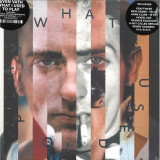
- A1: Logic System - Unit
- A2: Kraftwerk - Computerwelt (2009 Remastered
- B1: Whodini - Magic's Wand
- B2: Rocker's Revenger - Walking On Sunshine (Feat Donnie Calvin
- C1: Klein & Mbo - Dirty Talk (European Connection
- D1: Liaisons Dangereuses - Los Niños Del Parque
- D2: Yello - Bostich
- E1: The The - Giant
- F1: The Residents - Kaw-Liga
- G1: Clan Of Xymox - Stranger
- G2: A Split - Second - Flesh
- H1: Severed Heads - Dead Eyes Opened
- H2: The Weathermen - Poison!
- I1: New Order - Blue Monday
- J1: Anne Clark - Our Darkness
- J2: 16 Bit - Where Are You?
- K1: Phuture - We Are Phuture
- K2: Model 500 - No Ufo's (Vocal
- L1: Frankie Knuckles Feat Jamie Principle - Your Love
- L2: Quest - Mind Games (Street Mix
- M1: Jasper Van't Hof - Pili Pili
- N1: Guem Et Zaka Percussion - Le Serpent
- N2: Hugh Masekela - Don't Go Lose It Baby
- O1: Sly & Robbie - Make 'Em Move
- Q1: The Ecstasy Club - Jesus Loves The Acid
- R1: Foremost Poets - Reason To Be Dismal?
- S1: Lhasa - The Attic
- S2: A Guy Called Gerald - Voodoo Ray
- T1: M/A/R/R/S - Pump Up The Volume - Usa 12" Mix
- T2: Bobby Konders - Nervous Acid
- U1: Meat Beat Manifesto - Helter Skelter
- V1: Raze - Break 4 Love
- W1: Sueño Latino With Manuel Goettsching Performing E2-E4 - Sueño Latino (Paradise Version
- X1: Off - Electrica Salsa
- O2: Brian Eno - David Byrne - Help Me Somebody
- P1: Primal Scream - Loaded (Andy Weatherall Mix
36
For this uniquely personal retrospective spread over twelve vinyl discs, Sven Väth takes us back to the early days of his DJ career. On What I Used To Play we meet great pioneers of electronic music, gifted percussionists, obscure wave bands, and innovative producers of a bygone 'new electronic' era. Rough beats and irresistible grooves from the identification stage of house, techno, and acid remind us not just how far electronic music has evolved over the past four decades, but how great it was to dance to EBM, techno, and house for the very first time.
If there is one protagonist of the electronic music scene who has remained curious, innovative and at the very cutting edge of music for over four decades, it's Sven Väth. His multi-layered artist albums and Sound of the Season mix compilations have been defining the genre for over two decades, and even today, he is constantly on the lookout for the next top tune to add to the highlights of his next set. At least, that's the case when he's not producing them himself as an artist or remixer. "Actually, it's always been part of my DNA to think ahead," and nothing had been further from his mind than looking back at his past, but when in spring of 2020 the international DJ circuit had to be scaled down to virtually zero, the 'restless traveler' suddenly had time. Time to stop and reflect on "how it actually was back then, at the very beginning of my career..."
"It was a great trip and with every track, beautiful memories came flooding back".
In the London apartment, he had just moved into, Sven has set up a "little music room", where he cocooned himself for several days, "to look way back for the first time and review my musical journey through the eighties, so to speak."
The interim result was six thematically oriented playlists with a grand total of 120 tracks from 'early 80s' to 'Balearic late 80s', together with excursions into afrobeat, European new wave, and EBM sounds and a few epochal techno/house tracks from the USA in between. From these 'Best of Sven Väth's favorites', the project What I Used To Play crystallized. Sven remembers how the Cocoon team reacted to his proposal: "They found the idea of making a compilation out of it MEGA from the beginning and everyone said 'Sven, go for it', but then, of course, the work really started, namely, to clear the rights and to get clean sounding masters of the up to 40-year-old tracks. There was also disappointment, of course. We couldn't clear certain titles because the rights holders in the USA had fallen out with each other or simply disappeared from the scene. In short, it wasn't easy, but now I can safely say we got the most important tracks."
Finally, after two years of research, curation, design, and administrative fine-tuning, the "little retrospective" from 1981 to 1990 is available. The exquisitely packaged, and three-kilo heavy box set is not only physically impressive, WIUTP is also the definitive record of Sven Väth's musical development. On each of the twenty-four sides of vinyl, you can trace track by track, what influenced him during which phase, and how he took off as a DJ from his parents' Queen's Pub straight into the spotlight at Dorian Gray. There and at Vogue (later OMEN), Sven became the style-defining player in the DJ booth that he still is today.
1981 - 1990: Future Sounds of Now
In the early eighties, the crowd in clubs like Vogue and Dorian Gray danced to what nowadays we call 'dance classics' - mainly disco, funk, soul, and chart pop. It was up to a new generation of DJs, including Sven Väth, the youngest protagonist in the Rhine-Main area at the time, to create their own club-ready music mix. Good new tracks and potential floor-fillers were rarities that had to be sought out and found, in order to prove oneself worthy.
Without MP3s, internet streaming, or other digital download possibilities, music didn't just gravitate to the DJ, instead, it had to be tracked down. In well-stocked record stores in Frankfurt and Wiesbaden or even in Amsterdam, London, or New York, Sven and friends sourced the material for countless magical nights. On WIUTP we can follow Sven's very personal journey through this wild, innovative era in which synth-pop, funk, hip-hop, and disco were successively replaced as 'club music' by house, techno, acid, and breakbeat. By the end of the decade, it was clear to see that these once exotic 'fringe' phenomena would soon become 'mass' phenomena.
Early 80s
Dirty Talk by the Italian-American duo Klein & M.B.O. represents the most innovative phase of the Italo-disco genre in the early eighties like no other track. Mario Boncaldo (I) and Tony Carrasco relied entirely on the original synthetic drum and percussion sounds of the Roland TR-808, coupled with the raunchy vocals of Rossana Casale and guitar accents of Davide Piatto. Of course, other tracks from this period were also influential in style, most notably Unit by Logic System, which worked as the perfect soundtrack to the laser lighting system at the legendary Dorian Gray club. With stomping beats and robotic rap interludes, Bostich by Yello also belongs on Sven's eternal playlist - after all, it caught the attention of Afrikaa Bambaataa, who invited the Swiss duo to perform at the Roxy in New York in 1983.
EBM Wave - Mid 80s
From today's point of view, the almost ten-minute-long, downtempo track Giant by Matt Johnson's band project The The, would probably not be considered an obvious club classic. However, a closer (re)listen reveals the rhythmic intricacies of the percussion overdubs by JG Thirlwell (aka Foetus) on Johnson's composition, and it becomes clear why this exceptional piece of music is one of Sven's absolute favorites. Other classics from this phase include Kaw-Liga by the mysterious The Residents, the hypnotic-synthetic Our Darkness by Anne Clark (and David Harrow), and last but not least, the somber, monotonous anthem Where Are You? by 16Bit, one of Sven Väth's projects together with Michael Münzing, Luca Anzilotti from 1986.
US House - Late 80s
You certainly can't talk about Chicago house without mentioning Frankie Knuckles. The resident DJ at the Warehouse not only gave the name to an entire genre, but also produced epochal floor fillers on the Trax label like the timeless Your Love, sung (and moaned) by Jamie Principle. Acid house protagonists Phuture also hail from Chicago, and on We Are Phuture (also released on Trax) we hear the chirping acid sounds of the legendary Roland TB-303 in full effect. Another featured classic is No UFO's by Detroit's Model 500 aka Juan Atkins, who is rightly considered the 'Godfather of Techno' even if the genre-defining track from 1985 still breathes with the spirit of hip-hop and electro from the first breakdance era.
Afrobeat
Le Serpent, by Algerian-born Abdelmadjid Guemguem, is a track that sounds completely different from everything else on WIUTP. Made in 1978, it's a monumental, rousing groove created without bass or synths, just with five congas! Even though Guem sadly passed away in 2021, his immortal, acoustic beats are understood all over the world and will continue to enrich many thousands of DJ sets for years to come. Another classic that not only Sven appreciates beyond measure is Hugh Masekela's Don't Go Lose it, Baby. In addition to being one of the most important jazz pioneers, the trumpeter and freedom fighter from Johannesburg was very experimental, integrating electronic sounds into his music in later years, in a similar vein to Miles Davis and Herbie Hancock. Dutch jazz pianist Jasper van't Hof's afrobeat project Pili Pili has also aged well. The trance-like, almost sixteen-minute-long track of the same name, manages to fill a whole side on the seventh of twelve vinyl discs in the WIUTP box.
UK-US-Euro - Late 80s
Time for a change of scene, in the truest sense of the word, and from a musical perspective, this section is like landing on another planet. First up is Andrew Weatherall's classic remix of Primal Scream's Loaded, featuring the iconic Peter Fonda sample (lifted from the 1966 biker film Wild Angels) that came to personify the mood triggered by the British Second Summer of Love in the late eighties: "We wanna be free to do what we wanna do, and we wanna get loaded...". This period also saw the emergence of M/A/R/R/S whose only single, 1987's Pump Up The Volume, became a club classic with support from DJ legend CJ Mackintosh. In this most eclectic of sections, we also encounter New York house and reggae producer Bobby Konders and his seminal Nervous Acid.
Balearic - Late 80s
Those who know him, know that Sven had already lost his heart to the 'magic island' of Ibiza as a teenager, so with that in mind, the WIUTP project couldn't end without a Balearic chapter. Inspired by Manuel Göttsching's E2-E4, the immortal, eponymously titled Sueño Latino belongs in there without question. Equally popular on the island was, and still is Break 4 Love by Raze, which thinking about it, would also fit perfectly into the house chapter. Last, but not least, there's an overdue reunion with Sven Väth himself, in his role as frontman of the successful Frankfurt trio OFF. Together with Michael Münzing and Luca Anzilotti (later of Snap!) this 'Organization For Fun' created the off-the-wall club hit Electric Salsa in 1986 which incidentally turned into an international chart smash, putting Sven in the enviable position of having to decide between pop stardom and a DJ career. Well, we all know how that decision turned out and the rest, as they say, is history. A not insignificant part of his story is What I Used To Play. Enjoy!

Barely heard in his lifetime (1961-2002) but hailed as an outsider hero of ur-punk since 2009’s ‘Cosmic Lightning’ compilation, J.T. IV strikes back!
15 unheard-of tracks found on an obscure cassette tape make the schizo split in his music - rabid rock & roll fantasy and cold-eyed acoustic introspection - an epic. ‘The Future’ is J.T. IV’s mad magnum opus.
The 2009 comp LP, ‘Cosmic Lightning’, cast his tragic silhouette up on the big screen
for all to see: the lost boy, alone in the world, standing before the mic and releasing
his inner star with glee and vengeance, his antisocial visions flying high atop a raging
funnel of distorted guitars and blunt rhythms. Or couched, childlike, within a heart
breaking billow of acoustic guitars - a schizophrenic split that only magnifies the
display of his deep emotions.
‘The Future’ goes even further, excavating fifteen recordings from a previously
unheard-of cassette entitled ‘The Best Of Johnny Zhivago Retrospective 1979–1993’,
and adding four more uncollected tracks from his slim (and impossible to find
anyway) discography.
Of these nineteen tracks, eight are covers - and J.T. IV’s picks, from Velvets to Mott
the Hoople, Roxy Music, Lee Hazlewood, The Kinks, Eno and Stephen Sondheim,
sharpen our image of the misfit adrift; on the outside looking in, but maybe just a few
steps away from his goal.
‘The Future’ unfolds like an epic, as both sides of J.T.’s persona - the street-smart,
damaged rocker and the heart struck poet of the scene - live on together in the best
performances of his short career.
A punk of the old order, John Henry Timmis IV was born in 1961 into a dysfunctional,
abusive and eventually broken family. By the mid-70s, he was desperate to get out,
running away from his mother’s home several times while still a teenager living in the
greater Chicagoland area. At wit’s end, she had him committed to the Menninger
Clinic for a year or so. Released on his own reconnaissance, he began his meteoric
ascent to the mythic level of self-aggrandizement in which he appears here. Inspired
by the underground, proto-punk sounds in the air (the likes of which any sharp-eyed
young thing might chance upon in the back pages of Creem, Crawdaddy, Trouser
Press, etc.) and desperate to be heard himself, J.T. presented like the scabby
younger brother of Bangs and Laughner: born only to rock, his musical conception a
rabid personality crisis of proselyte elitism and nihilist excess.
Now, 20 years on from his passing, ‘The Future’ is ever farther away from the world
in which he struggled so mightily - but his stinging iconoclasm, whether screamed
from Marshall amps or mic-ed up close, feels ever more powerfully infused with his
unique breadth of illness and essence.
These songs represent the two sides of J.T. - and while they emanate from the 80s,
they find themselves potently renewed in the polarized world of today, making ‘The
Future’ a worthwhile destination for everyone who ever had a heart touched by the
transgression and freedom promised by rock & roll.

‘Questionably a hardcore band’ is how Daddy’s Boy describe themselves, and one listen to their discombobulatingly brilliant debut LP should answer all your questions as to what that could possibly mean. Recorded with Steve Albini at Electrical Audio, GREAT NEWS! is the sound of punk folding in on itself and racing through sounds you might have previously identified with dumb genre tags like post-punk and possibly even no-wave - except this isn’t either of those things. It rages smartly and discordantly across a wide terrain of undulating rhythms and coruscating rifferema, eventually settling on something that’s… well, kinda uniquely Daddy’s Boy. So what makes this sound? Specifically, four humans who are too clever to simply follow the ‘three chords, now form a band’ template without trying to fuck up the corners (and work their way into the centre). Members of Split Feet, Retreaters and Fake Limbs pile up together to create this delicious cacophony, and you’ll be glad they did. When vocalist Jes Skolnik intones, “I’m so fucking important,” you know it’s drenched in venomous irony, but it’s difficult not to agree: GREAT NEWS! feels like a record that’ll last way beyond those ‘best of the year’ lists and continue to pulverise your eardrums for years to come. It’s the sort of record that felt like the future when Touch & Go Records pushed hardcore past its knuckleheaded limitations 40 years ago, and still feels like no one ever really caught up. It’s the riffs from Cows’ Cunning Stunts, cribbing notes from Crass’ Feeding Of The 5,000, with vocal delivery pitched to ‘gloriously matter-of-fact’. Oh, and no spoilers, but in Skolnik, Daddy’s Boy might just have one of the smartest lyricists in (questionable) hardcore right now. Mark my words, this is some record. Will Fitzpatrick

- A1: Noonday Yellows
- A2: Rain
- A3: Dusk
- A4: The Jantzen Rag (Raccoons)
- A5: Pleasant, This Garden
- B1: Bedroom Of The Absent Child Lost Creek Suite
- B2: Bedroom Of The Absent Child Lost Creek Suite Into The Groves
- B3: Bedroom Of The Absent Child Lost Creek Suite Warm Pathways
- B4: Bedroom Of The Absent Child Lost Creek Suite Sunny Banks
- B5: Bedroom Of The Absent Child Lost Creek Suite Fragrant Duff
- B6: Bedroom Of The Absent Child Lost Creek Suite Beaver's Pond
- B7: Track 12
12
также имеющийся в продаже
Black Vinyl[22,48 €]
Written and recorded between 1972 and 1982 in Western Oregon, Back to the Woodlands is a previously unreleased, and nearly lost, album made by Ernest Hood during the same era as his near mythical album Neighborhoods . A visionary combination of field recordings, zithers, and synthesizers, Back to the Woodlands offers an unprecedented depth of access to this singular artistic mind. Born into a musical family, Ernest Hood began a promising career as a jazz guitarist during the 1940s, touring internationally with his brother Bill Hood and the saxophonist Charlie Barnet , before contracting polio in his late twenties. The disease left Ernest unable to play the guitar and confined him to a wheelchair for the rest of his life. It also forced him to adapt and innovate around his musical practices in the face of adversity; Hood's value of sound matured with a remarkably democratic and nonhierarchical approach and application. Taking up the zither, a less physically-demanding stringed instrument to the guitar, embarking upon the unprecedented process of incorporating field recordings into his work as early as 1956, and eventually discovering the synthesizer, Hood's music became imbued with optimism and subtle cultural critique. This ethos and technique - refined over the coming decades - would lay the groundwork for a sprawling body of radio work, mail order recordings for homebound listeners, and Neighborhoods , self- issued as a small vinyl edition in 1975. Where Neighborhoods , a nostalgic opus, drawing from a well of collective memory of the 1950s, is defined by traces of human activity, Back to the Woodlands leaves the modern world behind, delving into Hood's love for nature. Only recently discovered in his archives, the album dramatically expands his concept of "musical cinematography," imagistically triggering states of sensory memory from within its zither and synthesizer melodies, intertwined with field recordings made during Hood's extensive travels throughout Oregon. If Neighborhoods is a retreat into the gauzy joys of a romanticized past, Back to the Woodlands is an immersion in the timeless sanctuary of the natural world. A fascinating counterpoint to its predecessor, Back to the Woodlands brings us even closer to Hood's belief in the transportive qualities of sound; that field recordings could serve as a vehicle for the imagination and liberation, particularly for those with similar mobile disabilities as his own. Across the album's twelve compositions, the rippling instrumental harmonics - shifting between abstraction and playful melody - fold so seamlessly into the birdsong, bubbling brooks, and other environmental ambiences, that they often give the impression of having been recording within the landscapes toward which they whisper. Falling somewhere between the immersive calm of healing music and New Age, the creative field recording practices of sound ecologists world building for Folkways, and the jazz infected ambiences during Obscure / Editions EG's highest heights, Back to the Woodlands sculpts an singular proximity of music for its moment; a form of ambient sonic realism that draws the consciousness toward its surroundings as much as within. Working closely with his estate to maintain his original vision, Freedom to Spend has restored and remastered this never before released, lost masterpiece by Ernest Hood from the original tapes. Ernest Hood's Back to the Woodlands will be issued on vinyl, as well as on CD in combination with its contemporary Where the Woods Begin , with new liner notes by Michael Klausman . On behalf of Ernest Hood and Freedom To Spend, a portion of the proceeds from this release will benefit Oregon Wild, an organization dedicated to protecting and restoring Oregon's wildlands, wildlife, and waters as an enduring legacy for future generations.

8
After previously releasing stand-out music on labels such as VEX, DPR, Rhythm N Vibe, Obstacle Records and on his own imprint Moodwing, DJ Perception has decided the time is right to truly express himself via the album format. As the standard bearer of modern UKG and after 1.5 years in the making Timehri is extremely proud to finally unveil DJ Perception's debut album, Journey To The Star. A 2x12" LP built for millennia in the future, retrieved during Perception’s deep exploration through space, guided by a faint starlight in the outer reaches and beamed back to earth for your listening pleasure.
As a forward thinking bridge between UK Garage and House music, Timehri Records has established itself as a fiercely independent, leading contributor to the underground scene in the UK and overseas since its inception. Three records deep, production guest mixes via cassette and events for the sonic purist provide the output for this label, who’s emphasis on heritage and the afrofuturistic ideas that underpin it, hold huge importance.

17
Repress of the 2010 classic “The Jazz Files” by Dexter from the legendary Hi-Hat Club series. Jazz is the subject!
Dexter is taking an new look at the long going love affair between hip-hop and jazz. From Stetsasonic to Gang Starr to Madlib, it is not an easy path to follow, but the 26 year old producer is adding a new and fresh style to it. The sound design of Dexter's "Jazz Files" is dusty but with an unmistakable 2010 twist. As much inspired by Wes Montgomery and Ramsey Lewis as by Sun Ra and Dave Pike, Dexter's tracks are never just "jazzy". They live and breathe jazz by combining the freedom and artisty of jazz with the craft of a free-thinking beatsmith.
And the "Jazz Files" are fun too. By implanting quotes an samples from interviews and tv shows such as the classic NBC program "The Subject Is Jazz", Dexter is telling his own little story of jazz. One that had it's starting point in the massive record collection of his father and grew into shape during a long hot summer blasting nothing but Ahmad Jamal and Sun Ra.
About Dexter: The 26 year old producer, DJ and MC is part of the Wortsport collective from Heilbronn. He has made beats for Morlock Dilemma, Damion Davis, Jaques Shure, Audio 88 & Yassin and Retrogott. He likes Flylo, Madlib and Oh-No as much as libary music, psych rock and Amiga Schlager. Dexter is one of the founding member of the Generation Tapedeck blog and has just started a new project with Suff Daddy.
About the Hi-Hat Club: MPM have teamed up with photographer Robert Winter to take a look behind the beat, into the bedrooms and makeshift studios of today's beat generation. Every Hi-Hat Club volume consits of an LP packaged with Rob's photos and accompanied by more pics on the Hi-Hat Club blog plus additional infos, free beats and drinks. Exhibitions in records stores and galleries are in the making too. Hi-Hat Club parties have been taken place in Cologne and Berlin so far. Watch out for more nights in 2010.
Musically the Hi-Hat Club promotes total artistic freedom. We are not bound to any sound or school. A Hi-Hat Club record can be anything from boom-bap to aqua crunk or whatever is fresh and dope.

10
Damiano von Erckert’s ‘The Past, The Present The Future’ lands on Aus music this November perfectly in time for the winter season. TPTPTF is Damiano’s third studio album and sees him perfectly balancing rave euphoria with more cuddly intimate moments moving effortlessly from deep Detroit techno to the spacious kraut sounds associated with his homeland. ‘The Past The Present The Future’ has depth substance and timelessness all packaged beautifully by design and art legend Eike Koenig
'The Past, The Present, The Future is for all independent thinking romantics and specialists looking for urban melancholy and the feeling of freedom and security. It is for those who find themselves in the dust and rain of the night darkness. It serves people who are determined to conquer their inner fears and readjust the orientation of their minds to banish stress, anger and despair from their lives. Finally, it is the soundtrack for lovers and fighters who want to slow down time and create new patterns to open up new dimensions in their lives as ravers, dancers and people of the night. It is about forgotten fragments of past sounds and the simplicity of clubbing'
For Fans Of: Bacao Rhythm & Steel Band, Menahan Street Band, El Michels Affair, The Poets Of Rhythm. Debut LP from The Winston Brothers! Featuring members of Bacao Rhythm & Steel Band. Hot on the heels of their debut 45 released on Colemine Records, German funk powerhouse The Winston Brothers re-up with their first-ever full length LP. “DRIFT” is the name of the game, presenting eleven versatile cuts to invite listeners on an all-instrumental trip back to the future of funk. But make no mistake: Though audibly steeped in the deep funk tradition, this retrophile outfit is anything but dusty. The Winston Brothers are a modular studio project by Hamburg-based multi-instrumentalist and producer Sebastian Nagel (The Mighty Mocambos, Bacao Rhythm & Steel Band) and drummer / percussionist extraordinaire Lucas Kochbeck (The KBCS, Bacao Rhythm & Steel Band, Hamburg Spinners). Industry veterans with a penchant for analog music production, the two combine a boom bap state of mind with well-rounded funk acumen and able frequent collaborators to create dynamic arrangements that are both an audible nod to the genre’s past as well as a contemporary blend of like-minded organic styles. Lacing heavy drums with juicy breaks, headnodic grooves, scorching riffs and melodic instrumentation, “DRIFT” draws on the raw energy inherent to ‘60s / ‘70s funk and takes it from there. Catchy, repetitive motifs gain musical momentum as they evolve into vibrant and autonomous soundscapes with a distinct drive of their own, ranging from incendiary to more laid-back and almost dreamlike. Strutting an irresistible bounce to their step, The Winston Brothers are poised to light up dance floors, river cruises and backyard BBQs alike. Catch our drift? Tracks: 1. Winston Theme 2. Boiling Pot 3. Hang On 4. Drift 5. Northern Light 6. Metering 7. One Thing 8. Free Ride 9. High Life 10. Think 11. Brother's Strut

Fresh off the back of their excellent ‘Meridian’ EP from Bristol’s Zobol, Melodize head to the cultural petri-dish of Berlin for a label debut from Micropacer.
The aptly titled lead track ‘Zeitgeist’ opens with its pulsing synths and analogue drums. Fragile melodies and pressurised hi-hats tailor the tempo as well to deliver iconic dancefloor emotions. Super-talent Vhyce allows the original melody to dance behind his pitched-down, growling bass synth to create the perfect alter ego.
On the flip, Seelenruhe creates a Summer-esque midtempo crowd-pleaser with its thick bass, oscillating synths and whip-cracking 808 stabs, all layered with guitar licks and distorted feedback. With added luft and cyber-vocals, Italian duo Marvin and Guy add their trademark glitter-drenched touch to create a glorious retro-future rework.

- 1: Bluthardino - In Space No One Can Hear You Eat Ice Crea
- 2: Bluthardino - Disco Volante
- 3: Bluthardino & Future Franz - Urlaub Auf Dem Autohof
- 4: Bluthardino - Jurassic Gigolo
- 5: Bluthardino - Circuito Cosmico
- 6: Bluthardino - Blue Sunshine
- 7: Bluthardino - Computer Beach Party
- 8: Bluthardino & Yvy Pop - L'amour En Bas (Hommage À Jean
- 9: Bluthardino - Brain Damage Control
- 10: Bluthardino - (Get Some) Fantasie
10
BLUTHARDINO, Komponist, Arrangeur und Multiinstrumentalist von MONDO SANGUE, erhebt mit DISCO VOLANTE 80 seinen Retro-Sound in völlig neue Sphären und erweitert die filmische Epik seiner Band mit Einflüssen von Soul, Funk und spacigem 80er-Jahre House. Herausgekommen ist ein vorwiegend instrumentales Producer-Debutalbum. Der groovende Retro-Cocktail eines Sound-Wizards, der hier einmal mehr ein enormes Gespür für den Sound der 70er und 80er Jahre beweist. Gesangliche Unterstützung gibt"s von Indie-Ikone FUTURE FRANZ und - erstmals auf französisch - von Bandkollegin YVY POP.

11
Hot on the heels of their debut 45 released on Colemine Records, German funk powerhouse The Winston Brothers re-up with their first-ever full length LP. "DRIFT" is the name of the game, presenting eleven versatile cuts to invite listeners on an all-instrumental trip back to the future of funk. But make no mistake: Though audibly steeped in the deep funk tradition, this retrophile outfit is anything but dusty. The Winston Brothers are a modular studio project by Hamburg-based multi-instrumentalist and producer Sebastian Nagel (The Mighty Mocambos, Bacao Rhythm & Steel Band) and drummer / percussionist extraordinaire Lucas Kochbeck (The KBCS, Bacao Rhythm & Steel Band, Hamburg Spinners). Industry veterans with a penchant for analog music production, the two combine a boom bap state of mind with well-rounded funk acumen and able frequent collaborators to create dynamic arrangements that are both an audible nod to the genre's past as well as a contemporary blend of like-minded organic styles. Lacing heavy drums with juicy breaks, headnodic grooves, scorching riffs and melodic instrumentation, "DRIFT" draws on the raw energy inherent to `60s / `70s funk and takes it from there. Catchy, repetitive motifs gain musical momentum as they evolve into vibrant and autonomous soundscapes with a distinct drive of their own, ranging from incendiary to more laid-back and almost dreamlike. Strutting an irresistible bounce to their step, The Winston Brothers are poised to light up dance floors, river cruises and backyard BBQs alike. Catch our drift?

Italian The Villains Inc. moves up a gear with its fourth release to date and already the second in less than a year!
Conscious “Time To Go Back EP” introduces the exclusive collaboration between label owner Gab.Gato (Dominance Electricity, Drivecom, SolarOne) and his partner in crime Jack Bags (La Sabbia) from Milan.
Together, they drop an untouchable dancefloor oriented five tracker based upon a terrific concept.
Coming from the year 2106 with a preventive message to save Earth from manhandled destruction, scientist Dr Boomer understands how much it’s too late to prevent the planet from Armageddon.
A side opens with insane “Man Of The Future”: a pure analogical time machine merging whispers a la Egyptian Lover to heading vocoder sequences over a sharp 808 programming.
Luminous and hypnotizing at the same, this oldschool anthem is instantly followed by enthusiastic “No Permission”.
A groovy bassline melt with acidic loops turns the song into a masterpiece enhanced by funny vocal scanding “You Have No Permission To Get Into My Head”.
Top notch! With its fierce rhythm and relentless beats, title track “Time To Go Back” coming next signs an ode to the glorious days of West Coast electro sound.
Vintage sonorities fuse into cutting-edge drums while a funky atmosphere will propel you through time and space. Ace!
The flipside goes deeper into the realm serving up what appears as the climax of the EP. Combining gloomy strings to progressive swirls and ethereal chords, well named “Darkness” delivers a scary yet prophetic message from the future that will spread guilty feelings to any listener: “There Will Be No Light, No Hope…”. You have been warned! Last cut “The Bad Place” concludes the 12” on a soulful note regarding the state of our world controlled by government and technology.
Completed by a fantastic comic style artwork, awaken and despair “Time To Go Back EP” offers an outstanding retrofuturist release from which no one will come out unscathed.
One of the best outings in The Villains Inc. so far, rush on it!

Widely-loved electronic maestro Gigi Masin returns with ‘Vahinè' – a mini album of beautiful and distinct music that is unmistakably his, sounding better than ever.
Masin always pours his heart into composing, but here it takes on a potent new level of heavy emotion – as it’s a tribute to his late wife, who sadly passed away last year.
“There is a Tahitian dance called ‘Aparima’. It consists of graceful, sinuous and fascinating movements, which tell you stories and legends about love or tradition. The ‘Vahinè' are now dancing, the Tahitian females, with smiles and gestures that could be symbolic or descriptive but are always gentle, harmonious, charming. I was watching this documentary, it was almost 4 in the morning, but I couldn't sleep; I was in front of the television for hours, my wife had passed away the day before, and I was watching hands and arms swaying.
I told myself that maybe it’s so, at the end of the road it’s possible to realize dreams, and I’m sure that she is finally able to dance like never before, and is able to move without any impediment, with no suffering, free to make all the movements that she couldn't make for so long, turning to me with a smile and a wink. So, in the clouds, you will discover and see an extraordinary 'Vahinè', because she will move and dance and smile until the end of time.”
Gigi Masin
A future-retro dreamscape where stripes of early evening sun pour through partially closed venetian blinds; kalimba, piano and steel pans meet on the incredibly evocative ‘Marilene (Somewhere in Texas)’.
The Balearic/Italo house heart of ‘Barumini’ throbs throughout a celestial epiphany, whilst ‘Shadye’ is a sun blinded ambient mirage where angelic voices and electric guitar intertwine, before more heavenly music ensues on the trance-like ‘Malvina’.
A heart-wrenchingly beautiful evocation of transitioning to the other side, ‘Valerie Crossing’ is Gigi’s compelling and inspirational take on death, with a vivid evocation of something spiritual, existential and metaphysical. His exemplary approach shows decease not as a cause for despair, but a philosophical and poetic exploration of where souls go, when they leave their earthly bodies.
Masin closes with ‘Vahinè' – a twitchy, levitational piece of sublime deep techno, which transmits high strength vibrations of powerful emotions. On both this track, and the album of the same name, there’ s no pseudo intellectual ambient posturing with cod academic angles tagged on; This is music of real substance, coming from a real place. It’s saturated with feelings, but turns mourning into affecting art, and even a beacon of hope.

Written and recorded between 1972 and 1982 in Western Oregon, Back to the Woodlands is a previously unreleased, and nearly lost, album made by Ernest Hood during the same era as his near mythical album Neighborhoods . A visionary combination of field recordings, zithers, and synthesizers, Back to the Woodlands offers an unprecedented depth of access to this singular artistic mind. Born into a musical family, Ernest Hood began a promising career as a jazz guitarist during the 1940s, touring internationally with his brother Bill Hood and the saxophonist Charlie Barnet , before contracting polio in his late twenties. The disease left Ernest unable to play the guitar and confined him to a wheelchair for the rest of his life. It also forced him to adapt and innovate around his musical practices in the face of adversity; Hood's value of sound matured with a remarkably democratic and nonhierarchical approach and application. Taking up the zither, a less physically-demanding stringed instrument to the guitar, embarking upon the unprecedented process of incorporating field recordings into his work as early as 1956, and eventually discovering the synthesizer, Hood's music became imbued with optimism and subtle cultural critique. This ethos and technique - refined over the coming decades - would lay the groundwork for a sprawling body of radio work, mail order recordings for homebound listeners, and Neighborhoods , self- issued as a small vinyl edition in 1975. Where Neighborhoods , a nostalgic opus, drawing from a well of collective memory of the 1950s, is defined by traces of human activity, Back to the Woodlands leaves the modern world behind, delving into Hood's love for nature. Only recently discovered in his archives, the album dramatically expands his concept of "musical cinematography," imagistically triggering states of sensory memory from within its zither and synthesizer melodies, intertwined with field recordings made during Hood's extensive travels throughout Oregon. If Neighborhoods is a retreat into the gauzy joys of a romanticized past, Back to the Woodlands is an immersion in the timeless sanctuary of the natural world. A fascinating counterpoint to its predecessor, Back to the Woodlands brings us even closer to Hood's belief in the transportive qualities of sound; that field recordings could serve as a vehicle for the imagination and liberation, particularly for those with similar mobile disabilities as his own. Across the album's twelve compositions, the rippling instrumental harmonics - shifting between abstraction and playful melody - fold so seamlessly into the birdsong, bubbling brooks, and other environmental ambiences, that they often give the impression of having been recording within the landscapes toward which they whisper. Falling somewhere between the immersive calm of healing music and New Age, the creative field recording practices of sound ecologists world building for Folkways, and the jazz infected ambiences during Obscure / Editions EG's highest heights, Back to the Woodlands sculpts an singular proximity of music for its moment; a form of ambient sonic realism that draws the consciousness toward its surroundings as much as within. Working closely with his estate to maintain his original vision, Freedom to Spend has restored and remastered this never before released, lost masterpiece by Ernest Hood from the original tapes. Ernest Hood's Back to the Woodlands will be issued on vinyl, as well as on CD in combination with its contemporary Where the Woods Begin , with new liner notes by Michael Klausman . On behalf of Ernest Hood and Freedom To Spend, a portion of the proceeds from this release will benefit Oregon Wild, an organization dedicated to protecting and restoring Oregon's wildlands, wildlife, and waters as an enduring legacy for future generations.

10
Das zweite Album der Kölner Band „Is There More Past Or More Future“ erklingt im Vakuum zwischen Retro und Zukunft, zwischen lebendigem 70er psychedelic und modernem Pop-Songwriting. Man verliert sich, um diese ganz eigene, melancholische Euphorie zu feiern. Der typische ACUA- Sound bedeutet spacige Gitarren, energetische Drums, torkelnde Synthesizer und singende Bass-Lines.

'Swooping, sub-heavy sci-fi from Riz Maslen. Leda Maar is a new moniker for the established artist who’s released a crop of downtempo and electronic music as Neotropic and Small Fish With Spine, as well as collaborated with the likes of Future Sound of London, filmmaker Andrew Kötting, and featured in PSP-era Grand Theft Auto soundtracks.
Mana’s long lasting love of Riz’s 1996 Laundrophonic EP, released under her Neotropic name, spurred this new release. That 12” was a deep and dark web of rhythm and ghostly urban found sound that one Discogs reviewer aptly named “coin-slot Dubstep”. With elements mostly sourced from tape recordings made in and of her local laundromat, it still stands out as a remarkably contemporary feeling work; more like a post-Fisher, post-hauntology observation of urban life from the last decade, taking the ambient temperature and undercurrent pressures of the 90s. Asking if she had anything in continuity with this slice of her discography, and describing our interest in her take on “space and bass”, Maslen returned to us with Stairway 13.
Heavy-lidded and ethereal in long form, the album’s balance of bass weight, mechanical metre, and darkly tinted new age feels like a cinematic re-approach to some of the textures, moods, and themes of Laundrophonic. Originally designed for an installation, Stairway 13 folds in her decades’ experience in sound design and theatre, along with shards and elements abstracted from her more recent folk-like music, zoning into a deep, retreated, altogether dreamlike and expansive atmosphere. The scale and soundscape is reminiscent of Geinoh Yamashirogumi and their Ecophony album series, resonating to similar frequencies and exploring themes of chaos and re-birth in feature-length form.
Stairway 13’s four parts spread and swoop as single extended sides across this double LP. Carried by waves of sub bass and heavenly chorus, and later punctuated with autonomic clicks of machinery, whirrs, and pulses - sometimes reminiscent of FSOL’s weirder and more clipped staccato sampling in sections of their cyberpunk ISDN - the work forms a gothic, otherworldly ambience. A subtle space opera.'

Welcome to Retropolis! Known for the inimitable Can’t Stop with Coloray, an unhealthy obsession with vintage music machines, a baroque style in the use of synthesizer melodies and a forewarn-looking approach to the past, Chris Barratt’s music as Eagles & Butterflies can be as fun-loving as melancholically beautiful. For his long overdue debut on Running Back, the english man dishes out a bit of both in a healthy bowl of broth.
Retropolis is not only the direction giving title, but bold and bonny at the same time. That its working title was Italo should tell you all you need to know. Suitable for big rooms, major moments, minor miracles and sophisticated car chase scenes alike. Faster takes off in another direction. Imagine two people falling in love during a bumper car ride – heartfelt vocals included.
On the flip side E&B follows a similar state of equilibrium. Like the highs and lows and ups and downs in a John Hughes movie, it also showcases the characteristics of two synthesizer classics: the exuberant piano version of Juno Ninja (please look at the digital release for a version devoid of it) offsets the poignant and plangent vibe of CS-80. In summary: made with lots of synthesizers and for fans of keyboard music. And always keep in mind: the future sounds and looks better than you think!

8
The Globeflower Masters Vol. 1 takes its inspiration from classic soundtrack and cinematic composers such as Axelrod, Morricone, Gainsbourg, Jean-Claude Vannier and Piero Umiliani. Created during Summer 2020, this album is the product of a fruitful collaboration between Brighton-based musicians Glenn Fallows (The Impellers / Andres y Xavi) and Mark Treffel (Blue States / The Soul Steppers). These seasoned performing and recording artists have put their abundance of experience and skilful musicianship into effect with aplomb on this album. This is as accomplished a debut release as you will ever hear, and dare we say, a future classic in the making.
The Globeflower Masters project was borne from an idea Glenn had to create an album that leant on the influence of soundtrack and library composers - particularly of the late 60s and early 70s. This rich sonic palette had previously been innate in his writing and composition but, for this album, the direct inspiration was placed front and centre. After penning several sketches, Glenn contacted Mark to fulfil the vision he had for a complete sound. Mark had an arsenal of vintage synths, pianos and other fun toys which could supplement the drums, guitars and bass that Glenn had been working on. As the album progressed, the pair worked increasingly collaboratively, with each of them starting and sharing ideas to curate the final eight finished tracks.
The results are an album of lush, warm, timeless productions that are drenched in strings and classical instrumentation. Awash with atmospheric excursions, it is a listening experience that moves you through moods whilst transporting you to a world of deeply evocative settings and imagined scenarios. The Globeflower Masters Vol. 1 resonates equally as well on a dark melancholic Winter's day as it does sound-tracking a halcyon Summer day. Though influenced by 60s and 70s productions the record is not a simple pastiche, feeling both simultaneously brand new as well as authentically retro.
- Stunning debut album filled with lush, warm, timeless productions.
- Taking inspiration from classic 60s and 70s soundtrack, and cinematic, composers such as Axelrod, Morricone and Gainsbourg
