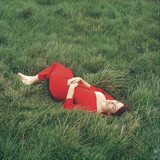
'It is now clear that humans are no longer the most important things in the universe, that their knowledge, creativity and intelligence are ultimately limited.'
The Posthuman realises that the ultimate questions about existence and being do not require answers and accepts that humans have a finite capacity to understand and control nature. Even just to know the ultimate nature of the universe would require knowing everything about the universe, everything that has happened and everything that will happen. If one thing were not known it would imply that all knowledge of the universe is partial, potentially incomplete and, therefore, not ultimate.
Humans privilege to order over disorder on the assumption that the essential laws of nature are gradually being discovered. This is a fundamental error; nature is neither essentially ordered or disordered. What we perceive as regular, patterned information we classify as order; what we perceive as irregular, unpatterned information we classify as disorder. The appearance of order and disorder implies more about the way in which we process information than the intrinsic presence of order or disorder in nature.
The humanist era was characterized by certainty about the operation of the universe and the place of humans within it. The Posthuman era is characterized by uncertainty about the operation of the universe and about what it is to be human.
What is a human Is there such a thing
No finite division can be drawn between the environment, the body and the brain. The human is identifiable, but not definable.
Consciousness, (the interaction body-brain) and the environment (reality) cannot be separated; they are continuous that defines the being.
All technological progress of human society is geared towards the transformation of the human species as we currently know it; the posthumans regard their own being as embodied in an extended technological world. In such 'synthetik' reality power no longer needs to impose physical regulations, as it is able to manipulate and shape up the minds directly, becoming part of it.
There won't be any resistance from the individual, as he will have embodied the needs of the system in his own being, and their ambition will serve the economy.
Currently the output of machines is predictable; the Posthuman era fully starts when the output of machines becomes unpredictable, so that complex machines, apparatus whose workings we do not fully understand or control, become an emerging form of life.
In the Posthuman era, the future never arrives.
..from ´The Posthuman Manifesto´, Robert Pepperel, 1995
Suche:g machine
That Which Is Not Said is an album about learning to accept oneself within, and accept the reality of all that comes from without. It's an eponymous abstract exposition on navigating the realms of intimacy that the living world inevitably unveils and their equally inevitable fallout, the panic of abandonment and the loss of desire, and dragging oneself back up the hill once the lonely valleys lose their allure. Written and recorded over the course of two years in TWINS home studio in Atlanta with various synths, samplers, drum machines, and his very own flesh-and-muscle vocals, That Which Is Not Said is the result of countless studio sessions and experiments that were refined and distilled into the songs presented here, rigorously worked out through live performances and repeated critical overhaul. The material was all conceived more or less the same way: a mood or feeling would be channeled through whatever machines were plugged in at the time and eventually a foundation would be developed upon which a loose structure would be improvised. Experimenting and
throwing around vocals came next, making up phrases and lyrics on the fly until something clicked and a pathway cleared through the fog and mist.
Keshavara debuts on FILM.
Taking it's influence from downtempo Alt-Pop and Hip Hop, but with nods to blissed out Dub and World Music - the Indian producer arrives on the Berlin based label with Creators of The Rain. Danny Wolfers takes control on the flip - turning in a gorgeous, transcendental remix under his Legowelt alias.
Live instrumentation provides the backbone of the work - dusty drums drive the music forward, complemented by shifting dub-guitar leads, off kilter bassline licks and delayed drum machine breaks. Singer Gio's vocals sit com-fortably at the back of the mix, soft but inviting - present but realised with a distinctly otherworldly energy. There's a fine, organic feel to the recording - ambient surface noise shifts and warps between elements, and live FX pop and duck in and amongst instrument strikes giving the work a rolling, hypnotic feel. It's a deep and fully realised piece of music - wonderfully three dimensional in it's execution, and a striking homage to the artist's wide frame of refer-ence.
On his remix, legendary synthesiser enthusiast Legowelt draws for a characteristically Sci-Fi finish, in keeping with the best of celebrated output for Clone, L.I.E.S., Creme Organisation and more. Maintaining the tempo of the origi-nal piece, but augmenting the work with a growling Reece bassline and hazy lead synths, the Dutch producer care-fully shifts Keshvara's recording up a gear. Where Creators of The Rain began life as a grooving, Hip Hop indebted piece of World Music - immediate but markedly laid-back in it's execution - Danny Wolfers injects a more anthemic, uplifting sentiment, highlighting the dub elements with a delayed drum machine line and pushing the vocals back with a touch of reverb to give his glorious synth-work space to breathe. It's a wonderful take on an already accom-plished piece of music; respectful but inspired - and no doubt some of the Hardware Occultist's finest work.
For the second release, we bring you obscure 1985 North Carolina boogie/gospel/electro banger filled with crazy bass synths, piano chords and rhythm machines. Very proud we managed to put out this unique record.
Also supported and played by Peanut Butter Wolf from Stones Throw!
Few words from the man himself:
"I was 32 years old when I did "Come Together", I recorded it in the studio in Charlotte, North Carolina, USA. It was my first studio project. I wrote it to reflect on how we all are God's creation and we all need each other no matter our skin color or background, we should love each other as God tells us to. I always wanted my music to go mainstream and worldwide to reach everyone. Shurfine gospel record company picked up my record and the rest is history..."
- A1: Pollen
- A2: Chowsy In Upstyled Onesy Minor
- A3: The Perfect Adult Man
- A4: Le´ Cave´ Isnt It Funny To Think Once Apon A Time People Thought The World Was Blue White Flat And Square
- A5: 808 Frapé
- B1: Reecard Farche The Torture Of Credo Mutwa And The Theft Of The Necklace Of Mysteries_Noel
- B2: Industrial Kingpins Und Drachoen
- B3: Sharkblood Sure The Sharks
- B4: Golife Refracto Relationé
- B5: Attilas Own Photos From The Shoot
Anklepants Introduces His Brand New Album For Detroit Undergroud, A Collection Of Ten Cuts, Made With His Very Own Arsenal Of Digital And Hardware Toys, Most Of Them Self Made And Customised For His Purposes. This Multi Faceted Artist Creates A Blend Of Twisted Ryhthms, Synthetic Melodies And Weird Textures And Noises, Yet Danceable Stuff But With Heavy Focus In Experimentation And Risk.
Pollen Opens The Release With A Weird Arabic Style Riff And Arpeggiated Clean Synths Over A Simple Beat, Until More Melodic Layers Complete The Equation.
Chowsey In Upstyled Onesy Minor Follows With Sampled And Morphed Traditional Instruments, Laying Over Destructed Beats And Rythms.
The Perfect Adult Man Relies On Atmospheric Stabs, Four Four Kick And Analogue Bubble Bassline, Dark, Grey And Melancholic.
'lé Cavé_isnt It Funny To Think Once Apon A Time People Thought The World Was Blue White Flat And Squaré' Is Made Of Twisted Samples, Asymetrical Grooves, Organic Instruments Decimated And Multiple Sound Layers.
808 Frapé Is An Homage To The Classic Drum Machine, Electro Shaped Drum Patterns, Floating Sounds And Crispy Metalic Glitches Dance With Random Sequences And Bleeps In A Robotic Exercise.
Reecard Farche The Torture Of Credo Mutwa And The Theft Of The Necklace Of Mysteries_noel Goes Again To Weird Random Bleepy Fields, Alien Grooves, Heavy Sound Processing And Glitched Details.
Industrial Kingpins Und Drachoen Is Dark, Obscure Number, Clear Rythms, Strings And Resonant Bassline Collide, The Groove Transforms To Broken Beats After The Break Bringing New Life To The Overall Feel.
Sharkblood, Sure The Sharks, Repeats This Phrase In Different Pitches Over A Solid Kick Pattern While More Vocal Layers Are Added Progressively In A Voice Madness.
Golife_refracto Relationé Again Plays With Samples In A Mad Style, Altering Every Parameter, Creating Granular Efects, Destroying The Audio Files Creating An Asymetric Tune.
Attila's Own Photos From The Shoot It's The Epilogue, In A Relaxed Mood, Sound Textures, Various String Samples Melting In Different Pitches And Crunchy Atmospheres.
Coletivo Vandalismo kick-start a new 12" series for the Contort Yourself label. Hailing from the city of Porto the duo also DJ under the name GAM and released their debut LP on Lake Haze's Eye For An Eye label. Their music has an immediacy that seems to stem from a background in live performance as opposed to polished studio sessions - an improvisational punk aesthetic that manages to carry this EP so strongly. Wild, crashing fx and unrecognisable vocal distortions layer atop wonky 90bpm drum machine grooves and the pair even show off what may be their turntablism skills on 'Zombie Zombie'. There's a nod to early concrete on the closing track 'Black Sun's Demise' with whirring, mechanical noise motifs suddenly jolting us into punishing gabber-at-33-minus-8 territory. The DIY spirit is alive and well here and the feeling that things could fall apart at any minute just adds to the tension.
Debütalbum der kanadischen Musikerin, Sängerin und Fotografin Tess Roby, langjähriges Mitglied des Chors Canadian Children's Opera Company. Auf den 8 Songs auf "Beacon" besticht die Künstlerin mit einem elektronisch-spirituellen Dream-Pop, aufgenommen mit Drum Machines und Synthesizern, der ihre klassische Ausbildung und ihren Sinn für Ästhetik verdeutlicht. LP auf deckend-schwarzem 180g Vinyl.
It's rare to come across a debut album that delights and surprises in equal measure, but that's exactly what you can expect from Human Call, the first full-length excursion from daydreaming dancefloor fusionists Earthboogie.The East London-based duo of Izak Gray and Nicola Robinson has previous form when it comes to creating beautiful, funk-fuelled fusions of soundsystem-ready rhythms, humid instrumentation and intergalactic audio explorations. To date, they've released a pair of fine EPs on Leng, both of which did a splendid job in showcasing their unique musical vision.Even so, this vision has never been clearer than it is on Human Call, a vibrant eight-track missive that fixes the sticky tropical cheeriness of African and South American dance music - be it Afro-disco, Afro-funk or samba - with a wide range of complimentary sounds, styles and influences, from spacey analogue electronics, sun-kissed Balearica and hazy West Coast jazz-rock, to chunky dub disco, snappy retro-futurist house and bouncy, dub-fuelled club workouts.Throughout, Gray and Robinson showcase an impressive level of musicianship, variously combining crunchy drum machine hits and dusty old synthesizers with razor-sharp electric and acoustic guitars, rich bass, cascading saxophone solos and hazy, life-affirming vocal harmonies.The result is a string of memorable highlights, from the sticky tropical-house-meets-dub disco futurism of 'Human Call' and fuzzy disco-funk righteousness of opener 'Overground', to the post-punk disco jauntiness of 'Stargazing' and samba-infused dancefloor bliss of Nina Miranda collaboration 'Silken Moon'. Cheery, absorbing, imaginative and hugely entertaining, Human Call offers a perfect snapshot of Earthboogie's distinctive musical world.
Red hot drum lead track backed by boiling point late night to early morning long haul truck driving or dancing music. Shazam!
Vital Sales Points:
(Drum track playing loudly)
The saws and sines have aligned! It's HOW007 time.
The release in front of your face is called The 417. It is three songs by Daniel Savio released on 12" vinyl strictly limited to 200 copies + an everlasting (we'll see how that works out) digital version of those same songs.
This recording was conjured up on machinery people are known to touch and sell. MK1 menu diving desktop stuff. Stuff that is ten years old, stuff that may be older. Stuff that purrs, rocks, bounces and skates. Machine prototypes on trade show floors will not be able to make songs like these. Unless you would hand them to Daniel which would lead to all sorts of inconsistencies in time.
Last year Daniel Savio's "Race To The Bottom" and his "Plejjern från Plejaderna" album took Swedish house music by storm. It is now with great delight that we hand you this 12", acclaimed by well-informed DJs. Music centred around feelings for what is in front of our faces at the moment. HOW007, get in while you can.
Truly nuts and really kind of essential... the Starship Commander had his whole approach to the Synthesiser Voice technique. B-Boys/Girls delight. Check the instrumental cut, Mastership - a head nod synth voyage of the highest order. Limited copies. TIP!
.
'How are you doing, Earthling' That's how Omer Coleman, Jr. addressed his public in the 80s, driving around Kansas City, Missouri in the electric space-car built especially for his alter ego Starship Commander Wooooo Wooooo.
Left Ear Records went back to Coleman's original master tapes for their vinyl reissue of the Commander's 1981 private press album Mastership, a lost electronic funk classic. Coleman performs in an alien voice that comes not from electronic filtering but from his own natural vocal distortions. This visitor from Mars wants people to be happy and, like his song goes, 'Laugh and Dance.' It's an endearing and very personal space-age funk that blends George Clinton and Kraftwerk in a vision of a better and happier world.
Born and raised in Kansas City, Coleman was musically inclined from an early age. His parents couldn't afford to buy him a real drum for orchestra, so he took up electrical wiring and wood shop instead, which fed his muse in a different direction. Omer built enormous speaker cabinets. In the late '70s he was a DJ, and ran a Mobile Disco business that took him across the country, hosting parties. After a trip to California, he came back to Kansas City inspired to dress up as Commander Wooooo Wooooo.
The future commander began working at the Armco Steel Mill in Kansas City when he was 18. He was inspired by older machinists who demanded perfection in their work and in their character. It was while he was working at the steel mill that Coleman came up with Starship Commander Wooooo Wooooo. One day coworker John Manley came up to Coleman with a vision of an electric car, and built it. His coworkers built all of his equipment, from lighting and fog machines to big steel eyeglasses. Coleman's sister, a seamstress, created his outfits.
Coleman started his own label in 1985 but took some time off from music to raise his children, and when they came of age his son recorded with Coleman as a gospel vocalist. When his son was killed in an auto accident in 2004, it took something out of him, and he stopped making music. But he's starting to get the feeling again.
Now 62, he's currently enjoying his retirement from a long stint with the IRS. The former Commander is in the middle of a house project where he's using metal ceiling tiles to line his walls. It's starting to look like a spaceship. Coleman promises, 'There is a real good possibility that we have not seen the last of Starship Commander Wooooo Wooooo!
Pat Padua'
After a steady stream of successful underground dance-floor stables via his Viscera EP series and last year climbing charts with his remixes, Fango returns with his second album titled "GEA". Set for release this forth-coming May 11th via Degustibus Music, GEA is a 10-track trip of eclectic electronica panning across various moods and tempos. Flexings his matured production credits, Fango fuses rock, disco and psychedelic influences, meticulously put together on his machines resulting in a spectrum of sounds to satisfy most palettes. It's a serenade from Gea to Ouranos, the Greek gods of earth and sky.
Vactrol Park are Kyle Martin and Guido Zen. Besides responsible for 2 unforgettable eps on ESP Institute in 2015 & 2016 under this alias, Kyle and Guido are prolific producers, with Kyle being part of Spectral Empire (alongside Black Merlin), as well as half of Land of Light (with Johnny Nash) and more, while Guido has been producing under the alias of Brain Machine amongst others. Since Malka Tuti has been a fan of all of the above, it is no surprise the duo found its way into the ever growing family. With an LP scheduled later in 2018, this EP, self titled, is a door into the sound of Vactrol Park and its evolution - ever deeper, abstract, and mature. Always clear, coherent and flowing, never boring. Expect big things from this duo, as their live show, incorporating self-built modular synths and effects is destined for greatness....
The "Perfect Illusion EP" opens up with "Never Can get Away", a steamy & dreamy cut that sucks you right in to it's lair of thick pads and trancy sequences, which are contrasted by a carefully programmed synth bassline and a stomping house beat.
Next the title track immediately evokes early Chicago warehouse jam feelings, with bass sequence, detuned chords and classic drum patterns all oozing of old analogue Roland machines.
"Running Number" starts as a no-nonsense house track, yet it transcends into 80s territory with the help of a deeply emotional chord progression that might just make you forget you're in a club.
Berlin Duo Longhair give "Running Number" the Luv-Remix treatment, really digging deep into that chord progression and building a melody and synth-bell infused Italo-house track around it that should make this year's festival crowd weep and rejoice alike.
Flexure is a collaboration between Jamie Behan & Stephen Mahoney. Both have been DJing since the mid-'90s, but Flexure is a relatively new hardware-based project that sounds like a mashup of techno, acid, electro and Chicago house. In Orbit is Flexure's second EP, a collection of unhinged machine bangers.
Orbit is the A side, a smash of a stomper, massive claps and a wild hook with vocals swirling claiming Orbit as a peak time destroyer.
B side contains Computers, a floor filler with a massive acid hook, total dancefloor killer. Next is Opioid a deep growler mof a track that is sure to find its' way into a multitude of sets.
he 30D Records machinery does not stop. A new stylistic adventure has been concretized in the new label's series 'Eyes Have It', which will be conducted by the well-known Sonar and 30D's resident DJ, Angel Molina, as A&R.
The Lucio Fulci's movies iconic scary-eyes synthesizes the series essence perfectly. 'Eyes Have It' builds the fundamentals for the boundless experimentation, lightlessness, cold and mechanical dynamics.
The EP 'Shelter' is the very first result of this new proposal, an incontestable work signed by Isolated Lines. The Swiss artist has a solid background in underground music throughout various projects, in and outside of electronics.
That means a wider creative resources that can be easily noticeable, for instance, in the music harmonies. Avant-garde, solid sound and savoir-faire, that is what defines the Isolated Lines production.
'Shelter' EP stylistic codes are crystal clear, brazen obstinacy of the rhythm base which sets the basis for epic distorted textures, that may become deeply emotional, like in the cases of 'Onshore' and 'Landfall'. Steadfast rhythmic cycles on slamming sound mantras.
Furthermore, the EP includes an industrially nervous revision of 'Onshore' constructed by 30drop.
Isolated Lines' 'Shelter' EP is an utterly flawless starting point for this strongly promising new 30D series. So henceforth, keep always an eye on 'Eyes Have It'!
Following on from OTIS002 Jon & Hugh - Another view, one half of the production duo and OTIS label boss Hugh B steps out on his own for OTIS003. Floating On a Trippy Biscuit is a 4 track excursion through deep textures, roaming drum machines, sliced breaks and dub echoes. With a nod to early Jungle duos (RIP), a psychedelic love letter to UK Broken Beat, a remix from OTIS family member Sean Thomas that pays respect to the UK Deep scene of the late 90s and a deep, valium-laced House groove designed for post-rave reflection. OTIS003 is a dreamy meditation amidst the occasional chaos of the rave, a blissful trip through the styles of 'dance music' this label holds dear.
Early support from: Ben Fester, Simon Caldwell, Adi Toohey and a load of other selectors that are keeping it deep in twenty seventeen...
Tint is the first new solo recording from Joe Talia in over a decade. Australian-born but now based in Tokyo, Talia is known to many listeners as a drummer (frequently collaborating both live and in the studio with artists such as Oren Ambarchi and Jim O'Rourke) and as a recording and mixing engineer responsible for dozens of releases across the fields of contemporary experimental music, wayward pop, and jazz. Alongside James Rushford, he is also responsible for one of the most legendary releases in the Kye records catalogue, the creaking electronic morass of Manhunter (2013).
Lovingly crafted over many months in his tiny Tokyo studio, Tint is an album-length electroacoustic suite that brings together Talia's expertise as percussionist, studio engineer, and performer on analogue electronic instruments (primarily modular synth and Revox tape machine). Ranging from minimalist austerity to kosmische lushness, Tint refreshingly refuses the dark and moody sonic palette of much contemporary electroacoustic music in favour of an airy, at times almost weightless sound-world of gliding tones, skittering percussion, and burbling field recordings. Drawing inspiration from Jean-Claude Eloy's epic concrète love letter to Tokyo, Gaku-No-Michi, Talia makes extensive use of his own recordings of his new home, but removes any sense of audio verite, abstracting them into transparent glosses of outdoor ambience or unidentifiable chimes and creaks. Flowing seamlessly between distinct episodes, Tint is compositionally controlled while retaining a sense of played spontaneity, eventually building to a maelstrom of analogue synth zaps and tape manipulated percussion that reflects Talia's deep engagement with the relentless yet constantly shifting dynamics of free jazz.