MUSAR is proud to introduce Koloah, the newest voice in the family. Making his label debut with You Can Get Me EP, the Kyiv-born, Berlin-based artist arrives fully formed: three original tracks that move between restless grooves and expansive, immersive sound design, accompanied by a brain-melting remix from rising French star Binary Digit.
The EP opens with "You Can Get Me" - a UK-leaning groove anchored by a snaking acid line and fragmented vocal cuts that surface and dissolve, insistent and hypnotic, one of those tracks that lands fast and stays with you. "Get Me Close" follows, shifting the A-side into electro territory: harder edges, colder mechanics, but the atmosphere holds. Koloah keeps the tension tight and the space wide.
The B-side reaches further. The braindance producer Binary Digit takes "You Can Get Me" apart and rebuilds it in his own image - known for his deeply idiosyncratic approach to rhythm and texture, he turns the original into a real summer anthem, faster and focused, the same raw material carrying a completely different emotional weight
The EP closes with "Liminal Forest", a full IDM statement: intricate rhythmic programming, layered synthesis, and a sense of place that feels earned rather than constructed. Koloah signs off somewhere between the forest and the machine.
Recorded in Koloah's Berlin studio, the tracks were built in different periods - which is exactly why they breathe the way they do. Not a forced coherence, but a natural one.
"Atmosphere is the core of all my music and what I pay the most attention to."
- Koloah
This is the beginning of something. Welcome, Koloah.
Ryjel was a band from suburban Pittsburgh, PA, that started out in the mid-1970s performing classic rock covers. The band was approached by a local entrepreneur who wanted to cut a single for the disco market, but a lack of financing scuttled the proposal. Nevertheless, the band was able to record a dozen of its original tunes in a professional studio for possible release, and among those songs were "Heart's On Fire" and "Baby Don't Stop."
Both tracks were recorded some 50 years ago having remained unreleased to this day. It needed the investigative work of the Tramp Records crew to discover them. Finally they are available on a strictly limited 45 RPM single release. In addition, the full length version of "Heart's On Fire" will soon be released on the upcoming Tramp Records compilation titled "CAN YOU FEEL IT Vol.5 - Modern Soul, Disco & Boogie 1977-88".
Balearic London's very own Ben Gomori presents his first extended play since his 2024 debut album 'Collapsing Time', collecting an array of sensual sounds across four tracks. 'It's Always Sunny Above The Clouds' is a punchy collaboration with German powerhouse Lauer, powered by bright piano and synths paired with '80s acid house drums and a thick melodic bassline. 'Mucho Gusto!' goes full Italo, bouncy energy matched to an anthemic horn sample. 'Fun As Fk' makes great use of rising star Caio Cenci's infectious guitar licks over a phat-bottomed groove and camp '80/90s sample synths, and 'Inner Luv' slows the tempo for a chuggy flamenco-flecked bliss-out.
For his sixth solo album, Ezéchiel Pailhès returns with a new collection of songs infused by a sunny wandering spirit.
Within each of the twelve songs on SOL is a thread of melancholic happiness that has permeated much of Pailhès’ music and songwriting. He addresses love, the passing of time, hope, lost illusions, fleeting moments of grace, the temptation of forgetting, a need to escape, and desire. All this is
insulated by understated orchestrations that blend acoustic and electronic instrumentation with deft confidence.
The Portuguese and Brazilian concept of saudade—a form of melancholic longing and nostalgia— pervades, thanks in part to Pailhès decision to record the album in Rio de Janiero and to reinterpret some of the finest works of Música Popular Brasileira (MPB). In particular, he revisits a handful of
lesser known classics from the mid-century samba and bossa nova era—originally written or performed by talents including Vinícius de Moraes, João Gilberto, Tom Zé, Dorival Caymmi, João Donato, Os Tincoãs, and Ataulfo Alves.
The shift from Brazilian Portuguese to French and the decision to adapt rather than perform a straightforward cover versions, allows Pailhès to invent a form of prosody and euphony (the musicality and harmonious combination of words) that feels vibrant and unlike anything else in today’s French
chanson landscape.
“Some lyrics are simple translations from Portuguese, in what I’d call an expanded version. For others, I started from a single word or a single phrase and embroidered an entirely new text that carried me elsewhere,” explains Pailhès. “I allowed myself great interpretive freedom, while preserving the humanist dimension of the original songs. I’ve always been deeply moved by the way Brazilians transfigure reality through heightened emotion. I love this visceral and spontaneous country, which always seems to live through emotion. And above all, I love its music both popular and unifying,
bringing together all social classes. In that sense, it’s very political music, but even more so utopian, made by the people and for the people.”
On this new album, however, the French artist was keen to avoid cliché. Each song is therefore built around a carefully balanced interplay between Pailhès’ piano and synthesizers, alongside restrained arrangements of percussion, brass, bass, and cavaquinho (a small four-string plucked guitar). These parts were recorded in Rio de Janeiro with two musicians who regularly perform alongside the legendary Caetano Veloso—Kainã Do Jêje and Alberto Continentino—joined by Thomas Harres, Antônio Neves, Eduardo Neves, and Gabriel Loddo.
Since the 1960s, France and Brazil have shared a long-standing cultural and musical relationship. Some Brazilian artists, most famously Gilberto Gil, took refuge in France during the dictatorship years (1964–1985). But above all, French chanson quickly fell in love with the richness and ingenuity of
bossa nova and samba, translating and reinventing them in the language of Molière. Throughout the 1960s and 1970s, albums and hits by Henri Salvador, Georges Moustaki, Pierre Barouh, Pierre Vassiliu, and Claude Nougaro all drew from the MPB repertoire.
Fifty years later, with SOL, Ezéchiel Pailhès reinvents this rich Franco-Brazilian musical legacy, bringing to it a personality and modernity that stand confidently alongside those of his forbears.
Final chapter of the Monochrome series by Okain.
Started in his Berlin studio a few years ago and completed just before moving back to France, these tracks mark the end of a special period.
They are the last recordings made in that space, capturing a moment in time.
The Monochrome concept was simple: one track, one day, one idea.
This EP brings together four new cuts, each drawing from different influences across deep tech house, dub techno and UK garage.
Following the celebrated reissue of Classics Vol. 1, Metroplex unveils Model 500 - Classics Vol. 2, a powerful new collection of essential works from Juan Atkins--pioneer of Techno and architect of some of the most forward-thinking electronic music ever recorded. Bringing together key cuts, rare mixes, and long-sought favorites from across Atkins' groundbreaking output, this compilation highlights the full spectrum of his sonic universe: deep, rolling machine funk, shimmering electro-techno hybrids, and timeless futurist grooves that helped shape generations of electronic artists. Each track has been carefully remastered to enhance its original energy while preserving the raw spirit and space that define the Model 500 sound. From expansive, atmospheric journeys to soulful vocal transmissions and Detroit-powered rhythmic science, Classics Vol. 2 presents Juan Atkins at his most inspired--an essential document of a visionary whose influence continues to echo across dancefloors worldwide. Three decades on, these tracks have lost none of their immediacy, imagination, or futuristic pull. Restored for a new era, Classics Vol. 2 celebrates the legacy of Model 500 with pristine sound and renewed force. Pure Detroit heritage. Eternal future music.
Baby T is a space away from her work as B.Traits in which Brianna Price can lean more into the junglist, drum ‘n’ bass and hardcore sounds which she loves so dearly. With BSHEE02, the second drop on Price’s own Banshee label, Baby T delivers a darkside masterclass of an EP. This record is a quartet of system blowers which doesn’t let up for a single second from start to finish.
Opener ‘Times Up’ is urgent from the off - the initial strains of this joint find sirens wailing in the monitors over a twitchy kick/drum/hats combo. From here on it’s distilled raver perfection, the drums taking us on a wild Wipeout-style ride as the subbiest of bass skulks at the bottom of the mix. Imagine a more technoid take on the classic breakbeat freerides of Skanna and you’re not far off the ‘Times Up’ sound.
A remix of ‘Times Up’ from man like Aloka leans with devilish glee into the murky underworld that lurks beneath Baby T’s original. Aloka’s version is extremely eerie in a manner which makes you think of the darkest corners of a DMZ party. When things really kick into gear, driven by an irresistible kick dembow, the effect is hypnotic - think the dubwise junglism of the UVB-76 cohort.
BSHEE02’s B-side kicks off with ‘Coercive Control’. This is a cut which delivers on its title in spades, putting the listener in a trance with an interplay of low-slung bass, whirligig synth tones and more of those perfectly executed broken beats. The acid starts to kick in around the minute mark, and it turns out to herald a total earworm of a lead melody.
There’s plenty of dimly-lit malevolence to BHSEE02 closer ‘Dense Dickwood’s grinding atmospherics and gurgling bass throbs. However, Baby T opting for a half-time drum break here gives the cut a vibe not dissimilar to the weightiest jams of classic Massive Attack - that is, until an absolutely remorseless switch-up occurs halfway through, delivering volley after volley of intense drum hits.
HVS is stoked to have Wetman back for the second time on the label! This is part one of a two part series showcasing original tunes from Wetman and remixes of those tunes, so stay locked for the next one soon! Dan had initially sent me two original tracks of his along with the two remixes of “Inside” from Etch & Meridian. We both agreed it would be cool to spread out the tracks into a series since there were already two remixes of the same tune, so Laramie and I whipped up a third mix and here we are!
As most of you know, Dan and I both started Vivid way back in 2017 so it's really really awesome to still be releasing tunes from him almost 10 years later! Dan has since gone back down to Cali while I'm stuck up here in Seattle, but we still collaborate as often as we can. His original mix is so damn creative and probably the wildest mix of the bunch. Excellently sourced samples per usual from him, most of which I didn't know, but Meridian is actually the one that tipped me on the Harold Budd sample!
I first heard BC badman Meridian's EP on Disrupt Records when it came out a couple years back, and was floored with his tunes! I was really excited to have a mix from him for this. And his mix really delivers IMO. With some seriously precision cuts/choppage and a really excellent balance of light and dark in the mix. It's very cool having a (sort of) local producer on the label as well!
Etch, out of London needs no intro really, with a ton of quality releases under his belt spanning all sorts of dance genres, it's really an honor having him on the label! Being a fellow FL user and also a gear fanatic make for some fun chats with Etch as well. His mix is the most mellow of the bunch but it still slaps hard everytime.
Laramie's mix is super duper techy, which is a bit different to his usual niceness style! But he wanted to switch it up for this one. I was happy to jump in the studio and record a vocal for the track. We think this mix came together nicely!
STARDUB VA series continues with number 10. This time we have the honor to present a 6 track EP with Dub Techno's finest musicmakers Dreist, Habben, RuMa, Ohm & Lentza, Marco Cassanelli and DIB.
From Dub With Love! Limited to 250 copies.
Limited first release in a new 7" collector series from Common Saints, the UK psychedelic soul project known for its warm analogue textures and cinematic groove-led sound Features Idol Eyes (33M streams) and Summer Sun (24M streams), pressed on heavyweight black vinyl in a printed sleeve and cut by Stuart Hawkes at Metropolis, London. Strictly limited to 1,000 copies worldwide - strong catalogue demand meets premium analogue presentation.
Smoove puts the spotlight firmly on the larger-than-life vocals of Rufus Thomas, peeling things back to reveal hard-hitting breakbeat drums from the very first bar, anchored by a relentless, pounding bassline. Punchy brass stabs and rolling keys collide with dirty funk guitar riffs, all stretched out into an extended rework built for maximum floor impact.
A.2 Bouncy Lady 5.06
A classic jazz-funk break from 1975 gets a fresh twist as Smoove reworks the structure into a groovy, extended build-up. Vocal chants and handclaps take the lead, while the original sax solo is stripped away and replaced by a raw bass-and-guitar workout. The focus shifts squarely to the rhythm section, letting the drums ride all the way to the finish—ending with the studio engineer’s off-mic murmur on the tape: “beautiful.”
B1. – For The Love Of You 6.57
The Isley Brothers classic gets a loving reworking, with the groove locked in tight and the keyboards pushed front and centre letting the drums and bass drive home the groove. Those iconic falsetto vocals are spine-tingling, from start to finish.
B.2– I’m Trying 4.48
Lush, soulful strings and a deep-groove piano line glide over this drum-driven reinterpretation, opening up the raw, emotive vocal breakdowns of Carla Thomas and Pervis Staples. Originally scored by Isaac Hayes, this rework digs deep into the multitracks, uncovering previously unheard moments and giving them room to breathe.
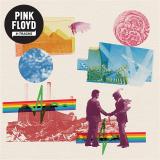
8-Tracks features eight essential classics selected from the Pink Floyd’s 1971 – 1979 era. The track list includes the instantly recognisable hits ‘Money’, ‘Wish You Were Here’, ‘Another Brick in the Wall, Part 2’, ‘Time’ and ‘Comfortably Numb’, alongside earlier cuts in ‘One Of These Days’ and ‘Wot’s… Uh The Deal’, as well as an exclusive full version of ‘Pigs On The Wing’, previously available only on the 1977 Animals 8-Track cartridge release. The track sequence has been edited by Steven Wilson for a continuous listening experience. 8-Tracks documents the full measure of Pink Floyd’s transition into their breakthrough era, propelled into superstardom throughout the 1970s. The eight-year period this special release celebrates encompasses music from some of the band’s most successful and celebrated records ever. 1971’s Meddle, 1972’s Obscured by Clouds, 1973’s The Dark Side of the Moon, 1975’s Wish You Were Here, 1977’s Animals and 1979’s The Wall. 8-Tracks offers a brilliant insight into this incredible period of creativity. A starting point for new listeners to discover the depth and breadth of Pink Floyd’s peerless album catalogue, as well as a carefully curated collection for longtime fans to appreciate.
‘Sings Again’ is the fifth album from British electronic musician Will Samson. After starting the decade with a pair of largely instrumental albums, Samson… sings again.
The familiar collection of old tape machines that have characterised much of Samson’s sound remain (with a 1971 Seinnheiser microphone for the vocals), firmly rooting ‘Sings Again’ in an organic sonic landscape of electronic and acoustic influences.
Taking inspiration from the early works of Bjork, Four Tet and Efterklang, much of the album was built upon recording and then sampling organic sounds such as twigs, rocks and paintbrushes to create percussion. An empty glass bottle was transformed into the otherworldly organ on raw opener ‘0333AM, and his own voice became the moody synth sound on the sparse electronica of ‘Darabuka.’ Elsewhere, the hypnotic, emotionally resonant ‘Time Used To Feel Like’ and grandiose album finale ‘Julian’s Rocks’ offer a raw and direct insight into the most vulnerable parts of himself – a long-established artist beginning again.
Factory Floor return to Phantasy with ‘Buzz Saw’, a driving new single that once more re-establishes the trio of Nik Colk Void, Gabe Gurnsey and Joe Ward as amongst the most vital forces in live electronic music.
Following on from 2025’s sold-out vinyl singles ‘Between You’ and ‘Tell Me’, the spacious groove of ‘Buzz Saw’ bridges the sharp, bracing synthesis of the band’s origins in London’s post-industrial warehouse scene. Once again mixed by legendary engineer David Wrench (Daniel Avery, Floating Points), it captures the band’s most dancefloor-forward instincts, recently rejuvenated via appearances at Berghain, festivals such as No Bounds and Simple Things, plus a headlining UK tour.
As before, Gurnsey’s peerless drum work - tracked in the studio by Stephen Morris of New Order - proves forceful and delicate in tandem with Ward’s percussion, encountering suspenseful breakdowns in the space between Voids enveloping basslines. In dreamlike accompaniment, Colk Void’s own voice drifts serenely upwards, itself slowly consumed and obscured into the band’s full-bodied electronic rush, which is also available here as a more minimal, no-less powerful dub version.
In sonic contrast, ‘Guitar_1342’ finds the band experimenting in their starkest terms, stripped back of their luminescent flow and boldly reduced to an abrasive, dissonant guitar feedback.
Factory Floor’s ‘Buzz Saw’ will be released via Phantasy on 29th May 2025, available as a limited-edition vinyl pressing in a risoprint sleeve, as well as digitally.
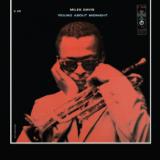
In 1955 Miles Davis played an all-star jam session at the Newport Jazz Festival with Thelonious Monk on piano, Gerry Mulligan on baritone sax and Zoot Sims on tenor sax. This performance immediately drew the attention of Columbia Records' George Avakian, who was so impressed that he immediately offered Davis a contract if he could form a regular band. The group he then assembled would go down in history as Davis' so-called "First Great Quintet", consisting of John Coltrane on tenor sax, Red Garland on piano, Philly Joe Jones on drums, Paul Chambers on bass and of course Miles himself on trumpet. 'Round Midnight is Miles Davis' first record for Columbia and also the first studio recording of the First Great Quintet. The recording sessions began on October 26 1955 but the album wasn't released until 1957 as Davis was still under contract at Prestige at the time. These respective sessions yielded Steamin', Workin', Cookin' and Relaxin'; albums that would go down in history as quintessential blueprints of late 1950s hard bop.
The record is made up of a collection of standards and one traditional song ("Dear Old Stockholm", from the 19th century). Notably, it features what may be considered the most well-known versions of Thelonious Monk's "'Round Midnight" and "Bye Bye Blackbird". That Avakian made a golden signing was sufficiently clear from the start, but no one could foresee that it would be this quintet on Columbia that would go on to change the course of modern jazz forever with Kind of Blue. 'Round Midnight is available as a limited edition of 1500 individually numbered copies on crystal clear vinyl.
Available for the first time on any format, the soundtrack of Pier Paolo Pasolini's controversial 1975 vision of the Marquis De Sade's 120 Days Of Sodom, featuring beautiful and discordant classical compositions, in stark contrast to the shocking and cruel events unfolding onscreen.
Three weeks before the scandalous release of "Salò, or The 120 Days Of Sodom", Pasolini was brutally murdered in Ostia, Italy. In the wake of the tragedy, legendary composer Ennio Morricone wrote 'Addio a Pier Paolo Pasolini' (Goodbye to Pier Paolo Pasolini) for the late filmmaker, included in the final edit.
Following the narrative of one of Pasolini's defining cinematic moments, the soundtrack opens with Ennio Morricone's "Son Tanto Triste", descends into the melancholic minor chords of Bach, Chopin, Orff, Puccini, and Graziosi, incorporates sinister renditions by the cast, and includes Morricone's own sombre tribute to the director.
Disgusted by the flood of crass sexploitation movies which filled the space opened up by his "Trilogy Of Life", Pasolini turned to the most nihilistic thinker in European history for what became his final film. His version of De Sade's 120 Days Of Sodom, amplified with motifs from Dante's Inferno, confronts the ultimate implications of fascism in a series of sexual and moral atrocities. "The only true anarchy is power".
The LP / CD will be released on Friday 13th February 2026, exactly 249 years since the Marquis de Sade was arrested and imprisoned in the dungeon of the Vincennes fortress for charges of "debauchery and immoderate libertinage" that scandalised his contemporaries.
Back for round two on WOLF Music, Toronto Hustle & Sean Roman present their ‘Social Narcotics’ EP. The deep house dons from Canada don’t disappoint with a hard-hitting slammer, and a suite of remixes courtesy of some of the scene’s most-respected producers.
The A-side starts with none-other than Byron The Aquarius on the remix. You see that name on a record and you know it’s going to be a hot 12”. Just look at some of the labels he’s released on; Sound Signature, Wild Oats, Eglo, Axis; that’s the only stamp of approval you need. His remix of ‘Social Narcotics’ is deeper than deep. Moody, musical and packed with detail. Proper house for those that know the good stuff.
Then POW! - you're hit with a legend of the game. Calling Nick Holder a legend isn’t hype, it’s just fact. Active since the early ‘90s and head of DNH Records, with releases on labels like NRK and Poker Flat Recordings, his influence runs deep. Any serious head will have some of his jams in their collection (‘Summer Daze’!!!). Teaming up with Tyrone Solomon under their ‘Trackheadz’ guise, the Canadian duo have delivered a trademark peak-time remix. Driving and groovy, this is tackle for proper dancefloors.
For the flip we have Toronto Hustle & Sean Roman's original track and a rather tasty dub version. ‘Social Narcotics’, blends sharp social commentary with a late-night, low-slung thumper of a soundtrack. With its warm, rolling and hypnotic feel, it has echoes of a prime 90s deep house cut, yet still sounds fresh and very much of the now. The dub mix turns the lights down even lower, stripping it back and letting the groove bubble away with a more heads-down sound.
This EP is a strong follow-up that keeps things deep, soulful, and club-ready. Exactly what you want from Toronto Hustle & Sean Roman, and another solid addition to the WOLF Music catalogue.
Open the doors of perception with 'Alchemy of Being,' a deep ambient exploration inspired by Jungian analysis, olfactory meditations and psycho-nautic navigations.
Dublab resident, LA-based DJ and producer Dor Wand invites us to practice ‘deactivation through music:’ a softening art he describes as guiding energy down gently, so the body can rest, the heart can open, and the mind can return to stillness. The album creates a space where movement turns inward, where rhythm becomes breath, and where sound holds us as we land.
A mix of mellow synths, live harp and tuned percussion, the album oscillates softly between tension and relaxation, a harmonizing journey that gradually brings together mind and body, inhale and exhale, a unifying yogic tool for heightened self-understanding.
ISKRA is the debut album by Polish multi-instrumentalist and composer Olga Anna Markowska. Starting at “Dawn” and ending at “Dusk”, it is a journey of melancholic depth and true beauty filled with warm memories from what was & what could be.
Using zither, cello, electronics and occasional wordless voice, Olga weaves together something so affecting and under the skin beautiful that it is hard to shake, bringing to mind classics from artists like Jacaszek and William Basinski, or the films of Kieslowski. However, there’s a personal touch in her playing and compositions that stands out. Olga explains: “the cello pieces, in particular, were born from a desire to reconnect with the instrument I’ve known intimately since childhood. However, I had to step away from it for two years to gain perspective and find a fresh approach when I returned.” She continues : “ISKRA is an album about "ignition" — a gradual shift in how I think about music and a search for new values. It also marks the closing of a chapter, blending archival recordings with the dawn of new ideas.”
The album feels deeply personal from the first note, and bridges the difficult point between classical and ambient music in a truly natural way, leaving any typical tropes far off, instead demanding your full attention. Olga uses plenty of loops throughout, which together with the cello and zither builds a transcendent atmosphere. Standouts contain amongst others the stunning “Train Ride Home” - a 7 minute piece with zither as main focal point; “Fever Dream” - a plunge into warm static noise and deep plucks, as well as the beautiful “Helix”, which sounds like a washed out dream with its minimal tape loops and ambient vocal washes. Overall the album connects very well with Olga’s subjects of identity, memory of the places and human relations with nature. There is a deep humanity burrowed within these 40 minutes of music which feels immensely appropriate in these contemporary times.
ISKRA was recorded in different times and places from 2017 to 2022 and lands with perfection on Miasmah - connecting the dots from the early years while reaching into the stars.
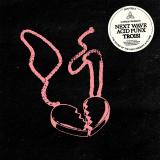
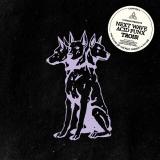
Starting in 2021 the critically acclaimed Next Wave Acid Punx series has seen Luca Venezia, aka Curses, celebrate the music that has shaped both his life and career. Across the first two compilations Luca took us from theindustrial and post-punk sounds of the late 70s, through the emergence of EBM, new beat and freestyle in the 1980s and onto the music he both makes and plays himself in clubs today. Bringing the series to a close Next Wave Acid Punx TROIS sees the Berlin-based musician and DJ return full circle, this time exploring the sounds that first initiated him into Brooklyn's rave scene and the music that, in some way, continues to embody its eclectic spirit today.
Spread across three 2LPs and 3CDs Next Wave Acid Punx TROIS captures a moment whose influence can still be heard reverberating around clubland today. With the nascent rave scene obliterating boundaries, this was a moment where the darker, harder industrial electronic sounds of the mid 1980s were crashing headfirst into the ecstatic wave that was washing over clubland creating thrilling juxtapositions. Whether in the clubs and warehouses of New York, London, Frankfurt, Valencia and beyond, electronic music would never be the same again as countless new genres we take for granted today were born from the chaos and energy that had been unleashed.
Featuring 46 hard-to-find, new and exclusive tracks, Next Wave Acid Punx TROIS both documents that fertile period and shows how, despite rumours to the contrary, that early anarchic spirit can still be found today. From the Detroit Techno of Model 500 to Nitzer Ebb's EBM and the proto-Trance of Age of Love and onto brand new tracks from some of today's best producers such as Zaatar, Italo Deviance and Leona Jacewska, this compilation closes out a series that has to date revelled in exploring the darker corners of clubland in uplifting style.
Starting in 2021 the critically acclaimed Next Wave Acid Punx series has seen Luca Venezia, aka Curses, celebrate the music that has shaped both his life and career. Across the first two compilations Luca took us from the industrial and post-punk sounds of the late 70s,through the emergence of EBM, new beat and freestyle in the 1980s and onto the music he both makes and plays himself in clubs today. Bringing the series to a close Next Wave Acid Punx TROIS sees the Berlin-based musician and DJ return full circle, this time exploring the sounds that first initiated him into Brooklyn's rave scene and the music that, in some way, continues to embody its eclectic spirit today.
Spread across three 2LPs and 3CDs Next Wave Acid Punx TROIS captures a moment whose influence can still be heard reverberating around clubland today. With the nascent rave scene obliterating boundaries, this was a moment where the darker, harder industrial electronic sounds of the mid 1980s were crashing headfirst into the ecstatic wave that was washing over clubland creating thrilling juxtapositions. Whether in the clubs and warehouses of New York, London, Frankfurt, Valencia and beyond, electronic music would never be the same again as countless new genres we take for granted today were born from the chaos and energy that had been unleashed.
Featuring 46 hard-to-find, new and exclusive tracks, Next Wave Acid Punx TROIS both documents that fertile period and shows how, despite rumours to the contrary, that early anarchic spirit can still be found today. From the Detroit Techno of Model 500 to Nitzer Ebb's EBM and the proto-Trance of Age of Love and onto brand new tracks from some of today's best producers such as Zaatar, Italo Deviance and Leona Jacewska, this compilation closes out a series that has to date revelled in exploring the darker corners of clubland in uplifting style.
Following their 2023 LP Presents, Nathan Nelson's American Cream Band bring the Twin City heat back to Quindi with an album rooted in duality. From the yin and yang party-starting A side and meditative B side to the dual-attack boy-girl vocals, the nature of opposites and equals steer the expansive, artful strain of rock n' roll that spill out of this wholly unique Minnesotan export. For the ever intriguing Quindi, it's a strident step into Spring after the frosty introspection of Roudi Vagou & Läuten der Seele's Taghelle Nacht. While the world burns and injustice prevails, Twin is a celebration of unity and radical expression-all the more urgent against the backdrop of authoritarian overreach and righteous protest that has whipped through Minneapolis in recent times.
Twin continues Nelson's drive at the helm of American Cream Band to draw in a colourful cast of players to feed into his orgiastic sound, meshing the trance-induction of krautrock with the irrepressible funk of the post-punk-new-wave explosion. But principal among the cast of characters and forming a central tenet to the identity of this album is Liz Buhmann, lead vocalist and a formidable, playful foil to Nelson's own Midwestern twang. Around the electric spark between Buhmann and Nelson, a heavy duty ensemble wrangle guitar, bass, sax, a cornucopia of synths and a battery of percussion into all manner of sonic forms.
The double-sided concept manifests throughout Twin. On 'Call Me' Buhmann sings in French to contrast Nelson's English, while the strident strut of the NYC disco groove is offset by an inherent dreaminess that turns the track into a more cosmic kind of dancefloor workout. 'Ethical Vampire' is a spiky cut with a garage rock patina that spirals into a psychedelic, synth-soaked get-down. 'Don't Burn The House Down' is a loose and limber roller that captures Can at their funkiest along with the hypnotic vibe of other such esteemed long format jammers, but American Cream Band boils that energy into a hook-laden art pop sensibility before a gentle, drawn out landing.
Even the more pensive moments on Twin find space for friction. For all its tender, smoky temperament, 'Leda and the Swan' lets the electric piano and guitar fray at the edges and bleed into the red while Mat Heinrich's tumbling drums lurch with pent-up intensity on the one. 'No Funeral Necessary' skirts around the mellow pools of new age but prefers to let liberally doused Tape Echo tweak out Alex Meffert's honeyed sax inflections and Buhmann and Nelson's disparate sermons.
Nelson describes Twin as "an oppositorum coincidentia" - a reference to the mystical Latin concept of the coincidence of opposites that suggests contradictory ideas 'fall together' in a higher reality. Beyond the sound of the album, this idea also manifests in the cover photography by Sho Nikado and the swans on the LP labels by Autumn Garrington. As freewheeling and wide-open as American Cream Band feels, nothing appears by accident. The end result feels like a nourishing whole - rich with substance and nuance, deep enough to be explored and absorbed yet also so brazen and immediate you can't help but feel its surface charms from the first thrusts of 'The Hive Is Pissed' to the last ripples of 'We're Not So Sinister'.
FOIE GRAS, Destroy Boys' fifth album, feels like the record the band has been working toward all along. It's bigger, stranger, and more confident than what came before, without losing the immediacy that got them started. FOIE GRAS was built out of a series of risks that ultimately produced the band's most cohesive, ambitious, and best work yet. Those risks began with the title. Alexia Roditis (vocals/guitar), Violet Mayugba (backing vocals, guitar), Narsai Malik (drums), and David Orozco (bass) landed on FOIE GRAS while touring Europe, passing names around with the same openness that defined the making of the record. Roditis and Mayugba formed the band when they were 15, playing DIY shows around Sacramento while still in high school. Over the past decade, Destroy Boys have grown from those house shows into an international touring band, opening for Blink-182, Pierce the Veil, and Rise Against. Their songs have gotten harder to pin down, too: punk remains the foundation, but alternative, grunge, pop, postpunk, Britpop, bossa nova, and jazz all find their way in. Produced by Zach Tuch (Knocked Loose, Touche Amore), with additional contributions from Frank Iero, FOIE GRAS pushes that restlessness further. It's the sound of a band finally giving itself permission to follow its instincts, no matter the risk-and, in the process, making its best record yet.
FOIE GRAS, Destroy Boys' fifth album, feels like the record the band has been working toward all along. It's bigger, stranger, and more confident than what came before, without losing the immediacy that got them started. FOIE GRAS was built out of a series of risks that ultimately produced the band's most cohesive, ambitious, and best work yet. Those risks began with the title. Alexia Roditis (vocals/guitar), Violet Mayugba (backing vocals, guitar), Narsai Malik (drums), and David Orozco (bass) landed on FOIE GRAS while touring Europe, passing names around with the same openness that defined the making of the record. Roditis and Mayugba formed the band when they were 15, playing DIY shows around Sacramento while still in high school. Over the past decade, Destroy Boys have grown from those house shows into an international touring band, opening for Blink-182, Pierce the Veil, and Rise Against. Their songs have gotten harder to pin down, too: punk remains the foundation, but alternative, grunge, pop, postpunk, Britpop, bossa nova, and jazz all find their way in. Produced by Zach Tuch (Knocked Loose, Touche Amore), with additional contributions from Frank Iero, FOIE GRAS pushes that restlessness further. It's the sound of a band finally giving itself permission to follow its instincts, no matter the risk-and, in the process, making its best record yet.
Few artists can conjure up the sort of spirituality that Fred P manages whenever he turns on his machines - and this brand new label from the artist means we'll be getting a shedload more of it. Sometimes it's deep, muggy, insular, at others more outward-looking and cosmic. And that's what we have here - emotionally dense sounds on 'Galaxy Walk (Journey mix)' with jazzy motifs off in the distance, spoken words in the foreground and dancing percussion that is optimistic and hopeful. 'Modern Art Talk' is just as balmy as you journey through a sound world that feels as infinite as space itself, while Fred himself muses on his art. 'Inner Channels (edit 4)' is a dusty shuffler marbled with muted chords and brighter melodic stars that feel impromptu and layered in live.
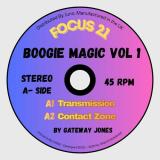
Focus 21 is back with a second sizzling disco drop, this time in the form of 'Boogie Magic Vol 1', which has its feet firmly rooted in the 80s and the iconic machine sounds of that era. All four cuts are super tight and super funky from Gateway Jones, starting with 'Transmission', which is turbocharged with razzle-dazzle. 'Contact Zone' is slightly deeper and more sensuous with its playful synths and wriggling baseline. 'Non - Physical Boogie' is a taught stepper with loose claps and funky licks, then 'Midnight Call' closes with more of the same - feel good, uplifting but classy and sophisticated disco-boogie brilliance. A vital EP full of craft.
RAWAX proudly welcomes Khan to the artist family! We are very happy to present you this outstanding artist on his own series with new, past and present music. Starting with Khan feat. Julee Cruise - Say Goodbye from 2002 - originally released on iconic Playhouse! Besides the great remixes by LoSoul and Rework, our version features for the first time the unreleased Isolée Mix - highly recommended!
Ten years ago, in a sharehouse on Chapel Street, four 20-year-olds with zero expectations wrote and recorded an EP in a single afternoon. Those six blistering minutes of music became Giddy Up. An hour later, Amyl and The Sniffers had a name, a Bandcamp upload, and the beginnings of a legacy.
Following a year of backyard gigs, playing for friends and partying across Melbourne's sticky carpet music scene, the band released their iconic second EP Big Attraction in 2017.
Now, to celebrate a decade of raw power and reckless spirit, Giddy Up/Big Attraction returns in a definitive 10th anniversary 12-inch vinyl edition — fully remastered for maximum punch.
Featuring early classics like “I’m Not A Loser” and “Stole My Pushbike,” plus enduring live favourites “Balaclava Lover Boogie” and “Westgate,” this is the sound of Amyl and The Sniffers before the world caught up — feral, funny, and unstoppable.
The LP is housed in a gatefold sleeve showcasing Chris Sutherland’s iconic 2017 band photo, alongside an exclusive new essay from Amy Taylor and a heap of never-before-seen behind-the-scenes shots from the band’s earliest days by Jamie Wdziekonski. As Amy recalls: “We recorded and wrote over the afternoon… we’d never played together before that day… it’s spontaneous, and fun and achievable in that time because to us it sounded more than good and we weren’t perfectionists and it didn’t matter.”
From DIY house shows in Melbourne to international stages, it all started here.
"I got to know visual artist, musician, and producer Guido Erfen and sound engineer, acoustic artist, and percussionist Michael Springer as part of a group of five by the name of SHM1. The members of the group organised concerts at Rhenania, a disused grain silo, where I performed with The Absurd in 1988 and 1989. The band was also featured on one of Erfen's tape releases. Erfen and Springer met when they were still at the same secondary school and soon became close friends and musical allies. With the other members of SHM they built an independent network for creating and distributing music beyond the mainstream in Cologne. Rent at Rhenania was incredibly low, allowing a recording studio to be established there.
The first traces of the Ukrainian Underground arrived at Erfen's door via a cassette tape with three bands from Kharkiv and Kyiv, the package including a long essay which detailed the rock scene in the two cities by Sergey Myasoyedow. In 1986, Myasoyedow, together with Sasha Panchenko, had founded the “Novaya Scena“ rock club in Kharkiv, presenting bands inspired by punk, the avant-garde, dadaism, and even medieval melodies. If Erfen hadn't been part of the independent mail-art scene, he wouldn't have had the chance to discover this unorthodox music. It was the summer of 1990, shortly before the Soviet Union collapsed and Ukraine became an independent state the following year.
In 1991, singer and keyboard player Soloveyka from Kharkiv arrived in Cologne and gave Erfen half a dozen cassettes with underground bands from Ukraine and a handful with bands from the Soviet Union. Intrigued by the original music of many of the acts, he visited Ukraine twice, made friends there, compiled a tape with his favourite tracks and finally succeeded in convincing Hamburg label boss Alfred Hilsberg to present underground music from Ukraine on the CD “Novaya Scena“ via his label What's So Funny About (the original home of Einstürzende Neubauten).
The album compiled 20 tracks recorded between 1986 and 1992 by 14 bands out of Kharkiv and Kyiv– music beyond the usual Perestroika records, often with jarring dissonances over grooves that fans of Captain Beefheart or The Fall would certainly enjoy.
On the other hand, there are tracks featuring flute and trumpet that seem inspired by folk, classical music, and punk. Ghostly chamber prog miniatures by Cukor Belaya Smert (lit. Sugar White Death) from Kyiv featuring, among others, the classically trained pianist and singer Svitlana Nianio (née Ochrimenko) and guitarist, visual artist, and spokesman Yewgeny "Yenia" Taran. Nianio sang in her native Ukrainian, as did two more of the bands. Today, this seems more relevant than ever, more culturally and historically significant from a Ukrainian point of view than it was even in 1993. Young Ukrainians were amazed at that time that rock music sung in their native tongue could work!
It is in the aftermath of the “Novaya Scena“ album that the music on this LP was created. About a year after the release of the CD in August 1993, Nianio and Taran came to Cologne to work on music for the dance production "Transilvania Smile" by the dance theatre ensemble Pentamonia2.
The seeds for the Traces of Ukrainian Underground in Cologne were sown. Starting in 1994, a series of informal recording sessions took place at Michael Springer’s Phanton Studio and at SHM studio in Rhenania. Together, these sessions formed the basis of the four different incarnations of the Ukraine-Cologne connection heard on STROOMS’s compilation.
Sometimes the title of an album tells you everything you need to know. Laurence Pike’s Possible Utopias for Jazz Quintet is like that: The music within represents a search for freedom, potentiality—liberatory strategies that transcend the ego and the solitary, atomized figure.
But in this case, the album title is also a red herring, because there is no jazz quintet here—just Pike, his drums, and his machines, not so much an ersatz ensemble as a purely notional one, a thought experiment equipped with drumsticks, circuitry, and the desire to go beyond hardwired limits.
And the results, strictly speaking, aren’t really jazz, though they incorporate the vocabulary of jazz, along with that of ambient, electronica, and post-rock. They are some other thing, cognizant of genre but never beholden to it. Again, we’re talking about a search for freedom here.
The Sydney-based musician has a long history of coloring outside the lines, not just in his solo recordings—including four albums for the Leaf label between 2018 and 2024—but also in the trio Pivot (later PVT); Szun Waves (alongside saxophonist Jack Wyllie and Border Community’s Luke Abbott); Triosk, which recorded an album with Jan Jelinek in 2003; and even post-punk titans Liars, whom he joined in late 2018.
Of his first album for Balmat, Pike says, “My loose concept was: What does music sound like when the expectations of late capitalism are removed from it? How might a jazz musician from an idealised culture of the future, or even another world, utilise musical language when the conventions of style and marketing are no longer a factor in music making?”
That inquiry, he says, connects to his “guiding principle: that the purpose of music is to access something bigger than the individual, and reveal a sense of possibility and freedom in the world to the listener. To create an understanding that the future can be something other than what we imagined or expect, even unconsciously.”
Heady ideas, but plug into his stream-of-metaconsciousness flow and you may start to intuit what motivates him. There is a deeply lyrical expression in these pieces—in the ruminative piano of opener “Guardians of Memory,” for example—but also a sense of exploded perspective, of ideas approached from more angles than any one mind could dream up. Of a collectivized consciousness, of mycelial networks branching across tone and rhythm and timbre, of ideas articulated in distributed fashion, nodal points dancing across drum heads.
Pike’s imaginary quintet is hardly without precedent; it’s a continuation of concepts floated across Jan Jelinek’s Loop-Finding-Jazz-Records, Burnt Friedman’s many guises, and much of the recombinant improv of the International Anthem roster, not to mention the far corners of ECM’s catalog in the late 1970s and 1980s, which Pike says have been integral to his development since he was a teenager. Possible Utopias for Jazz Quintet is a point in a continuum, a voice in a conversation, a question with no obvious answer: How can the search for otherness in music manifest something true about ourselves?
For the next installment in the Voyager Recordings series, we have rising Belgian star Carmelo Ponente taking control. Carmelo delivers a solid album of 7 tracks of layered sci fi sounds, with punch, in order for the dancefloor.
Carmelo has most recently released on Loopania Records with Oliver Rosemann, released on Illegal Alien, Solitar, Newrythmic, TMM and Subsist to name but a few labels that has showcased his layered sounds. Carmelo is very modular focused, and you can hear this in his signature sound.
Mit „My Italian Songbook“ veröffentlicht Giovanni Zarrella im März 2027 sein bislang persönlichstes Album. Darauf interpretiert er ausgewählte Klassiker und prägende Lieblingslieder neu – mit italienischer Leidenschaft, der Eleganz großer Crooner und einem organischen Bandsound. Ein Großteil des Albums entstand mit Star-Produzent Bob Rock und einer herausragenden Band in Vancouver. Eine musikalische Reise zu Familie, Heimat und den Liedern, die ein Leben lang bleiben. 2LP Colored-Vinyl - streng limitiert.
Bahamadia’s 1996 debut album Kollage is rightly regarded as one of the greatest rap albums of the 1990s. For the first time ever, Be With present the definitive double LP version of this eternal hip-hop classic, including the legendary "Path To Rhythm" which never appeared on the original LP or on vinyl, anywhere. An indelible VIBE from start-to-finish, Kollage presents Bahamadia's swirling rhymes delivered with an irresistibly butter flow and razor-sharp assuredness over a steady slew of smoothed-out, jazzed-up, blunted beats. Achingly cool and effortlessly funky throughout, it's an absolute must for true 90s hip-hop fanatics.
The entire Kollage project was recorded at D&D Studios and the ties to Gang Starr are keenly felt, with DJ Premier producing five tracks in addition to the killer songs Guru had already produced with her. Working with the cream of the mid-90s East Coast sound, Kollage is, accordingly, a record that demonstrates a varied musical taste with disparate influences, as Bahamadia has previously stated: “The title Kollage was a reflection of my state of mind. I first got interested in music from playing my parents’ and grandparents’ records, as well what I heard on the radio. I wanted Kollage to reflect that diversity both lyrically and sonically."
With intelligent, poetic lyricism and a laconic verbal style bursting with both warm texture and deceptive energy, Bahamadia’s flow was as inspired by Aretha and Nancy Wilson as it was Q-Tip, Schoolly D and Lady B. Swaggering out the gate, "WordPlay" finds Bahamadia confidently showcasing her considerable old-school battle-rhyme skills over a Guru beat that utilises an infectiously bouncy bassline with splashes of sultry jazz horns and a Jeru vocal snatch for the hook. Up next, the quietly shimmering and ruggedly beautiful "Spontaneity" is one of the most alluring on the record, Da Beatminerz crafting a brilliantly soulful and jazzy soundscape for Bahamadia's effortless vocals to float across. It's followed by "Rugged Ruff", where the rapper carefully constructs a swift off-beat flow over Premier's raw jazzy fire.
With smooth spacey synth vibes overseen by former Geto Boys producer N.O. Joe, "I Confess" is, without question, a fly love song and soothing (p)-funk groove. "UKNOWHOWWEDU" is an airy, chilled tribute to her hometown. Produced by Ski Beatz & DJ Redhanded, it rides a gloriously mellow break. It's a true Philly anthem, shouting out a who’s who of the entire city’s scene. Early banger "Total Wreck" follows, presenting a murky Guru instrumental elevated by jazzy horns. Bahamadia invokes the title's suggestion, firing her brilliant bars more aggressively than we’re accustomed to. More Beatminerz-brilliance comes in the way of "Innovation", an opportunity for the MC to invoke Freestyle Fellowship in her forward-thinking and literary verses. "Da Jawn" features hometown buddies The Roots, with Black Thought gliding into a back-and-forth with Bahamadia over ?uestlove’s warm, snapping percussion. With the strut club banger "True Honey Buns (Dat Freak Sh*t)", DJ Premier provides some laidback vibrant boom bap for Bahamadia to share a wild, cautionary tale about a night out with her girl, Kia.
Fan favourite "3 Tha Hard Way" is a hypnotically sinister cut, with Bahamadia, K-Swift and Mecca Star taking star turns to coast over DJ Premier’s raw beat whilst the tender "Biggest Part Of Me" is a heartfelt stunner dedicated to her son. Incredibly, only the European and Japanese CD versions of Kollage was released with the brilliantly breezy “Path To Rhythm”, featuring Ursula Rucker. Whilst ostensibly a "bonus track", it's anything but, to our ears. Very much in sonic conversation with KRS-One's stretched-out sleeper classic "Higher Level", it's absolutely essential so we had to include it, appearing on wax for the first time here, exclusively. Quite a coup.
Somewhat predictably, whilst Kollage was released to significant critical acclaim, it suffered from disappointing sales. In the intervening years - and for far too long - it was a criminally underrated record, an increasingly hidden gem. We hope this double LP reissue - which looks and sounds amazing - will go some way to correct this. This 2024 Be With double LP re-issue has been mastered for vinyl by Simon Francis, cut by Cicely Balston and pressed at Record Industry. It's too bold and beautiful to remain overlooked and underserved.
Straight from the backseat of a tinted SUV and into the headphones of every die-hard fan from the West Side to the coast, LUCKI returns with Dr*gs R Bad—a title that’s half-ironic, half-exhausted, and 100% Tune. This isn't a PSA; it’s a high-speed, low-pass filtered look at a life where the designer denim is heavy and the heart is even heavier. Drowning in those signature ethereal, space-trap melodies that sound like a 4:00 AM fever dream, LUCKI trades his usual nonchalance for a raw, "out of luck" transparency that reminds his cult following why he’s the undisputed king of the heartbreak flex. It’s the soundtrack for the late-night drives and the "everything’s a movie" lifestyle where the credits are starting to blur, proving once again that nobody captures the beautiful, nihilistic chaos of the climb quite like Neptune.
Despite the thousands of kilometers between them, Monterrey and Medellín have always seemed to move in parallel. Both cities rise around guardian hills that watch over their people, and if you look closer, even the concrete that forms the backbone of each city traces back to these rugged metropolises.
The list of coincidences could go on—small, almost conspiratorial links that chance has woven between the two places. Adding another chapter to this unlikely connection is Regal86, who had already crossed the bridge once before to dive into the depths of Colombia’s “city of eternal spring.”
Doble Filo, his first full-length cut to vinyl, now becomes his latest calling card. The eighth release on Discos Nutabe’s catalog arrives with six tracks—six sharp-edged pieces that lay bare Regal86’s sonic marginality.
It’s a form of exclusion that isn’t imposed but chosen, a deliberate stance to sidestep the demand for exotica that still shapes much of Latin America’s electronic landscape. This is spicy, rough-edged techno—ruleless and unruly—driven by dense, clipped progressions that plunge you into a vortex masquerading as a rayado ritual.
There’s no overload of concept here, nor any caricature of the extravagant. This album simply delivers music built to tear through any club or dive, without false promises or unnecessary labels. If there’s one thing worth highlighting about Doble Filo as a whole, it’s the way it consistently—and almost implicitly—reasserts its core premise from start to finish: these techno tracks are meant to be played wherever the hell you want.
In a moment when oddities tend to be rewarded more than usual, Doble Filo doubles down on fundamentals, reclaiming the spirit of early electronic music and carrying it into an era where immediacy seems intent on blurring the honesty of those who shape the sound.
For Regal86, sonic hustle is the only thing that keeps his spirit steady.
We are pleased to announce the first FEX live album, Don't Look Back. The release features selected recordings from two concerts in Paderborn and Uelzen, both captured in 1985. All tracks on the album are previously unissued, including entirely unheard songs such as It's a Hard Life, Just Get Back, Legend, and Waiting Song, alongside a previously unreleased version of Subways of Your Mind, widely known as "The Most Mysterious Song on the Internet."
One of the most striking aspects of the album is the remarkable sound quality of the live recordings, as well as the strength of the performances themselves - particularly given that FEX were still considered a newcomer band at the time. The four-piece lineup consisted of singer, guitarist, and primary songwriter Ture Rückwardt, Michael Hädrich on keyboards and occasional second guitar, Norbert Ziermann on bass, and Hans-Reimer Sievers on drums. In 1985, the band was preparing for broader exposure through a nationwide tour organized by the small promotion company HBM-Musikbüro.
The album opens with the psychedelic Skyscraper, a track Rückwardt reportedly regarded as a personal favorite to perform. Hädrich contributes dynamic synthesizer layers, while Ziermann underpins the track with a distinctive slap bass groove. This is followed by the energetic rock number It's a Hard Life, which once again demonstrates that the band possessed multiple songs capable of matching the impact of their best known track Subways of Your Mind.
After this energetic opening, the album shifts into a more restrained mood with the synth-pop ballad I Got My Eyes On You. It is followed by Strange Feeling, presented here in a particularly compelling live version that arguably surpasses the previously released studio demo featured on the Skyscraper LP, with Rückwardt delivering one of his most expressive vocal performances. On Goldrush, another fan favorite, it is Hädrich's DX7 synthesizer work that stands out.
Don't Look Back continues to flow seamlessly, moving between styles such as new wave, synth pop, and a blues-influenced form of classic rock. On It's Good To Know, a song addressing the theme of stardom, the band returns to a heavier rock sound. In contrast, the synth-driven Just Get Back reflects on the conflict in Northern Ireland, then ongoing at the time. Lines such as "It's the money, it's the money why they come along" are directed at mercenary soldiers, while "even Sunday's a killing time" directly references Sunday Bloody Sunday by U2.
Previously known songs such as Dirty Slapstick and Heart in Danger lead into We Don't Want It No More, perhaps the band's most striking pop ballad. It is easy to imagine that the track had the potential to achieve radio success in the 1980s. The following piece, the epic Legend, explores themes of loneliness and love simultaneously. With poetic and abstract lines such as "some isolate in the falling rain" and "that's why I count all the reasons they call out for living, sadness is falling inside," it builds an almost eerie atmosphere.
One of the final highlights of the album is Subways of Your Mind, recorded in Uelzen. In this version, Rückwardt's vocal performance is even more on point than on the previously issued recording from Paderborn. Another notable moment is the driving, 1970s-inspired rock 'n' roll track Waiting Song. Both the composition and its live performance carry an energy that could easily stand alongside the repertoire of bands such as AC/DC. It was usually the track that FEX ended their concerts with, calling out each band member at the end of the song.
This leads to a broader reflection: it is striking that FEX did not achieve a wider breakthrough at the time. The performances captured here suggest a band capable of delivering consistently, song by song, note by note. It is not difficult to imagine FEX performing in large venues and engaging sizeable audiences. In reality, however, most performances in 1985 took place in front of relatively small crowds. The recordings featured on this album originate from the Roxy club in Paderborn and a small, unknown venue in Uelzen, likely in front of fewer than fifty attendees.
An essential figure behind these recordings is the engineer known only under his nickname Hase (German for "rabbit"), who was responsible for capturing not only these concerts but many other surviving FEX recordings. Bringing his own mixing desk to performances, he developed a deep familiarity with the band's material and was able to shape the live sound with precision, including the timely use of vocal effects. The original recordings existed only on cassette and required careful and extensive restoration work. Zoey Cairs was finally responsible for bringing them to their present quality.
This album marks the beginning of the Live Waves series, following the rediscovery of additional recordings that have gained international attention since November 2024, when they surfaced through what has been described as the largest "lost wave" music search to date. The title of this first live LP Don't Look Back carries a certain paradox. While the album invites listeners to revisit recordings from forty years ago, FEX themselves were always oriented toward the future. In that spirit, further releases of brand new material are already planned.
The cover artwork is once again based on an image by Magnussen from the Kiel archive, depicting the Prinz-Heinrich-Brücke. The bridge, once located in the northern part of the city, no longer exists. As a symbol, however, it remains fitting: a bridge stands for movement and connection - qualities that FEX sought to embody on tour, bringing their music to different places and audiences.
High-definition world building collides with incisive physical urgency around 170 BPM as Pianeti Sintetici makes his first appearance on Samurai Music. Davide Perrone's vivid production style found a more downtempo outlet on last year's release for Samurai sub label Saibai, but he pivots naturally towards the weightier presence of the Exoverse with a richly rendered suite of sonic systems teeming with life and pockmarked with mystery. The spacious drums that lead on 'Agilus' have an acoustic, in-the-room quality that instantly grounds the track before the myriad layers of synthesis start spiralling skywards, pitting twinkling pads against rapid, undulating acid wielded with assured control. By way of contrast 'Mimoide' burrows downwards, using needlepoint marks to puncture the brooding beds of sound looming in the middle distance. At the same time, Perrone weaves lithe, rubbery shapes across the foreground of the mix for a three-dimensional expression you can almost reach out and touch. Opening up a B side tipped towards a mellower pace, 'Living Plasma' leans into a 4/4 meditation as a vessel for another distinctive tapestry of modulating sound design from Perrone's seemingly infinite sonic resources. 'Exoverse' edges towards a more melodic standpoint with its teased flutters of arpeggio that sneak in and out of the mix and a harmonic dimension to the atmospheric layers that shape out the size of the track. Across all four pieces, the sheer detail at play in the Pianeti Sintetici universe is mind-boggling. By rights it should be a busy, stress-inducing experience, but Perrone's gift lies in the ability to take a macro view on these incredibly complex creations, zooming out by boiling the parts down into a symbiotic whole that feels patient and considered. The reward for the listener comes from taking the time to zoom in and marvel at every micro detail writhing across the surface.
Pour Me, My Friend, The Nectar of Dionysus PCM004 is a vibrant four-track exploration of deep tech house, crafted with elegance, groove, and an undeniable sense of joy. Rooted in musicality and designed for the dancefloor, this release blends warm, jazz-tinged elements with modern production finesse, offering a rich and uplifting listening experience from start to finish.
On Side A, A1. Andrey Djackonda – Never Disappear and A2. Deep District – Back Room introduce a welcoming atmosphere built on smooth progressions, refined hi-hat work, and dreamy pad textures. The grooves are fluid and inviting, supported by strong basslines and a playful spirit that sets a positive tone from the very first moments — perfect for drawing people onto the dancefloor with ease and charm.
The B-side raises the intensity. B1. Anirr – Still Trying to Be Perfect and B2. Andrey Djackonda – Refresh shift into a more driving, peak-time energy, where tighter rhythms and increased momentum take control. These tracks carry a confident push, designed for those moments when the room is fully alive and the energy calls for a stronger, more direct connection.
Balancing warmth, groove, and power, PCM004 is a well-rounded and versatile EP — an essential addition for those who appreciate house music in its most expressive, dancefloor-ready form.
Panna Cotta Music is a division of MixCult Records
This reissue of ENV001 "Premise EP" is remastered from the original tapes and features the original artwork by Todd Sines. Featuring a remix from The Connection Machine, the 1995 EP was recorded in Ohio and originally mastered inDetroit by the legendary Ron Murphy. The release marked the end of four years of Geist living the midwest and his return to the metro area of New York City, a dramatic shift that would soon be reflected in Environ's sound.
In 1994, with only a single 12" in his discography, Morgan Geist decided to start his own record label. His debut on Dan Curtin's Metamorphic label was inspired by the sounds of Detroit techno and Chicago house. But Geist was equally fascinated by UK imports from labels like Warp, B12, and ART. He sought to combine these inspirations on the first release of his new label, Environ. Featuring a remix from The Connection Machine, whose unique "Bitflower" was released the year before on Carl Craig's Planet E, "Premise EP" (1995) was recorded in Ohio and mastered in Detroit by the legendary Ron Murphy. The release also marked the end of four years of Geist living the midwest and his return to the metro area of New York City, a dramatic shift that would soon be reflected in Environ's sound. This reissue of ENV001 "Premise EP" is remastered from the original tapes and features the original artwork by Todd Sines.
Wewantsounds is delighted to continue its extensive reissue program of Meiko Kaji"s early discography, originally released by Teichiku Records in Japan between 1972 and 1974. The Quentin Tarantino muse-famous for her starring roles in Lady Snowblood and Stray Cat Rock-was also a gifted singer. Otoko Onna Kokoro No Aika is another collection of superb cinematic songs featuring Kaji"s signature mix of Japanese Pop and Groove, backed by lush, atmospheric orchestrations. This includes her rendition of "Tokyo Nagare Mono," the theme song for Seijun Suzuki"s cult 1966 film Tokyo Drifter. This reissue features the original artwork, an OBI strip, and a four-page insert with new liner notes by Hashim Kotaro Bharoocha, who interviewed Meiko Kaji for the occasion.