In the smoggy orange light of a new millennium, the young Deb Demure would take the bus, once a week, from his home in crumbling Hollywood to his grandmother's apartment, nestled in the pastel pristineness of Beverly Hills. During these visits, Deb couldn't help but notice the disconnect between the glow of his grandmother's temple, and the downtrodden, alienated figures that populated the seats of the mass transit that took him there. Week after week, he would observe these characters: fading B-movie starlets, leisure-suited alcoholics and forgotten civil servants. But one fateful commute home, as the twilight waned to the purple Los Angeles night, he realized these figures were not as lost as they appeared - there was a nobility in their failure, reflective of the dignity of the city's vanishing golden era. They were survivors, in need of a voice: a spokesperson for every color of hope and hopelessness, transcendent of gender and time; Drab Majesty became Deb's musical podium for this undertaking. Raised in a music-centric household, Deb would find the time to teach himself to play his father's right-handed guitar upside down and left-handed; an unorthodox fashion from where his earliest understanding of chords and harmony were conceived. Exploring the bins of discarded vinyl in his neighborhood thrift stores, his toolkit expanded with the subterranean sonic gems of the recent past. Influences range from the virtuosic arpeggiated guitar work of Felt's Maurice Deebank and the grittier pop progressions of Red Lorry Yellow Lorry's Chris Reed as well as Steve Severin from Siouxsie and The Banshees. He also studied the harmonic oscillations and utilization of the occult power of vibratory frequency present in New Age sounds of Greek artist, IASOS. In terms of orchestration, he consciously culls from the seaside maximalism of Martin Dupont and mechanized grooves of early Depeche Mode. Like a dualistic pendulum, his vocals swing from a preistly baritone to a choir boy's falsetto reflecting the sepulchral ambiance of church visits with his grandmother. Currently the drummer for Los Angeles lo-fi rock ensemble Marriages and having honed an unorthodox home recording style, Deb sources his sounds from a repository of "mid-fi" synthesizers and other lesser-quality instruments. Following the release of his debut cassette EP, "Unarian Dances", he also shared a split 12" with synth pop forefathers, Eleven Pond. During the Spring of 2015, Drab Majesty signed with Dais Records and released his first single, Unknown to the I, as a introduction for his first initial foray into the album format, romantically titled Careless. Written over the course of 2 years, "Careless" is a compendium of songs that have outlasted a malicious burglary of his studio, his struggles with substance addiction, and most recently, the death of his beloved grandmother.
quête:g swing
- Je Suis Sans Toi
- Rendez-Vous D'automne
- La Dernière Valse
- Le Lendemain
- Un Amour, Un Sourire, Une Fleur
- Corcovado
- Gua De Beber
- Berimbau
- Vivo Sonhando
- Fever
- Garota De Ipanema
- So Nice
- Las Flores Nuevas
- Y Hoy Te Vi
- Esa Tristeza
- Mejor Me Voy
Born as Diana Reches, Diane Denoir made her debut as a singer in 1966, backed by Eduardo Mateo on guitar. Influenced by Françoise Hardy and Astrud Gilberto, along with her own unique style, she performed a special blend of chanson française, bossa nova (sung in Portuguese, English, and French), and jazz. By then, Mateo was already a well-known guitarist in the Uruguayan music scene and a sought-after arranger. He was also beginning to establish himself as an incredible songwriter, connecting different musical universes in unique ways. The two formed a fruitful artistic partnership that lasted until the early seventies. This album, originally released in 1998 on CD, is a compilation of various unreleased recordings from different sources (concerts, radio and TV recordings, homemade tapes) made between 1966 and 1968. It is a unique document that showcases their incredible musicianship and creativity in their early years. The duo swings from bossa nova classics like "The Girl from Ipanema" to the rhythm and blues of "Fever," including chanson française standards like "Le lendemain" and "La Dernière Valse." The album also features earlier versions of the three best-known Mateo songs performed by Diane: "Y hoy te vi," "Esa tristeza," and "Mejor me voy," all of which were inspired by Diane. Inéditas unveils a new dimension of South American music from an unforgettable era.
- A1: Strip-Tease
- A2: Wake Me Up At Five
- A3: Solitude
- A4: At Maxim's
- A5: Rafa Temporel
- A6: Ariane Audition
- A7: Some Small Chance
- A8: Safari
- A9: Bath Dance
- A10: Serge At Sam's
- B1: Strip-Tease Instrumental
- B2: At Elephant Blanc
- B3: Pourpée La Rose
- B4: Effeuillage
- B5: Serge And Sam
- B6: Crazy-Horse Swing
- B7: Hurry
- B8: Strip-Tease Piano
- B9: Rendez-Vous A La Calavados
- A1: Charlie Parker - Roomance Without Finance (Mg9022)
- A2: Dexter Gordon - Dexter's Minor Mad (Mg9022)
- A3: J J. Johnson - Jay Bird (Mg9022)
- B1: Milt Jackson - Hearing Bells (Mg9022)
- B2: Leo Parker - Chase 'N' Lion (Chase'n The Lion) (Mg9022)
- B3: Stan Getz - Stan's Mood (Mg9022)
- A1: Fats Navarro - Hollerin' And Screamin' (Fatso) (Mg9023)
- A2: Allen Eager - Church Mouse (Mg9023)
- A3: Kai Winding - Always (Mg9023)
- B1: Don Byas - Byas A Drink (Mg9023)
- B2: J J. Johnson - Jay Joy (Mg9023)
- B3: Dexter Gordon - Long Tall Dexter (Mg9023)
- A1: Budd Johnson - Little Benny (King Kong) (Mg9024)
- A2: J J. Johnson - Mad Be Bop (Mg9024)
- A3: Milt Jackson - Bubu (Mg9024)
- B1: Leo Parker - Solitude (Mg9024)
- B2: Stan Getz - Don't Worry 'Bout Me (Mg9024)
- B3: Fats Navarro - Maternity (Lard Pot) (Mg9024)
- A1: Allen Eager - Donald Jay (Mg9025)
- A2: Kai Winding - Saxon (Mg9025)
- A3: Budd Johnson - Dee Dee's Dance (Mg9025)
- B1: J J. Johnson - Coppin' The Bop (Mg9025)
- B2: Milt Jackson - Junior (Mg9025)
- B3: Dexter Gordon - Dexter Digs In (Mg9025)
- A3: Eddie "Lockjaw" Davis - Stealin' Trash (Mg9026)
- B1: Roy Porter - Pete's Beat (Mg9026)
- B2: Serge Chaloff - Pumpernickel (Mg9026)
- B3: Morris Lane - Blowin' For Kicks (Mg9026)
- A1: Allen Eager - Unmeditated (Mg9026)
- A2: Leo Parker - The Lion's Roar (Lion Roars) (Mg9026)
”The Birth of Bop” kann ab heute hier vorbestellt werden und erscheint am 31. März in verschiedenen Formaten, darunter ein Vinyl-Boxset mit fünf 10-Zoll-LPs, ein 2-CD-Format und digitale Editionen. Jeder Titel der Sammlung wurde von Joe Tarantino bei Joe Tarantino Mastering frisch restauriert und neu gemastert, während die physischen Formate neue, ausführliche Liner Notes des GRAMMY-gekrönten Autors und Moderators Neil Tesser sowie alte Fotos aus dieser Zeit enthalten. Es ist eine unverzichtbare Einführung in
diese wichtige Periode der Jazzmusik: The Savoy 10-Inch LP Collection enthält 30 ausgewählte Aufnahmen von vielen der Pioniere des Genres, darunter Charlie Parker, Dexter Gordon, Stan Getz, Milt Jackson, Allen Eager, Fats Navarro und viele mehr.
Diese bahnbrechenden Aufnahmen aus den Jahren 1944 bis 1949
trugen maßgeblich zur Entwicklung des modernen Jazz bei und brachten junge Künstler dazu, die Grenzen des Genres in einer Zeit zu erforschen, in der Swingmusik der vorherrschende Sound war und Big Bands den Äther beherrschten.
Nick Bike hops aboard his groove machine once again here for another superb run out, this time with his Italian mate Stan Brega on Chosen Spokes. 'Big Bizniss' gets going with a super cool and laid back downtempo, disco and funky fusion. Lavish horns, cowbells, sultry chords and effortlessly vibey vocals all make it an instantly lovable and hip-swinging summer classic. Flip it over and you'll find 'Forever & Ever', which is an epic, cosmic, Balearic, ambient and blissed out cover of a David Bowie mega-hit. Proggy guitars draw out the me option and make it a perfect end of the night tune to send people home teary-eyed but euphoric.
Saxophonist, flautist and producer Chip Wickham casts a formidable shadow across the worldwide jazz landscape. Originally from Brighton, but now dividing his time between the UK, Spain and the Middle-East, he has made a name for himself with a series of beautifully crafted solo albums that draw equally on the hard swinging spiritual jazz of Roland Kirk, Yusef Lateef and Sahih Shihab, alongside the music of British jazz legends such as Tubby Hayes and Harold McNair and the more contemporary sounds of Jazzanova, Kyoto Jazz Massive and Robert Glasper. His close working relationship with Matthew Halsall’s Gondwana Records has spanned close to two decades (since he played on Halsall’s 2008 debut ‘Sending My Love’) and has since released three standout releases on the label (the ‘Cloud 10’ LP, and the ‘Astral Travelling’ and ‘Love & Life’ EP’s). Once again returning to the heralded label, he now prepares to release his elegant fifth studio album ‘The Eternal Now’. Further exploring his penchant for hard-hitting soulful, spiritual jazz and modal hard-bop, it denotes an exciting new chapter in his much- revered discography, once which sees his unbridled artist flourish into new and fruitful pastures.
A beautifully crafted record, ‘The Eternal Now’ is a heartfelt ode to submitting oneself to the practice of creating art, and the freedom that’s derived from letting go. Speaking on his journey to bringing it into the world, Chip explains “The Eternal Now is a creative place where time has no purpose. A place where the past and the future don’t exist. A place where an artist can create something that is timeless and relevant. Writing this album has been a deliberate journey of exploration and drive into the furthest reaches of creativity. An attempt to push myself artistically into new spaces using new colours and new energy”. On how he approached this record in comparison to his previous offerings, he divulges ‘I had to be playful and take risks. It has taken longer than any other album to make and it has been so worth it. I have been drifting and taking the road less travelled as well as not looking back. I’ve enjoyed being on the outside and the freedom it has brought me to create something new and fresh and relevant and timeless.’
In the smoggy orange light of a new millennium, the young Deb Demure would take the bus, once a week, from his home in crumbling Hollywood to his grandmother's apartment, nestled in the pastel pristineness of Beverly Hills. During these visits, Deb couldn't help but notice the disconnect between the glow of his grandmother's temple, and the downtrodden, alienated figures that populated the seats of the mass transit that took him there. Week after week, he would observe these characters: fading B-movie starlets, leisure-suited alcoholics and forgotten civil servants. But one fateful commute home, as the twilight waned to the purple Los Angeles night, he realized these figures were not as lost as they appeared - there was a nobility in their failure, reflective of the dignity of the city's vanishing golden era. They were survivors, in need of a voice: a spokesperson for every color of hope and hopelessness, transcendent of gender and time; Drab Majesty became Deb's musical podium for this undertaking. Raised in a music-centric household, Deb would find the time to teach himself to play his father's right-handed guitar upside down and left-handed; an unorthodox fashion from where his earliest understanding of chords and harmony were conceived. Exploring the bins of discarded vinyl in his neighborhood thrift stores, his toolkit expanded with the subterranean sonic gems of the recent past. Influences range from the virtuosic arpeggiated guitar work of Felt's Maurice Deebank and the grittier pop progressions of Red Lorry Yellow Lorry's Chris Reed as well as Steve Severin from Siouxsie and The Banshees. He also studied the harmonic oscillations and utilization of the occult power of vibratory frequency present in New Age sounds of Greek artist, IASOS. In terms of orchestration, he consciously culls from the seaside maximalism of Martin Dupont and mechanized grooves of early Depeche Mode. Like a dualistic pendulum, his vocals swing from a preistly baritone to a choir boy's falsetto reflecting the sepulchral ambiance of church visits with his grandmother. Currently the drummer for Los Angeles lo-fi rock ensemble Marriages and having honed an unorthodox home recording style, Deb sources his sounds from a repository of "mid-fi" synthesizers and other lesser-quality instruments. Following the release of his debut cassette EP, "Unarian Dances", he also shared a split 12" with synth pop forefathers, Eleven Pond. During the Spring of 2015, Drab Majesty signed with Dais Records and released his first single, Unknown to the I, as a introduction for his first initial foray into the album format, romantically titled Careless. Written over the course of 2 years, "Careless" is a compendium of songs that have outlasted a malicious burglary of his studio, his struggles with substance addiction, and most recently, the death of his beloved grandmother.
Der Deutsch-Amerikaner Chris Hopkins, mehrfach preisgekrönter und mit bisher über 5000 Konzerten meisttourender Swing-Jazzer des Landes, stand seit den 90er Jahren selbst oft als jüngstes Bandmitglied auf der Bühne.
Jetzt freut er sich, zum ersten Mal einige der talentiertesten Jazz-MusikerInnen einer neuen Generation - u.a. entdeckt im Rahmen seiner Dozententätigkeit an der Hochschule für Musik in Köln und allesamt zwischen 23 und 33 Jahren jung - die „Young Lions“ und ihr nagelneues Album zu präsentieren: „CHRIS HOPKINS meets the YOUNG LIONS: Live! Vol. 1“
Ein lässig-elegantes, mitreißendes Konzert mit Gute Laune Garantie.
Dennis Quin is a Dutch talent who does it all from thumping tech to deep house on labels like Defected, Madhouse Records and PIV. He now steps up to the Slabs label run by Dungen Meat duo Brawther and Tristan Da Cunha with a swinging garage two-tracker. 'Farmette' has nice sleazy bass and drum combinations with razor-sharp hi-hats and rolling bass that never quits. 'Ode To Todd' has a more skippy rhythm but still keeps you locked with a fat low end. Some vocal chops and percolating synths bring further energy to this irresistible club cut. Another fine outing from Quin.
For many bands, having all their gear stolen would be catastrophic. For Third Ear Band, this unfortunate 1968 incident opened a portal to beneficial change. Leader/percussionist Glen Sweeney viewed the heist as a sign to alter Third Ear Band's approach, and they switched to exclusively using acoustic instruments. With electrified psychedelia in full bloom, Sweeney, Paul Minns (oboe, recorder, whistles, flutes) and Richard Coff (violin, viola) struck out on an individualistic path, blending Indian raga with chamber music – without plugging in.
Third Ear Band's 1969 debut album, Alchemy, established them as a solemn, powerful force in the global underground. On Alchemy, Sweeney laid down a steady pulse on hand drums, while Minns and Coff wove in melismatic patterns on oboe, recorder, violin and viola. This approach carried over to Third Ear Band's self-titled sophomore album, often called Elements due to its track titles being named after the four basic components of medieval European alchemists' doctrines.
On this 1970 LP, Third Ear Band sounded at once ancient and contemporary, yet they turned on the hippies with their epic, trance-inducing jams that suggested secret knowledge of infinity. Although Third Ear Band flourished during the West's countercultural zenith, they were peculiarly estranged from it on a sonic level. Even outré contemporaries such as Comus and Jan Dukes De Grey sounded like pop groups compared to TEB. Having no traditional front person or electric instruments, Third Ear Band forged a singular path that flowered most vividly on Elements.
The long songs here stream forth from their skilled hands, evoking a communal transcendence in sound – a hypnotic swirl that doesn't swing, but rather wafts and undulates with cloistered beauty. TEB's music exists in an eternal now, a perpetual wow. It is an ouroboros of organic textures, seemingly magicked into the air spontaneously, yet possessing a rigor that suggests long hours in the lab. Without electricity, it somehow burrowed deeper into your consciousness.
– Dave Segal (excerpt from the liner notes)
Planet Trip Records is pleased to present Aqua Terra, the latest EP release from Friedrich Trede and Stephan Braun, the respected Munich-based DJ and production duo better known as Rhode & Brown. Since 2010, they’ve racked up a slew of quality releases through Permanent Vacation, Public Possession, Shall Not Fade, and their own Slam City Jams imprint, while playing well-received DJ sets across Europe. Along the way, the two longtime friends have spent the last fifteen years incorporating influences from electro, italo, synth-pop, breakbeat trance, rave music, and ambient into their blend of uptempo house and techno productions.
Shifting gearspeed, Aqua Terra sees Rhode & Brown trying something completely new and unexpected from them: a record inspired by UK street soul, digi-dub, and transatlantic R&B and boogie from the 1980s and 1990s. Beginning with the Loose Ends slanted synthesiser chords and shuffling machine beat of ‘Heart Attack’ and the glossy new jack swing bounce of ‘Passion Sauce’ (both featuring sultry Berlin-based New York singer Marlena Dae), Aqua Terra quickly reveals itself as a treasure chest of heavy tunes. Steeped in love and lust, ‘Heart Attack’ and ‘Passion Sauce’ are essential sing-along numbers for the warm-up and the warm-down.
The exemplar of a groove that keeps on giving, ‘Aqua Terra (Acid Frog Mix)’ is a note-perfect example of digi-dub redone for the 2020s. Keeping us guessing, Rhode & Brown flip the script on ‘Longo Doggo’ by borrowing elements from sampledelic ‘90s turntablism and blending them with a post-disco/electro beat and a slinky bassline for the ages. From there, ‘Multiflora’ sees our protagonists back in a bassy digi-dub mode, before closing things out with an acid breakbeat slanted demo mix of the title track.
Mikro Records proudly marks its debut with a finely crafted 12" release that highlights the label’s commitment to deep, minimal-dub techno. Based between Prague and Berlin, Mikro steps onto the scene with a confident and sophisticated first offering. The EP features three distinct tracks from acclaimed talented producer Gathaspar, whose sound effortlessly blends hypnotic grooves with textured atmospheres. Adding further depth, the release includes a mesmerizing remix by none other than Audio Werner—bringing his signature subtlety and swing to the project. A versatile and timeless record, equally suited for introspective listening or peak-time sets. A must-have for discerning selectors and vinyl enthusiasts alike.
“O(c)tavio’s EP brings together a global crew of producers who all share the same name and a passion for high-quality techno. The A1 kicks off with “Fadeface” by NY based producer Otavio aka Fadeface, a rolling, driving cut that balances weight with groove. A2 follows with a no-nonsense loopy techno heater by Octavio, 1/3 of the Paraguayan group LPZ — pure dancefloor pressure, stripped and effective. On the flip, Argentinian artist Octavio Octavio brings a bit more swing with a groovier B1, still rooted in the floor but with a fluid touch.
Closing things out is a collaborative B2, combining all their styles into one cohesive, heavy-hitting statement. Pressed to vinyl and wrapped in stunning artwork by the talented Brazilian graphic designer Otavio Santiago. Turns out, putting a bunch of O(c)tavios in the studio results in one hell of a techno record.”
- Morena De Verde Luna
- Recordándote
- Con Sabor Español
- Gitano Rock And Roll
- Olé Cha Cha Cha
- España En Cha Cha Cha
- No Volveré Jamás
- La Ltima Copa
- Winds From Spain
- Ojos Verdes
- Achilipú
- Macarenas Mambo
- Muleros Swing
- Los Piconeros
- Con El Bongó
- Desde El Corral De La Pacheca
Flamenco is a Spanish art, which has always been prone to hybridization with a multitude of musical languages. Therefore, the universe of "flamenco fusion" could well reflect the way in which Spaniards have related throughout history with other cultures. And that relationship may have often been one of dialogue, exchange, respect and crossbreeding. Among the circumstances that could have favored the traditional mestizaje of flamenco art is the open character of the south of the Iberian Peninsula, to all the civilizations that have settled in its territories; the encounter with America in 1492, and the brotherhood with the Spanish-speaking countries; that the Casa de contratación de Indias, the entity that regulated the transit between Spain and America for centuries, was founded in none other than... Seville! (and olé); without forgetting the FUNDAMENTAL African contribution, brought to America by millions of black slaves throughout the 400 years of the slave trade. Pícaro vol. 4 is an excellent example of how some Spanish flamenco musicians knew how to take advantage of the fashion of other styles and rhythms coming from outside Spain, creating a new sound universe and incorporating them into their repertoire. Undoubtedly, there is a generational replacement of "flamenco Ye-Ye" in Spain with artists like Rosalía or C. Tangana, although now it will be necessary to modernize "the label". This compilation offers us a snapshot of the multiple styles of flamenco hybridization that triumphed in the world during the decades of the 50's and 60's of the 20th century. Through its microsurcos we will discover immeasurable flamenco ye yé (track 1), flamenco rock & roll (tracks 3 and 4), flamenco cha cha chá (tracks 6, 7 and 15) or flamenco mambo (track 12), together with other unusual, exotic and impossible mixes of Spanish song with tango arrabalero, bluegrass, easy listening, swing, groove or soul. Always a happy mix, which are brought together with exquisite taste in this vinyl for your enjoyment.
More Rice returns with its ninth release and second vinyl drop of the year, delivering a heavy-hitting EP from label cofounder Sarayu. The Don. Mueang. marks his first full solo release on the label since 2021, reaffirming his distinct voice in Asia’s underground dance scene. The A side features two peak-time weapons: no nonsense, bass-driven influenced techno rollers built with the dancefloor firmly in mind and straight to the point. On the flip, trusted More Rice regulars step in on remix duties. O-Wells reimagines Don Vito Bingus with a warm, rolling take that leans into house and tech
house territory, giving the track a smoother, hypnotic swing.
Mogwaa closes out the EP with his Fiesta Mix — an electrified, rhythm-forward version that does exactly what it says on the tin: it bangs. As always, all tracks made for the dancefloor
Earl Jeffers is no stranger to crafting effective, big-hearted sounds. He's got plenty of them dropping in the early part of 2025 too, and all of them are slightly different but equally effective. This latest drop on the Melange Archives label was originally released back in 2013 and starts with 'Monster (feat Kofi Tarris)' which is raw-as-you-like house music at a slow and steady pace but with such energy in the chords and funky guitars that it will blow up any club. 'Thunder & Lightning (feat TOG)' lands a little more heavy. There is garage swing in the drums and plenty of expression in the vocal stabs. Two bombs, for sure.
French producer Saint Paul was raised in Lyon with Ivorian and French heritage and is now based in Reunion Island. He was a founding member of Moonrise Hill Material and continues to refine his style, which is infused with jazz, funk, hip hop and African rhythms. Though built for the dancefloor, it comes rich in introspection that marries energy and soul. This six-track EP on GLBDOM takes in the horn-laced New York house vibes of 'I'm Ur DJ', swinging MAW-esque kicks of 'We Can All Groove With It' and jazz-laced depths of 'Extreme Vibration'. It's an EP full of class and character with the late-night lounge sophistication of 'Elixir De Bons Souvenirs', another highlight.
- 1: Krystal Karrington
- 2: Luchini Aka This Is It
- 3: Park Joint
- 4: B-Side To Hollywood (Featuring Trugoy The Dove Of De La Soul)
- 1: Rockin’ It Aka Spanish Harlem
- 2: Say Word
- 3: Negro League
- 4: Nicky Barnes Aka It’s Alright
- 1: Killin’ Em Softly
- 2: Sparkle
- 3: Black Connection
- 4: Swing
- 1: Black Nostaljack Aka Come On
- 2: Coolie High
- 3: Sparkle (Mr. Midnight Mix
Released in 1997, Uptown Saturday Night is the acclaimed debut album by Bronx hip-hop duo Camp Lo. Known for its smooth blend of jazz- influenced production and 1970s-inspired flair, the album stands as a standout in East Coast hip- hop. Produced primarily by Ski Beatz, the album features lush, nostalgic beats that complement Camp Lo’s unique slang, stylish delivery, and cinematic storytelling.
The lead single, “Luchini AKA This Is It”, became a cult classic, praised for its infectious groove
and sophisticated wordplay. Other highlights like “Coolie High” and “Black Nostaljack AKA Come On” showcase the duo’s charismatic chemistry and retro vibe.
Uptown Saturday Night received critical acclaim for its originality and timeless aesthetic,
cementing Camp Lo’s place in hip-hop history. Its fusion of golden-era rap and soulful funk makes it a must-listen for fans of classic 90s hip-hop and genre-defying creativity.
Uptown Saturday Night is available as a limited edition of 2000 individually numbered copies on translucent blue coloured vinyl.
2026 Repress
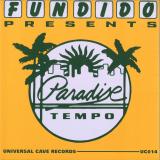
Brooklyn duo Fundido team up with Philadelphia's Universal Cave to press their first physical release titled ‘Paradise Tempo’, a love letter to dance floor music that sits in the cross section of the tougher sounds of the city and the softer sounds of the balearic and the backwoods.The A side kicks off with a flawless downtempo mix from California based Dirty Dave and Alex Pasternak, who find a rare cover of the Cathy Denis classic and refurbish it to perfection. Next up is ‘Emotional Jungle’, a jazzy midtempo weapon led by a massive saxophone hook and edited to optimum club efficiency by NY based Nick Stropko. LA via Serbia’s Masha Mar unearths extremely rare gem ‘Take Me to Mecca’ and reworks it into a dreamy midtempo journey that carries both a children’s choir vocal and a middle eastern synth melody effortlessly across a foggy dance floor. And closing out the A-side is the wonderful ‘Charlie’s Vision’ from Universal Cave, a spooky AOR tinged cosmic trip that is only available on this vinyl pressing.The B Side leads with balearic beach party stomper ‘Amor’ from Fundido themselves; complete with Spanish vocals, lofty piano jamming and a contagious growling bassline. Next up is ‘Sex-O’ from Seoul man Tucan Discos, who reworks a tribal classic into a hypnotic and seductive club mix; followed by ‘Freak Estilo’ from Spain’s Ritmal Astral boss Orion Agassi who offers a bumping freestyle breaks mix with an addictive r&b vocal hook. Last but not least, the ‘Be Careful Operator’ edit from Miles Felix aka Sisserou closes down the function with a block party jam swimming with jazz, swing and soul.When asked what visual imagery they had in mind for Paradise Tempo, the prompt given to artwork maestro Ray Fernandez was ‘salt of the earth utopia’ and ‘working man’s paradise’ … and Ray delivered exactly that. Enjoy Paradise Tempo !