Hess Publica rises again with a new chapter in our journey through trance, breaks, and techno. Gathered on a vinyl adorned with artwork by the talented illustrator and tattoo artist Coline Crétien, six creative minds come depicting some of the most body-shaking and optimistically headnodding facets of the club music spectrum.
Cerca:g tech
- A1: Return Of The Knödler Show 2 52
- A2: The Frogs Of Miwa - Cho (1) 4 52
- A3: Waiting (I) 5 38
- A4: An Old Friend Passes By 3 46
- A5: Coco Bolo Strip (1) 5 25
- B1: Peace And Pipe Utopia 3 14
- B2: Unidentified Dancing Object 1 44
- B3: The Call (I) 2 41
- B4: Wenn Das Rohr Dommelt 4 03
- B5: Mariahilf (Live Version) 3 36
- B6: Watching The Shades (I) 2 59
- B7: Playing The Table Music (Ii) 2 43
- C1: Could Be Nice Too 5 29
- C2: Ox Of Inner Depth 4 51
- C3: Ymir Shows Up 3 58
- C4: Could Be Nice 5 24
- C5: Playing The Table Music (I) 4 23
- D1: Coco Bolo Strip (Ii) 4 52
- D2: Locusts Looking Like Men 5 55
- D3: Waiting (Ii) ︎ 3 36
- D4: No Stove 2 29
- D5: An Old Friend Passes By Again 3 00
- D6: Heimkehr Der Holzböcke 3 16
Black Truffle is thrilled to announce Dalbergia Retusa, an extensive double LP selection of the solo guitar music of Hans Reichel, compiled by Oren Ambarchi. Last heard on Black Truffle as one quarter of the joyously anarchic Bergisch-Brandenburgisches Quartett, Hans Reichel (1949-2011) is one of the great figures of experimental guitar music. Though perhaps lesser known than peers like Derek Bailey, Fred Frith and Keith Rowe, Reichel’s rethinking of the instrument was in some ways the most radical of all. Early on, he dispensed with existing guitars to build a series of his own that explored the use of additional strings and fretboards, moveable pickups, extra bridges, special capos, and other innovations documented in the extensive booklet accompanying this release.
Reichel was a long-term resident of Wuppertal, the small Western Germany city that became an unlikely centre of European free jazz in the late 1960s, also home to Peter Brötzmann and Peter Kowald. His solo debut Wichlinghauser Blues was an early entry into the FMP discography and began a relationship with the label that stretched into the 1990s; all the solo performances heard here were first released on FMP. As Reichel says in the charming archival interview with Markus Müller included here, he was ‘always a cuckoo’s egg at FMP’, a label that began as an outlet for roaring European free jazz. What strikes the listener right from the opening selection on Dalbergia Retusa—‘Return of the Knödler show’, from 1987’s The Dawn of Dachsman—is the extraordinary beauty of Reichel’s music, at once alien in the shimmering sonorities and unconventional pitch relationships made possible by his invented instruments, and deeply lyrical, even romantic in its harmonic content. Growing up in West Germany in the 1960s, Reichel’s formative influences were mainly British and American rock bands, a background that shines through in many of the pieces included here: ‘An old friend passes by’ is haunted by the ghost of Hendrix’s rhythm guitar, and the wild closer ‘Heimkehr der Holzböcke’, taken from a rare 1975 7” and the only piece to use overdubbing, layers errant hammer-on and slide tones over a Canned Heat boogie chug.
Reichel was an important source for the development of Oren Ambarchi’s own extended approach to the electric guitar. Appropriately enough, his selection opens with the very first piece by Reichel he ever heard, on a flexidisc included with a 1989 issue of Guitar Player magazine. Though Reichel collaborated with others extensively in many settings and also performed on violin and his other major contribution to instrument invention, the daxophone, his music for solo guitar remains at the core of his oeuvre. Focusing exclusively on solo pieces recorded between 1973 and 1988, the 23 pieces on Dalbergia Retusa showcase the range and consistency of Reichel’s work, allowing the listener to see how his performances developed hand-in-hand with his instrumental inventions. On a piece from his very first LP, played on an 11-string instrument (partly strung with piano strings and using a schnapps glass a slide), we hear his intensive exploration of fret-hammering to create zither-like, chiming tone, which Reichel would hone further in later years with a double fretboard guitar specifically designed to be hammered rather than fretted and picked. On a piece from 1979’s Death of the Rare Bird Ymir, Reichel uses two steel-string acoustic guitars at once, with beautiful results: ‘some even say too beautiful’, he jokes in the interview included here. Many of the pieces from the 1980s make use of varieties of the ‘pick behind the bridge guitar’, instruments of uncanny harmonic richness primarily designed to be played on the ‘wrong’ side of the bridge. At times the unexpected behaviour of attacks, resonance, and decay can almost seem electronic, conjuring up the technology-assisted work of Henry Kaiser or even Fennesz, but realised solely through Reichel’s unorthodox techniques on his invented instruments. Extensively illustrated with photos and Reichel’s own plans and drawings of his instruments, Dalbergia Retusa is an essential introduction to the unique world of Hans Reichel. Rarely has music been at once so strange and so beautiful.
Sexyrecs 'Third Base' marks a new chapter for the label.
Dutch producer Khas delivers a grounded and more restrained take on techno, built on organic structures, subtle tension and contrasting bleeps that slowly pull you in. It's a toned down approach compared to earlier releases of Sexyrecs, but the groove and sensuality are still very much there.
Berlin duo LYRIC take the remix deep into the details, stretching and reshaping the sounds until they become hypnotic and immersive, adding a darker and more introspective layer to the EP.
Less rush, more control. Still sexy.
Ribe & Roll Dann serve up potent techno on Mutual Rytm with 'Virtus Occulta'.
Built around concepts of unacknowledged work and enduring merit, the release marks their first EP on SHDW's widely
respected label.
Based in Toledo and Madrid, Ribe & Roll Dann are exciting residents at Laster Madrid and Lanna Club, two of Spain's leading venues. Emerging as driving forces in their national techno scene, they have also made an impact on the global landscape, making wider moves through collaborative releases on Klockworks, and individual outings on a number of other influential labels. Having previously featured in the label's Federation of Rytm IV compilation, the pair make their full EP label on SHDW's Mutual Rytm imprint to open March with a deep dive into their expansive sound.
Opener 'Sub Terra' is a pure club tool that is direct, physical and rooted in the underground with a seriously heavy low end. 'Extra Lumen' is more restrained but still built on a steady, forceful rhythm with controlled energy that prefers to operate in the shadows. 'Ars Non Placens' stays true to the idea that music is not made to please, but to exist on its own terms with hunched drums and dubby undercurrents. Next, 'Meritum Negatum' fizzes with static electrical charge and minimal drum funk and is a direct reflection on overlooked skill and unacknowledged work, before closer 'Virtus Persistens' delivers a continuity and a steady pulse rather than an explosive ending, keeping you locked throughout.
In addition, three digital bonus cuts come alongside the vinyl package. 'Labor Inauditus' speaks to hours of technique, production and booth experience that remain invisible. Next come the taught, rubbery rhythms and unrelenting atmosphere of 'Silentium Testium', while 'Sine Aplausu' - which means without applause - brings a ghostly late night vibe that you will never want to end.
Another absolute classic filthy slamming warehouse techno release from Cluster, this time from Sortek & Sam DFL with the fast and furious 'Listen' on the a side, alongside the rugged 'Shit Sandwich'. On the flip we get slightly more synthy and funky on 'Let The Dog See The Rabbit' and 'Soul', but still both absolute bangers!
Commissar Lag - Absolution EP (Earwiggle)
The 38th Earwiggle release comes from one of our favourites, and a debutant on the label, Serbian studio supremo Commissar Lag. The "Absolution EP" finds Lag delivering his playful vision of techno, dipping into the past while also pointing us to the future, all framed through an exquisite production gleam. Dense, rolling rhythms reminiscent of early '00s Stockholm techno, combined with a catchy repeating vocal sequence (one of Lag's trademark techniques) and rising sirens, result in the monster opening title track "Absolution". "Aim Without Mercy" is another club destroyer - jabbing keys, broken jagged beats, and a series of rising pressure points making it another winner. "The Blessed" meanwhile, shifts the mood from mental to majestic, with interchanging leads and reverb-drenched climaxes marking the big-room peak of the record. Rounding things off is Irish wunderkind Dylan Fogarty, who reimagines "Aim Without Mercy" through a deep and psychedelic lens, layering textural collages over surging, jacking
909s.
Nightfall marks Maoh's first release on The Third Room, channelling a sound distilled through years of deep exploration. Four tracks evoke natural forces and instinctive motion, reshaping the dancefloor into a psychedelic, collective yet deeply personal journey driven by a relentless, precise groove. Maoh commits to a tightly defined sonic language born from tribal percussion and restrained rhythmic dynamic, creating a physical and grounded listening experience. Deeply rooted in repetition and pulse, the release remains precise in its contemporary execution, serving as a bridge capable of uniting listeners in shared momentum. As the tool-driven composition unfolds into storylines, revealing vast and unfamiliar landscapes, sparse voices surface to complete the narrative like a final breath, reminding us of the human presence within the universal expanse that the release encapsulates. Ultimately, Nightfall traces a continuous line from early collective expression to a forward-facing, technological present. Rhythm functions here as ritual and joint movement, articulated with clarity and intent.
Viiv / Sister Zo / Snad / Titonton Duvante
The Way Of The Rave Vol 3
Windy City label Identity Spectrum is back with a third volume in its The Way Of The Rave series, and again it offers authentic techno from across the US East coast, the Midwest and Mexico. ViiV opens with a dubby, low-key groove packed with suspense and muttered vocals on Dollar Shake. Sister Zo's 'Diamond Hands' then cuts a rugged groove with razor sharp percussion and jungle breaks just about contained in a moody techno framework, then Snad strips things back to an abstract minimal groove with loopy rhythms and broken glass before Titonton Duvante serves up his smooth signature tech house cruiser, 'Unrequited.'
Two legends from New York City here for the price of one, as Downside Up Recordings boss Brandon De Carla - noted for his incendiary PAs and DJ sets around the Big Apple from the 90s onwards, as well as releases for labels as luminary as Kevin Saunderson's KMS - enrols the even more celebrated Joey Beltram to add a remix to his three originals here. De Carla's productions sure are uncompromising, not so much as inviting you onto the dancefloor as prodding you on with their itchy, wriggly sense of metallic funk and spaced out atmospherics, especially the latter on the beatless but substantial, grungy DJ tool that is closing track 'Valley Of The'. Beltram's mix, meanwhile, is pinned down by handclaps that sound like they were forged in a steelworks, but again manage to wrangle a sense of irresistible funkiness from the heaviest duty ingredients. Proper 3am techno gear, make no mistake.
Peach Discs' first release of 2026 comes from fast-rising star of the Manchester scene PACH. (pronounced "pack"). Five slippery rollers built for dark rooms, wafty terraces and the most locked-in of afters.
"The Wake-Up Call" EP represents the full spectrum of the PACH. sound, one rooted in the minimal tunes coming out of Romania but with a cheeky playfulness that can only come from a life spent in the trenches of UK club culture. The A1 "Keep It Bubblin’" is a prime example, as Todd Edwards-style vocal chops flirt back and forth with dub-inspired feedback lines, or "5am Wake-Up Call's" skipping, UKG-adjascent hats. Things get a little rowdier with "Complex Waveform's" scuzzy bassline that wouldn't sound out of place coming from the Clone Records ecosystem. Here it's bolted to a chassis of tough, techy drums and trippy vox that tickle at your peripheries. Flip to the B-side for something a little deeper – the dubbed-out percussion and disembodied voices of "Not That Kinda Party" contrasting with the moody, low-key synthetic tones of "Book The Dungeon", both sharing a mutual concept of smartly stripped-back, hypnotic jams that focus on heads-down grooves and rolling energy.
Mark Flash returns on DTFA with two late-night transmissions built for the floor and the mind. "Interstellar Dreams" opens the space. Warm textures, deep chords, uplifting strings, and floating atmospheres drift into Detroit's futurist side, combining Hi-Tech Jazz with a funky bassline by Jon Dixon.
"Midnight Scanner" moves with purpose—pulsing synth lines and restless energy cutting through the dark, like signal traffic across the city after hours. Direct, mechanical, and locked-in, it's a peak-time tool designed to drive the room forward.
Together, the two tracks capture both ends of the spectrum: street-level grit and cosmic lift-off—classic Mark Flash territory where funk, techno, and movement meet. Functional. Emotional. Built for DJs.
For more than two decades, Eamon Harkin has helped shape New York’s communal pulse. As a founder of Mister Saturday Night, Mister Sunday, Planetarium, and Nowadays, he’s created and DJed in spaces where dance, listening, and connection blur into something deeper — places where people come together to make sense of the world through sound.
On his new album, The Place Where We Live, Harkin turns that lens inward. Drawing on 25 years as a DJ and curator, he moves between house, techno, and ambient currents with a sense of stillness and searching. The result is a record that feels both physical and introspective — the sound of the dance floor seen through memory.
The title comes from psychoanalyst D.W. Winnicott’s idea of “the place where we live,” the psychic space between the inner and outer world — where play, art, and culture help us build meaning. For Harkin, an Irish immigrant long settled in another land, that idea resonates both philosophically and personally. The Place Where We Live captures the tension and beauty of the pulse of the club and the quiet of reflection — an album about belonging, transition, and the quiet resonance of finding home somewhere in between.
Tartelet is pleased to kick off 2026 with a display of warm-hearted tech funk from Italian house maestro Paffetti. Having made his name with a strong run of sample-rooted deep house as Black Loops, Riccardo Paffetti unveils a new alias to explore a more club-focused, trippy sound.
Even with the shift in sonic focus, Paffetti maintains a razor-sharp instinct for low-downgrooving deep house dynamics that course through every inch of the UTOPIA EP. It's plain to hear in the rolling bassline and shuffling drums that mark out 'B.Y.M. ' and the disco-licked strut of 'Escucha Me'. The difference is the decoration on top, where mind-massaging zips and pings and artful samples add a subtle touch of psychedelia to the sophisticated house music blend.
Across five cuts, UTOPIA unfolds with a strong sense of momentum and melodic intent, marking a confident new phase in Paffetti’s ongoing exploration of deep, hypnotic club sounds.
We are pleased to present a new E.P. of carefully selected, previously unreleased tracks from the vaults of Megaton, aka Roberto Cagnoli.
Produced between ‘97 and ‘99 during one of the artist’s most prolific periods, the record explores multiple facets of Roberto’s creative omniverse: from acid-infused, dubby techno on the A-side to more trance-leaning, progressive territory on the B-side. Remastered by Manmade Mastering.
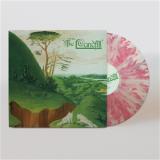
Der Mittlere Westen, insbesondere der Teil, aus dem Eric D. Johnson stammt, ist eine weitgehend flache Weite. Wenn man auf der Autobahn hindurchbraust, sieht man Städte und Ortschaften in der Ferne aufragen, doch wenn man blinzelt, verpasst man andere von Menschenhand geschaffene Gegenstücke zum Leben in der Ebene, die die Landschaft prägen: Hügel um Hügel, erbaut aus den Abfällen der Vergangenheit: Mülldeponien. Einige dieser Hügel eignen sich hervorragend als Schlittenhügel, Parks und Wanderwege. Andere verwandeln organische Abfälle in Kompost. ,The Landfill" ist etwas ganz anderes: ein Berg, der die Landschaft in Johnsons Herzen dominiert. Im Laufe seiner mittlerweile 25-jährigen Karriere unter dem Namen Fruit Bats war der Großteil von Eric D. Johnsons Schaffen das Ergebnis von Geduld und Feinschliff. Seine Songs sind, um einen Ausdruck zu verwenden, Langzeitprojekte, die auf Alben zum Leben erweckt werden, welche lange Zeiträume und Erinnerungen umfassen. "Baby Man" änderte das - er verbot sich, auf Material zurückzugreifen, an dem er vor der Aufnahme des Albums gearbeitet hatte. Es war sowohl ein atemberaubendes Dokument von Johnsons Können als Singer-Songwriter als auch ein ungeschönter Bericht über die zwei Wochen, in denen er das Album aufnahm. "Diese Session war vorbei", erklärt er, "aber es gab noch viel mehr zu erkunden. Mir gefiel die Unmittelbarkeit davon, und ich wollte sehen, wie sich das auf ein Fruit-Bats-Album mit voller Bandbesetzung übertragen lassen würde." Innerhalb weniger Wochen war er wieder im Studio, diesmal mit seiner Band: David Dawda (Bass), Josh Mease (Gitarren, Synthesizer), Frank LoCrasto (Klavier, Synthesizer) und Kosta Galanopoulos (Schlagzeug). Wenn man sich "The Landfill" anhört, stellt man fest: Diese Band rockt. Johnson produzierte die ersten Aufnahmesessions in den Bear Creek Studios in Washington und machte sich daran , "den Sound dieser Band einzufangen, die mich immer wieder in Staunen versetzt - das Gefühl, in einem Raum mit Musikern zu sein, die man liebt und denen man genug vertraut, um sie einfach machen zu lassen." Sie nahmen das meiste davon in einem Durchgang auf - ohne Click-Tracks, ohne zusammengestellte Gesangsparts und mit minimalen Overdubs, wobei der häufige Mitwirkende Thom Monahan zurückkehrte, um zusätzliche Produktionsarbeit zu leisten und den finalen Mix von ,The Landfill" zu erstellen. "So machen wir es auch mit meiner anderen Band, Bonny Light Horseman, und ich war neugierig, wie es bei den Fruit Bats funktionieren würde", bemerkt Johnson. "Es ist sowohl ein sehr persönliches Album als auch mein bisher kollaborativstes." Es ist zudem das live-orientierteste Album der Fruit Bats seit "The Ruminant Band" aus dem Jahr 2009, und durch die Reduzierung der Spuren, die einen Song einer kompletten Band normalerweise ausmachen, ist die psychedelische, technicolorartige Verträumtheit ihres Sounds lebendiger denn je. Die Songs auf "The Landfill" zeichnen sich sofort als einige der besten in Eric D. Johnsons Werk aus, Suchende und Hymnen gleichermaßen. Es ist der bisher gewaltigste Gipfel, den er erklommen hat.
- 1: The Saddest Part Of The Song
- 2: All Wounds
- 3: Think Aboutcha
- 4: That Goddamn Sun
- 5: Silverfish In The Sink
- 6: Wild Pony Tower Moment
- 7: Fishin' For A Vision
- 8: Perhaps We're A Storm
- 9: Hummingbird Sage
- 10: The Landfill
PINK SPLATTER IN CLEAR VINYL[22,27 €]
Der Mittlere Westen, insbesondere der Teil, aus dem Eric D. Johnson stammt, ist eine weitgehend flache Weite. Wenn man auf der Autobahn hindurchbraust, sieht man Städte und Ortschaften in der Ferne aufragen, doch wenn man blinzelt, verpasst man andere von Menschenhand geschaffene Gegenstücke zum Leben in der Ebene, die die Landschaft prägen: Hügel um Hügel, erbaut aus den Abfällen der Vergangenheit: Mülldeponien. Einige dieser Hügel eignen sich hervorragend als Schlittenhügel, Parks und Wanderwege. Andere verwandeln organische Abfälle in Kompost. ,The Landfill" ist etwas ganz anderes: ein Berg, der die Landschaft in Johnsons Herzen dominiert. Im Laufe seiner mittlerweile 25-jährigen Karriere unter dem Namen Fruit Bats war der Großteil von Eric D. Johnsons Schaffen das Ergebnis von Geduld und Feinschliff. Seine Songs sind, um einen Ausdruck zu verwenden, Langzeitprojekte, die auf Alben zum Leben erweckt werden, welche lange Zeiträume und Erinnerungen umfassen. "Baby Man" änderte das - er verbot sich, auf Material zurückzugreifen, an dem er vor der Aufnahme des Albums gearbeitet hatte. Es war sowohl ein atemberaubendes Dokument von Johnsons Können als Singer-Songwriter als auch ein ungeschönter Bericht über die zwei Wochen, in denen er das Album aufnahm. "Diese Session war vorbei", erklärt er, "aber es gab noch viel mehr zu erkunden. Mir gefiel die Unmittelbarkeit davon, und ich wollte sehen, wie sich das auf ein Fruit-Bats-Album mit voller Bandbesetzung übertragen lassen würde." Innerhalb weniger Wochen war er wieder im Studio, diesmal mit seiner Band: David Dawda (Bass), Josh Mease (Gitarren, Synthesizer), Frank LoCrasto (Klavier, Synthesizer) und Kosta Galanopoulos (Schlagzeug). Wenn man sich "The Landfill" anhört, stellt man fest: Diese Band rockt. Johnson produzierte die ersten Aufnahmesessions in den Bear Creek Studios in Washington und machte sich daran , "den Sound dieser Band einzufangen, die mich immer wieder in Staunen versetzt - das Gefühl, in einem Raum mit Musikern zu sein, die man liebt und denen man genug vertraut, um sie einfach machen zu lassen." Sie nahmen das meiste davon in einem Durchgang auf - ohne Click-Tracks, ohne zusammengestellte Gesangsparts und mit minimalen Overdubs, wobei der häufige Mitwirkende Thom Monahan zurückkehrte, um zusätzliche Produktionsarbeit zu leisten und den finalen Mix von ,The Landfill" zu erstellen. "So machen wir es auch mit meiner anderen Band, Bonny Light Horseman, und ich war neugierig, wie es bei den Fruit Bats funktionieren würde", bemerkt Johnson. "Es ist sowohl ein sehr persönliches Album als auch mein bisher kollaborativstes." Es ist zudem das live-orientierteste Album der Fruit Bats seit "The Ruminant Band" aus dem Jahr 2009, und durch die Reduzierung der Spuren, die einen Song einer kompletten Band normalerweise ausmachen, ist die psychedelische, technicolorartige Verträumtheit ihres Sounds lebendiger denn je. Die Songs auf "The Landfill" zeichnen sich sofort als einige der besten in Eric D. Johnsons Werk aus, Suchende und Hymnen gleichermaßen. Es ist der bisher gewaltigste Gipfel, den er erklommen hat.