Two previously unreleased gems from a Chain Reaction studio session recorded in London, in 1977 - now available back-to-back on this 7” single. ‘You Gave Me The Reason’ is a lovely modern soul uptempo dance-floor burner coupled with ‘Let’s Be Lovers’, a mellow and funky instrumental adaptation of the Holland-Dozier hit, ‘Why Can’t We Be Lovers’. By the mid-70s, former Techniques singers Bruce Ruffin, Bobby Davis and Dave Collins had established individual recording careers with The Upsetters, The Sensations, Byron Lee & The Dragonaires, and Dave & Ansel Collins amongst others, reuniting in 1975 to form Chain Reaction, a fine-tuned, first-class soul trio performing ‘inna soul style’. Produced here by industry veteran Stanley Pemberton of Congress Productions, Chain Reaction's blend of sweet vocal harmonies, funk-inflected grooves and Motownesque arrangements has long been favoured by soul collectors and beat-fiends alike.
Search:gave
Mahne Frame (sprich: mah-nay frame) bringt seinen pan-pazifischen Rave-Pop mit einer abweichend klingenden EP auf seinem neuen Berliner Label Monkeytown Records zurück. Mit der Rückkehr von Tokio in seine winzige Heimatstadt Katoomba kehrt der australische Musiker und Produzent in die Annehmlichkeiten des weiten Raums und der geografischen Isolation zurück. Auf 'I gave my legs to a snake' verlagert er seinen Schwerpunkt von früheren, von Beats geprägten Sprechgesängen zu einem folkloristisch angehauchten Songwriting, das an Yung Leans Hinwendung zu zerbrechlichem Gesang erinnert. Doch Frame folgt nicht den globalisierten Trends des Undergrounds, sondern reagiert auf seine Umgebung: er tauscht den Lärm und die kompakte Mobilität seines Rollers in der dicht besiedelten japanischen Metropole gegen die ungestörten akustischen Erkundungen einer Gitarre in der Abgeschiedenheit des australischen Busches aus.
Das vierte Album der Clark Sisters für Westbound-Sublabel Sound Of Gospel ist jenes, das sie fest in den Crossover-Markt gedrängt hat. Während es in Tracks wie 'My Cup Runneth Over' traditionelle Soul-basierte Gospel-Kost gibt, zogen einen die Disco-beeinflussten Juwelen 'My Life Is Complete With Jesus' oder 'Everything Is Gonna Be Alright' auf die Tanzfläche. Die Clark Sisters waren eine der großen Gospelgruppen und auch Teil einer großen Gospel-Dynastie um Mattie Moss Clark und Bill Moss. Geschrieben, produziert und arrangiert von Kernmitglied Elbernita 'Twinkie' Clark, enthält das Album instrumentale Beiträge von Detroiter Soul-Songschreibern wie Melvin Davis und Leroy Emmanuel von den Counts. Obwohl die Clark Sisters eine der meistverkauften Gospelgruppen aller Zeiten sind, ist dies die erste LP-Neuauflage von 'He Gave Me Nothing To Lose' seit seiner Erstveröffentlichung im Jahr 1979.
unperson’s forthcoming ‘The Ghosts That Gave’ EP will be released digitally and on 12” vinyl via Negative Space Ma, kick-starting a new chapter for the enigmatic producer as he glides between ambient, techno, breakbeat, footwork and UK funky with unquestionable prowess across 6 varied but inter-woven tracks.
The EP is framed around the concept of juxtaposing moments of euphoria and melancholy found within club music, delicately expressing intricate textures and emotion for the quiet corners whilst maintaining a dance-floor sensibility.
“Ultimately, I wanted to build a body of work that explores and extends upon various corners of the Harcore Continuum. Through the juxtaposition of fleeting moments of euphoria scattered amongst twisted, melancholic soundscapes, I aimed to express fluctuating emotions which denote the spirit and energy of the club/UK sound-system culture”. unperson
Sarah Davachi presents her masterpiece, Gave In Rest. Her most fully studio-recorded album ever, she collaborates with Montreal heavyweights to create an album that uses both modern minimalism and early church music as departure points.
Sarah Davachi has quickly risen in prominence since her first release five years ago, and Gave In Rest represents her highest artistic achievement. By infusing her compositional style within a predilection for medieval and Renaissance music, Davachi unearths a new realm of musical reverence, creating works both contemplative and beatific, eerie yet essentially human. Gave In Rest is a modern reading of early music, reforming sacred and secular sentiments to fit her purview and provide an exciting new way to hear the sounds that exist around us.
Between January and September of 2017, Sarah Davachi lived in flux; storing her belongings in Vancouver, she spent the summer in Europe, occasionally performing in churches and lapidariums and seeking respite from her transitional state while surrounded by such storied history. This latest album echoes that emotional state of solitude and ephemerality, reaching towards familiar musical landscapes but from oblique perspectives.
'I named each track after a particular time of day as a way of expressing my experiencing different moments of quietude, how morning and night are both independent and interconnected entities in this regard,' she says. Her titles evoke canonical phrases referring to morning or evening prayers, as well as Latin and German phrasings for metaphors about the time of day. 'From my perspective, there is a lot of loneliness on this record, and I think it is as much about beginnings as endings,' she continues. 'In a way, it's about the prospect of the unknown as it manifests alongside a very inward form of grieving—really the essence of what constitutes a period of transition.
Davachi has mined a bottomless landscape where listeners can witness music's participation in their solitudes. Gave In Rest lends a voice to her personal exploration with a firm, intuitive stance.
Tracklisting
Eglo Records are proud to present Fatima's highly anticipated debut album 'Yellow Memories'.
Featuring production work from the likes of Floating Points, Theo Parrish, Oh No, Scoop DeVille, Computer Jay, Knxwledge and more... the velvet toned Swede has truly crafted something special.
Offering a modern take on classic Soul and RnB, the album strikes a beautiful balance of cutting edge, contemporary production, soulful expression, melancholic introspection and vibrant, candy coated melody. An accomplished singer /song-writer with a stunning range, her prowess and versatility are a force not to be reckoned with. As powerful and mesmerising on stage as she is in the studio, Fatima possesses a talent heard all to rarely in todays musical climate.
Das Duo Boy Harsher Aus Northampton, Massachusetts Gibt Es Seit 2014 Und Sie Verbinden Düstere Dance-beats, 80er-jahre-versatzstücke Mit Sehr Ätherischen Vocals Und Schaffen So Eine Unheimliche, Intensive Und Fesselnde Klangwelt.
Nach Ihren Ersten Ep&album-veröffentlichungen "lesser Man (diverse Pressungen 2014 - 2018, Soft Science / Nachtaufnahmen / Aufnahme + Wiedergabe / Nude Club) Und "yr Body Is Nothing" (diverse Pressungen 2016 - 2018, Dka Records / Nude Club), Ist - careful Nun Der Nächste Schritt - Vielleicht Noch Einen Schritt Weiter In Richtung Dunkelheit.
Augustus Muller Entwickelt Den Unterbau Der Tracks Aus Präzisen Und Kraftvollen Beats (die Irgendwie Nach Damals Klingen, Aber Von Heute Stammen) Und Schleift Darüber Noch Sägende Synthies, Während Jae Matthews Dazu Haucht, Schreit Und Singt. Diese Kathartischen Aber Auch Magnetisierenden Tracks Wurden Innerhalb Kurzer Zeit Zu Hits Eines Real Existierenden Untergrunds. Das Album - careful Wurde Hauptsächlich In Massachusetts Geschrieben, Mit Einer Handvoll Synthesizern Und Einem Laptop. Für Muller Ist Ein Minimales Set-up Sehr Bedeutend In Diesem Prozess. Gemischt Wurde In Italien Mit Maurizio Baggio Von La Distilleria Studio.
Boy Harsher Haben Sich Über Die Letzten Jahre Bereits Eine Sehr Treue Untergrundgemeinde Er- Und Zu Beginn Des Jahres Eine Triumphale, Restlos Ausverkaufte Tour Durch Europa Gespielt. Es Folgte Eine Weitere Tour Durch Europa Und Zwei Us-touren, U.a. Mit The Soft Moon. Im Frühjahr Folgt Die Eigene Headline-tour Durch Europa.
A fresh iteration of the mid-eighties LP (itself a compilation of recordings from the previous five years or so), replacing two tracks — Dancing In The Rain and All Things — with their full 12' versions.This is a deeply personable, expert, limber blend of roots and lovers, kicking off with an exclusive mix of the deadly Mash Down Babylon; dropping classic, lush, spaced-out Wackies dub science to close; and taking in reworkings of Lickshot, Billie Jean and The Righteous Flames' I Was Born To Be Loved, along the route.The moniker 'Chosen Brothers' is Lloyd Barnes' spiritual way of sharing the credit for his solo projects. "Anyone in the studio at the time could be a Chosen Brother,' he says. In this case a full crew includes Sugar Minott and Prince Douglas at the desk; Jah Batta, Milton Henry, Wayne Jarrett and Junior Delahaye all on backing vocals; and such dream-team Bullwackies instrumentalists as Clive Hunt, Jerry Johnson, Fabian Cooke and Ras Menelik.
Blondie return with 11th studio album Pollinator lighting up 2017 with an incredible new record befitting one of the world's greatest bands. Produced live in the studio by John Congleton (St. Vincent, John Grant, War On Drugs, David Byrne). The last album recorded at New York's legendary Magic Shop studios before their closure. Blondie's classic writing duo of Chris Stein and Debbie Harry are at the heart of the creation with an impressive list of song writers on the project including Johnny Marr, TV On the Radio's Dave Sitek, Dev Hynes (Blood Orange, Lightspeed Champion) Adam Johnson aka An Unkindess, Sia and Charli XCX. Studio appearances from Joan Jett, Laurie Anderson and The Gregory Brothers.
Omar has a totally unique, individual style and sound still marks him out as a future thinking and utterly unrivaled artist, who has collaborated with so many legendary names that it would be foolish to deny his worldwide reputation - who would dare contradict the likes of Stevie Wonder, Erykah Badu, Carleen Anderson, Angie Stone, Common and fellow fans and followers like Maxwell and Jarrod Lawson
Following on from 2013's album The Man, 2016 sees his new long player further cement this undeniable reputation. Love In Beats is Omars' 8th studio album of his long, illustrious career and may just be the most eclectic & varied to date. Somewhat more electronic in it's conception and sound than it's predecessor, Love In Beats incorporates soul, Caribbean rhythms, an undercurrent of funk, with touches of zouk, a jazzy waltz, spoken word and also features collaborations with Us soul legend Leon Ware, Blue Note pianist Robert Glasper, grime MC Ty, Guadeloupe born singer Jean-Michele Rotin, and Uk soultress Natasha Watts, The Floacist and Mayra Andrade, the Cape Verdean born singer who lives and records in Paris.
Co produced by Scratch Professer, Omars Grammy winning brother,this collection should create excitement worldwide, the sounds are varied - but all have Omars' unique fingerprint on them, style and substance beautifully merged!
Bell Gardens combines the musical visions of Kenneth James Gibson (formerly of Furry Things, now recording as
*Bell Gardens' origins began arguably as more of an experiment than the duo's current 'experimental' projects - McBride's drone- and string-laden ambient symphonies, and Gibson's ventures in dub and minimalist techno - as they sought to manifest their mutual reverence for folk, psychedelia and chamber pop in a traditional band structure without cannibalising any particular past genre. Bell Gardens' sound is less reliant on effects and studio trickery than the pairs' independent guises, laying bare as it does vocals and live instruments with emotional sincerity, and presenting songs imbued with an almost pastoral or gospel simplicity and timelessness.
Slow Dawns for Lost Conclusions was again recorded mostly at home studios, but additionally the band made use of a friend's desert cabin in Wonder Valley, California, and it seems this willingness to retreat from the city has lent an expansiveness to the tracks, in particular the spacious, ceremonial 'Silent Prayer' (written in a snowbound mountain cabin in Idyllwild, C.A.) and the crepuscular 'She's Stuck in an Endless Loop of Her Decline' (mapped out under the stars in the desert).
While the addition of strings (contributed by Lauren Chipman of The Rentals and The Section Quartet) and trumpet (Stewart Cole of Edward Sharpe and The Magnetic Zeros) provides a double rainbow of tonal textures throughout, the nine tracks of Slow Dawns for Lost Conclusions are united by an understated elegance belying the newly expanded, communal effort in the studio: each instrument earns its place, nothing is overwrought or conspicuous. Moreover, it is McBride and Gibson's artistry in building stirring soundscapes from the barest of materials in their other guises that lends such assurance and sophistication to these arrangements.
The band is a result of the complimentary cross-pollination of Gibson and McBride's musical tastes - borne from a late-night conversation between the two that grew wings - and it is the universality of the sentiments and their restrained, reflective approach to writing and recording that allows the music to simultaneously straddle the past and the present. The music avoids pastiche, its pedal steel, sleigh bells and harmonies giving a nod to the ghosts of musical genres past, but never overriding or distracting from the emotional content of the sum of its parts.
The album ends with the glorious 'Take Us Away' - one of the first demos Gibson gave McBride when he was on tour with Stars of the Lid - neatly bringing their work to date full circle and exemplifying the band's mindfulness of their own serendipitous beginnings: the dawning of an auspicious, unique musical force.
Bell Gardens - Take Us Away -
Harmonies alert!! Actually, this is rather lovely. Slow-tempo, just the right side of 'twee' and packed full of strings, as if Air and Midlake had been taking balloon trips over the mid-West and sprinkling good-vibes dust across the land. From L.A. and subconsciously plugged into the '60s dream-pop scene, taking in a little bit of Mercury Rev and Brendan Perry en route, stopping off at Pearls Before Swine and Big Star's house for inspiration, before getting stoned with '70s era Brian Eno and Harold Budd.
The process of making this mini-album “anaiis & Grupo Cosmo” was truly life-altering for me. It changed my approach to making music and really brought me back to the roots of what creation is about. I went to Salvador for a month-long artist residency in February 2020 and during that time, I not only fell in love with Brasil’s culture and music, but I also wrote “Toda Cor” with the wonderful Luedji Luna. A few years later, I reached out Biel who’d co-produced “Estrela Acesa” with Sessa to see if they’d be interested in re-developing “Toda Cor” with me. They were enthusiastic and we fully reproduced the record in December, remotely. The connection between us all was electric and it felt like there was a collective enthusiasm for creating more together so I flew out to Brasil in April 2023 to continue this exploration. The beauty behind this record really lies in the experience of making it. We all stayed together in Biel’s house in Ilhabela for a week with Cabral, who co-produced the record with us and plays bass. We would go to the beach, eat communally, share stories, be around the kids, but then spend most of the days creating and jamming together. Each day we would record our songs live to tape, not a computer in the room. By the end of the week we had this album. It was refreshing to make music in this way. The music and approach really held us in that moment and gave us a chance to create freely, in a big moment of transition in our lives in a way that truly embraces imperfection, spontaneity, just very human.
For her new and most radical album »Electroacoustic Works for Halldorophone«, Martina Bertoni used the electronic instrument at EMS Stockholm to create four pieces that are massive in scale and incredibly intimate, sonically restrained and emotionally overwhelming—almost ambient and always demanding your full attention.
Martina Bertoni returns to Karlrecords with »Electroacoustic Works for Halldorophone,« her most radical album yet. The foundation for the four electroacoustic pieces was laid during a residency at Stockholm’s legendary Elektronmusikstudion (EMS) that the Berlin-based cellist and composer used to explore the curious instrument, originally designed by Halldór Úlfarsson in 2008, as an algorithmic system in order to examine tunings and the mathematical relationships between Aiming to analyse and understand their interaction beyond the composer’s control, Bertoni sought to engage more deeply with the concepts of time, tuning, and, most importantly, control. Accordingly, her four »Electroacoustic Works for Halldorophone« seem both massive in scale and incredibly intimate, sonically restrained and emotionally overwhelming— almost ambient and always demanding your full attention.
While the halldorophone—famously used by Hildur Guðnadóttir for her »Joker« score—roughly resembles a cello and can be played like one, it is an electronic instrument. The vibration of its strings is being picked up, amplified, and then routed through a speaker. This creates a feedback loop that becomes increasingly complex depending on how much gain is added to individual strings. Úlfarsson gave Bertoni a carte blanche for how to handle the instrument, but she stresses that she relied on »minimal interventions—some string strumming and plucking« that set the interactions of different sounds and frequencies into motion. »I decided to not approach it like a cellist would,« she explains. »Instead I used it as a kind of generative organ by turning it into a feedback machine, with tuned feedback triggering more feedback depending on the tuning, which was based on tetraphonic scales that I could apply on the four main strings as well as the sympathetic group of strings.«
Bertoni recorded the material in the EMS studio, later composing and arranging the four complex pieces in her home in Berlin, after which they were mixed and mastered by Ciaran O’Shea. While this can be considered a compositional abstraction process, traces of her concrete work as a performer are firmly ingrained in the music. »The halldorophone doesn’t have a line output, just a double set of speakers, which is why I recorded all sounds with two microphones in the EMS studio,« she explains. »That’s why there’s plenty of breathing sounds here and there—label owner Thomas Herbst and I jokingly refer to the album as my ›chamber music record‹.« And indeed, there is a striking sense of intimacy to these four pieces throughout which individual sounds, harmonic frequencies, and even subtle rhythmic figures seem to move both on their own accord but also according to a underlying vision that steers their interplay.
Indeed, »Electroacoustic Works for Halldorophone« is an album built on and marked by contrasts. The soothing polylogue of single sounds in the higher register on opener »Omen in G« is counterpointed by massive bass drones, while the second piece, »Nominal in D,« plays a cunning game of repetition and difference by combining thick textures with all kinds of rhythmic elements. »Fades in C«—the longest of the four pieces, clocking in at 17 minutes—unlocks the emotional potentials of the sonic qualities of the halldorophone, sounding at once serene and anthemic, and »Organon in D« closes the album by underscoring how Bertoni’s unconventional approach allows her to seamlessly transform simple, quiet tones into complex, towering walls of sound.
- 1: Going Out
- 2: Confession
- 3: Drip Drop
- 4: Under The Covers
- 5: Nighttime
- 6: On The Ward
- 7: Blue Skies
- 8: I Go Back
- 9: Off The Beaten Track
- 10: Alone With You
- 11: Gave You Up
- 12: Staying In
‘Confession' is an album of quiet upheaval. An album about closeness that arrives late and unexpectedly. About stability rubbing up against desire. About the way friendship can suddenly tilt into something charged — and how that charge unsettles everything around it. Where earlier work often observed from a distance, Confession turns inward. The voice is closer, warmer, less shielded. “This wasn’t the album I intended to make,” says Carla dal Forno. “I originally wanted something veiled and abstract, but I realised I couldn’t hide behind abstraction — the songs only worked when I leaned into emotional truth.”
This is dal Forno’s fourth LP, written and recorded over several years in a small country town, in a studio housed inside a partially abandoned hospital. Long corridors, humming lights, emptied rooms — a place built for care and waiting, now quiet enough for thoughts to echo. That stillness shapes the record: intimate, watchful, unadorned. “I live in a small country town that offers a stillness my life didn’t previously have,” she explains. “In that quiet, feelings I might’ve ignored in a busy city grew loud.” Dal Forno sings plainly and conversationally, with an emotional precision that sharpens the everyday into something quietly unsettling.
The album moves through paired states: going out and staying in, wanting and withholding, devotion and distraction. Domestic calm set against private unrest. A long-held relationship offers safety and routine, while a newer connection opens emotional fault lines — longing, jealousy, fantasy, self-exposure. “At the heart of the album is a friendship that became emotionally charged in an unexpected way,” dal Forno says. “That shift brought daydreaming, jealousy, tenderness, confusion, self-awareness — and eventually acceptance.”
The drama here is internal, incremental, lived. Musically, Confession feels lighter on its feet than its subject matter suggests. Melodic basslines anchor the songs while guitars, harmonies, and gently off-kilter rhythms move around them. There’s a looseness, even a playfulness — “like the sensation of tension lifting once you finally admit something to yourself,” as dal Forno puts it. The album traces a subtle arc: attraction blooming where it shouldn’t; obsession quietly taking hold; fantasy overtaking reality; clarity arriving slowly, sometimes painfully. Visually and emotionally, Confession returns to modest spaces: backyards, beds, night streets, overgrown paths. “The record exists in that contrast,” dal Forno reflects. “Peaceful surroundings, unsettled interior.”
Like all of dal Forno’s work, Confession resists clean conclusions. It doesn’t moralise desire or romanticise restraint. Instead, it lingers in the in-between — where love is stable but not total, where yearning teaches as much as it hurts, where solitude becomes a form of care. Plain-spoken but emotionally complex. Rooted and restless. Held together by bass, breath, routine, weather. An album about admitting what you feel —and living with what that admission changes.
- A1: Micah Shemaiah, The 18Th Parallel - To Be Free
- A2: Micah Shemaiah, The 18Th Parallel - Freedom Dub
- A3: Rod Taylor, The 18Th Parallel - Guiding Star
- A4: Rod Taylor, The 18Th Parallel - Shooting Dub
- A5: Var, The 18Th Parallel - Let Thy Kingdom Come
- A6: Var, The 18Th Parallel - Kingdom Dub
- B1: Keith Rowe, The 18Th Parallel - Love Gets Sweeter
- B2: Keith Rowe, The 18Th Parallel - Dub Gets Harder
- B3: Itral Ites, The 18Th Parallel - No More Will I Roam
- B4: Itral Ites, The 18Th Parallel - Roaming Dub
- B5: Hezron, The 18Th Parallel - Keep On Keeping On (Extended Mix)
Swiss powerhouse The 18th Parallel presents another slice of fine modern roots reggae! All Fruits Ripe is a heavyweight showcase album rooted in the foundations of reggae while firmly anchored in the present. Recorded between 2015 and 2025, the project brings together a powerful lineup of Jamaican vocalists — Micah Shemaiah, Keith Rowe (from rocksteady duet Keith & Tex), Rod Taylor, Var (Inna De Yard, Pentateuch), Hezron, and Itral Ites — each representing a different generation of conscious reggae music.
The album features six vocal cuts and five dub versions, highlighting both lyrical strength and sound system culture. Carefully mixed by master engineer Roberto Sánchez, All Fruits Ripe stands as a transnational reggae statement: Jamaican voices carried by a European band deeply connected to the roots with a profound respect for the culture that gave birth to reggae and dub. It features legendary guest Jamaican musicians Leroy ‘Horsemouth’ Wallace, Scully Simms, Dalton Browne, or Errol ‘Blacksteel’ Nicholson.
A mature and carefully crafted release where every track feels essential — like fruit finally ready to be harvested.
- A1: Love Train - Lovemasters
- A2: Ain't That Something - Paul Smith
- A3: It's Gotta Be Love - Pam Colquitt
- A4: Love Won't Give Us A Chance - Bobbie Brown
- A5: What If They Gave A War - Ron Murray
- A6: If You See Kate - Lovemasters
- A7: I Don't Want To Lose You - Mighty Joe Young
- B1: First Day Of Spring - Ron Murray
- B2: I'll Run - Paul Smith
- B3: I Done Got Over Losing You - Pam Colquitt
- B4: Pushin' And Pullin' - Lovemasters
- B5: Guitar Star - Mighty Joe Young
- B6: All Power To The People Part 1 - Joe Savage & The Soul People
- B7: Only Once In A Lifetime - Paul Smith
- 1: Requiem For Johan
- 2: In Distance Pavilion
- 3: You Get So Far Away
- 4: Breath Inside Your Breath
- 5: Through Nameless Air
- 6: Without Which Nothing
- 7: Traces Disappear
- 8: Like A Sadness We Get Used To
- 9: Nevertheless
- 10: Watching You Collapse
- 11: All Flesh Is Grass
Nevertheless, the latest album from Hammock, exists in a state of awakening. Across 11 ambient guitar string, and piano works, ethereal light crests and contrasts with darkness, giving shape to physical forms and feelings. Amidst sorrow and grief, melodic motifs and refrains echo from the past to reanimate dreams and faded memories. As Nevertheless asks questions of permanence and purpose, beauty takes shape in the intangible_the traceless connections that gave, and give, meaning. "Nevertheless has been one of those words that has outlasted my upbringing," says Hammock's Marc Byrd. "Being from the deep South, I most often heard it said or read at funeral services. It's meant to imply a type of sacred pause . . . a space of in between. Between the grief of being broken by the world and the impossibility of moving into a future that feels more like empty space and less like solid ground. This album is for a friend who lost a daughter and a son to addiction within a couple of years of each other. Requiem for Johan sets up the context for what is to follow throughout the rest of the album. . . a passage through the aftermath of devastation. Unfortunately, and fortunately, these seasons of loss are what we all share in common. Nevertheless . . . we limp on."
- A1: Moonlight Feat. Elena Moroder
- A2: Side To Side
- A3: Darkness
- B1: Here For The Summer
- B2: Miraflores
- B3: It's Time For A Change
- C1: Fantasy Feat. Kučka
- C2: Believe In Yourself
- C3: Mesmerized Feat. Jessica Care Moore
- D1: Tryna Find A Way Feat. Leanne Louise
- D2: Keepin' Me High Feat. Tropics
- D3: Wide Awake Feat. Tom Did It
- E1: Linger (Interlude)
- E2: Distant Within
- E3: If You Doubt Me
- F1: Destination (Interlude)
- F2: What Makes You Feel
- F3: Set Sail On Another Ship
- F4: It Feels Natural
After years of shaping dancefloors worldwide and carefully curating the sonic and visual identity of Up The Stuss, Dutch favourite Chris Stussy presents his most expansive and personal statement to date with his debut album, ‘Lost, Found & Forgotten...’. Landing on 3rd April, the album unfolds across three interconnected chapters - ‘Lost’, ‘Found’, and ‘Forgotten’ - each revealing a different side of his creative world across 19 tracks while remaining tethered to a singular wider vision.
At its core, ‘Lost, Found & Forgotten...’ is an exploration of creative freedom. Visually and conceptually guided by the image of a kite, the album reflects movement, perspective, and balance. Floating freely yet always anchored, the kite mirrors Chris’s approach to music: unrestricted in emotion and imagination, but grounded in groove, craftsmanship, and intention. It’s a symbol that naturally extends the Up The Stuss identity; pointing skyward, embracing openness, and encouraging curiosity.
“This album has been a long time in the making, and I’m excited to finally share it with you. The process behind it - exchanging ideas with other artists and creating music outside of my comfort zone - has been an incredible experience. It gave me a true sense of freedom, allowing me to not think about boundaries or expectations. I’ve never been more proud of a project than this one. It’s deeply personal, and it represents my sound as a whole. I hope you listen with an open mind and find something in it that resonates with you.” - Chris Stussy.
The ‘Lost’ chapter opens the album by giving new life to music once left behind. These are tracks written across different moments in Chris’s journey, ideas that never quite found a home until now. Rather than relics of the past, they emerge re-discovered, refined, and fully realised. ‘
Found’ represents inspiration in motion. Sparked by collaboration, digging, and shared creative exchange, this chapter captures the moment when ideas connect, and colour floods the sky.
The album closes with ‘Forgotten’ - a nod to the deeper cuts, the B-sides, and the moments that reward patience. This chapter is for the heads and diggers; tracks that may not demand immediate attention but reveal their value over time.
In Sheep’s Clothing announces the long-awaited vinyl pressing of Marc Leclair’s beloved 2005 album Musique pour 3 femmes enceintes. The album will also be available on streaming for the first time via Community Music Group.
For years after Marc Leclair released Musique pour 3 femmes enceintes, he heard from listeners who had lived with the record in an unusually intimate way. Many described how the music became part of the emotional landscape of the months leading to birth. “I never expected that,” Leclair says. “Many women told me they listened to the record throughout their pregnancies. They said it made a real difference, that it helped them. It became more than just a record.”
First issued on CD in the early 2000s, Musique pour 3 femmes enceintes (Music for Three Pregnant Women) now returns in a new edition from In Sheep’s Clothing Hi-Fi, appearing on vinyl for the first time as a double LP. The record is being pressed in Detroit at Archer Record Pressing, the historic plant behind deep-groove classics by Juan Atkins, Kevin Saunderson, Underground Resistance, UR’s Jeff Mills, and J Dilla.
Listeners who know the Montreal-based Leclair through his better-known work as Akufen might be surprised by the tone here. During the same years he was shaping the intricate micro-sampling tracks that made Akufen a cult figure on labels including Perlon, Force Inc. and Trapez, Leclair was quietly developing this far more personal project. The meticulous craftsmanship remained the same, though the focus shifted from the hyper-detailed cut-up rhythms of his dance records toward something slower and more atmospheric. “I always compare my work to a jeweler,” Leclair says. “It’s really very precise. I’m a bit of a detail freak. I can spend hours or days on just one phrase in one song. Everything has to be perfectly put together.”
The project began almost accidentally. A few members of Leclair’s circle became pregnant nearly simultaneously, including one who had long believed she couldn’t conceive. The first track he recorded for the project wasn’t meant to advance a larger concept, he says. “It was meant to highlight the fact that three of my closest friends became pregnant at exactly the same time.”
Leclair was already a father with a three-year-old daughter, so the emotional terrain of early parenthood was familiar. Gradually the idea expanded. “I began thinking, why not make a whole album that celebrates this and also follows the entire pregnancy, the nine months,” he says. The music developed piece by piece, including a track originally commissioned by the Berlin experimental duo Rechenzentrum that would later become the album’s opening movement.
Nearly seven years passed between the first composition and the finished album, and the music mirrors the strange arithmetic of pregnancy itself. What begins as a single idea multiplies outward, sounds layering and branching until the album feels less like a sequence of compositions than a living process unfolding in time. “I work very slowly,” Leclair says. “Everything has to be something I’m completely behind. I never want to rush anything. I want things to come naturally.” Across its 72 minutes, the album blossoms with the patience of a long meditation on time, growth and emergence.
When Musique pour 3 femmes enceintes first appeared via Mutek, it circulated quietly but steadily. Critics who discovered it later recognized its unusual scope. In a 2006 Pitchfork review, Mark Richardson gave the record an 8.1, calling “150e Jour” “an unfailingly gorgeous and tightly sequenced quilt of guitar and piano samples reminiscent of Tangerine Dream,” and describing “85e Jour” as infused with “viscous pop ambient drift, the gauzy synth pads ebbing and flowing with rhythm.” Boomkat described the album as “a majestic opus from a producer that's always promised so much — here delving into a panoramic construction of almost visibly radiant music that works so beautifully through each and every second of its 72 minute lifespan.”
The new In Sheep’s Clothing Hi-Fi edition finally presents the record in the format Leclair long imagined. “I always thought that record deserved a vinyl edition,” he says. Spread across two LPs, the music now has room to unfold at its natural pace. More than twenty years after it first appeared, Musique pour 3 femmes enceintes remains what it was from the start: a carefully shaped meditation on transformation and the quiet miracle of life beginning.
2026 Repress
On Left At Sunset, Tornado Wallace taps into those fragile, glowing moments after a long night in the club, when the lights come up just enough, the bass softens, and the first hint of morning slips through the windows. Time feels suspended.
The lead track Asahi Ga Yondeiru (“the morning sun is calling”) captures that feeling perfectly. Built around Courtney Bailey’s gentle vocal, it drifts somewhere between late-night house and early morning reflection. It is not about the peak. It is about what comes after it. That quiet euphoria when you realize the night gave you something you will carry back into the real world. The rest of the EP stays in that same emotional zone: warm, slightly melancholic, but full of light. These are tracks for the very last dance, when the floor is half-empty, hearts are wide open, and every sound feels a little more meaningful. Not an ending, really. Just the beginning of whatever comes next.
"In 1910, the illustrator George Herriman created the Krazy Kat comic strip. Ignatz, a vicious mouse, was Krazy Kat’s arch enemy, and his favourite pastime was to throw bricks at Krazy Kat’s head (who misinterpreted the mouse’s actions as declarations of love)
"Ignatz is the alter-ego of Belgian musician Bram Devens. Since 2005, he has released around 20 albums accompanied by guitar, in LP, CD or cassette formats, on labels such as (K-RAA-K)³, Ultra Eczema, Fonal, Mortaux vaches, Okraïna, among others. Ignatz has toured all over the world: Belgium, Germany, the Netherlands, France, Great Britain, Italy, Finland, Greece, Switzerland, Portugal, Lithuania, the United States, Japan, etc.
"Since the beginning of his journey as a singer-songwriter, Ignatz has played wonderfully and mysteriously with the combination of the similar and the unfamiliar, between the repetition and permanent reinvention with slight shift in accents... Now For two decades, when discovering his new songs, whether on record or in concert, his expressive and sonic universe can be recognized in seconds, and at the same time, he surprises every time. This is clearly also the case with ‘I Don't Know’, an album for which (after the cassette ‘Coffee, No Cigarettes’, Taping Policies 2017) he trades his guitar for the piano.
"In the mid-2010s, Ignatz inherited the family piano. As a self-taught musician, he explored the instrument and gave a piano concert in the small Flemish town of Geel, which was filmed by Jef Mertens (who also released the aforementioned cassette) and attended by Beata Szparagowska and Philippe Delvosalle from the label By the Bluest of Seas. After some years, it was in his home in Landen that Bram Devens recorded this haunted piano album, which is unlike any other piano record."
Wasteland is a record that is unafraid to plunge into the darkness of the modern world and embrace the weirder, edgier and more unnerving moments that come from doing so. It is an album that captures all the enormity of life from the micro to the macro, zooming in on the personal as well reflecting on broader societal issues.
“Wasteland is about the idea of a place once known or familiar that is now broken down and unrecognisable,” says Ghedi. “It’s about exploring the process of watching someone’s surroundings and environment collapse.” And within that you have a lot going on. “It also explores death, personal loss, grief, mental health and how the natural world provides solace and meaning for that loss and how these worlds blur into one another.”
Ghedi has always been an artist that in many ways perfectly encompasses folk music in its purest form but he is also someone that frequently pushes the boundaries of that label and no more so is that apparent than on this record. As like previous albums, such as 2018’s A Hymn for Ancient Land and 2021’s In the Furrows of Common Place, Ghedi uses traditional folk songs as a means to explore contemporary issues via modern and experimentally-leaning music. “With the traditional material on this album I wanted to find songs with content that resonated with me,” says Ghedi. “But also that were based roughly around the north of England.” This is a central underlying theme to the album for Ghedi. The feelings of loss, erosion, and degradation are often most pronounced in working class communities and this was something he wanted to weave in. “It was important to voice and choose material that represented or expressed issues that correlated with things going on around me.”
However, as remarkable as some of the traditional material is, some of the most arresting work on the album is Ghedi’s entirely original compositions. Lead single ‘Wasteland’ is a stunning piece of work that while rooted in an environment being corrupted and broken – “there’s violence on these hills” Ghedi sorrowfully sings, before claiming this is no longer somewhere that can be called home – it is also a stirringly beautiful composition that soars and glides as it opens up, as sweeping strings swoop and in and out of Ghedi’s twangy electric guitar.
The decision to incorporate more fuller sounds, such as electric guitar and huge drums, results in a notable shift and evolution in tone for Ghedi. “The lyrical content needed something more band-driven and loud to deliver them,” he explains. “Incorporating the electric guitar in my songwriting was also a big part of opening the sound up, using drop tunings pushed me to use my voice in a wider range, which forced me to use falsetto a lot which I haven’t previously done before. That then opened the sound up and gave me creative ideas for bigger arrangements and to sonically really push things.”
What Ghedi has done in creating his masterpiece is construct a remarkable space where deeply intimate and personal feelings coexist with reflections on environment, place and society, while also interweaving historical context via traditional songs. Wasteland is as much of a world to explore and exist in as much as it is an album, with Ghedi carving out his distinctly unique sonic language and voice to explore that singular environment.
Wasteland is a record that is unafraid to plunge into the darkness of the modern world and embrace the weirder, edgier and more unnerving moments that come from doing so. It is an album that captures all the enormity of life from the micro to the macro, zooming in on the personal as well reflecting on broader societal issues.
“Wasteland is about the idea of a place once known or familiar that is now broken down and unrecognisable,” says Ghedi. “It’s about exploring the process of watching someone’s surroundings and environment collapse.” And within that you have a lot going on. “It also explores death, personal loss, grief, mental health and how the natural world provides solace and meaning for that loss and how these worlds blur into one another.”
Ghedi has always been an artist that in many ways perfectly encompasses folk music in its purest form but he is also someone that frequently pushes the boundaries of that label and no more so is that apparent than on this record. As like previous albums, such as 2018’s A Hymn for Ancient Land and 2021’s In the Furrows of Common Place, Ghedi uses traditional folk songs as a means to explore contemporary issues via modern and experimentally-leaning music. “With the traditional material on this album I wanted to find songs with content that resonated with me,” says Ghedi. “But also that were based roughly around the north of England.” This is a central underlying theme to the album for Ghedi. The feelings of loss, erosion, and degradation are often most pronounced in working class communities and this was something he wanted to weave in. “It was important to voice and choose material that represented or expressed issues that correlated with things going on around me.”
However, as remarkable as some of the traditional material is, some of the most arresting work on the album is Ghedi’s entirely original compositions. Lead single ‘Wasteland’ is a stunning piece of work that while rooted in an environment being corrupted and broken – “there’s violence on these hills” Ghedi sorrowfully sings, before claiming this is no longer somewhere that can be called home – it is also a stirringly beautiful composition that soars and glides as it opens up, as sweeping strings swoop and in and out of Ghedi’s twangy electric guitar.
The decision to incorporate more fuller sounds, such as electric guitar and huge drums, results in a notable shift and evolution in tone for Ghedi. “The lyrical content needed something more band-driven and loud to deliver them,” he explains. “Incorporating the electric guitar in my songwriting was also a big part of opening the sound up, using drop tunings pushed me to use my voice in a wider range, which forced me to use falsetto a lot which I haven’t previously done before. That then opened the sound up and gave me creative ideas for bigger arrangements and to sonically really push things.”
What Ghedi has done in creating his masterpiece is construct a remarkable space where deeply intimate and personal feelings coexist with reflections on environment, place and society, while also interweaving historical context via traditional songs. Wasteland is as much of a world to explore and exist in as much as it is an album, with Ghedi carving out his distinctly unique sonic language and voice to explore that singular environment.
- A1: Matter Of Time
- A2: Origins
- A3: Bad Boy Sound
- B1: The Genie (Ft. Cleveland Watkiss)
- B2: Solitary
- B3: Blue Codes
Album Sampler[22,27 €]
HLZ delivers his debut album for Metalheadz with 'All My Life', a project shaped by patience, experience and a deep rooted connection to the label's sound. The album began with the title track, first played during Goldie's residency at XOYO before eventually making its way to the label, and it was from that moment that the idea of a full-length record started to take shape. Around the same time HLZ moved back to Italy, embracing a slower pace of life that gave him the space and focus to bring the project together. Rather than following a fixed concept, 'All My Life' grew naturally in the studio. HLZ approached the process with what he calls a sense of humble confidence, trusting his instincts while staying grounded in the culture that shaped him. The aim was simple: to make music that could last beyond the short cycles that often define modern releases. Across the album, HLZ moves between soulful depth with a classic Metalheadz twang, into moments that push beyond his usual territory. From the title track's unmistakable Headz spirit to more exploratory pieces like 'Roadblock' and the introspective 'Solitary', 'All My Life' captures an artist fully settled in his voice. More than anything, the album reflects HLZ's deep connection to the music and the sound that has influenced him from the very beginning.
- A1: Version Originale
- B1: Version Instrumentale
More than 25 years after its original release, Beatsqueeze Records brings back a classic of French rap: “Le Piège” by TRIPTIK.
Originally released in 2000 featuring D’Oz and Cutee B, this cult track is being reissued for the first time on 45 RPM vinyl.
A must-have for French rap fans and vinyl collectors alike.
The year 2000 was a turning point in TRIPTIK’s career.
The Parisian trio, then close to Cut Killer, released the maxi “Dat Shit” with the New York group Blahzay Blahzay, on the label of the famous French DJ.
At the same time, a 2-track maxi from Blahzay hit the shelves. It included the same track… but without the French MCs and without crediting the group’s beatmaker, Drixxxé.
Side B featured another of his productions, again without any credits.
In response, TRIPTIK decided to reclaim the appropriated beat. This reaction gave birth to the legendary “Le Piège”, featuring D’Oz and Cutee B.
Macclesfield 3-piece Cassia make their extremely welcome return with the announcement of their most ambitious release yet in new studio album everyone, outside - out April 11th.
The album marks a bold new chapter, and recently served up a tropical-tinged first offering in ‘heat’ - with today serving a superb Round Two with the stomping, insatiable, hook-laden new single ‘friends’.
everyone, outside takes Cassia’s sound to new heights. Written fresh off the back of two years of relentless touring, the band channelled every ounce of their renowned live energy into the album, returning to a studio they built themselves in Macclesfield, after creating their previous album in Berlin. The journey provided an added twist, recording the majority of tracks live on TikTok, giving fans a unique, inclusive experience to be part of the process.
The album’s title is a metaphor for embracing your truest self and reflection of a band who are at their happiest outside. It’s a message that speaks to the idea of reconnecting with nature and Britain’s finest summers. As frontman Rob explains, “That title, ‘everyone, outside’ started as a song about how weird it is that we stay inside all the time when being out in nature always makes us feel better. Over time, it came to mean more than that - like a metaphor for being your truest, most natural self, unburdened, like when no one’s watching.”
Drawing influences from a host of genres and cultures, everyone, outside reveals Cassia’s venn diagram of global sounds and intimate storytelling. A trip to Mexico during the writing process injected the record with a new energy, while their time spent in their new space back home gave the band a freedom to try new instruments, new sounds, acquire new tools to hone their production skills - and to simply have fun and explore. “The time we spent in Berlin taught us so much, but coming back home to Macclesfield allowed us to really focus on making something that felt like it came from us. No distractions, just pure creativity,” says drummer Jacob Leff.
Cassia’s rise has been impressive. From their early days busking the streets of Cornwall to playing major festivals, touring the world and receiving critical acclaim from BBC Radio 1, Radio X, The Independent, Rolling Stone UK, Clash & many more, the band has carved out a unique niche. Their sound, influenced by the African music Rob’s father introduced him to, combined with the indie heritage of nearby Manchester, combines the positivity of bands like Foals and Vampire Weekend, with the jazz-tinged afrobeats of Fela Kuti and Ebo Taylor.
After signing to Distiller Records in 2018, the band gave up their full-time jobs and ventured to Bath to record their debut album, Replica. Tracks such as ‘Right There’, ‘Drifting’ & ‘100 Times Over’ have amassed millions of streams, seeing the band sell out multiple headline Tours both in the UK and Europe. Playing to a homecoming capacity crowd at Manchester’s O2 Ritz, as well as sold out headline shows at London’s KOKO & The Garage, the band have accrued a huge, loyal following and their live shows earned them a nomination for Best Live Act at the AIM Awards alongside Idles and DMA’s, as well as making them the winners of Reeperbahn’s Anchor Award in 2022.
Cassia will tour the UK in May 2025, playing songs from the new album and some of their biggest tracks - headlining Leeds, Bristol, a newly added night in Southampton, a special Manchester homecoming, Glasgow, Birmingham, & a huge show at London’s HERE @ Outernet - dates below & Tickets Here. The band will also take things Stateside this year for their first ever run of headline shows in the US & Mexico.
Reissue of a lost hit by the British composer Kevan Frost, now championed and given a brand-new Dub Mix by Mark Grusane. Up for pre-order now and due late-March on our RSS series!
Kevan Frost grew up in Jos, Nigeria where he became a self-taught musician and developed a deep understanding of rhythm and melody. In the 90's, Frost was a session musician for many studios in London, one of these was unable to pay him so they gave him a few free days in the studio and the result was "Give It Up" as he explains:
"I went in and recorded all the music in a day, and the vocals and mix on day two. This was the days of only having 24 tracks available on tape so I programmed the drums, bass and keyboard parts on C-Lab which was only available on the Atari computer and the samples I made on my Akai S-1000 sampler. Full of floppy disks I went in early on day one and printed all of this on tape. I then recorded the guitar parts. Day two was me layering the lead vocals and Backing vocal parts as quick as I could before starting to mix."
However, the track fell into obscurity with no major label backing or marketing budget. A friend of Mark Grusane’s came across it in Brooklyn at the African Record Centre and it eventually ended up in Mark's hands and from there he edited the original track to a more stripped-back dub mix and began playing it out to great effect on dancefloors.
After a bit of digging, we tracked down Kevan and a fully licensed reissue is due on Rush Hour in late March 2026, including a brand new ‘Dub Mix’ from Mark Grusane.
RareTwo Inc. aka DJ Sneak and Tripmastaz are back together for 33 chambers EP, the next Respect The Craft release.
Words by Sneak:
"On a hot Ibizan summer the Rare Two fellas spent a period of 33 days on the island making tracks in a house garage with a couple of pieces of affordable gear and a whole lot of talent. We managed to create 33 tracks often burning them on CD to take to djs like Ricardo Villalobos at Amnesia and seeing the instant reaction of the crowd. We are a mega team of same mentality dudes who create from the heart breaking all rules and getting music done for a purpose. The Tripmastaz and Sneak Team is one to expect many great dance floor killers. As we call them Guttah Styles!
Words by Tripmastaz:
Recently I found these projects and since they were done on just a laptop and cheap small speakers, I gave them proper analog mixing and mastering.
All tracks remain exactly the same form and arrangement as they were originally done, including track Aww Lawd, that was featured on R. Villalobos BBC Radio 1 Pete Tongs mix back in 2018.
Mike Grinser at Mandmade Mastering did the lacquer cut and made it sound very crisp and loud a lot like it would've been cut in the 90s.
2026 Repress
- Linen Paper, Foil Printed Box Set
- Includes 6 Double LPs + 1 Single LP, 13 Discs In Total
- All LPs Pressed on Coloured Vinyl
-Each Disc is Housed in a Printed Inner with PMS Print, Finished with Spot Gloss Printing. Each Sleeve Features an Abstract of the Original Album’s Artwork
- Also included are a 4 page Insert + Poster
Skintone Edition commemorates the singular talent of this music pioneer with the re-release of all of his albums released via his own Skintone label.
Over a 20 year period Yokota released 30 albums and countless 12s under a variety of aliases, across more than a dozen pre-eminent labels. Yokota received domestic and international acclaim as a house and techno DJ and producer throughout the nineties. Part of the vanguard of the Tokyo scene, his influential release Acid Mt. Fuji inspires techno artists to this day.
In 1998 though, at the height of his success, he established his Skintone imprint, which came to eclipse all of his previous achievements. Skintone shone a light on the diverse new directions in which his creativity had blown, from delicate, cyclical tape-loop meditations to neo-classical compositions. It also gave him the autonomy to combine his visual and music-making practices and, importantly, to create at his own pace. The label was a great success and his experiments proved foundational in the global 00s ambient canon.
Skintone Edition will be available as 2 box sets - the first volume coincides with the 10th anniversary of Yokota’s untimely death and the 30th year of Lo Recordings. All music has been fully re-mastered. This edition is presented with the generous assistance of the Yokota family.
Albums Included:
Magic Thread 1998
Image 1983-1998 [1998]
Sakura [1999]
Grinning Cat [2001]
Will [2001]
The Boy and the Tree [2002]
Laputa [2003]
Evergreen In Your Mind, the new and third album from Norwegian singer-songwriter Juni Habel, exists in two worlds at the same time. Songs were recorded in quiet corners of her home, on the piano in the school where she works, and it uses the physical world around her to provide percussion. It also takes place, as she herself attests, within a dream; an imagined place in which her desire for oneness with each other and the world around us is finally realised.
Evergreen In Your Mind was recorded with co-producer Stian Skaaden, it’s Habel’s first album in three-years, following the breakthrough success of 2023’s Carvings LP. Formed of eleven new recordings, the songs here remain delicate, Habel’s voice playing an elegant lead role – but there are fluctuations too.
These small shifts in Habel’s sound result in a notable stride forward. More focus went into the groove of these songs. Playfulness was embraced and, perhaps most importantly, patience played a fundamental role in shaping the album with time and care given to every element of these songs. “We always aim to capture effortlessness - but the way of getting there is anything but effortless,” Habel reveals.
This extra time that was given to the project gave Juni the space to nurture her creativity. She would read and listen to music, hike into the hills, place herself within nature and seek out stillness. Not as a deviation from her work but as a fundamental part of the process. It’s a search for connection, and it’s a recurring theme across Evergreen In Your Mind; the polarity between stillness and passion, also our resistance to these desires, and the things we want to live and experience.
The album’s title-track and fist single feels indicative of this narrative. A gorgeous, delicate folk song, it finds Habel out in the woods, hiding from real life, caught in the space between the natural world and the pull of modernity. “It’s nostalgic. It’s about looking back and realizing things will be different,” Habel says. “Its about visualizing something beautiful in your head that you keep clinging onto.”
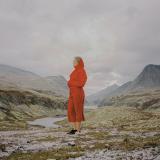
The album cover for Evergreen In Your Mind also adds shimmer. A striking photograph of Juni among the mountains, it was taken on a day trip to Rondane, a five-hour drive each way from her home. Habel explains. “It was awe-inspiring to drive all the way up into the high mountains, with its wide plains and intense colours. For an album with music that at times likes to hide itself, I think it fitted nicely with such an epic, grand, and powerful landscape.”
"Fans of Nick Drake, Karen Dalton and Neil Young will find much to enjoy in this musical equivalent of an evening spent alone by the fireside.” The Times
Analog Fingerprints Vol. 0 is a compilation bringing together the early 2000s works of Marco Passarani under his Analog Fingerprints alias, collecting key tracks originally released on Rome’s Plasmek and Pigna labels.
For Numbers, the story starts long before the label itself. In their formative years, digging in Glasgow’s Rubadub, Passarani’s records felt like dispatches from a future city. Releases on his own Nature Records and on labels such as Generator and Interr-Ference Communications were mind blowing: rooted in Detroit techno, Chicago house and electro, yet pushing somewhere new. Much like fellow travellers Autechre, who would remix him in 2001, Passarani’s music balanced machine funk with restless experimentation.
Information was scarce, and you would hear these records first on the dancefloor or at listening stations in shops like Rubadub. Print fanzines like Ear and early web outposts such as Forcefield offered only fragments. But there was a palpable axis forming between Detroit techno and a new European wave of record labels including Skam, Rephlex, Clone, Viewlexx and Nature itself. It was the sound that defined Saturday nights at Rubadub’s ‘69’ parties in Paisley, just outside of Glasgow.
Passarani’s records, in particular, were instrumental in bringing together the future Numbers co-founders. Richard had already booked him pre-Numbers; meanwhile Calum (Spencer) and Jack (Jackmaster), then 16/17 year olds working alternate Saturdays in Rubadub, were so enamoured with the Roman sound that they travelled to Rome for the Bitz Festival in 2003 to seek out Passarani and Lory D at their source.
The first Analog Fingerprints release landed as a 12” on Plasmek in 2001, following the fractured, IDM-leaning 6 Katun material. For Passarani, the project marked a recalibration. A DJ first and foremost, he had moved into production via early computer setups, from a Commodore Amiga through primitive PC audio, Cubase and Logic, later experimenting with Ableton. The IDM scene had offered a playground for trial and error, but there was always a tension between abstraction and the dancefloor. Analog Fingerprints became the bridge: still intelligent, but with more dance than distance. After years of broken beats and complex arrangements, he wanted directness without surrendering identity.
Working closely with Francesco de Bellis and Mario Pierro in the Pigneto district, the trio formed Pigna as a vehicle for reclaiming a more accessible dance sound, deliberately steering away from the minimal wave beginning to dominate Europe. Sessions were fast, instinctive, often stretching late into the night with friends dropping by. It was a studio as social space, production as collective energy.
“In that constant search for balance, Analog Fingerprints was my way of expressing something closer to the classic dance floor. The track 'Tribute' - a tribute to my favourite early Detroit techno track of all time, 'First Bass' by Separate Minds - came after I realised I had almost lost my connection with the dance floor. The simplest step was to take inspiration from early Chicago and Detroit and twist it in our Roman ‘Pigna’ way. My goal was to create more accessible dancefloor tracks by mixing my unconscious Italo roots with my teenage love for that early US sound, ensuring the result was as far as possible from the minimal sound that was starting to dominate everywhere.” - Marco Passarani
Technically, the Analog Fingerprints tracks span a transitional era: Roland TR-909, SH-101 and Alpha Juno hardware met early software experiments. A Novation Drumstation rack stood in for the unattainable TR-808, syncing with TB-303 and TR-606. Yet the true secret weapon was Jeskola Buzz, a tracker-style modular environment that allowed step-by-step parameter control and strange melodic constructions, later exported into the audio sequencer. Even the lead on ‘Tribute’ came from an early PPG Wave-style plugin. It was hybrid thinking at a moment when digital tools still felt unstable but full of possibility for technologists like Passarani.
Behind the music sat Finalfrontier, a loose Roman collective orbiting Nature and Plasmek. Distribution and production were intertwined; importing obscure records into Italy built connections with like-minded outsiders across Europe and the US. Expensive phone bills and fax machines forged an “electronix network” that linked Rome to Clone, Viewlexx, Skam, Rephlex, Rubadub and Detroit’s Underground Resistance. There was a shared sense of survival and resistance, of operating against commercial systems.
Passarani recalls “The first time I found a sheet of paper inside an Underground Resistance 12” with info about upcoming releases... and a huge picture of Spock on the back. Imagine that: you love the music, you love Star Trek, and there’s someone on the other side of the ocean sharing those same values and sounds. It was the perfect match. We even gave our original company the suffix ‘Finalfrontier’: that says it all.”
Feedback in that era arrived physically: distributor faxes, conversations with visiting DJs, the experience of playing abroad and meeting kids who had connected with the records. Glasgow became a key node in a scattered outlier network. Passarani personally brought the first two Nature releases to Fat Cat in London, playing them in-store. Shortly after, a fax arrived from Rubadub in Glasgow requesting copies.
“I still remember that phone buzz and the fax paper slowly sliding out, with someone I didn’t know saying they wanted 75 copies of Nature 001. Or like the time we got a fax from the Rephlex crew just saying, “Hello Nature Records, Keep up the good work.” That was how we knew the message was getting through. It was a fantastic feeling; just one piece of thermal fax paper as an analog notification - the mood for the entire week would change.” - Passarani
The connection to Glasgow has since stretched across generations. As Passarani reflects, links often fracture as scenes renew themselves, but in Glasgow something different happened. New and old mixed seamlessly. There was a visible trust in what came before, and a willingness to carry it forward rather than discard it. Observed from Rome, it was deeply encouraging.
Analog Fingerprints Vol. 0 captures that moment of exchange: Rome to Glasgow, Detroit to Europe, experiment to dancefloor. It documents an artist recalibrating his sound and a network of scenes discovering one another in real time, connected by vinyl, faxes and shared intent.
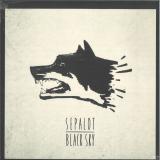
On this album the former "Chasing Clouds" have accumilated into the eponymous "Black Sky"; these drifting soundclouds have swallowed a bulk of Sepalot´s sunny nature; his trademark relaxed attitude gave way to instrumental melancholy and pugnacity. "Before I started recording I listened to lots of The Doors songs. I found the suicidal aspect in their music very exciting. I totally inhaled it." Sepalot reports. "The breakage, the grid, the dirt - that was my inspiration. I was thirsty for the energy of pureness." In order to capture this roughness Sepalots first production steps were drafting soundsketches - often more than 100 in a row. This is then is followed by a sorting procees with many drafts going immediately into the trashcan. The survivors create the first basic draft.

There is something waiting in the wings. Don´t fear the storm, come outside with us... "Black Sky" is here.
Clemens Brentano: "These sounds are a wonderfull living breath of darkness"
Neutron orange vinyl[26,68 €]
- A1: A Long Distance Call
- A2: The Book Of Self Doubt
- A3: In A Rut Ft Sydney Spann
- A4: Score Ft Anysia Kym
- A5: Seems Like I A6. Flatline Ft Miho Hatori
- B1: Peak Again Ft Alan Sparhawk
- B2: Habits And Patterns Ft Tirzah
- B3: Wish I Was Like U
- B4: Ending Us All Ft Le3 Black X Fyn Dobson
- B5: Forever Still (Steel)
- B6: See Through
Forged from the fire of internal struggles, Loraine James was wrestling with confidence and a desire for change when she embarked on “Detached From The Rest Of You”. A guiding hand came through producing 2025's “Clandestine” EP with singer Anysia Kym, which gave her the experience of a more 'pop' setting and the tools and insight to work her instrumentals into more conventional shapes; a shift from club driven sounds and winding instrumentals into more precise song forms.
Loraine’s production is stripped to the bone, soundscapes of clicks and glitches inspired by Aoki Takamasa, Ryoji Ikeda, and the early-00s Clicks & Cuts school. Here, often with not much more than sparse keyboard chords to fill in with subtle colouring, she uses the space around the sounds and vocals to draw the listener in to a succinct and direct album, her most confident yet.
Guest contributors include vocalist Sydney Spann on “In a Rut”, Alan Sparkhawk (Low) on downcast anthem “Peak Again”, Miho Hatori (Cibo Matto) on “Flatline”, Anysia Kim on “Score”, and Tirzah on “Habits and Patterns”. Finally her old spar, the rapper Le3 bLACK returns to spit fire with the jazz-indebted track “Ending Us All” with Fyn Dobson backing on tumbling drums.
JOCELYN VIRAPIN is one of the master of the Guadeloupean Gwoka percussion.
Born October 17th, 1957 in Basse-Terre, he’s an author, composer, producer and a vinyl digger.
His Gwoka is a pure tribute to the traditional combination of responsorial singing in Guadeloupean creole, rhythms played on the Ka drums and dancing.
He started to play in the 90’s with his band Gwaka. He opened and collaborated with prestigious band such as Kassav or Zouk Machine.
He has a massive discography as arranger and musician: he appears on more than 78 albums! The track "Pasyon" was originally released in 1994 on a rare vinyl , but with the artist we decided to do an edit, so we invited the super talented jazz player Florian Pellissier for a Rhodes improvisation on the original take.
The track "Respè Pou Fanm" was originally released with his band BELOKA in 2010 and was only pressed on a Cd format at a very limited quantity. This beautiful song is a blend of Ka, fantastic jazzy keys on Rhodes, hypnotic bass, sublime creole spiritual chants. With an incredibly joyous feel, the lyrics gave a timeless advice to men: Respect Women .
It definitely deserves a vinyl version for all the music lovers, Dj’s and diggers from all over the world !
Kenbé red pa moli !