Buscar:gene rush

Estilos
Todo
Kapote presents - Wildstyle House Vol. 1 (LP 2x12")

Kapote presents

Wildstyle House Vol. 1 (LP 2x12")

2x12inchTOYT180
TOY TONICS
27.02.2026

WILDSTYLE HOUSE is a new compilation series where Toy Tonics invites producers and DJs that have a very special, funky, unique sound to make one new track. The compilation should show the variability and diversity of house and disco TODAY. Like the wild music mix you can hear at the Toy Tonics events and the way Toy Tonics DJs combine many different styles of "4 to the floor" music into one new soulful, multi-style, and warm-sounding blended "genre." It's about the groove, about a new soul sound, the human feel, the organic and Y2K-inspired dance music that is growing and appeals to a new generation of dance music lovers.

This first part of the compilation includes unreleased music by:

Afro-funk and salsa-house producer talents ELADO, MUSTA, and ALMA NEGRA.

Garage house maestros MELON BOMB and Italian musician DANIEL MONACO (known for his New Wave disco and proto-house releases on Rush Hour and his work for Antal).

MARLA KETHER, the London bass player and DJ, who is known for her work with Little Simz, Oscar Jerome, and Loyle Carner, and has now started to release her own tracks.

Argentinian singer, musician, and DJ ALOT, combining proto-house vibes with Spanish rap.

Funk house producer and edit maestro PAUL OLDER, who is starting to become one of the key names of the new soul house scene (supported by DJs like Folamour, David Penn, Seth Troxler, Kirollus, Breakbot...).

And also Toy Tonics' own GEE LANE, KAPOTE, and ARPY BROWN contributed new tracks.

No en stock

Haga su pedido ahora y le encargaremos el artículo en nuestro proveedor.

20,59

Ültimo hace: 51 Días
New Found Glory - Listen Up!
  • 1: Boom Roasted
  • 2: 100%
  • 3: Laugh It Off
  • 4: A Love Song
  • 5: Beer And Blood Stains
  • 7: Treat Yourself
  • 8: Dream Born Again
  • 9: You Got This
  • 10: Frankenstein's Monster

It’s been decades since New Found Glory were etched onto pop-punk’s Mount Rushmore, but as the Coral Springs, Florida, quartet approach their 30th anniversary, they’ve proven with their 11th studio album Listen Up! - and first for Pure Noise Records - that they still have plenty to say. Shaped by guitarist Chad Gilbert’s battle with metastatic cancer and the enduring bond with bandmates Jordan Pundik, Ian Grushka, and Cyrus Bolooki, the record captures resilience and gratitude in tightly wound riffs and sing-along hooks reminiscent of their early 2000s classics. Written face-to-face in Gilbert’s Nashville home with a riff-first mentality, the album recalls Sticks and Stones and Catalyst while pushing forward with songs like first single “100%,” road-tested alongside The Offspring and Jimmy Eat World. Produced by Steve Evetts with contributions from Dan O’Connor of Four Year Strong, Listen Up! balances nostalgia with urgency, embodying the band’s mission to inspire a new generation of fans while offering longtime listeners a renewed sense of strength, positivity, and joy—because, as Pundik sings on “Beer And Blood Stains,” at the end of the day, “it’s good to be alive.”

Reservar20.02.2026

debe ser publicado en 20.02.2026

26,85
Britta Virves - Simple Things LP
  • 1: Intro
  • 2: Simple Things
  • 3: Forever
  • 4: Road To Braemar
  • 5: Before & After
  • 6: Mirrors
  • 7: Days Of Lily
  • 8: Stepping Stones
  • 9: Hope
  • 10: Bravery
  • 11: Chances
  • 12: Stepping Out

Drawing from her constant searching for her own unique sound she filters her love of rhythm and groove through her Nordic sensibility to create an accessible, compelling blend of excitement and introspection. Growing up on the island of Saaremaa in her native Estonia, Britta Virves was a keen piano student playing a strictly classical repertoire. A chance encounter introduced her to jazz: "I wanted to learn guitar. So I went to my teacher Tit Paulus, and he told me to stay with piano, and introduced me to Keith Jarrett, Herbie Hancock, Bill Evans - my mind was blown - a new world opened up." Britta immersed herself in the music and her talent soon attracted attention.

Moving to Sweden to further her studies, she was soon touring Europe with the acclaimed Norrbotten Big Band, under the direction of Joakim Milder, working closely with featured guest vocalist Genevieve Artadi and accompanying Artadi on a duo tour opening for Louis Cole. Each tune on the album draws inspiration from an aspect of Britta's own life. "Simple Things" has the directness of a pop song married to the depth of jazz, as Genevieve Artadi's ethereal vocals float over an insistent backbeat that supports limpid depths of harmony.Other tracks include "Bravery", whoch showcases the subtlety and dynamic control of the rhythm team and is one of Britta's favorite tracks on the album - "I feel it's like a big waterfall that's rushing down and making its path just by flowing naturally." By contrast, "Chances" plays with a neatly delivered set of accents that tie the roots effortlessly

Reservar12.12.2025

debe ser publicado en 12.12.2025

28,15
THE RAH BAND - GOING UP (2025 REMASTERED VERSION)

Going Up, originally released in 1983, is one of the most curious and enduring records from British studio mavericks The RAH Band. Long out of print, it now sees its first ever vinyl reissue courtesy of Shocking Music and Rush Hour.

Led by super-producer, arranger, and multi-instrumentalist Richard Anthony Hewson, The RAH Band has always existed just outside the mainstream. Blending jazz-funk, sci-fi synth pop, and cosmic lounge, their sound never quite fit the mould. That might explain the cult status they’ve held ever since. Beloved by Balearic heads, rare groove collectors, and adventurous synth diggers, Going Up is perhaps their most influential record.

At the centre of it all is the intro track “Messages From The Stars”, the band’s runaway cosmic hit. A spacey, retro-futurist groove that has become a viral favourite in recent years, it now boasts hundreds of millions of streams, with a new generation discovering it through TikTok and YouTube. But it was originally just one track on this understated 1983 album.

The rest of Going Up is just as compelling, filled with dusty drum machines, off-kilter instrumentals, woozy vocals, and that unmistakable early '80s charm. It is a snapshot of a band in transition, blurring the lines between leftfield pop, sci-fi funk, and home-brewed synth experiments.

Out of print for over 40 years, Going Up finally gets the reissue treatment it deserves. Restored and remastered, and still sounding like nothing else.

No en stock

Haga su pedido ahora y le encargaremos el artículo en nuestro proveedor.

20,59

Ültimo hace: 4 Meses
Alarico - Carnal Fever EP

2025 Repress

As one of the most Sought after artists of the recent years, there is no doubt that "Alarico" is on the front line of the new generational techno movement.

After recent releases in labels such as Klockworks, Token and Mutual Rytm, The Milan Based producer taking the gloves off and Debuting his first solo EP on his Co owned label "Primal instinct" alongside Chlar.

The anticipated 5 tracker release "Carnal Fever", is an impeccable showcase of Alarico's ability to push his musical aesthetics even further and keep developing his signatured modern minimalistic textures into new levels.

No en stock

Haga su pedido ahora y le encargaremos el artículo en nuestro proveedor.

13,03

Ültimo hace: 5 Meses
RC SUCCESSION - Single Man Delux Edition
  • Disc 1 "Single Man" 2025 Remaster
  • A1: Gift From A Fan
  • A2: Big Haruko
  • A3: Kindness
  • A4: I'm For Myself
  • A5: Recording Man (Relaxing Or Rushing To A Decision)
  • A6: Wanna Take A Night Walk?
  • A7: Dedicated To The Hippies
  • A8: Absentminded
  • A9: Why I Was Cold
  • A10: It's Already Autumn On The Koshu Kaido
  • A11: Slow Ballad
  • Disc 2: Single & Rare Tracks
  • B1: Slow Ballad (Single Version) 1976/1/21 Single
  • B2: Kindness (Single Version) 1976/1/21 Single
  • B3: You'll Understand Me 1976/10/11 Single
  • B4: Hello With A Dirty Face 1976/10/11 Single
  • B5: The Terrible Generation Difference (Oh, Ya!) *First Recording Version
  • B6: It's Already Autumn On Koshu Kaido ~Another Mix~ *First Recorded Version
  • B7: The Terrible Generational Difference (Oh, Ya!) (Tvk "Young Impulse" Studio Live 1976/4/25)
  • B8: Slow Ballad (Tvk "Young Impulse" Studio Live 1976/4/25)
  • B9: Wanna Take A Night Walk? (Tvk "Young Impulse" Studio Live 1976/4/25)
  • B10: Good Morning Darling (Tvk "Young Impulse" Studio Live 1976/4/25)
  • B11: Where I Sleep (Tvk "Young Impulse" Studio Live 1976/4/25) *Unreleased Song
  • B12: I'm For Myself (Tvk "Young Impulse" Studio Live 1976/4/25)

Congratulations! 55th anniversary of debut

The third album "Single Man", released on April 21, 1976, was an album with many controversies from the production stage.
It was discontinued less than a year after its release, and then a movement to re-release "Single Man" arose, and it finally re-released in 1980, so it has
a twisted story.

The album features a variety of performances due to the transition period from the folk period to the electric arrangement period, and above all, many
masterpieces that can be said to be representative of the entire RC period, such as "Slow Ballad". The driving force just before the rapid climb to
"KING OF ROCK" after 1980 is already boiling in this album.

In addition to the latest remastered sound source from the original master tape of the album, this deluxe edition includes single songs from that time,
versions not included on the album, and a studio live sound source from tvk's "Young Impulse" at the time of the album's release.
It is a deluxe edition packed with the overflowing talent of RC Succession at that time.

The booklet includes for the first time all 17 images from the original jacket illustration, "Pictures for the Test of Painting Apperception of Infants and Children."

・Remastered by zAk
・Disc 1: Half-speed cutting / Disc 2: Normal cutting by Miles Showell at ABBEY ROAD
・180g heavyweight clear vinyl
・Booklet (17 images of "Pictures for the Test of Painting Apperception of Infants and Children" (illustrations by Minamioji Hajime), commentary, lyrics)
・Liner notes: Imai Tomoko, Sakai Hiroki

Reservar15.10.2025

debe ser publicado en 15.10.2025

51,72
Victor Deme - Yeleen Kura

Victor Deme

Yeleen Kura

12inchCBLP01
Chapa Blues
10.10.2025
  • A1: Djilon
  • A2: Sira
  • A3: Mousso Mina Mousso
  • A4: Ambideu
  • A5: Bara
  • B1: Labanko
  • B2: Tungan
  • B3: Djonmaya
  • B4: Deen Wolo Mousso

Victor Démé loved life, music, friends, his hometown of Bobo Dioulasso, and above all, his family — by blood and by heart. Jovial and generous, he would have been delighted to see his world gathered once again in celebration: with concerts, unreleased tracks, live recordings, and a podcast retracing his finest musical years. Ten years after his sudden passing, this album carries the simple ambition of honoring his music and memory.

Victor passed away on September 21, 2015, in Bobo Dioulasso, during the coup d’État in Burkina Faso. The hospital he rushed to for malaria treatment was closed… His third album was due to be released just days later, but he never had the chance to sing it on stage.

A prolific and unique songwriter, Victor often revived songs he had composed in his youth during sessions at the OuagaJungle studio. With his guitar, he would breathe new life into them, refining them with his musicians — making the final choices sometimes difficult. Among the previously unreleased tracks on this record are Djilon, a reggae piece from Abidjan; Sira, a radiant yet solitary blues; Ambideu, a crooner-style ballad reimagined as an elegant cello-and-voice duet; Mousso mina mousso, a love song meant for a djandjoba celebration; and Bara, a heartfelt choral tribute to the workers of Burkina Faso.

These songs remained in the studio after Victor’s passing and have now been brought to life by the talented musicians Clément Petit, Alex Finkin, and Max “Blundetto” Guiguet. On Side B, the album captures the energy and sincerity of Victor and his band live on stage, with recordings from the May 19, 2009 concert at Théâtre de la Ville in Rouen. The performance opens with Labanko — a song never recorded in studio — followed by several classics, including the iconic Djon Maya, delivered here in its most blues-infused version, carried by Issouf Diabaté’s magical guitar.

Unforgettable memories for his musicians and for all who had the chance to applaud him live. We can only hope that, wherever he is, Victor is smiling and dancing as we celebrate him once more through music.

Reservar10.10.2025

debe ser publicado en 10.10.2025

23,11
ARIS 1201 - 12:01 LP

Aris 1201

12:01 LP

12inch020CAF?
CAF?
06.10.2025

12:01, time to wake up! Aris 1201 is back on CAF? with a new record. Deeply rooted in the city center of Geneva, this eight tracker is as smokey as its rush hour traffic jams. Bringing together old tracks with new material, this album spans from 4/4 club-ready highways to hip-hop inspired groovy beats. Using a minimum amount of ingredients (raw samples, percussive rhythmics, grainy textures), Aris 1201 delivers a result full of layers and complexity. So only one thing to do: hop in front of the Blunt Mobile and have a nice ride.

Reservar06.10.2025

debe ser publicado en 06.10.2025

19,12
Guerre Froide - Guerre Froide
  • A1: Ersatz
  • A2: Demain Berlin
  • B1: Mauve
  • B2: Peine Perdue

First time reissue of this French cold-wave / minimal-synth treasure.


November 1981 – In the heart of autumn, we set off in two cars along the Nationale 1 (!) to reach Choisy-le-Roi, where a 16-track studio was waiting for us—a place where, over the course of a weekend, we would finally be able to carve our own grooves into vinyl. We were quite nervous, as Guerre Froide had already been around for a year and a half. Our elders in Kas Product had already released two EPs—one with four tracks, the other with three—in 1980, even though they’d started only a few months before us. Admittedly, there wasn’t really a sense of urgency—some of us came from the punk movement, where the prevailing mood was still very much No Future, even if we’d long since stopped believing in it... And yet others had truly lost everything, like those from the generation before us. The reasons, ironically, were often the same: heroin and/or love—hard drugs, in both cases.

Speaking of which, I had a terrible stomach ache—due to nerves or some form of tension—which forced us to make a pit stop in the Oise region so I could rush to the toilet of a local café. That same stomach discomfort would hit me again once we arrived at the studio—whose name, incidentally, I’ve since forgotten...

We had gotten there thanks to the generous initiative of a friend, Sylvain S., known as “Perlin” (what a phonetic coincidence!?), who had specifically created the Stechak Products label to produce our record. Stechak because it was consistent with his earlier association called Tchernoziom, and Products as a plural tribute to the trailblazers from Nancy.

Guerre Froide originally consisted of four members: Fabrice Fruchart on guitar-synth (Korg MS-20), Patrick Mallet on bass, and Gilbert Deffais, known as “Bébert”, on Korg drum machine. At the time, I was already singing in a rock/post-punk band called Stress, and that’s how Guerre Froide picked up the bad habit of rehearsing in the same basement in Amiens as Stress. Within a month or two, we had half a dozen songs. We then had the opportunity to record a 4-track demo with a friend from Radio France Picardie, and to perform in October at a festival held at the Amiens municipal circus. Then came the now-legendary concert on November 11 at B.J.’s Club. After that, we self-produced and released 50 completely DIY copies of a cassette titled Cicatrice. A few concerts later—after Jean-Michel Bailleux had joined us on bass and Patrick had switched to guitar, which felt more natural to him—and with more concrete plans starting to take shape, we had to find a new rehearsal space and start renting a room.

Then came the moment when Fabrice told us he was leaving to go study in Lille... After the June 19, 1981 concert, which was naturally dubbed “Farewell to 2F,” Marie-José, Bébert’s wife, offered to take over on synth.

That’s when Perlin, who was a close friend of the Deffais couple and a great fan of our music, offered to fully finance the production of a 4-track 12-inch EP—covering the studio time, mastering, pressing, and artwork. What up-and-coming band would have turned that down? An improvised contract was signed with each member of Guerre Froide. The first step was choosing which four songs we would record. Berlin 81 was an obvious pick, having already become the group’s flagship track. We wanted to avoid reusing songs from Cicatrice, so the focus shifted to new material—some written before, some after Fabrice’s departure. Ersatz, for example, was his composition, but Mauve and Peine Perdue, which were also selected, were both written by Patrick.

Reservar26.09.2025

debe ser publicado en 26.09.2025

20,97
Various - Dolores: Salsa & Guaracha From 70's French West Indies

In Guadeloupe, many people think that jazz and ka music are like a ring and a finger. To some extent, the same could be said about so called Latin music and the music played in the French West Indies.

Both aesthetics were born in the Caribbean and bear so many connections that they can easily be considered cousins. In constant dialogue, there are lots of examples of their fruitful alliance and have been for a while. The English country dance that used to be practiced in European lounges came to be called kadrille in Martinique and contradanza in Cuba. They both featured additional percussion instruments inherited from the transatlantic deportation. Drawing from shared feelings about the same traumatized identity – later to be creolized – it would be hard not to assume that they were meant to inspire each other. The golden age of the orchestras that graced the Pigalle nights during the interwar period further proves the point. As soon as the 1930s, Havana-born Don Barreto naturally mixed danzón and biguine music in a combo based at Melody's Bar. In the following decade, Félix Valvert, a conductor who was born and raised in Basse-Terre in Guadelupe, also worked wonders in Montparnasse with La Coupole, which was an orchestra made up of eclectic musicians. Afro- Caribbean performers of various origins were often hired on rhythm and brass sections in jazz bands, which used to enliven the typical French balls of the capital. In the 1930s and onwards, Rico’s Creole Band was one of them.


Martinican violinist-clarinettist Ernest Léardée, who would become the king of biguine music as well as the main figure of French Uncle Ben's TV commercials (a dark stigma of post-colonial stereotypes), had musicians from the whole Caribbean sphere play at his Bal Blomet – and they all enchanted "ces Zazous-là" (according the words of Léardée's biguine-calypso piece). In les Antilles (French for French West Indies), music history started to speed up in the 1950s, when trade expanded and radio stations grew bigger. The Guadelupean and Martiniquais youth tuned in their old galena radio sets to South American and Caribbean music. As for the women traders, les pacotilleuses, they bought and sold goods across different islands (the "passing of items through various hands" was thought to be most pleasurable) and brought back countless sounds in their luggage. Such was the case of Madame Balthazar, who once returned from Puerto Rico with the first 45rpm and 33rpm to ever enter Martinique.

Out of this adventure was created the famous Martinican label La Maison des Merengues, a music business she opened and undertook with her husband and which proved to be a major landmark. At the end of the 1950s, in Puerto Rico, Marius Cultier competed in the Piano International Contest playing a version of Monk's Round 'Midnight. He won the first prize and this distinction foreshadowed everything that was to come. Cultier, the heretic Monk of jazz, was quickly praised for writing superb melodies, always tinged with a twist that conferred a unique sound to his music. It didn't take long for the gifted self-taught musician to get to play with Los Cubanos, making a name for himself thanks to his impressive maestria on merengues.

The rest is history. Besides, in the late 1950s, Frantz Charles-Denis, born into the upper middle class in Saint-Pierre and better known by his first name Francisco, went back home after working at La Cabane Cubaine – a club located rue Fontaine where he had caught the Latin fever. Francisco's music was therefore heavily marked by his Cuban cousins' influence, which gave the combos he led a specific style and also led to renewal. Things were swinging hard in La Savane, located in the main square in Fort-de-France. He set up the Shango club close by and tested out the biguine lélé there, a new music formula spiced up with Latin rhythms. Soon afterwards, fate had him fly to Puerto Rico and Venezuela.

As for percussionist Henri Guédon (percussions were only a part of his many talents), he was born in Fort-de-France in May 22nd 1944, the day marking the celebration of the abolition of slavery. As an old man, he could remember that in " his father's Teppaz, a lot of hectic 6/8 music was constantly playing...". In the opening lines of his Lettre à Dizzy, a small illustrated collection of writings published by Del Arco, he highlighted the huge impact that cubop had on him as a teenage boy, around 1960. He eventually turned out to be the lider maximo in La Contesta, a big band steeped in Latin jazz. He was also the one who originated the word zouk to describe music which brought the sound of the New York barrio to Paris. It was the culmination of a journey that started in Sainte-Marie: "a mythical place for bélé, the equivalent of Cuban guaguancó". In the early 1960s, the tertiary economy developed to the detriment of agriculture. Yet rural life was where roots music emerged in Martinique and in Guadeloupe.

Record companies played a major part in the process of Latin versions sweeping across the islands – before reaching everywhere else. Producer Célini, boss of the great Aux Ondes label, and Marcel Mavounzy, both the head of Émeraude records - a firm which was founded in 1953 - as well as the brother of famous saxophonist Robert Mavounzy, were big names to bear in mind. Although there were many of them - all of whom are featured on this record - Henri Debs was definitely the major figure in the recording adventure. He proved to be so influential that he even got compared to Berry Gordy. In the mid 1950s, when he acquired his first Teppaz, he worked on his first compositions: a bolero and a chachacha. Then, he became the one man who made people discover Caribbean music, from calypso to merengue. He was among the first ones to rush out to San Juan, Puerto Rico, to buy records and distribute them through a store run by one of his brothers in Fort-de-France. He had members of the Fania All Star come and perform there, which he was madly proud about. He was also the first one to pay attention to Haitian music, such as compas direct and various other rhythms which would soon flood the market. As a result, many of the combos hitting his legendary studio would end up boosted by widespread "Afro-Latin" rhythms. However, he never denied his identity: gwo ka drums were given a major role, although they were instruments which had long been banned from the "official" music spheres. The present selection bears witness to such a creative swarming. Here are fourteen tracks of untimely yet unprecedented cross-fertilization: all types of music rooted in the Creole archipelago have found their way, whatsoever, to the tracklisting. Whether originating from the city or being more rural, they all go back to what Edouard Glissant, in an interview about the place of West Indian music in the Afro-American scope, called "the trace of singing, the one which got erased by slavery." "It is so in jazz, but also in reggae, calypso, biguine, salsa... This trace also manifests through the drums, whether Guadelupean, Dominican, Jamaican or Cuban... None of them being quite the same. They all point to the idea of a trace, seeking it out and connecting to each other through it. This is the hallmark of the African diaspora: its ability to create something new, in relation to itself, out of a trace. It may be the memory of a rhythm, the crafting of a drum, a means of expression which doesn't resort to an old language but to the modalities of it." The opening track features one of the emblematic orchestras of this aesthetic identity, criscrossing many music types from the archipelago. The 1974 Ray Barretto guajira – Ray Barretto was a major New York drummer influenced by Charlie Parker and Chano Pozzo – is magnificently performed by Malavoi, a legendary Fayolais group (i.e from Fort-de-France). Additionally, the compilation ends on a piece by Los Martiniqueños de Francisco. It symbolically closes the circle as it is a genuine potomitan of Martinique culture which also functions as a tireless campaigner for Afro-Caribbean music. Practicing the danmyé rounds (a kind of capoeiria) to the rhythm of the bèlè drum, it delivers a terrific Caterete, a kind of champeta of Afro- Colombian obedience which was originally composed by Colombian Fabián Ramón Veloz Fernández for the group Wgenda Kenya. The icing on the cake is Brazilian Marku Ribas, who found refuge in Martinique in the early 1970s, bringing his singing to the last trance-inducing track. These two "versions" convey the whole tone of a selection composed of rarities and classics of the tropicalized genre, swarming with tonic accents and convoluted rhythms. It is the sort of cocktail that the West Indians never failed to spice up with their own ingredients. For instance, the Los Caraïbes cover of Dónde, a famous Cuban theme composed by producer Ernesto Duarte Brito, has a typical violin and features renowned Martinique singer Joby Valente and his piquant voice.


The track used to be – or so we think – their only existing 45rpm. The meaningful Amor en chachachá by L'Ensemble Tropicana, a band which included Haitian musicians among whom was composer and leader Michel Desgrotte, also recalls how Latin music was pervasive in the tropics in the mid-1960s. They were the ones keeping people dancing at Le Cocoteraie in Guadelupe and La Bananeraie in Martinique. Around the same time, another "foreign" band, Congolese Freddy Mars N'Kounkou's Ryco Jazz, achieved some success on both islands by covering Latin jazz classics – such as their adaptation of Wachi Wara, a "soul sauce" by Dizzy Gillespie and Chano Pozo whose interweaving of strings and percussions can have anyone hit the dancefloor. How can you resist Dap Pinian indeed, a powerful guaguancó by Eugene Balthazar, performed by the Tropicana Orchestra and published by the Martinique-founded La Maison des Merengues? It also acts as a symbol of the maelstrom at work. Going by the name Paco et L'orchestre Cachunga, Roger Jaffory used to play guaguancó too: his Fania-inspired Oye mi consejo is one example of his style. Baila!!!!! Dancing was also one of the Kings' focus points. Oriza is a Puerto Rican bomba and a "classic" originally composed by Nuevayorquino trumpeter Ernie Agosto, which reserves major space for brasses, giving it a special sheen.

Emerging from the New York barrios crucible was also La Perfecta, a Martinique group originating from Trinidad, whose name directly references the totemic Eddie Palmieri figure as well as his own band, also called La Perfecta. Here they borrow Toumbadora from Colombian producer and composer Efraín Lancheros and interpret it by emphasizing percussions, which set fire to the track even more than the wind instruments. The same goes for Martinique's Super Jaguars, who use Tatalibaba – a composition by Cuban guitarist Florencio "Picolo" Santana which was made famous by Celia Cruz & La Sonora Matencera – as a pretext for sending their cadences into a frenzy. In a more typically salsa vein, the Super Combo, a famous Guadelupean orchestra from Pointe-Noire that was formed around the Desplan family and had Roger Plonquitte and Elie Bianay on board, adapt Serana, a theme by Roberto Angleró Pepín, a Puerto Rican composer, singer and musician also known for his song Soy Boricua. Here again, their vision comes close to surpassing the original. In the 1970s, L'Ensemble Abricot provided a handful of tracks of different syles, hence reaching the pinnacle of the art of achieving variety and giving pleasure. They played boleros, biguines, compas direct, guaguancó and even a good old boogaloo - the type they wanted to keep close to their hearts for ever, "pour toujours", as they sang along together in one of their songs. Léon Bertide's Martinican ensemble excelled at the boogaloo which had been composed by Puerto Rican saxophonist Hector Santos for the legendary El Gran Combo.


Three years later, in 1972, Henri Guédon, with the help of Paul Rosine on the vibraphone, tackled the Bilongo made famous by Eddie Palmieri. Such a classic!!!!! And so were the Aiglons, the band from Guadelupe: choosing to execute Pensando en tí, a composition by Dominican Aniceto Batista, on a cooler tempo than the original, they noticeably used a wonderfully (un)tuned keyboard in place of the accordion. On the high-value collectible single – the first one released by Les Aiglons under the Duli Disc label – there is a sticker classifying the track under the generic name "Afro". Now that is what we call a symbol. Jacques Denis

No en stock

Haga su pedido ahora y le encargaremos el artículo en nuestro proveedor.

21,43

Ültimo hace: 29 Días
VARIOUS ARTISTS - ANTONES: 50 YEARS OF THE BLUES
  • A1: Bobby Rush & Jimmie Vaughan– Going Down
  • A2: Benny Turner– Reconsider Baby
  • A3: Jivin' Gene– Flip, Flop And Fly
  • A4: Kam Franklin– You'll Lose A Good Thing
  • A5: Lil' Ed Williams– If You Change Your Mind
  • B1: Kim Wilson & The Fabulous Thunderbirds– Talkin' Bout My Friends
  • B2: Mckinlley James– Those Lonely, Lonely Nights
  • B3: Lurrie Bell– The Sky Is Crying
  • B4: Ruthie Foster– Lead Me On
  • C1: Doyle Bramhall Ii– Bad Boy
  • C2: Big Bill Morganfield– Just Like A Bird Without A Feather
  • C3: John Primer– Honest I Do
  • C4: Eve Monsees– Lookin' Good
  • C5: Lynn August– The Things That I Used To Do
  • D1: C.j. Chenier– Willie The Wimp
  • D2: Sue Foley– You Got Me Where You Want Me
  • D3: Kam Franklin– If (I Could Be With You)
  • D4: Lavelle White– Message From Miss Lavelle
  • A1: Pinetop Perkins– Chicken Shack/Sugar Bear Intro
  • A2: Jimmy Rogers– Walking By Myself
  • A3: Sunnyland Slim– Built Up From The Ground
  • A4: Otis Rush– Double Trouble
  • A5: Eddie Taylor (2)– Bigtown Playboy
  • A6: Buddy Guy– Look On Yonders Wall
  • B1: Angela Strehli– What It Takes To Get A Good Woman
  • B2: Albert Collins– Cold, Cold, Feeling
  • B3: Gary Clark Jr.– Catfish Blues
  • B4: James Cotton– Midnight Creeper
  • A1: Lou Ann Barton– Sugar Coated Love
  • A2: Snooky Pryor– I'm So Glad
  • A3: Angela Strehli– It Hurts Me, Too
  • A4: Lazy Lester– No Special Rider
  • A5: Lavelle White– You're Gonna Make Me Cry
  • A6: Doug Sahm– I Won't Cry
  • B1: Marcia Ball, Lou Ann Barton, Angela Strehli– A Fool In Love
  • B2: Doyle Bramhall– Too Sorry
  • B3: Sue Foley– Gone Blind
  • B4: Barbara Lynn– Hear From My Daddy
  • B5: Kim Wilson– Don't Touch Me
  • B6: Pinetop Perkins– Going Down Slow
  • A1: Los Lobos– 300 Pounds Of Joy Pt. 1
  • B1: Los Lobos– 300 Pounds Of Joy Pt. 2
Reservar05.09.2025

debe ser publicado en 05.09.2025

166,18
Various - Praise Poems Vol.11 (LP 2x12" + DL)

Jede Compilation-Serie hat ein Ende. Nach 10 grandiosen Ausgaben verabschieden wir uns nach diesem 11. Teil von der unter Sammlern und Musikliebhabern hoch geschätzten Praise Poems Reihe. Ganz bewusst wagen wir uns mit diesem letzten Teil an ein Genre heran welches wir bis dato nur in Ausnahmen mit einbezogen haben: Power Pop der späten 1970er und frühen 80er.

Los geht’s mit „Real Proof“, einem unveröffentlichten Song der ursprünglich aus Boulder, Colorado stammenden Band The Nails die einige Jahre später sogar unter Vertrag eines Major-Labels standen. Obwohl die Fingerprints ein ganzes Album aufgenommen haben hat es über 45 Jahre gedauert bis dieses schließlich 2022 veröffentlicht wurde. „Wasted On You“ stammt von einer der drei Singles die zwischen 1978 und 1980 veröffentlicht wurden. Ganz im Gegensatz zu den Fingerprints sind die Original-Singles von Naked Rush extrem selten. Dies ist wohl mit ein Grund warum keiner ihrer Songs bis dato auf einer Compilation zu finden ist. Schön, dass wir dies nun ändern. Dies gilt übrigens für die Mehrzahl der Songs auf diesem Album und generell für alle unserer Compilation-Alben. Fritz, Blue Rain, oder Holidaye machen hier keine Ausnahme. Speziell erwähnen möchten wir noch zwei Songs. Zum einen „Don’t Quit“ von The Scam der von William Garrett produziert wurde. Garrett war von 2016 bis 2023 bei Spotify als Senior Music Producer für die Einführung von Spotify Singles zuständig und hat in dieser Zeit mit Künstlern wie Elton John, Ed Sheeran, John Legend und vielen weiteren zusammengearbeitet. Zum anderen gibt’s eine tolle Geschichte zu Animal Logic. 1989 erfuhr die Band, dass Stuart Copeland von The Police eine neue Band gründete. Der Name? Animal Logic! Nachdem Bitten, den Namen nicht zu verwenden, ignoriert wurden, sahen sich die Jungs von Animal Logic gezwungen, die Angelegenheit vor Gericht zu bringen, und verkauften schließlich den Namen an Copeland. Noch viel mehr weitere, spannende Geschichten rund um die Bands gibt’s im Begleitheft der CD bzw. der LP-Beilage.

Mit “A journey into raw, energetic power pop from the 1980s” beenden wir nun unsere 10-jährige Entdeckungsreise durch die Musikgeschichte unter dem „Praise Poems“ Schirm. Wir hoffen sehr, dass euch unsere akribische Arbeit viel Freude bereitet hat. Geht eine Tür zu, geht eine andere auf. So wird es auch hier sein. Es gibt noch so unglaublich viel zu entdecken und so freuen wir uns jetzt schon auf viele weitere Veröffentlichungen!

No en stock

Haga su pedido ahora y le encargaremos el artículo en nuestro proveedor.

26,85

Ültimo hace: 9 Meses
Stimulator Jones - Cool Green Trees (1999-2005) (LP)

"Chasing the funky symphonies that filled my head and my dreams..."

December 25th, 2023 - an Instagram post. Stimulator Jones shared half a dozen FIRE tracks from his beat tape archive. We were immediately drawn to the rough hewn boom bap.

"I'd release that", Rob commented.

Hours of material was shared and the result is this: Cool Green Trees (1999-2005). A collection of beats and loops Stimulator Jones created between the ages of 14-20 at home in his basement, bedroom and computer room in Roanoke, Virginia.

You will not believe the profound soulful genius contained within these naive schoolboy melodies.

December 25th, 1998 - 25 years ago to the day and his much-coveted Yamaha SU10 sampler was finally bestowed upon young Stimmy AKA Sam Lunsford: "I immediately hooked up a CD Walkman to the input jack and looped the beginning two bars of Grover Washington Jr.'s "Mercy Mercy Me". I don't know what exactly was so thrilling about hearing two measures of music repeating over and over but it was so infectious and hypnotizing and enthralling to me. I'll never forget that ecstatic rush of making my first loop - an uncontrollable, gleeful smile plastered all over my face." When you hear the pocket breakbeat symphonies featured here on Cool Green Trees, you'll feel the same sense of frisson.

In the wake of his Stones Throw breakthrough - Exotic Worlds & Master Treasures - Stimulator Jones was pegged by many as a 90s throwback artist. However, he literally IS a 90s artist. He's been recording music most of his life and he's now 40. He created the bulk of Cool Green Trees as a teenager. Everything before 2004 was recorded when Sam was still in school. He was in 8th grade when he made the 1999 tracks - he didn't even have his learner's permit. This album is a snapshot of a young man in a simpler time. Things were still mysterious back then and he was flying blind, relying on his ears and having to figure things out for himself: "I had no road map for becoming a beatmaker. I have been collecting music since I was a kid, I am a lifelong digger and seeker of cool and interesting sounds. I was there in the golden age of Hip Hop, and while I may have been a suburban white kid in Roanoke, Virginia, I was tuned in and I bought so many classic albums when they came out. I was attracted to Hip Hop because of the musical and poetic quality. I was hypnotized by the rhythms, partially because I was a drummer. I didn't brag about collecting my breakbeat records or making beats - it was something I did in isolation. It wasn't something I generally wanted to bring attention to and it didn't really score me any cool points. I certainly wasn't flexing on social media about it."

Hell, he can do that now!

Opener "Pharoah Jones" was inspired by Yesterday's New Quintet and Madlib's ability to capture that classic 70s sound whilst playing all the instruments. Sam created this one stoned afternoon by laying down a 2 bar loop and a shaker loop on his Yamaha SU700 sampler. He hung a microphone from the ceiling and played his Yamaha Stage Custom drum kit over the top before adding ender Rhodes and playing his dad's Selmer tenor sax through an Electro Harmonix Memory Man echo pedal. Yes! Up next, "Ghost Gospel" utilises a dope loop from a gospel record and adds some soul-funk drums overtop, whilst working that filter knob. Says Sam: "The loop reminded me of something Ghostface would rap over. The sample was in 3/4 waltz time but I flipped it for a 4/4 groove, a technique I picked up from RZA. "Ill Feeling" uses sped-up pieces from a dusty old funk record and putting them over a classic NOLA drum loop; gain chopping up a slow, bluesy 3/4 time signature and bending it to a 4/4 groove. Classy shit. "Capital Punishment" features drums tapped in live, inspired by MF Doom's Special Herbs series. "Do Not Adjust" consists loops found on a compilation of 70s French music at Happy's Flea Market, a classic Roanoke digging spot.

The sublime, evocative title track, "Cool Green Trees" was created when Sam was still living at home. He dumped samples off his SU10 into the family desktop and arranged them in a demo version of Pro Tools: "This track was sort of my ode to the DJ Shadow style of sample based production. Super spacey, slow, and moody. The heavily filtered drums were inspired by Alec Empire's 'Low on Ice' album. I later added some scratches and sounds from a Spider Man storybook record." "Chill Scratch" snags the final bit of a bossanova record and pairs it with a drum loop before adding experimental scratching run through an Electro Harmonix Memory Man echo pedal. "Poisonous Fumes" was made using a sampler, mixer and a turntable; a kind of mixtape beat collage with added scratches and sounds from various records. Using dialogue from superhero records was a nod to Madlib. "Welcome Aboard The Starship" is dark, downtempo trip-hop with a spooky bent. Sam paired a slow, hard drum loop with a guitar sample grabbed off a psychedelic rock record. To finish, he added various backwards sounds and weird atmospheric effects and a little scratching. Swoon.

Side B opens with "Keep On Runnin", made on a borrowed Roland SP202 sampler. Having always loved the sound of the Lo-Fi filter on those machines, reminiscent of the Emu SP1200, Sam always imagined Del or another of the Hieroglyphics crew rapping over this beat. You can certainly hear why. "Sounds Impossible" sees Sam experimenting with layering multiple kick samples at different volumes to create patterns similar to those heard by Showbiz and Lord Finesse during their God-level 1995 period. "Painted Faces" was made by chopping up a REDACTED record which he had gotten from Happy's Flea Market and paired it with a REDACTED drum loop. By the time Sam recorded "The Knew Style", he had acquired a shitty old 1960s portable turntable off eBay. It didn't function properly when he bought it but his brother opened it up, cleaned it out and got it working: "I remember he told me that there was a bunch of sand inside of it when he opened it up, as if its previous owner had taken it to the beach. I would take that turntable on my Happy's Flea Market digs so I could preview records...that's how I found this loop."

"Chicken Wing Blues Sauce" loops up a classic blues joint and pairs it with some REDACTED drums. A bit of filtering and arranging et voilà! "Kool Breeze", from 1999, is one of Sam's oldest surviving beats, as is "Sexx Bullets". The Roots sampled the same record, leaving Sam frustrated yet vindicated. "Soul Child" was an early SU10 creation, looping a dusty old Soul Children 45 and pairing it with 70s rock drum loops to great effect. "Take Off Runnin" was another loop found digging with a portable turntable. Paired with some boom bap drums it makes for a hypnotic head-nod groove. "Centurian" was intended to be a little beat interlude a la Pete Rock. The sample is from a sun-dappled soft-psych record and it's paired with a Robin Trower drum loop that just happens to fit perfectly. Sometimes you slap things together kind of haphazardly and magic happens. "Bozack" was the first beat Sam made using Pro Tools, his first foray into using chopped sounds instead of loops, an exciting new world. "Church" is beat interlude using a Phil Upchurch loop with the "Long Red" drums - a favourite break of Dilla et al. Sam was really on a tear in late 2004, probably because he was unemployed and phoneless and able to just make beats all day. He made "Splash One" on a borrowed Yamaha SU700 and again was experimenting with tapping the drums in live with his fingers, instead of using a loop or sequenced pattern. Channeling 9th Wonder, Sam used a water splash sound effect from a Batman record as a percussive element, hence the title (also a 13th Floor Elevators reference). The main loop is a backwards portion of one of his favourite Roy Ayers songs.

"Hank" is another fun little beat interlude thing, created on a borrowed Roland SP202 sampler with the fantastic Lo-Fi effect that resembled the Emu SP1200 at a fraction of the price. "73 goatee", from 99, is another of his oldest surviving beats, created in his bedroom with his Yamaha SU10 and his brother's Vestax MR-300 4-track recorder: "This one will always feel special. I can remember having a feeling all the way back then on the night that I created it that this was a solid beat with a catchy loop. There was something in the Fender Rhodes melody that resonated with me emotionally, and I had never heard a producer sample that portion before. I felt like I had found my own unique sound, my own unique loop. It came from an Ahmad Jamal '73. I actually even recorded myself rapping and scratching over this beat way back then, I still have that version in all its imperfect sloppy glory."

Sam explains just how much these tracks mean to him: "They all have immense historical and sentimental value and I'm proud of them. These beats come from an innocent, simple time when I was just figuring out how to craft these sounds. They're something very personal to me. They are the initial part of a journey that I really was taking *alone*. There was no YouTube. I couldn't Google shit. I didn't even know any other beatmakers, producers or DJs in my town that could teach me anything. It was always just me, alone, in a room with some equipment - chasing the funky symphonies that filled my head and my dreams. What I was doing wasn't cool. Most of my peers thought I was a weirdo and couldn't care less. Creating these sounds was an anti-social endeavour. In a sense, I felt like it was me against the world, and all I had to instruct and assist me were the recordings produced by my heroes - RZA, DJ Premier, Erick Sermon, Beatminerz, Showbiz, Diamond D, Beatnuts, Prince Paul, The Bomb Squad, Pete Rock, Q-Tip, E-Swift, Mista Lawnge, DJ Shadow, Cut Chemist, Peanut Butter Wolf, El-P and so many more...I dedicate this collection to them, and to my older brother Joe who has always been a musical and technical guiding light for me.

This was a time before every kid was a self-described producer and beatmaker, before everyone had a DAW, before Kanye and "chipmunk soul", before Red Bull beat battles, before there was any social media beyond chat rooms and AOL Instant Messenger, before Soundcloud, before SP-404 mania, before lo-fi beats to study to, before Splice, before targeted ads for MIDI chord packs, etc. In 99 when I told people that I had a sampler and made beats I was mostly met with bewildered confusion and indifference. Kids and adults alike would wonder why I got this weird machine for Christmas instead of something worthwhile like a Playstation or a mountain bike or even a guitar for that matter because at least that could be used to make "real music". Back then, sampling was still not widely respected as an art form - it was seen as lazy, talentless and unoriginal at best and outright criminal theft at worst. I had gotten respect for playing drums and guitar and things of that nature but this was a step in the wrong direction in the eyes of many."

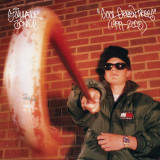
The cover photo is a picture of Sam standing on his back porch in the latter part of 1998, just before he got his first sampler. He was 13 years old, in 8th grade. His dad took the picture with his 35mm film camera: "I actually wanted to be pointing my dad's .22 pistol at the camera lens but he wouldn't let me. He gave me an old walking cane to use instead. The Tommy Hilfiger puffer jacket came from the lost and found at William Fleming High School where my mom worked as a secretary. I was thrilled when she brought it home because we never spent money on expensive name brand clothing like that - we were for the most part strictly a sale rack, bargain bin, thrift store, yard sale, flea market kind of family when it came to clothes. My watch is some cheap off-brand fake gold department store watch." Mastering for this vinyl edition was overseen by Be With regular Simon Francis and it was cut by the esteemed Cicely Balston at Abbey Road Studios to be pressed in the Netherlands by Record Industry.

No en stock

Haga su pedido ahora y le encargaremos el artículo en nuestro proveedor.

25,63

Ültimo hace: 9 Meses
Corbin - Crisis Kid LP

Corbin (FKA Spooky Black) makes captivating, honest, and raw music that harkens back to the days when the singer-songwriter’s artistic vision prioritized vulnerability over image. The St. Paul, Minnesota native came to prominence during the rise of the SoundCloud gold rush, helping to influence the new generation of Gen Z songwriters. Songs such as the haunting portrait of addiction “Diazepam”, and his battle with insecurity and instability in relationships “ICE BOY”, showed off his ability to connect with the plight of modern adolescence. But it was the internet-breaking, classic ballad of yearning “Without You”, that inspired a generation of disaffected and abandoned adolescents, serving as a soundtrack to make the alienated feel a little less alone. He’s attracted some of the biggest names in music, featuring on songs with Chief Keef, Trippie Redd, and The Kid Laroi, among others. With his latest record, Crisis Kid, Corbin dials back the angst in favor of an intimate vocal style that sounds like he’s reading his diary from a candlelit cabin. A more polished and refined version of Corbin resurfaces as he contemplates collective suffering, generational trauma, and the quest to find hope during the bleakest timeline, offering a voice for the voiceless.

No en stock

Haga su pedido ahora y le encargaremos el artículo en nuestro proveedor.

26,68

Ültimo hace: 9 Meses
Pete Shelley - Homosapien (LP 2x12" +MP3)
  • A1: Homosapien
  • A2: Yesterday's Not Here
  • A3: I Generate A Feeling
  • A4: Keat's Song
  • A5: Qu'est-Ce Que C'est Que Ça
  • B1: I Don't Know What It Is
  • B2: Guess I Must Have Been In Love With Myself
  • B3: Pusher Man
  • B4: Just One Of Those Affairs
  • B5: It's Hard Enough Knowing
  • C1: In Love With Somebody Else
  • C2: Witness The Change
  • C3: Maxine
  • C4: Love In Vain
  • D1: Homosapien (Elongated Dancepartydubmix)
  • D2: Witness The Change/I Don't Know What It Is (Dub)

Domino hat heute die Wiederveröffentlichung von Pete Shelleys ersten beiden Soloalben "Homosapien" und "XL-1" für den 6. Juni 2025 angekündigt. Beide Alben erscheinen in einem Gatefold-Cover mit dem restaurierten Original-Artwork, einer zusätzlichen Disc mit B-Seiten, Dubs und erweiterten Mixes sowie neuem Bildmaterial und Sleeve Notes vom renommierten Autor Clinton Heylin. Beide Alben werden erstmals seit 2006 wieder auf CD veröffentlicht.

Die Alben markieren einen entscheidenden Wendepunkt in Shelleys Karriere, als er sich nach den Buzzcocks musikalisch neu erfand. Mit Produzent Martin Rushent entwickelte er einen elektronisch geprägten Sound, der sich radikal von seinen Punk-Wurzeln unterschied. "Homosapien" wurde 1982 veröffentlicht und sorgte für Kontroversen: Die BBC verbannte den Titelsong aus homophoben Gründen, doch in den Gay-Clubs wurde er zur Hymne. 1983 erschien "XL-1", auf dem Shelley noch weiter in elektronische und experimentelle Klangwelten vordrang. Er blieb zeitlebens ein Künstler, der musikalische Grenzen auslotete. Seine Soloalben zeugen von einem unermüdlichen Innovationsgeist, der weit über die Punk-Bewegung hinausging.

Reservar06.06.2025

debe ser publicado en 06.06.2025

26,47
Watchtower - Energetic Disassembly - O-MIX (LP)
  • Violent Change
  • Asylum
  • Tyrants In Distress
  • Social Fears
  • Energetic Disassembly
  • Argonne Forest
  • Cimmerian Shadows
  • Meltdown
También disponible

Black Vinyl RE-MIX (LP)[30,88 €]

Re-Mix Golden Vinyl[30,88 €]

O-Mix Black Vinyl[30,88 €]


Als Watchtower im Jahre 1985 ihr Debütalbum "Energetic Disassembly" veröffentlichen, stellen sie die Metal-Welt auf den Kopf. Das Material setzt völlig neue Maßstäbe. Innovativer (und extremer) geht zu dieser Zeit niemand zu Werke. Unbeholfene Stilbeschreibungen wie "Jazz Metal" oder "Techno Thrash" werden kreiert. Ursprünglich werden Watchtower im Mai 1982 in Austin, Texas, aus der Taufe gehoben. In jenem Monat schließt sich Sänger Jason McMaster Bassist Doug Keyser, Schlagzeuger Rick Colaluca sowie Gitarrist Billy White an. In ihrem frühen Stadium zeigen sich Watchtower stark von der NWOBHM inspiriert und spielen Songs von Iron Maiden, Angel Witch und Raven nach - dazu natürlich etliche Nummern der kanadischen Prog-Götter Rush. In der Folge entwickelt die Band sukzessive ihren individuellen Stil und nimmt Demos mit eigenen Stücken auf. Aber die Plattenfirmen wollen nicht anbeißen. Aus diesem Grunde entschließt man sich dazu, auf dem eigenen Label Zombo Records das wegweisende Album "Energetic Disassembly" zu veröffentlichen (gepresst werden 3.500 LPs und 1.000 Kassetten).
"Ich kann mich noch lebhaft daran erinnern, wie ich Demokassetten an Fanzines verschickt habe und nahezu täglich Briefe mit Tapetradern ausgetauscht wurden," erinnert sich Sänger Jason Mc Master heute. "Ich erhielt u.a. Briefe von Gene Hoglan, Mike Portnoy, Jason Newsted und sogar Alan Tecchio Die Reaktionen waren fantastisch, aber wir klangen einfach so andersartig. Die Labels wussten nicht, wie sie uns seinerzeit hätten vermarkten sollen. Waren wir zu extrem? Ich denke schon." Pünktlich zum 40. Jubiläum von "Energetic Disassembly" erscheint über High Roller Records nicht nur eine De-Luxe-Edition des originalen Albums, sondern auch eine neue Abmischung. Die Re-Mixes wurden im Jahre 2009 von Jared Tuten, einem engen Freund von JasonMcMaster, in den Top Hat Studios angefertigt. Als Sahnehäubchen gesellen sich dazu vier Bonus-Stücke: eine Art Drum-Soundcheck namens "Rick On Parade", das kurze Gitarren-Instrumental "BW115" sowie frühe Fassungen von zwei Songs, die später auf dem zweiten Watchtower-Album landen sollten, hier aber noch mit Jason McMaster am Gesang - "Instruments Of Random Murder" und "The Eldritch". Jason McMaster verließ Watchtower im Jahre 1988 in Richtung Dangerous Toys. Sein Nachfolger war Alan Tecchio (von Hades). Zusammen mit ihm wurde 1989 in West-Berlin das zweite Album "Control And Resistance" für Noise Records aufgenommen.

Reservar30.05.2025

debe ser publicado en 30.05.2025

30,88
Watchtower - Energetic Disassembly - RE-MIX (LP)
  • Asylum (2024 Remix)
  • Meltdown (2024 Remix)
  • Tyrants (2024 Remix)
  • Argonne Forest (2024 Remix)
  • Energetic Disassembly (2024 Remix)
  • BW115: (2024 Remix)
  • Violent Change (2024 Remix)
  • Rick On Parade (2024 Remix)
  • Social Fears (2024 Remix)
  • Cimmerian Shadows (2024 Remix)
  • Instruments Of ... (2024 Remix, Bonus Song)
  • The Eldritch (2024 Remaster, Bonus Song)
También disponible

-O-MIX Silver Sinyl[30,88 €]

Re-Mix Golden Vinyl[30,88 €]

O-Mix Black Vinyl[30,88 €]


Als Watchtower im Jahre 1985 ihr Debütalbum "Energetic Disassembly" veröffentlichen, stellen sie die Metal-Welt auf den Kopf. Das Material setzt völlig neue Maßstäbe. Innovativer (und extremer) geht zu dieser Zeit niemand zu Werke. Unbeholfene Stilbeschreibungen wie "Jazz Metal" oder "Techno Thrash" werden kreiert. Ursprünglich werden Watchtower im Mai 1982 in Austin, Texas, aus der Taufe gehoben. In jenem Monat schließt sich Sänger Jason McMaster Bassist Doug Keyser, Schlagzeuger Rick Colaluca sowie Gitarrist Billy White an. In ihrem frühen Stadium zeigen sich Watchtower stark von der NWOBHM inspiriert und spielen Songs von Iron Maiden, Angel Witch und Raven nach - dazu natürlich etliche Nummern der kanadischen Prog-Götter Rush. In der Folge entwickelt die Band sukzessive ihren individuellen Stil und nimmt Demos mit eigenen Stücken auf. Aber die Plattenfirmen wollen nicht anbeißen. Aus diesem Grunde entschließt man sich dazu, auf dem eigenen Label Zombo Records das wegweisende Album "Energetic Disassembly" zu veröffentlichen (gepresst werden 3.500 LPs und 1.000 Kassetten).
"Ich kann mich noch lebhaft daran erinnern, wie ich Demokassetten an Fanzines verschickt habe und nahezu täglich Briefe mit Tapetradern ausgetauscht wurden," erinnert sich Sänger Jason Mc Master heute. "Ich erhielt u.a. Briefe von Gene Hoglan, Mike Portnoy, Jason Newsted und sogar Alan Tecchio Die Reaktionen waren fantastisch, aber wir klangen einfach so andersartig. Die Labels wussten nicht, wie sie uns seinerzeit hätten vermarkten sollen. Waren wir zu extrem? Ich denke schon." Pünktlich zum 40. Jubiläum von "Energetic Disassembly" erscheint über High Roller Records nicht nur eine De-Luxe-Edition des originalen Albums, sondern auch eine neue Abmischung. Die Re-Mixes wurden im Jahre 2009 von Jared Tuten, einem engen Freund von JasonMcMaster, in den Top Hat Studios angefertigt. Als Sahnehäubchen gesellen sich dazu vier Bonus-Stücke: eine Art Drum-Soundcheck namens "Rick On Parade", das kurze Gitarren-Instrumental "BW115" sowie frühe Fassungen von zwei Songs, die später auf dem zweiten Watchtower-Album landen sollten, hier aber noch mit Jason McMaster am Gesang - "Instruments Of Random Murder" und "The Eldritch". Jason McMaster verließ Watchtower im Jahre 1988 in Richtung Dangerous Toys. Sein Nachfolger war Alan Tecchio (von Hades). Zusammen mit ihm wurde 1989 in West-Berlin das zweite Album "Control And Resistance" für Noise Records aufgenommen.

Reservar30.05.2025

debe ser publicado en 30.05.2025

30,88
Watchtower - Energetic Disassembly - O-MIX (LP)
  • Violent Change
  • Asylum
  • Tyrants In Distress
  • Social Fears
  • Energetic Disassembly
  • Argonne Forest
  • Cimmerian Shadows
  • Meltdown
También disponible

-O-MIX Silver Sinyl[30,88 €]

Black Vinyl RE-MIX (LP)[30,88 €]

Re-Mix Golden Vinyl[30,88 €]


Als Watchtower im Jahre 1985 ihr Debütalbum "Energetic Disassembly" veröffentlichen, stellen sie die Metal-Welt auf den Kopf. Das Material setzt völlig neue Maßstäbe. Innovativer (und extremer) geht zu dieser Zeit niemand zu Werke. Unbeholfene Stilbeschreibungen wie "Jazz Metal" oder "Techno Thrash" werden kreiert. Ursprünglich werden Watchtower im Mai 1982 in Austin, Texas, aus der Taufe gehoben. In jenem Monat schließt sich Sänger Jason McMaster Bassist Doug Keyser, Schlagzeuger Rick Colaluca sowie Gitarrist Billy White an. In ihrem frühen Stadium zeigen sich Watchtower stark von der NWOBHM inspiriert und spielen Songs von Iron Maiden, Angel Witch und Raven nach - dazu natürlich etliche Nummern der kanadischen Prog-Götter Rush. In der Folge entwickelt die Band sukzessive ihren individuellen Stil und nimmt Demos mit eigenen Stücken auf. Aber die Plattenfirmen wollen nicht anbeißen. Aus diesem Grunde entschließt man sich dazu, auf dem eigenen Label Zombo Records das wegweisende Album "Energetic Disassembly" zu veröffentlichen (gepresst werden 3.500 LPs und 1.000 Kassetten).
"Ich kann mich noch lebhaft daran erinnern, wie ich Demokassetten an Fanzines verschickt habe und nahezu täglich Briefe mit Tapetradern ausgetauscht wurden," erinnert sich Sänger Jason Mc Master heute. "Ich erhielt u.a. Briefe von Gene Hoglan, Mike Portnoy, Jason Newsted und sogar Alan Tecchio Die Reaktionen waren fantastisch, aber wir klangen einfach so andersartig. Die Labels wussten nicht, wie sie uns seinerzeit hätten vermarkten sollen. Waren wir zu extrem? Ich denke schon." Pünktlich zum 40. Jubiläum von "Energetic Disassembly" erscheint über High Roller Records nicht nur eine De-Luxe-Edition des originalen Albums, sondern auch eine neue Abmischung. Die Re-Mixes wurden im Jahre 2009 von Jared Tuten, einem engen Freund von JasonMcMaster, in den Top Hat Studios angefertigt. Als Sahnehäubchen gesellen sich dazu vier Bonus-Stücke: eine Art Drum-Soundcheck namens "Rick On Parade", das kurze Gitarren-Instrumental "BW115" sowie frühe Fassungen von zwei Songs, die später auf dem zweiten Watchtower-Album landen sollten, hier aber noch mit Jason McMaster am Gesang - "Instruments Of Random Murder" und "The Eldritch". Jason McMaster verließ Watchtower im Jahre 1988 in Richtung Dangerous Toys. Sein Nachfolger war Alan Tecchio (von Hades). Zusammen mit ihm wurde 1989 in West-Berlin das zweite Album "Control And Resistance" für Noise Records aufgenommen.

Reservar30.05.2025

debe ser publicado en 30.05.2025

30,88
H.E.A.T - Welcome To The Future

H.e.a.t

Welcome To The Future

12inch0220328EMU
earMUSIC
25.04.2025
  • A1: Disaster
  • A2: Bad Time For Love
  • A3: Running To You
  • A4: Call My Name
  • A5: In Disguise
  • A6: The End
  • B1: Rock Bottom
  • B2: Children Of The Storm
  • B3: Losing Game
  • B4: Paradise Lost
  • B5: Tear It Down (R.n.r.r.)
  • B6: We Will Not Forget
También disponible

Neon Orange Vinyl[27,10 €]


“The future of Rock music is in safe hands” (10/10 Powerplay Magazine)… It’s time to embrace the next chapter of one of rock’s hardest-working bands. H.E.A.T storms back into the spotlight with the explosive new album “Welcome To The Future” – and it hits with full force!
In recent years, the Swedes have been impossible to ignore. At the front is Kenny Leckremo, undoubtedly one of the best rock and metal voices of his generation, with a stage energy that has been sorely missed in the scene.
Those lucky enough to meet the band know their passion for the ‘80s runs deep. H.E.A.T masterfully channels the spirit of rock’s most fun era, a time where exuberance reigned the stage, crafting a distinctive sound that melds power metal with melodic hard rock.
With “Welcome To The Future”, H.E.A.T brings you a heavy and melodic album packed with anthems that beg to be belted out. It’s an invitation to all who crave the rush of true arena rock.

Reservar25.04.2025

debe ser publicado en 25.04.2025

23,24
H.E.A.T - Welcome To The Future

H.e.a.t

Welcome To The Future

12inch0220401EMU
earMUSIC
25.04.2025

“The future of Rock music is in safe hands” (10/10 Powerplay Magazine)… It’s time to embrace the next chapter of one of rock’s hardest-working bands. H.E.A.T storms back into the spotlight with the explosive new album “Welcome To The Future” – and it hits with full force!
In recent years, the Swedes have been impossible to ignore. At the front is Kenny Leckremo, undoubtedly one of the best rock and metal voices of his generation, with a stage energy that has been sorely missed in the scene.
Those lucky enough to meet the band know their passion for the ‘80s runs deep. H.E.A.T masterfully channels the spirit of rock’s most fun era, a time where exuberance reigned the stage, crafting a distinctive sound that melds power metal with melodic hard rock.
With “Welcome To The Future”, H.E.A.T brings you a heavy and melodic album packed with anthems that beg to be belted out. It’s an invitation to all who crave the rush of true arena rock.

Reservar25.04.2025

debe ser publicado en 25.04.2025

27,10
Artículos por página
N/ABPM
Vinyl