Siren Selector launches its mixtape series with a companion release to Remy Solar’s - ‘Heavy Terrain’ cassette.
“Jamaican music grows in rings like an old tree. From a core of early riddims, the genius of Studio One, versions of original basslines and melodies evolve over time New releases of the same tune follow each other through the 70s, 80s, 90s, into this millennium. Generations of the same family. And then there’s the unreleased versions, the frontier dubs built strictly for sound systems, held close by those who got them and only gradually circulated into the wider audience of selectors and collectors. These are the ones where the bass is heavier, the echoes more mind- bending, the effects wilder and the drums harder. Older sound followers tell stories of how these dubs defined dances, flattened opponents in clashes, inspired a dozen rewinds. Younger followers remember these tales and pass them down. These dubs are folklore.
Who knows how many such versions there are in the vast worldwide archives of Jamaican music? Not me. But as a little taster of a lifetime’s musical journey you can open your ears right now to a few moments: Lacksley’s Castell’s “Unkind”, transported from the sprightly riddim which underpinned it on his Princess Lady album and reengineered into a thunderous version of Ras Michael’s None A Jah Jah Children; “Deceivers” by the Heptones, stripped back into something simultaneously ethereal and bathyspheric; Keith Hudson’s “I’m No Fool” emerging from a pressure cooker of bass and drum; Jah Lloyd’s “Black Moses”, busting down walls with its epic echo and siren opening.
I started collecting these dubs in the late 90s. We were going to Shaka at the Rocket, Aba Shanti in the Arches, then Imperial Gardens. Entebbe somewhere off Mare Street. Iration Steppas in Kingsland Road, Jah Tubby’s in the Rec. We were doing our own parties at the time in east London, Bohemia Place, then Trenz, Dungeons, the old social services office by London Fields. Building up a sound, taking it on the road, crew sitting on the speaker boxes in the back of a Mercedes 508. Under the stars or in warehouses with sweat dripping from the ceiling, lugging crates and amps across fields or up flights of stairs, stringing up boxes under bridges, in car parks or on roundabouts. Waiting for the moment to drop the dubs.
This tape is dedicated to my crew and all the music providers and anyone who also knew or wants to know these moments.“
Fifty Physical Copies - 60 mins - No digital
Search:generation of drums
Lady Jane Beach land on Slacker 85 with their lo-slung label debut, ‘Binman’. A short, sharp shot of minimal rhythm and rhyme, ‘Binman’ is the sound of the enigmatic London-based trio soundtracking their trips around the capital’s outer ringroads seeking adventure, trouble and corrupted drum machines. Blessed with loose, confident production and verses like glue, Slacker boss Seth Troxler doubles down on his support with a beefed-up, roadtested club edit.
An undisputed trailblazer of UK rave, Zed Bias fires up his studio for two contrasting takes on ‘Binman’, each capturing split sides of the soundsystem culture he helped define. Zed’s ‘Weighty Dub’ goes unapologetically raw, transitioning between skippy beats, heavy bass drops and a fusebox melody out of the darkness. From the basement straight through to the beach club, the ‘Nostalgia Mix’ makes good on its promise of misty-eyed reverie, recalling the first-wave of UKG domination with lush strings and steppin’ drums that still sound like a bright future.
From one generation to the next, fast-rising DJ and producer HalfPint is already familiar to dancers of Circoloco's famed Terrace and Garden. His take on ‘Binman’ finds a fresh frequency, converting the rhymes of the original into a precision-tooled tech house groove, primed for the summer season.
Music never exists in a vacuum — every scene and sound evolves from the non-stop exchange of ideas between different groups and cultures. Traditions get passed down from one generation to the next, and then individual heads take influence from their own unique perspective. Sometimes, certain people strike upon fusions that spark massive new movements, but even those rarest innovations came from somewhere.
Jon E Cash knows this more than most — the legendary beats he started putting out at the turn of the millennium had their own disparate roots and influences which he had the motivation to put together into a sound he called sublow. There wasn't any other reference point for this music — when he took the first white labels of 'Drop Top Bimmer Kid' into Blackmarket Records in Soho, London, he had to describe it to a puzzled Nicky Blackmarket and J Da Flex as being, "between garage and hip-hop."
Playing catch-up in 2004, Rephlex Records nodded to sublow when trying to introduce a wider audience to the sounds which had been tearing up the London underground. "Grime. Sublow. Dubstep... It's Music. Different people call it different things depending on when they discovered it." But Jon E Cash's sound was rooted in more than the UK garage that had dominated the clubs through the late 90s, reaching way back to his pre-teen days when the first waves of hip-hop culture crossed the Atlantic and broke in the UK.
25 years on, it's a fine time to reflect on the impact of the music Cash made at the turn of the millennium. History looks back favourably on what he and the Black Ops crew were doing with sublow in the early 00s. The timing meant it ran in parallel with what was happening over East with Pay As U Go, Roll Deep et al, and of course there was crossover. Every DJ and every MC was on the hunt for the best beats they could find. But there's a whole different swagger to sublow — a different web of influences, a different intention and so a different outcome. It's still there in the beats Cash is making more than 20 years later — his 3dom Music label is carrying upfront productions with that sublow DNA coursing through their veins. Whatever the beat or the tempo, the drums are still hard as nails, and the bass is tuned for maximum rave damage.
Visionary producer Ibrahim Alfa Jr, who's been traversing the rave's farthest fringes since the late '90s, returns with his most focused and concise set to date, an anthology of undulating, bass-heavy experiments that surveys techno and its distorted history, printing fractured pulses and cybernetic synths over vanishing snapshots of jazz, funk, trip-hop, broken beat, dub and ambient music. It's a body of work that coalesced during a difficult time for Alfa.
After returning to Brighton and sobriety in 2022, he was diagnosed with a pulmonary embolism, subsequently suffering two debilitating heart attacks. With his immune system compromised, isolation was the only option, so for months on end Alfa devoted each waking hour to his art, recording samples, building digital synths and effects and meticulously sequencing some of his waviest, most experimental material to date. Over this period he finished over 500 tracks, writing impulsively and constantly challenging himself. "There was nothing to hold me back," he explains. "I just had music, I didn't know if I would see the next day."
Now recovered from his ordeal, Alfa looks back at this prolific period with optimism and fondness. It was a chance for him to reconnect with his art holistically, writing purely for himself without any outside influence. Because, at this stage in his life, Alfa has already been through a series of artistic evolutions. When he was still just a teenager, he penned a slew of grinding, jacking techno 12"s (under a variety of mysterious monikers) in the late '90s before re-emerging a decade ago with the acclaimed 'Hidden By The Leaves', an album made up of deeply personal archival tracks that were thought to have been lost. A few years later, Alfa returned wholeheartedly with a series of records for Mille Plateaux that redrew the boundaries of his "Black political music without words." And on 'Infinite Black Inside', those different strands are muddled with Alfa's profound life experiences and he expresses himself free of any self-imposed boundaries, writing quickly on a hybrid analog-digital setup to document as many ideas as possible.
There's a palpable sense of liberation that drives the album's opening track, 'Subutrax', lubricating polyrhythms that isolate the connective tissue between footwork and Detroit techno as they slip between looped electric piano vamps and vaporous synths. On 'Naked Lunchbreak' meanwhile, the beat generation's excesses are illustrated by mesmeric fast-paced acoustic drums that Alfa balances out with brassy drones and euphoric keys. He captures rubbery hits from a Ghanaian djembe on 'Drum Slinger', re-sequencing them into seismic waves that rumble underneath live woodwind blasts. And on 'Capture', decelerated breaks and garbled voices tumble into humid pads, suspending the album somewhere between the chill-out room and the night sky. It's a record of new beginnings and fresh narratives that collapses the hardcore continuum, revealing a sonic signature that's Alfa's alone.
- A1: Yede Aba
- A2: Mene Menua Mienu
- A3: Sabarima
- A4: Ebia Nie
- A5: Amintiminim
- A6: Siakwaa
- A7: Nana Agyei
- B1: Efie Ne Fie
- B2: Nyankonton Nko Nyaa
- B3: Kwankwaasem Nti
- B4: Egya Ananse Yi Wonan Baako
- B5: Kwaadede Meyare Merewu
- B6: Eda A Mewu
Strut proudly presents the first-ever reissue of a landmark 1974 Ghanaian highlife classic Sikyi Highlife by Dr K. Gyasi & His Noble Kings, originally released on Essiebons.
A defining recording of the era, Sikyi Highlife bridges tradition and innovation at a pivotal moment in Ghanaian music. Deeply rooted in the classic 1950s–’60s highlife sound, K. Gyasi drew inspiration from the ancient sikyi drum-dance of the Akan people of southern Ghana, shaping the album’s rhythms around its distinctive pulse.
The vocal arrangements echo the traditional Akan modal style, grounding the music firmly in Ghana’s cultural heritage. Yet Sikyi Highlife is equally forward-thinking. As electric guitars became standard in highlife during the 1960s, the 1970s ushered in further experimentation. The Noble Kings broke new ground as the first highlife guitar band to incorporate keyboards and a full horn section into their sound, expanding the genre’s sonic possibilities while retaining its rootsy spirit.
Gyasi’s approach was part of a broader indigenisation movement among Ghana’s electric highlife bands in the post-independence era. Inspired by the nation’s ‘African Personality’ ethos and reinforced by Afrocentric messages arriving from American soul and funk, artists began reclaiming traditional forms within modern arrangements. Contemporaries included Koo Nimo, who revived the older palmwine style, and drummer Nii Ashitey, whose Wulomei band pioneered a folklorised Ga highlife sound from 1973.
Like many musicians of his generation, Gyasi was a passionate supporter of Ghana’s independence movement. In 1963, he travelled as a musical ambassador alongside Ghana’s first president, Kwame Nkrumah, performing across North Africa and the USSR and carrying Ghanaian culture onto the world stage.
The Noble Kings’ mid-’70s line-up featured some of the country’s finest musicians, including guitarist Eric Agyeman (who led the band at the time), Thomas Frimpong on drums and vocals, Ernest Honny on organ, and bassist Ralph Karikari - who was renowned for his innovative technique of translating the rhythms and tonal language of the traditional talking drum onto electric bass.
Upon its original release, Sikyi Highlife became one of the biggest-selling albums of the 1970s for Essiebons, earning Gyasi the affectionate honorary title of “Dr” from his devoted fans. Today, the album remains an evergreen classic, still cherished across Ghana and beyond.
Sasha's collaborative hot streak continues with Manchester-based duo Cortese. The pair were last on Last Night On Earth in 2024.
A big 2025 saw electronic titan Sasha linking up with a mix of fellow pioneers and next-generation stars. He collaborated with the likes of Artche, Henry Saiz, and Joseph Ashworth, always pushing forward his signature sound, steeped in meticulous synth craft, built on transportive grooves, and packed with rare levels of universal emotion.
Cortese are new school artists with an emotionally rich mix of garage, breaks, and house. They head up their own Plaza Recordings and, as well as appearing on Sasha’s LUZoSCURA compilation, they dropped their 'All U Do' EP here in December 2024. Following gigs in support of mainstays like Bicep and Mike Skinner, they now hook up with one of dance music's most recognisable names.
The result is 'One', a deep and heavenly odyssey with warm, supple drums infused with subtle garage swing. Wordless vocals bleed into the mix, heightening the sensuality, as the majestic arps and shimmering chords light up the airwaves. It's an irresistible invitation for the dance floor to take off on a wave of cautious hope and optimism without ever losing sight of the grounding groove.
On the flip and the fantastic 'U Disappear' is an Ibiza anthem in the making - the synths are widescreen and sun-kissed, while the bass is dark and transportive. Balearic piano chords ripple through the mix alongside arching pads and soft, wordless vocals, lending a dreamy edge to what is a powerful track, both physically and spiritually.
The long-overdue revival of Bim Sherman’s catalog begins here. These essential recordings will become widely available again for the first time in decades, opening a new chapter in the appreciation of one of Jamaica’s most distinctive voices and representing a major moment for reggae and dub aficionados around the world. This reissue series will not only preserve his legacy but will also offer listeners the chance to experience the depth and timeless resonance of Sherman’s work in its full glory.
Bim Sherman—born Jarret Lloyd Vincent, in Westmoreland, Jamaica—holds a unique place in reggae history. Emerging in the mid 70s, his ethereal, haunting vocal style quickly set him apart from his contemporaries. He was soon collaborating with the top producers and musicians of the era, including Adrian Sherwood and the On-U Sound collective, bridging the gap between roots reggae and experimental dub and laying the groundwork for the fusion of Jamaican sounds with the vibrant underground scene in the UK. His career, from Kingston to London to Mumbai, was marked by an artistic daring and spiritual intensity that has earned him enduring respect across generations.
The centerpiece of this reissue campaign is Ghetto Dub from 1988, a record that distills Sherman’s artistry into its most potent form. Originally released in a limited number, the album embodies the stark yet soulful beauty of dub production. With its reverb-drenched drums, cavernous basslines, and echo-laden atmospherics, Ghetto Dub transforms Sherman’s various tracks into spectral presences that drift in and out of the mix. The arrangement and production—minimal yet profoundly textured—captures both the raw urgency of Jamaican street culture and the forward-looking experimentation of the UK dub scene. Each track unfolds like a meditation, balancing grit with grace, density with space. Ghetto Dub is more than an album; it is an immersive soundscape that reaffirms Bim Sherman as one of reggae’s most otherworldly and visionary figures.
This first-time reissue of Quinteplus’ 1971 album revives a key moment in Argentine jazz, featuring crisp trumpet and tenor sax, electric piano-driven funk and modal grooves, and a tight, spacious rhythm section. It showcases prominent figures like Jorge Anders and “Pocho” Lapouble.
==================================
Quinteplus was born in Buenos Aires at the end of the 1960s, emerging directly from the ideas and experiments of the legendary Agrupación Nuevo Jazz. Founded in the early ’60s, this collective brought together some of the most forward thinking figures in Argentine jazz functioned as a creative lab where musicians questioned where jazz could go next. Among the key ideas discussed was the fusion of jazz with Argentine folk styles such as zamba, chacarera, malambo, cueca, and candombe, as well as a deeper look into African rhythms as a bridge between musical worlds.
Two members of that collective, keyboardist Santiago Giacobbe and bassist Jorge “Negro” González, carried those ideas forward when they formed Quinteplus in 1969. The group came together naturally: all the musicians already knew each other and had played in different projects around the Buenos Aires scene. They shared a strong admiration for Julian “Cannonball” Adderley’s quintet, along with a clear goal—to develop a modern jazz language grounded in local Argentine rhythms.
From the start, Quinteplus stood out for its openness and adventurous spirit. Rhythm was central, and so was experimentation. The band belonged to a generation of Argentine jazz musicians eager to explore electric instruments and new textures, anticipating what would soon be known as jazz-rock. This was happening in Buenos Aires at the very same time Miles Davis was opening new doors with “In a Silent Way” and “Bitches Brew”. Giacobbe introduced one of the first Fender electric pianos in Argentina, while González pioneered the amplification of the upright bass and even developed a hybrid electric, boxless version of the instrument. Trumpeter Gustavo Bergalli, meanwhile, maintained close ties with the emerging Argentine rock scene, collaborating with Luis Alberto Spinetta and appearing on Almendra’s first album.
In 1971, Quinteplus recorded its first and only studio album for EMI. The original lineup featured Jorge Anders on tenor saxophone, Bergalli on trumpet, Giacobbe on keyboards, González on upright and electric bass, and Norberto “Pocho” Lapouble on drums and percussion—who also illustrated the album’s iconic sleeve. The record is a refined showcase of the band’s musical vision: original compositions, fluent jazz language, folk-derived rhythms, funky electric textures, tight ensemble playing, and standout brass solos. Though critically praised, the album received little label support and sold modestly, eventually becoming a sought-after collector’s item.
Quinteplus disbanded in 1973, their music was perhaps too bold and unconventional for its time.
- A1: Rocking Chair
- A2: Le Train
- A3: Golden Sun
- A4: Miroir
- A5: Voyage Mental
- A6: Surprises
- B1: Je Comprends Pas
- B2: Respire
- B3: Sentimental Lies
- B4: Force Invisible
- B5: C’est Quoi Ces Gens
- B6: My Two Hours Of Sleep
- B7: Astrale Maison
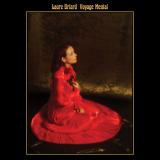
Every so often in music, we come across voices that achieve a certain timelessness, so naturally do they encapsulate both past and present. Laure Briard is one of these voices, retro in form but contemporary at heart, spanning a career rich in aesthetic twists and turns, never without her signature magic, a special kind of eternal filter. Her first album, Révélation (2015), reveals her yé-yé influences, a testament to her love for ‘60s French pop music. Her second studio album, Sur la piste de danse (2016), follows in this vein and finds Laure accompanied as always by her long-time bandmates who share an affinity for warm, catchy arrangements that never lose their appeal. Her tour of Brazil marks a turning point in her career, introducing her to the local indie scene and thus launching her collaboration with the band Boogarins, as well as inspiring the release of multiple EPs composed and performed in Portuguese. Today, her music is embellished by touches of bossa nova and a folk sensibility, boasting increasingly intricate arrangements, as exemplified by her 2019 release, Un peu plus d'amour s'il vous plaît. Several years later, the Californian desert captures the musician’s imagination with Ne pas trop rester bleue, a poignant musical journey inspired by the rich history of Western legends and the role they play in shaping our collective consciousness.
In Voyage Mental, Laure Briard draws upon an inner energy unearthed during a new stage in her life, where the thrill of spontaneous adventure is not accessible in quite the same way. The result is a collection of sophisticated, introspective songs, narrating a young mother’s quest for balance in the face of routine. The album, nostalgic but always tethered to the present moment, is also the fruit of her collaboration with Gaëtan Nonchalant, a talented musician known for coaxing poetry out of the mundane. The two of them co-wrote and recorded five tracks at Studio Nocturne, accompanied by her long-time sidekick Pieuvre, aka Vincent Guyot, Léo Blomov, Pierre-Louis Vizioz, and Hedi Bensalem. The gentle pop opener “Rocking Chair” sways steadily to the rhythm of dynamic drums, followed by “Train,” a ballad that extends an invitation to set sail and daydream alone. The folk escapade continues with “Golden Sun,” a duet featuring the 1960s cult American musician F.J. McMahon, who Laure contacted via the internet on a whim. “Golden Sun” is an unlikely encounter between two generations and two cultures, giving new life to an old forgotten demo on the other side of the Atlantic. And while Laure sings of wide open spaces, cowboys, and sunsets sinking into the sea, we feel the city surrounding her in “Miroir,” a song composed by Hedi Bensalem that laments the suffocation of living in a crowded metropolis where the sky is a distant gray smudge. This pressing need for air, this search for rest and total disconnection, is one of the album's central themes. It may also explain the ever-present sense of nostalgia that pervades the songs, a welcome respite in our current era of doomscrolling and darkness. Along the way, Laure soothes us with melancholy guitar, delivers poetry set to scattered piano notes, and takes us by the hand during lively, uptempo passages. We climb onto her wings, never straying too far from the ground, soaring joyfully above her moods.
Boogie Back Records proudly reissues BBR008 on 7-inch vinyl — a timeless slice of soulful innovation from Max Beesley, whose deep roots in the UK’s acid jazz and soul scene have influenced generations of musicians and listeners alike. A multi-instrumentalist, composer, and producer, Beesley has collaborated with some of the most iconic artists of our time — Stevie Wonder, Chaka Khan, Earth, Wind & Fire, James Brown, Incognito, Jamiroquai, and many more — contributing his signature touch on drums, percussion, keyboards, and vibraphone.
Originally released as part of Boogie Back’s 12” series, BBR008 captures Beesley’s unmistakable sound: rich harmonies, heavy grooves, and that soulful energy that bridges classic street soul and contemporary jazz-funk. This 7” reissue distills the essence of his acclaimed Boogie Back Records impacting era — a period defined by vibrant musicianship and cosmic jazz grooves ready for both the dancefloor and the deep listener. These two tracks showcase the full range of Beesley’s musical vision. “Night Daze” rides a hypnotic groove of cosmic Rhodes chords, tight percussion, and lush vibraphone lines, creating a cinematic, late-night atmosphere. On the flip, “Painful Truth” features the unmistakable voice of Omar, one of the UK’s most iconic soul vocalists — delivering a deep, heartfelt performance over Beesley’s rich, jazz-funk arrangements. This is another special and exclusive 45/7“ release via Soulkitchen Distribution…
Repress
Underground stalwarts Voodoos & Taboos make their Duality Trax debut alongside a remix from rising talent Bertie, set to drop on November 8th. Now on its seventh release, Holly Lester’s vinyl imprint blends seasoned pioneers with the next generation of producers. A serendipitous moment at London’s E1 in 2023 was the genesis for the labels latest release, when DT label head Holly Lester unknowingly dropped a Voodoos & Taboos track only for the duo to walk in mid-way. Already known for their standout releases on iconic labels like Phonica, Bordello a Parigi, and Palms Trax's
CWPT, this chance encounter sparked a creative connection between Holly and the pair.
‘Time Out’ kicks things off with swirling synths and the duo's signature alien electronics, set to a playful breaks infused rhythm and morphing bassline, as command and control rings out overhead. ‘Endless Game’ comes with the usual V&T trimmings; an infectious bassline and with a scattering of curious sounds and samples, with a healthy dose of italo-inspired groove - the type of track reserved for bringing a dash of joy to the danceoor amidst a heads down body-moving groove. On the B-side, Australian newcomer Bertie steps up with her remix of ‘Time Out’, following her breakout EP and high-pro¬le remix by Ciel. In a short space of time, Bertie has already developed a signature sound injecting her productions with nostalgic 90s house and contemporary subtext; glued together by crunchy drums and a penchant for wide-eyed rhythms. Sticking to her guns, Bertie’s ip of ‘Time Out’ packs a serious punch, showingwhy she’s an artist on the rise. The EP closes out with the psychedelic ‘All Action’ with its vocoder vocal samples, bubbling acid and teleporting top-lines.
One of the most notable features of the duo's music is their ability to let things evolve over time, their music often accompanied by strong storytelling, an art that has been almost lost in today’s era of instant grati¬cation; their instrumentation often taking on a life form of their own and dosed with surprises.
After a series of successful outings alongside sidekicks Ofofo and Zongamin, studio wizard MYTRON turns in his debut solo full-length for Multi Culti World Records. With contributions on Invisible Inc, Calypso, Bongo Joe, Kalahari Oyster Cult, LYO, Codek Records and Earthly Measures, Mytron has carved out a name for himself in a carefully-curated left-field quadrant of the indie-dance galaxy. Tuning his oscillators to myriad sounds — from dub and disco to krautrock — the London-based producer perhaps most notably channels the pristine compositional style of Kraftwerk. While most apparent in the use of vocoder, there’s a consistent efficiency of arrangement that recalls the man-machine in effervescent, idealistic fashion. Mytron manages to keep it simple, funky and musical — whimsical tunes that bop along with analog grit, wilderness, and wonk. There’s a warmth and wit that shine through every synth line, an understated confidence that speaks of years spent tangled in wires and waveforms, with an inclusive sonic eclecticism that flattens hierarchies between genres, geographies, and generations. Each influence is invited to the table, treated not as pastiche but invited to dine and dance in a space where kosmische dub disco and Afro rhythms can coexist without borders. The sleeve design echoes this philosophy: video-feedback patterns hinting at our modern screens, both portals and filters — coloured, distorted intermediaries through which we perceive the world. In the trippiest sense, the record is both reflection and refraction — a sonic mirror held up to an interconnected, glitchy reality. Tailored equally for DJ use and home-listening head trip, the album is meticulous, mischievous and merry.
BanBanTonTon review:
On Mytron’s debut long-player for Multi Culti groovy 21st Century leftfield house gear collides with Daniele Baldelli and Beppe Loda’s hugely influential `80s afro / cosmic. The 9 tracks are chunky, chugging and full of funky, funny noises. Old school B-lines mixing with eccentric electronics. Spinning, spiralling sounds.
Sugar is an electro-pop, vocoder confection, cut from the same sonic cloth as cult classics like Codek’s Tam Tam. Created from tough trap drums, splashing effects and a mutant Giorgio Moroder bass arpeggio. The title track, Propellor, pits Kraftwerk-esque hardware harmonised vocals against a bongo loop and a whistling hook. Playground has simian shrieks surround tumbling tom-toms. Highway Maintenance adds kosmische synths to a dance of woodblocks and buzzing bottom end. Keep On Dubbing is an organ-led, clip clopping percussive canter.
Tracks such as Speaker Can Talk, shot through with disco lasers blasts and recalling Curt Cress’ Dschung Tek, also lift the tempo up, but the bulk of the music here is a mid-tempo, techno drum circle. Squelchy sequences gurgling in and out of programmed percussion. On Quasar, spiky acid edges in and slowly takes over.
Key references that come to mind are Baldelli’s own turn-of-the-2000s Cosmic Sound Project productions, and Wolf Müller’s scene shaking sides on Themes For Great Cites, from around a decade later.
Combo Efectivo was formed in November 2024 in Bogota in a studio in the Teusaquillo district, at the invitation of Jazztropicante. It brings together an all-star cast from Bogota's neotropical movement and three iconic brass players from the current French jazz scene.
The chemistry was immediate and the energy palpable: a sound that was both playful and demanding, exuding groove, rich material rooted in contemporary jazz structures, and breathing the spirit of brass bands and the splendor of popular expression from the Colombian Caribbean.
A two-track EP was produced from this unique studio session, recorded and mixed at Mambo Negro Records, with the expertise of Daniel Michel. Mastered in Paris at Loom, this first 45 rpm single was released in February 2026 with The Pusher, officially marking the birth of the Casa Maguey Records label, which promotes the catalog resulting from Jazztropicante's encounters.
On the French side, three musicians who are making their mark on their generation: Stéphane Montigny on trombone, Antoine Berjeaut on trumpet, and saxophonist Léon Phal, the spearhead of a new generation of jazzmen. The Colombians are a cocktail of musicians from the most exciting groups on the current scene: Karen Nerak on vocals, rap, gaita, and percussion, Ruben Aragon on keyboards, Pelango on bass, and Kike Narvaez on drums.
Combo Efectivo magnifies the alchemy between the finesse of European jazz and the power of Colombian rhythms. A tropical trance fueled by improvisation, where the contemporary jazz scene and neo-tropicality meet in a spirit of openness and exploration.
"Drop That Beat," the cult classic by Ixxel that became a staple in clubs and at festivals in the late '90s, is making its return. The iconic track receives a contemporary interpretation by Mosimann, plus a high-energy club remix from NightFunk. Together marking a rebirth that sounds both timeless and hyper-modern.
Mosimann, the French-Swiss DJ-producer, singer and showman, is a leading figure in the French electronic scene, known for his bold, modern and versatile sound. A six-time DJ Mag Top 100 DJ artist, he stands out with explosive live performances in which he not only mixes, but also sings, plays drums, and commands keyboards, a technical virtuosity that makes him a unique live phenomenon, comparable to showmasters like James Hype. His rework of "Drop That Beat" injects the track with that same hybrid energy and performance-driven power.
Mosimann: "This track is very important to me. Fred Rister was much more than an influence: he was the first to truly get me into music production when I was 20 years old. Before he left us, he handed me the stems of Drop That Beat and told me: 'If one day you feel like it, work on a version.' It took me years of reflection, doubts, and memories before I found the strength to do it. Today, with the blessing of the two original composers, I'm finally releasing this version. It's both a tribute to Fred, a nod to Jacky Core and the Captain where I played so many times, and a way to carry on the legacy of that '90s Belgian techno which, to me, still feels very present today."
Belgian house star NightFunk complements this perfectly with a tight, club-ready remix that pushes the track straight onto today's peak-time dancefloors.
With this dual reboot, the essence of "Drop That Beat" remains intact, while both artists inject the track with their own signature touch. The result is an energetic release that resonates with nostalgic fans and a new generation of ravers alike.
This special edition will be released on vinyl via Serious Beats Classics, once again spotlighting the track's timeless character. A must-have for collectors and DJs eager to weave a piece of dance history into their sets.
The Éthiopiques series returns! Essential archive recordings from an extremely fruitful period in Ethiopian music.
Before “Swinging Addis” took over the world, there was Moussié Nerses Nalbandian — the Armenian-born composer who shaped modern Ethiopian music. Mentor, arranger, and pioneer, he laid the foundations of Ethio-jazz.
This Éthiopiques volume revives his forgotten legacy, recorded live by Either/ Orchestra First issue ever with new exclusive photos and in depth liner 8-page insert.
“Ethiopian jazzmen are the best musicians that we have seen so far in Africa.
They really are promising handlers of jazz instruments.”
Wilbur De Paris
(1959, after a concert in Addis Ababa)
አዲስ፡ዘመን። *Addis zèmèn* **A new era.**
The time is the mid-1950s and early 1960s, just before "Swinging Addis" bloomed – or rather boomed – onto the scene. Brass instruments are still dominant, but the advent of the electric guitar, and the very first electronic organs, are just around the corner. Rock’n'Roll, R’n’B, Soul and the Twist have not yet barged their way in. Addis Ababa is steeped in the big band atmosphere of the post-war era, with Glenn Miller's *In the* *Mood* as its world-wide theme song, neck and neck with the Latin craze that was in vogue at the same period. Life has become enjoyable once again, with the return of peace after the terrible Italian Fascist invasion of Ethiopia (1935-1941). The redeployment of modern music is part and parcel of the postwar reconstruction. *Addis zèmèn* – a new era – is the watchword of the postwar period, just as it was all across war-torn Europe.
The generation who were the young parents of baby boomers** were the first to enjoy this musical renaissance, before the baby boomers themselves took over and forever super-charged the soundtrack of the final days of imperial reign. Music is Ethiopia's most popular art form, and very often serves as the best barometer for the upsurge of energy that is critical for reconstruction. Whether it be jazz in Saint-Germain-des-Prés or the *zazous* who revolutionised both jazz and French *chanson* after the *Libération*, be it Madrid's post-Franco Movida, or Dada, the Surrealists and *les années folles* that followed World War I, the periods just after mourning and hardship always give rise to brighter and more tuneful tomorrows. Addis Ababa, as the country's capital, and the epicentre of change, was no exception to this vital rule.
**Two generations of Nalbandian musicians**
Nersès Nalbandian belonged to a family of Armenian exiles, who had moved to Ethiopia in the mid-1920s. The uncle Kevork arrived along with the fabled "*Arba Lidjotch*", the** "*40 Kids*", young Armenian orphans and musicians that the Ras Tafari had recruited when he visited Jerusalem in 1924, intending to turn their brass band into the official imperial band. If Kevork Nalbandian was the one who first opened the way of modernism, pushing innovation so far as to invent musical theatre, it was his nephew Nersès who would go on to become, from the 1940s and until his death in 1977, a pivotal figure of modern Ethiopian music and of the heights it. Going all the way back to the 1950s. Nothing less. And it is Nersès who is largely to thank for the brassy colours that so greatly contributed to the international renown of Ethiopian groove. While the younger generations today venture timidly into the genealogy of their country's modern music, often losing their way amidst a distinctly xenophobic historiographical complacency, many survivors of the imperial period are still around to bear witness and pay tribute to the essential role that "Moussié Nersès" played in the rise of Abyssinia's musical modernity.
Given the year of his birth (15 March 1915), no one knows for sure if Nersès Nalbandian was born in Aintab, today Gaziantep (Turkiye/former Ottoman Empire) or on the other side of the border in Alep, Syria... What is certain is that his family, like the entire Armenian community, was amongst the victims of the genocide perpetrated by the Turks. Alep, the place of safety – today in ruins.
Before Nersès then, there was uncle Kevork (1887-1963). For a quarter of a century, he was a whirlwind of activity in music teaching and theatrical innovation. *Guèbrè Mariam le Gondaré* (የጎንደሬ ገብረ ማርያም አጥቶ ማግኘት, 1926 EC=1934) is his most famous creation. This play included "ten Ethiopian songs" — a totally innovative approach. According to his autobiographical notes, preserved by the Nalbandian family, Kevork indicates that he composed some 50 such pieces over the course of his career. This shows just how much he understood, very early on, the critical importance of song as Ethiopia's crowning artistic form. Indeed, for Ethiopian listeners, the most important thing is the lyrics, with all their multifarious mischief, far more than a strong melody, sophisticated arrangements or even an exceptional voice. (This is also why Ethiopians by and large, and beginning with the artists and producers themselves, believed for a long time — and wrongly — that their music could not possibly be exported, and could never win over audiences abroad, who did not speak the country's languages).
Last but not least, one of Kevork's major contributions remains composing Ethiopia's first national anthem – with lyrics by Yoftahé Negussié.
Nersès Nalbandian moved to Ethiopia at the end of the 1930s, at the behest of his ground-breaking uncle. Proficient in many instruments (pretty much everything but the drums), conductor, choir director, composer, arranger, adapter, creator, piano tuner, purveyor of rented pianos,... he was above all an energetic and influential teacher. From 1946 onwards, thanks to Kevork's connexion, Nersès was appointed musical director of the Addis Ababa Municipality Band. In just a few years, Nersès transformed it into the first truly modern ensemble, thanks to the quality of his teaching, his choice of repertoire, and the sophistication of his arrangements. It was this group that would go on to become the orchestra of the Haile Selassie Theatre shortly after its inauguration in 1955, which was a major celebration of the Emperor's jubilee, marking the 25th anniversary of his on-again-off-again reign.
At some point or other in his long career, Nersès Nalbandian had a hand in the creation of just about every institutional band (Municipality Band, Police Orchestra, Imperial Bodyguard Band, Army Band, Yared Music School…), but it was with the Haile Selassie Theatre – today the National Theatre – that his abilities were most on display, up until his death in 1977. To this must be added the development of choral singing in Ethiopia, hitherto unknown, and a sort of secret garden dedicated to the memory of Armenian sacred music, and brought together in two thick, unpublished volumes. Shortly before his death (November 13, 1977), he was appointed to lead the impressive Ethiopian delegation at Festac in Lagos, Nigeria (January-February 1977).
His status as a stateless foreigner regularly excluded him from the most senior positions, in spite of the respect he commanded (and commands to this day) from the musicians of his era. Naturally gifted and largely self-taught, Nerses was tirelessly curious about new musical developments, drawing inspiration from the very first imported records, and especially from listening intensely to the musical programmes broadcast over short-wave radio – BBC *First*. A prolific composer and arranger, he was constantly mindful of formalising and integrating Ethiopian parameters (specific “musical modes”, pentatonic scale, and the dominance of ternary rhythms) into his “modernisation” of the musical culture, rather than trying to over-westernise it. It even seems very probable that *Moussié* Nerses made a decisive contribution to the development of tighter music-teaching methods, in order to revitalise musical education during this period of prodigious cultural ferment. Flying in the face of all the historiographical and musicological evidence, it is taken as sacrosanct dogma that the four musical modes or chords officially recognised today, the *qǝñǝt* or *qiñit* (ቅኝት), are every bit as millennial as Ethiopia itself. It would appear however that some streamlining of these chords actually took place in around 1960. It was only from this time onward that music teaching was structured around these four fundamental musical modes and chords: *Ambassel*, *Bati*, *Tezeta* and *Antchi Hoyé*. A historical and musical “details” that is, apparently, difficult to swallow, especially if that should honour a *foreigner*. Modern Ethiopian music has Nersès to thank for many of its standards and, to this day, it is not unusual for the National Radio to broadcast thunderous oldies that bear unmistakable traces of his outrageously groovy touch.
The label say "Fresh from impressing with the pulsating techno of Boris Werner and the fuzzy live house jams of San Proper, Tom Trago's Voyage Direct label turns to a man who needs little introduction: Dutch legend and man of many pseudonyms Danny Wolfers.
Best known under his Legowelt alias, Wolfers has spent the last two decades flitting between strobe light acid house, 808 electro, fluorescent techno and shimmering space disco. Throughout, he's kept his productions pleasingly analogue-heavy, making great use of classic drum machines and vintage synthesizers. While his music may be steeped in the past, Wolfers' productions always sound like the future.
For this first outing on Voyage Direct, Wolfers resurrects the House of Jezebel alias - a pseudonym previously only used for the twinkling deep house warmth of 2010's 'Love & Happiness' - and delivers two tracks of synth-laden analogue house goodness.
'Back In Dogtown USA' sets the tone, as Wolfers layers rising chords, darting electronics and wide-eyed synthesizer melodies over a clattering analogue house groove. As with much of the legendary Dutch producer's work, the track ripples with rush-inducing melodic intent. It's the soundtrack to a party on Jupiter, and we're all invited.
Wolfers' ups the tempo dramatically on 'I Took A Train In 1979', transplanting us to the far reaches of our galaxy via jackin' techno drums, picturesque organ melodies, drifting chords and intoxicating pads. There are echoes of classic Detroit techno, surging Rotterdam electro and vintage cosmic disco, yet it doesn't really sound like any of these things. Like 'Back In Dogtown USA', 'I Took A Train In 1979' sounds like the past, reconfigured and rearranged for the consumption of future generations. In other words, it's a classic Wolfers production."
- A1: X&B - Strobocop
- A2: Yanamaste - Hunter
- A3: Temudo - Cohorus
- B1: Ignez - Rudimental
- B2: Dextro - Buck Rogers
- B3: Flug - In Control
- C1: Klint - Quad
- C2: Dj Plant Texture - Reesolution
- C3: Petter B - Replicated
- D1: Backbone - From 0
- D2: Mathys Lenne - Mutant
- D3: Norbak - Americana
- E1: Ribe & Roll Dann - El Transito
- E2: Red Rooms - Debris
- E3: Sciahri - Pushing
- F1: Kameliia - Parallel Realities
- F2: Jancen - Sensation
- F3: Againstme - Ob Dub
- G1: Blenk - Shader
- G2: Marcal - Intertwined
- G3: Hyden - Reverie
- H1: Blanka - I Choose You
- H2: Developer - Have It All
- H3: Claudio Prc - Torque
SHDW presents 'Federation Of Rytm IV': a bumper 30-track collection spanning the past, present, and future of techno.
Offering powerful standalone club cuts and a cohesive deep-dive, the expansive VA lands on 24th October 2025.
The fourth edition of SHDW's flagship 'Federation Of Rytm' VA series has been carefully curated by the DJ/ producer and head honcho over more than a year, with close attention to detail given to sequencing. It is a balance of label regulars and debutants that represents the past, present, and future, both sonically and through the generational diversity of the artists involved. There are plenty of surprises along the way while always remaining true to the Mutual Rytm ethos and reflecting the journey of the night from start to finish, whether that's in intimate, sweaty clubs or on big festival stages.
Across 30 tracks in the digital collection and 24 on four sides of wax, the release explores the full breadth of the Mutual Rytm sound. Driving grooves and relentless percussion set the pace, gradually unfolding into hypnotic and atmospheric passages that invite deeper immersion. Pulsating low-end power alternates with eerie minimalism, while bursts of futuristic energy and cavernous kick drums keep the tension high. Elsewhere, dub textures and moments of introspection provide balance, creating a narrative arc that moves fluidly between intensity and release, atmosphere and tension, darkness and light.
It began with a cassette tape entitled 'Pleased To Meet You' gifted to us at Sessa's Fasching, Stockholm show by Yann Dardenne, the multi-tasking tour manager/sound engineer/producer/merch stall worker and co-owner of Seloki Records. On first listen, the selection of underground Brazilian artists from the Seloki's roster was superb, however, one song stopped us in our tracks. The hauntingly captivating ' GOSTO MEIO DOCE' by Nina Maia and Francisca Barreto, gave us a taste of Nina's ethereal, addictive voice and we knew we needed to hear more. Born in Minas Gerais but now based in Sao Paulo, the 22-year-old has already packed a lot into a relatively short space of time. The singer, songwriter, instrumentalist, and producer, has already collaborated on the soundtracks for six Brazilian feature films, including a track with the vocalists Maria Gadu, Iza, and Liniker. But things enter a new exciting era with this, her remarkable debut album entitled 'INTEIRA', which translates to English as 'whole'.
As much inspired by Billie Eilish and Rosalia, as Milton Nascimento and Toninho Horta and not sounding like other records coming out of Brazil, 'INTEIRA' is unique. Though rich in its Brazilian heritage, inspired by samba cancao, MPB, and the Clube da Esquina movement, it also channels influence from bands such as Portishead and Massive Attack, mixed with jazz, contemporary leftfield and electronic pop artists. Musically, it is not easily pigeonholed, with beautiful, well-crafted songs, sophisticated arrangements, eloquent vocals and intimate lyrics. Each track reflects different moments and stories from Nina's youth but with dialogues, feelings, and questions that span generations and resonate with all. This ambitious debut album is Nina's vision and sound, expressing herself without constraints and making music with her friends. Featuring a lineup of Thalin (drums), Valentim Frateschi (bass), Francisca Barreto (cello and vocals), Thales Hashiguti (viola and violin), Yann Dardenne (acoustic guitar and co-producer) and Nina on piano, Rhodes, guitar and production. The album led to a nomination in Paulista Association of Art Critics (APCA) award's 'Breakthrough Artist' category, who also listed 'INTEIRA' as one of the 50 best albums of 2024.
It also received support from Bandcamp Weekly and Jamz Supernova on BBC 6 Music. Released digitally by Seloki Records in Brazil in 2024, Mr Bongo in partnership with Seloki Records now present this new, deluxe worldwide edition that includes four additional songs. These comprise the brand-new exquisite 'MANHA', as well as an original twist on Vinicius de Moraes' classic 'Serenata Do Adeus'. Elsewhere you'll find a live recording showcasing Nina's remarkable energy on stage courtesy of 'DE DENTRO' and 'GOSTO MEIO DOCE' with the amazing musician/vocalist Francisca Barreto, where our whole story began. Here at Mr Bongo, we are honoured to release music by such a remarkable new talent - one whose musical trajectory is most certainly about to soar.
House and techno's most innovative improviser, KiNK, lands on Mutual Rytm X.
Offering four more thrilling dancefloor weapons, the iconic talent lands on SHDW's new Mutual Rytm X Series to deliver the label's second release.
Legendary Bulgarian artist KiNK is widely regarded as one of the most respected live acts on the global scene. He is a noted tech wizard who creates loops on the fly, crafts killer drums and never fails to hypnotise dancefloors. He has released on almost every influential label of the last 15 years and taken his unrivalled live show to all corners of the world, often drawing on those sets to bring aspects and inimitable qualities from his performances into his tracks. This innovative approach has helped to solidify his reputation as a groundbreaking figure, inspiring a new generation of musicians and producers, and he once again showcases precisely why he's in a league of his own here with a first appearance on SHDW's newly minted Mutual Rytm X.
'Unicord' opens up this new EP in thrilling fashion with sleek, Detroit-style synth loops flashing up top as the heavy, pounding while warm drums drive things down low. 'Quantum Shake' brings 90s energy with new school sound deists - the dubby drums are fast and urgent, the synth craft is deft, and the percussion adds texture to a straight-up but sophisticated techno anthem. 'Pitch Down' then brings fantastically unhinged synth leads that spray and zip about the mix to boggle the brain. Rattling percussive loops and chunky drums keep things moving as those synths get even more wild. To close, the digital bonus 'Highpass Lowpass' is a masterfully muscular cut with rugged bass and taught synths interlinking to mind-melting effect.
LTD 300 - Printed Sleeve
------------------------
Barranquilla born multi-instrumentalist Pernett is undoubtedly a true pioneer in fusing Colombian folklore with electronic elements. Back in 2003, when he released his first album “Música Para Pick Up”, Humberto was immediately seen as genius by some, crazy and outrageous by others. How dare he incorporate synthesizers into traditional music? What would be called this avant-garde genre where gaitas, traditional drums and keyboards come together? To this date, Pernett has released 6 albums, worked with an impressive number of prestigious artists such as Phil Manzanera, Calle 13, Novalima, or Quantic, and is still influencing whole generations of forward-thinking musicians.
Originally released from is latest album, “Vamos A Hacer” and El Pajarito have been edited for the occasion, by talented recording engineer Benjamin Calais AKA Ben Matik,
A-side “Vamos A Hacer - Ben Matik Instrumental Edit” is a joint collaboration between Pernett and renown British producer Will Holland aka Quantic. A heavy blend of funky breaks and cumbia. A 7-minutes version, exclusive to this 10″, has been especially taken out from the masters vault, and edited by Ben Matik: the original short version takes a unexpected turn to a completely freaked-out “Puya” rhythm, where gaitas and synths perfectly merge together.
B-side “El Pajarito - Ben Matik Instrumental Edit” is a deep downtempo anthem, a perfect fusion of powerful electronic beats, 808 bass, analog synths and gaitas. special attention should be paid to the enchanting voice of Diana Pereira on this one.
Artwork by Mateo Rivano.