
Suche:generic
- 1

9
Generic Flipper, the debut album by Flipper, remains the most absorbing full-length LP to emerge from the early San Francisco punk scene. A constant source of imitation for so-called "noise rock" bands, it has yet to be surpassed in its nihilistic glee.
Recorded between October 1980 and August 1981 and released in 1982 on the indispensable Subterranean Records, this album functions as a chaotic, sticky mass of individual personalities: the magma-like bass eruptions and dual vocals of Will Shatter and Bruce Loose, Ted Falconi's icy guitar scraping and the relentless beat of drummer Steve DePace. At times playful and taciturn, paranoid and absurd, Generic charts a deliberate path that willfully chances destruction.
In early '80s punk, when the hardening default was "faster-shorter-louder," Generic subverts the nascent hardcore scene with a strictly applied regimen of turgid-slower-heavier. The lyrics are bleak, yet unnervingly beautiful. "Ever" sets the tone with trademark restraint – "Ever wish the human race didn't exist? And then realize you're one too?" – while closer "Sex Bomb" is a churning, 8-minute epic with looping bass, saxophone accompaniment and electronic effects of dropping bombs.
Tons of indie bands have attempted to recreate Flipper's mix of acidic guitar, metallic bass sludge and sardonically brilliant lyricism, using the seemingly effortless template they pioneered; however, the effect usually drives listeners right back to Generic. While most of their contemporaries wilt under direct comparison, No Trend, the Butthole Surfers, feedtime and Church Police are a few who can stand the frigid heat.

Whoop whoop, it’s the sound of the inimitable KRS One’s ‘Sound of da Police’ and the mind bogglingly clever ‘Hip Hop vs Rap’, reissued here for the first time ever on 7 inch vinyl, housed in an original artwork picture sleeve this is a must have for anyone in the know.
First up ‘Sound of da Police’. A song that spoke out against the long running history of the Black community experiencing police brutality, violence and racism at the hands of those that were meant to be protecting them. The hard-hitting words from KRS touch on the history of slavery and it’s manifestation into systemic racism throughout the ages since.
“Change your attitude, change your plan
There could never really be justice on stolen land”
Couple that with a rough breakbeat, chopped through the MPC alongside choice funk samples and that legendary police siren ‘Whoop, Whoop’ and you had a certified golden era rap classic that ignited the fire in the belly of many across the globe.
On the flip, ‘Hip Hop Vs Rap’. A bumping hip hop loop lays the foundation for KRS to work his genius melding all manner of classic hip hop lines that are the perfect ammunition to cut up on the decks and results in a flow that certifies that hip hop is the culture that you live and breathe.
“Rap is something you do,
Hip-Hop is something you live!”
It’s a true, headsy b-boy gem which deserves a place in every collection.

- A1: Korridor - Dyson Sector (Cassegrain Swarm Vinyl Edit)
- A2: Korridor - Dyson Sector (Cassegrain Stellar Version)
- A3: Korridor - Binocular Observer (Ness Remix)
- B1: Blndr - The Untitleds (Svreca Remix)
- B2: Korridor - Vacuum Decay (Mike Parker Remix)
- C1: Blndr - Mental Stretching (Incantation 2) (Alan Backdrop Remix)
- C2: Ntogn & Luigi Tozzi - Wsjr (Orphx Remix)
- D1: Blndr - Untitled 1 (Cio D'or Trilogy Remix) (Cio D'or Remix)
- D2: Luigi Tozzi - Sub-Photic Zone (Edit Select Remix)
9
Repress
Arnaud le Texier (Cocoon Records): "Top quality! Really nice.." 10/10
Cio D'Or (Telrae): "An amazing double Vinyl of different interpretations from some music friends in techno for Hypnus! Thank you!" 9/10
David Att (ATT Series): "SUPER VARIOS ARTIST. THANKS: D" 10/10
Deepbass (Informa Records): "Great remix package here! Will be using most of them, a true showcase of the love for Hypnus" 10/10
Etapp Kyle (Klockworks): "Edit Select and Mike Parker are winners!" 8/10
Exium (PoleGroup): "Great stuff, thanks!" 8/10
Francois X (Dement3d): "Perfect Package of Remix!" 10/10
I/Y: "wow.. really good.. too many of them to choose one favourite" 10/10
Kwartz (Shapeless Records): "Congratulations for this great work, I love every song of the release" 10/10
Mattias Fridell (Gynoid): "This is a very solid compilation congrats." 8/10
MTD (Sonntag Morgen): "AMAZING release! hard to choose a favorite..." 10/10
Mod21 (Prologue): "No words for this release.. Hypnus is flying high!!" 10/10
Nima Khak (H-Productions): "Great bits! The Ness mix is outstanding, but a lot of great stuff in this package! Will play for sure!" 9/10
Nobody Home (Home Records): "Very nice release with many of my favorite musicians! Thank you very much :-)" 8/10
Reggy van Oers (Affin): "Some crazy stuff in here! love it!" 9/10
Samuli Kemppi (M_REC Ltd.): "Fan boy likes. Brilliant release. Full support." 10/10
Svreca (Semantica Records): "Excellent release. Full support." 8/10
Takaaki Itoh (Phobiq): "what a great trks. im sure to play all of them. full support!" 10/10
Terence Fixmer (CLR): "Top release, difficult to choose a favourite here...all are nice." 10/10
The Noisemaker (Par Recordings): "Hypnus is going to be one of the best label on earth! full support! all tracks have his own personality and are well designed.. top for opening a djset" 10/10
Tommy Four Seven (Stroboscopic Artefacts): "Big!" 8/10
Also supported by:
Dimi Angelis, Unam Zetineb, Antonio de Angelis, Artefakt, DARS, Gianluca Meloni, Jonas Kopp, Hector Oaks, Juho Kahilainen, Vilix, Eric Cloutier, Brendon Moeller (Echologist), Iori, Jose Pouj, VSK, AnD, Rasmus Hedlund, Victor Martinez, Antonio Vazquez, BLNDR, Luigi Tozzi and many more.

8
Soda Gong presents a razor sharp collection of rigorous and imaginative new music from Moscow-by-way-of-St.Petersburg-based musician and producer Flaty. "Generic TARGZ" places Flaty's precipitously complex drum programming and keen ear for atmosphere and space at the forefront, offering up a dynamic array of techno, ambient, generative footwork, and other tougher to pigeonhole rhythmic experiments. It is a dizzying and cohesive document in which ethereal productions, such as "Praaai" wherein a bewitching vocal pad hovers over delicate, pin-prick percussion, sit comfortably alongside tightly controlled chaos, as with the synapse-knotting "Thread" and heavy-hitting "Horn of Plenty".
Over the past few years, Flaty has released a wealth of diverse and uniformly excellent music under monikers such as AEM Rhythm Cascade, Dada Ques, and Wrong Water. He is most closely associated with the influential GOST ZVUK label, but his work has also appeared on imprints such as 12th Isle, Muscut, and his own ANWO Records. Although Flaty serves as his primary alias, "Generic TARGZ" is only the artist's second full-length under the moniker, following 2016's "New Suggestions", a high-water mark in the impeccable GOST ZVUK catalog. Mastered by Rashad Becker at D&M. Artwork and design by Alex McCullough and Niall Wynne Lewis.

6
Booming and banging, crashing and smashing, wriggling and writhing: the 'Black Snake Whip' cracks and out come the bats. INDEX:005 is a continuum of electrical fields that will psychologically ensnare and physically coerce you. Feel the tension from your ears to your toes; only dance will set you free.
This is a body of music, made for your body. Its Influences have been cultivating in the minds of industrial space enthusiasts and warehouse ravers for years. The sound of peaky synth leads and trebly harsh drums will make you grit your teeth as you succumb to the urge to move.
Take a whiff of this sonic bouquet from Black Snake Whip.

10
Her Majesty's Ship is proud to present 'This Never Happened', the latest album from hugely talented French-American singer and producer Yan Wagner.
This always inventive and off kilter artist has had many top releases on labels like Kitsune and has worked with the likes of the legendary Arnaud Rebotini and Etienne Daho. He also has a side project, The Populists, is producing the first album of Calypso Valois and wrote the soundtrack for the short film 'Victoria' by Mathilde Marc. Someone who plays events like SXSW and Montreux Jazz Festival, Wagner's playful disco-pop tunes always find their way into the emotions of those who hear them.
For his second album, the artist wondered what to do: surprise everyone with a selection of ballads or serve up the electronic sounds that defined his last effort Forty Eight Hours. The answer lies somewhere in between, with covers of Frank Sinatra and Lee Hazlewood mixed in with fresh and catchy disco production. Unlike the last record produced by Arnaud Rebotini, this record is producer by Yan himself with a triple objective: to favour the first takes, the heat of the sound and to reduce the post- production to a minimum. It makes for something authentic and real, and is an album of artistic self-questioning, tenacious dreaming and overcoming doubt.
Says the artist, "The songs on this record are a series of lies; views of the mind. 'This Never Happened' is a collection of stories that never happened. Ten tracks talking of vain loves, of nocturnal experiences and of life and truth, which are all so short.'
Starting with the retro synths and shiny arpeggios of the title track, ensuing cuts like 'Blacker' are real chuggers with almost de-humanised vocals over the robot beats. 'SlamDunk Cha-Cha' is descended from Bowie with its camp synth wiggles and sung- spoken vocals. Switching up the tempo, slower tracks like 'Grenades' are perfectly glowing and frazzled with their pixelated melodies and cold chords. More upbeat affairs like 'No Love' are like lighter and cheerier versions of Depeche Mode, and the Sinatra cover 'It Was A Very Good Year' is a stirring, synth heavy version that is every bit as tender as the original.
This is a fantastic album of timeless electronic songs and is sure to be one of the standout releases of the year.


- A1: Loyal Girl
- A2: Outnumbered
- A3: Going To Waste
- A4: Never Be Annoyed Again
- B1: Michael
- B2: Great School Trip
- B3: Garden Trouble
"Melodic, dreamy bedroom pop with a nostalgic sheen" is how Tom Davies, creator of brand new dream-pop artist Flopsy's dream, describes this charming little album.
Some of you may know him as GeoWizard; the mad British adventurer/YouTuber who travels in straight lines, but here you get to see or indeed hear a completely different side to him - one that sings in soft, tuneful tones reminiscent of Damon Albarn or Ray Davies, builds ethereal, layered harmonies that wouldn't sound out of place on a Fleet Foxes track, and crafts gorgeous guitar and synth parts that could easily have come straight out of John Frusciante or Kevin Parker's handbook.
Written in a young Davies's bedroom between the years of 2008 and 2014, the songs themselves are far from brand new, but with the help of his good friend and writing partner Liam Rhodes (with whom he played in Birmingham Psychedelic outfit "Kinds of light"), Davies has brought these sentimental tracks to life whilst keeping them bang in line with their original vision.
The result is an album that doesn't really fit into any specific genre, in fact you could argue it's just regular old generic pop, but there's an innocence and a playfulness in there that disarms the listener and transports them to a simpler time when melody ruled supreme.

7 Inch Vinyl in Label Generic Sleeve
A powerful two-sider from the incomparable Rhetta Hughes, whose rich vocal work includes singing backing vocals on Roberta Flack’s “Feel Like Makin’ Love.” Her version of “Light My Fire” — a rare, fiery soul cover of The Doors classic — brings raw emotion, driving rhythm, and Hughes’ unmistakable vocal authority to the forefront. Paired with the deep, dramatic “You’re Doing It With Her,” this beautifully remastered reissue returns two tracks from her album "Re-Light My Fire" and brings them to 7-inch for the first time. An essential RSD 2026 pick that highlights a remarkable voice too often overlooked and celebrates the soulful reinterpretation of a rock classic. Remastered, Redesigned Artwork.

4
Volume 2 of 3 vinyls containing all the extended mixes on Claude VonStroke’s 5th original artist album, “Wrong Number.” Whilst the first vinyl was all deep cuts, this second record is full of bumpy, quirky, club tools with unique properties. “Two Line Groove” features vocals “in the round” from both of his children, Jasper and Ella, and can be imagined working well on the DC10 terrace this summer. “A Little Drizzle” is a classic wonky VonStroke bassline with vocal chops all getting twisted like Matthew Herbert meets Akufen. Lastly, “Busted Ass Deejays” is a little bit of shade going out to $100+ tickets to see generic Deejays playing Beatport top 10s. Just poking a little bit of fun, we love you all!

2026 Repress in generic white sleeve!
It's been quite a wait for new &ME material here on Keinemusik. But these two new cuts, adding to our catalogue number KM046, sure have been worth waiting for. The EP starts with „The Rapture Pt.II“ and as the title already suggests, it coherently takes up where his last original material had left us, in a stirred state of sweet, harmony-kissed affection. Known as a virtuoso of sound-details, &ME lives up to that reputation, implementing fine synth-elements and temperately rattling percussions, all conjoined by shimmering layers and, of course, an ultimately heart-melting Piano improvisation that at some point will play along to the rhythm of its synthetic brother to a finale that will leave no crowd untouched.
"Solaris" on the flipside adds indeed a futuristic note to the arrangement, opening up with a broken beat and propelling claps. A cut that, as much as its predecessor, is relying on flow and organic shifts rather than forced and peaktime formatted gimmickry, adding a synth arpeggio, white noise, vocal chants and
harmonies in a rather subtle way. Nevertheless, it unfolds a compelling strength to heat the dancefloor gradually through its playtime.

8

2
Producer/bassist Petter Eldh's celebrated Koma Saxo returns with a fresh single release on We Jazz Records, June 12. "Koma Mate" is a new look on "Koma Tema" from Koma Saxo's 2019 debut album. The track's anthemic quality remains, but with an extra 10% bangerism added for good measure. On the flip, Eldh invites Jameszoo to tear apart and reassemble Koma Saxo's elements, making for an extra tasty serving of spicy Koma Soup, filled with criss-crossing saxes and odd grooves. Lightning in a bottle, times two.
"Koma Mate / Jagd (Feat. Jameszoo)" will be released by We Jazz Records on June 12 as a 7" single and digitally. True to We Jazz style, the 7" comes with an old school heat-pressed labels and a generic brown paper sleeve.

5
auch erhältlich
Part 1[34,66 €]
We're excited to announce 2 stone cold classics from Theo Parrish on Peacefrog - First Floor Part 1 and First Floor Part 2.
Originally released in 1998 "First Floor” is Detroit/Chicago auteur Theo Parrish’s debut album. Released on vinyl in two parts for maximum playability; the raw bluesy, soulful offbeat grooves have long since buried themselves deep under the skin of the house community.
Showcasing Theo’s innovative use of drum programming and effects its uniquely loose but taut knit of minimalist elements worked to maximal, hypnotic effect have solidified its reputation as a contemporary classic and served as a corner stone for Theo’s truly legendary status.
"First Floor” is one of those albums that has transcended generic borders to influence heads of all stripes with its unmistakable soul-nuzzling texture and groove. Essential.

We're excited to announce 2 stone cold classics from Theo Parrish on Peacefrog - First Floor Part 1 and First Floor Part 2.
Originally released in 1998 "First Floor” is Detroit/Chicago auteur Theo Parrish’s debut album. Released on vinyl in two parts for maximum playability; the raw bluesy, soulful offbeat grooves have long since buried themselves deep under the skin of the house community.
Showcasing Theo’s innovative use of drum programming and effects its uniquely loose but taut knit of minimalist elements worked to maximal, hypnotic effect have solidified its reputation as a contemporary classic and served as a corner stone for Theo’s truly legendary status.
"First Floor” is one of those albums that has transcended generic borders to influence heads of all stripes with its unmistakable soul-nuzzling texture and groove. Essential.
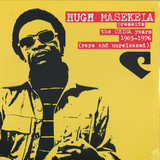
- A1: Ojah With Hugh Masekela - Afro Beat Blues
- A2: Letta Mbulu - Mahlalela
- A3: Baranta Feat. Miatta Fahinbulleh - Amo Sakesa
- B1: Letta Mbulu - U Se Mcani
- B2: Baranta With Miatta Fahinbulleh - Tepo
- B3: The Zulus - Za Labalaba
- B4: The Zulus - Aredze
- C1: Baranta With Miatta Fahinbulleh - Witch Doctor
- C2: The Zulus - Joala
- C3: Baranta With Miatta Fahinbulleh - Ahvuomo
- D1: Letta Mbulu - Melodi (Sounds Of Home)
- D2: Baranta Fet. Miatta Fahinbulleh - A Cheeka Laka Laka
- D3: Johannesburg Street Band - Awe Mfana
- D4: Letta Mbulu - Macongo
14
The Chisa Years: 1965-1975 (Rare and Unreleased) is a compilation album by South African jazz trumpeter Hugh Masekela. The album consists of 14 rare or forgotten tracks recorded by Stewart Levine and Hugh Masekela from 1965 to 1975 when they ran their own Chisa Records label.Thom Jurek of Allmusic wrote 'In sum, there isn't a weak moment on this entire collection. It's appeal is wide and deep and one can only hope this is the first of many volumes of this material to appear. BBE Records has done a stellar job in making this slab available.' Dan Nishimoto of the Prefix Magazine stated 'The compilation focuses on Masekela's original idea of 'African American Music.' From the early experiments of the Zulus (a group featuring M'Bulu) in mixing doo-wop, rhythm & blues and South African gospel and the mbaqanga/'Grazing in the Grass'-style work of the generically named Johannesburg Street Band to the clearly Fela-influenced Ojah (Masekela's band in the mid-'70s, consisting of players from Ghana and Nigeria) and the readyfor-primetime belting of M'Bulu, each track reveals a multi-pronged effort to find and challenge the notion(s) of how African and American cultural forms could interact.'

6
Este nuevo lanzamiento de BAOX marca una pauta que creemos fundamental: continuar luchando
para comunicar nuestras ideas.
En un mundo tan saturado de propuestas genéricas, copias y grandes corporaciones, tanto privadas como gubernamentales, llenando el cyber-espacio y lo tangible con propaganda y silenciando ciertos temas actuales y queriendo controlar nuestra información, nos refugiamos en la música para intentar movernos sigilosos pero efectivos.
Todos sabemos el reto de seguir lanzando música en formatos físicos, tanto de producción como
económicos, pero esperamos que los sellos y artistas independientes no se den por vencidos y
sepan que no están solos, muchos seguimos intentando conservar esta cultura tan pura del disco,
desde las fábricas, las tiendas, distribuidores, los ingenieros de audio, los artistas e incluso
nuestras familias y amigos que nos apoyan.

4
Nach über 25 Jahren Pause meldet sich Planet Pump Records eindrucksvoll zurück – und wie!
Label-Artist Stan-Lee aka Stanley Hottek reanimiert das legendäre Leipziger Technolabel mit einer kompromisslosen Vier-Track-EP: roh, druckvoll und tief verwurzelt im Sound der 90er – made for the underground.
Die EP „We Are“ versteht sich als klares musikalisches Statement: elektronische Musik mit Seele, Haltung und Herkunft – kein generisches Tool für Social-Media-Content, sondern echte Club-Energie.
Der Sound ist puristisch, treibend und analog produziert – ganz in der Tradition früher Planet Pump-Releases: raue Drum-Maschinen, wummernde Basslines und hypnotische Sequenzer, konsequent für den Dancefloor gedacht.
Die erste neue Planet Pump kommt auf klassisch schwarzem Vinyl, verpackt in einer bedruckten Stecktasche – limitiert auf 200 Stück.
Support Vinyl. Support Independent Labels. Support True Techno.
After more than 25 years, Planet Pump Records makes a powerful comeback – and how!
Label artist Stan-Lee aka Stanley Hottek revives the legendary Leipzig techno label with a relentless four-track EP: raw, driving, and deeply rooted in the sound of the ’90s – made for the underground.
The EP "We Are" stands as a clear musical statement: electronic music with soul, attitude, and heritage – not just another generic tool for social media content, but real club energy.
The sound is purist, driving, and produced with analog gear – staying true to the spirit of early Planet Pump releases: gritty drum machines, rumbling basslines, and hypnotic sequencers, all crafted strictly for the dancefloor.
The first new Planet Pump release comes on classic black vinyl, packed in a printed sleeve – limited to just 200 copies.
Support vinyl. Support independent labels. Support true techno.

generic sleeve 2025 repress
Oxygeno returns to his label Lost Verses with Pure Devotion, an EP that fuses hypnotic, raw, and relentless techno with a satirical and defiant critique of the Churchs values.
Side A opens with Soul Absorption, a track with a heavy low end, absorbing synths, and an atmosphere that plunges you into a deep abyss. Next comes Haunted, which takes the darkness further with a haunting, psychotic synth sequence and a heart-rending bassline that keeps you on your toes.
On the B-side, Infectious delves into shadowy territory with a modulated synth line that simulates something infectious and consuming. Finally, The Weight Of Guilt closes the EP with the heaviest and most aggressive track. Thunderous percussion and a crushing bassline capture the intensity and gravity reflected in its title.
Pure Devotion is a sonic journey designed for the dancefloor, where the body moves to the beat while the mind ponders and grapples with the ideas woven into each track.
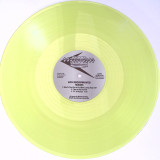
- D1: La Voix Humaine
- D2: Is The Life After Breakfast
- D3: You Bet
- D4: Forever
- C2: Time To Get Up
- C3: T V. In My Eye
- C4: Home Alone
- C5: Reckless Dialog
- A1: What's That Got To Do (With Loving You)
- A2: Time To Get Up
- A3: T V. In My Eye
- B1: La Voix Humaine
- B2: Is There Life After Breakfast
- B3: You Bet
- C1: What's That Got To Do (With Loving You)
- D5: If You Want It
16
HYPERSPACE COMMUNICATIONS is releases a new remix package of the original Los Microwaves first LP: What's That Got To Do (With Loving You) is a two disc release in Lime and Clear colored vinyl; remixed by Kit Watson from the original analog 24 channel multi-track tape.Disc One is an EP containing six songs from the original Life After Breakfast LP (Poshboy Records) that have been remixed for the dance floor and pressed at a popping 45 rpm. There are 3 songs on each side including the title track, Time To Get Up, TV in my Eye and more.Disc Two is a full length LP at 33 rpm featuring the previous tracks plus four more mixed as instrumentals for film and TV synch use.These can also be used for custom length live cross mixes.This limited edition comes in a gate fold sleeve that pays homage to the Poshboy generic disco sleeve and original LP cover, and also features photos by Fred Kaplan.
h C2 Time To Get Up Instrumental
i C3 T.V. In My Eye Instrumental
j C4 Home Alone Instrumental
k C5 Reckless Dialog [Instrumental]
[l] D1 La Voix Humaine [Instrumental]
[m] D2 Is The Life After Breakfast [Instrumental]
[n] D3 You Bet [Instrumental]
[o] D4 Forever [Instrumental]
[Instrumental]
[h] C2 Time To Get Up [Instrumental]
[i] C3 T.V. In My Eye [Instrumental]
[j] C4 Home Alone [Instrumental]
[k] C5 Reckless Dialog [Instrumental]
[l] D1 La Voix Humaine [Instrumental]
[m] D2 Is The Life After Breakfast [Instrumental]
[n] D3 You Bet [Instrumental]
[o] D4 Forever [Instrumental]
[Instrumental]
[h] C2 Time To Get Up [Instrumental]
[i] C3 T.V. In My Eye [Instrumental]
[j] C4 Home Alone [Instrumental]
[k] C5 Reckless Dialog [Instrumental]
[l] D1 La Voix Humaine [Instrumental]
[m] D2 Is The Life After Breakfast [Instrumental]
[n] D3 You Bet [Instrumental]
[o] D4 Forever [Instrumental]
[Instrumental]

Le Chatroom, a record label established in 2016 by the English producer Kouslin, searches for the missing link between underground bass music and outer national sounds. Its music is defined by the blend of synthetic and organic tones, modern / classic instruments and low- end heavy percussive rhythms.
Pushing artists from all around the globe that share the same love for this newfound sound, Kouslin's aim with Le Chatroom is to promote musical diversity, open-mindedness and experimentation at a time when unity between cultures is crucial. With 'LCR001' the label advances into a new physical environment from which this release should be experienced.
Real talk and native percussion establish the steady climax of 'Brothers', the A-side of Le Chatroom's inaugural wax release. Kouslin cuts through this sediment with a bright flute, before the state of the sound switches into something far darker and meditative. By placing several samples at irregular intervals, the Londoner achieves a fascinating charm that'll unite us all.
Booming bass in 'Gyals' lingers with a steady pace while percy tribal hits forge a raw groove that's far from common. With this movement, the producer from Bristol disintegrates the sense of a generic production and sticks to his true nature. Through this it becomes clear that Galtier has his polyrhythms down to a science.
Londoner Sheik clinches the B-side with a craze that unveils a nearly psychotic sense of sample architecture. Pushing crystal clear 808 kicks in- between the haunting atmospheres and a wall of pressure simply becomes one of his most inventive takes documented on wax. If you love to swerve through a minefield, the odd 'Oxram' would be your favourite pick off this first outline.
The three producers that feature on 'LCR001' pass on their fundamentals to conjure Le Chatroom's philosophy red-handed. Together they do the imprint's name justice by handing over critical bass repertoire that'll excite many!
9
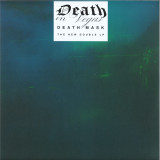
On June 6th, Death In Vegas return with new album ‘Death Mask’, where disintegration, overload and total sonic immersion tell a personal tale. With dirty circuitry and rough-hewn textures at the fore, this is gritty, unpolished techno; an audio outlier that’s full of personality, and a bold artistic statement. It’s closer in DNA to the grainy growl of sunn O))), or the searing intensity of Underground Resistance at their fiercest, and as far from generic influencer business as you could possibly get.
“I’ve been soaking in Ramleh’s ‘Hole In the Heart’, the machine funk of Terrence Dixon’s Population One, Jamal Moss’ psychedelic techno jams, the stunning minimalism of Mika Vanio’s Ø and Panasonic, the layered drones of LOOP, and drowning in the acid of TM 404”
Broader inspirations are weaved into the album’s fabric too; from his Thameside Metal Box studio and evocations of nautical ghosts, to lamentations for a broken world, to memories of a youthful Detroit pilgrimage, and the innocent fraternity of rave euphoria, there’s a lot going on, acting as a chronicle of moments, and locations.

Tresor resident DJs LNS and DJ Sotofett have for some years been developing a style at the club‘s Globus floor, and their new EP is a die cut of exactly the classic techno, electro, and house music they play.
Here are no productions drenched in reverb, no hi-fi obsessions or generic algorithmic patterns – this is Globus Trax, the duo's third release on Tresor Records, four tracks consisting of real TR-909 workouts, rude and driving basslines, live runs through the mixing desk, and a Blake Baxter cover version with LNS on vocals.
LNS & DJ Sotofett programmed an EP to perfectly fit their warehouse style of DJing, bringing out colour and variation in a spectrum more similar to a club compilation than a dogmatically reduced concept. With a single repeated vocal sample, Globus Trax opens bombastically with ClickClickClick, a dub -infused UK garage house track anyone in the world can easily describe in the course of a second.
Following this comes Gearbox which is a hefty slab of big room electro featuring a centerpiece arpeggio and the warmest harmonic pads on the EP's four tracks, which not-so-subtly makes reference to the pioneering band that shares a name with Globus and Tresor's home, the Kraftwerk.
The house vibe returns on Destination 909, which is nothing but a manifesto for the TR-909, where the beloved drum machine's jacking beats meet galactic strings and synthetic bass, only to be ripped apart in a slamming break that sees the machine take centre stage as it cuts in-and-out of the mix, again a clear nod to the duo’s sets in the club.
LNS steps up on vocal duties and DJ Sotofett keeps the 909 running for their final cut, taking a deeper dive into the realms of classic techno and paying tribute to “The Prince of Techno” Blake Baxter by covering his Reach Out originally released on Tresor Records in 1995.
The 12” was cut by DJ Sotofett himself at Manmade Mastering, where he resurrects the lost art of late-90s loud cuts with sonic presence and punch, optimal for the club-focused 12” format, and is the first to come in the new Tresor Sleeve, boasting an embossed logo on either side.

- A1: Korogi ‘73 - Fushigi Song
- A2: Yas-Kaz - Hei (Theme Of Shikioni)
- A3: Yoichiro Yoshikawa - Tassili N'ajjer
- A4: Norihiro Tsuru - Farsighted Person
- B1: Geinoh Yamashirogumi - Theme Of Kaneda
- B2: Yoichiro Yoshikawa - Fiesta Del Fuego
- B3: Columbia Orchestra - Heart Beats / Theme For Andrew Glesgow
- B4: Kan Ogasawara - Gishin Anki
8
LP vinyl only release + 4 page liner notes (comes with hype sticker)
The percussive new age soundtracks of '80s and early '90s Japanese TV, anime and manga built alternative worlds and pushed boundaries in the process.
When Japanese composer Yas-Kaz left Tokyo for Bali in the mid 1970s he had little idea of how influential his trip would become. In studying the storied art of gamelan, the jazz and avant-garde percussionist opened a door to a world of sound and rhythm left behind by the West. The music he and his contemporaries made would become known as new age. It also happened to soundtrack the golden era of anime.
Awash with money and with the prerogative to entertain the burgeoning middle classes, anime in the 1980s experienced a creative and commercial boom. Not constricted by generic expectations, production houses such as the now renowned Studio Ghibli were able to experiment liberally with both form and content. And with it came the space for composers to be similarly adventurous.
TV, Anime & Manga New Age Soundtracks 1984-1993 charts this moment across eight tracks spanning classics of the genre and previously unknown rarities. The collection brings together music that found kinship in electronic and acoustic instrumentation, often combining spiritual or environmental themes with percussive, varied and highly refined syncopations of non-Western musical traditions.
Among them is ‘Kaneda’ by Geinoh Yamashirogumi, the shape-shifting group of self-styled musicians, anthropologists and computer scientists that masterminded the soundtrack to game-changing dystopian anime Akira - and with whom the sound, tuning and breakneck speed of Balinese gamelan has become indelibly entwined.
Reflecting the desires of the era to reach beyond Japan’s borders, many of the soundtracks featured were commissioned for narratives set in distant lands or alternative worlds. There’s violinist and composer Norihiro Tsuru’s ‘Farsighted Person’, written for The Heroic Legend of Arslān, set in ancient Persia; Yas-Kaz’s own ‘Hei (Theme of Shikioni)’, for period sci-fi manga & anime series Peacock King - Spirit Warrior; and two tracks - Tassili N’Ajjer and Fiesta Del Fuego - from Yoichiro Yoshikawa’s soundtrack to NHK’s proto-Planet Earth series The Miracle Planet.
Such was the variety and quality of the music produced, if there is a guiding principle to the tracks collected here it is a sense of escapism and adventure that came with the confluence of modern electronic instruments and a fascination with percussive traditions.
Elsewhere, pioneering children’s TV composer Chumei Watanabe’s ‘Fushigi Song’ (performed by a vocal group Korogi ‘72) offers a trippy and infectious groove with sonic similarities to Don Cherry’s ‘Brown Rice’; little-known jazz-funk library group Columbia Orchestra showcase the best of Tokyo’s session musicians on ‘Hearts Beats - Theme for Andrew Glasgow’; before lawyer-turned-composer Kan Ogasawara closes out the compilation with a dramatic flourish on ‘Gishin Anki’.
Following on from Time Capsule’s acclaimed deep-dive into the world of manga & anime synth-pop in 2022, this vinyl only collection is set to broaden and diversify an understanding of how soundtracks shaped the sound of new age music in Japan for a generation.
Curators: Kay Suzuki, Rintaro Sekizuka (Vinyl Delivery Service)
Artwork: Tu-yang

2025 Repress
DJ Koze might be one of the world's best producers, but above all he's a DJ, and it's his DJ ear that governs. J
ust as in a great set, so with his releases: 'Seeing Aliens' came out of nowhere, a big buzzing beast of a track, to announce that Koze was back on the scene and prime everyone for the coming album, knock knock.
But now that Koze has your attention, it's time to remind everyone what's most important about club music, pull things back, take a turn to the left, and get deep into the groove.
Thus 'Pick Up': the second single from knock knock is 100% pure groove, doubly so in the extended 12' version.
In a sense it's incredibly familiar - it is essentially a filter disco record, very close to something you could imagine coming out of Paris around the turn of the millennium. But of course, this is Koze. Nothing is normal or familiar in his world, and he's taken this most foundational of clubland staples into new territory. Flipping amples of Gladys Knight & the Pips 'Neither One Of Us (Wants to Be the First to Say Goodbye)' and Melba Moore's 'Pick Me Up, I'll Dance', it creates something completely airborne, shot through with emotions such as gods must feel: not quite explicable to the human mind but strong enough to knock you off your feet. In its way it's absolutely as powerful as 'Seeing Aliens', but it comes in like the proverbial iron fist in a glove of velvet.
The flip, a ten-minute new track, 'The Love Truck' is a big contrast again. If 'Pick Up' is giddy flight,
'The Love Truck' is woozy floating. Its sharp, clicking percussion recalls 2000s minimal techno, but this time absolutely nothing is generic. The long, intense, on-and-off bass tones, the flickers of birdsong, the pure voices slipping in backwards as if from the future... it's all like the most blissful dream, and culminates in a coda so subtle yet so beautiful it's like ever time you've ever seen the sun rise and thought 'I never want this to end', all the while understanding deep down that the fleeting nature of the pleasure is also what give it its power. But of course, being created with that consummate DJ's ear, it's also full of the thrill of wondering what Koze has in store next.

4
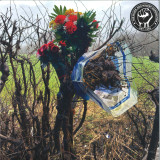
- A1: The Slow Cancellation Of The Future
- A2: The Future Is Now The Past
- A3: Generic Protocols
- A4: Stockhausen Was Right
- B1: Consumer Tethering
- B2: New Times End
- B3: The Failure Of Modernity
- B4: Airport 3
- B5: Core Planning
- C1: Rem Kiss
- C2: Agency
- C3: Null
- C4: Deep Isolation
- D1: Shuggy
- D2: Human Latch
- D3: Floatation
- D4: Internal Sunrise
17
“Sleep Deprivation” began in 2006, during a time when our sleep patterns were drastically altered by constant travel and late-night gigs. This relentless cycle of broken sleep became a persistent part of our lives, and over time, we noticed something remarkable: our music became more emotional, raw, and vulnerable. Sleep, or the lack of it, affects every aspect of life, and its influence on our creative process was undeniable. For this album, we chose to embrace that emotional intensity, allowing it to take centre stage over traditional arrangements. Sleep deprivation blurs the lines of logic, and the part of the brain that usually handles structure and order begins to falter. In that haze, deeper feelings rise to the surface, unfiltered and honest. With this album, we surrendered to that experience, letting the emotional chaos shape the music, and the result is an exploration of what happens when you’re pushed to your limits, both physically and creatively.

13
DJ Support: Mark Knight, CJ Mackintosh, Mousse T, Dr Packer, Eric Kupper, Lenny Fontana, Ricky Morrison, Laurent Garnier & many more.
Michael Gray’s star has been firmly in the ascendant in recent years, with a string of chart-topping, floor-filling productions and remixes under his belt. The excitement is therefore palpable for his soon come album Optimism, which sees Michael pour both his heart and his three decades + of experience into what will be one of THE albums of the year.
'This album has been a year and a half in the making,' states the ‘Weekend’ hitmaker and one half of legendary disco house pioneers Full Intention, clearly now keen to release his career-defining magnum opus out into the world.
In these confused and often frightening times, we need musical communion more than ever. Only too aware of this, Michael has 'set out to make an album full of positivity.' Needless to say, the resulting 'hybrid of classic disco mixed with modern disco and soul' hits the spot and looks set to provide a soulful summer soundtrack to lift spirits and fill dancefloors.
In an era of often generic, over-computerised sounds, Michael returns to the source of his lifelong musical inspirations. 'Most of these productions have involved working with live strings and horns,' he enthuses. The musicians include live drums by Derrick Mckenzie from Jamiroquai, percussion by Russ Tarley from Incognito and string arranger Stephen Hussey, known for his work on Soul II Soul’s early hits.
Michael’s much-needed musical missives for the ages are masterful manna from the heavens. Things just got optimistic.

- A1: Held By Trees - In The Trees - Ambient
- A2: Stanley Clarke - Desert Song
- A3: Jan Akkerman - Ode To Billy Joe
- A4: Alain Debray - Concierto De Aranjuez
- B1: The Hightower Set - Departure Lounge (Nothing To Declare)
- B2: J Walk - Cool Bright Northern Morning
- B3: Canyons - Akasha (Begin Remix)
- B4: Waves - Summer Sunday
- B5: Mudd - Summer In The Wood
- C1: Trevor Heiron - Love Chains (Instrumental)
- C2: Korallreven - Honey Mine (Lissvik Remix)
- C3: Giorgio Tuma - Through Your Hands Love Can Shine (Feat. Laetitia Sadier)
- C4: The Superimposers - Seeing Is Believing
- C5: Cecilo & Kapono - Someday
- D1: Teacher - Can't Step Twice (On The Same Piece Of Water) (New Version)
- D2: Kalima - Shine (Gilles Peterson Vibrazonic Dub Mix)
- D3: The Haggis Horns - The Traveller Part Two
17
Celebrating twenty-five years of Aficionado as a place to play away from suffocating mainstream club culture, DJs Jason Boardman and Moonboots have compiled a contemplative set of 16 tracks that holds a deep meaning to both themselves and attendees of their now legendary parties. The compilation includes two new tracks exclusive to the release: J Walk’s ‘Cool Bright Northern Morning’ and Begin’s remix of Canyons ‘Akasha’.
Reflecting on how it all started 25 years ago, Moon considers their no-plan-plan to be a makeshift plateau which evolved organically: “All we did was try to play good records one after the other without any consideration for fashion. And people wanted that”. Alternative approaches were not unknown at the time, but Aficionado, as Jason and Moon’s Sunday sessions became known, pressed the reset button with unique resolve.
Jason elaborates: “It was 1998 when we started. It was our own 'fuck you’ to the Super Club regime - almost everywhere then. The ‘anything goes’ Balearic ethos was in abeyance. It wasn’t cool at the time, but we both just wanted to keep that original spirit alive. ‘Keep it open’ had always been my approach to DJing - even from playing at Youth Clubs as a teenager. No rules or generic constrictions. Play anything that you like from any era, any style from any time. We always encouraged our guests to dig deep and play outside of their comfort zones, their usual styles”.
The lovingly crafted musical mystery tour of this compilation, considering its pleasantly hypnagogic intent, may not reflect the madness of these now distant memories. This is an older and considerably more responsible collection and this is what we need right now - a temporary respite from a world almost capsized. A mood, a meditation created by masters of their craft. Odd socks from disparate global locations making new sense side by side. An assemblage, if you like. A thread through many different kinds of thinking. A new picture pieced together from the lost pieces of many jigsaws.

12
Originally released in 1994 on Calypso Records / Irma Records in a triple vinyl promo white label version, Don Carlos's album Aqua is the
second album by the Varese-based DJ producer, already then known for his first two singles Alone and Mediterraneo, then both included in
his first album entitled Mediterraneo and released only in Compact Disc format in 1992 for the American market printed and distributed by
IRMA U.S.A., the American subsidiary of IRMA Records Italy.
The same fate will also have the Compact Disc format of the Aqua album, again printed only on the American market.
But the triple vinyl, printed in a limited edition of 500 copies in a white generic envelope, was never reissued and has become a rare record
over the years.
After almost thirty years, after countless requests for reissues, especially in the last few years in which the name and music of Don Carlos
has made a comeback, Irma Records has decided to reissue the vinyl in exactly the same original triple version.
DJ Don Carlos (born Carlo Troja) with his productions in the 90s has become one of the cult producers for DJs around the world.
His track Alone released in 1991 for Calypso was and still is one of the classics of House Music, played by all the major American and British
DJs.
At the time of its publication it was considered an underground song and therefore did not sell very much, but over the years its myth has grown
thanks to its subsequent productions as for example his second single, the EP entitled Mediterraneo, title which it will then inspired his first CD
album printed in the USA with the same title.
Several other singles followed, another album, always printed only in the USA, entitled Aqua, from which a triple promo vinyl was extracted which
today is one of the artist's most requested rarities.
In Italy his third album was released in 2002 entitled The Music In My Mind where Kim Mazelle, Michelle Weeks, Taka Boom and Kevin Bryant
were present as vocal guests. In 2009 a collection of the first two albums released in the USA titled Mediterraneo-Club Favourite Collection '90-
98 and in 2010 his fourth album entitled The Cool Deep which reproduced the sounds closest to his first productions.
Also active as a remixer for Italian and international labels, one of his most important works is the remix of Byron Stingily of the song You Make
Me Feel of which he made a worldwide hit. As a producer he also used other pseudonyms such as Montego Bay, Aquanuts, Sotterranea and
Love 2 Love Orchestra. He has played and plays in different countries such as London, New York, Miami and at various festivals, such as the
Robot and the Stickermule Festival in an evening with Apparat, Derrick May, DJ Koze, Lil 'Louis, Young Marco and Ellen Allien, LTJ Xperience

8
4/5 Mojo review: ‘Sparse, hypnotic big-room techno that builds from the bass drum up
Double LP is released on 140gm black vinyl in a transparent gloss foil sleeve, artwork and design by Ian Anderson for Designers Republic. Circuitry Electronic launches with a release that stands as a statement of intent - an artist with few true peers within English electronic music, with an album that jumps out of the speakers and slaps you around the chops. G-Man is Gez Varley - one half of Sheffield pioneers LFO, and thirty years into his solo career, with his first vinyl album release since Avanti on Force Inc way back in 2002. Speaking to DJ magazine in 2014 Gez recalled his early days working with Mark Bell as LFO: “We were influenced by groups like 808 State. Unique 3, Nightmares On Wax and also stuff like Kraftwerk, Detroit techno and early electro. So when we first hooked up and made tunes together we just wanted to rock the dancefloor at our local club The Warehouse”.
Their eponymous track ‘LFO’ – a classic of the bleep and bass techno movement – was one of the first releases on the Warp label, gate- crashing the UK’s Top 20 whilst annoying Simon Mayo along the way. Having worked with the likes of Richie Hawtin, Karl Bartos, Laurent Garnier, Art of Noise, Radiohead, YMO and Alan Wilder, in addition to the LFO output, you'd expect Gez to know his way around a techno dancefloor rhythm and drum pattern, and this is an inventive funk-filled journey that never veers too far into experimental territory yet avoids the cliches and generic tropes that too often lose the listener when techno manifests in album form.
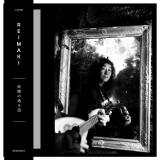
妖精の通る道 (The Path Where Fairies Pass) is the debut vinyl release by Reimaki, the duo of Rei Yokoyama (Triggers Flowers, Stakaidan, Lapiz Trio, 新井薬師自警団, and Fujio, Chiko Hige and Rei), and Maki Miura (Tsubamegami, Les Rallizes Dénudés, Shizuka, Fushitsusha, Ohkami No Jikan and Katsurei). The duo has been an understated presence in Tokyo, playing occasional under-the-radar shows and self- releasing a few CD-Rs, but they’ve recently started to break cover, with a recent cassette on UFO Creations, released in support of a late 2024 tour of China. It’s also a welcome reappearance on the scene for both musicians; Miura’s musical history, in particular, is being reevaluated thanks to a recent string of welcome Shizuka reissues.
But the music Reimaki make together is a different thing entirely, much as it shares some psychological and aesthetic interests with both Miura’s and Nokoyama’s other projects. Their sound is split between two main interests – an extension of glacial, deoxygenating psychedelic improvisations, and a deep interest in medieval European music. They’ve also been known to cover compositions by English prog/improv musician Fred Frith. These various elements of the Reimaki aesthetic are all present through 妖精の通る道, from the fragility of the opening “Novel Amor” through to the smeared, hazy textures of the three extended pieces that comprise the album’s flipside.
There’s a beautiful sympathy in these performances, and a generous simplicity, too; you can sense that this music is informed by decades of finding just the right way to say the right thing in the clearest manner possible. Yokoyama and Miura never overstate things; make the statement, play the song, let it hang in the air for a while, and then move on to the next essential expression. The music is unburdened by self- consciousness. Their take on medieval music cuts to the core of melody and melancholy; their psych- improv side is blurred and drifting without ever lapsing into rote generic gestures.
There’s some shared space with other artists who suspend the timeless within the kaleidoscopic possibilities of the psychedelic – Kendra Smith & The Guild of Temporal Adventurers; Emmanuelle Parrenin; Rosina de Peira – and a tangled folksiness that might put listeners in mind of Jan Dukes De Grey, Comus, Current 93, and Tower Recordings. Accompanied by beautiful photography from street photographer Takehiko Nakafuji, who was also personally chosen by Mizutani to document Les Rallizes Dénudés, 妖精の通る道 is a most unique and necessary trip.
New EP from Polish label Kooky is a challenging and ambitious one. Jay Tripwire, Canada's finest DJ and producer, offers a solid set of 3 minimal (techno) tracks, crafted with a unique passion for detail, raw energy and dark soundscapes. Every track differs in intensity and dynamics, but all of them are a feast for the ears to demanding music lovers. If you are searching for the true beauty of minimal and want to escape from modern dance music that is unfortunately more and more generic these days, this release is just for you.

Repress!
We are thrilled to announce the first release of Dubtil's long awaited very own label, called Infrequent. Expect heavy hypnotic minimal from one of Romania's finest DJ and producer..
Infrequent : not generic
Vinyl only 180g black cover with centre hole

- A1: Atrice & Shalt - Track
- A2: Batu - Frostbite
- A3: Ayesha - Burn
- A4: Re Ni - Peace Avenue
- B1: Lechuga Zafiro - Porta Seca
- B2: Bambounou - Soul Trippin
- B3: Skee Mask - Siebkopf
- B4: Pearson Sound - Zoomies
- C1: Jabes - Updow
- C2: Koi - Mujer Serpiente
- C3: Duckett - Let Me Go
- C4: Polygonia - Atropa Belladonna
- D1: El Irreal Veintiuno - Fisura
- D2: Yushh & Jurango - Wake Me When It's Over
- D3: Daisy Moon - In Twilight Anguish
- D4: Marco Shuttle - 808 Kisses
- E1: Minor Science - Mortals
- E2: Lurka - Maze
- E3: Jasss - Floating On Egg White
- F1: 33Emybw - Ghost Month
- F2: Metrist - Fmy Torch
- F3: Badsista - Silver Plate
- F4: Verraco - Bleeding
23
Heralding 10 years of relentless club futurism, Timedance strikes forward once more with TD10. Batu's label has nurtured experimentation between techno propulsion, soundsystem pressure and innovative sound design since the beginning, rarely resting in one space and always reaching for new ideas. Across 23 forward-facing cuts, this compilation continues that tradition with a strong cast of scene-leading heavyweights and crucial emergent talent.
The wide-ranging styles across TD10 are bound together by a shared affinity for bassweight presence and vibrant, three-dimensional production. Fractured, artful deconstruction from Daisy Moon, Marco Shuttle and Verraco sits alongside the snarling half-step pressure of re:ni and Lurka and the jagged drum intensity of Lechuga Zafiro, 33EMYBW, Ayesha, and Jabes. There's space for big room anti-anthems from Pearson Sound, Bambounou and Batu himself, wildcard swerves from Minor Science and Skee Mask and more emotive melodic sensibilities from Polygonia, El irreal Veintiuno and BADSISTA. At every turn, the ideas are fresh, toying with the idea of an all-encompassing sound for the label and throwing open the possibilities for what it might represent in the future.
Timedance has thrived in an era where technology has eroded the boundaries between the generic formulae of dance music's past, helping set the pace for innovation and presenting compelling, immediate music across the tempo range. TD10 responds to that legacy with its gaze fixed firmly forwards, ushering in the label's next chapter in proudly unpredictable style.

Mona Steinwidder (Museum of No Art) and Mitko Mitkov have spent years exchanging sounds and words across Hamburg's creative landscape - Swimming Pool Reflections is where those exchanges accumulated in Steinwidder's studio beneath the slanted roof of a former barracks. Premiered in November 2024 for Gesa Troch's exhibition "you say water is sweet", the work intertwines Mitkov’s texts (originally composed as emails to members of a swimming club, as imaginary as they are real) with Steinwidder’s clarinet and synthesizer, full of dubby resonance.
Swimming Pool Reflections isn't about swimming. It's about standing at the edge and watching - the way light fractures through water, how shadows play across tile, everything that forms and dissolves in the viewer's eye. The libretto moves through straits where bodies of water collide, small lakes with white slides, pools suspended in generic landscapes generated from uploaded photographs. Binary gods and transparent shadows. Sediment and cosmic hands weaving existence on overdimensional looms.
Across two uninterrupted sides, words float like those oil spots Mitkov describes: "swallowing light, drifting between the waves, forming a strange pattern". The music holds space for these reflections without trying to contain them. Everything stays permeable. Everything keeps moving.

Many Amerindian cultures share the belief that the future lies behind us, while the past is what we face ahead. This challenge to Western chronology is, however, rooted in common sense: the open possibilities of what is to come are, in theory, what we cannot see—the uncertain—whereas the events that have already happened unfold before our eyes and are available for us to learn from.
This second album by Chilean producer, live performer, and DJ Valesuchi could be described as an experiment with time through music. Some years after relocating to Rio de Janeiro, she released Tragicomic LP (2019) on MAMBA rec—a label founded by the boundary-pushing Brazilian party Mamba Negra—and the self-released EP Cascada (2024). In both works, we can already appreciate her musical imprint: rhythmic and emotional timbral lines—wet, filtered, mathematical,
devotional, multilingual, fantastic, and unreal. However, in Futuro Cercano (Discos Nutabe, 2025), we can hear a leap: the sedimentation of her lived experiences in electronic communities across Latin America, her search for a universal yet personal language to convey emotion and new spiritual meaning, finds in this release a consistency and spontaneity that is rarely heard these days.
In a time when all cultural expression is not only expected to be taggable, but is also increasingly produced from templates that precondition our perception—favoring categorization and connections to works or scenes of the past—the tracks on this album are generically unclassifiable. They represent an openness to experiment without prejudice with electronic instruments and rhythms that are asancestral as they are futuristic. They publicly reveal an intimacy born from the compositional process, a bond formed through the encounter—sometimes tense, sometimes harmonious—between human will and that of the machines themselves. Or, as Valesuchi put it, "cyborging my friendship with the machine and becoming a tempest." Tempest as an eruption of the unknown into the present, the result of opening oneself to a nearly meditative state to uncover the deepest feelings through improvisation on cybernetic feedback and loops. And in that improvisation, to develop “técnicas para estirar o medir el tiempo”
“techniques to stretch or measure time” as she sings in 22, the album’s first track. “Connecting knowledges” as a portal to access that future so near it lies behind us, and to anticipate it as intuition and prospection.
That’s why Futuro Cercano is more than just electronic music: it is a technological ritual, an immersion into the secrets that machines hold as artifacts of human and non-human knowledge, as mysterious objects that allow us to connect with our own otherness—the personal alien hiding beneath the skin that opens us up to uncertainty as possibility rather than catastrophe.

- A Refugee
- Refuge
- Blood
- Occupied
- At The Diner 2
- At The Penitentiary
- A Beggar
- People!
- A Generic Breakup Ballad
180g, turquoise vinyl. Perhaps the hardest thing about Soul music is convincing. If the place and the experiences don't somehow shine through and meet us, we risk missing out on what's on offer completely. "But first_ are you experienced?" as Jimi Hendrix asked. That's precisely why Soul music is difficult in Sweden. There are few who can portray their experiences in music in a way as convincing as in the Black US Soul tradition. This however seems almost provocatively easy for Bror Gunnar Jansson to do. On the album People, it's as if he pours both lyrics and melodies that have grown slowly in life and that come naturally if you grow up on the right soil. And on almost every song, it only takes a few bars for Bror Gunnar Jansson & The Escapism to show who their musical relatives are. Although Gunnar seems to move freely in musical landscapes ruled by the greats of seventies soul from Al Green, Curtis Mayfield and Aretha Franklin, as well as in some of the fringes of blues and jazz territory, both he and drummer and producer Christopher Cantillo explain that the album has took a long time brewing. And that what may appear obvious and simple has sprung out of a friendship that spans more than half of their lives.

- A1: Malavoi - Te Traigo Guajira
- A2: Los Caraibes - Donde
- A3: Tropicana - Amor En Chachacha
- A4: Ryco Jazz - Wachi Wara
- A5: Eugene Balthazar - Dap Pignan
- A6: Roger Jaffort - Oye Mi Consejo
- A7: Les Kings - Oriza
- B1: Les Supers Jaguars - Tatalibaba
- B2: Super Combo De Pointe A Pitre - Serrana
- B3: L'ensemble Abricot - Se Quedo Boogaloo
- B4: Henri Guedon - Bilonga
- B5: Les Aiglons - Pensando En Ti
- B6: Los Martiniquenos - Caterate
13
In Guadeloupe, many people think that jazz and ka music are like a ring and a finger. To some extent, the same could be said about so called Latin music and the music played in the French West Indies.
Both aesthetics were born in the Caribbean and bear so many connections that they can easily be considered cousins. In constant dialogue, there are lots of examples of their fruitful alliance and have been for a while. The English country dance that used to be practiced in European lounges came to be called kadrille in Martinique and contradanza in Cuba. They both featured additional percussion instruments inherited from the transatlantic deportation. Drawing from shared feelings about the same traumatized identity – later to be creolized – it would be hard not to assume that they were meant to inspire each other. The golden age of the orchestras that graced the Pigalle nights during the interwar period further proves the point. As soon as the 1930s, Havana-born Don Barreto naturally mixed danzón and biguine music in a combo based at Melody's Bar. In the following decade, Félix Valvert, a conductor who was born and raised in Basse-Terre in Guadelupe, also worked wonders in Montparnasse with La Coupole, which was an orchestra made up of eclectic musicians. Afro- Caribbean performers of various origins were often hired on rhythm and brass sections in jazz bands, which used to enliven the typical French balls of the capital. In the 1930s and onwards, Rico’s Creole Band was one of them.
Martinican violinist-clarinettist Ernest Léardée, who would become the king of biguine music as well as the main figure of French Uncle Ben's TV commercials (a dark stigma of post-colonial stereotypes), had musicians from the whole Caribbean sphere play at his Bal Blomet – and they all enchanted "ces Zazous-là" (according the words of Léardée's biguine-calypso piece). In les Antilles (French for French West Indies), music history started to speed up in the 1950s, when trade expanded and radio stations grew bigger. The Guadelupean and Martiniquais youth tuned in their old galena radio sets to South American and Caribbean music. As for the women traders, les pacotilleuses, they bought and sold goods across different islands (the "passing of items through various hands" was thought to be most pleasurable) and brought back countless sounds in their luggage. Such was the case of Madame Balthazar, who once returned from Puerto Rico with the first 45rpm and 33rpm to ever enter Martinique.
Out of this adventure was created the famous Martinican label La Maison des Merengues, a music business she opened and undertook with her husband and which proved to be a major landmark. At the end of the 1950s, in Puerto Rico, Marius Cultier competed in the Piano International Contest playing a version of Monk's Round 'Midnight. He won the first prize and this distinction foreshadowed everything that was to come. Cultier, the heretic Monk of jazz, was quickly praised for writing superb melodies, always tinged with a twist that conferred a unique sound to his music. It didn't take long for the gifted self-taught musician to get to play with Los Cubanos, making a name for himself thanks to his impressive maestria on merengues.
The rest is history. Besides, in the late 1950s, Frantz Charles-Denis, born into the upper middle class in Saint-Pierre and better known by his first name Francisco, went back home after working at La Cabane Cubaine – a club located rue Fontaine where he had caught the Latin fever. Francisco's music was therefore heavily marked by his Cuban cousins' influence, which gave the combos he led a specific style and also led to renewal. Things were swinging hard in La Savane, located in the main square in Fort-de-France. He set up the Shango club close by and tested out the biguine lélé there, a new music formula spiced up with Latin rhythms. Soon afterwards, fate had him fly to Puerto Rico and Venezuela.
As for percussionist Henri Guédon (percussions were only a part of his many talents), he was born in Fort-de-France in May 22nd 1944, the day marking the celebration of the abolition of slavery. As an old man, he could remember that in " his father's Teppaz, a lot of hectic 6/8 music was constantly playing...". In the opening lines of his Lettre à Dizzy, a small illustrated collection of writings published by Del Arco, he highlighted the huge impact that cubop had on him as a teenage boy, around 1960. He eventually turned out to be the lider maximo in La Contesta, a big band steeped in Latin jazz. He was also the one who originated the word zouk to describe music which brought the sound of the New York barrio to Paris. It was the culmination of a journey that started in Sainte-Marie: "a mythical place for bélé, the equivalent of Cuban guaguancó". In the early 1960s, the tertiary economy developed to the detriment of agriculture. Yet rural life was where roots music emerged in Martinique and in Guadeloupe.
Record companies played a major part in the process of Latin versions sweeping across the islands – before reaching everywhere else. Producer Célini, boss of the great Aux Ondes label, and Marcel Mavounzy, both the head of Émeraude records - a firm which was founded in 1953 - as well as the brother of famous saxophonist Robert Mavounzy, were big names to bear in mind. Although there were many of them - all of whom are featured on this record - Henri Debs was definitely the major figure in the recording adventure. He proved to be so influential that he even got compared to Berry Gordy. In the mid 1950s, when he acquired his first Teppaz, he worked on his first compositions: a bolero and a chachacha. Then, he became the one man who made people discover Caribbean music, from calypso to merengue. He was among the first ones to rush out to San Juan, Puerto Rico, to buy records and distribute them through a store run by one of his brothers in Fort-de-France. He had members of the Fania All Star come and perform there, which he was madly proud about. He was also the first one to pay attention to Haitian music, such as compas direct and various other rhythms which would soon flood the market. As a result, many of the combos hitting his legendary studio would end up boosted by widespread "Afro-Latin" rhythms. However, he never denied his identity: gwo ka drums were given a major role, although they were instruments which had long been banned from the "official" music spheres. The present selection bears witness to such a creative swarming. Here are fourteen tracks of untimely yet unprecedented cross-fertilization: all types of music rooted in the Creole archipelago have found their way, whatsoever, to the tracklisting. Whether originating from the city or being more rural, they all go back to what Edouard Glissant, in an interview about the place of West Indian music in the Afro-American scope, called "the trace of singing, the one which got erased by slavery." "It is so in jazz, but also in reggae, calypso, biguine, salsa... This trace also manifests through the drums, whether Guadelupean, Dominican, Jamaican or Cuban... None of them being quite the same. They all point to the idea of a trace, seeking it out and connecting to each other through it. This is the hallmark of the African diaspora: its ability to create something new, in relation to itself, out of a trace. It may be the memory of a rhythm, the crafting of a drum, a means of expression which doesn't resort to an old language but to the modalities of it." The opening track features one of the emblematic orchestras of this aesthetic identity, criscrossing many music types from the archipelago. The 1974 Ray Barretto guajira – Ray Barretto was a major New York drummer influenced by Charlie Parker and Chano Pozzo – is magnificently performed by Malavoi, a legendary Fayolais group (i.e from Fort-de-France). Additionally, the compilation ends on a piece by Los Martiniqueños de Francisco. It symbolically closes the circle as it is a genuine potomitan of Martinique culture which also functions as a tireless campaigner for Afro-Caribbean music. Practicing the danmyé rounds (a kind of capoeiria) to the rhythm of the bèlè drum, it delivers a terrific Caterete, a kind of champeta of Afro- Colombian obedience which was originally composed by Colombian Fabián Ramón Veloz Fernández for the group Wgenda Kenya. The icing on the cake is Brazilian Marku Ribas, who found refuge in Martinique in the early 1970s, bringing his singing to the last trance-inducing track. These two "versions" convey the whole tone of a selection composed of rarities and classics of the tropicalized genre, swarming with tonic accents and convoluted rhythms. It is the sort of cocktail that the West Indians never failed to spice up with their own ingredients. For instance, the Los Caraïbes cover of Dónde, a famous Cuban theme composed by producer Ernesto Duarte Brito, has a typical violin and features renowned Martinique singer Joby Valente and his piquant voice.
The track used to be – or so we think – their only existing 45rpm. The meaningful Amor en chachachá by L'Ensemble Tropicana, a band which included Haitian musicians among whom was composer and leader Michel Desgrotte, also recalls how Latin music was pervasive in the tropics in the mid-1960s. They were the ones keeping people dancing at Le Cocoteraie in Guadelupe and La Bananeraie in Martinique. Around the same time, another "foreign" band, Congolese Freddy Mars N'Kounkou's Ryco Jazz, achieved some success on both islands by covering Latin jazz classics – such as their adaptation of Wachi Wara, a "soul sauce" by Dizzy Gillespie and Chano Pozo whose interweaving of strings and percussions can have anyone hit the dancefloor. How can you resist Dap Pinian indeed, a powerful guaguancó by Eugene Balthazar, performed by the Tropicana Orchestra and published by the Martinique-founded La Maison des Merengues? It also acts as a symbol of the maelstrom at work. Going by the name Paco et L'orchestre Cachunga, Roger Jaffory used to play guaguancó too: his Fania-inspired Oye mi consejo is one example of his style. Baila!!!!! Dancing was also one of the Kings' focus points. Oriza is a Puerto Rican bomba and a "classic" originally composed by Nuevayorquino trumpeter Ernie Agosto, which reserves major space for brasses, giving it a special sheen.
Emerging from the New York barrios crucible was also La Perfecta, a Martinique group originating from Trinidad, whose name directly references the totemic Eddie Palmieri figure as well as his own band, also called La Perfecta. Here they borrow Toumbadora from Colombian producer and composer Efraín Lancheros and interpret it by emphasizing percussions, which set fire to the track even more than the wind instruments. The same goes for Martinique's Super Jaguars, who use Tatalibaba – a composition by Cuban guitarist Florencio "Picolo" Santana which was made famous by Celia Cruz & La Sonora Matencera – as a pretext for sending their cadences into a frenzy. In a more typically salsa vein, the Super Combo, a famous Guadelupean orchestra from Pointe-Noire that was formed around the Desplan family and had Roger Plonquitte and Elie Bianay on board, adapt Serana, a theme by Roberto Angleró Pepín, a Puerto Rican composer, singer and musician also known for his song Soy Boricua. Here again, their vision comes close to surpassing the original. In the 1970s, L'Ensemble Abricot provided a handful of tracks of different syles, hence reaching the pinnacle of the art of achieving variety and giving pleasure. They played boleros, biguines, compas direct, guaguancó and even a good old boogaloo - the type they wanted to keep close to their hearts for ever, "pour toujours", as they sang along together in one of their songs. Léon Bertide's Martinican ensemble excelled at the boogaloo which had been composed by Puerto Rican saxophonist Hector Santos for the legendary El Gran Combo.
Three years later, in 1972, Henri Guédon, with the help of Paul Rosine on the vibraphone, tackled the Bilongo made famous by Eddie Palmieri. Such a classic!!!!! And so were the Aiglons, the band from Guadelupe: choosing to execute Pensando en tí, a composition by Dominican Aniceto Batista, on a cooler tempo than the original, they noticeably used a wonderfully (un)tuned keyboard in place of the accordion. On the high-value collectible single – the first one released by Les Aiglons under the Duli Disc label – there is a sticker classifying the track under the generic name "Afro". Now that is what we call a symbol. Jacques Denis

8
Rivet’s new album for Editions Mego is an uplifting and joyous affair coming in the wake of tragedy and disenchantment. It is yet another rebirth from an artist willing to take a step back and reprise the current situation he is in. Mika Hallbäck has a long credible history in the Swedish underground. First recognised for his industrial techno works under the Grovskopa moniker he worked privately on more experimental works that eventually came out as On Feather and Wire, an album released on Editions Mego in 2020. After much acclaim for this bold new direction that blended electronic abstraction, pop and industrial forms into a heavy synthetic trip two tragedies struck. One was the passing of label boss Peter Rehberg and then the passing of his dog Lilo, who was as close as a companion one could have. These events led to the release of the more unsettling follow up L+P-2 (Lilo and Pita minus two) on Midnight Shift Records in 2023. Peck Glamour sees Rivet return to the reawakened Editions Mego with an album of optimism inspired by reconciliation with loss and further explorations of new mental/sonic realms.
Hallbäck defines his approach as not being married to any particular machine, instrument, process or genre. However he holds a particular affinity to sampling, of which, he says, provides the dirt and grit amongst what would otherwise be pristine, generic machine music. The contemporary crate digging method of scouring obscure download music bogs for unique sounds was his preferred research practice.
Peck Glamour is an album full of tracks brimming with the excitement of exploration. It's the results of a mind informed by punk, industrial, techno, dancefloor, disappointment, trauma and rebirth. Here the synthetic and authentic is viewed simply as the same means of human rationale and expression.
The opening, ‘Catch Up to Light’, sets the scene with ecstatic and odd fluorescent vocals sliding amongst crystalline likembe whilst synths swirl amongst the external festivities. ‘Orbiting Empty Cocoon’ is somewhat a homage to the alien sound worlds of The Orb, one which takes the listener deeper into a mind melting array of teased potential as visual elements are executed in a mask of audio wizardry and euphoric staccato rhythms, the later being a nod to Singeli music. ‘Patitur Butcher’ is more dance frontal utilising the Ghatam drum and a YouTube rip of a Chinese language lesson. ‘Plastic Bag Putain’ was made during the beginning of Russia's invasion of Ukraine and should be clear of its intent. ‘All that Heaven Allows’ is a marimba cover of an imaginary Love Parade anthem. 'Kyrie Geire’ potentially briefly fills the void left by the demise of Coil. The entire trip of Peck Glamour is sewn up with ‘We left before we came’ whereby extraneous recordings of double bass player Gregory Vartian-Foss (tuning/strumming/moving the bass) are superimposed with local field recordings to create a gorgeous bed of sounds acting as an exciting exit music to this sharp collection of cinematic ear excursions.

- Undesigned
- Judge The Seeds (A/ Happiness For No Reason B/ Bright Sadness)
- Probably Wizards
- Sympathetic Magic
- Bracelets For Unicorns (A/ The Spiritiual Body B/ The Articulate Body)
- Filling In The Swamp
- The Wounded Place (A/ Subliminal B/ Anonymous)
- Metaphoric Leakage
Following the hyperactive “Blood Karaoke” (2022, Reading Group), “Performing Belief” builds rhythmic thickets from gathered sounds interwoven with synths, drum machines and other samples. Having built these rhythmic nests, Krivchenia then called on two contemporary mages of the low end: electric bassist and fellow Angeleno Sam Wilkes (Wilkes/Gendel) and double bassist/multi-instrumentalist from Krivchenia’s native Chicago, Joshua Abrams (Natural Information Society). Wilkes and Abrams bring the presence of a grounding human witness to the rhythmic undergrowth, providing a centering and even at times melodic voice to the gathering. This alchemy carries a profoundly fresh sense of time, blurring the edges of the quantized grid and the generic boundaries of electronic music.
The core of the album is a lush, opulent matrix of percussion ranging from the familiar—hand claps and drum machines—to the mysteriously verdant, sampled largely from Krivchenia’s own performed field recorded collection. For years, he would record any and all of his musical encounters with natural objects: performing on a particularly resonant log on a hike, throwing rocks into a pristine pond, tap dancing in the mud. This archive of “natural” sounds became the fertile soil out of which the tracks on “Performing Belief” grew. What is gained in the process is not just a novel set of sounds, but a new rhythmic language. The particular give, the anticipatory rustle, the extra breath of a hollow log when functioning as a kickdrum provides a greenness that overtakes the rhythmic grid, giving this music a peculiar kind of stickiness. This rhythmic language, set in Krivchenia’s long-fermenting electronic musical palate, feels like a revelation, even while it calls back not only to his wonderfully elastic timekeeping behind the kit with his beloved band Big Thief, but also to his prior work in computer music as well as his deep study and love of the vast human archive of drumming. “Performing Belief” is in good company in the rank and file of the legendary Planet Mu label. From the foundational early releases of the likes of Jega and Venetian Snares, to the contemporary envelope-warping work of Jlin and hundreds of brilliant releases in between, Planet Mu has been a beacon of forward-thinking rhythmic music for decades, informing Krivchenia’s own sense of the weird metaphysics of musical time since he was a kid. Krivchenia’s contribution to this history calls to mind the principle of organic danceability that subtends Mu’s whole catalogue, while bending our sense of rhythm in new and gracious dimensions. Krivchenia brings out the loamy complexity of natural rhythms, a clearing as generous as it is inviting. Let the drummer give you some.

Rick 8 is Riccardo Falsini who, along with his brother Franco, ran the legendary label Italian label Interactive Test. This was a label that was instrumental in shaping the template of Trance, Techno and Progressive House as we understand it today whilst pushing it into new and unexplored realms. As a result, the Interactive Test banner serves as a mark of quality and, as can be heard in this early release from the label, was a vehicle for releasing music that serves as powerful club tools that also defy any standard and limiting sub-generic convention. These tracks will lead to transcendental dancefloor rites for spiritual growth and abundance with sonics beaming in through cyberspace. Sound Metaphors alumni Trent joins for remix of ‘C’Mon’ - what results is a progressive, powder keg and is a welcome addition to the package!

- 1: Mass Death And Destruction
- 2: Nowhere To Run
- 3: Visions Of Chaos
- 4: But Still Work (Victims Of The Mine)
- 5: Apocalypse Of Death
- 6: Neverending War
- 7: Yesterday's Fairytale, Tomorrow's Nightmare
- 8: The Sound Of Disaster
- 9: Crawling Chaos
- 10: Wardead
Repress!
Layer upon layer of noise and distortion, like ashes of nuclear apocalypse raining down. The final LP Disclose released, in 2004, captured the band at a high point. When other d-beat raw punk bands were running low on ideas, Kawakami reinvented the sound, incorporating more metallic influences like Broken Bones while still sticking assiduously close to the template. Originally released for Disclose’s tour of the US west coast, ‘Yesterday’s Fairytale, Tomorrow’s Nightmare’ includes ten tracks and closes with a rampaging masterpiece, the 10-minute ‘Wardead,’ which exists on another astral plane from generic Discharge copyists. This authorized reissue reproduces the original artwork and includes a new insert with liner notes by Stuart Schrader.

8
The term Miao is a very ancient Chinese misleading pseudo-ethnic categorisation, what we call the Hmong in western languages, a term recognised by colonial French Indochina. Miao became a generic term which does not reveal the diversity of 38 subgroups or 9 million people, mostly in Southern China Guizhou Province.
China having moved towards the market economy, a large number of minority regions have marketed a commodity available only to them: their ethnicity itself. Ethnic tourism has developed in a big way in China since the 1990s for Chinese and foreign tourists, and is often promoted as the way to create income in those areas for development. I usually stay away from ethnotouristic shows and try to get music which is not a commodity! I was based in Dali, Yunnan, China between 2006 and 2013.

- A1: Montego Bay - Everything (Paradise Mix) 04 59
- A2: Atelier - Got To Live Together (Club Mix) 06 06
- A3: Golem - Music Sensations 04 56
- B1: The True Underground Sound Of Rome Feat. Stefano Di Carlo - Gladiators 05 26
- B2: Eagle Parade - I Believe 04 26
- C1: Dj Le Roi - Bocachica (Detroit Version) 05 28
- C2: Green Baize - Synthetic Rhythm 01 41
- C3: M.c.j. Feat. Sima - Sexitivity (Deep Mix) 05 30
- D1: Kwanzaa Posse Feat. Funk Master Sweat - Wicked Funk (Afro Ambient Mix) 06 31
- D2: Progetto Tribale - The Bird Of Paradise 06 29
- D3: Mbg - The Quite 06 59
11
auch erhältlich
Vol 1[28,99 €]
Googling “paradise house”, the first results to pop up are an endless list of European b&b’s with whitewashed lime façades, all of them promising “…an unmatched travel experience a few steps from the sea”. Next, a little further down, are the institutional websites of a few select semi-luxury retirement homes (no photos shown, but lots of stock images of smiling nurses with reassuring looks). To find the “paradise house” we’re after, we have to scroll even further down. Much further down.
It feels like yesterday, and at the same time it seems like a million years ago. The Eighties had just ended, and it was still unclear what to expect from the Nineties. Mobile phones that were not the size of a briefcase and did not cost as much as a car? A frightening economic crisis? The guitar-rock revival?! Certainly, the best place to observe that moment of transition was the dancefloor. Truly epochal transformations were happening there. From America, within a short distance one from the other, two revolutionary new musical styles had arrived: the first one sounded a bit like an “on a budget” version of the best Seventies disco-music – Philly sound made with a set of piano-bar keyboards! – the other was even more sparse, futuristic and extraterrestrial. It was a music with a quite distinct “physical” component, which at the same time, to be fully grasped, seemed to call for the knotty theories of certain French post-modern philosophers: Gilles Deleuze, Félix Guattari, Paul Virilio... Both those genres – we would learn shortly after – were born in the black communities of Chicago and Detroit, although listening to those vinyl 12” (often wrapped in generic white covers, and with little indication in the label) you could not easily guess whether behind them there was a black boy from somewhere in the Usa, or a girl from Berlin, or a pale kid from a Cornish coastal town.
Quickly, similar sounds began to show up from all corners of Europe. A thousand variations of the same intuition: leaner, less lean, happier, slightly less intoxicated, more broken, slower, faster, much faster... Boom! From the dancefloors – the London ones at least, whose chronicles we eagerly read every month in the pages of The Face and i-D – came tales of a new generation of clubbers who had completely stopped “dressing up” to go dancing; of hot tempered hooligans bursting into tears and hugging everyone under the strobe lights as the notes of Strings of Life rose up through the fumes of dry ice (certain “smiling” pills were also involved, sure). At this point, however, we must move on to Switzerland.
In Switzerland, in the quiet and diligent town of Lugano, between the 1980s and 1990s there was a club called “Morandi”. Its hot night was on Wednesdays, when the audience also came from Milan, Como, Varese and Zurich. Legend goes that, one night, none less than Prince and Sheila E were spotted hiding among the sofas, on a day-off of the Italian dates of the Nude Tour… The Wednesday resident and superstar was an Italian dj with an exotic name: Don Carlos. The soundtrack he devised was a mixture of Chicago, Detroit, the most progressive R&B and certain forgotten classics of old disco music: practically, what the Paradise Garage in New York might have sounded like had it not closed in 1987. In between, Don Carlos also managed to squeeze in some tracks he had worked on in his studio on Lago Maggiore. One in particular: a track that was rather slow compared to the BPM in fashion at the time, but which was a perfect bridge between house and R&B. The title was Alone: Don Carlos would explain years later that it had to be intended both in the English meaning of “by itself” and like the Italian word meaning “halo”. That wasn’t the only double entendre about the song, anyway. Its own very deep nature was, indeed, double. On the one hand, Alone was built around an angelic keyboard pattern and a romantic piano riff that took you straight to heaven; on the other, it showcased enough electronic squelches (plus a sax part that sounded like it had been dissolved by acid rain) to pigeonhole the tune into the “junk modernity” section, aka the hallmark of all the most innovative sounds of the time: music that sounded like it was hand-crafted from the scraps of glittering overground pop.
No one knows who was the first to call it “paradise house”, nor when it happened. Alternative definitions on the same topic one happened to hear included “ambient house”, “dream house”, “Mediterranean progressive”… but of course none were as good (and alluring) as “paradise house”. What is certain is that such inclination for sounds that were in equal measure angelic and neurotic, romantic and unaffective, quickly became the trademark of the second generation of Italian house. Music that seemed shyly equidistant from all the rhythmic and electronic revolutions that had happened up to that moment (“Music perfectly adept at going nowhere slowly” as noted by English journalist Craig McLean in a legendary field report for Blah Blah Blah magazine). Music that to a inattentive ear might have sounded as anonymous as a snapshot of a random group of passers-by at 10AM in the centre of any major city, but perfectly described the (slow) awakening in the real world after the universal love binge of the so-called Second Summer of Love.
For a brief but unforgettable season, in Italy “paradise house” was the official soundtrack of interminable weekends spent inside the car, darting from one club to another, cutting the peninsula from North to centre, from East to West coast in pursuit of the latest after-hours disco, trading kilometres per hour with beats per minute: practically, a new New Year’s Eve every Friday and Saturday night. This too was no small transformation, as well as a shock for an adult Italy that was encountering for the first time – thanks to its sons and daughters – the wild side of industrial modernity. The clubbers of the so-called “fuoriorario” scene were the balls gone mad in the pinball machine most feared by newspapers, magazines and TV pundits. What they did each and every weekend, apart from going crazy to the sound of the current white labels, was linking distant geographical points and non-places (thank you Marc Augé!) – old dance halls, farmhouses and business centres – transformed for one night into house music heaven. As Marco D’Eramo wrote in his 1995 essay on Chicago, Il maiale e il grattacielo: “Four-wheeled capitalism distorts our age-old image of the city, it allows the suburbs to be connected to each other, whereas before they were connected only by the centre (…) It makes possible a metropolitan area without a metropolis, without a city centre, without downtown. The periphery is no longer a periphery of any centre, but is self-centred”.
“Paradise house” perfectly understood all of this and turned it into a sort of cyber-blues that didn’t even need words, and unexpectedly brought back a drop of melancholic (post?)-humanity within a world that by then – as we would wholly realise in the decades to come – was fully inhuman and heartless. A world where we were all alone, and surrounded by a sinister yellowish halo, like a neon at the end of its life cycle. But, for one night at least, happy."

OHYUNG aka Lia Ouyang Rusli describes their new album as “my trans self and my former self in conversation, from both perspectives.” The record represents their lengthy, complicated, but crucial journey between lives, strewn with both doubt and excitement. It is an ecstatic, pop-oriented shift in direction from an artist primarily known for noise, experimental hip-hop, and ambient music, but carried with sleek confidence, maturity, and a silvery, hallucinogenic shimmer that reveals Rusli’s experimental background. It is, writes Rusli, “sometimes written from a dark place and other times from a place of happiness.” Throughout, darkness and light rise and fall in layers of phased strings, trip-hop drum production, and earworming vocal lines.
Also a film score composer, Rusli’s songwriting craft is meticulous and nuanced. You Are Always On My Mind was, perhaps surprisingly, formed primarily from processed “generic string loops” found in online sample packs - a strange and wilfully jarring reminder that what seems to be is not always what is. Recontextualised, these string loops enshadow the simplicity of their origins and reveal a grace and purposefulness perhaps not even imagined by their authors, subtly drawing out euphoria and tension in equal balance.
Rusli also writes of the influence of rave culture central to their transition, and of the record’s production and theme. “It’s a declaration of love for raves and the dark hazy rooms that helped me to be free and true with myself— seeing other people who are so free and beautiful and thinking that one day that can be me— that’s me in the future.” But there is also a fear and unease present. Key moment “no good” explores “the worst version of myself as a trans person, feeding doubt to my pre-transition self” with its core lyric anyone can see / I’m no good for you, delivered over a relentless beat, swooning strings, and glistening synthesis.
Later, “i swear that i could die rn” renders a Spectreish Motown beat lamenting and lush with breathy synths and knife-edge melodies that eventually yield a hazy, gliding string section, created again from mutated, spliced, and transitioned royalty-free sample packs. The track is about “seeing my beautiful friends at raves and feeling at home appreciating the harsh noises of hardcore techno and acid. Feeling that I could die at this moment and be happy.”

11
Joni Void, the artistic persona of Montréal-based French-British producer Jean Néant (he/them) returns to songcraft on their warmest and most welcoming record yet, where the acclaimed sampledelic sound collagist chills out with an emotionally resonant song cycle tinged by downtempo, lo-fi, avant-pop, and trip-hop. Guests include Haco, Ytamo, Sook-Yin Lee, Pink Navel and N NAO. Every Life Is A Light expands on Void's recent stylistic turn towards more languorous and mellow lo-fi production, foreshadowed by the drifting looseness and ambient bricolage of their preceding experimental sound-art record. This transitional sensibility now shapes more defined song structures and styles, with loops are given time and space to unspool, and rhythms shot through the softer-focus lens of trip-hop and dub. Every Life Is A Light swaps the twitchy insistence of Void's acclaimed early albums for a newfound lightness and suppleness, still imbued with all the restlessness, sonic detailing, and emotional resonance that made their name. The neurotic brokenmachine kinetics of earlier Void, summarized by Sasha Geffen as "drawing despair and wonder from within the vast unfeeling of digital communication" in an 8.0 Pitchfork review, may be chilling out, but Void is becoming an ever better conjurer of hauntological feeling. Every Life Is A Light summons this in a comparatively buoyant, benevolent, head-nodding journey more open to tenderness and modest joys. Perhaps it's the sound of Void at greater peace with themselves and the world, despite the bittersweet cost: even as it channels grief, memorializing comrades and companions recently deceased, this album wants light. Void's raw materials continue to draw heavily from samples (their own Walkman cassette fieldrecordings and songs by others) and from a wide community of musical guests. Vocalists Haco on "Time Zone" and Ytamo on "Cloud Level" help levitate what could be lost tracks from a mid-90s Too Pure Records compilation of skewed-lounge electronica. Canadian musician Sook-Yin Lee sings on lead single "Vertigo," a sinewy 80bpm tape-loop and bassline groove propelled by psychedelically-layered lyrics that eventually turn the song in on itself entirely, like Grace Jones' "Nightclubbing" covered by Animal Collective. One of Void's greatest hip-hop loves is the Ruby Yacht collective; charter member Pink Navel drops some brilliant verses on "Story Board." The album's two minimal tracks, an extended piano loop set to a slow beat and shimmering electronics on "Muffin-A Song For My Cat" and the languid sampled bass riff and breakbeat of "Event Flow," are perhaps most overtly `lofi chill.' Indeed the whole album could be said to sit adjacent to those viral (if not already AI-generated) genre trends, which maybe begs the question on a lot of our minds: can specificity and authenticity of musical materials still be heard, still meaningfully signify substance and difference, still matter? Perhaps a question that fades in comparison to the career break Void could catch by landing on generic streaming playlists. More likely, these tracks remain too off-kilter, too genuinely lo-fi and ineffable, and too disqualified by the status of its peasant rights-holders, to catch the algos. Context remains the poor cousin of content. Meanwhile Void marches on, as a tireless organizer of local music events, bouncing around and often living in DIY venue, depending on the latest apartment eviction. With an ubiquitous polaroid camera in tow, they also document each communal happening with a single shot (and often a blinding flash bulb): a memory and metaphor for lives illuminated preciously, singularly, `imperfectly' in the moment. Dozens of these polaroids adorn the album's back cover and inner sleeve art in grid-like montages, as a fitting analog for the careful construction, grainy intimate materiality, and ephemeral feeling of these songs. Every Life Is A Light is Joni Void's most coherent and congenial record while relinquishing none of their experimentalist acumen as a producer or emotional attunement as a composer. Instead these qualities flourish, on an album that lights a humble flame for the fragile promise of homespun creative collaboration as unalienated labour and therapeutic communion, making an enchantingly idiosyncratic contribution to downtempo sample music along the way. Thanks for listening.

- Dance In My Mouth
- Kroo
- Keydrum
- Forg
- Gritty Beat
- Hayai
- Secondhand
- Dollar In My Pocket
- Mindset
- Shrekosaurus
- Rockyobody
Haii Usagi is a two piece electronic/exerimental band from Columbia, MO
Members consist of Pete Hansen (Drums and Keyboards) and Eric Burch (Keyboards,
Synths, and Programming).
"Electro-thrash, calling up the ghost of Brainiac, sans vocals and guitar. Haii Usagi brings
the bleeps and blips that drives and veers as opposed to superficially just addressing
your need to dance the night away". - Beer and Pavement
"Haii Usagi approaches it with an emphasis on songcraft, focusing on the hook rather
than the tracks being simply a groove you can dance to. They also manage to hint at a
number of styles from rock to ambient while staying true to their electronic vision. I
know some of the more punk than thou types may find problems with Haii Usagi's
sound, but for those willing to open their minds you'll find a group who manages to make
their own vision of what the genre should be and proves that not all electronic dance
music has to sound generic". - TTWN

No matter how much of their filthy riches Munich’s oh-so shiny and smart glitterati are going to spend on generic pest control, they’ll never manage to exterminate SPINNEN (n.b. German for “spiders” – and also for “being bonkers” ;) Instead, SPINNEN will spread even further, they’ll form new networks, take over new corners, new spots, connect more musical dots with invisible, incendiary cobwebs.
Whereas these two SPINNEN – Sophie Neudecker (drums) and Veronica “Katta” Burnuthian (bass) – have been doing their spidery thing(s) in countless muggy, experimental corners of Munich for years (think bands such as Bombo, Uschi, Apian, The Living Object, Friends of Gas + other art ventures, tats, Schaufel & Besen Records…), the duo’s first full-length offering for Weilheim-based Alien Transistor sees them move on towards a warm kind of light – “Warmes Licht”. Inspired by Lambrini Girls, Peaches, McLusky, Amyl And The Sniffers, and all things loud and gain-heavy around their hometown, the album – obviously two body parts (A + B side), 8 legs (tracks) – is set to arrive in March 2025.
“Zusammen wachsen/Zusammen fallen,” meaning grow together/fall together feels like a fitting motto on opening track “Träume,” an initial onslaught of shouts, spiky basslines, crunchy chords, a whole lot of awesome friction in that lovely lower end. “Visionen folgen/Kämpfen und Erschaffen,” is another apt line while doing just that, fighting, creating, turning visions into soundscapes, into pure sonic fun & resistance. Putting even more pressure on the mosh pit with wordless “Wirken,” that titular warm light eventually breaks through towards the end of hypnotic “Moment”: The lyrics might talk about a calm state of mind – but these two are certainly not slowing down, not aiming for consistency, or for “making it”…
“Warm” has no drums, no message, it’s pure light, all playful organ hypnosis, paving the way for the b-side that opens with first single “Geister” (spirits/ghosts/genies): Arriving with a rough wind that immediately turns things upside down, it’s all screams and riffs, turbines and propellers – one of many moments that make you realize how bad you want to see this hi-octane duo live, how good it must feel to have them scare the shit out of your body (“Verscheuche mich aus meinem Körper”). They’re like two genies coming from the same smashed bottle, offering three wishes to those who’re lucky enough to listen (Fuzzy Noise Pop? Punk Catharsis? Rrriot Krautsound?).
Following a quick melancholy breather (“Lichter”), things once again get restless as they rush towards the punk finale via slow-burning demolisher anthem “Ermüdend”/“Immer wieder,” only to unleash one last battle cry, one last middle finger made of light and noise to the heated room (“Mäuse”) they’ve long taken over.
It’s certainly no coincidence that a certain square/fine/upstanding citizen named Margit O. gave Munich’s Bürgerpark Oberföhring a scathing 1-star review on Google Maps exactly four years ago – at the very moment that Sophie and Katta first met just there, which eventually lead to the formation of SPINNEN. The reason for O.’s negative rating: “Too loud”.

4

5

4

8
We are glad to introduce you to our new full length album, sound designed and arranged by Spanish duo Crime as Service. Their musical output has always been solid and consistent, always offering diverse visions on techno sound.
For this particular work they have explored the deepest side of their sound palette, starting with the beatless intro Unlocked, made of subtle drones and field recordings.
Next track is Altered Circuits, a bass heavy groove on the first bars soon followed by mechanical components colliding with atmospheres and micro drone. A combination of pressure and deepness.
Shadow Crew follows with a continuous sequence over a shuffled beat, the usual textures appear on top of the main synth line spicing the mood, until bleeps and asymmetrical components complete the equation.
Zombie Botnet changes the mood drastically, adrenaline goes up and new sonic components add hypnosis to the overall feel as the track goes by.
Second slice of plastic opens with Lazarus Group, intense and dark with super effected synth lines running through the stereo field wisely.
Darknet Operation, as the title suggests, is opaque and gray but also liquid with water samples appearing randomly along the arrangement. The groove behind is relentless and effective, one more time mixing intensity with mindfulness.
Unknown Exploits shares similar feelings as the previous one, a combination of tension and sonic details.
Closing the release, Deconstructed Blockchain, aimed directly for the dancefloor with a psychedelic approach on the main sound, constantly mutating and evolving as the minutes go.
A solid collection of well-crafted techno tunes, aside from tendencies and hype, made to last.

- A1: Progetto Tribale - The Sweep
- A2: Onirico - Echo Giomini
- A3: Open Spaces - Artist In Wonderland
- B1: Alex Neri – The Wizard (Hot Funky Version)
- B2: M C.j. Feat. Sima - To Yourself Be Free - Instrumental Mix Energy Prod
- B3: Mato Grosso - Titanic Expande
- C1: Dreamatic - I Can Feel It (Part 1)
- C2: Carol Bailey - Understand Me Free Your Mind (Dream Piano Remix)
- C3: The True Underground Sound Of Rome - Secret Doctrine
- D1: Don Carlos - Boy
- D2: Lazy Bird – Jazzy Doll (Odyssey Dub)
11
auch erhältlich
Vol 2[28,99 €]
Volume 1 of this expertly curated project of 90s Italian House - put together by Don Carlos.
If Paradise was half as nice… by Fabio De Luca.
Googling “paradise house”, the first results to pop up are an endless list of European b&b’s with whitewashed lime façades, all of them promising “…an unmatched travel experience a few steps from the sea”. Next, a little further down, are the institutional websites of a few select semi-luxury retirement homes (no photos shown, but lots of stock images of smiling nurses with reassuring looks). To find the “paradise house” we’re after, we have to scroll even further down. Much further down.
It feels like yesterday, and at the same time it seems like a million years ago. The Eighties had just ended, and it was still unclear what to expect from the Nineties. Mobile phones that were not the size of a briefcase and did not cost as much as a car? A frightening economic crisis? The guitar-rock revival?! Certainly, the best place to observe that moment of transition was the dancefloor. Truly epochal transformations were happening there. From America, within a short distance one from the other, two revolutionary new musical styles had arrived: the first one sounded a bit like an “on a budget” version of the best Seventies disco-music – Philly sound made with a set of piano-bar keyboards! – the other was even more sparse, futuristic and extraterrestrial. It was a music with a quite distinct “physical” component, which at the same time, to be fully grasped, seemed to call for the knotty theories of certain French post-modern philosophers: Gilles Deleuze, Félix Guattari, Paul Virilio... Both those genres – we would learn shortly after – were born in the black communities of Chicago and Detroit, although listening to those vinyl 12” (often wrapped in generic white covers, and with little indication in the label) you could not easily guess whether behind them there was a black boy from somewhere in the Usa, or a girl from Berlin, or a pale kid from a Cornish coastal town.
Quickly, similar sounds began to show up from all corners of Europe. A thousand variations of the same intuition: leaner, less lean, happier, slightly less intoxicated, more broken, slower, faster, much faster... Boom! From the dancefloors – the London ones at least, whose chronicles we eagerly read every month in the pages of The Face and i-D – came tales of a new generation of clubbers who had completely stopped “dressing up” to go dancing; of hot tempered hooligans bursting into tears and hugging everyone under the strobe lights as the notes of Strings of Life rose up through the fumes of dry ice (certain “smiling” pills were also involved, sure). At this point, however, we must move on to Switzerland.
In Switzerland, in the quiet and diligent town of Lugano, between the 1980s and 1990s there was a club called “Morandi”. Its hot night was on Wednesdays, when the audience also came from Milan, Como, Varese and Zurich. Legend goes that, one night, none less than Prince and Sheila E were spotted hiding among the sofas, on a day-off of the Italian dates of the Nude Tour… The Wednesday resident and superstar was an Italian dj with an exotic name: Don Carlos. The soundtrack he devised was a mixture of Chicago, Detroit, the most progressive R&B and certain forgotten classics of old disco music: practically, what the Paradise Garage in New York might have sounded like had it not closed in 1987. In between, Don Carlos also managed to squeeze in some tracks he had worked on in his studio on Lago Maggiore. One in particular: a track that was rather slow compared to the BPM in fashion at the time, but which was a perfect bridge between house and R&B. The title was Alone: Don Carlos would explain years later that it had to be intended both in the English meaning of “by itself” and like the Italian word meaning “halo”. That wasn’t the only double entendre about the song, anyway. Its own very deep nature was, indeed, double. On the one hand, Alone was built around an angelic keyboard pattern and a romantic piano riff that took you straight to heaven; on the other, it showcased enough electronic squelches (plus a sax part that sounded like it had been dissolved by acid rain) to pigeonhole the tune into the “junk modernity” section, aka the hallmark of all the most innovative sounds of the time: music that sounded like it was hand-crafted from the scraps of glittering overground pop.
No one knows who was the first to call it “paradise house”, nor when it happened. Alternative definitions on the same topic one happened to hear included “ambient house”, “dream house”, “Mediterranean progressive”… but of course none were as good (and alluring) as “paradise house”. What is certain is that such inclination for sounds that were in equal measure angelic and neurotic, romantic and unaffective, quickly became the trademark of the second generation of Italian house. Music that seemed shyly equidistant from all the rhythmic and electronic revolutions that had happened up to that moment (“Music perfectly adept at going nowhere slowly” as noted by English journalist Craig McLean in a legendary field report for Blah Blah Blah magazine). Music that to a inattentive ear might have sounded as anonymous as a snapshot of a random group of passers-by at 10AM in the centre of any major city, but perfectly described the (slow) awakening in the real world after the universal love binge of the so-called Second Summer of Love.
For a brief but unforgettable season, in Italy “paradise house” was the official soundtrack of interminable weekends spent inside the car, darting from one club to another, cutting the peninsula from North to centre, from East to West coast in pursuit of the latest after-hours disco, trading kilometres per hour with beats per minute: practically, a new New Year’s Eve every Friday and Saturday night. This too was no small transformation, as well as a shock for an adult Italy that was encountering for the first time – thanks to its sons and daughters – the wild side of industrial modernity. The clubbers of the so-called “fuoriorario” scene were the balls gone mad in the pinball machine most feared by newspapers, magazines and TV pundits. What they did each and every weekend, apart from going crazy to the sound of the current white labels, was linking distant geographical points and non-places (thank you Marc Augé!) – old dance halls, farmhouses and business centres – transformed for one night into house music heaven. As Marco D’Eramo wrote in his 1995 essay on Chicago, Il maiale e il grattacielo: “Four-wheeled capitalism distorts our age-old image of the city, it allows the suburbs to be connected to each other, whereas before they were connected only by the centre (…) It makes possible a metropolitan area without a metropolis, without a city centre, without downtown. The periphery is no longer a periphery of any centre, but is self-centred”.
“Paradise house” perfectly understood all of this and turned it into a sort of cyber-blues that didn’t even need words, and unexpectedly brought back a drop of melancholic (post?)-humanity within a world that by then – as we would wholly realise in the decades to come – was fully inhuman and heartless. A world where we were all alone, and surrounded by a sinister yellowish halo, like a neon at the end of its life cycle. But, for one night at least, happy.

In 2018, Glonti started collecting LPs of Soviet-era Georgian composers at Tbilisi’s “Dry Bridge” flea market.The records mostly consisted of classical and chamber music released on Melodiya, the singular, state owned record label of the USSR. It was through this process that the idea of Recollection was born, as Glonti aimed to create an album that would utilize samples from his growing collection.
Recollections I-II will be the first release in a series of 7’’ records, followed by three more releases which together will make up a full length album. The artwork by Dmytro Nikolaienko of Day Night reflects the generic qualities of Soviet-era cover art.

- A1: Destroy All Neighbors
- A2: Always Hallways
- A3: Rocking In The 5Th Dimension
- A4: Bob Marley & Me
- A5: Vlad's Hallway Now / Bitch / Sex Maniac / Kevin Bacon Haircut / Hemifacial Spasm
- A6: My Epic Nightmare Life In Montage / My Girlfriend Has Sleep Apnea & There's A Vlad In My Bed
- A7: Get Out Of My Kitchen
- A8: Gloss Bounce / Euro Trip '69 / Pumping Jeremy Irons / Consensual Hand Puppet In Thump Country / Penetrate / The Gored Torso (Decapitation Blues)
- A9: Swig's Advice On Corpse Disposal
- A10: Make The Body Disappear
- A11: Dirty Boys
- A12: I Am God, Destroyer Of Vlad
- A13: I Live!
- A14: One Hot Lick Iii: Let's Go Incinerate A Body
- A15: Meating Your Heroes
- A16: Stupid Willie Brown
- A17: Dragging Plastic Wrapped Bodies From A Van Music
- A18: Mona Lisa Grimace
- A19: Cool Dawn Dimension Shirt Theme / Fuck All Night Music / Sticky Pleather Jonah Jams
- B1: Progressive Rock Is Life
- B2: Epitaph For The Fallen Circus: Demo
- B3: Requiem For Pig Guy
- B4: My Girlfriend Has Just Realized That I'm A Very Violent Murderer Person / A Not So Beautiful Mind / Ode To Generic Investigative Tv Journalism Music
- B5: Eleanor
- B6: The Neon Rainbow
- B7: The Mythology Of Madness, Call To Arms
- B8: Caleb Bang Jansen Has A Gun / Cops Ruin Everything / The Ex Girlfriend Suddenly Appears To Witness Your Potential Suicide By Cop
- B9: A Big Bear Story
- B10: Epitaph For The Fallen Circus
- B11: You Mean Everything To Me Even If I've Scarred You For Life Since You Witnessed A Horrible Crime (A Love Song)
- B12: Free - Performed By Man Man
Destroy All Neighbors is a twisted splatter-comedy about a deranged journey of self-discovery full of goopy practical FX, a well-known ensemble cast, and LOTS of blood. William Brown (Jonah Ray Rodrigues), is a neurotic, self-absorbed musician determined to finish his prog-rock magnum opus, facing a creative roadblock in the form of a noisy and grotesque neighbor named Vlad (Alex Winter).
He finally works up the nerve to demand that Vlad keep it down, and William inadvertently decapitates him. But, while attempting to cover up one murder, William's accidental reign of terror causes victims to pile up and become undead corpses who torment and create more bloody detours on his road to prog-rock Valhalla. The soundtrack is an infectious slice of progressive rock cues, EDM freakouts, 80’s synth pop and so much more by the brilliant Ryan Kattner & Brett Morris. Released in conjunction with SUB POP Records, and features an original song by MAN MAN, artwork by Johnny Dombrowski, and pressed on coloured vinyl.
9
The Heliocentrics are a group for which genres are meaningless and boundaries invisible. Since first appearing on DJ Shadow's 2006 album The Outsider the group have gone on to release a string of records that float through jazz, hip-hop, psych, krautrock, and musique concrete whilst collaborating with numerous genre heavyweights from Mulatu Astake to Gaslamp Killer and picking up prestigious fans along the way, such as Madlib and the recently departed David Axelrod.
The primarily instrumental group, who operate out of their vintage analogue studio in East London called the Quatermass Sound Lab, bring in a new singer on album number four - a young Slovakian singer called Barbora Patkova. The result is an album that takes the band, already solidified in ever-expanding grooves and rhythms into new previously unexplored dimensions.The group's deep-set ability to craft music intuitively and impulsively stems from a desire to avoid typical processes or generic structures. Since its conception, the band's music has mainly been created from live improvisation. This musical approach gives the band its own sound and identity -'for anything to happen it must be at that time from the people in the room, and on the spot'. A decade of such sonic adventures has resulted in a tightly knit bond that the group refer to as almost a form of telepathy' with musical changes that otherwise would be near impossible to write.

11
Initially coming from the DIY hardcore scene, Coilguns have since then crafted their very own blend of punk and ecstatic noise-rock. The history of the band is deeply bound to the development of guitarist Jona Nido’s own label – Humus Records – that now gathers up to 150 releases from Swiss artists of all sonic horizons.
Though their last two albums were 100% self-produced, engineered and mixed by the band members, Coilguns drove in the summer of 2022 to end-of-the-world’s Oceansound Recordings in Norway with producer Scott Evans to track their 4th studio album which was then mixed by grammy nominated producer Tom Dalgety.
The band is known for its raw, uncompromising and euphoric live performances, proudly serving the dancing freaks and the crowd-surfing weirdos.

4
***
Mord.
Morderstwo.
Rotterdam.
Herdersmat.
***
Limited amount of part 16 of the Herdersmat series available now. This vinyl was previously available only by purchasing the full MORDH003. Generic black sleeve.

5
***
Mord.
Morderstwo.
Rotterdam.
Herdersmat.
***Limited amount of part 31 of the Herdersmat series available now. This vinyl was previously available only by purchasing the full MORDH005. Generic black sleeve.

4
***
Mord.
Morderstwo.
Rotterdam.
Herdersmat.
***
Limited amount of part 17 of the Herdersmat series available now. This vinyl was previously available only by purchasing the full MORDH003. Generic black sleeve.

4
***
Mord.
Morderstwo.
Rotterdam.
Herdersmat.
Limited amount of part 33 of the Herdersmat series available now. This vinyl was previously available only by purchasing the full MORDH005. Generic black sleeve.

4
***
Mord.
Morderstwo.
Rotterdam.
Herdersmat.
***
Limited amount of part 18 of the Herdersmat series available now. This vinyl was previously available only by purchasing the full MORDH003. Generic black sleeve.

Previously unissued from 1978 this is the follow up release to the very successful "Those Passing Words" single The Ellis Hall Group.
"Music, Sweet Music" sounds like a perfect little song with lovely summer vibes, a bit of vocal scatting and lovely organ licks from the multi talented Ellis Hall.
We love the feel of this one that sounds like The Crusaders/Blackbyrds, and Stevie Wonder rolled into 2:38 of soulful pleasure.
Flip it over and "Forward Motion" kicks off with some pretty generic 70's horn play, boom, rasping drums and melodies kick in with some fun interplay between Ellis , Patty Unitas and Pat Thomas on the background vox.
The full line up from these recordings are:
Ellis Hall Jr (Keyboards/Vocals)
Patty Unitas (Vocals)
Pat Thomas (Vocals)
David Fuller (Drums/Vocals)
Michael Thompson (Guitar)
Stanley Benders (Percussion)

20
"Vanatühi" by Kiwanoid is a technopagan concept album. Track titles refer to the word "nothing" in various languages.
The sonic landscape is crafted using deprecated tools: a first-generation 4-bit laptop, the DOS operating system, and a tracker program. Inspired by glitch aesthetics, the sound palette includes clicks, error noises, and low-bitrate techno sounds. Initially, the structures of the pieces may appear complex and chaotic. This electronic thicket might seem abstract, cold, and inaccessible, yet upon closer examination, it reveals a plethora of diverse species, coming across as somewhat nostalgic and warm, evoking surreal associations. From beneath towering sequoias peek pixelated ferns, LED eyes are blinking from below the undergrowth, and against the backdrop of a crackling campfire and cave paintings, a lively stomping of microchips unfolds.
Sudden contrasts, sharp cutting edges, a tachycardic bass drum engine, and irregular polyrhythms make themselves physically felt. Elsewhere, haunting lo-fi textures, hidden ambient drones, mysterious hums, and obscurely garbled samples offer introspective breathers. The dynamic range of the music is favourably extensive, and the raw imperfections of the sound are unmasked by reverb effects or other generic tools. Interwoven throughout are outsider rhythm loops, which could find a home at an alien rave party or a hobgoblin honky-tonk. Various human voice samples build a bridge to the listener, allowing them to embody a cyborg-like experience.
While each twist and turn remains unpredictable, these diverse approaches align in complementary patterns and stochastic regularities, making the whole surprisingly coherent, despite its chaos. The album doesn't bore the audience with intentionally irritating compositions or pseudocomplexity - it demands attention, but doesn't try to outrun its listeners.

11
“Todavía No”, La Paloma’s debut album, consolidates the young band from Madrid as one of the realities of the current scene. Undoubtedly, it’s definitely a bold step forward in all senses: compositional, interpretative, and artistic. Noise-rock to combat all the noise out there.
In “Una idea, pero es triste”, their celebrated debut EP, La Paloma expounded something very serious, but they explained it only once. Five songs that instantly connected with an audience eager for new references. In “Todavía no” there is more depth; here practically each cut shows a different shade of being La Paloma. “Tiré una piedra al aire” is far from “Algo ha cambiado”, but both are unequivocally La Paloma. Surely, this is something that can be attributed to the baggage acquired during this time lapse, but it certainly speaks very well of the artistic ambition of a band to which now seems to have no ceiling.
We are not, therefore, facing a mere extension of their 2021 EP, although musically they pick it up from where they left off. “Todavía no” is an accessible and contagious work, equal qualities shared with “Una idea, pero es triste”. It’s a work that conveys discontent and liberation, ambition and boredom. In large part, it’s due to the accredited ability of its composers Nico Yubero and Lucas Sierra to observe the world with the right dose of skepticism and disappointment, avoiding tormented gesticulation.
The presentation tour that followed the publication of the EP was extensive and led La Paloma to defend their songs throughout the Spanish geography, as well as visits to Portugal, Mexico and the United States. That state of grace was transferred to the studio, where they tried to reflect their live sound and proposal. With an elegant production and without undue frills, the mission of preserving the sharp fang shown in concert halls was achieved, ensuring, in turn, that the elements, arrangements and the proposal of each instrument were heard crystal clear.
Right from the start, we notice in the sequence many of the virtues that make La Paloma one of the most advantaged groups of the current scene: gushing guitars, the solidity of its rhythm section with Rubén Almonacid on bass and Juan Rojo on drums and the color tone provided by the voices of Nico and Lucas, who share the vocal tasks on alternate tracks.
But there’s more: songs that destroy the most generic canon of noise-rock to take it to little-explored territories, frantic guitar games and a cascade of imaginative arrangements. It combines popular song constructions with unpredictable structures that prevent you from anticipating what twist is to come next, making listening experience exhilarating and addictive.
“Todavía no” is a tightly cohesive album, a remarkable fact considering the two creative inputs from which the band draws from and the artistic ambition with which they faced the building of this work. Because we are talking about a complete work, conceived as such. The first chords of “Sigo aquí” sound and the disorganization of reality… is still disorganized, but somehow it makes sense now.

After a hiatus of a few years to concentrate on various studio projects, Steevio’s Mindtours label is back with a vinyl release over 2 volumes, pressed on bio-vinyl at the carbon neutral pressing plant Deepgrooves.
Dod yn ôl at fy nghoed (which is Welsh for ‘to return to my trees’ meaning to return to balanced state of mind) sees Steevio experimenting with deep, broken-beat bass techno awash with polymetric rhythms and jazz infused chord structures. Steevio’s musical approach has in recent years become more free-form, with loose mathematical frameworks, evading clear generic boundaries, and this release continues and expands on that theme.
All tracks were recorded live and improvised from a blank canvas in real-time on an analogue modular synthesizer.
Vol. 1 was all recorded during Covid lockdown and represents some the best material from jams from that period. All tracks were recorded live and improvised from a blank canvas in real-time on an analogue modular synthesizer.
Vol. 2 to be released 1 month after.

- Mar Vista - Visions Part 1 Her Eyes Are Closed
- Kennlisch - Kennlisch
- Crystal Eyes - Crystalzed
- Warlus - Girl Like You
- Gerard Alfonsi - Fana Stickle
- Geoffroy - Viking
- Amphyrite - Symphonie Pour 3 Oeufs Brouilles
- Eole - Friendship
- Capucine - Les Elephants
- Rictus - Flashes
- Inscir Transit Express
- Polaris - Polaris
- Joel Boutolleau - Force
- Spotch Forcey - Frustre
- Demon Wizard - Black Witch
- Temple Sun - Voyage Sans Retour
- Chantal Weber - Ballade Aux Chataignes Tombees
- Jean-Claude Zemour - X Kmh
- Rhodes Co - Baoum
- Guidon Edmond Et Clafoutis - Stormy Sunday
20
"For a long time, I'd come across these discs without really understanding what connected them, apart from a button and that famous logo designed by René Dessirier. Then, with a little more digging, I discovered the "self-production" link. For choirs, schools, folk singers, young pop groups, popular homes and even great composers who engraved unique copies of certain recording sessions...
The French equivalent of the English "Derby Service", the Kiosque d'Orphée, formerly at 7 Rue Grégoire de Tours in the 6th arrondissement, was taken over by Georges Batard in 1967 and moved to 20 Rue des Tournelles in the 4th arrondissement of Paris. The adventure lasted until 1991. Georges Batard was a sound engineer who used a Neumann tube engraver to engrave acetates from the tapes he received, before printing the precious vinyls in the press factories of the day, where he was able to produce very small runs of between 50 and 500 copies.
Of course, there were other structures for releasing his records, such as Voxigrave or, later, FLVM, but none of them had so many records in their catalog. Le Kiosque d'Orphée was neither a label nor a publisher, but a structure that allowed you to press your own vinyl, at a time when it was quite an adventure to get your first 45 rpm or 33 rpm album released!
Georges Batard was described as passionate and conscientious. His son, bassist Didier Batard, wrote of him:
"Georges was passionate about recording and reproducing the stereo sound of his great passion, music. He paid close attention to distortion rates, signal-to-noise ratios, response curves, rise times and other damping factors in audio equipment. He was looking for the exact reproduction of concert hall sound in his living room (with the same sound level, if possible...). In the late '50s/early '60s, he found other sound enthusiasts in AFDERS (Association Française pour le Développement de l'Enregistrement et de la Reproduction Sonores). He became its honorary president. Every Saturday afternoon, its members met to test au- dio equipment. Their opinions were published in the monthly Revue du Son.
All you had to do was send in your tapes and choose the number of record copies you'd like to take home with you, so you could finally share your creations and, in a way, exist. You could opt for a generic sleeve, available in several colors, directly customizable with your name and credits, or you could design your dream sleeve yourself in your living room or at a printer's.
This "Do It Yourself" temple gave birth to some superb pouches. Stencilled, hand-written, illustrated with paintings, drawings, illustrations by friends or girlfriends of the time, photo prints hastily stuck in the middle of a blank, white sleeve, on which the traces of time would leave their imprints, so that collectors and the curious would come and buy them decades later, with the promise of a musical discovery, unfortunately not always fulfilled...
What most of these records have in common is the youth of their songwriters, whether or not they've had a career. Stories of buddies, of getting by and dreams of glory made up this catalog. Most of them were amateur productions, both in terms of the level of the musicians and the quality of the recordings, made on a two-track or, the ultimate luxury, a 4-track in a teenager's bedroom or parents' living room.
It was the beginning of the home studio, thanks to the advent of the Revox portable tape recorder. A bit of a shaky DIY system, but, in return, the luxury of setting no limits: one-sided tracks, no outside censorship, no artistic director, no manager, no Barclay or EMI/Pathé Marconi logos...
When you finally had your own record, you could give it away or sell it to friends, family or after concerts. You could also drop it off at the nearest record shop, with undisguised pride.
It was also a calling card that could be sent to radio stations or music labels, in the hope of launching a career...
Many of the protagonists in this story tried to sign with labels, but in those days, bridges were not so easy to build between one's hometown, or even one's village, and the major or more specialized label that might have released these records. At the time, the advertisements published in the press by the Kiosque d'Orphée opened up the field of possibilities for provincial composers. It was now possible to make their own record, without having to go through the process of signing with a label.
Some of the composers who have gone on to make a career have used this channel to release their first record or parallel projects (Claude Engel, Dominique A, Andy Emler, Michel Deneuve, Claude Mairet, Mick Piellard, Tristan Mu- rail...) and sometimes even single or very limited pressings of work or promotional copies (Bernard Parmegiani, Jef Gilson...).
This album is the conclusion of a long investigation, begun six years ago. It took a long time to find the records, scattered all over the place, in the homes of collectors and sometimes the musicians themselves, and then to listen to them, sometimes painstakingly, to unearth these moments of grace.
From this work, 23 tracks remain, but there are dozens of others that could have been included, so we had to choose, and the choice had to be as universal as possible. This selection is obviously not objective, but I hope you'll like it.
Today's music is raw, touching and powerful. "
Jean-Baptiste Guillot - Born Bad Records

12
Dicks’ debut LP has been acknowledged as a foundational statement in Punk ever since its initial 1983 release. Following their first single, 1980’s “Dicks Hate The Police,” and a live split with fellow Austinites the Big Boys, Kill From The Heart does not disappoint. Originally released on SST, the album stands apart from the mass of generic thrash-hardcore contemporaries— fueled by the manic, but controlled power of singer Gary Floyd along with the original lineup of guitarist Glen Taylor, bassist Buxf Parrot and drummer Pat Deason. Dicks were operating at an absolute peak at this point, alternating damaged workouts that suggest Flipper or No Trend on one end and highly charged tracks in the vein of Minutemen or Tales of Terror on the other. Straight out of the gate on “Anti Klan,” the band trades blues-grounded guitar with squealing feedback and intensely political lyrics. The raw emotional sincerity of Floyd, who was openly gay in Reagan-era Texas, provides unmistakeable urgency to songs such as “No Nazi’s Friend,” “Rich Daddy” and the title track, which remains one of the stone-cold classic punk anthems. Forty years on, Kill From The Heart continues to smolder—an arresting testament to the possibilities embodied in creative rage. It is no surprise that Dicks have been covered by Mudhoney, Jesus Lizard and more. Superior Viaduct is honored to present this truly essential reissue. Comes with original tracklist, insert and download card.

Inimitable post-rock outsiders A Burial At Sea return with `Close To Home', a soaring sonic love letter to the places and people that shaped them, the collective's first new music since the eponymous debut full-length in 2020, `Close To Home' is a breathtaking evolution of their unique, brass-led blend of shoegaze, math-metal and blissed out afro-jazz that draws inspiration, influence and insight from the rich Gaelic cultural heritage of their Irish homeland. First making waves in 2018 with unbridled bombastic creativity of `_And The Sum Of Its Parts' EP, A Burial At Sea turned the traditionally austere post-rock frown upside down. Quickly catching the attention of like-minded, international genre-benders And So I Watch You From Afar (ASIWYFA), This Will Destroy You ,Caspian and Some Become Hollow Tubes (Godspeed You! Black Emperor), the band subsequently spent months on tour in support, honing their incendiary craft and gaining a loyal fan base across Europe in the process. Despite being landlocked by forces outside of their control, A Burial At Sea continued their adventure by looking inwards to produce `Close To Home': a staggering refinement of the band's already singular instrumental sound. The confidence, experience and sheer musical assuredness behind this album renders any generic labels of post rock immediately obsolete. `Close To Home' proves without a doubt that A Burial At Sea are indeed more than the sum of their parts; positioning the band on the crest of a truly progressive wave of uplifting, anthemic post-rock. Everything you are NOT edition (single coloured vinyl)!

Inimitable post-rock outsiders A Burial At Sea return with `Close To Home', a soaring sonic love letter to the places and people that shaped them, the collective's first new music since the eponymous debut full-length in 2020, `Close To Home' is a breathtaking evolution of their unique, brass-led blend of shoegaze, math-metal and blissed out afro-jazz that draws inspiration, influence and insight from the rich Gaelic cultural heritage of their Irish homeland. First making waves in 2018 with unbridled bombastic creativity of `_And The Sum Of Its Parts' EP, A Burial At Sea turned the traditionally austere post-rock frown upside down. Quickly catching the attention of like-minded, international genre-benders And So I Watch You From Afar (ASIWYFA), This Will Destroy You ,Caspian and Some Become Hollow Tubes (Godspeed You! Black Emperor), the band subsequently spent months on tour in support, honing their incendiary craft and gaining a loyal fan base across Europe in the process. Despite being landlocked by forces outside of their control, A Burial At Sea continued their adventure by looking inwards to produce `Close To Home': a staggering refinement of the band's already singular instrumental sound. The confidence, experience and sheer musical assuredness behind this album renders any generic labels of post rock immediately obsolete. `Close To Home' proves without a doubt that A Burial At Sea are indeed more than the sum of their parts; positioning the band on the crest of a truly progressive wave of uplifting, anthemic post-rock. Everything you are NOT edition (single coloured vinyl)!

incl Kai Alcé Mix + Emanuele Inglese Rmx
GIM Records is back from the Moon bringing a new release "In The Music" signed by the Italian team "Groove In Mind" aka GIM Productions (Onda Records).
The original track is a dancefloor oriented anthem with a groovy bassline and a House vibe feeling, fueled by magnetic Rhodes keys and flute.
Included are a couple of very hot remixes by the well-renowned Kai Alcé (NDATL Muzik) and the Italian Dj Emanuele Inglese (Cocoon Rec).
Limited Edition 12 Inch - 140 grams standard black vinyl with generic jackets

Sam Barker returns with his first solo EP since 2020's BARKER002, this time on Oslo's Smalltown Supersound. While Barker's previous releases (2018's Debiasing EP, 2019's Utility LP) explored the possibilities of kickless dancefloor tracks, Unfixed sees him inverting the musical equation and exploring both the variability and sonic possibilities of a kick-drum - though the final result is not a concept EP. The four tracks emerged from a session that started out as both a technical study in bass drum design and cognition, specifically problem of "functional fixedness", which describes a mental block that restricts the use of an object to its traditional application. Exploring the so-called "generic parts technique", whereby an object is broken down into its component parts to help reveal novel solutions, the typical bass drum elements of waveform, transient, and noise were re-combined through modular synthesis to become fluid, expressive and dynamic. However, what began as a rule-based experiment was overtaken by a more organic music making process without specific conceptual constraints, which allowed the music to live and breathe. Tracks were started and then left unfinished, only to be approached again and again over lengthy intervals. Stylistically the result a mix of raw, stuttering, psychedelic growl, kosmische techno, and infinite iterations and of a single groove. In this regard, Unfixed sees Barker not only deeply invested in musical experimentation but also exploring his own biases in both composition and sound design. The result is, once again, a sound and musical framework all of his own.

Our label is thrilled to share yet another mind-blowing electro/proto-techno track by Art Programming (Art P), following the release of "Genscher Pull N Push". This track was originally the final piece on their self-titled album, released on cassette in 1983 under the P.A.P. label from Bremen.
To this day, the track remains almost completely unknown within collector's circles. However, let's take a moment to imagine what might have happened had the recording been released as a vinyl 12" back in 1983. Could it have been a game changer? We will never know for sure. Nevertheless, one thing is certain: with its punchy Roland 808 rhythms, and catchy synth lines and vocoder, it undoubtedly qualifies as a classic German electro track, and one of the earliest techno/proto-techno recordings.
At almost 8 minutes in length, this track includes one of the most exhilarating breaks in electro music of that era, showcasing extensive drum editing and effects. It strongly resembles the sound that Detroit would become famous for in the years to come, but make no mistake - this record was produced straight out of Bremen, a relatively small city in Northern Germany.
For the flip side of the single, we enlisted Alexander Arpeggio, the owner of Mond Musik und Eine Welt label, to edit the track while preserving its original spirit. As a member of the acid techno project Aufgang B and the synth-pop minimal duo OTTO, he not only has a deep understanding for this kind of music but also possesses the ability to give the song a different feel with greater dancefloor appeal. He has slightly reduced the tempo of the track and emphasized the instrumental and break parts, resulting in an exciting remix that is DJ-friendly and has everything you could ask for.
The 12" release comes with the original Art Programming logo in a vintage style, packaged in a generic black sleeve with hype sticker. It is limited to only 200 copies. This is a serious gem that you won't want to miss out on, so act fast!

6


Star Trek to soulstress - Lieutenant Uhura aka Nichelle Nichols was a groundbreaking actor, singer and trailblazer and these two standout tracks sound as sweet as they did over 50 years ago.
A valuable collectable must for Soul, Northern fans & well as any true Trekkie...original copies are changing hands for £250+.
Remastered and reissued on 7 inch with large / dinked centre hole in Epic generic paper sleeve.

- A1: Ataxia - Detroit Gospel
- A2: Ataxia & Andres - Pine Island
- A3: Ataxia - Language
- B1: Ataxia & Dj Minx – Maxia
- B2: Ataxia - Spit In Your Percolator
- B3: Ataxia - 98 Degrees
- C1: Ataxia - Number Streets
- C2: Ataxia - The Formulator
- C3: Ataxia - The Pusher
- D1: Ataxia & Mister Joshooa - Feels Like
- D2: Ataxia – Wm
- D3: Ataxia - Dance The Bridge
12
Having torn up raves for well over a decade, the Detroit duo Rickers and Ted Krisko AKA Ataxia present their debut longplayer ‘Out Of Step’. Featuring guest spots from close peers DJ Minx, Andrés and Mr Joshooa, they twist house, techno, electro, breakbeat and rave into revitalized new shapes; embellished with a touch of soul, funk and hip hop. With backgrounds in hardcore and punk, Ataxia’s debut is suffused with that energy, attitude, and approach; this is raw, lean and unashamedly no-nonsense dance floor tackle that goes straight for the jugular. Heavily analogue, the album experiments with tape saturation, which harks back to the duo’s formative years in bands, recording demos to cassettes. These straight-up, in-the-red tracks give preference to overdriven drum machines, rather than generic polished sheen, but conversely, it’s all deceptively well-crafted too; ‘Out Of Step’ is a standout record that’s big in character, bringing to mind the renegade spirit of Underground Resistance, and the bombastic brilliance of The Prodigy and Chemical Brothers.
Defiantly optimistic despite the state of the world, a “life is good” vocal sample meets minor chords sliding over 808 hats on the exemplary house/techno pumper ‘Detroit Gospel’, before a lighter moment on the album, but no less impactful with its hefty low-end thump, is ‘Pine Island’ featuring Motor City hero Andrés. Together they cook up a Motown-inspired house cut awash with horn swells and backup singers, bouncing to wide swung funk bass, in classic 313 style. ‘Language’ turns the club on its head – busting out one of the most distinct basslines in recent times, and bristling with buzzy, undulating chords, whilst ‘Maxia’ features influential Detroit royalty DJ Minx. Inspired by her classic ‘A Walk In The Park’, with a fat distorted kick and stealthy bass groove, this is low-slung, stripped-back, heads-down coolness. The high-tech funk of ‘Spit In Your Percolator’, is laser-guided in its efficiency, with a strobe-like, increasingly intensifying energy, peppered with clever, tripped up vocal chops. With the next cut, conveyor belt noises and fast churning low-end gives way to a dubbed-out breakdown, on the deep breakbeat roller ‘98 Degrees’. Charged with a blistering, rave intensity, ‘Number Streets’, is a futuristic distorted techno workout that booms through the subs, whilst ‘The Formulator’ mixes filtered snippets, abstract synth noises and melodic bleeps with a bassline echoing Paperclip People’s ‘The Floor’. Closer to the UK definition of hardcore, combining 4/4 and breakbeat, ‘The Pusher’ evokes the spirit of late 80s orbital raves, adding a natty keys solo, and deadly bass used sparingly, for even deadlier effect. ‘Feels Like’ sees Rickers and Ted team up their studiomate and fellow TV Lounge resident and club booker, Mister Joshooa. Inspired by Photek but also almost UKG in style, this breakbeat session is stamped with MJ’s signature chopped vocals and intricate rhythmic interplay. The bubbling, wobbly loose swing of ‘WM’ is constructed around a classic chopped-up MTV cribs sample, with a filtered vocal creating a far out psychedelic effect – all of which is propelled apace by a huge bruising LFO. The LP concludes in fine style with ‘Dance The Bridge’, where bouncy beats and wigged-out keys meet bright, gently uplifting synth chords that bring a clear-skied mood; ending the record as it began, on an optimistic note.
‘Out Of Step’ marks another chapter in the ongoing relationship between Life and Death co-founder DJ Tennis and Ataxia. Their connection goes back to the earliest days of the label, where they played gigs together on some of Tennis’ initial visits to Detroit. It’s a friendship that’s blossomed organically over the last decade through their shared love of punk and hardcore, and led to the fruition of one of Ataxia’s most compelling projects to date. Labels to release Ataxia’s output include legendary Detroit techno imprints Planet E and KMS, plus the seminal American house label Nervous Records. Their catalogue also includes music for Visionquest, Leftroom, 20/20 Vision and Seth Troxler’s Play It Say It.

Mechanical Reproductions stay true to their original mission statement of being 'an outlet for editions of vinyl and print' and, for their third release, serve up a 48 page archive of some of the posters created by Young Echo's Amos Childs & Sam Barrett for the long running nights the collective have been running since 2010.
'Heavyweight Champion is the result of six years' collaborative collage works for Bristol's Young Echo collective.
The collective's 12 members have been running club nights, radio shows and releasing music since 2010. Two of them, Amos Childs & Sam Barrett (who also make music together as O$VMV$M), have been responsible for creating the posters to promote the club nights since the start.
These posters are a regular fixture in the visual landscape of the city, on walls, bins, bus stops and pretty much any other available surface in the lead up to each event. Their informal visual language immediately sets them apart from the other flyers vying for attention. They're intriguing: through not having the artist names featured as prominently as possible they encourage the viewer to take a deeper look. There's dense layers of images and cut-and-pasted phrases to be deciphered - ultimately a far more engaging experience than being shouted at by a generic and large-fonted neon specimen.
Thanks to the local council (and keen fans who would rather see them on their walls at home), more often than not these works are gone soon after they're tacked up, meaning the only archive of them is as low resolution images on various social media channels. 'Heavyweight Champion', then, aims to provide a lasting document of this unique and vital part of Bristol's musical culture...'

4
Repressed !
We are proud to present a set of edits of this long-lost classic from the golden age of African music, from a figure who is still beginning to get his props internationally, Eji Oyewole.
Born to a royal lineage in Ibadan, Prince Eji Oyewole has had a career as a flautist, saxophonist and sometime bandleader spanning well over half a century. He trained both in Nigeria and then at Trinity the prestigious music school in London, and his life as an itinerant musician also saw him living for extensive periods in Geneva, Hamburg and in Lyon.
While for many years Fela Kuti (with whom Eji played) and King Sunny Adé commanded international attention to the exclusion of most other Nigerian musicians, as if there was only room for one Nigerian superstar at a time on the world stage, on the domestic scene things were very different. Eji was part of the huge craze for ‘highlife’, a generic term that in fact subsumed many different styles, united in their fusion of traditional west African forms with jazz influences and electric instruments, and in the bands’ working practices as entertainers at the nation’s numerous hotel / nightclubs. As this cracking album, recorded for EMI Nigeria at the tail end of the ‘70s and now remastered, reveals, Eji’s version of highlife was even more distinctive than most, eschewing the usual emphasis on guitars for a brasher, horn- laden sound, seemingly influenced as much by American funk as it was jazz, and of course with the heavy percussive undertow central to most African music.
This gave Eji a chance to shine, and there are some scorching solos as well as tight ensemble playing across the four lengthy (to ears accustomed to the three-minute pop song) songs. Eji also played piano on the session. The material has an element of social commentary (Oil Boom and Unity In Africa) and should help feed the seemingly insatiable appetites of the many who have been turned onto African music by the enterprising efforts of devoted collectors, labels and fellow fans.
Surely one of the few musicians who has played with Fela, Miles Davis and Bob Marley, Eji Oyewole still plays regularly in Lagos, recently had an album of new material out with his current band The Afrobars, and has been a member of Faaji Agba, a super-group that has toured internationally and been dubbed ‘the Nigerian Buena-Vista Social Club’.

8
Steel, Speed, and Destruction!
*Behold the debut album from Power Trip!!!!
*Drawing from the sacred texts of the Cro-Mags, Vio-lence,Leeway, Exodus, and Nuclear Assault, Texas savages Power Trip have unleashed their debut album with Southern Lord.
*They leave in their wake a multitude of crushed generic and feeble contemporaries. POWER TRIP don't emulate they properly channel the old-school energy of the old cross-over gods and add their own brand of modern thrash warfare.
*'Manifest Decimation' was recorded/produced by Arthur Rizk (War Hungry, Mother of Mercy, Inquistion). The recording is absolutely face-peeling and will ensure
maximum head-banging from the hordes.
POINTS OF INTEREST:
- Huge buzz in underground hardcore, crust-punk and metal scenes. A very highly anticpated debut album
- Have played several high profile festivals including: The Power of the Riff, This is Hardcore, United Blood etc..

4

4

4

4

4

4

- 2022 repress / comes in generic sleeve -
***
this is us
down in the sand
and the alleys,
drowning people
march, rage, regret
everywhere
***

- 2022 repress / comes in generic sleeve -
***
serpentine butterflies
trickle to his chin
ceaseless punches
fall like moribund rain
cracked bones clang
like splintered glass
again and again
***

8
Don't let the postcard-generic cover art fool you, Summer Brings The Sunshine stands head and shoulders above nearly any major label country rock album crowding mid-'70s record bins. Next to the hundreds or even thousands of slick productions flowing out of Nashville and Los Angeles, Jimmy Carter scoured his rural Missouri surroundings for farmhands and semi-pros alike to lay down eight farm-isolated originals in 1977. Tasty female backing vocals, languid pedal steel, and feisty guitar licks abound on this exalted and near-peerless slice of Cosmic American Music.

7
Thomas Köner is one of the most influential modernist minimal composers. His music is often defined as dark ambient or drone, because of the use of low frequencies, material from gongs,shadowy resonances and boreal ambience, but at the same time its sound with constant fluctuation and vulnerability of sonic events, what makes it organic, human and almost comforting.
Köners soundscapes are no longer simply dark, the question now is that of a profound blackness. Such is the generic darkness of the abyss, the void and vacuum, the darkness of more than silence, of catastrophe and cataclysm, but also the soundscapes have utopian moments. It is a cosmological blackness, the black of nonbeing.
The more subtractive, the blacker the sound synthesis, Köner writes. Such blackness is non-music. Music will never be music until it ceases to represent and begins to sound like non-music or monochrome.
"Whoever hears the distortion of all sounds, will soon become Ultrablack. Whoever listens to this world, but has no affection for any of its sites, even to the place of Black Noise, may soon reach Ultrablack. Whoever understands the spirit of impartiality through ten thousand million partial tones, hears Ultrablack and can no longer be measured. No measures, no enclosures, no properties are the sign of ultrablack scores." Thomas Köner
Aubrite was first released 1995 on the label Barooni. Roland Speckle helped with production of the album. Aubrite is the name of a group of meteorites named for Aubres, a small achondrite meteorite that fell near Nyons in 1836.

10
Curtis Godino’s first album producing for The Midnight Wishers. Mastered by Shimmy-Dic’s Kramer. “Golden Wish” Yellow Vinyl LP ltd edition of 500. RIYL: the Shangri-Las, the Chiffons, the Crystals, the GTOS, Ween. What if a cute girl group scored a hit song about a car crash, then actually died in a car crash, but decades later, David Lynch conjured their spirits for a beach-themed Halloween special? That’s a feeble attempt to describe the fun, spooky universe evoked by musician, songwriter and producer Curtis Godino with his latest project, Curtis Godino Presents the Midnight Wishers. “I’ve always been a fan of girl groups and old generic love songs,” says the Brooklyn-based artist, previously known around town for his psychedelic band Worthless and his ’60s-style light projection shows. “No matter how cheesy, they always get stuck in my head, so I decided I would try to make some of my own, with the help of my friends.” Chief among those friends are the Midnight Wishers: lead vocalist Jin Lee and backing singers Rachel Herman and Jessica McFarland, all of whom Godino recruited for the project. Lee also contributed lyrics, which she tends to recite as often as she sings in a dreamy, earnest voice. The trio are the perfect messengers for Godino’s tunes, visually as well as sonically. In photos, they pose before bubble-gummy backgrounds, playing with a ouija board by candlelight, elemental like a cartoon crime-fighting team with their respective black, red and blonde hair. But make no mistake: This project belongs to Godino, a musical ringmaster in the tradition of Phil Spector or more aptly Shadow Morton, whose noir sensibilities spawned such uncanny pop marvels as the Shangri-Las’ “Leader of the Pack” and “Remember (Walking in the Sand).” In this case, Godino built the wall of sound almost entirely by himself, recording on his eight-track tape machine during the pandemic shutdown. Starting with drum tracks from Andrew Max and Adam Amram, he would add picked bass guitar in the style of L.A. studio legend Carol Kaye, then go bonkers with fuzzy guitars, Farfisa organ, mellotron, analog synthe- sizers, glockenspiel, an arsenal of other percussion instruments and an array of mysterious electronic effects. To fully realize the vision, however, Godino knew he needed more firepower. The Wishers’ multilayered harmonies and other vocal tracks were recorded and engineered by his roommate, Paul Millar, at Millar’s Bug Sound East studio. “I'm sure all those incredible old records were recorded on a four-track or whatever, but I don’t have the same discipline,” says Godino, whose stated goal was to create “songs so sweet they’ll give you a cavity

- 2022 repress / generic sleeve -
In Skymn's first addition to our sacred doctrine we get to experience the hypnotic trance evoked in voodoo rituals by ancient African cults. With mud up to their knees, bonfires brazing and bone suits rattling in harmony with the beat, the congregation creates a vibe that is almost corrosive. Cannibalistic fetishism, unholy vibrations and maddening techniques of ecstasy that joins the living with the dead.
Supported by Amandra, Antonio de Angelis, Antonio Ruscito, Antonio Vazquez, Arnaud le Texier, Astronomical Telegram, Attemporal, Ben Buitendijk, BLNDR, Brendon Moeller aka Echologist, Cassegrain, Claudio PRC, Deepbass, Edit Select, Eric Cloutier, Exium, Francois X, Hector Oaks, Hironori Takahashi, I/Y, Iori, Jonas Kopp, Juho Kahilainen, Kwartz, Luigi Tozzi, Mattias Fridell, Mod21, Modvs, MTD, Ness, Nihad Tule, Nima Khak, Nobody Home, Oscar Mulero, Rasmus Hedlund, Reggy van Oers, Retina.IT, Ryuji Takeuchi, Samuli Kemppi, Shaded Explorer, Stefan Vincent, Stephanie Sykes, Svreca, Takaaki Itoh, The Noisemaker, Unam Zetineb, Victor Martinez aka. Error Etica, Vilix, Xhin and quite a few more.

- 2021 repress / generic sleeve -
In honor of the April full moon, 2016.
Supported by Claudio PRC, Svreca, Oscar Mulero, Antonio de Angelis, Arnaud le Texier, Ben Buitendijk, Giorgio Gigli, Exium, Iori, Kwartz, Rasmus Hedlund, Reggy van Oers, Samuli Kemppi, Stefan Vincent, Stephanie Sykes, Takaaki Itoh, Vilix, Eric Cloutier, Brando Lupi, Felix Lorusso, Sam KDC, Conrad van Orton, Periskop.

Expertly utilised in hit series 'Breaking Bad' to soundtrack Walt and Jesse's meth manufacturing, The Peddlers 'On A Clear Day You Can See Forever' is a sumptuous smooth soul journey - full of exquisite organ solos and deep vocal tones.
2019 marks 50 years since it's release and with original copies pushing £40 it's a chance to bag this iconic record at a fraction of the price.
Remastered and reissued on 7 inch with large / dinked centre hole in Epic generic paper sleeve.

7
For Andy and Edwin White, the brothers behind Orlando’s Tonstartssbandht, a song is a living, breathing thing. Through constant touring, the Whites’ songs both take shape and change shape, becoming something a little different every night as they explore the possibilities inherent within them. With time, attention, and intention, these songs—long, languid, full of open musical questions and temporary answers—become distinct objects, and the process begins again. On Petunia, Tonstartssbandht’s 18th album and second for Mexican Summer, they bring us to the earliest moments of this process, showing off a barn full of hatchlings already decked with splendid plumage. Using little more than a 12-string guitar and a drum kit, Andy and Edwin weave together the gentle headiness of Laurel Canyon and the sweaty pacing of Cologne; like a gyroscope, its constant motion produces the illusion of stillness—and that stillness gives it a sense of intimacy and introspection, something that’s further illuminated by the new emphasis placed on the brothers’ vocals. It allows the quiet wisdom of the lyrics—what Andy self-deprecatingly calls “generic broad platitudes that I still think resonate when I say them”—to slip in almost unnoticed, delivering their emotional truths while preparing a feather bed for you to collapse into. “All roads will lead to the heart of town, when you’ve been running too long,” he sings in the album’s opening moments. “Being at peace only slows you down, but you’ve been running so long now.” If Petunia feels like a journey in the direction of peace, that, too, is a reflection of how it was made—the entire thing was written and recorded in Orlando in 2020, rather than pieced together in spurts over the years. This is an album built on level ground that shows what can happen when the artistic environment is stable, even while the world’s environment is anything but. Petunia is not Tonstartssbandht’s definitive statement on these songs, because how could it be? But it is a portrait of Andy and Edwin White at home in Florida, an artfully staged landscape rich in detail, its winding passages and airy environment waiting to be explored.

Stuart Evans, aka Sordid Sound System is one of the founders of The Green Door Studio, a not for profit, analogue recording studio in Glasgow which emerged from an increasing disillusionment with the modern ways of music production. His sound holds outsider qualities, being everything but generic and predictable, mixing dub with movie soundtracks in the tradition of Carpenter and Italian likes.
On this 7” released on Höga Nord Rekords, SSS deconstructs and rebuilds music in an imaginative style, pairing tribe-ritual “back to ape”-beats with synthesized cosmic harmonies. In a way, we are enjoying straight up dub here but this record is also a display of the vivid and creative Glasgow scene centred round “The Green door studio” and record labels like “Invisible Ink” where krautrock and 80’s/90’s electronic music is part of the foundation. Boundless joy for every girl and boy!

12
‘Electronic Ambient Remixes Three’ was originally
released in 2001 and includes ambient remixes
and soundscapes utilising Chris Carter’s original
Throbbing Gristle rhythm tapes from the 70s and
80s.
Tracks from this instrumental series have been
used internationally in gallery installations,
performed at numerous electronic music festivals,
featured on TV and radio broadcasts and within
Hollywood movie trailers.
‘Electronic Ambient Remixes Three’ is now
available for the first time on double grey coloured
vinyl, as well as CD.
CD in gatefold card pack.
Double LP on grey vinyl with etched Side D and
digital download code.

4
- generic sleeve repress -
It has been a little over a year since the release of 747's debut album, in which the Canadian masterfully drew notes of inspiration from the 90s to create an enchanting hour-long dream. In his first EP since, 747 returns from a temporal leap, bringing with him a blend of sounds and expressions to forge a timeless trip which hinges on the sounds of the 303.
Opening the release, "you,you" unfolds with a gentle and shimmery padded ambiance of anticipation. Gentle and light-footed percussion is soon interrupted by a dramatic siren, a warning beacon. Frenetic energy ensues, a frantic rush to the floor met with a cloudy head. Encompassed in an envelope of disorienting wailing and intermittent buzzing, but finally grounded by the familiarity of a 4/4 bass drum.
"Does Anybody Remember Laughter?" steps in to relinquish the force of gravity. The animated arpeggio and gleaming singing acid line rise up, uncovering the kaleidoscopic nature of the structural surroundings.
"While My 303 Gently Weeps" divulges further, exposing an underlying grid of dark geometry - binary and robotic. The topology of surfaces becomes increasingly fractalized, until the solo overtakes with a somber sadness. The 303 notes guide the mind on a melancholic and meditative walk along the grand staff, met after the break with a sense of hope and serenity.

6
Second release of the year already from the party music people of Abstrack. This time, it’s Brussels based artist Strapontin whose original production is on the menu, with re interpretation from several gifted companions. The multitude here is no excuse for genericity or easy recipes, rather a fertile playground for toying around with a wide range of vibes and moods.
Matches is a poetic, sensual spoken-word piece. The song feels like a flower about to blossom, though with plenty of hybrid DNA in it. In the end it leaves the way wide open for further emotions to get through. And they do.
Sasnal Park is the emotion of wander : looking for something forever, but for what? The drums make you believe that you found it but they turn out to be a mirage, and so does every tangible element of the track. A beautiful journey in the end even if you don’t know where you’ve been.
Family Diner … no ambiguity this time : a mystical roller as dark as it is trippy. Or maybe more trippy. Either way, not sure you can resist dancing to this one played out loud. Lose yourself to screaming halfway through, but only to fall back well rooted in those dancing feet afterwards.
On the flip, remixers put it where they’re expected to : A Strange Wedding takes the wandering “Sasnal Park” on the Edge of trancy club music, closer to the roots of Abstrack parties.
Feon turns the belter “Family Diner” into a road roller : sirens and massive subs engage into a memorable fist fight.
And home man Vidock choses the very dreamlike “Matches”, adding quite a touch of dancefloor but not removing one inch of dream.

In this solo EP syberian98 builds up a shelter and escapes nowaday brutal and generic technoish sound. You find here acidized, much more soulful, trancy, leftfield tools. And sure, this simple three note sequence going thru the both sides reminds you a bored happy morning feelings of a loud warehouse party which you want to leave slightly away soon.

6
VAYA001 - Selected Electronic Music from Leipzig: Filburt, Josi Miller, Lydia Eisenblätter, Mbius, subkutan, Varum. Vor dem Hintergrund, dass durch die Covid-19 Pandemie sowohl Clubs als auch Kulturstätten unter erheblichem Existenzdruck stehen, wollen wir unseren Beitrag zum Clubund Kulturerhalt beitragen: der Erlös aus Vinyl und digitalen Verkäufen kommt dem Live Kommbinat und somit Leipziger Veranstaltungsstätten zu Gute.

The most famous musical themes from Tim Burton’s movies. Most of them are composed by Tim Burton’s favourite composer (Danny Elfman), and some by Howard Shore and Stephen Sondheim.
The songs are drawn from the cult film that launched Johnny Depp’s career: “Edward Scissorhands”, to his latest masterpiece: “Alice’s Adventures in Wonderland”.
The collaboration between Tim Burton and Danny Elfman is one of the most successful of Hollywood. This duo has allowed to convey this distinctive imagery created by the former Walt Disney cartoonist, who has become, today, the undisputed master of fantasy and strangeness.
Danny Elfman (also known for the famous Simpsons’ generic/film credits) remains the composer who, better than anyone, has been able to transcribe the universe both dark and fairy of his favourite director. His music draws its inspiration from Edgar Allan Poe’s novel, German expressionism and from the Hammer’s cult movies.
This vinyl offers an hour of music to immerse yourself into Tim Burton’s phantasmagoric universe: from the hypnotic and quirky theme of Willy Wonka (Charlie and the Chocolate Factory) to the disturbing atmosphere of Gotham City (Batman). This album pays tribute to both Tim Burton’s cinematographic work and Danny Elfman’s musical genius.

11
Tape / Cassette
"No Contact" documents the last nine years of live actions from O/H, the duo of David Foster (Huren, Teste, etc.) and Rich Oddie (Orphx, Eschaton, etc.) with recordings from performances in Japan, Russia, Holland, and Canada.
Limited edition of 99 copies on pink C74 cassettes.

15
Directed by Just Jaeckin, the creator of Emmanuelle, starring Françoise Fabian, Madame Claude is inspired by the fictionalized memories of Fernande Grudet, the sulphurous instigator of the most famous luxury prostitution network in Pompidolian France. The totally disco-funk Original soundtrack of this film released on screens in 1977 from Serge Gainsbourg is sublimated by the immense arranger- Jean-Pierre Sabar". Without forgetting the generic song of Madame Claude “Yesterday, Yes a Day” interpreted by Jane Birkin. Reviews in London Macadam, and L’Echo Ads London Macadam and L’Echo

8
"For us, the Start Taking Note is a marvelous Frankenstein of sonic fragments. Foley, samples, ethnic instruments and late night synth jam sessions put together over solid UK Grime Influenced beats, bring together a sound of multiple generations of music and musicians together, to create this unique adrenaline shot.
We always strived to distinguish ourselves from the generic sound of the club scene, and we consider EP to be the foundation of our audio/visual identity.
Belgrade's urban underground music scene and the urban graffiti art is something that brought us all together, and will always stay a purest form of inspiration.
We also very grateful for Killa P's guest appearance on the EP title track. His career, tunes and artist he worked with amongst the core influences of our sound."
- TRAKA

9
Azumah was the coming together of a group of talented young dancer-musicians from Soweto (South Africa) with musician and instrument-maker Smiles Mandla Makama of eSwatini (formerly Swaziland). Long Time Ago is the surprising and enticing, resultant album from 1985, recorded in the house of theatre stalwarts Des and Dawn Lindberg in Johannesburg.
Produced by David Marks (3rd Ear Music, Hidden Years Music Archive Project), Des Lindberg and Smiles Makama, this album takes us back to a priceless musical moment in the dark and wild eighties of apartheid South Africa. Smiles Makama is a gifted and visionary music-maker. He was born in South Africa but grew up in eSwatini, the small kingdom enveloped by South Africa and Mozambique on each side. He tells the story of the process leading to the recording of this remarkable album: “I was invited from Swaziland by a Soweto-based group, Azumah. … One of the members knew that there was a wizard in the mountains in Swaziland, building instruments. As I was in the mountains in my hut and then I saw people arrive. They found me. It all started there.”
Instead of simplistic images of a generic ‘Africanness’ or ‘South Africanness’ and pictures of constructed and exotic ethnic identity, a contemporary, fresh listen to this album encourages an appreciation of the composition and musical skill at play in this music. Few people speak about the individual innovation and experimentation involved in the creation of this music (or the music of Amampondo for instance). “Woza Moya” sticks out as a dark and melancholy creation, different tonally to what has come before, evoking the work of Naná Vasconelos or Don Cherry. One thing that remains the same decades later is that encouraging deeper listening to the sounds of the mbira, the nyunga-nyunga, the uhadi or makhoyane bows is still challenging. Discouraging the superficial, short-lived acknowledgement of this ‘unchanging’, ‘African cultural expression’ is the everlasting hurdle. This is made so much easier by albums like Long Time Ago: when artists create music to be loved and entangled with, to be challenged by, derived from the musical roots and structures of these instruments and then expanded upon with creative freedom, risk, humour and funk.
Azumah did this in 1985 and we have this album again today, newly released, to remind us of that moment and the moments since when musicians have urned inward and done similar. As Smiles has it: “Indigenous music doesn’t fade out. It’s just waiting to be discovered, all the time.”

Black vinyl editions of four 'Elephant' era singles ('Seven Nation Army', 'I Just Don't Know What To Do With Myself, The Hardest Button to Button' and There's No Home For You Here). Featuring badass non-album b-sides, 3 of which are covers of songs from some of Detroits turn-of-the-millenium best and brightest (Brendan Benson, Jason Falkner, Dan Miller (Blanche), Soledad Brothers), and one of which is a live White Stripes medley of "I Fought Piranhas" and "Let's Build a Home," recorded at New York's legendary Electric Lady Studios. Most of these tracks have been remastered from the original analog sources, and the artwork on all the singles has been improved upon by the Third Man Creative Hive. "There's No Home For You Here", which was originally coupled with a generic company sleeve, now has stunning new artwork. It looks electrifying! On top of looking good, these sleeves are soft as a baby, printed with an aqueous coating, so they feel like a cross between rubber and lambskin. It's nice.

Black vinyl editions of four ‘Elephant’ era singles. The four singles ("Seven Nation Army," "I Just Don't Know What To Do With Myself," The Hardest Button to Button," and "There's No Home For You Here") feature badass non-album b-sides, 3 of which are covers of songs from some of Detroit's turn-of-the-millenium best and brightest (Brendan Benson, Jason Falkner, Dan Miller (Blanche), Soledad Brothers), and one of which is a live White Stripes medley of "I Fought Piranhas" and "Let's Build a Home," recorded at New York's legendary Electric Lady Studios.
Most of these tracks have been remastered from the original analog sources, and the artwork on all the singles has been improved upon by the Third Man Creative Hive. "There's No Home For You Here", which was originally coupled with a generic company sleeve, now has stunning new artwork. It looks electrifying! On top of looking good, these sleeves are soft as a baby, printed with an aqueous coating, so they feel like a cross between rubber and lambskin. It's nice.

8
Slick jungle, low-slung broken beat and even a deep house banger, 'Interlocked' assembles 8 tracks of some of the purest old-school vibes by a veteran of the scene under a brand new alias for a frustrated and precarious (post)-lockdown summer. Tapping the drama and energy of the largely pre-generic party days of '91-94 - a halcyon time of transition in which Drumskull himself, as a life-long skater otherwise stoked on the the raw energy of 80s skate video soundtracks - to Black Flag, JFA, Minor Threat, Stupids et al, to Primus, Gang Starr and Meat Beat Manifesto, made the passage into syncopated machine funk, to sub bass, time-stretched breaks and automated beat production.
Physically drumming in a couple of skate punk bands in the early 90s, exposure to hardcore and early jungle tapes in '93 by DJ Dimension and DJ Rob (Leeds Orbit, UK), amongst countless others, inspired an archetypal move to sell his drum kit so as to land a set of Technics 1210s. Spinning techno and jungle on the local free party scene and clubs as part of a DJ collective from '94-96, crafting early tunes on Amiga ProTracker software, and shortly after running club nights in mid-90s London with Mo' Wax and Ninja Tune artists, Drumskull expresses the eclecticism of the era across 8 big tracks of previously unreleased material. Evoking all the energy and excitement of being involved in those early years of dance culture, 'Interlocked' powerfully yet playfully connects then to now, reveling in a sense of timelessness, mutation and hybridity.
Album photography by Amir Zaki from his book with legendary Skateboarder Tony Hawk and author Peter Zellner 'California Concrete: A Landscape of Skateparks (2019). Graffiti lettering by original UK stylemaster and beatmaker REQ TDK.

Producer/drummer Teppo Mäkynen shares a new release with his celebrated alias The Stance Brothers. "On Top" is a solid gold Stance groover which appears on this We Jazz Records 7" vinyl single as two versions. On side A, the track is led by guitar and flute (the latter courtesy of Diamond T aka Timo Lassy) and the flip introduces a soul jazz scorcher with organ & vibes. Both cuts are ripe and ready to be enjoyed by DJs and home listeners alike.
"On Top" follows the remarkably successful Stance sides "Resolution Blue" and "Minor Minor", all part of the ongoing 7" series by the Helsinki-based We Jazz Records. The 7" comes with old school heat-pressed labels and a stylish generic brown sleeve.

- A1: Burden And Greef - Oh God Part I
- A2: Relapse - Two Worlds Colliding With A Force More Horrifying And Beautiful Than Can Be Adequately Quantified In The Time Needed
- A3: Relapse - Cognitive Dissonance
- A4: Relapse - Curse, Or A Swan Is A Two Person Duck
- B1: D N G - Gross 1 2
- B2: D N G - Gross 2 1
- B3: Burden And Relapse - Hitroll Beat Heart Pt I + !!
- B4: Relapse - Generic Excuse
8
The first notes of Relapse’s “Underground Rave Hits for a Shuttered Club” are obscured with abrasive noise. For this Pinecone Moonshine album, the Bristol based musician known for drum and bass drew from many influences. Melodies and harmonies suggest ideas from extreme metal, blues, folk, and unique medieval, ritual notations. The album ranges from slower tempos like the funky 100 bpm “Curse, or a Swan” up to the 200 bpm breakcore “Hitroll Beat Heart.”

Since launching a decade ago, the label has increasingly focused
it's attention away from generic club sounds and last year's releases include Sigha's IDM-tinged alias Faugust, as well as left-of-centre
EP's from Portrait and AVL.
Joining them for the label's first release of 2020 is innovative Japanese producer 'Masaki Uchida' who displays his prowess as a sound designer and multi-instrumentalist across six tracks. Uchida rips apart a variety of contemporary and classic electronic styles, reassembling them into a uniquely beautiful new whole.
Often walking the line between extremes, the release features both moments of chaos and times of complete silence, exemplary of not only Uchida's bold approach to the song writing process but also
his unquestionable talent as a sound designer and engineer.

While it’s undeniable that Eric B & Rakim crafted and concocted classic after classic back in the Golden Era of the late 80’s and early 90’s, very few of their records could ever be classified as ‘dancefloor fillers’. But that’s exactly what ‘I Know You Got Soul’ was.
The duo’s third single was released at a time when their debut LP, 1987’s ‘Paid in Full’ was already being hailed as a gamechanger. Rakim’s smooth but sombre flow had introduced new phrases to the hip-hop lexicon, while the barrage of James Brown samples had declared open season on the Godfather of Soul’s back catalogue.
There were already stirrings of a backlash from the more frequently sampled artists at the time this came out, and the fact that it took not just its main hook but also its title from Bobby Byrd’s James Brown-produced 1971 single was almost like rubbing salt in the wound. The hip-hop fans and the dancefloor didn’t care – this played all summer long in 1987, elevating the group to a Soul Train performance.
Only months after this dropped, the UK collective M|A|R|R|S turned Rakim’s “Pump up the volume” line into the basis of their own hit. Pop will eat itself.
The original 7” was released in a no-frills generic sleeve – this re-release comes with a brand new cover utilising some of Dan Lish’s trademark artwork.

11
Still Loving You, by Twilight, was originally released in 1981. Housed in a low-fi generic album cover, this very polished, professionally produced record sounds like it was made by a super talented band. Strains of Earth Wind and Fire, George Duke and Roy Ayers, flow through a collection of tunes that effortlessly blend soul, disco, funk, Latin and Brazilian vibes.
But looks, as evident with the LP cover, can be deceptive. Twilight was not a band. In fact, with the exception of a guest horn section and one guest vocal, Twilight was, and still is, Lawrence Ross; one man with a clear vision of what his music should sound like, and how he would make it on his own. Working the nightshift at General Mills, Ross was a Head shift packer at a flour mill where, in the twilight hours, there was enough quiet time to create songs.
He estimates it took him about a year to write the album, but recording only took a week. Able to get by with only 3 hours sleep he recorded Still Loving You in a seven-day stretch between 10 am and 11 am every morning, just a few hours after finishing work. Ross showed-up to the studio with a master plan to make a record as he heard it in his head, by playing everything himself. “I laid out a tick track from begin to end on the first day,” he explains. “Then I went in and laid down the bass on the next day, and then drums, and then keyboards etc, with each process taking one hour of studio time each day.”

- A1: How Do You Like My New Dog_ (2019 Remaster)
- A2: Kaltes Klares Wasser (2019 Remaster)
- A3: Geh Duschen (2019 Remaster)
- A4: Zarah (2019 Remaster)
- A5: Pernod (2019 Remaster)
- B1: Your Turn To Run (2019 Remaster)
- B2: Thrash Me (2019 Remaster)
- B3: You You (2019 Remaster)
- B4: Kampfen Und Siegen (2019 Remaster)
- B5: Dabo (2019 Remaster)
- C1: Geld - Money (2019 Remaster)
- C2: Leidenschaft - Passion (2019 Remaster)
- C3: Eifersucht - Jealousy (2019 Remaster)
- C4: Einsam - Lonesome (2019 Remaster)
- C5: Macht - Power (2019 Remaster)
- D1: Tod - Death (2019 Remaster)
- D2: Mensch (2019 Remaster)
- D3: Slave (2019 Remaster)
- D4: Traum - Dream (2019 Remaster)
- D5: Gewissen (2019 Remaster)
20
2x12" Repress
January 1981 found Gudrun Gut and Bettina Koster in Christopher Franke’s Berlin-Spandau Studio recording their first Malaria! EP (Zensor Records). Christine Hahn of The Static with Glenn Branca and Barbara Ess, joined in from New York, and Manon P. Duursma fresh from Nina Hagen’s O.U.T. project and Susanne Kuhnke completed the Line-Up.
Malaria! started touring intensively soon after the release of their 12”, commencing with a concert with New Order at Brussel’s Ancienne Belgique, and going on from there to concerts with Siouxsie and the Banshees, Birthday Party, The Slits, The AuPairs, Raincoats, Nina Hagen, John Cale, Einstuerzende Neubauten. They played venues as diverse as the Mudd Club, Peppermint Lounge and Studio 54 in New York, the Documenta in Kassel, the Bat Cave in London, Les Bains Douche in Paris, Milky Way and Paradiso in Amsterdam, ICA in London, the Piazza Santa Maria Novella in Florence and Markthalle in Hamburg and naturally, again and again, at the SO36 in Berlin.
While touring, Malaria! used their time off to record in Studios in New York, London, Brussels, New Orleans, and in Berlin (How Do You Like My New Dog? 7”, Weisses Wasser 12”, New York Passage 12”, Revisited MC, Emotion Album). At the BBC studios in London Maida Vale Malaria recorded an Kit Jensen and a John Peel Session.
Malaria! took a break in 1984 - Bettina and Christine re-located to New York, and Gudrun and Manon stayed in Berlin to form, with Beate Bartel, Matador, but not before they recorded their Mini-Album, Beat the Distance. 1992 Gudrun, Bettina, Christine, and Manon met up in New Orleans with Jim Thirlwell (Foetus) to record Elation 12”. Elation was followed by Cheerio, Album, which again was recorded in Berlin.
Chicks on Speed did their own version of Malaria’s song, Kaltes Klares Wasser in 2001, and the Remix went into the German Top 10.
Malaria has been an instrumental part of Berlin Music History, as recently presented at the „Zurück zum Beton“ at Düsseldorf’s Kunstakademie, Kunsthalle Wien „Punk!“, „Geniale Dilletanten“ Goethe Institut, and in B-Movie.
BIBA KOPF 2019
The theme song for that great German road movie yet to be made, Malaria!’s 1981 single “How Do You Like My New Dog?” etched the E into the motion music of their soon-come debut album Emotion with its trail-out line “Immer vorwärts, nie zurück...”. Always forward, never back: from West Berlin to London, Paris, New York and Tokyo... from here, there and everywhere to eternity, the Autobahn goes on forever, with Malaria! at the wheel, spinning new moves from timelines crossed in records and songs right on the money evoking Zarah Leander, fighting the power, staring down Death, and a whole lot more. In all, one merry hell of a ride, and on the evidence of Compiled 2.0, it’s not over yet.
MARK REEDER 2019
"Even today, their originality in everything from sound to style, has proven just how relevant Malaria! are. In my opinion, their music has stood the test of time. To me, Emotion sounds as good today as it did when it was first released and it was a pleasure to revisit it. They might not have had any zillion selling albums, and their image might have been copied, while their sound could never be. They remain exclusively unique and their influence and legacy will reach far into the future. This band is both an inspiration and a statement and they prove what five very creative girls can achieve, if given the right support to allow them to evolve, and it is exactly that, which has made Malaria! Germany’s most successful and renowned, all-girl band...“
DIEDRICH DIEDERICHSEN 1991
"...Malaria! put across so many clear, manifest, attractive, certain, muscular, and harsh symbols, just as they refused - defying the customs intrinsic to these symbols and the worlds in which they circulate - to weave all these things into a readable, reproducible and manageable, generic text..."

4
Beginning a new series of Remix Packs, in which favorite artists and label affiliates are remixing tracks from different Malka Tuti back-catalogue releases. The first one includes Toulouse Low Trax and Die Orangen remixing Xen & Yovav’s critically acclaimed 7” release from 2018, as well as 2 remixes of the Tel Aviv duo Plazmot by Benedikt Frey & Borusiade. All Tracks were mixed by Gordon Pohl. This record will also be the first to present Malka Tuti’s brand new specially designed generic record sleeves.

10
2019 re-issue, 180g vinyl, remastered from the original tapes
Be With have raided the KPM archives to re-issue another of our favourites from the KPM 1000 series. They say: A Dramatic Suite Of Themes, Montage, Sequences And Generics. We say: An enormously influential and heavy KPM set of timeless, killer funk breaks from 1972 by the mighty John Cameron. Jazzrock is an aggressive, percussion-heavy album with an energy that leaves jaws on the floor. Breaks and beats for days with electric piano, bass loops, and pounding percussion. Funky jazz with a deep, tough, soundtrack feel. As with all of our KPM re-issues, the audio for The Road Forward comes from the original analogue tapes and has been remastered for vinyl by Be With regular Simon Francis. We’ve taken the same care with the sleeves, handing the reproduction duties over to Richard Robinson, the current custodian of KPM’s brand identity. And don’t worry! Those KPM stickers aren’t stuck directly on the sleeves!

Helsinki-based duo Timo Lassy & Teppo Mäkynen present a new two-tracker on We Jazz Records and dive deep into different moods on this 7" / digital single release. Lassy plays sax, Mäkynen (who is also known as "Teddy Rok" and via his Stance Brothers alias) plays drums and handles production duties. First up, we have "Zomp", a deliciously slow funk piece with enough groove to move mountains. On the flipside, "Dark Magenta" takes things leftfield with its tech-like rhythmic approach applied here onto an acoustic jazz quartet and hinting at Mäkynen's interest in electronic music.
As far as the term "award-winning" goes, here we have two of the latest "Finnish jazz album of the year" winners joining forces and doing what they do best. "Zomp / Dark Magenta" is out on Helsinki's We Jazz Records on 3 May. The 7" vinyl single follows the label's path of producing their singles with beautiful heat-pressed labels and serving them just right in generic brown sleeves.

'For the 9th Marionette, Kilchhofer and Anklin release their collaboration record Moto Perpetuo. Michael Anklin is a drummer and percussionist based in Switzerland. He's involved in various bands, collaborations and interdisciplinary projects. Anklin has previously appeared on a few recordings from Kilchhofer's Album The Book Room. Kilchhofer uses his main instrument - the modular synth - in a more electroacoustic manner, where he derives and processes voltages from Anklin's playing.
The album title describes the fascinating idea (yet impossible reality) of a perpetual motion - where no energy is lost yet energy is constantly being created, an endless music, yet far away from generic ambient or minimal music. Anklin's live drumming influences delicate feedback patches on Kilchhofer's synth, where dry and transient heavy percussion and synthesizer sounds erupt into a feral electroacoustic instrument.
A fluid concept of time where the Rhythmic Pulse constantly shifts is at the heart of the record. The idea was to create an instrument where acoustics and electronics are interconnected and dependent on each other. The smallest disturbance could sway the entire system out of order. This idea of a circular motion was at the center of the recording process and is also reflected in the artwork which resembles a topographical view of a closed natural habitat.
Kilchhofer and Anklin draw inspiration mainly from their rural surroundings and mountain landscapes where natural overtones and stumbling rhythms navigate through high plateaus and velds to stony ravines and wooden trails - on a never ending quest for an "ur-klang'; a primordial, ancestral music.'

Santo Sangre is a project by San Francisco-based artist, producer and DJ Gonzo Manuel. On its first release, Quetzal, perhaps a reference to the central-American bird with bright, ornate plumage Gonzo taps into a Latin-accented, tribal feel that is ably carried on rolling, syncopated percussion with an organic essence, a birdsong-like chant, sporadic and light bursts of actual song and haunting string chords that cut across the sound spectrum, adding dark energy and urgency to the track. This one will sit nicely out on its own, bringing a hybrid organic/robotic essence to the dance or would work equally well rinsed around in the mix, with all its elements appearing and disappearing at just the right time as a transition ascends and peaks.
Oakland producer Indy Nyles remix builds on the tribal theme by enhancing the syncopated aspect of the percussion. He augments this further with a pretty and drifting melody line composed of glassy keyboard sounds. The sense of drama this creates is boosted further by a breathy and repetitive voice sample. This concoction drives along nicely until around the 5 minute mark when Nyles drops a menacing, snaking thread of 303 bass, stabs of icey strings and echo and delay effects that amplify the shadowy, seductive allure of his remix. Its a new sounding track but the acid line and syncopation bring to mind some of the psychedelic, breakbeat classics of San Franciscos halcyon, rave era.
Rounding things up is the Slope 114 Remix. Here Dmitri Ponce and partner
Elise Gargalikis take the track on a house journey that is, like Indys mix, brand new sounding but possessed by the spirits of the classics. Elises vocal flourishes bring to the mind the Latin house, tribalist dynamism of Louie Vega and Indias River Ocean numbers while Dmitri nudges the bassline from chunk and funk to acid and massive without sacrifcing the subtlety of the maneuver. The subtle aspect being that a techno, a tech-house and a straight up house heads will be able to bounce this one to the box without leaving her generic comfort zone: the true mark of a classic.
This release is a strong start for this new artist, look out for more fire from this Bay Area talent

12
LP,180g, 2018 REISSUE - REMASTERED FROM ORIGINAL TAPES, CAREFULLY REPRODUCED ORIGINAL ART
Veteran library musician Alan Parker recorded with session vocalist Madeline Bell for his Themes International Music label and the result was 1976's The Voice of Soul.
The sensational uptempo dancer 'That's What Friends Are For' is probably the most well known track on the record, and is a big hit on the rare groove scene, but it is by no means an anomaly. The Voice of Soul is essentially a perfect, sophisticated soul album with heaps of swagger and sass from beginning to end.
Its once generic-sounding title is now deservedly defnitive.
And the whole LP oozes sex. It oozes sex so much that it could have soundtracked a period porn flm. Indeed, parts of it did. 'Love Is All' and 'You've Got What It Takes' both featured on the infamously banned Pretty Peaches from the same year.
As is usual with library records, The Voice of Soul was hard to get even when it was frst released. It's next to impossible now. So here's your opportunity to own what is in our opinion one of the fnest rare soul LPs of the late 70s, and a superb example of Madeline Bell's superlative vocal talents.
But that's not the whole story. As well as pitching the record as 'a varied selection of modern female vocal features which are equally suitable for background or radio programme usage', the original release notes go on to explain that 'the corresponding backing tracks are issued on TIM 1022 The Sound of Soul. Therefore it is possible to edit from vocal to instrumental version and vica versa where commentary or scene changes occur.'
So yes, all of the backing tracks from The Voice of Soul were released as The Sound of Soul, and we couldn't re-issue one without re-issuing the other.
As with all ten re-issues, the audio for The Voice of Soul comes from the original analogue tapes and has been remastered for vinyl by Be With regular Simon Francis. We've taken the same care with the sleeves, handing the reproduction duties over to Richard Robinson, the current custodian of KPM's brand identity.

Bowman Trio returns with a strong double-sider 7". The trio delivers their trademark loft jazz with remarkable energy and swing on "The Chase (Version 1)" and "The Hillary Step". Both are fresh studio cuts which serve as tasters of the Helsinki trio's new music in anticipation of their second full-length expected to be released in 2019.
The 7" vinyl version comes with beautiful "old-school" heat-pressed label and generic brown sleeve.

The music on this EP was conceived in China, between 1989 and 1993. The original tracks were mixed to DAT in real time, in a small neighbour-proof studio inside my apartment in Macau, a 19th floor with a view to the hurricanes. There's a small, unexpected or improbable story behind each track, some little magic fused with the local atmosphere, certainly guaranteeing their lasting authenticity 25 years later.
TAIPEI DISCO
Late 80s Guangzhou was an exotic city where the traditional past coexisted in harmony with the present and even already with the future.
I'd rather spend my weekends in Guangzhou than diving into Hong Kong consumerism - as most ex-pats in Macau did. I took a cab at the border and travelled 150 Km through chaotic roads with family and friends until reaching the hot, humid, mega South China metropolis.
We ate on street joints in the evenings, went on to a karaoke bar and ended up at Taipei Disco, the only proper club in town. All the others were inside hotels and played generic music or they were seedy, sleazy, smoky cabarets.
Taipei Disco used to be a cinema and played cantonese pop music and anglo-saxon pop/rock (that was new). The spacious dance floor was generously lighted, the atmosphere was airy and modern. Boys and girls were in the habit of dancing in pairs, one in front of the other, observing a respectful yet sensual distance. When the girl took a few steps back, the boy went along and vice versa. With legs and feet (more than the upper bodies) synchronized with the music, they never exceeded in extroversion. Cool.
I always carried a MicroComposer and a portable DAT recorder in my travels through China and weekends in Canton. Any spontaneous musical idea was imediately recorded and memorized. The MicroComposer allowed multitrack recording, which was very handy on the road. Based on the emphatic choreography of Taipei Disco's dancers, i started to compose a rhythm track while sitting at a table, with headphones, listening to Cantopop in the background. As if by magic - not a rare occasion in music - everything began fitting together. Odd as it may seem, the track ended up sounding more germanic (Kraftwerkian) than Cantonese pop.
The story ends in a circle: the cantonese DJ at Taipei Disco, whom i used to ask to play certain records, wanted to play my music at the disco when it was basically only just a rhythm track and little else. From a cupboard under his set up he took out a battered keyboard (unrecognizable brand) and invited me to play over the track with the available sounds on the keyboard. The circle was complete, with Cantonese clubbers happily dancing forwards and backwards, as if it were another Cantopop hit.
I didn't get payed but the house offered us free ice cream cups in which little Portuguese flags were sticked.
The track would be finished later, in studio, with vocoder strings ensemble and synth solos.
TAIPEI DISCO (LIVE)
The live version of 'Taipei Disco' was recorded during a live set at the China Pop venue, in Macau, 1993. China Pop was a rock club built in the ample space of an old fishing warehouse, located in the labyrinthic Inner Harbour area. It was decorated with large Mao Zedong and Cultural Revolution posters and memorabilia and had a unique atmosphere, fusing Pop Art with film noir. We began our performance at 1AM, pretty early for Macau's nightlife standards. We were lucky. An audience showed up. And in Macau there were always several friends among the audience, which tranformed a musical performance into a relaxed party.
The atmosphere was particularly surreal on that night. The front row was dominated by French Crazy Horse dancers, a sort of Oriental Moulin Rouge. The girls had finished their last performance of the evening at the Crazy Horse and were still energized from their show. During our performance, right in front of us and perfectly synched, we could hear the famous irreverent screams of can-can dancers. You always had to expect the unexpected in Macau.
RED MAMBO (IMPROMPTU)
I was familiar with the Portuguese-speaking African countries well before having lived in China. I found myself returning several times to one in particular, always attracted by its magic and very distinct, identitary culture and music: Cape Verde.
During the early years of DWART a lot of the inspiration for drum machine rhythms (Roland's TR series) came from African music, especially from new musical trends that gained full autonomy with Cape Verde's independence from Portugal, as was the case with funaná.
I had the privilege of having known and befriended some of the greatest Capeverdian composers, musicians and singers during the 70s and 80s, such as Bana, Luís Morais, Cesária Évora, Paulino Vieira, Chico Serra, Tito Paris, and historical bands such as Bulimundo (ambassadors of funaná) and Os Tubarões (great innovators of morna, coladera and funaná, with the sonic impact of an afro-beat big band).
When Luís Filipe de Barros began playing Os Tubarões for the first time on Portuguese radio, that was the turning point for African music in Portugal. The 'Tabanca' album was so widely heard and talked about that it quickly got a Portuguese release through one of the big labels of the time.
The mystic of this band from the Santiago Island would reach the East. Os Tubarões played to a packed room in Macau in 1992, and after the bombastic gig we arranged a dinner and party at my place.
We ate and drank generously and the moment came for a jam session at the small studio on the 19th floor. Because Os Tubarões didn't all fit in the studio, we recorded an impromptu with only three of the musicians: Tótó Silva (electric guitar), Mário Russo Bettencourt (bass) and Zeca Couto (piano). And there we were improvising without barriers, suddenly detached from cultural roots, labels and constraints, a truly unique moment. The track is now being released exactly as it was recorded, imbued with the real communion between the musicians. And it could only be titled 'Red Mambo'. I wish to dedicate it to the memory of Ildo Lobo and Jaime do Rosário, founders of Os Tubarões, sadly and too soon departed from the land of music.

10
* "Of all the dubplates in my bag from this last few years, the ones I've selected most often have Walton's name scribbled on the sleeve. 'Black Lotus' is a unique creative statement; I'm very proud to release it on Tectonic and to support Walton, who I believe is a true talent." Pinch
* On July 6th Tectonic recordings presents the game-changing second album by 26 year old Mancunian Sam Walton, better known as simply Walton.
* 'Black Lotus' follows his inclusion on Tectonic's landmark 100th release - Riko Dan's 'Hard Food' EP, plus the 'Praying Mantis'/ 'Koto Riddim' 12' (also on Tectonic) and the 'Taiko' EP on Kaizen - the latter two of which hinted at the album's sound, but didn't fully prepare us for the brilliance to come.
* Abstract electronics, grime, dubstep and new styles that don't even have a name yet coalesce perfectly on this classic in the making. It finds Walton at peak power, reaching just as far (if not more so) than anything on the Pan, Different Circles, Boxed or Tectonic catalogues for pure futurism and new-terrain-traversing brilliance.
* Spacious and modern sounding, with just the right amount of grit, on 'Black Lotus' Walton has taken things the next level - setting an impressive new high bar. This is the best music to take inspiration from far eastern culture since Photek's seminal 'Ni - Ten - Ichi - Ryu' and 'The Water Margin'.
* Cinematic may be a term bandied about too often, but on this record it unquestionably applies, with the whole thing playing out like an epic movie, full of highs, lows, action, reflection and changing scenes.
* The album kicks off with 'Black Lotus', which makes it quickly evident that this isn't just another generic longplayer; a weightless/sino style intro segues into a mystical kalimba line, which is then is enveloped by huge waves of synthesized, pitched-down brass.
* 'Point Blank' offers locked, harsh mechanical funk, full of aggravated excitement, before sleek, spacious grime and disguised pop garage achieve twisted anthem status, on the hugely satisfying 'Koto Riddim'.
* 'No Mercy''s Yakuza crime riff is perfect for Riko Dan's threatening menace, especially at the point his voice gets distorted into a guttral and unsettling, demon-like wretch.
* 'Mad Zapper' is abstract, comprised of simple yet challenging beats, tones and stutters, whilst 'Angry Drummer''s taiko/kumi-daiko style percussion has a rousing, heavy thump.
* 'Pan' sounds equally enthralling whether soundtracking a dark movie scene of impending danger, or carying enratptured ravers on a danceflor journey, especially one suited to the synapse-prodding drama of a high production, lazer-heavy festival set.
* Choppy drums and bouncy bass tones are laced with the georgeos melody of 'Ehru', and 'Vectors' is sleek 'n' deep breakbeat-garage-meets-IDM.
* Although already known for elements of musicality, Walton raises his game even higher with the beautiful closing track 'White Lotus', which has a wow factor akin to hearing Aphex's Twin's 'Jynweythek Ylow' for the first time.
* 'The title came from the idea that I wanted it to be sweet and melodic in areas, but dark and grimey at the same time', recalls Walton. 'I never really listened to much Japanese and Chinese music before working on this, and that element originally came from listening to a lot of Sino grime stuff. It wasn't until I was deep into the process of making the album that I started listening to loads of traditional stuff on YouTube for melodic ideas, which changed how it turned out. The whole dubstep techno crossover thing was also a big influence.'
* 'I'm really happy to have Riko Dan & Wen on there', he adds. 'I've done a few remixes of Riko tunes which have had a great response, so it's been wicked to get some original material done together. The track with Wen was first started a while back, so I'm glad it was finally finished and will see a release.'
* Walton has been steadily gaining serious clout through releases since 2011 on Hyperdub, Keysound, Tectonic and Kaizen, with supporters including Mumdance, Logos, Slimzee, Laurel Halo, Wen, Hodge, Mary Anne Hobbs, Giles Peterson, Paleman, Teki Latex, Commodo, Loefah and Kode9. Key club, festival and radio shows include FWD at Plastic People, Fabric, Outlook, NTS, Rinse and BBC 1xtra.

"The art of the future, therefore, will not be poorer, but infinitely richer in subject-matter. And the form of the art of the future will also not be inferior to the present forms of art, but infinitely superior to them. Superior, not in the sense of having a refined and complex technique, but in the sense of the capacity briefly, simply, and clearly to transmit, without any superfluities, the feeling which the artist has experienced and wishes to transmit." - Leo Tolstoy, "What is Art"
This statement can be made of Lucky Brown's attempt to "briefly, simply, and clearly" capture the feeling of the sound, soul, smoke and soil of the Texas Hill Country with his upcoming album "Mesquite Suite".
A little more than one year after the release of his firebrand "Mesquite Beat/Justice" single on imprint "Tramp Tapes" (TR-1040) Lucky Brown offers us here another glimpse into the sound and concept of the Mesquite Suite.
Saints & Beggars is a rustic pentatonic horn-led 6/8 anthem that builds upon a simple primitive melody assembled from two opposing figures set against two repeating figures. Brown conceived the motif while in meditation in a yoga-turned-composition studio in San Marcos, Texas. He later delicately draped the parts around it like woodsmoke. The overall effect of the composition is one of economy and restraint - nothing could be added or taken away. The horns, guitar and vintage electric combo organ begin in unison and then the figure brazenly explodes like a flock of white winged doves from a pecan tree in humid dusk. Here are featured extemporizations from Jason Cressey - trombone, Peter Daniel - saxophone, Colin Higgins - guitar, and drummer Ollie Klomp, with an exposition of open horns in the climax. The tune is drenched in shitty reverb which engenders a mysterious dimension begging the record diggers' favorite questions: "...when is this from", "...where is this from".
'Bout To Blow, remaining uncompiled in the upcoming "Mesquite Suite" (exclusively released on this single only), is a specimen of the generic Deep Funk on 45 that lit a fire in Lucky's heart more than 20 years ago. The use of the word generic here is not meant to be derogatory. Rather, it is to transmit the sense that this tune falls squarely within the confines of the so-called Deep Funk canon. 'Bout to Blow offers classic dancefloor essentials: driving bassline, hard drum beat, chanky guitar, and outrageously distorted horns fiercely executing a devastatingly primitive horn line. Also, for devout followers of Lucky Brown's recorded work, there is hidden in the bridge an easter egg in the form of a self-referential quote: the bridge of 'Bout To Blow is also the head of T.D. & The Jimmy James 3's "Jalapeño Pep" (TR-1025)!
It has been Lucky Brown's aim to paint for the world a picture of the vernacular jazz that America's neighborhoods once crafted as their own homegrown cultural heritage. Lucky Brown's music is a rejection of the elitism, classism, and status of the music industrial complex and is an antitoxin to it's resultant homogeneity. He wants with his heart and his art to transmit an everyday people's sound, made by everyday people, dedicated to the upliftment of all people. Could this be the "art of the future" that Tolstoy wrote of in 1904
Key-selling points:
- "Bout To Blow" is available on this 7" release only
- "Saints & Beggars" is taken from the forthcoming album "Mesquite Suite" (out september 2018)

11
Do you like Love songs After spending a lifetime spent avoiding this subject in song, Joel Sarakula finally admits that he does. On his new album "Love Club" Sarakula relives the golden age of Soulful and Romantic Pop music and connects it with a modern aesthetic. While a deeper message of love and peace flows through the record, Joel Sarakula is no old fashioned hippie: ",Love Club' is about connecting to reality and re-framing the idea of romantic love and loss in the present, loveless age ". Featuring eleven songs touching all genres from disco to blues, from soul to soft-rock, Joel Sarakula's "Love Club" is a profound pop statement.
Joel Sarakula has travelled the world in search of his muse, experiencing everything from being a victim of Caribbean carjackings to performing in the remote fishing villages of Norway, via the dive bars of Europe and the US. It was the hodge-podge musical tapestry of England's capital that finally drew him to a settling point, in the wake of seemingly never ending run of shows. With personal tastes that span from the more avant-garde to soul and pop greats like Sly Stone, Todd Rundgren and Hall & Oates, there are clear nods to contemporaries like Unkown Mortal Orchestra, Erlend Oye and Toro Y Moi in terms of ambition and style.
With his last two albums "The Golden Age" and "The Imposter" collecting strong radio plays at BBC Radio 2, BBC 6, BBC London, XFM Joel Sarakula has been play-listed nationally in Europe including Flux FM, WDR 5, Radioeins, Bayern 2, Deutschlandfunk and Deutschland Kultur Radio in Germany as well as in Benelux and Italy and Spain. He is a regular fixture on the live festival and club circuit in the UK, Europe and internationally including appearances at SXSW, Primavera Sound, Glastonbury, The Great Escape, Liverpool Sound City, Scala London, Tallinn Music Week, V-ROX (Vladivostok) and Reeperbahnfestival Hamburg.
"Love Club" is Sarakula's bold and unashamedly emotional next step. In essence the album is a homage to the soulful singer & songwriter artistry of the Seventies filtered through a darker contemporary lens - fitting for these uncertain times. "I always shied away from generic love songs," the Sydney, Australia born songwriter admits, "but on this record I embraced the subject wholeheartedly... and intellectually, looking at themes of love, lust, loneliness and everything in-between." Take the first single "In Trouble", co-written with Michele Stodart of The Magic Numbers, as the best example for Joel Sarakula's unique, and honest approach to making music. "We Used To Connect" questions the changing nature of relationships in our social-media addicted world: 'We used to connect in the real world too, now the touch of your hand is a digital cue'.
"Coldharbour Man", on the other hand, examines the identity of the song's narrator and the artist vs. fan dynamic all wrapped up in a disco love song: "There's a lot going on in this particular track. I feel my writing has grown emotionally...", explains Joel Sarakula. "Just best to listen yourself and make up your own interpretation!: 'We met in a song come to life like some fantasy cliché, though I'm known for my moves in the dark you flooded sunshine on my day'. Then there's "Baltic Jam", capturing romantic love and loss in authentic 70s confessional singer & songwriter style and of course "Dead Heat", a song about how there is struggle in the most perfect relationship pairings as the match is so even: "I recall an ex-girlfriend of mine... when we first met, we thought we hated each other but we eventually flipped that emotion and realised we had a deep passion and love for each other, there just was a lot of underlying sexual tension!" : 'It's a battle we could only win, if we lose. We'd be stronger if these lonely ones became two'.
More than a year in the making, Joel Sarakula recorded "Love Club" in various studios around London and Berlin capturing soulful performances from his many musical comrades on vintage analogue equipment. "This record has truly been a labour of love. Recording and privately sharing these performances amongst my collaborators started to feel like a bit like a club - I guess that lead to the album title! I was surprised how much I actually enjoyed the 'love-making process' and I look so much forward to playing these new songs on stage with my band." We can't wait, Joel Sarakula.

For this release Metrist delves into a set of carefully constructed and deeply rhythmic but ear-grabbingly idiosyncratic, mixed fidelity dancefloor-geared oddities.
The first three tracks are united, in a fashion, by the artist's skill at programming a series of drum tracks that set a definite tone for the productions. Within a quite partisan field of often microscopic generic variety, largely pinned down to the tempo and timbre of electronic drums, here Metrist has pursued a tricky-to-define path. The bounce of new jack swing is twisted amongst stripped back polyrhythms, equal parts groove and glitch seasoned by some futuristic acid filters that create a constantly shifting aura of space and textural nuance around the individual drum hits. Quite often arrhythmic interjections punctuate these 'grooves', be it the sawing bursts of noise and snarled, incoherent vocals on 'An Soaep', the non-language and playful, bubbling bass surrounding the half time feel of 'On Golden Seize' that builds to something approximating an industrial take on UK Funky or the brash sub-wobbles that intrude 'Pantomimer Tongue's juddering knife-scraping-on-a-balloon stutters.
'Caaacel the Horze' closes the record in a less weighty style, with crunchy arpeggios running on a synth that sounds like it's picking up interference from a radio channel, as snatches of moaned vocals allude to a deeply ambiguous yet chilling narrative behind the music. Thudding kicks intrude on the skittish melody but in a non-rhythmic way reminiscent of someone trying desperately to snatch your attention by banging on the adjacent wall. Gauzy melodic textures in the background provide a calming counterpoint to the uneasy qualities of the composition.

8
Air Lows is the debut solo album by Silvia Kastel. The Italian artist has been a fixture of the underground since her precocious teens, clocking up many miles in Control Unit with Ninni Morgia ('It's like Catherine Deneuve dumped two cases of post-Repulsion psychiatric notes over Pere Ubu's Dub Housing, lit the fuse and, ahem, stood well back" - Julian Cope), including collaborations with the likes of Smegma, Factrix, Gary Smith, Aki Onda and Gate (Michael Morley of The Dead C). Both solo and in her work with others, Kastel has explored the outer limits and inner workings of no wave, industrial, dub, extreme electronics, free rock and improvisation. Air Lows is both her fullest and most refined offering to date, a work of vivid, isolationist electronics which draws deeply on her past experience but assuredly breaks new ground. Prompted by a late-flowering interest in techno and club music, Kastel sought to create something which combines a steady rhythmic pulse with the otherworldly sonorities of musique concrete, and avant-garde synth sounds inspired by Japanese minimalism and techno-pop (Haruomi Hosono's Philharmony being a particular favourite). The formal artifice of muzak / elevator music, the intros and outros of generic popular songs, the extreme light-heavy contrasts of jungle, the creative sampling of hardcore, and the very 'human' synths in the jazz of Herbie Hancock's Sextant and Sun Ra: all were touchstones for Air Lows' conception and composition, and all strains of music addressing - or complicating - the relationship between the human and the technological. By extension, visual inspirations also proved important: anime, and the avant-garde fashion of Rei Kawakubo. What does that shirt or dress sound like Though used sparingly, Kastel's voice remains her key instrument, whether subject to dissociative digital manipulations as on 'Bruell', delivering matter-of-fact spoken monologues, or providing splashes of pure tonal colour. Recorded between her expansive Italy studio and a more compact, ersatz set-up in Berlin, Air Lows gradually takes on some of the character of the German capital: you can hear the wide streets and uninhabited spaces, the seepage of never-ending nightlife, the loneliness. Air Lows is The Wizard of Oz in reverse: the glorious technicolour J-pop deconstructions of its first half leading inexorably to the icy noir of 'Spiderwebs' and 'Concrete Void'. These later tracks are reminiscent of 2015's magnificent 39 12', Kastel in the role of numbed, nihilistic chanteuse stalking dank, murky tunnels of reverb and sub-bass. But in fact there is contradiction and emotional ambiguity to Air Lows from the outset, and throughout - a sense of both infinite space and acute claustrophobia; energy and inertia; fluency and restraint.

11
Philippe Hallais returns to Modern Love with a new album, the first under his own name following his label debut as Low Jack with Lighthouse Stories in early 2016.
It's by some distance his most important work to date, setting aside the squashed dancefloor productions of his Low Jack Alias for an album of emotive, indefinable ambient pieces.
After working through different subcultural musical languages as Low Jack, this time Philippe takes inspiration from the TV biopics of high-performance athletes for an album of exceptional
emotive impact; somewhere between pastiche, tragedy and electronic futurism.
Fascinated by the sports documentaries mass-produced by the US TV channel ESPN, Hallais transcribed and amplified its dramatic recipes. These form the material of tearful soap operas
which develop the same narrative ad nauseam; the rise to the top, the betrayal, decline, salvation, comeback and, ultimately, nostalgia and regret. The TV formatting reduces the life of these high level athletes to a generic tale, transforming them into impersonators of their own lives through extreme use of editing, slow motion and musical themes.
Divided into four sides (and eleven tracks) acting as parts in a greek tragedy, the album delves into the dislocations of the mythology of sports and its achievement in mass entertainment; whereby the hero becomes a dispensable and mimetic body. Hallais delves into this unusual portrayal of triviality and disaster, naivety and cynicism that make the real life and ordeals of the hero indistinguishable from their scripted form on TV.
This obsession with storytelling and the creation of bigger than life characters forms the narrative of 'An American Hero', a parable for our times.

- A1: 52Nd Street Can't Afford
- A2: Section 25 Looking From A Hilltop (Megamix)
- A3: The Beat Club Security (Remix)
- B1: Marcel King Reach For Love
- B2: Quando Quango Love Tempo
- B3: Nyam Nyam Fate/Hate
- C1: A Certain Ratio Bootsy (Swingfire Mix)
- C2: Factory Floor ~(Real Love)
- C3: Marnie The Hunter (Remix)
- D1: The Other Two Inside
- D2: Fujiya & Miyagi Daggers (Remix)
- D3: Tim Burgess Oh Men (02 Mix)
12
New Order Presents Be Music is a compilation of productions by members of iconic Manchester group New Order, including classic dance and electro tracks released on Factory Records between 1982 and 1985, as well as more recent remixes for current artists such as Factory Floor, Marnie, Tim Burgess and Fujiya & Miyagi.
The generic tag Be Music was first used in 1981 and covered studio production work by all four members of New Order: Bernard Sumner, Peter Hook, Stephen Morris and Gillian Gilbert. Sumner often teamed with Donald 'Dojo' Johnson of A Certain Ratio, including the pioneering electro cuts featured here by Quando Quango, 52nd Street, Marcel King, Paul Haig and Surprize. Morris and Gilbert worked with Thick Pigeon, Life, Red Turns To and also 52nd Street. Although more rock orientated, Hook proved he was no slouch on the dancefloor either with the mighty Fate/Hate by Nyam Nyam.
'Producing was a really important sideline,' recalls Bernard Sumner of the Factory era. 'It's OK doing it because although all the groups are skint, you learn a lot and you're helping somebody.'
After 1985 the band focused more on producing their own records, both as New Order and solo projects such as Electronic, Revenge, The Other Two, Monaco and Bad Lieutenant. However in recent years Stephen Morris in particular has remixed several newer artists, notably London industrialists Factory Floor, as well as former Factory workers A Certain Ratio and Section 25.
Bonus tracks on the 3xCD box set include Knew Noise by Section 25, produced by Ian Curtis and Rob Gretton of Joy Division way back in 1979, and the complete 22 minute version of Video 586, recorded by New Order themselves in 1982.
All tracks (12 on vinyl, 36 on the CD) are newly remastered. The liner notes feature commentary on the tracks by the artists and the members of New Order. Design and packaging are by Matt Robertson/Peter Saville Studio.

4 Techno tracks Live recorded straight from the stereo bus of the mixer, full analog, fully effective and raw as fuck. Much in the early 90's Jeff Mills and Downwards school plus a touch of psychedelia. Korg ms20 for basses, some analog strings, Arp Odissey for evolving lead ton of overdrive, driving distorted beats and a touch of reverb, no special effects nothing superfluous, no kisses straight in!
Format: 12" vinyl only limited 300 copies.
White label record with label stamp on one side. The record is packaged in both a generic inner sleeve and a generic outer sleeve. The generic outer sleeve has a different stamp on each side. One of these stamps also includes information about the record including artist, title, tracklist, mastering, distribution, label, year and catalog number.

Our latest Looking for Mushrooms' EP comes to us from a collaboration between long time Dirt Crew resident Tigerskin and gifted jazz pianist and composer Grambow. We first heard from Grambow when his fluid key stylings featured on Tigerskin's Faint' in 2015. The title track is a suspenseful and moody journey, lead by live double bass from feature artist Das Eb". Building in intensity with Tigerskin's warm production and steady percussive instrumentation until Grambow's live lead on a gritty synth growls in over the top. A true modern electronic classic as far as we are concernred. Tsukiji' is a playful deep house groover. Balmy tuned percussion and shaken highs roll along under the light hearted piano which cruises along throughout the whole tropically touched endeavour. This track has Party' written all over it! Octocat' is a tougher italo disco tainted work out, tightly programmed live and analogue percussive elements push along, while wailing keys lick over a tenacious grunting bass. You can really taste and feel the long studio sessions the guys had to compose this great track. It is so much more than generic dance music. Red Fox' is a divine culmination of the pair's compositional prowess and dance music knowhow. A cinematic and spirited house track that glides and glistens via delicate piano, plucky percussive riffs, bright strings and woodwinds. We are very honoured to release this outstanding musical release by Tigerskin and Grambow.

Steve Frisco, of Serie Limitee fame, brings us the latest bundle of hot tracks to hit Wax Classic in 2014. As the title suggests, Steve takes us on a journey through low fidelity sounds and production techniques. Think dark, moody, yet crunchy basement house tracks with inspiration taken from all over the U.S and the rest of the house world. It's a generous offering as well. Six whole dusty tunes for those diggers who are looking for something with a bit more range than another record of generic piano laden, house-by-numbers pieces that still seem to be flooding the record store shelves in 2014. The moods do vary from track to track, but they remain very reflective and almost melancholic at points. The title track, 'Adventure in Lo-Fi', is the deepest of the lot with filtered chords, echoing claps and a sporadic kick pattern that often clears way for the track's bass hits. Now, compare that to 'Da Brooklyn Beat'. Whilst the former had a distinct sunrise/sunset kind of feel to it, the latter is definitely more of a club affair. Skippy snare hits and a strong organ lead the track on, and at the risk of utilizing very overused buzzwords such as 'raw' and 'ruff', this track, and the rest of the A-side for that matter, certainly captures that essence.Stalwart Wax Classic fans will no doubt be picking this one up to add to their collection. However, I strongly recommend this EP as a jumping in point to the label for any newcomers out there!
- 1
Artikel pro Seite:
