Cerca:gentle

- The Searcher
- Devil's Advocate On Call
- Time Wasters
- Private Rendezvous
- Stress And Confusion
- Personal Fantasy Wonderland
- Lady Teaser
- Dazzle Drizzler
- Coz Of You
- Hustler's Row
Green Vinyl[24,58 €]
Brand new repress of the Gentlemans Pistols legendary album. Hustler's Row is Gentlemans Pistols third album after the self-titled Gentlemans Pistols (2007) and the critically acclaimed At Her Majesty's Pleasure (2011). Hustler's Row is a solid melodic hard rock release with a strong 70's classic rock vibe and we would definitely recommend it to the fans of the genre.

Brand new repress of the Gentlemans Pistols legendary album. Hustler's Row is Gentlemans Pistols third album after the self-titled Gentlemans Pistols (2007) and the critically acclaimed At Her Majesty's Pleasure (2011). Hustler's Row is a solid melodic hard rock release with a strong 70's classic rock vibe and we would definitely recommend it to the fans of the genre.

*180g virgin leaded vinyl in a deluxe textured heavy gatefold cover, with paste-on artwork and special anti-static innersleeve.* Note: The pressing is absolute on point!!!!
Vincent Gallo and Harper Simon with a beautifully recorded suite of songs and instrumentals.
" More than two decades since he blew minds with a suite of brilliant releases on Warp, Vincent Gallo returns to the world of music at long last in Butterfly, his duo with Harper Simon, with the project’s full-length debut, “The Music of Butterfly”. A gesture of gentle, DIY / bedroom left-field pop, falling within the rough territory for which Gallo became renowned during the late '90s and early 2000s, while interweaving fascinating flirtations with minimalism and experimentalism, it’s a truly captivating piece of work that’s hard to get off the turntable after the first needle drop.
In the arts, the lines between genius and madness, as well as fact and fiction, often blur. Such, it seems, has always been the life of the artist, filmmaker, actor, musician, and composer Vincent Gallo. A cult figure and a member of various creative undergrounds for the better part of half a century, Gallo has courted controversy, ruffled feathers, and made some of the most singular statements to flirt at the outer edges of popular culture that can be called to mind. Arguably most well known for his work in film, during the late '90s and early 2000s - notably with his soundtrack for “Buffalo 66” and a suite of releases on Warp - Gallo became something of a sensation in the world of independent music for a visionary, incredibly unique and sensitive approach to sonority. For a time, the world was abuzz, waiting on bated breath for more, and yet time passed. Bar a few fragments, appearing here and there, almost nothing has been heard from Gallo, within the world of music, for more than 20 years. That is, until now, with the release of “The Music of Butterfly”, the debut full-length of Butterfly, his duo with Harper Simon: beautifully produced and issued by Family Friend Records - Gallo’s own label, founded in 1981 - in a deluxe edition that simply left us speechless: 180g vinyl in textured heavy gatefold cover with paste-on artwork and thick anti-static innersleeve. More or less picking up from where we last encountered him, spinning captivating melodies and gentle song-craft within the quieter temperaments of DIY, left-field pop, once again, and at long last, Vincent Gallo, encountered in an incredibly successful collaboration with Harper Simon as Butterfly, reminds us that he’s as much a force within the realm of music as he is within film. Not to be missed. This one isn’t going to sit around for long.
Vincent Gallo’s biography reads like the stuff of blaring beauty: a figure of moderate fame in his own right, who has remained at the centre of cultural ferment as the decades have rolled by. Born in 1961, in Buffalo, New York, as the story goes he ran away to New York City at the age of 16 and fell into the brewing counterculture of the Downtown scene, William Burroughs and John Giorno, in addition to the cream of his own peers, and began making paintings, music, and experimenting with film. In addition to being a member of the now legendary band Gray, with the artist, Jean-Michel Basquiat, and the filmmaker, Michael Holman, Gallo appeared in the cult 1981 film “Downtown 81”, before slowly beginning a career as an actor and catching the eye of Claire Denis, who brought his talents into the broader cultural gaze. Catapulted into the public by his own subsequent career as a filmmaker with “Buffalo '66” (1998) and “The Brown Bunny” (2003), both of which were marked by controversy and praise, Gallo further captivated the public with a partially brilliant, if not relatively brief, flurry of activity in the realms of music.
While Gallo had already been making music for roughly two decades at the time of his release of the “Brown Bunny” soundtrack, and the four release issued by Warp in rapid succession between 2001 and 2002 - “When”, “Honey Bunny”, “So Sad”, and “Recordings of Music for Film” - the almost fanatical fandom reached a fever pitch at the moment, allowing him, for some, to be regarded as much, if not more, as a musical artist than an actor and filmmaker. Anyway you cut it, in a few short years, he proved himself to be a polymath of rare talent. Somewhere along the way, while both were working as members of Yoko Ono's Plastic One Band, Gallo met the New York based, highly regarded singer-songwriter, guitarist, and producer, Harper Simon, who also happens to be the son of Paul Simon. The pair fell into an incredibly fruitful duo collaboration, which came to be called Butterfly, and “The Music of Butterfly” being their debut full-length release.
Written, performed, and recorded by Vincent Gallo and Harper Simon in New York City between the winter of 2018 and the spring of 2019, the ten tracks comprising “The Music of Butterfly” are cumulatively a gesture of gentle, DIY / bedroom left-field pop, falling within the rough territory for which Gallo became renowned during the late '90s and early 2000s, making one feel like barely a moment had passed since we’d encountered his graceful hand at song-craft. Stripped back and raw, while retaining a sense of warmth and intimacy, across the length of “The Music of Butterfly” the duo of Gallo and Simon weave something completely captivating at the juncture of minimalism, experimentalism, and pop: meandering moments of texture and tone, slowly forming toward flirtations of melody that flower into song and back again. Somehow playful and light, while also remarkably emotive and personal, it’s almost as though each of these tracks crystallised out the air, unlabored and exactly as they should be without a note or beat more.
An engrossing immersion into both Gallo and Simon’s remarkably accomplished minds, having followed the path toward one another after radically different experiences and careers, “The Music of Butterfly” is one of those records that’ll be hard to get off the turntable after that first needle drop, and rarely leave the listening pile for some time to come. Issued by Family Friend Records in a beautiful deluxe edition that is unmatched even among the most stunning recent productions we can call to mind - 180g vinyl in textured heavy gatefold cover with paste-on artwork and thick anti-static innersleeve - it’s lovely to have Gallo back in the musical mix after so many years. "
- A1: Do U Fm
- A2: Novelist Sad Face
- A3: Green Box
- A4: Dusty
- A5: The Linda Song
- A6: Dm Bf
- B1: I Tried
- B2: Melodies Like Mark
- B3: Wildcat
- B4: How U Remind Me
- B5: Pocky
- B6: Bon Tempiii
- B7: Pt Basement
- B8: Alberqurque Ii
- B9: Mary's
Yellow Coloured Vinyl[29,37 €]
Kneading dough is tricky – you should know how it’s supposed to feel. If you try too hard you could make it worse. It’s a beautiful practice – creation with a gentle touch, to work at something so it can be left alone. “If it’s too drawn out it’s awful. It’s easy to give too much.” Dance in the mirror. Contemplate your veiny hands. Who do they remind you of?
You begin by mixing flour and water. “What happens when your people die? Why’d they move the rock to the other side of Ulster Park?” Eliza Niemi asks two seemingly unrelated questions in a rising melody with guitar accompaniment, like fingers playing spider up to the nape of your neck. Gentle pressure. Strands of gluten form to bind the mix. A new question lingers in the binding. When she admits “but I don’t know how to tell if I’m feeling it or not,” that question surfaces through the text. It is reiterated throughout the album. When I’m working with dough I think the same thing to myself.
On Progress Bakery, her second album as a solo artist, Eliza knows to leave some questions alone – to let juxtaposition and tension be the proof. It doesn’t have to be hard. The feelings and revelations they provoke rise in the heat. The smell is sweet. Crispy on the outside and soft all the way through. She playfully slip-slides through words and sounds and images, delighting in surprise, skimming ideas like stones cast across clear water, touching down briefly with uncommon grace.
The question provoked between those opening lines resurfaces in the strands between songs – “Do U FM” is fully formed and beautifully layered, while “Novelist Sad Face” is a short, acapella rendering of gentle curiosity. What is holding these ideas together? Some songs demand more, seem to carry a whole load – eventually the skipping stone will halt to sink and resume its idle duty – while others drift in and out of focus, the way thoughts and dreams become interwoven before the mind is sunk into true sleep.
Music and words don’t always have to interact. Where she decides to keep them apart gives a new contour to where and how she puts them together. The kind of thing you’re supposed to take for granted with songs and their singers comes alive in Eliza’s hands – the little miracle of mixing, kneading, stretching, and stopping.
So often on Progress Bakery, Eliza teases out truth and meaning by asking questions. “Do I wanna be crying?” “Do you want me good or do you want me bad?” “Do I need an eye test?” “I’m writing songs in my head while you’re going over stuff with me — is that cruel??” In “Pocky” Eliza ends with a question that feels to me like the actual biography, succinct and revealing:
I don’t wanna be made to see
I just wanna ask “what’s that?”
Grace that ought to be rare, but in its care and precision is offered humbly, with great generosity, and without announcing itself. Eliza’s simple, miraculous music is given further form and shape by a group of collaborators – invaluable guest musicians Jeremy Ray, Evan Cartwright, Steven McPhail, Kenny Boothby, Ed Squires, Carolina Chauffe, Dorothea Paas, Louie Short, and Avalon Tassonyi. Together with Louie Short, who recorded, mixed, and produced the album along with Jeremy Ray and Lukas Cheung, Eliza has cultivated a richness in sound and texture that prods and provokes the ticklish ear. Barely audible guitar tinkering, a brief lo-fi field recording of trumpets, the harmonic clicking of a looped synthesizer, a flourish of reeds, a child’s conversation, each uncanny sound perfectly placed, rippling out under a soft breeze.
Lay in bed alone at night and ask aloud to the stillness,
“What were you doing at the Albuquerque Airport?
What were you doing there??”
And hear your question answered by a dream of swelling, undulating cellos. Try to grasp at the melody and structure. It’s not an answer (if there could be one), but it moves deeper, closer to the weird layer of fleeting moments and disconnected images, barely perceptible at its core. Wait for the dream reel to click into place.
Eliza took me for a ride in Nicole (her beloved Dodge Grand Caravan) and told me she’d been thinking of the album as an embodiment of transition – and I think every transition, known or unknown, carries the weight of new meaning, skittering off the surface tension of life as you know it, creating ripples, sometimes bouncing off and sometimes breaking through. There is a trick you can use to tell if a dough is glutinous enough. You’re supposed to stretch it out as thin as you can without breaking it and hold it up to the light. If you can see through, even if it renders the world murky and uncertain, you should leave it alone. I love this trick. It’s one that Eliza seems to know intuitively: work gently and ask questions and don’t always expect answers, and when you can, take a glimpse at something new, and then leave.
Kneading dough is tricky – you should know how it’s supposed to feel. If you try too hard you could make it worse. It’s a beautiful practice – creation with a gentle touch, to work at something so it can be left alone. “If it’s too drawn out it’s awful. It’s easy to give too much.” Dance in the mirror. Contemplate your veiny hands. Who do they remind you of?
You begin by mixing flour and water. “What happens when your people die? Why’d they move the rock to the other side of Ulster Park?” Eliza Niemi asks two seemingly unrelated questions in a rising melody with guitar accompaniment, like fingers playing spider up to the nape of your neck. Gentle pressure. Strands of gluten form to bind the mix. A new question lingers in the binding. When she admits “but I don’t know how to tell if I’m feeling it or not,” that question surfaces through the text. It is reiterated throughout the album. When I’m working with dough I think the same thing to myself.
On Progress Bakery, her second album as a solo artist, Eliza knows to leave some questions alone – to let juxtaposition and tension be the proof. It doesn’t have to be hard. The feelings and revelations they provoke rise in the heat. The smell is sweet. Crispy on the outside and soft all the way through. She playfully slip-slides through words and sounds and images, delighting in surprise, skimming ideas like stones cast across clear water, touching down briefly with uncommon grace.
The question provoked between those opening lines resurfaces in the strands between songs – “Do U FM” is fully formed and beautifully layered, while “Novelist Sad Face” is a short, acapella rendering of gentle curiosity. What is holding these ideas together? Some songs demand more, seem to carry a whole load – eventually the skipping stone will halt to sink and resume its idle duty – while others drift in and out of focus, the way thoughts and dreams become interwoven before the mind is sunk into true sleep.
Music and words don’t always have to interact. Where she decides to keep them apart gives a new contour to where and how she puts them together. The kind of thing you’re supposed to take for granted with songs and their singers comes alive in Eliza’s hands – the little miracle of mixing, kneading, stretching, and stopping.
So often on Progress Bakery, Eliza teases out truth and meaning by asking questions. “Do I wanna be crying?” “Do you want me good or do you want me bad?” “Do I need an eye test?” “I’m writing songs in my head while you’re going over stuff with me — is that cruel??” In “Pocky” Eliza ends with a question that feels to me like the actual biography, succinct and revealing:
I don’t wanna be made to see
I just wanna ask “what’s that?”
Grace that ought to be rare, but in its care and precision is offered humbly, with great generosity, and without announcing itself. Eliza’s simple, miraculous music is given further form and shape by a group of collaborators – invaluable guest musicians Jeremy Ray, Evan Cartwright, Steven McPhail, Kenny Boothby, Ed Squires, Carolina Chauffe, Dorothea Paas, Louie Short, and Avalon Tassonyi. Together with Louie Short, who recorded, mixed, and produced the album along with Jeremy Ray and Lukas Cheung, Eliza has cultivated a richness in sound and texture that prods and provokes the ticklish ear. Barely audible guitar tinkering, a brief lo-fi field recording of trumpets, the harmonic clicking of a looped synthesizer, a flourish of reeds, a child’s conversation, each uncanny sound perfectly placed, rippling out under a soft breeze.
Lay in bed alone at night and ask aloud to the stillness,
“What were you doing at the Albuquerque Airport?
What were you doing there??”
And hear your question answered by a dream of swelling, undulating cellos. Try to grasp at the melody and structure. It’s not an answer (if there could be one), but it moves deeper, closer to the weird layer of fleeting moments and disconnected images, barely perceptible at its core. Wait for the dream reel to click into place.
Eliza took me for a ride in Nicole (her beloved Dodge Grand Caravan) and told me she’d been thinking of the album as an embodiment of transition – and I think every transition, known or unknown, carries the weight of new meaning, skittering off the surface tension of life as you know it, creating ripples, sometimes bouncing off and sometimes breaking through. There is a trick you can use to tell if a dough is glutinous enough. You’re supposed to stretch it out as thin as you can without breaking it and hold it up to the light. If you can see through, even if it renders the world murky and uncertain, you should leave it alone. I love this trick. It’s one that Eliza seems to know intuitively: work gently and ask questions and don’t always expect answers, and when you can, take a glimpse at something new, and then leave.

- A100:
- Carry No Thing
- Careful
- Please Slow Down
- The White Light Of The Morning
- Wake
- Heavy Hearts
- How It Was It Will Never Be Again
- Something Beautiful And Bright
- Heartbreakdown
- Nobody Lives Here
SYML is the solo venture of artist Brian Fennell. Welsh for “simple”—he makes music that taps into the instincts that drive us to places of sanctuary, whether that be a place or a person. Born and raised in Seattle, Fennell studied piano and became a self-taught producer, programmer, and guitarist. Says Fennell about his album Nobody Lives Here, "We change, the world changes, and there is so much unknown. About a year ago I started writing songs that represent the change that is happening in front of my face, a group that have emerged to become the third SYML album. Many of these songs are about getting older, and the intimate, and sometimes frightening, passing of time. Some are about how getting older revolves around looking forward to things happening, and when they don’t happen, or they feel different than anticipated, we can be left with surprise and sadness. I’m actually reminded of this watching my 2 year old! We learn to live with disappointment. I recorded some of these songs with kids and dogs making noise in the background, and others in silent studios with musicians I’ve listened to and admired for many years. These songs are meant to be pieces of clothing to wear as you need (or I need). Some are bright and bold and others are gentle, but they were all made with a sense of comfort in mind, even when things feel bleak. My wife jokes that when our friends hear some of these songs, they might think we are not “ok”. Thankfully, putting myself inside a sad song is still a good place to feel happy. There's this generally unspoken feeling that musicians don’t listen to their own music. That isn’t true for me. I love living with my songs because their meaning changes as I change. There is as much fear and beauty in the big questions as there is wonder and possibility in the simple, everyday shit we live through.”

- A1: Special
- A2: B.a.b.e
- A3: Fantasy
- A4: Not Hell, Not Heaven
- A5: Tonight (I’m Afraid)
- B1: Fleshed Out
- B2: Let You Down
- B3: Cellophane
- B4: Suffer The Fool (How High Are You?)
- B5: Haunted
- B6: Are We All Angel
Olive Green Vinyl[28,15 €]
Scowl is a band that sounds exactly like their name implies. Venomous, fierce, antagonistic. A sneer not to be crossed. Over the last five years, the Santa Cruz, California, band has firmly planted their flag in the hardcore scene with their vicious sound and ripping live show, sharing stages around the world with Circle Jerks, Touché Amoré, and Limp Bizkit, and filling slots at prominent festivals like Coachella, Sick New World, and Reading and Leeds. But with their new album, Are We All Angels (Dead Oceans), Scowl is aiming to funnel all that aggression through a more expansive version of themselves. Much of Are We All Angels grapples with Scowl’s newfound place in the hardcore scene, a community which has both embraced the band and made them something of a lightning rod over the past few years. Standout single “Not Hell, Not Heaven” outright rejects the narratives cast onto them by outsiders. “It’s about feeling victimized and being a victim, but not wanting to identify with being a victim,” explains vocalist Kat Moss. “It’s trying to find grace in the fact that I have my power. I live in my reality. You have to deal with whatever you're dealing with, and it ain’t working for me.” The band breaks from a sense of disassociation to seek deeper connections on “Fantasy.” “It’s incredibly challenging to try to balance my love for the scene while also feeling, in some spaces, extremely alienated and hated,” Moss says. “‘Fantasy’ is about feeling like I don't know how to connect with these people anymore, because I have shelled myself away so hard.” The album ends in a philosophical place on the closing, titular track, “Are We All Angels,” asking questions like, “Is this all there is?” and ultimately putting it on the listener to decide. “It’s about the personal struggle between good and evil. It doesn’t matter how ‘good’ or ‘bad’ you are, there are systems that will try to rewrite your narrative no matter what you actually do,” explains Moss, noting that punctuation on “Are We All Angels” has been deliberately omitted in an attempt to leave the statement open-ended. Are We All Angels is the highly anticipated follow-up to Scowl’s debut, 2021’s How Flowers Grow, a 16-minute primal scream over punishing riffs. But amidst the pounding chaos, it was the record’s sonic outlier, a cleaner interlude called “Seeds to Sow,” that, true to its name, planted the seed for what was to come for the band. “It kind of laid out this destiny for us, and I feel like now we’re fulfilling that,” says drummer Cole Gilbert. The band continued to expand their sound on 2023’s widely acclaimed Psychic Dance Routine EP, incorporating more pop hooks and favoring gentler singing over heavy screaming, paving the way for what would come next. Scowl’s growth got a huge boost from producer Will Yip (Turnstile, Title Fight, Code Orange, Balance and Composure), who broadened the band’s scope. “Will would say, ‘Everything you have here is correct, but it’s in the wrong place,’” says Gilbert. Moss adds: “Will really helped restructure a lot of the material. Some songs he tore apart to make more space for the really good hooks and choruses.” But even through this more eclectic approach, Scowl loses none of their edge, and still manages to convey the anger and frustration that lies underneath. They are deeply committed to carrying the ethos of punk and its sense of community. “Hardcore and punk have sculpted how we operate, what we want to do as a band, and how we participate,” says guitarist Malachi Greene. “At our core, we are a punk and a hardcore band, regardless of how the song shifts and changes.

Scowl is a band that sounds exactly like their name implies. Venomous, fierce, antagonistic. A sneer not to be crossed. Over the last five years, the Santa Cruz, California, band has firmly planted their flag in the hardcore scene with their vicious sound and ripping live show, sharing stages around the world with Circle Jerks, Touché Amoré, and Limp Bizkit, and filling slots at prominent festivals like Coachella, Sick New World, and Reading and Leeds. But with their new album, Are We All Angels (Dead Oceans), Scowl is aiming to funnel all that aggression through a more expansive version of themselves. Much of Are We All Angels grapples with Scowl’s newfound place in the hardcore scene, a community which has both embraced the band and made them something of a lightning rod over the past few years. Standout single “Not Hell, Not Heaven” outright rejects the narratives cast onto them by outsiders. “It’s about feeling victimized and being a victim, but not wanting to identify with being a victim,” explains vocalist Kat Moss. “It’s trying to find grace in the fact that I have my power. I live in my reality. You have to deal with whatever you're dealing with, and it ain’t working for me.” The band breaks from a sense of disassociation to seek deeper connections on “Fantasy.” “It’s incredibly challenging to try to balance my love for the scene while also feeling, in some spaces, extremely alienated and hated,” Moss says. “‘Fantasy’ is about feeling like I don't know how to connect with these people anymore, because I have shelled myself away so hard.” The album ends in a philosophical place on the closing, titular track, “Are We All Angels,” asking questions like, “Is this all there is?” and ultimately putting it on the listener to decide. “It’s about the personal struggle between good and evil. It doesn’t matter how ‘good’ or ‘bad’ you are, there are systems that will try to rewrite your narrative no matter what you actually do,” explains Moss, noting that punctuation on “Are We All Angels” has been deliberately omitted in an attempt to leave the statement open-ended. Are We All Angels is the highly anticipated follow-up to Scowl’s debut, 2021’s How Flowers Grow, a 16-minute primal scream over punishing riffs. But amidst the pounding chaos, it was the record’s sonic outlier, a cleaner interlude called “Seeds to Sow,” that, true to its name, planted the seed for what was to come for the band. “It kind of laid out this destiny for us, and I feel like now we’re fulfilling that,” says drummer Cole Gilbert. The band continued to expand their sound on 2023’s widely acclaimed Psychic Dance Routine EP, incorporating more pop hooks and favoring gentler singing over heavy screaming, paving the way for what would come next. Scowl’s growth got a huge boost from producer Will Yip (Turnstile, Title Fight, Code Orange, Balance and Composure), who broadened the band’s scope. “Will would say, ‘Everything you have here is correct, but it’s in the wrong place,’” says Gilbert. Moss adds: “Will really helped restructure a lot of the material. Some songs he tore apart to make more space for the really good hooks and choruses.” But even through this more eclectic approach, Scowl loses none of their edge, and still manages to convey the anger and frustration that lies underneath. They are deeply committed to carrying the ethos of punk and its sense of community. “Hardcore and punk have sculpted how we operate, what we want to do as a band, and how we participate,” says guitarist Malachi Greene. “At our core, we are a punk and a hardcore band, regardless of how the song shifts and changes.

This is a recorded document performed by Mark Holub, Johanna Pärli and Sofía Salvo.
As a trio, they had not met until sound-checking for their gig at Berlin’s Cashmere Radio on September 1, 2023 — a fact that may be concealed by their immediate understanding as a musical entity but is obvious by their artistic freedom and curiosity towards each hoc encounters, flexible and steadfast in its performance, and that culminated in an experience that shook the floor of the radio station’s headquarters.
The day after, Sofía, Johanna and Mark gathered in Adam Asnan’s studio and deepened their quest for a communal language. They ignored any musical fetters or conventions, enjoyed the possibilities of a wider time frame without a live audience — and exceeded all hopes of what three personalities can achieve when they are given the space and time to experiment, detached from any restrictions.
Mark Holub is a drummer of outstanding versatility and responsiveness, full of ideas and quick on his feet. Through his playing as well as his experience as a band-leader and composer he is able to steer this coequal group towards thundering crescendo, but sits equally comfortable in the centre of complex and fine rhythm probing in response to impulses thrown in by his companions.
Johanna Pärli makes use of her double bass’s entire body, extracting an armada of multi- layered sounds with an immensely high sonic spectrum that is also reflected in the diversity of her musical projects. She is both patient and wildly adventurous in her performance, and in this trio her contribution wanders from considerate bow work to brisk fingerpicking, gnarly string strikes and pedal use to startling effects.
Sofía Salvo unleashes the full unbounded potential of her voice by taking advantage of her baritone saxophone’s broad range of possibilities. She is one of Berlin’s most singular musicians and her widely proven capabilities cover gentle additions to support and underline pulsive interplay just as masterfully as rapid licks and roaring bursts of noise, spurring the collective to unpredictable intensity.
If music of this particular kind often gives the impression of a constant search, this international trio certainly managed to find common ground and capture a special moment in time for listeners to (re-)discover. Contrary to what frequent misconception sometimes suggests, it’s also tremendous fun.
NERR — Filling Open Spaces was instantly composed and performed live in studio by Mark Holub on drums, Johanna Pärli on double bass and Sofía Salvo on baritone saxophone, recorded in Berlin on September 2, 2023 and mixed by Adam Asnan. Mastered and cut by Rashad Becker, vinyl pressed at Pallas. Artwork and design by Stefan Lingg, produced by Christoph Berg and Stefan Lingg.

Established artist management company Palm Artists will be launching a new label this May. Named Palm Recs, the maiden release comes from fast-rising British-collective Girls Of The Internet in the form of the below single, Above.
The group described how Moloko’s The Time Is Now inspired them, stating: “We had the words running through our minds for a few weeks, just thinking about where they took us. It sparked us into writing Above. All the best love songs have a shot of poison. Musically, we were back at Patrick Adams meets Basic Channel.”
It’s a blissful five-minute offering, made up of rounded percussion and a warming underlying groove. Gentle kick-hat combos make up the overarching rhythm, whilst soothing vocals accentuate the track’s reflective nature. Dreamy chords soon meander into rolling key chimes to form an emotive, feel-good cut.
Girls Of The Internet have swiftly risen up the electronic music ranks since their debut release four years ago. Known for an eclectic disco-inspired sound both behind the decks and in the studio, their productions have found a welcome home on Defected, Classic Music Company and Heist Recordings in recent years, receiving support from Nemone, The Blessed Madonna and Axel Boman in the process.
Palm Artists is an East London based artist management company with over a decade of experience in developing some of the most exciting and successful musicians in the UK. Managing the likes of Gorgon City, Sonny Fodera, Adelphi Music Factory and a myriad of other industry heavyweights, the company has received several accolades over the years including; the BBC Sound Of 2019 while releasing multiple chart-topping singles, critically acclaimed album campaigns and delivering global tours for their roster. 2021 will see Palm Recs release a series of singles and remixes from some of their favourite up and coming acts, with producers such as Preditah, Fideles and many others soon to be debuting on the imprint.
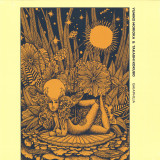
Japanese artists Yumiko Morioka and Takashi Kokubo unite for Gaiaphilia, a journey through ambient soundscapes that seamlessly blends Morioka’s graceful piano compositions with Kokubo’s immersive field recordings and atmospheric synthesisers.
This collaboration brings together two of Japan’s most influential pioneers in ambient and new age music, each with decades of groundbreaking work. Morioka, celebrated for her 1987 album Resonance—reissued to critical acclaim by Métron Records—infuses her introspective playing with Kokubo’s vivid environmental textures, creating a dialogue between nature and melody.
After releasing Resonance, Morioka stepped away from music, moving to America to raise her family. For years, her work was quietly cherished by fans, only gaining wider recognition with its reissue in 2020. A devastating wildfire destroyed her California home seven years ago, prompting her return to Tokyo where she became a chocolatier before rediscovering her passion for the piano in recent years, playing live shows and making new recordings.
Takashi Kokubo’s legendary discography spans over 30 years, and has found wider acclaim in recent years via YouTube algorithms and bootleg uploads, wracking up tens of millions of plays. Yet he is probably best known for his sound design work, specifically the Japanese earthquake alert sound as well as credit card payment jingles - his creations are pervasive in Japanese society.
“From our love and concern for our planet, we both offer a unique sensibility and spirit of inquiry which we express through our music.”
Rooted in shared philosophical interests, Gaiaphilia reflects a profound reverence for nature’s resilience and harmony. Themes of Gaia, Mother Earth’s renewal, and the interconnectedness of life are central, with inspirations drawn from cosmology, sacred geometry, and Japan’s mystical Katakamuna tradition. The album invites listeners into a meditative space where sound mirrors the delicate balance of the natural world.
A master of sound design, Kokubo enhances this vision with his distinctive field recordings, captured using a self-made binaural microphone shaped like a crash test dummy’s head. From the jungles of Borneo to the gentle rhythm of ocean waves, Kokubo’s globe-spanning recordings transform into immersive soundscapes that perfectly complement Morioka’s introspective piano compositions.
“The title, Gaiaphilia, is a newly created word to encompass our love and respect for nature and life, this feeling is the theme we hoped to express.”
Released on Métron Records on 12/03/25 and with artwork from Ventral Is Golden, Gaiaphilia marks a remarkable new chapter for Morioka and Kokubo. Recorded at Kokubo’s log house studio named Studio Ion in Yamanashi, their collaboration offers listeners a deeply emotional and transcendent experience, rooted in the timeless beauty of Japan’s natural landscapes.

'It begins with a shoebox of mysterious provenance, full of recordings from the Vendée department on France’s western seaboard: songs of love and war, life and death, played out on land and sea. Songs passed down and sung by ordinary men and women, gracefully delivered with the poetic economy which unites the folk song of all peoples.
Next it takes a group of contemporary musicians to make selections from this treasure trove and sing these old songs anew; to sing them for their beauty, of course, and to reclaim the people’s tradition from those who would seek to exploit it for nefarious political ends. Who better for this task than Tartine de Clous, a singing trio from Vendée’s neighbouring department of Charente-Maritime, who burst into national and international consciousness with their debut album "Sans Folklore" in 2015? The result of their shoebox rummagings, the new album "Compter les dents", recorded in 2019 and finally seeing the light of day, is bound to delight old fans and win them many new ones.
Time makes many’s the alteration, and "Compter les dents" finds 'les garçons' - Geoffroy Dudouit, Thomas Georget and Guillaume Maupin - in a different state of being from their debut release. The trio, friends since youth, have certainly matured between albums, as one would expect; consequently the newer performances are more considered and poised, unfolding with a patient confidence. A relaxed domesticity prevails, something to do with the fact that the album was entirely recorded chez les amis, in contrast to the first album, which was mostly recorded at live performances in bars and night-spots across France.
Lending gravitas to the grain of their voices we mark a deepened richness, doubtless born of the various vicissitudes of daily existence which these gentlemen - and we too as citizens of this turmoiled globe - have weathered in the intervening years. Not too dissimilar, in fact,
from some of the vicissitudes detailed in those old Vendée songs. Plus 'ça change', right?
There’s a greater complexity and subtlety to their unique three-part harmonising, too. Their voices mesh in even stronger - almost telepathic - 'fraternité' than ever before: now commanding and mighty as a full-rigged counter-vessel, now gentle and lulling as a mother’s
cradle-croon, or as the whisper in a lover’s ear.
Three legendary figures of French traditional music, now sadly departed, preside as tutelary spirits over Compter les dents. They are: the late Claude Flagel, musician and ethnomusicologist; and the late Jean-Loup Baly of the well-known 1970s band Mélusine. Most of the album was recorded by Claude in the Brussels home he shared with his late wife Lou Flagel. The album is dedicated to the memory of Jean-Loup, Claude and Lou.
For the first time there are several guest instrumentalists working their magic to expand the Tartine de Clous sound. Jean-Loup plays a characterful accordéon on the song ‘La Veuve'. The other guests are: Maurice Artus (voice), Robert Thébaut (violin), Quentin Manfroy (piccolo, contrabassoon), Marceau Portron (cigar box guitar). Their contributions add even more conviviality to that which the trio of singers already share, a sensation which will doubtless be shared by those who happen to find a place in their lives for "Compter les dents".'
Liner notes by Alasdair Roberts.

SC returns with a full length LP showcasing his vast armoury of musical ability in a controlled, contemplative reflection of his inner self, laid bare in breaks-driven form for the enjoyment of Spatial fans new and old - continuing the ongoing celebration and evolution of classic atmospheric drum & bass.
A1 - Fear of the Deep
Curious, high twinkling bells cautiously introduce Fear of the Deep, reminiscent of classic sci-fi movies building atmosphere and intrigue, before the hi-hat heavy, snappy break previously used in Spatial classic Essence (also by ASC) makes a welcome return. The 2-step - occasionally broken - beat pattern drives the track along with a darkly, investigative energy, while a typically deep bassline rumbles beneath, setting the scene perfectly.
A2 - Concentric Circles
A change of pace for ASC here with Concentric Circles, exploring a jazzier spectrum of influences not often broached in his production adventures, with broken scattershot beats toying and playing around a wealth of reverberating brass samples to create a minimal yet quietly imposing undertone. Double bass props up the composition wonderfully, completing an exquisitely quirky entry to the LP.
B1 - Say It
Opening with rousing strings and quietly ominous effects, ASC utilises a unique fusion of melancholic atmospherics, jazzy basslines and a classic old-school breakbeat to form Say It. Dense, purposeful kicks stomp across the mix as the strings and synthwork wash in the foreground, developing a sombre, contemplative tone to the track throughout, before a wonderful outro ending with those delightful strings.
B2 - Virtual World
Filtered Hot Pants breaks gently ease their way to the forefront of a beautifully constructed intro to Virtual World, trademark crispness and intricacy etched onto the beats effortlessly, as we've come to expect from ASC. Delicately nuanced vocal samples combine with an intense concoction of synths and micro-melodies, dancing over the sharp breaks and a suitably earthy undertone bassline.
C1 - Eons
The classic, intense atmospherics continue with Eons, a spacey piece introduced by a memorable melody, tinged with purpose and allure. This melody continues through sci-fi computer FX reminiscent of early 720, and persistent backdrop synths as we are treated to a gentle flurry of perfectly edited amens leaping and falling over subtle, juddering basslines creating that elusive blend of both headphone and dancefloor appeal.
C2 - Timeslides
ASC flexes the timeless Hot Pants break again - crisply edited with a sharpness in the mix which is simply to die for - in Timeslides, a track which continues the brooding, introspective tone of the LP. Utilising a varied array of samples and effects which will transport you straight back to that unmistakable era of 90's atmospheric heaven with several nods to forefathers of this wonderful sound - just how we like it at Spatial.
D1 - Lightspeed
Take a moment to appreciate the bells tolling, glimmering and colliding during an enchanting intro, freely crafting layered melodies without a care as ASC presents us with an immensely memorable piece in Lightspeed. Long, elongated vocals drift and swirl through the airy soundscape, all punctuated by finely tuned and arranged Circles breaks, energetically deployed for the discerning breakbeat aficionado.
D2 - Nightvision
Intensity is dialled up to 11 in Nightvision, a deeply atmospheric track which showcases a perfect, symbiotic combination of melancholy, drama and raw energy. The lively breaks take center stage over a heavy, consistent 808 bassline with enveloping masses of atmospherics circling, gripping your attention, joined by dreamy vocal samples deployed subtly in an ever-changing tone to close the LP in style.
Words by Chris Hayes (Spatial / Red Mist)

Bristol-based singer, songwriter and bandleader, who has powered her way to the-forefront of the British blues and roots scene in recent years, releases 'Shining In The Half Light on "Tidal Wave Splatter" colored vinyl. Crammed with vibrant originals brought to life with her A-list touring band, 'Shining in the Half Light' is Bailey's first full length album recorded in the UK & feature's Joe Wilkins on Guitar, Jonny Henderson on Ivories, Matthew Waer on Bass duties and Matthew Jones on drums. It was recorded in deepest Devon in December 2020 at Middle Farm Studios and produced by Dan Weller. An exciting team of co-writers feature with three credits for Ashton Tucker & Will Edmunds, who both wrote with Elles for 'Road I Call Home', plus she teamed up with longtime guitarist Joe Wilkins to write the slow-flowing, philosophical 'Riding Out The Storm'. Other kindred spirits include guitar maestro Martin Harley, for the gentle and romantic 'Different Kind Of Love' and Matt Owens, co-founder of the hugely successful indie-folk outfit Noah and the Whale, on the aforementioned 'Sunshine City'. The album comes to a striking conclusion with its title track, co-written with Nashville's Craig Lackey, written over Zoom in May 2020.

- La Furtuna 06:28
- Libro D'amore 04:02
- Sula Nu Puei Stare Feat. Bombino 05:23
- Damme La Manu 04:54
- Navigar Non Posso...senza Di Te 05:06
- Terra Ca Nun Senti 04:02
- Viestesana 04:49
- Canto E Sogno Feat. Volker Goetze 03:58
- Marinaresca 04:35
- Nanna Core + Pizzica De Core (Malencunia) 07:04
- Matonna Te Lu Mare 05:25
“Onde” is a story about continuous change, in which the sea resonates everywhere, from the gentle movement that can lull before it transforms into a tidal wave that destroys, making a clean sweep. It holds within itself numerous metaphors and multiple states of mind that, like sea waves, can take on thousands of forms.
While all water moves, changing shape and force, each song lets sounds pass through it within a sea of frequencies in which Cristiano della Monica's percussion and Ernesto Nobili's guitars guarantee Maria Mazzotta's song the possibility to navigate onward. The voice shoves off and sets sail, allowing itself to be hurled far away, sinking before returning to the surface and, finally, finding rest. For the three musicians who, from Lecce and Naples, have always had the sea in their minds and eyes, this album tells the story of the movement of the sea, from the torment that navigating it entails to the relief that, in the end, each landing offers.

Merv keeps it super deep here with a trio of supremely tasteful techno cuts doused in dub culture. 'Sliver' is first and awakens the sense with some gentle rattling chords that sound like distant thunder rolling in with a storm. 'Embrace' is airy, with big kicks and frosty pads shimmering across the airwaves and crisp hi-hats cut right through. 'Strain' is last up on the flip and is an elongated journey through some sugary melodic pixelations, a frosty dubscape and hints of melancholia. All are perfect for those late-night and intimate back room sessions.

- A1: Do U Fm
- A2: Novelist Sad Face
- A3: Green Box
- A4: Dusty
- A5: The Linda Song
- A6: Dm Bf
- B1: I Tried
- B2: Melodies Like Mark
- B3: Wildcat
- B4: How U Remind Me
- B5: Pocky
- B6: Bon Tempiii
- B7: Pt Basement
- B8: Alberqurque Ii
- B9: Mary's
Kneading dough is tricky – you should know how it’s supposed to feel. If you try too hard you could make it worse. It’s a beautiful practice – creation with a gentle touch, to work at something so it can be left alone. “If it’s too drawn out it’s awful. It’s easy to give too much.” Dance in the mirror. Contemplate your veiny hands. Who do they remind you of?
You begin by mixing flour and water. “What happens when your people die? Why’d they move the rock to the other side of Ulster Park?” Eliza Niemi asks two seemingly unrelated questions in a rising melody with guitar accompaniment, like fingers playing spider up to the nape of your neck. Gentle pressure. Strands of gluten form to bind the mix. A new question lingers in the binding. When she admits “but I don’t know how to tell if I’m feeling it or not,” that question surfaces through the text. It is reiterated throughout the album. When I’m working with dough I think the same thing to myself.
On Progress Bakery, her second album as a solo artist, Eliza knows to leave some questions alone – to let juxtaposition and tension be the proof. It doesn’t have to be hard. The feelings and revelations they provoke rise in the heat. The smell is sweet. Crispy on the outside and soft all the way through. She playfully slip-slides through words and sounds and images, delighting in surprise, skimming ideas like stones cast across clear water, touching down briefly with uncommon grace.
The question provoked between those opening lines resurfaces in the strands between songs – “Do U FM” is fully formed and beautifully layered, while “Novelist Sad Face” is a short, acapella rendering of gentle curiosity. What is holding these ideas together? Some songs demand more, seem to carry a whole load – eventually the skipping stone will halt to sink and resume its idle duty – while others drift in and out of focus, the way thoughts and dreams become interwoven before the mind is sunk into true sleep.
Music and words don’t always have to interact. Where she decides to keep them apart gives a new contour to where and how she puts them together. The kind of thing you’re supposed to take for granted with songs and their singers comes alive in Eliza’s hands – the little miracle of mixing, kneading, stretching, and stopping.
So often on Progress Bakery, Eliza teases out truth and meaning by asking questions. “Do I wanna be crying?” “Do you want me good or do you want me bad?” “Do I need an eye test?” “I’m writing songs in my head while you’re going over stuff with me — is that cruel??” In “Pocky” Eliza ends with a question that feels to me like the actual biography, succinct and revealing:
I don’t wanna be made to see
I just wanna ask “what’s that?”
Grace that ought to be rare, but in its care and precision is offered humbly, with great generosity, and without announcing itself. Eliza’s simple, miraculous music is given further form and shape by a group of collaborators – invaluable guest musicians Jeremy Ray, Evan Cartwright, Steven McPhail, Kenny Boothby, Ed Squires, Carolina Chauffe, Dorothea Paas, Louie Short, and Avalon Tassonyi. Together with Louie Short, who recorded, mixed, and produced the album along with Jeremy Ray and Lukas Cheung, Eliza has cultivated a richness in sound and texture that prods and provokes the ticklish ear. Barely audible guitar tinkering, a brief lo-fi field recording of trumpets, the harmonic clicking of a looped synthesizer, a flourish of reeds, a child’s conversation, each uncanny sound perfectly placed, rippling out under a soft breeze.
Lay in bed alone at night and ask aloud to the stillness,
“What were you doing at the Albuquerque Airport?
What were you doing there??”
And hear your question answered by a dream of swelling, undulating cellos. Try to grasp at the melody and structure. It’s not an answer (if there could be one), but it moves deeper, closer to the weird layer of fleeting moments and disconnected images, barely perceptible at its core. Wait for the dream reel to click into place.
Eliza took me for a ride in Nicole (her beloved Dodge Grand Caravan) and told me she’d been thinking of the album as an embodiment of transition – and I think every transition, known or unknown, carries the weight of new meaning, skittering off the surface tension of life as you know it, creating ripples, sometimes bouncing off and sometimes breaking through. There is a trick you can use to tell if a dough is glutinous enough. You’re supposed to stretch it out as thin as you can without breaking it and hold it up to the light. If you can see through, even if it renders the world murky and uncertain, you should leave it alone. I love this trick. It’s one that Eliza seems to know intuitively: work gently and ask questions and don’t always expect answers, and when you can, take a glimpse at something new, and then leave.

2023 Repress
Robag Wruhme, working on the material. On the very same piece. And performing two different movements. First, thinking in category Album: who will hear it where? also: mood, position, length. Second, thinking in category Maxisingle: a spinning-tool for the club – another form of another functionality: accelerating the rhythm, lowering the harmonicmelodious, still preserving the nature of the song. And each version should make you HOT for the other!
Nata Alma, a voice loses itself in the infinite, a car brakes, a horse whinnies, the sun scorches relentless. Further, further on, towards the flickering, stoically. Water, flames on the horizon, Fata Morgana, a mirage. »And you might say, we've got no place to go?« - okay? no notokay at all!: Shuffle!
Nata Alma, melancholic Eight-minute-forty. A love song, a wave good-bye: »And you might say, that you need me no more?« sings Sidsel Endresen alongside Bugge Wesseltoft's swells and ebb-aways – metal never sounded so longing; a buzzing swing, a siren call from afar.
Robag Wruhme takes a seat at the organ and plays minor bass notes. He gets up, leaves the room and lays down a dry rock of funk: wooden kick on wooden snare, tight-cut voices, driving hi-hats and shakers, gated synth danglers and percussion loops. Relentless, stoically. »And you might say, that it's over?« – relentless, maybe, but that's how he creates the Further: keep going! dance it off! a new day rising!
And right here. Flip it and keep on moving: Venq Tolep. A summer meadow, grass-stains, a gentle breeze, an early smell of hay. Venq Tolep. Endorphins tickle under the skin. A
percussive spectacle, dance of the insects. Hopping around in flat shoes, the beat is phat and reverberated by a cluster of trees. Stabs on the e-piano set in, picturing the euphoric moment when Loving-feelings walk hand-in-hand with a Hint of Melancholy.
Robag Wruhme, Nata Alma and Venq Tolep - music for dance floors, inside and outside, music for the summer, day and night, and for convertibles on the way there.
