Vienna-based DJ and producer, Heap, lands on Mechatronica White with a radiant and hypnotic vision of forward thinking dance music, assisted by Gamma Intel's menacing slow-burner on the flip.
Starting from this release, EPs in the Mechatronica White series will be released via one limited pressing of hand-numbered and hand-stamped white label 12" vinyls, as well as in digital format.
Suche:ges e
Die besten musikalischen Außenseiter sitzen nie lange still. Sie mutieren stetig, verwandeln sich in neue Formen und weigern sich, in Schubladen gesteckt zu werden. Floating Points hat so viele Gestalten, dass es ohnehin nicht einfach ist, ihn irgendwie einzuordnen. Da ist zum einen der Komponist, dessen Debütalbum „Elaenia“ im Jahr 2015 begeisterte Kritiken erhielt, darunter als Pitchforks „Best New Music“ und Resident Advisor's „Album of the Year“ - und ihn von den Tanzflächen auf die Festivalbühnen weltweit brachte. Dann ist da wiederum der Kurator, dessen Plattenlabels gefühlvolle neue Klänge in den Club gebracht haben, und der auf seinem geschätzten Imprint Melodies International alte Klänge wieder zum Vorschein gebracht hat. Ferner ist da der Traditionalist, der Disco-Typ, der Maschinenmusik macht, der Digger, der stets auf der Suche nach unentdeckten Edelsteinen zwecks Wiederveröffentlichung ist. Und dann ist da noch der DJ, dessen offener und zugleich mutiger Umgang mit dem Genre ihn einst ein 20-minütiges Instrumental des Spiritual-Jazz-Saxophonisten Pharoah Sanders im Berghain spielen ließ.
Nach der Veröffentlichung seiner Zusammenstellung von funkelnder, analoger Ambient- und Atmosphärenmusik für die geschätzte „Late Night Tales“-Reihe, stellt Floating Points' erstes Album seit vier Jahren, „Crush“, alles, was man über ihn zu wissen meint, wieder auf den Kopf. Nicht minder als ein knallender Donnerschlag elektronischen Experimentalismus’, dessen Titel auf den langsam überkochenden Schnellkochtopf anspielt, den die aktuelle politische Gemengelage in der Welt suggeriert, in der wir uns derzeit befinden. So hat Shepherd einige seiner bisher härtesten und treibendsten Tracks produziert, mit Blick auf die britische Bass-Szene (aus der er in den späten 2000er Jahren selbst hervorgegangen ist), wie beispielsweise die zuvor veröffentlichte markante Lead-Single „LesAlpx“ (Pitchforks „Best New Track“). Auf „Crush“ sind allerdings auch einige seiner ausdrucksstärksten Songs zu finden: seine charakteristische Melancholie ist in den erhabeneren, sanfteren Momenten des Albums oder im Buchla-Synthesizer zu finden, dessen unheimliche Modulation das Album prägt.
Sein neues Album fühlt sich augenblicklich an - und lebendig. Es ist der Klang der vielen Seiten von Floating Points, die schließlich miteinander verschmelzen. Es bezieht sich auf die „explosiven“ Momente während seiner Sets, die normalerweise auftreten, wenn er unerwartete Genres zusammenwirft, aus dem ganz einfachen Grund, weil er sich darüber freut, diese Platte „jetzt wirklich laut hören zu können“ und dann die Nadel aufsetzt. Es ist „genau wie das, was passiert, wenn man zu Hause mit seinen Freunden Musik spielt und diese sich überall im Raum ausbreitet.“, erklärt er.
2019 bietet das Tag am Meer Festival nicht nur die gewohnt
schöne Kombination aus Landschaft, Musik und wunderbaren
Gästen, sondern es gibt auch noch einen kleinen Geburtstag
zu zelebrieren: unsere Tag am Meer Vinyl Compilation
zelebriert ihre fünfte Veröffentlichung. Seit 2015 präsentiert
BlackFoxMusic jedes mal eine ausgewählte Selektion an
Tracks von Künstlern, welche im jeweiligen Jahr bei Tag am
Meer gespielt haben und das gepresst auf schwarzem Gold.
Dieses mal mit Kid Simius im Magit Cacoon Remix, Kollektiv
Ost und dem Live Act JPattersson. In Zeiten von Spotify,
Deezer und Co. mag das für manch einen kurios anmuten,
doch so wie wir unser kleines Festival an einem ganz
außergewöhnlichen Ort veranstalten, ist auch die Idee und die
Umsetzung unserer jährlichen Compilation etwas Besonderes.
Die DJ’s und Live Acts liefern die Musik und die
Besucher*innen, liefern jedes Jahr aufs Neue die Bilder für das
Plattencover im darauffolgenden Jahr. Jedes Plattencover
setzt sich aus euren Schnappschüssen zusammen die Ihr uns
zusendet und ist somit ein waschechtes
Gemeinschaftsprojekt. Für uns ist dies eines von vielen
Puzzleteilen, welches zum Tag am Meer dazugehört, denn
Gemeinschaft lässt sich nicht nur zwischen Campingareal undDancefloor erleben, sondern auch im Rahmen eines Projektes
wie einer gemeinsamen Platte. Und dafür möchten wir euch
allen einfach einmal ‚Danke‘ sagen.
- A1: Pata Pata (Mono Version)
- A2: Ha Po Zamani (Mono Version)
- A3: What Is Love (Mono Version)
- A4: Maria Fulo (Mono Version)
- A5: Yetentu Tizaleny (Mono Version)
- A6: Click Song Number One (Mono Version)
- B1: Ring Bell, Ring Bell (Mono Version)
- B2: Jol’inkomo (Mono Version)
- B3: West Wind (Mono Version)
- B4: Saduva (Mono Version)
- B5: A Piece Of Ground (Mono Version)
- C1: Pata Pata (Stereo Version)
- C2: Ha Po Zamani (Stereo Version)
- C3: What Is Love (Stereo Version)
- C4: Maria Fulo (Stereo Version)
- C5: Yetentu Tizaleny (Stereo Version)
- C6: Click Song Number One (Stereo Version)
- D1: Ring Bell, Ring Bell (Stereo Version)
- D2: Jol’inkomo (Stereo Version)
- D3: West Wind (Stereo Version)
- D4: Saduva (Stereo Version)
- D5: A Piece Of Ground (Stereo Version)
Strut presents an all-time classic of South African music, the definitive remastered edition of Miriam Makeba’s ‘Pata Pata’, her first album recorded for Reprise in 1966.
The album marked a significant international breakthrough for Makeba. Moving to the US after the anti-apartheid film ‘Come Back, Africa’ gained international attention and staying there in exile, she quickly built her career in New York during
the ‘60s, mentored by Harry Belafonte. Signing with Reprise after a period with RCA, she returned to one of her older songs: “I wrote ‘Pata Pata’ back in 1956, back in South Africa,” remembered Makeba in her autobiography. “It was a fun little song and I was thinking of a dance that we do at home (“pata” means ‘touch” in Zulu and Xhosa).” Originally a hit in South Africa with her early vocal harmony group the Skylarks, the new recording, produced by Jerry Ragovoy, brought a lighter uptempo R’nB arrangement, adding some English lyrics. “It was my first truly big seller. All of
a sudden, people who never knew I had been in America since 1959 were asking me to be on their television shows and play at their concert halls during 1967. In the discotheques, they invented a new dance called the ‘Pata Pata’ where couples dance
apart and then reach out and touch each other. I went to Argentina for a concert and, across South America, they are singing my song.” The track peaked on the Billboard Hot 100 at no. 12 and the album. Other songs In the album included a version of the traditional Xhosa classic, ‘Click Song Number One’ (‘Qongqothwane’), the atmospheric ‘West Wind’, later famously
covered by her friend Nina Simone, and a version of Tilahun Gessesse’s ‘Yetentu Tizaleny’ which Makeba learned on a trip to Addis to perform for Haile Selassie at the Organisation Of African Unity. Mastered by The Carvery from the original reel to reel tapes, ‘Pata Pata’ is released in its mono and stereo versions for the first time. Physical formats feature brand new sleeve notes alongside rare photos from the time of recording and session details.
The album is released on 6th September on 2LP, 1CD, streaming and digital
Vinyl-Wiederveröffentlichung des vierten Studioalbums von Millencolin aus dem Jahr 2000.
Melancholie verbinden die meisten mit Schwermut. Für Skater ist "Melancholy" aber einfach ein Trick mit dem
Board. Und wer des Schwedischen mächtig ist, verbindet Millencolin mit einer Ska-Punk-Band. Die wird von
Nikola Sarcevic (Gesang, Bass), Erik Ohlsson (Gitarre) und Mathias Färm (Gitarre, Drums) im Herbst 1992 in
Örebro, Schweden, beim - ist doch klar! - Skaten gegründet. Komplett ist die Band 1993, als Schlagzeuger
Fredrik Larzon dazu stößt. Einige Platten und weltweite Touren später erscheint im Frühjahr 2000 ihr viertes
Album "Pennybridge Pioneers". Pennybridge ist die wörtliche Übersetzung des Namens ihrer Heimatstadt
Örebro (Öre = Penny, Bro = Bridge). Produzent ist Brett Gurewitz, Chef der Labels Epitaph und ehemals
Mitglied der amerikanischen Punk-Urgesteine Bad Religion. Für viele Kritiker gilt "Pennybridge Pioneers" als
beste Veröffentlichung von Millencolin. Kennzeichnend für das Album ist der Abschied von Ska-Rhythmen bei
gleichzeitiger Hinwendung zu eher rockigeren Riffs. Wenn man so will, bietet "Pennybridge Pioneers"
Punkrock nach amerikanischer Tradition in einer schwedischen Variante. Die Vinyl-Wiederveröffentlichung
kommt wie seinerzeit das Original via Epitaph auf den Markt.
Yeketelale is the third album from Franco-Ethiopian group uKanDanz, combining a heady brew of rock energy, saxophone zigzags and Ethiopian melodies, all fronted by veteran singer Asnake Gebreyes grooving harder than ever.
In Ethiopia, sons follow fathers and, together, their names tell a story. Some discographies are the same way. After Yechelal (''It's Possible''), Awo (''Yes!''),here's Yeketelale (''It Continues''), the third album from Ukandanz.
The adventure that links Damien Cluzel (guitars) and Lionel Martin (tenor sax), the two founders of the group, with the Ethiopian singer Asnake Guebreyes continues and, with this album, takes on new colors and a new dimension. It is a polished synthesis that keeps the rock energy of their first recordings and gives even more space to the subtle vocal ornamentations that mark great Ethiopian singers. Add to that a groove that is more danceable than ever, carried by Adrien Spirti's synth bass and Yann Lemeunier's drums, and you have the magic formula of Yeketelale.
This came about slowly over the course of a dialogue that began in the early 2000s when Damien Cluzel, arriving with a circus in Ethiopia, met up with the occupant of the next room in their hotel. A stroke of luck: this was Francis Falceto, high priest of the Ethiopiques collection (Buda, 30 volumes to date) which had introduced to the West the treasures of swinging Addis, the capital that vibrates to the sound of big brass orchestras. With him, he dives into the capital's nightlife and meets a galaxy of musicians. The singer Asnake Guebreyes is among them.
Recruited by the famous Police Orchestra at the tender age of 16, he already had all the power, energy and class of his role model, Tlahoun Guessessé ''the Ethiopian James Brown''. He began his solo career at the beginning of the 1990s with several major successes, most famously an explosive duo with the singer Fekker Addis.
This experience made a big impact on the French guitarist. Having learned how to blend in with a uniquely Ethiopian groove, he was now ready to take it to other places and in other directions. In his old friend Lionel Martin, he found an ideal partner to engage in such experiences. But they needed a singer. The idea of Asnake Guebreyes was mentioned. Then Francis Falceto called and suggested going to see him at the Addis Music Festival. Ukandanz, a rock version of Ethiopian groove, was born.
Some pieces, like the disturbing Yene Hassab, call to mind Herbie Hancock's experiments in the seventies, as well as the Juju guitars of the Gulf of Guinea. Others, like the dark Fetsum Deng Ledj Nesh, allow Asnake's voice to soar above the synthetic waves, like a siren song for a freighter in distress. Dance and trance are not left out, with inspiration from the inexhaustible Ethiopian traditional repertoire. In a nod towards Asnaké's first album (Ahadu, also reissued by Buda) Ukandanz returns to its track Ajiré, transfigured by the guitar, claps and synthetic bass and takes us back to the glory days of breakdancing. Listening to the two versions gives the key to understanding the unique touch of Ukandanz and of the rich musical colours of Yeketelale (''It Goes On''), a fusion musical journey that brings the electric spark of the Frendj (Westerners) to Ethiopian lyricism.
Nils Frahm veröffentlicht heute seine brandneue 5-Track-EP Encores 1.Nils Frahm hat die letzten zwei Jahre damit verbracht, sich sein neues Studio im Funkhaus Berlin zu bauen und dort Aufnahmen zu machen: In diesem Rahmen entstand nicht nur sein zuletzt veröffentlichtes, international gefeiertes siebtes Album All Melody, sondern obendrein etliche weitere Tracks, von denen fünf ab heute als - erste Zugabe erscheinen: die EP Encores 1.
Aus insgesamt 60 ersten Ideen und Songskizzen habe er schließlich jene 12 ausgewählt, die auf dem Album All Melody versammelt sind, was bedeutet, dass ein Vierfaches davon zunächst in der Schublade bleiben sollte: - Die Idee zu den Encores hatten wir dabei genau genommen schon vor All Melody: Nämlich drei Veröffentlichungen zu machen, von denen jede ihren eigenen musikalischen Stil hat und ihr eigenes Thema. Wir dachten dabei zunächst an ein Triple-Album.
Doch dann wurde All Melody immer größer und verdrängte diese ersten Konzeptideen , so Frahm. Als eine Art begleitender Anhang zu All Melody gedacht, wobei sich zum Beispiel das Stück - The Dane auf der aktuellen Welttournee bereits als absolutes Live-Highlight entpuppt hat, konzentriert sich Encores 1 durchweg auf akustische Aufnahmen mit zwei Instrumenten: (Solo-)Klavier und Harmonium. -
Ich glaube, man kann die Idee der Encores mit klanglichen Inseln vergleichen, die All Melody erweitern , sagt Nils Frahm weiter - und deutet damit an, dass die Geschichte von All Melody womöglich noch längst nicht zu Ende erzählt ist ...
Leipzig’s Dj Balduin has been a staff favourite for some time as we are avid fans of his GLYK imprint, and in particular his debut EP “Vvigmara”. Dj Balduin proclaims to enjoy producing music that creates “states of hypnosis with an occasional, gentle “hands-up-face-slap” every now and then” which perfectly sums up “Lost Cat” - his first release for KOMPAKT.
“E.W.B.A” came to Dj Balduin while having a shower, so chances are high we have this summer’s rain dance anthem on our hands as it has all the right elements - a classic rave synth meets an infectious open snare to break through the beat.
The kick drum thud of “Sheee” seems to be all too menacing at first, but surprisingly learns how to open itself into a gorgeously seductive uplifting house tune.
This story ends with the perfect set closer; “Lost Cat And An Untied Shoe” brings that beat back with soaring synths and a playful natural bass line that adds just the slightest edge of funk to carry the crowd home at the end of the night.
Leipzigs DJ Balduin und besonders seine Debüt-EP „Vvigmara“ trendet, seitdem wir sein GLYK-Label kennen, unter den Mitarbeitern von Kompakt. Laut eigenen Angaben genieße es DJ Balduin, Musik zu produzieren, die seine Zuhörer in den „Zustand der Hypnose versetzt und gleichzeitig mit gelegentlichen zarten Schlägen ins Gesicht wachhält“, was auf „Lost Cat“ – sein erstes Release auf Kompakt – auch geschieht.
„E.W.B.A“ kam DJ Balduin unter der Dusche, die Chancen stehen also hoch, dass wir hier eine Hymne für diejenigen Raves haben, die unter kräftigen Sommergewittern stattfinden werden – die richtigen Zutaten sind alle da: klassische Rave-Hooks, ansteckende Snaredrums, die hervorbrechen aus dem Bass.
Der Schlag der Bassdrum von „Sheee“ scheint zunächst bedrohlich, lernt aber überraschender Weise sich selbst zu wandeln hin zu einem prachtvoll verführerischen House-Stück. Die Geschichte endet mit dem aller besten letzten Stück: „Lost Cat And An Untied Show“ bringt den Beat zurück zusammen mit aufsteigenden Synths und einer verspielten, natürlichen Bassline, die einen Funken Funk hinzufügt, um die Dancer nach Hause zu begleiten in der Nacht.
Am 21.Juni 2019 veröffentlichen Hot Chip ihr siebtes Studioalbum „A Bath Full Of Ecstasy“
A Bath Full of Ecstasy vereint den Sound, für den die Band berühmt geworden ist - Euphorie und Melancholie verschmelzen mit bunten Melodien, eigenwilligen Gesangslinien und pumpenden elektronischen Pop-Rhythmen. Für die Produktion holten sie Philippe Zdar, den französische Maestro, der die Magie von Cassius und Phoenix geprägt hat, und Rodaidh McDonald, der mit The XX, David Byrne, Sampha, u.a. zusammen-gearbeitet hat, ins Boot. Es geht zurück auf das, was Taylor als Inbegriff von Hot Chip versteht: "Eine musikalische Formulierung dessen, was gesagt werden muss, oft aber nicht ausgesprochen werden kann".
SDEM aka Tom Knapp lands on CPU with a cybernetic electro E.P. entitled 'Index Hole'.
4 tracks of exploratory electronics held together with expertly crafted - hip hop influenced beats. Knapp ran the legendary IDM label ICASEA with Team Doyobi member Alex Peverett and Satoshi Aizawa. Index Hole is certain to ease your Icasean withdrawal symptoms. Fans of ICASEA, Skam and the Gescom crew don't miss this.
Acht Jahre nach dem Klassiker „Thora Vukk“ veröffentlicht Robag Wruhme ein weiteres Meisterwerk – Venq Tolep!
Mit spielerische Leichtigkeit nimmt Wruhme synthetische Klänge und gesampelte Geräusche, schneidet sie zurecht und baut daraus Beats, ohne dass seine Musik je gebastelt klingt: jeder einzelne perkussive Sound eine kleine Einheit, die vor Melodiösität berstet. Oder diese zumindest andeutet. Für "Venq Tolep" seine erste Pampa Albumveröffentlichung seit 8 Jahren, hat Robag Wruhme sich genau da hinein vertieft und den Raum dieser Teile weit aufgezogen. Er findet Beats in den Beats, öffnet diese weiter, entdeckt Hooklines und Harmonien, und spürt, wo er schliesslich gänzlich auf Rhythmen verzichten kann. "Venq Tolep" klingt rund. Ein Bogen spannt sich. Und natürlich ist es das Robag Wruhme Universum. Wärme statt Coolness und Freundlichkeit statt Härte. Aber mit "Venq Tolep" formuliert Robag Wruhme noch etwas anderes: Das Album spricht die Sprache von Clubmusik – Klanggestaltung, Layering, Arrangement sind vertraut. aber "Venq Tolep" wagt auch die größtmögliche Annäherung von Track an Song: Techno Pop? Pop Techno? Pop Ambient? Ambient Pop? – Ach was, ganz einfach: »"Venq Tolep" ist Robag Wruhmes Einschreibung in die Pop Musik.
Formate:
- Limitierte 2LP inkl. 7inch mit zwei exklusiven Bonus Tracks, Postkarte & Download Voucher
- CD erscheint im hochwertigen Digipak
Modeselektor veröffentlichen eine dreiteilige, limitierte Picture-Disc-12"-Serie mit den Highlight-Tracks ihres Albums "Who Else" samt Vinyl-exklusiven B-Seiten. Die Single "Wealth" mit der Londoner Grime-Künstlerin Flohio erscheint samt Instrumental und Accapella-Version (Vinyl-only). "Who", die knusprige Kollabo mit dem estnischen Rapper Tommy Cash, wird mit Modeselektors atmosphärischem "Who Else" gespiegelt. Und der Dancefloor-Hammer "I Am Your God" mit Otto von Schirach ist gekoppelt mit dem nicht minder effektiven "Bronko". Alle Picture Discs erscheinen in vollwertig bedruckten Innenhüllen und Außencovern.
Numero's "Planisphere", für diejenigen innerhalb der 30-40 Grad Zone, wird Ihnen ein ziemlich erkennbares Diagramm liefern, um sowohl Deep-Sky-Objekte als auch tellurische emotionale Impulse zu entdecken. Statisch gefüllte Signale, die tief aus dem Inneren der Wände des Laurel Canyon kommen und von Clustern der beginnenden Technologie des späten Jahrhunderts abprallen, werden durch die verdrehten Kaninchenohren eines Chevy Astro Van gezogen. Der zweideutige Klang von Hippies frisch aus dem Hinterland schaukelt Trommelmaschinen durch herzzerreißende Aspirationen, als ob die Musikabteilung des Whole Earth Catalog zum Leben erwachte. Diese 9 Nomaden, die aus dem Astronomieunterricht mit einem Arm voller Brain and Sky Label-Releases hervorgehen, kritzeln Plein Air Narrationen über eine Landschaft, die der Sonne den Rücken kehrt. Genießen Sie den Nachhall unseres himmlischen Heims.
> Individuelle gestanzte 2-farbiges Cover im Spanplatten Look
> Klar bedruckte Hülle mit radialem Kalenderzifferblatt
> Picture Disc LP mit Sternenkarte der Sterne, die am Nachthimmel in der 30¢ª-40¢ª Zone sichtbar sind
Modeselektor veröffentlichen eine dreiteilige, limitierte Picture-Disc-12"-Serie mit den Highlight-Tracks ihres Albums "Who Else" samt Vinyl-exklusiven B-Seiten. Die Single "Wealth" mit der Londoner Grime-Künstlerin Flohio erscheint samt Instrumental und Accapella-Version (Vinyl-only). "Who", die knusprige Kollabo mit dem estnischen Rapper Tommy Cash, wird mit Modeselektors atmosphärischem "Who Else" gespiegelt. Und der Dancefloor-Hammer "I Am Your God" mit Otto von Schirach ist gekoppelt mit dem nicht minder effektiven "Bronko". Alle Picture Discs erscheinen in vollwertig bedruckten Innenhüllen und Außencovern.
Melody (vocals, synth), Casey (vocals, synth), Bill (bass), Scott (guitar) and Marcus (drums) united through a shared post-punk sensibility and began experimenting with some angular drum and guitar give-and-take, layered with duelling synth refrains.
Over this Melody and Casey worked-up their vocal harmonies through impulse, developing an interplay reminiscent of The Go Go's at both their most serene and severe. The pairs vocals drift through each track, punctuating the profound and guiding us through each song's uncanny terrain.After a busy year of local shows and bouts of instinct-first songwriting, Red Channel chose a number of their most resonant songs to record with Andrew Schubert at Golden Beat. These were subsequently mixed by Eric Carlson and then mastered by John Hannon for this debut 7' EP on Upset The Rhythm entitled 'Crazy Diamonds'.
The title track launches the listener through a stratosphere of cascading notes, swoonsome lyrical turns and tack-sharp pivots in rhythmic practice. 'Crazy Diamonds' is an exhilarating rush of a song, both wistful and defiant. Melody explains that it is 'about the forever fluctuating reality that weaves in and out of ecstasy, loneliness, yearning and destruction. It's about women being free from a superficial beauty, it's about the cessation of ideals and power worship.' 'Giver' is a similarly sprightly yet pointedly questioning track, 'alone in your room, alone with your thoughts, of sleepless shadows, but what do I get' sing Casey and Melody in spooked unison.
'Demons' swirls with minimalist pop moves, a trailing backing vocal and a tumbling bass motif, whilst a dream-like quality pervades the guitar and keyboard lines. Melody then peppers the song with references to extinguished lights, evil forces, bags of sugar, floods and heaven on earth, drawing us so close that we enter the vision too. 'Slowness', which brings this debut EP is a close, is another triumph of illusory lyrical association and punchy gesture. In fact the band sound 'caught in a fragment, non-corporeal' throughout all the four tracks. Opalescent passages freewheel into splintered eruptions, there's a duality constantly in play, 'somebody dies, somebody's born'.
The songs collected here are manifestly catchy, conjured in cyclical patterns that are distorted by a desire that tends towards stream of consciousness. It's this willingness to wake-up in the unreal and see each moment reflected in the mirror which really sets apart Red Channel's first record.
Initially a duo formed in Berlin, FITH have since multiplied and expanded to become a revolving collective of musicians and poets spread out across a Paris/Manchester/Berlin axis. The project, currently comprised of members Dice Miller, Enir Da, Rachel Margetts, ChrIs Lmx, & Arnaud Mathé gesture towards notions of the literary salon, expanded cinema happenings, and the ancient traditions of Greek oratory and religious sermons. Driven by the spell of the spoken word, minimal percussive refrains, oneiric textures & deep melodic synths, FITH channel cinematic imagery, enigmatic narratives & spiritual frenzy.
Their self-titled debut 12' album was released via their collectively run imprint Wanda Portal in November 2016, a 'quietly alluring debut of post punk tempered avant-pop songs' (Boomkat) that laid out the project's foreboding mystique and intoxicating dream sequences with a lurking, devastating sense of purpose and (mis)direction. Other outings have included myriad solo collections of poetry, a two-track release of lurid dissonance and elegiac elevation (Signs / Cornerstone, December 2016) and an extraordinary reinterpretation of the soundtrack for cult film & iconic document of modern alienation Wanda (1971, dir. By Barbara Loden)
With Swamp, their sequel to this activity and their first appearance on Outer Reaches, FITH become a refined force, on a record where all their compelling pluralities and attributes are honed and augmented; everything dilated to delirium. The atmosphere here is one of veiled dread and psychic disturbance, a haunting and macabre psychedelia strewn with echo and dub FX, fragmentary fever dream poetics, elemental drum patterns and volatile synthetic interference. Although the collective conserve the raw crux of their earlier material their execution is, in this special instance, heightened by an intent to broaden and prolong their unique strain of intensity.
Emphatically sinister openers like Forest and Pound present sidereal sequences before building to barrelling, corrosively processed percussion, paroxysmal free jazz and a baleful, concrète-inflected score of electronics, while Swamp introduces phasing currents and a vocal evocative of a chorale from some forgotten giallo film. Elsewhere l'au delà (the beyond) presents a stunning, sombre passage to another state entirely, like some desolate new inflection on Coil's Going Up, before Bialystok shifts into a finale of transportive and meditative evaporation. Together these tracks make for an incredibly immersive and congruous conception; an utterly complete and mesmerising document.
In Swamp's various dimensions perhaps there's comparisons to be drawn with the ritualistic krautrock of Conny Plank and Holger Czukay's Les Vampyrettes, with the hallucinatory, tribal rhythm cycles of Shackleton & Anika's Behind The Glass collaboration, with the primeval drone of Jeremie Sauvage, Mathieu Tilly and Yann Gourdon's France project, with the echoic, disquieting chamber intimacies of Tuxedomoon's Pink Narcissus material and with Lucrecia Dalt's eerie free verse abstractions. But really, we've not heard anything like this before.
Discussing their own inspirations and touchstones the collective cites Franz Kafka, Dario Argento, Lucrecia Martel's La Ciénaga (The Swamp - the film the record is named after) and Yiddish ghost theatre as figures, works and artforms that were prominently drawn upon during the making of Swamp. Yet whilst their imprints could be traced by some, they resemble more of a covert presence within a nuanced whole rather than obvious aspects which moor this record to any familiar setting.
Instead, the acutely unsettling yet poignant spoken word of Miller and the mercurial nocturnes and visitations produced by Margetts, Lmx, Mathé and Da make for a record of strange, novel and striking energies. In revealing the remarkable location and period in which Swamp was recorded Margetts and Miller give a vivid indication as to how these energies are so potently invoked:
'The record was mostly recorded in a caretaker's wing of a 17th century castle in Normandy. It was early March 2018, and our first encounter with the Spring. We had no idea how everything would unfold. There was a lot of tension. Some of us felt compelled to get out the attic room where we had set up our makeshift recording studio and just walk and walk down the vast flat meadows and explore the relics of the wartime barracks, others wanted to keep recording. The outside was serene and inviting, and even though we had been cooped up indoors recording for long stretches of time, we could see from the corner of our eyes, the branches of the trees quivering; an impersonal energy blew through us and then things just happened.'
Repress available in early May.
Faitiche releases a new collaboration between the Japanese sound artist ASUNA and Jan Jelinek: the album Signals Bulletin brings together joint improvisations and compositions made over a period of three years in Berlin, Kyoto and Kanazawa. ASUNA’s meandering organ drones merge with Jelinek’s pulsating synthesizer and field recording loops to create dense superclusters that span broad harmonic arcs.
"Watching the Japanese sound artist ASUNA playing the organ, some people might be surprised. ASUNA is no virtuoso flying over the keyboard in a rage. Instead, with the calm gestures of an office worker, he cuts strips of adhesive tape to the correct length before sticking them onto the keys of his instrument. In this way, large clusters of keys are held down, creating a dense and sustained range of frequencies, while the sound artist continually prepares further sets of keys or removes tape again. I have rarely seen a more convincing performance concept, with such a power to fascinate.
I first met ASUNA when we both gave a concert at the 21st Century Museum of Contemporary Art in Kanazawa, his home city. He performed the organ drones as described above and I immediately knew I wanted to collaborate with him. Six years and five meetings later, we completed Signals Bulletin. The album includes both joint improvisations and compositions, recorded in Berlin, Kanazawa and Kyoto.
Whether using prepared organ, Casio keyboards or mechanical plastic toys, ASUNA creates rich textures of sound that barely change over long stretches of time. It is a music without breaks. For a while, I was unsure how my loops made using modular synthesizers and live sampling fitted here – until I realized the role I had to take in this duet: I would provide the rhythmically pulsating foundation over which his dense continuums could unfold.
The result is harmonically drifting superclusters that put us into a meditation-like state. It can perhaps be compared to Automatic Writing – a mode of creative expression floating somewhere between concentration and distraction. Both the structure of our pieces and our approach to our instruments allow a similar “absence”: we let the machines play and repeat themselves – while we, in a mild form of trance, adopt the role of observers, intervening only occasionally.
It is no coincidence that ASUNA owns a collection of Doodle Art – drawings jotted down during conversations or while talking on the phone. It is said that works made like this point to the unconscious and reveal pet motifs – because a doodler always inadvertently returns to his or her favourite themes. The artwork for Signals Bulletin features pictures from the collection, in this case sheets of paper from the pads provided in stationery shops to test out pens. The special quality of such doodles is that the jumble of drawings is the work of a collective whose individual members do not know each other. Layer by layer is added, by someone different each time – until it becomes a dense cluster of lines and symbols ..."
Jan Jelinek, Berlin 2018
- A1: Heroes
- A2: Post Requisite
- A3: Heroes In A Half Shell
- A4: More Feat. Anderson .Paak
- A5: Capillaries
- A6: Burning Down The House Feat. George Clinton
- A7: Spontaneous Feat. Little Dragon
- A8: Takashi
- A9: Pilgrim Side Eye
- A10: All Spies
- A11: Yellow Belly Feat. Tierra Whack
- A12: Black Balloons Reprise Feat. Denzel Curry
- A13: Fire Is Coming Feat. David Lynch
- A14: Inside Your Home
- A15: Actually Virtual Feat. Shabazz Palaces
- A16: Andromeda
- A17: Remind U
- A18: Say Something
- A19: Debbie Is Depressed
- A20: Find Your Own Way Home
- A21: The Climb Feat. Thundercat
- A22: Pygmy
- A23: Carrots Feat. Toro Y Moi
- A24: Ff4
- A25: Land Of Honey Feat. Solange
- A26: Thank U Malcolm
- A27: Hot Oc
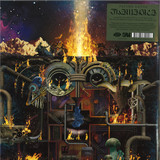
Sein letztes Werk "You're Dead" (2014) bescherte ihm eine Grammy-Nominierung, sein Brainfeeder-Label ist zu einem der innovativsten Klanglabors der Welt avanciert, er co-produzierte Kendrick Lamars mit fünf Grammies ausgezeichnetes Meisterwerk "To Pimp A Butterfly" (2015). Nun veröffentlicht Flying Lotus sein neues Album für Warp: "Flamagra" greift alle kreativen Quantensprünge und innovativen Elemente aus 12 Jahren FlyLo-Karriere auf und denkt sie weiter, größer, epischer und universeller: Hip-Hop, Funk, Soul, Jazz, Electro, IDM, die Ansätze der befreundeten Beatmaker aus L.A., Tribal-Elemente, Polyrhythmen. Aber selbst diese Liste reicht nicht aus, um "Flamagra" auch nur ansatzweise zu verorten, weil es immer wieder ausbricht aus diesem Koordinatensystem. Die Gästeliste liest sich wie ein Traum: Anderson .Paak, George Clinton, Little Dragon, Solange, Tierra Whack, Denzel Curry, Ishmael Butler (Shabazz Palaces), Toro Y Moi, sein musikalischer Stammesbruder Thundercat, ja selbst David Lynch ist zu hören. Der legendäre Regisseur steuert ein paar schaurige Worte bei, eine düstere Erzählpassage, mit der er uns eindringlich warnt: "Fire is coming". "Flamagra" ist die Essenz des letzten Jahrhunderts im Bereich der afroamerikanischen Musik, vollkommen neu und weitergedacht, kollektiv gefiltert und feingeschliffen. Auch wenn Flying Lotus ein Nachkomme seiner ehrwürdigen Großtante Alice Coltrane ist, die mit John verheiratet war (wobei auch Miles und Madlib, Dilla und DOOM als seine Vorfahren gelten dürfen), hat er inzwischen seinen eigenen Kult geschaffen: Eine Gefolgschaft, die alles Geniale aus der Vergangenheit absorbiert und in Bereiche überführt, die sich die genannten Vorfahren nicht mal im Traum hätten ausmalen können. Flying Lotus ist zurück. Fire is coming.
This release is LP and it's individually 300 hand-numbered limited edition. The first 100 copies are pressed on WHITE & GREEN MARBLED vinyls (AR016).
It's dedicated to the 1988 Experimental / Electronic masterpiece by the Italian contemporary guitarist Riccardo Giagni, originally released on Stile Libero (Italy) + a special Balearic Remix by SIMON PETER.
Archeo Recordings is a reissue record label that regenerates old, lost, obscure and forgotten rare gems of mostly Italian music but also all over the world of the 70s, 80s and 90s.
All outputs are licensed by the artists and the vintage labels; audio tracks are remastered in their original form; the sleeves and center labels are graphically recreated for today but all based on the original images.
Archeo would like to make the music available to a wider audience of collectors, DJs, music lovers of a forgotten time.
All releases are hand-numbered limited edition vinyl. The first copies of each release are pressed in coloured vinyls.