Presenting the third volume of forward-thinking electronics and peerless Jungle / D&B expressionism from iconoclastic Bristol producer and DJ, Krust. An artist who has always been pushing the sonic envelope while keeping dancefloors fully locked.
Introducing 'Irrational Numbers,' a meticulously curated collection of five parts, available on both vinyl and digital formats. This compilation is a treasure trove of hand-picked records and archival gems from Krust's extensive discography, thoughtfully remastered and presented anew for both devoted fans and newcomers.
'Irrational Numbers' features a dizzying array of self-released 12" cuts, exclusive unreleased VIPs and dub-plates, alongside epic major label widescreen classics. It's an unmissable journey through the sonic output of one of the UK's most distinctive and forward-looking producers.
Volume 3 serves us a plethora of unmissable highlights from Krust's enviable back catalogue. From the raw jump-up chaos of 'Rukus', the early rolling business of 'The Resister' to the epic genre defying voyage that is 'Soul In Motion', no stone is left unturned on what is - once again - an essential purchase for any serious lover of electronic music.
For longtime Krust enthusiasts, this project serves as a fond reminder of the boundless creativity and originality that flourished during the early 1990s and beyond. For those new to his work, it presents an enthralling introduction to innovative electronic music that has comfortably set the tone for generations to come. Get ready to experience the evolution of sound and immerse yourself in the visionary artistry of Krust.
Cerca:get it
'In 1972, trumpeter Baikida Carroll and some of his colleagues from the Black Artists Group (more precisely saxophonist/flutist Oliver Lake, trombonist Joseph Bowie, drummer Charles "Bobo" Shaw and trumpeter Floyd LeFlore) took the advice of their friends in the Art Ensemble Of Chicago and left their native Missouri to come and discover the bright lights of Paris for themselves. The following year they would even get the chance to record their only album which would rapidly attain mythical status and a collector’s item: “In Paris, Aries 1973”.
Therefore, it was not surprising that they crossed paths with Jef Gilson in the capital. He was always on the lookout for new artists for his recently formed Palm label and had been active on many fronts in jazz since the end of the 50s. The French bandleader / pianist / composer / sound engineer had already recorded, in the preceding months other American musicians who would go on to have great careers: Byard Lancaster, Keno Speller, Clint Jackson III, Khan Jamal... Gilson therefore offered Baikida Carroll the chance to record his first album under his own name, which would be the 13th release on the label. Carroll logically asked Oliver Lake to join him. He also recruited Manuel Villaroel, a young Franco-Chilien pianist from the group Matchi-Oul, who had already released an album on Futura in 1971 and would release another on Palm in 1976. The group was completed with the addition of Brazilian percussionist Naná Vasconcelos, who had just released a well-received album on the Saravah label. They were ready to enter the studio for the 3rd, 4th and 5th June 1974.
The first side of the album is divided into two long tracks which send free jazz back to its long-lost African roots. The opener “Orange Fish Tears” indeed rolls out a jungle of percussion of all sorts and sizes -the whole group is involved- which weave and mix together reaching a point where all bearings are lost, lending a sense of wonder to the majestic entry of the brass and woodwinds, flying suddenly out from the undergrowth. “Forest Scorpion” (sic) is a real voodoo ceremony where a venomous percussive groove backs the fiery solos from keyboards and saxophone in a furious trance. A warning; after these two tracks listeners are physically and emotionally wiped out!
The other side is more introspective. Deliberately using dissonance and repetition, “Rue Roger” -the only composition by Oliver Lake- in a long dialogue between trumpet and saxophone, could almost remind us of Terry Riley in his favourite ballpark. “Porte D'Orléans”, the fourth and final track on the album, has the group back to their old tricks in a long hallucinatory jam which owes as much to the contemporary music of György Ligeti as to the most angst-ridden Jerry Goldsmith soundtrack music (remember the heavy chords which beat through “Planet of the Apes»).
With these two sides, and in under 45m, Baikida Carroll and his musicians show just what they can do, from cerebral to charnel without ever simplifying things. This is an essential album if you are a fan of free-wheeling avant-garde music from the Art Ensemble of Chicago to Sonic Youth and including Shabaka Hutchings and Rob Mazurek. For those with good taste, in other words.'
NDATL continues with a release from Detroit soldier Norm Talley (Upstairz Asylum) Right out the gate Norm deep aggressive sound comes across loud & clear on "Gonna Be". Then down deep in the sound of "Power" where spoken words give insight.
Side B "The Bounce" should have dancefloors worldwide doing just that. "The Truth" no longer needed to be sought cause here it is in musical form. And a stray away from the usual Norm Talley we get the softer side "Dearly Beloved" ft Jerald Dameyon.
- A1: Rinky Dink Records (Skit)
- A2: We 'Bout To Ride - Hypnotize Camp Posse
- A3: Drive By - Project Pat
- A4: Azz & Tittiez - Hypnotize Camp Posse
- B1: Die A Soldier - Hypnotize Camp Posse
- B2: We Ain't Playin' - Gangsta Boo & Koopsta Knicca
- B3: Fie It On Up - T-Rock W/Tear Da Club Up Thugs & La Chat
- B4: Big Mouth, Big Talk - Pastor Troy & T-Rock
- C1: What's Going On (Skit)
- C2: D-Suckin'-H - Gangsta Boo & Juicy J
- C3: Don't Make Me Kill - Lord Infamous (Feat Killa Klan)
- C4: Don't Trust 'Em - Crunchy Black & T-Rock
- D1: Who Run It - Three-6-Mafia
- D2: Project Hoes - La Chat
- D3: Da First Date - Tear Da Club Up Thugs & Koopsta Knicca
- D4: Hoes Can Be Like N****Z - La Chat
- D5: Outro
Three 6 Mafia fans canget their hands on Hypnotize Camp Posse's one and only album on limited edition vinyl. Originally released in 2000 only on CD and cassette, Get On Down gives this southern Hip-Hop classic a proper release on vinyl. Featuring all The Hypnotize Minds affiliates DJ Paul, Juicy J, Project Pat, Lord Infamous, Crunchy Black, Gangsta Boo, La Chat, T-Rock, & Koopsta Knicca.
PRESSED ON ORANGE COLORED VINYL WITH HAND NUMBERED OBILIMITED TO 1000 COPIES
2023 is the year of Too $hort at Get On Down with our 4th reissue and album number 7 in the catalog of the Bay Area legend. Shorty The Pimp was released 31 years ago on July, 14, 1992 and has not been in print since we originally reissued it on wax in 2018. Taking the title from the incredibly rare 1973 Blaxploitation film, Too $hort does what he does best on Shorty The Pimp: funk beats, boastful braggadocio, a few conscious rhymes and layers of straight up pimp talk. The lyrical content can certainly be considered comical and entertaining. Shorty The Pimp is also a stand out project for producer Ant Banks who did many of the beats for the project, his first working with Too $hort with many more to follow over the next decade.
Get On Down proudly present the debut solo album from Wu-Tang Clan’s Ghostface Killah. Released in 1996 on Epic Records, Ironman earned immediate success, debuting at number two on the Billboard 200 chart, and number one on the Top R&B/Hip-Hop Albums chart. Produced by RZA, Ironman found inspiration in sources ranging from blaxploitation films to classic soul and charted a whole new direction for hip-hop in the process. The album features classic bangers like “Daytona 500” featuring Raekwon and Cappadonna to soulful emotionally moving cuts like “All That I Got Is You” with Mary J Blige. The album earned gold status a year after its release and platinum by 2004, a true testament to the staying power or this classic piece of Wu-Tang artistry.
Colbie Caillat ist eine meisterhafte Geschichtenerzählerin, deren luftige Folk-Pop-Songs aus SoCal sich mit schimmernden Country Songs vermischen, die sowohl den Schmerz des Endes als auch die Hoffnung auf das, was kommt, wenn man mutig genug ist, seinem wilden Herzen zu folgen, verkörpern.
Auf ihrer musikalischen Reise und beim Experimentieren mit neuen Klängen hat Caillat einen Moment in ihrem Leben in einem Lied festgehalten. Die in Kalifornien aufgewachsene und in Nashville lebende Sängerin singt voller Dankbarkeit dafür, dass sie diese Liebe kennengelernt hat und so viele Lektionen gelernt und die Freuden auf ihrem Weg geteilt zu haben. "Die Liebe, die ihr geteilt habt, sollte nicht verschwendet werden:
Ihr helft euch gegenseitig zu wachsen und ein weiserer und weiterentwickelter Mensch. Wir mussten zusammen sein, um zu werden, was wir heute sind, auch wenn wir nicht zusammen enden.
- 1: And Then He Wrapped His Wings Around Me (Feat. Meg Baird And Walt Mcclements)
- 1: 2Arrivederci (Feat. Lol Tolhurst)
- 1: 3Blender In A Blender (Feat. Roy Montgomery)
- 1: 4Music For Applying Shimmering Eye Shadow
- 1: 5Horses, Glossy On The Hill
- 1: 6Yesterday's Parties (Feat. Rachel Goswell And Samara Lubelski)
INKWELL VINYL[24,83 €]
Through evocative, emotionally resonant music, Goodbye, Hotel Arkada , the new LP from American harpist and composer Mary Lattimore , speaks not just for its beloved namesake _ a hotel in Croatia facing renovation _ but for a universal loss that is shared. Six sprawling pieces shaped by change; nothing will ever be the same, and here, the artist, evolving in synthesis, celebrates and mourns the tragedy and beauty of the ephem - eral, all that is lived and lost to time. Documented and edited in uncharacteristically measured sessions over the course of two years, the material remains rooted in improvisation while glistening as the most refined and robust in Lattimore's decade-long catalog. It finds her communing with friends, contemporaries, and longtime influences, in full stride yet slow - ing down to nurture songs in new ways. The cast includes Lol Tolhurst (The Cure), Meg Baird, Rachel Goswell (Slowdive), Roy Montgomery, Samara Lubelski, and Walt McClements . "When I think of these songs, I think about fading flowers in vases, melted candles, getting older, being on tour and having things change while you're away, not realizing how ephemeral experiences are until they don't happen anymore, fear for a planet we're losing because of greed, an ode to art and music that's really shaped your life that can transport you back in time, longing to maintain sensitivity and to not sink into hollow despondency." For the title and inspiration, Lattimore's mind returns to the island of Hvar in Croatia, where she first saw those silver ladders at the water's edge. "There's a big old hotel there called the Hotel Arkada, and you could tell it had been hosting holiday-goers for decades in a great way. I walked around the lobby and the empty ballrooms and it looked like a well-worn, well-loved place. My friend Stacey who lives there told me to `say goodbye to Hotel Arkada, it might not be here when you get back' and I heard soon after that it was actually going to be renovated in a very crisp, modern way." Lattimore became fixated on the ingredients that make a place special _ for Hotel Arkada, the patinaed chandeliers, the patterned bedspreads, the echoes of its intangible charm _ and how when those leave this world, as they inevitably always will, it feels import - ant to memorialize them, "to bottle it for a brief second.
- 1: And Then He Wrapped His Wings Around Me (Feat. Meg Baird And Walt Mcclements)
- 1: 2Arrivederci (Feat. Lol Tolhurst)
- 1: 3Blender In A Blender (Feat. Roy Montgomery)
- 1: 4Music For Applying Shimmering Eye Shadow
- 1: 5Horses, Glossy On The Hill
- 1: 6Yesterday's Parties (Feat. Rachel Goswell And Samara Lubelski)
Black Vinyl[24,83 €]
Through evocative, emotionally resonant music, Goodbye, Hotel Arkada , the new LP from American harpist and composer Mary Lattimore , speaks not just for its beloved namesake _ a hotel in Croatia facing renovation _ but for a universal loss that is shared. Six sprawling pieces shaped by change; nothing will ever be the same, and here, the artist, evolving in synthesis, celebrates and mourns the tragedy and beauty of the ephem - eral, all that is lived and lost to time. Documented and edited in uncharacteristically measured sessions over the course of two years, the material remains rooted in improvisation while glistening as the most refined and robust in Lattimore's decade-long catalog. It finds her communing with friends, contemporaries, and longtime influences, in full stride yet slow - ing down to nurture songs in new ways. The cast includes Lol Tolhurst (The Cure), Meg Baird, Rachel Goswell (Slowdive), Roy Montgomery, Samara Lubelski, and Walt McClements . "When I think of these songs, I think about fading flowers in vases, melted candles, getting older, being on tour and having things change while you're away, not realizing how ephemeral experiences are until they don't happen anymore, fear for a planet we're losing because of greed, an ode to art and music that's really shaped your life that can transport you back in time, longing to maintain sensitivity and to not sink into hollow despondency." For the title and inspiration, Lattimore's mind returns to the island of Hvar in Croatia, where she first saw those silver ladders at the water's edge. "There's a big old hotel there called the Hotel Arkada, and you could tell it had been hosting holiday-goers for decades in a great way. I walked around the lobby and the empty ballrooms and it looked like a well-worn, well-loved place. My friend Stacey who lives there told me to `say goodbye to Hotel Arkada, it might not be here when you get back' and I heard soon after that it was actually going to be renovated in a very crisp, modern way." Lattimore became fixated on the ingredients that make a place special _ for Hotel Arkada, the patinaed chandeliers, the patterned bedspreads, the echoes of its intangible charm _ and how when those leave this world, as they inevitably always will, it feels import - ant to memorialize them, "to bottle it for a brief second.
Joyce Cooling went on to become a hugely successful pop and jazz singer and guitarist but before all that she recorded Cameo, a much-revered debut album that now gets reissued for the very first time. It's a tune with rich Brazilian influences that veers from swing to pop and back again with her vocals on three of the seven tunes as much of the focus is on her guitar. She is joined by skilled sideman such as keyboardist Jay Wagner and it makes for a superb listen featuring several fine performances.
The 1990 debut album from Pale Saints, The Comforts of Madness, is an outstanding record that owed as much to post-punk and L.A."s Paisley Underground scene than it did to shoegaze. The Sunday Times called it "an unintended indie manifesto: music that is at once wayward and concise, dissonant and beautiful." Shortly after its release and in need of a second live guitarist, Lush founding member Meriel Barham joined the Leeds trio of Ian Masters, Graeme Naysmith and Chris Cooper, bringing a new dynamic to the band. Having previously worked well with producer Hugh Jones (Echo & The Bunnyman, Modern English, The Sound), he did a brilliant job recording their second album, In Ribbons (1992), despite some studio tensions. Brooklyn Vegan said in a recent celebration of the album that it was the "push and pull between Masters" outsider tendencies and (the rest"s) commercial interests that makes In Ribbons so good. If some of the wild, ragged edges of Comforts of Madness have been smoothed off, the album makes up for it with scope and beauty. And there"s still no shortage of weird." Missing its original release date last year due to Covid delays and a production plant in meltdown, In Ribbons is finally getting the 30th Anniversary celebration it deserves with a special double LP / CD release - the first disc being the UK version of the album, the second a bonus disc of never before heard demos (including their first attempt at Slapp Happy"s "Blue Flower" and Ian"s 4 track recording of "Kinky Love") and two brass band versions by The Tintwistle Band.
- A1: Throwing Back The Apple
- A2: Ordeal
- A3: Thread Of Light
- A4: Shell
- A5: There Is No Day
- A6: Hunted
- B1: Hair Shoes
- B2: Babymaker
- B3: Liquid
- B4: Neverending Night
- B5: Featherframe
- B6: A Thousand Stars Burst Open
- C2: Kinky Love (Demo) *
- C3: Hair Shoes (Demo) *
- C4: Shell (Demo) *
- C5: Hunted (Demo) *
- C6: Featherframe (Demo) *
- D1: Blue Flower (Demo) *
- D2: Throwing Back The Apple (Demo) *
- D3: Ordeal (Demo) *
- D3: Untitled Instrumental (Demo) *
- D4: A Thousand Stars Burst Open (Tintwistle Band Version) +
- D5: A Revelation (Tintwistle Band Version
- C1: Babymaker (Demo) *
12"[28,99 €]
The 1990 debut album from Pale Saints, The Comforts of Madness, is an outstanding record that owed as much to post-punk and L.A."s Paisley Underground scene than it did to shoegaze. The Sunday Times called it "an unintended indie manifesto: music that is at once wayward and concise, dissonant and beautiful." Shortly after its release and in need of a second live guitarist, Lush founding member Meriel Barham joined the Leeds trio of Ian Masters, Graeme Naysmith and Chris Cooper, bringing a new dynamic to the band. Having previously worked well with producer Hugh Jones (Echo & The Bunnyman, Modern English, The Sound), he did a brilliant job recording their second album, In Ribbons (1992), despite some studio tensions. Brooklyn Vegan said in a recent celebration of the album that it was the "push and pull between Masters" outsider tendencies and (the rest"s) commercial interests that makes In Ribbons so good. If some of the wild, ragged edges of Comforts of Madness have been smoothed off, the album makes up for it with scope and beauty. And there"s still no shortage of weird." Missing its original release date last year due to Covid delays and a production plant in meltdown, In Ribbons is finally getting the 30th Anniversary celebration it deserves with a special double LP / CD release - the first disc being the UK version of the album, the second a bonus disc of never before heard demos (including their first attempt at Slapp Happy"s "Blue Flower" and Ian"s 4 track recording of "Kinky Love") and two brass band versions by The Tintwistle Band.
Dessa, the rapper, singer, writer, academic, and all-around polymath, who NPR hailed as a “national treasure,” will release her first solo full-length album in five years, Bury the Lede, September 29th, 2023 on Doomtree Records. It’s an eleven-track project of hard-hitting rap verses, big, catchy pop hooks, and a couple melancholic tracks. Dessa (an anthropology and psychology-enthusiast whose 2018 album, Chime, was inspired by neuroscience) conceptualized Bury the Lede as an examination of human nature and mortality. Reflecting on the pleasure-seeking and loss-aversion that define us as a species, the album ultimately endorses a Camus-with-a-lime-twist take on life. “It’s about indulging in a measure of hedonism even as the threat on the horizon mounts … Survival is, at best, indefinite. So maybe get a cocktail with an umbrella in it,” says Dessa.
The new album leans into the light more than past projects–more moments of levity and abandon, more danceable–but it’s still very much a product of Dessa’s lyrical style, writerly and multi-layered, and meticulous.
Executively produced with longtime collaborators and friends Lazerbeak (Doomtree, Lizzo) and Andy Thompson (Taylor Swift, Dan Wilson), Dessa and company’s indie-rock, soul, and Swedish-pop inflected rap on Bury the Lede create an album that’s hard to imagine hearing from anyone else. And, despite the wide range of influences, it’s also one of Dessa’s most cohesive albums to date.
If you were to ask for a defining Habibi Funk track, there are a few that come to mind: from Fadoul’s “Sid Redad,” Dalton’s “Soul Brother” to Ahmed Malek’s “Omar Gatlato.” However, none are as widely connected with us at this point as Hamid Al Shaeri’s “Ayonha.” We heard the track for the first time when we were working on selecting tracks for your first compilation and we instantly loved it. We obviously had heard of Hamid El Shaeri’s music before, but only material from his Al Jeel phase when he was already the full-blown
superstar he is now.
Listening to his releases from the early 1980’s opened a whole new door for us. At the time, Hamid had just left Libya to pursue his career in Egypt via a detour in London, where he recorded his
first album. Hamid’s distinct sound of the sound is quintessentially reliant on heavy synths and so it was particularly important to purchase these synths in a timely manner. “Whenever a new one synthesizer would come out, we would have to buy it immediately, otherwise someone else would get their hands on that sound.” London also played an important role for Hamid as a musical epicenter.
He fondly reminisces about the many live shows he attended there, including some of the biggest international musicians like Freddie Mercury and Michael Jackson. After returning to Cairo where he also recorded his following albums, he connected with SLAM! for the
release of his debut, laying the foundation of a collaboration that lasted for 5 albums. Luckily, we were able to connect with Hamid through our friend Youssra El Hawary, whose extensive network has opened many doors for us within the Egyptian music scene. We met Hamid for the first time probably in 2016 at his office / rehearsal studio in the outskirts Cairo. We were expecting a larger-than-life
character in-line with his status as a certified superstar, yet the actual person turned out to be very approachable and super easy to connect with. He liked the idea of an effort to amplify his early works again,
which, when originally released, were far from an economic success.
While he was down to assist with an interview and his blessing for the project he also told us that for any license we needed to speak with the original label SLAM! who released these songs, still held the rights and also remained in business over the decades though they didn’t actively release any new music. Hany Sabet had started SLAM! records in the early 1980s and focused on cassette tape releases, the
format that expedited the success of a new generation of record labels in Egypt. By the mid 1980’s, SLAM! had become one of the most successful and economically dominant record labels in Egypt, with Hamid El Shaeri being just one of their key artists, alongside Mohamed Mounir, Hanan, Hakim, Mustafa Amar and many more. Luckily, Hany Sabet turned out to be a friend of our colleague Malak Makar’s father, which probably helped to warm him to the idea of licen- sing “Ayonha” to this - in the scale of his world - tiny label
from Germany. Eventually “Ayonha” ended up becoming a widely successful release and either Hany or we brought up the idea of a full album dedicated to Hamid El Shaeri’s work on SLAM!.
"Maktoub Aleina” is the first single and will be released January 14th. Following the massive success of "Ayonha,” “Maktoub Aleina” is another mid-tempo groover with a beautiful, synth-forward melody, that brings together a lovely combination of soul, disco and Arabic pop music of the highest order, giving a taste of full album. The second single, “Yekfini Nesma Sotak” will be released January 28th and combines Hamid’s unique formula of soul and pop, held together by a catchy synth melody. “Yekfini Nesma Sotak” picks up the
pace a bit, making the uplifting mood of the track even more powerful. Third single, arriving February 11th, is “Dari Demou’ek,” one of the stand out tracks of Hamid’s early recordings done for SLAM! in the early 1980s. Dominated by a disco infused bassline, the track offers a lot of space of the funky production to shine while Hamid inserts his vocals at all the right moments. A masterpiece of disco touched by Arabic pop music.
Full album arrives February 25th. This release is dedicated to Hany Sabet, the founder of SLAM! and his wife Rosemary Jane Sabet (who
took the photos we used for the cover and the booklet), who sadly passed away during the time it took us to prepare the release.
Vinyl comes with an extensive booklet with an interview with Hamid as well as unseen photos
Alien Transistor is proud to announce a reissue of Such December, the fourth album by Japanese indie folk-pop artist, Gratin Carnival. Listeners might already know Gratin Carnival from their appearance on the Alien Parade Japan compilation of indie pop groups working with brass and woodwind; compiled by Markus Acher of The Notwist and Saya of Tenniscoats, it introduced this beautiful genre to the wider world. Gratin Carnival’s “Just Watching” was one of the many highlights of that compilation, and its gentle bossa-folk glide reappears on Such December.
Originally released in 2020, Such December captures beautifully the happy-sad charm of Gratin Carnival. The project of Koreyuki Mitsunaga, Gratin Carnival started in 2011; Mitsunaga had been home recording for some time and decided on the name as an umbrella for his music-making. Mitsunaga’s main instruments are guitar, which he uses to great effect throughout, his gorgeous acoustic playing reminiscent of players like Ueno Takashi of Tenniscoats or João Gilberto, and alto saxophone and clarinet. Those three instruments make up the core of Gratin Carnival’s sound, along with Mitsunaga’s charmingly doleful singing.
Recording at his parents’ home, with a four-track cassette recorder and a MacBook, Mitsunaga created Such December during 2020, though the songs on it stretch back to 2016. The closing “On The Train” was the first song written for the album – “a song about a small trip,” Mitsunaga recalls – and from there, he built a beautiful collection of songs that sit together perfectly. There’s great clarity in Mitsunaga’s writing, with nothing extraneous getting in the way of the lucid arrangements and gorgeous melodies; there’s something of chamber jazz about it at times, so it’s no surprise that Mitsunaga shares his love of Benny Goodman’s small group playing.
He's also a fan of Japanese folk artists like Kenji Endo and Kyouzou Nishioka, and grew up listening to Japanese popular music, The Beatles, and The Carpenters. You can hear trace elements of all this in Such December, in the clear-headedness of the melodic decisions made by Mitsunaga, and the quiet charm of the song’s gentle arrangements. They take on different shapes live, too, where Mitsunaga often invites other musicians to join in – his live band currently includes Masafumi Ezaki (trumpet), Nahoko Kamei (bass clarinet, piano, keyboards) and Tadashi Yonago (trombone, self-made instruments).
As with plenty of musicians from the Japanese underground, Mitsunaga is involved in other music, too – he’s been working with The Otoasobi Project, which performs music in collaboration with individuals with learning disabilities, and their families; and he’s also involved in improvised music. With Such December, though, you get to hear Mitsunaga’s music at its most personal and individual, ten songs of still, gorgeously poised indie folk-pop, where the swooning clang of six strings meets the breathy bliss of woodwind and brass.
Too Pure are excited to get Moonshake’s debut album, ‘Eva Luna’, back in
print, releasing a deluxe edition, re-mastered from analogue 1Ú2” tape, on
blue double vinyl.
The reissue contains 19 tracks - the album’s original 10, the non-LP threesong single ‘Secondhand Clothes’, the two B-sides from the ‘Beautiful
Pigeon’ single and four tracks from a November 1992 John Peel session.
The release also includes an 8-page full-colour booklet.
Moonshake were formed in 1991 by David Callahan (vocals, guitars,
samplers), formerly of The Wolfhounds, and New York musician Margaret
Fiedler (vocals, guitars, samplers). Callahan and Fiedler recorded a demo for
Creation Records, and were joined by John Frenett (bass) and Miguel
Morland (‘Mig’, drums) to record and release the ‘First EP’ for Creation in
1991.
They took their name from a 1973 single by Can. Both Fiedler and Callahan
wrote songs, and they would (generally) sing on the songs that they wrote.
Their output of shared inspiration produced wildly different results - Can, PIL,
Kraftwerk, MBV and Erik B & Rakim were a melting pot that made
Moonshake somewhat uncategorizable, and as Margaret noted in an
interview, “Moonshake was a collision - it was supposed to be a collision.”
Their debut album, ‘Eva Luna’, took its name from a novel by Chilean author
Isabel Allende, and the tracks on it are split evenly between the two
songwriters. Callahan’s songs are somewhat angry, dissonant, post-punk
affairs, while Fiedler’s are just as angular, but her quieter sometimes near
whispered vocals compliment her writing partner’s equally. Producer /
engineer Guy Fixsen, fresh from his work on My Bloody Valentine’s
‘Loveless’, was instrumental in making the album cohesive.
This album has been critically revisited often since its original release, with
Tiny Mix Tapes describing their sound as “an updated take on Can and
Public Image Limited’s rhythmic propulsion with noisier guitar work and a
predilection for sampling influenced by The Young Gods.” Last year, in a
wonderfully long piece to celebrate the album’s 30th anniversary, Louder
Than War wrote that they were blown away by the album’s “utterly
spellbinding, dizzyingly genre-defying approach at articulating explicitly the
sound of a city in the throes of urban psychosis and derangement... ‘Eva
Luna’ really is one hell of a ground-breaking record, and it stands resolutely
alone among all of the albums released in 1992 as no other band has
managed to create anything remotely similar before or since. It really is a
unique album with few equals.”
In 1993, the original incarnation of the band split up, and Margaret Fiedler
and John Frenett went on to form Laika with Guy Fixsen. Callahan and
Morland continued on with guest musicians, with Callahan ultimately
remaining the band’s sole original member. Moonshake ended in 1997 but
their legacy is indisputable.
- A1: Mr. Hood At Piocalles Jewelry / Crackpot
- A2: Who Me? (With An Answer From Dr. Bert)
- A3: Boogie Man!
- A4: Mr. Hood Meets Onyx
- A5: Subroc’s Mission
- B1: Humrush
- B2: Figure Of Speech
- B3: Bananapeel Blues
- B4: Nitty Gritty (Feat. Brand Nubian)
- C1: Trial N’ Error
- C2: Hard Wit No Hoe
- C3: Mr. Hood Gets A Haircut
- C4: 808 Man
- C5: Boy Who Cried Wolf
- D1: Peachfuzz
- D2: Preacher Porkchop
- D3: Soulflexin’
- D4: Gasface Refill
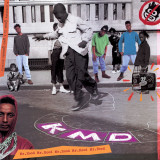
Repress of classic first LP by MF DOOM's first group KMD! KMD (Kausing Much Damage, or a positive Kause in a Much Damaged society) was a Hip Hop group in the early 90s perhaps best known for launching the career of acclaimed MC/Producer MF DOOM (known during his KMD tenure as Zev Love X). After guesting on 3rd Bass’ “The Gas Face,” the trio (Zev, brother Subroc, and Onyx) released the acclaimed and overlooked “Mr. Hood” full-length. Their political outlook was similar to the group Brand Nubian, who guested on Hood; however, the style was more comical and included a great deal of clips from old children’s recordings, mostly notably a sample of the Seaseme Street character Bert on the single “Who Me?” This is the official Elektra Records/Traffic Entertainment Group re-release with original artwork and track listing in it’s entirety. Cutting edge, ahead of it’s time production and skits from KMD and Stimulated Dummies (John Gamble and Mr. Dante Ross). Features the singles “Peachfuzz”, “Who Me?” and “Nitty Gritty” (feat. Brand Nubian). This is one Rap album that is not to be missed.
From the grey-skied isles and horse farms of British Columbia comes the second volume of Crystal Dorval aka White Poppy’s “Paradise Gardens” trilogy: Sound Of Blue.
Originally conceived back in 2016, the album was then recorded, finessed, abandoned, resurrected, overdubbed, and finally mixed into nine refinements of daydream shoegaze and therapeutic pop, born from bedroom epiphanies and long winters of the heart.
From slowdive reverie (“Apathy,” “Melancholic Serenity”) and color wheel psychedelia (“Time”) to spiral chorale (“Happy”) and finger-picked drift (“Wiser”), Dorval’s songcraft moves between escape and acceptance, tracing delicate melodies from undercurrents of loss, light, and solitude. It’s music for memory gardens and pastel horizons, dreaming of bliss and distance, but bound to the here and now: “Thinking about leaving here forever / thinking about leaving here for good / but I keep holding on for something / hoping that it could get better than this / what’s one more night?”
A warm, loving collection of electropop, ‘I Made an Album’ was recorded and produced entirely by Daði Freyr: every programmed note, every melody, every harmony and every beat has come from him alone in his small studio. “I basically wanted this to be a very true record, to my sound and to what I've been working towards for the past four years”. With themes of reflection and appreciation for both fans and loved ones, the songs in this collection are defined by an innate sense of niceness: there are no tricks or twists, no snark, just genuine good energy. A debut English language record that gives Daði’s dedicated fan base everything they know and love, whilst proving that he's an artist with plenty more to offer. He made an album and it’s going to get you dancing all night.