Cerca:giant sky
- A1: Can’t Get Enough Feat Sahara Beck
- A2: At The Disko & Lorenz Rhode
- A3: Fireworks Feat Moss Kena & The Knocks
- A4: Don’t Stopa5Dopamine (Feat Eyelar)
- B1: Purple Disco Machine & Elderbrook - I Remember
- B2: Opposite Of Crazy (Feat Bloom Twins)
- B3: Hypnotizedb4Loneliness (Feat Francesca Lombardo)
- C1: Hands To The Sky (Feat Fiorious & House Gospel Choir
- C2: Money Money Feat Pink Flamingo Rhythm Revue
- C3: Playbox
- C4: Exotica Feat Mind Enterprises
- D1: Wanna Feel Like A Lover Feat Ed Mac
- D2: Twisted Mind & Agnes
- D3: Rise Feat Tasita D'mour
- D4: In The Dark Feat Sophie And The Giants
Repress!
Deluxe Edition of PDM's massive Exotica LP features 2 x Purple Vinyl, 2 x Printed Inner Sleeves in Embossed Gatefold Sleeve with A2 Poster includes full Exotica album plus 3 bonus tracks: “In The Dark” with Sophie and the Giants “Rise” featuring Tasita D’Mour “Twisted Mind” featuring Agnes. Limited Edition.
- A1: After All This Time, Beirut
- A2: To Die On Any Hill (If It_S Easy Enough To Climb)
- A3: Wooden Giants And Mechanical Birds
- A4: In Dandelion Fields
- A5: Of The Always Puzzle Of Living And Doing
- A6: For Now We Leave The Sky To The Tyrants, And Dig
- B1: Everyone I Love Is Sleeping And I Love Them So So Much
- B2: The Familiar Scenography Of Electrons Waltzing Across The Screen In Your Peripheral Vision, You Avoid Its Gaze Like A Tired Husband You Have Outgrown
- B3: There Are Glorious Labyrinths In The Ground For Those With The Claws To Find Them
- B4: You Saw What You Were Looking At And You Touched What You Were Touching
- B5: Sounds From Home
'Yara Asmar’s new album presents 11 pieces recorded over the past year between the small town of Alfred in upstate New York and Beirut. These sometimes fragile and tentative sound sketches reflect the times as Yara steps out, as if onto ice, into a new life on a new continent during a time of tragedy, turmoil and upheaval. She works with unfamiliar instruments, new materials and new sounds to build on her intimate style; homemade mechanical music boxes and a personal archive of family recordings form the backbone of its delicate textures. Asmar explores the peculiar resonance of the metallophone and her collection of deconstructed toy pianos, and guides her music into ever more surreal territories. The result is a work that is dreamlike, fragmentary and strangely timeless.'
A Place In My Memory Is All I Have To Claim is the new album by Australian atmospheric pop trio Hydroplane, the storied 'offshoot' formed by three quarters of independent pop group, The Cat's Miaow. On this, their first music after two decades plus of radio silence, Andrew Withycombe, Kerrie Bolton and Bart Cummings return to the gentle, close-quarters musical world they shared around the turn of the century.
Recorded during 2024 in Melbourne and Ballarat, A Place In My Memory… picks up the thread Hydroplane set down with its precursor, 2001's The Sound Of Changing Places, though you can hear echoes of their other releases, too, with Withycombe noting a through-line from the group's 1998 "Failed Adventure" single. There's little quite like A Place In My Memory…, then or now, though. Maybe you can draw some connections between Hydroplane and their sister group, The Cat's Miaow, while fellow travellers might include Empress, The Ah Club, and further back, Young Marble Giants, Veronique Vincent (the muffled, ticking drum machine also makes me think of Robin Gibb's Robin's Reign).
There's also an umbilical to the bedroom-crafted electronica doing the rounds in the late nineties and early noughties. Hydroplane hint at this through their approach to songwriting, which often builds creatively around loops as structural devices. Through all this, the trio achieve an effortless, organic weightlessness across these nine lovely songs. Many feature Bolton's clear singing voice, drifting along, while guitars, keyboards, drum machines and loops tickertape away. The constituent parts fit together, but they also have a curiously detached quality - think of abstract cloud formations sharing the same sky.
Hydroplane and The Cat's Miaow often dealt in emotional ambiguity and uncertainty, and the uncertainty of the nostalgic. This was always one of the most appealing facets of their music, and A Place In My Memory… is thus named perfectly. I couldn't dream up a better title for the album and its reflections on history, lived experience, and the inevitable tangle between these two phenomena. These reflections variously address such concerns as human cruelty, flight, space travel, adventurism and spiritualism. There's also "To the Lighthouse", not a direct reference to the Virginia Woolf book, but a great title, nonetheless. (They've always had excellent titles, often borrowed, for songs and albums.)
A beautiful collection of drowsy, sleepy pop, humble and quiet, but resolute in its craft, A Place In My Memory Is All I Have To Claim is dream work in practice; a lovely reintroduction. Welcome back, then.
A record born of insurmountable joy and simultaneous profound loss; World Maker marks a time of great change for Psychonaut, both personally and musically, as the band burn away the philosophical narrative complexities of previous offerings with a searing, panoramic clarity that implores us to savour the beauty of the now as a means of leaving a legacy for the future. The traditional, three-piece line up of Belgian, psychedelic post-metal collective Psychonaut has long belied the compositional prowess, captivating narrative depth and crushing live presence of a band now operating at the forefront of forward-thinking, contemporary heavy music. Having sent a shockwave through the post-metal and prog scenes with their three times repressed Pelagic Records debut Unfold The God Man in 2020 before following it up with the transformative metaphysical complexities of 2022's Violate Consensus Reality, Psychonaut have played prestigious Belgian open-air festivals like Alcatraz, Rock Herk and Boomtown Festival as well as boutique events such as Soulcrusher, Roadburn Redux and A Colossal Weekend whilst sharing stages across Europe with the likes of Amenra, Brutus and Pelagic labelmates The Ocean and PG.Lost. The seed of World Maker took shape just as the campaign for Violate Consensus Reality came to a close, with the news that guitarist/vocalist Stefan De Graef was to become a father. This tilting of life's axis led De Graef, like most fathers-to-be, to re-assess what was really important. As such, the music he was inspired to write felt free of the band's previous philosophical and spiritual foundations and instead took the form of life lessons for his unborn son, a legacy of love in case something were ever to happen. This hopeful euphoria shines keenly throughout World Maker as an uncharacteristically optimistic warmth; from the reverberating Rhodes organ on the titular opening track and the meandering, free-jazz inspired guitar solo that introduces `Everything Else is Just The Weather' to elements of world music, electronica and the otherworldly voice of Dutch multi-instrumentalist and old friend Anthe Huybrechts (Anthe/Helion Creek) most notably on tracks like `Origins' which also features tabla, a pair of indian hand drums, as its propulsive heartbeat. Whilst Psychonaut's giant riffs, punishing polyrhythms and guttural vocal rage are more resplendent than ever, there is a wider dynamic spectrum to World Maker that sees the band proudly exploring their more delicate, intimate extremes as well as their most aggressive and abrasive. Not long after the birth of De Graef's son came the devastating news that both his own father and Psychonaut bassist/vocalist Thomas Michiels' father had been diagnosed with advanced cancers. Living day-to-day and torn between joy and grief, the band found themselves shedding the grand scope and world-shattering agenda of Violate Consensus Reality to focus on the here and now. Lead single `Endless Currents', the first full track on the album, explodes in a barrage of staccato guitar tapping but mellows to let the powerful, newly pared back lyrics ring out as a call to embrace the flow and follow joy. The song's final few words `Lead the way. / Soar. / Everlong.' double as both a greeting and a goodbye as the trio build their formidable post-metal might to a thunderous breaking point. Similarly, the pulsing, propellant `Stargazer', named so for De Graef's son being born in stargazer position, pairs delicate guitar motifs and folk-inflected optimism with huge and sprawling breakdowns as some of the band's most genre-pushing work to date; asking difficult but important questions of what happens next. It is `And You Came With Searing Light' though that most immediately exemplifies Psychonaut's redirected ambition on World Maker, as euphoria collides with blinding fury. The first track written for the album, `_Searing Light' is easily the most complex and initially wouldn't sound out of place on Violate Consensus Reality. Originally meant to be the new album's opening track; the decision to defer its impact, not to mention its compositional and dynamic gravity, speaks of a fundamental change to the band's very core. The words "Discover the world with wide eyes" recurring throughout speak as much to those having lost a part of their world as they do to those seeing it for the first time. Amidst such turbulent times, the band found strength and support within their Post-Metal community. The album was recorded and produced by the band alongside their longtime collaborator and close friend Chiaran Verheyden (Hippotraktor) with help and advice from Psychonaut's live engineer Victor, who will no doubt make this album sound just as awesome on stage. Even the artwork for World Maker was a family affair, being designed by close friend Sam Coussens of Belgian cosmic sludge metallers Pothamus. In the face of life's soaring highs and desolate lows, World Maker is direct and brave without sacrificing any of Psychonaut's raw power, creative innovation or inimitable musical depth. Where their previous full-length offerings have charted grand introspective courses through time and space, World Maker is breathtaking in its uncompromising clarity: a father singing to his newborn son as a son bids his own father farewell. FOR FANS OF Mastodon, Russian Circles, Tool, Gojira, The Ocean, Pelican, Hypno5e, Cult Of Luna, Amenra
- A1: Genji Sawai - Hikobae
- A2: Today's Latin Project - Danza Lucumi
- A3: Shigeru Suzuki - On The Coast
- B1: Air Suspension Club Band - In The Hot City
- B2: Yasunori Soryo&Jim Rocks - So Long America
- B3: Jugando - Twisty
- C1: Kingkong Paradise - Samarkand
- C2: Katsutoshi Morizono With Bird's Eye View - Imagery
- C3: Om - Windmill
- D1: Parachute - Mystery Of Asian Port
- D2: Yuji Toriyama - Bay/Sky Provincetown 1977
- D3: Keiichi Oku - Heat Wave
- D4: Safari - Day Dream At The Bob's Beach
2025 Repress
Midnight In Tokyo 2, the second installment to the compilation series that rounds up hidden gems by Japanese artists that's perfect for listening at night in Tokyo, is here. This time the collection brings together some tasty electric jazz fusion from the '80s , compiled by Dubby, the man behind the online record store Ondas.
The compilation begins with "Hikobae," a dark and slow cosmic jazz by saxophonist Genji Sawai, followed by "Danza Lucumi," an odd Caribbean-style jam by Today's Latin Project, a band fronted by Tadaaki Misago of Tokyo Cuban Boys, with arrangements by Yasuaki Shimizu. "On The Coast" is a soulful and mellow vocal track arranged by Ryuichi Sakamoto, from guitarist Shigeru Suzuki's album White Heat, and fusion boogie cut "In The Hot City" is by Mr. Theodore, which was a one-off project by a mysterious artist.
The melancholic soul jazz number "So Long America" is the title track from the album Yasunori Soryo released in '82, following a stint in America with the band Brown Rice. "Twisty" is a tropical reggae tune from the album Samba Kathy, an underrated classic by Jugando which was released on Trash, a sublabel of one of Japan's finest jazz labels, Trio. "Samarkand" is an electric Latin jazz jam that sounds like something Miles Davis and Santana could have played on, performed by a Latin funk band from Fussa. "Imagery" is a primal African fusion track by Katsutoshi Morizono, a member of the prog rock band Yoninbayashi.
"Windmill" is the most acoustic sounding tune on this compilation, a breezy Brazilian affair with a Hermeto Pascoal feel. "Mystery Of Asian Port" is by the band Parachute, which consisted of Japa-nese fusion giants like Akira Inoue, Tatsuo Hayashi and Masaki Matsubara. The cosmic jazz record sounds like something Daniele Baldelli would play in his sets. "Bay Sky Provincetown 1977" is a classic Japanese fusion tune by guitarist Yuji Toriyama.
The set also features the mellow but danceable "Heatwave" by keyboardist Keiichi Oku, featuring a female vocalist (which some have identified as Rie Ida), and last but not least, closing out the 13 track compilation is "Day Dream At The Bob's Beach," a wonderful urban fusion with a beautiful vibraphone melody, from the Japanese fusion classic album that was a one-off project by studio musicians
‘’In the interest of reverse osmosis, instead of entering into a microscopic world, we now enter into a GIGANTIC world. Roope Eronen, of the famed Finnish space rock band Avarus, has now expanded his entertainment of an emotive space lounge to the LARGEST media size know to man, GIANT disk.
Commissioned especially by Pacific City Sound Visions label chief and the creator of Monopoly Child Star Searchers, Spencer Clark, Roope was asked to craft short pop song versions of previously extended space-synth improvisations.
This disk's music has been ENLARGED to such an extreme size that the listener can now slowly float in and around the realms of the outer heavens to freshly reflect on Earth's material originality. The voices of angels are abound to imply the harmony of an over-sized life on XXXXL NATIVITY - an example of the Inflatable Worlds ability to be playful in the sights of the grandeur of heaven.
"Space Walk Rentals" and "Bassmaster Mania" entertain Roope's huge focus on the exotic lounge-ness of Interstellar Musics. The largeness of Roope's vision contends that progress lies in the tranquillity of big thoughts - and enormous essences rather than physical largess. BIG ideas have no threat of gravity, as they are allowed to float into the ether until they are grabbed down by the hands of humans to reflect what they can of their MASSIVE impression of heaven.’’
Spencer Clark, Tenerife 2021
HAUKE FREER'S latest offering includes two warm and moody original cuts plus an intense, bass heavy MATTHIAS REILING Remix - is that really you, SESSION VICTIM? While the duo's records usually strike a chord with a somewhat broad audience, Freer's solo output never tries to cater to the House Music masses. In fact, it feels very much tailored to please an acquired taste. ONE TINY UNIVERSE is a case in point, built upon a steady but wonky drum groove and a brizzling, retro, sci- kind of pad, eventually leading the song into an array of synth melodies that will reward you with discovering new things when listening repeatedly - showing Hauke's ability to subtly combine little bits and pieces into something that effortlessly outgrows the sum of its parts. Moving on to the ip, Reiling stripps the title track off it's warmth and beauty and replaces them with a tougher
drumset and a pressure heavy UK style bassline. You'll be reintroduced to Freer's synth work eventually, but in a less
fairytalish and, well, slightly hostile environment. MMMMM is the closing cut of the EP, a composition just as bare and raw as it feels soothing and gentle - like.... let's say beans and rice over a campre on a cold night under the starry sky of a far away tiny universe in the ngernail of some other giant lifeform.
Like every record Superchunk has made over the last thirty-some years, Wild Loneliness is unskippably excellent and infectious. It’s a blend of stripped-down and lush, electric and acoustic, highs and lows, and I love it all. On Wild Loneliness I hear echoes of Come Pick Me Up, Here’s to Shutting Up, and Majesty Shredding. After the (ahem, completely justifiable) anger of What a Time to Be Alive, this new record is less about what we’ve lost in these harrowing times and more about what we have to be thankful for. (I know something about gratitude.
I’ve been a huge Superchunk fan since the 1990s, around the same time I first found my way to poetry, so the fact that I’m writing these words feels like a minor miracle.) On Wild Loneliness, it feels like the band is refocusing on possibility, and possibility is built into the songs themselves, in the sweet surprises tucked inside them. I say all the time that what makes a good poem the “secret ingredient” is surprise. Perhaps the same is
true of songs. Like when the sax comes in on the title track, played by Wye Oak’s Andy Stack, adding a completely new texture to the song. Or when Owen Pallett’s strings come in on “This Night.” But my favorite surprise on Wild Loneliness is when the harmonies of Norman Blake and Raymond McGinley of Teenage Fanclub kick in on “Endless Summer.”
It’s as perfect a pop song as you’ll ever hear sweet, bright, flat-out gorgeous and yet it grapples with the depressing reality of climate change: “Is this the year the leaves don’t lose their color / and hummingbirds, they don’t come back to hover / I don’t mean to be a giant bummer but / I’m not ready / for an endless summer, no / I’m not ready for an endless summer.” I love how the music acts as a kind of counterweight to the lyrics.
Because of COVID, Mac, Laura, Jim, and Jon each recorded separately, but a silver lining is that this method made other long-distance contributions possible, from R.E.M.’s Mike Mills, Sharon Van Etten, Franklin Bruno, and Tracyanne Campbell of Camera Obscura, among others. Some of the songs for the record were written before the pandemic hit, but others, like “Wild Loneliness,” were written from and about isolation.
I’ve been thinking of songs as memory machines. Every time we play a record, we remember when we heard it before, and where we were, and who we were. Music crystallizes memories so well: listening to “Detroit Has a Skyline,” suddenly I’m shout1singing along with it at a show in Detroit twenty years ago; listening to Overflows,” I’m transported back to whisper-singing a slowed-down version of it to my young son, that year it was his most-requested lullaby.
Wild Loneliness is becoming part of my life, part of my memories, too. And it will be part of yours. I can picture people in 20, 50, or 100 years listening to this record and marveling at what these artists created together beauty, possibility, surprise during this alarming (and alarmingly isolated) time. But why wait? Let’s marvel now. - Maggie Smith
- A1: Can’t Get Enough Feat Sahara Beck
- A2: At The Disko & Lorenz Rhode
- A3: Fireworks Feat Moss Kena & The Knocks
- A4: Don’t Stop
- B1: Dopamine Feat Eyelar
- B2: I Remember & Elderbrook
- B3: Opposite Of Crazy Feat Bloom Twins
- B4: Hypnotized & Sophie And The Giants
- C1: Loneliness Feat Francesca Lombardo
- C2: Hands To The Sky Feat Fiorious & House Gospel Choir
- C3: Money Money & Pink Flamingo Rhythm Revue
- D1: Playbox
- D2: Exotica Feat Mind Enterprises
- D3: Wanna Feel Like A Lover Feat Ed Mac
- 1: Arise
- 2: Shadows
- 3: Better Days
- 4: Red Giant
- 5: Toxic Annihilator
- 6: Nefelibata
- 7: Tomorrow's Sky
Repress on purple vinyl. Limited to 250 copies. "Our upcoming album, titled "Helichrysum," delves deep into the human experience, exploring the wounds we carry and the transformative power that lies within us. It serves as a culmination of the countless creative and personal choices we have made, leading us to a place of greater harmony within ourselves, with each other, and with our collective intentions. Musically speaking, the new album is a testament to our commitment to delivering a sonic experience that is unapologetically raw, adventurous, heavy, groovy and psychedelic. The choice to name the album after the Helichrysum plant, holds a significance as the plant symbolizes endurance, healing, immortality, and the power to overcome adversity, which mirror many of the themes throughout the record."
- A1: Whole World In My Town 03 05
- A2: Welt In Einer Stadt (2025 Version) 03 59
- A3: Morgen 02 27
- A4: Lilac 03 01
- A5: Gaze Aus Staub 02 29
- A6: Autumn In Paris 04 44
- B1: Gentle Giants 03 42
- B2: Alles Vor Augen 03 47
- B3: Nothing Heavy 03 41
- B4: Ich Sehe Den Blumen Beim Sterben Zu (2025 Version) 04 40
- B5: No More Roses 03 50
»Lilac« is the first Donna Regina album since 2019’s »Transient.« The world has changed considerably since then, which has also left its mark on the Berlin indie pop duo. The songs released as part of the 2021 single »Welt in einer Stadt« (»World in a City«) for Karaoke Kalk had already dealt with the pandemic-induced standstill and its effects on urban space, and also the rest of the album shows that Günther and Regina Janssen have been influenced by recent social and political developments. »In ›Lilac,‹ I imagine good ol’ Earth as a big ol’ bear shaking us off because it can’t stand us anymore,« says Regina Janssen. It has become a serious album, Günther affirms, but he is also adamant that it is not a sad one. Musically, Donna Regina have remained true to the spirit of their early work, recently re-released by Karaoke Kalk: their arrangements are as minimalist as they are emotionally rich.
»The music is always there,« says Regina Janssen about the creation of the tracks on »Lilac.« As always, the two record their music »track by track and without computers,« as Günther notes. Samples play a smaller role this time than on earlier albums, with analogue instruments such as a monophonic synthesiser and, above all, guitars coming to the fore again. This frames lyrics that are being delivered by Regina in German, English, or in both languages. They delve even further into the intricacies of urban life. »Cities are underrated! What a civilisational achievement it is to have so many people living under one sky,« says Regina. »They constantly put you in touch with the unfamiliar. Sometimes they’ll be overwhelming, and they are always alive.« This ambivalence shapes the tone of the album that ponders on the state of the world today.
Starting with the ominous sounds of »Whole World In My Town,« through the dreamscapes of »Autumn In Paris,« to the elegiac conclusion of »No More Roses,« Regina and Günther Janssen move through different timbres and styles with a few select means. Their preference for minimalist electronics becomes evident at times, while elsewhere the pieces open up to balladic arrangements in which the guitar plays a leading role. This turns »Lilac« into a city by itself, the songs forming its soundscape: every neighbourhood looks different, every street has its own character.
A record born of insurmountable joy and simultaneous profound loss; World Maker marks a time of great change for Psychonaut, both personally and musically, as the band burn away the philosophical narrative complexities of previous offerings with a searing, panoramic clarity that implores us to savour the beauty of the now as a means of leaving a legacy for the future. The traditional, three-piece line up of Belgian, psychedelic post-metal collective Psychonaut has long belied the compositional prowess, captivating narrative depth and crushing live presence of a band now operating at the forefront of forward-thinking, contemporary heavy music. Having sent a shockwave through the post-metal and prog scenes with their three times repressed Pelagic Records debut Unfold The God Man in 2020 before following it up with the transformative metaphysical complexities of 2022's Violate Consensus Reality, Psychonaut have played prestigious Belgian open-air festivals like Alcatraz, Rock Herk and Boomtown Festival as well as boutique events such as Soulcrusher, Roadburn Redux and A Colossal Weekend whilst sharing stages across Europe with the likes of Amenra, Brutus and Pelagic labelmates The Ocean and PG.Lost. The seed of World Maker took shape just as the campaign for Violate Consensus Reality came to a close, with the news that guitarist/vocalist Stefan De Graef was to become a father. This tilting of life's axis led De Graef, like most fathers-to-be, to re-assess what was really important. As such, the music he was inspired to write felt free of the band's previous philosophical and spiritual foundations and instead took the form of life lessons for his unborn son, a legacy of love in case something were ever to happen. This hopeful euphoria shines keenly throughout World Maker as an uncharacteristically optimistic warmth; from the reverberating Rhodes organ on the titular opening track and the meandering, free-jazz inspired guitar solo that introduces `Everything Else is Just The Weather' to elements of world music, electronica and the otherworldly voice of Dutch multi-instrumentalist and old friend Anthe Huybrechts (Anthe/Helion Creek) most notably on tracks like `Origins' which also features tabla, a pair of indian hand drums, as its propulsive heartbeat. Whilst Psychonaut's giant riffs, punishing polyrhythms and guttural vocal rage are more resplendent than ever, there is a wider dynamic spectrum to World Maker that sees the band proudly exploring their more delicate, intimate extremes as well as their most aggressive and abrasive. Not long after the birth of De Graef's son came the devastating news that both his own father and Psychonaut bassist/vocalist Thomas Michiels' father had been diagnosed with advanced cancers. Living day-to-day and torn between joy and grief, the band found themselves shedding the grand scope and world-shattering agenda of Violate Consensus Reality to focus on the here and now. Lead single `Endless Currents', the first full track on the album, explodes in a barrage of staccato guitar tapping but mellows to let the powerful, newly pared back lyrics ring out as a call to embrace the flow and follow joy. The song's final few words `Lead the way. / Soar. / Everlong.' double as both a greeting and a goodbye as the trio build their formidable post-metal might to a thunderous breaking point. Similarly, the pulsing, propellant `Stargazer', named so for De Graef's son being born in stargazer position, pairs delicate guitar motifs and folk-inflected optimism with huge and sprawling breakdowns as some of the band's most genre-pushing work to date; asking difficult but important questions of what happens next. It is `And You Came With Searing Light' though that most immediately exemplifies Psychonaut's redirected ambition on World Maker, as euphoria collides with blinding fury. The first track written for the album, `_Searing Light' is easily the most complex and initially wouldn't sound out of place on Violate Consensus Reality. Originally meant to be the new album's opening track; the decision to defer its impact, not to mention its compositional and dynamic gravity, speaks of a fundamental change to the band's very core. The words "Discover the world with wide eyes" recurring throughout speak as much to those having lost a part of their world as they do to those seeing it for the first time. Amidst such turbulent times, the band found strength and support within their Post-Metal community. The album was recorded and produced by the band alongside their longtime collaborator and close friend Chiaran Verheyden (Hippotraktor) with help and advice from Psychonaut's live engineer Victor, who will no doubt make this album sound just as awesome on stage. Even the artwork for World Maker was a family affair, being designed by close friend Sam Coussens of Belgian cosmic sludge metallers Pothamus. In the face of life's soaring highs and desolate lows, World Maker is direct and brave without sacrificing any of Psychonaut's raw power, creative innovation or inimitable musical depth. Where their previous full-length offerings have charted grand introspective courses through time and space, World Maker is breathtaking in its uncompromising clarity: a father singing to his newborn son as a son bids his own father farewell. FOR FANS OF Mastodon, Russian Circles, Tool, Gojira, The Ocean, Pelican, Hypno5e, Cult Of Luna, Amenra
Perfect Location Records in partnership with the one and only Ear Candy Music is proud to announce 00-04, a compilation of early works by Bevan Smith aka Signer, New Zealand’s most prominent name in ambient electronica and dub techno.
Smith has been producing emotive chords, pop ambience, and thick dub-ospheres since before the turn of the century. His output is prolific, ranging from various solo monikers (Aspen, Introverted Dancefloor) and collaborations (Skallander, Feeling Flying) to unique projects (Touching the Void soundtrack, Isolated Dreams’ 24 EPs and counting). A rare artist with indie crossover appeal thanks to the 2004 Signer album The New Face of Smiling released on Carpark Records (Toro Y Moi, Beach House, Dan Deacon, Montag), Smith has played as a member of bands such as The Ruby Suns (Sub Pop), Over the Atlantic (Involve), and Glass Vaults (JUKBOXR).
Encompassing field recordings and evoking a cloudy coastal sky, 00-04 is a collection of mostly unheard material written in the early 2000s as Smith navigated the chaos and stress of living in London just after 9/11. A portion of this release may be recognisable to those familiar with the Involve catalog––“Drone Early,” for example, is an alternative version to the dub giant “1201A”––and to those acquainted with Signer’s 2002 Low Light Dreams (Carpark/Involve), an iconic album composed of processed guitar, dub-influenced bass, and synth drones; as if that doesn’t sound appealing enough, Low Light Dreams is home to “Building Memories Without You,” an unforgettably engulfing track featured on Fact Magazine’s 25 Best Dub Techno Tracks of All Time.
00-04 is a (re)issue both nostalgic and new, familiar yet unknown, fresh out of the archive. It possesses the Low Light Dreams aural palette while offering a carefully curated array of never before heard icy-cold moods, soothing minimalism, and shyly optimistic melodies, all glazed with recently finalized additions.
“Tunggak Semi” is the third album from Indonesian musician and producer Bambang Pranoto. Originally released in 2000, it’s an exemplary slice of what has become his signature style, a dream-like meditation on aspects of nature, combining elements of accordion, acoustic guitar, flute and percussion. The compositions cross eastern and western notation to inhabit a world of their own, a world between worlds, where harmonies reflect the beauty and joy of nature.
Bambang had a rather atypical entry into music, and studied electronics and telecommunications, before he took advantage of the wave of computer software like Cubase and Protools in the 1990s that enabled him to set about recording his own compositions and soundscapes. After playing in groups, he developed his own approach to constructing his productions. He invites musicians to record interpretations of his themes, which he then pieces together in Protools like a jigsaw puzzle. “The musicians have never even met!” he chuckled on a Skype call.
“Tunggak Semi” refers to the giant trees that appear all over Bali, and their process of renewal and regeneration. “If you cut the tree, and leave the roots, they will grow again. Everytime we cut, they grow again. It’s limitless. This philosophy means there’s always something new coming, whether an idea or music, anything.” This approach has grown out of Bambang’s studies into meditation, including Indian and Chinese scriptures, also Balinese and Indonesian religions. Music, like meditation, is a daily practice, and acceptance of the music and its ‘unfinishedness’, forms a central part of the process.
“We must not just think, but we must also feel, and we must accept that feeling,” explains Bambang, and that’s a step of opening one’s mind to possibility. It seems in keeping with two of Bambang’s musical inspirations, namely Ryuichi Sakamoto and Peter Gabriel, both known for their love of world folk music, and fusion of musical traditions. That’s mirrored in Bambang’s own collage-like approach, recording elements and piecing them together to make something unimagined. While the acoustic sound palette for “Tunggak Semi” is rooted in live recordings, Bambang is not afraid to put the digital technology to good use.
“We have to use the computer as a tool in the best way we can,” Bambang says. “Sometimes people say music is made by people, not by the computer, but it’s just another piece of equipment. What can we compose from this equipment? It’s technology music!”
Written and produced by Bambang Pranoto at interactive garden studio, Depok, Bogor between September and December 2001. 2025 version remastered by Wouter Brandenburg at Brandenburg Mastering.
- 1: Half Remembered
- 2: Near Light
- 3: Cwmwl
- 4: Where The Enemy Sleeps
- 5: Laudanum Dream
- 6: Hypneurotic
- 7: Later, Then Now
- 8: Near Dark
- 9: Half Forgotten
- 10: The Blurred Horizon
- 11: Everything Is Free
Tuesday The Sky's origins could almost be considered accidental. Guitarist Jim Matheos, famed for his work with progressive metal giants Fates Warning alongside projects such as OSI and his collaboration with John Arch, Arch/Matheos, penned a few songs that did not fit in with any of his established outlets, and intrigued by this, decided to write more and see where this took him. The result was 2017's Drift, a record that drew influence from the likes of Brian Eno, Sigur Ros, Boards Of Canada and Explosions In The Sky, and now he returns with its successor, The Blurred Horizon.
- Tiger Rider
- Flatfoot Willie
- All Dried Up
- Hungry Man
- Dolphins Hotel
- This Love That We Outwore
- Political Disaster
- Changing Times
- Ego In A Bag
- Time Will Show The Wiser
Formed in 2012 by long-time musical companions Oyvind Holm and Hogne Galaen,
the band quickly grew into the six- piece musical force they are today. Their unique
sound fuses cosmic Americana and rich vocal harmonies with catchy melodies, highspirited improvisation, and contagious musical energy that will leave you craving
more.
The six members come from diverse musical backgrounds but are united by their
shared love of psychedelia and cosmic Americana. They draw particular inspiration
from the California sound of the late '60s, with bands like The Byrds, Crosby, Stills,
Nash & Young, and the Grateful Dead as key infuences.
Between 2012 and 2019, the band recorded and released fve critically acclaimed
albums, two of which were recorded in the California desert at the legendary Rancho
De La Luna, nestled among the Joshua trees. Like many other artists, the pandemic
shook their foundations, forcing the band into an involuntary hiatus. In the aftermath
of lockdowns and other imposed restrictions, the backlash from other projects kept
them from picking up where they had left off.
However, the fall of 2024 brought new opportunities. An unexpected email from Mike
Scott of The Waterboys reignited their spirit and motivation. While on tour in Norway,
Scott discovered one of their albums and was so taken by their sound that he invited
them to contribute vocal harmonies to 'The Tourist,' a track off The Waterboys' new
album Life, Death & Dennis Hopper.
Soon after, an even greater opportunity arose--an invitation to join The Waterboys on
tour in the UK and Scandinavia. To accompany the upcoming tour, we've put together
a beginner's guide to Sugarfoot.
The compilation album Cosmic Norse Americana features nine highlights from
Sugarfoot's career so far, along with a newly recorded cover of Emitt Rhodes' 1967
track "Time Will Show The Wiser."
Sugarfoot:
Hogne Galaen - guitars, vocals
Even Granas - drums
Thomas Henriksen - keyboards
Oyvind Holm - guitars, vocals
Bent Saether - bass
Roar Oien - pedal steel
THOUGHTS AND WORDS
The Sugarfoot story begins back in 2011. But before there was Sugarfoot, there were
the Dipsomaniacs, Kulta Beats, Motorpsycho, Too Far Gone, and Deleted Waveform
Gatherings--bands that, in one way or another, featured future members of what would
eventually become Sugarfoot. Six musicians from diverse musical backgrounds,
united by a shared love of psychedelia and cosmic Americana. Drawing deep
inspiration from the California sound of the late '60s, their musical compass points
toward The Byrds, Crosby, Stills, Nash & Young, and the Grateful Dead.
I say eventually, because Sugarfoot didn't start as a band--it began as a duo. Hogne
Galaen and Oyvind Holm had previously played together in Deleted Waveform
Gatherings. But when their drummer moved out of town, the group was put on ice. Not
ones to sit still, the two of them launched a side project to keep the creative wheels
turning.
Throughout the winter of 2011, they holed up in their rehearsal space, writing and
recording rough sketches of what would soon grow into a full album. And that's when
things got interesting. They drew up a wish list--a dream lineup of musicians they'd
love to bring into the fold.
Among the names on that list were Even Granas, Thomas Henriksen, Bent Saether,
and Roar Oien, all soon to be permanent Sugarfooters. Each was invited to contribute
to the project, adding their parts to the pre-recorded tracks--without knowing what the
others were doing. Like assembling a giant musical puzzle, Galaen and Holm later
pieced the album together from these blindfolded contributions. The result was This
Love That We Outwore, released in the fall of 2012.
From there, things escalated quickly. By the following year, Sugarfoot had become a
proper band. Big Sky Country-- written and recorded collectively-- landed in 2014,
solidifying the group's evolving sound, including favourites such as Dolphins Hotel and
Ego In A Bag. When it came time to record a third album, the band felt the itch for
something new. They wanted a change of scenery--somewhere that could spark fresh
inspiration and leave its own sonic fngerprint on the production. So they asked
themselves: where could they go that carried the spirit, the legacy, the stardust of their
musical heroes?
That search led them to the California desert, to the legendary Rancho De La Luna,
nestled among the Joshua trees. Their next two albums, Different Stars (2016) and
The Santa Ana (2017), were both recorded at the Rancho. In fact, The Santa Ana was
both recorded and mixed during a two- week stay in 2015, making it a true time
capsule in the band's discography.
Bells Are Ringing is the debut EP by Melbourne Funk 10 piece outfit Mondo Freaks, released following on from the single of the same name and a thrilling Dub Version by Harvey Sutherland.
Mondo Freaks formed originally as a concept band, equipped with an ever-evolving setlist of late '70s and early '80s Funk classics, their journey has seen them invited to be the backing band for the Australian tours of such luminaries as Leroy Burgess (the producer and artist behind Boogie and Disco favourites Black Ivory, Logg, Aleem, Inner Life, and Universal Robot Band) and the iconic Evelyn "Champagne" King. Having performed at the iconic local Meredith Music, Golden Plains and Panama festivals and at numerous residencies Mondo Freaks have carved their mark, returning now to ring in a new era of groove-soaked original music.
The band revolves around the rhythm section of in demand session bassist Luke Hodgson and drummer Graeme Pogson (GL, The Bamboos). Gathering some of the finest musicians from Melbourne's legendary Soul scene, they're accompanied by five incredible vocalists including Jade McRae, Susie Goble, Francisco Tavares, Aaron Mendoza and Jason Heerah.
New tracks on the EP include "Find A Way", which hits straight away with a percussion and synth hook, blending Jade McCrae's vocal delivery with an uplifting message about finding hope in trying times.
Also included is the Harvey Sutherland Vocal Mix of "Bells Are Ringing", which keeps much of the spaced out Larry Levan, Shep Pettibone re-edit approach that was on his much lauded Dub Version.
It's easy to see why his remix skills have been in demand and utilised by Disclosure, Khruangbin, BadBadNotGood, Tycho, Boston Bun, Lucius, Jungle Giants, Genesis Owusu and Franc Moody. On his own releases Sutherland has collaborated with the likes of DāM FunK and Nubya Garcia.Tightening its hold on the dancefloor, the beefed-up rhythm section rolls deep into the nocturnal hours, as mesmerising reverb loops elevate the track skywards.
Luke and Graeme got to know Harvey Sutherland when they played together backing Leroy Burgesson his Australian tour in 2018. After that Luke and Graeme played in Harvey's live band across the world and then contributed his 'BOY' album. "We were thrilled when he turned in his Dub of "Bells"", Luke said. "A kind of 'what would Shep Pettibone or Larry Levan do?' moment. It's like being transported to Compass Point Studios in '81!"
Mondo Freaks make Funk inspired by late '70s / early '80s era as it gently moved beyond Disco. That era has continued to inspire many artists, but what sets Mondo Freaks apart is their live instrumentation plus a focus on vocals and great songwriting, creating something beyond simply instrumental grooves.In the studio and in their full live lineup Mondo Freaks are a formidable ensemble who take their sound beyond mere homage, without a hint of irony or any knowing winks. Mondo Freaks simply breathe life into a timeless sound and make it feel more relevant than ever.
- A1: Bells
- A2: Night Drive
- B1: Gaming Man
- B2: Fuyuukan
- C1: Gotta Have House
- C2: Machibouke
- D1: Way Of Jungle
- D2: Quiet Town Of Tokyo
- E1: Right Here Right Now
- E2: Sora - Sky Magic
- F1: Water Melodies
- F2: Nippon No Natsu
- G1: Rain
- G2: Orange Moon
- H1: I Know You Like It
- H2: Tokyo 018
- I1: Time Traveling
- I2: This Moment
- J1: Timeless
- J2: Take Yours
- K1: Night Drive (Reprise)
- K2: Simoon
- L1: Lens 1992
- L2: Bass Man
WRWTFWW Records is in a state of total bliss as it announces the release of the Pitstop Box compiling all 24 tracks from Japanese house music pioneer Shinichiro Yokota’s two acclaimed albums Do It Again and Again (2016) and I Know You Like It (2019). The collection, available on vinyl for the first time ever, is presented as six 45rpm-cut 12inches housed (!) in a superb slipcase box set created by Lopetz, designer, illustrator, typographer, and co-founder of Swiss graphic design studio Büro Destruct. Included as bonuses are two sticker sheets.
Previously only available on CD in Japan via cult electronic label Far East Recording, Shinichiro Yokota’s album discography finally gets a long overdue vinyl release in the form of a limited-edition box set housing (!) six 12inches and a total of 24 songs showcasing the house legend’s celebrated sound. With a production style drawing from a rich blend of funk, hip hop, electronic, and Japanese influences, Yokota’s music is loved for its simplicity, its hypnotic quality, and, most importantly, its SOUL – homegrown 90s soulful melodic club music…pure love!
The Pitstop Box, full of dancefloor treasures and sprinkled with downtempo gems, not only defines Yokota’s personal journey but also resonates as an essential contribution to the house genre and Japanese music in general. It includes his house hits (“Right Here Right Now”, “Night Drive” and the list goes on), a cover of “Simoon” by Haruomi Hosono’s Logic System, and a collaboration with his longtime partner and electronic music hero Soichi Terada.
Shinichiro Yokota began his musical history in Tokyo, inspired by electronic music giants such as Yellow Magic Orchestra and Kraftwerk. He co-founded Far East Recording with the great Soichi Terada (who also worked with WRWTFWW for the Omodaka compilation) in 1990. After releasing the now highly sought after Far East Recording album with Terada in 1992 (from which his viral hit “Do It Again” is from), he took a hiatus from music and, most notably, brought his passion for sports cars to the next level by launching Night Pager, a company he started with his wife, specializing in tuning sports cars and modifying limiters for competition racers. It’s this side of Yokota’s life which has inspired the design of the Pitstop Box. He triumphantly came back to music with the album Do It Again and Again in 2016, consisting of unreleased 90s recordings as well as new material, and followed it up with I Know You Like It in 2019. His work has influenced generations of producers, and has expanded Japanese house music's reach on the global stage. Experience it on vinyl now.
Full unadulterated pleasure forever - from night drives to dancefloors.
The Ghentian skyline has low peaks and hides its horrors in full view ~ walk streamside and you’ll quickly be confronted with façades that leer with their tales and secrets, the angels and demons that built this city holding up its mortar and stone in an inextricable embrace. It is within this incongruous backdrop that Benoît Monsieurs has fostered the Venediktos Tempelboom persona. Using the 12-string guitar as his main instrument, the self-taught musician creates passages that take fingerpicking Americana and Eastern transcendence into the Flanders fields, with winding compositions that distill the essence of giants like John Fahey, Robbie Basho and Jack Rose and folds them into the dark drone melancholia of Funeral Folk/KRAAK stalwarts like Silvester Anfang, Helvete and Ignatz. The results are ringing meditations of awe and terror, flamboyant and grotesque yet utterly mesmerizing in their unrooted sonic imagery.
In his debut LP, Syne Vuyle Hoeck, the Tempelboom amalgamates his influences - East, West and deep Flanders alike - into a flurry of acid-drenched tracks that spread out into a distinctive musical iconography. Each composition carries a facet, highlighting angel and demon in equal measure: the solemn opener “De woelige rit op een roze wolkje” is a threading of melodies that carry pensive heft and hopeful asides, as hints of ragtime buoyancy lead into sullen ruminations in a fully lucid change of course; “Ocharme Ochgod” is a sober penitence, slowly and almost imperceptibly building up into a tangle of lines that inexorably coil back into their brooding backbone; the echoing tape loop of “In Flock” reverberates and torments, steel sharpness and frayed magnetic disintegration finding improbable common ground; “El Contrario” swerves unforgivingly in an Eastern-infused openness reminiscent of Six Organs’ rawer days and unnervingly giving way to a forceful - dare we say upbeat - conclusion. And so one treks into the depths of the Tempelboomian universe, a place of high drama and low morals inhabited by a prankster creator who deploys euphoria and distress in equal measure. Just as the strings of his guitar are left to echo like sparkles in the dark, so his music lingers in the soil of our humanity, redolent of the kind of peace one can only make with the demons of the self.
- Sowilo
- Flight Of The Ravens
- Giantslayer
- Heart Of Stone
- Rivers Of Gold
- Blood Red Sky
- Ratatosk
- Chasing Light
- Heavy Metal Viking
- The Other Son Of Odin
- Berserkir
- Nanna's Fate
- Fimbulvinter
Die schwedischen Power-Metal Schwergewichte BROTHERS OF METAL sind mit ihrem neuen Album „Fimbulvinter“ zurück.
Diese Naturgewalt von einem Album ist vollgepackt mit feurigen & facettenreichen neuen Hits. Auf den 13 brandneuen Songs verschmelzen epische Power-Metal Hymnen mit kernigen Gitarrenriffs, donnernden Schlagzeugsounds & fantastischen Stimmen, die bis nach Valhalla klingen.
4 Jahre sind seit der Veröffentlichung von „Emblas Saga“ vergangen und nun hat das Warten endlich ein Ende, denn ihr neustes Werk „Fimbulvinter“ wird am 01.11.2024 über AFM Records veröffentlicht und führt den steilen Aufstieg der BROTHERS OF METAL unaufhaltsam weiter.
Seit ihrem Debütalbum „Prophecy of Ragnarök“ haben sich BROTHERS OF METAL von einem Geheimtipp zu einer festen Größe entwickelt. Mit „Fimbulvinter“ soll diese einzigartige Power-Metal Saga nun weitergeschrieben werden und wird auf der Release Tour im Winter 2024 gebührend gefeiert.
- Sowilo
- Flight Of The Ravens
- Giantslayer
- Heart Of Stone
- Rivers Of Gold
- Blood Red Sky
- Ratatosk
- Chasing Light
- Heavy Metal Viking
- The Other Son Of Odin
- Berserkir
- Nanna's Fate
- Fimbulvinter
Die schwedischen Power-Metal Schwergewichte BROTHERS OF METAL sind mit ihrem neuen Album „Fimbulvinter“ zurück.
Diese Naturgewalt von einem Album ist vollgepackt mit feurigen & facettenreichen neuen Hits. Auf den 13 brandneuen Songs verschmelzen epische Power-Metal Hymnen mit kernigen Gitarrenriffs, donnernden Schlagzeugsounds & fantastischen Stimmen, die bis nach Valhalla klingen.
4 Jahre sind seit der Veröffentlichung von „Emblas Saga“ vergangen und nun hat das Warten endlich ein Ende, denn ihr neustes Werk „Fimbulvinter“ wird am 01.11.2024 über AFM Records veröffentlicht und führt den steilen Aufstieg der BROTHERS OF METAL unaufhaltsam weiter.
Seit ihrem Debütalbum „Prophecy of Ragnarök“ haben sich BROTHERS OF METAL von einem Geheimtipp zu einer festen Größe entwickelt. Mit „Fimbulvinter“ soll diese einzigartige Power-Metal Saga nun weitergeschrieben werden und wird auf der Release Tour im Winter 2024 gebührend gefeiert.
Die schwedischen Power-Metal Schwergewichte BROTHERS OF METAL sind mit ihrem neuen Album „Fimbulvinter“ zurück.
Diese Naturgewalt von einem Album ist vollgepackt mit feurigen & facettenreichen neuen Hits. Auf den 13 brandneuen Songs verschmelzen epische Power-Metal Hymnen mit kernigen Gitarrenriffs, donnernden Schlagzeugsounds & fantastischen Stimmen, die bis nach Valhalla klingen.
4 Jahre sind seit der Veröffentlichung von „Emblas Saga“ vergangen und nun hat das Warten endlich ein Ende, denn ihr neustes Werk „Fimbulvinter“ wird am 01.11.2024 über AFM Records veröffentlicht und führt den steilen Aufstieg der BROTHERS OF METAL unaufhaltsam weiter.
Seit ihrem Debütalbum „Prophecy of Ragnarök“ haben sich BROTHERS OF METAL von einem Geheimtipp zu einer festen Größe entwickelt. Mit „Fimbulvinter“ soll diese einzigartige Power-Metal Saga nun weitergeschrieben werden und wird auf der Release Tour im Winter 2024 gebührend gefeiert.
. For Fans Of: The Weather Station, Weyes Blood, Adrianne Lenker, Phoebe Bridgers, Joan Shelley, Lana Del Rey, Cass McCombs, Angel Olsen & Neil Young. Camelot, the legendary seat of King Arthur’s court in Early Middle Ages Britain, was probably not a real place. A corruption of the name of a real Romano-Briton city, the word “Camelot” accumulated symbolic, mythic resonances over centuries, until achieving its present usage as a near-synonym of “utopia.” In the mid-20th century alone, Camelot inspired an explosion of representations and appropriations, among them the violent, affectless Arthurian court of Robert Bresson’s 1974 film Lancelot du Lac and the absurdist iteration of Monty Python’s 1975 Holy Grail, both of which feature armoured knights erupting into fountains of blood; the mystical Welsh world of novelist John Cowper Powys’s profoundly weird 1951 novel Porius, with its Roman cults, wizards and witches, and wanton giants; and the nationalist nostalgia of President John F. Kennedy’s White House. Unsurprisingly there are fewer Camelots in more recent memory. Camelot, Canadian songwriter Jennifer Castle’s extraordinary, moving 2024 chronicle of the artist in early middle age, charts a realer, more rooted, and more metaphorical place than the fabled Camelot of the Early Middle Ages (or its myriad depictions), but it too is a space more psychic than physical. In Castle’s Camelot, the fantastic interpenetrates the mundane, and the Grail, if there is one, distills everyday experience into art and art into faith, subliming terrestrial concerns into sublime celestial prayers to Mother Nature, and to the unfolding process of perfecting imperfection in one’s own nature. Co-produced by Jennifer and longtime collaborator Jeff McMurrich, her seventh record is at once her most monumental and unguarded to date, demonstrating a mastery of rendering her verse and melodies alike with crisply poignant economy. For all their pointedly plainspoken lyrical detail and exhilarating full-band musical flourishes, these songs sound inevitable, eternal as morning devotions. “Back in Camelot,” she sings on the lilting, vulnerable title track, “I really learned a lot / circles in the crops and / sky-high geometry.” The album opens with a candid admission of sleeping “in the unfinished basement,” an embarrassing joke that comes true. But the dreamer is redeemed by dreaming, setting sail in her airborne bed above “sirens and desert deities.” If she questions her own agency whether she is “wishing stones were standing” or just “pissing in the wind” it does not diminish the ineffable existential jolt of such signs and wonders. This abiding tension between belief and doubt, magic and pragmatism, self and other, sacred and profane, and even, arguably, paganism and monotheism, suffuses these ten songs, which limn an interior landscape shot through with sunstriped shadows of “multi-felt dimensions” both mystical and quotidian. The epic scale and transport of “Camelot,” with its swooning strings, gives way dramatically to “Some Friends,” an acoustic-guitar-and-vocals meditation in miniature on Janus-faced friends and the lunar and solar temperatures of their promises—“bright and beaming verses” versus hot curses which recalls her minimalist last album, 2020’s achingly intimate Monarch Season. (In a symmetrical sequencing gesture, the penultimate track, the incantatory “Earthsong,” bookends the central six with a similarly spare solo performance and coiled chord progression, this time an ambiguous appeal to … a wounded lover? a wounded saint? our wounded planet?). Those whom “Trust” accuses of treacherous oaths spit through “gilded and golden tooth” cynics, critics, hypocrites, gurus, scientists, doctors, lovers, government, the so-called entertainment industry sow uncertainty that can infect the artist, as in “Louis”: “What’s that dance / and can it be done? What’s that song / and can it be sung?” Answering affirmatively are “Lucky #8,” an irrepressible ode to dancing as a bulwark against the “tidal pools of pain” and the “theory of collapse,” and “Full Moon in Leo,” which finds the narrator dancing around the house with a broom, wearing nothing but her underwear and “big hair.” But the central question remains: who can we trust, and at what cost faith, in art or angels or otherwise? Castle’s confidence in her collaborators is the cornerstone of Camelot. Carl Didur (piano and keys), Evan Cartwright (drums and percussion), and steadfast sideman Mike Smith (bass) comprise a rhythm section of exquisite delicacy and depth. This fundamental trio anchors the airiness of regular backing vocalists Victoria Cheong and Isla Craig and frames the guitars of Castle, McMurrich, and Paul Mortimer (and on “Lucky #8,” special guest Cass McCombs). Reprising his decennial role on Castle’s beloved 2014 Pink City, Owen Pallett arranged the strings for Estonia’s FAMES Skopje Studio Orchestra. On the ravishing country-soul ballad “Blowing Kisses” Pallett’s crowning achievement here, which can be heard in its entirety in the penultimate episode of the third season of FX’s The Bear Jennifer contemplates time and presence, love and prayer and how songwriting and poetry both manifest and limit all four dimensions: “No words to fumble with / I’m not a beggar to language any longer.” Such rare moments of speechlessness “I’m so fucking honoured,” she bluntly proclaims suggest a state “only a god could come up with.” (If Camelot affirms Castle as one of the great song-poets of her generation, she is not immune to the despairing linguistic beggary that plagues all writers.) Camelot evinces a thoroughgoing faith not only in the natural world including human bodies, which can, miraculously, dance and swim and bleed and embrace and birth but also in our interpretations of and interventions in it: the “charts and diagrams” of “Lucky #8,” a daydreamt billboard on Fairfax Ave. in LA in “Full Moon in Leo,” the bloody invocations of the organ-stained “Mary Miracle,” and all manner of water worship, rivers in particular. (Notably, Jennifer has worked as a farmer and a doula.) The album ends with “Fractal Canyon”s repeated, exalted insistence that she’s “not alone here.” But where is here? The word “utopia” itself constitutes a pun, indicating in its ambiguous first syllable both the Greek “eutopia,” or “good-place” the facet most remembered today and “outopia,” or “no-place,” a negative, impossible geography of the mind. Utopia, like its metonym Camelot, is imaginary
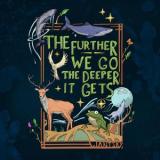
Camelot, the legendary seat of King Arthur's court in Early Middle Ages Britain, was probably not a real place. A corruption of the name of a real Romano-Briton city, the word "Camelot" accumulated symbolic, mythic resonances over centuries, until achieving its present usage as a near-synonym of "utopia." In the mid-20th century alone, Camelot inspired an explosion of representations and appropriations, among them the violent, affectless Arthurian court of Robert Bresson's 1974 film Lancelot du Lac and the absurdist iteration of Monty Python's 1975 Holy Grail, both of which feature armored knights erupting into fountains of blood; the mystical Welsh world of novelist John Cowper Powys's profoundly weird 1951 novel Porius, with its Roman cults, wizards and witches, and wanton giants; and the nationalist nostalgia of President John F. Kennedy's White House. Unsurprisingly there are fewer Camelots in more recent memory. Camelot, Canadian songwriter Jennifer Castle's extraordinary, moving 2024 chronicle of the artist in early middle age, charts a realer, more rooted, and more metaphorical place than the fabled Camelot of the Early Middle Ages (or its myriad depictions), but it too is a space more psychic than physical. In Castle's Camelot, the fantastic interpenetrates the mundane, and the Grail, if there is one, distills everyday experience into art and art into faith, subliming terrestrial concerns into sublime celestial prayers to Mother Nature, and to the unfolding process of perfecting imperfection in one's own nature. Co-produced by Jennifer and longtime collaborator Jeff McMurrich, her seventh record is at once her most monumental and unguarded to date, demonstrating a mastery of rendering her verse and melodies alike with crisply poignant economy. For all their pointedly plainspoken lyrical detail and exhilarating full-band musical flourishes, these songs sound inevitable, eternal as morning devotions. "Back in Camelot," she sings on the lilting, vulnerable title track, "I really learned a lot / circles in the crops and / sky-high geometry." The album opens with a candid admission of sleeping "in the unfinished basement," an embarrassing joke that comes true. But the dreamer is redeemed by dreaming, setting sail in her airborne bed above "sirens and desert deities." If she questions her own agency_whether she is "wishing stones were standing" or just "pissing in the wind"_it does not diminish the ineffable existential jolt of such signs and wonders. This abiding tension between belief and doubt, magic and pragmatism, self and other, sacred and profane, and even, arguably, paganism and monotheism, suffuses these ten songs, which limn an interior landscape shot through with sunstriped shadows of "multi-felt dimensions" both mystical and quotidian. The epic scale and transport of "Camelot," with its swooning strings, gives way dramatically to "Some Friends," an acoustic-guitar-and-vocals meditation in miniature on Janus-faced friends and the lunar and solar temperatures of their promises_"bright and beaming verses" versus hot curses_which recalls her minimalist last album, 2020's achingly intimate Monarch Season. (In a symmetrical sequencing gesture, the penultimate track, the incantatory "Earthsong," bookends the central six with a similarly spare solo performance and coiled chord progression, this time an ambiguous appeal to _ a wounded lover? a wounded saint? our wounded planet?) Those whom "Trust" accuses of treacherous oaths spit through "gilded and golden tooth"_cynics, critics, hypocrites, gurus, scientists, doctors, lovers, government, the so-called entertainment industry_sow uncertainty that can infect the artist, as in "Louis": "What's that dance / and can it be done? What's that song / and can it be sung?" Answering affirmatively are "Lucky #8," an irrepressible ode to dancing as a bulwark against the "tidal pools of pain" and the "theory of collapse," and "Full Moon in Leo," which finds the narrator dancing around the house with a broom, wearing nothing but her underwear and "big hair." But the central question remains: who can we trust, and at what cost faith, in art or angels or otherwise? Castle's confidence in her collaborators is the cornerstone of Camelot. Carl Didur (piano and keys), Evan Cartwright (drums and percussion), and steadfast sideman Mike Smith (bass) comprise a rhythm section of exquisite delicacy and depth. This fundamental trio anchors the airiness of regular backing vocalists Victoria Cheong and Isla Craig and frames the guitars of Castle, McMurrich, and Paul Mortimer (and on "Lucky #8," special guest Cass McCombs). Reprising his decennial role on Castle's beloved 2014 Pink City, Owen Pallett arranged the strings for Estonia's FAMES Skopje Studio Orchestra. On the ravishing country-soul ballad "Blowing Kisses"_Pallett's crowning achievement here, which can be heard in its entirety in the penultimate episode of the third season of FX's The Bear_Jennifer contemplates time and presence, love and prayer_and how songwriting and poetry both manifest and limit all four dimensions: "No words to fumble with / I'm not a beggar to language any longer." Such rare moments of speechlessness_"I'm so fucking honoured," she bluntly proclaims_suggest a state "only a god could come up with." (If Camelot affirms Castle as one of the great song-poets of her generation, she is not immune to the despairing linguistic beggary that plagues all writers.) Camelot evinces a thoroughgoing faith not only in the natural world_including human bodies, which can, miraculously, dance and swim and bleed and embrace and birth_but also in our interpretations of and interventions in it: the "charts and diagrams" of "Lucky #8," a daydreamt billboard on Fairfax Ave. in LA in "Full Moon in Leo," the bloody invocations of the organ-stained "Mary Miracle," and all manner of water worship, rivers in particular. (Notably, Jennifer has worked as a farmer and a doula.) The album ends with "Fractal Canyon"'s repeated, exalted insistence that she's "not alone here." But where is here? The word "utopia" itself constitutes a pun, indicating in its ambiguous first syllable both the Greek "eutopia," or "good-place"_the facet most remembered today_and "outopia," or "no-place," a negative, impossible geography of the mind. Utopia, like its metonym Camelot, is imaginary. Or as fellow Canadian songwriter Neil Young once sang, "Everyone knows this is nowhere." "Can you see how I'd be tempted," Castle asks out of nowhere, held in the mystery, "to pretend I'm not alone and let the memory bend?"
Readers of encyclopedic tomes are obviously familiar with exploding animals – there are numerous reports of torn-apart toads (even in Hamburg, Germany!), actual ants exploding altruistically – but humans that decide to jointly detonate, and with no harm done, that’s rare: Kobe’s own o'summer vacation are unique (and volatile) like that, and they’re back to light the fuse for the second time, presenting 13 more musical quarter sticks that have already blown up venues in Europe and Japan.
“Keep it lean, keep it mean,” they say, and that’s what this band loves to take to the extreme: breakneck concision and collective combustion meet freeform noise punk hazards on o'summer vacation's second (not quite) full-length – as the Kobe-based three-piece’s “Electronic Eye” is set to arrive on October 11, 2024. Following a bunch of trips to Berlin, Munich etc., the Japanese fire starters have found a new home with Alien Transistor, and it’s the perfect launch pad for their latest set of guitarless pyrotechnics. Going right for max q (maximum dynamic pressure), “Electronic Eye” is (unlike those Starships) actually supposed to explode right after lift-off ;)
Even though there have been some line-up changes since the group recorded its sophomore album, the energy caught by producer Shinji Masuko (DMBQ, Boredoms) is still unmatched: a very physical and hard-knocking barrage of mosh-inducing madness that leaves you speechless + inevitably twitching towards the pit. Mastering was done by Masaki Oshima aka Watchman (Melt-Banana).
Opening with sizzling hi-hats and heavy ripples of breathless bass, singer Ami presents a non-sequitur kind of lullaby over the math rock-style interlocutions of “宿痾 (Shuku - A)” – which at 6+ minutes makes up more than a quarter of the album. A shapeshifting frenzy of voice (Ami), unbridled, pedal-powered bassline insanity (Mikkki, formerly Mikiiiii), and hot-blooded drums (Manu, meanwhile replaced by Karry), the album features mosh-inducing blows (previously released “Luna,” “Anti Christ 大体 Super Star”), 30-sec mini noise punk anthems (“竦(shou)”, “Days Go By Fast”), and continues to surf at breakneck pace up and down scales (“@ The”), which often feels like catharsis served with a hammer (“Ultra”). Whereas some tracks are bigger more song-y than others (“Song#2,” that full-throttle “Poodle”), “Vs I” is on time like Tierra Whack (exactly 60 seconds of pick-grinding action), and “Rage” indeed feels like Zack is about to join the party – only to see Ami wipe the floor with pure onomatopoetic fire. Finally, “Aloooooone” and “Humming” (that opening lilt!) are sure going to be live favorites, shifting up and down via hardcore speeds and various break-downs.
Quite hotheaded and terminating things on a high note, o'summer vacation point out that the quick-fire lyrics of their “songs have no meaning. It’s called onomatopoeia in English. Ami, our vocalist, does not like to communicate her thoughts through her music.” Although she considers her contribution “a part of the instrumentation,” they still have strong messages and concerns (unrest, discontent, willingness to shake, wake up, enliven anyone near the audible bomb crater): “That doesn’t mean we don’t have a point of view, but we choose to express ourselves through sound rather than words. Generally, but not exclusively, we are anti-racism, anti-war, gender-free, angry at the companies we work for and their bosses, etc., which are very common sentiments held by so-called rock bands.”
It’s only three ingredients, just like sonic gunpowder: bass, drums, voice – but they tend to explode a few bars into each new track. In a perfect world, there’d be giant colorful clouds of dust gracing the sky over each venue they descend upon.
Biomes are little worlds of organic relationships, full of struggles, symbiosis, and sheer obsolete noise. In "De Silenti Natura," Henrique Vaz is meticulously crafting synthetic auditory biomes, sprouting from their own fuzzy logic. Unfolding across two distinct acts, the Brazilian artist interprets and replicates the complex, often ambiguous sounds of (un)natural environments, creating imaginary systems to inhabit over two sides of tape. The soundscape of the first side and title track is entirely algorithmically synthesized, with no samples used, leveraging Supercollider for real-time sound generation. The environment thus built is a flourishing one, seemingly unable to escape its own grandeur as insect-like buzzing and crackles expands into mountain ranges and forests of erupting sonorous drama. The second side introduces 'hydrophone' water synthesizers, submerged in a goldfish bowl to interface with the unfurling waves of electronic chords, creating a unique blend of damp and unwieldy sloshing movements, prismatically scattered into a luscious soundscape, and resembling everything from the bridge of a starship to the echoed drip-drip of stalactites.
Both sides of the album slowly unwrap and uncrinkle, revealing layers of hisses, distant digital choirs, warm enveloping chords, and juddering bleeps. Despite their unwieldy and strange nature, myriad elements convey a familiar sense of environment, flitting between the blossoming of new (manmade) life and the doom and destruction of the (real) world.
As the ringing of bells (fully synthetic; no samples were used) hove into view during the closing movement of side one, a simulacrum cacophony of voices is ushered in. It’s a reminder of the holy nature of sound itself, beamed into our heads intangibly. The flipside’s water ritual, frantically dunking ‘water synthesizers’ to birth swooping melodies and yawning tones, is jabbing at sleeping giants. It’s pushing and pulling the stars in the night sky into place. It’s both a simple act of beautiful creation, and a storm in a teacup.
With 'Stone Flute', the free-improvising duo's third studio album proper, Galecstasy returns to the universe of synthesizers to deliver an aural odyssey, conjuring the ancient tones of a forgotten world.
The album was entirely conceived and recorded in, and around, the majestic landscapes of Joshua Tree National Park in the magnificent high desert of southern California. From atop the mountain, the two sonic surveyors were witness to a 360 degree view of the stars at night. From above, the giant rocks looked like immense wise faces looking up at the sky, or even huge bodies resting on the Earth and looking up at space. It was during this time that Galecstasy started a ritual that ended up being called the “Moon Cruise”. This would involve waiting for the full moon to rise and then driving into the national park after dark. They would turn off the headlights of the car and drive slowly through the alien landscape lit up by the moon. Boulder fields took on the shape of temples; faces carved into the rocks everywhere they looked; giant heads with smiles or haunting expressions; and the knowledge that people had been living, dancing, and making music here for thousands of years. It was during these enchanting escapades that 'Stone Flute' was conceived.
In the mountain-top recording studio, the band were utilizing every potential space to tap into the best vibrations the land had to offer. Where the mic was placed: Perhaps a giant boulder once stood, or an ancient tree. One could feel the different energies of every room. The fireplace in the living room was built of giant lava rocks for the music to swirl around. Sounds would spill and climb around the house.
"The living room was just a beautiful tangle of synthesizers and plants. It was an inspiring place to make great records. We channeled the music of the boulders buoyed by the energy shooting up from the fault lines. The good feelings emanated from the studio, it had become our own temple and the birthplace of 'Stone Flute'."
With 'Stone Flute', the free-improvising duo's third studio album proper, Galecstasy returns to the universe of synthesizers to deliver an aural odyssey, conjuring the ancient tones of a forgotten world.
The album was entirely conceived and recorded in, and around, the majestic landscapes of Joshua Tree National Park in the magnificent high desert of southern California. From atop the mountain, the two sonic surveyors were witness to a 360 degree view of the stars at night. From above, the giant rocks looked like immense wise faces looking up at the sky, or even huge bodies resting on the Earth and looking up at space. It was during this time that Galecstasy started a ritual that ended up being called the “Moon Cruise”. This would involve waiting for the full moon to rise and then driving into the national park after dark. They would turn off the headlights of the car and drive slowly through the alien landscape lit up by the moon. Boulder fields took on the shape of temples; faces carved into the rocks everywhere they looked; giant heads with smiles or haunting expressions; and the knowledge that people had been living, dancing, and making music here for thousands of years. It was during these enchanting escapades that 'Stone Flute' was conceived.
In the mountain-top recording studio, the band were utilizing every potential space to tap into the best vibrations the land had to offer. Where the mic was placed: Perhaps a giant boulder once stood, or an ancient tree. One could feel the different energies of every room. The fireplace in the living room was built of giant lava rocks for the music to swirl around. Sounds would spill and climb around the house.
"The living room was just a beautiful tangle of synthesizers and plants. It was an inspiring place to make great records. We channeled the music of the boulders buoyed by the energy shooting up from the fault lines. The good feelings emanated from the studio, it had become our own temple and the birthplace of 'Stone Flute'."
- Lp Tracks: Queen Feat. Kim Jennett
- Ain't Got No Troubles On The Road Feat. Pete Brown, Chris Farlowe & Tommy Schneller
- Try Me Again Feat. Hamburg Blues Band
- Sunshine Of Your Love Feat. Dennis Chambers, Malcolm Bruce & Maya Sage Tomorrow's Blues Feat. Clem Clempson, Marlia Rae, Harry Waters, Alfred Mehnert, Anne Hauter &Detlef Blanke
- Why Are You Ashamed Of Me? Feat. Heidi Solheim
- I'm A Ram Feat. Jed Potts, Paul Jones, Phil Bee, Alex Lex & Paul Jobson
- I Don't Know Where My Heart Is Feat. Beth Morris
- Road Angel Feat. Vanja Sky & Danny Bryant
- Rock'n Roll Hoochie Koo Feat. Curt Cress, Frank Itt & Stoppok
- Do What I Say Feat. Clawfinger & Millie & Luca Crew
- Bust A Button
It is a monster album which unites the who's who of the modern blues and rock scene and took Krissy one year to produce! Friends on the album include rap metal giants Clawfinger, the god of hellfire Arthur Brown, the voice Chris Farlowe, Germany's soul queen Inga Rumpf, legendary singer songwriter Stoppok, the iconic Hamburg Blues Band, elite drummers Dennis Chambers & Curt Cress, Blues singing dynamite Big Daddy Wilson and many more. The album includes 24 songs and is almost 3 hours long with a mix of Krissy's original material and his favourite cover songs. "It was a long time in the making and I managed to get it done. I started the pre-production in November 2022 and went in the studio to begin the meat and potatoes process in January 2023. I wanted to get all my favourite musicians together that I have met on the road in my career. They are not all here by any means, but a good handful are! I did not want this album to have a box, so there are many different genres from metal to blues and jazz to rock'n'roll. But in the end, it is a Krissy Matthews record."
Don't judge a book by its cover. Judge a record by its cover.
And, perhaps, its title.
Cedar Walton's Mobius is as outrageously, disorientatingly brilliant as the stunning jacket design, featuring the legendary jazz pianist morphing into a mobius strip, set against a beautiful sky filled with cumulus clouds. A proper jazz-funk fusion slapfest, Mobius is a stellar electric set from - essentially - one *hell* of a SUPERBAND.
Yes, in addition to Walton's Fender Rhodes wizardry, Mobius is elevated by Ryo Kawasaki's stinging electric guitar, pristinely clear vocals by Adrienne Albert and Lani Groves, rootsy percussion by Ray Mantilla and Omar Clay, alto and baritone from Charles Davis, trumpet from Roy Burrowes, Gordon Edwards on bass and Frank Foster's tenor sax. Oh and did we mention STEVE GADD ON DRUMS?!?!
Gem after gem of looping, bliss-inducing gold, it's an incredibly revelatory album. It presents a thrilling synthesis of R&B, funk, blues and hard bop (with a hint of rock), all driven by an idiosyncratic electronic keyboard. Walton, a giant in the jazz world, got quite the workout every time he played, from piano to arp synthesizer to clarinet to electric piano to mini-moog and back again.
Mobius was Cedar Walton's debut for RCA in 1975. The versatile artist confirmed his abilities as a player, composer, interpreter and arranger with this stunning record, and his own bright compositions offered a springboard for the improvisations of the different soloists. Coltrane's "Blue Trane" is the first classic to be given the funkafied Mobius treatment, Ryo Kawasaki let loose all over neck-snapping Gadd-drum gold before the horns take a fiery turn and subsequently give way to Cedar's virtuosity. A sparkling b-boy break version of Thelonious Monk's "Off Minor" (featuring an absolutely *fire* solo from Walton) really sets proceedings alight. Of the three original pieces, the shuffling, percussive power of "Soho" is just absolutely mind bending Latin-influenced jazzy soul whilst the mellow vibes of "The Maestro" bring elegant, sumptuous soul. And then there's the effortlessly funky "Road Island Red". Just too, too good.
Cedar Walton was born in Dallas, Texas, on January 17, 1934 and began his professional career in 1959 when he began touring for several years with the J.J. Johnson Quintet. He later joined the Art Farmer-Benny Golson Jazztet and then Art Blakey's Jazz Messengers. Pretty solid credentials, right? While based in New York City, Cedar played with such luminaries as Donald Byrd, Eddie Harris, Blue Mitchell, Kenny Dorham, Lee Morgan, Freddie Hubbard, Jimmy Heath and Milt Jackson. Without question, he was one of the most complete and gifted musicians of his time and Mobius provides proof of that. The fresh, danceable tracks, all firmly rooted in the living tradition of blues and gospel, are skilfully presented by a master who enjoyed keeping abreast of contemporary tastes and was always keen to renew his language.
As the album notes state: “Mobius, which is the theoretical shape of the infinite universe, makes use of the most modern recording techniques and synthesizers. We mastered and mixed so that it’s hotter than the competition, which should help radio play and in-store demonstration.” Indeed. Mobius is really gorgeous mid-70s fusion, ranging from the funky to the ecstatic. It's an absolute MONSTER that will completely blow you away; and, yes, it's as wild and hypnotic as the cover. The audio for Mobius has been carefully remastered by Be With regular Simon Francis, ensuring it sounds better than ever. Cicely Balston's expert skills have made sure nothing is lost in the cut whilst the records have been pressed to the highest possible standard at Record Industry in Holland. The original, iconic sleeve has been restored here at Be With HQ as the finishing touch to this long overdue re-issue.
Gatefold Sleeve / 180g Vinyl
Returning to the well of Roger Doyle once again, his “Babel” project spans a decade of composition work before its’ initial release in 1999 as a 5CD set. Over 100 pieces and almost 50 collaborators it marks a journey through a virtual tower of Babel with each piece corresponding to a room within an imagined giant tower city. For the 25th Anniversary vinyl edition Doyle has revisited it- remastering it and providing its first vinyl edit - 80 minutes spread across two 180gm LP’s - rounding out the package with extended liner notes and a download code to the full 6 hours.
We’ve previously explored Roger’s Operating Theatre days and the idea for this project came in the early nineteen eighties while Doyle was heavily involved with the experimental theatre group. Working with emerging technologies and across a variety of genres he realised that he would be unlikely to achieve an overarching compositional style. Instead deciding to make a virtue out of the fact that he composed so schizophrenically, he wished to create a musical alphabet out of short abstract sounds with these sounds being analogous to phonemes in speech. With Blade Runner and sci-fi embedded in the zeitgeist of the times he came to the idea of the Tower of Babel as both a futuristic skyscraper and also an embodiment of language.
In the spring of 1990 Babel was finally begun and kept growing until it reached over 6 hours of music and was released in 1999.A large-scale musical structure making use of many technologies and music languages, with each piece of music being thought of as a 'room' or place within an enormous tower city. Each track in the main section corresponds to a virtual sonic architecture. The pieces are divided into two kinds: aural representations of actual spaces like The Dressing Room, The Stairwell and Mr. Brady's Room alongside internalised dream spaces like the Room Of Rhetoric, the Spirit Levels and the Mansard childhood memory room. Listeners can navigate their way differently through this virtual building at each hearing. As a supplement to the Babel Tower KBBL - the fictitious radio station – broadcasts a number of shows. Each has its own style and atmosphere. Collaborating with DJs, actors, writers and singers, KBBL is made to sound like a real radio station with ads, traffic reports and phone-ins.
Examples of the connections within the project can be found via the architecture were the saxophonist in the off-stage dressing room is rehearsing for her solo in the concert-hall (heard in Pagoda Charm) or the room off the stairwell, where the sounds of piano lessons and apartment life can be heard and the apartment where a muffled KBBL can be overheard At a molecular level The Iron Language Alphabet is a sound alphabet containing tiny fragments of sound representing letters or characters of an alien alphabet. This sound alphabet can be heard scattered through other pieces like The Room of Rhetoric, Pagoda Charm and in KBBL in Johnny’s Body at 002. Other molecular scatterings can be found in Cantilena where two songs sung by Operating Theatre’s Elena Lopez in KBBL are exploded and re-arranged to form new entities.
Doyle’s Babel celebrates language - a slight variation on the Biblical morality tale - and musical expression in all its variety.
Nach einer stürmischen Headliner-Show beim PowerTrip Festival in Kalifornien kündigten die Metal-Götter Judas Priest am Wochenende auf der Bühne ein brandneues Studioalbum mit dem Titel 'Invincible Shield' an, das am 8. März 2024 über Columbia Records erscheinen wird. Die erste Singleauskopplung "Panic Attack" wird am Freitag, den 13. Oktober veröffentlicht. Judas Priest wird 2024 zudem auf Welttournee gehen. Die Tour beginnt am 11. März in Glasgow und führt die Band am 3. April 2024 in die St. Jakobshalle in Basel. In den vergangenen 50 Jahren haben Judas Priest weltweit mehr als 50 Millionen Alben verkauft und standen in den größten Stadien der Welt auf der Bühne. Mit der Zeit entwickelte sich eine starke, einzigartige Identität, ein Look, der sowohl Judas Priest definiert als auch zukünftige Generationen von Metal-Bands auf der ganzen Welt beeinflusst hat. Mit jedem Jahr wächst die Legende Priest weiter; 2022 wurden sie in die Rock & Roll Hall of Fame aufgenommen und absolvierten eine ausverkaufte, verschobene Welttournee anlässlich ihres 50-jährigen Bestehens
- A1: ドロボウ兄弟登場 The Thief Brothers Appear Kohei Tanaka
- A2: サンジ大ピンチ! Sanji's In A Big Pinch! Kohei Tanaka
- A3: 恐怖のキング砲 Terror Of The King Cannon Kohei Tanaka
- A4: ボロードの告白 Boroodo's Confession Kohei Tanaka
- A5: 怒りのベアキング Bear King's Rage Kohei Tanaka
- A6: 気迫の剣士ゾロ Spirited Swordsman Zoro Kohei Tanaka
- A7: 命かけなきゃ! Bet Your Life On It! Kohei Tanaka
- A8: 母、そして旅立ち Mother, Then Setting Off Kohei Tanaka
- A9: バトラー一味登場! Butler And His Henchman Appear! Kohei Tanaka
- A10: 迫りくる敵? An Enemy Is Coming! Kohei Tanaka
- A11: サンジVsヘビー Sanji Vs Snake Kohei Tanaka
- B1: 大ゲンカ! Big Fight! Shiro Hamaguchi
- B2: 激闘!ゾロ&サンジ Fierce Battle! Zoro & Sanji Shiro Hamaguchi
- B3: シュライヤVsニードルズ Shuraiya Vs Needles Shiro Hamaguchi
- B4: ゴーイングメリー号、飛ぶ!! Going Merry, Fly! Shiro Hamaguchi
- B5: ガスパーデの能力 Gasparde's Power Kohei Tanaka
- B6: シュライヤの過去 Shuraiya's Past Kohei Tanaka
- B7: 生きていればこそ As Long As You're Alive Kohei Tanaka
- B8: ルフィ登場! Luffy Appears! Shiro Hamaguchi
- B9: 雄叫ぶ海軍剣士 The Marine Swordsman's Battle Cry Shiro Hamaguchi
- B10: 行動開始! Action Starts Shiro Hamaguchi
- B11 3: つの塔 Three Towers Shiro Hamaguchi
- B12: ルフィ猛攻! Luffy's Fierce Attack Shiro Hamaguchi
- B13: リゾートアイランド? Resort Island Kohei Tanaka
- B16: 思いだけじゃ届かない… Thoughts Don't Reach Far Enough Kohei Tanaka
- C1: カラクリ防衛システム、起動! Karakuri Defense System, Activate! Yasunori Iwasaki
- C2: カラクリ防衛システム、発動! Karakuri Defense System, Deploy! Yasunori Iwasaki
- C3: とんでもないものが目覚める! Something Terrible Awakens! Kohei Tanaka
- C4: 目覚めた!! It Awakens! Kohei Tanaka
- C5: 母の想い A Mother's Love Kohei Tanaka
- C6: 金の冠はある! The Golden Crown Exists! Kohei Tanaka
- C7: ラチェットの野望 Ratchet's Ambition Yasunori Iwasaki
- C8: カラリ城、変形! Karakuri Castle, Transform! Yasunori Iwasaki
- C9: 麦わら海賊団、反撃開始! Straw Hat Pirates, Begin Counterattack! Kohei Tanaka
- C10: 巨大要塞、発進!! Giant Stronghold, Takeoff!! Yasunori Iwasaki
- C11: カラクリに気をつけろ! Karakuri On Guard! Kohei Tanaka
- C12: ルフィVsラチェット Round1 Luffy Versus Ratchet Round 1 Yasunori Iwasaki
- C13: ゾロVsマジ将軍 Zoro Versus General Maji Yasunori Iwasaki
- C14: サンジVsホンキ大佐 Sanji Versus Captain Honki Yasunori Iwasaki
- C15: ルフィVsラチェット Round2 Luffy Versus Ratchet Round 2 Yasunori Iwasaki
- D1: おれはお前を越えていく!!! I Will Surpass You!!! Kohei Tanaka
- D2: 黒ひげ海賊団の猛襲 Conviction Of The Blackbeard Pirates Kohei Tanaka
- D3: うるせェ!!!いこう!!!! Shut Up!!! Let's Go!!!! Kohei Tanaka
- D4: ダフトグリーン ~悲劇とその理由~ Daft Green ~Cause Of Tragedy~ Kohei Tanaka
- D5: 集結 ~絶望の前の希望~ Gathering ~Last Desperate Hope~ Shiro Hamaguchi
- D6: 作戦開始 ~襲われる村~ The Operation Begins ~The Village Is Destroyed~ Kohei Tanaka
- D7: 迫り来る巨大生物 ~それでなくても大変なのに~ Terror Of The Giant Animals ~Things Were Already Bad!~ Shiro Hamaguchi
- D8: サンジ 風脚 ~これがイーストブルーの恋の味~ Sanji's Leg Of Wind ~This Is A Taste Of East Blue Love~ Shiro Hamaguchi
- D9: 最後の戦い ~渾身の巨人の雷斧(ギガント・トールアックス)~ The Final Battle ~Gigant Thor Axe~ Shiro Hamaguchi
- D10: 勝利の雄叫び ~島は海へ 人は空へ~ Song Of Triumph ~The Islands Fall To The Sea, The People Fly To The Sky~ Shiro Hamaguchi
- B14: 沈む… Sinking... Kohei Tanaka
- B15: 気をつけろ Be Careful Kohei Tanaka
New World[40,29 €]
Immerse yourself in the musical universe of ONE PIECE MOVIES - BEST SELECTION! Enjoy over 70 minutes of music from the One Piece films for the first time on vinyl, taking you on a journey through the adventures of the famous Straw Hat crew.
Fully licensed.
Luffy, a mischievous boy, dreams of becoming the king of the pirates by finding the "One Piece", a fabulous and mysterious treasure. But, inadvertently, Luffy one day swallowed a "magical devil fruit" that turned him into a rubber man. Since then, he is able to contort his elastic body in all directions, but he has lost the ability to swim, the height for a pirate! Over the course of ever more incredible adventures and chance encounters, Luffy will gradually compose his crew and multiply friendships with the peoples he discovers, while facing formidable enemies.
Kohei Tanaka worked on the composition and arrangement of this album.
Much has been written about Young Marble Giants' small, perfect catalogue, which contained roughly two-dozen songs, nearly each one a perfect gem. Less is known about his long wilderness years after the break-up of his first professional band. His next project, The Gist, chopped YMG's minimalism into a new sound. This Is Love, Public Girls and Fool For A Valentine showed his songs to be razor-sharp, but the album's fragmented pieces were a step too far for some, though even the strangest, Carnival Headache, when cast in sunlight by Alison Statton's combo Weekend, was as fine a song as any he'd written - and Love At First Sight became a million-seller when covered by Etienne Daho. Then Stuart disappeared. A rmid-90s resurgence led to fine albums done on low budgets, before more silence followed. The Gist's 2018's release Holding Pattern - unexpected and then quickly followed by YMG singer Alison Statton's first new album with her accompanist Spike in two decades, adding fuel to public interest. The Devil Laughs, recorded a few years back, is a compelling addition to the canon of the 21st century songwriting. Stuart's generally unadorned musical presentation does not hinder his appreciation for the skills of Louis Philippe, whose iconic arrangements across an array of Él label albums inspire the fierce devotion of aficionados around the world. Nor does the unvarnished solidity of Stuart's arrangements deter Louis from hearing possibilities for their presentation in styles which take inspiration from the perfection of 1960's studio technology that led to the rise of Brian Wilson, Burt Bacharach, along with less-recognised names such as Bones Howe and Roy Halee. Tidy Away is Young Marble Giants redux, though the backing vocals hint at maturity which band didn't live to see. Fighting To Lose, written with producer Ken Brake, would pass as a worthy b-side to Bridge Over Troubled Water, and although the songs are otherwise Stuart's, Louis fans will delight at several, like Love Hangover and Sky Over Water, which display his style and production genius as succinctly as anything on his own albums. The Devil Laughs is as out of its time as Colossal Youth was - its subtle but immediate beauty, devoid of "rock", is a recording best understood in the light of those obscure groundbreakers who inspired it - the faux barbershop vocals of Smile-era Beach Boys, the studio lustre of Tom Wilson's work with Simon & Garfunkel, a dash of The Swingle Sisters and French chanson - along with enough hints of Young Marble Giant's modernist folk abstraction to satisfy longtime fans. The Devil Laughs is a small masterpiece of pure expression.
LTD. OLIVE GREEN VINYL[24,16 €]
Our upcoming album, titled "Helichrysum," delves deep into the human experience, exploring the wounds we carry and the transformative power that lies within us. It serves as a culmination of the countless creative and personal choices we have made, leading us to a place of greater harmony within ourselves, with each other, and with our collective intentions. Musically speaking, the new album is a testament to our commitment to delivering a sonic experience that is unapologetically raw, adventurous, heavy, groovy and psychedelic. The choice to name the album after the Helichrysum plant, holds a significance as the plant symbolizes endurance, healing, immortality, and the power to overcome adversity, which mirror many of the themes throughout the record."
Black Vinyl[20,13 €]
Olive green vinyl, limited to 500 copies. "Our upcoming album, titled "Helichrysum," delves deep into the human experience, exploring the wounds we carry and the transformative power that lies within us. It serves as a culmination of the countless creative and personal choices we have made, leading us to a place of greater harmony within ourselves, with each other, and with our collective intentions. Musically speaking, the new album is a testament to our commitment to delivering a sonic experience that is unapologetically raw, adventurous, heavy, groovy and psychedelic. The choice to name the album after the Helichrysum plant, holds a significance as the plant symbolizes endurance, healing, immortality, and the power to overcome adversity, which mirror many of the themes throughout the record."
Oorsprong is a tube, a line in a forest, a sound sculpture. Acoustics to be revealed. Activated by entering, it becomes a giant flute producing a tone that is so low, the body crashes into waves of pure pressure instead of sound. Untranslatable energy. CERCHI CERCHI by Lukas De Clerck (FKA: Bloedneus & de Snuitkever) is a quest in a forest to find traces of that untranslatable sound, its impact, its imprint, its memory. A hide and seek in which the body is concealed in the instrument, becoming its second voice, hidden but exposed.
I
whistling, organ pipe, voice
A whistle, a whisper, a play of breath. Echoes of a low pulse, colliding into each other.
Party in the background, a coach blows a whistle, a haunting scream echoes the whistling from inside, kids returning from a party.
II
voice, whistling
To give away your voice, a gesture. The initiative for an introduction.
Birds chirping, an F16 piercing through the sky.
III
kaval
A circular breath gently caresses a line of circles, making its surface ringing.
Birds chirping, voices of kids, kids shouting, the door of Oorsprong closes.
IV
oorsprong, two bass recorders
When tuning becomes rhythm, when rhythm becomes a beat of breath. A beat underneath the beating of tones. Feedback of flutes.
The clanging of 2 bass recorders, the ventilator of Oorsprong is turning on.
Behold the might of Rodan, the giant monster from the sky! In 1956, Toho unleashed their first colour kaiju picture: RODAN, directed by Ishiro Honda and produced by Tomoyuki Tanaka, is a terrifying tale from the creators of the original Godzilla that sees a giant Pteranodon rise from a deep underground cave after being disturbed by miners. Like the Big G, Rodan has mutated to excessive size after being exposed to nuclear radiation, subsequently soaring free above Kyushu to cause as much mayhem as possible as the JSDF do their best to protect the island from his bloodthirsty rampaging. It was inevitable that the man behind the music of Godzilla would also take on scoring RODAN, and the great Akira Ifukube created a score with a solemn edge as with Godzilla, which makes the music of RODAN fit in the larger universe while allowing it to feel unique to the character. For the main theme, Ifukube introduces a malevolent low piano and brass phrase before cointerpointing it with horns to create a howling menace worthy of Rodan. In contrast, beautiful but melancholy material represents the carnage the monster has brought upon the Earth; in a more upbeat mode, the composer includes another of his jaunty and jazzy marches for the JDSF in the guise of "Get Rodan". It's another Toho triumph from the great maestro Ifukube! (Charlie Brigden)