Bad news: Not much is known about pdqb, and what we do know is most likely either wrong or made up. The man who is credited for the productions is said to have gone insane due to being possessed by an alien parasite. His whereabouts remain unknown. Good news: Fortunately, Synaptic Cliffs owns about a dozen releases from whoever or whatever is behind the mysterious abbreviation and will publish every single one of them…because they are ultra awesome.
With the original tapes of this Mini-LP, pdqb left a fragmented note in the '90s stating that he decoded eight tracks originally produced with the NCO6.27 for test subjects who were all given some strange form of brain implants, and that a certain wetware could be unveiled in that manner, and that he conducted that research long before he developed a machine capable of hacking into the dreams of everyone who has ever lived.
However, the music could best be described as playful and dark, old-school Techno/Electro/Industrial blended with Chiptunes, IDM/Braindance, and Electronica. It is pressed on a beautiful green splatter vinyl.
The first 150 customers will be rewarded with a free leftover flexi disc from the '80s featuring two exclusive tracks composed by pdqb while he worked for Silvio Berlusconi's Mediaset TV production company. The flexi was originally included in the November 1985 issue of the Italian Playboy Magazine (cover girl: Grace Jones) and is extremely sought after.
out of Stock
Last delivered 14 months ago available to reorder, subject to availability
The late, great Calvin Keys’1971 debut album for the Black Jazz Records label announced the arrival of a new star in the jazz guitar firmament. Keys had spent the ‘60s backing up the crème de la crème of jazz organists—Jimmy Smith, Jimmy McGriff, Jack McDuff, Richard “Groove” Holmes—but for his first record as a leader, he was eager to play with a piano player instead. So he recruited one of the best—Larry Nash, who, besides being a member of the L.A. Express, played with everybody from Eddie Harris to Bill Withers to Etta James. Bassist Lawrence Evans, drummer Bob Braye, and flautist-songwriter Owen Marshall rounded out the group on Shawn-Neeq, which might remind some of Pat Metheny’s early work (Metheny acknowledges Keys as an influence), or Grant Green.
But what gives Shawn-Neeq extra depth is that it comes from the heart; as Keys says in Pat Thomas’ liner notes, which feature an interview with the artist: “My thing was, I write about some of the experiences that I’ve had in my life.” Keys became a fixture in the Bay Area jazz scene before he passed in April 2024; this is the album that started his journey. Another gem from the celebrated Black Jazz catalog, pressed in blue with black swirl vinyl limited to 750 copies!
A valentine for black hearts! An electric array of magic sounds! The shock return of a missing legend! The surprise formation of HOUSE Of ALL by five former members of The Fall was bound to provide some pleasant surprises, not the least of which being the creation of an identity distinct from that of any specific Fall line-up, and here the band offer an steep evolution of sound of their two previous albums . . . darker, more elliptic and can we say it? A more mystical sum of talents than most groups ever manage. They've kept their open door policy to former members of The Fall and expanded it. Phil Lewis, who's stepped in live for Pete Greenway, makes his studio debut, and the long-lost Karl Burns has emerged from his mystery lair to add a third set of drums to the line-up . . . besting The Glitter Band by 50%! How this will work live has yet to be determined, but the band has already scheduled dates in Spring, 2025. House Of All Souls is somewhat more psychedelic than its predecessors, and despite seven players, each with his own particular style, the songs and production are shockingly cohesive. From the breakneck pace of first tune, Tempest And Storm to the superb album closer, Born At Dawn And Dead At Sunset, there's quite a lot to unpack - it's an album-lover's album, each track magnificent in its own way and impossible for us to pick a fave from the lot of 'em. Plenty has been written about The Fall, whose 50th birthday is just a few years off, but rare is the group with an equally perverse and persuasive influence in that period. When HOUSE Of ALL debuted, Martin Bramah remarked on it being "part of the Fall family continuum" - a matter of actual fact, given the pedigree of its members. With this, HOUSE Of ALL's third full-length album, it's proven fact that the bright lights of those multiple talents behind the band have yet to dim.
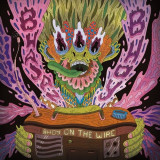
Ajay Saggar is BHAJAN BHOY. "With BHAJAN BHOY, Saggar synthesizes all of the stylistic approaches he’s explored over the years, swirling them into an intoxicating musical blend, with an earthy spirituality. Even the project’s name reflects the dual aspects of Saggar’s upbringing coming together in harmony. In Hindi, a “bhajan” is a devotional song, sung in the mandir, or temple, while “bhoy” is a Scottish and Irish derivation for a young man. There’s a searching quality to Bhajan Bhoy, as if Saggar is still hunting for transcendence with each track, whether through an expansive drone, an orchestral facility on the piano, or an electronics-augmented raga that threatens to dip into noise” (Erick Bradshaw / writer and WFMU DJ). This album presents a rich and varied set of compositions that showcase Saggar’s skills as an incredibly talented and accomplished composer and musician. With each and every Bhajan Bhoy LP, you are are carried to a higher place. With ‘Bhoy On The Wire’, the 35 minutes laid out unfolds like a cosmic tapestry, an extraordinary exploration that shimmers and reverberates with newfound vibrancy. The songs were broadcast as part of a session on Steve Barker’s “On The Wire” radio show in April 2024. They were a gift to Steve and his team for 40 years of broadcasting. “On The Wire” is simply the greatest radio show in the world. As Ajay explains in his own words : “In September 1984, I started a degree course at the University of Lancaster. On a wet and soggy Sunday afternoon towards the end of September, I sat in my room staring out at the grey Lancashire landscape, and decided to alleviate the boredom by seeing if there was anything to listen to on the radio. Most of the stations I tuned into were as dull as the weather outside. However, as I neared the end of the FM dial (and was about to give up hope), I chanced upon a station where I was taken by the music being played. That show was “On The Wire”, introduced by Steve Barker. From there on in, every Sunday, between 2-5pm, I tuned into Radio Lancashire to listen. Steve’s shows had an incredible and wide reaching selection of music and genres, that thrilled your ears and left you wanting more. Tied to that, his deep knowledge of the material he played helped the listener dig into the sounds even more, and also left you in admiration of this trait. In 1985, I started putting on DIY shows in Lancaster (inviting the likes of Bog-Shed, bIG fLAME, The Membranes, The Wedding Present, etc etc) and Steve was kind enough to mention the shows on-air, which helped in getting people from different parts of the county to come to the shows. At the tail-end of 1985, he invited me to the studio to come and hang out. When in 1988, the group I was in, Dandelion Adventure, released our first (demo) cassette, it was Steve, who not only played tracks off it, but invited the group to the studio for an interview. Now if you’re a young band, that is a massive thrill! And in 1990, when Dandelion Adventure did a John Peel session, I actually used “On The Wire” jingles (that Steve had put on a cassette and given to me a few years before) on the track “All the World’s A Lounge”. Since then, the show has been a mainstay for me, and so many others around the world, to get turned onto incredible sounds from around the world. And over the course of 40 years, Steve has always supported my music. These six tracks are a 40th birthday gift to the “On The Wire” team (Steve, Michael “Fenny” Fenton (an absolutely critical part of the show), and Jim Ingham (engineer who keeps the technical side of things going)) for sharing so much amazing music, and making the world a better place. They were originally broadcast as an exclusive session in April 2024 on “On The Wire", and are here for your listening pleasure. Music like shower”. Artwork by Jake Blanchard
HotWax are a band set on experiencing life at its most intense. In the past two years, the Hastings-via-Brighton trio – comprising Tallulah Sim-Savage (vocals/guitar), Lola Sam (bass) and Alfie Sayers (drums) – have toured the world over, clocking up over 150 dates, including shows with Royal Blood and Frank Carter, and major festival appearances at Reading & Leeds and All Points East. Out of all this comes debut album Hot Shock (due March 7 via Marathon Artists), a record of adrenaline-jolted anthems about abandoning fear and leaping boldly towards the future.
HotWax worked with an all-female production team at the prestigious RAK studios, Catherine Marks (Boygenius, Wolf Alice) and Steph Marziano (Hayley Williams, Let’s Eat Grandma), as well as additional recording with Stella Mozgawa of Warpaint in Joshua Tree, California.
These songs were made to be played to a crowd, loud and with abandon. But there’s also a beating pulse of vulnerability underscoring the album. It’s an honest, moving sentiment sure to propel HotWax towards becoming the UK’s next big crossover rock act – and beyond.
"Britain’s most thrilling and fiercely confident new rockers” - NME “they’re a total inspiration – wicked songwriting, stunning stage presence, and a sheer, raw, couldn’t-give-a-flying attitude that punches you to the gut.” - Clash
Cindy Lee, Arthur Russell, Viagra Boys, On-U Sound. In the discourse around new albums from singular, world-building artists, the phrase “a big step forward” can often be a blinking red warning sign. You know you’re about to be pulled somewhere new against your will. Inertia is a hell of a thing. It’s nice here. Surely, the party’s not over yet? JJULIUS’ Vol. 3 album is a big step forward, or a step up, out of the murky basement of the preceding two volumes. There’s no time to acclimate. A spindly violin grabs you by the hand and pulls you into the pastoral bounce of “Brinna ut,” which, in spite of its meaning (“Burn out”), creates the kind of blind positivity and warm stomach feeling less cynical people might find in self-help seminars. For us, we have records like this. And, inertia be damned, Vol. 3 has charm like a balm. JJULIUS records have always arrived like meteors from another planet, an impression hammered home by the fact that they’re titled like compendiums of artifacts. And while Vols. 1 and 2 carried that notable tinge of darkness, Vol. 3 has (almost!) cast that shadow, adding elements of disco (“Dödsdisco”) and dream-pop (“Etopisk hallucination”) to his forever favorites Arthur Russell, African Head Charge, and The Fall. Some of that new car smell could be attributed to a change in process. Each song was written over beats played by Tor Sjödén of the wild-eyed Stockholm group Viagra Boys, beats that were themselves inspired by tracks from the likes of Patrick Cowley, CAN, Count Ossie, Black Devil Disco Club and others that Julius would send to him as inspiration. Unless you’re Mark E. Smith, fervor fades. Eventually we all crave a lie down in some nice grass, a few minutes to gaze at the sky and wonder if everything is actually all that bad. Vol. 3 gives you 35 of those respiting minutes. “No looking back, no misery, no talking trash, no enemies.”
Julek ploski’s ‘Give up Channel’ is on mappa. It’s the follow-up to the Poland-based FL Studio demon’s ‘Hotel *’, released via Orange Milk in 2023.
It’s an album that wrestles against a shadow self. It’s about shelter from the hailstorm of unwanted memories and guilt pangs and serrated blades of thought. It’s about clinging on to some semblance of hope, knuckles taut and teeth gritted.
The fragmented drift of opener ‘Naysayer’ flows forward like an anxious daydream, pad eddies and piano plinks anchored by Trapaholics drops and bursts of guaracha drums. It’s a mess of mind: the bleakness of ‘Truth’ is punctuated by gun cocking and bullet spray and sudden jester-like blasts of unhinged, schizo-whimsical melody. An internal war without a clear winner.
Shame snakes through this music like venom through an emaciated body. Blue screenlight in a dark bedroom, pulsating temples, lockjaw. ‘Titanic’ hits like the thrashing resistance of a being built for love grappling against the scalding vengefulness it’s forced to contend with, the song’s abstracted rave synths giving way to warped voices and spiralling derangement. ‘Hollywood’ is a scarred battleground, the martial bludgeoning of a tightly wound hardstyle stomp blistering and shredding a delicate piano-and-string arrangement.
This music is about deep solitude, a meditation on simmering, slow-marinating hatred. But it’s ultimately about prevailing. It doesn’t revel in negativity, it roils and twists and writhes against it. Dots of light in oppressive darkness. Clarity and purpose against chaos and filth. It’s a struggle worth waging.
h I Was #AllAlone Movements V - VIII
[i] Economy [Movements I - IV]
out of Stock
Last delivered 7 months ago available to reorder, subject to availability
Black vinyl / 505mcn paper / 30 x 60 cm Insert with full interview to Khan Jamal II + extended liner notes printed on 300 gram Büttenpapierfabrik Gmund "No Color No Bleach" paper with exclusive pictures & much more!
Personnel:
Khan Jamal - Vibraphone, Marimba
Clint Jackson III - Trumpet
Hassan Rashid - Drums
Notes:
It's quite simple, if you have a good connection with music, to find things that should be reissued due to their exceptional quality, but, like a diviner, being able to unravel the problems related to the licensing of a record, well, that's much more difficult. Finding someone is Sherlock's job! After 4 years, Khan Jamal II (son of Khan Jamal) delighted us with a "Let's go my guy".
Khan Jamal doesn't need much introduction: Born Warren Robert Cheeseboro, he was a jazz vibraphone and marimba player from Philly. He founded the band Sounds of Liberation in 1970 with Byard Lancaster. In 1974, during one of his many trips to the old continent, he recorded this album in France at Jeff Gilson's Palm studio. It is a delicate game of lucid and intense contrasts between Christian Vander's drums provides a rock oriented touch, the marimba and the vibes with influences from the lands of the rising sun of Jamal and the composed trumpet of Clint Jackson III which anchor "Give the vibes Some" in a sort of Space Age Jazz era.
In the end, you know what? This album is a transcendent journey into yourself, like an intense session of meditation...even if "35.007 Feet Up" could easily be played by Jeff MiIls in his DJ Set!
out of Stock
Last delivered 19 months ago available to reorder, subject to availability
The first in a two part series on Canopy documenting the work of the Beninoise supergroup, T.P. Orchestre Poly-Rythmo, who were responsible for an astonishing multitude of records, numbering well over 250 releases. While the group underwent numerous personnel changes over the course of their 40+ year legacy; the founder, composer, vocalist & multi-instrumentalist Clément Melome remained a constant and uniting force.
The title track, "Zo Tche Kpo Do Te", sung in Fon by bandleader Clément Melome translates as, "My Fire Will Not Go Out" and was taken from the self-titled LP "Melome Clement & L'International Orchestre Poly-Rythmo". It is here remastered and reissued by Canopy for the first time. This evocative song is a hybrid of soukous-like elements with a driving, almost disco beat and a relentless bassline shot through with funky guitars and triumphant horn arrangements. The atmosphere is given a cosmic sensibility with synth lines and psychedelic FX, culminating in a sonic cocktail that has often been described as "Voodoo-disco".
Accompanying the original version are two remixes by producers whose work Canopy has long admired.
Jose Marquez adds live bass and percussion to his "Mezcla", turning it into an uplifting opus that deftly dances the line between the original work and the modern elements, tastefully updating the sound to segue between the past and present.
Sol Power All-Stars up the ante with their powerful reinterpretation. Throbbing bass underpins a club focused yet dubbed out and psychedelic afrobeat over which Clement Melome's composition shines. The Ibibio Horns add complimentary horn arrangements and galactic synth solos. The end result is a master work in 21st century future-vintage afro funk creation.
out of Stock
Last delivered 18 months ago available to reorder, subject to availability
After the release of their highly successful self-titled album in summer 2021 (#1 in Germany and Spain etc.), HELLOWEEN -- one of the most respectable German metal exports and pioneers of German melodic speed metal -- are finally bringing their new anthems to the packed arenas, leading them all around the globe with their »United Forces« tour. The creators of the albums »Keeper Of The Seven Keys, Pt. I & II« (87‘/88‘), which are considered to be among the most successful German metal records of all time and are reckoned internationally as absolute milestones of power metal, haven’t only cemented but even expanded their status as giants of the scene. Caused by the pumpkinheads‘ aforementioned triumphant wave of success, the group’s back catalogue albums are also more in demand than ever which is why Atomic Fire are now set to release a series of brand new vinyl editions including the following hot HELLOWEEN records: »The Dark Ride« (2000), »Rabbit Don’t Come Easy« (2003), »Keeper Of The Seven Keys - The Legacy« (2005), »Gambling With The Devil« (2007), »Straight Out Of Hell« (2013), »My God-Given Right« (2015), and last but not least their latest offering »Helloween« (2021).
out of Stock
Last delivered 19 months ago available to reorder, subject to availability
Whipped up in the dust of Rene & Rene's Tejano tornado "Angelito," the Dynamic label was just one among San Antonio record and real estate mogul Abe Epstein's enterprises. Dynamic's flagship outfit, the Commands, marched "No Time For You" up to the middle of the charts in 1966 with performance chops honed jet-sharp by the demanding Air Force Base circuit. That takeoff paved a runway for 20 more soulful Dynamic singles over an impressive 30-month campaign. Epstein's open-door policy brought a diverse cross-section of Texas talent into convergence within his General McMullan Drive studio, as whites, blacks, and Latinos alike suited up for service in whichever new group the call of duty called for. Epstein's Alamo City melting pot is ladled out here in 21 (28 on the 2LP) of Dynamic's most intriguing dishes by the Tonettes, Little Jr. Jesse & the Tear Drops, Don & the Doves, Willie Cooper & the Webs, Bobby Blackmon & His Soul Express, and Doc & Sal. Lone Star pic sleeves, full-color dancehall photography, and rich ephemera plant a new flag for soul in soil that's seen its share of hoisted banners.
Matilda Mann’s debut album, Roxwell, is a heartfelt exploration of love, vulnerability, and nostalgia. Named after the street of her childhood home, the album reflects Mann’s sentimental connection to her formative years in West London, where she grew up as an only child. Her introspective lyrics and delicate vocals navigate the highs and lows of relationships, from infatuation to heartbreak.
“This is my debut album. Every song feels like a part of me, and I’m so, so excited that it’s finally coming out. It explores various types of love, the experience of growing up and reflecting on the past, the struggle of not being able to give someone your all, getting stuck in the past, and accepting what you can’t change.”
When Creed Taylor was setting up his CTI label one of his proposed signings was Billy Vera. This led to a deal for Vera’s younger sister Kathy McCord. In fact, McCord was the first artist signed and recorded by CTI. Her debut, “Kathy McCord” was released in 1970.
Although the label would go on to establish a fine reputation in jazz, “Kathy McCord” was a folk rock album. A gifted young poet the 17-year old McCord wrote many of the tracks on the album which were then interpreted in the studio by a crack team of jazz musicians that included Harvey Brooks (bass), Hubert Laws (flute), John Hall (guitar) and Wells Kelly and Ed Shaugnessy (drums). Musically and lyrically both the musicians and McCord stretched out on tracks like ‘Rainbow Ride’, ‘Jennipher’, ‘Candle Waxing’ and ‘Take Away This Pain’ to conjure up an amazing fusion of folk and jazz. The only cover on show was a version of Lennon and McCartney’s ‘She’s Leaving Home’ which McCord repurposed as ‘I’m Leaving Home’.
Upon release the album sold poorly. Creed’s expertise and contacts were in the jazz field and he had no idea how to market an album of folk jazz songs sung with fragile beauty by a good looking girl still in her late teenage years. Also, when Billy Vera did not sign to CTI McCord was dropped.
Over time “Kathy McCord” attracted a dedicated following amongst folk-rock collectors in America and the UK. In many respects it was an echo of something like Deena Webster’s 1968 folk rock LP, “Tuesday’s Child” that also came, went and is now sought after.
Ace are delighted to give the world the first vinyl reissue of “Kathy McCord” since 1970. Pressed on black 180gm vinyl it also includes liner notes from Billy Vera - who has this to say about his late beloved sister: “My sister had the goods. She could sing, she could write and she looked great. Like so many other talented people, she just failed to get lucky. Listen and enjoy her. I love her stuff”. You will too...
Do It With Soul is back with another healthy dose of dancefloor fun featuring a pair of well-executed new edits. On the A-side of this limited edition 7" is 'Get Up Gaff,' a James Brown-inspired rework with some nice analogue 808s driving forward the raw vocal loops and jacked-up drum hits. On the flip, 'Mango In the Jungle' channels more James Brown energy as it collides 'Mango Meat' with 'Give It Up and Turn It Loose.' The result is a wild mix of funk breaks, squealing organs and soulful vocal details that keep things moving and grooving.
out of Stock
Last delivered 19 months ago available to reorder, subject to availability
Two records came out in 1988 that forever changed the perception of "experimental" or "serious" music produced in Portugal. These were "Plux Quba" by Nuno Canavarro and "Música de Baixa Fidelidade" by Tózé (António) Ferreira. Both were released by the same label - Ama Romanta -, an influential independent imprint closely linked to avantgarde pop band Pop Dell'Arte. Because those records appeared in what could be perceived as an "alternative pop" framework, they rescued this difficult music from Academia. It helps that Canavarro played in a successful new wave pop band (Street Kids) during the period 1980-83. By association, being a friend since 1976, António was in close contact with many of the musicians and bands that were part of the equally celebrated and detested Portuguese Rock Boom (roughly 79-82).
He was not a musician then but through his friendship with Canavarro, who had the means to acquire electronic equipment, António became involved with that equipment and shared Canavarro's passion for experimentation and curiosity for knowledge. They tried to get hold of as many technical magazines as possible and learn while testing ideas. In 1983, Street Kids were about to break up, young lives drafted into the Army and maybe, in Canavarro's case, a whole new passion for challenging music similar to his bandmate Nuno Rebelo, by then in the process of discovering a wide range of "other" music mainly through Jorge Lima Barreto. Barreto, who had started Telectu with Vítor Rua, possessed a huge book and record collection and, like Rua before them, Canavarro, Rebelo and Ferreira became fascinated by the pool of knowledge they now had access to by frequenting Barreto's house in Lisbon. He was roughly a decade older, had published several books and other writings throughout the 1970s, cultivated an anarchic stance and a penchant for cultural indoctrination. Rebelo was the first to be introduced via his contact with Rua (who had invited him to play in his other band GNR).
Overwhelmed, he felt the need to share his enthusiasm with friends and eventually took a few to the house in true pilgrimage fashion. To see the Light. Among the few he led there was even João Peste, founder of Ama Romanta. Canavarro and Ferreira preceded him.
Ferreira recalls an exciting learning process added to his experiments with Canavarro's array of synths such as the Korg Ms 20, Korg polysix, ARP Axxe, Roland SH-01, the Ensoniq Mirage sampler... He read in a magazine article about someone who had studied at the Institute of Sonology (then in Utrecht, Netherlands) and went there during a vacation trip in the Summer of 1983. He became excited by the prospect of studying at the Institute but money was a problem. Canavarro, on the other hand, was admitted there in the following year. Back in Portugal, Ferreira eventually abandoned his Chemical Engineering studies in Lisbon's Technical Institute in favour of a more focused music practice. He collaborated with Telectu during 1984 and 85 as a sort of technical engineer, implementing some recording solutions and background tapes and went to work at a thermoelectric power plant in Sines, hoping to make enough money to fund his musical studies. He did and proceeded with the paperwork for admission at the Institute of Sonology, now based in The Hague. António studied there in 1986-87 and the present album includes two compositions developed at the Institute: "More Adult Music" and "This Is Music, As It Was Expected", both featuring the voice of Rodney Waschka II. Among other activities and talents, Rodney is an expert in computer music and to António his voice sounded similar to Robert Ashley's, whose work he admired.
What happened at the Institute was a systematization of António's self-taught practice. Computer software, Musique Concrète, noise and silence, organisation of abstract ideas and sounds. The original notes on the back sleeve of the LP give some indication of process and thinking, but a more detailed account was given by António in the liner notes of the CD reissue in 2002, which are also included in this 2025 LP reissue.
The music sounds deep and detailed, despite the fact of António calling it low-fi ("Baixa Fidelidade"). It flows like an improvised performance where several musicians might be responding to each other, respectful of their mutual space. Drama occurs, as a natural emotional connection is sought by the listener. Piano, bells, drone, processed voices, even the clear narrative of Rodney Waschka II, contribute to create a sort of alternative perceptual reality. The sounds are almost tangible, more a part of the physical world than ethereal manifestations and thus it would not be correct to invoke "ambient music" as a selling point. But although "physical" and distinct, this music is still alien, more so in Portugal's 1988 environment. In March, helped by Canavarro, António set up a home studio and there he recorded the remaining material for this album: "Algumas Pessoas Olharam O Sul E Viram Deserto", "Um Som, Seguido De Uma Cena Negra E Malva" and "O Verão Nasceu Da Paixão De 1921".
"Música de Baixa Fidelidade" stands not only as a proof of great resilience but as one of those magnificent works of art coming from someone who balanced technical inclination and emotional sensibility. Because of that, Tózé Ferreira is able to decode the phantom world of sound for anyone who cares to experience the sensation of inhabiting a version of the Future. First ever vinyl reissue, reproduction of the original artwork with an additional insert. Made in collaboration with the artist and the support of Paulo Menezes (Plancton Music), who provided valuable assistance. Remastered by Taylor Deupree.
‘4th DIMENSION’ is the last and probably greatest album ever recorded by Italian piano Maestro Mario Rusca. This monumental music produc"on features tracks in Nonet, Quintet and Trio. Along with the faithful rhythm sec"on composed by Riccardo Fioravan" on bass and Maxx Furian on drums, on this slamming cinema"c jazz album Mario Rusca teamed up with two extraordinary wind players: legendary Flavio Boltro (of Michel Petrucciani Quintet fame) on trumpet and Gabriele Comeglio on sax alto.
As far as the choruses are concerned, Nicole4a Tiberini, Mar"na Rossi and Alice Macchi, from Maestro Rusca’s ensemble music courses at the Civica di Jazz School, provide inspired and swinging backing vocals. The cherry on the cake, the element that gives to ‘4th DIMENSION’ a pulsa"ng and swinging’ drive, is the par"cipa"on on the album of Marco Fadda, one of Italy’s leading percussion players.
This heterogeneous ensemble has shaped, during 5 days of intense studio recordings, an absolute masterpiece full of swinging rhythms along with a few magical in"mate moments. In his 65 years career, Italian piano legend Mario Rusca has shared the stage and recording studios with luminaries such as Chet Baker, Cur"s Fuller, Gerry Mulligan, Lou Donaldson, Art Farmer, Lee Konitz, Dusko Gojkovic, Enrico Rava, Tullio De Piscopo, Kenny Clarke, Stan Getz, Toots Thielemans, Gianni Basso, Pepper Adams, Steve Lacy and Tony Sco4 (with whom he formed an indissoluble partnership).
Being accompanied in this album by extraordinary musicians, Rusca chooses to flow in a repertoire that, like in his most recent records for Mono Jazz, bridges between original pieces and revisited standards from the American Jazz Songbook, approached with unprecedented sensi"vity and depth.
The journey of ‘4th DIMENSION’ is an extraordinary cinema"c musical voyage across various styles ranging from Bop, Hard Bop, Cool, Funk and La"n Jazz. ‘4th DIMENSION’ is a perfect follow up to the interna"onally acclaimed Easy Tempo legacy! In these 13 tracks, “il Maestro” embraces and enhances a ‘cinema"c’ component in his music - an a4ribute he has long cul"vated through original soundtracks and library albums recorded for diverse cult Italian labels.
This, as we were saying, is achieved through the addi"on of percussionist Marco Fadda, who introduces a series of rhythmic nuances across several tracks, and of the extraordinary female vocal trio reminiscent of I Cantori Moderni of Alessandro Alessandroni & Edda Dell'Orso, used in the tradi"on of Italian composers of ‘60s and ‘70s film music.
This natural progression reflects Italy's history, where jazz musicians have long been involved in soundtracks and film scoring since the late ‘50s. Italian jazz has integrated this approach into its composi"on and arranging styles, as demonstrated in the first 10 volumes of the Easy Tempo series. A spirit and tradi"on that Rusca's ‘4th DIMENSION’ record con"nues. Listening to some of the tracks on the record evokes the legendary works created for cinema by Piero Umiliani, Piero Piccioni, Lelio Lu4azzi, Armando Trovajoli, Gianni Ferrio and others.
Music is storytelling, and some of the best stories have been told through centuries-old traditional folk songs. On their new album ‘Northern Sky’, The Wellermen have given this rich traditional musical history a new sound, hoping to continue to captivate millions of fans around the world. It helps that The Wellermen’s four members all bring their respective experience and perspectives to the table. The fact that they’re from different corners of the world really adds something to the music - there’s something romantic about the way the members have to go on a voyage to see each other.
The Wellermen’s history is well-known: having been the originators of the sea shanty trend on Tiktok, they’ve since gone from strength to strength, gaining a huge following across social media with new trends linked to their music. Their versions of ‘Misty Mountains’ and Ed Sheeran’s ‘Nancy Mulligan’, along with their spine-tingling rendition of ‘Hoist The Colours’ have racked up billions of views across Tiktok and youtube and over 110m streams of their debut album, and led them to appearances on shows like Ant and Dec, LAst Week Tonight with Jon Oliver, The Colbert Show and more.
The group have now returned with their new album ‘Northern Sky’, where they have gone above and beyond to show they are indeed masters of their craft. Recorded in a cottage in the picturesque hills of Surrey, they poured their considerable knowledge and prowess into the album’s 12 tracks, all of which fit their love of storytelling. On the Scottish folk song ‘Wild Mountain Thyme’, for example, the group’s harmonies and rich vocals capture the nostalgic, wistful nature of the song, which speaks of love and nature’s beauty. The group’s tribute to Johnny Cash on the song ‘Hurt’ is set to be a fan favourite - melding the raw and uninhibited torment of the original with the dignified but heart-rending grief of Cash’s version.
Elsewhere on the record the original song and title track ‘Northern Sky’ is a perfect demonstration of the Wellermen’s gift for creating a real dynamic, steering it gently from the darker, more ominous numbers into something truly uplifting. ‘Tall Tales’, another original, is a wonderful portrayal of humorous one-upmanship - a call-and-response that is likely to get crowds’ feet stomping and hands clapping. Say the Wellermen: “It’s all about connection and storytelling, and we hope the listeners are able to find something meaningful.” One thing is absolutely certain: these talented young men are in it for the long haul.
Music is storytelling, and some of the best stories have been told through centuries-old traditional folk songs. On their new album ‘Northern Sky’, The Wellermen have given this rich traditional musical history a new sound, hoping to continue to captivate millions of fans around the world. It helps that The Wellermen’s four members all bring their respective experience and perspectives to the table. The fact that they’re from different corners of the world really adds something to the music - there’s something romantic about the way the members have to go on a voyage to see each other.
The Wellermen’s history is well-known: having been the originators of the sea shanty trend on Tiktok, they’ve since gone from strength to strength, gaining a huge following across social media with new trends linked to their music. Their versions of ‘Misty Mountains’ and Ed Sheeran’s ‘Nancy Mulligan’, along with their spine-tingling rendition of ‘Hoist The Colours’ have racked up billions of views across Tiktok and youtube and over 110m streams of their debut album, and led them to appearances on shows like Ant and Dec, LAst Week Tonight with Jon Oliver, The Colbert Show and more.
The group have now returned with their new album ‘Northern Sky’, where they have gone above and beyond to show they are indeed masters of their craft. Recorded in a cottage in the picturesque hills of Surrey, they poured their considerable knowledge and prowess into the album’s 12 tracks, all of which fit their love of storytelling. On the Scottish folk song ‘Wild Mountain Thyme’, for example, the group’s harmonies and rich vocals capture the nostalgic, wistful nature of the song, which speaks of love and nature’s beauty. The group’s tribute to Johnny Cash on the song ‘Hurt’ is set to be a fan favourite - melding the raw and uninhibited torment of the original with the dignified but heart-rending grief of Cash’s version.
Elsewhere on the record the original song and title track ‘Northern Sky’ is a perfect demonstration of the Wellermen’s gift for creating a real dynamic, steering it gently from the darker, more ominous numbers into something truly uplifting. ‘Tall Tales’, another original, is a wonderful portrayal of humorous one-upmanship - a call-and-response that is likely to get crowds’ feet stomping and hands clapping. Say the Wellermen: “It’s all about connection and storytelling, and we hope the listeners are able to find something meaningful.” One thing is absolutely certain: these talented young men are in it for the long haul.
DOVS are the duo of Vienna’s Johannes Auvinen, aka Tin Man, and Mexico City’s Gabo Barranco, aka AAAA. Psychic Geography is their second album together, but it differs considerably from both their respective solo work and their 2019 debut LP together, Silent Cities: Where that album’s hardware-based acid kept its gaze focused squarely on the dancefloor, Psychic Geography is a strictly ambient affair.
The album has its roots in a trio of beatless tracks that peppered Silent Cities; this time, the duo decided to try making an entire album with no drums. “It opened up the chance to make a different, more narrative style of music with more complex structures,” Auvinen says. Ambiguity and uncertainty are key watchwords for their music, which moves with eerie, liquid grace. Untethered from 4/4 kicks, their music drifts and morphs; familiar acid sequences give way to surprising shifts in tone and mood. And with no drums to distract the ear, the seeming simplicity of their silvery synth lines opens up to reveal remarkable depth and dynamism.
Barranco and Auvinen recorded the album together in the studio utilizing machines like the Roland TB-303, Juno G, Prophet 5, Elektron Octatrack MKII, Make Noise DPO and René, Mutable Clouds, Roland SH-101, Behringer TD3, and Sherman Filterbank. Listen on good speakers or headphones, and you can tell: Their gear yields a tonal richness that recalls the ambient and cosmic music of decades earlier. You can practically feel the heat from their circuits warming the air.
The meaning behind the name DOVS is as ambiguous as the duo’s music. (Dig, if you will, the picture of Picasso’s dove of peace—or, perhaps, the outline of a bird pressed into a small white pill.) But Psychic Geography needs little explanation. DOVS’ album is a collection of mental maps of imaginary places. Set your coordinates for the mirage on the horizon and prepare to dissolve.
out of Stock
Last delivered 7 months ago available to reorder, subject to availability
Loyle Carner will release his highly anticipated sophomore record, 'Not Waving, But Drowning' on 19 April via AMF Records.
'Not Waving, But Drowning' follows Loyle's BRIT (Best Male, Best Newcomer) and Mercury Prize nominated, top 20 debut 'Yesterday's Gone'. The bedrock of honest and raw sentimentality that you heard on 'Yesterday's Gone' left an inextinguishable mark on music in general and UK Hip Hop in particular, standing out as an ageless, bulletproof debut.
'Not Waving, But Drowning', Loyle's new album, gives yet more evidence - as if it were needed - of his razor-sharp flow and his unique storytelling ability. Yes, he can rap, but he allies that with the sensitivity of a poet, the observational skills of a novelist, and warmth of your best friend. The album opens with 'Dear Jean', a letter to his mother in which he's telling her that he has found the love of his life, 'a woman from the skies', and he's moving out.
It goes without saying that Loyle's music is hard to categorise, but what is even more impressive is that for someone who grew up listening to Mos Def, Biggie Smalls, Roots Manuva, and Wu Tang Clan, he doesn't sound like any of them. Although he might from time to time give lyrical nods to them, he's no imitator.
Loyle loves cooking. There are two tracks on this album named after chefs. The British-Israeli chef Yotam Ottolenghi, and the now deceased Italian chef Antonio Carluccio. 'Ottolenghi' the first single from the album was featured on the BBC Radio 1 B-list, BBC 6 Music A-list and has already been streamed over 5 million times.
Loyle refers to real life for everything, the title of 'Yesterday's Gone' came from a song of his step father, the title of his new album 'Not Waving, But Drowning' comes from a poem by his grandfather, which in turn came from a Stevie Smith poem. What you hear on the track 'Krispy' is real. He is pouring his heart out to his best friend Rebel Kleff after their relationship went downhill, he invites him on the track to say his piece but he doesn't turn up, so we get a flugel solo instead.
Loyle also has his own personal black consciousness movement. When he refers to his 'fathers' in the track 'Looking Back' he really is referring to two fathers. His biological father, a black man who he knows, but knows very little of, and his step father, a poet and musician who happens to be a white man but died a sudden unexpected death from epilepsy (SUDEP). With no real emotional ties to his biological father, but a deep connection with a deceased step-father, where does a young child turn He succinctly captures many of the great, unspoken, cultural and historical paradoxes of multicultural Britain on 'Looking Back'.
An album like this is hard to find. It is for those who like their Hip Hop to have soul, and their soul to have spirit. This is because it works on so many levels, but it is reflecting the personality of its creator. There are a host of collaborators here, Jorja Smith, Rebel Kleff, Kiko Bun, Kwes, Jordan Rakei, Sampha, Tom Misch and more, but none are overpowering. They blend righteously into place.
Loyle is not bitter with people who have let him down, or a society that lets so many down, but the combination of anger and love he has gives his voice the perfect blend of strength and vulnerability. This might be a coming of age album, but it's also a coming of ageless album. Loyle's 2019 Spring tour - which includes London's Roundhouse - sold out within 20 minutes of being on sale.
Not Waving, But Drowning
A rapper that raps about family is hard to find. The boys in the 'hood' tend not to be that interested in how much a 'brother' loves his mother, or how much he misses his dad, or even how much he misses his best friend. The boys in the 'hood' tend to be obsessed with the size of their cars, girls, bank accounts, and other personal 'possessions'. Loyle Carner's Mercury and BRIT Prize nominated debut 'Yesterday's Gone' (Released 2017), made it clear that he wasn't that kind of rapper. In fact, every time I talk to him about his work we talk about the world, and we tended to confuse ourselves by calling his work rap, poems, or songs, sometimes in the same sentence. They are in truth all of these things.
Here's some poetry.
Honestly I need them.
I hate them but I grieve them
I think I've finally found the reason
Trust
Like the fire needs the air.
I won't burn unless you're there.
'Not Waving, But Drowning', Loyle's forthcoming new album, gives us yet more evidence, (if it were needed), that he still has what rappers call, flow, but he hasn't lost any of his story telling qualities. Yes, the boy can rap, but a rapper with the sensitivity of a true poet, the observational skills of a novelist, and warmth of your best friend. The album opens with 'Dear Jean', a letter to his mother in which he's telling her that he has found the love of his life, (a woman from the skies), and he's moving out. He really loves the woman from the skies, but he still loves his mum, and so he reassures her that there is no competition, and tells her that 'She's not behind me or behind you, but beside we and beside two', his words. Or to put it another way, moving out without moving out. My words.
It goes without saying that Loyle's music is hard to categorise, but what is even more impressive is that for someone who grew up listening to Mos Def, Biggie Smalls, Roots Manuva, and Wu Tang Clan, he doesn't sound like any of them. Although he might from time to time give lyrical nods to them, he's no imitator. He says finding his own voice was something he always found easy. Although young, (in terms of a musical career), he has confidence in his own words and his own voice, and has never been tempted to sound like he's been hanging out in the USA, or rolling in 'Grime' on the mean streets of East London. And so when it comes to the creative process he doesn't simply find a beat to jump on and ride. Beats are important, but they are tenderly layered with samples, keyboards, or live drums, all imaginatively assembled for the laying on of words. Some tracks start with the idea, some with poetry, and some with a verse from a singer or some other melodic inspiration, but there is no formula.
Here's some poetry.
Don't hold any memories of us
Rather hold you everyday until the memories are dust
Yo we only caught the train
Cos you know I hate the bus
A prolific reader, who has dyslexia is hard to find. Add ADHD (Attention deficit hyperactivity disorder) to that and life should become even more difficult. To deal with your difficulties you devise coping strategies, which can differ from person to person. Loyle loves cooking. There are two tracks on this album named after chefs. The British-Israeli chef Ottolenghi, and the now deceased Italian chef Antonio Carluccio. Loyle describes himself as 'weird' because he is happy to read a cookbook as if he was reading a novel or a book of poetry. He has opened a cookery school for young adults not just because he loves food and wants to make more of it, but because it is one of the few things that can focus the ADHD mind. And when it comes to his other love, football, his approach is the same. Focus. He wanted to be a striker he says, up front scoring goals, but found his best position was in midfield because he was able to focus, check options, and see passes ahead of time, providing passes for other players just when they needed them. He says, 'You don't grow out of ADHD, you grow into it.' Loyle is also working with Levi's® on their music project where he is mentoring young musicians over a six month period, culminating at Liverpool Sound City festival.
More poetry.
When the going is tough
I wait till it falls on deaf ears
Hearsay
Without the boundaries of love
He also said, 'Ask most people and they will say that they love their mothers, but most are not going to rap about her'. On his first album Loyle's mum Jean wrote about the 'scribble of a boy' that growing up would take things apart to see how they worked. On this album she speaks with pride about a man who has found his place in the world.
Yes, poetry.
I'm still looking for the answers
Trying to find the right questions
Still waiting for my fathers
But can't break them in to sections
This poetry is serious. Loyle has his own personal black consciousness movement. He told me that he always felt safe at home, and being the darkest one in the family never meant a thing, but then when he had to face the outside world he felt hostility. It shook him up. Now he had to start asking questions, but what were the questions. This is serious. When he refers to his 'fathers' in the verse above taken from the track 'Looking Back' he really is referring to two fathers. His biological father, a black man who he knows, but knows very little of, and his step father, a poet and musician who happens to be a white man but died a sudden unexpected death from epilepsy (SUDEP). So to whom would a young black (or mixed race) kid turn He succinctly captures many of the great, unspoken, cultural and historical paradoxes of multicultural Britain when he says, 'My great grandfather could of owned my other one.' We are a people descended from enslaved people on one hand, and enslavers on the other, something we are still struggling to come to terms with, and this can be apparent in one family. A big book could have told you that, but here we get it in one line on the track, Looking Back.
Loyle refers to real life for everything. The album is peppered with captured moments that he records on his phone. These moments can range from conversations with taxi drivers, to capturing the moment when England scores a goal in the world cup. The title of 'Yesterday's Gone' came from a song of his step father, the title of his new album 'Not Waving but Drowning' comes from a poem by his grandfather, which in turn came from a Stevie Smith poem. What you hear on the track 'Krispy' is real. He is pouring his heart out to his best friend after their relationship went downhill, he invites him on the track to say his piece but he doesn't turn up, so we get a flugel solo instead. Yes people, this is real.
An album like this is hard to find. It is for those who like their Hip Hop to have soul, and their soul to have spirit, this is an album for those who have, (I'm sorry, I'm going to say it), emotional intelligence. This is because it works on so many levels, but it is reflecting the personality of its creator. There are a host of collaborators here, Jorja Smith, Rebel Kleff, Kiko Bun, Jordan Rakei, Sampha, Tom Misch and more, but none are overpowering. They blend righteously into place. Loyle is not bitter with people who have let him down, or the society that has let him down, but the combination of anger and love he has gives his voice the perfect blend of strength and vulnerability. This might be a coming of age album, but it's also a coming of ageless album. His first album worked, and this second album is a continuation of that work. Not creating a form, but being formless, as someone like Bruce Lee once said.
And here's some poetry from mum.
We talked long in to the darkest hours
Until we saw the burnished sky
And our eyes stung
As our words blurred and became thoughts
As we were silenced by the dawn
We clung to each other like sailors in a storm
out of Stock
Last delivered 19 months ago available to reorder, subject to availability
Blue Valentine Vinyl. Sometime in 2005, a lone box of master tapes escaped an estate sale and made its way through a network of collectors, record dealers, and "junkers" into the hands of leading Ohio soul expert Dante Carfagna, who linked them to Columbus, Ohio's mysterious Prix label (See: Eccentric Soul: The Prix Label). A bit of research turned up Prix proprietor George Beter, who identified most of the unlabeled material. All it took was an endless series of phone calls and letters and two fields trips in Columbus. But one complete mystery wended its way onto our final Prix compilation. "You and Me," a simple but irrepressible demo credited only to Penny & the Quarters, was found tacked onto a mixed studio reel. Our survey of every willing lifer left on the Columbus soul scene, including retired DJs, producers, and important local artists, produced not so much as a glimmer of recognition at the name Penny & the Quarters. Though we loved the song from the first play, it may've ended up a bit buried on our original compilation, as #18 of 19 tracks.Four years later, Eccentric Soul: The Prix Label hadn't exactly become a huge seller, although listeners had repeatedly told us that the unfiltered studio demos that fill out the record's back half were true diamonds in the rough. But neither Penny nor her Quarters had appeared to claim credit for their efforts. Then, completely out of left field, we heard from respected screen actor and avowed Numero fan Ryan Gosling that Penny's piercing bit of stripped down doo-wop was being considered for inclusion in Derek Cianfrance's indie-weeper film Blue Valentine. What we didn't know was that "You and Me" had won a major role in what became an indie circuit hit, and that Penny & the Quarters would instantly assume the role of world's most famous unknown doo-wop group.Every week is a slow news week in Columbus, Ohio, and early January 2011 found the city recovering from the thrill of elevating Ted Williams_the formerly homeless guy with the awesome voice for radio_into a national news sensation. But both major daily newspapers in town, as well as the city's alternative weekly, also ran stories about how a lost and unknown Columbus soul group had become the musical centerpiece of a film already garnering Oscar buzz. That mainstream spotlight aimed at Blue Valentine and Penny & the Quarters did the trick: we finally made contact with the widow of Jay Robinson, lead Quarters' singer and songwriter. Robinson, it turned out, had also been the leader of Columbus doo-wop pioneers The Supremes (later known as "The Columbus Supremes," for reasons which should be obvious). Jay Robinson never did give up on the dream of writing a hit record; even so, the posthumous realization of his dream is cold comfort for his widow and daughter. With their blessings, we returned to those estate sale masters and pulled down another neglected track ("You Are Giving Me Some Other Love") from the still-unknown Penny and her now-partly-known Quarters. "You and Me" is a song that could not be suppressed: not when Prix failed to release it; not when Penny & the Quarters were forgotten; not when Numero stuck it at the bitter end of a much overlooked compilation. Its evolution from estate sale trash to silver-screen gold has finally returned it to big-hole 45, where it probably should have lived all along.
Needle Mythology, the label founded by music writer, author and broadcaster Pete Paphides, is thrilled to announce the release of SENSITIVE the first ever vinyl anthology to cover the indiepop scene of the 1980s. SENSITIVE features 30 songs in total by artists who defined the indiepop aesthetic, among them The Jesus & Mary Chain, The Sea Urchins, Primal Scream, The Pastels, Talulah Gosh, Orange Juice, The Field Mice, The Primitives, The Wedding Present, Miaow, Razorcuts, Dolly Mixture, The Bodines, Shop Assistants, The Soup Dragons, The Loft, The Chills, That Petrol Emotion and The Railway Children. SENSITIVE takes its name from the single released by The Field Mice, and marks the first time that The Field Mice have allowed one of their songs to be used on a compilation released by any label other than Sarah Records, who released all their records at the time. Also features on SENSITIVE is Dying Day from Orange Juice’s hugely influential debut album You Can’t Hide Your Love Forever – marking the only time that Edwyn Collins and his wife and manager Grace Maxwell have given permission for an Orange Juice song to be featured on an anthology. Many of the records featured on SENSITIVE have become highly sought-after collectors’ items since their original release. The Sea Urchins’ Pristine Christine changes hands for up to £400. Original mint copies of April Showers’ only single Abandon Ship command up to £380. If you were to try and individually buy all the records featuring the songs on SENSITIVE, you can expect to pay something around £1150. SENSITIVE features 10,000 words of extensive track-by-track notes and an essay by Pete Paphides, who was and remains an avid proponent of the indiepop scene that this collection chronicles. All the songs on SENSITIVE have been newly mastered at Abbey Road by Miles Showell. SENSITIVE will be released on double LP and double CD Needle Mythology Records.
Back in the day, when he was the drummer for Poni Hoax, Vincent Taeger would sing in French whatever came to his mind backstage after concerts, just for fun, to amuse his friend the late Nicolas Ker. Since then, time has flown by, undoubtedly bringing its share of ups and downs. Nonetheless, today, this artist with a long career is finally releasing his debut album as a singer, OK Crooner. It's indeed an album for a singer, but also one for a musician. For this part, Taeger doesn't come alone; he brings along the Jazz Kamasutra, a sexy sextet that knows how to play everything and will later accompany him on stage. To get to this point, Vincent Taeger had to stop playing around with big names like Air, Damon Albarn, Justice, Lenny Kravitz, Skepta, Tony Allen, Oumou Sangaré, Jeff Mills, Archie Shepp, Sampa the Great, Andrea Laszlo de Simone... More than half of the major artists with whom he once collaborated, contributing to their albums or simply laying down a drum, bass, or any other heavy instrument line. Before OK Crooner, he also transformed into Tiger Tigre. This roaring alias was used for a first solo album, instrumental and so deep that one might have thought the ghost of François de Roubaix had taken shape. But that was before, before this exceptional musician decided to dive into the vast ocean of French variety to give a sequel, a culmination to this project. During COVID, Vincent Taeger started frantically listening to Souchon, Chamfort, Gotainer, and Christophe. Inspired by his elders, while not renouncing his attachment to the meticulous arrangements reminiscent of Alain Goraguer's soundtracks, he picked up a pen to jot down snippets of songs to accompany his increasingly sophisticated compositions. And the worst part is that he enjoyed it! Coming from rap, he has a knack for punchlines. Throughout the album, he delivers just as many harsh or soft words as good ones, alternating between risqué humor, Gaulish wit, and poetry. Partially recorded at Studio Ferber, but mainly at home with his partner, known by the alias La Plongée, who co-produced the album for the occasion, OK Crooner is a key album in Vincent Taeger's discography. Besides being the one where he finally unveils his voice to the public, without pretense as it is prominently featured and minimally, if at all, retouched, Taeger also offers music that suits him perfectly. Sharp yet accessible, jazz, pop, baroque, classical, modern, and resolutely marked by Tony Allen's legacy, which he daringly mixes with Beethoven in the Fifth Symphony. His alter ego, Vincent Taurelle, with whom he has produced many albums, took care of mixing this one.
Original artwork / Black vinyl / 505 mcn paper / Lucid lamination / Greyscale 30 x 30 cm insert printed on 300 mcn DNS paper with condensed interview to Saheb Sarbib and exclusive pictures.
Personnel:
Daunik Lazro - Alto Saxophone, Bass Clarinet, Percussion
Saheb Sarbib - Double Bass, Reeds, Flute, Percussion
Jonathan Dickinson - Drums, Percussion
Manuel Resende - Electric Piano, Piano, Percussion
Notes:
The bass, that metronome that marks the time for musicians of every style, of every era, that secluded, silent, but essential character for a band. Without the bass, the music would be deflated, the heart notes would leave a wasteland of rowdy high frequencies without any rules. But bass players who have character can elevate those low frequencies and even make them loud at times. Who knows if free jazz, if we want to call it that, is exalted by the Arabic background, those semitones between the first and second degree that also make the bass sparkling? In his records, Saheb elevates the bass to a mother instrument, gives it life as vibrant as the spring that is coming. Solos are on par with that of the reeds and stand up to listening without waiting for another antagonist to return to take back the scene. This is one of the most playful and entertaining records we have reissued to date. Take a tour of the world of Saheb!
‘Insides is a cracking album of shifting ambient moods, riding on the cusp of technology without forgetting emotive credence’ 9/10 FUTURE MUSIC
Originally released in 2009 Insides is Jon’s third solo album and will be made available from the 18th December 2020 on the Just Music label, following on from his first two Just Music albums, Opalescent and Contact Note. It paved the way for both Immunity (his hypnotic breakthrough solo album) and Diamond Mine (his collaboration with King Creosote) which attracted Mercury nominations and for his recently released fifth solo artist album, Singularity.
The epic Light Through The Veins from Insides, which bookends Coldplay’s Viva La Vida album, is always a crowd favourite and is played by Jon as one of the closing tracks at almost all of his venue and festival shows. Small Memory, also from Insides has been streamed almost 57 million times on Spotify alone where Jon has 355, 462 followers and nearly 2 million monthly listeners.
Cited by The New Yorker as “One of the most celebrated electronic musicians of his generation”, electronic artist, producer and composer Jon Hopkins has forged a reputation for music that marries the dance floor to the devotional, and for live performances that are visceral, generous and charged with a rapt, sensuous beauty.
Jon has remixed artists as diverse as Flume, David Lynch, Moderat, Disclosure, Four Tet, Wild Beasts and Purity Ring. Other projects include collaborations with Natasha Khan of Bat For Lashes and Bonobo, as well as productions for London Grammar and Coldplay. His film credits include his Ivor Novello nominated score for the indie sci-fi classic Monsters, The Lovely Bones (scored with Brian Eno and Leo Abrahams), How I Live Now, Uwantme2killhim? and Rob and Vanentyna in Scotland. He also scored the National Theatre Live production of Hamlet and his work has appeared in many films and adverts.
‘Lilting piano and strings give way to industrial glitch with a calculated force, shifting the mood from tranquillity to terror’ 7/10 CLASH
‘Hopkins is a conjurer, an illusionist, symbolically combining imagery and sounds that shouldn’t work together, creating new dimensions of listening’ KRUGER
out of Stock
Last delivered 19 months ago available to reorder, subject to availability
Of all the nicknames given to Elvis, only one of them really seems to reflect his importance in the history of rock: they called him The King.
Together with Chuck Berry, Elvis represented the young generation that vibrated to the music with new rhythms that appeared in the Fifties: Rock’n’Roll. Presley’s personality, not to mention his voice, charm, and a whole series of chart hits, guaranteed Elvis a special place in the hearts of his fans; and not only in his own lifetime, because the same is true some fifty years later.
The thirty titles included in this album are a brilliant demonstration of Elvis’ talents, and the music alone is enough to explain the cult following of his fans, who will worship him forever.
out of Stock
Last delivered 12 months ago available to reorder, subject to availability
In 1971, film producer David Gil and his business partners Robert S Sinn and Paul Frankenberg launched a film company called GSF. Over the next few years, it would be involved in a small number of productions. But, in 1971 the movie business was kind of old-hat, music was where it was at, and so GSF Records, a well-funded label, headed by Larry Newton was formed. Today Newton is largely remembered for his attempts to prevent Louis Armstrong from recording 'What A Wonderful World' but that didn’t stop him from growing ABC from a second division company to an industry leader. As he approached his 52nd birthday he was unveiled as GSF Records’ president a full-service music company, involved in records and publishing across all genres. Through a joint venture with drummer Bernard Purdie the label targeted the R&B charts and soul & funk dominated GSF's release schedule.
Black music ruled and this was reinforced by the hiring of Lloyd Price as head of A&R (veteran R&B star), and producers George Kerr (All-Platinum), Mickey Stevenson (Motown) and Jerry 'Swamp Dogg’ Williams. No wonder then, unintentional as it was, that GSF left behind such an extraordinary legacy of rare soul treasures.
NEW YORK’S BEST KEPT SOUL SECRET Features legendary Northern Soul classics courtesy of Anderson Brothers, Skull Snaps and Connie Laverne Produced by hit makers George Kerr and Motown veteran Mickey Stevenson Starring the Whatnauts and Eddie “Hey There Lonely Girl” Holman
Rats on Rafts descend further into the brooding wasteland on their new album ‘Deep Below’, a darker, slower, eroded sound from the Rotterdam band. Highlighting different shades within the monochrome landscape compared to their previous, more colourful albums: they dive deeper into their psyche, questioning our relationships with nature, religion and each other. Echoes of The Cure, Cocteau Twins and Slowdive seem present yet so many different influences make up an album that only they could create. It sees Rats on Rafts coming of age whilst raising their heads from the underground. Forever drifting into new territory, ‘Deep Below’ is certainly their darkest and most cohesive work to date. True to their analogue recording process, the tape machines, reverbs, echoes and vital new ingredients: the Soundcraft 1s mixing desk (Used by Lee Perry) and the eerie sounding Eminent String Ensemble synth all amplify the authentic sounds of the 1980’s without sounding like a relic. ‘Japanese Medicine’ is a haunting minor chord piece driven by debris of icy chiming guitars, galloping drums and waves of lush synths. lyrically it gathers memories of teenage friendship, littered with cigarettes, life-changing records, punctuated with the dark thoughts and the demons they summon up. Though the band have kept the songs relatively slow-paced and sparse, deeper ruminations of mortality and alienation creep through the cracks. ‘Nature Breaks’, the most propulsive song on the record, thematically locks into this notion, as Fagan meditates on human impulse in the face of abject survival, and how those situations often unlock one's true self. You may conclude Rotterdam’s Rats on Rafts relationship with the past is complicated. ‘The Moon Is Big’ (2011) ‘Tape Hiss’ (2015) and ‘Excerpts From Chapter 3’ (2021) are truly gripping analog timestamps of a band refusing to give in to the supposed ‘progress of the world’ instead forging their own way each time. ‘Deep Below’ is Rats on Rafts’ most minimalist work since their 2011 debut. Where the latter album was fuelled by a brash bravado, these recordings meditate on sentiments of doubt, loss, and ageing. “One of the great contemporary European rock bands” Louder Than War
Up The Bracket arrived like a raging bull in a tired post-Britpop china shop and introduced the world to The Libertines, a new gang of London bohemians, whose ragged tunes, red military tunics, opiated poetry and "live now pay never" lifestyle came to define the millennial angst of the early noughties. At the heart of the band is the blood bond bromance between the ramshackle Music Hall Jagger/Richards, Peter Doherty and Carl Barat, ably assisted by the rock solid rhythm twins John Hassall and Gary Powell. Any bookie worth his salt would have given you short odds on this quartet surviving more than a month or two, given the teetering on the brink lifestyle they chose to lead, but here we are two decades later and our Byronic heroes, though older and wiser, are still fighting the good fight and making music every bit as vital as their debut. The belief, talent and fervour that Doherty spoke of in their earliest manifesto has stood them in good stead. Up The Bracket, justly considered one of the greatest albums of the noughties, was originally released on October 21st 2002 by Rough Trade Records. The album, a heady stew of indie rock, skiffle, blues, dub and English bucolic pop, was a huge shot in the arm to a largely redundant music scene and helped to inspire the rebirth of guitar music, going on to influence countless artists who followed in its wake. Up The Bracket, which was produced by Mick Jones of The Clash, takes you on a wondrously poetic journey into the band"s mythical world and their fevered dreams of Albion, a land of squalid glamour, liberty, equality, fraternity, gin palaces and chip shops. Quite simply Pete, Carl, Gary and John created a hugely compelling timeless British rock"n"roll classic debut as relevant now as it was upon its release.
out of Stock
Last delivered 20 months ago available to reorder, subject to availability
Today, chart-topping vocal powerhouse Teddy Swims releases four new surprise tracks on I’ve Tried Everything But Therapy (Part 1.5). The project includes his chart-conquering smash hit ‘Lose Control,’ which recently claimed the top spot on the Billboard Hot 100 chart, and has surpassed 1 billion streams across all platforms.
Among the four new tracks on I’ve Tried Everything But Therapy (Part 1.5) is ‘Hammer to the Heart,’ a moody anthem with a stirring, stadium-ready chorus, ‘Tell Me,’ an understated alt-leaning offering that explores loss and heartbreak, and ‘Apple Juice,’ the kind of soulful throwback that Swims does better than anyone. Another unforgettable highlight is ‘Growing Up Is Getting Old,’ an acoustic treasure that captures the Atlanta native’s magnetism like never before.
out of Stock
Last delivered 18 months ago available to reorder, subject to availability
“Okie Dokie It´s The Orb On Kompakt“ is already the 13th album of one of Britian's most prized cult bands. We feel it's better that way, because the music of The Orb only has an intensive effect when taken in as a long playing full length. And it proves with this lovingly conjured collection of songs brought together like a collage. The first half of Okie Dokie showcase The Orb´s love for minimal Techno and Schaffel/Shuffle as it is so obviously present in the foreground, while the second half is only reserved to the classic Orb-ish ancestral domain. There are wonderful guest appearances by Schneider TM and Kompakt´s ambient-guru Ulf Lohmann. As many of you know, there is so much history about The Orb you could write a book. Since Jimmy Cauty and Alex Paterson, in the flush of euphoria invented Chill Out and Ambient House in the first summer of love 1988, an incredible amount of things have occurred. The following timeline should give you a rough idea. - Alex Paterson gives up his job as roadie for Killing Joke. - “A Huge Ever Growing Pulsating Brain That Rules From The Centre Of The Ultraworld” is not only the record with the longest title of the world, but it also marks the departure into the new sonic worlds of post-Rave Ambient. - While Cauty goes different ways with The KLF, The Orb re-form themselves and have a big hit with Little Fluffy Clouds in 1990. - The debut album “The Orb´s Adventures Beyond The Ultraworld“ hits the Top 30 in England. - The Orb produce “Higher Than the Sun“ for Primal Scream. - The Orb perform “Blue Room“ as chess-playing aliens at Top Of The Pops. Everything goes. - “Blue Room“ clocking in at 39:58 minutes goes into music-history as the longest time for a chart single ever. - The Orb achieve great success in Glastonbury '92 + '93. - The Copenhagen double concert “to the sunrise and sunset” is eternalized on record: “Live 93“ - Previously a floating member of The Orb, Thomas Felmann becomes a fix member in 1997 - No joke: Robbie Williams takes part of The Orb for a short time. The collaboration “I started A Joke“ is released on a benefit compilation - After 2002 The Orb found with Kompakt a new ambient-loving partner and release a row of singles and play live, as the trimmed-down version as Le Petit Orb. And one more for the extra hush-hush: The Orbs first album “A Huge Ever Growing Pulsating Brain...” was actually a Kompakt release. You can check it out. Besides the actual label Wau! Mr. Modo you can read... Kompakt Discos. Ha!!
Mit „Okie Dokie It´s The Orb On Kompakt“ liegt nun das circa 13. Album der britischen Kultband vor. Das ist gut so, denn The Orb's Musik wirkt eigentlich erst im Longplay-Format so richtig intensiv. Die Stücke sind, wie man das von ihnen kennt, liebevoll collagenhaft miteinander verwoben. In der ersten Hälfte tritt The Orb's Liebe zu Minimaltechno und Schaffel in den Vordergrund, während die zweite Hälfte ausschliesslich der Orbschen Ur-Domäne Ambient vorbehalten ist. Es gibt wunderbare Gastauftritte, wie etwa Schneider TM und Kompakt's Ambient-Guru Ulf Lohmann. Zur Geschichte von The Orb könnte man ganze Bücher schreiben, denn seit Jimmy Cauty und Alex Paterson im Rausch der Euphorie des ersten Summer of Love anno 1988 Chill Out und Ambient House erfunden haben ist viel passiert. Extrem viel. Die folgende Auflistung soll einen ungefähren Eindruck davon vermitteln. -Paterson hängt seinen Job als Roadie für Killing Joke an den Nagel -„A Huge Ever Growing Pulsating Brain That Rules From The Centre Of The Ultraworld“ ist nicht nur bis dato die Platte mit dem längsten Titel der Welt sondern markiert den Aufbruch in die neuen sonischen Welten des Post-Rave Ambient. - Während Cauty mit The KLF andere Wege geht, reformieren sich The Orb und landen 1990 mit “Little Fluffy Clouds“ einen Riesenhit. -Das Albumdebut “The Orb's Adventures Beyond The Ultraworld“ geht Top30 in England -The Orb produzieren „Higher Than The Sun“ für Primal Scream -The Orb performen „Blue Room“ als schachspielende Aliens verkleidet bei Top Of The Pops. Alles geht. -“Blue Room“ geht mit 39.58 Minuten als längste Chart-Single ever in die Musikgeschichte ein - The Orb legen 92 + 93 Glastonbury flach - Ein Copenhagener Doppelkonzert zum Sonnenauf- und Untergang wird auf Platte verewigt: „Live 93“ - Bisheriges „floating member“ Thomas Fehlmann wird 1997 festes Mitglied - Ohne Scheiss: Robbie Williams wird für kurze Zeit The Orb-Bestandteil. Die Kollaboration „I Started A Joke“ erscheint auf einer Benefiz-Kompilation. - Ab 2002 finden The Orb mit Kompakt einen neuen ambientverliebten Partner und veröffentlichen eine Reihe wunderbarer Maxis und treten live, vornehmlich in abgespeckter Form als Le Petit Orb in aller Herren Länder auf. Ein kleiner Treppenwitz am Rande für Erbsenzähler : Schon The Orb's erste Platte („A Huge Ever Growing Pulsating Brain...“) war eigentlich eine Kompakt-Veröffentlichung. Ihr könnt nachschauen. Neben dem eigentlichen Label Wau! Mr. Modo stand nämlich folgendes ...Kompakt Discos. Ha!
out of Stock
Last delivered 10 months ago available to reorder, subject to availability
180-gram 45 RPM double LP. Pressed at Quality Record Pressings. Tip-on old style gatefold double pocket jacket with textured stock by Stoughton Printing
Boz Scaggs' self-titled album, released in 1969, is an iconic and pivotal record in his career, marking a shift in his musical direction to incorporate elements of soul, R&B, and showcasing his musical versatility.
Departing from the Steve Miller Band after a two-album stint, Boz Scaggs found himself on his own but not without support. Rolling Stone publisher Jann Wenner, his friend, helped him sign with Atlantic Records and the label had him set up shop in Muscle Shoals, recording his debut album with that legendary set of studio musicians, known for their down-and-dirty backing work for Aretha Franklin and Wilson Pickett, among many other Southern soul legends.
AllMusic writes: "The Muscle Shoals rhythm section, occasionally augmented by guitarist Duane Allman, gives this music genuine grit, but this isn't necessarily a straight-up blue-eyed soul record, even if the opening 'I'm Easy' and 'I'll Be Long Gone' are certainly as deeply soulful as anything cut at Muscle Shoals." Scaggs dabbled in country and blues along with the soul and R&B that grounds this record.
The extended 11-minute blues workout "Loan Me a Dime," functions as much as a showcase for a blazing Duane Allman as it does for Boz. But even with that show-stealing turn, and even with the Muscle Shoals musicians giving this album its muscle and part of its soul, this album is still thoroughly a showcase for Boz Scaggs' musical vision. "Loan Me a Dime" is blues-rock classic. It showcased Scaggs' soulful vocals and Allman's remarkable guitar skills.
Boz Scaggs' songs garnered significant radio airplay and helped introduce Boz Scaggs to a wider audience. The impact of Boz Scaggs extended beyond its initial release. It has continued to influence and inspire subsequent generations of musicians, particularly those interested in blending blues, rock, and soul.
This definitive deluxe 180-gram 45 RPM 2LP Analogue Productions (Atlantic 75 Series) reissue of Boz Scaggs, housed in a tip-on old style gatefold double pocket jacket with textured stock by Stoughton Printing, will be a highlight in your most-listened-to album rotation.
Rock & Roll Hall of Fame inductee, two-time Grammy® Award-winning Hip-Hop icon, Kennedy Center Honoree, actor, author, NAACP Image Award winner, entrepreneur, philanthropist, and founder/CEO of Rock The Bells, LL COOL J continues his trailblazing career with upcoming album 'The FORCE'.
LL’s highly anticipated 14th studio album The FORCE (Frequencies of Real Creative Energy) set for release September 6th follows over a decade long hiatus. The record was executive produced by Hip-Hop innovator and Rock & Roll Hall of Fame inductee Q-Tip, of A Tribe Called Quest. With this album, LL will help celebrate the 40th anniversary of the creation of Def Jam Recordings. As LL was the label’s first release, there is no better way to represent the legacy of Def Jam Recordings on its 40th year
Rock & Roll Hall of Fame inductee, two-time Grammy® Award-winning Hip-Hop icon, Kennedy Center Honoree, actor, author, NAACP Image Award winner, entrepreneur, philanthropist, and founder and CEO of Rock The Bells, LL COOL J has created one of the most multifaceted careers and brands in entertainment and continues to display his wide range of talents with every project.
Four decades after he first burst onto the scene, LL COOL J continues his vibrant, trailblazing career. LL COOL J helped elevate the burgeoning rap and Hip-Hop scene of the 80’s, which developed into the musical and cultural phenomenon that is Hip-Hop as we know it today. Of LL’s many contributions to the culture, he also is credited with the creation of the acronym “G.O.A.T.” - short for “Greatest of All Time.”
First introduced to the world in 1984 as a Def Jam Recordings’ flagship artist, LL is the first rap artist to amass ten consecutive platinum-plus selling albums, including his critically-acclaimed debut album, RADIO, and the international, timeless anthem and album of the same name, MAMA SAID KNOCK YOU OUT. LL’s hit singles include “Going Back to Cali,” “Doin’ It,” “Around the Way Girl,” “Loungin’”, “Headsprung,” and Hip-Hop’s first rap ballad “I Need Love.”
Up next, this fall LL is back to make his latest artistic contribution and continue to elevate Hip-Hop culture after over a decade long hiatus with the release of his highly anticipated new album, The FORCE (Frequencies of Real Creative Energy), executive produced by Hip-Hop innovator and Rock & Roll Hall of Fame inductee Q-Tip, of A Tribe Called Quest. With this album, LL will help celebrate the 40th anniversary of the creation of Def Jam Recordings.
In December 2017, LL became the first rapper to earn the prestigious Kennedy Center Honor, which is America’s highest achievement for any performer. In addition, he received his star on the world-renowned Hollywood Walk of Fame on January 21, 2016.
In March 2018, LL launched his own SiriusXM timeless Hip-Hop channel entitled “LL COOL J's Rock The Bells Radio,” garnering millions of daily listeners. The channel features a wide range of innovative and timeless Hip-Hop content, music, interviews, and in-depth retrospectives curated, programmed, and presented by the award-winning artist himself. Since founding the radio station, Rock The Bells has developed into a global platform that has become the preeminent voice for timeless Hip-Hop. Rock The Bells focuses on content, commerce and experiences that honor the CULTURE and the core elements of Hip-Hop – MCs, DJs, Breakers, Graffiti Artists – and more. Rock The Bells hosted its inaugural eponymous music festival in Queens, New York in August 2022, which sold out back-to-back years in 2022 and 2023, where LL headlined both festivals.
LL COOL J was inducted into the Rock & Roll Hall of Fame on October 30, 2021, in Cleveland, Ohio for the 36th annual induction ceremony. Considered by most as the crowning achievement for one’s musical career, the ceremony was a celebration of LL’s lasting impact on Hip-Hop and the music industry.
In Summer 2023, LL COOL J, Rock The Bells, and Live Nation Urban kicked off his first arena tour in 30 years across North America called The F.O.R.C.E. Tour, inspired by the name of LL’s forthcoming album. Living up to the acronym for Frequencies of Real Creative Energy, the lineup for this tour was personally curated by LL COOL J. Building off their amazing performance together on the GRAMMY® Awards earlier that year celebrating the 50th Anniversary of Hip-Hop, all dates featured collaborative live performances with preeminent Award-winning Hip-Hop band The Roots, the legendary DJ Jazzy Jeff, and DJ Z-Trip.
LL hosted the GRAMMY® Awards for an unprecedented five years in a row from 2012-2016, for which he earned rave reviews. In addition, he hosted and produced the GRAMMY® Nominations Concert Live Special for seven years and has also been a presenter at the Emmy®, Golden Globe® and SAG Awards. Most recently, at the end of 2023, LL helped produce CBS’ live concert special A GRAMMY Salute To 50 Years Of Hip-Hop, which celebrated the 50th anniversary of Hip-Hop and was nominated for an NAACP Image Award.
LL has always been an avid philanthropist involved in numerous causes, including literacy for kids as well as music and arts programs in schools. Founded in 2005, LL’s charity “Jump & Ball” – which takes place every August in his hometown of Queens, New York – aims to give back to his local community by offering an athletic and team building program dedicated to bringing wholesome fun to young people.
Between being a musician, actor, philanthropist and entrepreneur, LL COOL J is the ultimate multi-hyphenate whose career continues to expand and where he remains one of the most beloved and innovative brands in entertainment. He currently resides in both New York and Los Angeles.
out of Stock
Last delivered 20 months ago available to reorder, subject to availability
Love Ensemble Quatuor is back with a fresh release that redefines their vibe. Half a decade later, the crew of ICTV, Nephews, and DimSum return under their solo aliases with a slick new record. This German-Swiss-Lebanese connection known for blending their respective styles, builds on the success of their first EP, while taking their sound into a new direction.
Side A kicks off with “Midnight Mirage,” a smooth, melodic track that mixes tight percussion, soft chords, and a rolling bassline – perfect for easing into a set. “Love Ensemble Theme” follows with deeper beats and rhythms that show the seamless chemistry between the four producers.
On the B-Side , “Elevated Workout” ramps up the energy with a punchy, club-ready vibe, packed with whistles, sound effects, and a nod to ‘90s rave energy. It’s been tested on the floor and gets the crowd moving every time.
To top it up, two remixes round out the record: Irish Hitmaker Trent Voyage delivers a hard-hitting take on “Elevated Workout,” while Venezuelan Swiss based producer Giorgio Maulini gives “Love Ensemble Theme” a unique breakbeat twist, adding more flavor to the release.
Louisville, Kentucky-based musician and artist Evan Patterson never planned for JAYE JAYLE to blossom from a stripped-down solo project into the otherworldly, full-band sonic experience that it is today. In the beginning, the songs were short and lighthearted, written on acoustic guitar with no intention of releasing them or even performing them publicly. Time, however, is a fickle thing. `After Alter' is an astounding collection of musical memories and emotional fragments, all drawn together from previous recording sessions and previous lives in order to chart a cathartic creative course into new, unknown territories. At once volatile, gut wrenching and serene; expect the unexpected. Raw remnants and lingering refrains from these pivotal moments are reframed to form a powerful reminder of what Jaye Jayle is and always has been: an unadulterated, unfiltered outlet for the sounds that pour out of Patterson's mind at any given time or place. `After Alter' is a document of the indecipherable, of feeting feelings dragged once again to the surface. Lead single and opening track `Father Fiction', for example, dives headlong into the fables and factious ideologies of organised religion with a hardened gaze and a wry smile as rolling drums and repetitive discordant guitar refrains spiral ever down into the labyrinth of meaning and misinterpretation. Elsewhere, `Fear Is Here' sees Jaye Jayle facing up to day-to-day examples of how terrifying everything around us can become within an instant as the song's truncated blues piano hook is pushed ever further, distorted over time into something strange and hideous whilst the crawling post-hardcore dirge of `A Blackout' serves as a searing critique of the American Dream; a nameless, homeless protagonist worships the alluring glow of billboard ads from their bed in the dirt on the side of the highway. Simultaneously both tracks five and eight though, the arresting `Bloody Me' is Jaye Jayle's dichotic, janiform identity made manifest. Written even before the band's debut album was released, track five's `Bloody Me' is a bolshy, bass-driven punk rock retaliation to dressing up for Halloween because Patterson is always dressed for Halloween. Track eight's `Bloody Me' however, is a tender solo acoustic recording cut straight to wax at Third Man Records in Nashville, mere hours before Patterson saw Bob Dylan perform for the first time. Two sides of the same coin; one ferocious and snarling, the other plaintive and bare but both unapologetically Jaye Jayle. By creatively exorcising these poignant moments, Jaye Jayle have opened themselves to even more inspiration. FOR FANS OF Leonard Cohen fronting Spiritualized, Spacemen 3, JJ Cale, Lungfish, Angels of Light, Young Widows The very limited Help Edition is single colour purple vinyl!
Impex has always had a special place in their hearts for Shoji Yokouchi’s Greensleeves. Standards, original tunes, and traditional pieces (like the title track), are interpreted in unexpectedly funky, soulful ways. The master guitarist is given immeasurable support by organist Yuri Tashiro. Her playing is alternately moody and spry, fiery and funky. Impex’s vinyl reissue preserves the original’s clear, exacting sound (check out the bass on Tashiro’s organ!) while improving surface noise and presentation. This rare gem of Tee Fujii’s repertoire is yet another entertaining listen for Three Blind Mice fans from their friends at Impex Records!
"I cannot understand how Chris Bellman got 100% of the dynamics, power, subterranean deep powerful bass, delicate guitar, bass riffs, and drums all on a 33 RPM release without the instruments colliding into one another. I am shocked by the RTI pressing of such utter quiet and explosive punch... harmonics and layered realistic textures lived in the room as the needle found its groove. Imaging is pin-point stable and precise, and dynamics never overload."
"If this is not the ultimate audiophile demonstration LP released this year, then none will be released. I dare you to stop listening to this LP once the first cut has commenced! With mostly standards jazzed up for the brilliant musicians to love to play, I was constantly tapping my toes and reminiscing on when I first heard a certain melody. What great fun!"
" ...Packaged by Impex in slick classy gloss and full color, Greensleeves is a high-quality production for a top jazz collection. Prediction: this release will triple in price! For those smart enough to buy multiple copies and put extras away, a bonus awaits them! This is the best audiophile system demonstration LP I have heard in ages, and a must-own. Thank you Impex! Greensleeves receives my highest BUY recommendation!" - Robert H. Levi
Filled with aural magic and enchanting musical spells, Sorcerer is true to its name. The third of five albums by Miles Davis’ legendary Second Great Quintet — and the second record in a still-unprecedented string of eight consecutive releases within a four-year period that forever changed the face of jazz — the 1967 effort mesmerizes with instrumental colors, subdued musings, and subtle details. These crucial characteristics blossom with vibrant realism on Mobile Fidelity’s 180g 33RPM SuperVinyl LP.
Sourced from the original master tapes and pressed at Fidelity Record Pressing, this numbered-edition audiophile edition of Sorcerer joins the ranks of other essential Davis records given supreme sonic and packaging treatment by Mobile Fidelity. Longtime listeners will immediately recognize a wealth of information and depth of tonality unavailable on prior versions. The myriad shadings, interwoven textures, and relaxed nuances that tie the post-bop set’s warm compositions together are rendered with utmost realism. Credit goes to MoFi’s engineers as well as the label’s groundbreaking SuperVinyl profile that features the lowest-possible noise floor as well as sublime transparency, dead-quiet surfaces, and superb groove definition.
By any measure, this is a reference reissue. You’ll hear poetic lyricism pouring out of Wayne Shorter’s horn, the breadth and definition of the notes spreading across an enormous soundstage. Never before have drummer Tony Williams’ rim shots ricocheted with such purpose or his light percussive work mirrored that of a feather touching skin. Similarly, Herbie Hancock’s piano runs occupy their own space, where their relationship to the central rhythms and front line becomes clearer.
Prizing inflection and nuance more so than heady solos or uptempo flights, Sorcerer mesmerizes with cerebral properties and cascades of emotional interplay. Such beauty emerges in the mellow ballad “Pee Wee,” an indelible statement of restrained authority and sophisticated expression. The swirling title track unfolds as jazz shadowplay, Hancock, Shorter, and Williams mirroring one another’s moves with guile and purpose. The opening “Prince of Darkness” showcases the ensemble’s reach and communication, every musician going in seemingly different directions yet ending up on the same page.
A lasting example of Davis’ visionary insight, Sorcerer is comprised entirely of pieces written by his band mates. Indeed, save for the closing “Nothing Like You” — a brief tribute to Davis’ eventual wife, who also graces the cover, recorded in 1962 and adorned with vocals from Bob Dorough — the album represents a further maturation and refinement of a quintet that stands as one of the finest in jazz history.
MoFi SuperVinyl
Developed by NEOTECH and RTI, MoFi SuperVinyl is the most exacting-to-specification vinyl compound ever devised. Analog lovers have never seen (or heard) anything like it. Extraordinarily expensive and extremely painstaking to produce, the special proprietary compound addresses two specific areas of improvement: noise floor reduction and enhanced groove definition. The vinyl composition features a new carbonless dye (hold the disc up to the light and see) and produces the world’s quietest surfaces. This high-definition formula also allows for the creation of cleaner grooves that are virtually indistinguishable from the original lacquer. MoFi SuperVinyl provides the closest approximation of what the label’s engineers hear in the mastering lab.
Waxwork Records is thrilled to present GODZILLA 70th Anniversary Original Motion Picture Soundtrack by composer Akira Ifukube. Released in 1954 by director Ishirô Honda, Godzilla holds the record for being the longest- running franchise in film history. Waxwork Records worked closely with Toho to create this deluxe 70th Anniversary release, featuring a re-mastered score and all-new art.
When ships begin to go missing near Odo Island off the coast of Japan, the locals look to the government for help. Paleontologist Kyohei Yamane (Takashi Shimura) is sent to investigate the situation. There, he discovers the horrors of Godzilla, who soon begins attacking the Japanese mainland. As the military’s efforts to destroy the monster continuously fail, scientist Daisuke Serizawa (Akihiko Hirata) is called upon to use his “Oxygen Destroyer” to kill the beast. Finding Godzilla in Tokyo Bay, Serzawa’s machine is used and finally, the beast is felled.
Since its release, Godzilla has continued to terrorize audiences around the world. The film has influenced countless filmmakers, with both Akira Kurosawa and Steven Speilberg citing it as one of their favorite films. The genius use of practical special effects and miniatures changed how the Japanese film industry made movies for decades. Godzilla has spawned over thirty sequel films and countless video games, comic books, toys, TV shows, and more becoming a pop culture phenomenon in the process.
The film’s score by Akira Ifukube has become an instantly recognizable piece of film music. Given only the script and a week in which to compose, Ifukube crafted a score that feels as enormous as the kaiju himself. Godzilla’s theme has become a staple of nearly all subsequent Godzilla films and was considered by Ifukube to be the greatest piece of music he had written. Using low-pitched brass and string instruments, Ifukube gives the score a massiveness and weight that complement the terror and destruction brought about by the rampaging monster. Ifukube also used a deeply resonant stringed instrument to create Godzilla’s iconic roar, a trick used to create the roar throughout the franchise.
Waxwork Records is beyond excited to present this vinyl release of Godzilla for its 70th Anniversary. Re-mastered, pressed to colored vinyl, housed in a deluxe gatefold jacket with matte satin coating, an art print, and featuring all-new artwork throughout by Robert Sammelin.
With lyrics that "give a voice to the feelings of people who often get left out of
popular discourse and pop culture" (NPR), Oliver Anthony became the first artist
in history to debut at No. One on the Billboard charts without previously having a
song on the charts with his hit song "Rich Men North of Richmond." The song has
been streamed more than 153 million times on YouTube and has tallied more
than 433 million across all streaming platforms. He is the first living male
songwriter to chart 13 songs simultaneously in Billboard's Top 50 Digital Song
Sales. Five of his other songs have made iTunes' Top 10, including "Ain't Got a
Dollar," which also claimed the No.One spot on Spotify's Viral 50 list.
In April, he released his first studio album, Hymnal Of A Troubled Man's Mind; the
dynamic 11-song collection "hits on an emotional, nostalgic musing of childhood
joy compared to adulthood strife. These ideas expound on facets of human
existence untouched by the political realm, no matter which camp you find
yourself on" (American Songwriter). Produced by Grammy winner Dave Cobb, the
album was praised by fans and critics for its "homespun sound" that shines light
on "his grainy, soulful vocal with acoustic guitars, bass and fiddle" (Billboard).
"Helmed by Nashville super- producer Dave Cobb, the 18- track collection is rife
with stories of addiction, depression, faith, and fury as Anthony documents the
decade leading up to his unexpected rise to stardom (it also features eight Bible
verses as interludes). A stark departure from "Richmond" in some ways and
others not, the album is proof that his viral moment wasn't a fluke." -
"This album represents the most pure and transparent view inside my heart and
soul that I could offer. While Richmond was the song that got my name out in the
public, these songs represent the true foundation of the music that got me
through life up until now" - Oliver Anthony Music
out of Stock
Last delivered 20 months ago available to reorder, subject to availability
The Mac Miller Estate announces new album Balloonerism.
Many of Malcolm's fans are aware of Balloonerism, a full-length album that Malcolm created around the time of the release of Faces in 2014. It is a project that was of great importance to Malcolm -- to the extent that he commissioned artwork for it and discussions concerning when it should be released were had regularly, though ultimately GO:OD AM and subsequent albums ended up taking precedence.
We believe the project showcases both the breadth of his musical talents and fearlessness as an artist. Given that unofficial versions of the album have circulated online for years and that releasing Balloonerism was something that Malcolm frequently expressed being important to him, we felt it most appropriate to present an official version of the project to the world. With that in mind, we're happy to announce that Balloonerism will be released on January 17th, 2025.
The album was born from the same creative period in which Mac was working on Watching Movies with the Sound Off, Delusional Thomas, Faces and more, and represents the creative ambition that he had agnostic of musical genre.
out of Stock
Last delivered 17 months ago available to reorder, subject to availability
The duo Weekend Affair, gazing up at the sky, composed and wrote their third French album, Vol Intérieur, with clouds, planes, and birds in mind—everything that floats in the air and gives the impression of a certain kind of freedom. The lyrics reflect the love stories so dear to Louis Aguilar, sung over Cyril Debarge’s minimalist synth-pop instrumentals, where the bouncing bass and strong kick are never far behind. As in 2018 with the album Du Rivage, the duo teamed up with Reims-based producer Yuksek to refine their artistic vision and bring their songs to the edge of dance music.
This subtle balance has become the duo’s signature, growing more distinct with each album. The album consists of 10 tracks, including a cover of Le courage des oiseaux by Dominique A. The 150,000 streams of the first two singles from the album show that their listeners haven’t forgotten them and are quite on board with this new release.
Dienne creates hazy pieces of music full of the melancholy of remembrance and loss combining analogue instruments with reverb-drenched vocals and shimmers of processed electronic sources. Her new album "Conducturis" emerges as a sensory exploration of the human spirit and the boundless horizons of artificial intelligence.
"Abundant in beauty and rich in disturbances" serves as the guiding principle for Belgian composer, Dienne, as she builds songs and soundscapes that portray the images and stories that play behind her eyes.
Combining analogue instruments like the oboe, the piano, and the flute with reverb-drenched vocals and shimmers of processed electronic sources, she creates hazy pieces of music full of the melancholy of remembrance and loss.
Her debut album Addio (2022) was released on Nicolás Jaar's Other People imprint. Addio is a 32-minute study on loss and mourning. Following the death of her grandmother due to Covid-19, and unable to say a proper goodbye due to travel restrictions, Dienne set out to give her "Addio" through musical form. The result is a deeply intimate work that channels classical instrumentation through foggy electronic experimentation.
Memories, biographies, and family histories merge in this simultaneously somber and optimistic work which plays out like a universal and comforting ode to lost loved ones. Her second album, Conducturis, accompanies an immersive film installation delving into speculative fiction, conceptualized by Mira Sanders and Cédric Noël. Conducturis will be released on Cortizona at the end of January 2025.
Conducturis is an immersive film installation project that delves into the realms of speculative fiction, employing the cinematic language of the road movie to envision the ramifications of constructing an artificial brain within the Swiss landscape.
Following their encounters with key figures in the Human Brain Project during an art research expedition in Geneva from 2019 to 2020, conceptualized by Cédric Noël & Mira Sanders, they stumbled upon a remarkable discovery: a hidden fiber-optic cable linking Geneva to Lugano.
Anchored at both ends by the Human Brain Project in Geneva and the CSCS (Centre Suisse de Calcul Scientifique) in Lugano, this conduit facilitated the transmission of intricate brain simulations from the imposing computational hub in Lugano to Geneva via a 'superconductor' cable.
While the nuances of this fiber network eluded the naked eye, Sanders & Noël meticulously pored over maps, gathered endless data, and traversed the terrain. In crafting "Conducturis", they chose to portray an immersive journey along this IT infrastructure connecting Geneva and Lugano, exploring the curious allure of dreaming about artificial landscapes.
The accompanying originalscore by Dienne invites audiences to delve into the intersection of human creativity and machine intelligence. Guided by the principle of being "abundant in beauty and rich in disturbances", Dienne embarks on a sonic exploration of the Swiss landscape, translating its ethereal beauty and technological wonders into evocative musical compositions.
"How can a human sound like a machine?"
This intriguing question lies at the heart of Dienne's artistic endeavor. For her, the soundtrack of "Conducturis'' transcends mere musical notes; it embodies a profound philosophical exploration into the essence of human creativity amidst the rise of artificial intelligence.
Similarly, "How can a human being compose like a machine?" serves as a pivotal inquiry guiding Dienne's creative journey. As she navigates the delicate boundary between human expression and machine cognition, she skillfully intertwines the pulsating rhythms of data transmission with the haunting melodies inspired by artificial landscapes.
Drawing inspiration from the cinematic aesthetics of the road movie genre, as envisioned by Sanders & Noël in their speculation on the construction of an artificial brain, Dienne weaves a sonic tapestry that transports listeners on a contemplative journey through mountains, lakes, and cities.
Each track for "Conducturis" becomes a testament to the fusion of brain and landscape, inviting audiences to ponder the limitless potential of human imagination.
As audiences immerse themselves in the evocative world of "Conducturis", Dienne's soundtrack serves as a guiding force and perfect companion, leading them through a transcendental experience where reality and imagination merge, and the symphony of human and machine harmonizes seamlessly.
"Conducturis" emerges as a sensory exploration of the human spirit and the boundless horizons of artificial intelligence. With Dienne's soundtrack as its heartbeat, this project invites audiences to embark on a voyage of discovery, where the echoes of human creativity reverberate across the digital frontier.
LP limited to 500 LP copies. Nina Garcia ’s first solo record widely available via international distribution. Nina has collaborated with artists like Stephen O’Malley, Sophie Agnel, Fred Frith, Antoine Chessex, Louis Schild, Leila Bordreuil, and supported for bands like Sonic Youth, SUNN O))). After a decade of performing concerts under the Mariachi guise, Nina Garcia has finally unveiled her unique approach in Bye Bye Bird, her first album under her name. Bye Bye Bird is her second solo album. With no pretence or demonstration, the album is a captivating blend of chiaroscuro, melodies, and raw emotion. Nina Garcia’s album takes on an almost documentary-like quality by adopting a simple approach to gesture and sound recording. It offers a candid portrayal of a moment, a lack, a state, and a breathtaking energy. With ostinato as her only credo, Nina Garcia’s music is an experiment in freedom, where the peaks answer the abysses, and the power of movement and the emotion of sound serves as her compass. From very short (01:28) to never very long (07:34), the eight tracks that make up this set explore a moment, a space, a mechanism, an intention or a way of doing things. As a common feature of almost all these pieces (all but one, the last), Nina Garcia explores a new technique. She adds to her instrumentation, reduced to the essentials (a guitar, a pedal and an amp), an electromagnetic microphone which, when held in hand, makes it possible to listen in on the exact zones where the vibration of the string creates a sound amid vast spaces of silence. The guitar is unplugged, and the body/instrument relationship changes in dimension. In this series of variations, you can get caught up in masses of noise seen from very, very close up, evocations of melodies in the making, feedback on ridgelines, pulsations that hold their own, modulations weakened by exhaustion and harmonic bursts that hint at better days to come. Neither hopelessly chthonic nor beatifically ethereal, Bye Bye Bird is a sum of musical pieces that make a whole and give voice to echoes of what has been, the presence of what is and the hope of what will be, a record movement in the form of flight and salvation. Since 2015, Nina Garcia has been researching and creating around the electric guitar, halfway between improvised music and noise. On numerous stages in Europe and North America, she has played occasionally with Stephen O’Malley, Sophie Agnel, Fred Frith, Antoine Chessex, Louis Schild or with Luke Stewart and Leila Bordreuil’s Feedback Ensemble, in addition to more regular formations in which she participates, such as the ensemble Le Un, mamiedaragon, Autoreverse (with Arnaud Rivière), duets with trombonist Maria Bertel and percussionist Camille Émaille, and the installation piece De Haut En Bas, De Bas En Haut Et Latéralement (with Christophe Cardoen, Jennifer Caubet, Etienne Foyer, Anna Gaïotti and Romain Simon). “Nina Garcia has been actively moving the art of noise guitar into surprising and intriguing new spaces. She has been at it for some time now, a bit of a secret weapon all the while hiding in plain sight. As I listen to her music and ruminate upon seeing her perform it brings me to a realization which I have with very few musicians: the ego inherent in making art can be transcended through a purity of direct action. At least that’s the feeling I have when experiencing Nina’s music which comes across as serious and radical and wholly engaged in the moment of its creative impulse.
The latest from prolific producer and trumpeter Michael Leonhart (Steely Dan, Mark Ronson, El Michels Affair, Elvis Costello). The Leonhart Brass Band features members of Antibalas, the Dap-Kings & Red Baraat. The Leonhart Brass Band was conceived during the 2020 COVID-19 quarantine when trumpeter/composer/producer Michael Leonhart was unable to perform with his 18-piece orchestra at NYC's famous Jazz Standard. Leonhart began composing music for a small brass band that would be capable of playing outdoors without amplification. Building on the foundation of the classic brass bands (Dirty Dozen Brass and Rebirth Brass Band), Leonhart has infused elements of hip-hop and funk to create his own sound. The Leonhart Brass Band features members of Antibalas, the Dap-Kings & Red Baraat. "Jabbar" – Dedicated to and inspired by hooping legend Kareem Abdul Jabbar (aka Lew Alcindor), whose father was a transit police officer/jazz musician and whose mother worked as a department store price checker. In addition to Jabbar's storied career on the hardcourt, Jabbar grew up surrounded by jazz and has been a die-hard music fan his entire life, tragically losing his vast record collection in a 1983 fire that destroyed his LA home. Leonhart's tribute centers around an infectious bass riff in C minor, punctuated by brass stabs and solos by Leonhart on trumpet and Jason Marshall on the seldom-heard bass saxophone. "The Iceman" – The title is taken from basketball great George Gervin's famous nickname given to him during his years playing in both the ABA (American Basketball Association) and the NBA (National Basketball Association) for teams such as the Virginia Squires, San Antonio Spurs and Chicago Bulls. Legend has it the name came from Gervin's cool temperament on the court and his rare ability to play incredibly hard without breaking a sweat. "The Iceman" sees the Leonhart Brass Band horn section dividing into two groups as they play counterpoint melodies against one another. The tape echo effected bari sax solo is performed by Stuart Bogie
out of Stock
Last delivered 20 months ago available to reorder, subject to availability
While 1995's Washing Machine LP moniker was a thinly-veiled jab at the corporate aesthetic ("no, you cannot turn Sonic Youth into a household appliance brand", the band even considered changing its name to Washing Machine but settled on the album title instead), their major label relationship was indeed a curious buzzpoint of talk on the street after their intake to DGC in 1990. It wouldn't be fair to say that this state of existence propelled the band to reinforce its independent mindset by releasing a series of opaque-looking, French-language-dipping, highbrow-looking releases on their own that focused on the more abstract improv/compositional side of the band; in all truths they had been heavily steeped in self-releasing spillover material prior to that. But after a pressure pot of the early 90's indoctrination into a new operational mode for the band and its visibility, and the forces around it attempting to shape their direction, it seemed like a good time to create a strong show of radical concept.
The Anagrama EP became the first in a series of the SYR label's Perspective Musicales releases seemingly cementing Sonic Youth's connectivity to an increasing public awareness in experimental composers of the 20th century (French or otherwise). The irony was that many of those original avant composers being rediscovered by the indie audience (Partch, Neuhaus, Reich, Messaien) often found themselves on major labels anyway! So, perhaps this reverse approach was a necessary concept/comment given the music biz climate of the 90's. Regardless of how apples and oranges fell in Xenakian probability/theory, it was clear that both Sonic Youth's stature in progressive music, aided by now unlimited taperoll time thanks to a home base studio downtown established after their Lollapalooza stint, gave the band plenty of trailblazing time for their self examination of untraveled avenues.
"Anagrama" unfolds into nine minutes of delicate textures, starting with thick drone segueing into moments reminiscent of the post-crescendo flutter/comedown of "Marquee Moon's" trail-out; Thurston, Lee and Kim's guitars all circling round each other taking delicate pokes and stabs before drifting into some post-rock rhythmic moves tapered with delicate percussive guidance from Steve Shelley. "Improvisation Ajoutée" reaches further out into dissolve with whirring oscillations, guitars hissing and clanking radiator-style in a short blast format that continues into "Tremens" and a spooked-out landscape of gelatinous notes snaking up slowly. The sparseness of attack is colorful, textures emit and linger, silent spots shine, all flanked by tasteful drumming that provides the thread to all the abstraction. Shelley's approach here is interestingly sideways to any kind of usual rock action, it's tempered, mutant and metronomic simultaneously. The finale track "Mieux: De Corrosion" is a real pedal-palatte showcase. Here, Plutonian guitar wash flanges upwards to buoy a myriad of colorful eruptions of amp-spuzz, chopped up tone blasts and general confusion. Out of the blue, some metallic one-note choogle kicks in and threatens to explode into some Judas Priestly motion, before it all sputters into aural glass showers, clang, and finally a ferocious wave of more flange hiss that crashes down on a dime.
This initial foray into SY's Perspectives Musicales series continued onward with releases featuring other co-conspirators, peaking with the ambitious 2CD Goodbye 20th Century that finally connects the band into full-on interpretations of other composers' pieces (as well as displaying their own new ones). The whole series is not so much an outlet for another "side" of the band, but a run that went hand in hand building new approaches of songcraft onto their own, more overground direction which included Jim O'Rourke (who hopped on during SYR3), adding additional density to A Thousand Leaves and other LPs of his era. Fans of the '86 Spinhead Sessions as well as the recently-exhumed later jams of In/Out/In will take in the sounds of SYR1 with glee.
out of Stock
Last delivered 20 months ago available to reorder, subject to availability
Madonna is the first and only recording artist to have 50 #1 hits on any single Billboard chart. To celebrate this historic milestone, Madonna curated a new 50-track collection titled FINALLY ENOUGH LOVE: 50 NUMBER ONES which includes her favourite remixes of those chart-topping dance hits that have filled clubs worldwide for four decades as well as an abridged 16-track version, titled FINALLY ENOUGH LOVE. This 140-gram 2LP gatefold jacket includes single covers and a track-by-track on all featured 16 number one singles.
This collection highlights You Can Dance, Madonna’s first ever remix collection. Celebrating 35 years this year, You Can Dance has sold more than five million copies worldwide and is still the second best-selling remix album of all time. The collection also pays homage to “Everybody,” Madonna’s first single. Each remix was newly remastered for the collection by Mike Dean, who produced Madonna’s two most-recent studio albums, Rebel Heart (2015) and Madame X (2019). Along with those rarities, this album also introduces the “Offer Nissim Promo Mix” of “Living For Love” as its first official release.
out of Stock
Last delivered 18 months ago available to reorder, subject to availability
The Soultrend Orchestra is a side project of the producer and musician Nerio ‘Papik’ Poggi.
Owner of the main project, Papik, Nerio Poggi has been one of the most internationally renowned Italian producers for the Nu Jazz
Lounge sound for over ten years, with around forty albums under his own name and those produced by him with solo artists or
with monothematic collections such as the ‘Cocktail’ series.
With the project The Soultrend Orchestra, Nerio Poggi has dedicated himself in particular to the Soul Jazz and Disco sound, with
a particular eye on the 70s/80s sound that starts from artists such as Roy Ayers, George Benson and Donald Byrd to arrive at the
Acid Jazz sound of Incognito and The Brand New Heavies.
The first album '84 King Street', released in 2017, was the one most dedicated to the Disco sound, also for the title that reports the
address of the legendary New York club Paradise Garage from where Disco music in the late 70s was definitively launched all over
the world by the deejays David Mancuso and Larry Levan in primis.
With the second album of 2022 'Live For Funk' the sound ranges more towards Soul and Jazz thanks to some songs that have driven it such as About Love openly inspired by the sound of Roy Ayers.
This third album, produced like the second Live For Funk together with Peter De Girolamo (aka P.A. Jeron) is due out at the beginning of 2025 and is titled Non Imagine where he continues in the search for these same sounds.
With some of his closest collaborators such as Alfredo Bochicchio, Massimo Guerra, Simone ‘Federicuccio’ Talone and vocalists
Laura Lanzillo, Erika Scherlin and Anna Fondi, the album as always also has other illustrious guests such as Wendy D. Lewis, Ely
Bruna, Nadyne Rush, Filippo Perbellini, Stevie Biondi and Nicole Magolie on lead vocals.
In the tracking list we also find some covers in this album: Lost In Music, a symbolic song of Disco by Neil Rodgers and Bernad
Edwards (Chic) made famous in the 70s by Sister Sledge, and Summer Madness, a very particular song by Kool And The Gang,
famous for its magical atmosphere here perfectly rendered by Peter De Girolamo's keyboards and Anna Fondi's voice.
out of Stock
Last delivered 18 months ago available to reorder, subject to availability
The Gentle Spring are a new group, formed by Michael Hiscock, Emilie Guillaumot and Jérémie Orsel. Michael has an illustrious pop history, having been a founder member of The Field Mice, possibly the most beloved band on Sarah Records in the 1990s. And with The Gentle Spring, it seems that history is repeating itself…
When Michael and his friend Bobby Wratten formed The Field Mice, the two of them very quickly created a set of songs whose emotional honesty, raw guitars and perfect pop melodies pierced the hearts of a generation of indiepop fans, kids who were unmoved by the posturing of mainstream indie, and who didn’t want to spend time in fields dancing at 24-hour raves. The Field Mice were the band who defined the meaning and the spirit of Sarah Records. Defiantly in love with pop, defiantly un-macho, defiantly…sensitive. And now, remarkably, Michael has done it again. With his new musical partner Emilie, The Gentle Spring have created a fresh new iteration of indiepop music. Once again, the songs are unafraid of raw emotions, brutally honest and is still in love with big pop melodies.
They are still….sensitive. But life is seen through a different lens now. There is wisdom, there is experience, and there is the ability to look back at the world with a mixture of regret and joy. These are very adult songs, and the arrangements reflect this. Rich acoustic guitars and Emilie’s haunting keyboard have replaced hectic drum machines and urgent distortion. And there is a third element to this music. Jérémie Orsel’s sophisticated guitar adds textures and melodies that give these songs a real depth, while maintaining an enigmatic distance, never quite overwhelming the vocal line. So things are clearer now.
But feelings are just as strong. The pain of unrequited love that made Field Mice songs so poignant hasn’t gone away. In some ways, the thought of roads not taken is more profound when experienced in retrospect. I Can’t Have You As A Friend entertains this notion, still moved by the allure of a different life, but shuddering with fear at what might have happened. Also still haunted by the past, The Girl Who Ran Away conjures up the ghost of a previous failed relationship, which threatens to undermine happiness in the present. In Severed Hearts, sung by Emilie, there is the stark recognition that some endings really are final: sometimes there can be no reconciliations. But the song cleverly moves on from this: it acknowledges that, even after the worst emotional loss, you have to pick yourself, you will move on. It’s sophisticated and it’s mature – but it will still break your heart. Sugartown is another song that plays this trick on you. It insists that there will always be lightness and shade. It warns you against complacency, but does it so kindly that you feel like you’ve been embraced. When Michael’s and Emilie’s vocals combine in the final chorus, telling us that we don’t live in Sugartown, you know they are right – and yet the sweetness of the singing makes you feel that – just for a moment – you do.the band perform as a trio and have already found a keen audience in France, where they are based. During a short tour of the UK in January, to coincide with this release, British audiences will get their first opportunities to see The Gentle Spring play these new songs live
2nd pressing on 2xLP Black Vinyl with Starlight Sparkle Vinyl 2nd pressing comes with a 2x7" EP on Transparent Yellow & Magenta Vinyl Please Note: "quality of sparkle vinyl comparable to vinyl with metallic effects" Sparkle / Starlight: Large silver particles Carefully designed, beautifully remastered and loaded with new ways to play - "Risk of Rain" is back and better than ever! Dive into the iconic roguelike full of unique loot combinations, enhanced with new Survivors, overhauled multiplayer, fan favourite content from Risk of Rain 2 and more! Ten years after "Risk of Rain" was released into the world to become a true classic, the game was revived in November 2023 as "Risk of Rain Returns" to reconnect with its fans and be discovered by those who didn't realise what they were missing. Time to give the iconic game soundtrack an update as well, isn't it? Creator Chris Christodoulou gives an insight on his work as well as the extensive and luxurious new vinyl release that comes with some remarkable extras: "Can you believe it's been ten years already? It seems like yesterday that I was sitting in my small bedroom/studio in front of an aching computer writing the music for `Risk of Rain'. And here we are, ten years later, returning to it to, adding to its musical compendium. What an unexcepted, magnificent journey! With this very special release we're celebrating both, the 10-year anniversary of `Risk of Rain' and the release of `Risk of Rain Returns'! This modular album contains the entire Risk of Rain soundtrack remastered and the four new tracks written for `Risk of Rain Returns' (with contributions from special guest musicians Damjan Mravunac & Maria Papageorgiou). Daniele (art), Kevin (Black Screen Records) and I worked very hard to make this complex release a reality and we are extremely proud of it! We hope you enjoy every aspect of it as it is a labour of pure love! Finally, a very special thanks to all of you who have carried this music across the past decade! You have my love, Chris
Black Truffle is thrilled to begin 2025 with a rare solo release from Konrad Sprenger, alias of elusive Berlin composer-producer-instrument builder Jörg Hiller. A prolific collaborator, Sprenger has worked extensively with icons of American minimalism such as Ellen Fullman (with whom her recorded the gloriously eccentric song album Ort) and Arnold Dreyblatt (as a core member of the Orchestra of Excited Strings since 2009), as well as releasing their music on his impeccably curated label, Choose. As an instrument builder and installation artist, he has overseen the creation of a computer-controlled multi-channel electric guitar and, with Phillip Sollmann, a modular pipe organ system designed to be reconfigured from space to space.
In much of Hiller’s work, a scientific approach to acoustic phenomena co-exists with a pop sensibility and a sly sense of humour. Nowhere is this unique combination more in evidence than in his slim body of solo work, beginning with the startling diversity of instrumentation and compositional approaches heard on the short pieces of Miniaturen (2006) and Versprochen (2009), followed by the more single-minded exploration of the computer-controlled electric guitar on Stack Music (2017). Set brings together these various strands of Sprenger’s work into a wildly infectious, playful epic, performed by the composer and the mysterious Ensemble Risonanze Moderne. On the LP’s second side, we are also treated to a guest appearance from longtime collaborator Oren Ambarchi, on whose recent solo releases Simian Angel and Shebang Sprenger has made key production contributions. Ambarchi’s signature stuttering, swirling harmonics weave through a sparkling assemblage of electric guitars, acoustic instruments, percussion and electronics—though, given the deft use that much of Sprenger’s recent production work makes of midi-controlled sampled instrumentation, it’s anyone’s guess where the acoustic ends and the digital begins here.
As soon as the needle drops on the first side, we are inside a musical world that Set will inhabit for its 33 minutes: sparkling guitar harmonics and palm-muted notes, tuned percussion, crisp electronic drum hits, flashes of horns, and untraceable bursts of synthetic sound are arranged into a skittering polyrhythmic framework calling up the detail-rich percussive constructions of contemporary techno filtered through the pointillism of the post-serialist European avant-garde. Behind this shifting mist of particulate sound, winds and strings sound out held chords, reminiscent of Arthur Russell’s Tower of Meaning in their epic yet seemingly aimless drift. The relationship between elements is mysterious, appearing both carefully considered and almost random. Though never straying too far from where it begins, as the piece moves along, it spotlights increasingly bizarre instrument choices (shakuhachi and steel drums, anyone?) as well as momentary liftoffs into motorik propulsion. Set is a fascinating, mercurial thing: at once propulsive and fragmented, essentially static in form yet ever-changing in detail, unabashedly egghead in its construction yet sure to get the feet tapping.
out of Stock
Last delivered 17 months ago available to reorder, subject to availability
Synth Sense have been in imperious form as of late. Following on from their Alien Transmissions release and the collaborative effort
with ASC, on Reject The System, Fragments From an Infinite Sequence sees them back in familiar territory; the unknown. As you'd
imagine from the titles, this is a vast collection of music that spans short of 30 mins, but explores infinite possibilities. Close your
eyes, open your ears, sit back and indulge in the world of Synth Sense.
Broken Parallels - Coming in at a second short of 15 mins, this track is a monster. A behemoth actually. This is pure futurism sculpted
into experimental electronic music. Dystopian backdrops set against a wash of cyberpunk influences which give way to abrasive
sounds and metallic percussion. Each listen reveals a new layer to take something in every time. A science fiction world of audio
waiting for your exploration.
You and Your Ghost - More darkness and perhaps more sinister than the A side. More abrasive percussion and deep dark science
fiction sounds set the scene. This is the musical equivalent to a heist on a space colony set in the 25th century.
Sphere Of Influence - Keeping with the dark sci-fi theme, Sphere Of Influence rounds up proceedings with its cinematic widescreen
expanse. Transmissions from undiscovered colonies intercepted by rogue governments.
Evocative and thought provoking mood music at its finest.
This EP further cements Diode's platform for releasing deep original music. A vague template for techno has been well and truly
flipped on its axis with this release. We hope you enjoy it as much as we do.
February 2014 saw the band release their 'Back To Bagarmossen' EP on London/Stockholm indie label PNKSLM Recordings. The 10' vinyl received huge praise both internationally and at home, even picking up mainstream TV coverage on Sweden's TV4. Following the EP, Les Big Byrd are now preparing to unleash their debut full length release, 'They Worshipped Cats', on Anton Newcombe's A Records ,Anton has co written & plays 2 tracks on the album . They are supporting the Brian Jonestown Massacre on their European tour . When Anton recently visited Stockholm with his band The Brian Jonestown Massacre, the guys accidentally ran into each other at a local record shop, and started talking about music. Anton invited the band down to his studio in Berlin to record and jam for a few days and it was there that a big part of "They Worshipped Cats" was conceived and recorded. Les Big Byrd was formed in Stockholm by Joakim Åhlund and Frans Johansson a couple of years ago. They each eventually joined different rock bands that brought them out of Sweden and into a different world. Frans' band Fireside, got signed by Rick Rubin to his label Def American and Jocke had a taste of international success with 60's-influenced garage-pop outfit Caesars, as well as his other, more electronically flavored project Teddybears. They decided that they still - in spite of everything - had their love for music intact, and the dream in common to get the perfect band together and give it one more shot. They recruited Jocke's former bandmate, drummer Nino Keller and keyboardist Konie and started jamming and rehearsing. Joakim had been running a recording studio in Stockholm, writing and producing for Swedish and international artists, including Robyn and Håkan Hellström, and had also directed music videos for prominent Swedish exports such as Bob Hund, Refused, Broder Daniel and The International Noise Conspiracy. Keyboardist Konie also runs a studio in Stockholm, where he's been recording a number of film scores as well as many of Swedens most interesting black metal acts.
February 2014 saw the band release their 'Back To Bagarmossen' EP on London/Stockholm indie label PNKSLM Recordings. The 10' vinyl received huge praise both internationally and at home, even picking up mainstream TV coverage on Sweden's TV4. Following the EP, Les Big Byrd are now preparing to unleash their debut full length release, 'They Worshipped Cats', on Anton Newcombe's A Records ,Anton has co written & plays 2 tracks on the album . They are supporting the Brian Jonestown Massacre on their European tour . When Anton recently visited Stockholm with his band The Brian Jonestown Massacre, the guys accidentally ran into each other at a local record shop, and started talking about music. Anton invited the band down to his studio in Berlin to record and jam for a few days and it was there that a big part of "They Worshipped Cats" was conceived and recorded. Les Big Byrd was formed in Stockholm by Joakim Åhlund and Frans Johansson a couple of years ago. They each eventually joined different rock bands that brought them out of Sweden and into a different world. Frans' band Fireside, got signed by Rick Rubin to his label Def American and Jocke had a taste of international success with 60's-influenced garage-pop outfit Caesars, as well as his other, more electronically flavored project Teddybears. They decided that they still - in spite of everything - had their love for music intact, and the dream in common to get the perfect band together and give it one more shot. They recruited Jocke's former bandmate, drummer Nino Keller and keyboardist Konie and started jamming and rehearsing. Joakim had been running a recording studio in Stockholm, writing and producing for Swedish and international artists, including Robyn and Håkan Hellström, and had also directed music videos for prominent Swedish exports such as Bob Hund, Refused, Broder Daniel and The International Noise Conspiracy. Keyboardist Konie also runs a studio in Stockholm, where he's been recording a number of film scores as well as many of Swedens most interesting black metal acts.
Over 19 tracks, Wayfaring Strangers: Cosmic American Music mines gold from dollar bin country-rock detritus to reconstruct events as seen from the genre's wild west - Americana's vast private press substructure. As progenitor and contemptuous poster boy for the music that came to be Cosmic American, Gram Parsons found himself mired in a recording career spent mostly in scouting the perimeters of chart success. "He hated country-rock," Parsons collaborator Emmylou Harris would later reflect. "He thought that bands like the Eagles were pretty much missing the point." Parsons had been orbiting the idea of Cosmic American Music for some time. In 1968 he'd parted ways with the Byrds and was looking to take air with a new project. "It's basically a Southern soul group playing country and gospel-oriented music with a steel guitar" he told Melody Maker, on the subject of The Flying Burrito Brothers. So it was that when A&M's Burrito Brothers debut The Gilded Palace of Sin made it to shelves in February of 1969, early adherents to the Cosmic American gospel were already echoing its message from areas flanking Gram Parsons' Southern California hills and canyons. There was F.J. McMahon in coastal Santa Barbara, Mistress Mary further inland in Hacienda Heights, and Plain Jane of Albuquerque, New Mexico, each responding by committing their own private readings to tape before day one of the 1970s. Parsons himself might've disdained them, had he even been aware of such minor ripples, shimmering at the edges of his desert oasis. But these were true believers all the same, given over fully to his roots music concept, each filling vinyl grooves with non-rock instrumentation like fiddle, banjo, and pedal steel guitar, the last undoubtedly Cosmic American Music's most distinguishing stringed signifier. Only too predictably, big labels did the grunt work of confining and defining the movement, as ABC, United Artists, RCA, and more played catch-up with Asylum's raptor rock juggernaut, via backwoods crossover also-rans with names like Gladstone, American Flyer, and Silverado. Twang reigned, the shitkickers kicked shit, and the vaguely western-sounding guitar records piled up. Country-rock became "the dominant American rock style of the 1970s," as Peter Doggett's comprehensive Are You Ready for the Country put it much later. Wayfaring Strangers: Cosmic American Music picks up and dusts off golden ingots from the dollar-bin detritus of that domination, to reconstruct events as seen from the genre's real Wild West-America's one-off private press label substructure.
out of Stock
Last delivered 21 months ago available to reorder, subject to availability
After the incredible interest in the KOSMONAUCI debut album, we created a dedicated version for the Japanese market. "Japan Edition" has an insert translated into Japanese. The vinyl is black (180g). The label also has Japanese markings. Each record also has a special Japanese OBI.
U JAZZ ME is a boutique label rooted in U Know Me Records.
"Sorry, nie tu"is the debut album of the boys band KOSMONAUCI. The album consists of original compositions by the band members that were created over several years and evolved with the artists. The music of the Cosmonauts derives from jazz and improvisation, but over time the musicians have developed many new ways and possibilities to draw from many other, seemingly distant musical genres. Songs characterized by improvisation and rhythm of drum & bass or hip-hop are one of the characteristic features of the album "Sorry, nie tu". The music of the band KOSMONAUCI is stylistically extensive and at the same time very coherent, thanks to the combination of beautiful lyrical melodies with catchy and often surprising polyrhythms or bold improvisations. KOSMONAUCI have been playing together since high school, which can be heard very well in the chemistry of the whole band and the emotions flowing from the album. On March 21, 2024, the premiere of the debut album entitled "Sorry, nie tu" will take place. The album will be released by U Jazz Me, a sublabel of U Know Me Records. It will be the inaugural sublabel album.
KOSMONAUTS– a boys band originating from jazz traditions, which in its musical language draws onhip-hop,drum & bassandimprovisation. The instrumentarium, which includes saxophone (Miłosz Pieczonka), bass (Bartłomiej Lucjan), vibraphone (Tymon Kosma) and percussion (Jan Pieniążek), creates a unique style of the group, balancing between emotional melodies and polyrhythmic structures. The roots of the band's music go back to the jazz traditions of the 1950s to the 1990s. Their current sound, on the other hand, is much more varied by the search for ideas in genres such as hip-hop, drum & bass, alternative pop or the contemporary London Yass scene. KOSMONAUCI have been playing with each other since high school and have known each other since elementary school. They went to school together, to the concerts and grew up together in the field of music as well. The artists have classical and jazz education, which gives them a wide range of possibilities in the field of improvisation, performance and composition. Each of them has an individual style and different inspirations, which find a common denominator in the band, allowing them to create a unique style of playing and sound. Despite the fact that they have been active on the music scene in Poland and abroad since 2018. Their first album is released in 2024. Over the past few years, KOSMONAUCI have had the opportunity to perform at renowned jazz festivals, collaborate with renowned artists and learn from the best artists in Europe. The resultant of all these factors is the band's debut album "Sorry, nie tu", which will be released on the sublabel of the U Know Me label - U Jazz Me.
out of Stock
Last delivered 21 months ago available to reorder, subject to availability
The Acidboychair music project started in the early noughties as a commentary on what journalist Simon Reynolds would summarise a few years later as Retromania. Initially conceived by Thomas Baldischwyler and Andreas Diefenbach as a performative revival travesty with large-format drum computers and synthesizers reconstructed from cardboard, everything took a surprising turn when DJ Mooner (the man behind the now defunct Munich music label Erkrankung Durch Musique) took an interest in the adventurous audio material produced by Baldischwyler. In 2005, the LP 1987 (EDM1016), produced almost exclusively with long-forgotten software (SoundEdit 16, RB-338, etc.), was released on Mooner's label. As a result of the growing number of bookings, Baldischwyler had to think about improving the performability of his intentionally amateurish productions. Fortunately, the Ableton Live programme became a DAW with a MIDI sequencer and support for VST plug-ins as early as 2004 - and this made it easier for him to execute his intuitive, error-friendly version of acid house. This can be heard on the first two sample-heavy tracks on the A-side of Come Down Easy, which were recorded in 2005 and 2006 respectively at Acidboychair gigs at Hamburg's Golden Pudel Club and Munich's Registratur. The first two tracks on the B-side (produced sometime between 2006 and 2008) were actually supposed to be part of a solo release on the Acido label run by Dynamo Dreesen, but this never materialised. However, the final tracks and the 133.3 BPM lock grooves that follow are the title and central to this catalogue number TBG123: Through ethno-musicologist Arthur Boto Conley, who had already released a one-sided 12 on his label with material from one of Baldischwyler's audio installations, he met Florian Meyer (Don't DJ) and Marc Matter (Spoken Matter), who introduced him to their collaborative project Institut F?r Feinmotorik (IFFM). Baldischwyler's attempt to approach the sound aesthetics of IFFM led to the tape 60 Minutes Of Barely Modified Lock Grooves (TCCC06), recorded in Rome in 2018. A buyer of this tape introduced him to the Detroit collective Pure Rave, which he immediately contacted and introduced to the work of the IFFM. It was important for Baldischwyler to have an analogue update made and so both the Detroiters and IFFM, who now live in Berlin, were given 8 copies of EDM1016's backstock to remix the material in their own way. At their jam in Detroit, Pure Rave opted for the almost identical material that IFFM had also used for a live performance in the Hamburg project space Beek. The dominant jumps in both arrangements come from the track Eightyseven, produced in the early 2000s for the LP 1987, an awkward remix of the Spacemen 3 track Come Down Easy, which is also referred to in the liner notes on the inner sleeve of TBG123. The almost two-decade-old revival idea thus turns into false memory syndrome and runs into a - in keeping with our times - clean-cut (endless) groove. Kassem Mosse (The KM of MM/KM) on Come Down Easy after a first listening session: I think it all works very well as a mix, no matter where you start it carries you further forward back in the loop. if I understand the liner notes correctly, it's about the music's turn from tradition preservation (doing everything right) to ecstatic delusion (not doing everything right when intoxicated). Now that I'm reading again instead of listening, the titles give me a different understanding of the connections; how the skipping belongs together, which playtime is connected. Now I can name my favourites. Thank you for the journey!
“My introduction to “noise” came from a record shop in Lake Worth, Florida ran by a musician named Kenny 5. Kenny had left Detroit sometime in the mid nineties and had begun selling used records and CD’s from the downtown strip of this tiny southern Florida city in a humble shop sandwiched between a deli and a dog grooming business. Kenny previously was on labels like Amphetamine Reptile and timeSTEREO, and the records and videotapes that would be on repeat at his shop were a vast sonic expanse that spoke to the eclecticism of his experience as a touring musician participating and adjacent to American noise culture through the early to late 90’s. In 1998, I was eleven years old and I would order a pizza with him and watch VHS tapes of Japanese noise and deathmatch bootlegs, as well as any other sonic and subcultural rarities that far outstripped my age to comprehend (notably the RRR “Journey Into Pain” compilation and various Vanilla Tapes videos). This widecast net of information formed an introduction to a reality that did not fall deaf on me, but it took many years later for me to reorient the specific freedoms of what this dense and cathartic sound culture had imparted on my life and would continue onward to.
What does this have to do with this selection of choice recordings from the Secret Boyfriend catalog for the enmossed label? For the uninitiated, Secret Boyfriend is the long running moniker of Ryan Martin, North Carolina musician and label proprietor of the Hot Releases imprint. For over a decade from this writing I have watched Secret Boyfriend, and Hot Releases by extension as a curatorial and archival effort, embodying the multiplanal capacity that noise loosely functions from as an umbrella ideology and formalist avenue for sound creation. For anecdotal purposes, from (before) 2006 until roughly 2023 the East Coast of the United States showcased a vibrant network of eclectic regional festivals that saw wide swaths of artists addressing and negotiating the notion of what qualified “noise” from a conceptual and ideological perspective. Some festivals honed in on particularities in aesthetics and tropes, and others had a kind of “catch-all” implementation that allowed for a salvation of the sort of alienated and singular artistry that was amassing throughout these territories. While clear guidelines had been set from regional predecessors as to how noise with a capital “N” should maneuver, Secret Boyfriend is emblematic in the spirit of fluidity that was either implicitly coupled to the notion of the genre, or grew to evolve towards or devolve from.
Within Secret Boyfriend performances, I have seen and admired a mirroring from a ravenous appreciator of this culture at large back towards itself. Typical of a Secret Boyfriend set is an interchangeable narrative arc wherein blistering feedback laden scrap metal improvisations are forayed into naive ambient or “pop” songs, or skipping CDs, or mixer feedback play, or delayed Roland 707 drum workouts all at once and in a unique hegemony. Secret Boyfriend's stylistic mastery of each endeavor is at once an homage to a history of loving listening and enacting, while a brave step into the realm of actualizing the unique fluidity of his own practice. In performance and the action of network engagement, Secret Boyfriend operates a survey of that which he sought to hear and that which he cultivates around his work. His operations are mirrors, and the project (alongside his other peers) is a reflection on the ethos of his time.
Conversely his recording practice narrows in on these moments and allows for a different kind of intimacy or alienation for the non live listener. This record of selected “pop songs” (let's call them that) is particularly poignant at a time when the culture Martin mirrors is at a strange crossroads with itself. The aforementioned festival networks necessarily change and shift. The onlookers become the artists, the artists find new horizons, and the spaces for these cycles fade into locales of a distant memory. It seems, from my perspective, that audiences currently yearn for a more bottlenecked experience, searching for some ontologically vetted manifestation of an idea, of a sound and less for an experience that functions in opposition to our collective banalities. This makes sense in the face of general global catastrophism that plagues us. We need certainty of what something is somewhere, don’t we? Noise as an idea has expanded and contracted to so many iterations of itself it is hard to tell what it even is, and it is particularly difficult to identify in the absence of solid network activations a moment to reflect on its own complexities and nuances. In the face of so much change, I argue that the language of noise culture at large has on one hand become increasingly didactic and predictable, and laughably inclusive and non linear on the other. Probably has always been this way, but now we are in the midst of a moment of extreme access and indexicality, which somehow cauterizes expansion and naivety and chance.
This record highlights the Secret Boyfriend that obscures didacticism by highlighting output that opens up for more challenging catharsis and emotive signal processing. It provides an entry to the materialism of a cultural field full of ecstatic complexity and beautiful inconsistency. In these muted moments Secret Boyfriend has given us over his career we have an argument for evolving languages that further challenge our notions of what is supposed to happen and how it is supposed to be presented. In his more song oriented expansiveness, we can punctuate the ability to think in new modalities. Listening to these recordings reminds me of the polarity of sitting in the record store as a kid and understanding that His Name Is Alive is on 4AD and (gasp!) timeSTEREO. This trite early impression that nothing is really as different as our imaginations might want them to be, and that we can do whatever we want mostly within the creative realms we work through is an important filter to look through Secret Boyfriend as a project and a vessel. If we can achieve abandon and vulnerability through our artistic endeavors, then we have a sound model for, maybe, new potentialities. If that’s too much projection, or just complete liberal bullshit, I am fine with that. Secret Boyfriend's oeuvre at best offers us moments of reprieve to ponder these complexities, or at least a moment to zone out on a drive through North Carolina Highway 54.
You have one pocket of life that you must do whatever you want to inside of. Secret Boyfriend does it affectionately, in a variety of forms, and always with deep sentimentality. These recordings are a wonderful set of songs to begin further investigation from. Thank you Ryan for allowing as many avenues as possible to continue a broad cultural exchange and conversation that intersect and refract while being the kind of artist that is brave enough to not phone in the effort.”
It starts of with jacking proto ACID house song called Delayed Attraction. A song that would have made the kids crazy at the Music Box in the mid 80's. And are still as uplifting for all us house heds. The second song Tear Gas takes us back to Europe, with a slow Belgian beat that moves like a train and hits you straight in the chest, and on top of this a monotom synth pad on top of that it gives the song a some what a scary dream feeling. The third song Nasjiga is taking us further in to the complex dream but packaged in a Detroit electro vibe with sounds that makes me think of a hospital hart beat monitor but then mixed up with bit-crushd lo-fi dragon covers in a dubby inferno that keeps on building up without coming to a climax (in a good way). The forth song Verfolgung is a 8 minute stomping song that's starts of in a Burzum sounding flute but the quickly goes over to a freaky baseline that's sounds like its made out of a congas patch and a detuned bass on top of that. On top of that they put a march bands drum pattern that gives this song a freaky tivoli vibe and would be such a banger a the right time of a DJ set. /Jens W Limited numbered to 200x * Delayed Attraction - With a bumpy baseline that grooves, hard hits on the drum machine, this is are both funky and hypnotic. * Tear-Gas - A mid-tempo acid journey that blends funky drum patterns with psychedelic trance strings. Typical FRAK's acid-outed sound, with a hypnotic and thumping beat and bassline. * Nasjiga - The B-side kicks off with a deeply dubby and tribal vibe, with splashing hi-hats and echoed percussions. like the heartbeat of an underground train going of the rails. * Verfolgung - This track kicks hard with a marching beat that builds into a funky disco. It's playful yet progressive energy leaves you with a smile on your face and your feet moving on the dance floor. Honk Honk! // Dj Jespha Galore
out of Stock
Last delivered 18 months ago available to reorder, subject to availability
A1: Be Ill Feat. Kurupt & Masta Killa (Prod + Cuts By Rakim Allah)
A2: Now Is The Time Feat. B.g, Hus Kingpin & Compton Menace (Prod. Rakim Allah)
A3: Love Is The Message Feat. Nipsey Hussle, Planet Asia, Louis King & Snoop Dogg Additional Vocals By: Sally Green, Kobe Honeycutt & The La Grand Choir (Prod. Rakim Allah) (Violin Quartet Courtesy Of Nino Chikviladze)
A4: God's Playground Feat. .38 Spesh, Fred The Godson & Skyzoo Additional Vocals: Dmx (Prod + Cuts By Rakim Allah)
B1: Pendulum Swing Feat. Kxng Crooked, La The Darkman, Canibus & Chino Xl (Prod. & Cuts By: Rakim Allah)
B2: International Feat. Kool G Rap, Tristate & Joell Ortiz (Prod. Rakim Allah)
B3 - Sign Of Se7en Feat. Prodigy (Of Mobb Deep), Method Man, X-raided & Big Twins (Prod. Rakim Allah)
Hip-hop legend Rakim is breaking new ground with his upcoming studio album, G.O.D.'S NETWORK (REB7RTH), by flexing his skills both on the mic and behind the boards. Widely lauded as the best lyricist of all time, The God MC himself is blessing the culture with the next step in his historic career.
“I feel like the battery in my back has been reenergized,” Rakim said about his new album, which arrives nearly four decades after the release of his classic debut with Eric B., Paid In Full. Since then, he’s continued to shape the landscape and culture of hip-hop as we know it, inspiring rising artists with his hype live shows and incredible studio albums. And while he’s produced some of his previous work—notably “Don’t Sweat the Technique,” “Juice (Know The Ledge),” and “Paid In Full”—this feels like new territory for the 18th Letter, whose production and scratching talents are nothing short of remarkable.
G.O.D.'S NETWORK (REB7RTH) is proof that Rakim is truly one of the most special artists we’ve known not just in hip-hop, but all of music. You can tell he feels that level of praise when speaking about the genesis of the album. “Having the ability to showcase my talents behind the boards coupled with the elite lyricism the world already knows and gives me infinite praise for alongside some of the best talents to ever do it is truly a blessing and for that I am humbled,” he said.
Rakim is more than an official triple-threat as an artist, because he’s also showing off skills as a curator. On this album’s seven tracks, he enlists a who’s-who of top hip-hop talent, including the dearly departed Nipsey Hussle, Fred the Godson, DMX, and Prodigy (of Mobb Deep). Rakim also linked with many of his contemporaries, such as Snoop Dogg, Method Man, KXNG Crooked, B.G., and Kool G. Rap, among others.
The album’s first single, “Be Ill,” is the perfect introduction, as it pairs Rakim’s raw rhymes and head-nodding production with slick guest features from Kurupt and Masta Killa. Elsewhere, Rakim slows it down for the soulful “Love Is The Message,” which features Nipsey Hussle, Planet Asia, Louis King, Snoop Dogg, Sally Green, Kobe Honeycutt, and the LA Grand Choir. And then there’s the chest-thumping “International,” a straight-up slapper with hard-hitting rhymes from Kool G. Rap, Tristate, and Joell Ortiz.
For fans of hip-hop, and especially of Rakim’s storied discography, there is so much to love on this record. You can hear his hunger as an emcee and producer on every track, as well as his desire to collaborate with so many respected artists. Despite having decades in the game and many classics to his name, it feels like Rakim is just getting started.
While the world awaits the July 26th release date, fans can catch Rakim performing live throughout the US from now until the end of year in support of G.O.D.S Network (REB7RTH). In addition to debuting new material, he’ll be performing all the classics from his beloved catalog.
Hip-hop legend Rakim is breaking new ground with his upcoming studio album, G.O.D.'S NETWORK (REB7RTH), by flexing his skills both on the mic and behind the boards. Widely lauded as the best lyricist of all time, The God MC himself is blessing the culture with the next step in his historic career.
“I feel like the battery in my back has been reenergized,” Rakim said about his new album, which arrives nearly four decades after the release of his classic debut with Eric B., Paid In Full. Since then, he’s continued to shape the landscape and culture of hip-hop as we know it, inspiring rising artists with his hype live shows and incredible studio albums. And while he’s produced some of his previous work—notably “Don’t Sweat the Technique,” “Juice (Know The Ledge),” and “Paid In Full”—this feels like new territory for the 18th Letter, whose production and scratching talents are nothing short of remarkable.
G.O.D.'S NETWORK (REB7RTH) is proof that Rakim is truly one of the most special artists we’ve known not just in hip-hop, but all of music. You can tell he feels that level of praise when speaking about the genesis of the album. “Having the ability to showcase my talents behind the boards coupled with the elite lyricism the world already knows and gives me infinite praise for alongside some of the best talents to ever do it is truly a blessing and for that I am humbled,” he said.
Rakim is more than an official triple-threat as an artist, because he’s also showing off skills as a curator. On this album’s seven tracks, he enlists a who’s-who of top hip-hop talent, including the dearly departed Nipsey Hussle, Fred the Godson, DMX, and Prodigy (of Mobb Deep). Rakim also linked with many of his contemporaries, such as Snoop Dogg, Method Man, KXNG Crooked, B.G., and Kool G. Rap, among others.
The album’s first single, “Be Ill,” is the perfect introduction, as it pairs Rakim’s raw rhymes and head-nodding production with slick guest features from Kurupt and Masta Killa. Elsewhere, Rakim slows it down for the soulful “Love Is The Message,” which features Nipsey Hussle, Planet Asia, Louis King, Snoop Dogg, Sally Green, Kobe Honeycutt, and the LA Grand Choir. And then there’s the chest-thumping “International,” a straight-up slapper with hard-hitting rhymes from Kool G. Rap, Tristate, and Joell Ortiz.
For fans of hip-hop, and especially of Rakim’s storied discography, there is so much to love on this record. You can hear his hunger as an emcee and producer on every track, as well as his desire to collaborate with so many respected artists. Despite having decades in the game and many classics to his name, it feels like Rakim is just getting started.
While the world awaits the July 26th release date, fans can catch Rakim performing live throughout the US from now until the end of year in support of G.O.D.S Network (REB7RTH). In addition to debuting new material, he’ll be performing all the classics from his beloved catalog.
Compilation of 80s Turkish-Swiss band Café Türk, featuring selected works from their discography as well as previously unreleased recordings!
Café Türk's unrestrained sonic palette explores new wave, psych, disco and reggae with influences from Anatolia and Azerbaijan.2xLP includes a 4-page booklet with extensive liner notes and photos.
Café Türk are an inimitable Turkish-Swiss band formed in the 1980s, whose genre-bending sonic palette draws from Anatolia, the Caucasus and Western Europe. The group’s frantic trajectory connects Switzerland and the Turkish city of Kars with a background story as rich and unexpected as their sound. After three decades since they disbanded, Zel Zele Records have collaborated with Turkish crate-digger Grup Ses to give the music of Café Türk a new lease of life. This eponym compilation features original album tracks, singles and previously unreleased takes that trace the outline of the group’s history. From the rolling disco of the group’s debut recording “Haydi Yallah”; to the previously unreleased kosmiche of “Yıldızlar”, “Ali Baba From Istanbul”s Azeri grooves and German language vocals, to the psyched-out interpretation of Causaccian folk tune “Şamil”, Café Türk showcases the endless stream of ideas the band had during their time together between 1983 and 1989. Tracks come with an unrestrained spirit, weaving in the crackling energy of new wave, rock, disco and reggae with influences from Turkey and Azerbaijan.
This fascination in pulling different worlds together goes right back to the formative days of Metin Demiral, founder of Café Türk. Metin grew up in Kars, a provincial town in the Northeastern part of Turkey. Kars was once known for its multicultural communities; where you could hear locals speaking a range of languages, from Turkish to Azeri, Russian and Kurdish. In 1983 Café Türk won a contest set for Turkish groups based in Europe, organised by the label Türküola, home to Turkish stars like Cem Karaca, Selda Bağcan and Barış Manço. The resultant recording sessions gave birth to his new band and debut LP, Pizza Funghi. But Metin turned down Türküola’s offer to put the record out and instead self-pressed 1000 copies on his own Sound Concept label - driving as far as Berlin to sell them face-to-face to record shops. The record was picked up by a member of the German city of Nuremburg’s Cultural Department and soon Café Türk were invited to play for the local workers’ unions, many of whom represented immigrants from Turkey. These events only grew in popularity, the group ultimately spending five years touring similar shows in Europe, alongside more conventional tours and festivals. Metin had hoped to bring his new record to audiences in Turkey again, however, he found it impossible to get any of his songs played on state-sponsored radio, something he attributed to the infamously strict supervisory board of TRT, Turkey’s state-funded broadcaster. TRT tended to not accept songs that blended both western and traditional Turkish music in order to avoid “degenerating” Turkish folk music. Cafe Türk tried to fight this conservative mindset, but progressively resigned themselves to the political restrictions of the time
out of Stock
Last delivered 5 years ago available to reorder, subject to availability
Cuban music has a new global ambassador: Cimafunk. With a name and image that pays tribute to the Cimarrons – Cubans of African descent that resisted slavery – and music and showmanship that re-embodies funk legends from the last century, the medical-school student turned funk artist has developed into a musical force crafting the sonic future of the island and a global, cultural phenomenon that unites and celebrates blackness across borders, oceans and languages.
After the success of El Alimento, Cimafunk delves even further into his exploration of the intersections between funk and the sounds of the continent and gives us Pa' Tu Cuerpa (Mala Cabeza Records), his most polished and mature production to date. For this occasion, Cimafunk has summoned a constellation of extraordinary artists and musicians.
"Collaboration is something I really enjoy," he confesses. "This album has artists that I had always wanted to work with, of whom I am a fan and of whom I have a lot of influence from them." From the legendary touch of funk master George Clinton, who also appeared on Cimafunk’s last album, to the jazz mastery of top AfroCuban pianist Gonzalo Rubalcaba, through the vibe of Colombian rockstars Monsieur Periné, to the Caribbean rhythms and melodies of Haitian producer Michael Brun, and the youthfulness from Havana’s urban street scene of Cuban newcomer Wampi, each guest works like a piece of clockwork in this masterpiece.
“Cuchi Cuchi” is the track that immediately takes you to the Cimafunk of 2024. Catchy, danceable and super funky, “Cuchi Cuchi,” which is a playful way to say “hooking up,” is a Cuba meets New Orleans mashup ready to explode when performed live. “It’s really funky and you can envision me on stage with my band and feel the way I dress, dance and live life just by playing the track,” says Cimafunk. “My musical director Dr. Zapa is the producer and he’s been with me since the beginning. ‘Cuchi Cuchi’ is Cimafunk & La Tribu after a few years of exploring the world thru festivals, venues, dressing rooms and parties.”
New Orleans – Cimafunk’s new home – jumps out track-after-track on “Pa’ tu cuerpa.” The explosive flow of New Orleans bounce-icon Big Freedia on “Pretty” and the unreplicated, powerful horns of Trombone Shorty on “I don’t care” highlight Cimafunk’s affinity with and full-on embrace of New Orleans music and culture. He’s now a regular performer at the New Orleans Jazz Festival and leads an annual New Orleans – Cuba festival and cultural exchange program, Getting Funky in Havana, that has brought New Orleans top artists and musicians to Cuba to perform for the Cuban people and do work in the schools. The result is a sonic experience as innovative as it is impossible to label; Caribbean but borderless, rooted in Havana but with echoes of Detroit funk and New Orleans bass, horns and street-corner vibes.
out of Stock
Last delivered 21 months ago available to reorder, subject to availability
'Rhyze to the Top' is the debut LP by the American funk and R&B band Rhyze, released in 1981. It’s an essential album for fans of funk and R&B, offering a snapshot of the vibrant and dynamic music scene of the early 1980s. Second hand copies regularly change hands for £50+ and the LP has never been reissued on vinyl since its initial release 43 years ago. Now for first time soul fans can rejoice as the album has been fully remastered & lovingly reissued by Wanderick Records.
out of Stock
Last delivered 20 months ago available to reorder, subject to availability
SML is bassist Anna Butterss (Jeff Parker, Daniel Villarreal, Makaya McCraven), synthesist Jeremiah Chiu (Ariel Kalma, Marta Sofia-Honer), saxophonist Josh Johnson (Jeff Parker, Makaya McCraven, Nate Mercereau, Marquis Hill), percussionist Booker Stardrum (Amirtha Kidambi, Carl Stone, Lee Ranaldo, Patrick Shiroishi), and guitarist Gregory Uhlmann (Sam Wilkes, Meg Duffy, Perfume Genius). Their debut album Small Medium Large began as a collection of long-form improvisations recorded during two
separate two-night stands at beloved Highland Park venue ETA, a major development site for the burgeoning new LA jazz & improvised music sound, which unfortunately closed its doors permanently at the end of 2023.
The venue, perhaps best known outside of LA for Jeff Parker’s 2022 album Mondays at the Enfield Tennis Academy, was the perfect location for the start of SML, especially given that both bassist Anna Buterss and saxophonist Josh Johnson are in the quartet featured on that record. Small Medium Large was engineered and recorded in stereo direct to Nagra by Bryce Gonzales and compiled, arranged, and edited with additional production, recording, and
studio composition by SML.
While editing, chopping, and rearranging stereo mixed improvisations is hardly a new concept (for a modern and relevant example we can look to Makaya McCraven’s output on IARC) these results are a stunning expansion of the Teo Macero / Miles Davis editing concept explored on classics like Bitches Brew, On The Corner, and Get Up With It. Stylistically though, these recordings have more in common with the proto trance repetitions of Harmonia, and with Holgar Czukay’s re-assemblage technique used in his work with Can. Throw in a supremely intuitive utilization of Susumu Yokota’s floating patterns polyrhythm concept and we have a truly entrancing take on time-clocked electronic rhythms augmenting with live percussion, yet maintaining that elusive human sway.
out of Stock
Last delivered 21 months ago available to reorder, subject to availability
12 years after their debut release, Klone, hailing from central France, are back with their 6th studio effort: Here Comes The Sun shows a mature rock band whose musical universe has expanded over the years. When you take a closer look at the band's discography, their progress appears like a logical evolution: each album is unique, and each one has served to make the follow-up less predictable. The band's metal roots have slowly but confidently given way to an ethereal rock sound, substantially vintage but modern in sound and delivery; driven by heavy riffing as much as by delay-soaked guitar-reverie and careful vocal melodies... and while nowadays melancholia is the defining paradigm of the band's sound, Klone exploit a much broader emotional spectrum. 2012's The Dreamer's Hideaway already showed more progressive outlines -- with Here Comes The Sun, the six musicians continue along that path and open up a new chapter in their collective musical journey. This time, the bandreally gives each melody time to unfold... and this is where the strength of this album lies: coherence, patience, continuity. The transitions between riffs and songs never feel rushed or forced -- everything is happening at the right time, and for a reason. The music, the lyrics and the artwork reflect upon one another, and suck the listener into a universe revolving around the sun, which is the central theme of the album. With Here Comes The Sun, the band's songwriting, led by the charismatic voice of Yann Ligner, has reached the next level. Klone have opened for bands like Gojira, King's X and Orphaned Land, and have played the main stage at Hellfest. Here Comes The Sun is the album that will see Klone be thrust into the limelight. It's just too good to be ignored - take a listen, and decide for yourself.
On FORGIVENESS, SLIM0 sets the scene with a scream tearing apart the silence. “Stars! I’m Coming!” introduces the Danish/Montegrinian/Iranian trio's debut album in mere 1:11 mins; it’s disruptive, energetic, almost scornful. The stage is filled with a multitude of characters at high pace, but are we witnessing a comedy or a tragedy? The opening soon gives way to a much gloomier mood throughout, revealing a full body of work conveyed through personal takes on classic rock tropes with SLIM0 as the omniscient narrator.
FORGIVENESS came to life through long live session jams and recordings melted into their rawest essence by the enigmatic artist and producer Aase Nielsen, who has closely collaborated with the group in forming their first full length release. Urgency, noise and desire characterise the musical and artistic expression on the record, where hardcore rock lives side by side with pop cultural references. On previous releases, SLIM0 have drawn upon choir, alternative indie, prog rock and grunge (EPs ‘sol i øjet’ and ‘lifespan’ as well as multiple singles). FORGIVENESS sees them cultivating all of these elements while stepping into an even meaner space, and which better place to go to for this than the world of punk, rock, doom.
Ben Lukas Boysen’s new album, Alta Ripa, signifies a seismic shift in his artistic journey. It revisits the foundational impulses of his youth, shaped amidst the serene beauty of rural Germany—a bucolic backdrop where his creative palette flourished. However, it was his move to Berlin in the early 2000s that electrified his sound, infusing it with the city’s pulsating energy and diverse cultural influences. Alta Ripa captures this transformative experience, blending the introspective melodies of his rural beginnings with the bold, experimental tones born from Berlin’s vibrant electronic music scene. This album is a testament to Boysen’s evolution, showcasing how geographical shifts can profoundly shape artistic expression.
Boysen’s fourth studio album under his own name, Alta Ripa is a nod to his beginnings as much as a hint to his future, and as a work, it’s almost contradictory in its boldness and humility. He invites the listener on a journey of self-discovery; both for himself and for them, describing the music as “something the 15-year-old in me would have liked to hear but only the grown-up version of myself can write.”
His last two albums involved working closely with other musicians, including cellist Anne Müller, flugelhorn player Steffen Zimmer, and drummer Achim Färber. However, inspired in part by a recent return to live performance, Alta Ripa sees Boysen circling back to his passion for pure computer music.
For Boysen, the return to his youthful musical language marks a major turning point in his career. It represents a departure from his roots in classical music – his mother was an opera singer and his father an actor with an appreciation for Wagner, Arvo Pärt, Keith Jarrett, and Stockhausen. Although these are still important influences, Alta Ripa encapsulates a new, exploratory interplay between Boysen’s careful craft and his ability to let go of some of the process.
The album’s title comes from the original Roman name of the town that Boysen grew up in, Altrip, where he lived until his early twenties. This formative period is central to the ideas behind this album, from Boysen’s parental ‘schooling’ in classical music through to his sonic journeys through drum and bass, Aphex Twin, and Autechre — all of which changed his idea of what music could be. The extreme energy of tracks like ‘Acperience 1’ by Hardfloor, ‘Tracks & Fragment’ by Cari Lekebusch, ‘Focus2 Implan’ by Jiri.Ceiver, and ‘Low On Ice’ by Alec Empire are also pivotal influences.
For Boysen, this time of his musical development also involved knocking down the pillars that he previously thought had carried his world. A key moment for Boysen was being given a precious (pre-internet) club cassette at school that featured artists like Source Direct, Photek and Goldie. Excited by this new discovery, he introduced his father to the song ‘Dred Bass’ by Dead Dred. After the song finished, Boysen Sr. turned off the tape and proclaimed it was “the end of all music”. This heated exchange sparked a new, and more mature dialogue between the two that involved them sharing and discussing music on a regular basis.
Boysen’s classical and jazz music upbringing might not be easily noticeable from the electronic palette that he uses. But it can be found in its bones; the structure of the tracks and their dynamic shifts. On Alta Ripa, he intentionally embraces a spirit of controlled chaos, churning out sonic ideas to see what sticks.
One of Brian Eno’s Oblique Strategy cards contains the phrase “gardening, not architecture”, and the trajectory of Boysen’s creative path reflects this metaphor. In much of his previous work he followed a sort of Brutalist architect’s approach; here, he was fully responsible for the tracks’ austere structures and planned them with deliberate care. But by sacrificing some of that control on Alta Ripa, he sets the right conditions for a dark and unpredictable, organic growth. It’s a push forward into a new world.
out of Stock
Last delivered 22 months ago available to reorder, subject to availability
Red Vinyl. Since emerging in 2015, Sextile have been a party-provoking force on the LA underground, capable of kicking up a riot with the raw-edged squall of a synth or the sharp-elbowed jerk of a guitar. Sextile are now ready to rage with a serotonin-boosting new album, a new group dynamic, faster BPMs, and an even wilder new direction. Recorded in Yucca Valley, Push bounces and bops at the fringes of hardcore dance music, with the hallmarks of drum & bass, gabber and trance illuminating the record like glowsticks at a `90s Fantazia rave. "Contortion" introduces the album with shadowy vocals from Keehn and a `00s-ready twist of dirty electro bass, setting the tone for the dance-punk rave-up that unfolds across 11 attention-grabbing tracks. There's plenty of historic teen angst and biting social commentary written into the album's vivid tales and misadventures. Balancing storytelling with face- melting synths that turn the tune into an acid trance character study, "No Fun" is penned from the perspective of a teenager trying to flee their town. A punk spirit underscores the album. The clue's in the name with "Crassy Mel," which partly serves as a high-energy dedication to `70s anarcho-punk legends Crass . The track's headbang - ing heft, vocal yelping, and Prodigy -shaped breakbeats accentuate the album's overwhelming sense of fun. Plus, the dreamy ambient wash at the end of the song is the ultimate palate- cleanser. Push was inspired by the kind of pleasure-seeking music fans whose social calendar comprises both the punk show and the rave. Josh Wink, Iggy Pop, Goldie, and early XL Recordings have all been namechecked as influences on Push , and the dancefloor remains a constant pres - ence. Repping their place of origin, "New York" brings these musical touchstones off the page, guiding the album like an acid-soaked lodestar with its grinning nod to "Higher State of Consciousness" and a whirlygig of music-box synths. There are still nods and "hellos" to the caustic post-punk of Sextile's earlier work. Sextile haven't relinquished their punk credentials, they've just given them a smiley-faced revamp.
out of Stock
Last delivered 6 months ago available to reorder, subject to availability
The Heliocentrics are a group for which genres are meaningless and boundaries invisible. Since first appearing on DJ Shadow's 2006 album The Outsider the group have gone on to release a string of records that float through jazz, hip-hop, psych, krautrock, and musique concrete whilst collaborating with numerous genre heavyweights from Mulatu Astake to Gaslamp Killer and picking up prestigious fans along the way, such as Madlib and the recently departed David Axelrod.
The primarily instrumental group, who operate out of their vintage analogue studio in East London called the Quatermass Sound Lab, bring in a new singer on album number four - a young Slovakian singer called Barbora Patkova. The result is an album that takes the band, already solidified in ever-expanding grooves and rhythms into new previously unexplored dimensions.The group's deep-set ability to craft music intuitively and impulsively stems from a desire to avoid typical processes or generic structures. Since its conception, the band's music has mainly been created from live improvisation. This musical approach gives the band its own sound and identity -'for anything to happen it must be at that time from the people in the room, and on the spot'. A decade of such sonic adventures has resulted in a tightly knit bond that the group refer to as almost a form of telepathy' with musical changes that otherwise would be near impossible to write.
Releasing now for well over a decade - Neue Grafik: known to friends as Fred, has successfully transplanted from Parisian rookie to one- man London Institution. Beginning as a solo producer and DJ,Fred spread his wings upon relocating to South London - at first with his Neue Grafik Ensemble and later with his now iconic twice-weekly Orii Jam - the latter of which has given agency to an entire new generation of musicians; spawning an aesthetic, nurturing a unique sound and becoming a launchpad for countless artists.
Dalston Tape Volume 1 is Fred’s attempt to fall back in love with beatmaking - taking it back to the roots of
where the project began. I say “attempt” because he’s simply learnt too much and made too many friends
along the way to make a mere DIY beat tape. Since his early MPC-led productions on Parisian label, Beat
X Changers, Fred has learnt to play the keys to a concert hall standard, he has become proficient in double bass and built up a dense network of collaborators who he has composed, recorded, engineered and produced for both at home in SE London and in the iconic Total Refreshment Centre Studios in Dalston.
This experience adds unavoidable dimensions to his toolbox - resulting in something more akin to a miniature-magnum-opus than a simple beat-tape.
Yes, we hear the influences of Pete Rock, Mad Lib, J Dilla and Al Dobson Jr but we also hear the musicality of D’Aneglo, James Blake and live contributions from an ever growing army of young graduates of the Orii School.
out of Stock
Last delivered 21 months ago available to reorder, subject to availability
It’s abundantly clear from the first bars of their 5th studio album Through Other Reflection, that this is, and could only ever be, The Soundcarriers. From the enchanting vocal duets of folk-bidden Chanteuses Leonore Wheatley and Dorian Conway; to the precise bass lines of Paul Isherwood and the limber, jazz-cool, Hal Blaine-esque drums of his his co-songwriter Adam Cann; from the fairy-like flutes, 60s-garage guitars and organ sounds pilfered from the archives of exotica - listening to the Soundcarriers resembles a rediscovery of all the most prized, esoteric corners of the 1960s, all bundled up, warped and refracted through the quartet’s astutely modern cultural lens. Channelling Tropicalia, Middle Eastern psychedelic Jazz/Funk, The French Library sounds of Nino Nardini, and a whole host of lavish obscurites beside, Through Other Reflection delivers another sonic adventure from one of the most unique and distinctive voices of British Psychedelia. After an 8 year wait for their album 4 - 2022’s Wilds - it thankfully didn’t take so long for the follow-up this time round. In many ways, this feels like a companion to Wilds; recording again at their Nottingham warehouse studio, Through Other Reflection retains that same organic glow, all the passions and imperfections of a tightly clipped unit jamming out these living, breathing pop-art nuggets as if straight onto the acetate.”We wanted to keep an air of spontaneity with this album and not get too bogged with the recording process”, explains Cann, “It was more a case of getting the songs as tightly written and arranged as possible first so we could get them down quickly in the studio. It always takes longer than you think” Less packed with strident pop hooks as its predecessor however, the music of Through… has been given extra licence to breathe, stretch out, and wander more uncharted terrains. While gleaming psych-pop of tracks like ‘The City Was’, or ‘Already Over’ confidently carry on from where they left off, from the album’s 2nd track ‘Always’, the trip becomes a little less predictable. Starting out as a smoky Procol Harum-meets-French-Psych organ ballad, the music drifts, as if of its own accord into an eerie, garage trance that lingers, cycles, and hypnotises, growing ever stranger, reaching ever-further away from its point of conception. And almost every track on Through Other Reflections holds that outer-body moment, where the band fix themselves on a limber, lysergic groove, lose all grip on time and reality, and melt themselves away into a liquid state of blind euphoria. There are sequences on this record that feel more like rituals than songs, built upon a single hypnotic rhythm which, like the centre of a vortex, pulling everything under its beatific command. Take the finale to ‘What We Found’ for instance, sounding like a ghostly march across the psychedelic moors, or ‘Feel The Way’, where a single athletic drum-loop rises and rises, growing ever more urgent and suspenseful underneath its frantic harpsichords and rasping flutes. Full of such rich stylisms as these, The Soundcarriers showcase themselves as abstract storytellers par excellence by virtue of their textures and arrangements alone. Resembling Romantic composer Maurice Ravel, but if he had just a four-piece rock band at his disposal, Through Other Reflects is rich with detail; there’s shakers, rattles, clarinets, booming drums; there’s synthesiser swarms, chiming xylophones, vintage organs and experimental Cluster & Eno-esque ambiences. Within all this nuance the music flows like some undisclosed narrative swathed in a magnetic secrecy. “It almost comes across like a story in some ways”, says Cann of the album, “the music is quite sectional with elements of exotica and cinematic type layers, it's a good balance of grooves, tunes and weirdness”. No more is this “epic cinematic feel” heard more proudly than on short instrumental ‘Sonya’s Lament” - its innate, hauntological atmospheres befitting a Peter Strickland soundtrack, or the classics of Lex Baxter, the so-called ‘Founder of Exotica’ himself. On the other hand, providing a greasier undercurrent to all these bucolic sounds is a leaning towards a more “direct” lyricism referencing more “external concerns. Laying down the first tracks for the album in the wintry gloom of pre-lockdown 2020, and drawing inspiration from time spent in Berlin, Through Other Reflections returns to some of the post-apocalyptic futurism explored in 2014’s Entropicalia - a loose concept album inspired by J.G Ballard’s The Drowned World. “The songs explore a disillusionment with the way things are going particularly after 40 years of neoliberalism”, says Cann, “They follow that folk-song tradition of wanting to escape to an imagined time, but here it’s more urban than pastoral. The first couple of ideas I came up with when doing some music in Berlin and had some time to wander aimlessly. And think the atmosphere seeped in, particularly on The City Was and Already Over. He continues, “One aspect of the title, ‘Through Other Reflections’ is about synthesis and layers of influence. How things can be filtered through other things and change the perspective. This is something you get in cities as well.” Though, as with everything The Soundcarriers make, “It can mean anything. It also just sounds kind of cool.”
"This is the time that we, who have benefitted from the Last Poets shouldbe able to say, 'it's the Last Poets. It's them we should be honouring, because we did not honour them for so many years_"
KRS One wasn't just addressing the hip hop fraternity when he uttered
those words by way of introducing the video for Invocation - a poem
written thirty years ago, around the time of the Last Poets' last significant comeback. He was speaking to everyone who's been affected by the word, sound and power issuing from the most revolutionary poetry ever witnessed, and that the Last Poets had introduced to the world outside of Harlem at the dawn of the seventies.
In 2018 the two remaining Last Poets, Abiodun Oyewole and Umar Bin
Hassan, embarked on another memorable return with an album -
Understand What Black Is - that earned favourable comparison with theirseminal works of the past, whilst showcasing their undimmed passion andlyrical brilliance in an entirely new setting - that of reggae music. Trackslike Rain Of Terror ("America is a terrorist") and How Many Bullets demonstrated that they'd lost none of their fire or anger, and their essential raison d'etre remained the same.
"The Last Poets' mission was to pull the people out of the rubble o f their lives," wrote their biographer Kim Green. "They knew, deep down that poetry could save the people - that if black people could see and hear themselves and their struggles through the spoken word, they would be moved to change."
Several years later and the follow-up is now with us. The project started when Tony Allen, the Nigerian master drummer whose unique polyrhythms had driven much of Fela Kuti's best work, dropped by Prince Fatty's Brighton studio and laid down a selection of drum patterns to die for. That was back in 2019, but then the pandemic struck. Once it had passed, the label booked a studio in Brooklyn, where the two Poets voiced four tracks apiece and breathed fresh energy, fire and outrage into some of the most enduring landmarks of their career. Abiodun, who was one of the original Last Poets who'd gathered in East Harlem's Mount Morris Park to celebrate Malcolm X's birthday in May 1968, chose four poems that first appeared on the group's 1970 debut album, called simply The Last Poets. He'd written When The Revolution Comes aged twenty, whilst living in Jamaica, Queens. "We were getting ready for a revolution," he told Green. "There wasn't any question about whether there was going to be one or not. The truth was many of us still saw ourselves as "niggers" and slaves. This was a mindset that had to change if there was ever to be Black Power." He and writer Amiri Baraka were deep in conversation one day when Baraka became distracted by a pretty girl walking by. "You're a gash man," Abiodun told him. The poem inspired by that incident, Gash Man, is revisited on the new album, and exposes the heartless nature of sexual acts shorn of intimacy or affection. "Instead of the vagina being the entrance to heaven," he says, "it too often becomes a gash, an injury, a wound_" Two Little Boys meanwhile, was inspired after seeing two young boys aged around 11 or 12 "stuffing chicken and cornbread down their tasteless mouths, trying to revive shrinking lungs and a wasted mind." They'd walked into Sylvia's soul food restaurant in Harlem, ordered big meals, then bolted them down and run out the door. No one chased after them, knowing that they probably hadn't eaten in days. Fifty years later and children are still going hungry in major cities across America and elsewhere. Abiodun's poem hasn't lost any relevance at all, and neither has New York, New York, The Big Apple. "Although this was written in 1968, New York hasn't changed a bit," he admits, except "today, people just mistake her sickness for fashion." Umar is originally from Akron, Ohio, but had arrived in Harlem in early 1969 after seeing Abiodun and the other Last Poets at a Black Arts Festival in Cleveland. That's where he first witnessed what Amiri Baraka once called "the rhythmic animation of word, poem, image as word- music" - a creative force that redefined the concept of performance poetry and stripped it bare until it became a howl of rage, hurt and anger, saved from destruction by mockery and love for humanity. When Umar's father, who was a musician, was jailed for armed robbery he took to the streets from an early age where he shined shoes and raised whatever money he could to help feed his eight brothers and sisters. By the time he saw the Last Poets he'd joined the Black United Front and was ready to join the struggle. Once in Harlem, Abiodun asked him what he'd learnt in the few weeks since he'd got there. "Niggers are scared of revolution," Umar replied. "Write it down" urged Abiodun. That poem still gives off searing heat more than fifty years later. In Umar's own words, "it became a prayer, a call to arms, a spiritual pond to bathe and cleanse in because niggers are not just vile and disgusting and shiftless. Niggers are human beings lost in someone else's system of values and morals." And there you have it. It's not just race or religion that hold us back, but an economic system that keeps millions in poverty and living in fear - a system born from political choice and that's now become so entrenched, so bloated on its own success that it's put mankind in mortal danger. It was many black people's acceptance of the status quo that inspired Just Because, which like Niggers Are Scared Of Revolution, was included on that seminal first album. Along with their revolutionary rhetoric, it was the Last Poets' use of the "n word" that proved so shocking, but it would be wrong to suggest that they reclaimed it, since it never belonged to black people in the first place. There's never any hiding place when it comes to the Last Poets. They use words like weapons, and that force all who listen to decide who they are and where they stand. Umar's two remaining tracks find him revisiting poems first unleashed on the Poets' second album This Is Madness! Abiodun had left for North Carolina by then where he became more deeply enmeshed in revolutionary activities and spent almost four years in jail for armed robbery after attempting to seize funds related to the Klu Klux Klan. Meanwhile, the 21 year old Umar was squatting in Brooklyn and had developed close ties with the Dar-ul Islam Movement. A longing for purity and time-honoured spiritual values underpins Related to What, whilst This Is Madness is a call for freedom "by any means necessary," and that paints a feverish landscape peopled by prominent black leaders but that quickly descends into chaos. "All my dreams have been turned into psychedelic nightmares," he wails, over a groove now powered by Tony Allen's ferocious drumming. Those sessions lasted just two days, and we can only imagine the atmosphere in that room as the hip hop godfathers exchanged the conga drums of Harlem for the explosive sounds of authentic Afrobeat. Once they'd finished, the recordings and momentum returned to Prince Fatty's studio, since relocated from Brighton to SE London. This was stage three of the project, and who better to fill out the rhythm tracks than two key musicians from Seun Anikulapo Kuti's band Egypt 80? Enter guitarist Akinola Adio Oyebola and bassist Kunle Justice, who upon hearing Allen's trademark grooves exclaimed, "oh, the Father_ we are home!" Such joy and enthusiasm resulted in the perfect fusion of Nigerian Afrobeat and revolutionary poetry, but the vision for the album wasn't yet complete. He wanted to create a new kind of soundscape - one that reunited the Poets with the progressive jazz movement they'd once shared with musicians like Sun Ra and Pharoah Sanders. It was at that point they recruited exciting jazz talents based in the UK like Joe Armon Jones from Mercury Prize winners Ezra Collective, also widely acclaimed producer/remixer and keyboard player Kaidi Tatham, who's been likened to Herbie Hancock, and British jazz legend Courtney Pine, whose genius on the saxophone and influence on the UK's now vibrant jazz scene is beyond question. The instrumental tracks on Africanism are in many ways as revelatory and exciting as the Last Poets' own. It's important to remember that the kaleidoscope of styles and influences we're presented with here aren't the result of sampling but were played "live" by musicians responding to sounds made by other musicians. That's where the magic comes from, aided by Prince Fatty's peerless mixing which allows us to hear everything with such clarity. Music fans today have grown accustomed to listening to all kinds of different genres. Their tastes have never been so broad or all- encompassing, and so the music on this new Last Poets' album is as groundbreaking as their lyrics, and perfectly suited to the era that we're now living in. John Masouri
LOLO hat sich im Laufe von drei EPs mit ihren Texten, die das Herz auf der Zunge tragen, und ihren knallharten, von Pop-Punk geprägten Melodien eine begeisterte Fangemeinde aufgebaut. Auf ihrem Debütalbum erkundet LOLO, was es heutzutage bedeutet, ein Mensch zu sein". Aufgenommen mit dem Produzenten Mike Robinson aufgenommen, wurde ihre Single ,u turn me on (but u give me depression)" bereits über 18 Millionen Mal angehört. EUPHORIA schreibt: ,LOLO hat sich zu einer unbestreitbaren Größe im Pop-Punk-Genre entwickelt", was durch ihre ständigen Tourneen mit Künstlern wie Boys Like Girls, New Found Glory und Against the Current deutlich wird. Das Wunderbare an den 15 Songs ist, dass alle direkt reingehen und Spaß machen. Irgendwo gibt es das lose Konzept, aber die Stücke stehen für sich und haben jeweils eine eigene Identität. - plattentests.de "LOLO creates honest, grungy breakup anthems and hot-girl bangers that mix genres and confuse categories."-Westword Für Fans von Charlotte Sands, Maggie Linderman, Stand Atlantic Nachpressung der Emerald Green coloured Vinyl-LP sowie CD (Digisleeve) erhältlich.
Prairiewolf make easy listening music for an age of fracture. They almost do it in spite of themselves. No one can seriously question the head music bona fides of the members of this Colorado-based trio.
Guitarist Stefan Beck has already assembled a formidable discography of jewel-toned guitar zone-outs under his Golden Brown moniker. And keyboardist and guitarist Jeremy Erwin and bassist Tyler Wilcox have both made their reputations as chroniclers of the vast world of out-music. Erwin helms the indispensable Heat Warps blog, a performance-by-performance archive of Miles Davis’s labyrinthine electric period. And Wilcox has been covering the ragged edges of psychedelia and experimental rock at Aquarium Drunkard and other publications, not to mention his own virtual basement for heads, the great bootleg blog Doom and Gloom from the Tomb.
These guys come by it honestly. And yet, given their backgrounds, Prairiewolf’s self-titled debut last spring was remarkably free of face-melters, brown acid blowouts, and ascendant spiritual jazz odysseys. Instead, they dropped a record of beautiful, elegant, low-key cosmic groovers that sounded like the piped-in background music to a resort hotel on Jupiter. It was an unlikely psychedelia, brocaded with mid-twentieth century sonic threading from the hi-fi era: vintage synthesizers, smears of spaghetti western, luxe tropical details, the faint schmaltz of space age pop. Imagine something like a Harmonia residency in the airport lounge. And yet somehow it all worked brilliantly. Prairiewolf became last summer’s cool-down standard. After a year woodshedding around Colorado’s Front Range region, the Prairiewolf boys have fired up their trusty Korg SR-120 drum machine for another outstanding collection of suborbital exotica. The appropriately titled Deep Time operates in its own chronology, unspooling at its unhurried pace. All its incongruous period and stylistic references—the new age pulses, Hawaiian steel, shaggy hippie rambles, lysergic guitar spirals, and orchestral synthesizer flourishes—float atop the album’s own singular temporality. Deep Time makes its own time.
From the moment Beck folds his slide guitar, origami-like, into a sound resembling the call of gulls on the tranquil album opener, “Peach Blossom Paradise,” there is a sense of departure from everyday life. The shimmering “Lighthouse” has a similar sunbaked nonchalance, like an afternoon passed day-drinking in a seaside bar. That they named their lush, kaleidoscopic downtempo track “The Meander” pretty much says it all. The ranging, propulsive “Saying Yes to Everything” seems like a nod in the direction of Rose City Band’s brand of wookie krautrock. And the motorik noir of “Demon Cicadas in the Night” also goes hard. Beck and Erwin’s intertwined guitar jam on the eerie album standout “The Cold Curve” evolves into something that sounds like primitive computer music. A genteel bassline from Wilcox on another album highlight, “Revisionist Mystery,” sets the stage for a loopy space jazz turn from guest clarinettist Matt Loewen of Rayonism. The title of post-rock cowboy tune “Another Tomorrow” might refer to the alternative future that so many critics heard in the music of Prairiewolf’s first album. Or it might simply refer to the persistence of time, however deep. Either way,
I’m thankful for the way Prairiewolf make each of their tunes a little oasis or sanctuary, each subsisting according to its own crystalline little logic for a few minutes. It is no simple task to filter out the omnipresent anger and anxiety of everyday life these days. But Prairiewolf are out here making it seem easy.
En Esch's corrosive new album decimates both standards and dance floors alike.
Anyone familiar with industrial luminary En Esch and his essential work in groups like KMFDM and PIG knows he is no stranger to political statements through his art. Now, on his first LP in eight years, Dance Hall Putsch, Esch decimates your standards and dance floors with vitriol. With carefully-sown and complimenting features from fellow KMFDM alumnus Raymond Watts, Guenter Schulz and Mark Durante, plus Vas Kallas (Hanzel und Gretyl), Mea Fisher and Erica Dilanjian (Lords of Acid), Hope Nicholls (Pigface) and more, Dance Hall Putsch delivers everything an industrial fan could want. From opener "Get Lost," with its categorically punishing industrial-metal riffs to the slicing EBM electronics of "Yum Yum Beauty & The Nasty Thief," it's all here and in no less than four languages throughout. En Esch's signature rasp is often contrasted by the sparkling vocals of his female counterparts, and the album is lush with brutal honesty, humor, and even a bonus En Esch-lullaby.
"I began work on Dance Hall Putsch in the early days of Covid-19. I was trying to create an upbeat, rather positive and very danceable album to leave the pandemic days behind us. Then it happened that a war began near where I live with tens of thousands of civilians killed and wounded so far. Everyone was caught by surprise and it influenced me, especially lyrically. "This current conflict is just 500 miles away from Berlin, and while that does not make it more horrific than other wars, it is very close to home. From living with this 'war next door,' the album turned out much more sinister than originally planned. It became a rather political album that reflects on the senselessness and nastiness of all the current wars around us. It's always the innocent and those who hold no power that suffer the most. Their fate isn't always death, but many times indescribable and long-term suffering. We must not forget them or turn a blind eye. "I’m very pleased that I had the opportunity to collaborate with different and interesting colleagues here. Thanx everybody for your interest in my musical works and for your love and support."