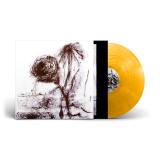
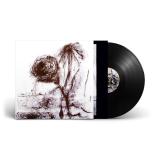
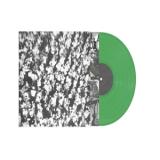
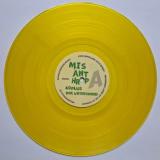
Music To Watch Seeds Grow By continues its second season with Seoul-based left of centre ambient duo Salamanda - Uman Therma (Sala) and Yetsuby (Manda) - and their meditation on the inner life of a basil plant. Seeds 008 is an ambient composition born from quiet domestic observation: a single basil on a windowsill, its days shaped by light, warmth, and the slow passage of time.
The album moves through a full day in the plant's life opening with ‘introduce my atom which is my favorite one’, an act of quiet self-declaration in morning light, before settling into the unhurried rhythmic pulse of ‘to to ki toki tok’- the drip of water, the tick of a clock, the slow beat of photosynthesis. ‘allez, pousse!’ - one of the standouts in this journey - carries the basil's gentle will to grow, to push, to tilt toward the sun, while ‘hungry snail’ captures a moment of creaturely encounter on the glass: an uninvited visitor, moving slowly, wanting. As the afternoon deepens, 'Basil's Ritual' traces the daily ceremony of light and warmth, repeated with calm devotion from root to leaf. Night falls across 'Basil's Dream', and in the stillness something like sleep arrives - the plant resting, imagining tomorrow's sun. The album closes with ‘the blue wine’, a final mysterious reverie in which the basil seems to contemplate its own fate, somewhere between acceptance and wonder.
Suche:gl
Fronted by Rainie Lassiter's sultry, soulful vocal and produced by Blaze, the track glides between sensuality and euphoria, capturing the exact moment house music went from underground NYC basements to global dance floors. The Deep Dish remix turned it into a worldwide anthem, topping charts in Italy and breaking into the UK Top 10, while still holding down credibility with DJs and crate- diggers alike. Its hypnotic groove, lush chords, and emotional pull have made it a staple in countless sets, and it's been sampled by artists like Four Tet & Champion who recognized its timeless pulse. Three decades later, "Hideaway" still sounds as smooth and vital asthe night it first hit the decks. This 12" features the Radio Edit, Deep Dish Remix & the Acapella.
- A1: Let's Go! (Feat. She Drew The Gun)
- A2: Found You
- A3: These Days (Feat. She Drew The Gun)
- A4: Take Me Back
- A5: Just Do
- A6: Dna
- A7: Dancing In The Rain (Feat. Meduulla)
- B1: U F33L M3
- B2: Everyone Else
- B3: Glo
- B4: Disco Healer (Feat. Ellaments)
- B5: Seeing Stars
- B6: Glo Whale (Feat. She Drew The Gun)
PICTURE DISC VINYL LP: with a CD of exclusivbe REMIXES, Printed Lyrics Insert, Hand Screeened Art Print, and Signed Photo Postcard.
This isn’t a compilation—it’s a vinyl conversation between cities, generations, and musical bloodlines. This inaugural release embodies the spirit of collaboration, community, and cross-generational artistry that defines each artist’s deep musical legacy.
A statement on wax bringing together Glenn Underground, Coflo, Jon Dixon, Kevin Reynolds and sillygirlcarmen, this four-song project documents the shared language of five Artists through deep house, jazz roots, and forward-looking soul. Though these artists have shared DJ booths and dance floors around the world, this release marks a rare moment where their creative voices intertwine on wax. Each track stands on its own, but together they form a continuum—past, present, and future etched into wax. Pressed with intention and made for real systems, this release exists for the heads, the selectors, and anyone who still believes vinyl is where the story lives. Meant to be played—not archived. The kind of tracks that feel alive in the room and grow every time you hear them.
‘Ease’ EP tracks:
Glenn Underground ‘Dive (Into The Deep)’; the Chicago legend & Strictly Jaz Unit co-founder combines deep house, freeform jazz & soul, here in a jazz-infused, laid-back, hypnotic melange of house beat, synth chord riff, rippling arps, with a whisper of disco in the bassline and 80’s electro in the high, singing strings.
Coflo x sillygirlcarmen ‘Never Forget (That Feelin’)’; East Bay CA-based Coflo combines Hawaiian & Portugese roots with a global reach. A collaborative skipping house beat, pattering percussion & melodic jazz synth piano embrace sillygirlcarmen’s soulful voice and heartfelt lyrics. This collaboration marks a merging of emotional storytelling and percussive sophistication.
Jon Dixon ‘Saturday At Northland’; Detroit’s modern jazz & techno fusionist, rooted in long study and prestigious performance of classical & jazz piano both in orchestral and electronic contexts, employs his keyboard virtuosity in a thrilling wave of melodic piano improvisation & complex lively percussion, combining sheer craft with spiritual heft.
Kevin Reynolds ‘I Got Music’; from an Irish/US Detroit family, producer/live artist Reynolds blends techno, jazz, soul, from influences as diverse as 90s underground techno, Kraftwerk & John Coltrane, and roles/performances in multiple prestigious venues & positions. Here, a stealthy beat & Kraftwerk-evoking robotic electro synth theme are joined by a dual vocal used as a riff, while clusters of piano chords flower into jazz motifs.
Even in these most turbulent of times, dub musician and fatigued onlooker Elijah Minnelli remains an inexplicable stalwart on the lower rungs of the Breadminster County Council.
His latest record ‘Clams As A Main Meal’ continues his astute siphoning of council funds, this time with help from the Breadminster Board of Abstinence. As a further mark of respect, the original head of the Board, Dr. K'houldoux, graces the cover art in his infamous ‘Looming Moon of Desire’ guise.*
As fine a backdrop as any for Minneli’s off-brand dub experiments, and ‘Clams...’ is the truest representation of his varied wheelhouse yet...
We find vocal appearances from dub goliath Dennis Bovell and Welsh-language singer Carwyn Ellis. A pair of tracks which build on 2024’s acclaimed ‘Perpetual Musket’, a collection of folk songs reworked alongside reggae vocalists, released by FatCat Records. It garnered glowing reviews, with nods from The Guardian and The Quietus concluding with prominent appearances on their respective yearly round-up lists.
Elsewhere, the album finds Minnelli in a more experimental mode, all wheezing contraptions and cockeyed bass, creaking with the weight of creation, a satisfying tactility laid seam-side up.
As well as ‘Perpetual Musket’, the new album follows years of sold out 7" singles, handmade and self-released. Online, the tracks have amassed global streams numbering in the millions. His tracks have found play across an eclectic range of radio mixes and dance floors, most notably the likes of Andrew Weatherall, Batu, Optimo and Zakia Sewell (BBC6Music).
It is perhaps worth mentioning that this everbuilding interest in his work is at great odds with the growing suspicions amongst his fellow townsfolk, who see his Breadminster County Council Music Initiative as nothing more than an empty cash-grab.
Further Reading on the Breadminster Board of Abstinence
In the late 70s, Breadminster was awash with the last vestiges of the hippy era. Though the flared silhouette of the lower leg remained, the utopian ideals that had once flowed merrily around the youth's shaded ankles had begun to wane. LSD and free love had led to a sharp spike in population and a generation of children raised by air-headed psychonauts unprepared for the bleary-eyed strictures of parenthood.
Aware of the crisis, the County Council entrusted Dr. Paulinque K'houldoux to spearhead a pushback, and it was his pro-abstinence movement - a mixture of education initiatives and radical renutrition campaigns - that came to impact Breadminster's census deep into the new millennium.
Being a pseudo-archipelago Breadminster has fundamentally limited resources, however deep-seated ties to distant coastal villages meant that oysters were a regular part of the local diet. K'houldoux pinpointed this as a factor in the town's overpopulation, and believed that simply replacing these with clams (a “lesser mollusk”) would help lower the erotic urges of the people. It was his “anti-aphrodesia” movement that first championed the idea of “Clams As A Main Meal,” and the slogan “Consider Abstinence” carried the message yet further.
The Breadminster Board of Abstinence soon became involved in all cultural happenings in the area, with K'houldoux MCing at prominent festivals and performances, sometimes dressed as the “Looming Moon of Desire” - an idea of his relating to the tide, seafood, menstrual cycles, and his privately held celestial predilections.
It was in 1981 that it was revealed Dr. K'houldoux had never fully qualified as a doctor and was seeking exile in Breadminster due to a series of botched bracelet heists in which he had previously been involved. K'houldoux was subsequently extradited to Basingstoke, where he served 3 of a 12-year sentence, owing to the lunar-oriented prisoner health campaigns he helped implement.
It has been a strange twist of bureaucratic fate that the Breadminster Board of Abstinence has never stopped receiving public funding, despite its lack of clear utility. And while its roots are tied to a rose-tinted past, the Board continues to sponsor cultural events and projects to this day.
An extract from: Eugeniq Schooner's article in Sydney Parishioner: “Clams, Breadminster and Countercultural Abstinence Trends” (2008)
- A1: The Bird
- A2: Heart Don't Stand A Chance
- A3: The Waters (Feat. Bj The Chicago Kid)
- A4: The Season / Carry Me
- B1: Put Me Thru
- B2: Am I Wrong (Feat. Schoolboy Q)
- B3: Without You (Feat. Rapsody)
- B4: Parking Lot
- C1: Lite Weight (Feat. The Free Nationals United Fellowship Choir)
- C2: Room In Here (Feat. The Game & Sonyae Elise)
- C3: Water Fall (Interlude)
- C4: Your Prime
- D1: Come Down
- D2: Silicon Valley
- D3: Celebrate
- D4: The Dreamer (Feat. Talib Kweli & Timan Family Choir)
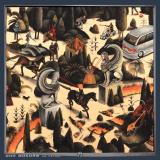
Ten years ago, Anderson .Paak didn't just release an album; he staged a full-scale takeover of the soul and hip-hop landscape. Released on January 15, 2016, Malibu served as the definitive arrival of an artist who had spent years grinding in the underground before a star-making turn on Dr. Dre’s Compton. While his previous work hinted at his potential, Malibu was the moment the world met the "Cheeky Andy" persona in full—a virtuosic drummer, a raspy-voiced crooner, and a sharp-witted rapper all rolled into one. The album is a sprawling, sun-drenched journey through the Southern California coast, blending 1970s funk, church-reared gospel, and gritty boom-bap into something that feels both nostalgic and entirely futuristic. With a heavyweight production lineup including 9th Wonder, Madlib, Kaytranada, and Hi-Tek, the record maintains a warm, analog texture that was a breath of fresh air in an increasingly digital era. It’s an album that breathes, full of intentional imperfections and the kind of "in-the-pocket" groove that can only come from a seasoned live performer. Beyond the infectious, dance-floor-ready energy of tracks like "Am I Wrong" and "Come Down," the album is a deeply autobiographical masterwork. .Paak uses the 65-minute runtime to unpack his life story with startling clarity, touching on his mother’s gambling addiction, his father’s incarceration, and his own brushes with homelessness with a sense of resilience that never feels heavy-handed. He weaves these heavy themes through a lens of triumph, grounded by vintage surfing documentary samples that give the project its cinematic, coastal atmosphere. It’s a celebratory record born out of struggle, anchored by his impeccable technicality on the drums and a guest list—featuring ScHoolboy Q, Rapsody, and The Game—that feels hand-picked to complement his specific brand of West Coast swagger. A decade later, Malibu stands as a modern classic and the blueprint for the soulful revivalism that would eventually lead .Paak to global superstardom and Grammy-winning heights. It remains a testament to the idea that the most profound music often comes from the most personal places, proving ten years on that the best way to move forward is to stay rooted in the groove.
- A1: The Bird
- A2: Heart Don't Stand A Chance
- A3: The Waters (Feat. Bj The Chicago Kid)
- A4: The Season / Carry Me
- B1: Put Me Thru
- B2: Am I Wrong (Feat. Schoolboy Q)
- B3: Without You (Feat. Rapsody)
- B4: Parking Lot
- C1: Lite Weight (Feat. The Free Nationals United Fellowship Choir)
- C2: Room In Here (Feat. The Game & Sonyae Elise)
- C3: Water Fall (Interlude)
- C4: Your Prime
- D1: Come Down
- D2: Silicon Valley
- D3: Celebrate
- D4: The Dreamer (Feat. Talib Kweli & Timan Family Choir)
Ten years ago, Anderson .Paak didn't just release an album; he staged a full-scale takeover of the soul and hip-hop landscape. Released on January 15, 2016, Malibu served as the definitive arrival of an artist who had spent years grinding in the underground before a star-making turn on Dr. Dre’s Compton. While his previous work hinted at his potential, Malibu was the moment the world met the "Cheeky Andy" persona in full—a virtuosic drummer, a raspy-voiced crooner, and a sharp-witted rapper all rolled into one. The album is a sprawling, sun-drenched journey through the Southern California coast, blending 1970s funk, church-reared gospel, and gritty boom-bap into something that feels both nostalgic and entirely futuristic. With a heavyweight production lineup including 9th Wonder, Madlib, Kaytranada, and Hi-Tek, the record maintains a warm, analog texture that was a breath of fresh air in an increasingly digital era. It’s an album that breathes, full of intentional imperfections and the kind of "in-the-pocket" groove that can only come from a seasoned live performer. Beyond the infectious, dance-floor-ready energy of tracks like "Am I Wrong" and "Come Down," the album is a deeply autobiographical masterwork. .Paak uses the 65-minute runtime to unpack his life story with startling clarity, touching on his mother’s gambling addiction, his father’s incarceration, and his own brushes with homelessness with a sense of resilience that never feels heavy-handed. He weaves these heavy themes through a lens of triumph, grounded by vintage surfing documentary samples that give the project its cinematic, coastal atmosphere. It’s a celebratory record born out of struggle, anchored by his impeccable technicality on the drums and a guest list—featuring ScHoolboy Q, Rapsody, and The Game—that feels hand-picked to complement his specific brand of West Coast swagger. A decade later, Malibu stands as a modern classic and the blueprint for the soulful revivalism that would eventually lead .Paak to global superstardom and Grammy-winning heights. It remains a testament to the idea that the most profound music often comes from the most personal places, proving ten years on that the best way to move forward is to stay rooted in the groove.
- A1: The Bird
- A2: Heart Don't Stand A Chance
- A3: The Waters (Feat. Bj The Chicago Kid)
- A4: The Season / Carry Me
- B1: Put Me Thru
- B2: Am I Wrong (Feat. Schoolboy Q)
- B3: Without You (Feat. Rapsody)
- B4: Parking Lot
- C1: Lite Weight (Feat. The Free Nationals United Fellowship Choir)
- C2: Room In Here (Feat. The Game & Sonyae Elise)
- C3: Water Fall (Interlude)
- C4: Your Prime
- D1: Come Down
- D2: Silicon Valley
- D3: Celebrate
- D4: The Dreamer (Feat. Talib Kweli & Timan Family Choir)
Ten years ago, Anderson .Paak didn't just release an album; he staged a full-scale takeover of the soul and hip-hop landscape. Released on January 15, 2016, Malibu served as the definitive arrival of an artist who had spent years grinding in the underground before a star-making turn on Dr. Dre’s Compton. While his previous work hinted at his potential, Malibu was the moment the world met the "Cheeky Andy" persona in full—a virtuosic drummer, a raspy-voiced crooner, and a sharp-witted rapper all rolled into one. The album is a sprawling, sun-drenched journey through the Southern California coast, blending 1970s funk, church-reared gospel, and gritty boom-bap into something that feels both nostalgic and entirely futuristic. With a heavyweight production lineup including 9th Wonder, Madlib, Kaytranada, and Hi-Tek, the record maintains a warm, analog texture that was a breath of fresh air in an increasingly digital era. It’s an album that breathes, full of intentional imperfections and the kind of "in-the-pocket" groove that can only come from a seasoned live performer. Beyond the infectious, dance-floor-ready energy of tracks like "Am I Wrong" and "Come Down," the album is a deeply autobiographical masterwork. .Paak uses the 65-minute runtime to unpack his life story with startling clarity, touching on his mother’s gambling addiction, his father’s incarceration, and his own brushes with homelessness with a sense of resilience that never feels heavy-handed. He weaves these heavy themes through a lens of triumph, grounded by vintage surfing documentary samples that give the project its cinematic, coastal atmosphere. It’s a celebratory record born out of struggle, anchored by his impeccable technicality on the drums and a guest list—featuring ScHoolboy Q, Rapsody, and The Game—that feels hand-picked to complement his specific brand of West Coast swagger. A decade later, Malibu stands as a modern classic and the blueprint for the soulful revivalism that would eventually lead .Paak to global superstardom and Grammy-winning heights. It remains a testament to the idea that the most profound music often comes from the most personal places, proving ten years on that the best way to move forward is to stay rooted in the groove.
- Moonside
- On Our Own Time
- Blum House
- Virtue Signaling
- Help Is On The Way
- High School
- Lay Low
- Selfish Soother
- Poppi
- The Me (I Know)
- Me Time
- Beyond The Thicket
- Fight For Frequency
- Circling The Dream
Winnies Welt war nicht immer einfach. Manche sagen, er hätte berühmt werden können, aber es gab Probleme. Er hatte kurz Erfolg, aber das Leben kam ihm dazwischen. ,Manche Leute kümmern sich zu sehr. Ich glaube, das nennt man Liebe." Also lag es an Winston Hightower, die Chance zu ergreifen, sie festzuhalten und sich Gehör zu verschaffen. Ein Mann, der den Sound des amerikanischen Lofi liebt. Was befindet sich im Aschenbecher von Winston Hightowers "Day in the Life"? 14 Songs, die einem wehmütigen Herzen eine unbeschwerte Tarnung verleihen - es strahlt durch und durch. 33 RPM. Ein Pianist, der kein Klavier spielen kann und seine Melodien auf der Gitarre transponiert. Angenehme Klänge, überlagert von Gesprächen mit sich selbst. Was sieht dieser Ohio Player, wenn er in den Spiegel schaut? Nudge Squidfish? Daniel Johnson? Studio One Oldies Comps? Nach über 126 Songs auf Band sind wir immer noch dabei, das herauszufinden.
- A1: Acid Lullaby 12
- A2: Acid Lullaby 3
- A3: Acid Lullaby 15 (N:in Remix)
- B1: Acid Lullaby 6 (Afternoon Lights)
- B2: Acid Lullaby 13 (Philipp Otterbach Remix)
- B3: Acid Lullaby 14 (Museum Of No Art Version)
- C1: Acid Lullaby 4
- C2: Acid Lullaby 5 (Uhlenbusch)
- C3: Acid Lullaby 16
- D1: Acid Lullaby 7 (Birds Inside)
- D2: Acid Lullaby 8 (Rain Outisde)
- D3: Acid Lullaby 1 (47In4 Remix)
During a job in Cologne, I stayed in a room with a loft bed that had no electrical outlets at the top. Every night, I would listen to my TB303, which runs on batteries, through headphones to help me fall asleep. I loved the sequences, it was like meditation. The TB-303 bassline is iconic in acid music, so I created the Acid Lullabies to bring these two elements together. In 2017, the label Doom Chakra Tapes released ten of the Acid Lullabies on tape. Last year, I felt the urge to rework the tracks, so I mixed them again and created some new ones. I also
asked friends to contribute their own versions.
I’m very glad that the following artists contributed the Acid Lullabies: 47IN4 (Pudel Produkte, Doom Chakra Tapes), Museum of No Art (Séance Center, Cosima Pitz), N:in and Philipp Otterbach (Music from Memory, Offen Music). Two violinists from Ensemble Resonanz performed my piece 'Afternoon Lights' for Acid Lullaby 6. Alex Solman designed the cover, which captures the essence of the project perfectly. Have fun with the Acid Lullabies!
- Other World
- World Of Pain
- Angelfire
- Wherever You Are Tonight
- Calcium
- Safeword
- This Is Not Your Life (Static)
- Dogbite
- Sunshine
- Blood (Magnetic)
- Lightning
Accessory ist das Soloprojekt von Jason Balla (von Dehd), einem in Chicago lebenden Songwriter und multidisziplinären Künstler. Ihre Arbeit dreht sich um den Konflikt zwischen Optimismus und Melancholie, wobei sie ihr scheinbar unendliches Gewicht mit gleicher Perspektive und Anmut halten und auf ihre Entsprechung durch neugierige und komplexe melodische Erfahrungen hinweisen, die die Spannung der natürlichen und digitalen Welt nachahmen. Ihr Debütalbum ,Dust" ist der Ort, an dem das Himmlische auf das Molekulare trifft. Engel, Sternschnuppen und Blitze unterhalten sich mit Blut, Serotonin und Kalzium. In einer Zeit von live gestreamtem Schmerz und überwältigender Apathie komponierte Balla diese Songs, um seine Welt in Ordnung zu bringen, um zum menschlichen Kern von allem vorzudringen und den Verfall für sich selbst und für alle anderen zu verarbeiten, die den Schmerz des Pessimismus und der Hoffnungslosigkeit spüren. Das Album ist eine Reise durch die Welt der Musik, die sich durch ihre Vielseitigkeit und ihre Fähigkeit auszeichnet, den Zuhörer in eine andere Dimension zu versetzen. Die Musik von Accessory ist eine Mischung aus Rock, Pop, Folk und elektronischen Klängen, die sich durch ihre Vielseitigkeit und ihre Fähigkeit auszeichnet, den Zuhörer in eine andere Dimension zu versetzen.
Faitiche welcomes a new artist: Christina Kubisch belongs to the first generation of sound artists. Her practice ranges from performances, concerts, to works with video and visual art, but she is best known for her sound installations and electro-acoustic compositions.
TUNING brings together three pieces by Christina Kubisch from different periods of her oeuvre. What they have in common is the way they transform sound phenomena originally considered “non-music” into compositions.
Jan Jelinek: Gaming in Silence (2024) is the most recent work on this compilation. It’s a collage of electromagnetic waves, voice, and abstract sound textures. How did this combination come about?
Christina Kubisch: Gaming was commissioned as a fixed-media composition for the Sound Dome at ZKM Karlsruhe. Since Resonances: The Electromagnetic Bodies Project (2005), I’ve been making recordings in the old and new server rooms at the ZKM and in their permanent collection of historical computer games. Computer games like Asteroids (Atari, 1979) and Poly-Play (VEB Polytechnik, 1986) have specially generated analogue electromagnetic waves that interest me in particular on account of their density, rhythms and textures. I originally studied painting and to me the work of composition often feels like painting an abstract picture. I alter my source material as little as possible, layering and overlapping until a distinctive sound space emerges. In recent pieces, I sometimes combine magnetic waves with field recordings or live instruments. In Gaming it’s my recording of a Chinese song about silence.
JJ: Two persons walking through a street in Madrid (2004) is a recording from your Electrical Walks series. Here we should give a brief explanation of one of your best known works: participants in an Electrical Walk move through public spaces wearing prepared headphones that allow them to receive electromagnetic waves from their surroundings – for example from security gates, ATMs or neon signs. They discover a situation that normally is inaudible to the human ear and they can actively shape it by choreographing their movements. I really admire this piece, not least because there’s no clear dividing line between participants and artist. What exactly do we hear in Two persons walking through a street in Madrid (2004)?
CK: With this early work, I wanted to understand what is heard by people participating in an Electrical Walk in the same place but moving in different ways. The Spanish composer Miguel Alvarez-Fernàndez and I set off from opposite ends of a major shopping street in Madrid, met briefly in the middle, and then continued to the end. We both recorded our walks and I then layered them over one another. You might call it a work of electromagnetic conceptualism.
JJ: Diapason (2009 version) is an installation that plays a composition based on sounds from fifteen tuning forks. This setting is audible in the recording: there’s no dramatic arc, no beginning or end – instead, it recalls a piece of aleatoric music focussing on the decay phase. How did you come to make this work and could you tell us something about your compositional method?
CK: Diapason is part of a series of three pieces that deal with “non-instruments” or instruments that no longer exist: electrical mine bells used to send signals to the workers underground; a historical glass harmonica originally used for medicinal purposes; and tuning forks that were used by doctors to test people’s hearing. All of these methods are no longer in use. The sound of the tuning forks, audible only if held close to the ear, was recorded at the electronic studio at Berlin’s Technical University in such a way that even their decay remained audible. The frequencies range between 64 and 2048 Hertz and they can be adjusted at micro-intervals using small movable weights. The sequence and the duration of the pauses are dictated by chance and were not defined in advance. The 2009 version was created for an installation in the historic Holy Cross Church (Korskirken) in Bergen. Visitors could enter and leave the space at any time, deciding for themselves where and for how long they wished to listen to the sounds played back over an array of small loudspeakers placed on the floor of the apse.
Credits:
Gaming in Silence: commission of the ZKM/Hertzlab, Karlsruhe 2023
elektronic sound processing: Tom Thiel
sound engineering and mixing: Eckehard Güther
Diapason: produced at Elektronisches Studio of TU Berlin
rearrangement: Eckehard Güther
Christina Kubisch, published by Edition Christina Kubisch / Random Musick Publishing
image front: Transitionen 2021 by C. Kubisch, sonagrams of electronic waves (courtesy: Galerie Mazzoli Berlin)
image back: Diapason Tuning Fork, property of Folkmar Hein, Photo: Archiv Christina Kubisch
design by Tim Tetzner
mastered by Giuseppe Ielasi
Thanks to Miguel Álvarez-Fernández, Folkmar Hein, Dominik Kautz and Mario Mazzoli
Outer packaging like a book with a hardcover 321x321 mm glossy coated
Inside 2 cardboard printed inner sleeves glued to the inside of the packaging
On the left, the inner sleeve will contain the vinyl
On the right, 4 out of 15 lobby cards (250 gr) will be inserted randomly (like pic of a movie)
A16 pages printed booklet will be included and glued inside in the center of the packaging
Limited edition numbered
- A1: Johnny And Dee Dee
- B1: Julie Is A Junkie
To commemorate the 40th Anniversary of the passing of James Darroch, singer/songwriter/guitarist for Sydney's incredible The Eastern Dark, Grown Up Wrong! is thrilled to announce a long-awaited reissue of the band's classic single "Julie Is A Junkie/Johnny and Dee Dee".
Heavily influenced by the Ramones - the band opened their first live show with 'Blitzkrieg Bop' and from then on opened with a new Ramones song every time they played, working through the band's complete catalogue in chronological order - as all manner of hyper-melodic and high energy rock. The Eastern Dark were a classic trio powered by former Celibate Rifles bassplayer James Darroch's blazing guitar and anchored by former Lime Spiders backing vocalist Bill Gibson's hard driving and melodic bass playing (and supreme backing vocals) and Geoff Milne's untouchable beat keeping. They set Sydney's Radio Birdman influenced scene alight in 1984 and quickly built an international following on the back of their classic single. Sadly, just hours after completing what would become their next release - the mini-LP "Long Live the New Flesh" - the band's life, and that of 26-year old James Darroch, was brutally ended in a road accident whilst the band was on its way to Melbourne.
On the back of the tragedy, the band's music lived on and it's global impact was reflected in the influence it bore on numerous bands, from Boston's the Lemoneads to Tokyo's Teengenenete, and obviously a succession of Australian bands from the Hard-Ons through to God and the Meanies and beyond.
After years of searching, surviving members Bill Gibson and Geoff Milne recently found the single's original multi-track tapes, and for the new release, the original recordings have been both remixed and remastered for maximum impact under their supervision.
Der in Paris geborene Soulsänger und Songwriter Tiwayo, der wegen seiner zeitlosen, ausdrucksstarken Stimme den Spitznamen ,The Young Old" hat, gibt die Veröffentlichung einer limitierten 45er-Vinyl-Single bekannt, die zwei herausragende Tracks aus seinem kommenden Album Outsider enthält - produziert vom Grammy-Gewinner Adrian Quesada von den Black Pumas. Die am 20. Februar erscheinende 7"-Single vereint den Up-Tempo-Soul-Stomper ,Up For Soul" auf der A-Seite mit dem strahlenden und herzerwärmenden ,Sunshine Lady" auf der B-Seite. Mit einer limitierten Auflage von weltweit 500 Exemplaren ist diese Single ein Muss für Funk-/Soul-DJs und Sammler. ,Ich wollte, dass das Album einen Up-Tempo-Track hat, der wirklich bewegt", sagt Tiwayo über ,Up For Soul". ,Eines Nachmittags hörte ich Sly Stone und Johnny Guitar Watson, und am Ende des Tages war dieser Song geboren. Es ist eine spielerische Auseinandersetzung mit den Höhen und Tiefen des Musikerlebens - dem Trubel, der Freude und dem Chaos -, alles verpackt in der Soul-Energie der 70er Jahre." Aufgenommen mit Adrian Quesada und mit einem üppigen Streicharrangement von Sly5thAve, ist der Track ein Beweis für Tiwayos Fähigkeit, klassischen Soul frisch und lebendig klingen zu lassen. Auf der anderen Seite glänzt ,Sunshine Lady" als Moment der Zärtlichkeit und Hoffnung. ,Ein Freund hat mir mal gesagt, dass ich immer traurige Songs schreibe", lacht Tiwayo. ,Also habe ich versucht, etwas Fröhliches zu schreiben. Der Song handelt von Dankbarkeit - von der Person, die dich auffängt, wenn du am Boden bist. Er ist einfach, gefühlvoll und voller Licht." Mit dem geschmeidigen Rhythmus von Jay Mumford (Schlagzeug) und Terin ,Moswen" Hector (Bass) strahlt ,Sunshine Lady" den warmen, analogen Spirit eines verlorenen Soul-Klassikers der 70er Jahre aus. Beide Tracks sind eine Vorschau auf Tiwayos mit Spannung erwartetes drittes Album ,Outsider", das am 10. April 2026 erscheinen soll - eine Zusammenarbeit zwischen Tiwayo und Adrian Quesada, die Pariser Soul mit der rohen Hitze des Südens von Austin verbindet.
2026 Repress, LIMITED PEARL-DEEP-OCEAN COLORED VINYL
Dilby and Pornbugs team up on ‘Between Us’. Pornbugs celebrate 20 years of Bondage in 2026 and 21 years as a DJ/production team. Moving in fresh circles has always been an important part of their longevity, so signings so Selador and Sudbeat have exposed them to new ears showcasing their crossover sound.
Equally, on-form Dilby is having something of a renaissance with his chunky deep house sound now, finding increasing favour with the progressive house elite. Signed to a bewildering selection of labels from Glasgow Underground to Sudbeat, the world is his oyster.
Opening with ‘Hear Me Out’ their combined bumpy deep sound marries incredibly well. Uptempo and lively, this is the future sound of retro, and we are here for all of it. Next up, ‘Hold The Line’ joins the dots between deep and progressive house, keeping the funk and soul intact. Bass-led and groovy as hell, this is your new secret weapon. Play it loud!
‘Fade Into You’ is the first of the vinyl only tracks and marks a stark change of pace. Deeper, more soulful and markedly more thoughtful, this is modern deep house in its glittery new rave clothes. Pairing nicely is the flipside track ‘Beyond Fear’ which rumbles along with techy bass and a chunky groove.
- A1: The Bird
- A2: Heart Don't Stand A Chance
- A3: The Waters (Feat. Bj The Chicago Kid)
- A4: The Season / Carry Me
- B1: Put Me Thru
- B2: Am I Wrong (Feat. Schoolboy Q)
- B3: Without You (Feat. Rapsody)
- B4: Parking Lot
- C1: Lite Weight (Feat. The Free Nationals United Fellowship Choir)
- C2: Room In Here (Feat. The Game & Sonyae Elise)
- C3: Water Fall (Interlude)
- C4: Your Prime
- D1: Come Down
- D2: Silicon Valley
- D3: Celebrate
- D4: The Dreamer (Feat. Talib Kweli & Timan Family Choir)
Ten years ago, Anderson .Paak didn't just release an album; he staged a full-scale takeover of the soul and hip-hop landscape. Released on January 15, 2016, Malibu served as the definitive arrival of an artist who had spent years grinding in the underground before a star-making turn on Dr. Dre’s Compton. While his previous work hinted at his potential, Malibu was the moment the world met the "Cheeky Andy" persona in full—a virtuosic drummer, a raspy-voiced crooner, and a sharp-witted rapper all rolled into one. The album is a sprawling, sun-drenched journey through the Southern California coast, blending 1970s funk, church-reared gospel, and gritty boom-bap into something that feels both nostalgic and entirely futuristic. With a heavyweight production lineup including 9th Wonder, Madlib, Kaytranada, and Hi-Tek, the record maintains a warm, analog texture that was a breath of fresh air in an increasingly digital era. It’s an album that breathes, full of intentional imperfections and the kind of "in-the-pocket" groove that can only come from a seasoned live performer. Beyond the infectious, dance-floor-ready energy of tracks like "Am I Wrong" and "Come Down," the album is a deeply autobiographical masterwork. .Paak uses the 65-minute runtime to unpack his life story with startling clarity, touching on his mother’s gambling addiction, his father’s incarceration, and his own brushes with homelessness with a sense of resilience that never feels heavy-handed. He weaves these heavy themes through a lens of triumph, grounded by vintage surfing documentary samples that give the project its cinematic, coastal atmosphere. It’s a celebratory record born out of struggle, anchored by his impeccable technicality on the drums and a guest list—featuring ScHoolboy Q, Rapsody, and The Game—that feels hand-picked to complement his specific brand of West Coast swagger. A decade later, Malibu stands as a modern classic and the blueprint for the soulful revivalism that would eventually lead .Paak to global superstardom and Grammy-winning heights. It remains a testament to the idea that the most profound music often comes from the most personal places, proving ten years on that the best way to move forward is to stay rooted in the groove.
A guitar stands alone in Wedding, that metropolitan biotope in the western center of Berlin, caught in constant transformation between idyll and abyss. It lets its gaze wander, unsettled, almost shy, until it encounters a trumpet, with which it begins a cautious, then ever more intimate pas de deux.
Welcome to the second studio album by the Berlin-based band Conic Rose.
The album title Wedding is no coincidence. The story of Conic Rose is closely intertwined with the Berlin neighborhood that gives the record its name. The band's studio is located here, and both studio albums were created in the immediate vicinity of the small river Panke. This place settles over the music like a warming patina. The album feels as though the musicians and the neighborhood have invited one another to get to know each other. Not least because Wedding also means marriage. These marriages between a band and an urban landscape, a fading past and an emerging future, fear and hope - unfold in every single song on Wedding.
For their second album, Conic Rose repositioned themselves completely. Not in terms of personnel, but in the question of how to move forward. Conic Rose still sound like Conic Rose; their distinctive blend of cinematic jazz, ambient textures and guitar-led contemporary music remains untouched. And yet Wedding is, in many ways, the conceptual counterpart to their debut album Heller Tag. Where the debut documented movement within an urban setting, Wedding describes a state of being. Behind every piece seems to hover a large question mark.The group opens up its palette, allowing more influences, becoming at once more subtle, more profound, more filigree. It is less about definition than about the spaces in between. The most immediately striking difference from the previous album is the strong presence of the guitar. In Bertram Burkert's playing, many voices seem to converge. His yearning openness forms an equal counterpoint to Döben's trumpet and flugelhorn. Blurred and layered sounds occasionally make the ground seem to slip away beneath one's feet, while Döben's gliding lines create both closeness and distance. Together, the band express in a deeply subtle way a sense of life that corresponds precisely to our time. Something lurks in the background, omnipresent yet still unnameable. Conic Rose need no words to convey this feeling of uncertainty with remarkable eloquence. Perhaps this has something to do with Wedding being a place of confrontational introspection, but Conic Rose confront the escape from escape itself. With the recording and release of Wedding, this process is far from complete. The seed only begins to grow in the listener's ear. With every listen and the echo it leaves behind in memory, the studio bud continues to bloom. The album is merely the point of departure. What ultimately matters is what it sets in motion within those who encounter it.

Generic Flipper, the debut album by Flipper, remains the most absorbing full-length LP to emerge from the early San Francisco punk scene. A constant source of imitation for so-called "noise rock" bands, it has yet to be surpassed in its nihilistic glee.
Recorded between October 1980 and August 1981 and released in 1982 on the indispensable Subterranean Records, this album functions as a chaotic, sticky mass of individual personalities: the magma-like bass eruptions and dual vocals of Will Shatter and Bruce Loose, Ted Falconi's icy guitar scraping and the relentless beat of drummer Steve DePace. At times playful and taciturn, paranoid and absurd, Generic charts a deliberate path that willfully chances destruction.
In early '80s punk, when the hardening default was "faster-shorter-louder," Generic subverts the nascent hardcore scene with a strictly applied regimen of turgid-slower-heavier. The lyrics are bleak, yet unnervingly beautiful. "Ever" sets the tone with trademark restraint – "Ever wish the human race didn't exist? And then realize you're one too?" – while closer "Sex Bomb" is a churning, 8-minute epic with looping bass, saxophone accompaniment and electronic effects of dropping bombs.
Tons of indie bands have attempted to recreate Flipper's mix of acidic guitar, metallic bass sludge and sardonically brilliant lyricism, using the seemingly effortless template they pioneered; however, the effect usually drives listeners right back to Generic. While most of their contemporaries wilt under direct comparison, No Trend, the Butthole Surfers, feedtime and Church Police are a few who can stand the frigid heat.
- Eastern Wizard - Chant Of The Blue Wolf
- Maziri - Mi Silencio
- Idin Gorji / Mahdis Soltani - Sarv
- Nato (Fr) - Lonely
- Tamer Elderini - Mawlay
- Majnoon - Mektep
- Christos Fourkis - Aegean Myst
- Glender - Canto De Xisto
- Berk Ocal - Artsunkneri Gisher
- A X L - Awaly
- Marsey / Chris Bell - Reload
- Marco Tegui - Huayna Cocha
- The Saint - Mozanda
- Pablo Denuit - Timon
- Safar / Hind Ennaira - Janguariye
- Ravin / D-Compost - Champagne After Midnight
Mit Buddha-Bar XXVIII öffnet sich erneut das Tor zu einer Welt voller Eleganz, Sinnlichkeit und globaler Klangfarben. Die legendäre Compilation-Reihe, die längst zu einem internationalen Lifestyle-Phänomen geworden ist, präsentiert mit diesem Kapitel erneut einen Mix, der die Balance zwischen elektronischer Finesse, weltumspannenden Melodien und tiefen Chill- und House-Vibes meisterhaft hält. DJ Ravin, seit Jahren prägende Sound-Signatur des Buddha-Bar-Universums, führt Hörer:innen mit sicherer Hand durch eine Reise voller Atmosphäre und subtiler Spannung. Jeder Track reiht sich wie ein Mosaikstein in ein großes Ganzes ein - perfekt geeignet für entspannte Abende, stilvolle Lounges oder Momente der Entschleunigung. "Buddha-Bar XXVIII" steht exemplarisch für die besondere Kunst dieser Serie: Musik als Erlebnis, als Raum, als Stimmung. Eine Einladung, abzuschalten, einzutauchen und die Welt für einen Augenblick in warmen Farben zu hören.
- 1: Glutgirl66
- 2: Sorority
- 3: Take Me Back
- 4: Weep Today
- 5: W Alls Of Jericho
- 6: Hydroxycut (Take It All)
- 7: À Qui De Droit
- 8: Madame Lucy
- 9: Kelly Kelly
- 10: Use Your Wings
- 11: Infinitude // Uroboros
- 12: Sisterhood (Love, Her.)
- 13: I Am, She Is, We Are
- 14: How To Pretend
- 15: Mimosa
- 16: Hot Boy
- 17: Knot Me
- 18: Pretty Peach
- 19: Altruism Kills
- 20: Sweet Pitcher
- 21: Lift, Jump, Exhale
- A1: Original
- B1: Monk-One Remix
Nickodemus is a globally respected DJ and producer who has been touring nonstop since the mid-1990s, consistently drawing capacity crowds at clubs and festivals worldwide. As a producer, he has released five acclaimed albums (Soul & Science, A Long Engagement, Endangered Species, Sun People and Moon People) and curated eleven volumes of the influential Turntables on the Hudson compilation series. His work bridges hip-hop, house, jazz, and global sounds, highlighted by collaborations and cultural milestones including the Jungle Brothers' genre-defining legacy and the enduring house-rap classic "I'll House You" with Todd Terry. Nickodemus' hit "Mi Swing Es Tropical" (with Quantic & the Candela All-Stars) has surpassed 50 million streams and featured prominently in the film Chef. He has received extensive international press (Billboard, Rolling Stone, The FADER, Paste) and widespread radio support from tastemakers such as Gilles Peterson, BBC 6 Music, KCRW, and KEXP.
b B1: Monk-One Remix [feat. Monk-One]
[b] B1: Monk-One Remix [feat. Monk-One]
- 1: Glider
- 2: Horizon
- 3: Slack
- 4: Receiver
- 5: Epoch
- 6: Division
- 7: Source
- 8: Local
- 9: Rings
- 10: Continuum
- 11: Field
Blue & Black Marble Vinyl. Anlässlich seines 10-jährigen Jubiläums erscheint Tychos Grammy-nominiertes Album ,Epoch" (Bestes Dance-/Elektro-Album) in einer brandneuen limitierten Farbversion. Es ist der letzte Teil einer Trilogie nach ,Dive" (2011) und ,Awake" (2014) und der Höhepunkt von über einem Jahrzehnt Arbeit. Das Album dokumentiert die Entwicklung des Projekts von einem feinfühligen Soloprojekt zu einer kraftvollen, vielschichtigen Live-Band. (2011) und ,Awake" (2014) und der Höhepunkt einer über zehnjährigen Arbeit. Das Album spiegelt die Entwicklung des Projekts von einem zurückhaltenden Solokünstler zu einer kraftvollen, vielschichtigen Live-Band wider, die auf den größten Bühnen der Welt auftritt (Kia Forum, Red Rocks, Meow Wolf + weitere...).
Samo DJ, undeniable legend of global oddball house, finally debuts on hometown label Studio Barnhus after a decade-long, winding courtship and frequent collaborations with SB mainstays like Baba Stiltz and Pedrodollar. Every atom of his singular craft is on display as tracks like Third Guitar distill disco
tradition, club futurism and hip-hop attitude into cuts only Samo could deliver. Pressed on DJ-friendly 12'' vinyl, complete with a printed love letter from Stockholm underground hero, Nasty Nate
From Wisdom Teeth’s recent compilation nagoyaka na kaze / 和やかな風 (quiet wind)—which cast a spotlight on the Japanese city of Nagoya—emerges “2++”, a new label launched by abentis, who curated the compilation alongside Facta and K-LONE as a central figure in the scene. Conceived as a series introducing facets of Nagoya’s underground electronic music to the world on vinyl, its inaugural release is abentis’ debut album, Dim Grow.
Across the album, intricately designed electronic mallet sounds—created using Ableton Live’s physical-modeling synthesizer—take center stage. Fresh and percussive like marimba or kalimba, yet simultaneously carrying an otherworldly, unreal quality, these tones form the core of the record’s sonic identity. In moments of near-silence, a crystalline resonance poised between glass and metal shimmers with subtle shifts in temperature, giving the album its distinctive texture.
While resonating with the sonic sensibilities of fellow Wisdom Teeth affiliates such as K-LONE, Tristan Arp, and Salamanda, abentis’ uniquely strange palette can be traced back to one of his strongest influences: Haruomi Hosono. In particular, Hosono’s mid-’70s tropical-infused solo albums — Tropical Dandy (1975), Bon Voyage Co. (1976), and Paraiso (1978) — serve as a key reference point. Symbolically reflected in Hosono’s marimba and vocal performance at a 1976 live show in Yokohama Chinatown, the marimba functioned as a central instrument for constructing imagined exotic landscapes inspired by Martin Denny and Hawaiian music.
For abentis—who worked at a local jazz bar before becoming active as a hip-hop beatmaker—the language of “tension chords,” a harmonic vocabulary rooted in jazz and R&B that hovers ambiguously between brightness and darkness, forms a consistent grammar throughout Dim Grow.
Behind the album’s core theme of “mallets + tension chords” lies a broad musical lineage: the harmonic sensibility of Claude Debussy, who anticipated the tensions of jazz; the proto-minimalist spirit of Erik Satie; the marimba-centered structures of Steve Reich; their continuation in Japan through Mkwaju Ensemble (with Midori Takada and production by Joe Hisaishi); and the subsequent branches into post-rock, electronica, and ambient music.
Growing up in Nagoya—an industrial city where creative independence is deeply valued—and being rooted in punk and hip-hop counterculture scenes naturally fostered abentis’ affinity with these predecessors. His practice between genres, combined with an encounter with the highly cross-pollinated musical perspective cultivated around Wisdom Teeth, provided the framework through which his own musical language crystallized. Dim Grow stands as the natural culmination of that journey.
- A1: Les Masques - Il Faut Tenir (1969)
- A2: Isabelle Aubret - Casa Forte (1971)
- A3: Christianne Legrand - Hlm Et Ciné Roman (1972)
- A4: Jean Constantin - Pas Tant D'chichi Ponpon (1972)
- A5: Billy Nencioli & Baden Powell - Si Rien Ne Va (1969)
- B1-: Marpessa Dawn - Le Petit Cuica (1963)
- B2: Jean-Pierre Sabar - Vai Vai (1974)
- B3: Sophia Loren - De Jour En Jour (1963)
- B4: Isabelle - Jusqu’à La Tombée Du Jour (1969)
- B5: Sylvia Fels - Corto Maltesse (1974)
- C1: Frank Gérard - Comme Une Samba (1972)
- C2: Ann Sorel - La Poupée Des Favellas (1971)
- C3: Charles Level - Un Enfant Café Au Lait (1971)
- C4: Andrea Parisy - Les Mains Qui Font Du Bien (1970)
- C5: Audrey Arno - Quand Jean-Paul Rentrera (1969)
- C6: Aldo Frank - T’as Vu Ce Printemps (1970)
- D1: Christianne Legrand - Cent Mille Poissons Dans Ton Filet (1972)
- D2: Clarinha - Lemenja (1970)
- D3: Hit Parade Des Enfants - Aquarela (1976)
- D4: Jean-Pierre Lang - Tendresse (1965)
- D5: Magalie Noël - Une Énorme Samba (1970)
- D6: Françoise Legrand - La Lune
Ever since the late 1950s bossa-nova revolution, Brazil’s influence on French music has been undeniable. Pierre Barouh, Georges Moustaki and a vast array of lesser known artists, all made the Musica Popular Brasileira (MPB) an axis of promotion at the service of a cool and metaphysical, modern and mixed Brazilian lifestyle. Some were seduced by the poetic languors of the bossa, some were looking for fun, and others just loved the American hybridization of jazz-bossa, jazz-samba.
What is bossa nova? One of its creators, Joao Gilberto said: "Its style, cadence, everything is samba. At the very start, we didn't call it bossa nova, we sang a little samba made up of a single note - Samba de uma nota so .... The discussion around the origins of bossa nova is therefore useless”. It is nevertheless useful to remember that these magnificent Brazilian songs, which the guitarist describes as samba, were shifted and balanced around improbable chords. "I like things that lean, the in-betweens that limp with grace," said Pierre Barrouh, quoting Jean Cocteau.
With emotion, arrangements for violin and supple guitar licks, bossa nova rapidly changed. A transformation that can be heard in the Tchic, tchic, French Bossa Nova 1963-1974 compilation, the result of a cultural reappropriation, which traveled through the United States and supplemented itself in France.
A musical revolution that has remained significant, bossa nova was born in Rio. From 1956 to 1961, Brazil lived through its golden years. In five years, the country had invented its modernist style. Elected president in 1956, Juscelino Kubitschek de Oliveira, an elegant man with a broad forehead, brandished a promising slogan: "Fifty years of progress in five years". He quickly got to work. Not worried about increasing debt, he launched the project for a new federal capital, Brasilia, designed by the communist architect Oscar Niemeyer. Volkswagen opened state-of-the-art factories and created the “fusquinha”, the Beetle. In Rio, the Vespa made its first appearance. The Arpoador Surf Club crew run into the “girl” from Ipanema, Helô Pinheiro - the tanned garota ("chick"), between a flower and mermaid, who at 17 walked by the Veloso bar, where the fiery author and composer, Tom Jobim and Vinicius de Moraes, were getting drunk on whiskey. From then on, bossa symbolized cool.
In 1958, Joao Gilberto recorded Chega de Saudade, which the directors of Philips denied, calling it "music for fagots". The marketing director, who believed in it, secretly pressed 3000 78-inch vinyls and distributed them at schools around Rio, creating a tidal wave.
American jazzmen then took over. In particular, trumpeter Dizzy Gillespie and guitarist Charlie Byrd. In November 1962, the Brazilian Ministry of Foreign Affairs funded a "Bossa-Nova" concert at Carnegie Hall in New York, inviting the genre’s pioneers. Unprepared, the show soon turned to disaster. But the troupe was invited to the White House by Jackie Kennedy. The first lady loved "the new beat" and in particular Maria Ninguem, a song by Carlos Lyra, later covered by Brigitte Bardot.

In Brazil, the 1964 military coup quickly ended this euphoria. The destructive atmosphere that ensued pushed many Brazilian musicians to leave, if not to exile. Thus, Tom Jobim, Sergio Mendes and Joao Gilberto arrived to the United States. In New York, Joao Gilberto met saxophonist Stan Getz. At the time, he was married to the Bahianese Astrud Weinert Gilberto, who had a German father. She had never sung before, but she knew how to speak English. Getz therefore asked her to replace her husband on The Girl From Ipanema. The Getz/Gilberto record with Tom Jobim on piano, was released in March 1964. Phil Ramone, the "pope of pop" was in charge of sound.
Bossa nova arrived in Paris through the classic “guitar-voice” channel (Pierre Barouh, Baden Powell, Moustaki…) But France loved jazz and Paris had already welcomed its American contributors. All these good people were to pass through Saint-Germain-des-Prés. The cabaret l'Escale became the Mecca of Latin American sound where one could find Pierre Barrouh and his friends, such as the Camara Trio, samba-jazz aces, whose only record was published by the Saravah label. With a band strangely called Les Masques (a band that included Nicole Croisille and Pierre Vassiliu, among others), the Camara Trio recorded an interesting Brazilian Sound, including the track Il faut tenir which is present on this tasty compilation of rarities.
Other enlightened musicians can also be found on the compilation, such as Jean-Pierre Sabar (songwriter for Hardy, Auffray, Leforestier ...) and the French pop rock organist Balthazar. In 1975, Sabar recorded Aurinkoinen Musiikkimatka on a Finnish label, which featured the crazy Vai, Vai, included on this record. We are now following the footsteps of Brazilian electronic musicians such as Sergio Mendes, Eumir Deodato or Marcos Valle who created funk and disco sounds on their keyboards and synthesizers. A style that influenced Véronique Sanson when she wrote Jusqu’à la Tombée de la nuit in 1969 for Isabelle de Funès, the niece of Louis and a great friend of Michel Berger - Sanson did end up singing this track on her 1992 Sans Regret record.
The pinnacle of exoticism and travel, Sylvia Fels’ Corto Maltese includes bongos, sea mist and ocean sounds. The title was taken from Jacky Chalard’s concept album written in 1974, Je suis vivant, mais j’ai peur (I am alive, but I am scared), based on Gilbert Deflez’s science fiction novel.
However, bossa nova extended the scope of popularity. "In the 1970s, I was a fan of Sergio Mendes, Getz / Gilberto. I fell in love with this music that I knew because I had been an orchestral singer, " explained Isabelle Aubret, who in 1971 delivered a composite record of covers by the very funky Jorge Ben, Orfeu Negro, Tom Jobim, Vinicius de Morais and Jean Ferrat. "I recorded this album for Meys Records in Paris, far from Brazil, with wonderful musicians, François Raubert, Roland Vincent, Alain Goraguer...". The latter wrote the arrangements for Casa Forte, a very percussive title borrowed from Edu Lobo, one of the initiators of the bossa who spent time in California. "Jazz and bossa came together and produced very rhythmic music. I love singing, it allows me to dream, to have fun, to feel a high on stage, and these songs brought me joy, made me swing, my singing felt like a dance.”
The world tours of French singers and their desire for the tropics, often brought them to Rio with its hills, forests, caipirinhas and tanned bodies. There are surprises though, like this Iemenja (Iemenja is the goddess of the sea in the Afro-Brazilian candomblé religion). Not unlike the composer and musician Jean-Pierre Lang, based in Sao Paulo, Claire Chevalier taught Brazil to Brazil. In 1970, the singer and painter published a 45-inch vinyl, Mon mari et mes amants (My husband and my lovers), under the improbable pseudonym of Clarinha (little Claire). She was then living in Rio, with her husband, Joël Leibovitz, who founded a band called Azimuth, and who owned a record label specialized in "sambas enredos" songs for samba school parades.
For its B side, she asked Pierre Perret to come up with lyrics for a song composed by Carlos Imperial: "Oh goddess of the sea, o goddess Iemenja, I bring a white rose to adorn your long hair ..." . "Perret came to see us, and we had fun, remembers Joël Leibovitz. We wrote Lemenja for fun, we recorded it at the Havaí studio, behind the Central do Brasil the central station. Erlon Chaves, the arranger who worked with Elis Regina, joined us" adding his share of Afro-Brazilian percussions and funky brass to the mix.
There is a common misunderstanding in Franco-Brazilian history: that bossa, admittedly hedonistic, is perceived as funny, even though the poets who wrote the texts are often philosophizing on the human condition. Its French interpreters pull it towards a carnival inspired universe, far removed from its fundamental essence. Thus, Jean Constantin covered the famous Samba da minha terra, an ode to the art of samba written by the classic Bahian composer Dorival Caymmi, renaming it with the enticing title of Pas tant de tchi tchi pompon: "On your pier there is no tchi tchi / when you arch your back, you know everything is alright ”(lyrics by Gérard Calvi). This expedited bossa aims for the absurd, but retains a certain elegance.
Indeed, Jean Constantin was not an idiot, the rather large man had a huge mustache and liked fantasy, (Les pantoufles à papa, Le pacha, inspired by cha-cha-cha-cha, salsa and jazz) but he was also the lyricist of Mon manège à moi interpreted by Edith Piaf, the composer of Mon Truc en plume by Zizi Jeanmaire and the soundtrack of François Truffaut’s 400 Blows. Le Poulpe, published in 1970, from which this bossa is extract, was arranged by Jean-Claude Vannier, an accomplice of Serge Gainsbourg’s Melody Nelson. In short: "There is enough of samba / By looking at the parasol / Because my poor cabeza / Is going to die in the sun".
Even the American actress Marpessa Down, who was at the heart of the bossa nova revolution with her role as Euridyce in Marcel Camus’ film Orfeu Negro, winner of the 1959 Cannes Palme d'or, fed the clichée with Je voudrais parler au petit cuica - "Tell me how you manage to always make people want to dance / It's true, I must admit that I cannot resist your magic" - in consequence, once can hear the cuica, a little drum inherited from the Bantu.
But bossa nova had many angles. Societal, of course, pushing actresses who were symbols of women's liberation like Brigitte Bardot, Jeanne Moreau, or Sophia Loren to engage in the exercise of accelerated bossa. In February of 1963, Sophia Loren made a record in French in Rome, Je ne t'aime plus, featuring the song De jour en jour, a bossa written by two Italians, Armando Trovajoli and Tino Fornai, which was released a little later by Barclay. Bossa accompanied the 1960s, a decade of moral liberation. Ann Sorel, who interpreted La Poupée des favellas, caused a sensation with L’amour à plusieurs, a provocative song written by Frédéric Bottom and Jean-Claude Vannier. As for the actress Andrea Parisy, she displayed her bourgeois cheekiness in Marcel Carné's Les Tricheurs before interpreting Les mains qui font du bien. And Magalie Noël, the friend of Boris Vian, who sung Johnny fais-moi mal, was hired to sing Une énorme Samba, composed by Alain Goraguer (arranger to Gainsbourg, Bobby Lapointe and Jean Ferrat) with lyrics by Frédéric Botton.
But in the end, of what wood is bossa nova made of? The answer is given by Christianne Legrand, daughter of Raymond the conductor, and sister to Michel the composer: "With me, with jà" - jà means "immediately" in Portuguese. In 1972, the singer, an expert in vocal jazz and a member of the Double Six, published Le Brésil de Christianne Legrand. Two songs included on the Tchic Tchic compilation that demonstrate how bossa, jazz, funk, rock, etc. work like a swiss army knife: the music is used to denounce broken systems, or miracles, HLM et ciné roman, Cent mille poissons dans ton filet, two songs from the O Cafona soundtrack, a successful telenovela broadcast, at the time in black and white, on TV Globo. The first was adapted in French by the fighter and friend of the Legrand tribe, Agnès Varda. The second is content with a play on words, jostling them into a summer fun.
Véronique Mortaigne
- 1: Hurricane Girl
- 2: Just Say No!
- 3: Everybody Talks
- 4: Mountain Sized
- 5: The Great Plains
- 6: English Tea
- 7: Ropeburn
- 8: La
- 9: Daisy Chain Reaction
- 10: Summer Rolls
Im April 2026 bringt Eaves Wilder ihr heiß erwartetes Debütalbum ,Little Miss Sunshine" raus. Die Platte ist ein krasser Entwicklungssprung für die Singer-Songwriterin aus Nord-London, die 2020 mit 16 Jahren mit ihrem selbst aufgenommenen Lockdown-Release ,Won't You Be Happy" zum ersten Mal auf sich aufmerksam gemacht hat. Eaves begann mit der Arbeit an ,Little Miss Sunshine" nach einer Phase des Nachdenkens, in der sie sich fragte, ob sie der Musik in ihrem Kopf letztlich gerecht werden könnte. Wer sich mit dem Album beschäftigt, entdeckt zehn Songs, die sich an den Zyklen der Natur orientieren, um die emotionalen Stimmungen zu erklären und zu feiern, die uns zu Menschen machen. ,Als ich am Boden war", erinnert sich Eaves, die an einer Stelle sogar lacht, als sie sich daran erinnert, wie sie beschloss, die Musik ganz aufzugeben, um in ein Kloster einzutreten: ,Ich wollte einfach nur unmenschlich, gefühllos und unbewegt sein. Wie ein Berg oder ein Baum. Oder der Himmel. Das sind alles Dinge, die einen Zweck haben, aber ich wusste nicht, was mein Zweck war. Und so musste ich es herausfinden, Song für Song." Auf Little Miss Sunshine wird diese Geschichte in spannenden Episoden erzählt, angefangen mit den ersten Sekunden des Albums und der Lead-Single Hurricane Girl, einer sensationellen Synergie aus durchscheinenden Shoegaze-Harmonien und elementaren Rockgitarren, inspiriert durch Dokumentarfilme über Sturmjäger, wobei die Metapher verwendet wird, um ein Licht auf Freunde zu werfen, die gezwungen waren, stürmische Beziehungen zu suchen. ,Ich habe das Gefühl, dass dies mein Pearl-Jam-Song ist", erklärt sie. ,Das erste Mal, als ich Pearl Jam hörte, war ich auf einem riesigen Berg in Wales. In derselben Woche hörte ich auch zum ersten Mal Jagged Little Pill von Alanis Morissette." Von hier aus, bis hin zu seinem schmerzlich bewegenden Requiem an die Kindheit Summer Rolls fungiert jeder Song auf Little Miss Sunshine als leuchtender Koordinatenpunkt in einem Bogen der Selbstfindung. Da ist der hochfliegende Klangrausch Everybody Talks, mit seinem ansteigenden Crescendo aus aufdringlichen Stimmen, der auf beiden Seiten des Atlantiks große Unterstützung im Radio fand. Für Mountain Sized bezog sie sich auf Lily Allens Single The Fear aus dem Jahr 2009 - ,weil da diese eine Frau ist, die ganz beiläufig all die schlimmsten Dinge über sich selbst aufzählt, Dinge, die man sich eigentlich nicht trauen würde zuzugeben". In Eaves' Song wird diese aufkommende Angst jedoch durch einen panoramischen Refrain ausgelöscht, in dem sie die Grenzen ihrer realen Welt durchbricht, um zu verkünden: ,But in my mind/But in my mind/I am taller than the highest mountain sides." In dem schmerzlich melodiösen ,The Great Plains" hinterfragt Eaves ihre frühesten Erinnerungen, in denen sie ihre ältere Schwester Dora vergötterte. ,Sie war so zurückhaltend und wie eine Meerjungfrau", erinnert sich Eaves, ,und ich wurde von meinen Emotionen beherrscht - und je mehr ich versuchte, das nicht zu sein, desto mehr wurde mir klar, dass ich niemals wie sie sein könnte." In dem Song findet Eaves eine Art Selbstakzeptanz, indem sie auf die Natur schaut, um zu erfahren, dass es okay ist, so zu sein, wie sie ist: "As I erupt into a blaze / It's ok the sky will do the same/Let no-one bat an eye when / Every year I'll hibernate till May / Because no-one blames the clouds for rain / So take me as I am, tears down my face." Als die Sessions an Fahrt gewannen, fand Eaves Inspiration in zeitgenössischen Veröffentlichungen. Beispiele dafür waren Wolf Alice (,die einzige Band, die die Balance gefunden hat, die ich immer suche - die Kombination aus schweren Gitarren und hohen, ätherischen Vocals"), Mannequin Pussy (,sie gaben mir etwas von dem, was ich in der Ära von Riot Grrrl vermisst habe, als L7 und Babes In Toyland auf Tour waren") und CMATs ,geradlinig brillantes Songwriting". Weitere Highlights auf einem Album, das von ihnen geprägt ist, sind Daisy Chain Reaction, dessen glitzernder Power-Pop-Glanz einen Text über die Kultur des Wettbewerbs rund um Essstörungen verbirgt, und der unangenehme, mechanisierte Angriff von Just Say No, ein Song, der auf den brutalen Wahrheiten basiert, die Eaves und ihre Freundinnen in ihren Auseinandersetzungen mit missbräuchlichen Männern gesammelt haben. Zwei Jahre lang hat Eaves unermüdlich daran gearbeitet, jeden einzelnen Vers, Refrain, Pre-Chorus und Middle Eight auf Little Miss Sunshine zu verfeinern, bevor sie mit dem Co-Produzenten des Albums, Andy Savours (My Bloody Valentine, The Killers, The Horrors), ins Studio ging. Dies ist ein Album, auf dem jedes einzelne Detail seinen Platz verdient hat und das Zeugnis ablegt von der einzigartigen musikalischen Vision seiner Schöpferin.
SAMOH unleashes his new dancefloor weapon, four-track EP ‘Changing Worlds’, out on February 26th, as his debut on Charlotte de Witte’s prestigious KNTXT imprint.
Charlotte de Witte: ‘I have been playing SAMOH’s tracks for quite some time now and I am very happy to welcome him to KNTXT. His acid, techno and trance driven approach to music fits my lane perfectly. There is an energy in his work that feels raw, focused and completely unapologetic. This release in particular has that acidic drive that I love so much. This is powerful club material and I cannot wait to see where it will go.’
Rotterdam’s producer, DJ & live artist SAMOH responds, ‘Releasing this as my first record on KNTXT is an amazing opportunity, and I feel honoured to be able to share my music with so many people and let this sound travel further worldwide.’
‘Changing Worlds’ EP: from the title track’s rampant beat, rattling drums, acid-saturated main theme with euphoric edge, and portentous vocal (‘reality peels away...’) to ‘We Are All Waveforms’ with its psytrancey, insanely acidic builds to banshee pitch over shutter & hiss FX at which point you are indeed ‘entering a non-linear dimension’, you are then a willing victim for ‘Reality Is Gone’ to hammer-drill into the brain and take command of your feet. Final piece ‘Echoes Of Tomorrow’ starts with dystopian chattering percussion and spacey FX, before luring you into a healing euphoric dreamstate with moonstruck, melodic trancey sweetly soaring singing.
’Changing Worlds’ represents my approach to acid techno/trance in its most direct and energetic form.’ SAMOH says.‘I made this EP with three high energy tracks, followed by a more atmospheric closing piece that brings everything together. It’s about a driving motion and intensity, creating moments where dancers can disconnect from everything else and fully give themselves to the music.’
You have been warned. You may as well succumb to acid as voracious as Venusian cloudforms, techno beats galloping over your inhibitions, and trance as bewitching as absinthe for the ears. You’ll be glad you did.
- A1: No Problem
- A2: Dangerous Bees
- A3: Pas Contente Feat Roger Damawuzan
- A4: Meva
- A5: Happiness
- B1: Ata Calling
- B2: Wrong Road
- B3: No Way To Go
- B4: Djin Ku Djin
- B5: Think Positive
Repress of the 1 st album of the fresh Afro funk sensation ! Recorded on analog equipment in Lyon in 2014 !
Peter Solo is a singer and composer born in Aného-Glidji, Togo, the birthplace of the Guin tribe and a major site of the Voodoo culture. He was raised with this tradition’s values of respect for all forms of life and the environment. With his new band, Vaudou Game, Peter Solo claims, and spreads this spiritual and musical heritage. Chants are at the heart of the Voodoo practice, but for times immemorial, harmonic instruments have never accompanied them. No balafon, no kora - only the “skins” support the singers. However, in 2012, Peter, along with his band based in Lyon, France, decided to explore and codify the musical scales that are found in sacred or profane songs of Beninese and Togolese Voodoo so they can be played easily on modern instruments. Peter composed the album Apiafo, using the two main musical scales of this tradition. The first musical scale on Apiafo leans towards raw Funk with a sound similar to the famous 70’s bands, L’Orchestre Poly Rythmo De Cotonou and El Rego. Funk, is the skeletal structure of this record, and provided the opportunity for Peter to invite his uncle, Roger Damawuzan - the famous pioneer of the 70s Soul scene - on two tracks. Their collaboration on “Pas Contente” is a highlight on this 100% analog album. Apiafo was entirely recorded, mixed and mastered with old tapes and vintage instruments. The second scale, which had never before been transposed for instruments, evokes deeper feelings and a sacred ambiance. The moving song Ata, an invocation to a supreme divinity is another highlight of this record. Even if some can recognize similarities between this scale and Ethiopian scales, they are in fact different. Peter, the only African band member, introduced the other musicians to the universal values of Voodoo and he taught them his native language. On the recording of Apiafo and during their live performances, the musicians all sing and answer Peter in the Mina language. The strive for authenticity, the analog sound and vintage looks don’t mean that Vaudou Game is looking backwards. This is Togolese funk, born in the post-colonial era but that never before explored its ancient roots so deeply and proudly.
Antoine RAJON
A1 GIRL IN A BAND (ORIGINAL BY HALF GIRL)
A2 INCOMPREHENSIBLE WORLD (ORIGINAL BY LAUNDROMAT CHICKS)
A3 NACHT (ORIGINAL BY CULK)
A4 PAST LIFE (ORIGINAL BY EUROTEURO)
A5 INVISIBLE (ORIGINAL BY LUISE POP)
A6 CAN'T YOU SEE (ORIGINAL BY SALAMIRECORDER & THE HI-FI PHONOS)|TOPSY TURVY
B1 THE BULLSHIT (ORIGINAL BY TELEBRAINS)
B2 TOMORROW (ORIGINAL BY DIVES)
B3 SCHÖNE GRÜßE (ORIGINAL BY TCHI)
B4 WHO'S GONNA LOVE ME (ORIGINAL BY BAD WEED)
B5 TROUBLES CAUGHT (ORIGINAL BY MILE ME DEAF)
B6 PLEASE WASTE YOUR TIME (ORIGINAL BY POTATO BEACH)
B7 MARCELINO (ORIGINAL BY TOPSY TURVY)
Das Wiener Label SILUH RECORDS feiert 20-jähriges Jubiläum u.a. mit dieser limitierten wirklichen Vinyl Only-VÖ (no CD, no DL, no Stream)! Das Album kommt mit 13 Songs, aktuelle Label-Artists covern jeweils einen liebgewonnene Song von Labelkolleg*innen. Ein wilder Ritt zwischen den Genres ist vorprogrammiert, was auch den breiten Backkatalog der Wiener Indie-Institution Siluh Records gut widerspiegelt. Das 2005 gegründete Label mit mittlerweile über 100 Releases ist ein wahrliches Szene-Juwel, wo Bands wie DIVES, GARDENS, CULK, MILE ME DEAF, LAUNDROMAT CHICKS, SEX JAMS oder EUROTEURO ihr zuhause haben und zum kleinen Undeground-Hype der Musikstadt Wien maßgeblich beigetragen. Doch im Label-Backkatalog finden sich auch ein paar internationale illustre Gäste. So zum Beispiel gab es Releases mit JAD FAIR von Half Japanese bzw. dem französischen Elektro-Akustiker PHILIP PETIT, den 90er US-Indie-Rockern SWEARING AT MOTORISTS, eine Techno-Remix Platte mit ALEC EMPIRE, ERIC D. CLARKE, JASON FORREST und BERNHARD FLEISCHMANN, ein Single mit CASSIE RAMONE von The Babies, oder Alben vom Chokebore-Frontman TROY VON BALTHAZAR. Für die Jubiläumsplatte wurde jetzt der Auftrag an derzeitige Siluh Acts erteilt, je einen Song aus dem Katalog neu zu interpretieren. ISCHIA zaubern aus einem LAUNDROMAT CHICKS Song eine wahre Dream Pop Hymne mit Shoegaze Finale. LAUNDROMAT CHICKS wiederum basteln aus dem Garagenrock von TELEBRAINS eine Neil Young'esque Version. TELEBRAINS nehmen sich DIVES' "Tomorrow" vor, diese wiederum graben einen alten LUISE POP Song, der nie auf einem Album erschienen ist, aus und erwecken ihn zu neuem Leben. Die Indie-Folk-Gruppe GARDENS bearbeiten eine Dada-Pop-Nummer von EUROTEURO, die wiederum einen TOPSY TURVY Song eingedeutscht haben. Und so geht's munter weiter... Der Titel "POCKET SONGS" bezieht sich auf ein Zitat des befreundeten Betreibers von Bachelor Records, der mal meinte "Pocket Band, eine Band für die Hosentasche. Eine Band, die man liebt und von der man Freunden erzählen möchte, aber nicht zu vielen, denn die Band sollte klein und in der Hosentasche bleiben und nicht in den Playlists von jedem Tom, Dick und Harry vorkommen". Dem Vinylalbum beigelegt ist ein Siluh-Poster, alle Tracks nur auf LP hier exklusiv/original! Herzlichen Glückwunsch!
SML is the quintet of bassist Anna Butterss, synthesist Jeremiah Chiu, saxophonist Josh Johnson, percussionist Booker Stardrum, and guitarist Gregory Uhlmann. Their second album, How You Been, finds the supergroup of prolific composer/producers pushing ever further into the hyperrealist, collectivist approach to music creation nascently explored on their debut Small Medium Large, which was lauded as "awe-inspiring" by Glide, "exuberant" by the Los Angeles Times, and "an exciting milestone" by Pitchfork. As SML has evolved and spread out in space-time, their fluencies, both as an improvising unit in performance and as a production team in the studio, have sharpened. At inception the band inspired disparate but distinctive artist comparisons like Essential Logic, Oval, Herbie Hancock"s Sextant, and electric Miles Davis, as well as assorted genre touchpoints like Afrobeat, kosmiche, proto-techno and new-jazz. With How You Been their work manages to both collapse and explode such derivatives, displaying a new, high resolution version of SML, fully-flowered into a new strain of sound, bound to incite its own copycats in due time.
- A1: Pagan Ways
- A2: Sleep
- A3: Torture Rack
- A4: Frosty Life
- B1: Waiting List
- B2: My Love
- B3: I’m Doing This For You
- B4: Parrots
WHITE VINYL[26,26 €]
Lebanon Hanover kehren mit Songs zurück, welche die Zeit bis zum nächsten termin mit der Lieblingstherapeut*inn überbrücken können. Fast fünf Jahre nach der Veröffentlichung ihres letzten Werkes "Sci-Fi Sky" hat Lebanon Hanover nun mit "Asylum Lullabies" einen Soundtrack für einen Besuch in einer psychiatrischen Klinik kreiert. Das neue Album ist die Weiterentwicklung eines noch kälteren, noch bissigeren Sounds einer Band, die seit über einem Jahrzehnt die Nu Wave/Post-Punk-Szene dominiert, es ist ein sehr schweres Album, das sich mit psychischen Problemen, einer Trennung, andauernden Kriegen und dem aktuellen Horror der Welt befasst, der einen letztendlich mit Angst, Furcht und einem ständigen Gefühl der Erdrückung zurücklässt. Alles bricht gleichzeitig zusammen. Die Mitglieder Larissa Iceglass und William Maybeline schrieben diese Songs aus polarisierenden Perspektiven, haben dabei ein schlüssiges Album produziert. Für Fans von Twin Tribes, Ash Code, Selofan, Cold Wave, Independent, Postpunk
Another 4-track release from People Unpleaser, delivering a blend of spicy and groovy Electro/House with acid vibes a little bit darker than the other releases. Featuring artists from across the globe, each bringing their unique signature to the table, this is a record you’ll surely want to add to your collection
Marking their 51st release, long time label collaborator and friend Owain K returns to 200 with a brand new solo 4 track EP, Kinematic Equations.
Having joined 200 back in 2012 with the “Colonius EP”, a lot has happened in that time. With 50+ releases on the imprint and Owain setting up his own blog and a label under the Innate banner. However, some things remain - mutual friendship, a shared love of underground Electronic music and Kölsch!
15 years on the Welsh rooted, Bristol (UK) based artist delivers some of his best music to date in the shape of the “Kinematic Equations”. A four track journey into astral electronics that weave together his take on deep space sounds, fused with a healthy dose of dubby aesthetics that are close to the label’s heart.
Starting with the rhythmic pulse of ‘Axial Shifts’ on side A, chords steadily arc into life as the intensity rises and falls, all whilst keeping a measured trajectory. Drifting into the ether, ‘Open Cluster’ fills the zone where heavy sub meets filtered percussion to a rounded 909 kick, set with dreamy atmospherics and shimmering delays.
On side B ‘Eta Aquarid’ blazes a powerful trail to machine-like rumbling and evolving pads which burst brightly over the course. Last but not least, the magical aura of ‘Ghost Of Jupiter’ appears - a fusion of glimmering melodies that float over driving bottom end and steady percussion, bringing the EP to a perfect conclusion.
Written and produced by Owain Kimber
Mastered by Emanuel Geller at Salz Mastering
Neapolitan DJ and producer Lello Di Franco, aka L.D.F., presents World Beats — a project driven by the intention to carve out a new, deeper mood on the dancefloor. Rooted in rhythm, raw edits and sampling, the concept draws from forgotten and classic cuts pulled straight from his vinyl collection, reshaped with a contemporary, club-focused approach. This first volume brings together like-minded artists from different corners of the world — Jesse Bru, Chicago edit master Rahaan, and Berlin- based DJ Merci — each contributing their own unique musical perspective while helping define the project’s distinctive global sound.
- A1: Miami
- A2: Lullaby
- A3: Dryer
- A4: Dazzle
- A5: Green Eyes
- B1: Born Again
- B2: Did A Dj Ever Save Your Life
- B3: It Stopped Raining
- B4: The Walk
- B5: Seq24
- B6: Summers Almost Gone
- C1: Intro
- C2: St. Nazaire
- C3: Open Window
- C4: Cemetary
- C5: Hot Day
- C6: Rome
- C7 5: Am
- D1: Too Tired To Sleep (Awake)
- D2 12: Hours
- D3: Peace
- D4: Wildly Oscillating
- D5: Sugar Plums
- D6: Still
- D7: My Lovely
Once I Was Young and The Airplane Album find the producer taking yet another sonic right turn. "These records were made in the same year with a very similar creative process. I moved almost completely away from sampling, experimented more than ever with ambient and techno elements and used the album format as a way to tell a story about moments in my life." Once I Was Young is a storytelling work that journeys through analogue synth-pop, modulated techno and raw, dusty drums with otherworldly melodies. Moments of beauty come through escapist, naturalistic ambient tracks and fusions of Kraftwerkian sequencing with more classical piano, while stark, clubready grooves keep things moving. Airplane contrasts similar shades of light and dark, synthetic and organic, rough and smooth. Glitchy, imperfect analogue sounds, knackered drum machine grooves and eerie synth phrasing evoke a post-human world with icy atmospheres. Elsewhere, warmth comes from bittersweet melodies and loose, funky drums that ooze retro-future charm.
Once I Was Young and The Airplane Album show a diff erent side to Escobar, one that embraces introspection and experimentation while exploring a whole other world of meaningful machine soul
- 1: Sozialismus In Discos
- 2: Bleibm
- 3: Muv
- 4: Entnazifiziert
- 5: Du&I
- 6: Sei
- 7: Regen
- 8: Mau
- 9: Wos
- 10: Hendihenga
- 11: Feministische Gstanzln
- 12: Kum Vorbei
- 13: Muast Ned
- 14: Zwiefacher Nachts
Mit "wos" legen Attwenger ihr zehntes Studioalbum vor - ein Werk, das erneut beweist, warum diese Band seit fast vier Jahrzehnten wie ein Naturphänomen durch die deutschsprachige Musiklandschaft fegt. Was 1991 mit einer Kassette, einem VHS-Tape und dem legendären Satz "Attwenger heißt im Dialekt denken, heißt den Schädel in den Most tunken" begann, hat sich zu einem der eigenständigsten Projekte des Landes entwickelt: Slangpunk, Dialekt-Avantgarde und anarchischer Groove, der keine Schublade akzeptiert. Auf "wos" treffen elektrisch aufgeladene Ziehharmonika-Linien auf treibende Drum- und Sequenzer-Beats. Worte fransen aus, Geschichten wirbeln herum, Sprache wird gebogen, gedehnt, zerlegt - und wieder zusammengesetzt zu einem Sound, der gleichzeitig tief verwurzelt und radikal zeitgenössisch ist. Attwenger kommentieren den Zustand einer überhitzten Gesellschaft, ohne den moralischen Zeigefinger zu heben. Stattdessen öffnen sie Räume zwischen den Zeilen: Orte für Humor, Auswege, Widerstand und befreiende Bewegungen jenseits der Erwartung. "wos is. is wos." - dieses Album lässt keinen kalt. Es fordert heraus, groovt, fräst, fragt, widerspricht. Und es zeigt einmal mehr: Attwenger bleiben unkopierbar.
- 1: Mojo Jam (Special Guest Dennis Gruenling)
- 2: Baby Hold Tight
- 3: House Full Of Love
- 4: That Smile (Special Guest Sue Foley)
- 5: The Man I Used To Be
- 6: Faith
- 7: Tooth And Nail (Special Guest Rick Vito)
- 8: Fate Is A Train
- 9: This Road (Special Guest Rick Vito)
- 10: What Has Happened Here?
- 11: Without You (Special Guests John Ginty And Mark Johnson
Peter Karp gehört zu den unverwechselbaren Stimmen der amerikanischen Americana-, Blues- und Roots-Szene. Seine Musik verbindet kraftvolle Emotionen, feines Storytelling und eine tiefe Verwurzelung in den Klangtraditionen des amerikanischen Südens. Aufgewachsen zwischen New Jersey, New York City und Alabama, entwickelte er früh ein Gespür für die Energie urbaner Songkultur ebenso wie für die Ursprünglichkeit des Blues. Künstler wie Robert Johnson, Muddy Waters oder Howlin" Wolf prägten ihn ebenso wie die poetische Kraft von John Prine und die erdige Direktheit von Joe Ely. Karp schreibt Songs, die das Leben so zeigen, wie es ist: ehrlich, rau, humorvoll und voller beobachteter Details. Seine markante Stimme, sein expressives Gitarren- und Pianospiel und sein Gespür für melodische Hooks machen ihn zu einem der respektiertesten Songwriter seines Genres. Kritiker loben seine Fähigkeit, Blues, Folk, R&B und Americana zu einem eigenen, zeitlosen Stil zu verbinden. Peter Karp steht für authentische amerikanische Musik - tiefgründig, mitreißend und voller Charakter. Ein Künstler, der die große Tradition des Songwritings fortführt und gleichzeitig seine ganz eigene Handschrift setzt.
Last year, following the special vinyl 45 release of Samba De Flora - the Romero Bros from Argentina presented a full LP of Latin and Brazilian club flavours to be exclusively distributed worldwide on vinyl by Echo Chamber Recordings.
It received brilliant feedback from a wide range of DJs across the planet and the full version of Samba De Flora was licensed to Acid Jazz Records for their legendary Totally Wired Compilation LP - so it was a natural idea for a couple of those people to be involved in this next release on a vinyl 45 - with the two tracks that gained the biggest feedback
Side A - “Cravo E Canela” with the Romero’s great take on the classic Brazilian anthem from Milton Nascimento originally on their LP from last year which gained a lot of airplay at the time. This 45 release this has been given an extra special remix / update from the legendary Chris Bangs. He adds more bass bounce to the ounce and a funky shuffle to make it even more club friendly
Side B - “Gabriel” - their Latinized version of Roy Davis Jr’s 90s club smash. LA based DJ Greg Belson was such a fan after he got the LP, that he immediately made an exclusive edit to put on a 45 dubplate - to pack on his 2025 UK Tour - dropping it to devastating effect in place like Glastonbury and club dates across the country. So it was a natural choice to include this version on the flip of the 45 - under his Preacher monicker to align with his other releases on the sister label - Echo Edits
- 1: Through Darkened Glass
- 2: Very Heavy Greening
- 3: Wet Skull
- 4: The Magus
- 5: Exodus
- 6: Music For Mandrax
- 7: Return To Earth
- 8: The Middle Way
A magus is a wizard…a sorcerer. Magus, the band, is certainly interested in such things (who isn’t), but the name is especially apt due to the band’s approach to alchemy, the blending of rock, gothic, proto metal, and psychedelic styles to create a sound that is, ultimately, unique. Part of that uniqueness comes from the instrumentation. While guitar is often a dominant instrument of the rock oeuvre, the Fender Rhodes generally plays a supportive role. Not so here, where Jessica Weeks’ deft use of the keyboard dovetails with Greg Weeks’ more standard six-string approach. Not standard is the band’s sound. Doomy yet inspirational, dour yet vibrant, the duo’s tunes map sinister realms whose subjects span metaphysical creatures to enigmatic portals. You know, the typical stuff that rubs elbows with a magus.
Formed in late 2024, Magus sprung from a desire by both artists to experiment with darker, heavier sounds. Long enamored of artists like Flower Travelling Band,, Black Sabbath, and Deep Purple, the duo delved deeply into trance like riffs and euphoric solos to create the backbone of what has become their debut album, Music for Mandrax. This thirteenth Language of Stone offering features grounded, metronomic grooves, organic, lugubrious synth lines, and tandem vocals (supplied by both Weekses) that, in total, weave a heavy, trancelike spell sure to entice fans of bands as disparate as Sabbath is to Pink Floyd. Recorded at Weeks’ Hexham Head studio (to analog tape, of course), the band enlisted long-time counterparts Jesse Sparhawk (bass) and Ben McConnell (drums) to round out their sound and lock down the grooves that propel the album.
Mixed by Brian McTear and Amy Morrisey at Miner Street in Philadelphia, the band’s fully realized vision came to fruition, which left only the album art to contemplate. The band, wishing to further the gothic aesthetic of their sound, enlisted fashion designer and artist extraordinaire Hogan McLaughlin (Game of Thrones) to create the starkly beautiful line drawings of the front and back covers. The duo travelled to Salem, MA to complete the package with Courtney Brooke Hall, who shot the moody and evocative photographs that grace the gatefold release’s inner panels.