• 1971 Invictus records release, The Glass House features the distinguished voices of Pearl Jones, Ty Hunter, Larry
Mitchell and Scherrie Payne. Each selected with great care to form HDH’s only mixed- gendered vocal group
• Scherrie Payne, sister of Invictus start Freda, who co-wrote many of the groups songs before joining The Supremes
in the mid 1970s
• ‘Crumbs Off The Table’ #7 in the R&B and Pop charts. Other stand out tracks include ‘Look What You’ve Done To
Love’, ‘If It Ain’t Love (It Doesn’t Matter) – a Payne/Hunter duet.
• Demon Music are proud to reissue the groups debut album on 180g heavyweight vinyl with printed inner sleeve
Search:glass
- A1: Prelude: Refrain, Verse 1, Verse 2
- A2: Prelude: Verse 3
- A3: Scene 1: Funeral Of Amenhotep Iii
- B1: Scene 2: The Coronation Of Akhnaten
- B2: Scene 3: The Window Of Appearances
- C1: Scene 1: The Temple
- C2: Scene 2: Akhnaten & Nefertiti
- C3: Scene 3: The City. Dance (Beginning)
- D1: Scene 3: The City. Dance (Conclusion)
- D2: Scene 4: Hymn
- E1: Scene 1: The Family
- E2: Scene 2: Attack & Fall
- F1: Scene 3: The Ruins
- F2: Scene 4: Epilogue
Akhnaten is the third in the composer Philip Glass’ trilogy of operas about men who changed the world in which they lived through the power of their ideas. Akhnaten‘s subject is religion. Its title was derived from the Egyptian pharaoh Akhnaten, who was the first monotheist in recorded story. His substitution of a one-god religion for the multi-god worship when he came to power ultimately resulted in his exclusion from lists of rulers compiled by later pharaohs, and his legacy became all but lost to history until the late 19th century. The opera describes the rise, reign, and fall of Akhnaten in a series of tableaus.
Play On Records is proud to present Flashed Glass, a full length LP from electronic duo Sleep D and mixed chamber ensemble Ad Lib Collective. Culminating from a two-year project borne out of a live collaboration in a Melbourne underground carpark, the LP marries the euphoria of the concert hall and the club, presenting a rich sonic universe for the listener to discover.
Having first been introduced at rehearsals for Play On's 6th series in late 2018, the two groups hit it off, opting to perform a semi-improvised set together, rather than two separate sets as originally planned. They soon realised their pairing could unlock sounds they wouldn't have otherwise found on their own, and their idea for further collaboration was born.
In March 2020, the two groups recorded at Head Gap studios in Preston — layering sounds, building melodies, and striking out what didn't work — until the COVID-19 pandemic cut things short, twice, due to Melbourne's dual lockdowns. This resulted in an accidental hybrid work, finishing as a mix of live professional recordings, and DIY home-recorded samples, with the latter including crushed plastic and pulverised sea shells.
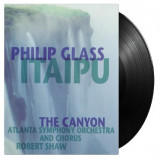
Itaipu, written by American composer Philip Glass, were commissioned by the Atlanta Symphony Orchestra and Chorus. Along with The Light (1987), they marked Glass’s continuation of a symphonic trilogy of “portraits of nature” as he had recently turned to making orchestral music. The composition pays a beautiful homage to the Itaipu Dam, which is the world’s largest hydroelectric dam built on the Paraná River between Paraguay and Brazil. The text was written in Guaraní, and translated by Daniela Thomas. The piece was first performed in 1989. This LP also includes The Canyon on the D-side, which was first performed in 1988 and commissioned by the Rotterdam Philharmonic Orchestra.
Itaipu and The Canyon are available on vinyl for the first time. It comes a in deluxe heavyweight sleeve with gloss laminate, and includes an insert with linernotes as well as the Philip Glass catalogue with info on the MOV Philip Glass series.
Citizen have always eluded definition. The Toledo, Ohio-based four-piece have been making dynamic, wide-ranging guitar music for over ten years, challenging expectations with each new album and refusing to fit neatly in a box. On their fourth full-length, Life In Your Glass World, Citizen have crafted their most singular work to date completely on their own terms—proving that only the band themselves can define their identity.
This definition meant taking the entire process home to Toledo, Ohio – the Glass City – and creating everything in-house. Recorded in vocalist Mat Kerekes’ home studio in his garage, Citizen’s need to continue moving forward creatively went hand in hand with their desire to be fully in control of their creative destiny. The new process afforded the band time to focus on each song’s individual mood, making their sig-nature blend of aggression and melody all the more pronounced, and even capturing appealing imperfections. The result is an album that represents the members’ vision in its purest form, something that feels distinctly Citizen while also marking the start of a fresh chapter.
One of the most immediately striking elements of the direction on Life In Your Glass World is the band’s attention to rhythm. Many of the songs feature undeniably danceable beats and sharp, groove-laden guitar lines, which give both the barnburners and the brooding atmospheric tracks a pulsating heart. The band’s desire to assert themselves is palpable both in the music and Kerekes’ lyrics, mirroring not only their creative frustrations but also a long year of personal upheavals. It’s fitting for Life In Your Glass World, a record that proves Citizen’s true identity is rooted in the raw energy of constant evolution.
The music on Dance Nos. 1-5 was originally conceived as a three-way collaboration between composer Philip Glass, choreographer Lucinda Childs and artist Sol LeWitt. Dance received its world premiere in Amsterdam on October 19, 1979 and its New York premiere at the Brooklyn Academy of Music on November 29, 1979.
Post-dating Einstein on the Beach - Glass’s 1975-76 collaboration with director Robert Wilson - Dance was another Glass collaboration, this time with choreographer Lucinda Childs, known for her austere, athematically exact dances, and artist Sol LeWitt, who provided a ghostly, gigantic black- and-white film for several of the piece’s five sections.
RELEASE: 5-3-2021
• 180 GRAM AUDIOPHILE VINYL
• DELUXE HEAVYWEIGHT SLEEVE WITH GLOSS LAMINATE
• PVC JACKET
• THE COMPLETE ALBUM, AVAILABLE ON VINYL FOR THE FIRST TIME IN ITS ENTIRETY ON A 3LP-SET
WITH FIVE SIDES OF MUSIC
• INCLUDES PHILIP GLASS CATALOGUE WITH INFO ON THE PHILIP GLASS SERIES ON MOV
SIDE A
Dance has an abstract purity that easily earned it the label “minimalist,” a term that Glass himself disavows but that seems appropriate, at least in this case. After Dance, Glass’s music took several turns, not so much in style as in the various new contexts in which it was presented: major opera commissions and film scores led him to write for forces other than those of the Philip Glass Ensemble. At the same time, an attempt to reach a wide audience resulted in some shorter, perhaps more accessible, narrative pieces. Dance marked the blossoming of the composer’s experimental work. Here, though, the music - particularly Dance Nos. “1”, “3” and “5”, all written for the Ensemble— has an unforgettable exuberance that somehow speaks all at once of joyful innocence, intense erotic desire, tenderness, regret and, finally, acceptance. On the other hand, Dance Nos. “2” and “4” see Glass composing several large-scale works for solo organ; for instance, Dance No. 2 originated as a 1978 work entitled Fourth Series Part Two. This piece, later incorporated into Dance, and Dance No. “4” as well, have a more subdued, more darkly romantic quality than the work’s other sections and are quite unlike anything Glass had previously written. Still, they too, with their mysterious tilts of time and key signatures, continue the exploration of polyrhythms and harmonic complexities within the context of Glass’s repetitive, “minimalist” style.
The complete Dance Nos. 1-5 album is now available on vinyl for the first time in its entirety on a 3LP-set with five sides of music. The 3 LP’s are housed in a heavyweight sleeve.
The Glass Passenger is the second album by American alternative rockers Jack’s Mannequin. It captures frontman Andrew McMahon during a darker period, after he was diagnosed with leukaemia. Some painful subjects are woven into the pop- rock and orchestral sounds. From the slow-burning “Spinning” to the razor sharp single “Swim”, it’s a versatile and colourful album.
Jack’s Mannequin is the side project of Andrew McMahon from pop punk band Something Corporate. They recorded three albums during their existence. McMahon crafted some incredible pop songs for the band.
The album, which also contains bonus track “Miss California”, is available as a limited edition of 2500 individually numbered copies on silver vinyl.
Dancepieces, originally released in 1987, presents music that American composer Philip Glass created for two separate dance performances. The first half of the album accompanied the Twyla Tharp Dance Foundation in a show called “In the Upper Room,” and the second piece accompanied choreographer Jerome Robbins’ “Glasspieces”. Glass writes the majority of his music for visual performances, most frequently dance and opera, and the presence of a visual twin to his music is evident throughout the selections from Dancepieces.
In discussing his technique for writing music to accompany dance, Glass has stated that melody, harmony and rhythm are key factors. Within the first seconds of each song on Dancepieces, the strength of Glass’ strong rhythmic sense can clearly be heard.
"Imagine the opposite of a snake shedding its skin: a body slithering among the debris of 21st-century music; a porous, viscid body, its skin an adhesive, lodging onto itself bits and pieces along the way. Some are scraps, rusted, discarded parts. Some are the jewels of crowns, unglued and fallen from grace, now re-attached on this makeshift contraption. Where does a body end? Does it end where these prostheses begin?
Jay Glass Dubs’ Soma (“body” in Greek) is a palimpsest. Look closely and you can find all sorts of DNA microarrays on the body’s skin – Bristol voices, Detroit electro hums, the amen break, the all-encompassing dub haze – but, as with all palimpsests, they are simultaneously one and a multitude. The body lives, its prostheses live.
The body moves."
- A1: Concrete & Glass
- A2: Back To Your Heart (Feat Kate Nv)
- A3: We Forgot To Love (Feat Kadhja Bonet)
- A4: What Makes Me Think About You
- A5: Time On My Hands (Feat Kirin J Callinan)
- B1: The Foundation (Feat Cola Boyy)
- B2: Catch Yourself Falling (Feat Alexis Taylor)
- B3: The Border
- B4: Turn Right, Turn Left
- B5: Cite Radieuse
- C1: Concrete & Glass
- C2: Back To Your Heart (Feat Kate Nv)
- C3: We Forgot To Love (Feat Kadhja Bonet)
- C4: What Makes Me Think About You
- C5: Time On My Hands (Feat Kirin J Callinan)
- C6: The Foundation (Feat Cola Boyy)
- C7: Catch Yourself Falling (Feat Alexis Taylor)
- C8: The Border
- C9: Turn Right, Turn Left
- C10: Cite Radieuse
When Air’s Nicolas Godin released his debut solo album, Contrepoint (2015), he channelled the influence of Bach into a rich, resonant and hugely rewarding spread of musical explorations. One soundtrack (A Very Secret Service) later, Godin builds on equally fertile conceptual foundations for the follow-up. Released through Because Music on 24th January, Concrete and Glass is an exquisitely crafted set of variations on architectural reference points: mounted with minimalist precision and delivered with an abundance of pop warmth, it finds Godin in his element, working seductive wonders with poise and style to spare.
For Godin, the album circles back to his formative work as half of ground-breaking French electronic group Air. Revered modern architect Le Corbusier was an influence on the young architecture graduate’s music, notably on his 1997 debut “Modular Mix”. Twenty-plus years later, Le Corbusier featured on a list of modernist architects Godin was invited to compose tributes for, tributes intended to be heard as the soundtrack to site-specific installations around the world.
In its soft ambient pulse and melting minimalism, lead track “The Border” is a perfect entry-point to Godin’s hymns to buildings, arranged and co-produced with Pierre Rousseau. Its levitating synths, vocoder vocals and scudding bass hove into view with understated elegance, all the better to accommodate the discreet slow-build of delicate details within. As with Air, Godin makes gorgeously light work of every angle: this is music that seems entirely unperturbed by gravity, occupying an elevated atmosphere of its own.
Elsewhere, the title-track’s clean synth lines, crisply apportioned arrangements and tender timpani offer another inviting entry-point, sculpted with architectural clarity. While Godin’s vocoder vocals also hark back to Air’s early work, the album accommodates a diverse spread of guest vocalists elsewhere. Hot Chip’s Alexis Taylor guests on the falsetto-soul dream-pop of “Catch Yourself Falling”, one of Godin’s sweetest melodies yet. Oxnard singer/activist Cola Boyy brings soul to the righteously engaged “The Foundation”; the squelchy synths and buoyant grooves burn slow, allowing the stealthy arrangements and message room to resonate. Psychedelic soul singer Kadhja Bonet sings with measured serenity over tremulous synths on “We Forgot Love”, while Russian experi-pop artist Kate NV brings a gracefully aching romanticism to the blissful swoon-pop of “Back to Your Heart”.
Additionally, Australian conceptual provocateur Kirin J Callinan contributes a vocal of restrained drama to “Time on My Hands”, a midnight-drift soft-pop ballad with a silky allure. One of the quickest tracks to record for the album, it emerged in collaborations between Los Angeles (”During some lively sessions in Mac DeMarco’s studio,” notes Godin) and Paris. After he missed his flight home, Callinan stayed in France for a day as the guitar solos were recorded, complementing the song's air of sleek luxuriousness.
Between its title-track and the sultry, smoky jazz stylings of closer “Cité Radieuse”, Concrete and Glass is an album that truly travels, in tune with its global pitch. For Godin, it marks another milestone in a musical journey that began when Air’s 1998 debut album, Moon Safari, became the sublimely weightless soundtrack of its time. For Concrete and Glass, Godin builds on his storied past with tremendous finesse, charm and fluency, opening fresh windows of perspective at every lovingly executed turn.
Melbourne based producer Louis Marlo returns to Merriware with five meditative cuts, entitled Stained Glass. Recorded between 2014-2018, the EP is the culmination of experiments with tape loops, the 303 and 606, and processed guitars and electric pianos.
Vital Sales Points:
Early airplay from Moxie and Andrew Weatherall.
Upcoming premieres through Orb Mag and Hypno Groove
Following on from the release of a spilt EP from rising stars Gramrcy and Gaunt late last year, GlassTalk Records returns in 2019 with the sophomore EP from Bristol's Henry Greenleaf, "Patent".
The unassuming producer has been making waves with his bassy 130bpm productions which seem almost custom-made for the later hours of dark club settings.
Since his debut release on Par Avion last November, Greenleaf has been focused on increasing the sonic scale and clarity of his work; something that's apparent on the whole of "Patent" but especially on the opener, "Inch". A true 'creeper' of a track, the groove and harmonic arrangement of the 3-minute build-up is somewhat
entrancing but then gives way to a head-wringing breakdown.
True to his previous output, Henry doesn't sit still stylistically on "Patent". The EP's second track, "Tare", moves away from the 4x4 structures of "Inch" and into more syncopated territory previously occupied by producers like Mickey Peace or Paleman. "Tare" is a masterclass in polyrhythms with all manner of kicks, claps and vox samples skittering over each other. This deft use of drum programming is complemented by serene and uplifting synth sections, cleansing the tonal pallet before the beat forcefully drops back in.
On the B-Side, "Caved" keeps the energy and the tempos high with supremely processed high hats and a rumbling low-end landscape. Here Henry Greenleaf's adoration of Paula Temple's music shines through more than ever. Much like her output, it's kind of hard to know which way is up in "Caved" with its ever-shifting
palette of sounds and grooves.
Closer and EP title track "Patent" is probably the vastest song Greenleaf has created during his recent mission to grow his productions in scale. It's a mammoth techno track with a pulsing low-end juxtaposed against some sporadic & icey synth pads.
This release solidifies Henry Greenleaf's already hard-to-dispute status as one of the leading lights of the 'Bristol sound'. Almost impossible to define; his work sits in that amorphous sweet spot where techno, dubstep, garage and a load of other UK influences bleed into each other to form something unique. Put your headphones on and let the grooves swallow you up.
“Jay Glass Dubs is back on Berceuse Heroique after his inaugural release and this time he is going straight for the jugular. Jay Glass took a small break from the 80's experimental pop of The Safest Dub and he invoked the spirits of German Kosmische Musik and the studio insanity of African Head Charge. Film Noir vibes are mixed with the greek ancient tragedies, leaving the Apollonian aesthetics of his last release and going for a darker, denser and completely Dionysian approach for this one. Medea meets Touch Of Evil. Harmonia and young Adrian Sherwood are getting loose on some pentatonic Greek Traditional music from Epirus. Jay did it again and we are very happy to release this one.”
Emotional Rescue returns to the music of British "pop" band Furniture, with an EP of the band's own extended versions, remixes and unreleased takes of their particular output.
Taken from three 12"s that followed When The Boom Was On (ERC072), the songs included cast a light on their development from 3 to 5 piece, adding Sally Still (bass) and Maya Gilder (keyboards) and the new male/female frontline. The subsequent broadening of their line-up and sound meant they could start to address the kind of pop music they wanted to play.
After the early releases garneered radio play and reviews, Furniture were launched into the melee of '80s pop. An anomaly, the band found they attracted a specific kind of "intense" follower, who were often beguiled by Furniture's freaky normality. This was addressed on the 1984 release, 'I Can't Crack'. A more urgent version of the sound Furniture had debuted with 'Why Are We In Love', the track, sung by Tim, was based around a sequencer-like rhythm played live by drummer Hamilton Lee, and a clarinet part played by Tim's brother, Larry Whelan. A mix of bleakness and euphoria, the song was and is a favourite of the band and considered one of their best self-productions, as well as becoming a latter day club play.
This is followed by the studio experiment 'Throw Away The Script', where the band wrestled with sequencers and synth-pop, but then countered it with a free-jazz sax solo. Found on the flip of the double A -side of 'Love Your Shoes' 12", this instrumental version too became an underground club hit, including a cult play at Fran Lenaer's influential Valencia club, Spook Factory. Played loud, the studio mastery, trickery and oft-accidental discoveries come to the fore, with tissue-damaging frequencies giving extra sound system shaking bottom end.
The B-side continues the band's love of making extended mixes with 'Dancing The Hard Bargain'. Co-produced with Tim Parry (formerly of Blue Zoo), they threw everything at these 12" versions. Able to relax and focus on the sounds they really liked, rather than the ones thought more commercial, this can be clearly heard on this compelling, percussive mix, a stop-start breakdown becoming a band hallmark.
To close this collection is the mammoth 'Bullet'. Again sung by Whelan, an edited version of which debuted on the 1986 Survival compilation of Furniture tracks called 'The Lovemongers', here this previously unreleased original take is centred on a mesmeric tape loop, live drums and a guest appearance by violinist Helena Bjorelius.
Ground is an Osaka native, but his soul is truly that of a nomad, traversing the planet, befriending kindred spirits found in humans, animals and plants. He is exceptionally receptive to the beauty in everything that surrounds him—the incidental music of a city street, the orchestral chaos of a scrambling radio, the syncopated grace of migrating birds, the simplicity of an isolated hand clap—and as his roadmap continuously unfolds, he accumulates a vast catalogue of visceral tools to musically recount his experiences. 'Sunizm' is a cross section of the artist’s process—an array of complex microcosms overlapping to comprise a thematic whole—gathering field recordings, found instruments, jagged electronics, synthesized chanting, and weaving all into a dense narrative that appears obsessively constructed yet divinely improvised. 'Follow Me', the second of two singles surrounding the album, is complimented with a pseudo drum’n’bass treatment by enigmatic Greek artist Jay Glass Dubs, as well as a massively triumphant b-side entitled 'Ozone House', which is exclusive to this single release. Attention all humans, animals and plants, Ground and the ESP Institute present, 'Sunizm'.
First edition of 300, in printed sleeve and hand-stamped inner. "Murderous debut disc on this label, combining the fierceness of grime with the bassbin pressure of UK techno, and setting it off with cutting edge rhythm workouts to devastating effect." Mastered and cut by Lewis at Stardelta. Design by Studio Tape-Echo.
Robert Steenkamer is known as a purveyor of exquisite house music. Under his Roberto S guise, the Torontonian has released several landmark records. Besides this, he is known as a valued selector in his native Canada. The collaborative releases with Jex Opolis under their "Conga Radio" moniker have received worldwide praise throughout the house community. For his Pulp debut, Steenkamer has created a diverse body of music that touches different moods and genres.
On the A-side, the opening track "Inner Rhythm" is a orchestrated piece of work that uses an uplifting vocal cut and ethereal flute sounds to create a calm and positive dancefloor experience. Also on the A-side "Swizik" is a melody-heavy work where Steenkamer uses fun sequences, euphoric pads and well balanced drum patterns.
The title track is placed on the A3 position and is a genre-transcending cut. The tempo is is low and the beats are dragging along with the well-executed pads and synth riffs. On the B-side, the title track is being remixed by fellow Canadian "Florist". On this remix, Florist turns the slow vibe of the original into a soul touching dancefloor creeper that will definitely gain a lot of support in melodic circles. "Remember When" is a positive work with a snappy bassline and oozing synth sounds. Glass Road EP will be available from all specialized retailers in early 2019.
Fifth part of the Strata-East Dolphy Series, Glass Bead Games is arguably the crown jewel of the Strata East movement, an amorphous genre that treads an unusual path between post-bop, 70's avant-garde and spiritual jazz, with a groove.
Glass Bead Games is full of revelations at many levels. First, the decade of the 1970s did produce genuinely creative, "human" new music flowing from the jazz mainstream; second, Bill Lee was more than Spike's dad: he was a superlative bassist, a team player of the first order, a powerful catalyst who, if anything, deserves to be better known than his son; third, Billy Higgins was, as so many musicians insist, a once-in-a-lifetime drummer—the bellows inspiriting the collective flame.
Most importantly, Clifford Jordan was an artist of the first order, his playing so effortless and unforced, unselfconscious and focused, mature and wise that, at a time when altissimo fury was all the rage, it's small wonder his authentic voice frequently went unheard. His musical rhetoric is so personally expressive, its substance so compelling, the listener couldn't care less about the extraordinary technique required to convey its captivating message. Compared to some of his more acclaimed peers he's a less aggressive yet paradoxically more directive and shaping influence. The climaxes, rather than spelled out, are merely suggested, registering with deep and lasting impact on the listener. It all comes down to learning the language, those precious little beads. Not every player, including Jordan or the listener, can use it like Shakespeare, but all can learn to read Shakespeare and understand its principles of arbitrariness and serendipity, of invariance and transformation.
Jordan, no less than Shakespeare, requires a like-minded cast of players—in this case four musicians of such redoubtable proficiency that each remains committed to keeping the beads in play. He's not a man content with a mere musical "dialogue" with his fellow musicians nor is he about to take the initiative in pulling his troops up to his level. Instead he begins to tell a musical story that's so compelling his three comrades are inspired equally to contribute to a collaborative narrative. This is brilliant music-making by a Coltrane- influenced successor who feels no obligation to mime the predecessor. It may be the most significant saxophone performance on record since Coltrane and, providing the listener stays with it for any length of time, the most deeply satisfying. Jordan's game—so effortless, unforced, and "level"—erases distinctions between composed and improvised, soloist and ensemble, narrator and narrative, the dancer and the dance. It seems incapable of wearing out its welcome.
By Samuel Chell/All About Jazz
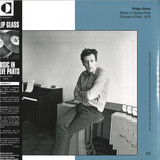
Lost PHILIP GLASS Recordings from 1975 - ORTF
The newly discovered and unreleased concert from 1975 recorded by the Philip Glass
Sextet at La Maison de la Radio, Paris.
The sextet is composed of Philip Glass, Jon Gibson, Dickie Landry, Michael Riesman, Joan
La Barbara and Richard Peck.
Music in Twelve Parts is a set of twelve pieces written between 1971 and 1974. This
performance in France includes part 1, 2, 3, 11 and 12 on a double LP.
Also included a very rare Philip Glass interview from 1974 in his NYC loft during the
rehearsals of this piece, produced for the French radio by Daniel Caux - musicologist and
co-founder of Shandar Records.
A never before released -Philip GLASS (1975) live recordings, released in partnership with
the National Audiovisual Institute - INA.
"A new sound and a new chord suddenly break in, with an effect as if one wall of a room
has suddenly disappeared, to reveal a completely new view." - A. Porter
Time for something a little different from Cosmic Pint Glass' secret weapon Dom IV. Nothing Happens is a strangley poignant DIY/pop song, with two versions of the title track. Its the first in a series of 7 from CPG. Ltd to 200 with painted sleeves by Liam Buckley.
DGTL Records hits close to home with their latest release 'Dancing Glass Figures' by De Sluwe Vos. The dj/producer has been affiliated with DGTL since the beginning, as he played at numerous of their festivals from day one. So it was only a matter of time for De Sluwe Vos to release his music on DGTL's label. With Dancing Glass Figures he delivers a strong 4-tracker that is truly hard to resist. De Sluwe Vos has been making waves lately, not only with his steady sets but also with his own label Patron Records, which has seen a string of well-supported releases since its launch. Never Know, the first track of the EP, takes no prisoners, as this straight-up banger with the hard-hitting synth line keeps you captivated throughout the entire track. The repetitive vocoder vocals give the track a spacey touch, especially during the break. De Sluwe Vos teamed-up with fellow Amsterdammer Sjamsoedin, who's known for his exceptional synth knowledge and hard-hitting live-sets. Together they produced a strong lead track that you will definitely get to hear a lot on the dance floor.
Fast rolling drums and a dreamy warm synth lure you into the title track Dancing Glass Figures. But don't get too comfortable, halfway into the track you will get a sturdy surprise, which only makes the track more interesting, while taking you back to where it all started at the end of it all.
Moving on to the B-side. Sophisticated Topless Raver is mesmerizing, with an intriguing and hypnotizing melody that comes and goes throughout the track. Bringing in some hard claps and an eerie laughing vocal, this track for sure is one for the later hours.
Bambounou has the honour to close-off the EP with a remix of Sophisticated Topless Raver. The French dj/producer, who's been on everybody's radar this past year, slowed down the original version and added a sleazy bassline, synth stabs and extra percussion, while keeping the melody and the vocal. Making the track just as enticing as De Sluwe Vos' version.
Beyond the Pub is a collection of tracks for the after hours. From drunken treks to the filthy kebab shop to outer body experiences in the icy wonderlands, Cosmic Pint Glass tells the stories that happened after leaving the Social House.
In Vol 1. Mark du Mosch adds tension, FRAK takes you on that boozy journey to the Kebab Shop, Julian G reflects on the beauty of a frozen wonderland and Lie of the Land takes you on a introspective acid journey. Trip!
Airplay:
Ben Ufo - Hessle Audio Show, Object Blue - Rinse Fm Show, Leon Vynehall - Ra Mix, Shanti Celeste - Nts Show, Courtesy - Nts Show.
Dj Support:
Airhead, Anina, Bake, Ben Ufo, Bleaker. Bruce, Chekov, Ciel, Courtesy, Facta, Forest Drive West, Gigsta, Haai, Hodge, Laksa, Leon Vynehall, Minor Science, Objekt, Peach, Pearson Sound, Peder Mannerfelt, Re:ni, Resom, Ribeka, Simo Cell, Solid Blake And Will Lister
Melancholic, wistful Rhodes chords float beneath Sarah Williams White's trademark vocal harmonics before delving into a deeply moving bass led melody that gets right under the skin. Something very special to get us excited about the new Jonny Drop LP.
Backed with an exceptional, bumping remix from the ever extraordinary Julien Dyne.
- A1: Microglass Shaken
- A2: Glass Rod Vibrating
- A3: Turning Gong
- A4: Mini Mobile
- A5: Wine Glass
- A6: Water Gong
- A7: Two Ribbed Discs
- A8: Rod Across Edge Of Pane
- A9: Glass Bulb
- A10: Glissandi
- A11: Spinning Discs
- A12: Dialogue - Bottles And Jars
- B1: Vibrating Pane
- B2: Bubbling
- B3: Breathing Machine
- B4: Water Jars
- B5: Rod Roll
- B6: Micro Grass On Goblet
- B7: Micro Glass Along Pane
- B8: Cullet - Two Glass Rocks
- B9: Medium Mobile
- B10: Bottle Tree Showered With Fragments
- B11: Deep Water Gong
Ltd. edition of 500 numbered copies on clear vinyl New Zealand-born sound artist and composer Annea Lockwood received formal training at various institutions before exploring the sonorous potential of glass in a series of performances in the late 1960s. With plates of wired glass, glass discs, chunks of green cullet glass, glass tubing, sheets of micro-glass, glass jars and other incarnations of the material, Lockwood elicited a staggering array of sounds, some subtly uncanny and others as outlandish and alien as anything emitted from the era's early synthesizers. Lockwood's glass concerts yielded a text-score published in Northern California new-music journal Source: Music of the Avant-Garde and attracted the attention of South African producer Michael Steyn, who encouraged her to record the glass pieces for his label Tangent. They worked for two years in a small, resonant church in London to document a veritable catalogue of the materials' tone and timbre; Lockwood wished to present each sound as if it were a piece of music in and of itself. Glass World originally appeared on Tangent in 1970.
"I wanted to entice people into really listening intensively," Lockwood once reflected. "Into really listening. I wanted a deep immersion in the sounds of themselves, for the audience."
First-time vinyl reissue. Limited edition of 500 numbered copies on clear vinyl.
Slow Glass is not only the debut release by Le Frère it is also a very personal diary of the last two years of his life. All four tracks are based on recordings, samples and ideas he collected while travelling the world. With the concept of 'Slow Glass' in mind Le Frère tried to catch moments of his life without stripping them of their dynamic and evanescence.
The EP starts with lots of positive energy and light but already reveals glimpses of the shadows that slowly emerge throughout the following tracks. 'Nice' is a lightly humming version of an (almost) innocent summer morning. It's a collage of field-recordings, synth-pads and manipulated guitar sounds. 'Candid' is a light and open dialog between a simple guitar theme and a playful synth-arpeggio. 'V1b1n'' creates the dense atmosphere of a rainy Caribbean afternoon dominated by field recordings and everyday noises. 'Nttt8'sets a counter point to the previous three tracks as the energy of Le Frère's travels cumulates in 'Nttt8', making it a more dance-floor oriented piece carried by a dark and heavy bass-line and almost rave-sirens.
"There are few locations more emblematic of contemplative modern aesthetic than Philip Johnson's 1949 residence, a transparent box stripped of much beyond its focused proportions and structure. And that seems a fitting location for the exposed materials of Ryuichi Sakamoto and Alva Noto." CDM
GLASS is a recording of an inspired live improvisation by Ryuichi Sakamoto and Alva Noto at the architect Philip Johnson's hallowed Glass House, in the bucolic setting of New Canaan, Connecticut. The structure's transparency and seamless continuity with nature was given another dimension by the addition of this performance, whereby the building, location and audio coalesced into one perfect, harmonious whole.
Stylish, stunning and elegantly minimal, the duo's architectural sound design evokes and synergizes with the space creatively, acoustically and literally - by using the building's fabric as an instrument. This is the sound of glass and of glistening condensation. Pristinely fresh audio stratus float amorphously by, unfurling from a meditative calm into an evocation of sparkling wonder, like a baby observing raindrops on a nocturnal window for the first time.
Although the work is largely tonal, textural and spatial, fleeting moments of melody appear towards the end, which despite their scarceness, achieve a profoundly moving effect.
Built between 1949 and 1995 by feted architect Philip Johnson and exemplifying modern architecture and the International Style, The Glass House hosted this site-specific event. It was commissioned by Curator and Collections Manager Irene Shum, who recalls the experience:
"The emotional drama of the forty-five minute performance was echoed in the natural environment. A sudden rain storm forced the evening's guests into The Glass House at the start. During the performance, the storm cleared into a dramatic red and pink sunset and concluded in nightfall."
This intimate evening brought Ryuichi and Carsten back together for their first live collaboration since Sakamoto's cancer diagnosis and treatment in 2014. Prior to that, Nicolai and Sakamoto had worked together on and off since 2002, releasing 6 albums as a duo.
Lyrics and vocals by artist and poet Leslie Winer, production by Bokeh Versions staple Jay Glass Dubs.
The Cosmic Pint Glass Keg series continues its secret vinyl only 10 addition, pressed to 200 copies. This time Daniel T supplies the dancefloor fun times by adding some tropical funk to Maricopa's Ascent and turning it into some mutant disco party jam. On the flip Miskotom adds a hefty dollop of atmosphere to the already atmospheric Volcanic Glass to provide a stunningly laid back finish. Get these while they're hot!
Mysterious new outfit Glasstalk Records start as they mean to go on with their debut release, showcasing some heavy-hitting techno from Kettering via Leeds upstart, Wilhelm. At the ripe age of 21 and with only one release to his name prior to 38thParallel, this producer has already attracted a lot of support from a stellar cast of tastemakers including Bruce, Midland, Batu, Avalon Emerson, Tasker and A Made Up Sound as well as landing recent radio plays from the likes of Skream, B. Traits, Moxie, George Fitzgerald, Batu and Via Maris.
Wilhelm kicks off the EP with the haunting 'Our World.' This dancefloor heater is jam packed with frenetic percussion, overtly time-stretched whispers and ambient samples of mechanical scrapings. Next up is the title track of 38thParallel EP, a distinctly more off-kilter affair than its predecessor due to its quick-fire drum patterns. Rounding off the release is 'Assignment,' which was quite literally made as an assignment for the producer's university course! This slowed techno roller would be perfect as a set opener.
Maricopa makes the smoothest summer tunes in the world. On his Explorer EP, the second in Cosmic Pint Keg series, Maricopa makes no exceptions. A Journey through Mediterranean landscapes and across tops of mountains in the midday heat to the refreshing sea breeze on a midnight beach. It's a thing of beauty some are directed at the dance floor some almost chilled to horizontal.
Standart LP[17,02 €]
Palto Flats & WRWTFWW Records are ecstatic to announce the highly-anticipated reissue of Japanese percussionist Midori Takada's sought after and timeless ambient / minimal album "Through The Looking Glass", originally released in 1983 by RCA Japan.
Considered a Holy Grail of Japanese music by many, "Through The Looking Glass" is Midori Takada's first solo endeavor, a captivating four-song suite capturing her deep quests into traditional African and Asian percussive language and exploring contemplative ambient sounds with an admirably precise use of marimba. The result is alternatively ethereal and vibrant, always precise and mesmerizing, and makes for an atmospheric masterpiece and an unparalleled sonic and spiritual experience.
The fully licensed reissue is available as a single 33rpm LP and a limited 45rpm DLP, both cut directly from the original studio reels (AAA), at Emil Berliner (formerly the in-house recording department of renowned classical record label Deutsche Grammophon) for the 45rpm DLP, and at the equally famous Frankfurter SST Studio for the LP. It is also available in CD format for the first time. All versions come with extensive liner notes.
East Wall was an Italian electronic dark wave band formed by Fabrizio Chiari (ex keyboardist of Kirlian Camera) and Wilma Notari in 1982. After a series of demos and live performances, the duo recruited Angelo Bergamini of Kirlian Camera to help with arrangement and synthesizers. In September 1984 they booked a recording time at Master Studio 33 in Cremona Italy. Working with produced Ray Masola, they recorded their debut single 'Eyes Of Glass', which was released on No Comment in early 1985. The equipment set up was a PPG Wave 2, Roland ProMars, Roland Juno 60, Simmons drum, and an upright piano. 'Eyes Of Glass' is an outstanding example of 1980s Italo disco full of dark, moody atmosphere and depth. Wilma Notari's coy vocals cast a spell on the listener as she weaves a story about lost love and 'bitter tears'. Included here are the original extended 12' mix and instrumental version with mid-song breakdown and dubbed out chorus.
The return of The Hague's black magician! It has been 13 years since The Parallax Corporation / Conservatives projects together with I-f and now Intergalactic Gary is back. I-G hooked up with a new musical partner, the lovely and talented Pasiphae from Greece and together they deliver four very well-crafted tracks of contemporary machine-driven techno romance, with the ecstatic title track 'Made of glass' being the floor burner that will unite dancefloors worldwide. With the 'Made Of Glass' ep Bio Rhythm proudly presents the absolute creme de la creme of the current Dutch West Coast 'noir' scene.
Agnes Obels neuer Longplayer wurde im eigenen Studio Aventine-Neukölln und in den BrandNewMusic-Studios in Berlin aufgenommen. Erstmals hat Agnes nicht nur alle Songs geschrieben und komponiert, sondern das komplette Album im Alleingang aufgenommen, abgemischt und produziert. Als Musiker sind John Corban an der Geige, sowie Kristina Koropecki und Charlotte Danhier an den Cellos dabei. Mit über einer Million verkaufter Alben ihres Debütalbums "Philharmonics" (2010) und "Aventine" (2013), sowie 200 Millionen Streams weltweit, gehört Agnes Obel zweifelsohne zu den angesehensten Female Artists in Europa.
Born and raised in the birthplace of House Music, Paul Johnson was known for his raw, soulful, and infectious sound, that helped shape Chicago's house scene and inspired generations of DJs worldwide in particular he was a massive inspiration to Daft Punk and the 'French Touch' scene.
Releasing a vast amount of music throughout the 1990s for some of the most consistently underground dance labels including legendary Chicago imprints Cajual, Relief and Dance Mania he finally gained global fame with his 1999 hit “Get Get Down,” a dancefloor anthem that topped charts across Europe. Despite facing physical challenges, including losing both legs in accidents, he remained an unstoppable force in music—touring, producing, and uplifting others with his resilient spirit and signature groove.
Re-pressed for our 35th anniversary, Paul Johnson’s classic 1995 debut album on Peacefrog, Bump Talkin is a timeless showcase of Paul’s signature deep, soulful house sound, blending irresistible peak-time, piano-driven anthems with a playful touch of bouncy Ghetto House energy.
They dont make em like this anymore...
RIP Paul Johnson.
- A1: Cirkus (Including Entry Of The Chameleons)
- A2: Indoor Games
- A3: Happy Family
- A4: Lady Of The Dancing Water
- B1: Prince Rupert Awakes
- B2: Bolero - The Peacocks Tale
- B3: The Battle Of Glass Tears (Including Dawn Song / Last Skirmish / Prince Rupert's Lament)
- B4: Big Top
DGM & Panegyric proudly present…
One of the highlights of the King Crimson 50th anniversary CD/Blu-ray editions to date has been King Crimson producer David Singleton’s series of Elemental Mixes as he utilises the full spectrum of available studio sessions for each album to produce very different takes on the familiar songs and pieces.
This is especially true of Lizard where the ambition of the material, the much-expanded line-up of musicians - the background of many of them in the jazz rather than the rock world - and the number of takes recorded, resulted in a large amount of material to be considered for this album.
There was enough material for David to be able to mix and produce alternate takes for every piece from the original album.
As well as giving great insight into the recordings, the nature of Elemental Mixes allows for different takes from individual musicians to be included – sometimes alongside one another - in a way that would never be considered in the formulation of the original album.
David comments that “When I was working on the Elemental mixes, I jokingly described them as ‘Lizard for those who don’t like Lizard’. They were a complete revelation. Lizard is the one album which, in its initial incarnation, never quite convinced me. And yet these Elemental mixes, with their opportunity to look ‘under the hood’ of the album, revealed something fresh, wonderful and astonishing. So, if you are a King Crimson fan, who like me, has never quite taken Lizard to your heart, then these are essential listening. And hopefully equally fascinating to those who already love the album”.
Presented as a single 200gram LP and including the complete album in Elemental Mixes form, running in the same sequence as the original album, this release showcases Lizard in a very different manner to how it’s previously been heard.
Lizard’s reputation has grown, deservedly so, in recent years as old and new audiences alike rediscovered the album, initially when it was first remixed for new Stereo and 5.1 Surround Sound editions in 2009 by Steven Wilson and then as much of it was performed live for the first time in concerts by the most recent King Crimson line-up between 2016 and 2018.