‘The Return of Pachyman’ is a supernatural force
from a brave new world that’s a little bit San Juan,
a little LA, and a whole lot of Channel One in
Kingston, Jamaica. Designed to be a resurrection
of sound systems from the past through which we
can celebrate a post-Trump future, the record
shows that blasting off into reggae’s deep space
has never gone out of style.
Pachy García (aka Pachyman) is perhaps best
known as the drummer / vocalist for the LA-based
band Prettiest Eyes, a unique pop-noise project
that reflects his other formative interest, synth
punk. He thinks of ‘The Return of Pachyman’ the
same way King Tubby might - an ‘X-ray’ of reggae
music, breaking it down to its bare bones.
Originally a guitarist, he moved to Los Angeles in
the early 2010s and developed his passion for
dub. From there, he started recording bass, drums
and piano and collecting recording equipment in
his basement studio, which he calls 333 House.
With ‘The Return of Pachyman’, García wants to
show how the Caribbean flow is transnational, a
vibe that resounds from Jamaica to San Juan to
Southern California. “With this project, I was
looking to make positive music and radiate good
energy; something to kinda disconnect from the
negative things that were happening at the
moment,” Garcia explains. “I am trying to make this
project a service for humanity in the sense that I
just wanted to shine a positive light.”
out of Stock
Last delivered 18 months ago available to reorder, subject to availability
aya's incredibly inventive Hyperdub debut album im hole distilled the incisive sonic experimentation of her early run of releases, the tongue-in-cheek giggles of her DJ sets and radio show, and the identity-fluxing lyricism of her live shows into a delirious tug of war between pleasure and dysmorphia. The album was championed from all corners, 'Best New Music' in Pitchfork to Radio 6 DJ Maryanne Hobbs 'Album of the Year', followed by a run of incredible live shows which drew new listeners further into her world. hexed!, aya's second album, confronts the desperation and dysfunction of addiction. Internalised phobias and suppressed traumas haunt the corridors and golden hours once romanticised on 2021's im hole; daymares concealed by nocturnal afters-hopping and key bag circles. Opener `I am the pipe I hit myself with' exposes the gray portrait secreted somewhere between the 8th and 9th floors of her previous record. `I used to say some shit for sure', `I used to say it when I was me-less'. hexed! is about what happens when aya turns the lights on.
out of Stock
Last delivered 13 months ago available to reorder, subject to availability
Now and again, an album project with no home comes along out of the blue, demanding to be licensed and shared with the world.
It was unearthed on one of Paper's digging trips. BOM's album sounded like nothing else out there, only the future. Shrouded in mystery and country-of-origin unknown, Africa runs through its DNA, but sometimes mysteries are best left...
Ase - a Yoruba philosophy signifying the power that makes things happen and produces change; given to Gods, ancestors, spirits, humans, animals, plants, rocks, rivers, songs and prayers.
BOM takes influence from all corners of Africa and its diaspora, blending them with 25 years of Western electronic music into a melange of forward facing, leftfield afro futurism.
The album features one of Africa's brightest rising stars, Luka Productions (from Mali), cosmic poet Sirius Rush (UK) and master drummer & vocalist Felix Ngindu (DRC/Liverpool) for a journey into kaleidoscopic Afro-tech funk. Gqom, Shangaan electro and township funk rub shoulders with hip-hop, bass, deep house and dub for a psychedelic celebration of collaboration and possibility.
As geographical and musical barriers are broken down, BOM's 'Ase' album is leading the charge; London to Lagos, Lisbon to Sao Paulo, Bamako to Berlin, BOM captures the sound of the underground.
out of Stock
Last delivered 18 months ago available to reorder, subject to availability
Googling “paradise house”, the first results to pop up are an endless list of European b&b’s with whitewashed lime façades, all of them promising “…an unmatched travel experience a few steps from the sea”. Next, a little further down, are the institutional websites of a few select semi-luxury retirement homes (no photos shown, but lots of stock images of smiling nurses with reassuring looks). To find the “paradise house” we’re after, we have to scroll even further down. Much further down.
It feels like yesterday, and at the same time it seems like a million years ago. The Eighties had just ended, and it was still unclear what to expect from the Nineties. Mobile phones that were not the size of a briefcase and did not cost as much as a car? A frightening economic crisis? The guitar-rock revival?! Certainly, the best place to observe that moment of transition was the dancefloor. Truly epochal transformations were happening there. From America, within a short distance one from the other, two revolutionary new musical styles had arrived: the first one sounded a bit like an “on a budget” version of the best Seventies disco-music – Philly sound made with a set of piano-bar keyboards! – the other was even more sparse, futuristic and extraterrestrial. It was a music with a quite distinct “physical” component, which at the same time, to be fully grasped, seemed to call for the knotty theories of certain French post-modern philosophers: Gilles Deleuze, Félix Guattari, Paul Virilio... Both those genres – we would learn shortly after – were born in the black communities of Chicago and Detroit, although listening to those vinyl 12” (often wrapped in generic white covers, and with little indication in the label) you could not easily guess whether behind them there was a black boy from somewhere in the Usa, or a girl from Berlin, or a pale kid from a Cornish coastal town.
Quickly, similar sounds began to show up from all corners of Europe. A thousand variations of the same intuition: leaner, less lean, happier, slightly less intoxicated, more broken, slower, faster, much faster... Boom! From the dancefloors – the London ones at least, whose chronicles we eagerly read every month in the pages of The Face and i-D – came tales of a new generation of clubbers who had completely stopped “dressing up” to go dancing; of hot tempered hooligans bursting into tears and hugging everyone under the strobe lights as the notes of Strings of Life rose up through the fumes of dry ice (certain “smiling” pills were also involved, sure). At this point, however, we must move on to Switzerland.
In Switzerland, in the quiet and diligent town of Lugano, between the 1980s and 1990s there was a club called “Morandi”. Its hot night was on Wednesdays, when the audience also came from Milan, Como, Varese and Zurich. Legend goes that, one night, none less than Prince and Sheila E were spotted hiding among the sofas, on a day-off of the Italian dates of the Nude Tour… The Wednesday resident and superstar was an Italian dj with an exotic name: Don Carlos. The soundtrack he devised was a mixture of Chicago, Detroit, the most progressive R&B and certain forgotten classics of old disco music: practically, what the Paradise Garage in New York might have sounded like had it not closed in 1987. In between, Don Carlos also managed to squeeze in some tracks he had worked on in his studio on Lago Maggiore. One in particular: a track that was rather slow compared to the BPM in fashion at the time, but which was a perfect bridge between house and R&B. The title was Alone: Don Carlos would explain years later that it had to be intended both in the English meaning of “by itself” and like the Italian word meaning “halo”. That wasn’t the only double entendre about the song, anyway. Its own very deep nature was, indeed, double. On the one hand, Alone was built around an angelic keyboard pattern and a romantic piano riff that took you straight to heaven; on the other, it showcased enough electronic squelches (plus a sax part that sounded like it had been dissolved by acid rain) to pigeonhole the tune into the “junk modernity” section, aka the hallmark of all the most innovative sounds of the time: music that sounded like it was hand-crafted from the scraps of glittering overground pop.
No one knows who was the first to call it “paradise house”, nor when it happened. Alternative definitions on the same topic one happened to hear included “ambient house”, “dream house”, “Mediterranean progressive”… but of course none were as good (and alluring) as “paradise house”. What is certain is that such inclination for sounds that were in equal measure angelic and neurotic, romantic and unaffective, quickly became the trademark of the second generation of Italian house. Music that seemed shyly equidistant from all the rhythmic and electronic revolutions that had happened up to that moment (“Music perfectly adept at going nowhere slowly” as noted by English journalist Craig McLean in a legendary field report for Blah Blah Blah magazine). Music that to a inattentive ear might have sounded as anonymous as a snapshot of a random group of passers-by at 10AM in the centre of any major city, but perfectly described the (slow) awakening in the real world after the universal love binge of the so-called Second Summer of Love.
For a brief but unforgettable season, in Italy “paradise house” was the official soundtrack of interminable weekends spent inside the car, darting from one club to another, cutting the peninsula from North to centre, from East to West coast in pursuit of the latest after-hours disco, trading kilometres per hour with beats per minute: practically, a new New Year’s Eve every Friday and Saturday night. This too was no small transformation, as well as a shock for an adult Italy that was encountering for the first time – thanks to its sons and daughters – the wild side of industrial modernity. The clubbers of the so-called “fuoriorario” scene were the balls gone mad in the pinball machine most feared by newspapers, magazines and TV pundits. What they did each and every weekend, apart from going crazy to the sound of the current white labels, was linking distant geographical points and non-places (thank you Marc Augé!) – old dance halls, farmhouses and business centres – transformed for one night into house music heaven. As Marco D’Eramo wrote in his 1995 essay on Chicago, Il maiale e il grattacielo: “Four-wheeled capitalism distorts our age-old image of the city, it allows the suburbs to be connected to each other, whereas before they were connected only by the centre (…) It makes possible a metropolitan area without a metropolis, without a city centre, without downtown. The periphery is no longer a periphery of any centre, but is self-centred”.
“Paradise house” perfectly understood all of this and turned it into a sort of cyber-blues that didn’t even need words, and unexpectedly brought back a drop of melancholic (post?)-humanity within a world that by then – as we would wholly realise in the decades to come – was fully inhuman and heartless. A world where we were all alone, and surrounded by a sinister yellowish halo, like a neon at the end of its life cycle. But, for one night at least, happy."
out of Stock
Last delivered 3 months ago available to reorder, subject to availability
Casquiat and Controller 7 have united on DATUM Recordings for this high class new 45rpm which works as a fine weapon for your record bag or equally well as some superb home listening. Casquiat goes first with 'Set It Off' which has raw drum breaks and direct bars delivered over some wild guitar riffs, slamming hits and old school vocal chops. Controller 7's 'Dope On Plastic' is a percolating funk joint with old school hip-hop energy and some evocative bars that recall the likes of Beastie Boys. Add in smart horns, JB yelps and scratching and you have a real party starter.
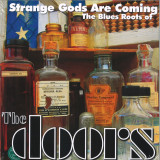
The Doors Californian kings of psychedelic-blues rock not only stood heads and shoulders above the peace and love hippy explosion of the sixties, but they were also proud to wear their influences on their sleeves by forwarding to the future by reconstructing the past.
The early live shows of the band performed in 1967 at the likes of the legendary Matrix Club in San Francisco would feature the group playing two sets, both featuring a mix of band originals and Blues covers done The Doors way.
Material such as 'I'm a King Bee' by Slim Harpo,'Who do you Love' by Bo Diddley,'Money (Thats what I want)' by Barrett Strong (a song that would stay in the live set for the duration of the bands life) and at The Winterland Ballroom over the Christmas festivites'Mannish Boy' by Muddy Waters were rolled out to an adoring local fanbase.
The classic 'Backdoor Man' by Howlin Wolf would also find a place on the group's debut album.
With all of the members of The Doors being long time blues fans more material was being worked up during rehearsals and added to the live shows along with new songs from The Doors forthcoming albums.
The Doors walked it like they talked it and sadly we will never see the likes of them again...a wonderful mixture of Blues and Psychedelic rock,they proved that in order to meet the future you must never forget the past..NO LIMITS,NO LAWS.................
Toy Tonics Music Berlin presents "Para Mytho Disco". The 2nd "Kapote" album of label founder and creative director Mathias Modica.
Keyboarder, DJ, producer, music nerd, graphic designer, multi-instrumentalist, sub-culture impressario and artist (formerly known as Munk of Gomma records.)
Kapote & Toy Tonics
In the last years Kapote was in the spotlight mainly for building the Toy Tonics label with his friends. Developing a platform for new positive quality dance music with a human touch. Toy Tonics is the opposite of the dark, druggy Techno and Trance sounds of the last years.
The warm inclusive music of Toy Tonics represents a new vibe that a young generation of diverse, stylish and culturally intersted generation of dancers loves now. Kapote's Toy Tonics became the key label for that vibe. (In 2024 Toy Tonics made 150 Toy Tonics events in 18 countries. With more than 150.000 people dancing. 90 millions streams on their music.)
Toy Tonics is more than a music label: It's a audio - visual universe. A community, almost a movement.
Based on a new positive attitude and aesthetic diversity. Mixing musicianship with DJ culture, analogue music with electronic, ideas from the past with sounds from now. To create something new. Connecting dance music with graphic design, art and underground fashion.
Kapote and his gang release vinyl, posters, shirts, art fanzines and make exhibitions and partys.
Toy Tonics started in Berlin as a underground niche project. But now became the key label of the new house, wild style disco and organic dance music scene.
Probably one of Berlin's biggest electronic music phenomena along with Keinemusik and Live from Earth.
It went fast: 2020 Kapote's crew started to make small parties in Berlin's off spaces. The "Toy Tonics Jams". The parties became "talk of the town", and Berlin clubs like Griesmühle and Panorama Bar invited the crew. Then international clubs and festival called. Toy Tonics were invited to SONAR (playing the mainstage with Kaytranada and DJ Tennis), KALA festival, Montreux Jazz festival.
Now TT has a residency at Panorama Bar Berlin and sold out events in Europe leading clubs like Phonox in London, Rex Club in Paris, Tunnel in Milan.
Toy Tonics now is the reference brand of a new generation of music loving dancers. Similar to Gomma records, Kapote's former label (2003 - 2015) that was one of the key labels of the "indie dance" scene of the Y2K years (along with DFA and Output Records).
Kapote created a multi-cultural movement with graphic designers, photographers, illustrators from the Berlin scene.
They publish the Toy Tonics Pocket Poster magazine, posters and design shirts. They organize the Toy Tonics Pop Up Galleries mixing music and art. In underground venues in Berlin and in new gallery spaces and museums around Europe.
Toy Tonics has been invited by Palais de Tokio museum in Paris, Triennale Museum Berlin, Design week Milano to create events.
The new Kapote album
The 12 tracks have a very own style. Based on dance music, but going much further. "Para Mytho Disco' is a futuristic mix of sounds. It's far away from the dark monotone techno and trance music from Kapote's hometown Berlin. Instead, he creates warm friendly atmospheres full of sonic colours and little musical surprises.
Kapote's knowlege of music history and his backround as a jazz piano student and son of classic music composer is clearly inside this music. Before turning into a DJ and electronic music producer he has been playing in bands since he was 13 years old.
The album is full of emotional chord progressions played by Kapote on various keyboards. Sometimes reminding music from the past, without being retro at all. The basslines and melodies are inspired by jazz fusion from the 1970ies. And he programmed syncopated grooves that come from afro-american dance music. There are influences from Japanese electronic music (Yellow Magic Orchestra), from 1980s Synthwave and from 1990s electronica (like Squarepusher and Luke Vibert).
Kapote plays keys, bass, flutes and percussions, he plays synth solos and sings on a few tracks. The complexity of the arrangements makes this music never boring. Lot of melodies and solos that catch the listener. Colourful soundscapes that make you want to listen or dance to this album more, and discover details also after you heard it several times.
Kapote background
Before starting Toy Tonics, Kapote used to run a label called Gomma. He produced four albums under the name Munk and music for other artists.
He produced music with Peaches, Franz Ferdinand founder Nick McCarthy, with New York street art legend The Rammellzee, Italian actress Asia Argento, the first three albums of WhoMadeWho and worked with LCD Soundsystem (listen to "Kick out the chairs", the Munk song with James Murphy )
In those "Gomma days" Kapote aka Munk was also one of the main DJs for VICE magazine parties and made music for art projects and fashion brands (Margiela, Prada, Colette).
In 2015 he stopped Munk and Gomma and started Toy Tonics. He found young producers and helped to develop their sound (Coeo, Cody Currie, Gee Lane, Barbara Boeing, Sam Ruffillo). Later he founded the sublabel Kryptox to release music by Berlin based bands that make new forms of jazz or neo classical sounds.
Under the name Kapote Mathias didnt release much:
Only his Kapote debut album "What it is" (2019) and an EP called "Electric Slide" (2022) and a collabo EP with Italian producer Sam Ruffillo ("Robot Salsa").
An although his Munk and Kapote music was an underground phenomena his music has always been a favourite of many great people from the scene.
Supported by DJs like Harvey, Chromeo, Moodymann, Jennifer Cardini, Gerd Janson, MYD, Andrew Weatherall to Blessed Madonna, Justice and Laurent Garnier… to name just a few.
out of Stock
Last delivered 14 months ago available to reorder, subject to availability
Rock and Rock roots, deep down under You'd better believe it! The roots of Australian rockers AC/DC lie in the whirlwind of original fifties rock and roll.
In the early days the group would cut their teeth on the club circuit with a live set that would include a handful of band originals,a few Rolling Stones numbers plus many crowd pleasing Rock and Roll classics.
The Sydney club and bar scene was rough so you had to get the punters on your side.
With their original singer Dave Evans at the helm the group who play residencies at the likes of the New Hampton Court Hotel in Sydney entertaining with their own brand of loud guitar takes of 'Carol' and 'Bye Bye Johnny'by Chuck Berry,'Tutti Frutti'by Little Richard,as well as rocking standards like 'Shake,rattle and roll' and 'Blue Suede Shoes'.
Cranking out cover versions didn't die even when the group composed more original material,a version of 'School Days' by Chuck Berry would appear on their second album' TNT',whilst 'Baby Please Don't Go' would be pulled from their original 1975 debut album'High Voltage' and issued as a single in America.
These roots are the reason that AC/DC have become one of the best loved bands on the planet who never fail to deliver the goods everytime.......
out of Stock
Last delivered 18 months ago available to reorder, subject to availability
'Through Today' is the sophomore album for rising Australian band Chimers. A husband / wife duo comprising life partners Padraic Skehan (vocals / guitar) and Binx (drums / vocals). Recorded by Jono Boulet (Party Dozen) over two days at Stranded Studios, Wollongong and mixed at Boulet’s Sydney home studio, produced by the band and veteran manager / promoter / producer Tim Pittman (Feel Presents), 'Through Today' features ten tracks of tightly-coiled intensity that barely lets up for all of its 34 mins. In enlisting Boulet, the band were confident that due to his own experience of being one half of Party Dozen, they had someone who understood the confines of working within the structure of a two-piece but also the possibilities that creates. Boulet, in turn, rewarding that trust by capturing a powerful bedrock of sound that allowed the band's taught rhythms to circle and permeate and yet give full breathing space for the melody within. For Pittman’s part, having a third ear on hand to devote serious listening time and critical commentary was an added bonus. It’s a major step forward from the band’s 2021 self-titled debut. A twelve track effort that snuck out during covid and only hinted at the power within. "Our debut felt more like just trying to capture the songs we had at the time, we weren’t sure if we’d even release it or if it would be our only album" "This time around we were intent on capturing the energy and intensity of our live show on the recording but with a more produced sound than self-titled. We worked more on song structure previous to the sessions. We rehearsed a lot playing quietly so we could actually talk to each other whilst playing the song and iron out any kinks.” “Jono turned the whole live room into a drum room, mics everywhere. The guitar amps were situated outside to prevent too much spill but still recorded live along with about half of the vocals. Second guitar and the rest of the vocals were recorded the next day. Jono was super quick and had the same work ethic and mindset, get in, get it done. If the first take was good enough, move on.” - Padraic Lyrically Chimers maintain the intensity as they tackle the themes of love, life, death and relationships, distance from home (Padraic is Irish, moving to Australia in 2001) and the current political climate providing enough drama to fuel a forest fire. Guest musicians on the album include saxophonist Kirsty Tickle - also of Party Dozen - and violinist Jordan Ireland of The Middle East. Both of whom were invited in on short notice adding their respective parts in just 1-2 takes each without any prior knowledge of the material. Binx too showing added versatility contributing lead vocals to An Echo and sharing lead across 3AM, Generator and others. “Singing is not something that comes naturally to me, and it was at the last minute before we went into the studio that Padraic suggested I sing the lead in An Echo. Having very minimal musical instruments within the band I think having the two different vocals adds a nice dynamic to the record.” - Binx 'Through Today' is a great album. Solid and confident from the get go. No waste. No unnecessary fat. Should it be Chimers last it would remain a defining statement of originality and intent. But it’s not the last, it’s just the beginning. And there’s plenty more where that came from. BIO Like many good bands Chimers are a band born of isolation, not geographically though, via the pandemic. Irish born Padraic Skehan and his life partner Binx, formed the band in their Wollongong backyard during the initial lockdown of 2020. Veterans and drummers both of the ‘Gong’s vibrant garage-scene – The Pink Fits, The Drop Offs, Evol and more – Chimers is an altogether different beast, Padraic taking a giant leap forward by removing himself from the back-seat and assuming the role of driver; singing, playing guitar and writing the songs that would eventually become their 2021 self-titled debut album. It’s a sound and album that draws heavily on Skehan’s time as a youth in Ireland and the post-hardcore sounds of Dischord Records, Husker Du, The Wipers and which has seen the band find friends and favour in like-minds The Mark Of Cain, Henry Rollins, Guy Picciotto and Mudhoney. This is no mere nostalgia though, the band instead landing at the vanguard of a new generation of Sydney and surrounds bands – Body Type, Second Idol, Dust, Private Wives, R.M.F.C – borrowing from the past in order to create a future.
A Paradise In The Hold is an album of yearning. It’s about Ivor Novello Award winning Yazz Ahmed’s dual heritage, drawing on traditional music and folklore as well as her own personal experience as a British-Bahraini woman. A sweeping epic where tradition meets innovation, she melds ancient rhythms with contemporary musicianship. The record is a tribute to the sorrowful songs of Bahrain’s pearl divers, the strength of Arab women, and the celebratory rhythms of women's traditional drumming circles, while also telling the story of Yazz’s own decade-long voyage of selfdiscovery. The album also marks Yazz’s first foray into writing lyrics, in both English and Arabic, bringing a new dimension to her expansive sound. The project features an impressive roster of collaborators, including vocalists Natacha Atlas, Brigitte Beraha, and percussionist Corrina Silvester. With A Paradise In The Hold, Ahmed delivers a groundbreaking fusion of tradition and innovation, creating a contemporary jazz project that is set to make a lasting impact on the genre
out of Stock
Last delivered 7 months ago available to reorder, subject to availability
Nach einem Jahrzehnt, in dem die Band das Beste aus improvisierten Aufnahmeräumen in Lagerhäusern, Wohnwagen und Lofts gemacht hat, ist „For Melancholy Brunettes (& sad women)“, das vierte Album von Japanese Breakfast, die erste richtige Studioveröffentlichung der Band. Produziert von Grammy-Preisträger Blake Mills, zieht sich Frontfrau und Songschreiberin Michelle Zauner von der hellen Extrovertiertheit des Vorgängers „Jubilee“ zurück, um die dunkleren Wogen zu erforschen, die in ihrem Inneren aufgewühlt sind, das launische, fruchtbare Feld der Melancholie, das seit langem als der psychische Zustand von Dichtern am Rande der Inspiration gilt. Das Ergebnis ist eine künstlerische Absichtserklärung: ein reifes, komplexes, kontemplatives Werk, das den romantischen Nervenkitzel einer Gothic Novel heraufbeschwört. „For Melancholy Brunettes (& sad women)“ folgt einer transformativen Periode in Zauners Leben, in der ihr zweifach GRAMMY-nominiertes Durchbruchsalbum ‚Jubilee‘ und ihre Bestseller-Memoiren ‚Crying In H Mart‘ sie in den kulturellen Mainstream katapultierten und ihre tiefsten künstlerischen Ambitionen erfüllten. Als sie über diesen Erfolg nachdachte, erkannte Zauner die Ironie der Sehnsucht, die so oft Glückseligkeit und Verderben miteinander verbindet. „Ich fühlte mich verführt, das zu bekommen, was ich immer wollte“, sagt sie. „Ich flog zu nah an die Sonne heran, und mir wurde klar, dass ich sterben würde, wenn ich weiterflöge“. Das Schicksal von Ikarus und anderen Verdammten verleiht „For Melancholy Brunettes (& sad women)“ sein beständigstes Thema: die Gefahren des Begehrens. Wie zerstreutes Licht führen seine spektralen Teile die Charaktere des Albums durch Zyklen von Versuchung, Übertretung und Vergeltung. In „Orlando in Love“ - ein Riff auf John Cheevers Riff auf „Orlando Innamorato“, einem unvollendeten Epos, das aus 68 Cantos des Renaissance-Dichters Matteo Maria Boiardo besteht - ist der Held ein gutmütiger Dichter, der sein Winnebago am Meer parkt und dem Ruf einer Sirene zum Opfer fällt, seinem 69. Canto (selbst im erhabenen Reich des klassischen Mythos hat Zauner ein Faible für Anspielungen). „Honey Water“ lotet die stille Wut einer Frau aus, die mit einem untreuen Mann verheiratet ist und zusieht, wie er immer wieder der Lust nachgibt wie ein niederes Insekt, das seinen eigenen Untergang herbeiführt Traurigkeit ist in der Tat die dominierende emotionale Tonart dieser Platte, aber es ist eine Traurigkeit der besonderen Art: die nachdenkliche, vorausschauende Traurigkeit der Melancholie, in der die Erkenntnis des im Wesentlichen tragischen Charakters des Lebens mit Sensibilität für seine flüchtige Schönheit einhergeht. Zauner findet in ihr genügend Raum für Hoffnungsschimmer. Es sind die Tröstungen der Sterblichen, die Dichter vor ihr gerufen haben und die Dichter nach ihr immer wieder neu entdecken werden: Liebe und Arbeit, und obwohl sie sich wie stärkende Vorsätze durch die vielen Episoden des Albums ziehen, erklingen sie am deutlichsten im letzten Song, „Magic Mountain“, einer Auseinandersetzung mit Thomas Manns berühmtem gleichnamigen Roman. Für sie fühlt sich jede Arbeit wie das Erklimmen eines Berges an, aber von der Spitze von „For Melancholy Brunettes (& sad women)“ aus blickt sie in die Zukunft.
out of Stock
Last delivered 18 months ago available to reorder, subject to availability
Limitierte Vinyl!
Eine Stadt, erbaut aus purem Gold. Das kann nicht mehr als eine Legende sein. Oder gibt es sie, verborgen in der Wildnis, etwa doch?Das möchte auch Professor Mathewson herausfinden, doch ausgerechnet seine eigene Tochter stiehlt ihm seine Forschungsunterlagen. Verzweifelt wendet er sich an die Drei ???. Die Detektive kennen Barbara und können sich nicht erklären, warum sie ihren Vater hintergeht und dann spurlos verschwindet. Weiß Barbara mehr über die Landkarte, die angeblich den Weg zur sagenumwobenen Stadt weist? Justus, Peter und Bob übernehmen den Fall.
Eine Stadt, erbaut aus purem Gold. Das kann nicht mehr als eine Legende sein. Oder gibt es sie, verborgen in der Wildnis, etwa doch?Das möchte auch Professor Mathewson herausfinden, doch ausgerechnet seine eigene Tochter stiehlt ihm seine Forschungsunterlagen. Verzweifelt wendet er sich an die Drei ???. Die Detektive kennen Barbara und können sich nicht erklären, warum sie ihren Vater hintergeht und dann spurlos verschwindet. Weiß Barbara mehr über die Landkarte, die angeblich den Weg zur sagenumwobenen Stadt weist? Justus, Peter und Bob übernehmen den Fall.
Kneading dough is tricky – you should know how it’s supposed to feel. If you try too hard you could make it worse. It’s a beautiful practice – creation with a gentle touch, to work at something so it can be left alone. “If it’s too drawn out it’s awful. It’s easy to give too much.” Dance in the mirror. Contemplate your veiny hands. Who do they remind you of?
You begin by mixing flour and water. “What happens when your people die? Why’d they move the rock to the other side of Ulster Park?” Eliza Niemi asks two seemingly unrelated questions in a rising melody with guitar accompaniment, like fingers playing spider up to the nape of your neck. Gentle pressure. Strands of gluten form to bind the mix. A new question lingers in the binding. When she admits “but I don’t know how to tell if I’m feeling it or not,” that question surfaces through the text. It is reiterated throughout the album. When I’m working with dough I think the same thing to myself.
On Progress Bakery, her second album as a solo artist, Eliza knows to leave some questions alone – to let juxtaposition and tension be the proof. It doesn’t have to be hard. The feelings and revelations they provoke rise in the heat. The smell is sweet. Crispy on the outside and soft all the way through. She playfully slip-slides through words and sounds and images, delighting in surprise, skimming ideas like stones cast across clear water, touching down briefly with uncommon grace.
The question provoked between those opening lines resurfaces in the strands between songs – “Do U FM” is fully formed and beautifully layered, while “Novelist Sad Face” is a short, acapella rendering of gentle curiosity. What is holding these ideas together? Some songs demand more, seem to carry a whole load – eventually the skipping stone will halt to sink and resume its idle duty – while others drift in and out of focus, the way thoughts and dreams become interwoven before the mind is sunk into true sleep.
Music and words don’t always have to interact. Where she decides to keep them apart gives a new contour to where and how she puts them together. The kind of thing you’re supposed to take for granted with songs and their singers comes alive in Eliza’s hands – the little miracle of mixing, kneading, stretching, and stopping.
So often on Progress Bakery, Eliza teases out truth and meaning by asking questions. “Do I wanna be crying?” “Do you want me good or do you want me bad?” “Do I need an eye test?” “I’m writing songs in my head while you’re going over stuff with me — is that cruel??” In “Pocky” Eliza ends with a question that feels to me like the actual biography, succinct and revealing:
I don’t wanna be made to see
I just wanna ask “what’s that?”
Grace that ought to be rare, but in its care and precision is offered humbly, with great generosity, and without announcing itself. Eliza’s simple, miraculous music is given further form and shape by a group of collaborators – invaluable guest musicians Jeremy Ray, Evan Cartwright, Steven McPhail, Kenny Boothby, Ed Squires, Carolina Chauffe, Dorothea Paas, Louie Short, and Avalon Tassonyi. Together with Louie Short, who recorded, mixed, and produced the album along with Jeremy Ray and Lukas Cheung, Eliza has cultivated a richness in sound and texture that prods and provokes the ticklish ear. Barely audible guitar tinkering, a brief lo-fi field recording of trumpets, the harmonic clicking of a looped synthesizer, a flourish of reeds, a child’s conversation, each uncanny sound perfectly placed, rippling out under a soft breeze.
Lay in bed alone at night and ask aloud to the stillness,
“What were you doing at the Albuquerque Airport?
What were you doing there??”
And hear your question answered by a dream of swelling, undulating cellos. Try to grasp at the melody and structure. It’s not an answer (if there could be one), but it moves deeper, closer to the weird layer of fleeting moments and disconnected images, barely perceptible at its core. Wait for the dream reel to click into place.
Eliza took me for a ride in Nicole (her beloved Dodge Grand Caravan) and told me she’d been thinking of the album as an embodiment of transition – and I think every transition, known or unknown, carries the weight of new meaning, skittering off the surface tension of life as you know it, creating ripples, sometimes bouncing off and sometimes breaking through. There is a trick you can use to tell if a dough is glutinous enough. You’re supposed to stretch it out as thin as you can without breaking it and hold it up to the light. If you can see through, even if it renders the world murky and uncertain, you should leave it alone. I love this trick. It’s one that Eliza seems to know intuitively: work gently and ask questions and don’t always expect answers, and when you can, take a glimpse at something new, and then leave.
Kinky Friedman's final record (he passed away on June 27, 2024) Poet of Motel 6 is a moving collection of ten songs about love and loss. From his tribute to Billy Joe Shaver, The Poet of Motel 6, to his paean to the late, notorious mystery woman, Miranda Grosvenor, in “Whitney Walton Has Flown Away,” Kinky plumbs the depths of love and mortality on his final album. Joined by Texas royalty like Jimmie Dale Gilmore, Rick Trevino, Amy Nelson, Rodney Crowell, and produced by fellow Rolling Thunder Revue alumni David Mansfield, this record truly lays bare the heart of this Texas bard.
Nach einem Jahrzehnt, in dem die Band das Beste aus improvisierten Aufnahmeräumen in Lagerhäusern, Wohnwagen und Lofts gemacht hat, ist „For Melancholy Brunettes (& sad women)“, das vierte Album von Japanese Breakfast, die erste richtige Studioveröffentlichung der Band. Produziert von Grammy-Preisträger Blake Mills, zieht sich Frontfrau und Songschreiberin Michelle Zauner von der hellen Extrovertiertheit des Vorgängers „Jubilee“ zurück, um die dunkleren Wogen zu erforschen, die in ihrem Inneren aufgewühlt sind, das launische, fruchtbare Feld der Melancholie, das seit langem als der psychische Zustand von Dichtern am Rande der Inspiration gilt. Das Ergebnis ist eine künstlerische Absichtserklärung: ein reifes, komplexes, kontemplatives Werk, das den romantischen Nervenkitzel einer Gothic Novel heraufbeschwört. „For Melancholy Brunettes (& sad women)“ folgt einer transformativen Periode in Zauners Leben, in der ihr zweifach GRAMMY-nominiertes Durchbruchsalbum ‚Jubilee‘ und ihre Bestseller-Memoiren ‚Crying In H Mart‘ sie in den kulturellen Mainstream katapultierten und ihre tiefsten künstlerischen Ambitionen erfüllten. Als sie über diesen Erfolg nachdachte, erkannte Zauner die Ironie der Sehnsucht, die so oft Glückseligkeit und Verderben miteinander verbindet. „Ich fühlte mich verführt, das zu bekommen, was ich immer wollte“, sagt sie. „Ich flog zu nah an die Sonne heran, und mir wurde klar, dass ich sterben würde, wenn ich weiterflöge“. Das Schicksal von Ikarus und anderen Verdammten verleiht „For Melancholy Brunettes (& sad women)“ sein beständigstes Thema: die Gefahren des Begehrens. Wie zerstreutes Licht führen seine spektralen Teile die Charaktere des Albums durch Zyklen von Versuchung, Übertretung und Vergeltung. In „Orlando in Love“ - ein Riff auf John Cheevers Riff auf „Orlando Innamorato“, einem unvollendeten Epos, das aus 68 Cantos des Renaissance-Dichters Matteo Maria Boiardo besteht - ist der Held ein gutmütiger Dichter, der sein Winnebago am Meer parkt und dem Ruf einer Sirene zum Opfer fällt, seinem 69. Canto (selbst im erhabenen Reich des klassischen Mythos hat Zauner ein Faible für Anspielungen). „Honey Water“ lotet die stille Wut einer Frau aus, die mit einem untreuen Mann verheiratet ist und zusieht, wie er immer wieder der Lust nachgibt wie ein niederes Insekt, das seinen eigenen Untergang herbeiführt Traurigkeit ist in der Tat die dominierende emotionale Tonart dieser Platte, aber es ist eine Traurigkeit der besonderen Art: die nachdenkliche, vorausschauende Traurigkeit der Melancholie, in der die Erkenntnis des im Wesentlichen tragischen Charakters des Lebens mit Sensibilität für seine flüchtige Schönheit einhergeht. Zauner findet in ihr genügend Raum für Hoffnungsschimmer. Es sind die Tröstungen der Sterblichen, die Dichter vor ihr gerufen haben und die Dichter nach ihr immer wieder neu entdecken werden: Liebe und Arbeit, und obwohl sie sich wie stärkende Vorsätze durch die vielen Episoden des Albums ziehen, erklingen sie am deutlichsten im letzten Song, „Magic Mountain“, einer Auseinandersetzung mit Thomas Manns berühmtem gleichnamigen Roman. Für sie fühlt sich jede Arbeit wie das Erklimmen eines Berges an, aber von der Spitze von „For Melancholy Brunettes (& sad women)“ aus blickt sie in die Zukunft.
Nach einem Jahrzehnt, in dem die Band das Beste aus improvisierten Aufnahmeräumen in Lagerhäusern, Wohnwagen und Lofts gemacht hat, ist „For Melancholy Brunettes (& sad women)“, das vierte Album von Japanese Breakfast, die erste richtige Studioveröffentlichung der Band. Produziert von Grammy-Preisträger Blake Mills, zieht sich Frontfrau und Songschreiberin Michelle Zauner von der hellen Extrovertiertheit des Vorgängers „Jubilee“ zurück, um die dunkleren Wogen zu erforschen, die in ihrem Inneren aufgewühlt sind, das launische, fruchtbare Feld der Melancholie, das seit langem als der psychische Zustand von Dichtern am Rande der Inspiration gilt. Das Ergebnis ist eine künstlerische Absichtserklärung: ein reifes, komplexes, kontemplatives Werk, das den romantischen Nervenkitzel einer Gothic Novel heraufbeschwört. „For Melancholy Brunettes (& sad women)“ folgt einer transformativen Periode in Zauners Leben, in der ihr zweifach GRAMMY-nominiertes Durchbruchsalbum ‚Jubilee‘ und ihre Bestseller-Memoiren ‚Crying In H Mart‘ sie in den kulturellen Mainstream katapultierten und ihre tiefsten künstlerischen Ambitionen erfüllten. Als sie über diesen Erfolg nachdachte, erkannte Zauner die Ironie der Sehnsucht, die so oft Glückseligkeit und Verderben miteinander verbindet. „Ich fühlte mich verführt, das zu bekommen, was ich immer wollte“, sagt sie. „Ich flog zu nah an die Sonne heran, und mir wurde klar, dass ich sterben würde, wenn ich weiterflöge“. Das Schicksal von Ikarus und anderen Verdammten verleiht „For Melancholy Brunettes (& sad women)“ sein beständigstes Thema: die Gefahren des Begehrens. Wie zerstreutes Licht führen seine spektralen Teile die Charaktere des Albums durch Zyklen von Versuchung, Übertretung und Vergeltung. In „Orlando in Love“ - ein Riff auf John Cheevers Riff auf „Orlando Innamorato“, einem unvollendeten Epos, das aus 68 Cantos des Renaissance-Dichters Matteo Maria Boiardo besteht - ist der Held ein gutmütiger Dichter, der sein Winnebago am Meer parkt und dem Ruf einer Sirene zum Opfer fällt, seinem 69. Canto (selbst im erhabenen Reich des klassischen Mythos hat Zauner ein Faible für Anspielungen). „Honey Water“ lotet die stille Wut einer Frau aus, die mit einem untreuen Mann verheiratet ist und zusieht, wie er immer wieder der Lust nachgibt wie ein niederes Insekt, das seinen eigenen Untergang herbeiführt Traurigkeit ist in der Tat die dominierende emotionale Tonart dieser Platte, aber es ist eine Traurigkeit der besonderen Art: die nachdenkliche, vorausschauende Traurigkeit der Melancholie, in der die Erkenntnis des im Wesentlichen tragischen Charakters des Lebens mit Sensibilität für seine flüchtige Schönheit einhergeht. Zauner findet in ihr genügend Raum für Hoffnungsschimmer. Es sind die Tröstungen der Sterblichen, die Dichter vor ihr gerufen haben und die Dichter nach ihr immer wieder neu entdecken werden: Liebe und Arbeit, und obwohl sie sich wie stärkende Vorsätze durch die vielen Episoden des Albums ziehen, erklingen sie am deutlichsten im letzten Song, „Magic Mountain“, einer Auseinandersetzung mit Thomas Manns berühmtem gleichnamigen Roman. Für sie fühlt sich jede Arbeit wie das Erklimmen eines Berges an, aber von der Spitze von „For Melancholy Brunettes (& sad women)“ aus blickt sie in die Zukunft.
The Taxpayers are a long-running experimental, genre-bending DIY punk band that started in Portland, Oregon in 2007. Their critically acclaimed 2012 concept album God, Forgive These Bastards is about the rise and fall of a fictional baseball player, featuring the hit song, “I Love You Like an Alcoholic”. It was released alongside a book of the same name written by Rob Taxpayer. The story was turned into a musical stage production by the Hum’n’bards Theater Troupe in 2018. After a several year hiatus, The Taxpayers have been selling out shows across the United States, headlining festivals in Australia, and are now set to release their first full-length album in 8 years, titled “Circle Breaker”, in conjunction with the boundary-defying Ernest Jenning Record Company.
A MASSIVE speaker-smashing release, decades overdue. It's been bootlegged - shamefully so, many times over the years - but finally we present the first ever officially licensed reissue of this truly special Afro-disco-not-disco LP from 1979. A favourite of Harvey, Antal, Young Marco and, er, every great DJ to ever play deep records ever, basically. It's not hard to see - or, indeed, *feel* why.
Gem after gem of relentless, irresistibly funky gold, it's an incredibly revelatory album with endlessly complex drum patterns and basslines to dive into, throughout. Truly, this is uniquely FIRE music, unlike anything else you've ever heard, based on Gwo ka music from the gorgeous islands of Guadeloupe and Martinique. A thrilling synthesis of primal, hypnotic drums - the most tribal of percussive elements high in the mix throughout - with the loping synth pyrotechnics of, amongst a whole host of other greats, Wally Badarou and bass power of disco funk don Sauveur Mallia (Arpadys, Spatial & Co.)
Originally released on the seminal French label Barclay, you'd be hard pressed to even find an original copy in nice condition anywhere, let alone for a reasonable price, so it's high time an officially licensed, remastered reissue came around. It's just the latest in a long line of Be With reissues where the music sounds like the - drop-dead dazzling - cover. This here is a true drum attack. BUY ON SIGHT!
Tumblack was a short-lived project, produced and arranged by electronic wizard Yves Hayat and it can certainly be regarded as one of the first examples of Zouk, mixing powerful disco-funk arrangements with Gwo ka, traditional music from Guadeloupe. Gwo ka is an Antillean Creole term for "big drum". You can say that again! It refers to both a family of hand drums and the music played with them, which is a major part of Guadeloupean folk music.Whilst the first side is credited to the exceptional Tumblack band, the flip is given over to "Tumblack & Friends". These weren't just any old friends. Oh no, they were the absolute cream of the French scene (think Arpadys, Voyage, Le Club, Giant, CCPP, Synthesis, Swing Family) such as Sauveur Mallia, Wally Badarou, Marc Chantereau on percussion, Slim Pezin on guitar and Jean-Paul Batailley and Pierre Alain-Dahan handling drum duties.
The urgent, frantic "Fracas" gets things moving straight away with a cavalcade of drums and percussive funk before giving way to the stratospheric "Invocation", one of the album's many, many highlights. It's effectively one long heavenly drum break, a really hard, raw, tribal drum workout without a whole lot else going on - and all the better for it! One to make you sweat, no question. Up next, "Jubilé" is announced with a bellowing accapella voice, chanting the titular name before the heaviest of kicks smashes out your system and lulls you into an absolute state of bliss for nearly 6 minutes. Whoooooosh! Rounding out the sensational A-Side, "Vaudou" is a scratchy, funky patterned drum workout which - yep, yet again - absolutely slays your neck muscles, making them snap and contract in extraordinary fashion. TURN IT UP!
Ushering in the B-Side, the brief, fidgety, African chant-funk of "Parlement" segues seamlessly, beautifully into "Waka", an overwhelmingly rich gem of percussive funk. You do not want this to end, once it hits its stride. For maximum heavenly drum pleasure, you'd need to go a long way than the moment "Waka" feels like it's fading out before it kick-drum-blend into the mighty "Caraïba (Intro)". It's just staggeringly good. It's a minute-long layered drum prelude to the gigantic track which follows. Indeed, "Caraïba" is arguably the best loved and most well-known cut off the LP. And with good reason...featuring that Mallia bass, warm Rhodes and clavs, synth magic, memorably alto sax lines and, of course, tribal chanting.
Another mighty super-ahead-of-its-time classic, the bouncing bass heavy synth funk of "Chunga Funk" deploys Mallia and Wally Badarou (on Mini Moog) exceptionally well. I mean, come on, that bassline is just ridiculous. Try not to move to this one. This extraordinary record closes out with the more traditional Gwo ka sounds of "Bateau La Passé", the tribal chorus making the hairs on the back of your neck stand up.
Tumblack really is a gorgeous late-70s disco-not-disco essential. It's an absolute MONSTER that will completely blow you away; and, yes, it's as compelling and trance-inducing as the cover. The audio for Tumblack has been carefully remastered by Be With regular Simon Francis, ensuring it sounds better than ever. Cicely Balston's expert skills have made sure nothing is lost in the cut whilst the records have been pressed to the highest possible standard at Record Industry in Holland. The cover of Tumblack is so iconic and we sought special permission from original artist Hélène Majera to recreate this at Be With HQ. It absolutely zings off the print and serves as the perfect finishing touch to this long overdue re-issue.
out of Stock
Last delivered 13 months ago available to reorder, subject to availability
Saxon are an English heavy metal band formed in Barnsley in 1975. As leaders of the new wave of British heavy metal (NWOBHM), they had eight UK Top 40 albums during the 1980s. They established themselves among Europe's most successful metal acts. The band tours regularly and have sold more than 23 million records worldwide The Eagle Has Landed - part II was recorded during their European tour in support of their Dogs of War album (MOVLP3570). It delves deeply into the band's latter-day catalog and offers excellent sound quality to boot. It's packed with fan favourites and features guitar legend Yngwie Malmsteen as a guest on the track "Denim and Leather". The Eagle Has Landed - part II is available a limited numbered edition of 1000 copies on translucent red vinyl and contains a 4 page booklet and additional cover print.
As the leader of new outfit Sarter Kit, saxophonist Tara Sarter is creating a unique form of minimal, experimental jazz drawing on humanist principles and shared experiences. Her uncluttered and emotionally heavy debut album 'What I am and What I'm Not' creates an open, instrumental soundworld, where breaks and silences command equal gravitas as the notes and beats.
The masterful drumming of Lukas Akintaya dances between oblique patterns in odd meters, into rolling grooves and afrobeat inspired rhythms. On keys and synth, Elias Stemeseder creates tension and releases, with lingering chords and fragile melodies. Stemeseder's synthesizer work throughout the album is subtle yet masterful. Stalking the silence between the sax, drums and piano, creating a haze of digital textures within the margins of the music. Much of the album was recorded live, preserving the raw, unedited energy of their performances.
Beyond its musical qualities, 'What I am and What I'm Not' is a reflection of Sarter's belief in the power of music as a form of human connection. For Sarter, music is not about proving technical prowess but about creating something meaningful, something that transcends barriers and speaks to the shared experience of being human.
A regular of Australia’s thriving musical circuit, Kane Dignum aka Little Fritter makes his debut on Hot Creations with Dub Riddem. The EP continues an impressive 2020, that has seen the Gold Coast native’s standout productions land on the likes of Desert Hearts and etcetc already this year.
Those aforementioned features are present right from the offset, as Dub Riddem leads proceedings. A reverberating vocal keeps us hooked, before hard-hitting drums combine with a shimmering cow-bell lead to form a real dancefloor weapon. Puff Puff comes next, with prominent kicks giving way to a chuggy, up-and-down bassline, whilst lyrical samples echo in the background to create a choppy, groove-lead atmosphere. How Lucky Should We Feel? rounds things off in a similarly club-ready vein, merging resonant vocal cuts with punchy drum patterns and bringing shimmering hi-hats in tow.
Little Fritter has been a regular on the electronic music circuit for more than a decade. Having had his first release back in 2008, few artists have stayed as relevant and cutting-edge as the Gold Coast mainstay. Performances at Berlin’s Club De Visionaire and Barcelona’s Off-Sonar cemented his reputation as a respected prospect in the scene.
out of Stock
Last delivered 19 months ago available to reorder, subject to availability
15 years after it's original release, Freestyle Records serve up reissue for The Apples' Kings LP - fully remastered with a fresh new cut, it's sounding better than ever!
In a musical first for the band, they wrote, arranged and recorded Kings with specific collaborators in mind. They held sessions with two of their heroes; a congregation with two musical and spiritual father figures from opposite ends of The Apples rich spectrum: Fred Wesley (pioneer of funk trombone in particular and funk horn arranging in general with James Brown, The JBs) Shlomo Bar (vocalist, percussionist, godfather of Israeli world music).
The exciting process of these recordings exposed the band's many roots and influences; elements of The JB's funky foundations, cut 'n paste, soul, middle eastern and dub are all clearly displayed - strained through the band's unique decks-horns-sfx-bass-drums lineup. This release signified the next step in The Apples ever thickening groove stew, primed for festival and club stages with a relentless live set filled with runaway grooves, countless twists and turns, dizzying transitions, spontaneous arrangements, the occasional reworking of early 90's alt-rock fist shakers - plus the basic jump-up-and-down crazyness for which The Apples are known across dancefloors, soundsystems, playlists, films, televisions, cars and ears worldwide.
"The Sunlandic Twins" markierte 2005 einen Wendepunkt für Of Montreal, als sich Songwriter Kevin Barnes einem stärker elektronisch-tanzbaren Sound zuwandte. Die lebendige Mischung aus Synthie-Pop und Psych-Rock wurde zum kommerziell erfolgreichsten Of Montreal-Album mit mehreren kultigen Fanfavoriten. Zum 20-jährigen Jubiläum veröffentlicht Polyvinyl die "The Sunlandic Twins (20th Anniversary Edition)", von Miles Showell in den Abbey Road Studios auf halber Geschwindigkeit neu für Vinyl remastert. Sie enthält das auf 45rpm neu geschnittene Originalalbum sowie einen digitalen Download mit einer zusätzlichen Fundgrube an Bonusmaterial, darunter bisher unveröffentlichte Raritäten, B-Sides, Coverversionen, Remixe und Livetracks, die einen tieferen Einblick in den kreativen Prozess hinter dieser faszinierenden Platte bieten. Neu verpackt auf holografischem Goldpapier samt Booklet mit noch nie zuvor gesehenen Skizzen des Cover-Artworks von David Barnes und einem Vorwort von Kevin Barnes.
Hailing from Amsterdam via Barcelona, Will & Ink label head Yaleesa Hall kickstarts Timedance’s 2025 run with a hefty arsenal of sound system artillery, expertly sprinkled with rude UKG and electro-laden pulses
Infused with the perfect dosage of driving grooves and earth-shattering low frequencies, these four big and bad cuts are sure to shake the bodies and eyeballs of bass-weight maniacs, breakbeat explorers, adventurous DJs and dancers alike.
out of Stock
Last delivered 13 months ago available to reorder, subject to availability
Bambara, eine außergewöhnliche, zur Nacht neigende, modernistische Rockband, die von der Southern Gothic durchdrungen ist, hat ihre makabre Vision mit ihrem fünften Album „Birthmarks“ zur Perfektion weiterentwickelt. In Zusammenarbeit mit Co-Produzent Graham Sutton von den britischen Experimental-Pionieren Bark Psychosis (einem Mann, der auch maßgeblich für die bahnbrechenden Platten von These New Puritans verantwortlich ist) entstanden, handelt es sich weniger um ein Konzeptalbum als vielmehr um ein erstaunlich komplexes Werk der Erzählkunst, das unvergessliche Charaktere enthält, darunter die bereits erwähnte C&W-Karaoke-Bar-Sirene mit Heiligenschein-Haar und einem einäugigen Mörder, der um den elektrischen Stuhl bettelt – alles nicht gerade vertonte Musik, sondern tatsächlich daraus entstanden.
Because of their mix of hellified gangster shit and progressive compositions, I once jokingly called Clipping "Deathrow Tull." Well, it's not a joke anymore. While Clipping's last few projects have been record-long concepts like classic prog rock, their cyberpunk-infused new album Dead Channel Sky is mixtape-like, a carefully curated collection in which every track is a love letter to a possible present. It sounds crisp and classic at the same time. When something strikes us as retrospective and futuristic at the same time, it's a reminder of how slipshod our present moment truly is. Juxtaposing high-tech, corporate command-and-control systems (the "cyber") with the lo-fi, D.I.Y. underground (the "punk"), cyberpunk proper starts in 1982 and ends in 1999, from Blade Runner to The Matrix. Concurrently, hip-hop matured, went through its Golden Era, then melted into further forms: it went from from Fab 5 Freddy to Public Enemy to Missy Elliott. While other genres flirted with it, hip-hop was fickle and fey. Rap and rock birthed mutant offspring maligned by most, and hip-hop's relations with electronica rarely fared any better. What if someone explicitly merged hip-hop and cyberpunk - those twin suns of the '80s and '90s - into one set and sound? After all, both movements are the result of hacking the haunted leftovers of a war-torn culture that's long since moved on. On Dead Channel Sky, Clipping texture-map the twin histories of hip-hop and cyberpunk onto an alternate present where Rammellzee and Bambaataa are the superheroes of old; where Cybotron and Mantronix are the reigning legends; where Egyptian Lover and Freestyle are debated endlessly, and Ultramag and Public Enemy are the undeniable forefathers; where the lost movements of 1980s and the 1990s are still happening: rave, trip-hop, hip-house, acid house, drum & bass, big beat-the detritus of a different timeline, the survivors of armed audio warfare. Clipping are no strangers to sci-fi: two of their records were nominated for Hugo Awards (one of science fiction's top literary prizes), and a novella spun-off from their music was nominated for a third. On Dead Channel Sky, Clipping's co-conspirators include everyone from the guitarist Nels Cline, to their labelmates Cartel Madras, rapper/actor Tia Nomore, and wordsmith Aesop Rock. Diggs is known for intricate lyrics and rapid-fire rapping, and the tracks that Snipes and Hutson build in the background are no less complex. All of the above serves to give us a glimpse of an adjacent possible present, where hip-hop and cyberpunk are one culture. Binary stars are often perceived as one object when viewed with the naked eye. Like those twin sun systems, it'll take some special equipment and some discerning attention to pull the stars apart on this record. As Diggs barks on the fire-starting "Change the Channel": Everything is very important!
out of Stock
Last delivered 15 months ago available to reorder, subject to availability
T. Gowdy returns with a major statement and luminous stylistic expansion on his third album for Constellation. Trill Scan is an exquisite suite of songs literally and figuratively about alchemy, where Gowdy melds his background in choral and medieval music with his trademark analogue electronics. Following the acclaimed Miracles (Bleep Album of the Week / Albums of the Year 2022), Gowdy's bar-raising new LP centers human voice for the first time. Choral set-pieces and solo lead vocals, along with his own lute playing, are novel elements in Gowdy's work, and draw on strains of Middle Ages polyphony and the Baroque "broken style" to further distinguish Trill Scan from anything in his discography to date. Gowdy sees "the modal language of medieval Europe as a less distant cousin to indigenous traditional music practice" compared to a Classical-colonial "patriarchal order of tonality that honours a system of domination." The 12th century Notre Dame School of choral music and 17th century style brisé each carry tonal materiality, heterodox technique, and cultural-historical symbolism central to Trill Scan's conceptual and compositional alchemy. Gowdy coheres these beautifully into his palette of serpentine slowburn electronics, a minimal analogue-driven techno shaped by aleatory strategies and tinged with post-punk grit. Gowdy's sound has been aptly described as "gently transportative, flickering like a busted halogen lamp" and his overriding pursuit of psychoacoustic immanence likened to "getting your brain massaged" and praised as "blissful work that bristles with effervescent energy, like brain waves coming in and out of focus." Trill Scan expands this sonic sensibility with more conspicuous harmonic complexity, stylistic variety, and humanistic narrative arc. Alternately sacramental and intimately personal vocals, sometimes wordless and sometimes lyrical, are worked into superlative instrumental tracks, yielding a warmly immersive concept album that's equally Gowdy's most musical. Gowdy sings explicitly of alchemy on the hypnotic album centerpiece "Novus Lumen" with lyrics that gesture at these medieval processes of material investigation. The tension between the scientific and esoteric is crucial; the separation and synthesis of physical substances in medieval alchemy maps onto his fixation with the interplay between the materiality of sound and psychoacoustics. Gowdy follows the Jungian interpretation of classic alchemical texts as an historical bridge to theories of the psyche, where consciousness itself is treated as materiality and similarly subjected to methodical analysis and experimentation, to deconstruction, dissolution, transformation, reintegration, metamorphosis. Song titles like "Arislei Bone" and "Materiadiscipuli" further reference these mythopoetic throughlines from medieval alchemy to modern psychology. Gowdy chooses disruptive forms from the history of Western music that symbolize and prefigure the modern psychological subject and its struggle for/against order, even as they also evoke liturgy and the Renaissance court. The sacramental adds a potent dimension to his pursuit of psychoacoustic activation, meditation, and transcendence, as choral passages intersperse with electronic drone and pointillism throughout the album. His gorgeous Fennesz-meets-lute rendition of the Baroque composition "Courante" by François Dufault offers idiomatic salon-secular counterpoint. Album closer "Strewn" is bookended by a final recurrence of choral invocation, with pulsing earworm motorik techno in between, over which Gowdy whisper-sings a dreamlike vision quest of mythic-alchemical imagery: "as I washed my eyes they turned to metal / and the memories melted to the metal / the metal of my heart." A mesmerizing final song that explicitly invokes Gowdy's search for materialized abstraction and substantive musical immanence wrought from his own psycho-therapeutic subjectivity, and encapsulates the album's turn towards more harmonic, historicized, and humanistic elements. Trill Scan commingles empyrean and earthly electronic songcraft to genuinely original and absorbing effect. Thanks for listening. RIYL: Coil, Nicolás Jaar, Alessandro Cortini, Pantha Du Prince, Fennesz, Visible Cloaks, Actress,
LP in printed inner sleeve. The Joy of Coincidences is the debut album from the intriguing Barcelona-born and raised musician and singer-songwriter of British and German descent. The songs are stories and related feelings that reflect upon mankind observed through our eyes in different circumstances. This reflection is told through intimate music coming from folk-inspired pop.
The Joy of Coincidences is the debut album from the intriguing Barcelona-born and raised musician and singer-songwriter of British and German descent. Within the midst of movement, noise and chaos of the city, Bianca Steck searched for calmness and silence in order to write these twelve songs. Whether in a bar, on a tram, under a tree in a park, on a bench or on the balcony of her little apartment in Brussels overlooking the square, there must always be room for curiosity regarding the world we live in. Hence, this album was born through her compelling need for a conscious observation of our society and surroundings.
The songs are stories and related feelings that reflect upon mankind observed through our eyes in different circumstances and the consequent understanding of ourselves along this process. This reflection is told through intimate music coming from folk-inspired pop. Rooted in classical tradition, Bianca Steck chooses instruments such as harp, cello, double bass, upright piano, and flugelhorn and blends these warm sounds with synths, omnichord, drums, electric bass... in a very delicate way in order to create a dreamy landscape of sound. This carefully chosen music together with lyrics that tell real down to earth stories seen through the eyes of her imaginary world are the realm of this work.
BiancaSteck sees coincidences as small and playful interruptions of our everyday concerns, of life. We live in extremely uncertain times where many worries reign over our minds and there needs to be some kind of lightheartedness to move forward, to survive. Within all this complex spiral of thoughts, in the Joy of Coincidences the essential seed of simplicity prevails over the existential crisis.
The album is produced together with Catalan pianist and composer Nil Ciuró and features guest appearance Hania Rani with whom Bianca Steck toured as a support act across London, Paris, Berlin, Utrecht, Antwerp and other European cities and venues.
All demos were recorded in her apartment in Brussels with very simple means and were later on recorded in a studio in the mountains of Catalunya.
In between the Golden Earring albums 'Seven Tears' and 'Together', both guitarist George Kooymans and singer Barry Hay worked on solo material. Kooymans’ album 'Jojo' was released in December 1971 and was the result of a sparkling and short period of recording sessions at the Phonogram Studio in Hilversum, where he recorded a collection of songs with some of the best Dutch session musicians – among guitarists Eelco Gelling (Cuby + Blizzards) and Hans Hollestelle and saxophone player Bertus Borgers (Sweet d’Buster). Thanks to the spontaneous recordings, the personal lyrics - with help from George’s friends Bruce Kirkman and Jerry Voisin - and Harry van Hoof’s string arrangements, 'Jojo' achieved a cult status and became a collectors' item soon after release.
The album has been remastered from the original Phonogram Studio master tapes and includes a recent interview with George Kooymans about the making of 'Jojo'.
'Jojo' is available as a limited numbered edition of 750 copies on light green coloured vinyl and includes an insert.
‘Moonlight Concessions’ goes back to basics, a return for Throwing Muses to their esoteric off-kilter best courtesy of Kristin’s pin-sharp sketches and their suitably abrasive musical arrangements. The album follows their acclaimed ‘Sun Racket’ from 2020, a heady set filled with tough and tender tales spiked with surreal imagery. Produced by Kristin Hersh at Steve Rizzo's Stable Sound Studio in Portsmouth, Rhode Island, ‘Moonlight Concessions’ is a collection of snippets from everyday life writ large - think Raymond Carver Short Cuts, overheard conversations, recounted happenings and telling one-liners, all sewed together to illustrate the times as they slowly mature, fully peppered with original Muses’ vim and vigour. ‘Drugstore Drastic’ is a kerbside soliloquy caught en route to a more alluring rendezvous. Built on a brisk acoustic strum with a guitar sub-melody underpinning proceedings, it’s an unfolding tale of social awareness from a blurred sub-conscious. ‘Summer Of Love’ began as a bet with a guy for a dollar that revolved around the idea that the seasons don’t change us. The album opener, it’s a haunting baroque overture, bowed and brooding. ‘Libretto’s strings offset the acoustic ambience, the hot and cold of longing at the very heart of it, a thematic driver filed with warmth in a safe haven lubricated by tequila. Written in the differing South Coast environs of The Gulf Of Mexico and Southern California, ‘Moonlight Concessions’ pulls from the star clusters that light both, generating optimism and hope in varying degrees. Hersh explains, “In New Orleans the stars look greenish-blue, as it’s below sea level and swamp-lit. But on Moonlight Beach, they glow icy white. All these songs were written in these two glowy places, which helped our sonic technique find itself.”
Studio Barnhus proudly presents this debut full-length record from the Jimi Tenor & Freestyle Man project, the fruit of the joint labour of these two undisputed legends of electronic music. Building on their catalog of work for labels like Warp and Sähkö, these Finnish heroes have blessed
Stockholm imprint Studio Barnhus with regular releases since 2017, this LP being the finest example thus far of their classic yet always fresh sound.
out of Stock
Last delivered 12 months ago available to reorder, subject to availability
When it comes to musical discovery, sometimes the stars just align. DJ and record collector, Steve KIW, put Mr Bongo onto this amazing Chilean cover version of Jamie Principle & Frankie Knuckles' all-time classic 'Your Love'. Despite being originally released 13 years ago, it had recently started to prick the ears of house and Balearic connoisseurs in the UK, further cemented by inclusions in the Idjut Boys epic sets. Steve heard them play it, tipped us off and it soon became a favourite at Mr Bongo HQ.
By pure chance when the Mr Bongo DJs joined Luke Una to play at La Paloma ballroom in Barcelona a few weeks later, Luke dropped this incredible interpretation at the peak of his set. A good friend of his, Michelle from Huddersfield, had also put him onto the track and he instantly fell in love. A serendipitous coming together, 'Tu Amor' seemed like the perfect next instalment in the E Soul Cultura discography. The version in question was released in 2012 as part of a digital-only EP.
It came courtesy of the Chilean DJ, producer and singer Mamacita (Carolina Vallejos) and producer Sebastian Roman, aka Persona RS. Meeting Sebastian while out partying in Santiago during a boom time for electronic music in Chile, their shared passion for making house music in Spanish and their admiration for Frankie Knuckles led to the creation of this raw and unique cover version. Recorded on lo-fi equipment, including an old Windows laptop and a borrowed Neumann microphone, it nods to the DIY ethos of the early Chicago productions. The result is a stripped-back, quirky cosmic take on a stone-cold classic, full of squelching synthlines and Carolina's stunning Spanish vocals, that became a club hit on Chile's underground circuit. However, aside from some Latin American and US DJs picking it up, it never got the international recognition it deserved.
Fast forward to 2025, and E Soul Cultura is proud to present the glorious 'Tu Amor' on vinyl for the first time, backed with a new, extended, club re-edit by E Soul Cultura captain Luke Una and Luke Solomon (Classic Music). On first hearing 'Tu Amor' Luke Una recalls, There was a real charm to it, it was quite an unorthodox arrangement, a huge wonkiness and just sounded so DIY in a brilliant way. I was chatting to Luke (Solomon) about how much we loved it and we decided to re-edit it together. Accentuating the wonk of those crazy synths, we've extended it to make a fiercer underground club tool, without taking away that very charming cosmic feel.
out of Stock
Last delivered 13 months ago available to reorder, subject to availability
Members went on to Sinkane, and Pompeii, This Morning. Originally recorded in the
summer of 2005 out west, while on tour, by Vince Tennant. The recording had been
shelved and unreleased. In 2023, Expert Work Records reached out to Sweetheart and
got the recording re-mastered. It will be released on limited vinyl and digital.
This is also a companion piece/ record with EW018 (Sweetheart- The Process of
Making Us Well). We highly suggest getting both records.
Sweetheart's "The Unbearable Tightness Of Being" is one of those records you should
put on your radar as soon as possible. A rediscovered artifact from 2005, the album is
a sonic panorama that intricately incorporates post- hardcore, noise rock, punk,
screamo, and indie elements into an innovative and complex sonic landscape. The
guitars, wielded with finesse, serve as the driving force behind Sweetheart's sonic
assault. From the opening chords to the closing refrains, they deliver a relentless
barrage of riffs that defy predictability. The interplay between the two guitarists
manifests as a dynamic dialogue - a musical conversation that seamlessly transitions
from chaotic dissonance to moments of clarity. Catchy, intricate, and hypnotic chord
progressions unfold, evoking the spirit of At The Drive-In and Fugazi while carving a
distinct sonic identity.
However, it's not merely about sonic assault; Sweetheart infuses the album with a
nuanced approach to melody. Amidst the aggressive riffage, this material treats
listeners with moments of harmonic beauty and unexpected melodic twists. Themes,
leads, melodies, and harmonies intermingle, creating a rich auditory experience that
transcends the boundaries of conventional post-hardcore.
The production quality of this long- lost gem further accentuates its brilliance.
Recorded in 2005 but kept in the shadows due to financial constraints and a desire for
perfection, the album has now found its moment in the sun. Expert Work's decision to
release the LP in 2024 has allowed audiences to appreciate the intelligent
craftsmanship that went into its creation.
"The Unbearable Tightness Of Being" is more than a musical journey; it's a sonic
exploration transcending all the possible sonic boundaries. Sweetheart's commitment
to experimentation and honesty, as emphasized by band members reflecting on their
creative process, is palpable. The act of listening, treated as a discipline, is evident in
the careful construction of each track - a result of repetitive practice, internalization,
and an unwavering dedication to their craft. In the grander narrative of the album's
release, the band's reflections on the passage of time and the meaning of their work
imbue the music with a poignant depth.
"The Unbearable Tightness Of Being" is a mandatory addition to any record collection.
It's not just a revival of the early 2000s scene; it's a sheer example of Sweetheart's
enduring brilliance and a celebration of a significant part of their musical legacy.
Following a live show at the Kontra-Musik showcase in the summer of 2024 in Malmo, PST aka Porn Sword Tobacco got so inspired that he went straight into the studio to work on new music. This EP is the result of that warm summer night. The title of the EP in Swedish, Inga Konstigheter, means something that is very straight to the point. And this record is exactly that - no frills. Produced by PST, hand stamped by Ulf-Ulf.
out of Stock
Last delivered 15 months ago available to reorder, subject to availability
"Stoned Immaculate" (1991) ist das wohl bekannteste Dub Syndicate-Album, aufgenommen zwischen Jamaika und London. Zu den rockigen Rhythms des Bandleaders Style Scott gesellen sich weitere Topmusiker wie Skip McDonald (git), Lee "Scratch" Perry und Akabu on vocals, Leith Levene (keys), sowie Samples des verstorbenen, großartigen Prince Far I. Es markiert eine Zeit, in der das Label von Acid-House-Fans ebenso angenommen wurde wie von Hardcore-Dub-Fans, und diese LP zum festen Bestandteil der "Comedown"-Session nach dem Rave wurde. Der Titeltrack ist eine wahre On-U-Sound-Hymne, die Reggae, ausgeflippte Electronica, The Doors und Motown zu einem epischen Groove vermischt. Das seit Jahren vergriffene Vinylformat wurde von Frank Merritt im The Carvery neu geschnitten und enthält rare Fotos von Coneyl Jay und neue Linernotes von Rob Harris (Testpressung).
out of Stock
Last delivered 19 months ago available to reorder, subject to availability
This re-issue of the Cocteau Twins' 1993 album has been remastered by Robin Guthrie and is pressed onto high quality 140g vinyl . Cocteau Twins vocalist Elizabeth Fraser, guitarist Robin Guthrie, and bassist Simon Raymonde formed in Grangemouth, Scotland in the late 70s. The brainchild of Guthrie and original bassist Will Heggie, by 1981 they had added Fraser and the following year signed to 4AD, one of the most illustrious of the indie labels. With Raymonde replacing Heggie in 1983, the trio went on to create some of the most unique and otherworldly music of the 80s, built around Guthrie's chiming guitar and Fraser's unmistakable soprano. By the early 90s, the group had just released their most successful album, the commercial Heaven or Las Vegas, but the relationship with 4AD was coming to an end. Mercury imprint Fontana was going through something of a purple patch, signing former underground bands, and by 1992, Cocteau Twins had joined The Fall and the House Of Love. The group's debut album for Fontana, Four-Calendar Cafe, was released in October 1993. Its gossamer melodies and largely upbeat pop bely the turmoil the group were going through. Barney Hoskyns, writing in Mojo, said that Four-Calendar Caf was "the most poignant, heartrending Cocteaus record of all, an album of naked confession and raw beauty . . . Sadness never sounded so luscious." Simon Raymonde agreed: "I think in time people will realise what a great album Four-Calendar Caf is. Because I think it's beautiful." Led by the single Evangeline, the reached No 13 in the UK album chart and is much-loved by fans.
out of Stock
Last delivered 19 months ago available to reorder, subject to availability
At the start of the 60s, a new wave of gospel-influenced jazz started to emerge, with hits such as Art Blakey & The Jazz Messengers' "Moanin'" and Cannonball Adderley's "Work Song" epitomizing this evolution in the genre. The terms "soul jazz" and "funky jazz" were coined as a way to describe this new sound that was making an impact in the US and also on the other sides of the Atlantic and Pacific oceans.
In 1964, Ray Charles made his first visit to Japan. Then, in 1968, Martha & The Vandellas and Stevie Wonder set foot in the country, followed by Sam & Dave in 1969, Ike & Tina Turner in 1970, and B.B. King in 1971. The TV show "Soul Train" also began airing in Japan in the early 1970s. A watershed moment happened in 1973 when Sammy Davis Jr. was cast in a TV commercial for Suntory whisky — and the influence of the US Black entertainment world had really landed, with soul, jazz, and funk artists becoming household names.
Nippon Columbia played a pivotal role during this turning point. The company had contracts with Buddah Records and Blue Thumb Records, releasing notable works by artists such as Gladys Knight & The Pips, Curtis Mayfield, The Crusaders, and The Pointer Sisters. At the same time, the label was also releasing several Japanese soul, jazz, and funk projects under the lead of music director Jiro Inagaki. Inagaki, a saxophonist who began his professional career in the early 1950s, honed his skills at U.S. military camps, where he shared his love of music with the Black servicemen. In the 1960s, he played with drummer Hideo Shiraki's band, which was widely considered to be Japan's representative group of the funky jazz movement. Later, Inagaki went on to pursue more cutting-edge sounds with his Soul Media project, including being a pioneering figure in the "jazz rock" genre. By working closely with Inagaki and his various musical projects, Nippon Columbia really placed the company at the center of an exciting and important period in Japanese music.
In 1965, Nippon Columbia opened a recording studio in Tokyo's Akasaka neighborhood. Akasaka was also home to the first ever discotheque in Japan, the legendary MUGEN, which ran from 1968 to 1987 and where many acts performed, including Con Funk Shun, the Bar-Kays, Ike & Tina Turner, B.B. King, Sam & Dave, Three Degrees, and Edwin Starr, as well as many local Japanese singers and musicians. This melting pot of creativity in the area led to the recording of many singles and albums by Japanese artists that were infused with the sounds of soul and funk. Most of these recordings were not available outside of Japan and remain rare and unknown musical gems. The selection you are holding in your hands is an explosive collection of 10 essential tracks released by the legendary Nippon Columbia label between 1969 and 1977, capturing the raw, unapparelled energy that was flowing through the air of the Akasaka streets at this electrifying time. Enjoy!
---
180GWALP07 - Manufactured and distributed by 180g.
out of Stock
Last delivered 21 days ago available to reorder, subject to availability
Since the first release 5 years ago, Jazz Room Records has released an eclectic and interesting selection of releases.
From the Jazzy commercialism of the Take Vibe version of The Stranglers "Golden Brown" (5,000 vinyl single sales) to the 1960's Headshop Sounds of West Coast Fluteman Eric Ghost.
Other notable releases on Jazz Room include the critically lauded album by Vibraphonist Khan Jamal "Infinity", a compilation of Japanese tough funk fusionists indigo jam unit put together by DJ Colin Curtis, Nuyorican Latin House from Tata Vasquez, Jazz Dance Madchester Rave from Cruisic and some South African Holy Grail grooves from Abacothozi! The latest release is the Underground Latin J-Jazz of Copa Salvo, first introduced to London by DJ & Music Legend Jean-Claude.
Next up is an in demand Jazz Funk Obscurity from Educator and Trumpet Player John Lamkin whose self released album "Hot" saw the light of day in 1984 then disappeared into the Rare Jazz ether.
Currently changing hands for €300 and upwards it's again about to see the light of day in 2025!
This is an album that is aptly named with all the elements we love: Latin, Funk, Soul, Jazz and all round Double Hipness. What a Hot item it is too. From the Funky as it gets opening bars of "Ticket" through the Rio bound flight "722", taking in a visit to Wonderland with some Soul Jazz Vocal stylings on "Flower Power" and the Funkiest 17 minute Journey to Trumpet Enlightenment in the Title track "Hot" which is, true to its name, Scorching by the finish line is reached.
Already getting Big Ups on UK Jazz Funk Scene Founder Colin Curtis's Cult Radio Show "Jazz Dance Fusion" it's gonna be getting plenty of plays worldwide at the "Hottest" radio stations and funkiest jazz dance nights near you soon!
Ross Allen: It's brilliant!! Perry Louis: Massive! Dr Bob Jones:I Love Big Time!Colin Curtis: Killer!
out of Stock
Last delivered 19 months ago available to reorder, subject to availability