‘veneration for the sacred action’ is the first compilation release by london-based independent record label ‘lifeis beautiful records’ released in celebration of the three-year anniversary of the label (& the gesamtkunstwerk that it exists within), the compilation brings together members of the life is beautiful septet collective, as well as various collaborators and special guests from previous life is beautiful events of the past three years. it highlights a range of the various solo, group projects, and alias’ of the septet, as well as various artists from the wider orbit of the life is beautiful constellations. the project was executively produced and curated as an album by label founder aloisius, as a selected works of the life is beautiful constellations. it stands as a comprehensive yet intentionally incomplete representation of the past three years of life is beautiful
Originally released on 28 May 2013, the Ginning EP by Stavroz returns 12 years later with a special vinyl repress.
Following the record’s Gold and Diamond status in France, Stavroz felt the time was right to bring this beloved release back to vinyl. This new edition features two additional ambient tool tracks.
Secure your copy now and celebrate the return of a modern classic.
Ākāśa Studio is the sonic extension of a long-form exploration, a project dedicated to creating a sanctuary in nature for the expansion of consciousness in the hills of Sardinia. The label is the byproduct of a decade spent digging through records and making music, driven by a persistent refusal to settle for the expected.
For our debut, we’ve reached into the archives of George Saunders (SolarQuest). On the A side, we have selected three recordings from the mid-90s that embody the driving, emotional core of techno- trance with a touch of Goa. These pieces are remarkably lean, stripping away the excess of the era to focus on pure melodic momentum. They are high-energy club tracks that prioritise atmosphere over complexity. Functional, yet deeply resonant.
The B-side explores the after-hour sound that has become a staple of our gatherings. These tracks, produced between the late 90s and early 2000s, lean into spacious dub-inflections and warm, marinating, ambient textures. While the tempo recedes, SolarQuest’s distinct character remains, unfolding slowly to suit the transition from the dance-floor back to the self.
Roland Leesker Remixes Inner City Classic ‘Pennies From Heaven’
Definitive Recordings presents a powerful new remix by Roland Leesker of ‘Pennies From Heaven’, the timeless house classic by Inner City, originally released in 1992.
Founded by Kevin Saunderson, one of the legendary Belleville Three and a key architect of Detroit techno, Inner City shaped the sound of electronic music with global hits like ‘Big Fun’ and ‘Good Life’. With over six million records sold and decades of influence, their catalogue remains a cornerstone of dance music culture.
On his remix, Roland Leesker transforms ‘Pennies From Heaven’ into a driving, floor-focused house weapon. Built around a heavy, straight TR-909 groove, the track gradually introduces elements from the original in a layered, loop-based arrangement.
The remix reaches its peak in a powerful breakdown, where the full main theme and vocals unfold, creating a classic hands-inthe-air moment before dropping back into the stomping groove. The result is a modern interpretation that stays true to the spirit of the original while delivering maximum impact on today’s dancefloors.
Roland Leesker, a long-standing figure in house music, has been active since the late 80s, with roots in Frankfurt’s club scene and later key roles in New York, Berlin, and the global music industry. From his early days at Delirium Records to his work with Get Physical Music and beyond, Leesker has consistently contributed to shaping electronic music culture.
This remix brings past and present together, offering a respectful reimagining of a classic for today’s house music dancefloors. The vinyl release is completed by an additional Acapella Tool on the B-side, offering DJs a stripped-back version focused on the iconic vocal elements of the track — perfect for creative mixing and extended club moments.
The undisputed Godfather of Boogie, Leroy Burgess’s Logg project is his grand masterpiece.
The self-titled LP, originally released on Salsoul in August 1981, is one of the greatest albums of the post-disco era. It’s one of Be With’s favourite ever LPs and so it’s a complete honour to be giving it our reissue treatment. With all the touchstones of Burgess’s finest work - breezy grooves, undulating synths, funk-drenched bass and life-affirming lyrics - delivered with gospel-derived vocals and harmonies - it’s a record to uplift both body and spirit.
Already a cult soul figure as lead singer of seminal vocal group Black Ivory, Leroy Burgess cut his teeth as arranger, vocalist and songwriter with legendary producer Patrick Adams on essential late-70s projects like Phreek and Dazzle. He went on to define the essence of “boogie”: the vibrant underground dance sound that stood in contrast to commercial disco. With its reduced speed - mid-90 to under 110 BPM - the cool boogie of Burgess has the disco bounce, just more laidback.
All six tracks here could have been stand alone 12" hits. Indeed, some of them were. But together they are also an incredibly cohesive album, where all the compositions are deeply relevant to each other. In short, it’s essential; a thrilling showcase for Burgess’s finest arranging and production work - with his vocals at their euphoric peak alongside the inventive rhythm section of Aaron (Sonny) T. Davenport on drums and James Calloway on bass.
Opener “(You’ve Got) That Something” is a balmy sunshine groover with an insistent chorus whilst the timeless vocal of “Dancing Into The Stars” - married to percolating synth and airtight drums - showcases the chemistry between Burgess and the rhythm section.
The fusion of funk and gospel-influenced harmonies which propels “Something Else” is remarkable - deep, joyous and bouncy. Infamously mixed by Larry Levan, “I Know You Will” is an easy glide, all rollicking electric piano underpinned by a precise and relentlessly upbeat groove. “Lay It On The Line” radiates smooth, understated brilliance, elevated by interstellar keys and finally album-closer “Sweet To Me” is a chilled-out gem of profound soulful elegance.
Logg has long been a hit with the likes of Kenny Dope and Dam-Funk whilst, in the last decade, MCDE and Harvey Sutherland have routinely cited it as a huge influence. Accordingly, finding original copies on vinyl at affordable prices has been a thankless task. This fresh Be With reissue ensures this legendary record now sounds, looks and feels as sensational as it deserves to.
Mastered brilliantly by Simon Francis, cut by Pete Norman and with lovingly reproduced artwork, we think this is a reissue that does justice to this classic LP.
House is the Religion. The DJ is my Deacon. The Music is my God and James Bangura is cool af.
Genuine, passionate, clear, authentic and real…. He isn’t trying, he just is. And his music is the same. It’s fucking cool. It’s real and authentic and it just is James Bangura. So it’s a real honour to add him to the Shall Not Fade roster; from Techno to Jungle to House and everything between the DC native can extract the true essence of a genre and simultaneously make it his own & pay homage to its roots.
So on Jack Sermon there’s no surprise when he flexes a seemingly generationally inherited knack for all things House (and Techno) and delivers four tracks of raw, real, genuine House music. OG shit.
‘House is the Religion, and the DJ is my Deacon, but the music is my God” says the Evangelical vocal on title track ‘Jack Sermon’. Never has there been a more aptly named track…This is a jack sermon… an OG inspired Chi town cut channeling early house music’s soulful beginnings delivered with straight up jacking house beat offset with laidback dusty dub chords….. We don;t say this lightly but we’re calling anthem on this one.
‘Scat Pack’ takes a more percussive and drum forward House motif. Thunderous kicks tease techno but this is still house, NY at heart complete with voguing diva vocals . Blown out and choppy we could say ‘this could have been ripped from a late 90’s club recording on a lost tape’ but that would do disservice to the precise but invisible fusion that's been laid down here..
‘Funk To Berlin’ opens the flip side and in Bangura’s journey to explore classic forms of house and techno, this track may well have taken root from Dub techno pioneers from the past. Deep dub chords and deeper subs lead the track but that jacking percussion makes this more than homage. Machine Funk, Machine soul. AA side business.
‘The Green Line’ closes out the EP in style.. rolling it out with skittering synths that work like percussion, ethereal pads and a faint vocal ‘Chicago’ spiralling into itself making this track one you can get lost in. Some might argue that this one is techno but who cares. It’s the journey not the destination. Two tickets please.
If you don’t know James Bangura’s music already (or even if you do) do some digging.. Look for releases on Mister Saturday Night, K7! and Floorspeed and check his output as part of “Black Rave Culture” with Amal and Nativesun and as a member of Groovedeep with Toronto’s Ciel and fellow DC native Jackson Ryland.
To close, we’ll leave you with this note from James……. told he is cool af.
House music, to me, exists on a wide spectrum. I’m inspired by its many forms: stripped-back minimalism, percussive drive, hypnotic textures, and soulful undertones. Rather than confining myself to one approach, I treat each track as an exploration—testing structure, pushing rhythm, and allowing subtle details to carry emotional weight. The studio becomes a space where groove and atmosphere meet intention. This body of work highlights that process. It reflects how I balance technical precision with feel, tension with release, and tradition with forward motion. Every decision—from drum programming to spatial design—is part of shaping a sound that feels honest and instinctive. - James Bangura
Impressive Collective, BBE Music and Mark de Clive-Lowe present: Remixes & Reimaginations World-renowned for decades, Mark de Clive-Lowe is a New Zealand-born, Tokyo-based pianist, composer and producer, widely recognised as a pioneer in nu-jazz, broken beat and electronic music. In contrast to his previous release on Impressive Collective, the contemplative solo project 'past present (tone poems across time)', this collection brings together MdCL’s extraordinary reinterpretations of other artists’ work. As he explains: “Remixing has always meant more to me than just rearranging stems - it’s about uncovering a new reality inside the music.” From the uplifting gospel-house of Close Counters’ 'I’ll Be There For You', recontextualised for the broken beat dancefloor, to the timelessly angelic tones of We Are KING’s ‘Supernatural'; from Omar’s 'This Is Not A Love Song' reimagined almost 30 years later, to the politically charged intensity of Anthony Joseph’s 'Maka Dimweh' - every remix has been crafted with the progressive dancefloor in mind, while still resonating for the deep listener and always in service to the original artist’s essence. “I’m grateful to every artist who’s invited me to dive into their work - to deconstruct it and reimagine it with love, curiosity and respect. This compilation isn’t just a retrospective, it’s a celebration of the remix as an art form.”
Original Gravity Records returns with a fresh take on one of the most enduring songs in Jamaican music as Donnoya Drake breathes new life into "You Don't Love Me (No No No)."
The song's remarkable journey begins with Bo Diddley's 1955 recording "She's Fine, She's Mine," before evolving into Willie Cobbs' blues classic "You Don't Love Me." It was then embraced in Jamaica, where it became a foundation stone of the island's musical heritage through Dawn Penn's original Studio One recording.
Rather than recreating any single version, Donnoya Drake's recording draws together the defining moments in the song's evolution. The unmistakable Bo Diddley-inspired riff, popularised by Willie Cobbs, is reimagined by the horn section, while the middle eight pays tribute to Dawn Penn's original Jamaican arrangement. The result is an infectious ska recording that honours every chapter of the song's evolution while bringing a fresh energy of its own.
On the flip, Prince Alphonso & The Fever present "You Don't Love Me Pt.2", an instrumental version that proved far too good to keep in the vault. Stripping away the vocals allows the arrangement to shine in its own right, creating the kind of infectious ska instrumental that selectors and DJs are always searching for.
Produced by Original Gravity Records founder Neil Anderson, the single continues the label's tradition of creating new recordings inspired by the golden era of Jamaican music—not as museum pieces, but as vibrant records made for today's dancefloors. Respectful of the past while unmistakably original, this is another release that bridges the gap between vintage authenticity and fresh interpretation.
“One foot out the door, another in the otherworld…”
So begins Hannah Lew’s debut, self-titled solo record, soaked in imperious, wide-eyed pop songwriting and a girl-group/post punk aesthetic that belies the artist’s history in the U.S. underground. A towering, hook-laden album, it’s infused with an optimism and surrealism that conversely deals with the times we find ourselves in.
Recorded at home in Richmond, CA and in The Best House studio with Maryam Qudus in Oakland CA, with the assistance of a crack team of West Coast musicians, this album sees Hannah Lew stepping out from behind the legacy of her two groups Grass Widow and Cold Beat. While musically bearing similarities with her previous work, “Hannah Lew” is a bold leap into direct pop territory, making ample use of a vocal style that teases out the inherent melancholy in her melodies. Mastered by Sarah Register, each song is a perfectly honed nugget that frequently pulls the heart in two directions at once.
Themes of change, breaking up, shattering old ways of being are shot through the record. For the front cover, a photograph of the artist’s face was printed, ripped up and re-assembled, resembling the creative process embarked upon by Lew for her first “solo” material. The album feels instinctual, almost dream-like in its assemblage of sweeping synths and pulsating, propulsive drum machine beat patterns with Lew’s vocal performances sensitive and caressing over the top. Increasingly relying on the subconscious and dreams to guide her creative process, Hannah Lew frequently abandons literal interpretations or linear narratives, the songs seeming to exist in a swooning, effortless flow-state while remaining emotionally hard hitting.
On an album where every song could be a single, there are kaleidoscopic shades and varying emotional tones in abundance. First single Another Twilight is carried along a pumping, Italo-disco-style 4/4 beat and mono-synth bass line, the low end pulling at the heart and body. Lew’s vocal melody teases the track before swan-diving into a gorgeous chorus as she sings “it’s all over baby and I don’t mind… in decline, I take my time…” The album is suffused with moments like this. On slow builder Damaged Melody, an arpeggiated synth elongates the verse before a cascading synth showers down melodic glitter. The stunning Replica uses dual swirling synth patterns before a driving, synthpop chorus for the ages carries Hannah Lew’s vocal into the stereo field, sailing in on a high register singed with the embers of a break up.
In a departure from previous groups, her solo songs are guided by dreams and free association inspired by Dada and the Surrealist movement and sculpted afterwards. As such, the songs reveal themselves on repeated listens, revealing traces of heartbreak inspired by both personal and global elements - Hannah Lew regards the album “a wartime album.” On Move In Silence, Lew intones “there’s a war outside, just out of view,” revealing the dichotomy at play throughout. With the songs evolving naturally and in a flow state, the pressures and sadnesses of the modern age bleed through, mixed in with Lew’s inherent love, sensitivity and fractured-but-intact optimism. On the swooning, sublime Sunday layers of Numanoid synths open up for the commanding vocal performance pontificating on grief, love, pain as she “feels the ache on Sunday…” As the chorus builds and Lew’s call-and-response vocal adds to the emotional tension, it almost feels like too much to take.
Elsewhere, there are echoes of Hannah Lew’s previous work. On Time Wasted a bass guitar comes in with a heavy, punk attack before the synths and vocal harmonies reminiscent of later Cold Beat elevate everything. The glassy, sweetly resigned closer The Clock sounds like so classic it could be cover, a sweetened Jesus & Mary Chain tune perhaps, before it erupts into volcanic chorus that could only come from Hannah Lew in 2026.
Don’t Pretend’ by the Belles is one of the foundation stones of northern soul. Largely ignored in its homeland it is revered across the Atlantic. It has been reissued twice in the UK, but this time we have chosen an alternative B side to previous releases. ‘Cupid’s Got A Hold On Me’ was only found in 2004 when Ace bought the Mirwood catalogue and the recording was discovered among the tapes. It deserves its share of the spotlight.
There is a strong sense of place running through 'North West Tonight', as God Colony aka Crack Copies label heads and Liverpool-raised duo James Rand and Thomas Gorton sketch out a hazy, after-hours portrait of their hometown. Drawing on 80s new wave melodies and rough-edged club rhythms, the EP balances sounds of yore with present-day energy. There is crunchy, disrupted bass on 'The Column', backlit broken beat on 'Middle Eye' and more sun-kissed depths on 'Rhyll Sun Centre'. 'The Paradox' stands out as a darker, more edgy and club-ready sound while the rework by Sasha stretches the track into something built for wide-eyed dancefloors.
A legend returns as the alias of scene stalwart DJ Levi and Curvature co-creator Ghosts of MIDI unleashes an EP of seismic tracks backed with remixes from ASC and Aural Imbalance. A1 - Iron Dinosaurs Opening a fine Curvature debut for the label’s very own Dan Azimuth, Iron Dinosaurs is an epic piece of atmospheric goodness introduced with a long, elegant intro of synths and luscious female vocals. Before long, classy, energetic metallic breaks kick in, set to an immensely memorable key melody and a room-filling bassline, creating a breathtakingly fluid and captivating piece. A2 - Iron Dinosaurs (ASC remix) Taking an incredibly evocative track and lacing it with sprinkles of ASC goodness to create a true gem is the order of the day here, as the heart of the original courses through an ominous intro, quickly beset by fine analogue amens that hit hard for the dancefloor, while allowing the soul of the piece to breathe, syncing in harmony with the distinctive vocal samples and swirling synthwork that colour the atmosphere so perfectly. B1 - Deadly Dimensions A DJ-friendly intro of hi hats gradually ushers in epic, bassy melodies gliding through serene vocals and airy pads, before the drop reveals exquisite breaks with just the slightest hint of an apache in there. Very danceable, the breaks are chopped and diced at will, driving a determined pace for another superbly epic, ethereal piece of atmospheric drum & bass from one of the OG’s of the scene. B2 - Deadly Dimensions (Aural Imbalance remix) The EP closes with a real treat - this is as close as an example you’ll hear to a match made in heaven as the eerily epic production of Ghosts of Midi collides with the inimitable ambient mastery of Aural Imbalance. Intersecting the thoughtful vibes of the original, this remix sees playful old school breaks jostle with swathes of fluid synthwork and delicate pads, creating a unified expression of atmospheric purity.
Luca “DJ Rocca” Roccatagliati isn’t just a producer, he’s a shapeshifter of sound. Emerging from the late ’90s under the Maffia Soundsystem alias, he’s spent decades bending genres, dissolving boundaries, and reconfiguring the DNA of club music.
From cosmic disco to leftfield house, Rocca’s catalogue reads like a map of underground excellence. He’s collaborated with a roll call of innovators—Howie B, Dimitri From Paris, Daniele Baldelli, François K, Jazzanova, Zed Bias and many more. Crafting releases for some of the most respected imprints in the game: like Rekids, Toy Tonics, International Feel, Defected, Rush Hour, Hell Yeah, Rotters Golf Club among others.
His output is prolific, restless, constantly evolving.
Partnership is central to Rocca’s universe. With Dimitri From Paris, he co-created Erodiscotique, a sleek electro-disco project that fuses vintage sensuality with future-facing production. Alongside Daniele Baldelli, he’s explored deeper, more psychedelic terrain, delivering albums like Podalirius and Quagga—records that blur the line between Balearic mysticism and dancefloor propulsion.
His aliases Ajello, Supersonic Lovers, Crimea X are parallel auditory dimensions. Each one pushes a different facet of his sound, from Italo-tinged grooves to raw, analog-driven club cuts. As a remixer, Rocca has reworked everyone from Andrew Weatherall to Soul Clap, always imprinting his unmistakable signature.
To say we are excited about this new EP is kind of a massive understatement……
Having been huge fans for over two decades, when he reached out to us it was a bit of an eye rubbing and arm pinching moment.
We have been graced with a 3 track EP titled “Tonight is the Night”
A1. Sun Deck – A link-up with Athens mainstay Lex, drifting somewhere between yacht funk and late-night boogie. Sun-washed grooves, crisp synth leads, and just enough 80s energy to keep it moving without trying too hard.
B1. Italo Boogie Stomp – Does exactly what it says. Rolling Linn drums, sharp synth lines, and a nostalgic flute motif that nods to NYC’s street soul era without getting stuck in it.
B2. Ferroso – Picks up the pace slightly. Deep house drums meet a driving electro bassline, with arpeggiated synths and warm pads rounding it out—focused, functional, and built for the floor.
2026 Repress
The Greek artist comes back with a fully realized EP this time, that goes deeper into his personal world. This is not pointless or flashy music. It has soul and character.
It is music that you can listen the personality of the artist beneath the layers and sound design.
Another strong statement from a producer who is quietly building his own language.
Nippon Psychedelic Soul 1970-1979 is Time Capsule’s continuation of the deep dive into Japan’s rich history of folk and psychedelic soul music.
Vinyl LP with 4 page insert, original artwork and photos
The kaleidoscopic psychedelia of 1970s Japan captured a fragile and fertile moment as the country sought its future in funk grooves, heavy reverb and lyrical hallucinations.
The follow-up compilation to Time Capsule’s Nippon Acid Folk, Nippon Psychedelic Soul takes myriad pathways into the tripped-out undergrowth of 1970s Japan. Finding their feet at home and looking for inspiration abroad, the musicians featured here were engaged in the communal soul-searching that followed the breakdown of the 1960s protest movements. Some made it big, others drifted into oblivion. The music they left behind shimmers with intensity.
At the core was Happy End, the first project of YMO’s Haroumi Hosono, whose distortion-heavy guitar and crisp back-beat laid the foundations for Japanese lyrics that flipped the paradigm of Japanese rock music on its head. With it came a new found sonic ambition, such as in the bold Philly-soul style arrangements of producer Yuji Ohno, whose work with occult wandered Yoshiko Sai shares some of the bittersweet grandeur of Rotary Connection or David Axelrod.
Then there was Jun Fukamachi, a pioneer of Japanese synthesis, whose debut album was a carnival of orchestral funk, euphoric horn lines and rich production, complete with soaring guitar solos, psychedelic organ and a truly cinematic finale. The first and only time Fukamachi would sing on record, ‘Omae’ rips like the ultimate end-of-nighter.
Influenced by giants of the US soul scene, maverick composer Hiroshi “Monsieur” Kamayatsu (otherwise known as ‘the Brian Wilson of Japan’) went one step further, enlisting Tower of Power to play on ‘Have You Smoked Gauloises?’ The B-side to Monsieur’s biggest-selling single, it coasts with sophisticated cool - a liquid bassline and suave keys comping under a roaring trademark ToP sax solo. No surprise it found favour once more on the Acid Jazz dance floors of ‘90s London.
Such was the spirit of experimentation that big studio productions and private press releases sat side-by-side, with the likes of Momotaro Pink and Kazushi Inamura, taking their hopes of success into their own hands with the resources available to them. More reflective but no less robust, theirs was a heavy, fat-backed drum sound, soaked in dramatic, soulful psychedelia.
If some were dreamers and others space cadets, none were further out than sci-fi writer, musician, activist and self-made scientist Tadashi Goino, who transformed his own fantasy novel Messenger from the Seventh Dimension into an operatic prog odyssey with few discernible musical reference points – a majestic and completely bonkers outlier even among company as strange and brilliant as that which is collected here.
Less a compilation of a scene, as a compilation of a sentiment, Nippon Psychedelic Soul is a wild ride from start to finish, shattering the narratives of the Japanese folk and rock tradition into a million tiny pieces.
Phosphor returns with its fifth release and a new chapter for the label’s founders, Blue Vision. As their second EP on the imprint, Machines Will Transform Us (PHP005) confirms the project’s direction: a precise balance between club-driven tech house and more immersive, hypnotic electro textures.
Across the EP, Blue Vision asks a simple question: after spending our days connected to algorithms and modern machines, can repetitive rhythms and mechanical grooves on the dancefloor turn us into machines once again, or instead help us reconnect with ourselves?
Machines Will Transform Us (A1) opens the EP with a driving Italo bassline and tight, tech-driven drums. Melodic 80s synths contrast with sharper electro elements, gradually building tension before a final drop designed for peak-time impact. The track sets the tone for the release: machines transform us as much as we transform them.
Then comes Just a Game (A2), blending spacious 90s progressive and synthwave influences over a rock-solid club bassline and crisp drums. Playing with atmosphere and emotion, the track explores the feeling that we are never too far from a simulation, that maybe everything is just a game. Perfectly suited for introspective yet intense moments, it acts as an ideal bridge between harder tracks in a set.
On the flip side, I Love Acid (B1) is direct, hypnotic, and designed to lock the dancefloor into a steady flow. Stripped back to punchy drums and a raw acid line, it takes a minimal approach that works equally well in early hours or late-night sets. Behind the title lies the idea of acid as both machine energy and mental escape, where repetitive sequences blur the boundary between human emotion and mechanical movement.
As a final touch, Scan Your Brain (B2) shifts into deeper, more immersive territory. Analog pad textures create a drifting atmosphere over a hypnotic bassline and electro drums. With this closing track, Blue Vision answers their initial question by imagining the dancefloor as a space to disconnect from rigid thinking. The vocal serves as a reminder that the brain is constantly overloaded, and that dancing becomes a way to let go, reset, and reconnect.
This has been a very personal project and a mammoth undertaking for us folks here PACE HQ: 12 tracks unearthed from the cult Scottish figure’s completely overlooked back catalogue. Collected archive material from the past 25 years, originally composed as an OST for the feature length film The Flesher (1992) which was also written, shot and directed by Rae. No copies remain. Deep cuts that span G-funk, hip-hop, house, synth-pop, electro, dub, downtempo, funk/soul, R’n’B with appearances from Rae’s heavyweight list of frequent collaborators… Bernie Worrell, Adrian Sherwood and Jimmy Douglass.
"In 1991, the Scottish Rugby Union & the Royal Bank of Scotland, commissioned me tae make the world's first Scotland World Cup music video... they didn’t pay me so I fought back. It took 18 years tae win, and I nearly lost everything. I turned to audio visual art: under the pseudonym Jock Pleasure - I wrote and directed a feature length film called The Flesher as well as creating 100s of full length DVDs and tracks” (Jesse Rae).
One man took on the banks and won, but it took its toll and in this totemic corpus of work Jesse Rae counts the cost. The Flesher is art as pure defiance: “this stuff is very dark and deep, it is such a vast body o’ work, but when I won my battle against the bank, I secretly returned tae Hodge Close (in the Scottish borders) and dropped the entire work sealed in stone intae the deep deep murky depths of that water, where it has remained since 2009. There are no mair copies."
What we have here then is the salvaged remains. A hopeful dunt of Scottish erotica that gets you right in the pits.
Splice DJ Screw with Dean Blunt, Moodymann, Prince, Cocteau Twins, MF DOOM, Luther Van fuckin’ Dross, Barry fuckin’ White; run that through the B-movie videotape static meets Harmony Korine, Les Blank & early Grand Theft Auto. Empty boulevards. Small-town strip joints. Late-night dial-up. Sacrifice and solace. Outside of the OST, there’s a cast of forgotten characters: primary school kids making house jams, teenage popstars from the Scottish Borders, and the rhapsodic Ayrshire soprano NIKA laying down haunting vocals in Miami.
Celebrated as a cult figure in the USA, Jesse’s work has never fully had the appreciation it deserves at home. Not really. Aye, we know Inside Out and The Thistle. But he’s too easily fobbed off as an eccentric outsider: a helmet-wearing, claymore-wielding gimmick. But do we really know the extent of what this man has done - and gone through - for the sake of art?
Mit englischem Charme, ausnehmendem Talent und kreativer Offenheit begeistert die junge britische Musikerin Anna Lapwood nicht nur die Kritiker*Innen, sondern ein Millionen-Publikum bei Social Media. Auf ihrem Sony Classical Debüt-Album "Luna" gibt sie einen Einblick in ihren umfassenden musikalischen Kosmos. Die fünfzehn Titel des Albums beleuchten ihre Vielseitigkeit und verbinden traditionelles Repertoire von Johann Sebastian Bach, Claude Debussy und Philip Glass mit zeitgenössischen Kompositionen von Max Richter, Ludovico Einaudi und Hans Zimmer. Auf "Luna" ist Anna Lapwood in erster Linie als Organistin zu erleben, aber auch andere Facetten ihres musikalischen Lebens kommen zur Geltung, wenn sie den Pembroke College Chapel Choir bei zwei Titeln dirigiert. Anna Lapwood spielt Orgel, Geige und Harfe und ist als Dirigentin und Orchester-Leiterin aktiv. 1995 in der Grafschaft Oxfordshire geboren, erhielt sie als erste Frau in der Geschichte des Magdalen College Oxford ein Orgelstipendium. 2016 wurde sie die jüngste musikalische Direktorin in Cambridge und leitet seitdem die Chöre und Ensembles des Pembroke College. Nach Feierabend und bei Einbruch der Dunkelheit erhält sie als Associate Artist der Royal Albert Hall besonderen Zugang zu dem majestätischen Instrument in der Royal Albert Hall. Dies hat zu einigen spektakulären Kollaborationen geführt. Die berühmteste davon mit dem Elektronik-Musiker Bonobo. Auf TikTok erreicht sie mit solchen gleichermaßen lockeren wie spektakulären musikalischen Ausflügen mehr als 550.000 Follower.
1st Down is a Detroit hip-hop group formed by Phat Kat and Jon Doe in the mid-1990s. Signed to Payday Records, the group recorded one album and released a single before the label went defunct, leaving the full project unreleased. More than thirty years later, Detroit Vinyl presents the complete album exactly as it was intended to be heard, preserving a critical piece of Detroit hip-hop history and showcasing the earliest recorded work of the artist who would later become J Dilla.
The highly anticipated collaborative album, GOLDFISH, sees two of contemporary hip-hop's most revered and distinct production minds, Hit-Boy and The Alchemist, finally join forces for a full-length statement. Far from a simple beat-swap, this project is a masterclass in sonic cohesion, blurring the lines between their signature sounds to forge a new, golden-hued identity. Beyond production, the duo step from behind the boards to behind the mic to trade verses throughout the project, adding a personal layer to their creative vision.
GOLDFISH is a deeply immersive listen, perfectly balancing the West Coast muscle and polished, anthemic quality of Hit-Boy's work with the dusty, abstract texture and cinematic suspense that defines The Alchemist's aesthetic.
The result is a sound that feels both street-tested and museum-worthy. A collaborative manifesto, showcasing the infinite possibilities when two generational talents decide to link up, creating an instant classic in the canon of producer/MC albums.
A vast pulse from a distant past gets lost in incantations from the future. Ascending divine harmonies are reminiscent of specters of forgotten dreams. Followed by a trance like state of mind all spirits are transferred to arcane items and form evocative rhythms for evocative rituals. New imprint by Rupert Marnie exploring the atmospheric and minimal sides of techno. The first release features two extended hypnotic cuts built from acid influenced basslines, ethereal pads and constantly shifting sound structures for late hour dancefloors. Both sides end in locked grooves to keep the beat going. All tracks written and produced by Matthias Schubert Additional Mixing Bendrik Grossterlinden Mastered by Isabel Schröer at Olo Mastering and cut at Scape Mastering Berlin Artwork by Martha Jokier
Can’t go over it. Can’t go under it. Gotta go through it. And somewhere out there in the Pitch black beyond all darkness lies Peace & Purpose. The horizon you never quite crest until the inevitable end. Breathe deep — this fearful moment is the most alive you’re ever gonna feel. For the last decade, Crack Cloud’s vision has grown ever more expansive, more cinematic. Last go around, they dropped from The Heavens and then performed with their bare backs to an endless darkening desert. Now they’ve crammed all that life into some metallic and strange object called Peace & Purpose. All the terror of living. All the helplessness. All the raw human will. All glued and screwed and locked into this impossible tactile shape of dungeon dub; sour milk vox; Avant-protest music. Music arm wrestling itself to the ground. Far afield of beauty. The discordant symphony of factory farming and grim timber of the meat processing plant. The grinding din of the cogs. And yet, never giving up in spite of all good sense. Even in death, we are a coterie of survivors. Look now: There’s Terry Fox on his one-legged Marathon of Hope across The Great White North while cancer spreads through his lungs. A self-annihilating drive to feel alive. Rage against the dying of the light, they say. Well, how ‘bout it then!??! Peace & Purpose is not in any way some art project meditation on Punk Rock. It is Punk Rock. Terrifying, inspiring, vital, invigorating and most importantly, utterly unexpected. Every goddamn stupid day is a sublime slice of fresh hell. That’s the point. Gotta go through it. Wishing you Peace & Purpose — if only in that last big breath.
Kora Koumakan, or Word of the Kora, is a boundary-pushing Afro-Manding group from Conakry, Guinea. Led by master kora player and composer Sekouna Conte, Kora Koumakan channels Guinea's rich musical heritage into modern compositions, creating a sound that is both deeply rooted and forward-looking. Inspired by Guinea's iconic Ballets Africains and legendary artists like Bembeya Jazz National and Mory Kante, the band masterfully blends contemporary instrumentation with traditional West African instruments - handmade by the band themselves - including the kora, djembe, and balafon. Since 2018, they have been touring extensively across West Africa, honing their sound and earning a nomination for Best Band at the 2025 Guinea Music Awards.
This inaugural limited edition vinyl release on Jambulance Movement Records features two standout remixes by London's Tigerbalm and Ben Gomori, which transform the band's original Afro grooves into hypnotic house tracks already making waves on dancefloors worldwide. Tigerbalm's remix expertly layers the original percussion around a driving 4/4 beat, with the ethereal kora and powerful vocals weaving through the rhythm to create compelling dancefloor energy. Ben Gomori's remix takes a more atmospheric route, anchored by a groovy bassline loop with layered guitar and keyboard melodies that add depth and movement, gradually building into immersive moments of tension and release. The record also includes instrumental versions of these remixes, with the band's EP of original tracks set to drop in early 2026.
Jambulance Movement Records is a social enterprise record label and recording studio based in Guinea. Their mission is to empower the next generation of emerging African artists by providing free professional recording services. Operating a solar-powered mobile studio and a static studio in Conakry, the label discovers new talent through casting events across the country. Selected artists receive comprehensive training and mentorship, with the overall aim to foster sustainable careers for young African artists.
On Explorations 03, Sam Goku continues his journey into deep, left-field club music, delivering four tracks that drift between dubby house and finely tuned electronica. Warm basslines, spacious rhythms and subtle melodic details form the foundation, while his unmistakable Sam Goku twist adds an emotional, exploratory edge throughout. Designed for late-night floors as well as introspective listening, Explorations 03 captures a fluid, forward-thinking sound that feels both grounded and otherworldly—another refined chapter in Sam Goku’s evolving sonic universe on Permanent Vacation.
Some records are collections of tracks. Others are fragments of a life. I AM A CULT HERO is not a debut. It is a return to origin. Before Skylax Records. Before Los Angeles. Before the architecture of house music became clear. There was Sarcelles. Concrete towers. Invisible youth. Yet a coded multicultural energy where funk, soul, early hip-hop and primitive electronics coexisted before categories existed. Sarcelles was not Compton, but spiritually it was the same frontier.
95200 is not just a postcode. It is the birthplace of Hardrock Striker. 368 was the bus to the train station — the crossing line between isolation and possibility. Each journey toward Paris felt like entering another system. Those nights required discipline. Instinct. Strategy. Music was not distraction. It was structure.
Years later, Los Angeles revealed the hidden architecture behind those early intuitions. House music was not a genre but a living mechanism — built on vinyl culture, extended mixes, dubplates and repetition as language. That system had already been shaped and transmitted by pioneers such as Ron Hardy, Larry Levan, Frankie Knuckles, Electrifying Mojo, Hot Mix 5, Mark Kamins and Ron Murphy. Hardrock Striker did not imitate that language. He internalized it. The tracks on I AM A CULT HERO operate as transmissions.
Gospel For Dancers (95200 Mix / Dub) is vertical — ritual energy, lift and controlled expansion. Dance here is elevation. Erotic Loop (368 Mix / Dub) is horizontal — hypnotic repetition, circular bass motion and gradual immersion. Repetition becomes destination.
95200 and 368 are coordinates. Origin and transit. Memory and motion. Anchor and crossing.
From Sarcelles to Paris to Los Angeles to Skylax & now, back to the source.
This record closes the circle. Hardrock Striker has transformed origin into signal. Signal into structure. Structure into permanence.
A cult hero is not declared. A cult hero is revealed. Vinyl is the only truth.
Next up in our Cuban Classics series, one of the jewels of record label Areito’s extensive and sought-after catalogue. Ricardo Eddy Martinez’s Expreso Ritmico from 1978 is a prized album fusing funk, disco, and orchestrated influences with Afro-Cuban percussion, Latin breaks, and lush vocal harmonies.
Whilst maintaining its distinctive Cuban identity, Expreso Ritmico is one of the more American / Western-influenced Cuban titles of the time drawing inspiration from jazz funk, disco, and library music. The album was directed, written, and orchestrated by keyboardist and drummer Ricardo Eddy Martinez, who was also the mastermind behind the orchestration of the Los Reyes 73 album (that was recently reissued by Mr Bongo). Martinez would later go on to work with international musicians and singers such as Gloria Estefan, José Feliciano, Chick Corea, and many more, whilst also working as a sound engineer in the US.
Produced by Adolfo Pichardo, who worked on much of Areito’s output, Expreso Ritmico is packed with gold. The opening title track carries a loose, breezy Latin-disco-funk vibe that breaks into a brilliant Afro-Cuban workout. ‘Que La Tristeza Se Fue’ was expertly sampled and looped by Jazzanova on their 2008 song ‘Look What You Are Doing To Me, featuring Phonte from the hip hop group Little Brother. Elsewhere, ‘Tambo Iya’ has an Afro-funk, Soul Makossa-esque groove, while tracks such as ‘Te Quedas’, ‘Mi Conga Es La Que Es’ and ‘La 132’ run with a heavy pulsating Latin-funk sound. Head to the sultry psych funk of ‘Este Tumbao’ for a spacey journey that blends and morphs through genres.
"Neulust," the latest EP from Neuzeitliche Bodenbeläge, introduces listeners to the talents of Joshua Gottmanns and Niklas Wandt. Wandt's captivating voice invokes a sense of nostalgia, reminiscent of the era when Thorsten Fenslau was active, infusing tracks with poetic recitations. Wandt's drumming harmonizes perfectly with Gottmanns' warm chords and captivating melodies. Together, they debuted on Zurich's Lustpoderosa label with "Neulust," aiming to redefine their musical connection. Their presence in the central European underground scene has been marked by releases on Themes for Great Cities or Bureau B, accompanied by their vintage German Wave sound and lively performances. Regular touring has been part of their journey. "Neulust," recorded with minimal intervention, delves into themes of love, estrangement, and consumerism, blending haunting electro, deep house, NDW, and Euro Dance Elements. The EP signifies a significant stylistic shift and stands as the band's most compelling offering yet in their ongoing musical evolution.
Tieum - Archives EP.1: A brand new Gobble Special, 24 years after its last release, the king of french early hardcore delivers a time capsule of hardcore history. Featuring never-before-heard tracks from over two decades!
The Temptations Get High on Psychedelic Soul: Cloud Nine Soars with Ambitious Arrangements and Production, Features Standout Vocal Performances and Instrumentation by the Funk Brothers
The Temptations’ Cloud Nine announced that Motown — and “The Sound of Young America” — would never be the same. Influenced by the emergence of cutting-edge rock and pop currents, as well as increasing sociopolitical turmoil, the album broke down barriers between rock, psychedelia, and soul while heralding the arrival of visionary arrangements and production techniques. Bookended by traditional R&B numbers, the 1969 record sent the Temptations in bold new directions and signaled the advent of psychedelic soul.
Sourced from the original master tapes, strictly limited to 3,000 numbered copies, pressed at Fidelity Record Pressing, and housed in a Stoughton gatefold jacket, Mobile Fidelity’s 180g 45PM 2LP set presents Cloud Nine in audiophile sound for the first time on a domestic pressing. This collectible reissue bestows Norman Whitfield’s extraordinary production with the grand-scale dynamics, natural tonality, expansive openness, and low-end weight it deserves. The timbre of each of the five members’ voices is readily identifiable — even within the group harmonies — bestowing a realism never experienced outside the recording studio.
Making its debut on 45RPM, the album further benefits from the wide groove space by playing with greater separation and more realistic presence than prior editions. Everything from the brassiness of the horns to the dry snap of the snare comes across with reference-grade clarity and positioning. And since Motown’s renowned Funk Brothers backing band plays on many of the cuts, you’ll want to savor every note. The imaging, soundstaging, and organic bloom-and-decay of the notes make that possible.
Amid Cloud Nine, the instrumentation and architecture stand out as much as any element. Never before had a Motown album contained such ambitious patterns and complex passages. Seemingly conscientious of the departure from their past methods, the Temptations and Whitfield bunched together the tracks that mark a deep dive into psychedelic territory and counterbalance them with seven sterling soul cuts that dovetail with Motown tradition drenched with heartfelt vocals, swelling strings, and finger-snapping beats.
On the original 33RPM release, traditional Motown soul — laden with heartfelt vocals, swelling strings, and finger-snapping beats — occupies Side Two. These songs reveal an ensemble still very much on top of delivering pristine pop-soul material graced with romantic sweetness, persuasive insistent, and soaring highs. Re-energized after the departure of lead singer David Ruffin, who was fired for a variety of reasons in June 1968, the Temptations seamlessly meld with his replacement, Dennis Edwards, on one melodic gem after another.
The collective tackles five songs co-written by the legendary Motown team of Barrett Strong and Whitfield. Not the least of which are the smooth, shuffling “Why Did She Have to Leave Me (Why Did She Have to Go)” and deceptively simple, horn-spiked “Gonna Keep on Tryin’ till I Win Your Love.” On these tracks, as well as on a lush rendition of the ballad “Love Is a Hurtin’ Thing” and pleading, tender send-up of the Gerry Goffin-Carole King classic “Hey Girl,” Edwards and Paul Williams take turns on the lead with the estimable Eddie Kendricks, Melvin Franklin, and Otis Williams providing backing support.
All five vocalists trade-off leads on the simmering title track, a groundbreaking composition shot through with wah-wah-pedal effects, liquid funk, deep bass lines, Cuban percussion, saturated reverb, and gang choruses. Whitfield mines each member’s natural vocal range with spectacular results, keeps time with cymbals, and channels both the heated temperatures and escapist desires of a society embroiled in war, conflict, and experimental drugs.
Amazingly, the Temptations top themselves on the similarly revealing “Run Away Child, Running Wild.” Nearly 10 minutes in length, the song explodes R&B parameters and harbors a cinematic scope. Urgent pianos, distorted guitars, stripped-down percussion, steamy Hammond organs, minimal bass motifs, five distinct voices narrating the tale of a boy who fled home and now finds himself amid the scary, unforgiving external world: They combine to give the urgent tune a walls-closing-in atmosphere where fear and desperation reign. Bolstered by an extended instrumental section that precedes a climactic return of the singers’ voices, “Run Away Child, Running Wild” equaled the success of the record’s title track, with both reaching No. 6 on the pop charts.
Super Spicy Records, a colourful nu-disco and re-edit imprint founded by Mexican producer Monsieur Von Pratt, continues to offer up action-packed, compilation style EPs via the must-check Super Spicy Recipe series. Volume ten, the second of 2026, is another expansive affair featuring six scintillating jams. Expect horns-and-strings sporting nu-disco joy (Scorpio 69 and DJ Sobrino's infectious 'Fuego', Afro-Latin-fired disco-house fun (Tamati's joyous 'Yaounde Love Affair'), sample-rich jazz-house/deep house fusion (Monsieur Von Pratt's own 'What Is Jazz' and Milton V's energy-packed 'Sounds of Jazz'), housed-up disco re-edit action (Nico Raibak's 'It's So Good') and hands-aloft, tooled-up boogie revivalism (Raga's 'The Middle', a fine re-edit of a lesser-known electrofunk gem).
This might be Illegal Disco, but that doesn't mean it's bad - quite the opposite. The edits of the inimitable Monsieur Von Pratt are worth being arrested for. He knows how to tweak and toy with a well-chosen original just enough to turn up the heat without distilling any of the original, authentic vibes. 'You Can Dance' is a slinky, soulful anthem with a mid-tempo groove that will lock in anyone. 'Get Happy' has shimmering vocals that burst with joy and will get big smiles as well as big reactions. Last but not least is the gloriously upbeat and excitable disco of 'Gotta Have Lovin.' Pure fire from the Pratt, as always.
"Potency rolls into double figures with a new release from Malik Kassim, aka Retromigration. Following albums and singles on labels including Love On The Rocks, Rhythm Section and Wolf Music, the tenth release on Cromby's rapidly-evolving, floor-focused imprint locks into the sound of one of house music's most consistent and consistently exciting producers, seamlessly bridging the established Potency energy with a luxurious vision of the genre. 'Love Rock' summons an instant block party energy, showcasing the expert weight of Kassim's basslines, as well as hinting at the fusion of hip-hop and jazz that bubbles through the textures of the German-Nigerian producer's studio work. Meanwhile, 'I Do Dance' stays true to the promise of its title, delivering blissful sun showers of synths amid emotional pads and hints of the classic Korg M1 organ sound, a universal signal to party. Ushering in the flip, the more tightly-wound percussion of 'Neighbourhood' maintains Kassim's driving groove, while dancehall samples and dub influences expand the established Retromigration sound into new spaces. Finally, 'Go 2 Nowhere' completes the dance, masterfully blending pillowy breakdowns and wistful keys with the EP's most urgent groove. Rich in detail while keeping the floor in constant motion, 'I Do Dance' reinforces Malik Kassim's timeless touch for unmistakably modern house music."
If there is one thing that WAX RDM loves to do, it is split, they love splitting bills, middle splits, banana splits and most of all a good old split EP, and they made sure to deliver on their first one. Not only is he responsible for saving the Netherlands from becoming an aquatic civilisation, the land creature known as Deltaplan also claimed the whole A side for his boombastic electrofied vinyl only rendition of Sexual Seduction, which could get any dance floor drenched in dripping sweat. The Hague city's APK Boys have split the split in 2 on side B. If Flipper was a fun loving dolphin who always dreamt of moving to The Hague City, this is what he would sound like, hard hitting, just a tad frustrated and ready to snap at any moment. Yes Yes finishes of the split with a sure-shot Electro heater which will take your mind into a dreamlike state, thinking of ways to make Flippers dreams come true. And if you think things couldn't get any better, APK provided us with a 3rd digital only track for good measure. Stay dry and keep swimming.
The fourth release from 5511 Records brings together seven different producers, each contributing their own interpretation while staying true to the label’s musical vision and distinctive identity. Across the EP, four original tracks explore a range of sounds and styles connected by a common direction, a mix of Brazilian music, eclectic, and groove driven influences. The fifth track come by a remix from Otis, adding a fresh and energetic perspective to the EP.
In response to the demand of the label’s community, four tracks from Dan Goul’s “Paraglider” debut album, released back in May 2024, will be pressed on our beloved vinyl format. The release includes the Melbourne based artist’s most requested track to date, “Paraglider” – LIMITED COPIES !
Inner City Sound Archives reaches its third transmission.
Six extended cuts built around the language of late-night New York disco — loose percussion, rolling basslines, open arrangements, raw repetition and the kind of long-form movement made for a room rather than a radio.
Volume Three moves deeper into the series.
Midnight Passage opens the doors slowly: nocturnal, hypnotic and suspended in motion. Afterglow stretches the groove into warmer territory, while Mercury Rising pushes toward a rougher, more physical pulse.
On the reverse, West Side Motion locks into an extended downtown groove, Golden Hours drifts between soul and after-hours disco, and Crosby Street closes the record with the stripped-back intimacy of a late-night loft cut.
Six cuts. Two sides. No filler.
Almost 25 years after its original release, "How Low Can You Go?" by Darran Nugent under his Aruba alias remains a dancefloor weapon for underground DJ’s. The track has endured as one of Nugent's most sought-after productions and as one Discogs user noted “in my opinion - one of the best basslines, presses directly on the chest”.
Over the years, it has been championed by some of electronic music's most respected selectors, including Jamie Jones (featured in his legendary Time Warp set), tINI featured on her Cocoon Ibiza Compilation), Traumer, who featured the track in his set for the Resident Advisor, Chaos In The CBD, Mr. G, Laurent Garnier, Lee Burridge etc.
For this re-release Darran has completely re-recorded the original, refining it for more modern DJ systems. A tasty re-edit fills out the A side with a pulsating hi-hats that twist and turn the energy but remains true to the original.
Legendary German producer Losoul delivers the goods for the remix on the B Side with ten minutes of deep, dark hypnotic magic for fans of pure minimal done right.
The moment the instantly recognizable intertwined guitar passage on the title track to the Eagles' Hotel California begins, the record's genius becomes obvious all over again. Ranked the 118th Greatest Album of All Time by Rolling Stone, certified by RIAA as the third best-selling LP in history, and considered the foundation on which the Golden State's mid-‘70s music scene was built, the 1976 landmark is a music staple immune to shifts in trends, eras, and styles. Fearlessly addressing the chaos and consequences of American life, its songs remain strikingly prescient and gain creedence with each passing day.
Mastered from the original analogue master tapes, pressed on MoFi SuperVinyl, and limited to 17,500 numbered copies, Mobile Fidelity's UltraDisc One-Step 180g 45RPM 2LP vinyl box set ensures you will want to permanently check into and never leave this particular Hotel California. Up to the herculean task of standing head and shoulders above all prior reissues, this collectible edition plays with extreme clarity, organic richness, tube-like warmth, massive dynamics, and microscopic levels of detail. You'll be able to practically smell the colitas and feel the breeze in your hair. Songs come across with an epic sweep and feature immersive, front-to-back soundstages that allow the music unprecedented air, roominess, and separation. As for the noise floor? It's basically as invisible as the spirits that waft in the corridors of the unforgettable title song.
Aesthetically, the premium packaging and presentation of the UD1S Hotel California pressing befit its esteemed status. Housed in a deluxe box, it features gorgeous foil-stamped jackets and faithful-to-the-original graphics that illuminate the splendour of the recording. From every angle, this UD1S reissue exists as a curatorial artefact meant to be preserved, touched, and examined. It is made for discerning listeners that prize sound quality and production, and who desire to fully immerse themselves in the art – and everything involved with the album, from the renowned cover art to the meticulous finishes.
Indeed, the opportunity to zero in on all the particulars of the 26-million-selling Eagles record dubbed "a legitimate rock masterpiece" by vaunted Los Angeles Times scribe Robert Hilburn has never been better. A global phenomenon that marked the band debut of guitarist-singer Joe Walsh, Hotel California continues to resonate and connect with listeners of all generations taken by its narrative depth, stark directness, picturesque melodies, daring majesty, and ardent emotionalism. Adorned with a breathtaking exterior photograph of the Beverly Hills Hotel that serves as the simultaneously haunting and alluring cover art, and rounded out by a rear-cover shot of the Lido Hotel lobby that reinforces a notion that teeters between permanence and transience, Hotel California is brilliantly tied to a specific place that functions as a universally understood metaphor for the American Dream.
Confronting the darker undercurrents and oft-ignored constructs attached to that romantic notion, the record's songs revolve around a host of shared themes: excess, mobility, stability, illusion, fame, destruction, and idealism included. Notably, Hotel California appeared at a crucial junction in American history: During the country's bicentennial and amid escalating controversies related to the Vietnam War, energy crisis, and governmental corruption. That the Eagles manage to channel such cultural, social, and economical matters into a cohesive, stately, big-picture statement is alone a stupendous feat. That the album's reach, boldness, vitality, accessibility, and understated intensity have never waned make it a marvel.
Reflecting on Hotel California 40 years after its original release, and indirectly explaining its enduring appeal and increasing relevance, singer-songwriter Don Henley confirmed the record pertains to the "loss of innocence, the cost of naiveté...the difficulties of balancing loving relationships and work, trying to square the conflicting relationship between business and art; the corruption in politics, the fading away of the Sixties dream of ‘peace, love and understanding.'"
It can be argued that Henley and company squarely hit on and drove home those ideas in the surreal title track, chart-topping "Life in the Fast Lane," and grand "The Last Resort" alone. But that would miss the forest for the trees. Experienced as an unbroken whole, complete with the pristinely shot imagery and physical grooves, Hotel California unfolds like a geography-conscious saga by James Michener and plays like colour-saturated movie shot on 70mm film by Martin Scorsese. It's about our collective and individual decisions – and the shape of our past, present, and future. And, just like that conjured by our imaginations, Hotel California continues to take on a life of its own.
More About Mobile Fidelity UltraDisc One-Step and Why It Is Superior
Mobile Fidelity Sound Lab's UltraDisc One-Step (UD1S) technique bypasses generational losses inherent to the traditional three-step plating process by removing two steps: the production of father and mother plates, which are created to yield numerous stampers from each lacquer that is cut. For UD1S plating, stampers (also called "converts") are made directly from the lacquers. Since each lacquer yields only one stamper, multiple lacquers need to be cut. Mobile Fidelity's UD1S process produces a final LP with the lowest-possible noise floor. The removal of two steps of the plating process also reveals musical details and dynamics that would otherwise be lost due to the standard multi-step process. With UD1S, every aspect of vinyl production is optimized to produce the best-sounding vinyl album available today.
MoFi SuperVinyl
Developed by NEOTECH and RTI, MoFi SuperVinyl is the most exacting-to-specification vinyl compound ever devised. Analogue lovers have never seen (or heard) anything like it. Extraordinarily expensive and extremely painstaking to produce, the special proprietary compound addresses two specific areas of improvement: noise floor reduction and enhanced groove definition. The vinyl composition features a new carbonless dye (hold the disc up to the light and see) and produces the world's quietest surfaces. This high-definition formula also allows for the creation of cleaner grooves that are indistinguishable from the original lacquer. MoFi SuperVinyl provides the closest approximation of what the label's engineers hear in the mastering lab.
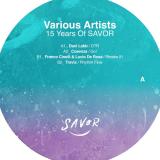
Savor Music celebrates a landmark 15 years in the scene with a three-part compilation series. This second installment continues the momentum, bringing together a powerhouse selection of artists that define the label's sophisticated, groove-oriented sound.
Side A opens with a major track on A1, as Dani Labb unveils a hypnotic Detroit meets Aphex Twin spiritual bomb. This track serves as a masterclass in production, delivering a fluid, dark room ready flow. Following this, A2 showcases the refined artistry of Cosenza, who brings a groovy funky stylish number to the record. His contribution is characterized by an infectious energy that keeps the groove effortlessly sophisticated.
Side B shifts into deeper territory, starting on B1 with Franco Cinelli teaming up with Lucio de Rosa for a classy subtle morning piano house track. True to their reputation, they deliver a detailed number that showcases the technical precision and steady momentum for which they are renowned. Finally, B2 rounds out the EP with a deeper hypnotic track by Shine On You boss, Travis. Combining unique creative perspectives, Travis weaves together profound atmosphere and mysterious depth while keeping a steady groove to close out this chapter.