Come Clean is the the highly succesfull major-label debut and second studio album by the American rock band Puddle of Mudd. Originally released in 2001, the album's music was responsible for breaking Puddle of Mudd into the mainstream music scene. The album reached the Billboard 200 Albums chart peaking at #9. It has sold over 5,000,000 copies and was certified 3 times platinum by the RIAA.
The lead single Control' was also the theme song for WWE's Survivor Series 2001, which was critically acclaimed. The second single off the album, Blurry' turned out to be Puddle of Mudd's most successful single, reaching No. 5 on the Billboard Hot 100 and No. 8 in the UK Singles Chart, and also winning an ASCAP song of the year award. Drift & Die' was also released as a single spending six weeks at the No. 1 on the Mainstream Rock Chart. The fourth single, She Hates Me' reached the No. 1 spot on the Mainstream Rock Tracks chart and won the ASCAP award for most played rock song of the year.
In support of the album the band embarked on a European and American tour as the opening act for Godsmack and Deftones, and were also a part of the Family Values 2001 tour, alongside Linkin Park, Stone Temple Pilots, and Staind.
Available on vinyl for the very first time, Come Clean is pressed on clear vinyl, limited to 1.000 numbered copies!
Composer, singer, producer, and multi-instrumentalist Laufey continues her story by writing and recording Bewitched, her second album. Inspired by jazz greats and classical masters while possessing a point of view that could only be conveyed by a 21st-century twentysomething, Bewitched represents an expansion of Laufey’s sonic palette.
Tracks like the breezy bossa nova cut “From The Start” and the smoldering string-assisted ballad “Promise” have classic songcraft and intricate arrangements that make them feel instantly
timeless, while Laufey’s conversational lyrics give her music a relatability to the next generation of jazz, pop, and classical aficionados.
Despite immense challenges, SOYUZ have delivered a career-defining album in KROK.
“Krok” means “step” in Belarusian - and for Alex Chumak and his band this word comes with a lot of meaning. It’s the title and theme that ran throughout СОЮЗ (SOYUZ)'s fourth album, reflecting the journeys the band has navigated in recent years, having moved to Warsaw due to political unrest in their homeland of Belarus and the outbreak of war in Ukraine. Embracing the uncertainty became both the inspiration and main lyrical theme for Alex Chumak, SOYUZ’ composer and arranger, who also decided to go a step further and change the language in which he writes songs from Russian, which is used as lingua franca in many post-Soviet countries, to his native Belarusian. The result is nine songs about dreams and outer space, ordinary miracles, things very close and very distant at the same time.
In early 2022, Chumak and original members, Mikita Arlou and Anton Nemahai, joined tens of thousands of Belarusians seeking safety abroad. Resettling in Warsaw, the band released Force of the Wind in October 2022, garnering widespread acclaim, a string of major European gigs, and led to Polish musicians Albert Karch and Igor Wiśniewski joining the band.
Deeper and more melancholic than previous works, KROK is quintessentially SOYUZ, laced with hope, dreams and a celebration of life. Given the difficulties with finding rehearsal and recording spaces in Warsaw and the departure of the drummer Anton Nemahai from the band, Chumak explored alternative options. He reached out to friend and fellow musical collaborator, Sessa, about the possibility of recording the new album in his recently finished studio in São Paulo, with Sessa and Biel Basile coming onboard as recording engineers.
At the tail end of 2024, Chumak and SOYUZ’ new drummer, Albert Karch, made the trip to São Paulo to record the first sessions for KROK. Laid down directly to tape, these sessions featured prominent Brazilian musicians Sessa, Biel Basile, and Marcelo Cabral, with a guest vocal feature by Tim Bernardes recorded at a later date. The final touches were then added back in Europe. Lush string and woodwind arrangements written by Chumak and Karch were recorded at the Polish Radio studio in Warsaw, and Rhodes parts were added by Chumak at Sven Wunder’s studio in Stockholm.
Though primarily recorded in Brazil, KROK is not a Brazilian or MPB album. It blends the band’s Eastern European roots with jazz, folk and global influences. The genre of the music is hardly identifiable: there are folk ballads and jazz-driven pop compositions covered in lush and often dissonant string and woodwind arrangements where each note is placed with care and meaning behind it.
The title track was the first song Chumak wrote in Belarusian as an adult, making for a fitting opener and one of the band’s finest tracks. Darker than most of SOYUZ’ songs, the tensions lift and lighten as the track progresses. The cinematic library jazz of 'Voo Livre', with ghostly vocals sung by Ciça Góes and Ina, feels like a modern twist on the Italian library composer Alessandro Alessandroni through its sublime choir and woodwind orchestration. Elsewhere, the heartfelt 'Lingua Do Mundo', composed, written, and sung by Chumak and the incredible Tim Bernardes, features one of the standout string arrangements from Chumak and Karch. 'Cichi Karahod' is an instant SOYUZ classic, almost Pat Metheny-esque as it opens, with the acoustic guitar and bass riff transitioning into jazzy AOR / pop-folk territory. The record closes with 'Smak žyćcia', a gentle, dreamy spoken-word poetry piece in Japanese by singer-songwriter Manami Kakudo.
Indo Warehouse presents ‘Bombay Acid’ on Crosstown Rebels, featuring Kunal Merchant and Raja Kumari. The hypnotic new single, fusing heritage and future-focused touches, lands with a remix from SYREETA
Making their debut on Crosstown Rebels, New York collective Indo Warehouse unveils ‘Bombay Acid’. The release is a collaboration between co-founder Kunal Merchant and acclaimed vocalist Raja Kumari, capturing the Indo Warehouse ethos: hypnotic grooves, ancestral textures,and underground energy fused into one expansive, ritualistic journey.‘Bombay Acid’ pairs Merchant’s meticulously layered production, melding deep, hypnotic grooves with textures drawn from South Asian musical traditions, with Kumari’s commanding vocals. The track unfolds as both a club-ready cut and an immersive ritual, bridging cultural heritage and contemporary electronic sounds. A Grammy-nominated rapper, singer, and classically trained dancer, Raja Kumari bridges Indian tradition with contemporary global music. She has collaborated with Timbaland, Dr. Dre, Gwen Stefani, John Legend, and Iggy Azalea, and has performed at Coachella, Wireless, and India’s NH7 Festival. Her imprint, Godmother Records, and projects such as ‘The Bridge’ (2023) and ‘Kashi to Kailash’ (2025) explore resilience and spiritual depth, making her one of the most distinctive voices in modern music.
On the flip, SYREETA delivers a striking rework. Authentic and fearless, the UK favourite has shattered glass ceilings while drawing on chunky basslines and energetic grooves from house and techno to craft her own sound and style. Her remix injects ‘Bombay Acid’ with that signature low-end punch, while driving and harnessing the track’s cosmic energy for late-night dancefloors.Kunal Merchant has spent years building a sound that is simultaneously drawn from his South Asian lineage and futuristic. From appearances at Coachella, Hï Ibiza, Fabric London, and Brooklyn Mirage, to releases across the Indo House spectrum, he has become a central figure in shaping the genre and bringing South Asian voices to the global electronic stage. Indo Warehouse, co-founded by Merchant and Kahani in 2022, has evolved from its underground origins in New York into an international movement. Their live shows are immersive experiences, rituals where identity, tradition, and club culture collide, and their releases continue to push the boundaries of house and techno while remaining deeply grounded in their origins. With ‘Bombay Acid’, Merchant and Kumari deliver a production that is both hypnotic and expansive, inviting listeners
into a universe where rhythm, culture, and underground energy meet in unison.
Following on from Andres aka DJ Dez's well received last outing on David A-P's Hot Pot label, it is now veteran DJ and producer Marc Meistro from DC's Sol Power All-Stars who now brings the class. To kick off he brings his own spin to a Latin funk classic 'Mas Que Nada' and then turns the sunshine up to 112 on the shuffling samba sounds of 'El Platanal De Bartolo'. It's a pure party starter for Latin lovers and then comes some more drum-forward funk on 'I Wanna Go Downtown' with its rolling percussion and funky bass twangs. 'Make Your Mind Up' slows down to dubby disco bliss with leggy riffs teasing and pleasing. Four effective, charming essentials from Meistro.
After the cult favourite Apron Japan Vol.1 dropped in 2023, we’re back with the next wave!
We’ve expanded our reach beyond Japan — this time diving deeper into the sounds of the East. Featuring a diverse lineup of producers and artists across Asia and the surrounding regions, Apron East Vol.2 celebrates the rawness, late night riddims, and future classics.
FEATURING MUSIC BY:
Benedek, DJ Dreamboy, Hookuo, Isaac, DJ Jeyon, J M S KHOSAH, Kendall Timmons, KO SAITO, Jarren, Steven Julien, and Yuka Sunflora.
Steve Moore reprises his beloved Lovelock guise by presenting his unique riff on the library breaks genre. Business And Pleasure contains grimy groove and sleazy, funk-laden lounge music.
This vinyl release is hyper-limited, with just 500 pressed for the world.
The LP is ushered in by the spacey synth-funk of the sleazy, woozy title track. This is that serious slo-mo cosmic-balearic head-nod shit. Laidback bass, heavy funk with dreamy synth and electric guitars. An outstanding opener. Up next, the dynamic, swaggering "Last Call" is a sophisticated, elegant stroll - sweeping, mellow strings, a smooth bassline and gorgeous percussion with urgent keys and swelling synths.
"Slinky Strut" is another spaced-out, sleazy funk groove with jazz rock by way of a heavy, heavy guitar riff, mellotron and bass breakdowns which build to brass crescendos. Gigantic. "First Class" closes out the side, and, like classic Hawkshaw / Bennett noir, it's got that mysterious and murky stretched out sleuth / detective soul with a great bassline and percussive elements, with swelling strings, ace synths and smooth Rhodes piano melodies entering the mix halfway through. Dramatic guitars and groovy percussion add extra intrigue. It's 7 minutes of funk!
Side B opens with the stretched-out psychedelic funk and jazz groove of "Stank 49". It takes its sweet time to unfurl, creating enormous - almost sensual - anticipation for the ensuing beauty but, as it does, we're left beguiled and straight-up hypnotised. Heaven-sent synth flourishes and a laidback bassline over smooth drums cement its simple, vivacious grace. "Dangerous Man" is that creeping crime funk we all love; heavy bass and fuzzy guitar riffs, mellow strings and sumptuous piano/synths. It's irresistible, it's ominous and it's pretty gargantuan. It's basically like an El-P hip-hop instrumental. We need to get some rappers over this stuff, stat!
"Stinkbug" is a dazzling and funky groove-fuelled jazz-rock workout with fizzing synth riffs joined by full percussion and drum breaks, building with strings to a strong swagger. Vigour! To close out this remarkable set, the breezy "Win Or Lose" is laidback soul-inflected funk, utilising urgent, skipping drums and galloping basslines. Just stunning.
This collection was written and recorded in Spring and Summer of ’24. Everything was tracked at Steve's home studio in Albany, NY except the drums and percussion, which were recorded by Jeff Gretz at his space in NYC. The whole collection is basically a rhythm section feature, so Steve's Rickenbacker 4003 and Fender Jazz Bass play very prominently. The bass guitar serves as lead instrument in a lot of these tracks. Also, lots of Rhodes and stringers (Solina, Logan etc) and guitar (Strat and Les Paul). He even dusted off my sax for this one, which he doesn’t do as often as he’d like!
This type of groove-oriented library music has been a steady part of Steve's diet since the late 90’s. In heavy rotation while writing this collection were the following classics: “Time Signals” by Klaus Weiss, “Tilsley Orchestral No. 10” by Reg Tilsley, and “Heavy Truckin’” by Simon Haseley. “Voyage” by Brian Bennett was also a big one.
Lovelock started as a dedicated Italo-disco project, but over the years Steve expanded it to include anything directly informed by the commercial/pop side of the music of his childhood (70s/80s). Writing and recording this album was, like a lot of Steve's music these days, basically a test to see whether or not he could do it.
The song titles, like the music, are meant to be evocative yet vague. But there is a bit of a travel theme. Steve imagined this record being the soundtrack to a sleazy salesman’s business trip. The kind of guy who, when asked if he’s traveling for business or pleasure, responds “both.” Beyond the traveling salesman comparison, the title directly relates to the creation of this album. This was something he wanted to do just for his own enjoyment. Yet, like our sleazy salesman, he still found a way to get paid.
The album’s cover was designed by Chris Stevenson, with no little direction from Steve. He knew that he wanted to go with something photography-based for this cover so, in true DIY/cheapskate spirit, Steve started by looking through his own photos. He found the cover image on his phone, taken through an almost empty bottle of beer, and it clicked. The whole album has a very boozy vibe (especially with titles like “Last Call”) so this shot seemed appropriate. We, hic, agree.
Mastering for this vinyl edition was overseen by Be With regular Simon Francis, and it was cut by the esteemed Cicely Balston at Abbey Road Studios to be pressed in the Netherlands by Record Industry.
Body Clinic joins us for our next 12” release with four tribal tech-house cuts, recalling the sound of early-2000s Pacha. With E-Talking on Papa Nugs’ label running the festival circuit this summer, he’s already become the talk of the scene—and this EP makes clear why.
Each track is driven by drums at the highest grade—rugged, weighty basslines locking in with sci-fi warped FX, keeping the floor in constant motion. Trippy vocal cuts thread through the grooves, getting deep into our heads and sending minds off into nearby dimensions. And that’s just the a-side.
Flip it over and Bongo Loco comes rolling in—a true cruiser. Built around a huge breakdown of layered bongos, it kicks back in with the kind of chest-rattling low end that have become Body Clinic’s signature. It’s the moment where hands shoot in the air, the rhythm carrying you further into the night. On b2, My Mate Dave shifts gears again—jumping off the old-school tech foundations and landing closer to the progressive sound we know BC for. It’s a peak-time anthem through and through.
Promo downloads have quickly come in from Chris Stussy, Josh Baker, Christopher Ledger, Roza Terenzi, and East End Dubs, marking it as one of the most anticipated releases of 2025.
Regarded as one of London's "leading disco labels" The Disco Express is one of the most consistent and influential forces in the modern nu-disco scene.
A record label, international event series and DJ collective, TDE is dedicated to original, soul-infused house and disco music. With a global family of artists, the label blends vintage warmth with modern energy to honour the past whilst envisioning the future.
TDE100 is a 15 track compilation that distills the label's essence. Packed with fresh originals and hand-picked gems, the compilation blends funk, soul, nu-disco, house, and electronica. Crafted to move seamlessly from peak-time dance floors to laid-back Sunday listening, it's both timeless and forward-thinking.
Pressed across 2 X LP’s in a Gatefold Sleeve featuring John Morales / Derrick Carter & Inaya day.
This is original house & disco for 21st century dance floors and this train ain't slowing down anytime soon…
Berlin’s Limited White Label presents the vinyl debut of New York City-based composer, producer, and drummer Zachary Berns. A fixture of NYC’s jazz and underground scenes, Berns has built a reputation through boundary-crossing projects (notably “zbeeez” and jazz/hip-hop collective “poetic thrust”), collaborations with rising artists across R&B, jazz, and electronic music, and acclaimed appearances at parties such as “Soul in the Horn”. With LTDWLBL011, he steps forward under his full name for the first time, delivering a statement that bridges his dual lineage in jazz and house/electronic/club music.
Providing more prolific dance floor energy this winter are Italian house pushers Black Box Records, a carefully curated VA of feel good vibe from producers Ruff Stuff, Floska, label founder Vito Fattore, and the eclectic sounds of, DJ GLC. Available on vinyl this Oktober.
Kicking off proceedings is Berlin based Italian, Ruff Stuff. A killer cut, with ice cold drum arrangement which becomes one with the playful chords which propel the energy of the ‘Son Of Will’ track, the female vocal sample sprinkled in for some added pleasure. Young Italian trio Floska deliver ‘Get Up & Dance’ dreamy and mellow sounds on a lo-fi tip, almost seven minutes of pure bliss.
The brain behind Black Box,Vito Fattore, steps up for the B1 as any leader should. Clinical dance floor moods, laced with emotion. Magical pads and synths work their way around the funk laden body of the track, explosive summer time feelings. Switching things up for the closing track is DJ GLC, with a deeper and darker energy than the other three track. Aptly entitled ’Suspense’ mechanical whirrs carry the track, as broken drums burst through the seams of the record. A trip through murky waters that compliments the EP in great fashion.
Another display of zestful house music from a blossoming label, sure to be a winner with tastemakers and groove explorers alike. One to watch out for in the coming periods as Black Box Records continue to supply you with what you need.
“Vox Flora Vox Fauna” is an invocation in which ECE CANLI channels the voice of Earth itself. A ritual of breath, rebirth, bone, and buried memory. Like the most transcendent moments of Dead Can Dance, the soundscapes are primitive, tribal, atmospheric, and utterly cathartic: echoes of a wounded planet, mourning and resisting at once. They unleash the raw force of Gaia, vibrating through ancient rhythms and spectral chants that seem to rise from the soil itself. In an age of collapse, this is music as prayer, protest, and purification, an elemental cry from the Mother to all who still listen. ECE CANLI “Vox Flora Vox Fauna”. Ltd. Edition Album presented in ONE-OFF truly limited edition of 100 copies lacquered pressed on 180 gr. high quality solid BLACK vinyl. Includes a printed innersleeve.
Following on from 2024's "Distant Landscapes EP" alongside Tensal, Amorphic returns (solo this time) to James Ruskin's Blueprint Records with a new ten-track album released digitally and as two four-track vinyl EPs released simultaneously.
Amorphic is a pseudonym of Scottish artist Vince Watson to explore more raw and hypnotic signatures. Launched in 2022, Amorphic has featured on labels such as Token, Symbolism and Modularz as well as the two labels Vince runs himself: Amorphic and Morph.
With almost 30 years in the industry, Vince has released over 1000 tracks, which has allowed him to work and gig with some of the very best in that time including Laurent Garnier, Richie Hawtin, Carl Craig and inthis year, Vince will release an LP with Carl Cox on his label Awesome Soundwave. As a touring musician has been able to play at some of the world's best clubs as both Amorphic and Vince Watson, including a residency at Tresor Berlin, DC10 Ibiza with Carl Cox, Berghain and Womb Tokyo as well as being a current resident of 909 Festival in Amsterdam.
earth had been watched by the keepers of the secrets for millennia.
the human experiment had evolved into chaos.
the subjects had destroyed themselves and the planet they were gifted.
a few were taken, leaving a dying planet behind.
the rest of human history was deleted.
the gods sought a new order.
the year zero...
Edition of 200 hand-numbered records, each housed in a custom Rosy womb French paper jacket with letterpress + a unique hand-cut found photo memory fragment on each cover with newsprint insert. Every copy has a different cover.
An archival release by short-lived post-punk, Brooklyn duo Möthersky. Xander Hing, with South African origins, vocals and guitar on Side A, bass + vocals on Side B. Richard Vergez, visual artist and Noir Age label owner, fuzz bass + drums on Side A and guitar + synths + drums on Side B. Played the Nothing Changes party in 2013. Shared bills with acts such as Cindytalk, Black Rain, Eric Random, Das Ding, and Drew McDowall.
Reviewed in The Wire magazine:
First single by this Brooklyn based duo named after the classic track on Can's Soundtracks LP. Their basic approach remains bottom-heavy in the vein of early Factory and 4AD units, but the guitar angles up top have gotten more slithery. Far less doom-ridden than their earlier work, this still stirs up dark waters aplenty. And it has a lovely package of which I think Peter Saville would approve."
The begena is a large ten-stringed lyre which is part of the traditional Amharic heritage of Ethiopia. The Amharas, who have long formed the politically and culturally dominant people of Ethiopia, mainly inhabit the central and northern part of the country. In the majority, they follow the monophysite Orthodox Tewahido Church established in the early fourth century AD.
Music plays a very important part in the life of the church. Most of the liturgy is sung and, contrary to secular music, it is accompanied by percussion instruments only. The begena occupies a special place because it is the one melodic instrument exclusively dedicated to the spiritual repertory. Because of its mythical origin, it is highly respected. Tradition holds that the begena was given to king David by God, and brought to Ethiopia by Menelik I, together with the Ark of the Covenant. It has always been the instrument of kings and nobles. Played by pious men and women of letters, it never became widespread. But it never disappeared either, not even under the Derg regime (1974-1991) which had banned the instrument.
Among Amhara string instruments, the begena is the most carefully crafted, especially with regard to the ornately sculpted crossbar. Its ten gut strings are cleaned and twisted several times. The characteristic buzzing timbre equalled by no other Amhara instrument is due to the enzirotch, that is, small bits of leather placed between each string and the bridge. This plays an important part in the sound production by creating a brief contact between the string and the upper rim of the bridge, thus modifying the vibrating properties of the string. In this manner, the spectrum of the sound is considerably enhanced (up to over 10 kHz).
The begena is a very powerful instrument, it keeps the devil thirty steps away, and its presence in the home wards off malicious spirits. Priests and preachers recommend its presence, especially during Lent (Fassika Tsom) when the Orthodox Amharas ponder their sins and repent. Because of its spiritual import, the begena generates intense emotion. According to some musicians, playing the begena brings them into direct contact with God or the Virgin Mary. The religious role of the begena is underscored by the shape of the instrument, each part symbolises an important element of the faith. The crossbar for instance, which reaches across the entire width of the instrument, represents God who is above all things. The belly which "gives birth" to the sound represents the Virgin Mary, and the ten strings recall the Ten Commandments.
Recorded by Stéphanie Weisser in Addis Ababa, Ethiopia, March 2002-December 2005.
Death Is Not The End's mixtape-style selection of clips from tapes recorded live at soundsystems playing during London's Notting Hill Carnival between 1984 and 1988, originally broadcast on NTS Radio in August 2018, is the latest to be committed to cassette as part of their 10th anniversary series. Featuring sounds from the likes of Jamdown Rockers, Saxon, Java Nuclear Power, Killerwatt Turbotronic, Stereograph, Sir Coxsone, Volcano Express and more.
Audio sourced with the indefatigable efforts of the Who Cork The Dance crew - big thanks going out to Jayman, Ruff House, Keimo, Omar, Gee Wizz and the one Jah Humble.
Death Is Not The End platforms a selection of brooding, haunting Turkish tango recordings from the decades following the foundation of the republic in the early 1920s through to the mid 1950s.
Volume 26 of the 12" series Attack The Dancefloor features four chart topping no.1 singles available on Vinyl for the first time, WOW. First up it's the meeting of giants as we are treated to the huge version from Michael Gray of 'What About My Love' who bumps the tempo and takes the source parts into HOUSE territory, priming it for the peak time & finally satisfying the 'when's it out on vinyl' crowd. Up next the floor filling, gospel tinged "(You Gotta) Give It Up" by Z Factor, still doing damage on the dancefloors since it's recent digital release. On the flip we have the 3rd & current chart topper 'Down Down Down' by Raw Essence aka Dave Lee, his latest dose of Discotheque dopamine. Feeling both familiar yet fresh, it's all about classic good times here backed up with ravishing Moog Wizardy and irresistible vocals. To round of this essential slab of wax is Opolopo's standout 'Bebeccie's Theme' which delivers muso boogie of the highest order. Full of discreet chords and sophisticated string turnarounds, backed up with deft synth touches from the keyboard magician.
During this summer’s European tour with Junior Dell & The D-Lites, we were honoured to share the stage at This Is Ska Festival in Germany with none other than The Pioneers.
After the show, fate had me driving Jackie and George back to the hotel. On the way, we got to reminiscing about our last collaboration — Jump Up!, released on Original Gravity Records in December 2023. Mid-conversation, Jackie casually said: “Hey Neil, I’m in England all of July, we could record something.”
I dropped the guys off, said goodnight, but as soon as my head hit the pillow, an idea sparked: wouldn’t it be cool to have them record Jackie Edwards’ northern soul classic I Feel So Bad — but reimagined in an early reggae style?
So in July, we set up a session at Farm Factory Studios in Welwyn Garden City. George and Jackie came down, and it was nothing short of magical to hear these legends harmonising together once again in the booth. The result captures that late-60s moment when soul and reggae collided on dancefloors, raw and full of energy.
To add another dimension, we also created a version as if it had traveled from Kingston to London. The “Boss” version imagines the raw Jamaican master — while the A-side reflects how Trojan Records might have “sweetened it up” with horns and strings for the UK pop market.
Two sides, one timeless tune — a tribute to both the grit and the gloss of reggae’s golden era.
The occasion of possibility runs through Ben Bertrand's new album Relic Radiation. It is all backdrops and layers. Hints of the emotive and the distant. Confronting the classical with what is new, looking for an expressive space. Melancholy, not melancholy. Contemplation on a midnight blizzard. Dust motes in a sunbeam. Sand dunes and microwaves.
Ever since 2018 and the release of his first solo album, Ben Bertrand has been working up his own interpretation of the bass clarinet as an instrument of the avant-garde. Touching upon ambient and cosmic as well as earthy sceneries, his is a gentle musical paradox come to life. Let go of explicit pleasantries, Relic Radiation is the polymathic interpretation of a frozen intercom, of a subdued intent of contact. The music is competent and familiar, distant without being distant. There is no predefined form or context here. It is a different kind of colour.
As musical moments and modi become enormous, things break down into exploration. On the crystal shores of perception, Relic Radiation leaves a lot of space for interpretation. It is never loud, although it works loud. An at times almost sequenced feel to treated and overdubbed bass clarinet and clarinet notes adds to a feeling of paradox. Every voice, every gesture indicates a way in. The electron is now an immeasurable wave."
The Rhythm Vision — the Berlin-based trio of Francesco Passantino, Daniele Ricca, and Francesco Monaco — debuts on Tractorecords with Techno Ballad EP, a vibrant four-tracker blending analog depth with dancefloor functionality.
The A-side kicks off with "Techno Ballad", a hypnotic, emotional techno cut with deep pads and raw drums, followed by "Love Love", an uplifting jam that nods to the golden era of '90s club music while keeping it fresh and modern.
On A2, "Folleti" explores a groovy, warm house atmosphere, born from a spontaneous studio session with guest artist Dahbar — pure jam energy pressed to wax.
The B-side closes with "RADUNO", a bonus track from the now-classic Resilience Groove collective, offering deep rhythms and a rolling analog feel perfect for late-night transitions.
A versatile EP with character — bridging techno and house with soul, groove, and timeless analog aesthetics.
A bit of backstory behind this release, I first met Hilton (Jack Horner) at an event in 2012 that took place in a venue called Crucifix Lane (also known as Jack's, now defunct due to expansion of London Bridge station). He's good friends with Krome & Time who were performing that night and I remember chatting with him about jungle (I was still a very eager young lad that was in his first year of raving and very keen to talk about jungle/hardcore/d&b to anyone that would be willing to endure it!) and he mentioned that he used to make jungle in the 90s. I asked who he was and when he told me he was Jack Horner, I went mental because I was a big fan of the 2nd release on Spectrum Records (The Hoover & I Got This Feeling) and to actually meet the person behind those tunes was a really special situation for me to be in.
Unfortunately, I was too shy to get any contact details for him and I never saw him again or knew anyone that had a way of getting in touch with him. That was until very recently, when he had started attending Distant Planet events in London & I got the chance to meet him again, only to be shocked by him telling me that he had been following me & my music and was a fan of me & my label! This time, I made sure that I was able to get contact details for him, I was not going to make the same mistake as last time!
Last December, he messaged me asking if I would be up for doing a remix of The Hoover & I was quite unsure about doing it because of how much I really enjoy the original and feel like it does pretty much everything it needs to do with the sounds used. But, I thought it would be worth a try so I gave it a go and Hilton really liked the outcome (which was a huge relief ????), even though I was a bit too scared to change too much of it haha.
He then asked if I would be interested in releasing it on Future Retro London, which I'd never considered doing because I thought he would have had his own plans for it but I was willing to try & see if we could make a release out of this. I messaged Dwarde & Kid Lib to ask if they'd be up for doing remixes of the same tune (at the time, we only had access to the samples from The Hoover) and they both were and they did great work taking the original track in different directions, each in their own way.
Around the time of making The Hoover, Hilton made another tune with similar samples called After The Pain, which was never released, but he still had the tune. The problem is that he only had it in the form of a cassette recording, which wasn't very good quality and probably would not be easily cleaned up for release. So, I decided to remake the tune from scratch, using the samples I had from The Hoover, as well as sourcing & recreating other sounds used. I was able to remake the whole tune arrangement & then Kid Lib mixed it down to make it sound more sonically similar to how it would have sounded when it was originally made back in 94/95.
Anyway, story time over, big thanks to Hilton for his co-operation & assistance on making this release happen, to Dwarde & Kid Lib for their remix work & a special shout going out to Hughesee for going through Hilton's collection of floppy disks to find & record the samples for The Hoover.
Fetter’s Body of Noise erupts at the threshold between ravey hypnosis and avant-pop experiment, slithering through the hinterlands of unconscious desire. Nine shape-shifting tracks conjure haunted landscapes where beauty refuses clarity and dancefloor logic warps underfoot. Vocals swoon, drift, and demand—stacking into fragments that multiply and weave through saturated pulses and shimmering, snarling synths.
Opening track "Like a Rose" traces a dreamer’s transition into the unstable physics of a perplexing but familiar dream world, where they gradually become lucid. “Beast” follows up humming with shadowed urgency, threading a path through self-sabotage and metamorphosis. “Spathiphyllums” drifts a while in a lush lostness, aching for something new before fracturing into wild, cathartic collapse. Side B’s “Do I Exist? (D.I.E)” and “The Longing” spiral into existential wonder, searching for a human origin story—both personal and collective—against a backdrop of uncertainty, while “Headache” thrusts forward as an absurd and insistent manifesto to stay the course and harness one’s own power within the madness.
Body of Noise is crafted not only for sweating bodies in motion, but for distorting time and opening psychic portals, where surrender becomes strategy and uncertainty transforms into ecstatic navigation. Rooted in all-hardware improvised production and shaped by Fetter’s years of boundary-blurring visual and performance art, their debut LP feels alive and in flux. Reminiscent of a spectral pop chorus trapped in a loop of broken machinery, or a lost broadcast from a dancefloor in a parallel realm, Body of Noise is a journey into chaos, transformation, and a bold refusal to be contained.
About Fetter:
Fetter makes clubby self-destructing noise pop to dance and weep to. Oscillating between ethereal and pounding, their all-hardware, largely improvised live sets take listeners through a foggy wilderness of saturated rhythms and menacing synth lines, a golden voice guiding the way through. Fetter is the stage moniker of multimedia artist Jess Tucker. Their performances take place in clubs as well as galleries, often incorporating video, installation, and interactive performance art elements to create other-worldly surrounds of mesmerizingly unhinged bodies and faces.
What makes チトチック/クラクラ (CHITOTIHC/KULA-kura) so fascinating is that, in some weird way, it’s a meeting of minds and musical language of disparate artists at the forefront of a new kind of groove. There might be no “L” in the Japanese language but that doesn’t stop it from trying to find a working substitute. Similarly, Chito enlisted members from his Asiabeat and East Pulse, others from Mu-Project, K2, and Adi, and brought in Haruomi Hosono to play mercurial bass. In the great expanse of experimental Japanese-made pop music all of them might have gone in “out-there” in separate directions but on this record it was Chito who pointed their focus all on the same track.
“Bayou (バイヨー)” presents this floating idea of dance music with beats and rhythms that hover among the ethereal. Other like “Scribble Dance (らくがき)” use Harry’s acid bass lines to dig cavernous grooves that only come up for air via adrenaline-fueled jumps by Haruo Kubota’s quite Adrian Belew-esque guitar lines. Perhaps, Discipline-era King Crimson is an apt comparison to what Chito and his crew pull off here.
Where Discipline signaled a way to reconcile the most out-there polymeter music of prog with the more satisfying parts of post-punk and the new electronic wave, so to do I think チトチック/クラクラ (CHITOTIHC/KULA-kura) has that bit of heart/spirit in mind. This is the out-there of Japanese experimental music satisfying the best parts of the, then, new electronic wave. It takes a certain degree of proficiency and sheer chutzpah to go from “11” to the wonderfully impressionistic, ambient minimalism of a track like “Sanghyang (サンヤン)”.
It’s the joy of not knowing what each new track will hold and just letting yourself follow the hard-working hands of such learned musicians that brings the most out of Chito’s vision. It’s this very liquid music that keeps you on your toes on tracks like “Astral Lamp (無影灯)”. Tracks like “Jagg-chagg (ジャグチャグ)” and “Filament (フィラメント)” present a fourth world music bifurcated in exponential parts by the glitch of newer, modern, electronic modalities, intersected by expressions by differing voices. Every track you switch to presents a new way to get lost in the many phases and places Chito wants you to travel to.
In the end, as always, it’s not the destination but the journey through it that plants this album in your memory. – Diego Olivas
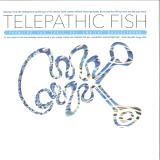
“In stark contrast to the stress-makingly staccato assault of your average 'ardcore rave, Telepathic Fish was a wombeldelic sound-and-light bath"
Simon Reynolds (Energy Flash: A Journey Through Rave Music And Dance Culture)
The first-ever illustrated compendium recounting the seminal underground South London ambient party that surfaced at the axis through which the likes of Ninja Tune, Warp and Rising High flowed. Telepathic Fish shared fertile waters with Megatripolis and The Big Chill, moving the early 90s London back room chill-out space into the kaleidoscopic spotlight.
Documenting the sights and sounds of South London’s seminal Telepathic Fish ambient parties. Hosted by Chantal Passamonte (aka Mira Calix - RIP), David Vallade, Mario Aguera and Kevin Foakes (aka DJ Food) - collectively named Openmind. With the help of Mixmaster Morris (The Irresistible Force) and Matt Black (Coldcut), they put on some of the earliest chill out events in London.
Rooted deep in the heart of the electronic underground they started DJing and decorating house parties or squats with mind-blowing installations and wholly idiosyncratic design, hosting the likes of Aphex Twin, Andrea Parker and Tony Morley (The Leaf Label). Within a year they were playing VIP after shows for the likes of Orbital and illegal New Year’s gatherings at the disused Roundhouse whilst guesting on Coldcut’s Solid Steel radio show on London’s KISS FM.
Whilst collaborations with legendary club nights such as Megatripolis saw them share bills with Autechre, Higher Intelligence Agency, Scanner and Global Communication, they also created their own ambient fanzine - Mindfood – to document the scene evolving around them. A 20-page history of their parties is included in the release, richly illustrated with personal photos, artwork and memorabilia from their adventures between 1992-95. The gatefold sleeve also features their Telepathic Fish logo, mirroring an original T-shirt design they sold in Ambient Soho, a record shop three of the four worked in at different times.
The selections featured here are all personal favourites that were played at the Telepathic Fish parties during the 90s. Picked and arranged by Mario, David and Kevin who combed their collections for key pieces they associate with the time and Chantal’s music tastes. Over a hundred tracks were selected, totalling nearly 11 hours of playing time, before being whittled down to the essentials by the trio, forming a snapshot of their world back in the day.
KEY POINTS:
* Features long deleted and hard to find tracks by Caustic Window (Richard D. James aka Aphex Twin), Tranquility Bass, Spacetime Continuum and Global Communication (Mark Pritchard and Tom Middleton).
• Pressed on DJ friendly double black vinyl
• Includes A 20-page history of their parties is included in the release, richly illustrated with unseen personal photos, artwork and memorabilia from the Telepathic Fish crew’s adventures between 1992-95, as well as detailed liner notes courtesy of founding members Mario Ageura and Kevin Foakes.
• Cover includes horizontal obi sticker with quote from Simon Reynolds' book Energy Flash: A Journey Through Rave Music And Dance Culture, describing the Telepathic Fish parties' place in the dance music landscape.
• Lacquer cut by Beau Thomas at Ten Eight Seven Mastering
Soulwax 's first new album in 8 years, entitled "All Systems Are Lying" and set for October 17th release. Available on CD & various 2LP fromats . The campaign will kick off July 9th with a double single “All Systems Are Lying / Run Free”, album announcement + pre-order launch. Since 1995, David and Stephen Dewaele have consistently pushed the boundaries of music into new and innovative territory by diversifying into many different guises. They are a band (Soulwax), djs (2manydjs), a record label (DEEWEE) and a sound system (Despacio, created along with James Murphy from LCD Soundsystem).
They are also widely renowned as one of the most innovative remix and producer teams around. They have released 7 studio albums to date, including the critically acclaimed ‘Any Minute Now’ and ‘Nite Versions’. Some of their already cult remix credits include the Grammy nominated “Work It” by Marie Davidson, as well as Peggy Gou, Fontaines DC, Roisin Murphy, Robyn, Arcade Fire, The Rolling Stones, Tame Impala, Metronomy, Daft Punk, The Gossip, Hot Chip, MGMT and Warpaint, among many others.
Stephen and David Dewaele are familiar to millions as 2manydjs, a project which undoubtedly moved the needle for modern DJing. Alongside like-minded allies such as Erol Alkan, Tiga and Jacques lu Cont, 2manydjs swept international dancefloors into delirium, gifting a rock ‘n roll attitude to club culture.
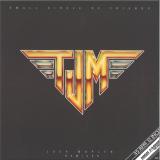
TJM’s Small Circle of Friends is considered one of the masterpieces of the Golden Era of Disco. Moplen takes TJM’s Small Circle of Friends and stretches it into a deep, hypnotic disco odyssey. Built on a chunky, vinyl-warm groove, the remix layers hi-hats, funk-soaked bass, and crisp claps over lush, orchestral strings and soulful vocal refrains.
Moplen’s trademark touch is all over this one, extended breakdowns, patient builds, and EQ sweeps that make the dancefloor hang on every bar. It’s the kind of track that keeps the energy grooving and sophisticated. A timeless, vinyl-ready rework for true disco connoisseurs.
An exclusive collaboration lands on Drumcode, with Bart Skils linking up with rising German artist A.D.H.S for the divine ‘Can’t Hear You’. Fresh off the excellent ‘Torn Clouds’ single with Weska on Drumcode, Bart Skils is on-point as ever with his production output. The Dutchman has enjoyed a strong summer highlighted by Awakenings and a sunrise set at the iconic Fusion Festival. Meanwhile A.D.H.S is no stranger to Drumcode, having shared slick contributions to past A-Sides compilations including ‘Razor’ and ‘2Step’. He’s otherwise dropped strong releases on Exhale, Spannung and Electric Ballroom. “Can’t Hear You” was born during a Sri Lanka holiday after A.D.H.S injured his back and spent time sketching ideas on his phone. “I started playing around with samples on my phone and found this beautiful vocal and just started sketching some ideas. No pressure, just emotions,” A.D.H.S explains. “Back at the little jungle studio I had set up, I kept working on it – really taking the time to find the right chords to match what I was feeling at that moment. It’s a bit of an unusual track, and I had no intention of ever releasing it. It was just for this moment,” he shares. A.D.H.S begun testing an early version at open airs and festival, later uploading a teaser clip onto Instagram. When Skils heard the track’s unique vocal line, he was hooked. “It was a no-brainer for me to decide to work on the track with Bart, I’d been a big fan of his for years. He brought in his ideas, worked on the mix and arrangement, and together we shaped it into a version that we both absolutely love.
It’s one of those rare tracks that just capture a moment.” Indeed ‘Can’t Hear You’ is an emotional behemoth; one of those rare tracks that sounds genuinely unique and is simultaneously a banger and tear-jerker in one. “When I first heard the clip Michael (A.D.H.S.) shared of ‘Can’t Hear You,’ I was hooked by the infectious vocal. We decided to craft a full collab blending both our signature sounds, and the result is a rolling party weapon that’s become my go-to closing track,” shares Bart Skills.
Evissimax and Protopapa present a "double face" vinyl record that reimagines the 70s and 80s sounds of one of Italy's musical legends: Loredana Bertè.
"Fare l’amore" comes from Bertè's scandalous and psychedelic debut album (1974). Evissimax's unique style preserves the song's message of freedom, bridging generations united by shared ideals and explosive energy.
Protopapa, a DJ and a key figure in Italy's LGBTQIA+ community and electronic music scene, has previously remixed tracks by Raffaella Carrà, Ricchi e Poveri, and Ornella Vanoni. His remix of "La goccia" is a return to his roots, giving the track an electro makeover that blends with the original's rock essence. The remix incorporates hints of UK garage and classic house samples, staples of his DJ sets.
Following up the big room belters on Pablo and Shoey 'Raw Human Emotion' EP was going to be quite the task for those lovable Dublin disco messers at Fatty Fatty Phonographics, so they handed the reins over to one of the true maestros of the artform - NYC legend Mr. K.
The A-side is a propulsive extension of 'Let The Sunshine In', featuring ecstatic, gospel-shouting breakdowns. Dropped at the right moment, this is one of those tunes that brings everyone together with that look on their face, the hairs on the back of the neck standing up, arms instinctively flying toward the sky, disco fingers aloft...Excuse us, we just have something in our eye here...
Flip it over for a serious one for the heads...A few years ago Mr. K put out '1,2,3' on a 7-inch on the aptly named Most Excellent label. It was an edit of a roaring clav-funk number from the acetate collection of the legendary 'DJ's DJ' Walter Gibbons.
The Fatty folk persuaded him to revisit it, and he did a magical job of extending it out across the full 12 inches of vinyl, just the way the good Lord intended. 2 sides of utter dancefloor devastation here, be quick!
With their musical roots deeply immersed in the fertile soil of Afro-American music, the Buttshakers have found a new direction for their nostalgia-heavy soul music. With Lessons In Love, their third album on Underdog Records, their early heartaches and furies have faded in favor of a more composed harmony – a sound enveloped in love and soaked in the blues. Guided by their singer Ciara Thompson, the Buttshakers have taken a more intimate path, whose compass, in the chaos of emotions and the modern world, points only in one direction: the light.
Seen from the sky, the view appears limitless. Accentuated by the sun, the ochre and sandy hues of the open road only reinforce this feeling of immensity. The sky stretches and the green stands out in striking contrast. In lighter tones, a road is drawn -- without bends or contours. This is the worn and weary road of soul music, which The Buttshakers explore on each album in new and unique ways. Soul music – a rare place to find a French band.
Vast, the musical direction could have taken them to lighter pastures. Yet the Buttshakers chose to evolve in a different way; to take a heavier load. Two paths – one sparked by social unrest, the other purely sentimental, Lessons In Love explores the deep roots of soul music, in the steps of Curtis Mayfield or Al Green. It is here that the heart and mind cross paths, merge, and become one. A weary road -- that brings together the agitation of a world where good intentions never rise above the level of digital outrage, and a faith in love which, however it manifests and expresses itself, remains the only truth that never loses its power.
Less rage and more compassion, it is through the haunting words and now tempered inflection of Ciara Thompson's voice, which opens to distinct emotions and perspectives, that the listener is guided. With its gaze fixed on the horizon, the acoustic guitar of Gotta Believe invites us on an intimate stroll through the open plains, while Dream On carries us away with a clavinet riff and a possessed saxophone; reconnecting the electric heat and neurosis of a city full of dreams. The senses are moved by the conjuring potion of the guitar which distills throughout Troubled Waters; the body is brought back into a visceral dance by the keys and brass section that are put to the test by Sure As Sin and its irrepressible rhythm. Passing through clouds of dust and sand has left a bluesy imprint on their groove: the miles travelled became hundreds, then thousands.
All of this leaves the listener bewitched by the halo of resilience that now surrounds Ciara's performance, as the ten tracks let the light fade. But certainly not hope in a better day. Like the sunflower that always lifts its head towards the sun’s rays, the Buttshakers continue to resource their sounds in the deep roots of soul music. Into the rich layers of African-American music of the 60s and 70s, The Buttshakers capture the spirit as much as the musical aesthetics of the epoch. A sound that reaches into the meanderings of the soul, bringing light to dark places and hope for all. A sound for the most parched of hearts, living in a damaged world, Lessons In Love confirms that even the tiniest beam of light can illuminate one’s path.
“Oh my God! Super dope!” - DJ Qbert (Invisibl Skratch Piklz)
Kid Ginseng’s 3rd in a series of sample-delic electro 12»s embracing the sound of the diskette between 8-16 bit sound influenced by DJ Di’jital, Arabian Prince, and the LA X-men which consisted of Unknown DJ and DJ Slip. The whole LA Techno Hop label is a massive influence. Of course compatible with a Detroit electro set. Kid Ginseng is an individual.
The begena is a large ten-stringed lyre which is part of the traditional Amharic heritage of Ethiopia. The Amharas, who have long formed the politically and culturally dominant people of Ethiopia, mainly inhabit the central and northern part of the country. In the majority, they follow the monophysite Orthodox Tewahido Church established in the early fourth century AD.
Music plays a very important part in the life of the church. Most of the liturgy is sung and, contrary to secular music, it is accompanied by percussion instruments only. The begena occupies a special place because it is the one melodic instrument exclusively dedicated to the spiritual repertory. Because of its mythical origin, it is highly respected. Tradition holds that the begena was given to king David by God, and brought to Ethiopia by Menelik I, together with the Ark of the Covenant. It has always been the instrument of kings and nobles. Played by pious men and women of letters, it never became widespread. But it never disappeared either, not even under the Derg regime (1974-1991) which had banned the instrument.
Among Amhara string instruments, the begena is the most carefully crafted, especially with regard to the ornately sculpted crossbar. Its ten gut strings are cleaned and twisted several times. The characteristic buzzing timbre equalled by no other Amhara instrument is due to the enzirotch, that is, small bits of leather placed between each string and the bridge. This plays an important part in the sound production by creating a brief contact between the string and the upper rim of the bridge, thus modifying the vibrating properties of the string. In this manner, the spectrum of the sound is considerably enhanced (up to over 10 kHz).
The begena is a very powerful instrument, it keeps the devil thirty steps away, and its presence in the home wards off malicious spirits. Priests and preachers recommend its presence, especially during Lent (Fassika Tsom) when the Orthodox Amharas ponder their sins and repent. Because of its spiritual import, the begena generates intense emotion. According to some musicians, playing the begena brings them into direct contact with God or the Virgin Mary. The religious role of the begena is underscored by the shape of the instrument, each part symbolises an important element of the faith. The crossbar for instance, which reaches across the entire width of the instrument, represents God who is above all things. The belly which "gives birth" to the sound represents the Virgin Mary, and the ten strings recall the Ten Commandments.
Recorded by Stéphanie Weisser in Addis Ababa, Ethiopia, March 2002-December 2005.
Celebrated DJ, producer, and sonic explorer Auntie Flo (aka Brian d’Souza) — described by The Guardian as “one of global club culture’s most vital voices” — returns this autumn with ‘Birds of Paradise’: a rhythmically rich, emotionally resonant, and ecologically grounded new album, out 23 October via his A State of Flo imprint. The album will be launched with a special live show at London’s Jazz Caféon the same day.
‘Birds of Paradise’ draws on d’Souza’s global club experience while deepening his connection with the natural world. Built around classic Roland drum machines and iconic vintage synths, the record is a joyful, body-driven celebration of rhythm and movement, but one grounded in ecology and place. The album’s spiritual centre lies in Saligao, Goa, near d’Souza’s maternal homeland where his Auntie Florie (where the name is derived from) is buried. Where he found his ‘paradise’ nearby, staying in a converted fisherman’s hut and recorded dawn choruses from a riverside studio overlooking mangrove-lined waters. Environmental textures from Japan also make their way into the music, creating a sonic map rooted in lived experience.
“Birds of Paradise is about finding beauty and rhythm in a chaotic world. It’s about listening, to nature, to our bodies, to what’s real. It’s a reminder that dance music can be both joyful and grounded.” The album blends Afro-Latin polyrhythms with Western 4/4 patterns, fusing instinctive, dancefloor energy with field recordings that anchor the music in the earth. Described by d’Souza as “tropical with a few deeper edges, a balance of light and dark.”
The new record follows the acclaimed ‘In My Dreams, I’m A Bird and I’m Free’, which earned 4 stars and Global Album of the Month from The Guardian, featured in Disco Pogo’s Albums of the Year, and received support from Luke Una, Resident Advisor, Juno, Bandcamp, Mixmag, DJ Mag, Electronic Sound, The Skinny, Beatport, Ban Ban Ton Ton, and more. The album’s launch show at Omeara London sold out. Other recent projects include the ‘Outernational Dance’ EP on cult label Multi Culti, event series ‘Plants Can Dance (and Mushroom’s Sing)’ which explore plant and fungi bioelectricity as a means of live composition, and ‘Black Beacon’, a haunting cassette release and soundwalk series recorded on the abandoned military island of Orford Ness. There, d’Souza explored the eerie intersection of nature, decay, and deep time, gaining special access to restricted buildings to capture long-form soundscape compositions.
Alongside his production work, d’Souza has emerged as a leading voice at the intersection of sound and science. He curated music for Imperial College’s groundbreaking psychedelic therapy trials, developing six-phase playlists to guide participants through psilocybin-assisted sessions treating conditions such as fibromyalgia and gambling addiction. His five-hour ambient set at Watching Trees Festival, selected as Resident Advisor’s Mix of the Day, continued this exploration into the therapeutic potential of sound in altered states. He also spent six months collaborating with BBC producer Tom Raine on a documentary for BBC World Service, centred on a two-week journey through Kenya and Goa. There, he performed live, led plant music workshops, and joined a deep listening retreat rooted in field recording. “I realised my studio isn’t just four soundproofed walls filled with instruments — it’s the journey itself. It’s the people I meet, the natural world I listen to, and the connections I feel.”
This same commitment to deep listening fuels his live concept Plants Can Dance, a project that combines the biosonification of plants and fungi with modular synthesis. The next event, on 14 September at Hideout Hackney Wick, will feature performances by Stella Z and Lapalace, with d’Souza and resident Lamine playing live alongside responsive plants in collaboration with Repot Hackney Wick and the label Music To Watch Seeds Grow By. “I’ve spent years exploring how electronic music can connect us, not just to each other, but to the natural world. Whether it’s translating mushroom data into melody or capturing birdsong at dawn, it’s about finding resonance across bodies, ecosystems, and machines.”
Rooted in his Goan and Kenyan heritage and shaped by years of travel and collaboration, d’Souza’s creative mission is simple: to reconnect the electronic world with the natural one. Through A State of Flo, he continues to blur the boundaries between club culture, sound art, and ecological awareness.
"Pretty Close", Ethel Lindsey's debut LP, marks the beginning of a new musical journey, showcasing the talent and heartfelt nostalgia of this gifted singer-songwriter. Deeply rooted in the sound and spirit of the 1970s, her work draws from the golden age of Soul, Funk, Disco, and AOR, blending these genres with elegance and authenticity. Her songwriting and vocal delivery are so true to the era that one could easily imagine this album emerging straight from a California studio in 1976.
Entirely composed, written, and performed by Ethel Lindsey, Pretty Close is a deeply personal and cohesive body of work. From lush harmonies to groove-driven arrangements, the album captures the warmth and depth of vintage recordings while offering a fresh and intimate take on these timeless sounds.
Once again, Favorite Recordings brings its signature dedication to the project, ensuring every step of the process—from production to final mix—remains faithful to the sonic and aesthetic codes of the era. The album was produced using a maximum of vintage analog equipment, staying true to the texture and character of original 70s productions.
This is not merely a nostalgic tribute—it’s a sincere continuation of a musical tradition. With a deep respect for the past and a forward-thinking spirit, Ethel Lindsey breathes new life into classic genres, reaffirming their relevance in today’s musical landscape.
As Ethel herself puts it:
"The songs on this album offer but a fleeting glimpse into the whimsical, melodic reveries that may have danced through the mind of a young girl growing up in the northeastern suburbs of Paris, France during the early to mid-1980s. They are, perhaps, the earliest echoes of a fraternal musical upbringing—an inheritance both consciously absorbed and unconsciously imprinted—shaped by shared moments, half-remembered sounds, and the mysterious alchemy of childhood imagination. This collection is, in essence, a first distillation of that early inner world: playful, imperfect, sincere."
LORD PARAMOUR IS BACK!
After their first big break, the duo returns with "Doom", a second album as daring as it is captivating.
At the helm are DJ Marrrtin, graffiti artist, beatmaker, Stereophonk label captain, member of Funky Bijou, Aktshun, Tino & Marrrtin… & Ajax Tow, DJ-cosmonaut and all-round musician, known for his unpredictable and eclectic sets.
DOOM is a true sonic odyssey: edgy breakbeats, hallucinatory psychedelic vibes, oriental grooves in the style of post-Bollywood library music, a hint of 70s krautrock… and always that downtempo, post-punk, and space groove that is their signature style.
An album like a journey through a cosmic mixtape—retro, futuristic, romantic, and radically free. DOOM isn't just a record. It's a sonic adventure. An imaginary soundtrack. A stylish slap.
Edition of 300 ex - Hand mande Screen printed cover - Hand numbered.
This spring, PILLZ continues its ascent by welcoming another fast-rising talent to its roster: Barcelona’s Natural Goofy. Quickly earning a reputation for his sharp interpretations of the genre’s darker edges, the Spanish producer weaves together twisted electro, hypnotic minimalism, and acid-infused rave power. His Misty Secrets EP is a perfect reflection of this vision—a refreshing yet nostalgic exploration of his sonic world. Sitting seamlessly within the esteemed PILLZ catalogue, the release further strengthens the label’s position as a go-to source for forward-thinking, peak-time weaponry and the alluring sounds of the night. Four cuts of hypnotic mischief from Natural Goofy.