
Search:go soul

Following the collaborative releases with DJ Duckcomb, Emotional Rescue teams with “discodub” specialist NAD aka Dan Tyler (Idjut Boys) in the continual documentation of the crucial role played by the Caribbean diaspora in Britain’s music history.
Of the many who have made a mark, Clifton “Sonny” Roberts maybe one of the most unheralded. Upon arrival in the early migration from the Caribbean, Roberts used his carpentry vocation to build and operate the first Jamaican recording studio and then black owned record shop in the country.
Working alongside and sharing offices with a young Chris Blackwell and Trojan founder, Lee Gopthal, Roberts’ trailblazing through his Planetone and Orbitone labels were pivotal in bringing first Ska, then Reggae and on to Lovers Rock to prominence, as well as releasing influential Afrobeat and rising Disco sounds of the day.
It is on the sub-label Cartridge that the mega-rarity I Want You appeared in summer 1982. Teaming up with vocalist Joseph “Remy” Martin, the original 12” is a wonderful mixture of all their influences; soulful vocals, unrelenting boogie groove, afro keys, all pinned by reggae bass.
A heavily saturated Discomix is then created by Dan Tyler aka NAD. A dub masterclass with live desk filter passes and flanging, all running through spring reverb for a true Tubby disco-rockers ride, this is a sound system treasure with more to follow soon.

8
Jack Wilson was a talented, jazz pianist. Wilson's music had elements of hard bop, swing, cool jazz and soul-jazz, and it was all tied together
by his tasteful playing and soulful appeal.
This album is an exceptional and fresh album by twoexceptional musicians.
Jack Wilson and Roy Ayers have an instinctive and uncomplicated sense of showmanship that goes hand with awareness appreciation for their audience, and an enthusiasm for their music.
It repays all the cents spent to buy this record.

13
Orange Vinyl
Support from Lane 8, Timo Jahns, Shane / Fish Go Deep, Adana Twins, Yves Tomas, Audiosmith, Florian Kruse, Kirill Slider / Goom Gum, Dave202, David Granha, Avidus, Sasha c/o, Claptone c/o, Rich Vom Dorf, Argia, Nick Wessaert, Dennis Ferrer c/o, Super Flu, Holger /
Smash TV, GLOWAL, Ruede Hagelstein, Riva Starr c/o, Peter Kruder, Chaim, Paul C, Paco Osuna, Alfa Romero, Adriatique, Rauschhaus, Elif (TR), Cammora, Mr.Diamond, John Digweed, Franco De Mulero, VONDA7, Nico Morano, Jerome Price, Nhar, Beatamines, Angelo
Ceci, Anthony Pappa, Undercatt, Praveen Achary, Ruben Mandolini, Marco Faraone, Sobek, Tocadisco, Rodg, and Eelke Kleijn

- A1: The Rulers - Don't Be A Rude Boy
- A2: The Rio Grandes - Soldiers Take Over
- A3: Winston & Geoge - Denham Town
- A4: Justin Hinds & The Dominoes - No Good Rudie
- A5: The Spanishtonians - Rudie Gets Plenty
- A6: Alton Ellis & The Flames - Cry Tough
- B1: Desmond Dekker & The Aces - Rudy Got Soul
- B2: Hazel & The Jolly Boys & The Fugitives - Stop Them
- B3: Joe White - Rudies All Around
- B4: The Black Brothers - Why Oh Why
- B5: The Valentines - (Gun Fever) Blam Blam Fever (Gun Fever)
- B6: Dandy - Rudy, A Message To You
12

15
Soul singer Betty Harris – mainly known for her Jubilee and Sansu recordings – was born in 1939 in Orlando, Florida. As a teenager she worked as a mate for Big Maybelle who encouraged her to start singing. First recording was released in 1962, her major hit was a cover of Solomon Burke’s “Cry To Me” in 1963. Taken at a slower pace, Harris’ rendition turned the song into a Billboard Hot 100 number 23 hit and soon became a deep soul classic. A total of three further singles including a reissue of “Cry to Me” were released on Jubilee with “His Kiss”, which was released on January 4, 1964, another deep soul ballad, reaching the lower part of the Billboard Pop and R&B charts. In 1964, Betty Harris switched record labels to Sansu, a New Orleans label, where she was produced by Allen Toussaint. Her recordings with Sansu produced ten singles and Toussaint raw yet sophisticated Southern soul arrangements behind Harris’ rich, distinctive vocal, are considered prime specimens of the classic soul era. Soul Perfection, originally licensed on UK label Action in 1969 , was in fact a collection of her previous works on Sansu, a rare groove affair rapidly in demand between a crowd of obsessive fans all over the world. Harris retired from performing in 1970 to raise a family and made an occasional return in 2007 with the album Intuition.

9
Since their debut in 2017 and the highly acclaimed
latest album ‘No God? No Problem’ (released in
2019,’ Detroit freak rockers The Lucid Furs have
performed over 100 out of state shows, invading
music venues to wash minds with their heavy
blues rock concoctions.
The band‘s live performances build up with a big,
head bang energy, winding down to sultry blues,
then blasting back into hard rock with a dash of
funk you can’t help but dance to.
Their new album won’t make any exception. The
band’s heavily grooving talent and soul of the
blues is immediately evident, driven by a vibrant
70’s vintage vibe.
Their songs embody a culmination of each
member’s early influences, ranging from rock
classics like Alice Cooper and Heart, to Chicago
blues like Howlin’ Wolf and Buddy Guy, to the era
of alternative rock groups like Soundgarden and
Queens Of The Stone Age.
For fans of All Them Witches, Janis Joplin, Led
Zeppelin, Rival Sons, Cream, Queens Of The
Stone Age, Jefferson Airplane, Blues Pills.
Red coloured vinyl LP.
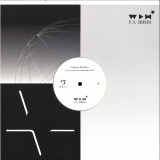
WPH label boss Red D has always considered Adham Zahran to be the Moodymann/Theo Parrish of Egypt, so it is only fitting that for his second release on the label Adham joins the WPH U.S. Series ranks. His deep dusty house sound oozes soul and groove and this release is no exception.
Opening track ‘Flowing Green’ kicks off the E.P. with shining chords that will go down like a treat on any house dancefloor in the hands of the right DJ. ‘No Sorrow’ takes things more heady, but make no mistake, it kicks like the proverbial mule if you let it roam free. On the B-side we first have Detroit’s mainstay Brian Kage on remix duties for the final track ‘Picture Of The Tree’, providing that extra motor city funk we all love. The original finishes the proceedings in – dare we say it – deepest fashion to round off another quality outing from the WPH camp.

11
'Bang Bang Boom Boom' was the follow- up to the highly successful soul-rock covers album 'Don't Explain', a collaboration with blues sensation Joe Bonamassa. The album features 11 original Beth Hart tracks and is an artistic statement that hits the bullseye, delivering on Beth's fuzzing potential, and finding her at peace with herself and looking to the future. "This album is a new voice," she concludes, "and I feel like it's a whole new place for me to go. I mean, I hope that I get to keep working for the next 40 years and die old, and if I get that
chance, I'd keep going down this path. I'm happy. This album is a whole new start for me..."
On 'Bang Bang Boom Boom' Beth gives her eclectic infuences free rein, spinning from Spirit Of God's brassy gospel to the sparse Window, with her frst-ever piano solo on Swing My Thing Back Around, and an impossibly tender vocal on the Billie Holiday-favoured Baddest Blues.

"JP Cooper has announced his second album.
The follow-up to 2017's 'Raised Under Grey Skies' is called 'SHE' and is due for release on Feb 18th. It was inspired by the women in his life who've affected him, as well as relationships, faith and family.
The record will feature the singer-songwriter's new single, Call My Name, a soulful genre-blurring track that also incorporates elements of gospel and pop, among others."

12
The meaning of the Blues whether sung, moaned or
shouted is a reflection of the troubled performer's
soul and there is little doubt that John Lee Hooker
was one of the most successful Blues artists that
ever lived. This collection of songs express twelve
chapters of a novel from a Blues icon who's music
continues to inspire with a legacy that lives on.

Detroit's Niko Marks brings the Heat as always. Here on Yore-039 he delivers 4 Soulful House Tracks, covering a wide range of styles. From Deep, Soulful to Acid-Inspired driving Vocal Tracks. It's all there. Strictly limited to 250 copies. Grab them while they last & File under: House music that only Detroit can do.

8
Kapingbdi came together in Liberia, West Africa, during the late 1970’s and had their own unique style. This six to seven-piece band played original compositions in a vibrant mix of African Rhythms, Soul, Spiritual Jazz, Funk and Rock. Led by Kojo Samuels on sax, flute and vocals “Born in The Night” presents the essential tracks from their rare studio LPs produced between 1978-1981. The work has been carefully edited and remastered in 2019 for vinyl LP and a 6-Page Digipack CD, which includes two additional recordings. Kapingbdi toured through Europe and the U.S. and were the only Afro funk band to ever come out of Liberia.
Kapingbdi hail from Liberia, West Africa and have their own imitable style. They effortlessly combine traditional African music in a modern mix of Jazz, Funk, Soul and Rock. The band is a fusion of the old and the new.
The word "Kapingbdi" is taken from the Sierra Leone language Mende and means "born in the night". Kojo Samuels was given the name by his Latin teacher whilst attending high school in Freetown, They often meet and debate at night in the city and soon after Kojo is called Kapingbdi. The name serves as a description of his origin. Born In Lagos, Nigeria in 1943. The son of slave children. His mother from Nigeria and father from Sierra Leone who moved the family to Liberia, during the 1950’s.
Kojo has played music for as long as he can remember. He starts with the harmonica and later becomes a drummer and percussionist in his first band at school. During his art studies 1965-1972, he tours Germany and works as an art teacher in the USA. His band Kapingbdi is reorganized five times and consists of up to seven musicians. In a VW-Bulli he drives the group from concert to concert and if the drummer fails, he jumps in himself. Between 1978 and 1981 three Kapingbdi LPs are produced for the independent label Trikont, recorded in Hamburg and Munich. During this creative period, the band plays at festivals in Africa and Europe. In 1984, the band tours the United States and shortly after, they came to an end.
At their best, Kapingbdi would rouse the audience with original compositions like "Human Rights", justice for all, especially for South Africans, and "You Go Go You Go Come". The officials and employees in the government departments have no time for the common man, for any questions such as job search, scholarship or similar, he receives the answer "go, come back tomorrow" and the same thing the following day. Or "Now Is The Time For Cry For Love." Now it is time to scream for love and finally, time for humanity and justice. Despite immense difficulties, the musicians consciously live and work in Africa and are at home in Liberia.
On April 12, 1980, ordinary soldiers and non-commissioned officers organize a coup against the government. This is an attempt to put an end to a policy of exploitation of the Liberian people. Whilst efforts to eradicate poverty, lawlessness and illiteracy are obvious throughout the country, Liberia is still Americanized to a high degree. This is evident, as the radio programs of that time almost exclusively played American disco music. Under these conditions, the people seek a reconnection to their folk music, and Kapingbdi were aware of this. Kojo tried many times to come together with traditional Liberian musicians. This passion takes him north of the country. Meeting and playing with the old hornblowers and playing music on traditional instruments, such as the elephant tusk.
Kapingbdi make high quality tape copies of their own vinyl LPs and patiently try to displace all unauthorized tapes from the domestic "market". Nevertheless, it is hard to make a living through music in Liberia. Kapingbdi, is now celebrated. The radio plays are in abundance, but royalties are not forthcoming. Their musical link is the feeling of Afrobeat and Highlife, which is found in each of the many Kapingbdi pieces. They embody Jazz, which is understood to be the most refined example of black music outside of Africa. In Liberia, Jazz is virtually impossible to hear. Bright shining names such as John Coltrane, Charlie Parker or Miles Davis were widely unknown. Thus, the Black Jazz, including its Back-To-Africa movement of the 60’s and 70‘s, passes by without leaving a trace in Africa itself.
Kojo's claim at the time, was to make African music with the depth, sensitivity and the freedom of the technical level of Jazz. This makes Kapingbdi the torchbeares. The underpaid prophets in small Liberia. It is the passion with which the founder of the band continues to work on their music for years. Tirelessly, stimulating and encouraging his fellow musicians. This is ultimately responsible for the success of Kapingbdi in Liberia itself. The local audience seems to listen to the band in fascinated astonishment. One wonders about the ability to develop as demonstrated by Kapingbdi on the basis of their music. It is African and unusually jazzy, danceable and better than the American disco music heard on the radio.
Rather than chase the money and the job opportunities in Europe, Kapingbdi are firmly rooted in Africa. The musicians live in Monrovia, the capital of Liberia, at the Kabingbdi workshop, located in the Congotown area on the eastern edge of the sprawling city. Kojo works here as a sculptor, painter, batik artist and musician. The sales revenue that his activities generate, gives him the opportunity to support the development of African Jazz music. The highest percentage of funds are from Germany and Kojo’s work ethic is “to work on your own thing“. The stance taken aims to support the welfare of Liberians and Africans. The other musicians of the group live in a second house that is nearby.
For the sake of consistency, Kapingbdi is a full-time band. However, the revenue, from all of the sources, could not keep them afloat. Equally, as important to the group are Kojos's knowledge of traditional African music and his sculpting skills. His knowledge is shared with others at the afternoon workshops. It is here that they discuss new lyrics, engage in political debate and the self-imposed task of improving conditions in Africa. At times the debate became heated, especially during rehearsals. This was regarded as good and integrative, sowing the seeds of innitiative to keep the band together.
From 1980 to 1985 Kojo also opened and ran the club "Panjebota", located on the grounds of the U.S. Consulate in Monrovia. Almost every evening Kapingbdi perform the song "Wrong Curfew Walk", whose lyrics lament the killing of citizens during the curfew imposed by the Liberian government. When the head of state Samuel Doe hears the song, he behaves agressively and forces Kojo to close the "Panjebota". Kojo had already moved on. Soonafter he meets Fela Kuti at the Africa-Festival and plays concerts in Germany with Cecil Taylor's workshop band.
Kapingbdi is for thinking, dreaming, dancing. What they sing about is what they have experienced. Kojo Samuels is 76 years old today and still follows his vocation as a critical musician, artist and activist.
Ekkehart Fleischhammer / Sonorama 2019 (with the help of original press sheets and the memories of Kojo Samuels)

9
Pink Vinyl
Drifting on oceans of thunderous stillness, carried away by endless currents, whipped up by waves of darkness devouring you until you see the light. The first album from Platoo, a collaboration between Michelle Samba and Phil Mills, has an unrelenting cadence that grabs you and refuses to let go. A distinctive combination of calming soundscapes and highly-charged energy fitting any occasion, from dancing like lost souls in the empty halls of ancient barracks to ecstatically tripping on a distant desert planet.
To Phil and Michelle creating Platoo was about being given a sense of freedom and exploration, at once shaking off habits and rediscovering forgotten values. Phil's love of the mesh of ''real'' sounds and electronics, and quest to establish a balance where both would feed off each other saw him abandon convention and standard structures, deviate from the beaten path and let things come to life. Michelle's quest to create, to inspire and be inspired, to draw her conclusions from serendipitous events allowed her to break things open and be at ease with letting herself go to create the breathing space needed for this new sound.
What makes their symbiosis fruitful is a common yearning for the unknown, a search for what works without exactly fathoming why it works. The result is something that indeed meets those needs, a strange and beautiful musical exploration.

11
Sam Evian knew he wanted to leave New York City almost as soon as he arrived, more than a decade ago. An upstart songwriter and producer, he, of course, loved its creative wellspring—the ideas, the instrumentalists, the energy. But he’d grown up in the woods of upstate New York and, later, along the coast on the rather empty eastern end of North Carolina. The city was expensive, anxious, and unsettling, however inspiring it could be. So in the Summer of 2017, he and his band decamped to a rented house upstate to cut his second album, the magnetic You, Forever. He then realized he could no longer resist the urge; two years ago, Sam and his partner, Hannah Cohen, split from the city, building their refuge in the quiet of a Catskills town. That reflective, relaxing environment inexorably shaped Time to Melt, his third LP and debut for Fat Possum. A glowing set of soulfully psychedelic pop gems, Time to Melt is a testimonial to the life and wisdom to be found when you give yourself the mercy of space..

11
Following the release of their latest single ‘Animal’ Brighton 4-piece Will & The People have announced details of their new album and subsequent tour this November/ December; following recent sold out shows in London and Brighton, as well as festival plays at the likes of Boardmasters and Green Man, where they headlined the Chai Wallahs stage on closing day.
Recorded at The Libertines’ The Albion Rooms over the course of a week, the band say of the album:
‘It represents a journey of the soul; from the darkness and depression of a lost and seemingly hopeless position - to a realisation and acknowledgment of needing to change, needing to empower oneself and then finally to a more joyous, un-shakeable happiness towards all aspects of life. Life is beautiful and can be lived with joy and grace. Through staying true to your passions and beliefs and finding, new chapters, happiness is there. The album, “Past the point of no return”, is the meeting of the past and present on our journey into the future. It's a four-way diary entry for life as we currently know it.’
You can tell from the way they play, talk and live that Will and The People aren’t following a formula or trying to follow the pack. They play music because it makes them feel good, feel free and feel whole.

Pressed on DJ-friendly 7” vinyl in multiple colors - "Wakanda Funk Lounge” is a svelte four-song slab of hologram funk. Inspired to create a new, unofficial soundtrack to Marvel's Black Panther, SassyBlack says the EP “is about black freedom... Star Trek and Star Wars have always had bars and concerts. There’s no culture without music. And so when M’Baku invites me to come and perform in one of Wakanda’s funk lounges, this EP is the music I'd perform there." SassyBlack has been described as a “blaxploitation, sci-fi warrior queen.” She's also a multi-talented, space-aged songwriter, beatmaker, composer, and singer. Her music has been described as “electronic psychedelic soul,” with roots in experimental hip-hop, R&B, and jazz. Before going solo, she recorded and performed as half of the Afrofuturist hip-hop duo THEESatisfaction. Her music has received attention from Okayplayer, Afropunk, The Fader, Pitchfork, Bitch magazine, and others. The “Wakanda Funk Lounge” EP is a limited-edition, individually-numbered 7” single. Every copy is a different color. The cover was designed by visual artist Wutang McDougal. Drop the needle on any track and discover funky new tunes that remind us Wakanda’s main export is “VIBE-ranium.” This record is perfect for DJs who love 45s.

13
“Da Qween can rap and sing with the best of them,” says Seattle radio station KEXP. “One listen to this album and you’ll experience freedom, rebellion, ingenuity, and unabashed self-love.” Da Qween is a self-described reefer-smoking, black, queer, non-binary, hard-femme, and "Renaissance Bitch" is their vinyl debut. This undefinable album from Seattle's queen of queer rap has been praised for both "quick wit bars that cut, and smooth soulful vocals that are sexy as fuck." Look no further than the second track, “When Worst Comes To Worst.” It's three-and-a-half minutes of unrelenting, baller versus that will bury your favorite rapper with nary a breath. Da Qween’s “Renaissance Bitch” is an expansive, ambitious, and theatrical listen, with anthems for the club, for playing Nintendo, and for celebrating 420. By the end of this record you too will be screaming, “All hail Da Qween!” Crane City Music is thrilled to release “Renaissance Bitch” on limited-edition, purple vinyl. Only 500 individually numbered copies have been pressed, with liner notes from Eva Walker of The Black Tones.

11
For Fans Of : LVL UP, Crying, Paear, Sheer Mag, Krill. When his primary music project, LVL UP, stopped working together in 2018, prolific multi-instrumentalist and illustrator Nick Corbo began working on a new body of music and visual art as Spirit Was. On his debut studio album Heaven’s Just a Cloud, haunting, beautiful scenes of the natural world feel just as represented in the warm, classic, wooden floors of country rock as they do in the dark, droning, shadows of doom and black metal. With new creative liberties, Corbo is allowed an opportunity to keep exploring the heavy, distorted instrumentation and experimental techniques that have shaped his music to date. His ability to focus on small details and weave them into vast networks has been evident in all of the music and visual art in his catalogue. In its density, Heaven’s Just A Cloud is threaded with memorable lyrics and recapitulating musical themes that guide the listener. Spirit Was feels at home among the technical, melodic songwriting of Harry Nilsson’s studio recordings, or the dusty, psychedelic oblivion of Earth and Wolves in the Throne Room. A departure from his previously collaborative recordings, the album features Corbo on drums, bass, guitar, and keyboards, weaving sweet, intentional melodies and vocal harmonies over a slamming, distorted rhythm section.

- A1: Heart Mirror
- A2: Time
- A3: Remembrance
- A4: New Dawn
- A5: A Soul Combined
- A6: Gaze
- A7: The Well
- A8: Shone Bright
- B1: Release (With Color Of Time)
- B2: A Breath (With Benoit Pioulard)
- B3: Glimmer (With City Of Dawn)
- B4: Held (With Grandbruit)
- B5: Catch (With Wayne Robert Thomas)
- C1: Heart Mirrored (With Jonas Munk)
- C2: Shone Bright (Marine Eyes Rework)
- C3: Time (Cat Tyson Hughes Rework)
- C4: New Dawn (Robert Farrugia Rework)
- C5: Release (Belly Full Of Stars Rework)
- D1: Remembrance (Anthene Rework)
- D2: The Well (Ai Yamamoto Rework)
- D3: A Soul Combined
- D4: Held (Patricia Wolf Rework)
- D5: Gaze (Christina Giannone Rework)
23
Remembrance follows a similar formula found on zake's previous effort, Geneva (released on Past Inside the Present, 2020). He produced eight short phonic motifs and then invited artists to collaborate, rework, and expand upon the source material resulting in a new, unique creation. The album consists of eight short vignettes by zake, six collaborative pieces, and eight completely reworked tracks. The track titles and overall theme of these works are based off the gorgeous poetic narrative "Remembrance" written Julia Frizzell.
