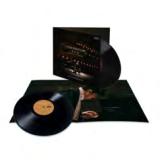
The late great Canadian pianist Glenn Gould made two significant and highly acclaimed recordings of Bach's Goldberg Variations, the first in 1955 when he was just twenty- two, presented here on 180g white vinyl, and the second a quarter of a century later in 1981 when he was nearing the end of his life.
Both recordings stand as benchmarks of the repertoire, offering fascinating insights into the music and Gould's approach to it. These recordings have never been out of print - a mark of their status and the respect they command in the canon of Bach recordings.
Cerca:goldberg variations
- 1
Der einmalige Pianist Yunchan Lim präsentiert eine zutiefst persönliche Interpretation von Bachs Meisterwerk als „eine Reise durch das Leben in Musik” (Lim).
Es ist der 25. April 2025. Die ausverkaufte Carnegie Hall wartet gespannt auf die Rückkehr der 21-jährigen
Yunchan Lim, derBachs Goldberg-Variationen spielen wird – ein musikalischer Moment, der Geschichte
schreiben wird.
Lims Interpretation der Goldberg-Variationen begeisterte weltweit das Publikum und Kritiker. Der Guardian
lobte seine Aufführung des Stücks in der Wigmore Hall für ihre „jugendliche Lebendigkeit mit interpretatorischer Reife“, und die Financial Times hob seine „intellektuelle Präzision, barocke Eleganz, expressive
Ausgewogenheit und virtuose Brillanz“ hervor. International berichtet El País, dass es „von vielen als die
derzeit beste Version dieses Werks angesehen wird”.
Seit er 2022 im Alter von 18 Jahren als jüngster Gewinner aller Zeiten bei der Van Cliburn International
Piano Competition triumphierte, wo seine mitreißende Darbietung von Rachmaninoffs Klavierkonzert Nr. 3
die Dirigentin Marin Alsop zu Tränen rührte, ist Lims Aufstieg nicht mehr aufzuhalten. Mit seinen Goldberg
Variations setzt er nun ein klares Zeichen: er ist an der Spitze angekommen.
Specially prepared liner notes by renowned music writer Brian Morton.
Canadian pianist Glenn Gould (1932-1982) became one of the best- known and
most celebrated classical pianists of the 20th century and particularly renowned
as an interpreter of the keyboard music of Johann Sebastian Bach. Gould's
playing was distinguished by his remarkable technical proficiency and his
capacity to articulate the polyphonic texture of Bach's music.
This release presents Gould's complete original 1955 rendition of Bach's Goldberg
Variations (Columbia, ML-5060). The work launched the pianist's career as a
renowned international player and became one of the most well- known piano
recordings. Sales were astonishing for a classical album at that time - 40,000
copies by 1960, and more than 100,000 by the time of Gould's death in 1982.
The late great Canadian pianist Glenn Gould made two significant and highly acclaimed recordings of Bach's Goldberg Variations, the first in 1955 when he was just twenty- two, presented here on 180g white vinyl, and the second a quarter of a century later in 1981 when he was nearing the end of his life.
Both recordings stand as benchmarks of the repertoire, offering fascinating insights into the music and Gould's approach to it. These recordings have never been out of print - a mark of their status and the respect they command in the canon of Bach recordings.
Back to Bach: after the huge success of Johann Sebastian Bach (2018), Víkingur Ólafsson has now recorded the composer’s monumental Goldberg Variations, available as a 2-LP gatefold set (pressed on 180g black vinyl). The accompanying booklet includes an engrossing and in depth essay in which the pianist discusses the work and its history. He also reflects on the performance decisions he had to make in the studio when it came to creating a definitive version of a work he’d dreamt of recording for 25 years. “At least to me, the Goldberg Variations’ genius lies not in the general, but the specific,” says Ólafsson. “As each variation unfolds, one must be wholly gripped by its individual drama and affect, drawn into its own marvellous little microcosm and filled with the joy of discovering it.” The album comes out on Deutsche Grammophon on 6 October 2023.
- A1: Eldbjørg Hemsing & Norwegian String Quintet & Tim Bach Partita Variation (After Violin Partita No. 3 In E Major, Bwv 100: I. Preludio)
- A2: Eldbjørg Hemsing & Norwegian String Quintet & Tim Ertönt Uns Durch Dein Güte Variation (After Jesus Nahm Zu Sich Die Zwölfe, Bwv 22, No. 5: Ertöt Uns Durch Dein Güte)
- A3: Eldbjørg Hemsing & Norwegian String Quintet & Tim Ave Maria Variation (After The Well-Tempered Clavier I: Prelude And Fugue No. 1 In C Major, Bwv 846: I. Prelude)
- A4: Eldbjørg Hemsing & Norwegian String Quintet & Tim Minuet In G Major Variation (After Notebook For Anna Magdalena Bach, Bwv Anh.116, No. 7: Menuet In G Major)
- A5: Eldbjørg Hemsing & Norwegian String Quintet & Tim Concerto In A Minor Variation (After Violin Concerto No. 1 In A Minor, Bwv 1041: Ii. Andante)
- A6: Eldbjørg Hemsing & Martynas & Norwegian String Qui Melancholy Variation (After Concerto For Violin & Oboe In C Minor, Bwv 1060R: Iii. Allegro)
- A7: Eldbjørg Hemsing & Norwegian String Quintet & Tim Herz Und Mund Und Tat Und Leben Variation (After Herz Und Mund Und Tat Und Leben, Bwv 147: Vi. Wohl Mir, Daß Ich Jesum Habe)
- A8: Eldbjørg Hemsing & Norwegian String Quintet Air Variation (After Orchestral Suite No. 3, Bwv 1068: Ii. Air)
- A9: Eldbjørg Hemsing & Norwegian String Quintet & Tim Bach Brandenburg Concerto Revisited (After Brandenburg Concerto No.1 In F Major, Bwv 1046: I. Allegro)
- B1: Eldbjørg Hemsing & Norwegian String Quintet & Tim Ich Steh An Deiner Krippen Hier, Bwv 469 (Arr. For Violin, String Quintet & Piano By Jan-Peter Klöpfel) 2:30
- B2: Eldbjørg Hemsing & Norwegian String Quintet & Tim Aria Goldberg Variation (After Goldberg Variations, Bvw 988: Aria)
- B3: Eldbjørg Hemsing & Norwegian String Quintet & Tim Prelude In C Major Variation (After Prelude And Fugue In C Major, Bwv 553: I. Prelude)
- B4: Eldbjørg Hemsing & Norwegian String Quintet & Tim Es Ist Gewisslich An Der Zeit Variation (After Nun Freut Euch, Lieben Christen Gmein, Bwv 734)
- B5: Eldbjørg Hemsing & Norwegian String Quintet Invention In F Major Variation (After Invention In F Major, Bwv 779)
- B6: Eldbjørg Hemsing & Norwegian String Quintet Organ Sonata Variation (After Organ Sonata No. 4 In E Minor, Bwv 528: Ii. Andante)
- B7: Eldbjørg Hemsing & Norwegian String Quintet Befiehl Du Deine Wege Variation (After Matthäuspassion, Bwv 244, No. 53: Befiehl Du Deine Wege)
- B8: Eldbjørg Hemsing & Norwegian String Quintet & Tim Erbarme Dich, Mein Gott Variation (After Matthäuspassion, Bwv 244, No. 47: Erbarme Dich, Mein Gott)
- B9: Eldbjørg Hemsing & Louisa Tuck & Tim Allhoff Ich Ruf Zu Dir, Herr Jesu Christ Variation (After Ich Ruf Zu Dir, Herr Jesu Christ, Bwv 639)
- B10: Eldbjørg Hemsing & Norwegian String Quintet Concerto In D Minor Variation (After Concerto In D Minor, Bwv 974: Iii. Presto)
- B11: Eldbjørg Hemsing & Norwegian String Quintet Choral Aria Variation (After Widerstehe Doch Der Sünde, Bwv 54: I. Aria)
COLORS OF BACH: Violinistin Eldbjørg Hemsing lässt die Musik von Bach in völlig neuen Klangfarben leuchten Auf ihrem neuen Album COLORS OF BACH lässt Violinistin Eldbjørg Hemsing die ausdrucksstarke Musik von Johann Sebastian Bachs in völlig neuen Arrangements erklingen und eröffnet zeitgenössische Perspektiven auf sein Werk.Vielschichtig, fein nuanciert und mit ungezügelter Spielfreude, schöpft das Album seine Inspiration aus der strukturellen Raffinesse und der expressiven Schönheit von zwanzig ausgewählten Werken. Die renommierten Arrangeure Tim Allhoff, Jan-Peter Klöpfel und Jarkko Riihimäki rücken bekannte Meisterwerke durch buchstäblich neue "Farben", die in Bachs Musik eingeführt werden - durch Klang, Harmonie und Emotion - in neues Licht.Im Zentrum des Projekts steht eine gemeinsame künstlerische Philosophie: Bachs Musik zu erweitern, neu zu denken und zu formen - ohne sie zu verfälschen. Die Arrangeure schöpfen ihre Inspiration aus der positiven und universellen Kraft seiner Themen und Harmonien und bewahren dabei die innere Zuversicht, die Bachs Werk so einzigartig macht.Von der verspielten Brillanz der Partita Variation bis zur tief berührenden Neuinterpretation von Bachs Brandenburgischem Konzert - ikonische Melodien erhalten neue Vitalität, eröffnen emotionale Dimensionen, bewahren aber zugleich größten Respekt vor den originalen Meisterwerken. Die dichte, melodische Gestaltung des Orgelpräludiums in C-Dur geht nahtlos in eine virtuose Fassung für Solovioline und Streichorchester über und schafft ein fesselndes Hörerlebnis. Air nimmt die Eleganz eines italienischen Konzerts an, während das geliebte Erbarme Dich aus der Matthäuspassion als intime instrumentale Ballade neu erstrahlt. Gemeinsam zeigen diese kreativen Arrangements die Wandlungsfähigkeit und Zeitlosigkeit von Bachs Musik - und entfalten ein eindrucksvolles Kaleidoskop musikalischer Farben."Bach ist so ein genialer Komponist", reflektiert Eldbjørg Hemsing, "dass es unendlich viele Möglichkeiten gibt, seine Formen und Strukturen zu betrachten. Jede Melodie, die er geschrieben hat, vereint auf faszinierende Weise technische Präzision und tiefes Gefühl - und genau darin liegt die unerschöpfliche Vielfalt seiner Musik." COLORS OF BACH ist eine Hommage an diese zeitlose Musikalität - eine Einladung an die Hörerinnen und Hörer, Bachs Werke auf spielerische Weise neu zu entdecken. Im Herzen des Albums stehen Freude, Hoffnung und ein Sinn für Leichtigkeit. "Wir wollten dem Publikum die Möglichkeit geben, sich mit diesen bedeutenden Werken der Musikgeschichte neu zu verbinden", sagt Eldbjørg. "Und vielleicht dabei auch ihre ganz persönliche Interpretation zu entdecken."Eines der emotionalsten Arrangements des Albums ist Air. Das Stück, das oft mit Abschied und Trauer in Verbindung gebracht wird, hat für Eldbjørg eine tief persönliche Bedeutung: "Dieses Werk ist eines der wichtigsten, die ich je gespielt habe", erzählt sie. "Es wurde bei der Beerdigung meines Vaters aufgeführt, und ich habe es lange mit dem Schmerz des Verlustes verbunden. Aber so wollte ich ihn nicht in Erinnerung behalten. Musik hat die Kraft, unsere Emotionen zu lenken - und indem ich diesem Stück eine neue Perspektive gebe, kann ich selbst entscheiden, wie ich mich damit verbinden möchte. Genau das ist der Geist dieses Albums."COLORS OF BACH bildet eine Brücke zwischen Vergangenheit und Gegenwart. Mit seinen überraschenden Momenten, facettenreichen Klangbildern und tief empfundenen Arrangements lädt das Album sowohl neue als auch erfahrene Hörerinnen und Hörer ein, die unendlichen Farben in Bachs Musik neu zu entdecken.
[a] a1 Eldbjørg Hemsing & Norwegian String Quintet & Tim Bach Partita Variation (After Violin Partita No. 3 in E Major, BWV 100: I. Preludio) [Arr. for Violin, String Quintet & Piano by Tim Allhoff] 2:18
[b] a2 Eldbjørg Hemsing & Norwegian String Quintet & Tim Ertönt uns durch dein Güte Variation (After Jesus nahm zu sich die Zwölfe, BWV 22, No. 5: Ertöt uns durch dein Güte) [Arr. for Violin, String Quintet & Piano by Jan-Peter Klöpfel] 2:58
[c] a3 Eldbjørg Hemsing & Norwegian String Quintet & Tim Ave Maria Variation (After The Well-Tempered Clavier I: Prelude and Fugue No. 1 in C Major, BWV 846: I. Prelude) [Arr. for Violin, String Quintet and Piano by Tim Allhoff] 2:08
[d] a4 Eldbjørg Hemsing & Norwegian String Quintet & Tim Minuet in G Major Variation (After Notebook for Anna Magdalena Bach, BWV Anh.116, No. 7: Menuet in G Major) [Arr. for Violin, String Quintet & Piano by Jan-Peter Klöpfel] 2:12
[e] a5 Eldbjørg Hemsing & Norwegian String Quintet & Tim Concerto in A Minor Variation (After Violin Concerto No. 1 in A Minor, BWV 1041: II. Andante) [Arr. for Violin, String Quintet & Piano by Jan-Peter Klöpfel] 2:30
[f] a6 Eldbjørg Hemsing & Martynas & Norwegian String Qui Melancholy Variation (After Concerto for Violin & Oboe in C Minor, BWV 1060R: III. Allegro) [Arr. for Violin, Accordion, String Quintet & Piano by Jan-Peter Klöpfel] 3:11
[g] a7 Eldbjørg Hemsing & Norwegian String Quintet & Tim Herz und Mund und Tat und Leben Variation (After Herz und Mund und Tat und Leben, BWV 147: VI. Wohl mir, daß ich Jesum habe) [Arr. for Violin, String Quintet & Piano by Jan-Peter Klöpfel] 2:42
[h] a8 Eldbjørg Hemsing & Norwegian String Quintet Air Variation (After Orchestral Suite No. 3, BWV 1068: II. Air) [Arr. for Violin & String Quintet by Tim Allhoff] 2:37
[i] a9 Eldbjørg Hemsing & Norwegian String Quintet & Tim Bach Brandenburg Concerto Revisited (After Brandenburg Concerto No.1 in F Major, BWV 1046: I. Allegro) [Arr. for Violin, String Quintet & Piano by Jarkko Riihimäki] 2:11
[k] b2 Eldbjørg Hemsing & Norwegian String Quintet & Tim Aria Goldberg Variation (After Goldberg Variations, BVW 988: Aria) [Arr. for Violin, String Quintet & Piano by Tim Allhoff] 1:48
[l] b3 Eldbjørg Hemsing & Norwegian String Quintet & Tim Prelude in C Major Variation (After Prelude and Fugue in C Major, BWV 553: I. Prelude) [Arr. for Violin, String Quintet & Piano by Tim Allhoff] 1:57
[m] b4 Eldbjørg Hemsing & Norwegian String Quintet & Tim Es ist gewisslich an der Zeit Variation (After Nun freut euch, lieben Christen gmein, BWV 734) [Arr. for Violin, String Quintet & Piano by Jarkko Riihimäki] 1:27
[n] b5 Eldbjørg Hemsing & Norwegian String Quintet Invention in F Major Variation (After Invention in F Major, BWV 779) [Arr. for Violin & String Quintet by Jan-Peter Klöpfel] 1:57
[o] b6 Eldbjørg Hemsing & Norwegian String Quintet Organ Sonata Variation (After Organ Sonata No. 4 in E Minor, BWV 528: II. Andante) [Arr. for Violin & String Quintet by Tim Allhoff] 2:42
[p] b7 Eldbjørg Hemsing & Norwegian String Quintet Befiehl du deine Wege Variation (After Matthäuspassion, BWV 244, No. 53: Befiehl du deine Wege) [Arr. for Violin & String Quintet by Tim Allhoff] 1:33
[q] b8 Eldbjørg Hemsing & Norwegian String Quintet & Tim Erbarme dich, mein Gott Variation (After Matthäuspassion, BWV 244, No. 47: Erbarme dich, mein Gott) [Arr. for Violin, String Quintet & Piano by Tim Allhoff] 2:08
[r] b9 Eldbjørg Hemsing & Louisa Tuck & Tim Allhoff Ich ruf zu dir, Herr Jesu Christ Variation (After Ich ruf zu dir, Herr Jesu Christ, BWV 639) [Arr. for Violin, Cello & Piano by Tim Allhoff] 2:39
[s] b10 Eldbjørg Hemsing & Norwegian String Quintet Concerto in D Minor Variation (After Concerto in D Minor, BWV 974: III. Presto) [Arr. for Violin & String Quintet by Jan-Peter Klöpfel] 2:06
[t] b11 Eldbjørg Hemsing & Norwegian String Quintet Choral Aria Variation (After Widerstehe doch der Sünde, BWV 54: I. Aria) [Arr. for Violin & String Quintet by Tim Allhoff] 3:37
Mustapha Skandrani, a luminary of Algerian music, possessed a unique musical sense, able to transcend the borders of musical cultures to create a distinctive fusion of Arabic-Andalusian and European styles.
"Istikhbars and Improvisations", recorded in 1965 in Paris, is a solo piano album presenting a trans-Mediterranean crossover based on traditional Algerian vocal pieces known as istikhbars. Playing these istikhbars (which have roots in the Islamic Arab-Andalusian culture which flourished in Spain) on the piano - that quintessentially European instrument - Skandrani was greeted with derision by some purists. His powerful musical vision, however, perceives the European element involved in Arabic-Andalusian musical culture, a world of exchange and co-existence.
Skandrani's modus operandi on this release is to present each istikhbar, modal in nature, then to play an improvisation based on it, and its attendant mode. This A/B alternation continues throughout. The pellucid clarity of Skandrani's playing on this album may remind the listener of a modal Goldberg Variations, Bach and Glenn Gould transplanted to Andalucia. Other ears will hear the Arabic/Maghreb elements more strongly. Skandrani's precise touch and clear, symmetrical rhythmic sense links both worlds, assuring us that the Mediterranean is not a barrier, but a unifier, and that the differences between the cultures are not so vast. This is an admirable achievement, resulting in beautiful music of a rare charm.
Mustapha Skandrani was born in Algiers in 1920, and died there in 2005. He mastered a number of instruments at an early age, and his musical prowess led him to work with the great singers and ensembles of his day, in live performances, recordings, and radio broadcasts. Later in his life, he devoted much energy to education.
Originally reissued by Em Records as a limited edition of 200 in 2012, now available once again, in offset printed sleeve, with insert of Japanese and English sleeve-notes and rare photosMustapha Skandrani, a luminary of Algerian music, possessed a unique musical sense, able to transcend the borders of musical cultures to create a distinctive fusion of Arabic-Andalusian and European styles.
"Istikhbars and Improvisations", recorded in 1965 in Paris, is a solo piano album presenting a trans-Mediterranean crossover based on traditional Algerian vocal pieces known as istikhbars. Playing these istikhbars (which have roots in the Islamic Arab-Andalusian culture which flourished in Spain) on the piano - that quintessentially European instrument - Skandrani was greeted with derision by some purists. His powerful musical vision, however, perceives the European element involved in Arabic-Andalusian musical culture, a world of exchange and co-existence.
Skandrani's modus operandi on this release is to present each istikhbar, modal in nature, then to play an improvisation based on it, and its attendant mode. This A/B alternation continues throughout. The pellucid clarity of Skandrani's playing on this album may remind the listener of a modal Goldberg Variations, Bach and Glenn Gould transplanted to Andalucia. Other ears will hear the Arabic/Maghreb elements more strongly. Skandrani's precise touch and clear, symmetrical rhythmic sense links both worlds, assuring us that the Mediterranean is not a barrier, but a unifier, and that the differences between the cultures are not so vast. This is an admirable achievement, resulting in beautiful music of a rare charm.
Mustapha Skandrani was born in Algiers in 1920, and died there in 2005. He mastered a number of instruments at an early age, and his musical prowess led him to work with the great singers and ensembles of his day, in live performances, recordings, and radio broadcasts. Later in his life, he devoted much energy to education.
Originally reissued by Em Records as a limited edition of 200 in 2012, now available once again, in offset printed sleeve, with insert of Japanese and English sleeve-notes and rare photos
Now comes the vinyl LP format of the album with reduced track listing to fit on one disc. After their previous two more concept- based releases, 'David Gordon Trio Speaks Latin' and 'Alexander Scriabin's Ragtime Band', the second of which was Mojo Magazine's jazz CD of the year, the trio returns to its roots with a elease entirely of original compositions from the pen of award- winning composer/ pianist David Gordon. A heady mixture of innovation, deep understanding of musical traditions, spontaneous wit, rich melodic language and deep grooves ensures a musical result that couldn't be mistaken for any other trio working in the jazz world today.
In 2002, Dong Hyek Lim arrived on the scene at just 18 years old ‘in a blaze of pianistic glory’ (Gramophone) with a debut album championed by his mentor Martha Argerich, which was awarded the prestigious Diapason d’Or in France. The South Korean virtuoso went on to take third prize in the 15th International Chopin Piano Competition, and recorded a remarkable Chopin album in 2004 including the 3rd Piano Sonata and some Mazurkas. In 2008 followed an album of Bach’s Goldberg Variations coupled with the Bach-Busoni Chaconne. The French magazine Le Monde de la Musique awarded it a ‘Choc’, while Gramophone wrote that: “There’s no question that he’s a very impressive pianist … who gives the sense of profound pleasure in the music … And he’s not afraid to experiment with what he can do in this music … An artist to watch.”
Seven years later, in 2015, following studies with Emmanuel Ax at the Juilliard School in New York, Lim’s artistry had matured and deepened for a long-awaited recital of the 24 Preludes and other works by Chopin – a composer who remains especially close to his heart. This album is now made available on vinyl for the first time.
In 2019, Dong Hyek released a Rachmaninov album with the 2nd Piano Concerto, and the Symphonic Dances in the arrangement for 2 pianos version with Martha Argerich. He also recently recorded 2 piano sonatas by Schubert.
A series of four limited edition box sets released to celebrate the 40th
Anniversary of the Etcetera label
This one features 10 classic Baroque music recordings from their catalogue:
JS Bach: Toucher Bach Son for Flute & Harpsichord (KTC1695)
JS Bach: Goldberg Variations/Canonic Variations (KTC1400)
JS Bach/Abel/ JC Bach: Souper Galant with the Bach Family (KTC1293)
Vivaldi/Cage: 8 Seasons (KTC1429)
Schutz/Bach: Musicalische Exequien (KTC1578)
JS Bach: Kunst der Fuge (KTC1348)
JS Bach: Gamba Sonatas (KTC1365)
Faber/ Vivaldi: Missa Maria Assumpta (KTC1597)
Fiocco: Lamentations (KTC1544)
”Es gibt eine Galaxie von Klaviertrios im heutigen Jazz-Universum”, hat das BBC Music Magazine festgestellt, ”aber nur wenige strahlen so hell wie das von Marcin Wasilewski”. Auf ihrem siebten ECM-Album
beleuchtet die vielseitige polnische Gruppe ein für sie charakteristisch weites Spektrum der Musik. Auf
En attendant stehen kollektiv erarbeitete Stücke neben Wasilewskis formbarem ”Glimmer of Hope”, Carla
Bleys zeitlosem ”Vashkar”, dem hypnotisierenden The Doors-Klassiker ”Riders On The Storm” und einem
Streifzug durch Johann Sebastian Bachs Goldberg-Variationen. Flüssiges Zusammenspiel ist das Markenzeichen dieses Trios, dessen mehr als ein Vierteljahrhundert langes gemeinsames Wirken zu einem geradezu telepathisch tiefen Verständnis zwischen Wasilewski, Bassist Kurkiewicz und Schlagzeuger Miskiewicz
geführt hat. En attendant wurde im August 2019 in den Studios La Buissonne in Südfrankreich aufgenommen und von Manfred Eicher produziert.
Silent Room, the duo formed by Enzo Carniel and Filippo Vignato is a conversation.
Between the piano of the first and the trombone of the second, two living forces of the
European jazz scene; between France and Italy; between acoustics and electronics. A
patient dialogue initiated on the benches of the conservatory in Paris, which was nourished
by the music of German trombonist Albert Mangelsdorff (to whom the duo paid homage for a
concert at the Cité des Arts in 2014), musical moments shared as a group (Enzo Carniel's
sextet at the Jazz à la Villette festival in particular) and in pairs - for numerous concerts
given on both sides of the Alps - before perfecting their common grammar, giving birth to
their own repertoire, creating their own space.
This first album, Aria, released on the Franco-Japanese label MENACE, was recorded in the
setting of the Villa Cicaletto in Tuscany, whose Silent Room the duo made their own in
September 2019. Carniel had just released Wallsdown, the third elegiac disc of his House of
Echo project (Jazz & People, 2020) and Vignato of an intense live duo recorded with
American cellist Hank Roberts (Ghost Dance, on CamJazz in 2019).
The album is carried by simple melodies, tenuous threads on which the two improvisers who
have slowly got to know each other crisscross and let their voices express themselves. Aria
can refer to the opening of Bach's Goldberg variations, to sung opera arias, but above all to
any expressive melody that develops the imagination. Aria is also the air in Italian: the air
that comes from the breath, the air that fills the room, the air that vibrates and is transformed
into sound. The repertoire is therefore this collection of Arias composed by Enzo Carniel and
Filippo Vignato.
If the duo advocates with this album its jazz heritage - that of improvisation and
conversation, of freedom and virtuosity - and claims to be Carla and Paul Bley, Keith Jarrett,
Gary Valente, Albert Mangelsdorff, Ornette Coleman or John Surman; it also explores the
contemporary colors of electronic music, ambient and Japanese minimalism. The use of the
prepared piano, Fender Rhodes and synthesizers colors the sound space of the acoustic
piano and trombone. The eponymous composition that opens the album in acoustic, closes
it in an electronic version, illuminating the path of the duo between the two universes.
In the almost plant-like composition "In All Nilautpaula", Enzo Carniel evokes the water lily
(in Sanskrit) coming to purify the water around him. On "Babele", Filippo Vignato invokes the
great question of language: thanks to Arias, and therefore melodies, language becomes
universal through music, and only the sensory experience counts.
Born from Carniel and Vignato's desire to create a sound space that would be filled with as
many melodies as silence, a place for listening, dialogue and meditation, Aria is one of those
rare records that contain entire worlds.
- 1