
nicht am Lager
Bestelle jetzt und wir bestellen den Artikel für dich beim Lieferanten.
Last In: vor 2 Jahren
11,39 €
Bestelle jetzt und wir bestellen den Artikel für dich beim Lieferanten.

WRWTFWW Records is proud to announce the first ever release of the long-lost original motion picture soundtrack from the 1988 cult horror comedy sensation Ghoulies II by the incomparable Fuzzbee Morse. Digging deep to uncover a true gem of the VHS era, this limited-edition vinyl release (500 copies worldwide) marks history in the making as a piece of film score lore is resurrected from the depths of oblivion. The LP is packed with 39 tracks and features an exclusive artwork by French illustrator Pierre Thyss, as well an obi and composer notes.
The captivating melodies that once played hauntingly in the background of Ghoulies II were long believed to be lost forever. It took over 30 years and Fuzzbee Morse's unwavering determination to dig out the legendary recordings – and restore them for full audio pleasure!
The superb soundscape of Ghoulies II perfectly captures the chilling and wacky essence of the cult movie, as well as its creepy carnival setting. Morse, citing influences such as Bernard Hermann, Frank Zappa, and Igor Stravinsky, flexes his multi-instrumentalist skills, flowing with ease between magical fairground elements (with brilliant use of calliope, tuba, flutes and sparkly sounding synthesizers), dark atmospheres and frightening attacks (tribal percussion, strings, along with dissonant, atonal gongs, bowed cymbals), and goofy moods (bassoon, bass clarinet, glockenspiel, trumpet, clarinet). It’s big cinematic horror movie music with a lighter comedic touch – the 80s live again!
To complete this collector's edition, French illustrator Pierre Thyss (the man behind the WRWTFWW Records logo) lends his (immense) talent to provide awe-inspiring visuals that flawlessly encapsulate the juxtaposition of horror and comedy.
Ghoulies II follows the release of the full uncut soundtrack of Ghoulies (1985) which was released on vinyl for the first time ever by WRWTFWW Records in 2020 alongside soundtracks for other Richard Band-composed, Empire Pictures-produced classics: TerrorVision and Troll. All these 80s horror favorites are still available – complete the collection now!
erscheint voraussichtlich am 23.10.2023

Aurora Records proudly presents Temporal Gardening, featuring
composer and performer Stephan Meidell and the baroque ensemble
Bergen Barokk
The new album will be available on vinyl and digital platforms on15th of
September 2023.
Temporal Gardening was originally a commission written in 2020 for Bergen
Barokk. The idea was to explore using early music instrumentation in dialogue
with new electro-acoustic technology. The unique and remarkable ecology grew
from pseudo- baroque music playfully reimagined, reinterpreted, disassembled,
remixed, and resampled.
The trio has been expanded with drums, functioning as speakers for the
electronic manipulations of the ensemble. A double-bass recorder vibrates a subwoofer speaker mounted inside a bass drum, and a live sampled harpsichord
sounds through cymbals, gongs, and a snare drum. Meidell himself part takes as
a musician in the performance, doing live sampling and electronic contributions.
Musician-composer Stephan Meidell is a musical adventurer who, in a nomadic
fashion, improvises his way through a plentitude of styles. Meidell's music exists
where genres dissolve into fragments that canbe picked apartand combined in
new ways. He frequently combines sounds from electronic, acoustic, and
electromechanical instruments and machines and then recontextualises them
with his finely tuned intuition and sense of detail. Meidell has a plentitude of
releases and commissions, including with Erlend Apneseth Trio, Strings &
Timpani, Cakewalk, and TRIGGER on labels such as Hubro, Clean Feed, Playdate,
and Ideophone.
Bergen Barokk was established in 1994 and is today one of Norway's leading
early- music ensembles. The group has concertized and appeared in radio
broadcasts in Europe, Russia and USA. Their recordings on Simax Classics, BIS,
Bergen Digital Studio and Toccata Classics include German, English, Italian and
French repertoire. Bergen Barokk has collaborated with several ensembles
through the recent years, some of them are Pratum Integrum (Moscow),
Norwegian Soloists' Choir and Barokksolistene (Norway). Bergen Barokk has
performed in festivals like Festspillene i Bergen, Bach Festival of Philadelphia,
Moscow Early Music Festival and Janacek International Music Festival (Czech
Republic).
erscheint voraussichtlich am 30.09.2023

Balmat is a new label with a cloudy outline.
Jointly shepherded by Philip Sherburne and Albert Salinas, two friends living in Cardedeu, Catalonia, and on the Balearic island of Menorca, Balmat grew out of Lapsus Radio, a weekly show on Spain’s Radio 3. Balmat’s mission is simple: to foster new ideas, expand upon personal obsessions, and put enveloping sounds out into the world.
“Balmat” means “empty” or “void” in Catalan. But quite apart from any negative connotations, we prefer to think of it in terms of possibility: a space waiting to be filled.
Balmat’s first release comes from Luke Sanger, a Norwich, UK-based artist whose two decades of electronic music making have encompassed a range of tools and techniques, from MaxMSP to modular synthesis. Along the way he has built an extensive catalog encompassing ambient atmospheres, abstract soundscaping, and more. With Languid Gongue, he puts multiple approaches into play. Experiments in microtonal composition balance out pieces in standard tunings, while esoteric electronic machines merge with familiar acoustic treatments and microphone techniques.
The result is a constellation of his signature sounds: freeform new-age fantasia; spring-loaded toytronic arpeggios; quartz-driven braindance clockworks. Drifting between consonant, almost lyrical compositions and shape-shifting textural sketches, the album drifts with the nonchalance of a sky-high cirrus cloud, and it glows as if illuminated from within. When we heard the material, we knew that it was the perfect choice to launch the label. To us, it sounds like a roadmap for points unknown.
Bestelle jetzt und wir bestellen den Artikel für dich beim Lieferanten.

Der OST von Howie Lee zum Kung-Fu-Brawler 'Sifu' (2022), mit 30 pulsierenden, speziell für Vinyl gemasterten Beat-Tracks. Als experimenteller Clubmusikproduzent und DJ lässt Lee traditionelle chinesische Instrumentalpaletten mit elektronischen Synths und Samples verschmelzen. Gongs, Gamelan, Bambusflöte und chinesische Percussionsets verflechten sich mit Klängen von Dub, Techno und Drum&Bass zu einem Soundtrack, der vor Spannung und Rache strotzt. Rotes und schwarzes 180g Doppelvinyl im Gatefold-Sleeve.
erscheint voraussichtlich am 29.09.2023

Black cloud is descending – Black Magic Six set to release their fifth album in September, new single Blood of Babylon out now The title of Black Magic Six’s upcoming album Black Cloud Descending really sums up the mood and thoughts of its creators during the album making process. It tells stories of constant escaping, accepting defeat, destinies of outcasts, failures, and drunks. Tales of the wiser, exaggerated lies, vague rumours, fuzzy states of mind and suspicious circumstances – even the thought in the back of your head about the possibility of redemption while standing on the edge of the cliff right before falling in; it’s all there. The album’s first single Blood of Babylon is a garage rocking song about Sam Berkowitz’s relationship with Sam Carr’s speaking dog. Lyrical themes of the upcoming album are moving between reality and the imaginary world; remembering the moments at Belo Horizonte, how to use the powder that protects you from the evil eye, how it felt to wonder in the same alleyways with the werewolf of Istanbul or diving to safety to the bottom of a pond in Northern Savo. Listen Blood of Babylon here: https://youtu.be/S7mEujUIlrw Musically the album is on a narrow path. All the sounds heard on Black Cloud Descending are produced by Taskinen and Motherfuckin’ Japa. Sure, there are two exceptions; the gong heard in the end of Werewolf of Istanbul was recorded by Sakke Koivula at his home and the church bells in the outro of Full House Blues are ringed by unknown. Previous albums of BM6 had lots of guests playing guitar, percussions, harmonica, and visiting singers. People that one could call actual musicians. These past albums have had a softer, more versatile, and maybe even a livelier touch to them. This time around there’s only the core; the percussionist and the singing guitar player. The result is more raw, rugged, and rougher than before. Black Cloud Descending is out on September 1st on vinyl, CD, and digital platforms. The album was produced, recorded, and mixed by Mitro Kylliäinen at Kung Fu Audio along with BM6 during 2022-2023. Original art used for the album cover was made by Greger Grönholm. The band will play selected live shows to celebrate the new album in Finland, Germany, Denmark, and Spain. Dates of these gigs will be announced closer to the release date of the album.
erscheint voraussichtlich am 01.09.2023

In 2020, electronic musician Nina Pixel was offered a track on a compilation album of songs from the Liptov region. What started as a rearrangement of a single folk song eventually grew in scope and size, eventually becoming a series of releases. Titled Ancestral Archaeology, the series counts two self-released EPs, an audiovisual show in co-operation with Adrián Kriška, and now, after two years, a double LP published by Weltschmerzen. In this definitive form of an album, Ancestral Archaeology reveals itself as a musical reimagination of traditional historical Slovak culture at large.
Nina Pixel averts the perils of lapsing into inauthentic fakelore by building her music with, rather than on, the ethnographic riches of Slovakia. With the eagerness of a genuine archeological prospector, Ancestral Archaeology invokes the always present but seldom perceived linchpins of folklore culture: the desperate clinging to the memory of pre-Christian paganism and witchcraft, songs with narratives of beautiful innate wyrdness that is utterly unfit for mass culture, and superstition as the most serious longing for the balance between sense and irrationality.
If we acknowledge the truism of folklore as the shared way of expression in rural society, the techno music on Ancestral Archeology proposes that, in the urban society of ours, this role is served by raves. The argument isn't as much declared as it's implied // in music and in the spoken-word lyrics that are rife with historical and contemporary sources. An 18th-century recipe by the writer and priest Juraj Fándly proposes snorting the grounded flowers of the medicinal weed Valerian as a way of curing bad vision. "It is a proven remedy!" we are repeatedly assured, and it's not hard imagining Fándly and his parishioners, strung out on Valerian, moving almost involuntarily to the rhythms of their era just as we can move to Ancestral Archeology.
Nina Pixel is a Slovak music artist based in Berlin. Lyrics are inspired by Slovak folklore traditions, songs and shared beliefs.
Manifestation tools: cello, overtone flute koncovka, fujara, gong, metal bowls, sheep bell, field recordings of Slovak forests, Andreas's tom and various drum machines.
erscheint voraussichtlich am 01.09.2023

Limited 300 only LP pressed on 'space black' vinyl. Housed in a gloss finished outer sleeve with black polylined inner bag and download code. Non-Returnable.
For fans of scuzzed out space punk rock n roll, Stooges, Gong, Hillage, Skullflower, Japanese psych rock.
Quick return from the Japanese/UK power trio MODOKI with album number two, 'Luna To Phobos'
Composed around the same time as their sold out debut ‘Atom Sphere’. However, this incarnation explores the darker shades of psychedelia & experimentation.
erscheint voraussichtlich am 25.08.2023
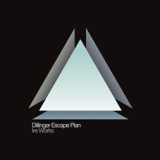
After Miss Machine, Dillinger Escape Plan fans were divided. Many of the folks who were attached to the screaming mathematical metal of Calculating Infinity bailed on the band, disapproving of the experimental musical direction and the meathead appearance of new singer/screamer Greg Puciato. Open-minded listeners were excited about the progressive journey they were taking and many critics hailed the group as a true innovator of metalcore. Ire Works succeeds in many of the same ways that their previous album did, while branching out creatively. They continue to toy with technical metal, blistering hardcore, jazz breaks, and post-punk, but here they evolve again by adding more twists and turns with additional electronic elements. While the merging of too many styles in hardcore can make for a convoluted result (see Avenged Sevenfold's self-titled release), the added instruments and genre changeups enhance the result rather than acting as ornamental distractions. Edgy Aphex Twin-style drill'n'bass drum breaks and stretched and squeezed electro blips feel strangely at home next to the psychotic time-signature changes and manic riffs, especially on the tracks "Sick on Sunday," "Dead as History," and "When Acting as a Wave." Violins, pianos, and trumpets sit nicely in the mix, and the group's willingness to take chances leads to stunning artistic endeavors rather than stale attempts at crossing genres just for the sake of being clever. Original vocalist Dimitri Minakakis makes an appearance, as does Mastodon guitarist Brent Hinds, but the most notable inclusion is drummer Gil Sharone, who proves himself an expert at picking up the slack after the departure of founding member Chris Pennie to play in Coheed and Cambria. Undoubtedly, this act added anger to fuel the fire of their heavier numbers. "82588," "Fix Your Face," and "Party Smasher" are as wicked and manic as their most difficult earlier stuff; conversely, the melodic hooks and falsetto of "Black Bubblegum" and the watery ambience of "Mouth of Ghosts" balance out the album nicely. It can be inaccessible and terrifying all at once, but in a genre overly saturated with formulaic groups, Ire Works is a true standout. If DEP aren't careful and continue down this innovative path, they could easily be labeled the Radiohead of metalcore
erscheint voraussichtlich am 25.08.2023

The pre-cursor to Mid-Air Thief's cult-acclaimed album Crumbling,
Gongjoon Doduk exhibits a distinct universality, merging disparate
sounds and styles into a cohesive, electronic-infused folk amalgam that tactfully blurs the lines between organic and synthetic
Listeners are led through enrapturing passages of swirling melodies underscored with eloquent plucks, strums, and bursts of bubbly glitches. Individual phrases drift into one another as if in a dream, cohered by entrancing hooks and vocal soundscapes. Gongjoon Doduk is a compelling accomplishment of both composition and production, bending as it does to its unique contours of consonance and dissonance, always resolving to a place of calm and beauty.
erscheint voraussichtlich am 04.08.2023

Heels & Souls Recordings step back to 1988 for their sixth reissue, relicensing and remastering Flair's anthemic soul number 'Chasin' The Rain.' For the uninitiated, strap yourself in for six blissful minutes of heavy bass licks, soaring vocals, and infectious synth lines.
Consisting of Janet Rose (aka UK Soul queen JB Rose), Joe Matz, Peter Bielig, and Peter Shindler, Flair was a predominantly German affair, with Rose being the only UK band member and Bieling living in London during the late '80s. This is a curious detail considering 'Chasin' The Rain' is often lauded today as a UK Soul classic - partially due to its release on the prolific UK label Champion. However, it's squeaky-clean production values, and the fact it was mixed and mastered at the famous Jankowski studio in Stuttgart by three Germans, reveals a somewhat different story.
The track has that UK street soul heavy low-end, but with a synth-pop flavour sprinkled in the mix - swinging synth lines and gated snares aplenty. Yet from chatting to Peter Bielig, who's been instrumental in getting this record reissued, the sounds sweeping across the Atlantic from the likes of Jam and Lewis, who blended R&B, funk, soul and pop, were clearly a big influence too.
Those were heady days for four young twenty-something musicians, with Peter recalling cherished memories these tracks bring back, telling of his and JB's PA sessions at London's Gulliver's nightclub. However, while 'Chasin' The Rain' had all the hallmarks of a chart-breaking hit, Champion prioritised other projects and the record never broke. Sadly the group disbanded after only two releases, and this musical gem was consigned to the crates of those in the know. Soon after, Peter Bielig went to Jamaica to work at Tough Gong Studios, working on albums for Rita Marley Music. He now lives in Brazil, producing local artists in his studio in Salvador.
Unfortunately, the master tapes were nowhere to be found, so we had the maestro, Sean P, rip and restore a mint copy of the record, with award-winning mastering engineer Cicely Balston working her studio magic for that added punch.
Bestelle jetzt und wir bestellen den Artikel für dich beim Lieferanten.

Portland, OR-based multimedia artist William Selman returns to Mysteries of the Deep with his third album for the label. Drawing on influences such as David Toop, Beatriz Ferreyra, Elizabeth Waldo, and David Behrman, “The Weather Indoors” melds live and synthesized instrumentation, field recordings, and digital processing techniques in a new, more melodic and approachable direction.
Immersive site recordings open into melodic woodwinds, orchestral instrumentation, bass guitar, gongs, and vibraphone. Borrowing from the anthropologist Tim Ingold’s concept of “inversion,” this widescreen staging cuts immediately to the core of the project: the way human beings use the faculty of imagination to aestheticize their built surroundings with architecture, images of distant locales, and domesticated flora and fauna to contain the anxiety for the natural world that surrounds human life.
A clear peak in Selman's extensive catalog, “The Weather Indoors” captures his work at a moment expanding his musical and aesthetic project: Neither genre ambient nor musique concrète, but a unique sound world dense with conceptual play and moments of more traditional harmonic beauty.
“We are contaminated by our encounters: they change who we are as we make way for others. As contamination changes world-making projects, mutual worlds—and new directions—may emerge. Everyone carries a history of contamination; purity is not an option.” —Anne Lowenhaupt-Tsing, The Mushroom at the End of the World
----
'A Soft Degeneration' was featured in a mix from Mysteries label boss, Grant Aaron, entitled 'Sundays are for' – hosted by Delayed.
William Selman has releases on Mysteries of the Deep, Critique of Everyday Life, Going In, Hausu Mountain.
Bestelle jetzt und wir bestellen den Artikel für dich beim Lieferanten.

El Nido: a welcoming embrace in uncertain times. The world changed forever in the second quarter of 2020. The life we were used to ceased to be, as we were overcome by constant fear, distrust in all that surrounded us and a fatalist attitude towards the world we lived in. With the pandemic came lockdown, mandatory isolation for months, empty streets, face masks, hand sanitizer, the fear of going out, an absurd roll call of Covid fatalities, the daily tension of not knowing when it would all end and the urge to "get back to normal," something that certainly never happened. Out of that pandemic saturation and that urge for "normality" came El Nido ("The Nest"), the third album by Italy-based Colombian producer Montoya, who describes this record as "becoming virgins of destiny again, facing up to that fatalist world and creating that longing for tranquility. Savoring that moment prior to the pandemic, that instant when the most important thing wasn't the immediate reality or the global situation." Montoya sees El Nido as that quiet place that you think of when you close your eyes; it is a beach or a mountain, a sunrise or a sunset, a wave in the sea refreshing your body, or an almost-whispering wind that immediately silences everything around you. On his previous records, Iwa in 2015 and Otún in 2019, his work as a producer prevailed, feeding the growing wave of Latin American electronica, fusing IDM and techno with indigenous root music, Andean folklore and rhythms from the tropical Caribbean coast and ancestral Pacific in terms of instrumentation. But on El Nido Montoya splits the balance, offering us five merely instrumental tracks and six collaborations with Latin American artists, including Colombians Nidia Góngora on "Soñé," Montañera on "Sierra" and Pedrina on "Nubecita." It also features Mexican artist Pahua on "Flor del Mar," the Peruvian Lara Nuh on "El Faro" and the Franco-Venezuelan La Chica on "Palosanto." Starting from the name itself ("The Nest"), an evocation of home, El Nido is also a Filipino municipality on the island of Palawan, a place that turned out to be Montoya's last live experience before the pandemic. That place with crystal clear seas and white sand became the scene and starting point for this work, reflecting on the abstraction of a chaotic world and proposing blurred destinations with each song, like places that exist within memories when we close our eyes, letting us inhabit them, for a couple of minutes at least. On the other hand, it's a record that approaches love; as a yearning and a refuge, as a guide and an anchor, but also as a rhetorical figure that makes us vibrate and elevates us, while at the same time keeping us grounded and letting us settle in the place that we can use as our shelter.
Bestelle jetzt und wir bestellen den Artikel für dich beim Lieferanten.

Images Of Goo is what Munich sound bricolageurs Leo Hopfinger aka LeRoy (head of Das Hobos, H, Spiritual Emojis and others) and Cico Beck aka Joasihno (active member of The Notwist, Aloa Input, Spirit Fest and others) call their first musical dialogue in album format.
It is equally a dialogue with the elements of their sonic repertoire of echo variations and sonic shadows from the percussive instrument box. In their sum, a Wunderkammer of a panaudic, which can be approached and departed in six tracks per side.
There we pass a fuzzy factory flow music of sound tiles and find ourselves in the next station in a game of pot banging and gong shower with firecrackers and other sound explosions. Tinpan tinkertoy and sparkler warehouse become an offbeat downbeat of sound loops, and already we imagine ourselves amid the hammering and pounding of a magic sound forge at the center of the earth, which may be the center of a distant galaxy.
On side two, we enter a dripstone cave boogaloo ("Let's start tripping") and it drips candle wax from a vocoder space-age melody, emoting and coagulating into a Morse-coding cumbia chant. Wax music this is - music that grows out of itself, even if by the means of tape and collage.
At the end there is a music snake, which, having become snake music itself, disappears in front of our ears with a swing. And maybe this is the beginning ...
erscheint voraussichtlich am 30.06.2023

This second volume of Mangle Rojo is a tribute to the spirit of celebration and diversity that reigns in the festivities of Colombia´s town squares. We created this compilation in vinyl format, in which we continue to explore the traditional sounds of the Caribbean and Pacific coasts, which have a rooted Afro tradition.
We begin this journey with field recordings of traditional groups such as Sexteto Tabalá from Palenque de San Basilio, who plays the sextet format heir to the Cuban Son and Los Alegres del Telembí, exponents of the marimba music of the Colombian South Pacific.
We continue this voyage with proposals that fuse traditional rhythms with modern instruments and musical genres: The popular singer Nelda Piña makes a featuring with the afrobeat orchestra La BOA and the marimba band Saborimba, from a small town on the Pacific coast, collaborates with urban musicians.
In addition, we find new protagonists like the big band formats that have been popular in Colombia since the beginning of the 20th century: the Papayera band (Calentanos Brass Band) and the Chirimía format (Chirrimía Balsámica), this last one with the collaboration of the renowned singer Alexis Play.
Finally, we invite artists who use traditional rhythms to develop electronic proposals, such as Ghetto Kumbé and the well-known singer Nidia Góngora.
Bestelle jetzt und wir bestellen den Artikel für dich beim Lieferanten.

Formerly known as James Lascelles’ Quartet, Talking Spirits present a unique blend of world jazz. These highly respected London based session musicians - with a very mixed repertoire - have touched audiences wherever they play. The quartet mixes up world music, folk, jazz and Anglo/Caribbean grooves, inspired by influences from all over the world.
They have honed their skills over the decades working with some of the biggest names in music, including Frank Zappa, Joan Armatrading, Lee ‘Scratch’ Perry, L Shankar, Ginger Baker, Jeff Beck, Steve Winwood, Incognito, Van Morrison, Billy Ocean, Mick Taylor and Steve Harley & Cockney Rebel.
The new Talking Spirits album ‘Hands’ will be released on Zephyrus Records early June. Tracks feature regular band members James Lascelles (various keys and percussion), Tim Herniman and former bandmates from the legendary Breakfast Band Richard Bailey (drums and percussion) and Kuma Harada (bass and guitar). Guests appearances by Tony Maronie on congas, Didier Malherbe (once of “Gong”) on duduk and sax, and the wonderful Mongolian group Andaunion, for whom James specially wrote Grasslands to feature the haunting morinhuur (horse-hair fiddle) and hoomei or overtone singing.
Bestelle jetzt und wir bestellen den Artikel für dich beim Lieferanten.

ITWVA002 it is the second various-artist vinyl record released on the newborn Italian Weapons Records.
The second release dives through different genres without forgetting the main core of the label which is Italian House Music.
This collection was entirely produced by young and talented Italian artists. Italian Weapons are always looking for sounds from the Italian house scene, allowing their artists to travel back to these golden age sounds.
ITWVA002 Includes 4 tracks carefully selected by the Italian Weapons label. Owned by Niccolo Turini and Gunther Mian. These tracks were mastered by Michele Mucci of Nachtkerzestudio Berlin. And designed by Matteo Mangano. The second various artist ranges through all the nuances of Italian house music including Balearic sounds produced by artists located throughout the country and beyond.
The second round of artists includes Derek & DJLo, Heat Alliance, Niccolo Turini aka; Funksonik, TMM aka; The Mechanical Man, and Sandro Sainati aka; Tai gong.
Bestelle jetzt und wir bestellen den Artikel für dich beim Lieferanten.

Sylvie Vartan's most wonderful songs beautifully remastered by Mr. Nick Robbins at Sound Mastering... Super cute, lovely, yet Rock n Roll artwork by Mr. Allan NoMan
Detailed liner notes by M.Jean-Emmanuel Deluxe, author of the acclaimed, beautiful, and definitive book "Ye-Ye Girls of '60s French Pop"
Imagine..if you will...a world in which your dearest chic girl pop singer guests a couple of humour records, goes on to have hit after hit, is all over TV and media, with the coolest radio shows and magazines for youngsters being almost fanzines for her. Then she gets her own TV shows and um, marries Elvis, and does a multi-night stand at the Paris Olympia where The Beatles are supporting HER! That world existed, it was early 1960s France, a marvellous, self contained world of music, film and art, where Vince Taylor was not a weird guy in leather pants who never really clicked with the kids,but the major star he was in his own head! And..Well, obviously, it wasn't really Elvis, but the French-World analogue Johnny Hallyday (handsome, good hair, and a great dancer!), so..in France it WAS!... But the hits? The TV shows? And the magazines and radio? Yes! Those really happened....and The Beatles did support her (and it was a big and lucky night in their career!)...Now, don't you wish we were there, in that world? A bizarro technicolor mix of....I don't know, Viva Las Vegas/HELP!/Les Demoiselles de Rochefort? I certainly do...or maybe pop this record on and let's pretend? Oh, I think so, yes...
erscheint voraussichtlich am 31.05.2023

Das Solo Debütalbum einer der wohl einflussreichsten, innovativsten und produktivsten Schlagzeuger zeitgenössischer Musik.
Die 13 Stücke umfassende Sammlung ist das Ergebnis einer 40-jährigen Karriere, in der Lombardo als Mitbegründer von Slayer bekannt wurde, zwei GRAMMY-Awards erhielt und sein Repertoire über alle Genres hinweg erweiterte. Der in Havanna geborene Lombardo arbeitete unter anderem mit Mike Patton und Fantômas zusammen, dem von der Kritik verehrten John Zorn, dem experimentellen Hip-Hop-Künstler DJ Spooky und den wiederauferstandenen Punk-Ikonen The Misfits.
Der Aufnahmeprozess für das filmmusikähnliche 'drum album' hatte ein einfaches Mantra: Schlagzeug musste Schlagzeug sein. Das Anfang 2022 von Lombardos Sohn David A. Lombardo abgemischte, selbst produzierte Album enthält eine große Konzert-Bass Drum, eine Pauke, einen Flügel und eine Schar von Shakern, Maracas, chinesischen und symphonischen Gongs, indianischen Trommeln, Congas, Timbales, Bongos, Batás, Holzblöcken, Djembes, Ibos, Darbukas, Octobans, Cajóns und Becken.
erscheint voraussichtlich am 05.05.2023

Das Solo Debütalbum einer der wohl einflussreichsten, innovativsten und produktivsten Schlagzeuger zeitgenössischer Musik.
Die 13 Stücke umfassende Sammlung ist das Ergebnis einer 40-jährigen Karriere, in der Lombardo als Mitbegründer von Slayer bekannt wurde, zwei GRAMMY-Awards erhielt und sein Repertoire über alle Genres hinweg erweiterte. Der in Havanna geborene Lombardo arbeitete unter anderem mit Mike Patton und Fantômas zusammen, dem von der Kritik verehrten John Zorn, dem experimentellen Hip-Hop-Künstler DJ Spooky und den wiederauferstandenen Punk-Ikonen The Misfits.
Der Aufnahmeprozess für das filmmusikähnliche 'drum album' hatte ein einfaches Mantra: Schlagzeug musste Schlagzeug sein. Das Anfang 2022 von Lombardos Sohn David A. Lombardo abgemischte, selbst produzierte Album enthält eine große Konzert-Bass Drum, eine Pauke, einen Flügel und eine Schar von Shakern, Maracas, chinesischen und symphonischen Gongs, indianischen Trommeln, Congas, Timbales, Bongos, Batás, Holzblöcken, Djembes, Ibos, Darbukas, Octobans, Cajóns und Becken.
erscheint voraussichtlich am 05.05.2023

Kaizers Orchestra bringen ihre Alben auf 180g Gatefold-Vinyl neu heraus. Remastered von den Originalproduzenten, explodiert ihr facettenreicher Balkan-Punk-Sound, klingt offener & lauter, hat mehr Punch & Dynamik und atmet Live-Energie & Schwung ihrer Kultkonzerte. Nach einer Pause brachte das vierte Album begeistert aufgenommene Veränderung. Entstanden in Ostberlin, abgemischt in LA, produziert von dem Kanadier Mark Howard (Bob Dylan, Tom Waits, Iggy Pop), war 'Maskineri' (2008) ein wichtiger Teil des Bandprozesses mit großartigen Songs, der in Norwegen ebenfalls direkt auf die #1 ging.
erscheint voraussichtlich am 21.04.2023

Kaizers Orchestra bringen ihre Alben auf 180g Gatefold-Vinyl neu heraus. Remastered von den Originalproduzenten, explodiert ihr facettenreicher Balkan-Punk-Sound, klingt offener & lauter, hat mehr Punch & Dynamik und atmet Live-Energie & Schwung ihrer Kultkonzerte. Nach einer Pause brachte das vierte Album begeistert aufgenommene Veränderung. Entstanden in Ostberlin, abgemischt in LA, produziert von dem Kanadier Mark Howard (Bob Dylan, Tom Waits, Iggy Pop), war 'Maskineri' (2008) ein wichtiger Teil des Bandprozesses mit großartigen Songs, der in Norwegen ebenfalls direkt auf die #1 ging.
erscheint voraussichtlich am 21.04.2023
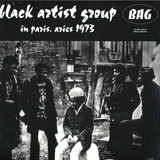
Repress!
Outstanding free jazz session recorded in 1973 in Paris by Chicago outfit BAG.
It was Lester Bowie, trumpeter with the Art Ensemble of Chicago, who suggested that the Black Artists' Group (BAG) should head for Paris. In 1972 several members of BAG took his advice and flew to France for an extended stay. The following year a concert featuring saxophonist Oliver Lake, trumpeters Baikida Carroll and Floyd LeFlore, drummer Charles Bobo Shaw and trombonist Joseph Bowie (Lester's younger brother) was recorded and subsequently issued as In Paris, Aries 1973, a strictly limited edition LP on the group's own label.
Since the formation of Black Artists' Group in 1968, the home of this multidisciplinary arts collective had been St Louis, Missouri, the city where the Bowie brothers had grown up. It was there that Lester Bowie had started to investigate the expanding horizons of jazz before moving, in 1966, to Chicago where he joined the recently established Association for the Advancement of Creative Musicians (AACM). His close friend Oliver Lake visited Bowie, attended AACM concerts and meetings and was inspired not only by their artistic vision and integrity but also by their efficient organisation. In Chicago musicians were making things happen for themselves, taking control of their own destinies and giving shape to their lives as creative artists.
In June 1969, the Art Ensemble of Chicago had taken their music to France. During the preceding decade Paris had established a reputation for audiences that were unusually well-informed and open-minded, receptive to the uncompromising music of black American innovators such as Cecil Taylor, Ornette Coleman, Albert Ayler and Sun Ra. The city that had nurtured not only Cubism and Surrealism, but also Jean-Luc Godard and contemporary cinema's Nouvelle Vague was well prepared for the sonic collage forms and stylistic dislocations of the Art Ensemble. During that same month violinist Leroy Jenkins, trumpeter Leo Smith and saxophonist Anthony Braxton also arrived in Paris, three further emissaries from the AACM.
The adventure of collective improvisation resonated with the Parisian zeitgeist. Enthusiastic audiences attended their concerts and coverage in the media. In Paris, Aries 1973 offers an isolated and fascinating glimpse into that phase of the group's existence. The album is dedicated to the memory of Kada Kayan, a bassist who had hoped to make the trip from St Louis to France but, tragically, had grown ill and died. His absence adds special poignancy to the sound of the bass when it appears on this recording, played by Baikida Carroll. Listeners keen to hear Kayan himself in the company of Lake, Bowie, Shaw, LeFlore and Carroll should seek out Red, Black and Green by the 10-piece Solidarity Unit, Inc. That album, recorded on 18th September 1970 and dedicated to Jimi Hendrix, who died on that day, features an earlier version of Shaw's composition 'Something to Play On.'
In Paris, Aries 1973 reveals BAG's musical affinities with the Art Ensemble of Chicago. Both groups preserved an independently minded approach to the notion of free jazz and a carefully filtered awareness of pan-African musical practices, while their creative interest in space, mobile structure, chance occurrences and simultaneity also suggests parallels with the concerns of leading experimental composers working at that time. These performances in Paris of Shaw's 'Something to Play On' and Lake's 'Re-Cre-A-Tion,' plus two collective compositions/improvisations, display the dedication to structural fluency and sensitivity to coloration that accompanied BAG's unorthodox group dynamics and their unconventional instrumental combinations. In this case the musicians embrace congas, log drums, marimbas, woodblocks, cowbells and gongs. This is not a showcase for solos, but a shape-shifting and multi-centred statement of togetherness, quest and discovery. Removed from BAG's original multidisciplinary context the music still exudes an exhilarating spirit of collaborative exploration and shared excitement.
Bestelle jetzt und wir bestellen den Artikel für dich beim Lieferanten.

Belgian junk jazz trio schroothoop (which translates as 'junk yard') bring together multi-instrumentalists Rik Staelens (wind & string instruments), Timo Vantyghem (bass & thumb piano) and Margo Maex (percussion). Their new album called 'MACADAM' will be out April 7 via Sdban Records, home of many strongholds in the lively contemporary Belgian jazz and groove scene.
In 2020, schroothoop first emerged with their much-acclaimed and infectious debut album Klein Gevaarlijk Afval (Small Hazardous Waste). "Music on homemade instruments with a surprisingly good result" (De Standaard). "Schroothoop show that material limitation can be liberating and that sometimes the source of new sounds is just old junk."(Written in music). "We assure you that this "scrap heap" is worth gold!" (Le Grigri).
On their second album, to be released on April 7, schroothoop explore the vast sounds of discarded objects found on the macadam streets of Brussels. Wooden crates turn into guitars and lyres. Scrap metal becomes a thumb piano, a cimbalom, or percussion bells. Their compelling collection of semi-improvised songs is born out of several fruitful residencies and live performances during which Margo Maex, Rik Staelens and Timo Vantyghem dive deeper into the possibilities and unique timbres of their DIY instruments.
The junk jazz trio find inspiration in traditional Afro-Cuban and North-African rhythms, New Orleans second line grooves, and Arabic Hijaz scales. On Macadam, the band also explore the realms of electronic music, not shunning hints of drum and bass, dub riddims and ambient soundscapes, using pitch shifting delays or gauzy reverbs. The album delivers a mesmerizing trip through the most diverse capital of Europe, mixed and post-produced by none other than sound wizard Dijf Sanders.
The trio originally met in the Brussels street orchestra scene. One night they found themselves jamming on trash cans, buckets and other illegally dumped materials. Soon after, they started building their own DIY instruments from street trash. Imagine flutes made out of pvc pipes, a scrap metal drum kit, thumb pianos made out of old kitchen knives, a tin can violin, worn-out cutting discs as gongs, and a washtub bass. Delivering their own brand of "junk jazz", Schroothoop literally gives junk a second life by immortalizing a whole range of lost and found objects through music. The Brussels-based group effortlessly incorporates jazz, Northern African music, and Afro-Cuban rhythms, resulting in a danceable and hypnotic trip through the city's melting pot.
erscheint voraussichtlich am 07.04.2023

Belgian junk jazz trio schroothoop (which translates as 'junk yard') bring together multi-instrumentalists Rik Staelens (wind & string instruments), Timo Vantyghem (bass & thumb piano) and Margo Maex (percussion). Their new album called 'MACADAM' will be out April 7 via Sdban Records, home of many strongholds in the lively contemporary Belgian jazz and groove scene.
In 2020, schroothoop first emerged with their much-acclaimed and infectious debut album Klein Gevaarlijk Afval (Small Hazardous Waste). "Music on homemade instruments with a surprisingly good result" (De Standaard). "Schroothoop show that material limitation can be liberating and that sometimes the source of new sounds is just old junk."(Written in music). "We assure you that this "scrap heap" is worth gold!" (Le Grigri).
On their second album, to be released on April 7, schroothoop explore the vast sounds of discarded objects found on the macadam streets of Brussels. Wooden crates turn into guitars and lyres. Scrap metal becomes a thumb piano, a cimbalom, or percussion bells. Their compelling collection of semi-improvised songs is born out of several fruitful residencies and live performances during which Margo Maex, Rik Staelens and Timo Vantyghem dive deeper into the possibilities and unique timbres of their DIY instruments.
The junk jazz trio find inspiration in traditional Afro-Cuban and North-African rhythms, New Orleans second line grooves, and Arabic Hijaz scales. On Macadam, the band also explore the realms of electronic music, not shunning hints of drum and bass, dub riddims and ambient soundscapes, using pitch shifting delays or gauzy reverbs. The album delivers a mesmerizing trip through the most diverse capital of Europe, mixed and post-produced by none other than sound wizard Dijf Sanders.
The trio originally met in the Brussels street orchestra scene. One night they found themselves jamming on trash cans, buckets and other illegally dumped materials. Soon after, they started building their own DIY instruments from street trash. Imagine flutes made out of pvc pipes, a scrap metal drum kit, thumb pianos made out of old kitchen knives, a tin can violin, worn-out cutting discs as gongs, and a washtub bass. Delivering their own brand of "junk jazz", Schroothoop literally gives junk a second life by immortalizing a whole range of lost and found objects through music. The Brussels-based group effortlessly incorporates jazz, Northern African music, and Afro-Cuban rhythms, resulting in a danceable and hypnotic trip through the city's melting pot.
erscheint voraussichtlich am 07.04.2023

Australian vocalist-guitarist Daevid Allen was a part of the highly experimental Canterbury scene, alongside the likes of drummers Robert Wyatt and Pip Pyle, before he relocated to Paris in the late ‘60s, formed Gong and made music that had a rare blend of on the fly creativity and off the wall humour. However, Banana Moon was a solo effort by Allen that saw him reunite with the aforementioned British kindred spirits as well as bassist Archie Legget and vocalist Maggie Bell, among others. The nine songs on the record run from interludes of just under a minute to epic suites that exceed ten, making it clear that Allen, as his work with Gong suggested, gave full vent to his imagination whether he was writing songs with a quasi-Beatles pop appeal or engaging in unrestrained sonic flights of fancy. With lyrical curveballs being thrown on every track, none more so than ‘Fred The Fish And The Chip On His Shoulder’, the music has a wry charm to match the performance skills of the band. This re-mastered version of Banana Moon brings Allen’s uncommon musical vision back in to view and serves as a reminder of the feverish and fearless energy that spurred on an artist whose work has lost none of its seductive shock value.
erscheint voraussichtlich am 31.03.2023

The first thing that grabs you about Altin Gün"s new album is the energy. With Ask, the Amsterdam-based sextet turn away from the electronic, synth-drenched sound of their 2021 albums, Alem and Yol. While those two, created at home during the pandemic, paid homage to the electronic pop of the 80s and early 90s, Ask, marks an exuberant return to the 70s Anatolian folk-rock sound that characterised Altin Gün"s first two albums, On (2018) and Gece (2019). But there"s development here too. Ask is the closest the band have come so far to capturing the infectious energy of their live performances. "It"s definitely connecting more with a live sound - almost like a live album," says bassist Jasper Verhulst. "We, as a band, just going into a rehearsal space together and creating music together instead of demoing at home." "We didn"t record it like we did the last album," agrees vocalist Merve Dasdemir. "We basically produced that one at home because of the pandemic. Now we"ve gone back to recording live on tape." How many more worlds do Altin Gün visit in this joyful expedition? "Rakiya Su Katamam" is glowering space rock as though Gong had taken a stopover on the Bosphorus. "Canim Oy" is a psychedelic freak-beat stomper from a world where Istanbul"s Kadiköy district was the Carnaby Street of the east. "Güzelligin On Para Etmez" is a dreamy acid-folk anthem. And the finale, "Doktor Civanim," is an irresistible slice of sci-fi disco camp with lava-lamp synth squiggles that wouldn"t sound out of place next to Baris Manço"s "Ben Bilirim." Fresh yet timeless. Rooted in antiquity yet yearning for heavenly futures. Ask wants to take you places. All you have to do is strap yourself in
Bestelle jetzt und wir bestellen den Artikel für dich beim Lieferanten.

By now a regular and esteemed presence among the Discrepant sprawling household via releases with projects such as Alförjs or Jibóia, Mestre André "resurrects" his O Morto alias (bad pun somewhat intended) after 2016 'The Forest, The People And The Spirits'. With a diaristic approach where field recordings function as remnants of his surrounding reality and subsequent memories to be processed and recontextualized into an expressionist whole, O Morto expands that previous Discrepant release sonic palette unto uncharted cartographies.
Based on a number of field recordings taken during a life-changing trip to Morocco that felt like a fever dream, 'Dans La Gorge D'un Monstre' reenacts that hazy and hallucinatory mindframe through five tracks where no vivid recollection persists, tainted by the extrasensory feeling of not being quite there. A sonic fiction that goes from the processed cymbals and pummelling drums of 'The Gorge' with Andrés' mates in Jibóia, through moroccan Gimbri player Ayoub El Ayady and Khalid Boulhaman’s rattling Krakebs on 'Lila' and the slowed down Eccojams vibes of 'Out of the Atlas' to the dreamy aquatic soundscapes and arpeggios of the appropriately titled ‘Princesas Batráquio'. Comprising the whole of the B side, 'A Desert of Rain' is a slow evolving wonder where gong-like tones drift beneath scrambled transmissions of unknown origin, eventually giving way to synapse inducing drone motifs and scraps of realities collapsing among themselves - fire into water, a jetstream into steps, maybe none of this.
Along with the LP, the release comes with a companion piece tape titled 'Iffrits Habitent', a more impressionistic and unadulterated account of the same travel that could well be this side of the mirror. Then again, maybe he never made it from the other side. Who's to know?
erscheint voraussichtlich am 10.03.2023

limited warehouse stock
Originally released in 2023, Vakula’s 108 Mysteries is available again through a limited warehouse find of copies from the original pressing. The double vinyl marked the 25th release on Arma and brings together nine tracks from the Ukrainian producer, including collaborations with vocalist Amrita Ananda.
Philosophical and meditative, 108 Mysteries represents a distinctive chapter in Vakula’s discography. Across the album, he moves through deep electronic textures, hypnotic rhythms and spacious arrangements, combining his experimental approach with a strong sense of atmosphere.
Tracks including “Highest Love”, “A Breath Of Life”, “Щедрий Вечор” and “Spirit Okarine” bring together electronic production with Eastern and Ukrainian folk influences, creating an unusual but cohesive mixture of traditional elements and contemporary sound.
Bestelle jetzt und wir bestellen den Artikel für dich beim Lieferanten.

Released on Greensleeves in 1990 to glowing reviews ‘Blowing With The Wind’ went on to be Pablo’s most successful album since the seventies. The mix of nyahbinghi drumming and hardcore steppers was embraced big time by the new age sound-system culture bringing Pablo’s far east sound to a whole new audience. A successful tour of Japan followed where Pablo showcased Blowing With The Wind with a selection of his original rockers. Recorded at Tuff Gong & Dynamic and mixed at Tuff Gong & Music Works, engineered by Soldgie, Chunny, Sylvan Morris & Tony Kelly.
Bestelle jetzt und wir bestellen den Artikel für dich beim Lieferanten.

Tape
»No Date Tapes 2« is the second official cassette release from Harry Bertoia's tape archive and, like the first cassette, these recordings were chosen from a small collection of tapes in Bertoia's archive missing recording dates.
This cassette is packaged in a metallic shell and produced on super-ferro tape for incredible analog sound.
Bio:
Harry Bertoia first gained some artistic visibility in the early 1940s, then came into prominence with his sculptural, ergonomic chairs, produced by Knoll Furniture beginning in 1952, which quickly became classics of modernist furniture. Inspired by the resonant sounds emanating from metals as he worked them and encouraged by his brother Oreste, whose passion was music, Harry restored a fieldstone "Pennsylvania Dutch" barn as the home for this experiment in sounding sculptures which he had begun in the late 1950s. Bertoia was an obsessive composer and relentless experimenter, often working late into the night and accumulating hundreds of tapes of his best performances; Oreste, too, would explore and record the sculptures' sounds during his annual visits to his brother's home in rural Pennsylvania.
Harry Bertoia's recently dismantled Sonambient barn collection was an attentive listener's paradise full of warm, expressive instruments that were gorgeous visually and audibly. Nothing could prepare you, even on return visits, for the overwhelming experience of entering the spacious wood and plaster interior where gongs, some of them giant, hung among the ranks of standing sculptures of various metals. Over nearly twenty years of adding, culling and rearranging, Bertoia carefully selected nearly 100 harmonious pieces ranging in height from under a foot to more than fifteen feet. He considered this barn a full experience, sights and sounds comprising not a collection of works, but one piece unto itself. It was here, deep in the woods, that his Sonambient recording work took place.
Learning by experimentation was common for Bertoia and he mastered the art of tape recording, turning the Sonambient barn into a sound studio with four overhead microphones hanging from the rafters in a square formation. He would experiment with overdubbing by performing along to previous recordings, sometimes backwards, constantly improving his methods while also honing his performance skills. Bertoia was a careful editor of his own work and only chosen recordings remained, each with a date and carefully considered observations written on a note included with each tape. Through these pieces of paper a the artist's logic can be uncovered, a careful approach to composition, ideas, feelings and forms. The story of Sonambient barn collection will slowly be told through the release of recordings from the archive as well as installations and performances built from Bertoia's own recordings, lectures and a book.
erscheint voraussichtlich am 09.12.2022

Kings Bell, first made available to the world on CD and digital on November 1, 2011, is now being released on a 12" vinyl courtesy of Before Zero Records. This LP joined the best of St Croix with the best of Jamaica: an amazing lineup of players spearheaded by the venerable Jamaican production maestro Andrew "Bassie" Campbell. The result of this collaboration is Kings Bell – a modern roots masterpiece. As Vaughn Benjamin's first-ever full-length collaboration with a Jamaican producer, Kings Bell was a historic release and features some of the greatest musicians the genre has ever seen including Leroy "Horsemouth" Wallace, Earl "Chinna" Smith, Squidley Cole, Mikey "Boo" Richards and Sticky Thompson.
The driving musical force behind the album, producer and bassist Andrew "Bassie" Campbell has crafted beautiful rhythms that truly compliment the deep lyrics of Vaughn Benjamin. The power and authenticity of Andrew Bassie's productions stand out from the mass of slickly-produced modern roots coming out of Jamaica today. Much of the music was recorded organically in Jamaica at Tuff Gong Studio, with additional overdubs, vocal recording and mixing completed at I Grade's studio in St. Croix. The result is a collection of songs that capture not only the essence of classic roots from the hands and minds of some of the individuals who have literally helped build the genre, but also the urgency and innovation of the present time. In more than seventy albums and in over twenty years of Midnite music nothing like this cross-fertilization of Jamaican classic roots tradition mixed with St. Croix's own deep roots tradition has ever happened, making "Kings Bell" a glowing highlight in the expansive catalogue of Vaughn Benjamin. A catalogue born from a non-stop movement in pursuit of progressing his craft and delivering his message to the world. One of Benjamin's most fruitful stops along his journey was with I Grade Records, headed by producer/engineer/multi-instrumentalist Laurent "Tippy I" Alfred, regarded by many as some of the finest work of his career.
erscheint voraussichtlich am 09.12.2022

Many Worlds Interpretation is a collection of cosmic Americana for electronics, guitar, and percussion culled from Jon Iverson’s extensive home-studio archive. 1984, Los Osos, California. In a small cinderblock cottage, hand-painted with bright psychedelic flora, Jon Iverson created vibrant new worlds. He spent long days and nights immersed in sound, perfecting home recording on his 8-track reel-to-reel, combining his love for kosmische and Berlin School electronics with an infatuation with ethnographic sounds and expansive guitar music. In a duo with fellow sonic traveler Thomas Walters, Iverson released missives from the studio on a self-titled LP released on country legend Guthrie Thomas’ Eagle Records. That release featured
three electro-acoustic compositions (“Naningo”, “River Fen”, and “Fox Tales”) as well as a gathering of guitar duo tapestries. Many Worlds Interpretation re-imagines those interplanetary works alongside several unreleased compositions that also feature synthesizer, guitar, and percussion, creating a re-visioned album which leans into Iverson’s electronic studio wizardry.
All songs have been carefully transferred from analog tape to high resolution digital, retaining their vintage studio warmth, but mixed and mastered for modern ears and audio systems. The album is pressed at 45rpm, further enhancing the audiophile experience.
Artist Statement
I worked in a Harley Davidson parts warehouse in the summer of 1976 in the San Francisco Bay Area. The goal was to save enough money to buy transportation for college and a Teac 4 track 1/4" reel to reel tape machine. By September there was a rusting monkey-vomit green car in the driveway and shiny new Teac with a Sony condenser microphone in the bedroom. At this point I had been playing guitar for a dozen years and like most children of the sixties, dreamed of joining
a band.
Went to college instead to study business.
But all was not lost. 1978-1979 was spent as Weird Al Yankovic's roommate and we recorded and created enough songs to play shows around San Luis Obispo, California, where we were attending college. Many of those recordings have yet to be heard by the public, including the first performances of My Bologna and many other parodies of pop songs of the day. We sent tapes to Dr. Demento, we auditioned for The Gong Show and were barred from playing at the local college after one memorable performance. Wild times.
I, however, was more intent on working on "serious" music, with albums from Vangelis, Tangerine Dream and Jean Michel Jarre providing inspiration. DJing at the local college radio station and then public radio outlet provided exposure to an endless stream of obscure albums (Sky Records from Germany was a particular favourite). Most of them would never make it to the air, but my buddies and I would pass them around like exotic treasure.
Fast forward a couple more years and I had picked up a Mini-Moog and eventually a Prophet V synthesizer as well as starting a collection of instruments from around the world. The Teac and synths formed the basis for a growing DIY studio that had taken over a modest-size garage (pictured on the cover) that had been converted into a two room cottage in Los Osos, California.
The Teac was eventually joined by a rented Otari 1/2" 8-track and then finally a vintage MCI JH-100 2" 16-track. The compositions on this album were recorded on these three machines between 1982 and 1989. At some point an Apple II computer with Alpha Syntauri sound card and keyboard were added and then later the first personal computer sampling hardware/software kit, the Decillionix DX-1. The DX-1 forms the rhythm track for “Fox Tales” and the Alpha Syntauri was programmed to create the pulsing synth for “Naningo”. “River Fen” was tracked with both the Alpha Syntauri and the Prophet V.
I knew this music wasn't commercial, but didn't care. It was inspiring working with the first computer-based synths and semi-pro gear. Home studios were still rare in the early 80s until the Tascam Portastudio blew the DIY door wide-open. But I was more interested in sound quality so stuck with reels of tape instead of lower fidelity cassettes.
During the time these songs were recorded, I was also collaborating with my good friend and mandolinist, Tom Walters. “River Fen”, “Naningo” and “Fox Tales”, were solo recordings that also ended up on the first Iverson & Walters album, First Collection. The other four pieces on this new LP were never fully finished or released until now.
— Jon Iverson, September 2022
Bestelle jetzt und wir bestellen den Artikel für dich beim Lieferanten.

Created and conducted by Sam McLoughlin (N.Racker, Sam and the plants) & David Chatton Barker (Folklore Tapes), Environmental Meditation Music (EMM) is a collaborative project with the natural world, where handmade instruments are placed in the environment and are played by the wind, rain, grass, snow and rivers. The instruments capture and channel the innate rhythms and frequencies of the elements, converting them into a fluid and detailed blend of modulating drones, birdsong, dripping water and the sounds of distant polyrhythmic drumming, overtone flutes and ringing chimes. The instruments include River Harps, Water Gongs, Clock Chimes and Aeolian Flutes, and are made using a variety of materials ranging from guitar strings, rubber bands, saw blades and jars, many of which are amplified using contact microphones. Since 2017 the duo have collected many hours of recorded material, which has been hewn into a long form digital edition and this two-sided 46min long playing record. For the record sleeves, a paintbrush was suspended on a branch using string. The sleeve was cut and placed upon a table with string passed around four bamboo canes in order to keep the brush contained above the card. Windy days were chosen to animate the brush. The brush was dipped into black drawing ink and begun at the middle of the card. Lastly the sleeve was left under rain drops. In total 305x card sleeves were created using this process and so each edition of the record is unique.
erscheint voraussichtlich am 25.11.2022

Blue Vinyl
Throughout his productive career, Carl Oesterhelt has proven to be an artist who finds it easy to move between musical genres and concepts. Much of his work has been within classical and chamber music, but he has also scored museum exhibitions and he is sometimes part of The Notwist crew as an angular figure on the Munich scene.
In Umor Rex we have been lucky enough to publish an array of Oesterhelt's universes. In Eleven Pieces for Synthesizer (Umor Rex 2019) we heard his kosmische side, where the connections with Harmonia or Klaus Schulze were amalgamated with ecclesiastical organ pieces and intense semi-automatic rhythms. A deeply melodic, fresh album. Pure syntax of the modern synthesizer. Further, in The Aporias of Futurism (Umor Rex 2021), in collaboration with Andreas Gerth (Driftmachine, Tied & Tickled Trio), Oesterhelt showed what is perhaps his darkest side —a work full of nuances within concrete music and midnight atmospheres. As deep and cerebral an album as it is surprising and catatonic.
Yet it seems that Carl Oesterhelt has another ace up his sleeve. Now he surprises us with The Dualistic Principle, a fantastic album full of weird but charming electronic melodies, rhythms that push the body to movement, sometimes syncopated and abstract, others permanent and fluid. In this work, Oesterhelt invited Johan Simons to give voice to the lyrics. The Dualistic Principle is a sort of rendition of a philosophical review or a nostalgic memory of the glamorous years. There is also underlying humor in the Post / Space-pop / Munich-disc assortment. The Dualistic Principle is the score to an imaginary film of contemporary hedonism.
All music & lyrics by Carl Oesterhelt. Voice by Johan Simons. Additional strings played by the Ensemble für synkretische Musik. Recorded in Munich & Bochum, Germany. Mastered by John Tejada in Sherman Oaks, USA. Artwork by Daniel Castrejón in Mexico City.
erscheint voraussichtlich am 11.11.2022

The origins of Cos date back to the second half of the sixties when Daniel Schell joined forces with Jean-Paul Musette, Pascale Son and Robert Pernet to form Classroom. When Classroom split, Daniel Schell and Pascale Son moved ahead and formed Cos together with Charles Loos, Alain Goutier and Bob Dartsch. They produced an experimental jazz rock sound linked to the influences above mentioned, but without being mere copycats since they always managed to keep to their own personality.
Postaeolian Train RobberyI is an obscure classic from the 1970's Belgian jazzy prog scene that has become a much sought after piece in the collector's market since it was originally released in 1974. Highly inspired by both the UK's Canterbury scene and the Zeuhl sound, the debut album by Cos has been compared to the likes of Soft Machine, Gong, Hatfield & The North, National Health, Gilgamesh, Egg, Placebo, Magma or Zao, with Pascale Son's unique wordless vocals and nonsense syllables singing in a voice that some sources have compared to Flora Purim's.The album was released on the small obscure label Plus, and has arised interest not only among prog-rock psych-heads and jazz experimentalists, but also among those looking for breaks and bits to sample.
The Wah Wah reissue comes housed in a beautiful reproduction of the original gatefold sleeve, featuring a 4-page image booklet and an insert with photos and liner notes. Mastered from the original tapes. We did the first official LP reissue with its original sleeve of this album some time ago and it sold out so soon that many of you has been asking for a reprint since - here is another 500 copies, again licensed from and with the collaboration of Daniel Schell.
Comes with a reproduction of killer original poster.
erscheint voraussichtlich am 11.11.2022

Magazine is glad to announce the album Waves 3 by Curd Duca,
the third and last part of the trilogy Waves: Austrian electronic composer Curd Duca is widely known for his 1990es series of critically acclaimed easy listening 1-5 (Normal) and elevator 1-3 (Mille Plateaux).
After a long break from the studio, Duca has issued part 1 of the Waves series in late 2020 on Magazine. This was in fact his first album in 20 years. The Waves recordings pick up the thread of his 90s work and open up a new chapter. Again, everything is shifting constantly and all tracks are quite different (soft, rough, melodic, abstract ... ), but complement each other in a surprisingly coherent way to form an idiosyncratic universe.
While other experimental artists can sound as if they're attempting to lift lead weights over their heads, Duca is content flicking feathers into their faces. After his impressive 1990s/00s run on Normal and Mille Plateaux, Curd Duca had disappeared for 20 years before emerging from the aether last year.
The albums of the new "Waves" Trilogy represent a flawless examination of sound and texture. The Vienna-based producer still straddles high and low culture, but approaches his sonics with a more historically aware ear. So plain and resonant gong recordings are placed next to pop music loops and DSP-fractured cut-ups, and icy electronic jams nudge up against cassette warped instrumental sketches.
Waves 3 is a continuation and culmination of the series. In the final chapter, we’re drawn in with church bells on dome, but quickly transported to another era entirely with the crackly bläser and absurd zither, a tongue-in-cheek plunderphonic experiment assembled from zither samples. Duca follows this evocative run of tracks with a machine-gun blast of experimental sound, from the percussive 500 GRM to the ferric ASMR birdsong of ziegenmelker.
This is Duca at his most uncompromising, grabbing central European culture and dragging it through his array of processes. Playing the album from beginning to end opens up a weightless cut-and-paste mixtape, stitched together with expert foresight and a knowing wink to camera.
Like the best psychedelic experiences, memories are triggered and turned inside-out, and knowledge is allowed to blossom. Curd Duca has been refining his process for three decades now, and few artists have quite the same ability to challenge, provoke, and inspire.
Bestelle jetzt und wir bestellen den Artikel für dich beim Lieferanten.

The renowned trio of Keiji Haino, Jim O’Rourke and Oren Ambarchi return to Black Truffle with their 11th release, “Caught in the dilemma of being made to choose” This makes the modesty which should never been closed off itself Continue to ask itself: “Ready or not?” Demonstrating once again their commitment to continual experimentation in instrumentation and approach, the record begins with a long-distance collaboration made in response to a commission from New York’s Issue Project Room in 2021 during widespread lockdowns and travel limitations. A unique piece in the trio’s extensive body of work, this side-long epic finds Haino performing on metal percussion, O’Rourke on electronics and Ambarchi on gongs and bells. Initially dominated by rapid patterns on resonant, high-pitched tuned percussion, the piece sets Haino’s dynamic and dramatic performance against a calm backdrop of cycling electronics, thrumming gong strikes and hanging bell tones. The performance develops a heightened, intensely concentrated atmosphere reminiscent of Haino’s classic Tenshi No Ginjinka or his Nijiumu project; when Haino moves to clashing hand cymbals in its second half, the piece’s ritualistic energy suggests aspects of the music of Tibetan Buddhism.
The remainder of the double LP documents the trio live at Tokyo’s SuperDeluxe (the location of all but their very first recording) in a wide-ranging set recorded in December 2017. The concert opens, in another first for the trio, with Haino on drums, O’Rourke on Hammond organ and Ambarchi on his signature Leslie cabinet guitar tones. Haino’s explosively untutored approach to the drumkit will be familiar to some listeners from the radical duo iteration of Fushitsusha heard on Origin’s Hesitation. Setting flurries of rapid activity against moments of silence, his drumming here at times suggests Milford Graves in its tumbling toms and thudding kick-drum propulsion. Accompanied by O’Rourke’s organ and Ambarchi’s guitar, which in their shared use of long tones and shifting modulation speeds almost blend into a single voice, the opening sections of this performance are some of the most magical music the trio has committed to tape thus far.
After an interlude of spoken vocals in both Japanese and English, Haino makes a dramatic entrance on guitar. Against O’Rourke and Ambarchi’s increasingly intense electronic backdrop, Haino unleashes a stunning passage of slowly moving chromatic melodies and sudden shrieking explosions bathed in distortion and reverb. By the time we reach the third side, the guitar/bass/drums power trio is established and lurches into a passage of massive, lumbering rock that threatens to fall apart at every beat, O’Rourke’s strummed chordal work on six string bass creating a harmonic density equivalent to a second guitar. An abrupt edit throws the listener in media res into a frantic locked groove grounded by fuzzed out bass patterns and caveman drums. As Haino moves through a variety of approaches, from massive edifices of stuttering fuzz to ominous swarms of feedback, the trio eventually stumble into a kind of Harmolodic military tattoo, Haino’s guitar weaving and slashing across the rhythm section’s irregular accents. Moving through an epic opening duet for O’Rourke on Hammond and Haino’s wailing guitar, the fourth side eventually ramps up into a frenetic finale of mad bass riffing, crackling snare hits and guitar squall.“Caught in the dilemma of being made to choose” This makes the modesty which should never been closed off itself Continue to ask itself: “Ready or not?” is a testament to the continuing power and invention of this trio, who continue to seek out new terrain after over a decade working together. 2LP set presented in a lavish gatefold sleeve on heavy stock along with inner sleeves containing live pics by Tsuyoshi Kamaike. Photography by Jim O’Rourke, design by Lasse Marhaug and translation by Alan Cummings.
erscheint voraussichtlich am 28.10.2022

Clear Vinyl
Downwards’ deep bonds with NYC catalyse the debut LP by Jim Siegel’s Vivid Oblivion, a reveberating post-industrial salvo produced by adopted Brooklynite Karl O’Connor (Regis), and co-mixed by Anthony Child (Surgeon) and Simon Shreeve, who also mastered it. It’s a super deep, highly atmospheric beast somewhere between Valentina Magaletti’s most expressive percussion work, Bark Psychosis, and classic, moody 4AD, which is coincidentally referenced via the artwork, made by Chris Bigg - legendary graphic designer and longtime assistant to Vaughan Oliver.
Invoking the density, vertiginous scale, and dark grimy nooks of NYC, ‘The Graphic Cabinet’ was realised by Jim Siegel - hardcore legend and occasional/regular drummer with everyone from Raspberry Bulbs to Damo Suzuki and Boredoms, made in close collaboration with Karl O’Connor aka Regis during 2021.
Stemming from intently deep listening sessions immersed in LPs by Viennese aktionist Hermann Nitsch and the myriad eras of Killing Joke, while also absorbing the atmospheres of classic Tarkovsky flicks, the album began life as gonzo field recordings of Siegel smashing the f*ck out of his drum kit, zither, scrap metal and gongs in an array of abandoned warehouse spaces. The recordings formed the basis of Karl’s compound productions, which add depth charge bass and sonorous metallic atmospheres to the mix, along with birdsong and gibbon hoots, plus guitar textures by Nick Forté (Raspberry Bulbs, Rorschach) for a dread-lusting jag deep in the belly of the Big Apple.
With a palpable tang of rust and blood in the air and grime under the fingernails, the seven tracks evoke a resoundingly brutalist portrait of space and place. Siegel’s nervy percussive discipline is framed in alternating barometric and light settings from cut to cut, variously snaking from the poltergeist clang and haunted resonance of ‘Converging and Dissolving’ to slamming motorik thrum in ‘Oblivion’ via imaginative descent into cyberpunk simulacra of the city as jungle-at-night in ‘Remnant Corridor’, replete with animalistic atmospheres that recall Organum.
While the raw attack and devilish swerve of the rhythms are utterly fundamental to the record, Karl’s atmospheric content and the animist mixing magick of Anthony Child and Simon Shreeve most potently give flesh to its bones. Patently evident on the stepping pulse and searching zither that keens into detuned orchestration on ‘Immediate Possession’, the zoned-out klang of ‘Stand Aside’ or in the flooded warehouse chaos of ‘Test For Traps’. The attention to spatial, textural and proprioceptive detail is tightened throughout, peaking with ‘Bargemaster’, a dense slab of tension that sounds like Jon Mueller’s Silo recordings fed through The Caretaker’s fogged machinery.
It’s one of the most impressive records on Downwards for a long while, bound to gnaw and spark the nerves of experimental rock and post-industrial’s greats, anything from The New Blockaders to Faust, Flying Saucer Attack and into iconic Blackest Ever Black releases in the modern era.
Bestelle jetzt und wir bestellen den Artikel für dich beim Lieferanten.

"Good music never dies!" - This was Diane Ellis' mantra when she set out to produce this, her first record, in 1979. She recalls hearing the Rose Royce classic Love Don't Live Here Anymore on the radio and instantly thinking it would make for a great reggae cover, immediately envisioning the sound she was looking for. Drafting in the legendary Boris Gardiner and vocalist Sharon Forrester they created this timeless version of a perennial classic - now available here in it's full extended discomix glory for the first time on 12" since it's original outing, and backed with hornsman cut placing Dean Fraser's sax front row center.
The record was made when Ellis was studio manager for the world-famous Tuff Gong studios, but wanted her outing as a record producer to be a totally independent venture - gaining the great Bob Marley & the TG team's blessings in the process. And so Aquarius Studio in Half Way Tree was where it was all laid-down. Diane credits the Legendary owner and pioneering producer, Herman Chin Loy, as also being of great help on the record, providing a guiding ear throughout the process.
Despite this the evident strength of this first production, Ellis would follow up with only one other production, Junior Tucker's cover of "One of the Poorest People" (this time one recorded at Tuff Gong studios, and releasing the 56 Hope Road subsidiery). While both records performed well on local radio and charts, Diane exited the music industry shortly after. Now 43 years later, Diane is overjoyed her production is having a comeback, saying that "the support and love felt during the project can never be replicated, and I give thanks to all who supported then and now".
Bestelle jetzt und wir bestellen den Artikel für dich beim Lieferanten.
