
Сделать предзаказ23.09.2022
он должен быть опубликован на 23.09.2022
21,22 €
он должен быть опубликован на 23.09.2022

Juan Ibarra's jazz quintet blends hypnotic grooves, sonic landscapes and experimentalism with a cinematic touch. Jazz fusion and Avant-garde united with an unmistakable South American feel. Arco is inspired by an imaginary talk between Eduardo Mateo (Uruguayan Musician) and Thom Yorke (Radiohead) in a bar from deep Uruguay, while drinking cane and playing chess. The talk has its focus on the search for what is our "bow" to be able to launch our "arrow". At the same time they discuss calmly, while they think their movements, the different transformations they go through in life, what are the natural and which ones are necessary. The album seeks a sound between the electric guitar of Martín Ibarra and the acoustic guitar of Jeremías Di Pólito, imitating the voice with the trumpet of Juan Olivera supported by the improvised bases of Andrés Pigatto on double bass and Juan Ibarra on drums, thus opening a limbo to discover between the world Uruguayan folk and jazz.
он должен быть опубликован на 23.09.2022

Since 1999 the Kaophonic Tribu plays psychedelic tribal sound... Powerfull tripperz from France bring sound in a Acid mother Temple melted with Highlight Tribe style...
Definitely Gong at some point too...
But finally almost looking like themselves.
Quiet honored to have few copies !
он должен быть опубликован на 16.09.2022

1972-1985 KATEBEGIAK - Prog-Rock, Psych-Folk & Jazz-Rock Music from the BASQUE COUNTRY. The album KATEBEGIAK, now published by ELKAR, contains 13 tunes on double LP gatefold edition from Haizea, Izukaitz, William S. Fischer, Magdalena, Enbor, Itoiz, Koska, Itziar, Errobi, Lisker, Amaia Zubiria & Pascal Gaigne, Gontzal Mendibil & Taldea and Urria, and the CD-Book edition adds an extra bonus track by the great unknown artist Juan Arkotxa. Complied by Mikel Unzurrunzaga Schmitz aka DJ Makala. Music produced in the 70's in the Basque Country got trapped between two earth shattering artistic currents; Ez Dok Amairu in the 60s and Basque Radical Rock in the 80's, and unfortunately, most of the lovely discs and tunes created at that magical time have been pushed to a remote (and sometimes even despised) corner of our collective memory. 60's and 80's music currents are almost opposite, and both work as magnetic poles with a very strong power of attraction, and maybe also as a burden for any of the later artistic currents. 60's generation of artists searched within their rich and ancient cultural roots to acknowledge and update them, in proud, hopeful and unforgettable folk songs. The 80's one on the other hand, worked in a flammable environment in constant social and political conflict and found in punk the perfect way to express their anger and weariness for so many unfulfilled promises and the lack of opportunities into short, noisy, direct and corrosive songs, technically sparse but full of energy and expressive power. Most of the "classic" names engraved in our memory come from one or the other like Benito Lertxundi, Mikel Laboa, Lourdes Iriondo and Xabier Lete or Kortatu, Hertzainak, Zarama, Las vulpes, Eskorbuto or Cicatriz. 70's generation and their music work somehow as the "missing link" ("katebegia" in Basque) between the two. They loved folky tunes and don't forget their ancient roots, but they also look outside for inspiration and experimentation. Just as the 80's boys and girls found punk the 70's guys found a completely different sonic and aesthetic landscape in the works of Grateful Dead, Fairport Convention, King Crimson, Soft Machine, Gong_ and worked closely with keen souls in other neighboring regions such as Maquina!, Pau Riba or Sisa in Catalonia or Smash and Triana in Andalusia. This resulted in more abstract and poetic lyrical content, much longer psych-folk-prog-jazz tunes, full of complex instrumental passages and mesmerizing structures of sheer ambition and masterful execution in many cases. But, most important of all, they found a voice of their own, rich, unique, and fascinating, and that's what makes them so valuable to us. Not only to us, but also to lots of vinyl collectors and crate-diggers around the world, who have in many cases paid fortunes for some of the original editions of LPs that are the source of tunes in this compilation. Mikel Unzurrunzaga Schmitz aka DJ Makala, DJ and producer of worldwide scope and wisdom, noticed this fact first and decided to pay homage to these wonderful tunes through this masterful and dedicated selection for your pleasure and as an open invitation to dig deeper into your adventures in the dark and hidden side of Basque popular music.
он должен быть опубликован на 26.08.2022

With their ability to move seamlessly from the triangle to the donkey jaw, cymbals to Chinese gong, vibraphone to wind machine, percussionists are undoubtedly the most atypical members of the classical orchestra. Paul Changarnier, Nicolas Cousin and Alexandre Esperet are a case in point. Having set their sights on the marimba - Latin American xylophone, cousin of the African balafon - they decided to use it as the main vehicle for their artistic dreams. With the label No Format, they embarked on a project which would see them taking on pop hits of the kind that are produced in mega studios on the other side of the Atlantic and dazzle with a thousand lights and special effects. But they wanted to do it without leaving France or their beloved instruments. They wanted to make pop without machines, guitars, bass or synths. They ended up finding a hitherto unknown instrumental formula that belongs to them and them only, one conceived as the perfect fit for the voices from the well-known French artists that were called upon to interpret the songs. Camille, with her extraordinary energy, makes Rihanna"s "Don"t Stop the Music" waltz in a new organic mode; Blick Bassy redecorates Ariana Grande"s "One Last Time" in the colours of Bassa; Malik Djoudi envelopes Frank Ocean"s "Super Rich Kids" with a subtle ethereal texture; Camélia Jordana made her mark on this bonanza of reinvention by slowing down the tempo of "Dance Monkey"; The voice of Sandra Nkaké, imbued Lana del Rey"s "Video Games" with a solemn and sublime mystery. Like an old love that"s rediscovered with new eyes, an air that comes back from far away but could have been born today, somehow familiar but never seen before. Déjà vu but never heard until now. Déjà Vu: the name of this magnificent, unprecedented experience, this unidentifiable flying platter.
он должен быть опубликован на 26.08.2022
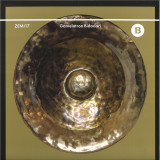
The Gamelatron is many things; one could call it a sculpture, a multimodal installation, an instrument, a robot, a feat of engineering, a vision—and it is all of these things. More importantly, though, it is a concept sustained by Aaron Taylor Kuffner, aka Zemi17, whose Gamelatrons are “sound producing kinetic sculptures” designed to create an immersive, visceral experience for the listener. Not a small feat, and yet the ambitions of Zemi17 are absolutely realized in this long-standing project, culminating now in his third release for The Bunker NY: Gamelatron Bidadari.
The Gamelatron Bidadari is not just a name—it is one of seventy-plus musical sculptures that Zemi17 has conceptualized, designed, and fabricated. Therefore, it would be inaccurate to think of this release as simply a series of arrangements composed in a finite period of time. Rather, it’s a window into a project and a process that is much larger than any single album can encapsulate. Gamelatron Bidardi is the culmination of more than a decade of work, and is central to Zemi17’s evolution, not only as a musician but as an artist.
Having studied gamelan for many years in Indonesian villages and at the Institut Seni Indonesia in Yogyakarta, Kuffner is a musician, an artist, technologist, and craftsman. The gongs in his sculptures are co-created with master Indonesian artisans. Each Gamelatron composition is site-responsive, meaning its sounds are composed for the acoustics and intentions of the space it inhabits, whether it’s an art gallery, a wooded landscape, or the inner temple of Burning Man. The Gamelatron does not stand alone: it is in constant co-creation with its physical environment, and in dialogue with gamelan’s long-standing history.
Originally exhibited at the Smithsonian Renwick as part of a show entitled, No Spectators: The Art of Burning Man, the Gamelatron Bidadari produces sounds that are delicate yet strong, and deeply hypnotic. Textured chiming creates intricate polyrhythmic patterns that are both complex and simple, or in a word, elegant. On Gamelan Bidadari, Zemi17 refrains from adhering to the strict musical structures; his approach to composition is free flowing.
He says, “I want to evoke what the music tells me it has to offer. It is like following water to its conclusion (or non-conclusion).” The arrangements on this album, written by Zemi17 and performed by the robotic arms of the Gamelatron, leaves the listener feeling enchanted, nourished and enriched.
A sense of the mystical comes through in the tonal quality of the instrument, and is conceptually felt in the sculpture’s name: the Bidadari, which loosely translates to “forest nymph.” The music conjures up natural wonder, and the four sculptures that make up the Gamelatron Bidadari, in fact, resemble trees. They are four independent yet connected entities, each with a large gong situated at their structural base—the sonic “roots” of the sculpture—while smaller gongs branch off of a golden, trunk-like spine. The Gamelatron Bidadari is as physically stunning as it is mesmerizing to the ear. A kind of divinity is invoked through its sound, or a sacred cohesion between past and present, tradition and new form. Meant to be viscerally experienced, the sounds of the Gamelatron call for sublime togetherness. Gamelatron Bidadari is not just an album but the crystallization of Kuffner’s work; it is a condensed yet spacious glimpse into the sonic power of Zemi17’s Gamelatrons, which have already been heard and experienced live by over a million people.
Закажите сейчас, и мы закажем товар для вас у нашего поставщика.

THE OZRIC'S SEMINAL 1989 FIRST TRUE ALBUM IS BACK ON VINYL
'Pungent Effulgent', the Ozric's first 'official' album in 1989, after self- releasing material on cassettes, is the first produced to label standards & retains their explorative style based on improvisations whilst performing live. One of the most influential bands to emerge from the UK's festival scene, the Ozrics layer ambient & ethereal landscapes with freeform dub trips, incredible rave grooves & psychedelic progressive rock. It's an open exploration of music & the soul.
For over 30 years, the Ozrics have experienced the vicissitudes of the rock & roll life. The band has flourished through several line- up changes, spawned several side projects, created their own record label, scored a hit record & sold over a million albums world- wide. And yet, the basic motivation behind the band's existence has never wavered.
Their signature blend of hippy aesthetics & raver electronics with spiraling guitars, textured waves of keyboard & midi samplers, & super- groovy bass & drum rhythms connect fans of progressive rock, psychedelia & DJ culture.
'Pungent Effulgent' will feature the 2020 remastering of Ed Wynne. The band's early influences from peers such as Hawkwind, Gong & Pink Floyd are evident in this transformative release.
Закажите сейчас, и мы закажем товар для вас у нашего поставщика.
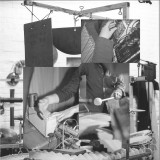
Turn up the volume and look how time bends before your eyes because that is what Robyn Schulkowsky and Andi and Hannes Teichmann do with their music. They bend time.
They make a ring out of it or some sort of ellipse, and then they pull it straight again, they transform it into a rope, and then, of course, they balance on it, forwards, backwards, half speed,
double speed, 33 rounds per minute, or was it 45? Just try both.
World percussion meets Techno and Berlin club culture, one might be tempted to say. One would be wrong to do so. This is not just crossover, this is just not an "encounter" between different generations, different experiences, different cultures, traditions and attitudes and form asossations of expressions, or, to put it in a more simple way, an "encounter" between drums and gongs and bells and stones and on the other side hardware-electronic and sequencing, delay and reverb. This is far more complex.No need to put a label on it.
by Roland Schimmelpfennig / excerpt
Закажите сейчас, и мы закажем товар для вас у нашего поставщика.

Dewa Alit, Bali’s master of contemporary Gamelan composition, returns to Black Truffle with Chasing the Phantom, presenting two recent works played by the composer’s Gamelan Salukat, a large ensemble that performs on instruments specially built to his designs, using a unique tuning system that combines notes from two traditional Balinese Gamelan scales. Alit explains that the ensemble’s name suggests “a place to fuse creative ideas to generate new, innovative works” and both compositions demonstrate the composer’s ability to wring stunning new possibilities from variations on the traditional Gamelan ensemble. While using familiar elements of Balinese Gamelan music, such as unison scalar melodies and stop-start dynamics, Alit’s music is overflowing with harmonic, rhythmic, and timbral inventions, the latter often facilitated by unorthodox playing techniques.
“Ngejuk Memedi”, an English translation of which gives the LP its title, results from Alit’s reflection on the complex relationship between tradition and modernity in Balinese culture, particularly in the way that belief in the phantoms or spirits known as ‘memedi’ are shared through social media using digital technologies. Embodying this uncanny co-existence, the opening passages of the piece are at once immediately recognisable in their use of the metallophones of the Gamelan ensemble and strikingly reminiscent of electronics in their timbre and movement. At points, what we hear seems to have been fragmented with digital tools, or even to originate in some incessantly glitching DX7. Short melodic figures loop irregularly, with the ensemble splintering into polyrhythmic shards before unexpectedly recombining for intricate unison passages. After several minutes of this manically tinkling metallic sound world, the metallophones are joined by drums for a meditative passage of lower dynamics, as the uniformly high pitch range explored in the opening sections gradually opens up to include resonant low gong hits. Recovering some of the manic energy of the opening, but now enhanced with the full range of percussion, the piece weaves through a series of tempo changes to a stunning passage of rapid-fire melodies and ringing chords that sweep across the metallophones, their unorthodox tuning creating complex clouds of wavering harmonies.
“Likad”, written during Covid-19 lockdowns, channels anxiety and uncertainty into musical form, resulting in a piece that, even by Alit’s standards, is stunning in its complexity and the virtuosity it demands of Gamelan Salukat. Its opening section is perhaps most remarkable for its mastery of texture, with rapid transitions between dry, muted strikes and metallic shimmers calling to mind the use of filters in electronic music. At points, the complex irregular repetitions of short melodic patterns, where the music seems to get stuck or be suddenly interrupted by a skip, recall the mad sampler works of Alvin Curran or the skittering surface of prime period Oval more than anything familiar from acoustic percussion music. Moving through a dizzying series of twists and turns, the piece ends with a majestic sequence of chords possessing an almost hieratic power. A major statement from a radical contemporary composer, one cannot help but agree with Alit when he sees Chasing the Phantom as an answer to the “question of the future of Gamelan music”.
Закажите сейчас, и мы закажем товар для вас у нашего поставщика.

The subterranean slumber of Nile mastermind Karl Sanders’ Eastern-ambient Saurian series finally ceases with the third chapter of his darkly hypnotizing saga, Saurian Apocalypse! The album’s musical and lyrical themes detail the vexing fictional journey of Dr. Eduardo Lucciani, one of very few survivors of mankind’s self-destruction, who descends into madness after discovering the violent horrors occurring at the hands of the Saurian Masters. Emphasized by unique instruments like the baglama saz (Turkish lute), Ancient Egyptian Anubis Sistrum, Dumbek (Middle Eastern goblet drum), glissentar and gongs, the album’s score weaves cinematic auras and deep grooves, accented by the tribal percussive stylings of original Nile drummer Pete Hammoura and returning Saurian vocalist Mike Breazeale. Whispering atop the ominous sands of opener “The Sun Has Set on the Age of Man” are resonant flutes, forewarning percussion, and an exquisitely tasteful and contextual acoustic guest solo by guitar virtuoso Rusty Cooley – kicking in the massive doors of Saurian Apocalypse. Immediately, the album’s impactful production and crystal clarity versus its predecessors is apparent
он должен быть опубликован на 22.07.2022

The Remix Machine has been pumping through Nickodemus’ studio since the late 90’s with over 100 remixes as far & wide. In this special vinyl selection of 8 remixes, Nickodemus chose some rare unreleased on vinyl remixes including Preservation Hall Jazz Band uptempo driving Jazz stomper, to the funky afro-latin dance-floor main stays of Gabriele Poso, Pernett & Vieux Farka Toure afro-latin mid tempo sure-shots, to the Colombian dubbed out Empresarios, Quantic & Atropolis.
Here we have 4 songs on each side, a very limited edition for the DJ’s & vinyl collectors.
Закажите сейчас, и мы закажем товар для вас у нашего поставщика.

Strut present an exclusive collaboration between two jazz greats, Bennie Maupin and Adam Rudolph, on 'Symphonic Tone Poem For Brother Yusef', originally commissioned by the Angel City Jazz festival in Claremont, to mark the late, great Yusef Lateef's 100th birthday on 9th October, 2020. The album weaves a magical, meditative path across five movements, combining electronics, saxophone, voices and Rudolph's wide palette of percussion from hand drums to thumb pianos and gongs. Both artists bring unparalleled experience to the project. Detroit's Bennie Maupin is best known for his work with Miles Davis on Bitches Brew, Herbie Hancock and The Headhunters and Eddie Henderson. Chicago percussionist Adam Rudolph was Yusef Lateef's percussionist for 20 years and has worked with many other jazz luminaries including Pharoah Sanders, Wadada Leo Smith and Don Cherry. His work with Mandingo Griot Society during the '70s and '80s and, more recently, leading Hu Vibrational and Go Organic Orchestra constantly break new ground in the use and context of percussion.
он должен быть опубликован на 17.06.2022

The Bongo Hop is back with his third effort, La Ñapa, an 8 track mini album/EP featuring Angolan legend Paulo Flores, Colombian singer Nidia Gongora, Danish hip hop crew Dafuniks, Voilaaa & more…
With those new tracks, B-sides and remixes all bearing his trademark -infectious afro-caribbean grooves, warm brass, suprising and genre-bending sound ventures - he’ll take you on a ride from Cali to Luanda, via the dunes of Bechar and the clubs of Detroit and Port au Prince.
Закажите сейчас, и мы закажем товар для вас у нашего поставщика.

By now counting more than four decades of constant activity, Pierre Bastien erected such a towering and influential body of work that any blurb attempt regarding his music could easily fall into redundancy. Not that his revolving soundworld, deeply personal and unique, has ever stalled into gimmick or self mimicry, being Bastien the tireless explorer whose vision can never be complete, only continuously redefined in a process of discovery equally playful and challenging. So, completely in touch with Discrepant's ethos.
Returning to the label after 2017 The Mecanocentric Worlds of Pierre Bastien, the french musician, composer and instrument builder, brings an array of instruments from different cartographies and legacies with the appropriately titled Sonic Folkways. Resorting to different types of horns, prepared trumpet, an army of percussion, from gongs and tambourine to castanets and maracas, violin and too many others to mention here, Bastien weaves together a highly textured and hypnotic mosaic that projects an exotica beamed from scraps of the future. 'Aha!' in the same interstellar wavelength as Sun Ra's cosmic tones, 'Moor's Room’ almost orchestral tapestry of small percussion and insects or the non-western strings and tunings salvaged from ancient alien ceremonies on 'Pan's Nap'.
In an era where so much ink has been shed about world building in experimental music, Bastien can actually claim that to himself. The otherworld is right here, indeed.
он должен быть опубликован на 10.06.2022

Gongs have played an integral role in the mythogeography of Asia. This is not music that aligns with national borders or ideas of homogenous populations, let alone racial stereotypes and exotic clichés. What connects all of these tracks is a simultaneous feeling of entrancement and social cohesion. Communal and collaborative, its form is hypnotically repetitious, melodies and rhythms spread out among the players using the technique of hocketing in which a flowing line is distributed among all the musicians. The effect is mesmerising, immediately intoxicating to anybody who loves Chicago footwork, free improvisation, Sun Ra or young hip hop producer Jetsonmade. The music is simple yet mysterious and enveloping, a sound world in which to disappear. A theory exists but this is not explained. - David Toop (extracts from the liner notes)
This project, Massif and Archipelago, is a field recording project initiated by Japanese sound artist Yasuhiro Morinaga, documenting traditional gong music by different Southeast Asian ethnic groups. The project aimed to examine the impact of the natural and social environment on the gong music culture of Southeast Asia. During the project, he visited over 50 different ethnic groups and made hundreds of recordings. This album presents a selection of the unique gong music from different ethnic minorities. The selected music has been divided into two broad sections: one focussing on the music from the Massif, i.e. mainland Southeast Asia (Central Highland of Vietnam and Northeast Cambodia), the other on music from the Archipelago, maritime Southeast Asia (the Luzon Islands of the Philippines, Borneo, Sulawesi, and the Flores Islands of Indonesia).
он должен быть опубликован на 20.05.2022

Cocteau Twins, Jefre Cantu-Ledesma, Julia Holter, DIIV, Washed Out, Broadcast, Insides, Beach House, Drug Store Romeos. Introducing Beneather, a BAFTA-nominated composer from North London obsessively crafting sad, lo-fi, cinematic, ambient scandi-dreampop submerged in gently fuzzy tape loops. Much like the paintings of Gerhard Richter or a heavy mist rolling through a familiar landscape, the debut long player from Beneather obscures and blurs ten beautiful tracks beneath washes of cinematic, ambient scandi-dreampop – details emerge and fade, voices ooze and flow, tunes soothe and unnerve, metronomic beats click and swing. It would not be out of place on a David Lynch or Jim Jarmusch soundtrack. Inspired by the likes of Jefre Cantu-Ledesma, Hammock, Grouper, Low, GAS, Huerco S., Emeralds, Jenny Holzer, William Basinski & ABBA!! Beneather is the solo project of Lewis Young - composer and collaborator in The Leaf Library, drone pop from north London. As a composer, Lewis recently scored the British short ‘Lucky Break’ which found its way into the BAFTAs short list only to narrowly miss out on the gong. Lewis is a multi-instrumentalist, producer, designer and filmmaker currently living in Walthamstow, London. He started as a guitarist in noughties math-rockers Tea with the Queen, shifting to bass for multi-harmonied Naomi Hates Humans before returning to thumping roots as drummer for The Leaf Library. Objects Forever - the imprint label created by The Leaf Library - has provided Lewis with the vehicle to jump back into experimental song craft, inspiring the genesis of Beneather. “I just needed to make a project which spoke to all the aspects of music I’ve loved creating as a multi-instrumentalist. Plugging things into things to make satisfying little electronic loops, then layering extremely minimal bass and guitar lines with a lo-fi aesthetic. Melinda and I spent a few days in the studio - picking out objects, patterns… items that could inspire a thread of instinctive wordless melody. I took that expressionism and sliced it to pieces, rearranging it into ambient vocal hooks.” Beneather is an exercise in hypnotic simplicity. Experimental, dream-like music built on layers of scratchy electronic tape loops, chiming spacious guitars and abstract pulsing vocals. These cinematic songs combine Grouper's wistful deviations with the warm fuzz of Jefre Cantu-Ledesma, the nocturnal hum of Emeralds, the crackling collapse of William Basinski and Low's glacial pop melancholy. Outside of compositions for film, TV and Podcasts - Lewis plays with the indie drone-pop band The Leaf Library, featuring Matt Ashton from John Peel faves Saloon (“World-weary yet innocent, blissful dream-pop” - UNCUT - 8/10). Lewis has supported the likes of Lali Puna, Joanna Newsom, Lætitia Sadier & Alexis Taylor.
он должен быть опубликован на 13.05.2022

Elders is the debut release from Ensemble Nist-Nah, a nine-piece percussion group led by Nantes-based Australian drummer and percussionist Will Guthrie. The diverse group of French musicians that make up Ensemble Nist-Nah – whose collective experience encompasses traditional Gamelan performance, contemporary composition, noise, jazz, and everything in between – perform on drum kits, traditional and junk percussion, and a complete set of Javanese Gamelan instruments. Though building on the foundations of Guthrie’s solo work with Gamelan instruments (Nist-Nah, BT057) and primarily performing his compositions, Ensemble Nist-Nah is a collective endeavour, propelled by a breathtaking enthusiasm that has seen the ensemble manage to rehearse, perform, and even tour Europe during the Covid-19 pandemic.
From the first seconds of opening track ‘Geni / Tirta’, it becomes immediately obvious that this is no dry academic exercise or exotic indulgence. Rapid arpeggiated figures are propelled by manically busy kit drumming while slow-motion melodic lines float above. After a series of abrupt tempo changes and fragmented unison passages that crossbreed the rhythmic intensity of the Balinese Kecak with the joyride of an Ornette Coleman head, the music slows to a monumental groove, equal parts Javanese court music and Dark Magus. Another sequence of thrilling divagations leads us to the unexpected guest appearance of acclaimed vocalist Jessica Kenney, who elaborates a haunting Javanese Bedhaya across a spacious backdrop of massive gong hits, shimmering cymbals, rustling bells, and gritty textures.
The remaining pieces that make up Elders explore a dizzying variety of approaches, from the shifting rapid-fire muted textures of ‘Overtime’ to the ghostly bowed tones and ominous swells of the title piece (developed from a track on Guthrie’s solo Nist-Nah release), which gradually builds into waves of shuddering low resonance and asynchronous percussive clicks like a haunted clock mechanism. On the aptly titled ‘Rollin’, virtuosic twin drum kits criss-cross errant metallophone patterns in propulsive polyrhythms, while ‘Planeker’ manages to achieve a bizarrely effective fusion of Harry Partch and Autechre. Arriving bedecked in beautiful monochrome images of gongs drawn by ensemble member Charles Dubois, Elders is a feast for the ears: music that burrows deep into timbral and rhythmic possibility while possessing an intoxicating physicality and revelling in the joy of collective performance.
Закажите сейчас, и мы закажем товар для вас у нашего поставщика.

West London's post-punk scene is showcased with an EP built on the raw energy of like-minded collective spirits of the time by the short-lived Hamburger All-Stars.
Primarily revolving around the ideas of Justin Adams, a recent arrival in London with his band, The Syndromes, they soon found themselves recording at Street Level Studios - a basement squat in then run-down Little Venice. With producers Kif-Kif Le Batteur (Here And Now / Planet Gong) and Grant "Showbiz" Cunliffe (Blue Midnight / The Fall), their open-minded techniques allowed Adams to develop his increasing interest in the "studio as instrument" principles he loved from the likes of Brian Eno and Lee Perry.
Not a band as such, but friends and musicians from other bands all contributing including The Impossible Dreamers, Alternative TV, Gong and more, this "All-Stars" collective would later go on to be part of, form or affiliated in The Invaders Of The Heart, The Pretenders, Moodswings and Mutoid Waste.
Appearing on just 2 releases, the now rare split 7" and LP for the aptly named 100 Things To Do / Fuck Off Records, the songs initial vocals soon shift into funk and dub improvisations. One Million Hamburgers, Swinging London Pt 2 and Studded Leather Jacket almost fall away into atmospherics, with guitar, bass, percussion and horns augmented by Dr Rhythm machine, shortwave radio and heavy doses of Space Echo that capture the period's rawness and naivety to perfection.
Закажите сейчас, и мы закажем товар для вас у нашего поставщика.
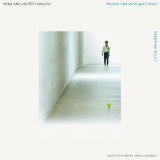
"Absence of the loved one is a theme running through both films, but during the creative process we never discuss with the Havels the themes, symptoms or attributes of the characters. We do not specify any meanings. Our collaboration is intuitive, based on interconnectedness. We neither explain things to each other nor analyse. From the outset we have a common goal: to quieten the viewers’ perception, to attune them to certain vibrations by visual, musical and acoustic repetitions, thus enabling them to focus on every tiny detail, every subtle aesthetic quality, so that by the end of the film they have a sense of reconciliation. In fact it is a state similar to meditation or prayer. The aim is being shown Mercy. Each time, the linking of the filmed images with Irena and Vojtech’s music has uncovered a new quality that we have named: a commentary on eternity. Characters cease to be determined by their senses, psychological motivations, or the times they live in. They find liberation in the stream of eternal time." /Václav Kadrnka
"We would like to thank all our friends, sound engineers and musicians. The main thanks go to director Václav Kadrnka, his family and all his collaborators for the precious opportunity to assist them in creating both films. We have worked on our music for the film Saving One Who Was Dead for three years. We met with Václav, discussed the screenplay while it was being born and many other things. We have gradually prepared several working versions that included compositions for piano, Indonesian gamelan, gongs, Tibetan bowls, bells and mini-bells. Yet, step by step, we made it simpler and simpler and eventually only kept violas da gamba, organ and chanting. Everything else was redundant. We made most of the recordings of the compositions for viola da gamba in a church in Prague. The composition for organ was recorded in Milan where we performed a concert shortly before the pandemic arrived in December 2019. We tried to record it in various churches in Bohemia but it was not until the church in Milan that we found the best sounding organ.
As for Little Crusader, we recorded the music for the film after it was completed. We had several versions and used the piano version for this album. Together with Václav, we searched for instruments that would work the best for this Medieval story. Eventually, we opted for harmonium with simple chanting which accompanies the character little boy Jenik. Violas da gamba intertwine, move close and then apart from each other the same way as paths of little boy Jenik and his father who is searching for him. Simple chanting and Tibetan bowl accompany scenes with little boy Jenik’s mother who awaits them at home. Trombone and saxophone are like metal swords and the knights’ armor. Violoncello and viola da gamba walk in the rhythm of horse’s hooves, in the rhythm of heartbeat of both the horse and his rider – a father searching for his lost son."
/ Irena and Vojtěch Havlovi
он должен быть опубликован на 31.03.2022

Thomas Köner is one of the most influential modernist minimal composers. His music is often defined as dark ambient or drone, because of the use of low frequencies, material from gongs,shadowy resonances and boreal ambience, but at the same time its sound with constant fluctuation and vulnerability of sonic events, what makes it organic, human and almost comforting.
Köners soundscapes are no longer simply dark, the question now is that of a profound blackness. Such is the generic darkness of the abyss, the void and vacuum, the darkness of more than silence, of catastrophe and cataclysm, but also the soundscapes have utopian moments. It is a cosmological blackness, the black of nonbeing.
The more subtractive, the blacker the sound synthesis, Köner writes. Such blackness is non-music. Music will never be music until it ceases to represent and begins to sound like non-music or monochrome.
"Whoever hears the distortion of all sounds, will soon become Ultrablack. Whoever listens to this world, but has no affection for any of its sites, even to the place of Black Noise, may soon reach Ultrablack. Whoever understands the spirit of impartiality through ten thousand million partial tones, hears Ultrablack and can no longer be measured. No measures, no enclosures, no properties are the sign of ultrablack scores." Thomas Köner
Aubrite was first released 1995 on the label Barooni. Roland Speckle helped with production of the album. Aubrite is the name of a group of meteorites named for Aubres, a small achondrite meteorite that fell near Nyons in 1836.
Закажите сейчас, и мы закажем товар для вас у нашего поставщика.

In the early 1970s the island of Jamaica, and in particular its reggae musicians, developed a love affair with small Japanese motor bikes. Honda bikes were eulogised in Big Youth’s ‘S90 Skank’ and Dillinger’s ‘CB200’, whilst their rival was lauded on Shorty The President’s ‘Yamaha Skank’, to name the most obvious examples. The plot of the film ‘Rockers’ revolved around how transformative a motorbike could be, providing a livelihood whilst projecting an image of success in the ghetto.
Vivian ‘Yabby You’ Jackson had been fiercely independent as a singer and producer, and the success of his early self-pressed productions, mostly on the Prophets or Vivian Jackson labels, had given him a sense of hard earned autonomy. A motorbike was one of the fruits of his labours, acquired as a way of zipping around the capital’s roads to deliver records and organise recording sessions. His wife Jean could often be see hanging on to the back. Twelve years after his death, she remembers various exploits on the pot-holed roads of Kingston.
Jean Vencella Williams: ‘His first motorbike was a Honda 50 and then a 100, a Yamaha. I remember the Yamaha, it was a dark blue colour, it must have been from the mid 70s til the early 80s. I used to ride around on the back and we ride all over, like we go to the country cos his mother lived in Clarendon. And he had a little carrier thing for boxes of records, so we go to Mandeville in Manchester, sometimes to Spanish Town fe sell records. Most of the time he sell them to the shops, like Randys, and the people them buy it from there. He had pressing plants like Byron Lee and later Tuff Gong, so when the records pressed we find out the time when we get back the records, which usually was at least a couple of days or about a week. And later when we living in Clarendon we come into Kingston to pick them up at the pressing plant. And when he book the studio he might book two or three days and we come in and usually stay til late.
‘He used to carry the records from the different pressing plants on the bike, but because of the rain and weather you know it not so good for the records, and also the sun beating down. Then Wayne Wade had an accident on the Yamaha, and he was hurt quite bad, and he had to go to the hospital for quite a while. Well Yabby didn’t ride it after that, cos it was getting dangerous with so many cars coming in. So he gave up the Yamaha and bought a Toyota Carina, and that car was very good to him. Then the Carina become a little shaky, so he got a Toyota Corolla which he drove until his death.’
This album presents a sample of the best of those ‘Dubs and Versions’ that Yabby was ferrying around town, whether rarities, B-sides or tracks culled from albums that showcase the breadth of Yabby’s productions between 1975 and 1982.
This release comes with sleevenotes original artwork.
он должен быть опубликован на 11.03.2022

As a confluence of ideas and methods, WILD ROCKET endeavour to interpret the subtle signals of the universe - the interplanetary vibrations - and present them as brash manifestations of sound. Scientists and Shaman alike have endeavoured to interpret the universal whispers, to elucidate meaning from the measurable and the sensible. It is known that to measure and interpret is to alter and colour those signals and this is what drives the development of WILD ROCKET's sound and interpretation.
FORMLESS ABYSS showcases the band's unflinching pummelling style, drifting from repetitive blows to unhinged swirls of din yet always remaining innately infectious and perhaps surprisingly danceable. The record is presented as a continuous piece in three parts.
The title track A FORMLESS ABYSS appears here for the first time in recorded form – a behemoth of a tune which builds around a drone, joined by dual drums and minimal bass locked into a repetitive groove. A groove that is slowly expanded via multiple guitars and synthesis. Vocals eventually join at just the right moment imploring the listener to “leave your criticisms down” and realise “we're all equal now” in the formless abyss or the place between worlds where our earthly preoccupation with human differences are meaningless. We're all in it together, whether we realise it or not.
The second track INTERPLANETARY VIBRATIONS may seem familiar to some in a simpler form. The expanded line up and extended development of the core theme brings a new interpretation and experience that is more than worthwhile. The track's vocals juxtapose the hybrid Germanic language of English with the ancient native Irish language of Gaeilge. Both used to promote meaning and interpretation of the interplanetary vibrations felt by all. The track features large dynamic shifts and changes of pace as the message that “it's time to leave” propagated by the Earth itself becomes more frantic and more desperate. The track culminates in a wash of smashed gongs and distorted guitars, leaving the listener to interpret the message for themselves. Should we leave, to protect ourselves or the Earth itself?
The final track FUTURE ECHOES is a doom/kraut juggernaut coming in at just under twenty minutes. Only one question is asked and none answered, are we doomed to repeat the mistakes of previous civilisations over and over, or can we find the cracks of light that echo through and show us a new way forward? We're left in a swirling formless abyss to consider who we are and where we're headed. Will we ever reach the cosmic truth? Or will we be continuously mocked by the cosmic trout?
WILD ROCKET have proven themselves on the live circuit, playing with such visionaries as Ufomammut, Slomatics, Earth, Boris, The Cosmic Dead and old school rock legends Girlschool. One of the heaviest bands to emerge from the melting pot of talent in the Irish music scene, WILD ROCKET's reputation precedes them wherever they travel and audiences and venues alike are left to piece themselves together in the discombobulation.
он должен быть опубликован на 04.03.2022

Limited Edition Vinyl LP – 1971 album cover, thick tip-on sleeve, 700 copies only
Finally putting an end to a long wait for library music lovers, Four Flies Records is proud to present the first reissue of Piero Umiliani's Paesaggi – a record that, despite remaining for many years pretty obscure compared to other titles in the maestro's discography, is now regarded by collectors and experts as the gold standard in Italian library music.
Originally released in two versions with different sleeves, the first on Liuto Records in 1971 and the second on Ciak Record in 1980, the album features tracks composed by the maestro himself (under his alias Zalla) and performed by the legendary super-group of Italian session players I Marc 4, this time with Angelo Baroncini instead of Carlo Pes on guitars (which probably explains the name being spelled with a 'k' instead of a 'c' on the album cover).
The Italian word paesaggi means "landscapes", and that is exactly what the music in the album has been designed to evoke – a journey of moods and emotions, through exotic and pastoral scenery, with loungey sounds that caress your ears like the song of an enchanted nightingale. Mysterious yet captivating soundscapes transport you to a faraway and peaceful place, possibly somewhere in rural Asia. While listening to the record, you'll feel as if you are sitting under a pavilion, right in the middle of a tea plantation, enjoying a freshly brewed green tea and watching the calm sunset.
In addition, Paesaggi is paradigmatic of Italian library music and its genre-defying nature. By using a multitude of instruments, such as flute, vibraphone, harpsichord, sitar, gong and others, it brings together a variety of arrangements, styles, and genres spanning from bossa nova to jazz, easy listening to psychedelic, Latin, exotica, and many more.
Under Umiliani's brilliant direction, the pianos and keyboard instruments of Antonello Vannucchi, the guitars of Angelo Baroncini, the bass of Maurizio Majorana, and the drums of Roberto Podio dance together and – enriched by other instruments played by top session musicians like Bruno Battisti D'Amario (sitar), Franco De Gemini (harmonica), or Franco Chiari (vibraphone) – create the sound that makes Paesaggi so unique.
With the honour of reissuing this masterpiece so many decades since its release comes a responsibility to do full justice to one of the greatest Italian composers of the 20th century and his now celebrated legacy. Four Flies have done their best to put out a record that replicates as closely as possible the value of the original as a cultural artefact, providing Italian library connoisseurs and novices alike with an exquisite sonic, and tactile, experience.
Закажите сейчас, и мы закажем товар для вас у нашего поставщика.

JJ Tartaglia and Jonny Nesta (also band members of world-renowned
Skull Fist) have joined forces once again to form Thunderor, the latest
80s-infused heavy metal /hard rock sensation
The debut album 'Fire It Up' delivers hook-driven stadium caliber songs with an
untamed spirit. Thunderous drums, lightning hot guitar licks, dreamy synths, and
piercing vocals form the musical storm that is Thunderor. Complete with singalong choruses, drum solo breaks, ripping guitar leads, keytars, motorcycles, and
gongs, the Canadian trio will have you fueling up for adventure as you sail through
the 9- track album. For those who've ever felt a longing for escape, a thirst for
adventure, wrapped in romance and danger, Thunderor is your soundtrack!
он должен быть опубликован на 25.02.2022

Al Doum and the Faryds continue their journey toward a New Direction. Now, they live in a futuristic Garden of Delights, inhabited by strange bright bubbles, golden wheels, water secrets and mysterious plants. From their home of Love & Nature, they set out to travel the Universe to forge a new Being together. Their typical blend of Spiritual-Jazz, Psychedelia and Afro-Latin Rock remains on the same wave, accentuating the collective rite of liberation and expansion of the spirit. There's certainly a greater lightness and airiness, expecially in the most immediate and direct arrangements to convey the message of brotherhood; because the absolute weapon lies in female voices and choirs. These chants are incisive gospel and soul sermons and their narration magically permeates throughout the album. Everything is always supported by the balance between robust and biting guitar riffs, raga-rock incursions, tribal rhythm sections and impregnable and captivating sax drifts; and echoes of the soft lysergic sound of the 60s cannot be missing. This is music of multiple forces, a sacred harmony to overcome barriers, which sees no enemies and breaks down egos. It's the playfulness and the power in making music together, the true magic recipe of these Freaky People: we are what the Universe wants!
он должен быть опубликован на 28.01.2022

Described by his peers as a keystone in ambient-electro, Datassette is a bastion of the underground and one of alternative electronic music’s most exceptional and enigmatic talents.
His extensive and diverse discography spans two decades and includes a plethora of albums, EPs and remixes for independent record labels, including: Ai Records, Apollo/ R&S, Wall Of Sound, CPU and Shipwrec. His work and creative output also extends to the design of music libraries for TV and radio; producing sound effects for 8-bit video games; working as a graphic designer and co-running the Misc label.
Datassette has never been shy of creating complex, addictive and emotive music and this magical music formula is replicated on Sentinel, his new EP for Lapsus Records.
As is emblematic in his long-standing career, Datassette demonstrates a healthy non- conformist approach to conventional labels and pigeonholing. By using a combination of powerful vintage hardware and latest generation digital techniques, the British producer continually manages to redefine his sound. This new four track EP sees him fuse dub, electro, braindance, ambient, experimental electronica and even abstract hip hop.
Закажите сейчас, и мы закажем товар для вас у нашего поставщика.

Manufactured using FSC certified cardboard.'Transparency' is Sam McTrusty
spilling his guts on everything from marriage, male friendship and the absurdity of
social media to parenthood, medication and his mum. Written in strained
circumstances and recorded remotely with Sam's mate and mentor Jacknife Lee,
the album arrived more by accident than design when the world went into
lockdown last spring.
он должен быть опубликован на 07.01.2022

Manufactured using FSC certified cardboard.'Transparency' is Sam McTrusty
spilling his guts on everything from marriage, male friendship and the absurdity of
social media to parenthood, medication and his mum. Written in strained
circumstances and recorded remotely with Sam's mate and mentor Jacknife Lee,
the album arrived more by accident than design when the world went into
lockdown last spring.
он должен быть опубликован на 07.01.2022
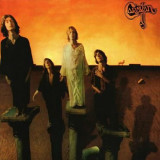
For their first album, Caravan was surprisingly strong. While steeped in the same British psychedelia that informed bands such as Love Children, Pink Floyd, and Tomorrow, Caravan relates a freedom of spirit and mischief along the lines of Giles, Giles & Fripp or Gong. The band's roots can be traced to a British blue-eyed soul combo called the Wilde Flowers. Among the luminaries to have passed through this Caravan precursor were Robert Wyatt, Kevin Ayers, and Hugh Hopper and Brian Hopper (pre-Soft Machine, naturally). The Caravan album never sold in serious numbers, and for much of 1968 and early 1969, the members were barely able to survive -- at one point they were literally living in tents. Suddenly, Caravan was an up-and-coming success on the college concert circuit, even making an appearance on British television's Top of the Pops. With national exposure and a growing audience, the group was at a make-or-break moment in their history. They rose to the occasion with their second Decca LP, In the Land of Grey and Pink, which showed off a keen melodic sense, a subtly droll wit, and a seductively smooth mix of hard rock, folk, classical, and jazz, intermingled with elements of Tolkien-esque fantasy.
он должен быть опубликован на 06.12.2021

Witness the ever-changing, ever-mutating threat that is reality.
Perception is under duress; sensibility is bending everyday
under the barrage of nonsense. One must make note of whom
one is and what one has become: look into the mirror of the
planet-killers—psychic cannibals infiltrate and contaminate
once familiar and seemingly secure territories… formidable
foes indeed! What powers these beasts? What fuels discord
and hatred? The behemoth of a “civil” society? What are the
weapons at one’s disposal? Generosity is the aegis against greed,
empathy is the armor to deflect apathy, love is the club to abate
hate…the fog is lifting and humans are opening their eyes.
And so Castle Face offers this field recording, the Osees
Protean Threat, from the pits as a quick booster between protein
pills and recycled sweat beverage anthems to assist the listener
to not worship at the altar of violence and greed, to not offer
oneself up for free, to stand up and be vigilant! Truth will not
be found in the speeches and photo ops of the overlords— stand
strong and together under the gaze of the oppressors.
Stand vigilant, united with those who don’t have the same
privileges. Demand respect and a peaceful life for all.
This recording is at the apogee of scuzz—punk anthem
amulets for the ears and heart, a battery for one’s core. Be
strong. Be human. Be love.
он должен быть опубликован на 26.11.2021

LP[24,24 €]
Heavy Psych Sounds Records is really proud to present the Psychedelic-Space split of the century! "The Intergalactic Connection - Exploring The Sideral Remote Hyperspace" it's a split album that came from deep deep space! Here Giöbia meets The Cosmic Dead, two of the best modern space-rock bands you can find. The Italian quartet come with 3 incredible songs, while the Scottish guys deliver a 19 minute long suite. This piece of psychedelic journey is a travel inside the universe, 4 tracks full of heavy psych and space rock riffs that will bring you into a psychedlic vortex with no way out! A must-have for all the space travelers. Fans of Hawkwind, Pink Floyd, UFO and Gong will be more than enthusiastic ...It's a Space Ritual journey!
он должен быть опубликован на 29.10.2021

LP[19,87 €]
Half red/half blue Vinyl. Limited to 350 copies. Heavy Psych Sounds Records is really proud to present the Psychedelic-Space split of the century! "The Intergalactic Connection - Exploring The Sideral Remote Hyperspace" it's a split album that came from deep deep space! Here Giöbia meets The Cosmic Dead, two of the best modern space-rock bands you can find. The Italian quartet come with 3 incredible songs, while the Scottish guys deliver a 19 minute long suite. This piece of psychedelic journey is a travel inside the universe, 4 tracks full of heavy psych and space rock riffs that will bring you into a psychedlic vortex with no way out! A must-have for all the space travelers. Fans of Hawkwind, Pink Floyd, UFO and Gong will be more than enthusiastic ...It's a Space Ritual journey!
он должен быть опубликован на 29.10.2021

Nantais by adoption, the Australian Will Guthrie is a discreet star of the international scene of free, experimental and improvised music; over the past fteen years, he has developed an open and personal approach to drums and percussion, skillfully blurring the lines between his brilliant jazz upbringing, his passion for traditional musics, and his inexhaustible interest in experimental and noise creation, with a pronounced taste for a physical and raw approach to sound. With thousands of performances and some fty albums to his credit, the Australian regularly dispenses his vibratory art solo or alongside the best of improvisation; From Oren Ambarchi to Roscoe Mitchell via Jérôme Noetinger, Anthony Pateras, David Maranha, Ava Mendoza, Jean-Luc Guionnet, Keith Rowe or even Mark Fell. In recent months Guthrie has performed with Tunisian singer Ghassen Chiba, toured as part of “All Around”, a performance with Danish dancer choreographer Mette Ingvarsten and founded the Ensemble Nist-Nah, a gamelan orchestra, in the company of eight other percussionists, out of which Black Truf e published an album, with a second on the way. He also found the time to put in shape a second volume of “People Pleaser”, a discographic act between an autographical assessment, the parenthesis and the musical UFO. A singular exercise in Guthrie's discography, “People Pleaser”, a series initiated in 2017, sees the Australian partially put down his drumsticks and wear a producer cap for a result offering a resolutely singular perspective of / on his work with a very personal dimension. On the rst volume, with a cover signed Stephen O'Malley sets the tone by diverting the chamaré Warhol infulenced visual of the album “Unit Structures” by Cecil Taylor. The portrait of the free jazz pianist has been replaced by passport photos of Guthrie. The result is a diversion into a fairly “Pop” aesthetic whose musical content works in a fairly similar way. Four years later, the cover art's undertones are slightly darker and Guthrie hasn't aged a bit on his new passport photo. The twelve tracks of this second “People Pleaser” combine and arrange eld recordings, heady loops, twists, musical quotes stuck on bedside records, recorded moments captured during travels, ghosty voices from low- lands, a police interview tape and imagined exotic sounds ... Guthrie could walk us for hours on his hard drive like looking at a photo album but he chose to build pieces based on this very personal sound material, much like a mixtape, with special care given to how sounds articulate, overlap and collide. He thus invites his heroes and his friends to join him in skilfully chiseled and nely edited imaginary jams. The rst to take pleasure in this “People Pleaser” is undoubtedly its author as some of his nds are enjoyably playful; we are there embarked in an addictive sound patchwork at high speed where a Balinese Squarepusher is propelled via a defective cathode ray tube in a temple where the happy marriage of the saxophone and the gong is celebrated before this too short respite is interrupted by a sustained hip hop rhythm. The multiplicity and variety of sources give the whole a very pop format and the way in which Guthrie combines sounds, textures, rhythms and vocal elements quickly takes on a narrative dimension and poses this exercise between hip hop and a very personal plunderphonic, evoking as much J Dilla or RZA as the irreverent inventiveness of People Like Us or Wobbly. Will Guthrie has never been in as good company as on a solo album, he also lists on the cover the list of friends, heroes, members of his family and countries who inspired him and to whom he pays homage / collage on this new disc; An aesthetic exercise apart in his discography, both in nitely personal and self-centered and resolutely turned towards what animates him, the aptly named “People Pleaser” reveals the music DNA of the Australian and can be listened to on repeat.
он должен быть опубликован на 08.10.2021

Emotional Rescue and HMV Record Shop (Japan) present Red Cloud and their roots disco rarity I Want To Be Free, with it's even scarcer dub version Freedom, together on 7" for the first time as part of the DISCO REGGAE LOVERS series.
This Brixton based band appeared on Emotional Rescue last summer with their Double Talk / Dubble Dub 12" (ERC102) rightly shining a light on their underrated output. Releasing on Tuff Gong, Red Stripe and Dancefloor the band released two albums and numerous singles of warm, rock-soul touched British roots sound system shakers.
I Want To Free / Freedom only appeared on the B-side of their super rare debut 12". While the A side's Double Talk was 'inna Lovers Disco style', here they keep the groove but explore the righteous stance of Pan African-Caribbean culture of the time, with a call for equality and fairness.
Centred around the writing of Keith Drummond and drummer / producer Specs Bifirimbi, plus support from founder Floyd Lloyd Seivright, it is in the dub version, Freedom, that the interplay of keys and drum and bass shine, a rock-reggae-disco bomb.
Закажите сейчас, и мы закажем товар для вас у нашего поставщика.

The legendary soundman and record producer, Lloyd Coxsone, began his career in the 1960’s soon after arriving from Jamaica. He was one of the first soundmen to play at West End clubs where a generation of British pop stars like the Beatles and the Rolling Stones first heard music from Jamaica. Sir Coxsone sound then dominated the seventies, when Bob Marley & Dennis Brown were among his greatest allies, as heard on unforgettable dub-plates from that era.
He formed the Tribesman Label and issued King of the Dub Rock before recording the likes of Fredlocks, Willy Stepper & Jimmy Lindsay. King of the Dub Rock 1 & 2 are recognized as reggae classics. They not only feature Lloydie’s own productions but also riddims by Jamaican producer Gussie Clarke and heavyweight dubs by mix master Scientist. On King of the Dub Rock 3, Lloydie teams up with Jahsolid Rock Music, who’s albums with Brinsley Forde, Apple Gabriel and Earl 16 were regularly heard on Sir Coxsone playlists. This album features exclusive dub mixes and vocal tracks from these artists plus brand new tunes by Mutabaruka, Chezidek, Micah Shemaiah, Var & Ras Teo.
King of the Dub Rock 3 is an essential companion for all Coxsone fans wanting to complete the trilogy. It delivers such a high standard of musical quality that it promises to be a modern day classic!
он должен быть опубликован на 30.06.2021

Psychedelic Percussion definitely sticks to his title. With the help from Paul Beaver of Beaver & Krause (famous keyboard wizard and sound engineer for the likes of Stevie Wonder), vibe master Emil Richards (check is two fantastic album on Impulse! with The Microtonal Blues Band featuring Joe Porcaro, father of the famed Toto brothers) and Gary Coleman (percussionist in the famous Wrecking Crew), Blaine goes wild in the studio with drums, gong, xylophone, organ, bongos, congas and timpani. Unusual textures and tones lead the way to 12 instrumental exotic numbers similar in a way to Raymond Scott most visionary experiments. This is pure madness, a record full of breaks and still unsurpassed in many ways. Blaine was an American drummer and session musician, estimated to be among the most recorded studio drummers in the history of the music industry, claiming over 35,000 sessions and 6,000 singles. His drumming is featured on 150 US top 10 hits, 40 of which went to number one, as well as many film and television soundtracks. He became one of the regular players in Phil Spector's de facto house band, which Blaine nicknamed "the Wrecking Crew". Some of the records Blaine played on include the Ronettes' single "Be My Baby" (1963), which contained a drum beat that became widely imitated, as well as works by popular artists such as Frank Sinatra, Elvis Presley, the Beach Boys, Simon & Garfunkel, the Carpenters, Neil Diamond and the Byrds.
он должен быть опубликован на 30.06.2021

он должен быть опубликован на 30.05.2021

It was already a reference among the diggers’ community, and one day, our friend from
Chouf made us listen to the record before Dizonord. We found Uli, one of the musicians, who still
had a fair number of copies of this 1990 LP, a tricky year for vinyl. This record is a mix between
jazz, funk and ambient but with a very special pop touch to it.
он должен быть опубликован на 30.05.2021

When Nkrumah Jah Thomas hit Number 1 on the
Jamaican Charts in 1976 with his debut single
‘Midnight Rock’ on Alvin Ranglin’s GG label it gave the
new DJ a theme song and an entry into the world of
music. Within three years he had launched his
Midnight Rock label and, alongside more music under
his own name, he produced a series of classics by the
likes of Tristan Palmer, Anthony Johnson, Early B and
many more.
In 1997 he signed a deal with Acid Jazz’s Roots label
and since then his career as a producer has been
developed and anthologised; the release of a series of
archive King Tubby and Scientist mixes, the use of his
masters to be sampled by Nas (on ‘The Don’), Protoje
and others, plus reissues of his classic albums.
To celebrate 40 years of Midnight Rock, Thomas went
back into his tape archive to unearth another 10
tracks, either with original vocals or guest names
brought in.
Behind original rhythms recorded at Channel 1, Tuff
Gong and others, featuring the Roots Radics and The
Midnight Rock Band and mixed in places like King
Jammy’s and Tubby’s we are presented with a line-up
of stellar talent - Linval Thompson with the plaintive ‘I
Can Be Your Man’, the forthright Super Cat on ‘Me
Glad She Gone’ and Luciano on the rare ‘Good Thing
Goin’ On’. They are joined by Courtney Melody,
Pinchers and Joesy Wales, Daville and more. Keeping
the circle complete, Thomas appears on two tracks,
including the future classic ‘Sounds A Go Dead
Tonight’ with Junior Vibes.
он должен быть опубликован на 16.04.2021

Real Real World is the first collaborative effort from Nantes-based Australian drummer/percussionist Will Guthrie and Australian keyboardist/composer James Rushford. Primarily recorded in a fluid, spontaneous studio session in Nantes, with overdubs added later in Melbourne and Nantes, Real Real World presents five spacious, unhurried pieces that inhabit a unique sound world characterised by wheezing, half-voiced organ chords, chiming metal percussion, and eruptions of small sounds. Beginning with the eerily beautiful, shakuhachi-esque sound of Rushford performing on detuned portative organ, the opening title track is abruptly transformed by the entry of Guthrie’s sizzling cymbals, deep gong strikes, and rustling hand percussion. On the epic ‘Lumbering’, which occupies the majority of the record’s first side, organ chords define a space in which a kaleidoscopic succession of amplified thuds, chiming bells, rustled and dragged objects, and abruptly silenced clusters advance and recede in an oneiric blur, eventually making way for a passage of Guthrie’s virtuosic polyrhythms, itself unexpectedly overtaken by waves of melting fairground organ. The record reaches an energetic climax mid-way through the second side with the stunning ‘Slakes’, where lugubrious chords in the organ’s lowest register are joined by Guthrie’s skittering rhythms, which somehow manage to call to mind both the most chaotic moments of Balinese Gamelan and the stochastic breakbeats of late-90s Autechre. On this piece, Guthrie and Rushford are joined by Melbourne saxophone maverick Scott McConnachie, who contributes an alto sax solo of burning precision, working with a single-minded palette of piercing long tones and wild intervallic leaps. Though it makes extensive use of overdubbing, Real Real World retains a strong sense of having been performed, rather than constructed: while at times the fleeting succession of events can recall electroacoustic music, its primarily acoustic nature and unhurried pace is also reminiscent of the music of AACM affiliates or Marion Brown’s classic Afternoon of a Georgia Faun. Immediately engaging while also hiding countless details in the folds of its polychrome fabric, Real Real World is a relaxed and joyous document of collaborative musical invention.
Artwork by Patrizia Bach. Layout by Lasse Marhaug. Mixed and mastered by Joe Talia at Good Mixture, Berlin.
Закажите сейчас, и мы закажем товар для вас у нашего поставщика.
