Search:good area

Styles
All
Elijah Baker Presents Park Avenue - I Never Had It So Good (7")

The exclusive Soul Jones Records debut release SJR101, "I Never Had It So Good (Uncut)."
Produced by Elijah Baker (ex-Tony! Toni! Toné! bassist) and Oakland studio maestro BJ Kemp (Ms. Monét / Raphael Saadiq), the record channels early-'70s sweet soul with a contemporary nous that keeps it fresh.
Inspired by a gospel recording by Elijah's father, Reverend Elijah Baker Sr., this romantic serenade brings together an all-star Bay Area line-up: Otis Cooper (Otis & Shugg – "Journey" / "Thank You For My Baby"), R&B hotshot Adrian Marcel and vintage soul specialist Mario Corbino, once part of The Temptations.

pre-order now14.10.2026

expected to be published on 14.10.2026

17,61 €
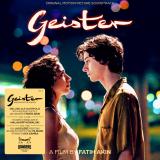
Malakoff Kowalski / Jugglerz - Geister by Fatih Akin (O.S.T.) (2LP,GF,IL,HS)
 
18

RADYO BOMBERO - ABOUT THE LABEL
Radyo Bombero is the record label founded by acclaimed filmmaker, author, DJ and record collector Fatih Akin. Born out of his personal passion for vinyl and film music, the label will initially focus on soundtracks from his films: previously unavailable works will be released on vinyl for the first time, while out-of-print titles will return as carefully produced reissues. Its inaugural release is the soundtrack to Akin's new film Geister, scheduled for release in November 2026. Further projects are already in development.

ABOUT THE RELEASE

MALAKOFF KOWALSKI - GEISTER
ORIGINAL MOTION PICTURE SOUNDTRACK
Composed by Malakoff Kowalski, the soundtrack to Fatih Akin's Geister is the inaugural release on Radyo Bombero.
Born in the United States, raised in Hamburg and now based in Berlin, Kowalski is a composer, pianist and multi-instrumentalist whose work moves between film music, contemporary classical composition, theatre and pop. He composed the music for eleven films by Klaus Lemke, as well as for productions including Schweigend steht der Wald and Stasikomödie. His solo work has been released by MPS and Sony Classical, and he has collaborated with artists including 2raumwohnung, Igor Levit, Chilly Gonzales and Nils Frahm. His sound combines elegiac melodies with a warm, cinematic atmosphere and a subtle sense of unrest beneath the surface.

For Geister, this distinctive musical language meets Fatih Akin's vision of a deliberately anachronistic and romantic score: a tribute to Ennio Morricone's great love themes that plays a defining role in the film's tragic love story and atmosphere.
LP 1 contains Kowalski's complete original film score.
LP by JUGGLERZ opens up a second musical world, bringing together four productions by the internationally successful Jugglerz on a four-track 12-inch disc at 45 RPM: the film's title song Ya Mami, performed by Aya Samra; Mood by Cloudee, Milaa and Jugglerz; Tip by Jugglerz, Limitlezz, Maureen and Demarco; and Beirut Nights Riddim. The four tracks bring Arabic tarab and contemporary Levantine pop together with hip-hop, urban beats and dancehall rhythms.

FATIH AKIN ON RADYO BOMBERO
"Radyo Bombero is on the air. Don't miss a tune!
"
Music is - alongside cinema and literature - a fundamental source of inspiration for me. Having grown up in the 1980s, the way I listen to music has hardly changed: I buy records, listen to them carefully and then copy them onto a portable device. It used to be a Walkman, then an iPod - today it is my smartphone with my playlists.
I do not use Spotify or any other streaming services. Why that is, I do not know. In most other areas, I try to keep up with technological developments. Not with music. I like unpacking a record, cleaning it before listening, holding the sleeve in my hands and reading who worked in the studio, who wrote the music and where the record was made. These things interest me. And they lower my cortisol levels.
Music plays a major role in my films. It is not that, as a director, I want to impose my favourite music on the audience. The music must always serve the story. In Head-On, for example, it tells us something about the characters and their biographies. Crossing the Bridge - The Sound of Istanbul is the musical portrait of a city. Its music tells us about the people who live there: where they come from, the cultures they brought with them and how those cultures have merged with local traditions. The Cut was conceived as a Western, and the music had to help reinforce that idea.
Geister tells a tragic love story. The music was meant to be gloriously anachronistic. And romantic. Just like the light and colours, it had to shape the atmosphere of the film. My films are often about cinema itself, and Geister is no exception. Its music is a tribute to Ennio Morricone's great love themes.
In Malakoff Kowalski, I found the perfect creative partner. He immediately understood my idea and realised it brilliantly. That made it all the more painful when I was told by the music industry that there could be no soundtrack release for Geister because soundtracks were too expensive to produce and would simply sit on the shelves.
It is not as though I am a spoiled child who absolutely has to have a lollipop. But this music is simply too good to withhold from the audience. The idea that there would be no soundtrack release felt like a great injustice.
Then several friends and collaborators advised me to release the record myself. No sooner said than done. But Radyo Bombero is not a one-off project. Geister is only the beginning.

Finally, I have the opportunity to gradually release all the soundtracks from my films that have remained unavailable. Soundtracks that were previously released but have since gone out of print will also return as reissues.
Hainbach's soundtrack to Amrum is already in development, as is a double album featuring the unforgettable German pop songs from The Golden Glove. And, finally, a vinyl soundtrack to Head-On.
Fatih Akin

pre-order now13.11.2026

expected to be published on 13.11.2026

27,31 €
Cities Aviv - Even Colder Spring LP

Black Truffle is pleased to present Even Colder Spring, the latest release from the mysterious and wildly prolific Cities Aviv (a.k.a. Wilbert Gavin Mays, who also records as African-American Sound Recordings), a rare appearance from the artist outside his own D.O.T. Audio Arts label. For over a decade, Cities Aviv has twisted hip-hop conventions into the most skewed and splayed forms, layering and lacerating twitching loops, extreme production techniques and his mercurial vocal stylings into hermetic décollage. Across 16 tracks, Even Colder Spring charts Mays’ restlessly experimental approach: what sound like fully formed productions are interrupted suddenly after seconds; interjections of field recordings cue unexpected shifts; details drown under layers of fuzz. His vocal delivery takes in rhythmically intricate rap, barely articulate murmurs and freely melodic song, the latter often with a disorientating lack of connection to the track’s harmonies. The lyrical shifts are as paratactical as the musical movements. Apocalyptic visions of social and cultural uniformity alternate with reflections on mortality, glimpses of everyday life and head-scratching one-liners: ‘Maybe Mars is bougie?’ His reference points are as surprising as ever, the Dante quotes of previous releases joined here by a track named after Henri Bergson’s idea of the élan vital. Australian listeners, in particular, might be especially taken aback to hear ‘Closing Door’ open with the phrase ‘the tyranny of distance’.

While Mays’ work can sometimes be claustrophobically bleak, the productions here are often sparkling, at times touching on the shimmer of private-issue New Age sounds and the more playful end of krautrock. The instrumental ‘Martine Drift’ could almost be a snatch of Cluster’s Zuckerzeit caught through dial-up internet. The distant echoing drums of ‘L_area’ cross Persona’s Som with lo-fi IDM, while closer ‘Final Heaven’ dissolves a cloud of loops across almost seven minutes into ecstatic, rippling distortion. The graphic design, at the artist’s request closely modelled on the format of Corwood Industries, offers as good a clue as any to what awaits the listener on Even Colder Spring: a world at once impossibly opaque and intensely personal.

In Stock

On Stock and ready to ship

Last In: 39 days ago
25,84 €
Aural Imbalance - Fragile Shapes 2x12"

The master of ambient soundscapes, intertwining authentic old school breakbeats with his inimitable style returns with a fresh album of choice cuts for the Spatial crew. A1 - Form of Defraction Opening the LP in his gloriously unique style, Aural Imbalance sets the tone with a powerfully ambient intro of padwork and delicately filtered breaks before dense, analogue old school breakbeats roar to life sending the track skyward. The sublime 808 bassline simmers beneath an ever-evolving soundscape of twinkling melodies and strings, the very essence of serenity captured in just under 7 minutes of audio bliss. A2 - Discreet Function Enveloping the listener with a warm blanket of silky ambience, Discreet Function soon jolts to life with a crunchy breakbeat that counteracts yet compliments the pads and myriad of delicious micro melodies so well, you wonder how it’s possible to take such extremes and mix them down so expertly that our ears accept it as one. After a relatively brief breakdown the track rolls out before the breaks are snatched away at the death - capping off a quite unique composition. B1 - Softlight Light cymbals and delicate textures introduce us to Softlight, a track which sees Aural Imbalance guiding the listener through the clouds to a haven of gentle serenity where your troubles simply fade away, punctuated by a stunningly programmed and memorable Hot Pants break pattern, timid classic basslines and an overall plethora of sun-baked energy - perfect for the headphones and the record box - as always. B2 - Airwave Immensely old school vibes are immediately present in Airwave, with analogue breaks and succinct female vocal samples that mingle with echoing melodies and synthwork to create a beautifully flowing and unique slice of atmospheric gold. Additional breaks are fused into the mix as the track progresses, elevating the piece to the heights we have come to expect from Aural Imbalance, yet never cease to amaze. C1 - Speed of Light Gentle cymbals and filtered breaks open Speed of Light, before a crisp barrage of amen goodness descends and dominates proceedings - just as a good amen should! Programmed to perfection with an immensely danceable rolling pattern, the amens lead us through a sea of washing synths and delicate melodies, intertwining and frolicking in the mix, completing a charming and memorable piece. C2 - Fading Star Playful strings and a luscious 808 bassline play with sumptuous padwork in the intro to Fading Star, a track which sees Aural Imbalance capture the essence of 90’s jungle and it’s symbiotic relationship with atmospheric drum & bass perfectly. Developing throughout with an array of unassuming effects and a quietly moving vibe, Fading Star is the perfect addition to sets spanning the entire history of this music. D1 - Drifting Under Bright Skies Aural Imbalance resurrects the excellent break last featured on Spatial in his sublime track Surface Area, this time chopped and sliced to a different vibe, with kickdrums at the forefront and that fantastically crunchy snare deployed more sparingly. Shimmering padwork and light melodies dance across the mix throughout to leave us with a refreshingly unique and memorable track you won’t be able to get enough of. D2 - Violet Completing this fine LP of old school ambient breakbeat mastery, Aural Imbalance deploys Violet to see us out - a climactic-feeling romp that opens with quiet intent before launching the listener through cheery melodic tones and bustling soundscapes, sprinkled liberally with airy pads and fluttering micro melodies that zip and whoosh around thick analogue breakbeats. A fitting end to a thoroughly enjoyable album. Words by Chris Hayes (Spatial / Red Mist) credits

In Stock

On Stock and ready to ship

Last In: 87 days ago
26,85 €
Various - The Garage Sound Of Deepest Crouch End

40 years after Dave curated the 'Garage Sound of Deepest New York' series featuring the cream of the crop of American US Garage, the series ran for 4 instalments. Dave re-ignites the torch to bear once more and champion the sound more locally, the leafy area of Crouch End, London, to be precise. This four tracker is a testament to the knowledge and expertise Dave Lee has with this particular soulful sound & genre. First up is 'Everybody Needs Somebody' with its powerhouse gospel vocal performance from Rance backed up with swathing chords, piano & organ work by Matt Cooper and Dave's swinging heavy drums. 'Every Second Every Minute Every Hour' is next from Dave Under, his new Hillman Avenger alias, who takes things in a more jazz funk direction, with masterful piano & brass work and scorching synth solo as the cherry on top. 'Our Love' is an updated rework of a vintage Republic Records track featuring the dynamic vocals of AJ Lewis. Bouncy house drums backbone the syncopated chord stabs before a gear change around the halfway mark signals a big heads down, hands up moment. Before the famous clock tower of Crouch End strikes 12, we have time for one more cut by the name of 'No Excuses' featuring the legend that is Lifford, who does what he does best, soulful yet mighty vocals. This is a peak time, feel-good slab of the Garage house that would have maybe made it onto one of Dave's original comps back in the day.

In Stock

On Stock and ready to ship

Last In: 12 days ago
19,29 €
Zackey Force Funk and Daniel David - Zackey Force Funk and Daniel David (7")

“Round and Round” is a tale of depression and the brooding repetitious inner thoughts that drain us. Dubbed by producer Daniel David as “emo boogie”–partly as a joke–this newfound genre illustrates familiar personal struggles of the current age. This A-side rides the fine line of unraveling deep emotions, ultimately coaxing you to FEEL the groove.

Conversely, the B-side “Finely” feat. B.Bravo is a smooth rolling vocoder jam, a laid-back anthem perfect for a cruise or warming up a fresh dancefloor: a high to offset the low.

Zackey Force Funk
Born into this wild world in Tucson, AZ 1974, Zackey Force Funk found himself in and out of prison at the age of 17. Once released for good, Zackey ditched a life of crime to focus on raising his family and writing music. He thrived in the golden era of Myspace, producing eerie, gritty music on pirated software, and swiftly grabbed the attention of Kutmah–soon to be followed by a plethora of formidable producers. Zackey forged many collaborations later with the likes of XL Middleton, The Egyptian Lover, Salva, Lazer Sword, Lorn, Brian Ellis, Baron Zen, Daedelus and B. Bravo, as well as forming the group Demon Queen with Tobacco, and Delta Weapon with his brother N8NOFACE. As these tunes were scattered across various labels and on their respective collaborator's projects, ZFF continued to hone his style, delving deeper into the psychedelic future funk realm of which he has created for himself.

Daniel David
Daniel David is a Bay Area born multi-instrumentalist, producer, and singer based in Dallas, Texas. 1/2 of boogie funk duo The Pendletons, Daniel’s solo music is a genre defying mix of organic and electronic elements including psych, dirty analog funk, hyphy, jazz, and more.
license

In Stock

On Stock and ready to ship

Last In: 11 months ago
14,24 €
Earth and Bones - Shoals LP

Earth and Bones

Shoals LP

12inchWRJ016LTD
We Release Jazz
12.09.2025

We Release JAZZ is honored to announce the release Shoals, a magnificent full-length album from Earth and Bones, the duo consisting of Liran Donin and Idris Rahman of acclaimed jazz outfit Ill Considered. Their majestic offering is available in an ultra limited edition 180g vinyl LP housed in a heavyweight sleeve with an original artwork by Dutch artist Vincent de Boer.

Carried by Liran Donin on double bass and shakers, and Idris Rahman on bass clarinet, tenor sax, shell, and Tibetan singing bowl, the 5-track album is a deeply entrancing meditative-shamanistic-ambient-jazz journey. The members of Earth and Bones poured their heart and beliefs into the project:

"From shamanic cultures and forgotten traditions, we delved deeper searching our ancient healers, exploring who they heal, what they heal, and how they do it. We wanted to focus on the poisonous human attributes that affect our animal kingdom, as well as how we can heal ourselves by balancing darkness and light. We express our forever gratitude to our community, tribe and animal kingdom.

Despite how governments and multinational corporations try to isolate us from one another, we can't make it alone without our shoal. To truly have a shoal, we need to accept each other for what we are."

Their friend, Vincent de Boer, delivers the visual side of Shoals:

"The living world and all its particular (eco)systems s increasingly a source of inspiration for my art process. When Idris and Liran showed me the new recording and the thoughts behind it, it immediately fell onto good grounds. A school of fish is eminently a metaphor for collective improvisation, something we are all engaged in on an artistic level. The group decisions go beyond causality, the energies provide a simultaneous awareness for choices of direction. The space between the entities thus form a new entity. Non-matter becomes matter and vice versa: an area where music and visual art meet.

I drew a school of fish and tried to make it look like a fixed entity, so that multiple lives become one collective. As a bird and perhaps as a rock or cave: outside becomes inside becomes outside: so that all domains of the living world are linked: the swimming, the crawling, the flying and the playing. The spiritual connection with the music of Idris and Liran is grand, the places it takes me are at once very distant and extremely close. From otherworldly to within the body: the opposites as well as the harmonies are of shamanistic proportions."

Points of interests

For fans of ambient-jazz, meditative music, shamanistic rituals, improvisational process, deep vibes, Ill Considered, Vincent de Boer, heartful connections, healers and healing, the body, the otherworld, life within and outside.

.Super limited edition vinyl of Earth and Bones' debut !

In Stock

On Stock and ready to ship

Last In: 8 months ago
29,62 €
YUKINO INAMINE + AKIO NAGASE - Yugafu ai Kaji

Veteran Japanese electronic music producer, AKIO NAGASE, a leading player in the Kansai underground music scene since the late 1990s teams up with Yukino Inamine, a gifted and young female singer from Okinawa who magically mixes traditional Ryukyu (Okinawa) folk songs with her sanshin (Okinawan Shamisen) playing into the modern age, to create this wonderful collaborative album, Yugafu ai KAJI. This album is set to be released on GLOCAL RECORDS, a record store/ record label run by Genta Minowa, an ex-staff at the record store, Disc Shop Zero in Shimokitazawa, Tokyo and who still continues to introduce a great selection of dubby, club music from his HQ in Harajuku.

AKIO NAGASE regularly organised parties at his own venue, as well as ran a record store of the same name while actively being part of the Kansai scene at legendary clubs such as Tsuru no Ma, Sound Channel, etc., the best of what was offered in the Kansai underground dance scene in the 2000s.

As an artist, he released his own productions out of labels such as Sound Channel and RUDIMENTS run by Minowa. His album, Make Dub was released in 2003 out of the label, Sound Channel featured an innovative, techno meets dancehall track, Dance Hall King which connected techno, acid house with reggae and dub. This album is an undiscovered gem whose sound still emulates freshness and originality today (my wish is for it to be reissued on vinyl!) After a brief hiatus of releasing music, he released the EP, Delusion out of Chillmountain Records, a label run by his friend, Ground in 2018 and at his own leisurely pace, he has been slowly but surely releasing material that oozes originality, expressed through a robust acid sound and a variety of elements such as afro and Ryukyu folk music that is then incorporated into the medium of dub. Recently, he has also started to gain international attention by releasing original material and remixes out of labels such as the UK label, Emotional Especial, etc.

For this album, NAGASE teams up with Yukino Inamine who brings her own distinctive singing and sanshin playing magic into this collaboration and they fuse electronic music sounds with Ryukyu folk songs to create this wonderfully imaginative album that has no precedence or equal. Apart from the song, Ishikawa Koiuta, all other songs are covers of Ryukyu folk standards that were handpicked by NAGASE from the repertoire of songs that Inamine regularly performs live. They met up when NAGASE was commissioned to remix one of her original compositions, Miyagi Kaigan that was released in 2023 and that evolved into a collaboration with a concept that mixed Inamine singing Ryukyu folk standards with a backing tracks produced by NAGASE. Whenever she went to the the Kansai area, she would work on the basic track material created by NAGASE at the dub master of Osaka, Soulfire’s studio, HAV who would then additionally edit her takes to create the finishing tracks.

This album, Yugafu ai KAJI opens with Shirahamabushi, a track that slowly builds with an interesting mix of slow acid techno and sanshin and then moves onto the easy-going electro dub of Tinsagu nu hana (it is actually a cover of the track of the same title that first appeared in the label sampler, Comuni ó n Especial that was released on Emotional Especial. NAGASE initially wanted to feature Inamine on vocals for this track but due to scheduling issues, it did not happen but with good fortune, the new version of this track is now included in this album). A side closes with the optimistic Balearic sounds of Tsuki nu Kaisha that converges immaculately with slow-mo steppers. It is also worth noting that the person who introduced NAGASE to Inamine was the Okinawa dub master, HARIKUYAMAKU. They met at a concert held by both him & Yukino Inamine hosted by BUN BUN THE MC at the venue, RAGGA CHANNEL. From this encounter, this album came into fruition and they also asked HARIKUYAMAKU to produce an earthy, traditional rootsy, dub version of Tsuki nu Kaisha that is included as the 3rd track on the B Side.

Ashimizubushi, the track that magically blends old school Chicago house ala TRAX with Ryukyu folk music starts off the B side and it carries on to an uplifting track with a Skaouse (ska + house) feel, Hounen Ondo. Inserted after HARIKUYAMAKU’s dub of Tsuki nu Kaisha, this album closes out with the song, ‘Ishikawa Koi Uta’, the only song written by Inamine who said that she wrote it after falling in love with chill-out music. It is an ambient dub track with a collage like flavour, reminiscent of early The Orb (remixed by Mad Professor) and the latter half of the track finishes off with a message presented by Masao Itokazu (her uncle) who received tutelage from the prior owner of her sanshin that Inamine plays, Moritomo Inamine (her grandfather).

Incidentally, the album title, YUGAFU ai Kaji is derived from an auspicious word from Okinawa, Yugafu which means fruitful year, happiness, prosperity and ai (indigo) is a word that Yukino found inspiration few years ago (she wears a Okinawan indigo clothing called kinonuno in the front cover of this album).

The unique indigo colouring produced by nature overlaps with the unique charm of the human personality, and she wanted to present that current along with the music so the name was integrated to ‘indigo wind’, and the two were connected to form the album title, ‘YUGAFU ai Kaji’.

The photo of the front cover was taken by a young, Uchinaanunishie—- (meaning a boy from Okinawa) 17 year old photographer named Ratio and the designer of this album is Anmonaito who is a childhood friend of Inamine who also did the artwork for her album, Miyagi Kaigan. And the mastering and cutting of this album was done by Rei Taguchi.

The cosmology existing in Yukino Inamine’s singing is fully amplified by AKIO NAGASE’s spacey, abundant with many ideas, dance machine beat~ambient music and all of these elements are organically linked by the adhesive effect of dub.

In Stock

On Stock and ready to ship

Last In: 11 months ago
35,72 €
Patricia Wolf - Hrafnamynd LP

Patricia Wolf

Hrafnamynd LP

12inchBALMAT17
Balmat
23.07.2025

Balmat 17 marks both a return and a new frontier. It is the second album on the label from Patricia Wolf, whose 2022 album See-Through is one of the most beloved in Balmat’s catalog; it also marks the first time that Wolf has turned her hand to a film soundtrack. The results are every bit as magical as fans of the Portland, Oregon, composer’s music might expect.

Hrafnamynd—Icelandic for “raven film”—is a new feature-length documentary by experimental filmmaker Edward Pack Davee. Shot on a mix of film and digital formats, and incorporating his father’s Ektachrome slides from the 1970s, the autobiographical film works on multiple levels at once: a reminiscence of his childhood in Iceland, an exploration of landscape and folklore, and a documentary study of the island nation’s ravens—including a talking raven named Krummi.

Wolf is the perfect artist to score such an unusual film. Mixing ambient music and field recording—including extensive experience documenting bird song—Wolf brings an unusually empathic perspective to her music. In the context of Hrafnamynd, her airy melodies, pensive atmospheres, and vivid textures intuitively complement the film’s grainy film stock and blown-out colors. Friends for years, the two artists further bonded when Wolf asked Pack to film music videos for her songs “Woodland Encounter” (from See-Through) and “The Culmination Of” (from I'll Look For You In Others). Pack used Wolf’s previously recorded music as placeholders as he began assembling a rough cut of the film, which made her a natural choice to help him complete his idiosyncratic vision with an all-new, bespoke score.

But Wolf’s soundtrack also indisputably stands alone as a full-length album. Largely created using the UDO Super 6 synthesizer, it features a carefully distilled palette of warm, string-like pads and darkly glistening mallets, rounded out with the very occasional introduction of nylon string guitar. Musically and stylistically, the album’s 11 tracks represent both a continuation of the ruminative sound of See-Through and also an extension into new expressive modes. Few musicians, ambient or otherwise, are as skilled at balancing melody with atmosphere, or at finding ways to eke fresh at finding ways to eke fresh, surprising sounds out of an intentionally reduced toolkit. Meditative, immersive, and emotionally generous Wolf’s Hrafnamynd soundtrack evokes a range of ambient classics from decades past while confidently marking out its own verdant patch of ground.


Artist’s Statement:
Edward and I have been friends for years, but we really started to get to know one another better after I hired him to make music videos for my songs “Woodland Encounter” and “The Culmination Of.” For those projects we got to spend a lot of time hiking in various locations around the Pacific Northwest with his camera, very nice lenses, and tripod. Keeping quiet, hidden, and vigilant we searched for wildlife, good light on the trees, meadows, lakes, rivers, and skies. Edward was already an appreciator of my music and I was already in awe of his filmmaking talents so it felt like a great fit. Although we work in different areas of art our styles compliment one another. We both tend toward slow and careful pacing, with a focus on emotion and introspective reflections on life and the landscapes around us. For this reason, Iknew that I could trust Edward to create videos for my music. We saw so many beautiful and unexpected things on our filming days, but I was moved to tears once I saw how magnificent and poetic it all was. His video work from the cinematography, to the editing, and color correction helped bring my inner vision to life.

A few months after that, Edward surprised me with an invitation to work on the soundtrack for his new film, Hrafnamynd. I enthusiastically said yes. I had always wanted to work on a film, and I knew that his filmmaking style would be inspiring to write music for. I had recently acquired an UDO Super 6 synthesizer but hadn't used it much. I decided that this would be the synth that I'd use for the film. It has the ability to sound very modern, but can also sound so warm and fuzzy, like a synth from the 1970s. It turned out to be the perfect instrument for this project as the film itself straddles time from the ’70s to today.

When Edward sent me the rough cut of the film, he used placeholder music to help give me an idea of the emotion and energy that he was hoping to achieve for each scene. For many of the scenes, Edward used music from my albums as temporary tracks. This told me that he trusted my work and style and therefore I should just trust my intuition with how to proceed. I wanted to make sure that everything that I made was a direct reflection of what was happening on screen, a mirror of its emotion and energy so people could really lock into the film psychologically. This process took my composing to unexpected places—like being led by a strange cat or a raven that seemed to have something to show me. I found that the approach made the music so much more dynamic than my usual style. I really enjoyed being influenced by the action and dialog on the screen. Thankfully, Edward was very happy with the work. I made sure to handle this project with the utmost care because this is about his life and his family, and an exploration of the experiences that made him an artist and filmmaker. While watching the film many times over, I found myself thinking about my own family and my early memories with them and how the place where I grew up has influenced who I have become. I found that his film invites the viewer to reflect on their own lives in a similar way. I hope that this music and film can guide others to contemplate on the history of their beingness and the people and places that shaped them.

Another aspect to this project is the splendor and wonder of Iceland itself. I had the opportunity to visit Iceland for the first time in 2023. I got to play a show there for the Extreme Chill Festival and met many friendly and brilliant Icelanders. I also got to collect field recordings that I used in the film. It's a fascinating place and culture that easily captures the hearts and imaginations of anyone who visits. Whether you spend your time in the city immersed in its impressive arts scene, or venture out into the wilderness to behold its wondrous landscape, it will leave a lasting impression. The soundtrack is also a love letter to Iceland itself.

In Stock

On Stock and ready to ship

Last In: 24 days ago
23,74 €
ROD MODELL - MUSIC FOR BUS STATIONS (BS)

Rod Modell

MUSIC FOR BUS STATIONS (BS)

12inchSME2477BS
13
04.11.2024
 
2
also available

MF[21,81 €]


ROD MODELL (Deepchord): MUSIC FOR BUS STATIONS BS (Part 2/2)

MUSIC FOR BUS STATIONS is an astonishing work that pours into the soul of those allowing themselves to be transported in a dimension where sound turns into background noise. Sound becomes part of us, of our movements, our thoughts, our looks and our silences. There is no reason for resistance. Let's be silent. The noise around us is quite good.

"Generative sonic backdrop for bus stations. Designed to enhance space and portray a mod of progressiveness, grandeur, and ethereal calm. A slowly shifting static backdrop designed to enhance modern architecture, rather than compete with it. Sounding as if the structure itself was resonanting. Hovering sound-fields that utilizes sonic phenomena proven to induce states of calm. Can be presented as a multichannel, polyrhythmic installation with different components of the composition emanating form different areas within the structure, and elements constantly shifting in relationship to other elements, creating an organic sonic-tapestry that never repeats the same way. In essence, the soundscape becoming a living organism with unpredictable behavior. Inspired by avant-garde bus station designs such as Domitianus Arquitectura's station in Rio Maior, Portugal; Bluck & Morgen's Busbahnhof Poppenbuttel in Hamburg, Germany; and Metaraum Architect's bus station in Pzorzheim, Germany."
Rod Modell, January 2024

In Stock

On Stock and ready to ship

Last In: 8 months ago
21,81 €
Rosanna & Zélia - Baiao Da Luna

Rosanna&Zélia

Baiao Da Luna

7"-VinylWJ075002
WE JAZZ
03.04.2023

A lost MPB gem from rural Finland! We Jazz presents the first ever reissue of this rare 1990 local release by Brazilian duo Rosanna & Zelia. 7" EP with inside out 3mm spine sleeve. RIYL: Gilberto Gil, Joyce, Musica Popular Brasileira, bossa nova, bossa jazz

Liner notes by Mikko Mattlar:

"Rosanna & Zélia were a Brazilian duo of singers and musicians Rosanna Guimarães Tavares and Zélia Nogueira da Fonseca. They moved from Minas Gerais, Brazil to Europe in 1988, released five albums in Germany between 1993–2004 and featured vocals on an Ian Pooley house track Coração Tambor before Rosanna died of cancer in 2006. Zélia still continues her career in Germany, touring actively and releasing new music.

The duo's journey from Brazil to Germany also included two brief visits to Finland. In the years 1989–1990, they spent time in the small town of Seinäjoki in Ostrobothnia. Rosanna & Zélia performed Brazilian music in Finnish clubs and festivals and recorded a 7" EP for local label Maumau Music. The record was distributed mostly in the Seinäjoki area, but the three songs are well-performed and authentic Brazilian MPB, so the largely unknown record now gets its first reissue for a wider audience on We Jazz Records.

But how did two Brazilian women find their way to a small Finnish town to record an EP? The main reason for this was music journalist and promoter Risto Vuorinen, who was on a holiday in Albufeira, Portugal, where a friend of his lived. The streets were almost empty that evening, but Vuorinen and his friend heard fine guitar playing and singing from a bar. There were Rosanna and Zélia performing on a small stage, and the two Finnish men happened to be the only customers. When the artists ended their performance, Vuorinen's friend, who spoke Portuguese, went to talk to them. Rosanna and Zélia told him they had recently come from Brazil and are trying to gain ground in Europe with their music.

Because Rosanna and Zélia didn't know where they would head next, and because Vuorinen liked their music, he thought of bringing the duo to his hometown, Seinäjoki. They immediately liked the idea, and in the autumn of 1989 they arrived in Finland. The national Finnish jazz festival was held in Seinäjoki, and Vuorinen thought Rosanna & Zélia's Brazilian music would fit right in. They performed at the festival and in November 1989, also made recordings in a local studio with backing musicians from Seinäjoki.

Music enthusiast Pertti Hakala had a record shop and label Maumau Music in Seinäjoki releasing music from local artists. He released a three-track EP from the sessions. with two tracks written by Rosanna & Zelia themselves and their cover version of Extra (Brazilian Reggae), written and originally performed by Gilberto Gil in 1983. A small pressing was made for the Finnish market, and Hakala also sent a box of records to Brazil, but for some reason it was sent back.

After their first visit to Finland, Rosanna & Zélia headed back to central Europe, but Vuorinen decided to organize more performances for them for the next summer. Maybe he also wanted to show them the beautiful Finnish summer, as Rosanna and Zélia had so far seen the country only during the darkest autumn. The duo came back to Finland for the summer of 1990 and performed at the Womad world music festival organized as a part of local Provinssirock. They also played in Nummirock and Puistoblues, both respected music festivals, and performed on TV in Helsinki.

Rosanna and Zélia lived in a small apartment in Seinäjoki and played two to three gigs per week all summer. Because there were only two of them, even small pubs could afford to book them, and in 1990 the economic situation in Finland was good. It was before a major economic depression hit the country. The duo travelled by bus or train, and because they were an acoustic duo, they could easily carry their instruments in public transport. Vuorinen got excellent feedback from organizers. Rosanna and Zélia were good performers, but also really nice people.

With the income from their summer gigs, Rosanna and Zélia could buy a PA mixer and other musical equipment. When the summer 1990 turned to autumn, they continued their journey from Seinäjoki to Germany where they settled down."

In Stock

On Stock and ready to ship

Last In: 3 years ago
10,80 €
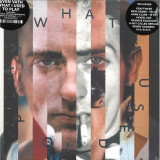
Sven Väth - What I Used To Play (12x12" boxset)
 
36

For this uniquely personal retrospective spread over twelve vinyl discs, Sven Väth takes us back to the early days of his DJ career. On What I Used To Play we meet great pioneers of electronic music, gifted percussionists, obscure wave bands, and innovative producers of a bygone 'new electronic' era. Rough beats and irresistible grooves from the identification stage of house, techno, and acid remind us not just how far electronic music has evolved over the past four decades, but how great it was to dance to EBM, techno, and house for the very first time.

If there is one protagonist of the electronic music scene who has remained curious, innovative and at the very cutting edge of music for over four decades, it's Sven Väth. His multi-layered artist albums and Sound of the Season mix compilations have been defining the genre for over two decades, and even today, he is constantly on the lookout for the next top tune to add to the highlights of his next set. At least, that's the case when he's not producing them himself as an artist or remixer. "Actually, it's always been part of my DNA to think ahead," and nothing had been further from his mind than looking back at his past, but when in spring of 2020 the international DJ circuit had to be scaled down to virtually zero, the 'restless traveler' suddenly had time. Time to stop and reflect on "how it actually was back then, at the very beginning of my career..."

"It was a great trip and with every track, beautiful memories came flooding back".
In the London apartment, he had just moved into, Sven has set up a "little music room", where he cocooned himself for several days, "to look way back for the first time and review my musical journey through the eighties, so to speak."

The interim result was six thematically oriented playlists with a grand total of 120 tracks from 'early 80s' to 'Balearic late 80s', together with excursions into afrobeat, European new wave, and EBM sounds and a few epochal techno/house tracks from the USA in between. From these 'Best of Sven Väth's favorites', the project What I Used To Play crystallized. Sven remembers how the Cocoon team reacted to his proposal: "They found the idea of making a compilation out of it MEGA from the beginning and everyone said 'Sven, go for it', but then, of course, the work really started, namely, to clear the rights and to get clean sounding masters of the up to 40-year-old tracks. There was also disappointment, of course. We couldn't clear certain titles because the rights holders in the USA had fallen out with each other or simply disappeared from the scene. In short, it wasn't easy, but now I can safely say we got the most important tracks."

Finally, after two years of research, curation, design, and administrative fine-tuning, the "little retrospective" from 1981 to 1990 is available. The exquisitely packaged, and three-kilo heavy box set is not only physically impressive, WIUTP is also the definitive record of Sven Väth's musical development. On each of the twenty-four sides of vinyl, you can trace track by track, what influenced him during which phase, and how he took off as a DJ from his parents' Queen's Pub straight into the spotlight at Dorian Gray. There and at Vogue (later OMEN), Sven became the style-defining player in the DJ booth that he still is today.


1981 - 1990: Future Sounds of Now

In the early eighties, the crowd in clubs like Vogue and Dorian Gray danced to what nowadays we call 'dance classics' - mainly disco, funk, soul, and chart pop. It was up to a new generation of DJs, including Sven Väth, the youngest protagonist in the Rhine-Main area at the time, to create their own club-ready music mix. Good new tracks and potential floor-fillers were rarities that had to be sought out and found, in order to prove oneself worthy.
Without MP3s, internet streaming, or other digital download possibilities, music didn't just gravitate to the DJ, instead, it had to be tracked down. In well-stocked record stores in Frankfurt and Wiesbaden or even in Amsterdam, London, or New York, Sven and friends sourced the material for countless magical nights. On WIUTP we can follow Sven's very personal journey through this wild, innovative era in which synth-pop, funk, hip-hop, and disco were successively replaced as 'club music' by house, techno, acid, and breakbeat. By the end of the decade, it was clear to see that these once exotic 'fringe' phenomena would soon become 'mass' phenomena.


Early 80s

Dirty Talk by the Italian-American duo Klein & M.B.O. represents the most innovative phase of the Italo-disco genre in the early eighties like no other track. Mario Boncaldo (I) and Tony Carrasco relied entirely on the original synthetic drum and percussion sounds of the Roland TR-808, coupled with the raunchy vocals of Rossana Casale and guitar accents of Davide Piatto. Of course, other tracks from this period were also influential in style, most notably Unit by Logic System, which worked as the perfect soundtrack to the laser lighting system at the legendary Dorian Gray club. With stomping beats and robotic rap interludes, Bostich by Yello also belongs on Sven's eternal playlist - after all, it caught the attention of Afrikaa Bambaataa, who invited the Swiss duo to perform at the Roxy in New York in 1983.


EBM Wave - Mid 80s

From today's point of view, the almost ten-minute-long, downtempo track Giant by Matt Johnson's band project The The, would probably not be considered an obvious club classic. However, a closer (re)listen reveals the rhythmic intricacies of the percussion overdubs by JG Thirlwell (aka Foetus) on Johnson's composition, and it becomes clear why this exceptional piece of music is one of Sven's absolute favorites. Other classics from this phase include Kaw-Liga by the mysterious The Residents, the hypnotic-synthetic Our Darkness by Anne Clark (and David Harrow), and last but not least, the somber, monotonous anthem Where Are You? by 16Bit, one of Sven Väth's projects together with Michael Münzing, Luca Anzilotti from 1986.


US House - Late 80s

You certainly can't talk about Chicago house without mentioning Frankie Knuckles. The resident DJ at the Warehouse not only gave the name to an entire genre, but also produced epochal floor fillers on the Trax label like the timeless Your Love, sung (and moaned) by Jamie Principle. Acid house protagonists Phuture also hail from Chicago, and on We Are Phuture (also released on Trax) we hear the chirping acid sounds of the legendary Roland TB-303 in full effect. Another featured classic is No UFO's by Detroit's Model 500 aka Juan Atkins, who is rightly considered the 'Godfather of Techno' even if the genre-defining track from 1985 still breathes with the spirit of hip-hop and electro from the first breakdance era.


Afrobeat

Le Serpent, by Algerian-born Abdelmadjid Guemguem, is a track that sounds completely different from everything else on WIUTP. Made in 1978, it's a monumental, rousing groove created without bass or synths, just with five congas! Even though Guem sadly passed away in 2021, his immortal, acoustic beats are understood all over the world and will continue to enrich many thousands of DJ sets for years to come. Another classic that not only Sven appreciates beyond measure is Hugh Masekela's Don't Go Lose it, Baby. In addition to being one of the most important jazz pioneers, the trumpeter and freedom fighter from Johannesburg was very experimental, integrating electronic sounds into his music in later years, in a similar vein to Miles Davis and Herbie Hancock. Dutch jazz pianist Jasper van't Hof's afrobeat project Pili Pili has also aged well. The trance-like, almost sixteen-minute-long track of the same name, manages to fill a whole side on the seventh of twelve vinyl discs in the WIUTP box.


UK-US-Euro - Late 80s

Time for a change of scene, in the truest sense of the word, and from a musical perspective, this section is like landing on another planet. First up is Andrew Weatherall's classic remix of Primal Scream's Loaded, featuring the iconic Peter Fonda sample (lifted from the 1966 biker film Wild Angels) that came to personify the mood triggered by the British Second Summer of Love in the late eighties: "We wanna be free to do what we wanna do, and we wanna get loaded...". This period also saw the emergence of M/A/R/R/S whose only single, 1987's Pump Up The Volume, became a club classic with support from DJ legend CJ Mackintosh. In this most eclectic of sections, we also encounter New York house and reggae producer Bobby Konders and his seminal Nervous Acid.


Balearic - Late 80s

Those who know him, know that Sven had already lost his heart to the 'magic island' of Ibiza as a teenager, so with that in mind, the WIUTP project couldn't end without a Balearic chapter. Inspired by Manuel Göttsching's E2-E4, the immortal, eponymously titled Sueño Latino belongs in there without question. Equally popular on the island was, and still is Break 4 Love by Raze, which thinking about it, would also fit perfectly into the house chapter. Last, but not least, there's an overdue reunion with Sven Väth himself, in his role as frontman of the successful Frankfurt trio OFF. Together with Michael Münzing and Luca Anzilotti (later of Snap!) this 'Organization For Fun' created the off-the-wall club hit Electric Salsa in 1986 which incidentally turned into an international chart smash, putting Sven in the enviable position of having to decide between pop stardom and a DJ career. Well, we all know how that decision turned out and the rest, as they say, is history. A not insignificant part of his story is What I Used To Play. Enjoy!

In Stock

On Stock and ready to ship

Last In: 40 days ago
184,83 €
Summer of Seventeen - Summer of Seventeen

SUMMER OF SEVENTEEN are MONIKA KHOT (NORDRA, ZEN MOTHER), WILLIAM FOWLER COLLINS, DANIEL MENCHE, FAITH COLOCCIA (MAMIFFER), and AARON TURNER. (SUMAC, SPLIT CRANIUM).

Wildfires plagued Washington state during the summer of 2017, their smoke drifting westward toward the Seattle area and toxifying the air. Shortly before that trauma, MONIKA KHOT, WILLIAM FOWLER COLLINS, DANIEL MENCHE, FAITH COLOCCIA, and AARON TURNER had gathered at the latter two musicians' House Of Low Culture studio on idyllic Vashon Island with revered producer RANDALL DUNN. There they cut eight songs that capture the makeshift band's feelings of what COLOCCIA calls "a kind of doomsday lurking in the background." It's as if these highly attuned players had a premonition.

"Summer Of Seventeen" -which was edited and arranged by MONIKA KHOT, who records apocalyptic music solo as NORDRA and plays in the avant-rock band ZEN MOTHER—is a nuanced admixture of these musicians' sounds and a culmination of all of their previous collaborations. COLOCCIA and TURNER have created eldritch folk and chamber rock for over a decade in MAMIFFER while engaging in various solo and group projects that explore their profound spirituality in sound. MENCHE has been a fixture on the abstract composition scene for 31 years and COLLINS is a savvy explorer of drone and ambient forms. Their ephemeral summit meeting has yielded a masterwork for the ages.

A heaven/hell and beauty/beastliness dichotomy pervades the album—as if a titanic struggle was transpiring in that small studio. The fearsome trumpet fanfare that starts "Chorus Of The Innocents" heralds a baleful fate. With a subliminal industrial rhythm bristling beneath the eerie exhalations, the song submerges us in a slow-motion maelstrom, a horror-film facsimile of MILES DAVIS' "Bitches Brew". "Perceived Slight" threads death-metal screams through a stark, suspenseful atmosphere, with austere glints of guitar and beats like fists on a casket lid intensifying the dread.

Angelic chants and celestial drones perfume the air in several of the songs on "Summer Of Seventeen", countered with muted blast beats, serrated hums, jagged glitches, simulacra of grinding gears and lightning. It's as if no good deed goes unpunished. "Spirits Of Redeemer" could be an elegy for the human race while "Cultural Orphan" sounds like a symphony for a malfunctioning factory. The album ends with "Theatre Needs An Audience," a harrowing ballad somewhere between EINSTÜRZENDE NEUBAUTEN and MERZBOW; it's a savage rent in the space-time continuum.

"Thinking about this record now," COLOCCIA recalls, "it seems like we were all sort of anticipating something like this current pandemic happening, although we were thinking about it as fire in the hands of man (literal fire, and also gunfire) that would overturn the normal running of things and reveal the current false beliefs systems holding up most of America."

That grave aura infiltrates "Summer Of Seventeen", However, a hopefulness bubbles beneath the foreboding architecture of sound and noise summoned here. The bunker is the new penthouse.

-Dave Segal, April 2020

In Stock

On Stock and ready to ship

Last In: 82 days ago
17,77 €
Doc Sleep - Crème Fraîche EP

We are proud to showcase more Bay Area family with the release of a new EP by Doc Sleep who cut her chops as a DJ in San Francisco’s vibrant scene the past decade. In 2016 she made the move to Berlin and became a resident of Room 4 Resistance. Since 2013, she's been the co-owner of Jacktone Records, which specializes in techno, ambient, and experimental electronics. In 2016/2017 she released her first 12's on the Hot Mass-affiliated Detour Records and Bottom Forty. She also co-wrote a track with Bezier and Nicole Ginelli, titled “Stranger,” that we released on the ‘Primes’ EP in 2017. Her latest release, ‘Your Ruling Planet’, was released on Jacktone in March 2019.

We first heard “Creme Fraiche” on Doc’s soundcloud page and begged to release it. The track has the feel-good vibes you get on early morning dancefloors as things are winding down or up. Paired on the A-side is the pulsating dark jam “Never Eating Again” that previously appeared on ‘Run The Length Of Your Wildness V.2’ and, like that compilation, proceeds from this track will be donated to Ghost Ship Fire victim Cherushii's family. On the B-side are two remixes from close friends of Doc. First up is a fresh breakbeat remix from Violet: DJ, producer, boss of Naive records, co-founder of Rádio Quântica, and mina resident shaking up Lisbon's nightlife. Second is Berlin-based producer and fellow R4R resident, rRoxymore, who presents an innovative remix of future-facing techno and bass variations adding her own vocals on top. For this release we’ve teamed up with Jacktone to release a cassette version, our first in this format, featuring two peak-time bonus tracks. All songs have been mastered by George Horn at Fantasy Studios in Berkeley. Each copy is housed in jacket designed by Eloise Leigh with neon pink and lavender gradients echo morning sunrises with a collage of dreamy elements using a photo by Doc of Club Toilet in Detroit.

In Stock

On Stock and ready to ship

Last In: 3 months ago
11,13 €
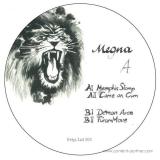
MEGNA - FELGA LTD 303

MEGNA

FELGA LTD 303

12inchFELGALTD303
Felga LTD
05.10.2026

A1:Memphis Stomp
Super rusty sounding House touched Breakbeat Track!
The Bassline-Drop and Live mixing is hot!

A2:Come on Cum
Oldschool House Track without Bassline to be able to concentrate you on the "Dobble Match of two Drums Machines"!
The sequenced VOX Sample comes from a classic CS2X Synthesizer and is added to the Space Echo to bring a special Magic inside. DJ TOOL!

B1:Demon Area
Welcome to the TECHNO HELL!
Pure Darkness and a bright expressive Flow come together.
A Fat Bassdrum is hammering your head and the ultra effected Synthesizer Line will destroy your Brain.

B2:Furore Move
More an experimental Splitt Track...
The beginning of this track is a presentation of the CS15 Synthesizer with a Bassdrum.
The Break is coming... A synth-vox-line is coming... A 4 to the floor run is coming..
all things are going well.. Than a little chaos breaks out... and in the end, all is good again.

pre-order now05.10.2026

expected to be published on 05.10.2026

12,82 €
WINDY & CARL WITH OPTIGAN CONSERVATORY - Windy & Carl Meet Optigan Conservatory LP
 
2

Windy & Carl Meet Optigan Conservatory is a purposefully misleading title for the first collaborative work from four friends who met close to thirty years prior. All active participants in Michigan independent music circles since the early ’90s, Windy & Carl are well-known for their foundational contributions to drift and guitar-born ambient sounds, with songs characterized by deep connections to the natural world and a hard to pin down yet impossible to miss emotional vulnerability.

Optigan Conservatory is another duo, made up of Frank Rotondo (leader of Detroit area free music ensemble Laughing Gas) and Fred Thomas (songwriter and producer most often associated with his band Saturday Looks Good To Me), who have been making minimalistic and time-defiant electro-acoustic sounds since 2016. The album came together almost effortlessly in a very short timeframe, but the idea had been building steam for many a year.

In the last days of 2024, Windy & Carl and Optigan Conservatory got together, falling into a mode of sound creation that was almost hyper-natural. Without any discussion outside of the usual stream of jokes and chatter, the quartet set up and started communicating. Added to Windy & Carl’s hovering augmented chord voicings and vaporous guitar drones were electric piano and synth bedding from Frank & Fred. After the initial sessions, all involved parties took time to consider what they’d made, adding new layers and editing the pieces into more definitive articulations.

A beautiful and hermetic energy larger than the sum of its parts is captured in the process. There are echoes of the earliest releases from Windy & Carl as well as refractions of the same opacity that surfaced in the early kranky catalogue.

out of Stock

Order now and we will order the item for you at our supplier.

Last In: 25 days ago
26,47 €
Ken Kesey With The Grateful Dead - The Acid Test LP
  • 1: Ken Kesey
  • 2: Ken Babbs And Harmonica
  • 3: Take Two
  • 4: Bull
  • 5: Peggy The Pistol
  • 6: One Way Ticket
  • 7: Bells & Fairies
  • 8: Levitation
  • 9: Trip X
  • 10: The End

Ken Kesey’s Ultra Rare 1966 studio recording of the Acid Test with The Grateful Dead . Legendary documentation of the 1965-66 Bay Area Acid Test scene from 14 hours of the actual trip (recorded in a studio). Lots of amazing mind games and word play with Ken Kesey and Ken Babbs in good form, ad libbed poetry, fractured harmonica solos, tape loops and the Grateful Dead lurking in the background. Originally released in March 1966.

pre-order now04.09.2026

expected to be published on 04.09.2026

27,94 €
Bunny Lee - Creation Of Dub LP

King Tubby and Producer Bunny ‘Striker’ Lee are intertwined in the birth of Dub Music. After discovering a mistake that made a ‘serious joke’ (more of which later...) they went on to release the first pressings of this new musical genre namely ‘Dub Music’. Tubby’s vast knowledge of electronics and Bunny’s vast catalogue of rhythms would lay the foundations of what today is taken as a standard... the Remix / Version cuts to an existing vocal tune.

Osbourne ‘King Tubby’ Ruddock was born in Kingston, Jamaica on 28th January 1941 and grew up in the High Holborn Street area of downtown Kingston. He studied electronics at Kingston’s National Technical College and also on two correspondence courses from the U.S.A... When he had qualified Tubby began repairing radios and other electrical appliances in a shack in the back yard of his mother’s home. His work in the early days included winding transformers and building amplifiers for Kingston’s Sound Systems. Tubby built his first Sound System in 1957 playing jazz and Rhythm & Blues at local weddings and birthday parties. His reputation as a man who knew and understood both electronics and music grew steadily and as the sixties drew to a close. Tubby purchased his own basic two track equipment. He installed this alongside his dub cutting machine, a homemade mixing console and his impressive collection of Jazz albums in the back bedroom of his home at 18 Dromilly Avenue which he christened his music room.

Tubby and Striker were at Treasure Isle Studio’s one day while Ruddy from Spanish Town was working with the engineer Byron Smith....

“Tubby and myself was talking when Ruddy was cutting some dub but Smithy (engineer) made a mistake through we were talking and forgot to put in the voice. It was two track recording in those days. Ruddy said ‘No Man! Make it stay! and so they cut the rhythm. When I went over to Ruddy’s that Saturday night a dance was in progress and when they played the vocal to the tune... then he said we’re going to play ‘Part Two’. They never called it ‘Version’..and then he played the rhythm track. The song was a catchy song and everybody started to sing along and the deejay started to toast so everything went down well. On Monday morning I went up and I said ‘Tubbs the mistake we made was a serious joke. It mash up Spanish Town! The people went wild. So you have to start to do that now ‘cause when the man put on the ‘Part Two’ everyone start singing this song. It played about twenty times. I said you try Tubbs!’...Well the next Saturday night now when Tubby strung up down the farm U Roy said he’s going to play ‘Part Two’ but Tubby did it different now. He started with the voice then dropped it out and let the rhythm run and then he brought in the voice in the middle and from there Tubby started to get really popular.’’
Bunny ‘Striker’ Lee

Dynamic Sounds upgraded to sixteen track recording in 1972 and Tubby purchased, again with the help of a deal brokered by Bunny Lee. The old four track equipment and the MCI console from their Studio B. The four tracks now gave him far wider scope to work with and he began to create a new musical form where the bass and drum parts were brought up while the faders allowed Tubby to ease the vocal and rhythm in and out of the mix. It was only a matter of time before Tubby’s dub plate experiments began to make it on to vinyl and the first ever long-playing King Tubby releases would feature a collection of his mixes to a selection of Strikers rhythms. So please sit back and enjoy this historic set of sounds, mixed by King Tubby and Mr Prince Phillip Smart and another set of scorcher Bunny Lee rhythms.

out of Stock

Order now and we will order the item for you at our supplier.

13,87 €
Too Short - Get In Where You Fit In LP 2x12"
  • A1: Don't Fight The Intro
  • A2: I'm A Player
  • A3: Just Another Day
  • B1: Gotta Get Some Lovin
  • B2: Money In The Ghetto
  • B3: Blowjob Betty
  • C1: All My Bitches Are Gone (feat Ant Banks)
  • C2: The Dangerous Crew(feat Spice 1, Ant Banks, Mhisani and Pee Wee)
  • C3: Get In Where You Fit In (feat Rappin' Ron and Ant Diddley Dog)
  • D1: Way Too Real (feat Father Dom)
  • D2: It's All Good
  • D3: Oakland Style(feat FM Blue)

Get In Where You Fit In, was originally released in October of 1993 and would be his fourth album in a row to be certified platinum. Production was handled by Ant Banks and The Dangerous Crew, which featured live instrumentation, incorporated P Funk samples, and G Funk synths. The lead single "I'm a Player" sampled Bootsy Collins' funky bass of "Hollywood Squares" and Quincy Jones' son QDIII produced the epic Bay Area G Funk laden classic track "Just Another Day". And it wouldn't be a Too $hort record without some pimp and sex tales like "Blow Job Betty", "All My Bitches Are Gone" and the upbeat "Gotta Get Some Lovin". Bay Area legends Spice 1, Ant Banks, and Mhisani aka Goldy join in on the posse cut "The Dangerous Crew" followed by a track with more Bay Area legends Rappin' Ron and Ant Diddley Dog dissin' ex Dangerous Crew member MC Pooh on the title track. Get On Down has repressed this Too $hort 90's fan favorite album on Purple-In-Clear Colored Vinyl.

out of Stock

Order now and we will order the item for you at our supplier.

Last In: 3 months ago
32,35 €
Jdb - Come Over

Jdb

Come Over

12inchNPAOO04
New Palm US
21.04.2026

Josiah aka JdB is a key creative at the heart of the New Palm crew. Not only does he DJ and produce, but also he is a resident at Gradient Campout and a member of LA's PrintShop collective. He has a sound rooted in dubby drums and cavernous grooves, both of which are evident here. 'Feels Good' is a heavy warm-up sound with sparse chords slowly ramping things up, while 'Surface Area' is icy minimalism with abstract sines and FX. 'Come Over' pulls back to a more liquid dub roller and 'Dante Is Late' is an ambient soundscape with plenty of tape hiss and curious melodies drawing you in deep. Stefan Bitke of Scape has taken care of the mastering so these sound superb.

out of Stock

Order now and we will order the item for you at our supplier.

Last In: 5 months ago
18,07 €
Anar Band with E.M. de Melo e Castro - Dou Dou Doudo: Ao Vivo Na Cooperativa Árvore

Audio taken from a live performance by Anar Band (Jorge Lima Barreto and Rui Reininho) with E.M. de Melo e Castro in November of 1978 at Cooperativa Árvore, Porto. The performance was filmed. A segment was included in »Obrigatório Não Ver«, a weekly programme presented by Ana Hatherly on Public Television’s Second Channel. It was not possible to determine the exact date of the event, and no documentation seems to be available in the relevant archives.

»Encontro que Tenho« and »Profissões«: these titles are specific to this release. Having failed to locate the respective poems after a thorough search in E.M. de Melo e Castro’s body of work, it was deduced both texts were created for the occasion.

Even without a full contextualisation, the sound transmits the spirit of cultural agitation proper to these sessions. When this show happened, Anar Band were Jorge Lima Barreto (ARP Odyssey synthesizer) and Rui Reininho (Ibanez double-neck guitar), with the addition of E.M. de Melo e Castro, whom we shall call a poet but whose creative intervention was far reaching. Besides poetry, also continued his efforts in linking up diverse artistic areas (painting, drawing, collage, performance, video) and his official training in textile engineering. He was one of the artists featured in Henri Chopin's »OU Revue« in 1966, establishing his natural connection to the European concrete/visual/sound-poetry avant-garde. Melo e Castro was also proficient in the agitation of minds and political awareness. A good example in »Profissões«, where initially separate professionals (an intellectual, a fisherman, a soldier, a factory worker) are gradually mixed in a show of interdependency. Symbolically, through his words one listens to a transformation of society, although the same conclusion arises twice: surplus always finds its way to the hands of the capitalists.

That was the state of affairs many were looking to change, an economic and social malaise that the 1974 Revolution in Portugal fully uncovered, when dissident voices could finally be heard in public. Each in his own way, all three participants in this recording were non-believers in the structure of society such as it was presented. Through his books and press writings, mainly concerned with Jazz, Jorge Lima Barreto pushed his way into Portuguese artistic and critical circles since the late 1960s. Consciously and unwittingly, he collected enemies and pointed them by name, people he labelled as reactionary, people who delayed progress, social and cultural mixes, the avant-garde; they even delayed the chaos from which new forms and attitudes arise.

Rui Reininho, a non-conformist by heart, experienced incomprehension from an early age. His anarchic ways, a tendency to baffle others, were revealed through the choice of clothes and accessories, public behaviour, and »real life« performances. Just as Lima Barreto, and even together with him, he enjoyed provoking the extremes: Maoists on one side, right-wing conservatives on the other. He translated leftist books and joined Anar Band precisely on the day a duck or swan or goose (one of them) was thrown on stage in Porto, 1976.

This record documents a concrete action, a snapshot of the agitation, something we have no problem calling punk activism, something which allowed two people with little to no musical training to play and record music. By then, Anar Band had managed to release their only LP in 1977. It’s this performance, however, that reveals the naked rawness of the music: improvisation, mutual listening, and choice of intervention between both musicians and Melo e Castro, clearly sensing when the synth has to change tone, the voice has to make pauses, the guitar punctuates both and finds the space to… scream. The sound was captured by the film crew, adding to the rawness: the instruments are palpable, the voice often too close to the mic. Everything was preserved. First time on disc.

pre-order now30.01.2026

expected to be published on 30.01.2026

23,95 €
Kingston Sounds - Return To Orange Street’ 14 Roots Rock Reggae Classics LP

From 1968 through to the mid 1970’s the reggae beat began to slow down,some say due to the extreme heat hitting down onto Kingston Town and its surrounding enclaves. People needed something less strenuous to dance to. The Ska and Rocksteady Sounds (see 101 Orange Street KS007) that rocked Jamaica previously, had now found a slower tempo and become more ‘Dread’ lyrically to suit the times. Reggae music has always moved within the social climate it found itself in and this set here, as we ‘Return To Orange Street’ was ROOTS ROCK REGGAE TIME....

The Rastafarian message that runs through this collection of ‘Reality’, sometimes labelled ‘Sufferers’ music,is strong and works on many levels. It can come across on a heavy rhythm and vocal cut. Its example represented here by Prince Jazzbo’s ‘Dread in a Earth’ and ‘I Roy’s ‘Roots Man Time’, moving through to the popular new sounds of the DJ’s working over an old rhythm and alongside its existing vocal. As with Busty Brown working with Delroy Wilson's ‘Know Your Friend’ and Mr Jah Stitch working over Johnny Clarke’s ‘Roots Natty Roots’ to produce an even more dreader ‘True Born African’. The heartfelt lyric can also convey this message as we can see when Horace Andy laments ‘Where is the Love’ and Delroy Wilson again shows us on his ‘Who Cares’ cut. The great Twinkle Brothers also put the message across on their two cuts we have here, ’Too Late’ one of their lost classics if ever there was one and the thoughtful ‘It’s Not Who You Know’,being another prime example.

Orange Street itself is always at the heart of all reggae's musical changes and some singers also ride these waves as Mr Cornell Campbell shows us here with two cuts. The mournful ‘Too Be Loved’ and his uplifting ‘Girl of My Dreams’, which uses the same rhythm as our previously mentioned Prince Jazzbo’s 'Dread in a Earth’. Showing us that firstly you can’t keep a good rhythm down and secondly that two if not more great songs can work from the same source point. The light hearted ‘Vengeful’ lyric also worked in this period when artists spared off to each other on records to vent their frustrations. As we can hear here with Mr Lee Perry’s ‘You Funny Boy’. The song snipping back at a previous employer over what he felt were his misdoings to an under appreciated Mr Perry. We have culled these tracks together to show that the Dread Roots feel of the 1970’s came across in many guises and even in earlier songs these sentiments were also prevalent. As represented in Slim Smith’s almost bluesy feel in ‘Trying To Find a Home’, never a truer statement in Kingston's ghetto areas.

Well we hope you enjoy this musical journey and make a connection with messages portrayed here, as Mr Monty Morris points out on his contribution to this collection ‘Times Are Dread’.... Dread indeed.....

out of Stock

Order now and we will order the item for you at our supplier.

13,03 €
Dave Graw / Blair French - So Fades The Light (Soundtrack)

So Fades the Light is an eerie horror thriller that makes for unsettling watching. That is no small part thanks to the equally haunting score from composers Blair French (an ambient and Balearic producer from the Detroit area) and Dave Graw (a fellow Motor City musician and visual artist), who forgo melody in place of atmosphere. It means their soundtrack is a living, breathing presence that's less about music a more of a sort of ghost that refuses to leave. Graw and French sculpt a world of distortion, static and whispered tones that feel dug out of crumbling ruins. It’s bleak, patient and unrelenting, always pulling you deeper into the lead character Sun’s fractured memories and the menace of her past. As a standalone release, it’s equally gripping: a record that blurs ambient, horror and noise into one oppressive atmosphere.

pre-order now27.10.2025

expected to be published on 27.10.2025

26,85 €
Dave Graw / Blair French - So Fades The Light (Soundtrack)

Dave Graw / Blair French

So Fades The Light (Soundtrack)

12inchSP001GOLD
Silent Partner
27.10.2025

So Fades the Light is an eerie horror thriller that makes for unsettling watching. That is no small part thanks to the equally haunting score from composers Blair French (an ambient and Balearic producer from the Detroit area) and Dave Graw (a fellow Motor City musician and visual artist), who forgo melody in place of atmosphere. It means their soundtrack is a living, breathing presence that's less about music a more of a sort of ghost that refuses to leave. Graw and French sculpt a world of distortion, static and whispered tones that feel dug out of crumbling ruins. It’s bleak, patient and unrelenting, always pulling you deeper into the lead character Sun’s fractured memories and the menace of her past. As a standalone release, it’s equally gripping: a record that blurs ambient, horror and noise into one oppressive atmosphere.

pre-order now27.10.2025

expected to be published on 27.10.2025

28,36 €
King Tubby And The Aggrovators - Shalom Dub
 
16

2024 Reissue

“Tubby did three original dub albums, ‘Dub From The Roots’. ‘The Roots of Dub’ and the third is ‘Brass Rockers’ with Tommy McCook ‘pon the flying cymbals. Where he mixed it with the horn going in and out in a dub way and one named ‘Shalom Dub’ you can call Tubby’s too because he mixed the versions as they were off forty fives’’
Bunny ‘Striker‘ Lee

King Tubby and Producer Bunny ‘Striker’ Lee are intertwined in the birth of Dub Music. After discovering a mistake that made a ‘serious joke’ ( more of which later...) they went on to release the first pressings of this new musical genre namely ‘Dub Music’. Tubby’s vast knowledge of electronics and Bunny’s vast catalogue of rhythms would lay the foundations of what today is taken as a standard... the Remix / Version cuts to an existing vocal tune.

Osbourne ‘King Tubby’ Ruddock was born in Kingston, Jamaica on 28th January 1941 and grew up in the High Holborn Street area of downtown Kingston. He studied electronics at Kingston’s National Technical College and also on two correspondence courses from the U.S.A... When he had qualified Tubby began repairing radios and other electrical appliances in a shack in the back yard of his mother’s home. His work in the early days included winding transformers and building amplifiers for Kingston’s Sound Systems. Tubby built his first Sound System in 1957 playing jazz and Rhythm & Blues at local weddings and birthday parties. His reputation as a man who knew and understood both electronics and music grew steadily and as the sixties drew to a close. Tubby purchased his own basic two track equipment. He installed this alongside his dub cutting machine, a home made mixing console and his impressive collection of Jazz albums in the back bedroom of his home at 18 Dromilly Avenue which he christened his music room.

Tubby and Striker were at Treasure Isle Studio’s one day while Ruddy from Spanish Town was working with the engineer Byron Smith....

“Tubby and myself was talking when Ruddy was cutting some dub but Smithy (engineer) made a mistake through we were talking and forgot to put in the voice. It was two track recording in those days. Ruddy said ‘No Man! Make it stay! and so they cut the rhythm. When I went over to Ruddy’s that Saturday night a dance was in progress and when they played the vocal to the tune... then he said we’re going to play ‘Part Two’. They never called it ‘Version’..and then he played the rhythm track. The song was a catchy song and everybody started to sing along and the deejay started to toast so everything went down well. On Monday morning I went up and I said ‘Tubbs the mistake we made was a serious joke.It mash up Spanish Town! The people went wild. So you have to start to do that now ‘cause when the man put on the ‘Part Two’ everyone start singing this song. It played about twenty times. I said you try Tubbs!’...Well the next Saturday night now when Tubby strung up down the farm U Roy said he’s going to play ‘Part Two’ but Tubby did it different now. He started with the voice then dropped it out and let the rhythm run and then he brought in the voice in the middle and from there Tubby started to get really popular.’’
Bunny ‘Striker’ Lee

Dynamic Sounds upgraded to sixteen track recording in 1972 and Tubby purchased, again with the help of a deal brokered by Bunny Lee. The old four track equipment and the MCI console from their Studio B. The four tracks now gave him far wider scope to work with and he began to create a new musical form where the bass and drum parts were brought up while the faders allowed Tubby to ease the vocal and rhythm in and out of the mix. It was only a matter of time before Tubby’s dub plate experiments began to make it on to vinyl and the first ever long playing King Tubby releases would feature a collection of his mixes to a selection of Strikers rhythms. So please sit back and enjoy this historic set of sounds. Lovingly restored and with a few extra gems added to the CD Editions. These releases were the first to carry the name of King Tubby and the first to credit the great musicians that contributed so much to the rhythms that made these albums possible.

out of Stock

Order now and we will order the item for you at our supplier.

Last In: 11 months ago
13,40 €
Ramirez - Tha Playa$ Manual II (LP)

Ramirez returns with THA PLAYA$ MANUAL II, the long-awaited sequel to his cult classic that helped solidify his place as one of underground rap’s most distinctive voices. Steeped in Southern-fried funk, Bay Area swagger, and Memphis-style menace, this new chapter finds Ramirez sharper, smoother, and more seasoned—delivering game like a streetwise sage with a gold grill grin.

Where the original Playa$ Manual was gritty and raw, THA PLAYA$ MANUAL II sounds like a player who's leveled up. The beats knock harder, the flows glide slicker, and the game is deeper. Ramirez weaves tales of betrayal, come-ups, late-night drives, and cold-hearted reality with the same charismatic cool that made him a standout in the $uicideboy$-adjacent G59 movement—but this time with a more refined, cinematic approach.

From trunk-rattling bangers to syrupy smooth cuts that soundtrack late-night escapades, THA PLAYA$ MANUAL II feels like a ride through Ramirez’s world with tinted windows up and the bass on max. It’s a record for the hustlers, the heartbreakers, the loners, and the legends in the making.

This is more than a sequel—it’s a statement: the playa’s still active, and the manual’s been updated.

out of Stock

Order now and we will order the item for you at our supplier.

Last In: 80 days ago
24,33 €
LIVITY TABASUKE & NATURAL ROOTS - Roots Man Foundation (7 Inch Vinyl Mix)
  • A. Roots Man Foundation
  • B. Prayer for a Good Harvest

NATURAL ROOTS MUSIC, tuned to the rhythms of the Earth! A special mix by Rooing SWE from the previous Roots & Foundation (CD) release, Side A: All
Those Who Love the Earth (Roots Man Foundation). Side B: The Danjiri Festival (Prayer for a Good Harvest) in Senshu, Southern Osaka. This first 7-inch release
pays tribute and gratitude to the local area.

As a DJ, I prioritize three key points when selecting music. I'll introduce this record in relation to those points.
The first is the power of the intro. I'm always grateful for killer tunes that get the floor moving naturally. The A-side, which begins with a catchy trombone, is a
perfect example of that. Natural Roots' performance is so dark that it almost makes you forget that you're in Osaka, the city of laughter.
The second is about the lyrics. Especially in times like these, I want to share a positive message with everyone. Frontman Livity Tabasuke sings straightforwardly
about his feelings for the Earth. It reminds us of the gratitude we often forget in our daily lives. Above all, his voice is soft and soothing.
The third is the 7-inch format. If you're going to take it to a venue, nothing beats a small, light record. The older I get, the more my hips instinctively tell me to.
The dub-inspired instrumental tunes on the B-side are also fantastic, and the album's functionality continues to increase. I also appreciate the addition of the
shinobue flute, a unique instrument unique to Senshu, a renowned Kansai reggae region, which adds to the local feel.
This album, which captures all of these elements, is extremely practical for me. I'm sure I'll be using it for a long time to come. I sincerely hope that the limited
edition of 300 records reaches reggae fans all over the country.

pre-order now09.10.2025

expected to be published on 09.10.2025

26,01 €
Ramirez - Tha Playa$ Manual II (MC)

Ramirez

Tha Playa$ Manual II (MC)

CassetteERE1159
EMPIRE
03.10.2025

Ramirez returns with THA PLAYA$ MANUAL II, the long-awaited sequel to his cult classic that helped solidify his place as one of underground rap’s most distinctive voices. Steeped in Southern-fried funk, Bay Area swagger, and Memphis-style menace, this new chapter finds Ramirez sharper, smoother, and more seasoned—delivering game like a streetwise sage with a gold grill grin.

Where the original Playa$ Manual was gritty and raw, THA PLAYA$ MANUAL II sounds like a player who's leveled up. The beats knock harder, the flows glide slicker, and the game is deeper. Ramirez weaves tales of betrayal, come-ups, late-night drives, and cold-hearted reality with the same charismatic cool that made him a standout in the $uicideboy$-adjacent G59 movement—but this time with a more refined, cinematic approach.

From trunk-rattling bangers to syrupy smooth cuts that soundtrack late-night escapades, THA PLAYA$ MANUAL II feels like a ride through Ramirez’s world with tinted windows up and the bass on max. It’s a record for the hustlers, the heartbreakers, the loners, and the legends in the making.

This is more than a sequel—it’s a statement: the playa’s still active, and the manual’s been updated.

pre-order now03.10.2025

expected to be published on 03.10.2025

15,50 €
Strictly Business - Strictly Business 7"

This was Don Thigpen's first recording as an artist, but he was no stranger to the studio. In fact he was the individual behind many heavy tunes that came out of the Jackson area. He and good friend Sam Anderson also cut a record on his CJR labelb (Capitol Jackson Records) called "Shirley Baby", also a highly coveted record if you got a copy to sell or record let us know). The name "LEO" became Dons preforming pseudonym. Leo was also his zodiac sign, which he deemed edgy enough to marquee this electro heavy track "Fee Fi Fo Fum". The inspiration for the song came from the computer craze of the 80s. Much like Zapp & Roger's track "Computer Love" an inanimate object is worshipped and then romanticized by a love affair. The song literally depicts a computer falling in love with a woman and attempts to communicate with her by seductively flashing the words "Fee Fi Fo Fum" on the screen.

out of Stock

Order now and we will order the item for you at our supplier.

Last In: 14 months ago
14,92 €
Santana - Moonflower LP 2x12"
  • A1: Dawn/Go Within
  • A2: Carnaval
  • A3: Let the Children Play
  • A4: Jugando
  • A5: I’ll Be Waiting
  • A6: Zulu
  • B1: Bahia
  • B2: Black Magic Woman/Gypsy Queen
  • B3: Dance Sister Dance (Baila Mi Hermana)
  • B4: Europa (Earth’s Cry Heaven’s Smile)
  • C1: She’s Not There
  • C2: Flor d’Luna (Moonflower)
  • C3: Soul Sacrifice/Head, Hands & Feet
  • D1: El Morocco
  • D2: Transcendence
  • D3: Savor/Toussaint L’Overture

Santana Bridges the Divide Between Live and Studio Material on Moonflower: 1977 Double Album Features Extraordinary Performances, Soulful Vibes, and Dynamic Mix of Latin, Rock, Funk, and Blues
Sourced from the Original Master Tapes and Strictly Limited to 3,000 Numbered Copies: Mobile Fidelity’s 180g 33RPM 2LP Set Plays with Audiophile-Quality Detail, Balance, and Imaging
1/4” / 15 IPS original analogue non-Dolby master to DSD 256 to analogue console to lathe


Though it may seem strange now, Moonflower stood for nearly 15 years as Santana’s first and only live record released in the United States. This despite the fact that roughly half of the double album consists of new studio songs, including a zesty cover of the Zombies classic “She’s Not There” that reached the Top 30 of the singles charts.

However unconventional, the “split” strategy went over like gangbusters. Moonflower reached the Top 10 of the Billboard Top 200 and achieved double-platinum status — feats the group would not again replicate for 22 years. These, and the beautiful quality of the program itself, are among the reasons why the 1977 effort remains viewed by critics and fans alike as must-have Santana.

Sourced from the original master tapes, pressed at Fidelity Record Pressing in California, housed in a Stoughton jacket, and strictly limited to 3,000 numbered copies, Mobile Fidelity’s 180g 33RPM 2LP set of Moonflower presents the record in audiophile sound for the first time on a domestic reissue. Part of the MoFi’s Santana catalog restoration series, this collectible version features quiet surfaces and black backgrounds that expose the critical details, liquid tones, and dynamic interplay central to Santana’s music.

The enhanced sonics extend not only to Carlos Santana’s six-string wizardry, but to the rhythmic, melodic, and vocal elements that course throughout both the studio and live cuts on Moonflower. The grip and depth of the bass lines; the wash of the organ; the scope and carry of the vocals; the extension and weight of the low-end frequencies; the rich textures of the guitars, percussive devices, and keyboards: all appear amid wide, balanced soundstages and image with right-sized dimensionality.

Significantly rooted in the styles and approaches that inform the group’s first three records, Moonflower captures the final appearances of iconic percussionist Jose “Chepito” Areas and go-to keyboardist Tom Coster on a Santana album. As he did during the preceding five-year stretch, Coster inhabits a large role here, sharing songwriting credits on a majority of the new cuts and helping steer the arrangements toward spiritually minded albeit concise directions that encompass vibrant Latin, rock, and blues themes that began to escape the ensemble shortly after his departure.

Close your eyes and feel the warmth of the sun on the R&B-kissed “I’ll Be Waiting,” anchored by Carlos Santana’s gliding fretwork and Greg Walker’s creamy vocals. Enter the cosmic universe of “Zulu,” on which Coster’s nimble phrasing opens the gate to polyrhythmic beats, knotty grooves, and interlocking funk. Grab the album cover and drift off to paradise amid the equally evocative “Flor d’Luna (Moonflower),” a romantic slow dance that Carlos Santana ensures tiptoes en route to its blissful destination. Channeling a different spirit animal, the guitarist later lets loose on the hard-hitting “El Morocco,” on which he seemingly engages in a shootout with himself and wades into the rippling psychedelia that elevated the band’s early material.

Speaking of the past, Moonflower triumphs on that level as well. In more ways than one, the live selections — and the caliber of the performances — chosen for inclusion represent an abbreviated greatest-hits survey of the band up to that point. And, at the very least, a convincing argument about why Santana had progressed into one of the most formidable bands you could hope to see on a stage in the mid ‘70s.

Simultaneously representative and illustrative of the group’s breadth, tracks stem from the collective’s eponymous debut, Abraxas, and Santana III as well as the then-more recent Amigos and Festival. Whether you fall for the sidewinding spell of a spicy rendition of “Black Magic Woman/Gypsy Queen,” lose your head to the positively epic momentum of “Soul Sacrifice/Head, Hands & Feet,” or keep dropping the needle on the savory grace of the brilliant reading of “Europa (Earth’s Cry Heaven’s Smile),” this pressing of Moonflower puts you — and Santana’s first-chapter legacy — in good hands.

pre-order now30.06.2025

expected to be published on 30.06.2025

88,19 €
Too Short - Get In Where You Fit In (LP 2x12")
  • A1: Don't Fight The Intro
  • A2: I'm A Player
  • A3: Just Another Day
  • B1: Gotta Get Some Lovin
  • B2: Money In The Ghetto
  • B3: Blowjob Betty
  • C1: All My Bitches Are Gone (feat Ant Banks)
  • C2: The Dangerous Crew(feat Spice 1,Ant Banks, Mhisani and Pee Wee)
  • C3: Get In Where You Fit In (feat Rappin' Ronand Ant Diddley Dog)
  • D1: Way Too Real (feat Father Dom)
  • D2: It's All GoodD3 Oakland Style(feat FM Blue)

Get In Where You Fit In, was originally released in October of 1993 andwould be his fourth album in a row to be certified platinum. Productionwas handled by Ant Banks and The Dangerous Crew, which featuredlive instrumentation, incorporated P Funk samples, and G Funk synths.The lead single "I'm a Player" sampled Bootsy Collins' funky bass of"Hollywood Squares" and Quincy Jones' son QDIII produced the epicBay Area G Funk laden classic track "Just Another Day". And itwouldn't be a Too $hort record without some pimp and sex tales like"Blow Job Betty", "All My Bitches Are Gone" and the upbeat "Gotta GetSome Lovin". Bay Area legends Spice 1, Ant Banks, and Mhisani akaGoldy join in on the posse cut "The Dangerous Crew" followed by atrack with more Bay Area legends Rappin' Ron and Ant Diddley Dogdissin' ex Dangerous Crew member MC Pooh on the title track. Get OnDown has repressed this Too $hort 90's fan favorite album on PurpleIn-Clear Colored Vinyl.

pre-order now06.06.2025

expected to be published on 06.06.2025

40,29 €
Bob Dylan - Bob Dylan LP

The Understated Debut That Launched a Peerless Career: Bob Dylan Is the Clearest Connection to the Singer-Songwriter's Folk Roots
Pressed on MoFi SuperVinyl for Reference Playback: Mobile Fidelity 33RPM SuperVinyl Mono LP Features the Direct Sound Dylan Intended

1/4" / 15 IPS analogue mono master to DSD 256 to analogue console to lathe

Bob Dylan's self-titled 1962 debut is as understated of an entrance as any significant musician as ever made. Well-versed in American roots music, Dylan simultaneously pays homage to tradition and extends it by putting his own stamp on classic material that metaphorically functions as the soil of contemporary songs and styles. Free of ego, and performed with masterful conviction, Bob Dylan ranks with the initial efforts of giants like Elvis Presley and the Rolling Stones.

Nodding to Woody Guthrie and re-imagining Blind Lemon Jefferson's "See That My Grave Is Kept Clean," Dylan straddles the past and future. He authoritatively displays the ability to handle weighty topics such as death, sorrow, and lamentation with the vaudeville flair, bluesy mannerisms, and poignant command of an artist three times his then-20-year-old age.

Sourced from the original master tapes, housed in a Stoughton jacket, and pressed on MoFi SuperVinyl at Fidelity Record Pressing, Mobile Fidelity's numbered-edition 180g 33RPM mono SuperVinyl LP brings the contents of this seminal release as close as they've ever come to live-in-the-studio quality. Transparent to the source, Dylan's voice, acoustic guitar, and harmonica come across with exceptional realism — the "husk and bark" to which Robert Shelton referred in his legendary New York Times review of a Dylan appearance at Gerde's Folk City — courtesy of the format’s nearly non-existent noise floor, groove definition, and quiet surfaces.

Heard in the original mono configuration, Dylan’s vocals are in the heart of the musical action and as one with the accompaniment. This reissue paints an incredibly accurate portrait of the concrete mass of sound that features no artificial panning and offers a straight-ahead immersion into the music producer John Hammond recorded in just two days in November 1961.

Though much has been made of the commercial indifference that greeted the album upon its low-key release, focusing on sales figures and the reaction of a public not yet hip to Dylan's name miss the forest for the trees. Distinguished from the era's other folk efforts by way of the singer-songwriter’s determination, brazenness, and lived-through-this worldliness, Bob Dylan lays the groundwork for the path he'd soon trailblaze and everyone else would follow.

As Dylan scholar and pop-culture critic Greil Marcus observed in 2010: "Everybody knew Joan Baez and the Kingston Trio; if you knew Bob Dylan, you knew something other people didn't, something that soon enough everybody had to know. Within a year, an album could put an adjective in front of the singer's name as if it were already common coin."

Mono is how almost everyone first heard Dylan’s opening salvo. A career like none other starts here.

MoFi SuperVinyl:

Developed by NEOTECH and RTI, MoFi SuperVinyl is the most exacting-to-specification vinyl compound ever devised. Analog lovers have never seen (or heard) anything like it. Extraordinarily expensive and extremely painstaking to produce, the special proprietary compound addresses two specific areas of improvement: noise floor reduction and enhanced groove definition. The vinyl composition features a new carbonless dye (hold the disc up to the light and see) and produces the world's quietest surfaces. This high-definition formula also allows for the creation of cleaner grooves that are virtually indistinguishable from the original lacquer. MoFi SuperVinyl provides the closest approximation of what the label's engineers hear in the mastering lab.

pre-order now04.06.2025

expected to be published on 04.06.2025

81,93 €
The Gentle Good - Elan LP

The Gentle Good

Elan LP

12inchBWR080
Bubblewrap
16.05.2025
  • Ten Thousand Acres
  • Crugyn Ci
  • Pan O’wn y Gwanwyn (Dychweliad Bychan)
  • Desert Of Waves
  • To Be IN Summer
  • Cofiwch Gwm Elan
  • Drygarn
  • Brwcsod
  • Tachwedd
  • Stunning Location
  • Fleet
  • Dark Skies
  • Elan

Ltd to 500 copies

Written in an off-grid cottage during a year-long residency in the CambrianMountains, The Gentle Good’s newalbum ‘Elan’ is a psychedelic portrait of the Elan Valley in Powys, Wales.
Featuring songs in both Welsh and English, ‘Elan’ explores the landscape, history and politics of this remote area, which was flooded to provide water for Birmingham at the end of the Victorian era.

pre-order now16.05.2025

expected to be published on 16.05.2025

26,68 €
Leo - Fee Fi Fo Fum 7"
  • A1: Fee Fi Fo Fum
  • B1: Dub

This was Don Thigpen's first recording as an artist, but he was no stranger to the studio. In fact he was the individual behind many heavy tunes that came out of the Jackson area. He and good friend Sam Anderson also cut a record on his CJR labelb (Capitol Jackson Records) called "Shirley Baby", also a highly coveted record if you got a copy to sell or record let us know). The name "LEO" became Dons preforming pseudonym. Leo was also his zodiac sign, which he deemed edgy enough to marquee this electro heavy track "Fee Fi Fo Fum". The inspiration for the song came from the computer craze of the 80s. Much like Zapp & Roger's track "Computer Love" an inanimate object is worshipped and then romanticized by a love affair. The song literally depicts a computer falling in love with a woman and attempts to communicate with her by seductively flashing the words "Fee Fi Fo Fum" on the screen.

out of Stock

Order now and we will order the item for you at our supplier.

Last In: 16 months ago
14,92 €
Index - The Black Album (TAPE)

A fully licensed, analogue reissue -- sure, on cassette and not on vinyl, that's a
long story -- of the first Index LP, originally released in 1967
The "Black Album" is one of the all-time holy grails of psychedelia, with originals going
for more than $4,000. It is an album "with a really druggie sound, full of feedback and
fuzzy guitars. The vocals, when present, are not easily heard. The cover of 'Eight Miles
High' is very good, probably one of the best cover versions I have ever heard. The
original songs all follow a similar pattern as the covers, with hazy guitar riffs and loud
rhythms. The last track is particularly noisy and unstructured. Hidden in amongst the
echoing canyons of sound there's some really snotty punk attitude wrapped up in
trippy velvet fuzz."
This record is magnificent-- bizarre, atmospheric, amateurish (in the best of all
possible ways). It has a wonderful bleak sound, both droning and murky... the atonal
sound of 1960's rock that would leave the most lasting impression on what would
become future punk, post-punk and indie rock artists.
"Much has been written about this incredible band. Much of it isn't true. Index was
formed in the early spring of 1967 in Grosse Pointe, Michigan. I was 18 years old
when I met a chain-smoking 16-year-old named Gary Francis. Our conversation soon
got around to rock and roll. He told me that he and his friend, John Ford, were forming
a band. I told him that I played drums and we arranged a jam session at John's home
on Lakeshore Drive. Our first meeting was incredible. Our sound was full and
powerful. John's lead guitar techniques were fresh and innovative. After our first
sessions we knew we had something special. Index was born. Soon we hit the local
'sock hop' circuit, playing at high schools and teen clubs in the area. We poured our
unique sound out at The Hideout, Undercroft and G.P. War Memorial every weekend.
One afternoon John pulled out a new album he had been listening to. It was a new
band with a mind-shattering sound called 'The Jimi Hendrix Experience.' John played
some songs he had written inspired by this 'psychedelic' sound. Over the next few
days, 'Fire Eyes,' 'Shock Wave' and 'Feedback' were written. This album was recorded
in December of 1967 at the Ford estate. It is recorded in mono with literally one
microphone and with all instruments and vocals recorded at the same time. The cover
photo is of founders of a singing group John joined at Yale. The stiff, board- like
figures seem to characterize the exact opposite of this musical collection. This
reissue is taken from the original recordings. Nothing has been added and all songs
are in their original length. Over the years various bootleg copies of this album have
surfaced but this is the original work." --Jim Valice

pre-order now16.05.2025

expected to be published on 16.05.2025

14,92 €
Lamb - An Extension of Now - Unreleased Recordings 1968-69

“Underground” is a relative term. One could argue that all the ‘60s San Francisco psychedelic bands were underground, because the music they made was so far removed from the pop and rock sounds that came before them. But of all the bands in the scene, Lamb was perhaps the most underground of them all. It wasn’t just that their blend of rock, folk, classical, country, blues, and gospel was as hard to classify as any of the era. It was also their vibe. Along with classically trained guitarist and songwriting partner Bob Swanson, Barbara Mauritz’s versatile vocals paced material often imbued with a haunting, mystical aura. Yet they could also be earthy and rootsy, occasionally drifting into spacey psychedelia with hints of raga-rock. Released in the early ‘70s, Lamb’s first two albums, A Sign of Change and Cross Between, did indeed offer some of the most intriguing and eclectic music of any San Francisco rock band on the psychedelic scene. But Lamb’s history predated the release of those records by a good couple of years or so. So prolific were Mauritz and Swanson that quite a few of their original compositions didn’t make it onto their albums, though these were often on par with the songs that did find official release. Unlike many bands of the time who had a bounty of surplus quality tunes, Lamb often taped these in studios and studio-like rehearsal conditions, as well as making some professional tapes of their live performances. Fortunately, many of those tapes survive, including a good number of songs that didn’t find a place on their LPs, as well as substantially different versions of some that did. The best of these from the late 1960s find release for the first time on An Extension of Now: Unreleased Recordings 1968-1969. This collection not only rounds out our picture of one of San Francisco rock’s finest underappreciated acts, but also serves as a first-class document of Lamb as they made their transition from a more standard rock outfit to a group not easily comparable to any other in the region, or indeed any other anywhere. Our black vinyl and CD (with extra tracks, limited to 500) releases feature liner notes by Richie Unterberger drawn from an interview with Bob Swanson, who has also contributed photos and memorabilia from his private archive. Produced by noted Bay Area archivist Alec Palao…if you’re a fan of late-‘60s S.F. psych, you have to hear this!

pre-order now09.05.2025

expected to be published on 09.05.2025

44,12 €
Various - ECHOES OF ITALY – THE BIRDS OF PARADISE – EARLY 90S HOUSE VIBES VOL.2 (2x12")

Googling “paradise house”, the first results to pop up are an endless list of European b&b’s with whitewashed lime façades, all of them promising “…an unmatched travel experience a few steps from the sea”. Next, a little further down, are the institutional websites of a few select semi-luxury retirement homes (no photos shown, but lots of stock images of smiling nurses with reassuring looks). To find the “paradise house” we’re after, we have to scroll even further down. Much further down.

It feels like yesterday, and at the same time it seems like a million years ago. The Eighties had just ended, and it was still unclear what to expect from the Nineties. Mobile phones that were not the size of a briefcase and did not cost as much as a car? A frightening economic crisis? The guitar-rock revival?! Certainly, the best place to observe that moment of transition was the dancefloor. Truly epochal transformations were happening there. From America, within a short distance one from the other, two revolutionary new musical styles had arrived: the first one sounded a bit like an “on a budget” version of the best Seventies disco-music – Philly sound made with a set of piano-bar keyboards! – the other was even more sparse, futuristic and extraterrestrial. It was a music with a quite distinct “physical” component, which at the same time, to be fully grasped, seemed to call for the knotty theories of certain French post-modern philosophers: Gilles Deleuze, Félix Guattari, Paul Virilio... Both those genres – we would learn shortly after – were born in the black communities of Chicago and Detroit, although listening to those vinyl 12” (often wrapped in generic white covers, and with little indication in the label) you could not easily guess whether behind them there was a black boy from somewhere in the Usa, or a girl from Berlin, or a pale kid from a Cornish coastal town.

Quickly, similar sounds began to show up from all corners of Europe. A thousand variations of the same intuition: leaner, less lean, happier, slightly less intoxicated, more broken, slower, faster, much faster... Boom! From the dancefloors – the London ones at least, whose chronicles we eagerly read every month in the pages of The Face and i-D – came tales of a new generation of clubbers who had completely stopped “dressing up” to go dancing; of hot tempered hooligans bursting into tears and hugging everyone under the strobe lights as the notes of Strings of Life rose up through the fumes of dry ice (certain “smiling” pills were also involved, sure). At this point, however, we must move on to Switzerland.

In Switzerland, in the quiet and diligent town of Lugano, between the 1980s and 1990s there was a club called “Morandi”. Its hot night was on Wednesdays, when the audience also came from Milan, Como, Varese and Zurich. Legend goes that, one night, none less than Prince and Sheila E were spotted hiding among the sofas, on a day-off of the Italian dates of the Nude Tour… The Wednesday resident and superstar was an Italian dj with an exotic name: Don Carlos. The soundtrack he devised was a mixture of Chicago, Detroit, the most progressive R&B and certain forgotten classics of old disco music: practically, what the Paradise Garage in New York might have sounded like had it not closed in 1987. In between, Don Carlos also managed to squeeze in some tracks he had worked on in his studio on Lago Maggiore. One in particular: a track that was rather slow compared to the BPM in fashion at the time, but which was a perfect bridge between house and R&B. The title was Alone: Don Carlos would explain years later that it had to be intended both in the English meaning of “by itself” and like the Italian word meaning “halo”. That wasn’t the only double entendre about the song, anyway. Its own very deep nature was, indeed, double. On the one hand, Alone was built around an angelic keyboard pattern and a romantic piano riff that took you straight to heaven; on the other, it showcased enough electronic squelches (plus a sax part that sounded like it had been dissolved by acid rain) to pigeonhole the tune into the “junk modernity” section, aka the hallmark of all the most innovative sounds of the time: music that sounded like it was hand-crafted from the scraps of glittering overground pop.

No one knows who was the first to call it “paradise house”, nor when it happened. Alternative definitions on the same topic one happened to hear included “ambient house”, “dream house”, “Mediterranean progressive”… but of course none were as good (and alluring) as “paradise house”. What is certain is that such inclination for sounds that were in equal measure angelic and neurotic, romantic and unaffective, quickly became the trademark of the second generation of Italian house. Music that seemed shyly equidistant from all the rhythmic and electronic revolutions that had happened up to that moment (“Music perfectly adept at going nowhere slowly” as noted by English journalist Craig McLean in a legendary field report for Blah Blah Blah magazine). Music that to a inattentive ear might have sounded as anonymous as a snapshot of a random group of passers-by at 10AM in the centre of any major city, but perfectly described the (slow) awakening in the real world after the universal love binge of the so-called Second Summer of Love.

For a brief but unforgettable season, in Italy “paradise house” was the official soundtrack of interminable weekends spent inside the car, darting from one club to another, cutting the peninsula from North to centre, from East to West coast in pursuit of the latest after-hours disco, trading kilometres per hour with beats per minute: practically, a new New Year’s Eve every Friday and Saturday night. This too was no small transformation, as well as a shock for an adult Italy that was encountering for the first time – thanks to its sons and daughters – the wild side of industrial modernity. The clubbers of the so-called “fuoriorario” scene were the balls gone mad in the pinball machine most feared by newspapers, magazines and TV pundits. What they did each and every weekend, apart from going crazy to the sound of the current white labels, was linking distant geographical points and non-places (thank you Marc Augé!) – old dance halls, farmhouses and business centres – transformed for one night into house music heaven. As Marco D’Eramo wrote in his 1995 essay on Chicago, Il maiale e il grattacielo: “Four-wheeled capitalism distorts our age-old image of the city, it allows the suburbs to be connected to each other, whereas before they were connected only by the centre (…) It makes possible a metropolitan area without a metropolis, without a city centre, without downtown. The periphery is no longer a periphery of any centre, but is self-centred”.

“Paradise house” perfectly understood all of this and turned it into a sort of cyber-blues that didn’t even need words, and unexpectedly brought back a drop of melancholic (post?)-humanity within a world that by then – as we would wholly realise in the decades to come – was fully inhuman and heartless. A world where we were all alone, and surrounded by a sinister yellowish halo, like a neon at the end of its life cycle. But, for one night at least, happy."

out of Stock

Order now and we will order the item for you at our supplier.

Last In: 3 months ago
28,99 €
Cliff Martinez - The Neon Demon
 
5

The late, great Calvin Keys’1971 debut album for the Black Jazz Records label announced the arrival of a new star in the jazz guitar firmament. Keys had spent the ‘60s backing up the crème de la crème of jazz organists—Jimmy Smith, Jimmy McGriff, Jack McDuff, Richard “Groove” Holmes—but for his first record as a leader, he was eager to play with a piano player instead. So he recruited one of the best—Larry Nash, who, besides being a member of the L.A. Express, played with everybody from Eddie Harris to Bill Withers to Etta James. Bassist Lawrence Evans, drummer Bob Braye, and flautist-songwriter Owen Marshall rounded out the group on Shawn-Neeq, which might remind some of Pat Metheny’s early work (Metheny acknowledges Keys as an influence), or Grant Green.

But what gives Shawn-Neeq extra depth is that it comes from the heart; as Keys says in Pat Thomas’ liner notes, which feature an interview with the artist: “My thing was, I write about some of the experiences that I’ve had in my life.” Keys became a fixture in the Bay Area jazz scene before he passed in April 2024; this is the album that started his journey. Another gem from the celebrated Black Jazz catalog, pressed in blue with black swirl vinyl limited to 750 copies!

pre-order now14.03.2025

expected to be published on 14.03.2025

71,22 €
Various - ECHOES OF ITALY - ARTISTS IN WONDERLAND – EARLY 90S HOUSE VIBES VOL.1 LP 2x12"

Volume 1 of this expertly curated project of 90s Italian House - put together by Don Carlos.

If Paradise was half as nice… by Fabio De Luca.

Googling “paradise house”, the first results to pop up are an endless list of European b&b’s with whitewashed lime façades, all of them promising “…an unmatched travel experience a few steps from the sea”. Next, a little further down, are the institutional websites of a few select semi-luxury retirement homes (no photos shown, but lots of stock images of smiling nurses with reassuring looks). To find the “paradise house” we’re after, we have to scroll even further down. Much further down.

It feels like yesterday, and at the same time it seems like a million years ago. The Eighties had just ended, and it was still unclear what to expect from the Nineties. Mobile phones that were not the size of a briefcase and did not cost as much as a car? A frightening economic crisis? The guitar-rock revival?! Certainly, the best place to observe that moment of transition was the dancefloor. Truly epochal transformations were happening there. From America, within a short distance one from the other, two revolutionary new musical styles had arrived: the first one sounded a bit like an “on a budget” version of the best Seventies disco-music – Philly sound made with a set of piano-bar keyboards! – the other was even more sparse, futuristic and extraterrestrial. It was a music with a quite distinct “physical” component, which at the same time, to be fully grasped, seemed to call for the knotty theories of certain French post-modern philosophers: Gilles Deleuze, Félix Guattari, Paul Virilio... Both those genres – we would learn shortly after – were born in the black communities of Chicago and Detroit, although listening to those vinyl 12” (often wrapped in generic white covers, and with little indication in the label) you could not easily guess whether behind them there was a black boy from somewhere in the Usa, or a girl from Berlin, or a pale kid from a Cornish coastal town.

Quickly, similar sounds began to show up from all corners of Europe. A thousand variations of the same intuition: leaner, less lean, happier, slightly less intoxicated, more broken, slower, faster, much faster... Boom! From the dancefloors – the London ones at least, whose chronicles we eagerly read every month in the pages of The Face and i-D – came tales of a new generation of clubbers who had completely stopped “dressing up” to go dancing; of hot tempered hooligans bursting into tears and hugging everyone under the strobe lights as the notes of Strings of Life rose up through the fumes of dry ice (certain “smiling” pills were also involved, sure). At this point, however, we must move on to Switzerland.

In Switzerland, in the quiet and diligent town of Lugano, between the 1980s and 1990s there was a club called “Morandi”. Its hot night was on Wednesdays, when the audience also came from Milan, Como, Varese and Zurich. Legend goes that, one night, none less than Prince and Sheila E were spotted hiding among the sofas, on a day-off of the Italian dates of the Nude Tour… The Wednesday resident and superstar was an Italian dj with an exotic name: Don Carlos. The soundtrack he devised was a mixture of Chicago, Detroit, the most progressive R&B and certain forgotten classics of old disco music: practically, what the Paradise Garage in New York might have sounded like had it not closed in 1987. In between, Don Carlos also managed to squeeze in some tracks he had worked on in his studio on Lago Maggiore. One in particular: a track that was rather slow compared to the BPM in fashion at the time, but which was a perfect bridge between house and R&B. The title was Alone: Don Carlos would explain years later that it had to be intended both in the English meaning of “by itself” and like the Italian word meaning “halo”. That wasn’t the only double entendre about the song, anyway. Its own very deep nature was, indeed, double. On the one hand, Alone was built around an angelic keyboard pattern and a romantic piano riff that took you straight to heaven; on the other, it showcased enough electronic squelches (plus a sax part that sounded like it had been dissolved by acid rain) to pigeonhole the tune into the “junk modernity” section, aka the hallmark of all the most innovative sounds of the time: music that sounded like it was hand-crafted from the scraps of glittering overground pop.

No one knows who was the first to call it “paradise house”, nor when it happened. Alternative definitions on the same topic one happened to hear included “ambient house”, “dream house”, “Mediterranean progressive”… but of course none were as good (and alluring) as “paradise house”. What is certain is that such inclination for sounds that were in equal measure angelic and neurotic, romantic and unaffective, quickly became the trademark of the second generation of Italian house. Music that seemed shyly equidistant from all the rhythmic and electronic revolutions that had happened up to that moment (“Music perfectly adept at going nowhere slowly” as noted by English journalist Craig McLean in a legendary field report for Blah Blah Blah magazine). Music that to a inattentive ear might have sounded as anonymous as a snapshot of a random group of passers-by at 10AM in the centre of any major city, but perfectly described the (slow) awakening in the real world after the universal love binge of the so-called Second Summer of Love.

For a brief but unforgettable season, in Italy “paradise house” was the official soundtrack of interminable weekends spent inside the car, darting from one club to another, cutting the peninsula from North to centre, from East to West coast in pursuit of the latest after-hours disco, trading kilometres per hour with beats per minute: practically, a new New Year’s Eve every Friday and Saturday night. This too was no small transformation, as well as a shock for an adult Italy that was encountering for the first time – thanks to its sons and daughters – the wild side of industrial modernity. The clubbers of the so-called “fuoriorario” scene were the balls gone mad in the pinball machine most feared by newspapers, magazines and TV pundits. What they did each and every weekend, apart from going crazy to the sound of the current white labels, was linking distant geographical points and non-places (thank you Marc Augé!) – old dance halls, farmhouses and business centres – transformed for one night into house music heaven. As Marco D’Eramo wrote in his 1995 essay on Chicago, Il maiale e il grattacielo: “Four-wheeled capitalism distorts our age-old image of the city, it allows the suburbs to be connected to each other, whereas before they were connected only by the centre (…) It makes possible a metropolitan area without a metropolis, without a city centre, without downtown. The periphery is no longer a periphery of any centre, but is self-centred”.

“Paradise house” perfectly understood all of this and turned it into a sort of cyber-blues that didn’t even need words, and unexpectedly brought back a drop of melancholic (post?)-humanity within a world that by then – as we would wholly realise in the decades to come – was fully inhuman and heartless. A world where we were all alone, and surrounded by a sinister yellowish halo, like a neon at the end of its life cycle. But, for one night at least, happy.

out of Stock

Order now and we will order the item for you at our supplier.

Last In: 78 days ago
28,99 €
S.E ROGIE - THE FURTHER SOUNDS OF...
  • 1: TOOMUS MEREMEREH NOR GOOD
  • 2: NOR LOOK ME LEK DAT
  • 3: KPINDIGBI
  • 4: KONEH YAMA
  • 5: WAITIN' MAKE YOU DO ME SO
  • 6: ARE SORRY FOR YOU
  • 7: NOT WHEN I'M IN TOWN
  • 8: KONEH PELAWO NGIJOKO
  • 9: MY BABY GIRL LOVES ME SO
  • 10: LONG LIVE OUR WOMAN MAYOR

S.E. Rogie went from running a tailor shop in Sierra Leone to being one of West Africa's most popular artists. He toured around the country, singing his palm wine music in multiple local languages, created his own record label, and was known as the most handsome man in Sierra Leone. He formed the highlife band The Morningstars in 1965. In 1973, he came to the Bay Area to live and expand his base, performing everywhere from local high schools and convalescent homes to festivals and large stages. In his later life he hit the road again and toured the world, eventually passing away while on stage in Russia in 1994. He shared the following songwriting wisdom with his son, Rogee Rogers: "When you write a song, you can be complicated if you want, but your chorus should be that anybody can sing it." These tracks were originally released on his own Rogie label in the 1960s and include solo, ensemble, and Morningstars songs, most of which have never been reissued until now."

pre-order now05.12.2024

expected to be published on 05.12.2024

19,96 €
Items per Page:

Language