Accomplished Polish beat-maker Emapea has made memorable appearances on many Cold Busted label compilations – such as in the IWYMI and Bust Free series – and has been selected for inclusion in Mark Farina’s next Mushroom Jazz installment. All this activity has mouths watering for the debut full length album from Emapea, and the appearance of Seeds, Roots & Fruits doesn’t disappoint one bit. Featuring sixteen exceptional tracks ranging from hip hop to acid jazz to psychedelic trip hop in the style of Mo’Wax, Emapea’s long player is indeed, as a wise man once said, “a journey into sound.” Seeds, Roots & Fruits rises above the average beats album to reveal the enduring depth of this young producer
Gelateria Fisotti (a real gelato spot located in Otranto, Apulia) chose to give life to the "Gelato Italiano" project in 2023, with the idea of creating a soundtrack that would be able to enter the Gelateria spaces as a protagonist. A compilation that presents the contributions of different artists, moving between disco, house, broken-beat, with different nuances within it, almost like the various flavors of an ice cream and which this year reaches its 3rd volume. The sound is unfailingly summery, in balance between "body" and "sweetness"
out of Stock
Last delivered 15 months ago available to reorder, subject to availability
From the sunny shores of Miami, Florida, Fat Produce is leading the charge in today's soul-jazz scene. Their latest release features two classic tracks, "No Way" and "54-46 Was My Number," which are beautifully molded into Fat Produce's unique sound led by guitarist Addison Rifkind and drummer Michael Duffy. This limited 7" single offers a preview of what’s to come from this rising trio.
The influence of Boogaloo Joe Jones is undeniable, so incorporating his 1970s classic "No Way" into their repertoire was a fitting tribute for the band. With a deeper sound and an infectious groove, Fat Produce pays homage to this musical giant, guaranteed to get everyone moving on the dance floor. On the flip side, "54-46 Was My Number" is a reimagination of a Toots & The Maytals original, transformed into the instrumental style of a soul-jazz guitar trio. Rifkind's lyrical guitar work breathes new life into Toots' original vocal melodies, embodying the essence of soul-jazz and crossing genres to keep the spirit of feel-good music alive.
Both tracks were recorded on a Tascam 388 at Studio Del Sol in Boca Raton, Florida, by Travis Acker and mixed at The F-Spot HQ in Los Angeles by D.M.C. With upright bassist Nestor Del Prado joining the duo on this album, Fat Produce's forthcoming sophomore LP is set to be released in October 2025.
Legendary indie travellers Half Japanese return with their new album Adventure. The prolific outsider combo, helmed by the ever-optimistic Jad Fair, delivers a heartwarming set of upbeat sonnets celebrating the power of love, affection, and maturity. More than 50 years since Jad and his brother David emerged from their lo-fi bedroom in Uniontown, Maryland, USA, Adventure takes the latest incarnation of the band down new and more refined avenues. Recorded in London at Vacant TV and produced by Jason Willett and Jad, Adventure presents a more pristine and polished canvas for Jad to expand upon. The addition of Euan Hinshelwood to the sonic palette, with saxophone, harmonica, and piano, creates a smoother backdrop for the band's less lubricated sound. Lemonade Sunset is an ode to the world of wonder, a spacious overture built with melancholy in mind but relishing the positivity of life. By contrast, Step On Up revolves around a glorious rising piano motif that hints at Steely Dan if they were high on energy drinks and spinach rather than their usual tipple. It's a light-hearted evocation of the good times. Magnificent is a homage to living in the present tense, powered by the bittersweet saxophone, with a glorious piano-led sub-melody offsetting Jad's positivity: "magnificently magnificent," no less. Elsewhere, ringing percussion and sharp arrangements provide Jad with a sturdy and far reaching soundtrack to lament over. Adventure sees Half Japanese covering new ground, with Jad's considered soliloquies set in a sumptuous setting. The lineup for Half Japanese on Adventure includes Jason Willett (bass, keyboards), Gilles-Vincent Rieder (drums, percussion), John Sluggett (guitar, piano, bass), Mick Hobbs (guitar), Euan Hinshelwood (guitar, saxophone, piano, harmonica), and Jad Fair (vocals, percussion). Sadly, longstanding member Mick Hobbs passed away last year. "Absurdly underrated art-rockers" - Record Collector. * "Fair's ability to bang out music behind him is matched perhaps only by Mark E Smith" - The Wire.
CHARLY RECORDS present the first ever reissue of the sought-after Gospel treasure Crying In The Street by Robert Sims and his Seven Brothers.
Originally released circa 1969 by Lelan Rogers on his Nashville based House Of The Fox imprint. The title track ‘Crying In The Streets’ is a Gospel anthem penned by Sam Matter, Kerry Porter and Ted Harris as a response to the assassination of Martin Luther King. It was recorded contemporaneously by Baton Rouge deep soul vocalist George Perkins who scored a regional hit when it was picked up by Lelan Rogers for his Silver Fox subsidiary. The song was covered to great effect by Buckwheat Zydeco, featuring Ry Cooder, and appears on the 2005 benefit album for Hurricane Katrina.
This is a forgotten gem, atmospheric and beautifully produced. It is a passionate, life-affirming record that resonates today just as much as it did over 50 years ago.
A Gospel Experience.
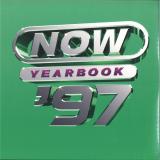
Step back into one of the most exciting years in pop history – a time when boundary-pushing alternative anthems, flawless dancefloor fillers, global megastars and fresh faces all collided on the charts. NOW - Yearbook 1997 celebrates an unforgettable year of hits with 43 massive tracks across a 3-LP set pressed on gorgeous green vinyl.
LP1 kicks off in style, with the stunning jazz-drenched ballad from legend George Michael, ‘Older’, before Natalie Imbruglia's huge debut single ‘Torn’. The Cardigans had a #2 smash with ‘Lovefool’ and Hanson hit the US & UK #1 with ‘MMMBop’. ‘Barbie Girl’ from Aqua and the Spice Girls’ anthemic ‘Spice Up Your Life’ were both #1s, and Boyzone’s ‘Picture Of You’ was a huge hit and featured in the film ‘Bean: The Ultimate Disaster Movie’. Eurovision glory happened for the UK in 1997, and winners Katrina And The Waves with ‘Love Shine A Light’ close the first side…while over on the other, a second George Michael classic from his ‘Older’ album, the beautiful ‘You Have Been Loved’, opens ahead of another contemporary masterpiece ‘Secret Garden’ from Bruce Springsteen. Texas scored a UK top 5 with ‘Say What You Want’, and Sheryl Crow had a top 10 hit with ‘A Change Would Do You Good’. Paul McCartney’s ‘Young Boy’ is next before ‘Ready To Go’ which gave Republica a Top 20 chart debut, and closing the first LP, Robbie Williams’ ‘Old Before I Die’, which became his second smash as a solo artist.
LP2 kicks off with Radiohead’s defining ‘Paranoid Android’, ahead of Kula Shaker’s hit cover of ‘Hush’, and alt-pop from Embrace (‘All You Good Good People’), The Charlatans (‘North Country Boy’) and The Seahorses (‘Love Is The Law’) before the side closes with Oasis’s huge #1 ‘D’You Know What I Mean?’ – the lead single from their third album ‘Be Here Now’… Flip the LP over and discover some of 1997’s dancefloor gold – opening with the club juggernaut and #1 ‘Professional Widow’ from Tori Amos, remixed for single release by Armand Van Helden, along with Olive’s UK #1 ‘You’re Not Alone’ and the huge ’97 ‘Now Voyager’ remix of ‘You Got The Love’ from The Source feat. Candi Staton. En Vogue’s powerful ‘Don’t Let Go (Love)’ is up next, ahead of ‘I Wanna Be The Only One’, a #1 for Eternal feat. Bebe Winans. LP2 finishes with pure pop gems from 911 with ‘Bodyshakin’, Backstreet Boys with ‘Everybody (Backstreet’s Back)’ and Steps with their debut hit ‘5, 6, 7, 8’.
The final LP opens with Pet Shop Boys’ and their brilliant version of the musical classic ‘Somewhere’, ahead of the genre-blending #1 ‘Your Woman’ from White Town, and the atmospheric ‘Out Of My Mind’ from Duran Duran. Suede’s plaintive ‘Saturday Night’ leads into three of the years’ electronic dance music highlights: Orbital provided the theme to the remake of ‘The Saint’, Moby with his re-imagining of the classic film-series theme: ‘James Bond Theme (Moby’s Re-Version)’ and The Chemical Brothers with the massive ’Block Rockin’ Beats’ completing the side…Turn the LP over for the final side featuring the debut from All Saints with ‘I Know Where It’s At’, and fabulous dance-pop from Whitney Houston with ‘Step By Step’, and both Ultra Naté and Dannii Minogue enjoyed euphoric hits with ‘Free’ and ‘All I Wanna Do’. Pan-European smash ‘Encore Une Fois’ from Sash! is followed by Ricky Martin’s global success ‘María’… but the final word on the collection goes to Elton John. His superb ‘Something About The Way You Look Tonight’ was one half of the biggest selling single of – not only 1997 – but of all time and ends the collection on a perfect pop high.
NOW – Yearbook 1997: A celebration of the diversity and creativity in the charts of a truly magical year in pop.
out of Stock
Last delivered 11 months ago available to reorder, subject to availability
In the mid-1970s, a force of nature swept across the continental United States, cutting across all strata of race and class, rooting in our minds, our homes, our culture. It wasn’t The Exorcist, Goodbye Yellow Brick Road, or even bell-bottoms, but instead a book called The Secret Life of Plants. The work of occultist/former OSS agent Peter Tompkins and former CIA agent/dowsing enthusiast Christopher Bird, the books shot up the bestseller charts and spread like kudzu across the landscape, becoming a phenomenon. Seemingly overnight, the indoor plant business was in full bloom and photosynthetic eukaryotes of every genus were hanging off walls, lording over bookshelves, and basking on sunny window ledges. The science behind Secret Life was specious: plants can hear our prayers, they’re lie detectors, they’re telepathic, able to predict natural disasters and receive signals from distant galaxies. But that didn’t stop millions from buying and nurturing their new plants.
Perhaps the craziest claim of the book was that plants also dug music. And whether you purchased a snake plant, asparagus fern, peace lily, or what have you from Mother Earth on Melrose Avenue in Los Angeles (or bought a Simmons mattress from Sears), you also took home Plantasia, an album recorded especially for them. Subtitled “warm earth music for plants…and the people that love them,” it was full of bucolic, charming, stoner-friendly, decidedly unscientific tunes enacted on the new-fangled device called the Moog. Plants date back from the dawn of time, but apparently they loved the Moog, never mind that the synthesizer had been on the market for just a few years. Most of all, the plants loved the ditties made by composer Mort Garson.
Few characters in early electronic music can be both fearless pioneers and cheesy trend-chasers, but Garson embraced both extremes, and has been unheralded as a result. When one writer rhetorically asked: “How was Garson’s music so ubiquitous while the man remained so under the radar?” the answer was simple. Well before Brian Eno did it, Garson was making discreet music, both the man and his music as inconspicuous as a Chlorophytumcomosum. Julliard-educated and active as a session player in the post-war era, Garson wrote lounge hits, scored plush arrangements for Doris Day, and garlanded weeping countrypolitan strings around Glen Campbell’s “By the Time I Get to Phoenix.” He could render the Beatles and Simon & Garfunkel alike into easy listening and also dreamed up his own ditties. “An idear” as Garson himself would drawl it out. “I live with it, I walk it, I sing it.”
But as his daughter Day Darmet recalls: “When my dad found the synthesizer, he realized he didn’t want to do pop music anymore.” Garson encountered Robert Moog and his new device at the Audio Engineering Society’s West Coast convention in 1967 and immediately began tinkering with the device. With the Moog, those idears could be transformed. “He constantly had a song he was humming,” Darmet says. “At the table he was constantly tapping.” Which is to say that Mort pulled his melodies out of thin air, just like any household plant would.
The Plantae kingdom grew to its height by 1976, from DC Comics’ mossy superhero Swamp Thing to Stevie Wonder’s own herbal meditation, Journey Through the Secret Life of Plants. Nefarious manifestations of human-plant interaction also abounded, be it the grotesque pods in Invasion of the Body Snatchers or the pothead paranoia of the US Government spraying Mexican marijuana fields with the herbicide paraquat (which led to the rise in homegrown pot by the 1980s). And then there’s the warm, leafy embrace of Plantasia itself.
“My mom had a lot of plants,” Darmet says. “She didn’t believe in organized religion, she believed the earth was the best thing in the whole world. Whatever created us was incredible.” And she also knew when her husband had a good song, shouting from another room when she heard him humming a good idear. Novel as it might seem, Plantasia is simply full of good tunes.
Garson may have given the album away to new plant and bed owners, but a decade later a new generation could hear his music in another surreptitious way. Millions of kids bought The Legend of Zelda for their Nintendo Entertainment System back in 1986 and one distinct 8-bit tune bears more than a passing resemblance to album highlight “Concerto for Philodendron and Pothos.” Garson was never properly credited for it, but he nevertheless subliminally slipped into a new generations’ head, helping kids and plants alike grow.
Hearing Plantasia in the 21st century, it seems less an ode to our photosynthesizing friends by Garson and more an homage to his wife, the one with the green thumb that made everything flower around him. “My dad would be totally pleased to know that people are really interested in this music that had no popularity at the time,” Darmet says of Plantasia’snew renaissance. “He would be fascinated by the fact that people are finally understanding and appreciating this part of his musical career that he got no admiration for back then.” Garson seems to be everywhere again, even if he’s not really noticed, just like a houseplant.
out of Stock
Last delivered 10 months ago available to reorder, subject to availability
EGO IN MIAMI 2025 comes to life by showcasing current music trends through the most hyped EGO
tracks of the moment. Not only: it represents the beginning of the annual series of compilations signed
EGO, as a tradition for ten years. Again this year, at the Miami Winter Music Conference, we have
selected several tracks that will count down with you, accompanying you to the start of one of the most
anticipated EDM events of the year. The MMW brings together thousands of professionals and
enthusiasts who will participate in a series of events in Miami, concluding with the iconic “Ultra Music
Festival”.
The selection presented this year reflects current musical trends. Established names like TR3NACRIA,
Cecilia Krull and Tommy Vee with the talented emerging Defreeze, Bohemoon and just a boy, the great
returns of Sapienza, Solarys and Bacon Popper. The energy of Berin, the good vibes of Roberto Tropea
and the euphoric productions of Ema Feud and B-Rain. The ensemble takes place through the extended
version braid that creates a collection usable by both EDM fans and professionals: DJs and producers.
out of Stock
Last delivered 13 months ago available to reorder, subject to availability
Rodina is the project of singer-songwriter Aoife Hearty and partner Joe Tatton, keys-player & co-writer from The New Mastersounds and leader of the Joe Tatton Trio. On Good Company, their first new album in 6 years, the two are joined by other great musicians including guitarist Lucas De Mulder, drummer Luke Flowers, The Filthy Six horns, and members of The Haggis Horns, among others.
Like their previous records there is a strong acid jazz slant to many of the songs, whether interpreted through a modern soul lens such as in opener "Simple Pleasures" or swaying more towards cosmic jazz-funk such as "We Go Out Of Our Way" or "Trust In This Life", which were the first singles lifted from the album.
Throw in some hippy Americana and even a tinge of Gospel and you end up with catchy songs that include both uptempo earworms like the super charged foot stomper "Good People" or the festival anthemic "Inspiration" and some beautiful chilled moments such as "All Over The Sky" and "Flowers".
Recorded at their small countryside recording studio in the Peak District this is the fourth vinyl produced at their studio after The New Mastersounds' Old School and Joe Tatton Trio's Galactico.
out of Stock
Last delivered 15 months ago available to reorder, subject to availability
New Delhi-based Peter Cat Recording Co. will release their debut album, ‘Bismillah’ on June 14, 2019 via French independent label Panache Records. Debut UK live shows are soon also to be announced by the band.
Peter Cat Recording Co. could almost have a question mark on the end of its name. Not least as founder & frontman Suryakant Sawhney refuses to explain where that name really comes from or what it means (perhaps a reference to the Tokyo jazz club owned by Haruki Murakami), but also since the very existence of the band itself raises a raft of questions. When was the last time we fell for an indie rock band for the right reasons? Not because the band in question nostalgically imitate a perceived ‘golden age’ but because they innately embody the fundamentals of such music: fantasy, sincerity and the freedom to make music without rules or career aspi- rations. And when was the last time this kind of band sounded like Sinatra, Barry White, the sweetest doo-wop, humid fanfares and a psychedelic wedding band, all at once? And all of this coming from India?
In truth, the story of Peter Cat Recording Co. was written within the triangle of San Francisco, Delhi and Paris.
In the first of these cities, Sawhney (a native of Delhi) pitched up to study film-making. More distracted by the city’s peaking live scene of the early noughties, this is where he started to make music and to sketch out an idea for the band.“
The people I lived with supported my idea of writing music, they introduced me to great mu-
sic. There used to be a great garage scene in San Francisco, like The Oh Sees also Ty Seagall, Mikal Conin, all those bands. This is a world I had never seen in my entire life. A big inspiration from San Francisco was that you could record yourself. You don’t need to be in a studio and spend a lot of money to make an album. You can do it”.
At the end of the 2000s, Suryakant returned home to New Delhi, and started his band for real, more or less the same band that plays today. “I wasn’t so concerned about will we be performing, will we be the greatest band, will we be trendy. I just wanted to make something that was consequential and important for us, I think. Something which would last, something people could listen to and be like « this is life changing ». It was for the sake of beauty”.
For the first few years and in India alone, this is exactly what Peter Cat Recording Co. did, in total indifference to the rest of the world. This was until young Parisian label Panache stumbled across the band online via Vice’s THUMP subsidiary, stupefied by the band’s cosmic video for seven-minutes-and-counting track, ‘Love De- mons’. And so in spring of 2018, ‘Portrait Of A Time: 2010-2016’ was released on Panache - making the first international release from Peter Cat Recording Co., bizarrely enough, an anthology of re-mastered, hidden gems from the band’s ramshackle back catalogue, previously recorded in Suryakant’s own living room. With Peter Cat’s off-kilter charm hitherto unheard of beyond the fringes of India, the release provided a gateway op-
Whilst the title track found its way onto Tracks Of The Year lists at the Guardian & NME, it was tricky for new PCRC enthusiasts to get a firm grip on the startling push/pull between the immediate, uncanny music this release gathered, and the cultural backdrop of New Delhi at which it was so startlingly at odds.
Opportunity for a wider fanbase to fall in love with their cloud-like, drunken songs for the first time.
If discovering your favourite new band via a ‘Best Of’ feels a curious premise, then ‘Bismillah’ does more than hint towards the promise of Peter Cat Recording Co’s future. Blending gypsy jazz, psychedelic cabaret, space disco, bossa supernova, Bollywood and uneasy listening with kaleidoscopic ease, in many senses, the band’s knack hasn’t altered. Always different, paradoxical, unpredictable yet somehow familiar. The new album opens to the strains of bird chatter, the whisper of a city’s soundscape and the first few notes from an instrument which seem to be calling us to the departure lounge, a fore-shadow of the flight ‘Bismillah’ launches its listener
on. Suryakant sings with the detached, rueful elegance of Sinatra marooned on a desert island, whilst his band create small space-time capsules which navigate their way through genres and eras – including the future – and between nostalgia and eccentricity.
Peter Cat recently trailed ‘Bismillah’ with the release of ‘Floated By’, an appositely titled musing on failure & missed opportunities, punctuated by the fulsome brass section which weaves through so much of the album.
The languid, blue quality to the track is offset by the attendant music video, created with footage shot, implau- sibly enough, at Suryakant’s own marriage ceremony (needless to say, the wedding band hired for the day was of course, Peter Cat Recording Co.) Sawhney dryly notes; “Hopefully it’s not a many-a-times-in-a-lifetime event. You can’t fake that set, those people actually having a good time, being really emotional and intense.” ‘Bismillah’’s colour-drenched album cover also captures Suryakant’s father-in-law making his wedding toast on that same day - a nod back towards the cover of ‘Portrait Of A Time’, itself a black & white image taken at the wedding ceremony of Suryakant’s own father.
A stumbling but gracious collection of songs rooted in a kind of drunken soul music, the melancholy nature of some of the songs on ‘Bismillah’ renders them almost liquid, before they develop into more dance-like shapes. Suryakant’s rangy voice swoops from the falsetto glide of ‘I’m This’ to the beat-up baritone blown along by the warm breeze of ‘Soulless Friends’. The elliptical structure of album opener ‘Where The Money Flows’ also al-
lows for the use of brief bursts of autotune effect on his vocal without feeling incongruous, whilst the desultory lyrics of ‘Heera’ (a Hindi word for diamond) - sharing something with the Morricone school of grand storytelling - have an emotional weight that would impress even coming from a native English speaker. Perhaps the most gleefully unpredictable moment on ‘Bismillah’ comes with the illusory, vocal loops on the intro to ‘Memory Box’, errupting into 8 exhilarating minutes worth of unbridled, string-backed disco joy. A cat might have nine lives, but on ‘Bismillah’ and beyond, Peter Cat Recording Co. are hinting towards an un- knowable multitude of dimensions. Throw them all together, and it equates less to a listening experience and more to an out-of-body experience.
The Isle Of Lewis is the largest such of the Outer Hebrides archipelago, and a place where myth and folklore are abundant, The Callanish Stones, a cruciform circle reckoned by tradition to be the forms of petrified giants who would not convert to Christianity, once prompted notable chronicler of the ancient Julian Cope to pronounce himself “Lashed by wind and rain but surrounded by vibe”.
This was where Holy Scum decided to take a pilgrimage for the recording of their second album proper for Rocket Recordings, All We Have Is Never. Frustrated by the physical and logistical challenges keeping the band members from collaborating, they decided the best way forward was at the residential Black Bay Studios on Great Bernera, a two hour plus ferry ride from anywhere. “The isolation of Black Bay was our salvation, a much-needed cleanse after a year of relentless misfortune” reckons the band’s Peter Taylor. Taylor describes the Holy Scum approach jokingly as ‘No riffs’ yet this belies an ability to carve abstraction and minimalism into monolithic and ominous shapes. Whilst the band are as handy as ever with excoriating and ear-splitting experimentation - as on the feverish guitar scree that underpins the taut‘Thieves’ - they also excel in a grittily vital charge as analogous to the ballsy kinetics of Fugazi and The Ex (the primal ‘I Am The Land’) as the overcast catharsis of Killing Joke and Voivod (the infectious ‘Witches’). “The title is a nod to the fact that everything ends - good, bad, ugly, beautiful “ reflects vocalist Mike Mare (Dälek) of their most focused work to date. “That is not a bad thing - it is a rebirth every time. We can spend a lifetime 24/7 together having shared experiences but living separate realities”. “I don’t think it is nihilistic,” he adds. “The despair turns into hope for sure”.
In the summer of 1968, Julie Driscoll, Brian Auger And The Trinity were at the height of their popularity having had chart success across Europe. This performance at the Montreux Jazz Festival, released for the very first time, captures legendary vocalist Julie Driscoll, Brian and group at their very best. It features a long forgotten Brian Auger original, ‘Along Came Zizzi’ plus previously unheard, live versions of Eddie Jeffersons 'Soft & Furry' and tracks from their Open and Definitely What! albums.
The booklet includes a brand new interview with Brian Auger recalling his memories of playing the festival, as well as photos of the band on stage from the actual
concert.
Wytch Hazel's stellar 2016 debut Prelude confirmed these Lancastrian apprentice wizards to be Britain's most promising new hard rock band. Two years on, that promise comes to abundant fruition on II: Sojourn, an album that moves Wytch Hazel on from the innocence and exuberance of the debut to a darker, more profound and complex place, carefully wrought into optimum shape by the band's singer, guitarist, songwriter and mastermind Colin Hendra. "I'm really into the idea of an album," notes Colin. "I don't do mix-tapes, I don't listen to singles, I'm interested in albums. I want to make a good, listenable, cohesive work, that is the whole thing." Asked what inspirations were brought to bear this time, Colin has good news, and even better taste: "I was listening to plenty of Judas Priest, Thin Lizzy and Wishbone Ash last year," remarks the frontman. "This seems to be more of a hard rock album, where the last one was more rock-folk. It's definitely more rock than folk!" The most crucial influence fully expresses itself via Les Paul guitars in sweet twin harmony through cranked Super Lead Marshalls - "Exactly the same type of amp that Thin Lizzy would have used," beams Colin - a benefit of working in James Atkinson's Hand Of Law Studio, a converted gaolhouse in Leeds. "We knew there would be a lot more great gear, more amps, more options," enthuses Colin of this productive new work environment. "We were more prepared, we planned better. I had a lot more vocals to record on this album, pretty much every song has at least three harmonies, but James is a really chilled out guy, he made it easy for us. I had a very clear idea of how I wanted each song to sound, I thought about every single aspect. I probably over-prepared for this album, and it paid off!" Wytch Hazel's proud, avowed Protestant Christianity continues to set them apart from the occult hocus-pocus of their peers, and the very title Sojourn has a Biblical inspiration: "It's used a lot in the Old Testament, people would travel somewhere to stay for a short period of time," explains Colin, comparing the idea to Wytch Hazel's development since Prelude. "We're going to reside here with this sound for a while, and the next album might not sound the same. Come and have a listen to this aspect of Wytch Hazel - it's a temporary stay. We'll be here for a while, then there will be something else. I'm always writing, it's a constant stream, but I'm always trying to raise the bar, because I don't want the next album to be not as good as the other ones!"
New R&B discoveries continue to emerge and entertain the many followers of the New Breed musical cult; nobody finds more than the Kent connoisseurs.
Berna Dean’s two previously unheard recordings are by far her best. They were laid down at Cosimo Matassa’s New Orleans’ studios by GNP Crescendo but eschewed in favour of two relatively average sides. The great 50s R&B songwriter Jesse Stone provides a rocker for the much-admired Jimmy Breedlove and a super-catchy ‘This Morning’ for an unknown mixed vocal group that has a joyous gospel feel. Jesse also penned ‘Private Eye’, a classic early 60s story-song, for Buddy Wilkins which was issued on Al Sears’ Tri-Ess imprint.
The title track is used twice, on two very different Fraternity recordings. Kenny Smith’s version was issued in 1964 and has many followers, but the equally meritorious Coasters-inspired composition by the Citations is newly discovered. Win Menifee’s ‘I’m Runnin’ Around’ from the same Cincinnati label comes complete with a fascinating back-story.
There are three cover versions. Vermettya Royster’s ‘All Around The World’ is backed by James Brown’s 1961 band, while Roosevelt Lee's 1970 update of the 1947-originated ‘Hey Little Girl’ funks the tune up a la Godfather of Soul. The cover that will make the biggest noise is undoubtedly west coast band the Afterglows’ version of Barbara Lynn’s evergreen dancer ‘I’m A Good Woman’ – this is a future monster.
Golden Crest provides two fabulous male vocal group sides – the swinging ‘What’s On Your Mind’ by Eddie Daye’s Four Bars and the delightful harmonies of the appropriately-named, but unknown Delights ‘Mary Don’t You Weep’.
Blues still thrived into the 70s as Albert Washington’s mean and moody ‘Case Of The Blues’ proves. Smokey Wilson took the music into the late 70s with the storming ‘Goin’ Away Baby (Round Like An Apple)’, which benefits here from a 45-style edit. His Pioneer Club on 88th Street in South Central L A provides the atmospheric photo for this collection.
More early 60s movers come from Wilbur “Hi-Fi” White with ‘Don’t Look Now’, future hit songwriter Johnny Madara’s raucous ‘You Make Me Mad’ and Big Boy Groves ‘Bucket O’ Blood’ which brilliantly describes the kind of club these tracks would fit right into.
The LP version loses a few tracks, but so many collectors have strong preferences we’ve thrown the vinyl junkies a lifeline.
The Bluebells' Sisters is a perfect snapshot of early '80s "Sound of Young Scotland": Glasgow indie pop with bittersweet spirit, sharp hooks, and heartfelt harmonies. Signing to the then-nascent London Records, and working with a procession of esteemed producers (including Elvis Costello who became a mentor and teacher to the band), The Bluebells enjoyed three UK hits in the 1980s ('Cath', 'Young at Heart' and 'I'm Falling') before touring widely throughout Europe and North America, developing their live sound and signing to Seymour Stein's Sire Records in the U.S.
A decade later in 1993 that 'Young at Heart' hit the U.K. No 1 spot following its use as a T.V. advert for Volkswagen. Fast forward to this decade The Bluebells have reformed with a flurry of shows across the past two years including a triumphant return to Glasgow at Barrowlands for Celtic Connects, and just announced for the Acoustic Stage for Glastonbury Festival 2025.
This new edition of Sisters has been remastered and produced in consultation with the band, using the best audio sources available, including non-album singles and B-sides, bonus tracks from the original cassette edition and new liner notes from Will Hodgkinson.
VERY LIMITED 2025 REPRESS ON BEAM OF LIGHT VINYL .
Everything changed for The Beths when they released their debut album, Future Me Hates Me, in 2018. The indie rock band had long been nurtured within Auckland, New Zealand’s tight-knit music scene, working full-time during the day and playing music with friends after hours. Full of uptempo pop rock songs with bright, indelible hooks, the LP garnered them critical acclaim from outlets like Pitchfork and Rolling Stone, and they set out for their first string of shows overseas. They quit their jobs, said goodbye to their home town, and devoted themselves entirely to performing across North America and Europe. They found themselves playing to crowds of devoted fans and opening for acts like Pixies and Death Cab for Cutie. Almost instantly, The Beths turned from a passion project into a full-time career in music.
Songwriter and lead vocalist Elizabeth Stokes worked on what would become The Beths’ second LP, Jump Rope Gazers, in between these intense periods of touring. Like the group’s earlier music, the album tackles themes of anxiety and self-doubt with effervescent power pop choruses and rousing backup vocals, zeroing in on the communality and catharsis that can come from sharing stressful situations with some of your best friends. Stokes’s writing on Jump Rope Gazers grapples with the uneasy proposition of leaving everything and everyone you know behind on another continent, chasing your dreams while struggling to stay close with loved ones back home.
"If you're at a certain age, all your friends scatter to the four winds,” Stokes says. “We did the same thing. When you're home, you miss everybody, and when you're away, you miss everybody. We were just missing people all the time.”
With songs like the rambunctious “Dying To Believe” and the tender, shoegazey “Out of Sight,” The Beths reckon with the distance that life necessarily drives between people over time. People who love each other inevitably fail each other. “I’m sorry for the way that I can’t hold conversations/They’re such a fragile thing to try to support the weight of,” Stokes sings on “Dying to Believe.” The best way to repair that failure, in The Beths’ view, is with abundant and unconditional love, no matter how far it has to travel. On “Out of Sight,” she pledges devotion to a dearly missed friend: “If your world collapses/I’ll be down in the rubble/I’d build you another,” she sings.
“It was a rough year in general, and I found myself saying the words, 'wish you were here, wish I was there,’ over and over again,” she says of the time period in which the album was written. Touring far from home, The Beths committed themselves to taking care of each other as they were trying at the same time to take care of friends living thousands of miles away. They encouraged each other to communicate whenever things got hard, and to pay forward acts of kindness whenever they could. That care and attention shines through on Jump Rope Gazers, where the quartet sounds more locked in than ever. Their most emotive and heartfelt work to date, Jump Rope Gazers stares down all the hard parts of living in communion with other people, even at a distance, while celebrating the ferocious joy that makes it all worth it -- a sentiment we need now more than ever.
This is an album made during a crucial period in South Africa’s history during which there was a palpable feeling of a slow turning towards the collapse of the apartheid state side by side with an increasingly well-organised culture of resistance through the formation of the United Democratic Front (UDF) and various affiliated bodies. However, as a result, there was increased pushback from the state security establishment, a turning to dirty tricks and the formation of hit squads whose members murdered and tortured many of our friends and created chaos throughout South Africa as well as neighbouring countries.
This album is situated in this political environment however it took advantage of the new do-it-yourself music technologies available at that time. Technologies that made it possible to make and release records without interference from traditional record company executives. Two musician friends of mine pooled their resources after their respective bands had broken up. Ivan Kadey (National Wake) and Lloyd Ross (Radio Rats) built an 8-track recording studio control room and fitted it out in a second hand caravan and called it Shifty. They parked it in a garage attached to the only house left in a demolished and derelict mining village near Soweto on the outskirts of Johannesburg.
All the work on this album was completed there, mainly after hours and mostly alone where I enjoyed an exhilarating freedom to develop a whole new set of musical skills and ideas, incorporating my love of a wide range of music I’d grown up with. Influences of 1970s progressive/kraut/and psychedelic rock combined with mbaqanga bass styles, early reggae/dub and Indian tabla rhythms. Stockhausen, early Zappa and Holgar Czukay were radio text and shredding influences, and Chris Cutler’s band Henry Cow & Art Bears helped me see a way to political expression. Mostly though was the exciting post-punk and no-wave music coming through to us from Europe and America: bands like This Heat, the Mekons, Raincoats, Sonic Youth and Pere Ubu were immensely important to me as was my reading from the period: J.M.Coetzee’s first 3 novels are strong influences on Free State Fence; the stark landscape, superstition, ritual, and sexual repression are in many of his settings. JG Ballard was a constant presence throughout that period, especially whilst living in such a surreal environment, surrounded by mine dumps, but mostly I think the whole French post-modern philosophical movement—Derrida, Foucault and of course, Baudrillard’s Simulacra and Simulation—set out a new sense of possibilities, possible ways to express oneself, ways to think, and ways to try and analyse the political intersection of public and private life. Most important at that time was the influence of sound recordings I had made and experiences garnered from working as a sound recordist on documentary films. These financed my work and later the studio and were consistent employment throughout the 1980s. Film work also enabled me to experience much of South Africa that was hidden from most. The track Independence Day is a good example; drawn from some time spent in the rural homeland of Venda. This then was the first full length Kalahari Surfers album, completed in summer of 1984 it was taken to EMI pressing plant but rejected by the cutting engineer as being ""political, pornographic and anti religious"". Chris Cutler at Recommended Records took up the challenge and released the album through his label. He wrote the original liner note
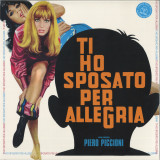
“Ti Ho Sposato Per Allegria” (1967) is a comedy directed by Luciano Salce, taken from the theatrical play of the same name (1965) by Natalia Ginzburg. The main characters are Pietro and Giuliana, respectively interpreted by Giorgio Albertazzi and Monica Vitti. A lawyer from a good family, serious, accustomed to a calm and regular life who got married to a indolent and dazed girl with a difficult past a month after meeting her at a party. Despite Giuliana's inability to transform herself into a good housewife, his relationship with Pietro continues to flourish, because he seems to find enjoyment in each of his wife's many mistakes. The reason for their union lies not in love but, perhaps, in a genuine sympathy, as strong as it is mutual. The story has become a minor classic with each new representation. On both stage and screen the themes of everyday life, and the more complex and existential ones, are addressed. The subtle irony of the work relies on recounting problematic events in a carefree tone: realities such as abortion, death, separation and the couple's incommunicability are underplayed with naturalness. The funny events of the film are commented on by Piero Piccioni's music, published for the first time on vinyl by Musica Per Immagini, with an harmonious tracklist. For this first orchestra rehearsal with the director, which will be followed by other important soundtracks, the composer makes an effective and elegant synthesis: on the one hand he reworks moods and aesthetic intuitions of some previous and happy experiences, while on the other he identifies and anticipates the first bars of that unmistakable sound between bossa nova, funk and lounge nuances that will characterize almost all the production of the Seventies. In fact, the Turin-native artist simplifies in a positive sense the articulated harmonic structures that have always distinguished his authorial figure – where the so called jazz features are to be considered more than central in the musical texture, as prominent elements of the harmonic syntax – and he tries a melodic reduction that will make the compositions more catchy or memorized, but not easier for this. Lightness of spirit and rarefied elegance are the keys of this new Dionysian world.
out of Stock
Last delivered 15 months ago available to reorder, subject to availability
From the moment she began writing her new album, Japanese Breakfast’s Michelle Zauner knew that she wanted to call it Jubilee. After all, a jubilee is a celebration of the passage of time—a festival to usher in the hope of a new era in brilliant technicolor. Zauner’s first two albums garnered acclaim for the way they grappled with anguish; Psychopomp was written as her mother underwent cancer treatment, while Soft Sounds From Another Planet took the grief she held from her mother‘s death and used it as a conduit to explore the cosmos. Now, at the start of a new decade, Japanese Breakfast is ready to fight for happiness, an all-too-scarce resource in our seemingly crumbling world.
Jubilee finds Michelle Zauner embracing ambition and, with it, her boldest ideas and songs yet. Inspired by records like Bjork’s Homogenic, Zauner delivers bigness throughout - big ideas, big textures, colours, sounds and feelings. At a time when virtually everything feels extreme, Jubilee sets its sights on maximal joy, imagination, and exhilaration. It is, in Michelle Zauner’s words, “a record about fighting to feel. I wanted to re-experience the pure, unadulterated joy of creation...The songs are about recalling the optimism of youth and applying it to adulthood. They’re about making difficult choices, fighting ignominious impulses and honouring commitments, confronting the constant struggle we have with ourselves to be better people.”
Throughout Jubilee, Zauner pours her own life into the universe of each song to tell real stories, and allowing those universes, in turn, to fill in the details. Joy, change, evolution - these things take real time, and real effort. And Japanese Breakfast is here for it.
3: Nahko– Lifeguard, Songwriter – Adam Korbesmeyer, Jerry "JL" Lang II*, Nahko
4: Nahko– Slow Down, Songwriter – Nahko
5: Doug Good Feather– Healing Song (Interlude)
6: Nahko– Is What It Is (The Coyote Burial), Songwriter – Adam Korbesmeyer, Jerry "JL" Lang II*, Nahko
7: Nahko– Give It All, Songwriter – Nahko
8: Nahko– Garden, Songwriter – Nahko
9: Dion Montero– Defend The Sacred (Ilocano Welcome Chant)
10: Nahko– Dear Brother, Featuring
11: Nahko– Part Problem, Songwriter – Nahko
12: Dianne Bell– Music Was His Medicine (Interlude)
13: Nahko– Twisted, Songwriter – Adam Korbesmeyer, Jerry "JL" Lang II*, Max Ribner, Nahko
14: Nahko– Bend Like The Willow, Songwriter – Jose Patricio Zuniga Labarca, Justin Chittams, Max Ribner, Michael Joseph Hall II, Nahko, TJ Schaper, Timothy Michael Snider*
15: Nahko– Take Your Power Back, Songwriter – Jose Patricio Zuniga Labarca, Justin Chittams, Max Ribner, Michael Joseph Hall II, Nahko, TJ Schaper, Timothy Michael Snider*
16: Pua Case– Oli Kūkulu
17: Nahko– Honor The Earth, Songwriter – Adam Korbesmeyer, Jerry "JL" Lang II*, Nahko
[b] 2 Nahko– 4th Door, Featuring [Feat] – Natalie Schepman, Songwriter – Jose Patricio Zuniga Labarca, Justin Chittams, Max Ribner, Michael Joseph Hall II, Nahko, Timothy Michael Snider*, Tj Schaper
[j] 10 Nahko– Dear Brother, Featuring [Feat] – Xiuhtezcatl, Songwriter – Jose Patricio Zuniga Labarca, Justin Chittams, Max Ribner, Michael Joseph Hall II, Nahko, TJ Schaper, Timothy Michael Snider*, Xiuhtezcatl
Mustang Island, the third album from Austin-based band Little Mazarn, is a gentle force. Waves of grief crest like surf on the Texas coast. Wild horses break through long-shuttered gates, only to come back around. Lead songwriter, vocalist, and multi-instrumentalist Lindsey Verrill (she/her) joins bandmates jeff Johnston (he/him) and Carolina Chauffe (they/thern), The tensong, collection continues work with Dear Life Records. A full-throated romp through the capabilities of community-minded songcraft, Mustang Island is both naturalistic and futuristic, completely recasting Little Mazarn's origins in primitive folk. Instead, the band reaches towards sonic experimentation and spacious expansion. Lindsey's heart-opening vocals and jeff's singing saw, both trademarks of the project, mix with unexpected bombastic drums, dissonant synthesizers, and a chorus of orchestral oddities. This mid-career ode dances confidently in the creative liberties granted by decades in the game - more dazzlingly lively, and honestly somber, than ever before. The band's crossroads branch across prominent Southern outsider music: On cello, Lindsey has recorded with Patty Griffin and Dana Falconberry. The longtime side player wouldn't write her first song until age 34, Jeff has played in Bill Callahan's band, as well as with LIl Capin Travis and Orange Mothers. Carolina is known for prolific solo project hemlock, Little Mazarn has also collaborated with Lomelda to release their last EP, Honey Island General store (2023), following past LPs Texas River Song (2022) and lo (2019). Alongside silliness and reverence, including covers from Kate Wolf and Bob Wills * His Texas Playboys, griet directs much of Mustang Island. Lindsey left her job of seventeen years teaching cello at a local school, Recording also aligned with the passing of Jeff's facher, a career educator in Jeff and Lindsey's hometown of Dallas. "Grief, and the avoidance of grief, is a big part of being human," says Lindsey. "You make a choice, and then you grieve for the other choice. Or you finish a meal and literally grieve that it was so good. If you really befriend griet, you re like, 'Oh, it's here, in this pancake, which I loved so much that I ate the whole thing, and now it's gone.**
In 1966, Oscar Agudelo recorded this elusive and lesser-known collector's gem called "Pa' mi muñeca" for Discos Fuentes. It is a rarity where the artist took an unexpected musical turn and performed several porros, paseaitos, gaitas, and cumbias, evoking the swaying motion and rolling waves of Colombia's Caribbean sound. It resonates with the echoes of a romantic minstrel laced with an unexpected richness of nuance, a hallmark of the cumbia sound. It's exactly the kind of music that lights up a tambó or a fandango circle on carnival night. A dozen tracks, none of them new, but suffused with a consciousness that can be understood within the context of their time and with the personality of the artist bold enough to bring them to life. 'Madre cumbia' opens the album with a festive, nostalgic mood, infused with the simple beauty and the electrifying beat of the tropics that immediately makes you want to get up and dance. It's a fantastic example of how to perform a song with passion and make the listener fall instantly in love with an album. 'Pa' mi muñeca', the title track, is a fast-paced paseaito that explores new paths that took a shortcut to the dance halls. A showstopper on the dance floor. 'Está como mango' is a porro-cumbia that charms with a rich tapestry of compliments, the calling card of many old-school tropical songs. 'Cumbia de recuerdo', 'Cumbia suave', 'Cumbia de Santa Marta', are back-to-back cumbias. This is an album devoted to recreating the strength of a musical genre that's been the soundtrack of Colombian life for decades. It's a record dedicated to capturing good times, filled with simple dreams, steeped in joyful energy, and shining with the uninhibited flair, or better said, the quality of the sixties. This album represents a milestone on the route cumbia had taken, both for Discos Fuentes and maestro Agudelo. First time reissue. Includes liner notes by genre expert Don Alirio.
From the moment she began writing her new album, Japanese
Breakfast’s Michelle Zauner knew that she wanted to call it
‘Jubilee’. After all, a jubilee is a celebration of the passage of time
- a festival to usher in the hope of a new era in brilliant technicolor.
Zauner’s first two albums garnered acclaim for the way they
grappled with anguish; ‘Psychopomp’ was written as her mother
underwent cancer treatment, while ‘Soft Sounds From Another
Planet’ took the grief she held from her mother’s death and used it
as a conduit to explore the cosmos.
Now, at the start of a new decade, Japanese Breakfast is ready to
fight for happiness, an all-too-scarce resource in our seemingly
crumbling world.
‘Jubilee’ finds Michelle Zauner embracing ambition and, with it, her
boldest ideas and songs yet. Inspired by records like Bjork’s
‘Homogenic’, Zauner delivers bigness throughout - big ideas, big
textures, colours, sounds and feelings. At a time when virtually
everything feels extreme, ‘Jubilee’ sets its sights on maximal joy,
imagination and exhilaration. It is, in Michelle Zauner’s words, “a
record about fighting to feel. I wanted to re-experience the pure,
unadulterated joy of creation… The songs are about recalling the
optimism of youth and applying it to adulthood. They’re about
making difficult choices, fighting ignominious impulses and
honoring commitments, confronting the constant struggle we have
with ourselves to be better people.”
Throughout ‘Jubilee’, Zauner pours her own life into the universe
of each song to tell real stories and allowing those universes, in
turn, to fill in the details. Joy, change, evolution - these things take
real time and real effort. And Japanese Breakfast is here for it.
Available on clear with yellow swirl coloured vinyl.
out of Stock
Last delivered 5 years ago available to reorder, subject to availability
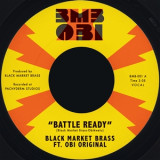
'BMB x OBI' marks a new venture for the long-time instrumental powerhouse Black Market Brass. Teaming up with Obi Original, the young and visionary Minneapolis talent with a mission to share the heart of African music with the world, Black Market Brass delivers both proverbial and prophetic messages for the year to come - 'You've got to be Battle Ready!'. Inspired by the raw energy and messages of Fela Kuti and indebted to Orchestre Poly-Rythmo de Cotonou for their heavy fusion of voodoo-infused Afro-beat, Black Market Brass points in both directions towards the resurgent history of West African funk and the future of where a younger generation can lead us. These tracks are bursting at the seams with energy and force the listener to wise up and march along as soon as the drums thunder and the horns blare their first notes. The A-side, 'Battle Ready,' is what it claims: a band armed and ready to take on whatever may come. Strapped to the hilt with three drummers, this infectiously rhythmic track simmers, if not boils, under Obi's demands to mount up. The energy is high, edgy, and proves that getting nine musicians in the same room to track live captures a passion that bulldozes through anything placed in its way. The B-side, 'What You Make It,' encapsulates a musical quality that Black Market Brass has refined over its many years together, with polyrhythmic ideas you don't have to understand to know it feels good. Infused with elements of ethno-funk and classic highlife, this Ebo Taylor & Pat Thomas inspired work approaches the listener with a simple message amongst a danceable cacophony of sounds - 'Life is what you make it.' Move in 4, dance in 3, or sway in 6. Whichever you choose, choose it deliberately; the music will be there to support you.
Khadim is a stunning reconfiguration of the Ndagga Rhythm Force sound. The instrumentation is radically pared down. The guitar is gone; the concatenation of sabars; the drum-kit. Each of the four tracks hones in on just one or two drummers; otherwise the sole recorded element is the singing; everything else is programmed. Synths are dialogically locked into the drumming. Tellingly, Ernestus has reached for his beloved Prophet-5, a signature go-to since Basic Channel days, thirty years ago. Texturally, the sound is more dubwise; prickling with effects. There is a new spaciousness, announced at the start by the ambient sounds of Dakar street-life. At the microphone, Mbene Diatta Seck revels in this new openness: mbalax diva, she feelingly turns each of the four songs into a discrete dramatic episode, using different sets of rhetorical techniques. The music throughout is taut, grooving, complex, like before; but more volatile, intuitive and reaching, with turbulent emotional and spiritual expressivity.
Not that Khadim represents any kind of break. Its transformativeness is rooted in the hundreds upon hundreds of hours the Rhythm Force has played together. Nearly a decade has passed since Yermande, the unit's previous album. Every year throughout that period — barring lockdowns — the group has toured extensively, in Europe, the US, and Japan. With improvisation at the core of its music-making, each performance has been evolutionary, as it turns out heading towards Khadim. “I didn’t want to simply continue with the same formula," says Ernestus. “I preferred to wait for a new approach. Playing live so many times, I wanted to capture some of the energy and freedom of those performances.” Though several members of the touring ensemble sit out this recording — sabar drummers, kit-drummer, synth-player — their presence abides in the structure and swing of the music here.
Lamp Fall is a homage to Cheikh Ibra Fall, founder of the Baye Fall spiritual community. The mosque in the city of Touba is known as Lamp Fall, because the main tower resembles a lantern. Soy duggu Touba, moom guey séen / When you enter Touba, he is the one who greets you. After a swift, incantatory start Mbene sings with reflective seriousness. Her voice swirls with reverb, over a tight, funky, propulsive interplay between synth and drums, threaded with one-two jabs of bass. Cheikh Ibra Fall mi may way, mo diayndiou ré, la mu jëndé ko taalibe... Cheikh Ibra Fall amo morome, aboridial / Cheikh Ibra Fall shows the way forward, he gives us strength, he gathers his disciples... Overflowing with grace, Cheikh Ibra Fall has no equal.
Interwoven with Wolof proverbs, Dieuw Bakhul is a recriminatory song about treachery, lies, and back-biting. Over moody, roiling synths and ominous, lean bass, Mbene throws out fluttering scraps of vocal, as if re-running old conversations in her head. The music shadows her despair to the verge of breakdown, at one moment seemingly so lost in thought and memories, that it threatens to disintegrate. Bayilene di wor seen xarit ak seen an da ndo... Dieuw bakhul, dieuw ñaw na / Stop judging your friends and companions... A lie is no good, a lie is ugly.
Khadim is a show-stopper; currently the centrepiece of Ndagga Rhythm Force live performances. The song is dedicated to Cheikh Ahmadou Bamba, aka Khadim, founder of the Mouride Sufi order. Serigne Bamba mi may wayeu / Serigne Bamba is the one who makes me sing. The verses name-check revered members of his family and brotherhood, like Sokhna Diarra, Mame Thierno, and Serigne Bara. Though Islam has been practised in Senegal for a millennium, it wasn’t until the start of the twentieth century that it began to thoroughly permeate ordinary Senegalese society, hand-in-hand with anti-colonialism. The verses here recall Bamba’s banishment by the French to Gabon, and later to Mauritania, in those foundational times. During exile, his captors once introduced a lion to his cell: gaïnde gua waf, dieba lu ci Cheikhoul Khadim / the lion doesn’t budge, it gives itself over to Cheikh Khadim. Deep, surging bass, steady kick-drum, and simple, reverbed chords on the off-beat lend the feel and impetus of steppers reggae. A reed plays snatches of a traditional Baye Fall melody; the dazzling polyrhythmic drumming is by Serigne Mamoune Seck. Mbene compellingly blends percussive vocalese, narrative suspense, exultant praise, introspection, and grievance.
Nimzat is a devotional tribute to Cheikh Sadbou, a contemporary of Bamba, buried in a mausoleum in Nizmat, in southern Mauritania. Way nala, kagne nala... souma danana fata dale / I call upon you and wonder about you... If I am overwhelmed, come to my aid. The town holds special significance for Khadr Sufism. An annual pilgrimage there is conducted to this day. The rhythm is buoyantly funky; the mood is sombre, reined-in, foreboding. Punctuated by peals of thunder, Mbene sings with restrained, intense reverence; huskily confidential, steadfast. Nanu dem ba Nimzat, dé ba sali khina / Let us go to Nimzat, to seal our devotion.
Mbene Diatta Seck: vocals.
Bada Seck: bougarabou, thiol, mbeung mbeung bal, tungune.
Serigne Mamoune Seck: bougarabou, khine, mbeung mbeung, tungune.
Text by Mark Ainley (Honest Jons).
Mastered by Rashad Becker.
Everything else by Mark Ernestus.
out of Stock
Last delivered 3 months ago available to reorder, subject to availability
The House phenomenon of recent years captured in a very nice double vinyl package - Featuring some of the greatest artists of the genre: Kosheen, With U, David Guetta, Bob Sinclar, Themba, Pat Thomas, Ebo, Taylor Sasson, Armin Van Buuren
out of Stock
Last delivered 29 days ago available to reorder, subject to availability
Having spent the last half decade building up a name as a jazz and soul singer of rare distinction, Ada Morghe now presents her fourth album, 'Pure Good Vibes', which features the British reggae icon Maxi Priest A trip to Jamaica in January 2024 set 'Pure Good Vibes' in motion. Ada headed to th island after hearing that her bassist and producer Livingstone Brown, was flying the to work with Maxi Priest. It was an idea that was underlined by her desire to explo the music, culture and Jamaican heritage that had also shaped the lives of her oth band members Luke Smith (keyboard) and Josh McNasty (drums). The resulting album is a beautiful, intimate reflection on adult themes, such a keeping the passion alive, making the most of life's sweet moments and capturing th closeness of two people in love, which is underpinned by a sound that, though n beholden to Jamaica's musical traditions, certainly shares a spirit with them. The are other influences - such as Michael Kiwanuka's soulful fervour, the vibrancy of '60 R&B, and a love of Sade's 'Diamond Life'. Before stepping whole- heartedly into music, Ada Morghe was already a renowne actress and an award-winning author in her homeland of Germany. Having written an starred in the play-turned-film 'Frau Mutter Tier' and been asked to write songs for i soundtrack, she found herself working with former Prince sound engineer Han Martin Buff. That led her to Abbey Road studios in London, her debut album 'Picture and 2020's 'Box', an expression of her refusal to be tied down to any one genre o profession. From there came 2023's 'Lost', a free-flowing vocal jazz suite based on th four elements. 'Pure Good Vibes', however, pulls her toward what sounds like her most natural albu yet: sophisticated jazz and soul that deals with both the romance and reality o matters of the heart.
Karma Sutra had already been a band for five years when they released their elusive one and only album ,released on their own Paradoxical Records label in 1987. The Daydreams of a Production Line Worker came towards the end of the bands life span and all they had to show prior was a few demos and some tracks on compilations on Mortarhate. By the time the band entered the studio KARMA SUTRA was spreading their musical wings, moving from a straight ahead anarcho sound to a more dense and thoughtful place, adding flourishes of post punk and moody atmospheres to their agit-prop political stance thus creating one of the most idiosyncratic concept albums of their time, where situationist politics meet the most ambitious anarcho punk sound.
The album was recorded in Sheffield at Vibrasound Studio and co-produced by Spon of UK DECAY, which added yet another layer to the already complex album.
When released The Daydreams Of A Production Line Worker had little fanfare due to the rigid approach to punk of the time. But as time passed, so did this albums importance. It would sit perfectly in your collection next to bands who had ambition, tunes and thought provoking lyrics like CHUMBAWAMBA, THE MOB or THATCHER ON ACID.
The Daydreams Of A Production Line Worker reissue comes with a reproduction of the originally included 28 page booklet, which the band viewed as an inseparable part of the album to understand the concept. Dense at times and intended to be thought provoking it covers class oppression, gender, culture brainwashing, prison struggle et all the capitalism society illnesses written from an anarchist perspective and aligned with the situationism theory of revolution of every day life.
Welcome to the ancient Disboard where the 10 rules of the game did not yet exist. War consumes the world, splits the heavens, destroys the stars and even threatens the human race. In the midst of this chaos, a young man named Riku tries to lead humanity towards a tomorrow he firmly believes in. One day, in the ruins of an Elven city, he finds Schwi, an "ex-machina" android who wishes to understand the heart of Man. Their meeting will change the course of history...
Music composed by Yoshiaki Fujisawa, arranger and composer. He is a member of the group Franz Maxwell I. He worked on the anime of LoveLive!, Issekai Cheat Magician and GATE.
He knew, through his music, to transport us in the universe at the origin of this "Issekai" to make us feel all the emotion of a meeting between two completely different beings.
Ali Farka Touré trekked the world, bringing his beloved Malian music to the masses. Dubbed “the African John Lee Hooker,” one could hear strong connections between the two; both employed a bluesy style of play with gritty textures that elicit calm and fury in equal measure. While the influence of Black blues music prevailed, Touré created a West African blend of 'desert blues' that garnered Grammy awards and widespread reverence. Though he transcended in 2006, Ali’s musical legacy lives on through his son, Vieux aka “the Hendrix of the Sahara,” an accomplished guitarist and champion of Malian music in his own right. On Ali, his collaborative album with Khruangbin, Vieux pays homage to his father by recreating some of his most resonant work, putting new twists on it while maintaining the original’s integrity. The result is a rightful ode to a legend. Ali isn’t just a greatest hits compilation. It’s a lullaby, a remembrance of Ali's life through known highlights and B-sides from his catalog. It is a testament to what happens when creativity is approached through open arms and open hearts. “To me, music is magic, it is spontaneous, it is the energy between people,” Vieux says. “I think Khruangbin understands this very well.” The genesis of the album dates back to 2019, when Khruangbin, coming off their breakthrough album Con Todo el Mundo, was beginning to play to bigger crowds. The record was finished in 2021, as a global pandemic shuttered businesses and forced us to take stock of what Earth was becoming. Indirectly, Ali captures this as a moment of peace within a raging storm, a conversation between past and present without allegiance to suffering. Now, given Khruangbin’s reach as a unit with legions of fans (including the likes of Jay-Z and Paul McCartney), they’re poised to bring Malian music to broader groups of listeners. Ali is a masterful work in which the love surrounding it is just as vital as the music itself, driving it to unforeseen places; Vieux and Khruangbin are spreading the good word to a completely new generation. “I hope it takes them somewhere new, or puts them in a place they haven't felt or heard,” Lee says. “It is about the love of new friendship and making something beautiful together,” Vieux continues. “It is about pouring your love into something old to make it new again. In the end and in a word it is love, that's all.”
Born in Montreal, double platinum- selling artist Sam Roberts launched a career of radio hits with The Inhuman Condition, which included "Brother Down" and the #1 single "Don't Walk Away Eileen". His eight subsequent albums have garnered multiple awards and include life-moment defining favourites "Hard Road", "Where Have All the Good People Gone?", "Them Kids", "We're All In This Together", and "All Of Us".
The band's legendary live show has seen them performing around the world including Australia, Japan, Europe, and North America. Their infectious live energy has brought them to festivals such as Bonnaroo, Austin City Limits, Lollapalooza and Bumbershoot, and on stages alongside giants like the Rolling Stones and AC/DC.
Frequencies is a carefully curated collection of songs that, while familiar to their North American audience, will be receiving a full-fledged release in the UK for the first time. As a special addition, the album will include a newly recorded version of 'Brother Down', the band's breakthrough single from their debut album We Were Born In A Flame. This fresh take captures the energy and evolution of the song as it has been performed night after night over the decades. The album also features a rework of 'All Of Us' by fellow Montrealer Liam O'Neil (The Stills, Kings of Leon).
DJ Goce is once again coming with the super funky goods and takes these 2 all time dancefloor classics down a different lane. On the A side he goes back to where LL didn’t think he was gonna go back to in ’89, but in a straight Brooklyn way, yet he picks up that west coast pop lock feelin’ and injects new life into this notorious bouncer. The B side gets down and dirty as Goce rocks this upbeat Staten Island classic with a funky twist takin’ it straight to the dancefloor. Both of these reworks will kill in the dance and are guaranteed to have people moving back and forth and all over the place!
out of Stock
Last delivered 15 months ago available to reorder, subject to availability
Where the Butterflies Go in the Rain is the third studio album from the enchanting songstress, Raveena. Blending powerful storytelling with early 2000s pop, Where the Butterflies Go in the Rain sees music continuing to play the central role as both a catalyst and medium in her personal and creative growth. With newfound clarity, Raveena delves into themes of new love, maturity, comfort, and domesticity that reflect the peace of mind she currently inhabits. Speaking on this evolution and how it informed the album’s creative, she shares, “Butterflies are so delicate that they have to hide in leaves and flowers until the rain passes so that their wings don’t get crushed in the rain. I felt like that was kind of a metaphor for where I was in my life. I needed to go back to comfort—to deep rest—and stop weathering storms.” On the most instinctual level it’s an album that should conjure simple pleasures like the joy of a summer road trip with loved ones.
Embracing the sounds of classic artists like Fleetwood Mac, Brandy, Bob Marley, Joni Mitchell, and Marvin Gaye, to name a few, Where the Butterflies Go in the Rain draws inspiration from people who, “are really good at capturing the beauty and loss of life in the same breath,” she describes. In her signature style, Raveena seamlessly unites that expansive songwriting with traditional Indian instruments and feel-good early 2000s pop hits —putting forth a work that’s more unabashedly herself than any that’s come before.
Raveena reflects on her forthcoming album, “I don't think I've ever understood a record so well before—It wasn’t like the process I used to have with past albums where I was more anxious about being at my best. This time, it was all intuition, and I knew the album was right when I finally had the feeling of rest.”
The deluxe release sees the addition of 3 tracks. Sun Don't Leave Me - contemplating the feeling of wanting to hold onto one more beautiful sunset, one more passionate embrace, before things change again and hard times strike again - and a reimagined version of Lose My Focus with UMI, bringing fresh energy to an album that’s more unapologetically Raveena than ever.