
quête:good looking records

- A1: Les Masques - Il Faut Tenir (1969)
- A2: Isabelle Aubret - Casa Forte (1971)
- A3: Christianne Legrand - Hlm Et Ciné Roman (1972)
- A4: Jean Constantin - Pas Tant D'chichi Ponpon (1972)
- A5: Billy Nencioli & Baden Powell - Si Rien Ne Va (1969)
- B1-: Marpessa Dawn - Le Petit Cuica (1963)
- B2: Jean-Pierre Sabar - Vai Vai (1974)
- B3: Sophia Loren - De Jour En Jour (1963)
- B4: Isabelle - Jusqu’à La Tombée Du Jour (1969)
- B5: Sylvia Fels - Corto Maltesse (1974)
- C1: Frank Gérard - Comme Une Samba (1972)
- C2: Ann Sorel - La Poupée Des Favellas (1971)
- C3: Charles Level - Un Enfant Café Au Lait (1971)
- C4: Andrea Parisy - Les Mains Qui Font Du Bien (1970)
- C5: Audrey Arno - Quand Jean-Paul Rentrera (1969)
- C6: Aldo Frank - T’as Vu Ce Printemps (1970)
- D1: Christianne Legrand - Cent Mille Poissons Dans Ton Filet (1972)
- D2: Clarinha - Lemenja (1970)
- D3: Hit Parade Des Enfants - Aquarela (1976)
- D4: Jean-Pierre Lang - Tendresse (1965)
- D5: Magalie Noël - Une Énorme Samba (1970)
- D6: Françoise Legrand - La Lune
Ever since the late 1950s bossa-nova revolution, Brazil’s influence on French music has been undeniable. Pierre Barouh, Georges Moustaki and a vast array of lesser known artists, all made the Musica Popular Brasileira (MPB) an axis of promotion at the service of a cool and metaphysical, modern and mixed Brazilian lifestyle. Some were seduced by the poetic languors of the bossa, some were looking for fun, and others just loved the American hybridization of jazz-bossa, jazz-samba.
What is bossa nova? One of its creators, Joao Gilberto said: "Its style, cadence, everything is samba. At the very start, we didn't call it bossa nova, we sang a little samba made up of a single note - Samba de uma nota so .... The discussion around the origins of bossa nova is therefore useless”. It is nevertheless useful to remember that these magnificent Brazilian songs, which the guitarist describes as samba, were shifted and balanced around improbable chords. "I like things that lean, the in-betweens that limp with grace," said Pierre Barrouh, quoting Jean Cocteau.
With emotion, arrangements for violin and supple guitar licks, bossa nova rapidly changed. A transformation that can be heard in the Tchic, tchic, French Bossa Nova 1963-1974 compilation, the result of a cultural reappropriation, which traveled through the United States and supplemented itself in France.
A musical revolution that has remained significant, bossa nova was born in Rio. From 1956 to 1961, Brazil lived through its golden years. In five years, the country had invented its modernist style. Elected president in 1956, Juscelino Kubitschek de Oliveira, an elegant man with a broad forehead, brandished a promising slogan: "Fifty years of progress in five years". He quickly got to work. Not worried about increasing debt, he launched the project for a new federal capital, Brasilia, designed by the communist architect Oscar Niemeyer. Volkswagen opened state-of-the-art factories and created the “fusquinha”, the Beetle. In Rio, the Vespa made its first appearance. The Arpoador Surf Club crew run into the “girl” from Ipanema, Helô Pinheiro - the tanned garota ("chick"), between a flower and mermaid, who at 17 walked by the Veloso bar, where the fiery author and composer, Tom Jobim and Vinicius de Moraes, were getting drunk on whiskey. From then on, bossa symbolized cool.
In 1958, Joao Gilberto recorded Chega de Saudade, which the directors of Philips denied, calling it "music for fagots". The marketing director, who believed in it, secretly pressed 3000 78-inch vinyls and distributed them at schools around Rio, creating a tidal wave.
American jazzmen then took over. In particular, trumpeter Dizzy Gillespie and guitarist Charlie Byrd. In November 1962, the Brazilian Ministry of Foreign Affairs funded a "Bossa-Nova" concert at Carnegie Hall in New York, inviting the genre’s pioneers. Unprepared, the show soon turned to disaster. But the troupe was invited to the White House by Jackie Kennedy. The first lady loved "the new beat" and in particular Maria Ninguem, a song by Carlos Lyra, later covered by Brigitte Bardot.
In Brazil, the 1964 military coup quickly ended this euphoria. The destructive atmosphere that ensued pushed many Brazilian musicians to leave, if not to exile. Thus, Tom Jobim, Sergio Mendes and Joao Gilberto arrived to the United States. In New York, Joao Gilberto met saxophonist Stan Getz. At the time, he was married to the Bahianese Astrud Weinert Gilberto, who had a German father. She had never sung before, but she knew how to speak English. Getz therefore asked her to replace her husband on The Girl From Ipanema. The Getz/Gilberto record with Tom Jobim on piano, was released in March 1964. Phil Ramone, the "pope of pop" was in charge of sound.
Bossa nova arrived in Paris through the classic “guitar-voice” channel (Pierre Barouh, Baden Powell, Moustaki…) But France loved jazz and Paris had already welcomed its American contributors. All these good people were to pass through Saint-Germain-des-Prés. The cabaret l'Escale became the Mecca of Latin American sound where one could find Pierre Barrouh and his friends, such as the Camara Trio, samba-jazz aces, whose only record was published by the Saravah label. With a band strangely called Les Masques (a band that included Nicole Croisille and Pierre Vassiliu, among others), the Camara Trio recorded an interesting Brazilian Sound, including the track Il faut tenir which is present on this tasty compilation of rarities.
Other enlightened musicians can also be found on the compilation, such as Jean-Pierre Sabar (songwriter for Hardy, Auffray, Leforestier ...) and the French pop rock organist Balthazar. In 1975, Sabar recorded Aurinkoinen Musiikkimatka on a Finnish label, which featured the crazy Vai, Vai, included on this record. We are now following the footsteps of Brazilian electronic musicians such as Sergio Mendes, Eumir Deodato or Marcos Valle who created funk and disco sounds on their keyboards and synthesizers. A style that influenced Véronique Sanson when she wrote Jusqu’à la Tombée de la nuit in 1969 for Isabelle de Funès, the niece of Louis and a great friend of Michel Berger - Sanson did end up singing this track on her 1992 Sans Regret record.
The pinnacle of exoticism and travel, Sylvia Fels’ Corto Maltese includes bongos, sea mist and ocean sounds. The title was taken from Jacky Chalard’s concept album written in 1974, Je suis vivant, mais j’ai peur (I am alive, but I am scared), based on Gilbert Deflez’s science fiction novel.
However, bossa nova extended the scope of popularity. "In the 1970s, I was a fan of Sergio Mendes, Getz / Gilberto. I fell in love with this music that I knew because I had been an orchestral singer, " explained Isabelle Aubret, who in 1971 delivered a composite record of covers by the very funky Jorge Ben, Orfeu Negro, Tom Jobim, Vinicius de Morais and Jean Ferrat. "I recorded this album for Meys Records in Paris, far from Brazil, with wonderful musicians, François Raubert, Roland Vincent, Alain Goraguer...". The latter wrote the arrangements for Casa Forte, a very percussive title borrowed from Edu Lobo, one of the initiators of the bossa who spent time in California. "Jazz and bossa came together and produced very rhythmic music. I love singing, it allows me to dream, to have fun, to feel a high on stage, and these songs brought me joy, made me swing, my singing felt like a dance.”
The world tours of French singers and their desire for the tropics, often brought them to Rio with its hills, forests, caipirinhas and tanned bodies. There are surprises though, like this Iemenja (Iemenja is the goddess of the sea in the Afro-Brazilian candomblé religion). Not unlike the composer and musician Jean-Pierre Lang, based in Sao Paulo, Claire Chevalier taught Brazil to Brazil. In 1970, the singer and painter published a 45-inch vinyl, Mon mari et mes amants (My husband and my lovers), under the improbable pseudonym of Clarinha (little Claire). She was then living in Rio, with her husband, Joël Leibovitz, who founded a band called Azimuth, and who owned a record label specialized in "sambas enredos" songs for samba school parades.
For its B side, she asked Pierre Perret to come up with lyrics for a song composed by Carlos Imperial: "Oh goddess of the sea, o goddess Iemenja, I bring a white rose to adorn your long hair ..." . "Perret came to see us, and we had fun, remembers Joël Leibovitz. We wrote Lemenja for fun, we recorded it at the Havaí studio, behind the Central do Brasil the central station. Erlon Chaves, the arranger who worked with Elis Regina, joined us" adding his share of Afro-Brazilian percussions and funky brass to the mix.
There is a common misunderstanding in Franco-Brazilian history: that bossa, admittedly hedonistic, is perceived as funny, even though the poets who wrote the texts are often philosophizing on the human condition. Its French interpreters pull it towards a carnival inspired universe, far removed from its fundamental essence. Thus, Jean Constantin covered the famous Samba da minha terra, an ode to the art of samba written by the classic Bahian composer Dorival Caymmi, renaming it with the enticing title of Pas tant de tchi tchi pompon: "On your pier there is no tchi tchi / when you arch your back, you know everything is alright ”(lyrics by Gérard Calvi). This expedited bossa aims for the absurd, but retains a certain elegance.
Indeed, Jean Constantin was not an idiot, the rather large man had a huge mustache and liked fantasy, (Les pantoufles à papa, Le pacha, inspired by cha-cha-cha-cha, salsa and jazz) but he was also the lyricist of Mon manège à moi interpreted by Edith Piaf, the composer of Mon Truc en plume by Zizi Jeanmaire and the soundtrack of François Truffaut’s 400 Blows. Le Poulpe, published in 1970, from which this bossa is extract, was arranged by Jean-Claude Vannier, an accomplice of Serge Gainsbourg’s Melody Nelson. In short: "There is enough of samba / By looking at the parasol / Because my poor cabeza / Is going to die in the sun".
Even the American actress Marpessa Down, who was at the heart of the bossa nova revolution with her role as Euridyce in Marcel Camus’ film Orfeu Negro, winner of the 1959 Cannes Palme d'or, fed the clichée with Je voudrais parler au petit cuica - "Tell me how you manage to always make people want to dance / It's true, I must admit that I cannot resist your magic" - in consequence, once can hear the cuica, a little drum inherited from the Bantu.
But bossa nova had many angles. Societal, of course, pushing actresses who were symbols of women's liberation like Brigitte Bardot, Jeanne Moreau, or Sophia Loren to engage in the exercise of accelerated bossa. In February of 1963, Sophia Loren made a record in French in Rome, Je ne t'aime plus, featuring the song De jour en jour, a bossa written by two Italians, Armando Trovajoli and Tino Fornai, which was released a little later by Barclay. Bossa accompanied the 1960s, a decade of moral liberation. Ann Sorel, who interpreted La Poupée des favellas, caused a sensation with L’amour à plusieurs, a provocative song written by Frédéric Bottom and Jean-Claude Vannier. As for the actress Andrea Parisy, she displayed her bourgeois cheekiness in Marcel Carné's Les Tricheurs before interpreting Les mains qui font du bien. And Magalie Noël, the friend of Boris Vian, who sung Johnny fais-moi mal, was hired to sing Une énorme Samba, composed by Alain Goraguer (arranger to Gainsbourg, Bobby Lapointe and Jean Ferrat) with lyrics by Frédéric Botton.
But in the end, of what wood is bossa nova made of? The answer is given by Christianne Legrand, daughter of Raymond the conductor, and sister to Michel the composer: "With me, with jà" - jà means "immediately" in Portuguese. In 1972, the singer, an expert in vocal jazz and a member of the Double Six, published Le Brésil de Christianne Legrand. Two songs included on the Tchic Tchic compilation that demonstrate how bossa, jazz, funk, rock, etc. work like a swiss army knife: the music is used to denounce broken systems, or miracles, HLM et ciné roman, Cent mille poissons dans ton filet, two songs from the O Cafona soundtrack, a successful telenovela broadcast, at the time in black and white, on TV Globo. The first was adapted in French by the fighter and friend of the Legrand tribe, Agnès Varda. The second is content with a play on words, jostling them into a summer fun.
Véronique Mortaigne

8
BLUE & WHITE COLOUR IN COLOUR VINYL
In the culinary arts, it’s easy to overcomplicate the final product. Theme, presentation, texture…they’re important but should work to complement the raison d'etre of any food. At the end of cooking a dish, it should taste good and feed people. Some dishes, like barbeque or provoleta, resist the tendency towards hollow showmanship. One of their expressions can be more or less aesthetic, but the first purpose is to be simple and tasteful. Argentinian provoleta goes so far as to blur the line between ingredient and dish. It relies on the inherent flavor of provolone being heated at the right speed for the perfect amount of time. You can add garlic or chives or red pepper to the slice, but ultimately they serve to bring out an essence that’s already there.
Los Angeles’ Cousin Feo has developed his rapping acumen in the five years since releasing Provoleta, but returning to the project today shows that he always had the penmanship, grit and delivery that christens an emcee worthy of remembrance. Like the bubbles rising up in the appetizer that is the album’s namesake, Feo showed that true profundity is found in the simple gestures.
Since dropping the project in 2019, Cousin Feo has expanded his vision of a world where hip-hop and football, two proletarian art forms, mingle in creative and compelling ways. He has collaborated across multiple continents, chronicled football histories, aided in canonizing legends, kept the flames high in age-old rivalries and constantly forced his audience to search for the last time they heard bars this hard. In anyone else’s hands it would be too great a task.
The maturity he showed on Provoleta wasn’t nascent, it was an inherent quality forcing itself to the surface. The songs refract his experience as a working class Angeleno through the archetypes of Argentinian football legends. The kernel that unites the two worlds is hustle. When Feo was coming up, missteps had greater consequences than crashing out in the group stage and street deals had the weight of a Boca-River Plate match.
Each track uses slightly different ingredients to let Feo’s underlying talent shine. “Maradona” feels salvific, fitting for a football legend canonized from the Andes to the Alps and a Los Angeles rapper looking to inspire similar hope in the neighborhoods that raised him. On “Di Stefano” Feo massages the instrumental with the same composure of the late forward, until he pierces through the headphones like one of Di Stefano’s arrows. It’s also refreshing to hear a song celebrating Messi before his meme-ification, focusing on the universal truths contained in his footballing talent instead of using number 10 as a stand-in to make a point in a fruitless argument. And he still finds space to show deference to Batistuta, Kempes and other members of the Argentinian pantheon who’ve been erased from the popular imagination by the national team's contemporary success.
Real ones know that true players, true rappers, and true artists will always stand the attacks of time and consensus. In Provoleta’s first verse, Cousin Feo says he moves with the hand of God. Maybe one day he’ll tell the whole truth and let us know how he was able to wrestle the pen away too. Limited edition of 300 hand-numbered copies.

8
Following Parnell March’s Back Bar Grooves EP in February and November’s release of the Dust Tears (lead song from Sarah/Shaun’s debut) remixes, Edinburgh’s Hobbes Music label returns with a second EP of dream pop from husband-and-wife duo Sarah/Shaun (pronounced simply Sarah Shaun), alias Sarah and Shaun McLachlan (pronounced McLochlun), who wooed hearts and wowed critics with debut EP ‘It’s True What They Say?’ last year.
‘It’s True What They Say?’ attracted fans across the board: Artist Of The Week in The Scotsman, rapturous reviews from The Skinny and Tokyo's Ban Ban Ton Ton blog, BBC 6Music airplay courtesy of Nemone (Mary Anne Hobbs' Morning Show), more radio play from Radio Scotland's Roddy Hart & Vic Galloway, plus Simone Butler (Primal Scream) and Jim Sclavunos (Bad Seeds) via their respective Soho Radio shows, not forgetting ringing endorsements from the likes of David Holmes, Youth, Kevin Bales (Spiritualized), Brent Rademaker (Beachwood Sparks) and Julian Corrie (Franz Ferdinand).
They played gigs supporting Glasgow's huge Glasvegas, at festivals (Kendall Calling, Dunbar Music, Hidden Door), plus a slew of venues across the Scottish capital, ending the year with a trio of shows supporting Glaswegian 80s pop legends The Bluebells at Aberdeen’s Tunnels, Dunfermline’s PJ Molloys and Edinburgh’s Liquid Rooms, while The List magazine tipped them among their Ones To Watch For 2025, with journalist Fiona Shepherd suggesting they were “blending the starry-eyed pop of Sonny & Cher with the electronic experimentation of Chris & Cosey.”
Very much the companion piece to the debut EP but arriving a full twelve months later, Someone’s Ghost is emblematic of the duo’s desire not to rush things or release anything half-baked.
“I’ve always wanted to create the perfect pop record and I do really feel that we’ve achieved that with this one,” says Shaun. And he’s clearly not the only person who thinks so.
REVIEWS, FEEDBACK ETC:
"I LOVE that! Dreamy dreamy pop." ROY MOLLOY (Marvellous Crane/Alex Cameron) on BLAST RADIO, Sydney
“the Scottish music scene’s cream of the cool... buzzy drum beats, high, distant chimes, and heavenly electronics…. very ethereal.” THE SKINNY
"Listening to Sarah/Shaun is like eavesdropping on a noir dreampop, long-distance phone call between them both, across two separate sonic locations. On this stunning 4-song EP, Sarah’s voice, effortlessly mesmerising, draws you into these big beautiful and haunting passages of perfect dream-pop. All beautifully produced in a multi-layered-scape of low-fi analogue textures, epic cinematic crescendos, intense electro-pulse grooves and warped psycho-pop guitar riffs. Within the songs lurk a sense of unresolved emotions, longing and pathos. There are shades of classic Lee Hazelwood & Nancy Sinatra but also Post-Punk Electronica and Beach House. But what a unique sound they’ve created of their own. I love it" DAVID MCCLUSKEY (The Bluebells)
"Absolutely beautiful" SEAN JOHNSTON (A Love From Outer Space)
"Lovely stuff here! Total quality." MARTYN 'MASH' HENDERSON
"Ooooh. Everything the last record promised is here. Well done" GEORGE T aka George Demure (Accident Machine)
"Vince clark Era Depeche Mode in places" KEVIN BALES (Spiritualized)
"Sounds cool. Well done" PETE KEMBER (Sonic Boom, Spacemen 3)
"Glorious, it (Debbie Harry) grabs hold of you and doesn't let go." IAIN DAWSON aka RAVECHILD (Everyone Wants To Play The Hits Podcast)
SOMEONE’S GHOST
Born out of an incredibly anxious, stressful time, the songwriting process for these recordings has been something of a personal tonic for Shaun…
“There was a period when I was having nightmares,” he reveals. “Apparently I was saying there was someone in the room, I was talking to that person and Sarah was seeing all this while I was still asleep.
So, I was thinking that this was my ghost. I started writing songs because I was going through something and I was dealing with something and writing songs was a comfort. My ghost was a comfort, whether it was real or not. The idea of it was a comfort.”
“I firmly believe that everyone has someone who watches over them but all of the songs are essentially about being there for someone,” he says. “Everybody needs someone but also everyone needs to stay real and keep what you have, keep it close, never let it go. If you don’t have it, continue to tell people you’re there for them. It’s about loving and hoping people will be good to you in return.”
While Shaun took the songwriting lead on Filter Of Love and EP closer The Sound Which Stresses The Sound Of My Ears, Debbie Harry was originally instrumentally conceived by producer Jaguar Eyes, alias Ali Chisholm, later lyrically completed by Shaun, and the EP’s lead track, Anhedonia, and one of its stand-outs (much like Starbed on the debut) was conceived by Sarah, as a result of experiencing a bit of a spiritual epiphany of her own.
“When I first heard the word Anhedonia, I didn't know what it meant but when I found out I thought about it quite a bit. How sad it would be to have no enjoyment in anything,” she explains. “This song is really about my own personal beliefs. When I have been down, that's one of the things that helps me the most. It talks about trying to make amends but realising, for some things, you can't. But I think with any kind of faith comes hope… which is always a good thing.”
A record about hope, truth, honesty, a belief in something bigger than oneself… and all set to a soundtrack that wouldn’t feel out of place in a David Lynch or Eighties feature film. What more could anyone ask for, really?
There’s equally a desire to offer something universal and positive to anyone who tunes in. The labels for the 12” edition reveal the dual mantras “Who just wants to survive?” and “It’s about time to live a little”, with both messages also engraved in each record’s run-out grooves. T-shirts accompanying debut EP It’s True What They Say? bore the slogan “Kill Them With Kindness” - leading caps intentional. Shaun carries the acronym KTWK everywhere he plays, as a reminder: it’s stitched into his guitar strap. And this particular wee pebble has already caused a few ripples: people have been approaching him at gigs to acknowledge their appreciation and respect for it.
"We feel we have made an honest, open, colourful, body of work,” say the duo. “We hope to go out and play the songs with the guys (our band) and then potentially make more records. We are taking things as they come. Everything has been organic so far, after all. We are looking forward to whatever this brings."

- 1: From The Air
- 2: Good Evening
- 3: Cloud
- 4: Let X=X
- 5: It Tango
- 6: Drum Solo
- 7: Teachers
- 8: Story To No One
- 9: Gravity’s Angel
- 10: Ramon
- 11: New Angels
- 12: Walk The Dog
- 13: Looking At The Moon
- 14: Church Of Panic
- 15: Dog Show
- 16: Junior Dad
- 17: O Superman
- 18: The Lake
- 19: Swimming
- 20: It’s Not The Bullet That Kills You
- 21: Only An Expert
- 22: What Are Days For?
- 23: How To Feel Sad Without Being Sad
Nonesuch Records releases Let X=X, by Laurie Anderson with Sexmob. This triple-LP/double-CD set was recorded live during a 2023 tour by Anderson and the jazz band Sexmob – Steven Bernstein and Briggan Krauss on brass, Kenny Wollesen on percussion, Douglas Wieselman on winds and guitar, and Tony Scherr on bass. Its cover and interior packaging feature paintings by Anderson. The album features 23 songs, including many favourites from throughout Anderson’s career, performed in new arrangements – plus one by Lou Reed and Metallica, ‘Junior Dad’. Anderson and Sexmob play more US and international dates this spring and summer (details below).
The New York Times said Anderson and Sexmob’s concert at the Brooklyn Academy of Music (BAM) ‘wasn’t a historical recreation of past recordings; Sexmob’s sound is a beefier one than on Anderson’s albums. With musicians who can double on electric guitar and bass clarinet, its members offered a rich range of textural variation throughout the evening.’
Laurie Anderson is one of America’s most renowned – and daring – creative pioneers. Her work, which encompasses music, visual art, poetry, film, and photography, has challenged and delighted audiences around the world for more than 40 years. In a recent 60 Minutes profile, Anderson Cooper said she ‘is a pioneer of the avant-garde, but... that doesn’t begin to describe what she creates... It’s experienced by audiences who come to see her perform: singing, telling stories, and playing strange violins of her own invention... she blends the beautiful and the bizarre, challenging audiences with homilies and humor. She blurs boundaries across music, theater, dance, and film.’ The Washington Post has said she ‘doesn’t just tell stories; she draws out every word with a kind of physical pleasure, tasting its flavor as she probes the everyday mysteries of life.’
Anderson released her first album with Nonesuch Records, the critically lauded Life on a String, in 2001. Her subsequent releases on the label include Live in New York (2002); Homeland (2010); the soundtrack to her acclaimed film Heart of a Dog (2015); and her Grammy-winning collaboration with Kronos Quartet, Landfall (2018). Nonesuch released a re-mastered edition of Big Science in 2007 for its 25th anniversary, followed by a vinyl LP re-issue in 2021; the album includes Anderson’s beloved, surprise hit, song, ‘O Superman’, which also is featured on Let X=X. Her recent Nonesuch release was 2024’s Amelia, about renowned female aviator Amelia Earhart’s tragic last flight.
Anderson’s virtual-reality film La Camera Insabbiata, with Hsin-Chien Huang, won the 2017 Venice Film Festival Award for Best VR Experience, and, in 2018, Skira Rizzoli published her book All the Things I Lost in the Flood: Essays on Pictures, Language and Code, the most comprehensive collection of her artwork to date. Recent exhibitions and installations of Anderson’s work include Habeas Corpus at New York’s Park Avenue Armory; her largest exhibition to date, The Weather, at Washington, DC’s Smithsonian’s Hirshhorn Museum of Modern Art; and Looking into a Mirror Sideways at Stockholm’s Moderna Museet, which was her largest European exhibition to date.
Laurie Anderson was awarded the 2024 Stephen Hawking Medal for Science Communication, along with Christopher Nolan and David Attenborough, and the International Astronomical Union named a minor planet in her honour: Asteroid 270588, Laurieanderson. That same year, she was awarded a Grammy Lifetime Achievement Award.

4
Fresh for 2026, Something System Records returns with its second four-track EP, showcasing a carefully curated selection of forward-thinking underground sounds from across the DnB and jungle spectrum.
A1 – Creativity
Oxford-based producer SR makes his label debut with Creativity. Having already built a strong reputation through multiple vinyl releases and production collaborations with JEMONE on Metalheadz, SR delivers a powerful opener defined by tense atmospheres, razor-sharp drum programming, and weighty sub-bass. Designed to move both dancefloors and minds, this is a standout introduction.
A2 – 3 Times Around The Sun
Duburban & Peeb return to Something System Records for their second appearance following a prolific period of releases on some of the scene’s most respected labels. This track channels lush, uplifting pads reminiscent of the golden era of Good Looking Records, underpinned by warm sub frequencies and expertly edited drumfunk breaks that evolve beautifully throughout. A deeply musical and rewarding listen.
B1 – Fresh Outlook
Bristol-based producer Loma returns to the imprint with Fresh Outlook, a finely crafted 140 BPM jungle roller. Featuring intricately layered breaks, precisely placed subs, and an immersive atmospheric backdrop, the track takes the listener on a dynamic journey. With previous releases on John B’s BETA Recordings, Loma continues to demonstrate a bright and promising trajectory.
B2 – Tell Em Purdie
Closing the EP, Something System Records proudly welcomes Pixl to the label for the first time, collaborating alongside Duburban & Peeb. A seasoned producer with releases on numerous highly respected DnB labels and founder of Loop Progression Records, Pixl brings depth and experience to this jazz-infused finale. Smoky club atmospheres, textured breaks, deep subs, saxophone lines, and a spoken-word sample referencing a legendary drummer combine to deliver a rich, soulful conclusion to the EP.
- A1: Back To Nature (Originally By Fad Gadget)
- A2: Brand New Life (Originally By Young Marble Giants)
- A3: The Visitors (Originally By Abba)
- A4: I Can't Escape Myself (Originally By The Sound)
- A5: Goodbye To Love (Originally By Carpenters)
- B1: Rock On (Originally By David Essex)
- B2: Smoke And Mirrors (Originally By The Magnetic Fields)
- B3: Day Breaks, Night Heals (Originally By Thomas Leer, Robert Rental)
- B4: Gentle On My Mind (Originally By John Hartford)
- B5: Richard! (Originally By Ed Dowie)
- B6: End Credits (Originally By Laptop)
Depeche Mode, Yazoo, Erasure's Vince Clarke, Blancmange's Neil Arthur and the electronic producer-writer-synth-nerd Benge have joined forces to form the new project Doublespeak. Set to be released on May 29th, their self-titled debut album revisits eleven of their favourite songs from the past four decades, each reimagined and renewed in the timeless space of gleaming analogue electronica.
The 'Doublespeak' album is divided between songs from the postpunk netherworld brought blinking into the light (Fad Gadget, The Sound, Young Marble Giants), pop radio monsters ushered back down a dark stairway into the club (ABBA, David Essex, The Carpenters) and buried treasures from the 1990s onwards (The Magnetic Fields, Ed Dowie and Laptop).
Collectively, the album amounts to a shadow autobiography of the three collaborators' continuing musical education. Doublespeak is the great human songbook, synthesised.
Empathic vocals, bold arrangements and glowing analogue electronics turn familiar and forgotten songs into a personal, forward-looking electronic statement.

11
Making a welcome return nine years on from his last outing on Dekmantel, Makam offers up a generous helping of wayward grooves that take his curious spirit even further into unmarked territory. With a strong dub sensibility grounding his rich tapestry of percussion and instrumentation, Guy Blanken follows his own path to arrive at an album that embodies house music as a launchpad for experimentation.
Blanken says himself he was determined to approach his first Makam productions in years from a place of total freedom — "It's not a single direction, but rather a landscape of sounds, moments, and textures. TARP feels like a new beginning, a free project that just had to happen naturally." The steady pulse of the club remains a guiding principle boldly manifested on heads down roller 'Static Shade', but even in the lilting organic loops and tumbling percussion of 'Forgive' there is a funkiness that's beholden to continuous movement.
At times the direct thump of 4/4 disco juts out as a call to dance, not least on 'Flying Birds' and 'La Tuna', but elsewhere the rhythms are more slippery. 'Dub In Loen' plots a delicate path through dub techno and 'Lummel Spirit' casts off into pattering Balearic bliss. The pervasive dub mood of the record comes to the fore on expertly crafted stepper 'Diagonal Rain' and crooked album opener 'Clear Skies'. 'Jackie B' lands as a love letter to quintessential deep house, and yet still there's a left-of-centre charm that gives the track a personality that is pure Makam.
Exuding warmth and imagination at every turn, TARP is the perfect example of how to make a groove-oriented album a rich home listening experience. There are ample moments primed for the spectacle of the dancefloor, but the mellow hue and broad sweep of approaches make Makam's welcome return utterly compelling from end to end.
3
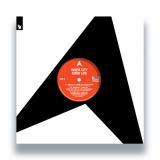
Good Life sees Detroit icons Inner City return on KMS with one of the most celebrated house records of all time, presented here on fresh 12” vinyl.
A defining track of the late 80s and early house movement, Good Life remains a timeless anthem, driven by uplifting melodies, soulful vocals and unmistakable Detroit energy.
This edition features a remastered version of the original alongside an Inner City edit of the Carl Craig remix, plus a Dub Mix, offering both classic playback and updated DJ functionality.
As a cornerstone release from the KMS catalogue, the record continues to resonate across generations of DJs and listeners, maintaining its place as an essential dancefloor staple.
Back on fresh 12" vinyl, this repress offers strong appeal for both collectors and DJs looking to stock a truly iconic house record.
An essential catalogue piece for stores supporting classic house and Detroit heritage releases.
[c] B2: Good Life (Remastered) [Dub Mix]

Mit Selenites, Selenites! präsentiert Jimi Tenor das erste Album seiner neuen Band - ein Meilenstein in der Karriere des finnischen Multiinstrumentalisten, der 2025 seinen 60. Geburtstag feierte. Tenor, bekannt für seine genreübergreifenden Visionen, vereint hier Afrobeat, Electronica, Spiritual Jazz und experimentelle Klangwelten zu einem kraftvollen, organischen Sound. Seit den 1990er Jahren prägt Tenor die internationale Musikszene mit Veröffentlichungen auf Labels wie Sähko und Warp Records. Seine Zusammenarbeit mit Künstlern wie Tony Allen, dem UMO Helsinki Jazz Orchestra und Florence Adooni zeigt seine Offenheit für musikalische Kulturen und seine Fähigkeit, scheinbar Gegensätzliches zu verbinden. Die JIMI TENOR BAND entstand in Helsinki und besteht aus fünf virtuosen Musiker:innen, die ihre Stücke live erprobt und verinnerlicht haben. Die Aufnahmen spiegeln diese Energie wider: Direkt, roh und voller Spielfreude. Die Songs wirken wie Live-Mitschnitte - spontan, intensiv und nahbar. Mit Selenites, Selenites! gelingt Tenor ein Album, das nicht nur musikalisch überzeugt, sondern auch seine Rolle als stilprägender Künstler unterstreicht.
- B6: I Need Love So Bad
- A6: I Need Love So Bad
- A1: Baby I'm Gonna Miss You
- A2: Half A Stranger
- A3: Shake, Holler And Run
- A4: Down Child
- A5: Gotta Boogie
- A7: No More Doggin
- A8: Boogie Chillen
- B1: Bad Boy
- B2: Rock House Boogie
- B3: Let's Talk It Over
- B4: Baby You Ain't No Good
- B5: Looking For A Woman
- B7: Moon Is Rising
- B8: Dimples
16
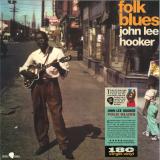
A remarkable release in John Lee Hooker's vast catalogue, Folk Blues, released by the Crown label in 1962, puts together tracks originally recorded for Modern Records between 1951 and 1954.
Among its many highlights are Bad Boy, one of the finest examples of Hooker's wordless humming and singing in unison with his guitar figures, and Rock House Boogie, which offers a sampling of Hooker's use of bottleneck style.
"Essential in any collection of postwar blues." - ***** Downbeat:
f A6. I Need Love So Bad Solo Version
[n] B6. I Need Love So Bad [Group Version]
[f] A6. I Need Love So Bad [Solo Version]
[n] B6. I Need Love So Bad [Group Version]
[f] A6 | I Need Love So Bad [Solo Version]
[n] B6 | I Need Love So Bad [Group Version]

- A1: John Simmons - Ain't Nothing Like The Love (3 48)
- A2: Le Cop - Law, Order & Peace (2 47)
- A3: The Medlows - Love (Part 1) (2 57)
- A4: The Whale & Flea - Ridin' On (4 00)
- B1: Liberation Of Man - Lovely Day (3 11)
- B2: Thrills - Telephone (4 00)
- B3: East Wind Band - Read The Fine Print (3 31)
- B4: Late Nite Music Band - Sundance (4 45)
- C1: Gulden Karabocek - Dokunma Keyfine Yalana Dunyanin (3 29)
- C2: Nukhet Ruacan - Golge (3 11)
- C3: Carlos Bivar - Amargo Amar (3 50)
- C4: Art Carey & Magnum Force - Good-Bye My Love (4 37)
- D1: New Way - Holding On (2 46)
- D2: Flashback - Piece Of Mind (4 30)
- D3: Spectrym - In Flight (3 58)
- D4: John Academia - Open Our Eyes (4 45)
16
également disponible
Black Vinyl[28,53 €]
With two critically acclaimed compilations already under his belt, DJ / collector miche returns to Mr Bongo with the third instalment of his With Love series. Testament to his ever-expanding taste, Volume 3 isn’t just a subs bench call-up from the past compilations, it’s an evolution and progression casting the net deeper and wider than before.
Keeping true to the series, but with some fresh surprises along the way, this carefully curated compilation is a celebration of soulful, independently released music from across the globe, and the amazing (often unsung) musicians and vocalists that made these sublime records.
Across the third volume, miche explores a jazzier side of his tastes. “The deeper I went, the more I found myself gravitating towards jazzier music - not leaving soul behind, but following that same feeling into new territory”, he explains. Tracks like the gliding jazz funk found on Late Nite Music Band’s ‘Sundance’, or the glorious jazz-soul number ‘In Flight’ by Spectrym are shining examples of this.
That defining soulful thread of previous volumes is still in full effect throughout this latest edition. “There’s a healthy dose of impossible-to-find soul gems that have that unmistakable, heartwarming feel. Tracks like John Simmons' 'Ain't Nothing Like The Love', which I've adored ever since Zaf Love Vinyl played it, sit perfectly alongside records like Le Cop and New Way”, states miche.
The addition of some top-tier Turkish music showcases another side to his ever-broadening taste. Nükhet Ruacan's 'Gölge' is something unique, a floaty Brazilian-inspired gem recorded in Turkey and not what you’d typically expect from Turkish records of this era.
It also wouldn’t feel right to leave out a stop in Brazil, with miche looking to the work of Carlos Bivar whose track 'Amargo Amar' carries that undeniable groove of samba-funk from Rio.
Spreading the With Love message far and wide the series has led to miche DJing across the globe, “from batucada sessions in Timisoara, to all-night sets in a club in Beijing, and even an eight-hour Root Down With Love stage takeover at We Out Here festival, joined by Danilo Plessow, Jeremy Underground, and of course, my mentor and buddy Rainer Trüby.”
Volume 3 then, carries that message even further. It’s an eclectic but intentional collection, built for the music lover who wants to discover something new. Working just as well as a soundtrack to cook dinner to, as it does keeping a packed dancefloor moving into the small hours.

- A1: John Simmons – Ain’t Nothing Like The Love
- A2: Le Cop – Law, Order & Peace
- A3: The Medlows – Love (Part 1)
- A4: The Whale And Flea – Ridin' On
- B1: Liberation Of Man – Lovely Day
- B2: Thrills – Telephone
- B3: East Wind Band – Read The Fine Print
- B4: Late Nite Music Band – Sundance
- C1: Gülden Karaböcek – Dokunma Keyfine Yalan Dünyanin (*Vinyl Only)
- C2: Nükhet Ruacan – Gölge
- C3: Carlos Bivar – Amargo Amar
- C4: Art Carey & Magnum Force – Good-Bye My Love
- D1: New Way – Holding On
- D2: Flashback – Piece Of Mind
- D3: Spectrym – In Flight
- D4: John Academia – Open Our Eyes
16
également disponible
Magenta Vinyl[28,53 €]
With two critically acclaimed compilations already under his belt, DJ / collector miche returns to Mr Bongo with the third instalment of his With Love series. Testament to his ever-expanding taste, Volume 3 isn’t just a subs bench call-up from the past compilations, it’s an evolution and progression casting the net deeper and wider than before.
Keeping true to the series, but with some fresh surprises along the way, this carefully curated compilation is a celebration of soulful, independently released music from across the globe, and the amazing (often unsung) musicians and vocalists that made these sublime records.
Across the third volume, miche explores a jazzier side of his tastes. “The deeper I went, the more I found myself gravitating towards jazzier music - not leaving soul behind, but following that same feeling into new territory”, he explains. Tracks like the gliding jazz funk found on Late Nite Music Band’s ‘Sundance’, or the glorious jazz-soul number ‘In Flight’ by Spectrym are shining examples of this.
That defining soulful thread of previous volumes is still in full effect throughout this latest edition. “There’s a healthy dose of impossible-to-find soul gems that have that unmistakable, heartwarming feel. Tracks like John Simmons' 'Ain't Nothing Like The Love', which I've adored ever since Zaf Love Vinyl played it, sit perfectly alongside records like Le Cop and New Way”, states miche.
The addition of some top-tier Turkish music showcases another side to his ever-broadening taste. Nükhet Ruacan's 'Gölge' is something unique, a floaty Brazilian-inspired gem recorded in Turkey and not what you’d typically expect from Turkish records of this era.
It also wouldn’t feel right to leave out a stop in Brazil, with miche looking to the work of Carlos Bivar whose track 'Amargo Amar' carries that undeniable groove of samba-funk from Rio.
Spreading the With Love message far and wide the series has led to miche DJing across the globe, “from batucada sessions in Timisoara, to all-night sets in a club in Beijing, and even an eight-hour Root Down With Love stage takeover at We Out Here festival, joined by Danilo Plessow, Jeremy Underground, and of course, my mentor and buddy Rainer Trüby.”
Volume 3 then, carries that message even further. It’s an eclectic but intentional collection, built for the music lover who wants to discover something new. Working just as well as a soundtrack to cook dinner to, as it does keeping a packed dancefloor moving into the small hours.

2025 Repress
Tobias Bernstrup is a contemporary musician and video artist born 1970 in Gothenburg, Sweden. He received an MFA from Royal College University of Fine Arts Stockholm in 1998. Using the visual language of pop culture, video games, sci-fi, classicism and gothic noir, he has created a stage persona with notorious live performances. Dressed in elaborate costumes of skin-tight rubber suits and fetish gear, Tobias' external appearance is androgynous. He raises questions about representation of identity, the body and physical space in both virtual and non-virtual realities. Between 1997 and 1998 he self-released two limited CD-R EPs. In 2002 his debut album 'Re-Animate Me' was released by Tonight Records followed by two limited 12' singles for the song 27' and the Italian version Ventisette'.
.
27' is a 5-song EP collecting 4 different mixes of the title track plus one unreleased song from the 'Re-Animate Me' recording sessions. The material on this EP is closely connected with the world of computer games which Bernstrup also inhabits. Bernstrup's music is influenced by 1980s Italo disco and synth pop, reminiscent of Kraftwerk, Depeche Mode and Ken Lazlo. On the A-side is the original mix at 115 bpm followed by the Lazer Mix set to an faster beat and additional arpeggiations and heavier bass drum beats. Lyrically the song tells the story of a good looking 27-year old boy from a small town searching for love with any man who can spoil him. On the B-side are both the vocal and instrumental of Ventisette', the Italian translation of the song 27.' Both versions of Ventisette' are stripped back compared to the A-side but keep the melodies in tact. Also released for the first time ever is the demo Dirty Money' a Pet Shop Boys influenced song about male prostitutes ready for a night out working the streets.
All songs have been remastered for vinyl by George Horn at Fantasy Studios. For the jacket Eloise Leigh transformed the original portrait of Tobias into a Warhol-like painted polaroid with a striking likeness to Liza Minelli with blue eye shadow and red lipstick. Each copy includes a photo postcard with lyrics and notes. I would rather create alternative routes to experiencing and understanding the world, understanding what it means to be human today,' says Bernstrup. We are more artificial than we want to admit.'

6
Repress!
"Vision of Love 002," from Vision of Love Records, is a vibrant compilation that encapsulates sexy, groovy, and funky vibes. Featuring artists like Monsieur Van Pratt, Disco 86, C. Da Afro, Clean Is Good, The Move, and The Funk District, the album creates an alluring soundscape perfect for any setting. The tracks seamlessly blend slow, jazzy elements with infectious rhythms, inviting listeners to both relax and move. Monsieur Van Pratt's sultry melodies set the mood, while Disco 86 delivers captivating beats that keep the energy alive. C. Da Afro and Clean Is Good contribute playful, catchy hooks, and The Move and The Funk District add dynamic layers that enhance the overall groove. Together, these artists craft a collection that celebrates modern funk and jazz-infused dance music, making "Vision of Love 002" an essential experience for anyone looking to elevate their musical journey.
- A1: Tom Hooker - Looking For Love
- A2: Hypnosis - Droid
- A3: Samoa Park - Tubular Bells And Foreign Affair
- A4: Kinky Go - Gimme The Love
- B1: Ken Laszlo - Don‘t Cry
- B2: Doctor`s Cat - Watch Out
- B3: Gazebo - Lunatic
- B4: Italian Boys - Forever Lovers
- C1: Baby‘s Gang - Happy Song
- C2: Miko Mission - The World Is You
- C3: Mike Cannon - Voices In The Dark
- C4: Laserdance - Power Run
- D1: Den Harrow - Catch The Fox
- D2: Koto - Visitors
- D3: Raggio Di Luna (Moon Ray) - Comanchero
- D4: Cyber People - Doctor Faustu`s
- E1: Body Power - Nothing
- E2: Valerie Dore - It‘s So Easy
- E3: Radiorama - Vampires
- E4: Biba - Top Model
- F1: Savage - I`m Losing You
- F2: Jimmy & Susy - Come Back
- F3: Public Passion - Flash In The Night
- F4: Colors - Lonely Night
- G1: Brando - Rainy Day
- G2: J D. Jaber - Don‘t Stop Lovin‘
- G3: G J. Lunghi - Acapulco Nights
- G4: Brian Ice - Tokyo
- H1: Paul Paul - Good Times
- H2: The Voyagers - Distant Planet
- H3: R Bais - Dial My Number
- H4: Max Coveri - Bye Bye Baby
32
également disponible
vol 1[46,01 €]
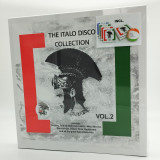
Enter the glittering world of Italo Disco with the exclusive 4LP
box set „The Italo Disco Collection Vol. 2“.
This limited edition box features four vinyl records that capture
the essence of the Italo Disco era. Discover and enjoy musical
treasures from Ken Laszlo, Miko Mission, Baby‘s Gang, and
Laserdance. „The Italo Disco Collection Vol. 2“ is not only a
musical journey through time, but also a collector‘s item for
all vinyl lovers and fans of Italo Disco. This carefully compiled
collection has been designed with great care and attention to
detail and includes a colorful beach ball as a summertime fun
maker. This box brings the best of the 80s straight into your
living room and guarantees unforgettable musical moments.
Tauchen Sie ein in die glitzernde Welt des Italo Disco mit der
exklusiven 4LP Box „The Italo Disco Collection Vol. 2“.
Diese limitierte Box enthält vier Vinyl-Schallplatten, die
die Essenz der Italo Disco Ära einfangen. Musikalische
Schätze von Ken Laszlo, Miko Mission, Baby’s Gang, und
Laserdance werden hier geborgen. „The Italo Disco Collection
Vol. 2“ ist nicht nur eine musikalische Zeitreise, sondern
auch ein Sammlerstück für alle Vinyl-Liebhaber und Fans des
Italo Disco. Diese sorgfältig zusammengestellte Kollektion,
wurde mit großer Sorgfalt und Liebe zum Detail gestaltet und
enthält als sommerlichen Spaßbereiter einen farbenfrohen
Wasserball. Diese Box bringt das Beste der 80er Jahre direkt in
Ihr Wohnzimmer und garantiert unvergessliche musikalische
Momente.

LRK Records is excited to announce their next special limited edition 45 by Bella Brown & The Jealous Lovers. Due to high demand from DJs and fans alike, we're bringing the in-demand 'Soul Clap' (Radio Edit) to 7". The most streamed track from their album of the same name, this radio edit condenses the energy of the original, which runs over 7 minutes, into an electrifying 3 minutes and 54 seconds. The A-side will be revealed soon, with a special track announcement coming in the next few weeks.
Bella Brown & The Jealous Lovers, originally from Chicago and now based in Los Angeles, are known for their dynamic fusion of 60s/70s soul and funk. Fronted by the Grammy Award-winning Bella Brown, who embodies the power of Tina Turner and Sharon Jones, they channel the fierce spirit of 70s Blaxploitation icons. Backed by The Jealous Lovers, they offer a fresh, modern twist on traditional soul and funk with high-energy live performances.
'Soul Clap' is a dance floor-ready track with Bohannon-style rhythms and James Brown-inspired funk. It's a celebration of the communal energy shared between musicians and audience, perfect for DJs looking to bring the party to life
The new single, "Always Christmas Eve" is an instant holiday classic. The song pays tribute to the band's Chicago soul roots and is produced in their signature style. This original composition offers a modern take on classic soul, featuring real instruments, genuine performances, and authentic artistry. True to the tradition of Bella Brown & The Jealous Lovers, the song carries a meaningful message: "Always Christmas Eve" shares a hopeful message of Christmas joy in an imperfect world, highlighting the goodness in all of us, and reminding us that we can embody the loving spirit of Christmas in any season, even during challenging times.
"Always Christmas Eve" drops digitally November 15, 2024 and will also be released, through LRK Records, as a special edition 7' colored vinyl 45. The 45's B-side features the group's "Soul Clap - radio edit". A funky dance track, which was digitally released as a preview to their Soul Clap LP, and is now making its vinyl debut. The radio edit has already racked up tens of thousands of streams and received extensive airplay across Europe, North America, South America, and Japan.
So Happy Holidays from LRK Records and Bella Brown & The Jealous Lovers!!
Grey/silver coloured vinyl 45

New edits label from the Deep&Disco crew outta NYC. 2 Killer cuts given a revamp and shine for the dancefloor.
Pressed on heavy weight 180g vinyl limited to 300 pressings hand stamped.
DJ FEEDBACK
Craig Smith (6th Borough Project) - Lovely edits, well produced and expertly put together. Good luck with the label chaps
Guy (Sleazy Beats, Monsieur Monod) - What a delightful debut for your new label. Feel The Rhythm is an irresistable boogie groover. We'll be playing these puppies all over the place! All the best with the release and label.
aliOOFT (OOFT! Music) - Being playing this for ages, good to see it being released. Best of luck with the label - I look forward to more Razor N Tape jams!
Sleazy McQueen (Whisky Disco) - Dig it, man!
Onur Engin (OE Edits) - Nice one! I'll definitely support this.
Jimpster (Freerange) - Nicely done. always a good one to have in the bag. cheers for the good edits.
Trujillo (Apersonal Music) - So Tight is a dope warm disco for the dance floor!, will spin it!
The Glue (Kolour) - Great edits both of them, we will keep an eye out for more stuff from you guys for sure!
Leftside Wobble (Futureboogie) - A pair of filtered boogie beauties.
Alkalino (Much Love) - Like both, but "Feel the Rhythm" is my fav.cheers!
Matthew Bandy (Z Records) - Solid edits here, will be getting support on both from me. Cheers.
Sell by Dave (Bedmo Disco, Juno Plus) - Excellent first release lads - enjoying both tracks. The edits scene needs some fresh cuts/styles, and you've delivered on these. Major props - can see both getting plenty of plays in Bedmo Disco sets this summer x
Daz (Get Down Edits) - So Tight never fails but this is my first time hearing Feel The Rhythm & cant wait to play it out its sounds excellent, have a gig @ Disco Deviance this sat & cant wait to play these at it :)
Mike W (Kolour Recordings) - Been looking forward to RNT001 and it does not disappoint one bit! edits that drip with funk & soul .. just like they should. got a nice batch of gigs in the pipes and these will definitely be seeing their way into my rotation as well as the full gambit of chart support! cheers j. kriv & aaron dae .. got yourselves off to a nice & tidy start .. best of returns to ya!
Nelue (Groove Democracy) - Both sound great!
South West Seven (SWS Music) - Love it!
Kid Color (Dollar Disco) - Slammin' work if I could say so myself!
The Beat Broker (Flexx) - So Tight is exactly that. Killer unstoppable groove. Love it!

7
Five trombonists and a three-member rhythm section: that sort of unique musical synergy is what Nabou Claerhout brings to life with her own Trombone Ensemble. For years, such a project had been one of the dream projects on her bucket list, and thanks to Antwerp based cultural actor Rataplan, she already saw the creation become a reality in spring 2022. In the summer of that year, the eight-piece ensemble opened both Gent Jazz and Jazz Middelheim.
In January 2023, Nabou was artist in residence at the Brussels Jazz Festival in Flagey, where she presented the Trombone Ensemble as one of three carte blanche projects. In a sold-out Studio 4, American trombone legend Robin Eubanks joined the line-up as a special guest, having previously also contributed during the studio recordings of the young collective during. The band's self-titled debut album will be released on November 3rd 2023 via W.E.R.F. Records.
Nabou composed the entire repertoire for this Ensemble herself, and did so with a fully open vision. While writing the music, she explored the trombone's wide possibilities: "The aim is to both indulge you with warm, soft, carrying parts and then afterwards discover the trombone's spicy and cordial character." That rhythmic playfulness, which we hear more often in Nabou's compositions with her acclaimed quartet N?BOU, also seeps subtly into this band's sound.
Despite the 'unusual' line-up of five diverse jazz trombonists, each with a different background, you still get to hear a very homogeneous sound, which is full of playfulness and small details. "I tried to make room and focus for each individual. And of course there is also a starring role for the rhythm section with guitar, double bass and drums."
When Nabou started looking for the dream fellow jazz musicians for this project, she ended up with artists from her own country, Belgium, but also from far beyond the country's borders: The Netherlands, the UK and Germany. "In selecting the trombonists, I looked for specific timbres, but also for personality. It is important that there is a good balance in playing together, but also that each musician is strong enough on his or her own for the solo parts."
Wanting to push boundaries in her approach to both compositions and the trombone as an instrument, the real crème de la crème of the newest generation proved indispensable. "I selected a handful of European trombonists with whom I may or may not have already played, but who, above all, inspire me very deeply. They are all young people who have a lot to offer and already have significant projects to their name in their own region or country."

10
As it celebrates its 50th anniversary, Bill Withers' Still Bill remains true to its title – and stands as the greatest male-fronted soul album not made by a singer named Marvin, Al, Sam, James, or Ray. Though the saying "keeping it real" did not exist in popular parlance when Withers released his sophomore effort on Sussex Records, no words better capture the music's approach, mindset, and value. Every facet of Still Bill radiates honesty, truth, and emotion.
These characteristics – along with Withers' strong singing, hybrid arrangements, and deceptively simple songwriting – have allowed the album to endure to the point where it sounds as fresh today as in 1972.
After rising into the Top 5 of the Billboard Album charts and attaining gold status within a year of release, Still Bill has long been evaluated not by sales – but according to its merit, spirit, and agelessness. Included by The Guardian on its "1,000 Albums to Hear Before You Die" list (2007) as well as in Tom Moon's 1,000 Recordings to Hear Before You Die book (2008), its contemporary standing as one of history's most venerated soul efforts eclipses the positive reception it enjoyed in the early ‘70s.
Still Bill walks the same hallowed ground as What's Going On, Call Me, Night Beat, and Genius + Soul = Jazz. Like those landmarks, Still Bill plays with a mix of consistency, effortlessness, and complexity that rewards repeat listening and transcends categorization.
In combining four of the era's predominant styles – Philly soul, sweaty funk, Southern-reared blues, acoustic-based folk – and melding them with standout production borrowed from both minimalist affairs and sophisticated singer-songwriter albums, Still Bill occupies a distinct universe.
Its rhythmic fare is equally laidback and invigorating; relaxing and rollicking; eloquent and muscular; soft and tough. Withers' calm, self-assured voice hovers above it all, doubling as a warm blanket that adds comfort and grace to lyrics steeped in maturity, perspective, and compassion.
Withers' balanced outlook on human desires, needs, and situations stem from his own existence as a former blue-collar employee who believed his time as a musician would soon end. That grounding forever separates Withers from other contemporary soul greats – and stamps Still Bill with a conversational nature and egoless approachability.
"I mean look, I'm really a factory worker," said Withers in 1972. "That's a real job." There's that word again: real. The songs on Still Bill are tethered to modesty and actuality, wedded to a belief in simplicity, and connected to universal truths that link us all – independent of our economic or social standing. No track better exemplifies those principles than "Lean on Me," a feel-good paean to brotherhood and community that hit No. 1 on the pop and R&B charts en route to becoming a mainstream staple.
Withers approaches the plainspoken insight on "Lonely Town, Lonely Street" and heartbreaking vulnerability of "I Don't Want You on My Mind" with similar sincerity and straightforwardness. His proclivity for authenticity extends to the record's other big hit: the sexual, funk-laden "Use Me," which reached No. 2 and reflects the singer's everyman persona. It's an identity couched in keeping it real, the very inclination that ultimately led Withers to retire in the mid-'80s rather than bend to industry pressures or risk credibility.
That commitment to truthfulness and realism helps make Still Bill feel as unaffected as the air we breathe. Looking back on "Lean on Me" years later, Withers said it seemed like "something that was there before I got here" – the kind of song that could be 100 or 10 years old, or one we encounter anew 10 years into the future. The same can be said for every note on Still Bill.
