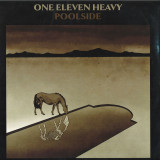
Formed in 2016 by transatlantic buds Nick Mitchell Maiato and James
Toth, One Eleven Heavy is a band designed as a Venn diagram of the
pair's shared musical loves Crazy Horse, Grateful Dead, and Dylan come to the fore when listening to their joyful third album, Poolside, but the influences go much deeper.
Toth says, We were lucky to have our touring drummer, Jake Morris (Stephen Malkmus & The Jicks) at the ready to play drums. Nick's pal, the fantastic Guy Fowler, plays bass on the record.
Guided by mysterious producer Colin Sick, One Eleven Heavy spent
a year writing and recording the tracks that form Poolside, an album that feels like a gothic western romp through cartoon dreams of escaped criminal ciphers ( Tyrant King ), rebound coke binge recollections ( Rizzo In The Wig ), and tales of sasquatches crossing state lines ( Bama Yeti ).
Cerca:gothic dreams
- 1
- 1: Melantroduction
- 2: Without
- 3: Adorer And Somebody
- 4: A Summer's End
- 5: Solicitude, Silence
- 6 2: Sec. And A Tear
- 7: Lastdance
- 8: Morning... Gray
- 9: Diotima
- 10: Re-Silence
For here lies one of the most influential bands in the realm of gothic metal, a group with doom and death metal roots that has flourished for over three decades, boasting thirteen albums that have garnered devoted acclaim. This injustice is now being set right by The Circle Music , beginning with the vinyl release of the classic album "Burning: A Wish", which emerged twenty-four years ago. "Burning: A Wish", released in the twilight of the year 2001, stands as a dark reliquary of dreams lost to the velvet fog of melancholy. To revisit it now, two dozen years later, is to unseal a time capsule of gothic ache, doom- laced longing, and the tormented tenderness that only Lacrimas Profundere could conjure at their creative height. It was a candle-lit corridor between worlds. A slow fall into velvet shadows. A scream muffled by rain.
By the time "Burning: A Wish" was released, Lacrimas Profundere had already begun to evolve from their early death- doom origins, shaping their identity with the sophistication of seasoned mourners. The death growls had receded, replaced by the haunted, baritone croon of Christopher Schmid, whose voice is an echo from a chapel ruined by time. Yet, while the growls faded, the emotional gravitas remained intact, transmuted into melody, into baroque gloom, into something more sorrowfully refined. Produced with lush, theatrical clarity, the album never drowns in its own atmosphere, it breathes with it, moves with it. The soundscape is dominated by somber guitar textures, languid tempos, and subtle orchestral touches. From the very first notes, it is clear that this is music for ruined lovers and moon-drenched graveyards.
This is the hallmark of Lacrimas Profundere 's style: an emotional minimalism that does not explain or elaborate, but merely opens wounds and lets them breathe. That this album has remained, until now, absent from the warm embrace of vinyl is both tragic and oddly poetic. For what format better suits a record such as this than the one that cracks and hisses like an old seance? Vinyl is tactile, intimate. It requires attention, reverence. To place Burning: A Wish on a turntable is to light a candle in the dark.
This EP takes you deep into a world of cinematic soundscapes, a haunting symphony of desire and despair, hypnotic rhythms, and ethereal vocals. Blending dark wave, and gothic electronic elements, it unfolds like a forgotten opera—sensual, melancholic, and strangely tragic.
This is only the beginning. “Opera of Lust & The Art of Sorrow” is envisioned as a multipart journey—Part 1 is here, with the next part to follow.
- A1: Citizen Kane
- A2: Remembrance Day
- A3: Polar Opposites
- A4: Marilyn Dreams
- A5: Ice
- B1: La Lune Lunatique
- B2: All Fall Down
- B3: Nowhere Girl
- B4: Crowds
- B5: Beginning To Fade
In May 1981 B-Movie and Soft Cell went into Advision Studios in London with the same producer, Mike Thorne (Wire, Bronski Beat, China Crisis, The Communards) to record singles for the label they were both signed to. Phonogram had really wanted to sign B-Movie but had also committed to Soft Cell, having been coerced into it by Stev0, who managed both artists and wouldn’t let them have one without the other. B-Movie commenced recording the dark moody anti-fame anthem ‘Marilyn Dreams’, whilst Soft Cell got underway on a cover of an obscure Northern Soul classic. When both songs were released in July 1981, ‘Tainted Love’ became a worldwide hit and shot Soft Cell to international fame, making them the biggest stars of 1981. B-Movie had formed in 1979, in Mansfield, a typical northern town in the middle of the Nottinghamshire coalfield. Originally a three piece featuring, vocal / bass, guitar and drums, they expanded by adding a keyboard player to broaden their initial post punk sound. Local Lincoln independent record label, Dead Good Records, firstly put them on the compilation LP ‘East’, followed by 7" inch EP and then a mini-album releases, which led to an appearance on the legendary Some Bizarre label (alongside the likes of Blancmange, Depeche Mode, Soft Cell and The The)
Major label interest followed, from which came the deal with Phonogram, B-Movie initially re-recording the track ‘Remembrance Day’, which reached No61 in the UK chart in early 1981 and, more importantly, was played by BBC Radio 1 DJ John Peel, and appearing in his Festive 50 for that year. All of the recordings the band made during their Phonogram period have been consigned to the Universal Music vault for several decades, with the band finally managing to have these returned in 2024. The various tapes have been digitised and restored, resulting in the creation of what would have been their 1982 debut LP ‘that never was’. Ten tracks including the three singles plus seven previously unreleased recordings. The CD version contains a further seven recordings including the 12” versions, single B-sides and the track “Moles’” from the Some Bizarre compilation.So “Hidden Treasures” from B-Movie, is only four decades late but still able to sit seamlessly alongside contemporaries like The Chameleons and The Sound. The LP is a darker, more brooding and psychedelic affair, more akin to the gothic elements of the Bunnymen or Joy Division, than the ‘pop sensations’ Phonogram wanted them to become. By both opening and closing this chapter of B-Movie, it puts them firmly in the same bracket as their new wave and post-punk contemporaries, which is the least they deserve, as one of the great ‘lost’ bands of the early 1980’s. "It’s nice to hear B-Movie are finally getting a chance to release their forgotten gems’” Matt Johnson (The The) Vinyl
A stellar collaboration between composer Michael Cashmore (Current 93) and vocalist Marc Almond of Soft Cell fame. Two complementary creative sensibilities in intimate interlock; supreme compositional and vocal talents fusing to make uniquely dramatic musical and vocal interpretations of searing beauty and insight. Specifically, this suite of songs feature the heightened lyricism of a stunning array of cult poets, both contemporary and of yesteryear. 'Feasting With Panthers' is a stellar collaboration between composer Michael Cashmore (Current 93) and vocalist Marc Almond of Soft Cell fame, in the nearest thematic echo and nod, in the latter's vast back catalogue, to the darker gothic influences of his celebrated Marc And The Mambas period and his acclaimed 'L'Absinthe' and 'Jacques' twisted chanson solo albums. This album's defining aesthetic is the setting of outsider poems to music. Poems by Count Eric Stenbock plus unique lyrical translations - by celebrated poet Jeremy Reed - of works by Jean Genet, Jean Cocteau, Arthur Rimbaud, Paul Verlaine, as well as Reed's own poetry. The emphasis throughout is on 'decadent' poems of thwarted love, ill-fated romance, self-destruction and death: many poems are woven with homo-eroticism, laced with opium dreamstates and all are accompanied by Michael Cashmore's haunting and melancholic music that lends the verses a deft yearning for beauty and a bittersweet, melancholic longing for lost innocence and youth. Originally released in 2011 and long since deleted, 'Feasting With Panthers' is now restored to back catalogue availability as a double vinyl album - it's first ever vinyl edition - with a variant of the original album artwork and two printed, full colour inner sleeves complete with lyrics and pictures and featuring four bonus tracks. The album was recorded over several years by the artists sending music files back and forth by e-mail and post; the artists never once recording together in the studio. Berlin based Michael Cashmore worked at home composing the music, playing all of the instruments and adding Marc's vocals from files recorded in London. The resulting album is a glorious union of sensual talents, both in voice and music, complementing the intriguing and evocative poetic texts. The project began after Current 93's David Tibet gave Marc a book of poems by the Baltic German poet Count Stanislaus Eric Stenbock. Marc was instantly attracted to the dark eroticism and the melancholic yearning of the verse and, so, contacted Michael Cashmore, whom he had previously worked with on Current 93's reading of 'Idumea'. He felt Michael would have the right understanding of the verse with his intricate, beautiful musical compositions. From this, the project developed to include many of Marc's favourite poems by some of his favourite 'outsider' poets with common thematic ground.
- Bandorai
- Platinum
- Second Spring
- Sleep
- Anchor Us To Seabed Floor
- Red Dove
- Caro
- A Requiem
- Torc
- Thou Art Mortal
Black Vinyl[29,62 €]
On April 4th, Brighton-based Australian vocalist, producer, and multi-instrumentalist Penelope Trappes will release her fifth full-length album ‘A Requiem’. It comes alongside news of her signing to London imprint, One Little Independent Records. ‘A Requiem’ collects ten haunting, ambient soundscapes - incantations of dreams and nightmares, of death and grief, as well as power and autonomy. Carnal, transcendent cello drones are used to exorcise historical and generational traumas in an evocative and macabre piece of gothic experimentalism.
Seeking solitude for what she knew would be an intense and cathartic writing experience, Trappes travelled to Scotland and isolated completely. Amidst meditative and psychedelic states, she channeled demons and accessed parts of herself she’d long desired to cleanse. During candle-lit recording sessions she found herself drawn to cello, an instrument she has no formal training in, she explains, “I always felt an affinity toward the cello, I embraced it, held it, and became one with it as a way to accompany my voice. The nerve-like strings of the cello became external chords of my vocal folds… I scratched on them, leaned into them, and conjured all of the textures I could muster”.
‘A Requiem’ is a musical service in honour of the dead, a sanctuary Trappes built for herself to explore familial chaos and history. “I was looking for an equilibrium between a ‘heaven' and a ‘hell’” she explains, “screaming out to the wisdom of our foremothers - surfacing and leading me into true strength and beauty. I listened to the sorrow closely. Death is a part of our reality. Inevitable. Omnipresent. But nightmares can be beautiful”.
She continues, “This album is my personal requiem for my parents, my ties to the land where I was born, along with all of my epigenetically connected ancestors before them. The songs helped me summon up the strength to move through my own awareness of mortality, death, and impending loss. This album is a living funeral. It’s a ceremonial collection of music. It’s an externalising of the power and strength to fight the generations of abuse and darkness that my parents self-admittedly played out in their parenting and to keep it away from my own social patterns and my psyche. It’s not an uncommon thing in the world and this lamented warcry goes out to everyone to help exorcise patriarchal, political, and religious systems of abuses of power”.
- A1: Once Upon A Time
- A2: Come To Me
- A3: Premonition
- A4: Herr Knock
- A5: Ellen's Dream
- A6: Incantation
- A7: Goodbye
- A8: The Inn/Moroi
- A9: Shrine
- A10: A Carriage Awaits
- A11: Come By The Fire
- A12: Destiny
- A13: The Castle
- B1: Covenant
- B2: The Crypt
- B3: Lost
- B4: Hysterical Spell
- B5: Devourance
- B6: The Monastery
- B7: Solomonar
- B8: Increase Thy Thunders
- B9: The Professor
- B10: Dreams Grow Darker
- C1: Possession
- C2: An Arrival
- C3: A Return
- C4: Grunewald
- C5: Despair In My Coming
- C6: A Curious Mark
- C7: Orlok's Shadow
- C8: The Vampyr
- C9: The First Night
- C10: Death, All Around Us
- C11: I Know Him
- D1: The Second Night
- D2: These Nightmares Exist
- D3: A Priestess Of Isis
- D4: Last Goodbye
- D5: Never Sleep Again
- D6: The Third Night
- D7: The Prince Of Rats
- D8: Daybreak
- D9: Liliacs
Black Vinyl[28,78 €]
Robin Carolan's latest soundtrack for Robert Eggers' highly anticipated Nosferatu is a haunting, gothic-infused and meticulously crafted work that draws from a vast palette of sounds, instruments, and inspirations. Following their successful collaboration on The Northman, Carolan reunites with Eggers to bring the legendary tale of Nosferatu to life, infusing the film with a score that is as complex and nuanced as the story itself. With Daniel Pioro, one of Britain's most exciting young classical musicians, at the helm as the orchestra leader and first chair for a vast majority of the recording, the soundtrack features a vast orchestration, including 60 string players, a full choir, various horns and woodwinds, a harpist, and two percussionists. Despite the grandeur of the orchestration, one of the most challenging pieces was the music box used at the film's beginning. Carolan and Eggers struggled to perfect its sound, a process marked by their meticulous attention to detail, which Carolan describes as almost telepathic. Set in the 1800s, Nosferatu allowed Carolan to incorporate contemporary instrumentation, though he made a deliberate effort to ensure the score didn't sound overly modern. Letty Stott, who also worked on The Northman, contributed ancient horns and pipes, enhancing the soundtrack's eerie atmosphere. Additionally, percussionist Paul Clarvis custom-built a toaca-like instrument for added authenticity. Carolan's inspirations for the soundtrack were as eclectic as they were profound. He frequently drew upon the works of Bartok and Coil, while films like The Innocents, Angels and Insects, and Eyes Wide Shut provided cinematic inspiration. Additionally, he explored the more obscure side of Hammer Horror soundtracks and found a deep connection to the music of the Ukrainian film The Eve of Ivan Kupalo, which helped shape the score's otherworldly tone. Carolan intentionally moved beyond the typical horror score, focusing on capturing the tale's melancholy and tragic elements while weaving in a sense of warped romanticism. The result is a soundtrack that not only complements the film but also stands on its own as a testament to Carolan's artistry and the enduring power of collaboration.
- Once Upon A Time
- Come To Me
- Premonition
- Herr Knock
- Ellen's Dream
- Incantation
- Goodbye
- The Inn / Moroi
- Shrine
- A Carriage Awaits
- Come By The Fire
- Destiny
- The Castle
- Covenant
- The Crypt
- Lost
- Hysterical Spell
- Devourance
- The Monastery
- Solomonar
- Increase Thy Thunders
- The Professor
- Dreams Grow Darker
- Possession
- An Arrival
- A Return
- Grünewald
- Despair In My Coming
- A Curious Mark
- Orlok's Shadow
- The Vampyr
- The First Night
- Death, All Around Us
- I Know Him
- The Second Night
- These Nightmares Exist
- A Priestess Of Isis
- Last Goodbye
- Never Sleep Again
- The Third Night
- The Prince Of Rats
- Daybreak
- Liliacs
Oxblood Vinyl[30,04 €]
Robin Carolan's latest soundtrack for Robert Eggers' highly anticipated Nosferatu is a haunting, gothic-infused and meticulously crafted work that draws from a vast palette of sounds, instruments, and inspirations. Following their successful collaboration on The Northman, Carolan reunites with Eggers to bring the legendary tale of Nosferatu to life, infusing the film with a score that is as complex and nuanced as the story itself. With Daniel Pioro, one of Britain's most exciting young classical musicians, at the helm as the orchestra leader and first chair for a vast majority of the recording, the soundtrack features a vast orchestration, including 60 string players, a full choir, various horns and woodwinds, a harpist, and two percussionists. Despite the grandeur of the orchestration, one of the most challenging pieces was the music box used at the film's beginning. Carolan and Eggers struggled to perfect its sound, a process marked by their meticulous attention to detail, which Carolan describes as almost telepathic. Set in the 1800s, Nosferatu allowed Carolan to incorporate contemporary instrumentation, though he made a deliberate effort to ensure the score didn't sound overly modern. Letty Stott, who also worked on The Northman, contributed ancient horns and pipes, enhancing the soundtrack's eerie atmosphere. Additionally, percussionist Paul Clarvis custom-built a toaca-like instrument for added authenticity. Carolan's inspirations for the soundtrack were as eclectic as they were profound. He frequently drew upon the works of Bartok and Coil, while films like The Innocents, Angels and Insects, and Eyes Wide Shut provided cinematic inspiration. Additionally, he explored the more obscure side of Hammer Horror soundtracks and found a deep connection to the music of the Ukrainian film The Eve of Ivan Kupalo, which helped shape the score's otherworldly tone. Carolan intentionally moved beyond the typical horror score, focusing on capturing the tale's melancholy and tragic elements while weaving in a sense of warped romanticism. The result is a soundtrack that not only complements the film but also stands on its own as a testament to Carolan's artistry and the enduring power of collaboration.
erste Vinylveröffentlichung eines Metalklassikers der 2000er
Jahre
-remasterte Doppel LP im Gatefold mit 4-Seiten-Booklet
-enthält eine Manilla Road Coverversion und weitere rare
Bonustracks
-einige Mitglieder spielten später bei u.a. Manilla Road,
Savage Grace und Trance
Aus den Überresten des True Metal-Projektes SEDUCTION,
welches von einem Management initiiert wurde, entstand
2004 eine richtige Band: VIRON. Im Gegensatz zu SEDUCTION
klangen VIRON direkt erwachsener und bodenständiger.
Einflüsse des US-Metal und der NWOBHM mischten sich mit
Europäischem Metal, was 2004 durchaus etwas Besonderes
für eine deutsche Gruppe war. Der traditionelle Heavy Metal
kam nach Grunge, Crossover und Gothic langsam wieder auf
die Füße und VIRON waren bei dieser Entwicklung früh dabei.
Die erste, von der Band veröffentlichte EP, die auch schon
den Namen NWOGHM (New Wave Of German Heavy Metal)
trug, schlug im Underground ein wie eine Bombe und man
spielte noch ohne Plattenvertrag einige Shows, u.a. beim
Headbangers Open Air in der Nähe von Hamburg. Das rief
die Labels auf den Plan und man entschied sich 2006 für die
griechische Firma Sonic Age (aka. Cult Metal Classics). Die EP
wurde um weitere Songs, die im gleichen Studio (Kohlekeller
Studio) aufgenommen wurden, aufgestockt und zum Album.
Nach durchweg traumhaften Albumreviews folgten Auftritte
beim Sworbrothers Festival, United Metalheads und mit Bands
wie Sabaton, Custard oder Solemnity.
VIRON wechselten 2007 zu Metal Heaven Records und
veröffentlichten 2008 den erfolgreichen Nachfolger „Ferrum
Gravis“. Der damalige Slogan „Underground Metal für die
Massen“ passt wie die Faust aufs Auge, denn das druckvoll
aber natürlich produzierte Album schlägt den Spagat zwischen
der Undergroundszene und, nennen wir es „gängigem Heavy
Metal“. Insider würden vielleicht sagen „zwischen LaudaKönigshofen und Wacken“. Das zeigt auch die gekonnte
Coverversion des Manilla Road Klassikers „Dreams Of
Eschaton“. Leider zerfielen Viron einige Monate nach dem
Release von Ferrum Gravis, aber die Band wurde zu einem
Sprungbrett für drei Mitglieder von Viron, die später u.a. bei
Manilla Road, Trance, Savage Grace, Roxxcalibur, Bonfire und
Jameson Raid auftauchten.
"Waxwork Records, in conjunction with Hollywood Records and Paramount Pictures, is thrilled to present SLEEPY HOLLOW Music From The Motion Picture by Danny Elfman for the very first time on vinyl! SLEEPY HOLLOW is a 1999 gothic supernatural horror film directed by Tim Burton and starring Johnny Depp, Christina Ricci, and Christopher Walken. It is based loosely on Washington Irving’s 1820 short story “The Legend of Sleepy Hollow”. The plot follows police constable Ichabod Crane (Depp) sent from New York City to investigate a series of murders in the village of Sleepy Hollow by a mysterious Headless Horseman.
Danny Elfman is an award winning American film composer, singer, and songwriter. He has garnered international recognition for composing over 100 feature film scores. Elfman is a longtime collaborator of director Tim Burton having scored such films as Beetlejuice, Edward Scissorhands, and The Nightmare Before Christmas.
Sleepy Hollow stands as one of Elfman’s largest orchestral scores and utilizes weighty brass, eerie choral pieces, and unnerving strings. His use of romantic themes cut a calming tone throughout the dark and mysterious gothic-fairy-tale.
Waxwork Records is proud to present the debut vinyl release of SLEEPY HOLLOW Music From The Motion Picture by Danny Elfman as a deluxe double LP album. Album features include 150 gram colored vinyl (Metallic Silver and Blood Red Swirl), new artwork by Steven Reeves, heavyweight gatefold jackets with matte satin coating and spot UV gloss varnish, and a 11”x11” art print."
Als LACRIMOSA 1994 ihr bahnbrechendes " Schakal
veröffentlichten, waren sie die erste Szene-Band, die
Gothic und Metal kombinierten, und dies in eine
klassische Orchestrierung einbetteten! Von der
Metal-Presse als zu düster und von der Gothic-Presse als
zu hart verrissen, fand sich der Band zunächst auf
einsamen Posten.
Zwei Jahre später waren LACRIMOSA Headliner der
Dark Winter Nights Festivals, der ersten Festival-Tour, die
Gothic- und Metal Bands wie THE GATHERING,
SENTENCED oder DREAMS OF SANITY auf einer
Bühne vereinten.
Der Rest ist Geschichte: Viele Bands, sowohl aus der
Metal- als auch aus der Gothic-Szene, folgten ihrem
Beispiel und Gothic-Metal, sowie Symphonic-Metal wurden
bis heute zu etablierten Musikstilen.
In der Zwischenzeit haben LACRIMOSA ihre
musikalischen Fähigkeiten weiterentwickelt und
perfektioniert, während sie seit mehr als 20 Jahren Shows
auf der ganzen Welt von Argentinien bis China spielen
und nun alles in diesem Meisterwerk zusammenführen:
Leidenschaft trifft auf Vollkommenheit, Schmerz trifft auf
Erlösung und Dunkelheit trifft auf das leitende Licht der
Liebe!
"Inferno" war 1995 mehr als ein neues Album, es ist ein
magisches Erlebnis purer Hingabe - und nun erstmals auf
zwei verschieden farbigen Doppel-LPs mit Booklet
erhältlich!
Als LACRIMOSA 1994 ihr bahnbrechendes " Schakal
veröffentlichten, waren sie die erste Szene-Band, die
Gothic und Metal kombinierten, und dies in eine
klassische Orchestrierung einbetteten! Von der
Metal-Presse als zu düster und von der Gothic-Presse als
zu hart verrissen, fand sich der Band zunächst auf
einsamen Posten.
Zwei Jahre später waren LACRIMOSA Headliner der
Dark Winter Nights Festivals, der ersten Festival-Tour, die
Gothic- und Metal Bands wie THE GATHERING,
SENTENCED oder DREAMS OF SANITY auf einer
Bühne vereinten.
Der Rest ist Geschichte: Viele Bands, sowohl aus der
Metal- als auch aus der Gothic-Szene, folgten ihrem
Beispiel und Gothic-Metal, sowie Symphonic-Metal wurden
bis heute zu etablierten Musikstilen.
In der Zwischenzeit haben LACRIMOSA ihre
musikalischen Fähigkeiten weiterentwickelt und
perfektioniert, während sie seit mehr als 20 Jahren Shows
auf der ganzen Welt von Argentinien bis China spielen
und nun alles in diesem Meisterwerk zusammenführen:
Leidenschaft trifft auf Vollkommenheit, Schmerz trifft auf
Erlösung und Dunkelheit trifft auf das leitende Licht der
Liebe!
"Inferno" war 1995 mehr als ein neues Album, es ist ein
magisches Erlebnis purer Hingabe - und nun erstmals auf
zwei verschieden farbigen Doppel-LPs mit Booklet
erhältlich!
Fantastic Twins, the ongoing project of Julienne Dessagne, is a sonic exploration of dual characters born from one distinct perspective. A producer, songwriter, and acclaimed live performer, Dessagne has spent the last decade sculpting a unique world.
On an ambitious new album entitled ‘Two Is Not a Number’, Dessagne immerses herself more fully than ever in the concept that inspired her artist name, exploring the entwined lives and fates of her imaginary twins, their schizophrenic dreams, small dramas, and big tragedies - a metaphor for our own psyche, our inner conflicts, and our relationship to others and otherness. These musings on the psychological, emotional, biological, and metaphysical qualities of Twins are expressed with assured clarity, using a palate of icy deep techno, eerie atmospheric soundtracks, tranced-out dark wave, and synth pop-noir. Whether through airborne dancefloor ascension, diamond hard rhythms, electronic thundercracks, or empathy drenched vocals and the palpable sense of unease, this standout album brings Dessagne’s powerful, affecting art into sharp focus.
I Was First takes listeners to the Fantastic Twins’ origin, a vocal transmission from within a sonic womb, as our protagonists prepare to emerge. Sisters at Odds sees our siblings emerge incongruous and freshly awoken to life’s absurdities in slow-motion. Suspensefully, the percussive heartbeat of Land of Pleasure Hi Fi wrings tension from numerology, blossoming into a scorched industrial ballet, a mirage of multiplicity.
Following the gothic connection of Master & Disciple, Silver Moon Dial incants a trance-like state that captures the physical energy of Dessagne’s live show, as Fantastic Twins take advantage of ‘putting the moon on speed dial.’ Euphoria soon splinters into tragedy with Twins Can’t Love, extracting unexpected melody and melancholy in brittle, IDM tinged electronics, beautifully tangled with Dessagne’s longing intonations.
From Above sees Dessagne’s vocals once again shift into a new form for a haunting interpretation of something approaching a ballad, echoing around a chamber from which the Twins have seemingly disappeared. Ultimately All of This is Resolved, both in title and form, within this album’s cathartic yet uneasy conclusion. Dessagne sends the siblings home at last... But what will we find if we follow?
- A1: Introduction
- A2: Crashing High
- A3: The Chair
- A4: Devils
- B1: Hevioso
- B2: Don't Turn Your Back On Fear
- B3: Feel Berlin
- B4: Betty Blue
- B5: Christina Death
- C1: Gothic Girl
- C2: Framed In Blood
- C3: Wrap Your Troubles In Dreams
- C4: Lost Boys
- 5: Sister Of Charity
- D1: I Just Wanna Have Something To Do
- D2: Dance D'amour
- D3: Brandon Lee
- D4: Nothing On You
Red Vinyl[28,95 €]
40 years after The Doors' debut at Hollywood's legendary Whisky A Go Go, The Helsinki Vampires sold our their debut there and finished their first-ever US tour like the new kings of the Sunset Strip! Glam, Goth, Sleaze & Hollywood in 2006! The 69 Eyes is a "goth'n'roll" band from Helsinki, Finland. Founded in 1989, the band blends gothic rock, glam metal, and rock'n'roll together in their music. With thirteen revered albums, multiple tours around the world, and going platinum in their home country the band still maintains a strong tie to the graveyard shift of rock’n’roll.
- A1: Introduction
- A2: Crashing High
- A3: The Chair
- A4: Devils
- B1: Hevioso
- B2: Don't Turn Your Back On Fear
- B3: Feel Berlin
- B4: Betty Blue
- B5: Christina Death
- C1: Gothic Girl
- C2: Framed In Blood
- C3: Wrap Your Troubles In Dreams
- C4: Lost Boys
- 5: Sister Of Charity
- D1: I Just Wanna Have Something To Do
- D2: Dance D'amour
- D3: Brandon Lee
- D4: Nothing On You
Black Vinyl[27,94 €]
40 years after The Doors' debut at Hollywood's legendary Whisky A Go Go, The Helsinki Vampires sold our their debut there and finished their first-ever US tour like the new kings of the Sunset Strip! Glam, Goth, Sleaze & Hollywood in 2006! The 69 Eyes is a "goth'n'roll" band from Helsinki, Finland. Founded in 1989, the band blends gothic rock, glam metal, and rock'n'roll together in their music. With thirteen revered albums, multiple tours around the world, and going platinum in their home country the band still maintains a strong tie to the graveyard shift of rock’n’roll.
Brian Jonestown Massacre, Velvet Underground, TOY. “Upon the highways of Freedom, where Evil is like a Ferrari… “ Unbeknownst to its members, Index For Working Musik was born on an evening in late 2019 amidst the discovery of a collection of faded b&w photocopies that had been marinating on the floor of a urine-alley in the Gothic Quarter of Barcelona. An assortment of sacred and profane imagery were crumpled amongst an essay on early Christian hermits, entitled Men Possessed by God, the meaning of which was enticingly vague. Received together, they planted the seeds for a new endeavour. Though Max Oscarnold and Nathalia Bruno were already engaged in a creative ping-pong of sorts, the results to this point had only totaled a 30 min long ½ inch tape containing one track and four interludes. They needed a page and they needed ink, and they needed a place and it needed energy. Suddenly by chance or divine intervention, their experimental venture had been given form and direction. Back home in London’s cursed smog, they moved themselves and their 8-track studio into a basement in E8, where the project’s gravitational pull gained strength, quickly developing into an unexpected collective with the incorporation of drummer Bobby Voltaire, double bass player E. Smith and guitarist J. Loftus. As the world shifted around them and the Plague Years followed, it became increasingly clear that they were not going to leave that small basement room. The scarcity of light or outer world presence was less a limitation, instead the main tool at hand, allowing the recording to stretch for boundaryless days in architectural isolation, and forcing them to make straight forward free guitar music, adopting a ‘first thought, best thought’ approach. 35 minutes of repeat phrased guitars, slow-clipped drums and dulcet vocals where the recurring landscape is the desert. Reel-to reel-loops of Afghan music compete with the found sound overlays of voices recorded at the queue of the pharmacy and drum machines borrowed from Spanish heroes, channelling both far-off climes and snippets from a closer reality. It’s a strange psychic brew, built of imagined mysticism and domestic realities, of fever dreams and days that stretched into weeks of months. What was sparked by that discovery in the Gothic Quarter was actually a realisation that what they were looking for was with them all the while, buried as it was in piles of voice memos and recorded guitar feedback. Men Possessed By God they may be not: it was self-possession that was to guide their way in the end. “Life, despite all its destructive changes, remains indestructibly powerful and joyful
(Note: Same tracklist on A & B Sides)
Across 8 concise vignettes, Chantal Michelle alchemizes acoustic instrumentation with a spectrum of layered feedback and field sounds, depicting fractured beauty amongst a precarious reality.
Chantal’s work is characterized by intoxicating juxtaposition and enriched with an array of source material to construct immersive narrative. Much of the work here was recorded during her time in New York City, perhaps a pre-requisite to the heightened tension at play.
Opening with lucid choral vocals, a mysteriously seductive anaesthesia disseminates before evaporating into surging feedback, vocals dissolving as quickly as they appeared.
It’s this oscillation between states that permeates throughout the work. Whether it’s the esoteric rumbling of acoustic drones, or the radiant fusion of distorted chords amongst the warming sounds of tropical atmospheres, moments of serenity are conjured up in a space so bliss that their endings incite an immediate nostalgia. Fleeting melodies are pierced by shattering cries of feedback; gossamer tones engulfed in saturated noise.
Amongst the instrumentation, buzzing field sounds tremor with hyperreal peculiarity and hallucinations shape noise into sounds of the familiar; the rumbling of an overheard aeroplane or the whirring of distant grasshoppers. Similarly, recurring motifs elicit a false sense of security in their subliminal familiarity, soon exposed as echoes, a reverberation of what was left behind.
At the approaching climax, the blissful onset anaesthesia has worn off, interrupted by a powerful chorus of deep, gothic synthesis that fuels post-apocalyptic fever dreams, an unnerving and mesmerising symphony. The unresolved tension leaves us in a state of delirium, questioning if the tranquillity we experienced was ever really there.
Chantal was immersed in Fleur Jaeggy’s The Water Statues whilst recording, and its imprint is woven into the sonic fabric of Broken to Echoes; a sublime liminal dream-state, pervaded by haunting visions. It’s a view of the world captured from inside the enclosure of a cell membrane. Through translucent mesh, we see the billowing tension of our surroundings, protected only by the most delicate walls.
Chantal Michelle is a sound artist, musician, and composer based between the United States and Europe. She works with acoustic instrumentation, synthesis, field recordings, and voice to form densely textured aural landscapes. Her work is characterized by tension, disparate sounds, and non-linear arrangements. It has been realized as multichannel installations, live performances, and recorded material.
She has released three albums to date: Pulse, Puls-ar, Procession (Dinzu Artefacts, 2022), Night Blindness (Quiet Time, 2021) and the collaborative Aunis (Injazero, 2019), all to critical acclaim. The Wire called Night Blindness “a dynamic and engrossing narrative,” and Aunis received praise in The Guardian as “a virtually unprecedented palette of synth sounds.”
If Es’ debut album for Upset the Rhythm explored the “tension between intent and interpretation”, the London group’s 2023 EP, ‘Fantasy’, constructs a coda for resistance against the distorted gaze. A four-track contact-high anxiety amid fact and facsimile, the new release attempts to define a sound that still resonates in an increasingly confused public theatre, where cerebral dreams manifest in corrupt fascination.
Echoing the legendary Pylon or the later, disco-inspired releases from PIL, tracks like ‘Emergency’ and ‘Unreal’ blend the band’s established disjunctive style of gothic restlessness with brighter, poppy, and danceable tones. These stylistically unwind in transition with the increasingly claustrophobic pieces like ‘Too Late’ and ‘Swallowed Whole’, syncopating a parallel design of the frantic and the fashionable.
Paired with a lyrical intricacy which emits a desire to break the fetish of false representation, ‘Fantasy’ reminds us that worthy punk records, like any manifesto of neurotic suspicion, balance testimonial, speculative-fiction, and social critique. Indebted to the past but pointed sharply to the future, Es deconstruct our modern wreckage of personhood and self-deceit, granting a sense of solidarity inside alienation. Inside ‘Fantasy’ we visualize our own estrangement, and it is only when this mirror fades that we find the tools to fight back.
Als LACRIMOSA 1994 ihr bahnbrechendes "Schakal"
veröffentlichten, waren sie die erste Szene-Band, die
Gothic und Metal kombinierten, und dies in eine
klassische Orchestrierung einbetteten! Von der
Metal-Presse als zu düster und von der Gothic-Presse als
zu hart verrissen, fand sich der Band zunächst auf
einsamen Posten. Zwei Jahre später waren LACRIMOSA
Headliner der Dark Winter Nights Festivals, der ersten
Festival-Tour, die Gothic- und Metal-Bands wie THE
GATHERING, SENTENCED oder DREAMS OF SANITY
auf einer Bühne vereinten. Der Rest ist Geschichte: Viele
Bands, sowohl aus der Metal- als auch aus der
Gothic-Szene, folgten ihrem Beispiel und Gothic Metal,
sowie Symphonic Metal wurden bis heute zu etablierten
Musikstilen. In der Zwischenzeit haben LACRIMOSA ihre
musikalischen Fähigkeiten weiterentwickelt und
perfektioniert, während sie seit mehr als 20 Jahren Shows
auf der ganzen Welt von Argentinien bis China spielen
und nun alles in diesem Meisterwerk zusammenführen:
Leidenschaft trifft auf Vollkommenheit, Schmerz trifft auf
Erlösung und Dunkelheit trifft auf das leitende Licht der
Liebe! "Leidenschaft" ist mehr als ein neues Album, es ist
ein magisches Erlebnis purer Hingabe!
LACRIMOSA was the first band combining Gothic with Metal, flooded by classical orchestrations when they released their groundbreaking “Schakal” back in 1994!
Two years later, LACRIMOSA was headlining the Dark Winter Nights Festivals, the first Festival-Tour ever bringing together Gothic and Metal bands on one stage, such as THE GATHERING, SENTENCED or DREAMS OF SANITY.
The rest is history: Many bands from the Metal as well as from the Gothic scene followed their example and Gothic-Metal and Symphonic-Metal became established music styles until the very day.
In the meantime, LACRIMOSA elaborated and improved their musical proficiency, while staying independent from any major label since day one until today, playing shows around the world from Argentina to China since more than 20 years, and now bringing it all together in this masterpiece: Passion meets perfection, pain meets salvation, and darkness meets the guiding light of love! “Leidenschaft” is more than a new album, it is a magical achievement of pure passion!
• 20-page vinyl booklet included
- A1: Deadbone Patrol
- A2: Da' Lone March To Radio City / Cobalt's Theme
- A3: Benny's Marsh Tours
- A4: Poot Steps
- A5: War Lizards
- A6: Nipple Kinky
- A7: Where Da' Hell Is Body Bean 26?
- A8: Belinda Bump's Cosmic Ride
- B1: Clouding
- B2: Jivin' Wiv' Pittsburgh & Kansas City B A
- B3: Here Comes
- B4: Country Jug
- B5: The Dreams Of Franklin Gothic Green
- B6: Van Eyke's After Dark
- B7: Bribing' Da Fuzz
Across eight studio albums, DECAPITATED grew from the adolescent dream of teenagers from a small Central European town to one of the leaders of the metal genre. Each successive album further expands the band’s sound with genre-bending authenticity and integrity. As Metal Injection rightfully observed, “any self-respecting death metalhead knows the name well.”
DECAPITATED’s music is a weapon forged by four young men from a historic medieval-fortified town in Poland, which catapulted them to the top of a worldwide subculture. Like a rose in the devil’s garden, the DECAPITATED story builds triumph from tragedy. The gleeful grotesquery of extreme metal imagery and rifftastic bludgeoning beckons listeners to uncover broader truths.Upon the release of 2017’s Anticult, Metal Hammer declared DECAPITATED “a serious successor to the likes of Pantera and Lamb Of God – a band who can draw new legions into the metal world as its new champions.” Their diverse follow-up, 2022’s Cancer Culture, delivers on that promise.
Instantly recognizable devastation and deceptively sinister hooks abound. Freshly minted DECAPITATED anthems like “Last Supper,” “Hello Death,” “Just Cigarette,” “No Cure,” “Iconoclast,” and “Cancer Culture” shimmer with sonically sharp production and unrelenting bombast. There’s also a newly increased emphasis on melody, even venturing into darkly romantic territory. Wacław "Vogg" Kiełtyka (guitar), Rafał "Rasta" Piotrowski (vocals), Paweł Pasek (bass), and James Stewart (drums) are at the top of their game, delivering the goods at peak performance. Jinjer vocalist Tatiana Shmayluk and Machine Head frontman Robb Flynn make guest appearances.
Set on the descending plains of a mountain range amid a dense forest, Krosno boasts a 14th-century Gothic church, a Subcarpathian museum, and stunning artisan glassware. In this Polish town, teenage music student Wacław "Vogg" Kiełtyka discovered records from bands like Morbid Angel, Cannibal Corpse, Metallica, and Machine Head. The guitarist and his younger brother, drummer Witold “Vitek” Kiełtyka, cofounded DECAPITATED in 1996, inspired by a wide range of technical death, blackened thrash, and local heroes, like KAT and the world-renowned Vader. Death and black metal reigned supreme in the Polish scene of the 1990s, where Behemoth originated as well. In fact, a Vader song called “Decapitated Saints” inspired the band’s moniker.
The organic musical chemistry between the Kiełtykas was akin to the brotherly connectivity and vibe driving Pantera, Gojira, and the classic era of Sepultura. In 2006, Kerrang! praised the first three DECAPITATED albums - Winds of Creation (2000), Nihility (2002), and The Negation (2004) – as “superbly conceived and executed eruptions of technical brilliance and razor-sharp songwriting that turned these youthful Poles into one of the genre’s most widely respected bands.” That year’s Organic Hallucinosis further perfected Vogg’s penchant for blending extremity with catchy hooks.
The rule-breaking ferocity and invention of the first four albums reinvigorated death metal, as DECAPITATED inspired a new generation of bands who followed suit. Sadly, this era came to a shocking end in late 2007. While touring Russia, the band’s bus collided with a large truck near the border with Belarus. Both Vitak and then-singer Adrian “Covan” Kowanek sustained severe head injuries. Tragically, Vitak passed away in a Russian hospital a few days later. He was just 23.Vogg summoned the courage to continue, in honor of his brother and what they created, and returned with a new incarnation of DECAPITATED and the fiercely adventurous comeback album, Carnival is Forever (2011) featuring new vocalist Rafał "Rasta" Piotrowski. Blood Mantra (2014) introduced bassist, Paweł Pasek. Blabbermouth declared it “perhaps the most poised and gutsy” DECAPITATED album, adding “its courageous bends make it a turbulent but pleasurable ride.”
Cancer Culture sounds brilliant, modern, and tasty. “There is no place for any fake, plastic, bullshit drum machine or anything like that,” Vogg insists. “It’s all organic, pure, and clear, showing the true face of the band. Vogg and company entrusted the Cancer Culture mix to David Castillo at Sweden’s Fascination Street Studios / Studio Gröndahl (Sepultura, Carcass, Opeth, Katatonia), and legendary American producer Ted Jensen (Metallica, Slipknot, Pantera, Machine Head, Korn).
The devoted supporters who traveled to see DECAPITATED on international tours with the likes of Lamb Of God, Meshuggah, Soulfly, Fear Factory, and Suffocation over the years will recognize the ever-present pummeling backbone. Longtime fans and newcomers alike will connect to the variety of atmospheric depth throughout Cancer Culture’s ten boundlessly energetic and creative tracks.
“If you told me 25 years ago, in my neighborhood in the South of Poland, that I would be in Machine Head, sharing riffs with Robb Flynn,” Vogg marvels. “It’s simply incredible. It means that everything is possible in your life. That gives me the faith to believe that I can achieve even more in my career. The dreams we have when we are kids, things we can barely imagine, can happen.” Flynn contributes a hauntingly beautiful vocal to the Cancer Culture track “Iconoclast.” “Clean vocal singing is a really new thing in DECAPITATED,” Vogg notes. “It’s really unique and amazing.”
Driven by Vogg’s passion and integrity, the dual emphasis on creative invention and technical prowess maintains DECAPITATED’s stature as genre-leaders in 2022 and beyond. The band’s supporters continually demonstrate confidence and absolute certainty DECAPITATED will deliver.
Across eight studio albums, DECAPITATED grew from the adolescent dream of teenagers from a small Central European town to one of the leaders of the metal genre. Each successive album further expands the band’s sound with genre-bending authenticity and integrity. As Metal Injection rightfully observed, “any self-respecting death metalhead knows the name well.”
DECAPITATED’s music is a weapon forged by four young men from a historic medieval-fortified town in Poland, which catapulted them to the top of a worldwide subculture. Like a rose in the devil’s garden, the DECAPITATED story builds triumph from tragedy. The gleeful grotesquery of extreme metal imagery and rifftastic bludgeoning beckons listeners to uncover broader truths.Upon the release of 2017’s Anticult, Metal Hammer declared DECAPITATED “a serious successor to the likes of Pantera and Lamb Of God – a band who can draw new legions into the metal world as its new champions.” Their diverse follow-up, 2022’s Cancer Culture, delivers on that promise.
Instantly recognizable devastation and deceptively sinister hooks abound. Freshly minted DECAPITATED anthems like “Last Supper,” “Hello Death,” “Just Cigarette,” “No Cure,” “Iconoclast,” and “Cancer Culture” shimmer with sonically sharp production and unrelenting bombast. There’s also a newly increased emphasis on melody, even venturing into darkly romantic territory. Wacław "Vogg" Kiełtyka (guitar), Rafał "Rasta" Piotrowski (vocals), Paweł Pasek (bass), and James Stewart (drums) are at the top of their game, delivering the goods at peak performance. Jinjer vocalist Tatiana Shmayluk and Machine Head frontman Robb Flynn make guest appearances.
Set on the descending plains of a mountain range amid a dense forest, Krosno boasts a 14th-century Gothic church, a Subcarpathian museum, and stunning artisan glassware. In this Polish town, teenage music student Wacław "Vogg" Kiełtyka discovered records from bands like Morbid Angel, Cannibal Corpse, Metallica, and Machine Head. The guitarist and his younger brother, drummer Witold “Vitek” Kiełtyka, cofounded DECAPITATED in 1996, inspired by a wide range of technical death, blackened thrash, and local heroes, like KAT and the world-renowned Vader. Death and black metal reigned supreme in the Polish scene of the 1990s, where Behemoth originated as well. In fact, a Vader song called “Decapitated Saints” inspired the band’s moniker.
The organic musical chemistry between the Kiełtykas was akin to the brotherly connectivity and vibe driving Pantera, Gojira, and the classic era of Sepultura. In 2006, Kerrang! praised the first three DECAPITATED albums - Winds of Creation (2000), Nihility (2002), and The Negation (2004) – as “superbly conceived and executed eruptions of technical brilliance and razor-sharp songwriting that turned these youthful Poles into one of the genre’s most widely respected bands.” That year’s Organic Hallucinosis further perfected Vogg’s penchant for blending extremity with catchy hooks.
The rule-breaking ferocity and invention of the first four albums reinvigorated death metal, as DECAPITATED inspired a new generation of bands who followed suit. Sadly, this era came to a shocking end in late 2007. While touring Russia, the band’s bus collided with a large truck near the border with Belarus. Both Vitak and then-singer Adrian “Covan” Kowanek sustained severe head injuries. Tragically, Vitak passed away in a Russian hospital a few days later. He was just 23.Vogg summoned the courage to continue, in honor of his brother and what they created, and returned with a new incarnation of DECAPITATED and the fiercely adventurous comeback album, Carnival is Forever (2011) featuring new vocalist Rafał "Rasta" Piotrowski. Blood Mantra (2014) introduced bassist, Paweł Pasek. Blabbermouth declared it “perhaps the most poised and gutsy” DECAPITATED album, adding “its courageous bends make it a turbulent but pleasurable ride.”
Cancer Culture sounds brilliant, modern, and tasty. “There is no place for any fake, plastic, bullshit drum machine or anything like that,” Vogg insists. “It’s all organic, pure, and clear, showing the true face of the band. Vogg and company entrusted the Cancer Culture mix to David Castillo at Sweden’s Fascination Street Studios / Studio Gröndahl (Sepultura, Carcass, Opeth, Katatonia), and legendary American producer Ted Jensen (Metallica, Slipknot, Pantera, Machine Head, Korn).
The devoted supporters who traveled to see DECAPITATED on international tours with the likes of Lamb Of God, Meshuggah, Soulfly, Fear Factory, and Suffocation over the years will recognize the ever-present pummeling backbone. Longtime fans and newcomers alike will connect to the variety of atmospheric depth throughout Cancer Culture’s ten boundlessly energetic and creative tracks.
“If you told me 25 years ago, in my neighborhood in the South of Poland, that I would be in Machine Head, sharing riffs with Robb Flynn,” Vogg marvels. “It’s simply incredible. It means that everything is possible in your life. That gives me the faith to believe that I can achieve even more in my career. The dreams we have when we are kids, things we can barely imagine, can happen.” Flynn contributes a hauntingly beautiful vocal to the Cancer Culture track “Iconoclast.” “Clean vocal singing is a really new thing in DECAPITATED,” Vogg notes. “It’s really unique and amazing.”
Driven by Vogg’s passion and integrity, the dual emphasis on creative invention and technical prowess maintains DECAPITATED’s stature as genre-leaders in 2022 and beyond. The band’s supporters continually demonstrate confidence and absolute certainty DECAPITATED will deliver.
On their third album »Constant Connection«, West Australian-based Erasers create hypnotic compositions of synth, guitar and voice, evoking the vast expanse of their native landscape and the shrouded emotions behind the senses. Comprising of vocalist, synth player Rebecca Orchard and Rupert Thomas on guitar and synths, Erasers have developed their earthly kosmische music into an open language based on drone, variation in repetition and minimal song structures. Based in Perth, regarded one of the most isolated cities in the world, Orchard and Thomas’s music has brewed in the city’s vibrant DIY/Outsider community and evolved into a meditation on landscape, power, the shadow-world of human emotions and stream of consciousness. »Constant Connection«, with its waves of sound and chant-like vocals evokes a trance that suggests an infinity just beyond the senses.
At the heart of each Erasers composition is the interplay between the instrumentation, played with stoic restraint and recorded directly with minimal effects and the transcendental states induced in the listener. It’s a magic that is performed in plain sight and all the more powerful for it. The recognisable vibrato of Fender Rhodes keyboards and simple drum machine loops, the subtle strands of analog synth melodies that snake in and out of the ear, above all the towering encantations of Rebecca Orchard’s undeniably Australian-accented hymns; all of this is presented with minimal ostentation and yet it instantly engenders a dream state, hints at an infinity beyond the material.
Shades of John Cale’s 70s work with Nico, early 70s German synthesists Kluster and even fellow Australians Fabulous Diamonds can be seen as stylistic touchstones for Constant Connection. Where Nico hinted at the macabre and gothic, Rebecca Orchard’s similarly gliding vocal is more zoned in to a kind of oceanic openness, with words becoming chants and spells that suggested themselves to the singer during recording sessions. It’s this hidden hand of improvisatory, automatic writing that lends a sense of expanse to the music. On opener I Understand, while the lyrics might hint at discontent the emotional spectrum it opens up is far more rich and complex, as layered as the waves of droning chords that are the bedrock of each Erasers track. The title track talks of flow, continuum and balance, the protagonist in the song seemingly weightless, gently pulled through a walking reality that borders on dream. In Erasers’ world, it seems, the borders between reality and dream, consciousness and sub-consciousness are blurred and eroded.
On Constant Connection, Erasers’ music might be deeply evocative of landscape but it’s never clear which one. The vast, open terrain that surrounds Perth is dusty, burned by the sun into desert and Constant Connection feels like the product of the heat and relative isolation, the altered states these elements can create. But it’s these altered states of mind that appear to be the real landscape described by Erasers. It’s a landscape that’s hazy, in-and-out of focus, with emotional undertows pushing and pulling you into a weightlessness. On album closer Easy To See the band dispense with percussion all together, field recordings of the water at the edge of their native city ushering in two duetting synths. Orchard’s vocal undulates with the flow, viewing both the geographical and psychological landscape from the perspective of a consciousness not bound by bodies and from a timescale measured in millennia. The album ends as it begins, with field recordings of the real world that the music seeps out from, temporarily, before regressing back into the other realm it feels like it belongs to.
Between these two recorded hints of reality, Erasers manifest a deeply sensual dreamscape that constantly feels like it’s dissolving at its seams. A desert psychedelia emanating from a real world that might not be that real in the first place.
The debut album from the iconic American tattoo artist, TV Star, beauty entrepreneur, author, fashion designer, Kat Von D is a pastiche of shapeshifting analog synths, post-punk dreamscapes, gothic hues, and shy pop magnetism !
Enlisting prestigious guests such as Bauhaus legend Peter Murphy, Kat Von D’s brilliant debut encompasses classic gothic influences from Depeche Mode to the Sisters Of Mercy executed with a modern sound that echoes the likes of Cold Cave or I Love You But I’ve Chosen The Darkness.
A digital only companion piece to the album has just surfaced and enlists remixes from Scratch Massive, Cold Cave or Gunship, and Kat Von D will embark on a headline tour all over Europe in May 2022.
The debut album from the iconic American tattoo artist, TV Star, beauty entrepreneur, author, fashion designer, Kat Von D is a pastiche of shapeshifting analog synths, post-punk dreamscapes, gothic hues, and shy pop magnetism !
Enlisting prestigious guests such as Bauhaus legend Peter Murphy, Kat Von D’s brilliant debut encompasses classic gothic influences from Depeche Mode to the Sisters Of Mercy executed with a modern sound that echoes the likes of Cold Cave or I Love You But I’ve Chosen The Darkness.
A digital only companion piece to the album has just surfaced and enlists remixes from Scratch Massive, Cold Cave or Gunship, and Kat Von D will embark on a headline tour all over Europe in May 2022.
Zehn Jahre haben die Fans auf ein neues Album der millionenfach gestreamten Gothic-Metal-Band Lake Of Tears gewartet. Das neue Album „Onimous“ umhüllt den Hörer mit wohliger Einsamkeit in gewohnt schaurig-düsterer Manier und ist ab dem 19.02.2021 erhältlich.
Mit ihrer neuesten Veröffentlichung haben LAKE OF TEARS den perfekten Soundtrack für die kurzen, grauen Tage und langen, kalten, dunkle Nächte erschaffen. Nach fast einem Jahrzehnt des Schweigens nimmt uns Daniel Brennare, Kopf und Herz der schwedischen Pioniere der dunklen Musik, endlich wieder mit in seine sinistre Gedankenwelt.
Zehn Jahre haben die Fans auf ein neues Album der millionenfach gestreamten Gothic-Metal-Band Lake Of Tears gewartet. Das neue Album „Onimous“ umhüllt den Hörer mit wohliger Einsamkeit in gewohnt schaurig-düsterer Manier und ist ab dem 19.02.2021 erhältlich.
Mit ihrer neuesten Veröffentlichung haben LAKE OF TEARS den perfekten Soundtrack für die kurzen, grauen Tage und langen, kalten, dunkle Nächte erschaffen. Nach fast einem Jahrzehnt des Schweigens nimmt uns Daniel Brennare, Kopf und Herz der schwedischen Pioniere der dunklen Musik, endlich wieder mit in seine sinistre Gedankenwelt.
Steve Von Till has charted an extraordinary musical path over the last several decades, from his main duties as singer and guitarist of the boundary-breaking Neurosis to the psychedelic music of his Harvestman project and the gothic Americana he's released under his own name. But No Wilderness Deep Enough is truly like nothing you've ever heard from him before—an album that's devastatingly beautiful and overwhelming in its scope, reminiscent of the tragic ecstasy of Nick Cave and the Bad Seeds' recent work as well as the borderless ambient music pioneered by Brian Eno, late composer Jóhann Jóhannsson's glacial compositions, and the electronic mutations of Coil.
FOR FANS OF : MARK LANEGAN/MICHAEL GIRA/NICK CAVE.
Over the course of recent time, an aching, growing void has developed where our normal way of life has resided. Uncertainty abounds, and Steve Von Till's No Wilderness Deep Enough provides a voice of existential wisdom and experience to offer comfort and perspective in an era of uncharted territory. These six pieces of music shape a hallucinatory landscape of sound that plumbs the depths of the natural world's mysteries and uncertainties—questions that have vexed humanity since the dawn of time asked anew amidst a backdrop that's as haunting as it is holistic.
Von Till’s fifth solo album is a swirling and iridescent blend of ambient, neo-classical, and gothic Americana that swan-dives into the darkness of modern life, with the resulting emergence a sonic document of rural psychedelia that transcends the physical world—towards a greater spiritual acceptance that connects naturalism, spiritualism, and the corporeal form.
With a foundation of simple melancholy piano chord progressions embellished with mellotron, cello, french horn and electronic treatments Von Till's scorched ache spreads across the terrain of No Wilderness Deep Enough like a brushfire, adding a tactile level to his sonic creation as well as an inviting level of friction to the burning beauty painted across the album's framework.
With a foundation of simple melancholy piano chord progressions that came to fruition during jetlagged nights in his wife’s childhood home in Germany, No Wilderness Deep Enough was further embellished with mellotron and electronic treatments in Von Till’s home studio in North Idaho. Viewing the emerging result as an ambient instrumental album, he consulted friend and engineer Randall Dunn (Marissa Nadler, Earth) about adding live cello and french horn and piano in a proper studio. After enlisting Brent Arnold on cello and Aaron Korn on french horn, he challenged Von Till to sing over the music and make it his next solo album—which is exactly what happened, with final work being completed at Tucker Martine’s (the Decemberists, Neko Case) Flora Recording and Playback in Portland.
- 1