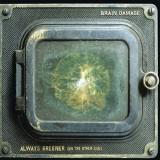
"The grass is greener_ elsewhere_" Brain Damage told us with their debut album, released in 2002. Yet here, they've reached full maturity. Rarely has a "made in France" dub album strayed so far from the Jamaican model while still harboring, in every detail, so many references and tributes to the inventors of the style (King Tubby / Lee Perry), as well as to many of the key figures in its evolution (Tikiman / Rhythm & Sound, Dub Syndicate, etc.). The recording studio, 7/11 Laboratory, is used here as a true musical instrument. The optimal use of three-dimensional stereo effects will immerse the listener in soundscapes ranging from classic space echoes and Mont Blanc tunnel-style reverberations to crackles, electronic interference, exogenous samples, and other parasitic noises coming straight from Babylon. For this album, continuing in the vein of his previous collaborations with the international dub scene (Zion Train, Alpha & Omega, Disciples, Spectre, Lab°_), Brain Damage traveled to London to record two tracks at Conscious Sounds Studio with Jamaican-born singer Tena Stelin. With the melancholic "Spirit World," one is reminded of the fruitful collaborations between Massive Attack and Horace Andy, while on "Genetic Weapon," the tone becomes more overtly assertive. Two vocal tracks, then, woven into these ten compositions, where the emotional moods and atmospheres will shift with each listen. "Always Greener (On the Other Side)" emerges as the manifesto of music conceived as cinema for the ear...
Bilal Hassani, aged 25, a singer-songwriter, actor and producer, shares his daily life with over 3 million loyal fans around the world. He is the symbol of a new generation and champions the values of tolerance, acceptance, self-love and respect for all. Bilal is ranked among the world's 20 most influential LGBTQ+ figures by Vanity Fair. Regarded as a pop icon by Les Inrockuptibles magazine, Bilal Hassani has three albums and one mixtape to his name. With *Bonsoir Paris*, Bilal Hassani has released a twelve-track album entirely dedicated to partying, nightlife and the freedom to be oneself. Produced by himself and Sutus, the record revives the unapologetic pop and French Touch of the likes of David Guetta, Bob Sinclar, Daft Punk and Martin Solveig - that 90s house music that shaped his childhood - which he blends with bolder electro sounds and even a touch of Romanian pop. The album is mainly mixed by Nathan Boddy, whose work features on tracks by New Jeans, Mura Masa, Oklou, Olivia Dean and Shygirl, guaranteeing a production that is both pop and resolutely contemporary. In 2019, after representing France at Eurovision with his song "ROI" - a powerful message of self-acceptance - he released his debut album, KINGDOM, and won the NRJ Music Award for "Francophone Breakthrough Artist of the Year". In 2022, his third album, *Théorème*, was released, produced by the king of French pop, GrandMarnier of the group Yelle. With an average tempo of 124 BPM, the new album is made for dancing, conceived as a breath of fresh air for himself and his audience.
Originally released in 1978. A Classic Reggae album re-released on 180 gram vinyl and produced by Linval Thompson with extensive sleeve notes.
Recorded at Channel One Recording Studio & Harry J's Recording Studio.
Cornell Campbell is one of an elite group of Jamaican reggae singers who has weathered the changes throughout the music's development - in his case, from the ska era to right up to date - whilst retaining their relevance. Witness his recent alliance with UK Afrobeat/reggae band The Soothsayers or Jazmine Sullivan's R & B hit Need U Bad, which sampled his classic 'Queen Of The Minstrel' -a song that still sounds fresh more than thirty years later.
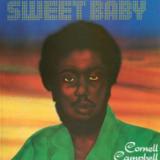
Sweet Baby was pressed on bright red vinyl, which only added to the excitement when you saw the selector position it carefully on the deck.
On the LP cover was a painting of Cornell wearing an emerald green shirt and framed by a lurid sky, which might have left some people wondering if it was a soul album. It wasn't, although there is certainly soul in the grooves, and especially on R&B covers like Gonna Take A Miracle - first recorded by the Royalettes -and Darling You Send Me, which Sam Cooke had introduced to the US Billboard charts some twenty years earlier.
Both are among the highlights but then the whole album is good in truth, and a heartfelt I Need Somebody and My Sweet Baby, plus the two-step favourite Just Enough were regularly played on sound system. Blinded By Love, I Didn't Know and Can't Hide My Love are tinged with melancholy and like the seductive Whenever You Need Me, display all the hallmarks of a classic Cornell Campbell side -swooping vocals, a driving rhythm and seductive lyrics included.
Nearly forty years later, it is gratifying to know there is still no mistaking him when his records are played in a dance. That relaxed vocal style draws you in but it's his falsetto, quivering with understated emotion that hooks you and turns you into a lifelong fan.
Originally released by CRI in 1974 and now reissued on vinyl for the first time by Death Is Not The End, Music by Earle Brown is a concise overview of the composer's landmark early experiments with graphic notation, open form structures and magnetic tape.
_______________________________
Times Five (1963): Govert Jurriaanse (flute), John Floore (trumpet), Harry Sparnaay (bass clarinet), Jaring Walta (violin), Roelof van Driesten (violin), Gerrit Oldeman (viola), and Harro Ruijsenaars (cello). Ton Hartsuiker acts as piano leader, with Earle Brown conducting the acoustic instruments alongside pre-recorded magnetic tape.
Octet I (1953): Composed, created, and realised entirely by Earle Brown using multi-channel magnetic tape.
December 1952: Composed by Earle Brown, solo piano by David Tudor.
Novara (1962): Govert Jurriaanse (flute), John Floore (trumpet), Harry Sparnaay (bass clarinet), Jaring Walta (violin), Roelof van Driesten (violin), Gerrit Oldeman (viola), Harro Ruijsenaars (cello), and Ton Hartsuiker (piano), with Earle Brown conducting.credits
A reggae cover of the classic track by Pharoah Sanders and War is being released on 7"!
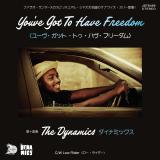
Two legendary reggae covers from the album 『Drag'N Fly』, released in 2024 by the popular French reggae band The Dynamics, are now available on 7-inch vinyl!!
"You've Got To Have Freedom"is a bold reggae arrangement of the iconic track by spiritual jazz master Pharoah Sanders. It’s a standout cover with a powerful, dubby texture that really grabs you. The B-side features a reggae cover of"Low Rider,"the signature song released in 1975 by the legendary funk band War. With both sides sounding absolutely fantastic, this is an absolute must-have!
'La Proyección' is the debut LP by Jose María Lluch, featuring 11 compositions developed between 2015 and 2024. Recorded and assembled in his home studio, the album combines fingerpicked guitar, field recordings, tape manipulation, and ethereal soundscapes into a deeply personal listening experience. A reflection on memory, imperfection, and the freedom to create without external expectations. 'La Proyección', the debut LP by Jose María Lluch, an architect and musician from San Sebastián, emerges as a transition-a gradual shift that unfolded over time. Intimate and innocent, disconnected and erratic at times, the 11 compositions presented here are drawn from recordings spanning nine years, between 2015 and 2024. Humbly assembled in his home studio, the music invites listeners to let their minds drift as the processes of composition, recording, and editing intertwine. Field recordings from everyday life, fingerpicked guitar, soothing harmonics, tape manipulation, and ethereal soundscapes are combined with a naïve openness. The album reveals the joy found in imperfection. Rarely do we have the chance to glimpse someone's work in its most unguarded form, without a specific context, after years spent making music simply as a way to break away-not for anyone else, but for oneself. The songs on 'La Proyección' reveal that very essence, shaped by a shared memory.
out of Stock
Last delivered 24 days ago available to reorder, subject to availability
Space Afrika, das in Manchester und Berlin ansässige Duo aus Joshua Tarelle Reid und Joshua Inyang, schafft rohe, detailreiche und eindringliche Musik mit Anklängen an Ambient, Trip-Hop, Techno und moderne Klassik, wobei es aus den Konturen seiner Stadt weitläufige urbane Dub-Landschaften entwirft. ,Quiet Storm" erweitert ihren Klang und ihre Bandbreite zu einer weitläufigen, kollaborativen Vision, die mit tiefer Geduld und Absicht geformt wurde und ihre eigene Coming-of-Age-Geschichte in eine bewegende Suite kathartischer Abstraktion einbettet. Die Songs spielen auf Spiritualität und die conditio humana an, auf die Spannung zwischen Kühnheit und Sanftheit, Ehrgeiz und hartnäckigen inneren Dämonen. ,Quiet Storm" ist eine Antwort auf den Werdegang des Duos seit der Veröffentlichung von ,Honest Labour" im Jahr 2021. ,Wir haben uns selbst und unsere eigenen Vorstellungen von Identität herausgefordert, insbesondere in Bezug auf Klasse und Diaspora, und wie dies in verschiedenen Musikgenres dargestellt wird. Wir wollten die Charakteristika unseres Projekts durch die Menschen zeigen, mit denen wir zusammenarbeiten wollten", sagt Reid. Inyang merkt an: ,Bei der Entstehung dieses Albums haben wir keine Kompromisse gemacht. Die Idee begann als eine Hommage an die Kunst der Schwarzen. Unsere Kooperationen waren sehr bewusst gewählt, als wir die Grundpfeiler der Geschichte entdeckten." Von der multidisziplinären Natur des Projekts zeugt die Beteiligung des gefeierten Künstlers Glenn Ligon, dessen Werk sich mit schwarzer Identität und Queerness befasst. Ligon, der zu Beginn der Aufnahmen eine zentrale Inspirationsquelle darstellte, stellte sein Werk ,Figure #30" (2009) für das Cover-Artwork zur Verfügung und erklärte sich nach Abschluss der Aufnahmen bereit, dem Projekt seinen Namen zu geben - eine beispiellose Geste dieses wegweisenden Künstlers. Beim Anhören der endgültigen Fassung dachte Ligon an ,Quiet Storm", das Radioformat der 1970er Jahre, das für seine sanfte Late-Night-Programmgestaltung mit Themen rund um Leben und Liebe bekannt war. ,Quiet Storm" führt den Hörer durch verschiedene Szenen, Zwischenspiele und Handlungsbögen, geprägt von dem Gefühl, dass seine Bewegung fließend und seine Figuren flüchtig sind. Monologe vor dem Spiegel setzen sich mit dem Existentiellen und dem Unmittelbaren auseinander: Überleben, Autonomie, Sinn. Das Album beginnt mit dem explosiven, von Streichern begleiteten ,Vanity", bei dem die Grammy-Preisträgerin Axelle Fanyo zu hören ist. Zunächst auf die Spalten eines stillen Raumes fixiert, entfaltet sich ,Vanity" unter Fanyos ausdrucksstarkem Sopran und durchläuft ein breites emotionales Spektrum von erhabener Kontemplation bis hin zu ergreifendem, herzzerreißendem Schmerz. Auf dem gesamten Album werden gesprochene und gesungene Worte sparsam eingesetzt, um eine kraftvolle Wirkung zu erzielen. Die Schönheit und Katharsis von ,MLN" ist ein kollektiver, langsamer Marsch, bei dem der britisch-nigerianische Künstler Tony Njoku mitwirkt, begleitet von Gabriel Evans an Gitarre und Lead-Bass, PIKE aus London am Schlagzeug und GB aus Kopenhagen an Keyboards und Streichern. Der letzte Satz verleiht ,Quiet Storm" seinen krönenden Höhepunkt. ,If This Is Hell" ist in einem einzigen Take als Bewusstseinsstrom des New Yorkers Deuén aufgenommen, dessen nachvollziehbare Spirale geistiger Aktivität von jazzigen, frenetischen Percussion-Klängen begleitet wird. Das Druckventil öffnet sich, als die phasenverschobenen Drums und die scharf beobachtenden, dialogartigen Phrasen abrupt nach der Zeile ,I wonder if that's what heaven's like?" abbrechen. Wir bleiben in der Behaglichkeit des Album-Closers ,Regards" zurück. Regentropfen treffen auf Orgel, Drone, Streicher und Keyboards, während das Nachladen von Waffen dem ruhigen Summen gegenübergestellt wird. Schwer und doch hoffnungsvoll erinnern Joshua Tarelle Reid und Joshua Inyang an ihre bisherige Reise. Als passend geheimnisvolles und mitreißendes Outro für ihr offenes Opus ist ,Quiet Storm" ein Meilenstein: selbst produziert, selbst finanziert und aus purer Tatkraft und Überzeugung entstanden. Durch verzerrte Zeit und schummrigen Dunst ist Space Afrika zweifellos angekommen
out of Stock
Last delivered 7 days ago available to reorder, subject to availability
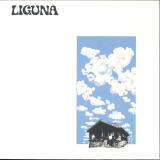
Recorded in a remote mountain cabin,'Liguna' gradually found its form. What began as an open ended collaboration between Tarjei Nygard and Are M. Foss unfolded through recording sessions, splitting firewood and changing seasons. Ideas arrived from many directions: a guitar phrase, a synthesizer line, a change in season, the mood of the forest itself. The result is nine tracks connected less by genre than by atmosphere and a shared sense of place. Debut album by Norwegian duo Liguna. Its members have previously released music on Full Pupp, Eskimo Recordings and ESP Institute.
out of Stock
Last delivered 25 days ago available to reorder, subject to availability
Entre Nous is the debut album from Eden Aurelius. A beautifully poised collection for Short Span. A gorgeous showcase of her singular talent within a sparkling scene. Recorded in Brooklyn, NY, this is an innovative, and graceful body of music that feels truly contemporary.
This album felt important for us to have out in time for summer. Emerging out of the heat, a feeling brought alive with the sun. Music that evolves throughout seasons and carries a spectrum of emotional range.
Entre Nous is tight, but expansive. Its depth and complexity is languid but has gravitational pull. Like much of her work, this record feels so refreshing because its tracks are both sensory and illusory tones built in gossamer and transitory layers of satin. They have a remarkable sense of presence and pressure - floating rhythmically without sharp edges. There is guidance and gentle control that lead throughout the record.
The B side opens with “Ion” featuring Pontiac Streator. The song is formed out of a textural haze. A glistening, iridescent light appears, broken through fabric, projecting a blurred image onto the surface nearby. A hypnotic and evocative collaboration. The shared connection between the two artists’ command of rhythm and ambient language.
Mastered and cut by Mike Grinser at Manmade.
Art by Lucas Dupuy.
out of Stock
Last delivered 25 days ago available to reorder, subject to availability
Tsuyushi Hamada, a.k.a. Dayzero, has been producing and DJing for well over a decade, dropping deep heaters on labels including Livity Sound, ZamZam, and many more. We’re very happy to welcome him to the Tectonic family with this epic six-tracker, which sees Dayzero explore the deeper outer reaches of dubstep, techno - and the spaces he gravitates to in between.
‘Ego’ opens the EP at 134 BPM with a primal calling, conjuring spirits from the fire around a delicate but deliberate pitter-patter of interlocking drums and finely tuned delays. Moving up to 140 BPM for the rest of the EP, we’re skirting through the city lights with the techno-compatible energy of ‘Midnight Train’ and taking in old-school grime echoes with ‘Furious Dogs’.
Flip the vinyl here (if you have one!), and ‘Blur’ generates a light disorientation with its polyrhythmic melody. ‘Kingdom’ soundtracks a brooding sense of dread on a late-night drive, before we close with the title track, ‘Soaring’—a conga workout with a thousand-mile stare on it!
out of Stock
Last delivered 25 days ago available to reorder, subject to availability
Dance Protocol keeps his foot down after an EP on Butter Side Up, serving three more cuts with plenty of bounce in the suspension for Long Vehicle here. "Heads Off" is going deep, wrapping crisp drums in lush pads and a warm streak of high-tech soul, best served as late-night snack or healthy breakfast. On the flipside, "Zero Gravity" loosens the bolts with percussion-heavy liquid funk and a disembodied vocal circling through the mix with a nod to Mr. Baby Ford. New Job (P45 Edit) clocks out on a lighter note, opening the windows to breezy grooves, loose claps and an easy, summery swing. Night shift done. See you outside!
out of Stock
Last delivered 4 days ago available to reorder, subject to availability
Deas joins the CROWD family with 'Silent Tension', a refined EP that channels the Polish producer's signature blend of hypnotic groove and hardware driven production. Known for his precise studio craftsmanship and deeply intuitive approach to groovy techno, Deas has steadily built a reputation as one of the standout figures of the contemporary Polish scene. Through years of releases and international touring, he has developed a sound that feels both timeless and unmistakably personal, as proven on the label's 12th record. Opening track 'I Won't Cry' immediately sets the tone with classy vocal sampling from Loleatta Holloway, warm chord progressions and rolling swung percussion anchored by Deas' characteristically rich bass. Following up, 'Waterfall' introduces bleepy modular sequences and chopped vocal fragments, with a sweeping drone synth cutting through the mix above the track's rolling bass. On the flip side, 'Silent Tension' continues deeper into minimal territory, combining crisp clap fills, subtle vocal chops and delayed chord repetitions into a slow burning groove. The vinyl's closing cut 'Where Do They Go' brings dense low end weight and fast dubby chord stabs, accompanied by sharply placed vocal cuts, creating a track that balances restraint and impact. The digital addition 'Here Again' is a classic Deas production, characterised by repetitive synth stabs that gradually transform the cut into a hypnotic hook, while stripped back percussion and a powerful kick give the track a commanding presence. Throughout CROWD012, Deas remains firmly focused on groove and subtlety, while retaining a strong impact. The tracks unfold patiently, with a focus on tension, repetition and gradual escalation, maintaining the hypnotic functionality that has become both Deas' trademark and a defining characteristic of the sound of the label founded by FJAAK and Ellie Acula. The 'Silent Tension' EP stands as a sophisticated and deeply effective club record that further cements Deas as one of the most distinctive voices in contemporary techno.
out of Stock
Last delivered 10 days ago available to reorder, subject to availability
Some recordings herald the future in ways that are impossible to see in real time. Teodros Makonnen With His Organ (ቴዎድሮስ መኮንን ከኦርጋኑ ጋር), by the artist Teodros Makonnen, also known as Teddy Mak, is one of those. Today, electronic sounds, synthesizers, and digital production are taken for granted in Ethiopian music, but in the early 1980s, they were novelties that polarized opinion. Even to this day, the story of Teodros Makonnen’s legacy has never been properly told. He played a decisive role in defining the sound of the digital era of Ethiopian music that emerged in the 1980s and beyond, both as a keyboard player and as a producer, songwriter, performer, and sound designer.
Ethiopian music was at a crossroads in the early 1980s. Much like music in the rest of the world, technology and automation heralded either a quantum leap in musical development or the annihilation of musicianship, depending on who you’d ask. The changes were incremental nonetheless, but with the benefit of hindsight one can clearly see that the changes meant different things in different contexts. Drum machines and electric organs came to replace many hotel bands because, all of a sudden, one musician could control drums, melody, and accompaniment. Teodros was one of the first musicians in Ethiopia to explore the possibilities this opened up.
Teodros’ father, Captain Makonnen Beri, was a chief pilot at Ethiopian Airlines and a music enthusiast at that. This would prove important to his development, as Makonnen brought back a piano from Germany, which would lead to the first steps in Teodros’ long musical career. Captain Makonnen’s work as Head of Flight Operations and as a pilot exposed him to the wider world that was far from commonplace for most Ethiopians. In a house where music captivated the whole family, the piano gave Teodros’ talent an outlet. Not only was a piano at home rare in Ethiopian households, his father also brought an Indian teacher to their home to teach Teodros and his brother, Captain Samuel Makonnen, music theory (solfeggio or ear training) and piano. Teodros and his youngest brother, the late great Dereje, a member of both the legendary Ibex Band and the Ethiopian reggae group Dallol, took up music from that point onward, with Teodros beginning to develop his proficiency at the age of eight. His father encouraged him to practice tirelessly at home, and Teodros later received musical schooling at the German School in Addis Ababa. His obvious talent led to studies and formal education at the Yared School of Music, followed by continued studies in American jazz at Northern Virginia Community College in Virginia. Teodros cut his teeth professionally in his mid-teens, not only as a keyboardist, but also as an arranger for the Wabi Shebelle and Dahlak bands in the 1970s. He mastered electronic sequencing early, rising to prominence through the midnight recording sessions held during the military curfew. The pressures imposed by the curfew required precise and disciplined recordings, and Teodros delivered just that. This, in turn, led to collaborations with iconic artists such as Mulatu Astatke, Aster Aweke, Menelik Wossenachew, Tilahun Gessesse, Mahmoud Ahmed, and Alemayehu Eshete. In those days, he sat in as a keyboardist with the Dahlak Band when Dawit Yifru took a hiatus to study in Russia, and also with the Ethiostar Band. He secured a residency at the Wabi Shebelle Hotel with the Shebele Band, together with Zelalem Tadese (drums), later succeeded by Elias Bekele, Mulugeta Hailu (bass), Teferi ‘Bibisha’ Mengesha (guitar), Kumelachew G/Selassie (trumpet), and Teshome Deneke (saxophone). A friendly competition developed between the bands associated with the Ras Hotel (the Ibex Band), Ghion Hotel (the Dahlak Band), and Wabi Shebelle Hotel (the Shebele Band). The music scene at Wabi Shebelle saw teenagers commanding the spotlight in an industry otherwise dominated by musicians of an older generation. At the Wabi Shebelle Hotel, Teodros met a diplomat from Saudi Arabia and later visited him at his home in Addis Ababa, a meeting that had unexpected musical consequences. The man owned a Yamaha double-deck keyboard. That evening, they recorded Teodros Makonnen With His Organ (ቴዎድሮስ መኮንን ከኦርጋኑ ጋር) in one take. This recording, a cornerstone in the early digital sound of Ethiopian music, came about almost by chance, simply because Teodros got the opportunity. Traditional Ethiopian songs were cast in a wholly electronic style. Once freed from backing duties, Teodros’ keyboards could explore dreamlike soundscapes that took Ethiopian music in new directions. Even though the cassette contained well-known Ethiopian songs, they were given highly original arrangements, performed on an electric organ with drum machine backing and rhythm patterns that left the listener with suggestive, lingering sounds. “Libesh Kabashen” (also known as “Anchi Bale Game”) and “Odu Gol Golesa” wrap you in the very stuff that dreams are made of. Originally released on cassette only, this recording exudes a mystique that surpasses even some of the most obscure Ethiopian recordings of the day. It remained more or less unknown outside of Ethiopia until now. Some of the tracks, like “Addis Fikir,” are permeated with an almost naive buoyancy, free-floating sounds that lost contact with the ground the moment they were conceived. Others, like “Meche New Hageren Yemayew” and “Lelitu Alnega Alegn,” carry a moodier, quirkier timbre, with pulsating rhythms in the background. Yet even the darker pieces contain an unmistakable wave, something essentially Ethiopian. If most recordings of Teodros’s contemporaries at the time were teeming with atmosphere, his songs seem instead at home in the stratosphere, almost ethereal. Some of the music here could be filed under “lullabies,” were it not for the recurring, almost brooding feeling that engulfs the listener on the aforementioned tracks. You could easily be forgiven for drifting into a blissful haze as the music washes over you.
Up to the advent of electronic music production, Ethiopia was totally dominated by big bands on the one hand, and small groups on the other. The former were tied to large institutions such as the military, the latter emerged from the entertainment industry, in hotel bars and nightclubs. These groups were commercially driven, and bands ultimately had to foster a mercenary approach to employment, albeit not to the passion for music. In the light of this, Teodros’ musical legacy can be seen in two ways. On the one hand, he is a key player in Ethiopian music from the 1970s onwards, leaving an indelible mark through hundreds of compositions and arrangements, including soundtracks for numerous documentary films and advertisements for different companies. On the other hand, the way he and others employed electronics brought Ethiopian music onto a fork in the road.
The replacement of traditional instruments with electronic equipment was seen as impending doom by some. Others, like Teodros, saw new avenues for performance, production, and creativity. Just as later producers like Abegasu Shiota of Admas, Teodros was a trailblazer who opened paths that it took Ethiopian music as a whole more than a decade to rush into. The hotel scene had already been pushed toward electronic music by financial necessity and cost-cutting. Today’s revived global interest in Ethiopian music from the seventies and eighties, alongside a broader resurgence, has changed the reasons for using digital means of music production. They have become tools for musical dreaming. This is where the dreaming began.
Over the last decade, Medlar has carved out a unique corner of the underground with releases on labels including Delusions of Grandeur, Wolf Music, Razor n Tape and Make A Dance, developing a sound that effortlessly bridges deep house, leftfield disco, broken rhythms, and jazz-infused electronics. Here he is with a brand-new Celestial Bodies EP on Delusions of Grandeur, deep, warm, Balearic sounds for the soul!
out of Stock
Last delivered 4 days ago available to reorder, subject to availability
Children of Zeus return with their third studio album ‘As The World Burns…’
Five years on from their highly-acclaimed sophomore album ‘Balance’, Manchester’s kings of hip hop soul, Tyler Daley and Konny Kon, bring us a brand new 16-track opus.
Sonically the duo continue their story where they left off; crafting an amalgamation of street soul, alternative r&b and boom bap hip hop, with a sprinkle of flavours taken from their original multi-genre pirate radio influences, and a dash of forward-thinking new sounds, ensuring all tracks are destined to become future classics.
The features are sparing but powerful, enlisting the talents of revered UK rapper Knucks (‘Before We Drown’), Colorado-native Young Old Soul (‘Dopamine’), MCR family K S R (‘Do You Want To Get High’, & Australian/Mauritian up & comer Anieszka (‘Water & Vibes’).
As with previous projects, this album is largely produced by the duo themselves, though there are guest productions from previous collaborators too, including Grammy Award-winner Beat Butcha, Grammy-nominated Teo, and broken beat pioneer K15, along with an assortment of new players making moves in the underground neo-soul & beats circuit.
Conceptually, this project continues on with the story to date. An eternal search for sunsets and soulfood, as a respite to the anxieties of the modern world; personally, professionally and globally. Assertive swagger is matched with brutal but sincere candidity. As ever, it encapsulates the rough with the smooth, with reflections on where they’ve been, where they’re at and where they’re headed. There’s no preaching to be found here; just an acceptance of things as they are, an embrace of the environment and people they were nurtured by, and a celebration of some of the finer things in life; slow jams, weed & rum, water & vibes. Raps for listeners, blunt heads, fly ladies and prisoners. All packaged together as another perfect sonic love letter to sound system culture. 50 minutes of big people music.
Since the release of their anthemic debut single ‘Still Standing’ a decade ago, to the subsequent EP ‘The Story So Far’, and their critically-lauded debut album ‘Travel Light’, the duo have received numerous accolades, including nominations for AIM Awards & Worldwide Awards both, along with tons of ‘Album of the Year’ nods care of Clash Magazine, Bandcamp, Complex, Wordplay and many more. This along with huge swathes of support from DJs, radio stations, press outlets, tastemakers, luminaries & fellow artists across the globe.
Children of Zeus have performed sessions for COLORS, Soulection (Apple Music), DJ AG, Boiler Room, BBC 6 Music and at the infamous Maida Vale studios for BBC 1Xtra as well as touring across Europe, Australia and South Africa. This is in addition to collaborating & touring with Mercury Award Winner’s Ezra Collective, including a Wembley Arena show. Other collaborations over the years have included Shy FX, Juls, Goldie, Black Milk, Kofi Stone and the late great Lenzman.
From the Broke ’n’ English / Hoodman-era, to the present day, Children of Zeus have been omnipresent in the fabric of British black music. Proud ambassadors of Manchester music, and of UK soul, it really is “Zeus to the world”.
Children of Zeus have been adorned with plenty of flowers over their career. The unbridled quality and poignance of the music and the message on display throughout this project will see the algorithmic needle move some more. It’s undoubtedly set to be a Zeus Summer. As the world burns…
Available on all digital platforms and physical formats, Friday September 4th 2026.
t 07: Do You Want To Get High? (feat. K S R ) - Children of Zeus03:26
t 07: Do You Want To Get High? (feat. [ K S R ]) - Children of Zeus03:26
[t] 07: Do You Want To Get High? (feat. [ K S R ]) - Children of Zeus03:26
[g] B3 | Do You Want To Get High? (feat [ K S R ]) - Children of Zeus03:26
out of Stock
Last delivered 13 days ago available to reorder, subject to availability
Tucked in the heart of Koreatown, Los Angeles, lies The Libra Hotel—the titular architecture of Nick Malkin's new album and site of his musical and psychogeographic exploration. Unlike most musical "site-specific" studies, Malkin remains wholly ambivalent to the documentarian approach, instead sharpening an auteur-like focus on the site as a conceptual and highly expressive backdrop. The Libra is musically explored as a space that houses a noir fragmentation of identity—the exhausted trope of a complicated protagonist walking through rain-soaked street corners and fumy neon lights—where an inner monologue is rendered in both miniature and at a cosmic scale. Casting aside stifling tropes around field recording, ambient, and improvised music, Malkin's work finds its own unique fidelity and emotional core through the assembly and reassembly of memory. Nearly every sound on the album—from frayed saxophones, lambent pianos, and dissected jazz drum kits—are multiplied, shattered, and reconstituted into shapes that adorn The Libra in a motion-blurred fog. The narrative of the Hotel suddenly appears as if out of the mist, with intersecting characters interacting within its walls by happenstance. Adminst the languid set pieces, wraith-like sonic grains gravitate around wide subbass beams that give structural form to The Libra, a narrative tension like when a scene is shot from hundreds of different perspectives: an image both luminous and veiled.
Much like Frank Sinatra's own spatial residency immortalized on "Live at The Sands," "At The Libra Hotel" showcases an exuberant view of entertainment, hospitality, and a form of masculinity, one that can quickly detourn into darkness. Knowing this, Malkin extracts a melancholic core out of The Libra locale. The flickering shadows of American decadence are shown in their ephemeral honesty, lines that trace how even in everyday life virtue is tested, sanity is tested, even reality is tested within the confines of desire, within the night. The album is draped in fleeting textures, carefully arranged with a trance-like microtonality, the faint inflections and articulations of a jazz band cascading into dissipated stillness. Voicemails about changed locations and covert eavesdropping on guests' whispered conversations provide an atmosphere of missed connection and voyeurism—a purloined letter of desire receding into a vanishing point. Like the music itself, The Hotel, a chapel perilous at the intersection of desolation row, the center of it all, yet simultaneously at the edge of town, becomes a structure between libidinous virtuality and actuality—our inevitable half-light.
Ultimately, the pensive atmosphere of "At The Libra Hotel," powerfully asserts a plea for the kinds of intimacy only possible in transient spaces. Here, memory cascades into a force that feels like something supernatural, perhaps even religious, yet always subject to the infidelity of our imagination. Here, the album opens into its primary psychodrama, the transient nature of subjectivity itself and how this becomes fractured in the tumult between our commitments and desires. Within this nocturnal space, to quote Louise Bourgeois, "you pile up associations the way you pile up bricks. Memory itself is a form of architecture."
je prie pour que la goutte ne tombe pas
(I pray that the drop does not fall) is the first international release by Japanese trio Chi To Shizuku. While they have released five albums and a 7” in Japan, their spectral, haunted rock songs haven’t yet reached a much wider audience overseas. With this album, then, a live recording taken at Koenji HIGH, Suginami, Tokyo on 23rd November 2021, the unique, quartz-like character of Chi To Shizuku’s music is writ large, the bleak bliss of their songs carved onto twelve-inch vinyl.
Perhaps the best-known member of Chi To Shizuku, at least for audiences with an ear turned to Japanese psychedelia, is drummer Takahashi Ikuro, known for his membership of almost every group worth a damn from that scene – Fushitsusha, Nagisa Ni Te, Ché-SHIZU, Kousokuya, High Rise, Maher Shalal Hash Baz, LSD March, the list goes on. But the core of Chi To Shizuku’s music is the collaboration between vocalist, bassist and lyricist Morikawa Seiichirou, and guitarist and arranger Yamagiwa Hideki. Morikawa is a member of long-running punk/goth group Z.O.A., and has also played with YBO , Zzzoo, and as collaborator with Takeshi and Atsuo of Boris in A/N; he’s also recently been performing with Mitsuru Tabata. Yamagiwa’s history takes in stints with Katsurei and Cock C’ Nell, and he also recently guested with la scene 裸身.
All this contextual information does relatively little, though, to prepare you for the unique vibration of Chi To Shizuku’s lustrous songs. They shimmer in the same half-light, perhaps, as Shizuka and the quieter moments of LSD March, sharing a similar poise and classicism, and there’s a tenderness and wracked poetry to Morikawa’s voice that reminds of the emotional intensities both of traditional Japanese folk, and of British folk music: on “Musuu No Nemuri No Naka De Kumo Wo Tukamu”, the combination of his singing, backed with gorgeously plangent guitar, reminds of no-one so much as it does The Pentangle or Spriguns Of Tolgus. Chi To Shizuku’s love for the ballad as form gifts their music an archaic, sometimes arcane resonance, and from what you can hear on this album, it’s clear they’re in love with graceful melancholy.
But this is not a folk album, by any means; it just shivers with the same eternal spirit. There are also hints of prog rock, and you can catch some passages of scratchy, distended free rock, on the extended spirit invocation of “Nanhito Hanhito”. je prie pour que la goutte ne tombe pas is an extraordinary album, a melancholy surprise, that reminds dedicated listeners of the seemingly bottomless well of great music to be found via the Japanese underground in its many forms. Perhaps Michel Henritzi says it best, though, in his liner notes, when he writes, “Chi To Shizuku’s music reminds us that our life is a dream that lasts only a season, and that oblivion will follow.”
Recorded at Koenji High Suginami, Tokyo, 23 November 2021
Mix & Mastering: Taku Unami, photography : Noriko Akiyama
Liner notes by Jon Dale Printed by Alan Sherry
In the ever-evolving landscape of the underground music scene, few bands have made an impact quite like Selofan, an immensely talented duo of Joanna Pavlidou and Dimitris Pavlidis, has carved a niche for themselves within the international pantheon of darkwave, post-punk, and '80s synthpop, blending these influences to create a sound uniquely their own. Their journey, marked by a commitment to artistic integrity and evolution, has taken them from the cozy confines of local venues to the grand stages of international festivals, earning them a dedicated following and critical acclaim along the way. Their sixth album, Partners in Hell, released in October 2020, navigated the band through unprecedented times, testing their adaptability and resilience. Despite the hurdles to performing live and the global pandemic's challenges, Selofan emerged stronger, embarking on international tours with a newfound appreciation and connection with their global audience, during this period of introspection and isolation, Joanna Pavlidou embarked on a new venture, GIOVANNA, released under Selofan’s house label, Fabrika Records. GIOVANNA, which places Pavlidou at the helm of vocal and lyrical composition, represents a full on foray into synth-pop. showcasing a different facet of her artistic identity, with lyrics entirely in Greek. In 2023, Selofan hit the circuit hard, lighting up revered festivals with their presence. They stood shoulder to shoulder with heavy hitters like Molchat Doma and Lebanon Hanover at Grey Scale and performed with with the likes of The Sisters of Mercy, VNV Nation, and She Past Away at the Death Disco fest in their hometown of Athens. With each album they have released Selofan made significant strides in their evolution, deepening their engagement with their art. And their forthcoming seventh full length studio release, Animal Mentality, is poised to be their most compelling work yet. Animal Mentality unfolds as a labyrinthine journey through the elemental aspects of human emotion and experience, set against the backdrop of Selofan's signature darkwave sound. Each track on the album delves into different facets of the human condition, from the depths of desire to the pangs of isolation, encapsulating the duo's profound understanding of the intricate spectrum of human emotion and subjective experiences. The album kicks off with "Sticky Fingers," a track that melds cinematic scope with a haunting storyline, reminiscent of Jean-Michel Jarre's icy synths and a lyrical nod to Joy Division. This opening salvo revisits the tragic allure of classic car accident songs, weaving a tale of joy turned to sorrow amidst the snowy Alps. "Love's Secret Game" delves into the depths of forbidden desire, with vocals that echo the melancholy timbre of Xmal Deutschland, Lebanon Hanover, and Nico. It's a tale of passion and ephemeral connection, promising an enduring presence despite the inevitable fracture of time and distance. In "Lucille," sung by Dimitris Pavlidis, the plot is ensnared in the machinations of a tempestuous affair, with gothic undertones evoking the dramatic soundscapes of Ultravox and Clan of Xymox. The lyrics are steeped in danger and desire - a dance with the shadows. "Sacrifice Me" plunges into the abyss of despair, driven by a Bauhaus-esque bassline. It's a plea for release from the chains of alienation, a yearning for a final gesture of solace in the face of overwhelming darkness. "Bluebirds" offers a poignant reflection on solitude, with the fleeting imagery of bluebirds symbolizing the elusive quest for happiness. The song serves as a meditation on the internal struggle to maintain hope in a world shaded by sorrow. The narrative shifts with "Glassplitter," where German lyrics paint a portrait of deceptive allure and toxic entanglement. We are confronted with irresistible danger, masked by a veneer of beauty. "Ignoranz" continues the exploration in German, pondering the universality of misunderstanding. It's a reflection on the subjective nature of truth and the shared human experience of ignorance. "Behind My Eyelids" closes the odyssey, a contemplation on melancholy and metamorphosis. The phoenix rises from the ashes of betrayal to the brighter realm of renewal - a beautiful homage to the resilience of the human spirit amidst the often harrowing cycles of life. More than just an album, Animal Mentality is a milestone in Selofan's career, marking a decade of musical innovation and growth. It's a testament to their enduring spirit and a bold step into new realms of artistic expression. As Selofan continues to evolve, they remain at the forefront of their genre, pushing boundaries and exploring the depths of the human psyche through their haunting melodies and poignant lyrics.
A long-lost Japanese acid folk gem, Niningashi’s 1974 private press debut Heavy Way shimmers with originality, deft song writing and a dream-like groove.
Although he was training as a pharmacist, Kazuhisa Okubo was much more interested in prescribing musical medicine.
A coming-of-age album, Heavy Way captured a turning point in Okubo’s life, and Japanese society more widely as a nostalgia for the pastoral calm of the traditional life, met the cosmopolitan thrill of coffee, sex and cigarettes in the big city.
Intoxicated by Tokyo, driven by a passion for music and surrounded by a thriving acid folk scene, the young student filtered his experiences through a psychedelic cocktail of soulful influences from the US and Japan.
Niningashi was his first band, and Heavy Way was their only album. It was honest and raw, deep and strangely funky, in an off-beat kind of way. Across nine tracks, Okubo and the 6-piece band put their own spin on the new folk sound of Japan, combining witty lyrics with electric guitar-driven solos and crisp, understated grooves.
Melancholy and profound, opening track ‘Ameagari’ feels like a synthesis of Harvest-era Neil Young and Haruomi Hosono’s Happy End. Then there’s the whimsical washboard country sound of ‘Semai Boku No Heyade’; the moody, low-lit charm of ‘Restaurant’; and ‘Hitoribotchi’, a sensitive portrayal of childhood, steeped in memories of rainfall that will resonate with fans of Woo and Mac Demarco.
While Okubo would go on to taste success with psychedelic folk bands Neko and Kaze, the latter of which scored three #1 albums, little is known about his mysterious debut with Niningashi.
Self-released by Okubo in 1974, and featuring album artwork by his brother, it has slowly generated a cult following online, intrigued by its soft and enchanting sound. So few records were ultimately pressed that those remaining have fetched up to £1,500 online.
Featured on Time Capsule’s era-spanning collection Nippon Acid Folk, Niningashi’s Heavy Way is a deep-cut grail of a vibrant time in Japan’s musical history, where even the pharmacists were making jams.
out of Stock
Last delivered 19 months ago available to reorder, subject to availability
»Cosmogonical Ears« is Amosphère's first album for Hallow Ground. Following her contribution to the Swiss label’s »Epiphanies« compilation and her 2021 full-length debut »More Die of Heartbreak« on 33-33, it features three expansive pieces. The Paris-based composer and multidisciplinary artist delves deeper into themes of time, space, cosmology, human perception, and psycho-physical effects, crafting profound sonic meditations. Drawing on a minimalist approach while blending electronic and acoustic elements, Amosphère’s long-form compositions are living, breathing entities whose sonic richness and evocative power unfold gradually over time, putting »Cosmogonical Ears« in direct kinship with previous Hallow Ground releases by artists such as Kali Malone and FUJI|||||||||||TA.
The album opens with its longest piece, »Land of eternal delight,« composed for the Buddha10 exhibition at the Museo d'Arte Orientale in Turin. Written during three years of isolation—a period in which Amosphère explored meditation practices and diverse belief systems—it merges mythology with personal transcendental experiences, reflecting on a challenging time for humanity. »By blending Buddhist philosophy and sculpture with my own meditation practices, I sought to explore a way for people to transcend the boundaries of space and time—not as a believer, but as an observer,« she explains. Featuring handmade ceramic instruments and recorded by Thomas Lefevre, the piece combines Amosphère’s electronic organ with Marc Lochner’s flute contributions, creating a sound that is simultaneously minimalist and expansive.
The concept of teleportation and how it challenges traditional notions of time and space serves as the foundation for the second piece. »Recent advances in quantum physics suggest that teleportation might be possible through quantum entanglement,« Amosphère notes. »What if science fiction is becoming reality—or has already existed in ancient times?« Drawing inspiration from theories proposed by physicists such as Roger Penrose, Amosphère again worked together with flutist Lochner, this time using her VCS 3 synthesizer. »Teleportation« weaves single notes into intricate, non-linear patterns that defy conventional logic, creating a complex auditory tapestry. The last piece »Black hole in, white hole out« was recorded on Corsica and features Miao Zhao’s bass clarinet drones alongside Amosphère’s church organ. It imagines the possible sound of crossing a black hole while also suggesting the study of its theoretical exit and its potential applications for large-scale time and space travel.
The questions posed by »Cosmogonical Ears« do not yield straightforward answers. Instead, Amosphère’s restrained yet intricately layered compositions require full immersion and concentration from the listener. As expressed by the album’s title—which envisions the birth of a new universe through listening—»Cosmogonical Ears« offers an experimental approach to auditory perception as a tool for seeking truth, freedom, and harmony between the outer world and the inner self.
The jaded daughter of a dead preacher-man caught in an exodus, Ethel Cain winds her way through a dizzying attempt at escape from her suffocating upbringing only to find herself crushed within its jaws in the end. Hayden Anhedönia, the woman behind the curtain, serves as the architect for the visceral and haunting world of Ethel Cain. After over four years of meticulously constructing her debut album and the graphic visual world that accompanies it, Preacher’s Daughter, was released in May 2022 to critical acclaim, catching fire with her reverent fanbase of daughters and the adoration of The New York Times, Vogue, NPR, Billboard, Vice, TheFADER, NYLON, Paper Magazine, Pitchfork, W Magazine, V Magazine and more.
out of Stock
Last delivered 28 days ago available to reorder, subject to availability
Jazz, Soul, Highlife and spoken reflection co-exist without apology on 13 new songs co-produced with Benjamin James and featuring his group The Cavemen as well as saxophonist Lakecia Benjamin. For the Grammy-nominated vocalist/songwriter Somi, each new album is an act of place-making. The catalogue of the Rwandan/Ugandan-American artist reads like a map of migration and memory, with records rooted in Lagos, in Harlem, and in the spirit and political inheritance of Miriam Makeba. 'What Does It Take To Bloom? Is her ninth album overall and her first collection of original songs in six years. Musically, it also represents a new chapter in collaboration. During sessions in Lagos, Somi connected with Benjamin James, whose partnership would become pivotal. As one-half of the Nigerian duo The Cavemen., James brings a contemporary approach to heritage-centred sound. The collaboration proved so seamless that Somi invited him to co-produce the full album, with moods and rhythms ranging from upbeat Highlife-Soul-Fusion ('Aiwah'), via jazzy statements ('Throw Something'), to soulful reflection ('What Does It Take To Bloom?').
out of Stock
Last delivered 28 days ago available to reorder, subject to availability
Featuring a prestigious line-up of guests, the album Sonars brings together iconic voices alongside Maxime Dangles and Tommy Rizzitelli: Oxmo Puccino (Continent plastique), Craig Walker, former lead singer of Archive & Power of Dreams (Bug and Delusion), and Aur (Reef).
Conceived during the Art/Science project of the same name, Sonars draws inspiration from reflections on ecology and the shifting biodiversity of our oceans and rivers. It was in Rimouski, on the shores of Quebec’s Saint Lawrence River, that the duo immersed themselves in the imagery and sensations that breathe life into this record. The result is a collection of breathless, driving tracks—a masterly fusion of machines and drums where organic textures meet the urgency of the climate crisis.
Tape Source’s Romain Da Silva Santos further enriches the album with his guitar work, while the visual identity is graced by the work of photographer Jean Gaumy, whose iconic photography features on the cover.
out of Stock
Last delivered 28 days ago available to reorder, subject to availability
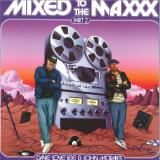
Two of the most prolific remixers in the world of Disco,Dave 'Love' Lee and John Moraleshave teamed up for one of their biggest projects to date - 'Mixed To The Maxxx'. After gaining access from the legendary original artists, the pair take the multi-track tapes of many classic Disco, Funk & Soul tracks and re-work them...to the Maxxx!
Where Remixed With Love stands as Dave Lee's own gold-standard body of work, Mixed To The Maxxx sets that legacy alongside Morales' own decades-deep M+M body of work: Lee brings his musically dense, groove-first touch to the likes of Harold Melvin, Syreeta, Lenny Williams and The Brand New Heavies, while Morales applies his extended, dancefloor-built M+M treatment and crushes the likes of Barry White, The Temptations and Loleatta Holloway, plus Dennis Coffey's breakbeat classic "Scorpio" for the DJs and collectors alike. Both work from original tapes, surfacing parts barely audible or entirely unheard in the source mixes, and both know when to let a classic breathe rather than bury it under modern production. It's a pairing a long time in the making. Lee and Morales first talked about working together around a decade ago, and getting Mixed To The Maxxx off the ground took five years of patient work: tracking down usable stems, securing approvals, and navigating a licensing landscape where much of the best material is now tied up with major labels increasingly cautious about clearing remixes. What's landed here is the product of that graft as much as the pair's shared ear for a great record, the sound of two people who know exactly what they're looking for and are willing to put in the time to find it.
A double 12" sampler in summer 2025 previewed the record's range. A bass-driven overhaul ofThe Brothers Johnson's "The Real Thing" and an extended mix of Philly legends Bell & James' "Livin' It Up (Friday Night)" showcased Lee's side, while an anthemic take on Inner Life's "Ain't No Mountain High Enough" and a tempo-lifted Light Of The World"London Town" flew the flag for Morales. Both drew strong early support ahead of the full LP.
out of Stock
Last delivered 6 days ago available to reorder, subject to availability
DE-CMG / DE15YR Dark EntriesBooks21.09.202621.SEP.26
Dark Entries Collected Music Graphics Compiled by Josh Cheon and Eloise Shir-Juen Leigh To celebrate 15 years of Dark Entries, this zine showcases the label’s visual aesthetic, bringing together some of the most iconic designs that we’ve released. While Dark Entries’ sonic mission has included sounds as diverse as synth-pop, Italo disco, darkwave, house, and techno, it is equally staggering to see the breadth of visuals the label has encountered and collected over the years. Included here are selected typography, logos, and illustrations from the label’s extensive catalog — well over 300 releases to date. Designs have been created using DIY analogue techniques as well as more contemporary digital approaches. A full discography is included at the end for reference and an essay by Shawn O’Sullivan (Led Er Est, Further Reductions). This zine serves as a source of inspiration for artists as well as a means of preserving and documenting these distinct graphics. DARK ENTRIES RECORDS is a San Francisco-based record label that was born in July 2009. Helmed by Josh Cheon, a vinyl-focused DJ and collector, the label has focused largely on excavating the 1980s underground era – but releases have spanned from sultry vintage disco to bleeding-edge contemporary techno. Graphic designer Eloise Shir-Juen Leigh has been responsible for most of the label’s artwork, whether reproducing original designs accurately for reissues or creating exciting new ones. Much care and attention is given to each release to represent the music in a memorable way as well as tell the stories behind these projects. Hand-stamped and limited to 200 numbered copies. 64 pages with neon cardstock covers. Measures 5×7 inches.
Set sail for the next leg of the journey! Diggers Factory is thrilled to present the One Piece: Into the Grand Line (Soundtrack from the Netflix Series) Deluxe Vinyl Boxset.
Following the Straw Hat Crew as they finally move Into the Grand Line, the soundtrack captures the epic, high-seas energy of the hit series. Composed by the powerhouse duo Sonya Belousova & Giona Ostinelli, the score blends orchestral scale with pirate folk-rock grit, now pressed on stunning colored wax.
Whether you're dodging Baroque Works or looking for a giant whale, this box set is the ultimate treasure for any Straw Hat at heart.
2LP Black Audiophile Vinyl: Two black vinyl representing the fiery spirit of adventure and the deep mysteries of the Grand Line.
Custom Die-Cut Jackets: Two single jackets featuring a central die-cut hole that reveals the beautiful map-work of the inner labels.
16-Page Booklet: A deep dive into the production with exclusive set stills and behind-the-scenes imagery from Season 2.
Double-Sided Poster (20" x 27"): Choose your vibe with the cinematic group shot of the crew or the iconic "Grand Adventure Awaits" sunset art.
6 Exclusive Postcards: Vintage-style travel postcards from legendary stops like Loguetown, Little Garden, and Drum Island.
Sticker Board: A collection of high-quality stickers including Laboon, the Going Merry, and Luffy's legendary $30,000,000 Wanted Poster.
Collector's Box: All contents are housed in a premium, wooden-textured outer box.
Netflix's epic high-seas pirate adventure, ONE PIECE, returns for Season 2-unleashing fiercer adversaries and the most perilous quests yet. Luffy and the Straw Hats set sail for the extraordinary Grand Line-a legendary stretch of sea where danger and wonder await at every turn. As they journey through this unpredictable realm in search of the world's greatest treasure, they'll encounter bizarre islands and a host of formidable new enemies.
With the release of "Wildnis" in autumn 2026, Klangwart celebrate 30 years of the group"s existence. During numerous sessions in their own Inkiek studio in Unna/Germany and a residency in Montoriol/France in 2025, Klangwart have created their new work "Wildnis" ("wilderness"), inviting Sébastien Del Grande to add tenor and alto saxophone, drums, marimba and other various percussion instruments to their electronic textures. Catalan composer and performer Ivan Chin aka Ivan Telefunken also participated in the recording sessions by contributing to a Catalan version of Swiss group Grauzone"s famous new wave hit "Eisbär" under the title "Os Polar". Timo Reuber"s arrangements, production and mastering gave the album its final touch. Klangwart started their musical expedition into for them unknown territories already in 2014 when they went to Bogotá/Colombia in order to record with protagonists of the local music scene: Damián Ponce (drums), César Quevedo (bass) and Eblis Alvarez (violoncello), members of The Meridian Brothers, and singers Juanita and Valentina Añez Rothmann a.k.a. Las Añez. The result, released on Markus Detmer"s Staubgold label in 2019, was Klangwart"s trademark sound permeated by a Latin American pulse and pitch. With "Wildnis" the story continues: field recordings from Latin America are interwoven with delicate electronic structures, Del Grande"s iconoclastic approach to the saxophone meets Klangwart"s familiar organ drones, Catalan folk meets German Krautrock.
„Dragonflies“, das gleichnamige Debütalbum von Dhani Harrison und Nigel Godrich.
Dhani Harrison ist ein zweifacher Grammy-Preisträger, Musiker, Komponist und Produzent. Nachdem er
mit seiner Band „thenewno2“ erstmals auf der internationalen Bühne in Erscheinung getreten war, hat sich
Harrison inzwischen als eigenständiger Solokünstler etabliert. Sein Solo-Debütalbum „IN///PARALLEL“
(2017) markierte eine mutige kreative Weiterentwicklung, gefolgt von dem von der Kritik gefeierten Werk
„INNERSTANDING“. Neben seiner Solokarriere hat Harrison mit einer vielfältigen Auswahl an Künstlern
zusammengearbeitet, darunter Wu-Tang Clan, UNKLE, John McLaughlin, Annie Lennox, Pearl Jam, Nitin
Sawhney, Perry Farrell, Prince, Regina Spektor und Fistful of Mercy (gemeinsam mit Ben Harper und
Joseph Arthur).
Nigel Godrich ist einer der renommiertesten Produzenten und Toningenieure, der vor allem für seine
jahrzehntelange kreative Zusammenarbeit mit Radiohead bekannt ist. Er begann seine Arbeit mit der
Band im Jahr 1994 und hat seit „OK Computer“ (1997) jedes Radiohead-Studioalbum produziert; damit
war er maßgeblich an der Gestaltung eines der einflussreichsten Musikkataloge der Moderne beteiligt. Godrich, der ebenfalls zweifacher Grammy-Preisträger ist, gehört zudem zu den Gründungsmitgliedern der
gefeierten Band Atoms for Peace – gemeinsam mit Thom Yorke, Flea, Joey Waronker und Mauro Refosco.
Im Laufe seiner Karriere hat Godrich mit einer außergewöhnlichen Bandbreite an Künstlern zusammengearbeitet, darunter Paul McCartney, Beck, Red Hot Chili Peppers, U2, IDLES, Roger Waters, Air, Pavement,
Travis und R.E.M.
Mit *Dragonflies* führen Harrison und Godrich ihre jahrzehntelange Erfahrung in Songwriting, Produktion
und Filmkomposition in einem einzigartigen neuen Gemeinschaftsprojekt zusammen.
„Ride Lonesome“ – das erste Album mit völlig neuem Material von Beck seit dem Grammy-prämierten
Album „Hyperspace“.
Das neue Album verdankt seine zugleich neue und doch vertraut-warme Atmosphäre der Zusammenarbeit
mit jenen Musikern, mit denen Beck bereits „Sea Change“, „Morning Phase“ und „Mutations“ aufgenommen hatte – Smokey Hormel, Joey Waronker, Justin Meldal-Johnsen, Roger Joseph Manning Jr. und Jason
Falkner –, die sich im „Room B“ der United Studios in Hollywood wieder zusammenfanden. Godrich, der
bereits an „Sea Change“ und „Mutations“ mitgewirkt hatte, übernahm erneut den Mix des Albums. In
dem Jahrzehnt seit der Aufnahme von „Morning Phase“ (Gewinner des Grammy für das Album des Jahres
2015) erlebten Beck und die Band eine spürbare Weiterentwicklung und Vertiefung ihres Zusammenspiels
und ihrer Chemie – verfeinert durch jahrzehntelange Zusammenarbeit.
Released in 1976 on ABC Records, Seed Of Memory is Terry Reid's fourth studio album and marks a significant shift in his musical direction - This 180g vinyl re-issue faithfully replicates the original UK pressing including 4- page lyric insert Produced by Graham Nash, the album was recorded in California after Reid had relocated from Britain, and reflects the influence of the West Coast singer-songwriter scene while retaining elements of rock, blues, folk and soul. All eight songs were written by Reid, whose expressive vocals and guitar work remain central throughout. The recordings are enhanced by contributions from respected musicians including David Lindley on guitar and violin, Ben Keith and Al Perkins on pedal steel, and Graham Nash on harmony vocals. Lyrically, the album explores themes of reflection, spirituality, personal growth and social awareness, with songs such as "Brave Awakening" drawing on Reid's family connections to the mining industry. The relaxed arrangements contrast with the heavier sound of some of his earlier recordings, creating a more atmospheric and melodic style.
For their third album, Under The Reefs Orchestra explores the skies, rides the winds, and communes with the spirits that blow across the world. After making volcanoes roar on Sakurajima (2022) and unveiling a mineral, obsessive, and telluric music, the Brussels trio led by Clément Nourry (guitar), joined by Marti Mélia (baritone saxophone) and Jakob Warmenbol (drums), now opens a new chapter. Recorded at Robot Studio in Ghent by Pieterjan Coopejans,
orchestra also expands with distinguished guests – An Pierlé, Catherine Graindorge, and Alejandra Borzyk – who upset the balance and ignite the embers of improvisation. Surf jazz, cinematic rock, hypnotic trance: Under The Reefs Orchestra continues to roam uncharted sonic landscapes, heirs to Moondog, Adrian Belew, Morphine, and Sons of Kemet. Their ever-adventurous music composes a visionary, incandescent soundtrack for a world in turbulence. Praised by the international press (Earmilk, Spin Magazine – which ranked Sakurajima among the 22 best albums of 2022), the group stands out as one of the most daring projects on today’s vibrant Belgian scene.
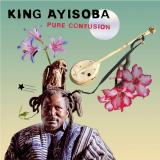
Pioneering Ghanaian musician King Ayisobareturns September 4, 2026 with his forthcoming seventh album Pure Confusion, recorded and produced by On-U-Sound’s Adrian Sherwood.
Ayisoba is one of Ghana’s most distinctive musical voices. The world’s foremost player of the kologo - a homemade two-string lute fashioned from a calabash and covered in goatskin - he delivers fiercely political and socially observant songs using three different voices, including the voice of his grandfather that possessed him as a child. Sherwood meanwhile is the pioneering British producer and founder of On-U Sound whose hugely influential career has connected dub, post-punk, industrial, hip hop and experimental music through collaborations with artists including Lee “Scratch” Perry, Mark Stewart, Horace Andy, Sinéad O’Connor, Nine Inch Nails and Depeche Mode.
Ayisoba and Sherwood first collaborated during a BBC Radio 3 Late Junction session at Maida Vale in 2017, organised by Ayisoba’s long-time collaborator Arnold de Boer/Zea of The Ex. The pair immediately connected, and during the pandemic, when Adrian’s long-time African Head Charge collaborator Bonjo Iyabinghi Noah was in Ghana looking for musicians to collaborate with Sherwood suggested Ayisoba, who eventually featured on two tracks on African Head Charge’s 2023 album A Trip To Bolgatanga (Bolgantanga is the region Ayisoba is from). Ayisoba then returned to the UK in late 2024 and travelled to Sherwood’s Ramsgate studio where the pair laid down the songs that would become Pure Confusion: “All the songs were already in my head,” says Ayisoba. “This album is all recorded live, over one afternoon. Adrian only plays live, and I like that. And he works hard - he doesn’t sleep. I woke up in the night and he was still working.”
“In my role producing it, I just let it roll to make a good vibe,” says Sherwood. “We recorded it completely live, did some programming and processing on some tracks, using dub techniques live on the mixing desk and adding some slick touches. We wanted the colours on the album to swing off what Ayisoba was doing, so we invited some friends to participate. Doug Wimbish (Sugar Hill Gang) arrived from America and lent his services playing bass on a couple of tracks; the wonderful Ivan Hussey (Celloman) played bass, keyboards and cello - cello is not really featured on African recordings so we thought it would be really cool to try it. I'd been working with Alex White (Fat White Family/Primal Scream) on my album (The Collapse of Everything) and so he added sax to a few tracks and I brought Alan Glenn down especially - Alan was in Little Axe but also Nine Below Zero and played in the Yardbirds – to add some mouth organ; Mark Bandola added a bit of flavour with his Juno, Ayisoba’s long-time Ghanian collaborator Ayuune Sule added some percussion and vocals and Matt Smith did some programming.”
“King Ayisoba is quite amazing, so unique,” Sherwood continues. “He’s got his own handmade instrument and three different voices - when you’re listening you think it’s three different people. He’s a breath of fresh air, full of love for the music which he wants to share with everybody. Some tracks we kept very straight and others we experimented with - adding dubby psychedelic little touches to trip you out a bit. The added production we did at On-U has given it a shine while still keeping it vibrant, live and spontaneous. I’m really proud of this record”.
On Pure Confusion, Ayisoba documents the anxieties, contradictions and changing social realities of contemporary Ghana. “Land is a problem for everyone,” says Ayisoba of the opening track “Property”. “If you don’t build on your land they will take it away. Plenty corruption in Ghana, plenty confusion. They sell the land to two, three, four people and then everybody fights.”
Elsewhere Ayisoba explores illness, spirituality and social stigma on “Bemba”, warning against hiding sickness out of shame or fear of “bad juju”: “People hide their sickness and the sickness kills them.” “Tewigiloge” reflects on cultural difference and open-mindedness encountered through world travel: “We will tour the whole world and we will see many things we may not like or understand… your eyes will see, but don’t talk - you have to be open-minded.”
Spirituality runs deeply throughout the album. Ayisoba’s grandfather was a respected spiritual healer whose presence the musician says still guides him today. “The grandparents’ spirits are the ones you can contact,” he explains of the spiritual chant “Nkaase”. “This song talks about the forefathers.” The closing track “Leeda-Mampanga (It’s Not My Strength)” acts as a statement of humility and gratitude: “You have to be humble, even if you have talent. God gives you the power.”
For more than two decades, King Ayisoba has been one of Africa’s most distinctive musical innovators, transforming northern Ghanaian kologo traditions into a bold contemporary sound rooted in hypnotic rhythms, social commentary and spiritual intensity. Since the breakthrough success of 2006’s Modern Ghanaians, Ayisoba has built an international following through acclaimed albums, relentless touring and collaborations with artists including Lee “Scratch” Perry, Orlando Julius and African Head Charge. Performances at Roskilde, WOMAD, Le Guess Who? and the Barbican have further cemented his reputation as a singular live performer and cultural force.
Meeting vulnerability with persistence, Lucerne-based musician Remo Helfenstein presents Spite, his first solo album on Präsens Editionen. Whereas his 2022 debut EP, Comforting Katharina, traced raw, devotional impulses, Spite expands the terrain—balancing psychedelic drift with sudden moments of clarity, wounded grandeur with flashes of pop transcendence.
The record thrives on contradiction: oscillating between the no wave austerity of Suicide and the meditative (and dadaist) expanses of Bitchin Bajas and Bonnie “Prince” Billy’s collaborative work, while opening into passages of gospel-infused spaciousness. At times intimate and porous, at times expansive and ecstatic, Helfenstein shapes a sound world that fuses analog and digital processes—both deeply personal and insistently collective. This duality comes to life most strikingly in recordings with fellow musicians Klara Germanier (background vocals and guitar), Raphael Loher (k
Mit Tove Lo kehrt eine der prägendsten Stimmen des internationalen Pop zurück: Die preisgekrönte Künstlerin und Grammy-nominierte Songwriterin steht für kompromisslos ehrlichen, emotional aufgeladenen Pop zwischen Grunge-Einflüssen und skandinavischer Klangästhetik. Spätestens mit ihrem Multi-Platin-Hit „Habits (Stay High)“ etablierte sie ihren unverfälschten, direkten Stil, der sich durch ihre gesamte Diskografie zieht.
Nun präsentiert sie mit „ESTRUS“ ihr sechstes Studioalbum: ein kraftvolles, stilprägendes Werk zwischen Euphorie und Melancholie, Verlangen und Zweifel. Auf 13 neuen Tracks verbindet Tove Lo pulsierende, körperbetonte Produktionen mit pointierten, persönlichen Texten und fängt so die ganze Bandbreite menschlicher Emotionen ein – roh, intensiv und ungefiltert.
Thematisch steht das Album für Selbstbefreiung und Individualität, visuell untermalt von einer düsteren, kultähnlichen Ästhetik mit emo-chic Einflüssen. „ESTRUS“ ist ein starkes Statement für alle, die Pop mit Haltung, Tiefgang und internationalem Hitpotenzial suchen.
Vinyl in Gatefold Jacket with Printed Inner Sleeves, 8x12 Matte Photo Insert and 12x12 Lyric Insert
Emma Ruth Rundles "These Killing Times" ist mitreißend, emotional und voller anti-patriarchaler feministischer Wut. Das sechste Studioalbum der Multi-Instrumentalistin, Songwriterin und multidisziplinären Künstlerin ist eine reaktive Anthologie, voller Energie, Lebensfreude und Widerstand; es stellt uns Fragen nach unseren Absichten und den Rollen, die wir in den Gemeinschaften spielen, in denen wir leben, und danach, wie wir dem Würgegriff des Kapitalismus begegnen wollen. Schlaflose Nächte, Momente des Grauens und Zeiten der Qual könnten über eine Zeitleiste der jüngsten gesellschaftspolitischen Ereignisse gelegt werden, um die Entstehung von "These Killing Times" nachzuzeichnen: die zunehmende Macht des christlichen Nationalismus, der groteske Zirkus des politischen Diskurses und das damit verbundene ontologische Unbehagen. Aber es gibt auch Liebe - als Balsam und Stärkungsmittel, als Mittel zur Flucht. Das Verlangen nach Gemeinschaft und Verbundenheit, während man mit den gewalttätigsten Seiten der Menschheit konfrontiert ist, bleibt eine ungelöste Spannung. Während sie Anfang 2025 aus der Ferne die verheerenden Auswirkungen einer weiteren Klimakatastrophe beobachtete, reflektierte Emma über die Wurzeln der systemischen Probleme, die sich direkt in so viele katastrophale globale Ereignisse niederschlagen, und traf die bewusste Entscheidung, ein hoffnungsvolles Album zu schaffen. Wo äußere Kräfte sie dazu verleiten wollten, sich nach innen zu wenden, in Richtung Isolation und Hoffnungslosigkeit, streckte sie sich stattdessen nach außen, um ein Album zu schaffen, das den Schmerz anerkennt, aber als Antwort darauf sowohl Gemeinschaft als auch Widerstandskraft bietet.
Grammy-winning guitar duo Rodrigo y Gabriela returns to the textural fluidity of acoustic instrumentation on their new album ‘OurHome’. Self-produced in a Tokyo studio, the odyssey-like album unfolds with an otherworldly beauty achieved with guests from former Megadeth guitarist Marty Friedman to Japanese jazz pianist Hiromi. OurHome echoes all the transcendence and serenity that Rodrigo y Gabriela have routinely experienced in their journeys to Japan.
The Homesick sind ein abenteuerlustiges niederländisches Trio, das Stile wie Post-Punk, Krautrock, New Wave und experimentellen Pop mit furchtloser Neugier und Hingabe meisterhaft miteinander verschmilzt. Frei von Dogmen und doch rastlos romantisch, haben sich THE HOMESICK über mehrere Alben hinweg immer wieder neu erfunden - vom mitreißenden Debütalbum *Youth Hunt* bis hin zum barock angehauchten Durchbruchsalbum *The Big Exercise*, das bei Sub Pop erschien. Auf ihrem dritten, unabhängig veröffentlichten selbstbetitelten Album - entstanden in der Zeit nach der Pandemie - verschmolz das Trio sein breites Referenzspektrum zu einem schlankeren, pulsierenden Sound. Nun, auf ihrem vierten Album (und dem ersten bei Siluh Records), haben The Homesick in zehn Tracks ihre ganz eigene, höchst einfallsreiche und durchweg unterhaltsame Version von Clubmusik geschmiedet. Dabei schaffen sie einen mitreißenden Fluss zwischen den Stücken und pendeln mühelos zwischen der eingängigen, von City-Pop inspirierten Lead-Single ,Esperanto", dem von 808-Beats getragenen Herzschmerz-Song ,Policelessness" und der märchenhaften Disco-Nummer ,The Bees". Um diese funktionale und zugleich fantastische Tanz-Odyssee zu realisieren, holten sich The Homesick ein viertes Paar Ohren zur Unterstützung ins Boot. Der in Amsterdam ansässige Produzent und Künstler Rimer London - eine Schlüsselfigur sowohl im Mainstream als auch im Underground - verlieh dem Material seine eigene, markante und pop-orientierte Note, nachdem das Trio seine Tüfteleien im Studio abgeschlossen hatte. Dieser frische kreative Schub half der Band, sich an pop-geschukten Vorbildern zu orientieren, etwa beim sinnlichen ,Love off the Leash" oder dem wehmütigen West-Coast-Pop von ,Hey". Indem sie stärker auf clubbige, von den 80ern inspirierte Sounds setzten als auf den disharmonischen Post-Punk früherer Tage, ließ sich das Trio oft von einer Lawine aus Ideen mitreißen - so etwa beim treibenden Electro-Pop von ,Sway the Needy". Letztlich ging es darum, jedem Track einen ganz eigenen klanglichen Charakter zu verleihen: ,Humdrum" wagt die Nähe zu den Talking-Heads-Klassikern, während der hektische Dub von ,Street Cyst" in unwiderstehliche Hyperpop-Anleihen mündet. Ihren Ruf als eigenwillige Scenesters untermauern The Homesick zudem mit dem mitreißenden Synth-Pop-Marsch ,Horse Alone". Und eines ist sicher - es gibt noch weitaus mehr eklektische Grandezza auf "What's Up With All These Shangri-Las" zu entdecken. Lass The Homesick der Soundtrack zu deinen offenen Fragen sein - es lohnt sich wirklich.
The Homesick sind ein abenteuerlustiges niederländisches Trio, das Stile wie Post-Punk, Krautrock, New Wave und experimentellen Pop mit furchtloser Neugier und Hingabe meisterhaft miteinander verschmilzt. Frei von Dogmen und doch rastlos romantisch, haben sich THE HOMESICK über mehrere Alben hinweg immer wieder neu erfunden - vom mitreißenden Debütalbum *Youth Hunt* bis hin zum barock angehauchten Durchbruchsalbum *The Big Exercise*, das bei Sub Pop erschien. Auf ihrem dritten, unabhängig veröffentlichten selbstbetitelten Album - entstanden in der Zeit nach der Pandemie - verschmolz das Trio sein breites Referenzspektrum zu einem schlankeren, pulsierenden Sound. Nun, auf ihrem vierten Album (und dem ersten bei Siluh Records), haben The Homesick in zehn Tracks ihre ganz eigene, höchst einfallsreiche und durchweg unterhaltsame Version von Clubmusik geschmiedet. Dabei schaffen sie einen mitreißenden Fluss zwischen den Stücken und pendeln mühelos zwischen der eingängigen, von City-Pop inspirierten Lead-Single ,Esperanto", dem von 808-Beats getragenen Herzschmerz-Song ,Policelessness" und der märchenhaften Disco-Nummer ,The Bees". Um diese funktionale und zugleich fantastische Tanz-Odyssee zu realisieren, holten sich The Homesick ein viertes Paar Ohren zur Unterstützung ins Boot. Der in Amsterdam ansässige Produzent und Künstler Rimer London - eine Schlüsselfigur sowohl im Mainstream als auch im Underground - verlieh dem Material seine eigene, markante und pop-orientierte Note, nachdem das Trio seine Tüfteleien im Studio abgeschlossen hatte. Dieser frische kreative Schub half der Band, sich an pop-geschukten Vorbildern zu orientieren, etwa beim sinnlichen ,Love off the Leash" oder dem wehmütigen West-Coast-Pop von ,Hey". Indem sie stärker auf clubbige, von den 80ern inspirierte Sounds setzten als auf den disharmonischen Post-Punk früherer Tage, ließ sich das Trio oft von einer Lawine aus Ideen mitreißen - so etwa beim treibenden Electro-Pop von ,Sway the Needy". Letztlich ging es darum, jedem Track einen ganz eigenen klanglichen Charakter zu verleihen: ,Humdrum" wagt die Nähe zu den Talking-Heads-Klassikern, während der hektische Dub von ,Street Cyst" in unwiderstehliche Hyperpop-Anleihen mündet. Ihren Ruf als eigenwillige Scenesters untermauern The Homesick zudem mit dem mitreißenden Synth-Pop-Marsch ,Horse Alone". Und eines ist sicher - es gibt noch weitaus mehr eklektische Grandezza auf "What's Up With All These Shangri-Las" zu entdecken. Lass The Homesick der Soundtrack zu deinen offenen Fragen sein - es lohnt sich wirklich.