This new project is directed by Miho in collaboration with Robert Drewek, the owner of respected label RAWAX.
It is a special edition 'RAWAX - AIRA EP vinyl series".
Concept and mission will always be, to connect and invite great musicians who produce and create "essence of the real music',
not following the trend but let the music speak itself with groove, melody, vibe, energy and soul....
Roland has made evolution in dance music all over the world in 80's, Music needed those machines, and machines needed those creators of music.
AIRA are not rehashing of the legendary original TR or TB, But respecting those great machines from the past, AIRA continues to evolve toward into the future simultaneously, newly developed, new generations tools to keep the music alive and to bring more possibilities for the future.
We seeks out this exciting movement of dance music history, as the music lover who has actual experience the flow of this evolution, and connections between musicians and machines to make their musical pieces on this project to inspire listeners and to challenge the genres they represent by each series.
out of Stock
Last delivered 37 days ago available to reorder, subject to availability
An aura of mystery hangs over Jacky Giordano, a studio musician who has mostly worked for library music.He is the one behind the amazing label Freesound (Schifter, Philopsis, Challenger), but as well on Montparnasse 2000 with Pop in Devil's Train (reissued on Le Tres Groove Club), on Timing (Timing N?1 and Timing N?5, under the nickname Jacky Nodaro), on Musax with Boucles Rythmiques (under the nickname Joachim Sherylee, reissued as well on Le Tres Groove Club) or Black Devil Disco Club whose paternity for this record is still disputed between him and Bernard Fevre. Jacky Giordano wasn't an altar boy, far from it, and will have sadly been more known for his troubles with justice than for his music.This is his work for the label l'Illustration Musicale (IM) which can now be rediscovered thanks to this new reissue on Le Tres Groove Club.Organ Plus (IM26) is the sequel to Organ (IM 24), also reissued by Le Tres Groove Club. The title is misleading here, an organ not being preponderant part of the record which honours the Fender Rhodes, string machine, bass synth and clavinet. 'Be Careful', 'Riffologic', 'Twillight' : Jacky Giordano offers slow tempo jazz-funk, without losing his melancholy and low-fi groove that make his tracks immediately recognisable regardless the record label or nickname.
Mila Stern's groove-heavy and highly danceable sound explores fringe soundscapes informed by Post-Punk and Electro. What sets her apart is a willingness to embrace unorthodox sounds, explore the beauty in harshness and dissonance, and transform jarring atmospheres into captivating dancefloor moments. With 'Five Finger EP', Mila Stern delivers an eclectic six-tracker featuring two high-pressure originals and four carefully selected reimaginations by Camea, mytripismytrip, Öona Dahl, and Hardt Antoine for Kiosk catalog number 021.
'Five Finger Discount' encapsulates Mila's uncompromising aesthetic: warm, powerful, energetic, and constantly teetering on the brink of disintegration. Morphing, overdriven stabs build energy atop a sub-heavy groove and a sea of pads. A sweeping break fractures the track into shuddering bursts of corroded machinery, before the compact groove returns with punishing dancefloor power.
Camea transforms 'Five Finger Discount' into a heavy-weight techno roller. Shuddering, pitch-shifting bass hits and salvos, sizzling white noise sweeps, and an ominous mantra morph the track into a darkly efficient peak- time banger.
Hardt Antoine builds his rendition of 'Deadline Disco' around an infectiously body-moving arpeggio. Layers of distortion add a searing edge, transforming the original into a stripped powerhouse with Dark Disco undercurrents.
Few artists move on the fringe so comfortably, make unconventional sounds so accessible, or pursue their vision with the same bright-eyed conviction.
With 'Five Finger EP', Mila Stern epitomises the magic that happens when uncommon sounds are embedded in the framework of commanding, floor-focused energy. 'Five Finger EP' embodies her stand-out style and the stunning range of musical interpretations it inspires.
out of Stock
Last delivered 2 years ago available to reorder, subject to availability
Moving to England for its second release, Rant & Rave Records presents a proper EP from South Wales-based producer JoeFarr, known for his dancefloor jams on labels such as: 'SLAM', 'Arts', and his most recent success with 2019's epic 12" 'Death Becomes Us'. On the a-side 'In This Anger', which JoeFarr has written with Louisahhh, an anxiously dark, slowly developing atmosphere menaces behind a slow rolling, broken beat for maximum effect. This is punctuated by dark, slightly distorted female vocals with sporadic lyrics subtly encouraging its dance floors to move.. and think. Signature hard and bouncy grooves with infectious in-yer-face techno riffs dominate the rest of the EP with tracks 'Laced Up', 'You Can See Me' and 'You will See Me (Hardcore)', effortlessly weaving in and out of the pulsating groove with an interesting palette of machine sounding synths and heavily processed vocals.
out of Stock
Last delivered 2 years ago available to reorder, subject to availability
Cursed to ride forever on this mortal plane after partaking in a satanic drug ritual, the Death Wheelers pledge allegiance to the god of hell and fire. However, in order to prove themselves to their newly anointed leader and for the spell to take effect, the club Will need to engage in a series of lewd acts of sex and violence across the country.Immortality comes at a price and you’re about to pay for it… The beating heart of The Death Wheelers is a rumbling engine. Since their self-titled debut in 2015 and in 2020’s cinematic-storytelling breakout, Divine Filth, the Canadian outfit have tapped into wind-through-hair freedom and careened down open roads of groove, not a cop in sight. Their third record, Chaos and the Art of Motorcycle Madness, more than lives up to its name on all fronts. With songs like “Morbid Bails” and “Lucifer’s Bend,” the in-the-know references abound, and The Death Wheelers draw from classic underground metal, scummer heavy rock and cast themselves into a cauldron of cultish biker devil worship, reveling in any and all post-apocalyptic dystopias with genuine glee at having just seen the world eat itself. You might hear some surf guitar. Crazy things can happen. A sample in “Triple D (Dead, Drunk and Depraved)” underscores the message: “We want to be free to ride our machines without being hassled by the man. And we want to get loaded.” That line, from Roger Corman’s 1966 film The Wild Angels, serves as a mission statement, and as “Lucifer’s Bend” starts by laughing about how you can’t get away from Satan, they might as well carve it into their forearms to be ready when the blast of distortion hits, as much Entombed as Motörhead, galloping and sinister, coated in road dust and blood. The band tells the story like this: “Cursed to ride forever on this mortal plane after partaking in a satanic drug ritual, the Death Wheelers pledge allegiance to the god of hell and fire. However, in order to prove themselves to their newly anointed leader and for the spell to take effect, the club will need to engage in a series of lewd acts of sex and violence across the country. Immortality comes at a price and you’re about to pay for it…” While forging songs adherent more to ideology than style, The Death Wheelers cast their biker cult in their own image, and on Chaos and the Art of Motorcycle Madness, they challenge death head-on as only those with no fear of it could hope to do.
On its’ release in November 2022, Daniel Stenger’s debut mini-album as Flashbaxx, Take Care My Friend, won plenty of plaudits for its’ enticing blend of jazz-funk instrumentation, audible warmth, effortless musicality, and memorable, sun-soaked songs. Now the set returns in remixed and reworked form, with a sextet of artists taking it in turns to put a new spin on the German producer’s carefully crafted and immaculately executed tracks.
The six-cut vinyl version boasts two revisions that have already made waves on digital download: a genuinely life-affirming hip-hop-soul take on ‘Strangers’ courtesy of East Midlands’ maestro Atjazz, where Katherine Kempf’s smouldering lead vocals rise above head-nodding beats, woozy electric piano chords, yearning horn arrangements and smooth bass guitar, and a sublime Moods mix of ‘Love Boat’ that re-frames the track as a languid, groove-fired shuffle through Balearic jazz-funk territory.
The other four reworks, which are exclusive to this EP, are similarly inspired. Chris Pookah collaboration ‘City Lights’ is given the remix treatment not once, but twice. First NuNorthern Soul regulars Mike Salta and Mortale re-imagine the track as a gently breezy, dusk-ready blend of bouncy, samba-influenced grooves and colourful Balearic nu-disco, before BJ Smith – the first artist to release music on Phil Cooper’s imprint way back in 2012 – takes the track into semi-acoustic, blue-eyed-soul-meets-Balearic jazz-funk territory. Gentle, tactile, and vibrant, it’s a stunning, soul-stirring revision.
To round off the EP, two producers renowned for creating atmospheric, sunrise-ready soundscapes deliver their versions of Stenger’s kaleidoscopic, musically rich aural visions. Marshall Watson handles ‘Alright’, smothering a languid, slow-motion drum machine beat in jazzy double bass, delay-laden electric piano motifs, lazy jazz guitars, rising synth strings and the dreamiest of pads.
Then, to round things off in considerable style, Tambores En Benirras reworks title track ‘Take Care My Friend’, teasing out the track’s inherent musical colour and warmth whilst adding his own distinctive spin. Pleasingly hard to pigeonhole, his remix makes extensive use of deep, dubby bass, Latin-style percussion, leisurely beats, blossoming synth sounds and all manner of effects-laden instrumental flourishes – including guitar solos that recall some of Dave Gilmour’s most laidback, eyes-closed moments. It provides a genuinely brilliant conclusion to an effortlessly impressive set of remixes.
out of Stock
Last delivered 22 months ago available to reorder, subject to availability
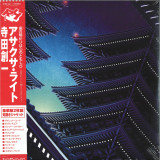
Back in 2015, Japanese DIY house pioneer Soichi Terada stepped back into the limelight courtesy of Rush Hour's 'Sounds From The Far East', a Hunee curated retrospective of material first released on his own Far East Recording label in the 1990s and early 2000s. Buoyed by the positive response and renewed interest in his work, Terada went back into studio to record his first new album of house music for over 25 years, Asakusa Light.
Developed over 18 months, Terada tried to recreate the mental and physical processes that led to the creation of his acclaimed earlier work. Those familiar with Terada’s celebrated, dancefloor-focused sound of the 1990s – a vibrant, atmospheric, and emotive take on deep house powered by the twin attractions of groove and melody – will find much to enjoy on Asakusa Light.
“I tried to recall my feelings 30 years ago, but when I tried it, I found it super difficult,” he explains. “I didn’t even know what I thought about myself five years ago, and the mental metabolic cycle seems to be faster than I thought. I tried different methods, including digging up my old MIDI data and composing by remembering old experiences. With the help of Rush Hour, I found some of the light from my heart that I had 30 years ago. I nicknamed the light I found in my heart, ‘Asakusa Light’.”
Produced using the very same synthesizers and drum machines that powered his 1990s work, the album is a joyous, colourful and life-affirming collection of timeless house music that not only recalls Terada’s own impeccable back catalogue, but also that of similarly celebrated contemporaries such as the Burrell Brothers or Ben Cenac (Dream 2 Science, Sha-Lor).
Terada, who has spent much of the last two decades writing video game music, has always had a gift for combining warm, undulating synthesizer basslines and perfectly programmed machine drums with stirring chords, smile-inducing melodies and mellow musical flourishes. It’s this immersive, sun-kissed and tuneful trademark style that takes centre stage on Asakusa Light, an album for the ages.
The set begins with the alien-sounding chords, soft-touch percussion and dawn-friendly warmth of ‘Silent Chord’ and ends on a high via the bouncing string stabs, starlight chords and thickset grooves of ‘Blinker’; in between, you’ll find a deluge of effortlessly feelgood music that’s the aural equivalent of a dopamine rush at sunrise.
There are subtle variations aplenty throughout the album – see the 8-bit lead lines and pulsing electronic textures of ‘Takusambient’, the vintage Tony Humphries flex of ‘Diving Into Minds’ and the effortlessly funky ‘Marimbau’ – but it’s the uniquely atmospheric, vivid and tactile nature of Terada’s loved-up sound that resonates. After well over 30 years in house music, the light in his heart is shining brighter than ever.
out of Stock
Last delivered 78 days ago available to reorder, subject to availability
With I Will Make a Baby in this Damn Economy, Fat Tony embodies the kind of quixotic figure he would rap about; a singular entity who’s motivated, confident, and hungry; a perpetual-motion-machine locked in a staring contest with his country. It’s the latest album in his catalog produced entirely by L.A-based producer Taydex since 2020’s Wake Up. Later that same year Fat Tony released Exotica, and ever since he’s demonstrated he is in his own lane as a professional rapper with the mind of a magician, as quick to conjure an image as pull it out from under you, deftly manoeuvring through so many details and references a listener feels as if they have witnessed the work of an illusionist. He paints these canvases inside of songs that rarely spill past three minutes; they’re pocket-sized diaries replete with acute observations, character studies, microdoses of storytelling, and single-minded ruminations on a topic that bud, blossom, and fade before too long. Fat Tony & Taydex’s I Will Make a Baby in this Damn Economy cements Tony’s status as someone whose albums are not so much lyrically-lyrical as they are picaresque.
As with any Fat Tony project, the bars are tight as ever, but are so fluid for the 34-year-old it’s almost easy to take for granted the details, warmth, and humanity inside his free-associative tales of day-one friends who’ve passed, edgelord grifters who want to spit game, and nights on ketamine. Taydex’s production sprints through disparate yet simpatico styles, dipping its toes into Pi’erre Bourne-esque bass (see lead single “Spectacular”), house (“Loosen Up”), and even hyperpop. Meditations on loss and grief are woven throughout, but Tony throws a few curveballs as well: Consider “Alexis,” which sweetly reflects on a long-term platonic friendship. Taydex finds a Teddy Riley-indebted New Jack Swing groove just deep enough for the feeling to land and underlines the song’s sincere candor. This is the appeal of Fat Tony writ-large: his boisterous voice and genial personality invite you to the party, then you stick around to hear what he’s saying, which is frequently more introspective and complex than one assumes.
Written and recorded in Taydex’s new studio in North Hollywood, Tony says, “We had much more freedom and flexibility in making this album and you can hear it. It felt like a family project.” If the album is comfortable and loose, it is also dense and substantial. The album’s final two tracks contextualize the immediacy of what came before it—the mezcal with ices drank, Paul Wall swangin’ through to drop knowledge, the Polaris Prize-winning rapper Cadence Weapon providing a vibe check. “Make a Baby” accounts for Tony who’s seen everything, and knows he’s met the one to be a father with, and yet chooses to take his time to get it done. Taydex’s beat recalls turn-of-the-century R&B and the millennial promise of an endless good time. Sombre closer “Jasper, TX” is Tony coming to grips with the story of James Byrd, Jr., a Black man from East Texas dragged to his death by three white supremacists in 1998. These songs are not only trademarks of Tony’s fastidious rapping—they are deeply personal examples of his approach to artistry and life itself, where every decision is made in the shadow of history.
It’s here the mission statement of I Will Make a Baby in this Damn Economy comes into focus—you get the sense he means it, he’s ready for it, he’ll fight for it. He’s waiting to take the world at its word.
Miles Davis created just one studio album with his original sextet: Milestones. And he made every moment count. Pairing with Cannonball Adderley, John Coltrane, Red Garland, Paul Chambers, and Philly Joe Jones, Davis not only laid the groundwork for the modalism that immediately followed but tailored a genuine modern-jazz masterwork laden with performances among the most explosive of his distinguished career. Sandwiched between the more famous 'Round About Midnight and the epochal Kind of Blue, Milestones remains a seminal work of art.
Sourced from the original master tapes and pressed on dead-quiet SuperVinyl, Mobile Fidelity's numbered-edition 180g LP grants each musician their own space amid broad soundstages. Afforded the benefits of a nearly non-existent noise floor and supreme groove definition, this vinyl reissue doubles as a time machine back to the February-March 1958 recording sessions.
Colors, shapes, and dimensions appear in the manner that resembles what you'd glean from behind a studio control room's window. Davis' burnished trumpet is rendered in three-dimensional perspective and seemingly coaxes the band to play with unburdened zest. Coltrane's trademark saxophone teems with lifelike tonality and images with specificity; his solos work in tandem with and against the driving rhythms. Garland's swaggering piano lines? Visualize the keys as he hits full stride, the chords and fills slithering around skeletal frameworks.
Inducted into the Grammy Hall of Fame and selected as a "Core Collection" record by the Penguin Guide to Jazz, Milestones is as famous for its title track – widely considered ground zero for modalism and bolstered by Jones' hallmark "Philly Lick" rim shot – as the players that produced it. The launching pad for many of Davis' improvisational flights, the album teases the explorations Coltrane would soon chase. Davis' own solo work broaches territories that far exceed what he had done in his bop-rooted past. Every song is a highlight.
Take the bravado "Dr. Jackle," featuring a hot-foot pace and bebop strains, or "Sid's Ahead," which continues the album's blues theme while juggling edgy harmonics and inside-out structures. On "Billy Boy," distinguished with an arco bass solo from Chambers, Garland gets a turn in the spotlight and channels the openness practised by one of his heroes, Ahmad Jamal. Even more instructive is the band's reading of Dizzy Gillespie's "Two Bass Hit." Three years removed from the version Davis and company recorded for the trumpeter's Columbia debut, this interpretation demonstrates the extent to which the group had jelled in a relatively short amount of time.
Then there's "Straight, No Chaser," the definitive rendition of Thelonious Monk's signature piece. Coltrane's marbled playing pulls at the tune's borders, Adderley takes liberty with solos, and Davis dances around his mates, at one point quoting "When the Saints Go Marching In" while demonstrating his knowledge of tradition and casting an eye towards the future.
About that future. Garland already had one foot out the door during the Milestones sessions to the extent Davis spells him on "Sid's Ahead." Jones would stick around for a bit longer but soon plot his exit. History proves Davis navigated the changes with visionary aplomb. Yet the chemistry, excitement, and beauty the sextet achieves on Milestones cannot be overstated. This reissue helps put the album in proper perspective – and presents the music the fidelity it deserves.
"Don't Stop" is the third album retrospectively released by Ghia. As the subtitle "Early Works & Artefacts 1984-1987" implies, it features some of their earliest compositions as well as tracks that were recorded during the same period as their "Curaçao Blue" LP.
The album is a fusion of diverse music styles. Listeners will delight in a range of genres, including electro, funk, soul, jazz-funk, synth pop, and even rap/hip-hop, all woven together as a cohesive work that remains mostly instrumental. As a whole, "Don't Stop" represents Ghia's funkiest and most experimental release to date. Notably, the LP features a rap version of Hermann Hesse's controversial German poem "Armer Teufel am Morgen nach dem Maskenball" ("Poor Devil the Morning After the Costume Ball") from 1926, accompanied by a drum machine rhythm and funky guitar. This poem depicts a person who drank too much the night before, telling the story and describing his hangover. The title track "Don't Stop" and the thrilling minimal electro-funk tune "3 A.M. at Moëf Gaga" both evoke old-school electro influences. The latter references the Spanish discotheque Moëf Gaga, located on the Balearic coast, which the dynamic duo of Lutz Boberg and Frank Simon frequented during their 1980s holidays. While the exact music played at 3 A.M. is unknown, listening to Ghia's track will undoubtedly capture the mood of the place.
One of the key tracks of the album is "Message From The Other Side", which could easily be noted as one of the nicest European synth-funk instrumental pieces ever. The track is based on a sick synth bass line, sparkled with DX7 chord hits, funky guitar, and a delightful "marimba" solo in the last third. The solo was actually played on Boberg's keyboard, using a special sound cartridge. This particular track had to be edited and technically revised by Marian Tone and DJ Scientist as the existing demo version of the song could not be used as is. With its stunning groove, this track will surely be a DJ's favorite.
Listening to the complete album, there is more of Boberg's keyboard wizardry: could you believe that the trumpet solo on "Jump In The Water" as well as the short but stunning slap bass solo on "Talk Too Much" were both played by on the DX7? However, this new release, unlike the jazzy "Curaçao Blue", is not about solos or virtuous playing - it clearly shows the duo's direction towards more electronic composition and clear song structures. The versions of "September Garden", "When The Rain is Falling" as well as "Talk Too Much" are actually instrumental mixdowns of vocal songs. And again, we get a blissful take of "Close To You", here a version from 1986. This soulful jazz-funk ballad could already be heard on "Curaçao Blue" while the final vocal version with singer Lisa Ohm can be found on the recently released "This Is" LP. This shows that the Ghia composers, Boberg and Simon, were perfectionists - tracks were reworked again and again, making them better and better.
The album was mastered and restored with great care, and we are pleased to provide you with a perfect example of mid 1980s home-recording pleasures, tinged with a youthful spirit and providing a sound that cannot be recaptured anymore nowadays. Alongside "This Is" and "Curacao Blue" it should be another perfect addition to any 80s groove collection as well as a great pick for DJs that love and play disco, leftfield electro and funk. The LP is limited to 500 copies.
out of Stock
Last delivered 3 years ago available to reorder, subject to availability
The always tasteful Half Baked crew looks to one of their own for this fresh slice of delicious minimal. Sam Bangura was a new young resident for the party back in 2018 and since then has really honed his own sound. It's laid bare here across four fine cuts, with opener 'Range Finder' serving up bristling drum machine grooves and cheeky basslines overlaid with cosmic chords. 'Axel's Limp' is a brilliantly vibrant melodic overload with scintillating drums and plenty of neon colours.
'Bugbear' gets more gritty with a standout bassline powering forwards rugged tech house and 'How Are U Feeling?' then gets spaced out and slick.
out of Stock
Last delivered 2 years ago available to reorder, subject to availability
Carl Finlow keeps on keepin' on. Not only is Finlow one of the most respected names in electro, a producer who boasts a sprawling catalogue that takes in a wide variety of aliases, but he's also spent recent years establishing himself as a mainstay for Sheffield's Central Processing Unit label. Soft Robotics, the new EP from Finlow's Silicon Scally project, is the fifth Silicon Scally release in five years to boast one of CPU's instantly-recognisable black-and-white covers.
The reason that Silicon Scally and CPU keep linking up is simple; they're a perfect fit for one another. Central Processing Unit has established itself as a haven for post-Drexciya producers since launching in 2012, and there are few artists better than Finlow at building on the Detroit group's sound. The union bears fruit once more on Soft Robotics, an EP of lithe machine-funk jams that will both do damage in the dance and also reward more concentrated home listening.
Things begin at a steadier speed than one might expect. Rather than barrelling off with the kind of sinewy roller one associates with the CPU name, Soft Robotics' title-track takes things at mid-pace. The groove reveals itself without hurry, Silicon Scally adding or subtracting elements - twitchy modular loops, pensive pads, the occasional blurt of low-end - atop the chugging bass/drums groove. It's a track which wins you over with guile rather than force.
As the name of subsequent cut 'Jitters' intimates, this one picks things up a little after 'Soft Robotics'. The tempo is higher here, the central beat more nervy. At their cores, though, 'Jitters' and 'Soft Robotics' are kindred spirits. Here, another slyly insistent bit of drum programming comes swirled up with all sorts of extraterrestrial tones, from little nuggets of melody supplied by the keys to electrifying synth stabs and percussive squelches.
Things limber up further still on first B-side 'Spin Ratio'. The track's 808 kicks are punchier than those of the A-side jams, and there's a dizziness to the bass tone which gives 'Spin Ratio' an intriguingly off-kilter feel. Atop the booming beat we find ourselves hypnotised by cells of melody and harmony interlocking or moving apart - particularly the staccato module at the track's heart. Sure enough, 'Spin Ratio' is the Soft Robotics joint which cleaves closest to Drexciya, invoking other Detroit disciples like Jensen Interceptor in the process.
After Soft Robotics picks up speed in the middle, closer 'Super Fluid Tones' brings us back to where we started. This track returns to the more measured delivery of the record's opener - there's a steady pulse to the drums, and once again Silicon Scally packs the mix with so many intriguing whizzes, bangs, blips and blurts that it's impossible not be won over by this tune's construction. 'Soft Robotics' and 'Super Fluid Tones' bookend Soft Robotics very nicely, and Silicon Scally's smart pacing gives the EP a lovely ebb and flow.
The ever-excellent Carl Finlow drops a Silicon Scally release via Central Processing Unit for the fifth year running. Like its predecessors, Soft Robotics is an excellent and deftly-crafted collection of modern machine-funk.
RIYL: Drexciya, Jensen Interceptor, Fleck E.S.C., The Advent
out of Stock
Last delivered 16 months ago available to reorder, subject to availability
This July the esteemed scribe, proper DJ, and discreetly deft twiddler Bill Brewster, drops the latest instalment in his ‘After Dark’ series, for Late Night Tales.
A throbbing, louche and leisurely affair, groove is very much at the heart of this freestyle selection, a vibe which Bill de- scribes as “a basement, a red light and a sound system. Or, as the Beastie’s once rapped, slow and low, that is the tempo”.
There’s Hawaiian drum machine bossa balearica from Island Band, percussive afro post punk from Czech jazz singer Jana Koubkova, and breathy-bubbling-dubwise-slap-bass-soul from Debbe& The Code.
There’s also sultry deep house mood music from Lanowa, infectious bouncy jazz funk breaks from Canada High, and Nail’s life affirming re-edit of singer songwriter Gilbert O Sullivan’s electro pop gem ‘So What’.
Bill’s own studio skills are present and correct too, featuring an undulating bassy version of country troubadour Jeb Loy Nichols, reworked along Alex Tepper under their Hotel Motel moniker, and a chugged-up squelchy disco take on Khruang- bin, this time paired with Raj Gupta, as Mang Dynasty.
Chock full of exclusives, tracks are either completely brand new, or available digitally for the first time, whilst others are wallet-rinsing rarities if purchased elsewhere. Whichever way you slice it though, every tune is a highlight, working equally well as standalone nuggets, or within Bill’s fluidly cohesive mix.
Whether he’s taking the roof off a club with his unique selec- tion of deep and tough house music, enchanting a backroom with a genre-bending set of disco, Balearic, rock and hip hop or playing chillout music in a bay in Croatia, Bill Brewster is the man for all occasions.
In a former life, Bill was a punk rocker, a chef and also the co-editor of football magazine When Saturday Comes but has been a record nerd all of his life. He began DJing in the 1980s, but came into his own in the early 1990s, particularly during a two-year stint in New York running DMC’s office, where nights at the Sound Factory and hanging out with Danny Tenaglia gave him the musical grounding you can still hear in his music today.
Bill was also one of the founding residents at Fabric in London, a position he held for five years. There are few still playing regularly today that have his dedication, eclecticism and encyclopedic knowledge of music.
His parallel life is as a writer, and with his long-term part- ner-in-crime Frank Broughton, they have written four books together, including the acclaimed ‘Last Night A DJ Saved My Life’ (latest edition published last July), ‘How To DJ (Prop- erly)’ and ‘The Record Players’.
He has been working in the industry’s fringes for over 40 years including the running of various labels from Twisted UK and Forensic in the ’90s to Disco Sucks and Anorak in the noughties.
He is one of NTS radio’s new residents for 2023 and his ‘Low Life Loves You’ show is available on the first Tuesday of every month.
out of Stock
Last delivered 7 months ago available to reorder, subject to availability
Sometime in 1984, San Diego native Anthony "Antone" Williams found himself sitting alone at Pure Sound Studios, tinkering around with a drum machine. Eventually he landed on a "sinister groove" which would lay the propulsive foundation for his hauntingly melodic tour de force, "Windows of My Mind." Released the following year as a seven-inch single on his own Unity Records label, the song features Antone's otherworldly production. Some have referred to the result as "post punk soul," but we'll let you be the judge.
Coming up in San Diego in the Seventies, part of an extensive musical family, Antone's creative fuse was lit by the sounds of Stevie Wonder, Earth Wind & Fire, and the Jackson 5.. At the age of 13, he was performing in area clubs, making a name for himself. By age 22, he had opened his own recording studio, Pure Sound. The influence of Sly and the Family Stone was decisive for Antone, who took to wearing a star-shaped gold necklace, not unlike the one famously worn by Stone on his epochal 1975 LP High on You.
"Windows of My Mind" was Antone & The Underworld's sole release. Limited to 500 copies and handed out as a promotional tool for a purported album of the same name, the single didn't get much traction. (A story as old as time.) Perhaps the music was ahead of its time and Antone's visionary message will finally sink in 2023. "I didn't want to make a song like Shake Your Booty", he says now. And yet we think that this long-lost record with its "sinister groove" is eminently danceable, almost 40 years later. We challenge you to take a listen to this home-grown 1985 7", remastered directly from the original tape, and make an assessment of your own.
out of Stock
Last delivered 2 years ago available to reorder, subject to availability
Cyphon is proud to bring you brand new music from one of Europe’s pioneers of techno and IDM, Stefan Robbers aka Terrace and Florence. His early releases for Djax-Up-Beats and his own Eevo Lute Muzique in the early 90’s were hugely influential striking a sweet spot between stark minimalism, majestic analogue lushness and dance floor grooves. In more recent years his own reinterpretation of the Detroit sound can be found on the highly regarded Dutch label Delsin.
Here on his ‘Thermionic EP’ Terrace sings out with such intensity that minds are blown. Listen to the brutal, exhilarating sequences of ‘Territorial’ which leads the new EP, and you will receive that message loud and clear. While the music is as much about the consequence of soulful depth, it is also about edgy machines communicating intimately. Sweet chords fuse and then contrast with grainy acidic sonics, leaving the tempo poised at an irresistible pace like all our futures depended on it.
As you move next onto the more subtle electro pulse of ‘Thermon’, shimmering keys dance around a frame-by-frame remembrance of robotic disco in the 23rd century. The uplifting brilliance of ‘Woodward’ follows filling the void with an explosion of colour that is all about life-affirming instrumentation, hitting you fast and loose with a cascade of arpeggios, tough drums plus an incendiary surge of melodic distraction causing the airwaves to crackle with celebration.
Completing this stunning release from Terrace are the fierce, hotwired grooves forged by ‘Ritual’, conjuring up endless combinations of an analogue model rediscovered. The sheer dancefloor animation found within each of Terrace’s productions on this EP purposefully point to and enhance Cyphon Recordings own mission to explore, propelling the emphasis forever forwards.
DJ Support:
Sean Johnston, Kevin Reynolds, Vince Watson, Gareth Sommerville, Daniele Baldelli, Dj Rocca, Massimiliano Pagliara, Craig Smith, Jason Kendig, Rarish & Yoshi Horino
out of Stock
Last delivered 18 months ago available to reorder, subject to availability
Following up on his Data Phobia and Beats For The Streets EPs on Mechatronica, Credit 00 returns to the Berlin label with a mind-bending blend of past, present and future, carefully pieced together in a way that could come from no other. From the mind to the floor, from dark and cold machinefunk to blazed-out sun grooves, Credit 00 leaves no sonic traveler yearning.
out of Stock
Last delivered 17 months ago available to reorder, subject to availability
From the trademark melancholy tone of Scandinavian Jazz, to cinematic synth textures and propulsive programmed drum machines, Danish quintet "Andorra" embodies the melting-pot spirit of jazz. Their sophomore album "Current", set to release March 23rd on April Records, brings a hard-hitting indie-rock-esque attitude to a sound which is bold, fresh, and full of twists. Jazz"s ability to evolve, grow, and remain relevant over the past century is arguably due to its capacity to transcend genre and classification. Andorra"s 2021 debut (conceived and recorded during covid) re-united five musicians who met at the Funen Music Conservatory in Denmark and work in a range of areas, from film music and orchestral, to large ensembles and chamber jazz. With their long-held desire to explore their creative potential together finally launched, "Currents" shows them diving deeper into their self described "modern vintage" sound. Distorted guitar riffs, modern effects processing, warm soaring trumpet melodies and deep grooves carry the listener through an exciting journey that pays homage to their roots whilst pushing confidently into the future. With a focus on lyrical melodies, the record features intricate compositions, open passages of ethereal texture, and virtuosic, interactive improvisations from all corners of the ensemble. Each member of the quintet is a highly active member of Denmark"s vibrant music scene; Mads La Cour is an award-winning horn player who runs his own band Almugi and plays in the DR Big Band; Morten Jorgensen plays with The White Album and Soren Huss; Nikolaj Bundvig has played for Alex Canasta and Blue Foundation; Simon Krebs has recorded with the likes of Tomasz Dabrowski; and Peter Kohlmetz Moller"s diverse back catalogue includes compositions for Den-mark Radio"s documentary department, and multiple theatre productions.
Lewis II was the follow up to Lewis Taylor's epochal, self-titled debut album. It was initially released in 2000 and this double LP release, its first ever vinyl edition, has been heavily anticipated for nearly a quarter of a century. It's often years before most listeners catch up with an album's breathtaking vision and devastating execution, and so it has proved with Lewis II; it stands up exceptionally well today.
After Island rejected Lewis Taylor's second release (later released as The Lost Album), he returned to the studio to record Lewis II. Less esoteric than Lewis Taylor, Lewis II is a more polished, sophisticated funk and mature uptempo soul than the dark psych-soul of his debut. The production, whilst slicker, is a bit tougher, with more crisp, R&B-flavoured grooves and head-nod beats and more bass pumping up his voice. The vocal intensity present on album number one doesn't abate. Indeed, as Lewis himself noted, "my voice is better on Lewis II and the vocals are high in the mix."
The moody funk of "Party" sounds like a mad blend of Riot-era Sly Stone and Brian Wilson. It rides a stuttering drum machine groove with acapella harmony vocals arriving halfway through to stay for the duration. "My Aching Heart", with its clean, slick, late 90s R&B drums, could surely have been a single. Perhaps Lewis's idiosyncratic melodies would've been too challenging for the charts. Lewis *had hoped* "You Make Me Wanna" would be a single but the dank, organ-drenched groove, coupled with the growling eroticism of Lewis's vocals would've, again, made this beyond the pale for most mainstream music fans. Somewhat incongruous acidic synths and bleeps give way to a laconic summertime groove on breezy highlight "The Way You Done Me", all funky acoustic guitars and stunning, good-time vocals. Sumptuous ballad "Satisfied", a real fan favourite, marries unusual instrumentation with classic soul-ballad structure and closes with a monster guitar solo which almost out-Princes Prince in its gritty melodicism, set against sweeping strings of real majesty. Prog-Funk-Rock!
The dubbed-out, spaced-out "Never Gonna Be My Woman" is the closest the album comes to classic D’Angeloesque neo-soul, with echoes of the esoteric funk featured across Maxwell's contemporaneous Embrya. But what follows is on some next level business. As Lewis's biggest fan, Geoffrey Scull, noted, "the "I'm On The Floor" / "Lewis II" / "Into You" song cycle stacks up against any other consecutive 15 minutes of recorded music, ever!" And who are we to argue with that? These could've been hits for Justin Timberlake during his fascinating Timbaland-collaborating days, such is the sonic and textural pop experimentation at play here. The extraordinary title track sounds like an outtake from Marvin Gaye’s Trouble Man and spends its last third as a searingly dark piano-led psychedelic-guitar-crunching soul instrumental. Just astounding. And then. AND THEN! The way it segues into, er, "Into You" is just straight up genius. Goosebumps galore on this one, no words can describe its celestial brilliance. Just kick back and be beguiled by the "Let me come on over again" refrain that ornately adorns its sensational coda. Phew.
The swoonsome, lovelorn ballad "Blue Eyes", apparently written in the spirit of Marvin’s "Vulnerable", is a lush, slow swinger with some gorgeous noir touches. To close, Lewis completely retools Jeff Buckley’s beloved, beautiful "Everybody Here Wants You" and, while talking some liberties, even manages to surpass the original. Yes, really! With soaring, fiery vocals set against icy piano and psychedelic guitars, Lewis recasts Buckley's effort as dramatic, ethereal soul.
When it came to translating the original CD booklet into a 12 inch LP sleeve, thanks to some suggestions from Cally Callomon (head of Island’s art department, who designed all the sleeves for Lewis’s two Island albums and their singles) and his trusting us with his “Lewis Taylor” folder full of various negatives, test prints and whatever else he was able to salvage from the old Island art department, we’ve gotten pretty close to what the original LP sleeve would’ve looked like if it existed. Simon Francis’s vinyl mastering, presents the eleven tracks over a double LP so, as ever, the record sounds outstandingly good. The records have been cut by Cicely Balston at Air Studios and pressed at Record Industry.
out of Stock
Last delivered 3 years ago available to reorder, subject to availability
Next up is an overdue reunion with a familiar face. After his outstanding contribution to Cocoon Compilation S and his first solo EP on Cocoon Recordings, Raxon is back with a more than equally fascinating sound. The Egyptian-born and now Barcelona-based artist is back on it again, delivering two tracks that will take you on a journey through the depths of robotic soundscapes.
Intricate beats, hypnotic synthesizer melodies, deep bassline grooves, and distinctive EFX sounds create Raxon’s very special signature sound.
Straight drum programming paired with chirping percussions takes us away to embark on a travel through space and time while distinctive claps poke through a futuristic nebula of floating and shifting sequences. The twisted melody of “Robotalia” carries us to a parallel dimension of machine sound and if you listen closely, you can hear the robots’ screwing and sawing. Warping bleeps and mechanical effects complete the robotic feeling. Raxon’s understanding of structures and architectural abilities are reflected through the arrangement, slowly increasing to ecstasy.
“Kryptonite” scores with alien soundscapes. Stuttering vocals are the questions, while futuristic and dramatic chord stabs are the direct answer. A straight, radiant sound appears as an electronic trombone from outer space, offensively supporting the driving bassline. The symbiotic interplay between the euphoric synthesizer hook line and the relentless beat with pushing sharp hi-hats visualize powerful images in one's mind's eye. Suddenly the beat stagnates and results in a morphing break going head over heels developing a start-stop pitch effect that not only builds up tremendous tension but also bears an increased risk of melting your brain. We just love tape delay!
out of Stock
Last delivered 4 months ago available to reorder, subject to availability
Bright & Findlay - James Alexander Bright und Tom Findlay (Groove Armada) - eint ihre gemeinsame Liebe zu Machine-Funk, Outsider-Soul, 70'/80'er Nautica und Basement-Disco des 21. Jahrhunderts. Auf ihrem Debütalbum 'Everything Is Slow' auf Athens Of The North präsentieren sie eine atemberaubende Bewegung und Atmosphäre, vollgepackt mit Sunshine Boogie, Cosmic Disco, einer Prise balearischem Funk und Inspirationen und Widmungen von Dâm Funk bis Metro Area.
out of Stock
Last delivered 5 months ago available to reorder, subject to availability
Music follows strange paths, goes where it wants, always. This is how music created for use only as a background for adult films in the 70s today sounds so current, sophisticated, groovy and cool.
In this new chapter of Sexopolis "Beyond The Valley Of The Beats" ( Pornobeats ), we will in fact find songs "for adult listeners" who have made non-trivial musical research their final destination. 23 soul, funk, jazz, lounge and more songs that are not so easy to label with a musical genre, believe me.
18 of the songs in this selection have never been made on phonographic support before, a real "first time" that you can discover with all the taste, curiosity and kindness due, please.
The fourth chapter of the Sexopolis series is certainly the most alternative and ambitious, the result of an accurate and difficult musical research that will satisfy listeners at all times. The turquoise double vinyl is as always a limited edition. Then, all that remains is to add it to your collection and ... make your own mental private film.
Enjoy!
out of Stock
Last delivered 23 months ago available to reorder, subject to availability
Brazilian soul, psych, bossa and jazz, reimagined from Berlin, via the Dead Sea, on Moriah Plaza’s dreamy first album for Batov Records.
Moriah Plaza co-founders Tamir Chen and Moosh Lahav first encountered and fell in love with the beautiful and hypnotic sounds of Brazilian bossa nova and samba as children in Tel Aviv in the nineties, via the many local bands and tribute groups that had sprung up since the first wave of bossa had hit swept across the world. Likewise
they developed a fascination with elevator muzak, film soundtracks, and even the hotel pianist performing day-by-day in the lobby of the Sheraton Moriah where Tamir’s mother worked, overlooking the Dead Sea.
Relocating years later to the vastly different environment of Berlin, capital of a country that enjoyed its own Brazilian moment, Tamir and Moosh’s shared passion for Brazilian music would encourage them to create their own songs inspired by the warm pulse of Brazil, albeit a world apart, through a vastly different lens.
Whilst the initial inspiration for Moriah Plaza can be traced back to Tel Aviv and the Dead Sea, the band itself was conceived by Tamir and Moosh in Solarium Studio, Berlin, from the broken fragments of their former shoegaze band, Soda Fabric, who had the honour of backing outsider legend Daniel Johnston. They would go on to write and record their debut album in close collaboration with two Brazilians and fellow Berlin residents,, poet and singer Cecília Erisman, and singer, songwriter, synth operator and Tropical Disco Club founder Flavia Annechini.
The album opens with “Desendereçada”. Dirty drum machine beats thud away under flutes and extraneous noises and a spoken word commentary. The oddness and allure of the intro is a perfect introduction to the world of Moriah Plaza.
The pace picks up on “Mais Amor”. A beautiful Brazilian soul jazz number with a sublime vocal from Flavia Annechini that will surely appeal to the global dancefloor jazz scene. “Te Peço” daws us in deeper with sweetest jazz vocal over an irresistible bassline and bossa drums that transforms halfway through into a modern soul rhythm crowned by flute and horns. A flute solo from Moosh Lahav leads us into the final uplifting refrain.
The Pharoah Sanders meets Ravi Shankar in Rio grooves of “Estelar”
have that fresh feeling that will certainly appeal to fans of modern favourites Rebecca Vasment and Ruby Rushton. Next up, the mysterious “Lagoon de Merim” is practically two songs in one, the first half an atmospheric string-topped number somewhere between Arthur Verocai and Cinematic Orchestra, before snappy drums beats and playful organ chords introduce a slow brassy samba that fills the whole sonic room.
“Teu Porto” is a must for all DJs, mixing calypso, highlife and house, lilting guitars and smooth vocals by Cecilia Erismann.. The deep samba house grooves of “Samba Moosh” close us out. The rich blend of sweet vocals, soaring flute and gritty synths carry us off into the sunset.
Moriah Plaza’s self-titled debut album is a major addition to the global soul and jazz scene. providing the perfect summer soundtrack for music lovers around the world.
Stoned Part II is Lewis Taylor's pure, perfect dance-pop album. His second self-released album and fourth album proper, it initially appeared on his own label Slow Reality in 2004. It's been licensed to Be With for this long-awaited double LP release, its first ever vinyl edition. Gravely misunderstood at the time by hardcore fans and the music press alike, it has aged quite magnificently. An experiment in the sounds of contemporary pop and dance music, Lewis's wonky take on funky pop would annihilate anything kicking around the charts, then or now. If only it were given half a chance.
Stoned Part II is brimming with Lewis's trademark soul, his singing as beautiful as ever, but the rhythms throughout are more upbeat, the overall sound a more smooth and slicker dance-funk presentation. Roughly half the tracks are absolutely essential, fascinating re-workings of tracks from the eternal Stoned Part 1, as Lewis explains: "When we were doing Stoned we were trying different approaches with everything so we ended up with more than one version of nearly all the songs which left us with more than an album's worth of material. There was a lot of really cool house tunes around at the time which we were both really into and that shaped the sound and production, some songs more directly than others." Amen to that.
The swoonsome, string-drenched opener "Madman" is quite the departure, a bleepy, bumping soulful disco-house record with a bassline to die for. Is there anything he can't do? It's followed by another huge dancefloor stomper, "Keep Right On" again riding another killer bassline over funky drums and featuring Lewis's dazzling vocals. There's no let-up with the sparkling "Reconsider" which sounds an awful lot like Daft Punk meets Nile Rodgers (prescient as ever, our Lewis). The wide-eyed French filtered house vibe is to the fore here, and how this wasn't picked up by someone like Kylie and taken wholesale to the top of the charts is something we'll never understand.
Opening the B-Side, "When Will I Ever Learn 2" really slaps, presenting a breezier, more upbeat funk take on the brilliant original and incorporating "From The Day We Met" from Stoned Part I. "Out Of My Head Is The Way I Feel" is absolutely fantastic and one of Lewis's very best songs. The vocals, self-harmonising and virtuoso playing are next level. To close out the side, "Carried Away" is a real standout, Lewis's gorgeous falsetto riding a quasi D&B groove to begin with before adorning a more classically funky 2-step rhythm. The marriage of undulating synths and guitars is stunning, giving way to Lewis indulging his goosebump-inducing Brian Wilson harmonies.
The funky, Rhythm King drum machine soul of "Stoned Part 2" refashions the original in the style of an unearthed Sly Stone classic, circa There's A Riot Going On. Yes, it's that good. On we then glide to "Positively Beautiful 2" which, if it's even possible, manages to be better than the original. The epic, orchestral opening truly captivates before Lewis truly gets down with kaleidoscopic dancefloor-slaying Philly soul-funk. It's surely tracks like this which help explain why he was soon to be tapped up by Dangermouse and Cee-Lo for the musical director role with Gnarls Barkley. "Throw Me A Line" closes out the side
"Shame 2" is a blissful, restrained version of the massive original, without the crazy psych-soul wig-out. Definitely more radio-friendly, that's for sure. The gorgeous mellow vibe continues with "Won't Fade Away", featuring more Beach Boys harmonies over a barely-there pulse (a version of which later pops up in an altered state on The Lost Album). The album bows out with - you guessed it - a psych-soul wig-out! "Keep On Keeping On", a real highlight, opens with looped sampled drums a la Massive Attack and Lewis's multi-layered self-harmonising again very much high in the mix. It amps up gradually to feature vocals dripping with tune and bite before screaming guitars and crashing drums really blast this whole set into the stratosphere.
Simon Francis’s vinyl mastering, approved by Lewis himself, presents the twelve tracks over a double LP so it sounds exactly as it should. The records have been cut by Cicely Balston at Air Studios and pressed at Record Industry. Allow Lewis Taylor to get you Stoned, Part II.
out of Stock
Last delivered 3 years ago available to reorder, subject to availability
Jean-Philippe Altier’s first full-length excursion as Jpye, 2021’s Samba With You, was heralded a contemporary Balearic pop gem – a superbly summery, sun-kissed set full of atmospheric instrumentation, colourful synth sounds, strong songs and star turns from a wide variety of musical friends and guest performers.
Bleu Your Mind, his hotly anticipated follow-up, takes a similar sonic approach to its predecessor, with Altier being joined in the studio by friends old (vocalist e11e, keyboardist Michael T and fellow Twonk members Leonidas and Renato Tonini all reprise their roles from ‘Samba With You’) and new (Da Roc and Iamrobd) on a set that effortlessly mixes and matches elements of nu-disco, jazz-funk, laidback synth-pop, Italo-disco and Balearic beats.
Those who savoured ‘Samba With You’ will feel at home right away, as e11e sings softly and sweetly atop the gentle Latin infused shuffle, dusk-ready instrumentation and chiming vibraphone solos of ‘Freedom Ain’t Free’. French composer and keyboardist Da Roc make’s his first appearance on the following track, the duelling electric pianos and synths of sun-splashed instrumental Balearic pop gem ‘You Freak Out’, before e11e returns on the throbbing and suspenseful ‘Shiver’– a re-imagined and genuinely glassy-eyed cover of Marie Laure Sachs’ sleazy 1978 Italian disco jam of the same name. So, it continues, with Altier and his collaborators painting scintillating sonic pictures in kaleidoscopic colours.
Impeccable arrangements and pin-sharp instrumentation work in perfect harmony with seductive grooves that pack plenty of subtle swing. Even more impressively, ‘Bleu Your Mind’ is an album that genuinely rewards repeat listens, with each successive spin revealing more musical touches and cannily crafted melodic motifs. As a result, highlights come thick and fast throughout, from the delay-laden jazz-funk-goes-electrofunk fizz of ‘Xcuse My French’ (with Da Roc), and the humid afternoon heat of ‘Va Là-Bas’ – a gorgeous and immersive, sunset-ready affair produced alongside Renato and featuring dazzling kets from Michael T) – to the slow-motion Gallic/Italian reggae-pop of ‘Tutto OK’ (a nod to the tropical-tinged reggae sounds created in France during the 1980s), and the slap-bass sporting, smoothed-out (but low-down) grooves of Renato hook-up ‘Take Off’.
As ‘Bleu Your Mind’ progresses, the musical details become more refined, the grooves drowsier and the mood more horizontal. This subtle shift can be heard in Leonidas co-production ‘Lazyjack’ – all chiming lead lines, languid bass guitar, snappy drum machine beats and glistening guitar motifs – the vocoder-sporting stoner funk of ‘Spinnaker’, and the yearning brilliance of ‘Fingers Crossed’. The album’s most emotive and immersive moment by some distance, ‘Fingers Crossed’ sees Altier and collaborator Iamrobd (also a fellow Twonk member) tease out a slow-motion groove in combination with lilting Spanish guitar solos, ultra-dreamy chords, twinkling pianos and delay-laden drum machine hits. Bittersweet and brilliant, it’s a track guaranteed to send shivers down your spine. By the time it fades out, via a sustained piano chord, you’ll be sat or stood in wide-eyed, open-mouthed wonder.
out of Stock
Last delivered 23 months ago available to reorder, subject to availability
Bright & Findlay - James Alexander Bright und Tom Findlay (Groove Armada) - eint ihre gemeinsame Liebe zu Machine-Funk, Outsider-Soul, 70'/80'er Nautica und Basement-Disco des 21. Jahrhunderts. Auf ihrem Debütalbum 'Everything Is Slow' auf Athens Of The North präsentieren sie eine atemberaubende Bewegung und Atmosphäre, vollgepackt mit Sunshine Boogie, Cosmic Disco, einer Prise balearischem Funk und Inspirationen und Widmungen von Dâm Funk bis Metro Area.
out of Stock
Last delivered 18 months ago available to reorder, subject to availability
Originally released as part of Perc's Greed Dance 12" in late 2021 Resistor has since taken on a life of it's own, receiving plays & support from I Hate Models, Randomer, Somniac One, Cera Khin, Umwelt, New Frames, Cassie Raptor, Ghost In The Machine and of course Perc himself. Now Resistor returns with three brand new remixes, each taking the original mix to entirely new places.
First up is UK underground hero and Skuxx Records main man Tassid delivering a festival slaying slice of sub heavy UK techno which has been Perc's closing track at his gigs, including at Awakenings in April, from the moment he heard it. Next Jensen Interceptor takes a completely differed approach dropping subtle elements of the original mix of 'Resistor' and a sprinkling of science fiction samples over a hard jackin' groove sitting perfectly between techno and electro.
Finally Berlin based Wallis, shows why she is leading the new school of French producers with a gritty industrial groove, with just the slightest hint of 'Resistor's infamous lead lines breaking through the dirt, to round off a diverse, yet satisfying remix collection.
out of Stock
Last delivered 2 years ago available to reorder, subject to availability
Their masterpiece? With breaks for dayyyyyys and an almost ambient, heavy jazz atmosphere throughout, *this* is the apex of British jazz-rock fusion. We'll Talk About It Later was first released on Vertigo in 1971 and original copies are now very tricky to score. Like all the Nucleus records, it’s aged ridiculously well and this Be With re-issue, re-mastered from the original analogue tapes, shows off just why this deserves to be back in press.
Genius trumpeter and visionary composer Ian Carr was one of the most respected British musicians of his era. He was a true pioneer and saw the potential in fusing the worlds of jazz with rock, just as Miles Davis and The Tony Williams Lifetime did in the US. In late 1969, following the demise of the Rendell-Carr quintet, and tiring of British jazz, Carr assembled the legendary Nucleus. Regarding music as a continuous process, Nucleus refused to “recognise rigid boundaries” and worked on delivering what they saw as a “total musical experience”. We can get behind that.
Under bandleader Carr, Nucleus existed as a fluid line-up of inventive, skilled musicians. This constant evolution and revolution was all part of the continuous musical exploration and discovery that took jazz to new levels. And the music has kept relevant. To steal a line from a review of our re-issue of Roots, when it comes to anything Nucleus “it’s basically already hip-hop”.
We'll Talk About It Later is arguably Nucleus's best album. Not only that, it's in the top 5 of all fusion albums. By the time Nucleus entered Trident Studios in September 1970 to record Elastic Rock's successor, they had already won a best group award at the Montreux Jazz Festival. Once again presented in a Roger Dean designed die-cut gatefold sleeve it continued to demonstrate the chemistry and interplay that worked so brilliantly on Elastic Rock; Carr's sumptuous trumpet and flügelhorn lines, Karl Jenkins's funk-filled electric keyboards, Chris Spedding's wah-wah guitar, Brian Smith's sax and the rhythmic foundation of drummer John Marshall and bassist Jeff Clyne.
The group work and insane musicianship Nucleus were famed for is in evidence from the off. The intensely funky "Song for the Bearded Lady" is absolute FIRE, blasting out the speakers to leave listeners floored. Counterpoint riffing segues into a spacious groove and a Carr trumpet solo demonstrating the influence of electric Miles from the period. The stop-start funk of "Sun Child" would appeal to Soft Machine devotees whilst the genuinely touching "Lullaby for a Lonely Child" is a lovely downtempo ballad. Featuring an understated, reflective horn line from Carr and Smith and atmospheric, shimmering bouzouki from Spedding, there's an exotic flavour which contributes to the bliss. The ominous, sleazy title track retains a swaggering menace and is not the only track to lend a sort of heavy stoner rock atmosphere. The guitars and bass are deep and low throughout, conjuring heavy psych moments to go with the actual jazz and even funk. To say this album was in conversation with Bitches Brew would not be overstating the sheer brain-frying brilliance.
The Weather Report-adjacent "Oasis" opens Side B, a colossal track featuring nearly 10 minutes of steadily building melodic horns, keys and choppy guitar riffs. So ace, it could easily go on for another 10. Mesmeric. Spedding adds unique vocals to the undeniable groove of "Ballad of Joe Pimp" whilst saxophonist Smith's duet with drummer Marshall at the conclusion of "Easter 1916" - inspired by the Yeats poem about the Irish nationalist uprising in Dublin - adopts the wildness of the most incendiary free jazz.
This Be With edition of We'll Talk About It Later has been re-mastered from the original Vertigo master tapes, Simon Francis’ mastering working together with Cicely Balston's cut at AIR Studios to weave their usual magic with these wonderful recordings. The stunning die-cut sleeve has been restored with the original gatefold window pane depicting the Irish uprising in 1916. Incredible, timeless, guaranteed spine-chills.
out of Stock
Last delivered 3 years ago available to reorder, subject to availability
A co-op coalition of Laced Records, Fatshark, and Games Workshop has summoned forth a deluxe triple vinyl for Jesper Kyd’s incredible new Warhammer 40,000: Darktide score.
48 tracks have been specially mastered for vinyl and will be pressed onto heavyweight galaxy-effect discs in yellow & black, blue & black, and red & black. The widespined outer sleeve features a spot gloss logo on the front cover; while the three spined inner sleeves sport artwork by the Fatshark team.
Darktide succeeds Fatshark’s much beloved Vermintide series with brutal co-op action set in the dystopian future of Warhammer 40,000. Composer Jesper Kyd’s many challenges included capturing the pomp and propaganda of the Imperium’s Inquisition; finding a way to represent ‘living machines’ the size of city blocks and thousands of years old in the lore of the game, but still tens of thousands of years more advanced than our own; and finding the sound of the dangerous lower levels of the Underhive.
He spectacularly achieves this with characterful choral and folk instrumental performances layered among all manner of vintage analog synths, giving the whole soundtrack a rusty, mechanical but not robotic feel — all dusty data and grinding grooves. It’s a unique score that sheds the orchestral and electric guitar palettes of other Warhammer titles.
Drop a needle on Psyché's debut album and you'll see visions, or rather Mediterranean visions, be they of waves of heat shimmering above dunes of sand, or of women dancing around a bonfire on a rocky plain, or of bushy cliffs overlooking emerald-green and turquoise sea. The name Psyché is of course ancient Greek for 'soul' or 'mind', signifying the band's love of psychedelic funk, but also the wide range of Mediterranean influences – from Southern Europe to the Balkan Peninsula, and from Anatolia to the Maghreb – that provide an endless source of inspiration for their hypnotic sound and minimalist style.
Psyché members Marcello Giannini (Guru, Nu Genea, Slivovitz), Andrea De Fazio (Parbleu, Nu Genea, Funkin Machine) and Paolo Petrella (Nu Genea) have been active in the Naples music scene for almost two decades, most notably during the first wave of the new Neapolitan Power movement (Slivovitz, Revenaz Quartet). Over the years they have often crossed paths and collaborated on side projects in various genres (math-rock duo Arduo and, more recently, synth-pop duo Fratelli Malibu), before working together as the rhythm section of Nu Genea's live band. Following their first tour with Nu Genea in 2018, they started Psyché with the intent of exploring more minimalist styles and making music with just a few elements.
A unique combination of psychedelia, groove and improvisation, the music of Psyché goes back to the roots of our future; it evokes visions of a mythical past, blending centuries-old music traditions and mixing them with modern genres. Like a warm Mediterranean breeze, it travels across lands, seas and eras, distilling essential rhythms and cosmic pulsations.
The album's opener "Kuma" (titled after the first ancient Greek colony on the Italian mainland, now an archeological site near Naples) is like a vibrant, magical wave. With its deliberately simple harmony and sharp guitar riffs, it travels across the Mediterranean from Italy to North Africa, first lapping gently on Greek and Turkish shores – with some compositional elements reminiscent of Italian pop legend Lucio Battisti – and then speeding up and landing on the driving, syncopated rhythms of afrobeat. While listening to it your eyes fill with images of small white houses shining in the sun, of fig trees heavy with fruit, of spice bazaars and colourful medinas, and you can almost feel the desert wind blowing in your hair.
The journey continues with two examples of Psyché's bold and elegant approach to contemporary afrobeat and cumbia fusion: "Cumbia Mahàre" and "Amma". The former combines minimal synths and exhilarating rhythmic patterns of drums, percussion, guitar and bass, drawing us into the movements of an imaginary ritual dance (the term mahàre was used in Southern Italian dialects to indicate witches). Next is the cinematic and mysterious ambiance of "Angizia" (a snake goddess worshipped by the Marsi in ancient Italy), another fascinating mixture of different sonic traditions and cultures where hip-hop/funk drums are blended with Maghreb influences, Balkan echoes, and hypnotic, Theremin-like synths that have sort of a sci-fi movie quality to them.
The title track "Psyché", with its uptempo afro-rhythms, ethereal vocalizations and refined percussion, is almost a manifesto of the band's style and confirms the freshness of their minimalism, which is not afraid of taking in the sun of lands confined between the sea and the desert. The following "Manea" (named after the Roman-Etruscan goddess of the dead) is an afro-funk number with smooth and introspective dreamy jazz touches, and with an arrangement dominated by a guitar that, dripping notes like drops of water, creates a delicate, cinematic sound. Next, we come to "Hekate" (the Greek goddess of magic, witchcraft and crossroads), a track that fuses psychedelia, spacious Latin guitars and a fast, tight groove. The album comes to a close with the exquisite melodic ballad "Kelebek", which seamlessly combines hip-hop drums and dreamy guitars, and whose warm, flowing sonorities and evocative atmospheres conjure the image of a butterfly (which is what kelebek means, in Turkish) floating over the Mediterranean and, from there, the world.
out of Stock
Last delivered 2 years ago available to reorder, subject to availability
The double vinyl containing the OST of music inspired by the docu-film "I RAGAZZI DEL COLUMBUS", these tracks just want to
tell the true story of an unrepeatable Era, of clubs, DJs and the generation that gave birth to the socio-cultural revolution which, starting in Italy between 1974 and 1985, it then spread throughout Europe, all with a passion for afro / disco /
funky music, which from the "Columbus" square in Riccione then spread everywhere. Thanks to djs and clubs
out of Stock
Last delivered 2 years ago available to reorder, subject to availability
Four Flies' new imprint Edizioni della Notte is back with a 12-inch maxi single of infectious remixes of Francesco Fisotti's boogie funk track "La Tartana" by eclectic Neapolitan DJ/producer Whodamanny.
The original track, which comes from the 2021 album Lido Sirena (named after a beach resort in the Salento area of Apulia, where Fisotti used to spend his summers as a child), blends funky disco, synths, drum-machine beats and improvisation into an exciting new sound that Fisotti calls "Adriatic funk".
Inspired by slow-tempo but irresistible Italo and cosmic disco tunes, in particular Tonino Balsamo's 1983 "Sta Guagliona Mo Ddà" (one of the rarest Neapolitan grooves ever, recently reissued by Periodica Records), Whodamanny's two remixes amplify the original's dancefloor potential by adding a nocturnal vibe and elements such as synths and electronic drums, as well as a short vocal line ("Don't stop till the music stops") to create a catchy call-and-response effect.
Whodamanny himself explains that he produced not one, but two remixes due to his love of extended dub versions. "It's sort of a professional quirk," - he says - "but you know, it's inevitable. You're sitting at the mixer, listening over and over to a track… Of course you'll find bits you can stretch out to create a fantastic flow! And my approach is always the approach of a DJ. I want whatever I produce to work well in my DJ sets, so these remixes too were bound to be club-oriented."
out of Stock
Last delivered 3 years ago available to reorder, subject to availability
After "Afro Exotique - Adventures In The Leftfield, Africa 1972-88" was enthusiastically embraced by heads, collectors and core Africa Seven enthusiasts alike, we dived back down into the vaults, and hope we've come up with another volume of listenable esoterica from roughly the same period.
"The Quest", courtesy of fleeting 1978 leftfield supergroup Afro Cult Foundation (featuring Joni Haastrup, Remi Kabaka and friends) sets the tone-bar high and sideways, with 4.50 mins of atmospheric, effected solo piano drift to get things started.
Congolese ensemble band "Orchestre Lipua Lipua" introduces gently lilting Soukous with 1977's, "Distingue", before BG and Fibre's "Thanks and Praises" introduces some wobbly, Moog tinged Lagos reggae shuffle to proceedings.
Akwassa's 1974 funker "I Don't Want Nobody" peels off into a Hammond / wah wah / moog mini odyssey half way through, before Tongolese chanteuse Akofa Akoussah's stirring "Ramer San Rame" introduces emotional charge into proceedings.
Francis Bebey's "La Condition Masculine" (1976) is a centre piece of the album, with it's skippy drum machine rhythm and spoken world vocal, but we'll admit, we probably wouldn't have used it if we'd read a translation of that vocal first.
Benis Cletin's "Jungle Magic" (1979) acid funk intro then gives way to a blatant, and at times slightly unhinged homage to the all conquering (at the time) "I Feel Love", Sorry Bamba's "M'Bife Je T'Aime" keeps the leftfield funk groove rolling, before the mournful, immersive croon of Gregoire Lawani's "Elle M'a Mordu La Langue" brings proceedings to a reflective close.
out of Stock
Last delivered 3 years ago available to reorder, subject to availability
The Croatian production powerhouse and disco boogie impresario steps up to International Feel, and takes a left turn into deep space with a new six track LP Pulsar Diaries.
Ilija’s discography stretches back to 2003, and over those 20 years he’s packed it full with albums, versions, remixes and singles. His releases are often perfectly-penned love letters to ‘80s boogie, electro and disco, and like postcards from an old flame, they’ve landed in an array of record label catalogs, from Bear Funk, Rong, and Electric Minds, to Is It Balearic? as well as his own Red Music and Imogen Recordings. He’s long-been an active voice on the underground club scene, and if you’ve been out dancing in Zagreb, Berlin or even Tisno beach, chances are you’ve gotten down to one of his beautifully blended sets of cosmic-tinged electro funk and disco dubs.
On Pulsar Diaries, Ilija delivers a panoramic collection of spaced-out synths and drum machine grooves, dedicated to the planet and our place in the universe. The A side opens up with the blissful, weightless pads of the title track, before it breaks out into filtered stabs over a minimal b-boy bounce. Delphic Expanse ebbs and flows like a lunar eclipse, sounding like a futuristic version of Key-Matic’s Breaking In Space, all uprock rhythms and syrupy synth horns as it spins off beyond the asteroid belt. Side A closes out with Blackburn Tales, a suspenseful and spacious electro rhythm packed with strings and 303 squelch, which you might call anti-gravity acid, if you were so inclined.
Side B picks up the tempo with Fourth Amendment, perfect for the space station discotheque with its sweeping bass filters and ice-cold synth melodies hovering in orbit. Farewell Theme takes an introspective moment, slowing the pace to a cosmic 90 bpm and inviting a certain cinematic feel to proceedings. This feeling applies not just to the vivid landscapes we travel through, but also wider thoughts about humankind: as we pause for a breath and look around, we find ourselves in Ilija’s space, considering human motivations, like the pursuit of happiness, or the eternal struggle with the self.
Every journey begins with a goodbye, and so the last track of the album feels like the arrival at a new destination: Ursa Major is ablaze with cascading drum fills, bubble-wrapped bass riffs and bright synth chords that sparkle like city lights underneath a re-orbiting satellite.
With Pulsar Diaries, Ilija Rudman has created a rare artifact: an album that straddles several worlds at once. Part soundtrack to space travel, part meditation on the human condition, part deep-burning dancefloor dynamo - whether in the club surrounded by friends or at home by yourself, this is a record that expands the mind and lets the imagination soar.
out of Stock
Last delivered 7 months ago available to reorder, subject to availability
Sonor Music Editions presents a previously unknown Italian Library session from the golden era - »Rhythm, and Sound» by the mysterious Mandrassi & Zollinger, backed by I Beati studio band. Mandrassi, alias for Anna Maria Assunta Andreassi, is one of the very first female composers of Library Music in Italy while Zollinger is linked to Sergio Pagano, brother of the famed Italian author, composer and singer Mario Pagano. Originally released in 1973 for the private studio label Ludo Rekord, this album remained in the obscurity for almost 50 years. it’s so rare that only very few hardcore record collectors know it, we even doubt about its existence at all.. so we're now glad to bring it back to life!
A countless breaks galore, filled with outstanding funk grooves and chasing beats. The jam sounds like a missing link between The Fine Machine's »Habitat« and the legendary Arawak »Accadde a..« recordings, with its uptempo rhythms allover and the coolest funky instrumentation played by a mysterious studio group.
Irish-born, Manchester-based Kerrie is a multi-disciplinary artist, incorporating live sets, DJing, producing and running her label Dark Machine Funk across her repertoire of work. Now, Kerrie follows up last year's 'Raw Regimen' (BP063) with a second EP for James Ruskin's seminal Blueprint Records.
Having garnered a rich musical education through working at and holding a DJ residency for one of the UK's most respected record shops Eastern Bloc, Kerrie's in-depth knowledge and unwavering dedication to music shines through her notable back catalogue and bolshy, unforgiving DJ and Live sets. Honing her craft for over a decade, Kerrie has played worldwide in celebrated venues such as Tresor, Berghain, fabric, FOLD, Elsewhere NYC and festivals including Freedom Medellin, Freerotation, Drift and Basilar.
First learning to mix via her brother's turntables in the early 2000s, it wasn't until 2009 that Kerrie invested in her own set-up and built an extensive record collection, covering everything from ambient, electronic, house, EBM, acid, electro, and her go-to genre, techno. Kerrie delivers tough moods from the turntables, as conveyed in her mixes for Reclaim Your City, Bassiani, SLAM and Crack, where she carefully blended high-energy styles of UK, Detroit, and European techno, many of which stem from the 90s and the 00s. It's frequent to hear Kerrie weave broken elements into her mixes too, chopping up the 4/4 groove at just the right moment to keep things propulsive. Kerrie's Live sets are fast becoming renowned for their trippy motifs and high impact on the dancefloor, applauded by Berlin's long-running club Tresor, where she made several appearances with her Elektron machines. Kerrie's Live set at Freerotation in 2019 was one of the festival's most talked-about debuts, and this year, Kerrie will return to and debut at multiple festivals and clubs across Europe and the Americas.
Following well-received releases on labels such as Don't Be Afraid, Cultivated Electronics, I Love Acid and Symbolism, Kerrie launched her imprint Dark Machine Funk DMF in 2020. The label homes her distinctly raw aesthetic and honours her love for dark, gritty, metallic and industrial sounds melded with elements of funk, heavily influenced by second-wave Detroit artists, UK techno and music by some of her favourite artists; James Ruskin, Blawan and Surgeon. Kerrie's first release on DMF, 'Inner Space PT1', was praised by Resident Advisor, who credited her ability to make "lean, fierce techno that knows how to groove."
2022 was a watershed year for Kerrie's productions. She debuted on the monumental UK techno label Blueprint with her EP 'Raw Regimen', which landed acclaimed reviews. Truly welcomed to the Blueprint family, Kerrie shares her second EP on the label in May and joins the crew at Blueprint showcases around the globe. This year marks the release of Kerrie's 10th EP on vinyl, and considering her consistent output on DMF, Blueprint and many more labels, the producer shows no sign of slowing down.
Coming to international prominence in more recent years, regardless of her decade-long tenure in Manchester's vibrant scene, Kerrie is deeply invested in the culture of electronic music, starting from her teenage era as a raver in Ireland up to her innovative projects today. In 2017, she founded Eastern Bloc's in-house event space to nurture local talent, which remains at the heart of Manchester's music community. Having ended her 11-year stint at the shop in 2023 to fully commit to the studio and accommodate her increasingly busy tour schedule, Kerrie is forging a long-lasting path fuelled by drive, passion, authenticity and a community-first way of thinking.
out of Stock
Last delivered 3 years ago available to reorder, subject to availability
The »Icol Diston« compilation, released in 2002 on DIN, comprised the three first EPs released by Uwe Zahn under his Arovane moniker. Following up on vinyl reissues of his path-breaking debut album »Atol Scrap« as well as 2000’s »Tides,« the German Keplar label finally makes »Icol Diston« available in its entirety on vinyl for the first time in a remastered version with new artwork. This expansive reissue sheds a new light on Zahn’s first two outings as a producer on the »I.O.« and »Icol Diston« EPs on Torsten ›T++‹ Pröfrock’s legendary label as well as highlighting his radical inventiveness as a remixer with the two renditions of Pröfrock-produced material offered on »AMX.« Taken together, these musically complex and emotionally rich electronic compositions form the prologue to an artistic story like none other while also documenting a very specific era in cultural history.
The energy running through Berlin and its boundaryless electronic music scene at the end of the 1990s is reflected by and refined through these eleven tracks. »There was an overwhelming dynamic of liberation reverberating through the city—through the clubs, the arts, the people,« says Zahn today. At this early stage in his career, he had a head full of ideas and slowly started filling up his studio with samplers, synthesizers, and sequencers to put them into practice. »I would compose percussive structures in my mind during long metro rides and record them once I was back at the studio as well as composing melodies spontaneously on my sequencer.« The Yamaha QY700 would become his sketchbook that allowed him to experiment with different patterns, creating polymetric figures out of discrete musical elements.
Zahn’s sessions, recorded live in stereo and straight to DAT, resulted in two very different EPs of original material. His debut »I.O.« showcases a playful and gentle, albeit dubby and at times moody aesthetic. The four tracks are exercises in sonic worldbuilding, creating vast spaces and filling them with a plethora of intertwining melodies and rhythms. Its successor »Icol Diston« drew on similar parameters, but painted a very different picture in terms of atmosphere and mood. »Berlin’s history felt still so tangible and yet somewhat ghostly during the 1990s, and it is a reflection of all that,« explains Zahn. »The weight of its past, starting with World War II up to the end of the GDR, clashed with an atmosphere of departure, a new zest for life among the people in the city.« It is perhaps no surprise then that the five tracks put a firmer focus on beats, at times even approximating techno or electro grooves despite never eschewing the complexity that is so central to Zahn’s work.
The »AMX« EP features two remixes of tracks originally produced by Pröfrock under two different guises. »Außen vor« had been released under his Dynamo moniker and was reworked by Zahn after having been introduced to his label owner’s Studio 440 sampler, sequencer and drum machine. By leaving the groove at the core of the original track mostly intact but infusing it with more dub as well as anthemic synth drones, Zahn gave it more depth both sonically and emotionally. With his remix of »No. 8,« released under Pröfrock’s tongue-in-cheek pseudonym Various Artists, Zahn followed a more radical approach which led him even deeper into dub territory. »I used a relatively short sample as the tonal foundation and then added an incredibly deep bass and percussive elements,« he explains. Widely different from the original version, it perfectly translated the spirit of this singular masterpiece into another stylistic idiom.
The »Icol Diston« compilation is imbued with a forward-thinking spirit that remains exhilarating until today. It captures the sound of one unique artist, but also electronic music during that time more broadly. This is the sound of opening a new chapter, the willingness to venture into the unknown.
All tracks composed and recorded by Uwe Zahn in 1998/99.
D1 is a remix based on the track by Dynamo. D2 is a remix based on the track by Various Artists.
Originally released on three 12inches by DIN in 1998/99 and on CD in 2002.
Remaster and cut by Kassian Troyer @ D&M.
Cover art by Jim Kühnel based on a photograph by Uwe Zahn.
Text by Kristoffer Cornils.
out of Stock
Last delivered 3 years ago available to reorder, subject to availability
We're thrilled to release two exciting electro tracks by Art P, as well as the classic minimal synthwave tune 'Der böse Osten' by related band project Die Synthetische Republik on this limited split 12".
The single kicks off with 'Genscher Pull and Push', an incredible and previously unreleased electro/wave/proto-techno tune from the P.A.P. archives, recorded in October 1982 with a political background. The song was only available on a demo cassette for a radio show and had been forgotten since then. Genscher was a long-time Federal Minister for Foreign Affairs and Vice Chancellor of Germany, who played a key role in a coalition change in September/October 1982, leading his party, the FDP, to leave the Helmut Schmidt cabinet with the SPD and continue with the opposition, the CDU/CSU. As a result, the German lyrics of the song shout 'bitte geh nach links / bitte geh nach rechts' ('please go to the left' - meaning the left-leaning SPD, and 'please go to the right' - meaning the right-leaning CDU), and so on.
Unfortunately, this track was never released, as the topic of the coalition change quickly became uninteresting and outdated. If it had been issued on vinyl in late 1982, it would probably be considered one of the first proto-techno tracks ever. With its driving and heavily-punching 808 rhythms, and the bending synth bass leads played on the Jupiter 4 synthesizer, it gives you a groove that owes as much to Kraftwerk's 'Computerwelt' album as it may rhythmically pre-date the sound of Detroit's Juan Atkins. The energetic German vocals are giving the track a unique Neue Deutsche Welle touch. They are heavily left/right panned to fit the political topic.
Next up on the Art P side is a remix of 'Polaroid', originally found on the No Message LP that we re-released last year. The track was recorded in 1985, and at that time, the duo of Frank Grotelüschen and Jens-Markus Wegener had become bored with the sound of the Roland 808 drum machine, so they made the track with a DrumTraks by Sequential Circuits. However, for this remix, DJ Scientist, the curator of this 12", wanted to recreate the typical electro-funk sound of the era and added 808 bass drums and claps. The track was also shortened to a more DJ-friendly arrangement. The result is a dancefloor delight for all lovers of classic electro and SVC-350 vocoder sounds!
Die Synthetische Republik was a project by Wegener of Art P and Olav Neander. The track 'Der böse Osten' can originally be found on the cassette album 'Faktor D', recorded in just two weeks on a Tascam Portastudio 245. The original recording sessions were pure fun but also rushed. Hence, none of the tracks was perfectly mixed. With digital technologies, we remastered 'Der böse Osten' to achieve the best possible result and are pleased to release this serious synth wave gem on a loud 12" for the first time as an exclusive extended mix.
The split 12" is released in a picture sleeve with a unique artwork on each side. It is limited to 500 copies.
out of Stock
Last delivered 12 months ago available to reorder, subject to availability
Tom Zé and Faust collide in Domenico Lancellotti's "machine samba"
Domenico Lancellotti's SRAMBA reaches back to the roots of samba whilst completely revamping its blueprint, indoctrinating guitar and percussion-led rhythms with analogue synthesisers, courtesy of album producer Ricardo Dias Gomes.
The majority of SRAMBA was recorded over two months in The Cave - Domenico's home studio in Lisbon, the city both Brazilian ex-pats reside in, where the arrival of a couple of Russian-designed synths purchased by Ricardo influenced the direction of their initial experimentation: "Ricardo had these instruments, modular machines" remembers Domenico, "and I had my guitar, some percussion instruments. On the first day we started making sounds and recording them, and songs started to appear, sambas started to appear."
The son of a renowned samba songwriter, at home Domenico would watch his father play and compose. At parties, the adults would hand his father a tamborim (a small tambourine) and ask him to play along. "I grew up inside samba, it's my roots", he says. "For me, everything is samba, I bring it into whatever style of music I am making".
Domenico and Ricardo instantly saw how the synthesisers were not at odds with the sambas they were playing, instead they had a similar sound to its typical percussion instruments (ganza, repinique, surdo, tarol). What's more, they saw a connection with roots samba, the samba that existed before bossa nova and samba jazz came along. This was rhythmic samba, with grooves that could go on ad infinitum. "It's samba de clave, geometrically structured" says Domenico. "It's ostinato samba", adds Ricardo.
"Diga" is a great example of what their proposal is capable of, as what begins as a glitchy machine whirring into action soon turns into a glorious samba in which the gurgles and scratchy beats coming from the analogue equipment only add to the arrangement. Likewise, on "Tá Brabo" it's an aching melody from one of the synths that gives the guitar rhythm its needed counterpoint, and shows how the duo's greatest accomplishment is not in invention alone, but in creating a great samba album. It's an album that can go from the opening track "Ere" with its reverberant bass thud, mantra-like vocals and staccato rhythms to the string-accompanied "Nada Sera de Outra Maneira", a swooning samba that pays tribute to the Brazilian ensemble Tamba Trio, who along with Tom Zé's Estudando O Samba, Domenico names as the biggest influence on their treatment of samba.
Other important reference points are made clear on "Um Abraço No Faust". One of three instrumentals on the album its title riffs off a JoãoGilberto song, "Um Abraço no Bonfá", but whereas JoãoGilberto was giving a hug (um abraço) to bossa nova guitarist Luiz Bonfá, Domenico and Ricardo are giving theirs to the German avant-gardists Faust. "Quem Samba", with its horn section and dramatic melody give a whiff of Domenico's Italian ancestry, while "Descomunal" is devoid of rhythm whatsoever, guest vocalist Tori singing over a bed of electronic drums, cello and swirling synths, that highlights the duo's unwillingness to stick to a particular formula.
Both Domenico Lancellotti and Ricardo Dias Gomes are revered names within Brazilian music over the past 20 years. As a member of the +2's, with Moreno Veloso and Kassin, Domenico released a trio of albums on Luaka Bop in the early 00s that pioneered a new Rio samba sound with elements of funk and psychedelia. With Veloso and Kassin he would later form Orquestra Imperial, a big band intent on reviving ballroom (gafieira) samba, and that has worked with guest vocalists such as Seu Jorge, Elza Soares and Ed Motta. SRAMBA is his fourth solo album. Multi-instrumentalist Ricardo Dias Gomes first came to notice as a member of Caetano Veloso's band Cê which helped reinvigorate Caetano's career with a sound influenced by British new wave. As well as collaborations with Lucas Santtana, Negro Leo and Thiago Nassif, and work with his own group Do Amor, he has released a series of acclaimed solo albums that reveal a restless music-maker.
SRAMBA is a glorious showcase of the duo's style, uniting Domenico's playful lyrics and rhythmic, samba-rooted songs with with Ricardo's assured accompaniment of unorthodox textures and instrumentations. It may be a new language for samba, machine samba (samba de máquina), but as Domenico says, "samba da máquina is samba".
out of Stock
Last delivered 3 years ago available to reorder, subject to availability
I was dancing when I was out, I was dancing when I was in. Is it strange to dance so late? Is it strange to dance so soon? Cosmic dancers always ball. Dancing with themselves, dancing space away. Right into the smallest hole a human brain can create: the inner cosmos, a psychedelic region, where time gets space and space turns to haze.
Berlin based producer TM Solver is such a kind of cosmic dancer. He has danced late. And so soon. Since 2008 he released yearly one, sometimes two albums via the German Berlin School dedicated label Syngate and its experimental subdivision Luna. Intensely meandering synthesizer journey music, that is pirouetting on inner universes, genuinely crafted in the tradition of Berlin School and Krautrock. You can catch the unearthly nuances of Can and the spaciously swinging psychedelic corners of Amon Dül, Embryo, Tangerine Dream, or Klaus Schulze. As TM Solver has been a lover of analog synthesizers for almost 30 years, all pulsates on analogue sound orbs under the zigzagging guidance of machines like Moog Prodegy, Korg MS20 and GRP A4, as well as state-of-the-art systems as ASM Hydrasynth and Korg Wavestate. When he got in touch with the Berlin club scene and all its propelling grooves in 2006, a new rhythmic universe joined his vast musical space of sound latitudes. “Tinkering around with sound structures is my thing. Leading the listener into a combination of music and sound spaces.“ he reveals on his emotive musical art. How affecting it works, is now displayed with four epic compositions for R.i.O., Berlin Wedding’s label of novel ways for caved rhythmic patterns. Grooving between 90 to 240 BPM, they offer a vast variety of emotional landscapes, slowing down, rolling up, drifting into genuinely layered tonality magic. Headspace music for vigilant wanderers. Utterly psychedelic and yet so clear. His R.i.O. debut “Subtraktiv Additiv“ comes with five additional remixes, fashioned by R.i.O. conspirator Benedikt Frey, Amsterdam based DJ and producer Mayo, “Die Orakel” magician O-Wells from Frankfurt, Siamese Twin Records co-runner Sunju Hargun, and the versatile club and beyond production duo Red Axes. They all respect TM Solver’s analogue zones and pitch them into the 115 to 130 BPM districts, while transcending his absorbing synth compositions into the world of nervous acid-laden ambient, slow-mo techno, industrial bass, post-trance, and all that hallucinogenic echo house. Nine subtle energy vibrations, epic and full of countless facets, shaped to turn on, tune in, and drop out.
out of Stock
Last delivered 13 months ago available to reorder, subject to availability