Selva Discos is proud to present its latest release: the EP by the band Discoteca Tropicana. This record features 4 original tracks that celebrate the rhythms that have influenced Brazilian disco music, showcasing the best of this fusion: the swing and tropical flavour that bring sunshine to any dance floor.
The project is the result of a collaboration between Kiko Costato, the enfant terrible of the Brazilian music scene, and Zé Nigro, a producer and multi-instrumentalist who has won two Grammy Awards and has worked with major names in Brazilian and international music such as João Donato, Antonio Carlos & Jocafi and Natasha Diggs.
This EP is based on 4 different themes. For each one, Kiko and Zé Nigro recruited some of Brazil’s finest studio musicians – people who work with Seu Jorge, Céu, Criolo, Metá Metá, Cidadão Instigado and Tulipa Ruiz – as well as pioneering artists from the Brazilian Black music scene, such as the backing vocalists who work with the legendary Gilberto Gil.
“Corpos Celestes” is a more classic “disco diva” track, featuring string arrangements and a grand piano, as if it were the start of the evening, a magical moment straight from the heyday of disco in the United States; “Corpo Treme” is the sweat, the vuco-vuco, a song for that moment when you’ve already let yourself go, a sprint to the frenetic rhythm of the carimbó; “Tobina” is the meeting of Brazil and Africa, from which Brazilian swing is born, an original chant straight from the Congo, with a characteristic African guitar, adapted to Brazilian rhythms, just like the afoxé. Finally, the dancefloor hit “Não Pode Acabar”, a more urban disco track, which works just as well for kicking off a party with the right vibe as for closing a set with the highest energy.
Cut Rate is the debut LP from Detroit-based techno punk band Decliner. Written and recorded over the span of several years, the music reveals a sludgier, darker, and more industrial sound, representing a marked departure from their raw and thrashy roots.
Cut Rate is an album that lives at the edge of potential… a fever-dream where danger, uncertainty, and reckless hope collide. With dark humor, underdog grit, and flashes of raw beauty, it moves like someone risking everything — bravely, boldly, sometimes foolishly.
Intimate yet volatile, Cut Rate balances vulnerability and strength, chaos and tenderness. It unfolds like a roll of the dice, a shot in the dark, a chance that you can’t walk away from.
Produced by Steven Stavropoulos, the record delivers hellish, intricately designed soundscapes that establish the bedrock of each track. Tim Barrett’s guitar adds a dense layer of emotion throughout, elevating the music and further establishing the record’s stylistic ambiguity. Rob Luzynski’s vocals are at once tortured, brazen, and ridiculous, an anti-hero winking at the abyss, telling stories that no one should live by but that we all may learn from.
Corps Perdu emerges from Lamin Fofana’s ongoing practice of creating immersive and multisensory sound environments, informed and inspired by the historically rich texts of scholars and poets working in the tradition of Black Studies. The words of W.E.B. Du Bois, Sylvia Wynter, Dionne Brand, Fred Moten, Édouard Glissant, Suzanne Césaire and Aimé Césaire are transmuted and circulated as sound, offered to listeners through radio, live events, albums and installations. Fofana honours his sources with an audible historical awareness, yet his sounds always simultaneously open out into the turbulent uncertainties of the present.
The music we hear on the album Corps Perdu was previewed within a series of collective reading and listening sessions carried out in Paris, Barcelona, Tunis and New York City, where voices from the audience read aloud fragments from a body of texts Fofana had selected. The spontaneous unfolding of close reading and listening, mixed live by Fofana in these collective listening experiences, speaks to the open-ended quality of Corps Perdu. The album, now published, is but one iteration of this ongoing inquiry into the relationship between sound and text.
Corps Perdu presents an introspective journey with no return, and as such is full of omens of all kinds. Across ten tracks Lamin Fofana creates a sibling or companion to the transformation he initiated in his previous album Works in Metal, building a narrative that takes us into Krakatoa prior to its eruption, and lets us listen to Césaire’s ‘flying seed dreaming very loudly’. The album’s track titles and narrative arc hum in and out and alongside Césaire’s poetry, mainly Césaire’s 1950 collection Corps Perdu, in which the ten poems are accompanied by engravings by Picasso merging fragments of bodies and plants—a collaboration that emerged from their first encounter two years earlier, at the Communist-led World Congress of Intellectuals for Peace, in Wroclaw, Poland.
The music on Corps Perdu labours intuitive hand-held melodies through dense processing. There are many rhythms throughout, though these never surrender to the density of the dancefloor grooves we’ve heard Fofana craft on previous albums (think of the ‘Obscure Light’ pair from Works in Metal for example). Instead, Fofana gently releases the clenched hands Césaire’s Corps Perdu begins with: ‘Among me, from myself, to myself, outside any constellation, clenched in my hands only, the rare hiccup of an ultimate raving spasm, keep vibrating word’. The album carries through sound the scattering and liquid fragmentation that shape the desperate metamorphosis of a ‘lost body’.
In a blizzard of crushed breaks and dissonant tones, Shelley Parker lands on Sneaker Social Club with her third album, Screed. Taking a forensic approach to noise sculpture and harmonic interference, the UK-based artist maintains a fringe perspective on the legacy of hardcore-derived dance music, extrapolating the renegade spirit of the earliest innovators into unexplored zones where sound art and sound systems collide.
Parker's path through the underground has been informed by her art school background, equally at home in the parallel world of galleries, installations and institutions as she is in the club. This dualistic dimension to her practice charges her music with an outsider spirit that manifests across 10 striking new productions on Screed. Focusing on the sound over an umbrella concept, it's an album that rejects comfortable, functional formulae in favour of original expression.
There are plenty of forthright structures for DJs and dancers to lock onto, from the militaristic techno thrust and tightly clipped breakbeat loop of 'Relentless' to the splayed boom bap guiding the giddy string sequences of 'Stargazer Lily'. The insistent pulse of 'April' meanwhile offers only the faintest of paths to navigate dense thickets of jerky, swinging static and metallic clamour. 'Georgian Wire' closes the record out on dissembled drum licks with a brittle patina - a scooped out closer with the skeletal remains of a rave dialect that's second nature to someone with as much skin in the game as Parker.
In amongst those tracks lies a wide-ranging tapestry of rhythmic, textural and emotional approaches, from head-knocking beatdowns to billowing clouds of dub techno, angular stabs and industrial smudges. On Screed, Parker proves herself to be peerless and purposeful in her quest to find new forms within the well-worn canon of hardcore and rave.
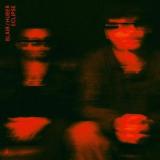
GERBlair / Huber - ECLIPSE ist das eindrucksvolle Debut eines der spannendsten neuen Jazz-Duos Europas. Der preisgekronte Frankfurter Saxophonist Darius Blair und Gitarrist Niko Huber entwickeln in reduzierter Besetzung einen eigenstandigen, modernen Sound zwischen Jazz, Hip-Hop-Asthetik und improvisierter Musik. Entstanden aus ihrer langjahrigen Freundschaft und intensiven Zusammenarbeit seit der Pandemie, lebt das Album von intuitiver Interaktion, klanglicher Prazision und emotionaler Tiefe. Die neun kompakten Stucke verbinden subtile Grooves, atmospharische Weite und starke melodische Ideen. Aufgenommen im Berliner Funkhaus mit einem Grammy-pramierten Produktionsteam, steht ECLIPSE fur die kraftvolle Verschmelzung zweier musikalischer Personlichkeiten - reduziert, innovativ und zeitlos.ENGBlair / Huber - ECLIPSE marks the striking debut of one of Europe's most exciting emerging jazz duos. Award-winning Frankfurt saxophonist Darius Blair and guitarist Niko Huber craft a distinctive and modern sound from a minimalist setup, blending jazz, hip-hop influences, and improvisation. Rooted in a long-standing musical partnership, the album thrives on intuitive interplay, sonic clarity, and emotional depth. Across nine concise tracks, the duo balances subtle grooves, open textures, and strong melodic ideas. Recorded at Berlin's renowned Funkhaus with a Grammy-winning production team, ECLIPSE captures the powerful alignment of two artistic voices-refined, innovative, and timeless.
The fifth album from Saint Abdullah & Eomac began as a poem and became a record that refuses to stay in one place. The title arrived in a cab in Paris. Mohammad Mehrabani read it aloud from a list of options. Ian McDonnell said: that's interesting, what does that mean? The answer, it turned out, was the album. Their fifth album When The Sandbox Has No Edge is rooted in hip hop, but its cast tells you how far it travels. Abbas Zahedi, Richie Culver, and Armand Hammer contribute vocals and poetry. Lester St. Louis brings cello. Che Chen of 75 Dollar Bill brings guitar. The producer and sound designer Seraphim contributed textures and sound designs throughout. Samples run deep, from records pulled from charity shops to market stalls on road trips across the UK. Raw fragments were shaped into fully formed compositions, structuring the chaos without flattening it. The sandbox, rendered without an edge.
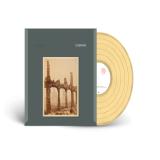
By the end of 1986, with Miles Davis’ career in resurgence, he was approached by the producers of the movie Siesta, based on the book by Patrice Chaplin and starring Ellen Barkin, Gabriel Byrne and Martin Sheen. Miles agreed to create the music for the movie and immediately asked Marcus Miller to help compose and produce.
As had taken place with Tutu, Miles looked to bassist Marcus Miller—working with keyboardist/programmer Jason Miles—to compose and construct the various tracks, over which he blew his trumpet parts. Matching the music to the mood and tempo of the film’s scenes lay on Miller’s shoulders. The soundtrack came together in early 1987 in Los Angeles, Miller and Jason Miles working in North Hollywood, and Miles driving in from Malibu to play his parts. Miller brought in a number of players to add solos and texture: guitarists John Scofield and Earl Klugh; flautist James Walker, and drummer Omar Hakim.
Dedicated to arranger Gil Evans, the music is greatly influenced by his style with Miller creating an electrified but very warm orchestra to accompany Davis' melodic solos. This was the first of several instances in which Miles Davis, in the twilight of his life, returned to his roots.
Siësta is available as a numbered limited edition of 1000 copies on gold vinyl.
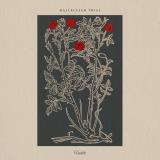
Hallelujah Trial is Tom Roberts (Cranebuilders, Beatowls) and John Canning Yates (Ella Guru): two Liverpool songwriters who knew each other for twenty years before they ever played a note together. Roberts brought a folder of songs to Yates' front room. Yates answered with piano. A weekly ritual of tea and talk became a repertoire, the repertoire became a debut performance at the final La Violette Società, and a few weeks later the songs became an album, recorded in May 2026 in the Gustav Adolf Church, the Scandinavian seamen's church on the edge of Liverpool's Baltic Triangle.
The sound is spacious, stripped back and gloriously melodic: voice, guitar and piano, songs in a room, storytelling that recalls Bill Callahan, Lee Hazlewood and the late Johnny Cash records. Yates' Ella Guru drew a Peel session and 'the best debut album since Marquee Moon' from the Independent on Sunday. Roberts' Cranebuilders recorded two Peel sessions of their own. The pedigree is genuine. The songs are better.
Recorded, mixed and produced by John Canning Yates. Mastered by Jason Mitchell (PJ Harvey, Aldous Harding). Sleeve by Pascal Blua, after a rose from William Turner's herbal of 1568. The closing 'Reprise' carries a hallelujah chorus of friends and family, recorded live in the ch
Singer-songwriter Willis Alan Ramsey was 20 years old when he became the third signing to Leon Russell and Denny Cordell's Shelter Records – after Russell himself and the legendary J.J. Cale. The result was Ramsey's 1972 eponymous debut, a masterpiece of laid-back Texas country-rock, blues-inflected folk and outlaw ballads.
As a child, Ramsey was an obsessive radio listener – from Elvis and the Beatles to Delta blues, country and even classical music. By middle school, he had formed his first garage band and started writing songs. After a brief stint at the University of Texas, he took to the burgeoning coffeehouse circuit where he toured alongside folks like Townes Van Zandt, Jerry Jeff Walker and Keith Sykes. It was during these shows that Ramsey developed much of the material for his LP, a diverse yet coherent mix that revealed his varied influences.
Recorded in Memphis, Nashville and at Russell's home studio in the Hollywood Hills, the album features some of the era's greatest session musicians: Eddie Hinton on guitar, Red Rhodes on pedal steel and the rhythm section of Leland Sklar and Jim Keltner. A true songwriter's songwriter album, its tunes have been covered by Waylon Jennings ("Satin Sheets"), Jimmy Buffett ("The Ballad of Spider John") and, most famously, Captain & Tennille ("Muskrat Love"), but no cover can beat the originals from the wise-beyond-his-years Ramsey.
Though Willis Alan Ramsey has continued to perform regularly and write new songs, a second album is yet to be released. For years, whenever someone asked about it, Ramsey was known to answer "What's wrong with the first one?" The answer is, of course, absolutely nothing. In fact, it's perfect.
This first-time vinyl reissue reproduces the original lyric sheet. Includes new interview with Ramsey and liner notes by author Richie Unterberger.
David Norland is an Emmy-nominated English composer, known for his scores for drama and documentary, alongside his experimental choral and electronic music. Bringing stories to life through sound, he received critical acclaim for his debut solo album ‘Glam Tear Stain’ (2019) and is set to release follow-up album ‘La Source’ in June 2026 via Denovali Records.
Relocated back to his London home after many years in Los Angeles, and free from years of drug and alcohol problems, recent commissions for two choral works allowed Norland to return to the innocent origin of his musical world, and his experience as a parent prompted a lot of outward reflection. What kind of world are we leaving to our children?
Inspired by his score to the forthcoming silent black and white film ‘Carousel’ (2026), Norland found other music emerging that refused to be ignored. The film’s director opened the door to an entirely free scoring process – no temp music, no expectation, no guidelines, just pure intuitive expression. ‘La Source’ draws on this experience, alongside his childhood as a touring chorister, the honkytonk upright piano in the north-east London bedroom of his early 20s, his early recording experiments with a TASCAM 4-track cassette recorder, and his intense preoccupation with bells, flutes, stone architecture, and mysticism.
From the haunting, choral beauty of ‘E-Car Soul’ to the breezy album title track, Norland blends minimalist classical structures with electronics. A unified tapestry of blended voices, harmonies and textures, ‘La Source’ is a deeply emotional and melancholic journey for Norland. “In the end, I’m looking to find meaning through the music, like when I was a kid singing in choirs. But I get the most sense of meaning through transcendent experiences, rather than anything intellectual or dogmatic. I have to feel it, not think it. I’m trying to make work that’s luminous, wondrous, shimmering and strange, so I can keep having those experiences,” says Norland.
On his inspiration for the album, Norland adds, “I love making patterns in things and finding patterns. That’s why minimalism was so enticing to me, the patterns are so explicit. I love word play and anagrams. The big sadness coming through as I was making the record is this clarity over the future of my kids. Everything else is a complete distraction. This incredible nurturing planet and its ecosystem are being rapidly destroyed, and the forces destroying it are relentless and punitive. And they seem to be fine with consigning our children to live in an ever-more-hostile wasteland. You can’t pretend that’s not coming, if you do I think you’re lying to yourself. And perhaps eventually it will be the fact that people love their kids that will stir wider fear and action. It’s hard to think of anything more connected to the idea of spirit.” The result is the reflective, ecstatic, mystical and sad world of ‘La Source.’
Norland’s screen work includes the award-winning documentary Anvil! The Story Of Anvil (2008), directed by Sacha Gervasi, and since 2010, he has composed much of the music for US broadcasting giant ABC’s primetime news documentaries. His work for ABC is broadcast in the US and around the world on a daily basis.
In 2012, he was the music supervisor for Hitchcock (2012) featuring Anthony Hopkins, Helen Mirren & Scarlett Johansson and in 2017, he teamed up once again with Gervasi for the score to November Criminals starring Chloe Moretz and Ansel Elgort. The following year, he composed the score for the Emmy-nominated HBO film My Dinner With Herve, starring Peter Dinklage and Jamie Dornan.
Norland will be performing the score of Carousel later this year, and the score itself will be a forthcoming release on Denovali. 2026 will also see the release of documentary All Permits Secured, a valentine to the history of EDM, featuring Norland’s score.
Trumpeter, rapper and sonic wanderer Pan Amsterdam has carved out one of the most distinctive voices operating at the intersection of jazz and hip-hop today.
Pan Amsterdam is a musical enigma wrapped in an enduring riddle. His creator is a jazz musician from Houston who’s found fame working with Detroit punk rock God, Iggy Pop, and British indie royalty, Metronomy, and now makes shapeshifting, adventurous hip hop out of the music’s spiritual home, New York.
He’s an irreverent character born out of frustration and named after a misunderstanding, yet one who’s on the verge of releasing his fifth album of truth-slaying, genre-crossing rhymes and beats. The result is a catalogue that feels both deeply rooted in Black American musical tradition and completely untethered by convention.
Pan Amsterdam returns with ‘Panarama’, his fourth full length album and a bold reassertion of his hip hop identity, released via Def Pressé. Created by Houston-born, New York-based musician and composer Leron Thomas, the record finds Pan Amsterdam embracing the harder edges of his sound while continuing to blur the lines between jazz improvisation, abstract rap, punk attitude, and experimental production
Written as a response to contemporary life and the endless cycle of information, conflict and distraction that defines modern culture, ‘Panarama’ unfolds as a stream of consciousness journey through hyper-normalised realities. Across sixteen tracks, Thomas navigates social commentary, personal reflection, absurdist humour, and cultural critique, delivering his observations with the same spontaneity and freedom that have become central to the Pan Amsterdam project
Lead single ‘Szechuan Beef’, produced by acclaimed collaborator 1FS, serves as one of the album’s defining statements. Built around Thomas’ signature free-flowing delivery, the track explores the overwhelming nature of contemporary life, where domestic conflict, social division, entertainment scandals and political discourse become flattened into a constant stream of content.
In Thomas’ own words: “My stream of consciousness style comes quite naturally to me due to the conditioning of scroll down culture where everything, no matter how minor or extreme, is hyper normalised.”
Elsewhere, the track ‘Vanilla Ice’ was written in response to widely publicised ICE killings and the speed at which tragedy is absorbed and forgotten within online culture. Thomas channels the anxiety and emotional disorientation of endlessly consuming information, allowing his thoughts to unfold in real time as social commentary collides with everyday digital noise. The result is both deeply personal and sharply observational, reflecting the fragmented reality of modern life. Other album highlights include the cinematic, Interpol-esque opener - ‘Old Friend’ complete with shimmering guitar lines and an far-reaching introspective, no-filter vocal as Thomas teams up with Nick Zinner (Yeah Yeah Yeahs) and Brad Truax (Interpol) across multiple tracks, often the production traverses left-field indie territory, but always maintaining Pan Amsterdam’s unique musical identity throughout. For the hip hop purists and beats lovers there are plenty of riches to discover from the clever nostalgic sample flips of ‘Cutlery’, the sleepy lofi of ‘Shuriken’ and the wonky LA beat scene / early Flying Lotus era beats of ‘Drunken Noodles’ - all boasting quick witted lyricism. ‘Deep Fried Shiney Things’ explores early electro and industrial sonics while album finisher is an upbeat new wave / indie band cut which sees Thomas take a break from rapping, but of course never letting up on the sharp observations nonetheless
While his previous record explored more alternative territory, ‘Panarama’ marks a deliberate return to rap, as Pan Amsterdam explains:
“I just wanted to do a rap album again.I enjoyed making my last album, but I felt like rapping again. I like to have the freedom to move in between musical worlds that suit the current state I’m in. Frequency accommodating frequency.”
This philosophy runs throughout the album. Tracks move effortlessly between jazz-inflected arrangements, experimental beats, punk energy and underground hip hop aesthetics, allowing ideas to evolve organically rather than conforming to traditional structures. Thomas describes himself as an improviser first and foremost: “I think like an improvisor. That’s how my albums pretty much move. It’s improvisation.”
Featuring additional contributions from Spice Programmers, AnOtter and Mr. Shn, ‘Panarama’ presents a wide-ranging cast of collaborators while remaining firmly rooted in Thomas’ singular creative vision. The record embraces contradiction, humour and unpredictability, capturing fleeting thoughts and observations with the same freedom and spontaneity that define jazz improvisation itself.
A musical enigma wrapped in an enduring riddle, Pan Amsterdam has built a reputation as one of contemporary music’s true outsiders. The project emerged from frustration, experimentation and artistic freedom, with Thomas drawing equally from his background as a jazz musician and his collaborations with artists including Iggy Pop and Metronomy. Operating from New York while carrying the spirit of Houston’s musical heritage, Pan Amsterdam has developed a distinctive voice that sits comfortably between avant-garde jazz, underground hip hop and experimental music.
Reuniting with Def Pressé for ‘Panarama’, Thomas explores what he describes as the more hardcore side of his artistic identity:
“They let me do anything and everything I wanna do so long as it’s on audio, and I need that freedom. What may verbally be perceived as vulgar to one group of people may be very thoughtful and a poignant description of the times that we’re presently in, so I’m glad that I’m part of a label home that understands that.”
For more than 20 years, every CASPIAN album has been driven by a desire to stretch boundaries — a relentless ambition that's resulted in one of post-rock's most revered catalogs and established the Massachusetts quintet as an enduring, global force in the genre's modern era. On CASPIAN, the band’s first album in six years and debut for Wax Bodega, the more unexpected way forward was to stop searching for what they hadn’t yet done and instead trust what had defined them from the beginning.
The six-song, 39-minute effort draws freely from the musical vocabulary the band have spent their career writing: evocative melodic themes, dense textures, swelling crescendos and crushing heaviness that rolls in like a slow-moving storm on the horizon. But they still find new possibilities within those familiar contours, allowing patient development and repetition to carry as much weight as surprise. The nine-minute “Remain” turns a recurring melody into a sweeping study in tension and release, while “No One Left to Tell” layers subtle shifts around a hypnotic tremolo figure and “A Great Fire” sends serpentine guitars crashing into buzzsaw riffs. Even the graceful 3/4-time closer “Waltz for the End,” completed in a half-hour burst of inspiration, reflects the quiet confidence of five musicians comfortable enough in their skin to resist tearing everything down for the sake of reinvention, even as the circumstances surrounding them change dramatically.
Hopsydian are an Italian pop-metalcore outfit from Milan, formed in 2024, combining alluring and sacral atmospheres with modern metalcore power, alt-metal edge, and post-hardcore urgency.
Built on cinematic tension and explosive dynamics, their sound fuses dark, ritualistic undertones with sleek contemporary production and massive, chant-ready choruses
where beauty and brutality collide in equal measure.
The band was formed by vocalist Myles Idolo alongside guitarists Loris Ronchi and Nikolay Deliyski, later completed by bassist Roberto Vezi. The drummer remains anonymous. Their name--Hopsydian--comes from Hope and Obsidian, a ""magic rock"" symbolizing resilience, shadow, and rebirth, perfectly reflecting the duality at the heart of their music.
Hopsydian revolve around worship, love, obsession, sin, and the temptation of becoming God--balancing the holiness of gold with the black of transgression. Hopsydian balance modern heaviness with cinematic elegance--where intimate melodies and shimmering textures collide with crushing riffs and commanding rhythm sections. Their songs move like a ceremony: building atmosphere, sharpening emotion, and detonating into choruses designed to be shouted back from the crowd. Hopsydian explore the most dangerous forms of faith:
worship, love, obsession, sin, and the seduction of becoming God. Their narratives live in extremes:
desire framed as devotion, temptation disguised as salvation, and beauty that burns at the edges. It's an aesthetic of contrast: the holiness of gold set against the darkness that it can't fully conquer.
Benjamin Wilson from band Caskets helped the band develop their album artistic direction
Despite having released only six songs, Hopsydian have already proven their live impact. In 2025, they debuted on the Slam Dunk Italy main stage, sharing the bill with names such as LANDMVRKS, A Day To Remember, and Caskets, before going on to support Caskets in Milan shortly after. Momentum is building fast--and with a fanbase already demanding the next step, Hopsydian are poised to turn their growing catalogue into what it's meant to become: a fully-fledged era, and the tour that brings it to life.
SIGNUM REGIS was founded in 2007 and stands for finest melodic Power Metal with both progressive and symphonic elements. Their upcoming new and eighth studio album „Beyond Spacetime“ will be released on October 9th through Fireflash Records and will feature different vocalists. Among them their current singer Mayo Petranen, who just returned to the band, his successor Jota Fortinho as well as top class names, such as Ripper Owens (ex-JUDAS PRIEST), Matt Smith (THEOCRACY), Ralf Scheepers (PRIMAL FEAR), Johnny Gioeli (HARDLINE, AXEL RUDI PELL), Tasos Lazaris (STEEL ARCTUS, WHITE WIZZARD), David Åkesson (SYMPHONITY; QUANTICE), but also Victor Smolski (ALMANAC, ex-RAGE), with a guitar solo on the first single-release „Throne Of Gold“.
„We are so satisfied and proud of it! Even though the last 3 years were not easy for the band, this is definitely not just a ""next"" Signum Regis"" album, we are a band, we are always aiming to create something special - for us and for fans“, comments guitarist Filip Koluš, who also mixed and produced the album.
„Beyond Spacetime“ is rounded up by an excellent artwork from Uwe Jarling, known for his work for acts like HEAVEN’S GATE, GRAVE DIGGER or recently FRONT ROW WARRIORS. „The result is awesome! We are definitely a band that considers the artwork a very important part of our artistic vision. Over the years this approach has only grown stronger, so having a real cover artist has become an absolute must for us“, comments Tommy.
SIGNUM REGIS will celebrate their 20th anniversary next year. „Beyond Spacetime“ already feels like kind of a best-of journey through their past, present and future. „We grew up on the values of traditional melodic metal - this focus will most probably never change“, says Filip Koluš and explains: „At the same time, we are also a group of great friends, who have a common goal - to make the best quality metal music together.“
Colorize presents Echoes, the highly anticipated debut album from Massachusetts songwriter, producer and musician Jack Willard, a richly melodic body of work.
Jack Willard blends organic songwriting with modern electronic production, cinematic storytelling and immersive sound design, an emotionally driven style that has earned support from Above & Beyond, Tritonal, Yotto, Nora En Pure and Bob Moses since debut single Celsius, alongside airplay on SiriusXM Chill and BBC Radio 1 and millions of streams worldwide. The Massachusetts native made his Colorize debut in 2023 with Big Sky, an instrumental favourite still in regular SiriusXM Chill rotation, before expanding his sound on the Patterns EP with his first larger scale vocal collaborations, including fan favourites Everything All At Once and Wanna Know. Following performances across both U.S. coasts, Echoes arrives as Willard’s most ambitious project to date.
Norman Gervais and Charles Bals return after last year’s Transcoastal compilation with their first project for the Italian label Periodica Records and its newly founded imprint, Periodica International.
The concept behind SiRENE 89 is quite particular and took six years to develop. It is presented as the live recording of one long evening, with different bands taking the stage one after another on the terrace of a Mediterranean holiday resort in 1989, inspired by the places Charles and Norm remember from their summer holidays around that time.
The songs were recorded between 1982 and 1993 and gathered from small-time artists, beach-club vagabonds, local micro-labels, library records and privately released tapes. The music moves lightly between mystical ballads, digital samba and loose, sunburnt dance songs, carried by drum machines, not-quite-tuned guitars and college-band voices.
The audience on the terrace remains quietly present throughout, joining the tracks into one continuous, partly improvised set. By the end, it feels less like a compilation and more like a place where you have spent the night, proving that charm can carry further than perfection.
Georg Danzer war eine Lichtgestalt der Austropop Szene. Wie kein anderer hat er mit seinen Songs und Texten ins Schwarze der österreichischen Seele getroffen. Die Anekdoten auf "13 schmutzige Lieder" sind schlüpfrig, verwegen und oftmals herrlich unkorrekt. Danzers lässiger Dialekt macht den Reiz aus, er gibt den schmutzigen Liedern den Charme, der sie so unverwechselbar macht. Am 7. Oktober hätte Georg Danzer seinen 80. Geburtstag gefeiert. Zu diesem Anlass veröffentlicht Sony Music eine Neuauflage seiner "13 schmutzigen Lieder" auf "schmutziger Vinyl" - als Spezialpressung auf Black Dust Vinyl mit Orange & Schwarz. GEORG DANZER - "13 schmutzige Lieder" - ab 2.10.26 auf schmutziger Vinyl erhältlich! Tracklist: New Orleans Alptraum Stomp | Murphy's Law | Sado-Maso | Swinging Prostata | Rosarode Gummihandschuach | Gnädige Frau in Malaga | Eigentlich bin ich ein Schwein | Der imaginäre Vibrator-Walzer vom 22. Juli 1998 | Karibik in Unterhosen | Olle Weiber san G'frassta | A alte Drecksau | Strandbrunzer-Tango | Ballade vom versteckten Tschurifetzen | Ruaf die Zeitansage an | Leck Mich | Ich denk an Sex | Suche nette Partnerin zum Bumsen ... | Kreuzritter | Tanz Erotisch
For more than 20 years, every CASPIAN album has been driven by a desire to stretch boundaries — a relentless ambition that's resulted in one of post-rock's most revered catalogs and established the Massachusetts quintet as an enduring, global force in the genre's modern era. On CASPIAN, the band’s first album in six years and debut for Wax Bodega, the more unexpected way forward was to stop searching for what they hadn’t yet done and instead trust what had defined them from the beginning.
The six-song, 39-minute effort draws freely from the musical vocabulary the band have spent their career writing: evocative melodic themes, dense textures, swelling crescendos and crushing heaviness that rolls in like a slow-moving storm on the horizon. But they still find new possibilities within those familiar contours, allowing patient development and repetition to carry as much weight as surprise. The nine-minute “Remain” turns a recurring melody into a sweeping study in tension and release, while “No One Left to Tell” layers subtle shifts around a hypnotic tremolo figure and “A Great Fire” sends serpentine guitars crashing into buzzsaw riffs. Even the graceful 3/4-time closer “Waltz for the End,” completed in a half-hour burst of inspiration, reflects the quiet confidence of five musicians comfortable enough in their skin to resist tearing everything down for the sake of reinvention, even as the circumstances surrounding them change dramatically.