Soul Visions is an instrumental journey into the world of Deheb, who, after several years of continuous sound research, continues to draw inspiration from jazz, soul, funk, and progressive rock records, first discovered through his father and then through his fellow collectors and DJs, including his partner DJ Marrrtin from Funky Bijou.
The Breton artist is renowned in the beatmaking world for his collaborations in New York in the mid-2000s (Moka Only, Sean Price, Torae, Tye Phoenix, Apani B, etc.) and for his album “LEAF”, released in 2015 with Swiss producer Chief. He is best known for producing classic Funky Breaks in the global breakdance scene with Marrrtin under the name Funky Bijou, whose tracks have been played at the world's biggest breakdance events since 2011 (Battle Of The Year, Red Bull BC One, etc.). All their tracks have been listened to more than 30 million times on various platforms and social networks.
A prolific artist who draws much of his inspiration from funk and jazz, he is based in Nantes and has collaborated with groups from the French Neo Soul scene, such as J-Silk from Bordeaux, Jo Wedin from Sweden, and Keysuna from Nantes. Close to the dance scene, he has also collaborated with dancer and choreographer Mackenzy Bergile, which led him to join the CCNRB's choreographic project “Earthbound” by choreographers Saïdo Lehlouh and Johanna Faye in 2023.
Deheb has also been composing for documentary projects since his first collaboration with director Shyaka Kagamé in 2015 for “Bounty”. In 2024 and 2025, he worked on two critically acclaimed projects: “Boulevard du village noir”, produced by Radio Television Suisse, and “IMIHIGO, le pacte rwandais”.
This year, 2025, he brings us “Soul Visions”, a journey through the cinematic sound of the early 1970s to the soul funk and jazz funk of the late 1970s, a pivotal period in his own musical identity that contributed to the funk sound of his guitars and the texture of his synthesizers and electric pianos.
Soul Visions is first and foremost a tribute to the artists and composers, the geniuses of that era, such as the Mizell brothers in “Larry and Fonce”, the Bell brothers in “Ron and Don”, and giants of the genre such as Isaac Hayes, Yuji Ohno, Roy Ayers, and Clarence Reid. All these masters of the genre had their own distinctive sound and arrangements, which were easily recognizable and which are among Deheb's major inspirations.
Search:guitar
Recorded with guitar, loops, and minimal effects - a decade after 'Knochen in meinem Körper' appeared on a Family Horror compilation, Alkohole returns with ttimesquare - a quiet closing of an open chapter. It's a step away from the label's recent, club-oriented catalogue, yet not an alien one.
Cat Power marks 20 years since her Memphis-shaped 2006 album The Greatest with 'Redux', a three-track EP cut in Austin with Stuart Sikes and the Dirty Delta Blues band, the same crew who toured that record. Marshall salvages material linked to The Greatest's early sessions, opening with a fresh take on James Brown's 'Try Me', attempted during the original run but never finalised. She then revisits her own 'Could We' in the looser, road-worn arrangement aired on tour. The flip holds her reading of Prince's 'Nothing Compares 2 U', recorded as a nod to Teenie Hodges, the Memphis guitarist whose playing underpinned The Greatest and whose influence threaded her writing.
The Dynamite Coorporation is the brainchild of Robbert Peperkamp aka @infestmusic and Tommy Willetts aka @thenightservicecommute. After meeting in music school their joint interest in jazz, breaks, tape and dark cinematic soundscapes resulted in a collaboration that led to this fantastic album.
Expect dark cinematic soundscapes, Drums, trumpets, guitar, keys and resample madness.
Lungfish's seventh album, released in 1999.
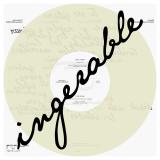
This pressing of the LP is on Translucent Lime Green.
This album was re-issued on both CD and LP+MP3 in June 2011.
Daniel Higgs vocals Asa Osborne guitar Nathan Bell bass Mitchell Feldstein drums
Recorded At
Inner Ear Studios
Mixed By
Ian MacKaye and Lungfish
- A1: Drawdown
- A2: Hold (Feat Ale Hop & Sara Persico)
- A3: 20230704_102400 Jpg Feat. Valerio Tricoli, Anthony Pateras & Ale Hop)
- A4: Strial
- A5: Calco (Feat Ale Hop, Antonina Nowacka & Anthony Pateras)
- B1: The Lower Primate In Us 2 (Feat Ale Hop & Renato Grieco)
- B2: Prima (Feat Ale Hop)
- B3: Xhakers (Feat Aleksandra Słyż)
- B4: Kwesch(Ə)Nˌmärk
- B5: Angelica Chirurgia (Feat Ale Hop & Antonina Nowacka)
- B6: Eyecontact (Nereo`s)
After spending much of the last years focusing on the evolution of his own instrument, the drummophone, the release of ZERO,999… reveals a new paradigm in La Foresta's work and career.
In this album he collects fragments of live performances and site-specific installations conducted over the last decade, with and without the drummophone — reimagining and repurposing them as compositional elements that he has interwoven with recent studio recordings and collaborations to form eleven viscerally powerful pieces of overwhelming rhythmic and textural density.
La Foresta weaves together these captured moments in time, while employing combinatory strategies inspired by Italo Calvino's tarot stories in "Il castello dei destini incrociati," forging relationships and connections between recordings from the collaborators and his own. In approaching accompanying and augmenting these recordings, Riccardo, in the role of percussionist and composer explores the tension between his personal and academic focus on rhythmic structures and his fascination with repurposing the drum as a durational instrument.
Contributions from collaborators include the synthetic textures of Valerio Tricoli, Anthony Pateras, Aleksandra Słiż, and Renato Grieco, the vocalizations of Antonina Nowacka and Sara Persico, and the guitar experimentations of Ale Hop and Stefano Pilia, bringing together a distributed ensemble of musicians pulling apart the orthodoxies of their own instruments and techniques. Through the interaction of these elements, La Foresta imagines a causal network that binds, integrates and informs fragmented contexts, performers and performances, exploiting new possibilities of the drummophone.
ZERO,999… is conceived as a suite where sound and time are communicated simultaneously at different orders of scale, a single strike of a drum is a drone if slowed down one thousand times, an hour-long drone is a brief tick in the clock of geological time. A seemingly static object, such as the number 1, can both be defined by its fixedness, and as a process in which eternally approaching (0,999...) is the same as arriving.
k 11: EyeContact (Nereo`s) feat. Stefano Pilia
W.R.F. was formed in 2015 by Nina and late studio partner Andrew Weatherall to help wrangle the vast output recorded together beyond his solo releases.
Spotlighting nine tracks from the Apparently Solo series of EPs recorded between 2016- 2019 and released on Bandcamp in 2023, this lustrous time capsule marks the culmination of Walsh and Weatherall’s creative relationship born after they clicked at London’s earliest acid house clubs, becoming partners then managers of their Sabres Of Paradise/Sabrettes labels before taking different paths by the late '90s.
An accomplished musician, Nina had learned the art of studio technology by the time they reunited and started working together in 2012. Created at her Facility 4 Studio situated in the dangerous, gang-ridden no man’s land between Streatham and Mitcham, Anamchara captures the super-prolific creative stretch starting in 2015 that produced Weatherall’s Convenanza and Qualia solo sets, W.R.F.’s The Phoenix Suburb (And Other Stories) plus a whole lot more. According to Nina, Andrew envisioned the spectacular ‘Borderland’ as natural successor to ‘Smokebelch’, his most revered track. When it came to his remix, Nina enlisted renowned viola virtuoso Sarah Sarhandi and composed new harmonies with Pachelbel’s Canon in D Minor in mind.
The set also catches the breakthrough period when, through Nina’s careful coaxing, Andrew started using the computer system she’d set up to better express his musical visions by arranging the elements, grooves and melodies she sent him. Still considered the UK’s greatest DJ-producer, Andrew’s arrangements were inspired by his club-igniting sets. “This allowed me to mix the colours for his palette whilst he was painting the picture,” says Nina. Anamchara straddles the gamut of musical styles explored by W.R.F. at this time, from slower paced psychedelic “drug chug” outings ‘We Two’. ‘Heat To Meat Ratio’, ‘Hidden Watchers Part 1’ to banging acid house and techno sometimes inspired by the violence outside the studio door, including ‘SCHLAP’, ‘Crack-Ed’ and churning acid juggernaut ‘Yacidik’ (“After much dangling of the acid carrot, Andrew took a bite and, after one familiar raised eyebrow, never looked back,” says Nina).
Many tracks fly elements from the enormous sonic library Nina inherited from late partner Erick Legrand that she called The Akashic Library of Sound. Marking Andrew’s 2016 admission into the vault, ‘Rattly Old Puffin’ boasts Erick’s psychedelic guitar and tumbling drum loop Weatherall would run with, including on ‘Borderland’. “Erick was like our third member,” says Nina.
Bringing down the curtain, ‘Alma’’s exquisitely poignant melody that unfolds over thirteen time-stopping minutes was composed by Nina while navigating Erick’s birth and departure date anniversaries to accompany Andrew’s reading from Gordon Burn’s 1991 same-named novel at 2018’s Durham Literary Festival. Burn’s novel imagines early 60s popstrel Alma Cogan, who succumbed to cancer in 1966 surviving to reflect on fame. “Now it just makes me think of Erick. And every time I hear those well-placed cymbal crashes I can only think of the Captain himself.”
A beautiful grand finale for this astonishing selection of pure gold from the vaults.
Kris Needs / 2026
Crowns by The Rebel feat. Corey James Gray is out now on 7’’ via Little Beat More!
The Rebel, aka Tommaso Taroni, producer from Rome and Founder of DJ’s Choice label, delivers a raw, soulful track that opens the door to his debut album. Crowns features the sharp lyrics and smooth, magnetic delivery by Corey James Gray (FKA Ill Spookin), riding over a sturdy groove with crisp drums and deep guitar loops.
On Side B a further explosion comes: Clap! Clap! signs a Power Trio remix of the track that flips everything on its head. With thunderous syncopated riddim and wild brass stabs, this version hits like a futuristic brass band from New Orleans: unrelenting, joyful, and rhythmically overpowering. A bold reimagining by one of Italy’s most visionary electronic producers.
Packaged in a stunning disco bag illustrated by El Moro, this 7” is both a record to play and a piece to keep. A snapshot of a fresh project in the pipeline, ready to go!
Black Version[13,32 €]
For the first time on Little Beat More, Sweden’s Cumbiasound deliver a vibrant 7” that expands their ever-evolving exploration of tropical soundscapes. Led by Daniel Fridell, the band has long been pushing the boundaries of cumbia while keeping its analogue heart beating strong, blending classic Colombian and Peruvian sounds with Afrobeat, reggae, jazz, funk, and beyond.
The A-side Mas Paz (Rework) breathes new life into one of Cumbiasound’s most beloved tracks, originally featured on their album Cosas del Universo. Vocalist Lis Flores Varela brings her unmistakable smoothness, while Chilean rapper Boogie Castillo lays down thoughtful verses with his signature flow in a track that captures the essence of the band: rooted, soulful, and globally connected. And to top it off, this new version has a fresh new vocal feature by Congolese singer José Pereelanga.
On the flip side, Jinsei, is a collaboration with Japanese cumbia band Mumbia y Sus Candelosos, led by composer and percussionist Mutsumi Kobayashi. With its breezy guitars, soft tropical groove, and the warm vocals of José Pereelanga, the track drifts like a slow river, effortlessly bridging continents and traditions.
With this 7”, Cumbiasound once again affirms its place among the most interesting projects in today’s nu-cumbia landscape with a vision that crosses borders with ease.
Made with Love by Little Beat More 2025 “We Dance We Think”
- 1: Private Symphony (Feat. Stuart Murdoch)
- 2: The Cold Collar (Feat. Gruff Rhys)
- 3: Love Is A Life That Lasts Forever (Feat. Molly Linen)
- 4: First Moonbeams Of Adulthood
- 5: Road To The Amber Room
- 6: Hachi No Su (Feat. Saya From Tenniscoats)
- 7: In Portmanteau (Feat. Field Music)
- 8: Irreparable Parables
- 9: Spectators In The Absence Of God (Feat. Kathryn Joseph)
- 10: Soul Enters The Ocean Sun Climbs Out The Sea
Pink Vinyl[26,26 €]
Very limited numbers, orders will need to be confirmed.
For his new album, Irreparable Parables, Andrew Wasylyk felt a strong desire to write a set of songs featuring an element hitherto rare in his work: the human voice. Equally strong was the conviction that he did not want to sing them himself.
The Scottish multi-instrumentalist and composer set about assembling a group of guest singers, sending out the songs to wherever they were in the world. The vocals were recorded remotely and then, like migrating birds, winged their way back to Scotland. The result is an album of great beauty which, perhaps preeminently in Wasylyk’s work, expresses the vulnerability and resilience of the human spirit.
Six singers appear on the record, represented by six songbirds illustrated on the sleeve by Clay Pipe Music’s Frances Castle. The cuckoo is a nod to Belle and Sebastian’s 2004 single ‘I’m A Cuckoo’, that band’s Stuart Murdoch being the first voice you hear on the new album. When the vocal for ‘Private Symphony #2’ arrived, says Wasylyk, “it was everything that I was looking for and more. But this is Stuart Murdoch. Of course he’s going to make something incredibly beautiful and thoughtful.”
The song lyrics were, for the most part, written by the singers. The music is Wasylyk’s creation. He navigates a sound world that lies somewhere beyond the borders of classical and jazz, ambient and abstract. It is difficult to describe, but easy to understand, which is to say to feel. That is the way Wasylyk’s work is experienced: as a feeling. It takes you back to childhood, perhaps, to feelings of comfort and safety, or to memories of walks at sunrise and sunset, or to the way a shadow falls on a particular field in a particular place at a particular time in your life. This is consoling music. That is why, though pretty, it is not merely pretty. These are songs to shore up the soul.
Wasylyk writes in a room, in his native Dundee, full of “half broken” instruments. He picks these up, plays a little, seeking an idea, a feeling, a door that lies ajar. The musical palette of Irreparable Parables includes brass and woodwind, a six-piece string section, guitar, bass, drums, vibraphone, Mellotron, Fender Rhodes, tape loops, synthesisers and percussion. The strings were arranged by the cellist Pete Harvey, a long-term collaborator.
Among the other guest vocalists are Gruff Rhys of the Super Furry Animals, Saya Ueno from Japan’s Tenniscoats and Peter Brewis from Field Music. Wasylyk himself takes the lead vocal on the title track, though a throat infection and touch of pitch-shifting have altered his singing in a way that even he, having fallen out of love with his own voice, finds acceptable.
The heart of the record can, arguably, be found in two tracks, ‘Love Is A Life That Lasts Forever’ and ‘Spectators In The Absence of God’, sung respectively by Molly Linen and Kathryn Joseph. The former, bright with trumpets, was inspired by the writing of Derek Jarman. “I was feeling deeply upset about the world and wanted to try and write some- thing that was obviously hopeful,” Wasylyk says.
‘Spectators …’ offers an emotional counterpoint. It is an “apocalyptic hymn” that seems to grapple with watching human suffering from afar, too distant to be at physical risk, but experiencing the psychological wounding, and feelings of helplessness, even complicity, that come with constant awareness of other people’s pain. “Kathryn’s a pal, I love her dearly, and she’s a brilliant artist who really feels what she writes,” Wasylyk says. “The cracked tenderness of her voice is spellbinding.”
The album closes with an instrumental piece, ‘Soul Enters The Ocean Sun Climbs Out Of The Sea’, all piano and strings, that offers a sense of resolution and ascension. A good moment, too, for Wasylyk to reflect upon the artistic companionship that he enjoyed while making this record – the songbirds that answered his call: “These humans are incredible at what they do. I’m deeply grateful and feel so lucky. It blows my mind.”
From deep within the astral planes of all that is cosmic in the Northwest and through a fog of kaleidoscopic haze emerges the latest mind-expanding music makers to arrive on Sprechen in the form of the Todmorden based Lines Of Silence.
Living amongst a hotbed of UFO activity and home to the UK's highest ever beach they combine experimental analogue and digital electronics, motorik beats, polyrhythmic improvisation and drone rock guitar explosions to create an immersive, expansive and contemporary take on psychedelia.
Their long player on Sprechen: 'Lines In Opposition !' takes the listener on a visionary aural journey across 8 tracks of electronic, shamanic soundscapes where the sounds of Krautrock exist in harmony alongside drone-esque ambient excursions through an array of synths, guitars & sequenced patterns that draw heavily on the stylings of NEU!, Aphex Twin, Kraftwerk and the musical pickings of the more esoteric sets and radio shows by Andrew Weatherall.
A truly universal listening experience to take you into a higher state of electronic music consciousness...
agoya-based multi-instrumentalist and rising DJ Hiroyuki Kato returns to the ever-consistent Flexi Cuts with Life 今 (FLEX 031), a record that perfectly distills the artist’s layered approach to sound and the label’s instinct for unearthing voices that carry both groove and depth. Having built a relationship with the label over the past two years—already signing an EP and a single—Kato now delivers a project that feels like a culmination of that dialogue: four tracks on wax, complemented by an additional cut exclusive to the digital edition.
True to its title, Life 今 exudes immediacy and presence. Kato draws on his background as a polyrhythmic player, folding live instrumentation into supple house frameworks, always with a subtle melodic sensibility. The vinyl selections range from the quietly propulsive to the rhythmically expansive, each tune infused with that warm, unhurried Flexi aura. Basslines strut with understated confidence, chords shimmer with daylight energy, and the arrangements move with a natural, unforced flow.
What stands out across the EP is Kato’s ability to balance the organic and the synthetic, never leaning too far into polish or rawness but finding a fertile middle ground that feels both contemporary and timeless. It’s the sound of someone equally at home behind a guitar as in the DJ booth, someone who understands that club music gains power not just from rhythm but from emotional resonance.
Flexi Cuts has long been a home for thoughtful, groove-driven records, and Life 今 is no exception. It is music that doesn’t demand attention with force, but rewards close listening with detail and atmosphere. At once intimate and club-ready, grounded yet expansive, it’s a confident statement from Hiroyuki Kato, an artist steadily carving his space within Japan’s evolving electronic landscape and beyond.
~~~~*
Written and produced by Hiroyuki Kato in Seto City, Japan
Mastered by Francesco Brini at Spectrum, Bologna
Distributed by Rubadub, Glasgow.
Designed by Galluzzi
A&R Simone Guerra aka Relative
Flexi Cuts, Italy 2025.
San Francisco artist Ross Hogg has been grafting away on his grooves for many years. He has plenty of styles in his arsenal and here digs into some sun-baked reggae and lovers' rock. Up first, he reworks 'Rose Inna Di Dark', the title cut from the debut album by British soul singer Cleo Sol. Her angelic vocal rides a clean reggae rhythm with sleek melodies reflecting rays outwards. On the flip is 'Come Around & Kick It', a deep cut groove with an r&b vocal and classic reggae guitar riffs. It's a steamy combination that's designated to get plenty of backyard parties and beefy sound systems ablaze as we head into the warmer months.
From the heart of Tamanrasset in South Algeria, Imarhan transcend Tuareg tradition, weaving hypnotic synths into desert blues. The result is a timeless work—deeply respectful of their roots, yet alive with a stirring sense of modernity.
ESSAM is the band’s fourth album, recorded with the same core lineup, but marks a significant shift in their sound and approach. Musically, it marks a departure from the rocky, bluesy, psychedelic Tuareg guitar-driven sound influenced by Tinariwen’s heritage — moving toward something more open, modern, and exploratory.
For the first time, their long-time sound engineer Maxime Kosinetz stepped in as producer. He travelled to Tamanrasset with Emile Papandreou (of the French duo UTO), a multi-instrumentalist who introduced electronic elements by sampling live instruments and reprocessing them in real time with a modular synthesizer — subtly reshaping the band's sonic identity.
The album was recorded mostly live, in one big room at Aboogi Studio — the band’s own rehearsal and recording space in Tamanrasset. The studio, a converted concert hall, has become a kind of cultural hub for the local youth. Friends dropped by during the sessions to contribute handclaps, vocals, and just be part of the energy. It’s a space where people gather, hang out, play dominoes, smoke chicha — a rare communal spot in a city that doesn’t offer many for young people, somewhat like a youth and community center.
This context — the creative shift, the live recording process, the atmosphere around Aboogi — might be interesting threads to explore in the conversation.
Mexican DJ and producer Hotmood indeed brings the heat on his new EP for the Blur Records gang. It is a fine fusion of disco and house music with rich instrumentals, nice organic sound and plenty of smart samples. Opener 'Disco Power' is a funky and upbeat cut with a powerful bassline and big vocal stabs. Things get more deep and laidback with 'Malandro' which has big sax energy and sunny chords then 'To The Beat Y'all' rounds out the EP with real disco energy. The drums hit hard, big guitar riffs brighten up the mix and subtle filters and FX also pump things to the next level.
Welcoming London-based artist House on the Strand to the Eastern Nurseries fold following his impressive 2024 debut, "Heroine", Ruben Elbrond-Palmer channels a sombre, cinematic sense of sound with "Unrest".
Interpolating the visual sensibilities of some of his favourite artists, filmmakers, and photographers into the sonic field, Elbrond-Palmer’s palette cuts loose from the percussive elements of his previous work, blending analogue synthesis with repurposed guitars, haunting melodies, and field recordings that call to mind the hazy delirium of a dusty summer’s day. Sitting at its core, "Unrest" places harmony front and centre, with each sombre movement rising and falling as electric fences hum, helicopters hover overhead, and unknown events are set in motion.
Deceptively simple, the resultant album is gestalt—an elegy of melancholic moments, lost to the world.
Mastered by Ike Zwanniken of Hysterical Love Project - mainstay mastering engineer behind majority of INDEX, Co:Clear & Theory Therapy Releases
Established in 2019, Eastern Nurseries is a platform for deeply emotional contemporary electronic music based between Porto and Newcastle upon Tyne. Curated by Rui P. Andrade (aka Canadian Rifles) and Christopher Macarthur Owen (aka Burning Pyre).
The label has released a steady yet considered magna of records from Hasfeldt, Emma Acs, innerinnerlife and VAs encompassing the likes of Conna Harraway, Severin Black & Slowfoam.
Eastern Nurseries no. 41
Written & produced by Ruben Elbrond-Palmer
Recorded in London, Kobaek & Aude, 2019-2024
Mastered by Ike Zwanikken
Cover photo by Andrew Weathers
Flanked by a team of collaborators - including Nick León, more eaze, Ultrafog and Kissen - Ben Bondy captures the Kwia-pop zeitgeist on 'XO Salt Lif3', sluicing down dappled emo and downtempo grooves with log drum thwacks, tempered field recordings and sandblasted shoegaze guitars.
Forget what you think you know about Ben Bondy; like Naemi's fuzzy 'Breathless Shorn', ‘XO Salt Lif3’ is a decisive shift away from the ambient world and towards contemporary underground pop. Last year's amapiano-tinted loosie 'Bend' serves as the album's opener and is the best taster, its slick DSP squelches, granulated drones and sub rumbles immediately swapped out for breezy acoustic guitar riffs, tuned log drum hits and Bondy's own Autotuned vocals. When Bondy turns down the temperature a little, letting the orchestral synth arrangements slip into fuller view on 'Halfmoon', a collaboration with Nick León and Aussie producer Lovefear, it's tempered by low slung emo riffs and mumbled sweet nothings.
By the time we hit 'Dreamseed', Bondy's in full swing, offsetting slow breaks and multi-tracked vocal harmonies with full-spectrum shoegaze power chords that cut into the mix like a chainsaw, with crunchy amp crackle foreshadowing the Bark Psychosis-like drop. Bondy hits a cruise when More Eaze helps out on 'There Is A Place'. Maurice's unmistakable pedal steel draws us in, used by Bondy to add an Americana accent to his euphoric fusion of amapiano and indie pop. It's music that'll make perfect sense if you've caught one of Bondy's notorious DJ sets, where you might hear anything from American Football and Jessica Pratt next to Gwen Stefani, Skinny Puppy or Sneaker Pimps. It’s this chaotic, open-hearted approach - which also plays a part in the Shineteac material - that makes 'XO Salt Lif3' so effortlessly enjoyable.
A1. Cars
Smoove tears this classic apart to reveal its raw, drum-heavy break and solo bass riff. Epic synth lines weave through the extended rework, seamlessly transporting us from the 1980s straight into the modern era.
A2. Midnight Rider
An unexpected choice, but irresistibly funky nonetheless. The signature 12-string guitars are replaced with lush Fender Rhodes and Hammond organ, both pushed forward in the mix. The drums hit hard, backed by crisp percussion that drives the groove home.
B1. You Belong to Me
Opening with an extended Fender Rhodes intro, this rework builds gradually with real strings, subtle guitar licks, and groovy drums. Smoove reshapes the structure, dubbing out Carly’s lead chorus vocals to spotlight the stunning harmonies underneath.
B2. Searching
Luther’s vocals are utterly transcendent here. Smoove slows the pace and strips back the arrangement, leaving only Fender Rhodes and a string orchestra to accompany the soulful performance — a truly breathtaking moment.
A stunning 7" release from Jazzamor featuring a speedy bossa cover of Jamiroquai's breakthrough hit!
This 7-inch couples two carefully selected tracks from the archives of veteran German music unit Jazzamor.
Side A is a speedy bossa cover of "Space Cowboy," the 1994 breakthrough global hit by Jamiroquai, originally featured on Jazzamor's 2004 album A Piece Of My Heart. Side B includes an uptempo bossa track from their 2002 debut album Lazy Sunday Afternoon. The arrangement features the charmingly delicate vocals of Bettina Mischke, combined with Roland Grosch's acoustic guitar and percussion, layered into a Brazilian-inspired electronic sound with an elegant touch.
The Éthiopiques series returns! Essential archive recordings from an extremely fruitful period in Ethiopian music.
Before “Swinging Addis” took over the world, there was Moussié Nerses Nalbandian — the Armenian-born composer who shaped modern Ethiopian music. Mentor, arranger, and pioneer, he laid the foundations of Ethio-jazz.
This Éthiopiques volume revives his forgotten legacy, recorded live by Either/ Orchestra First issue ever with new exclusive photos and in depth liner 8-page insert.
“Ethiopian jazzmen are the best musicians that we have seen so far in Africa.
They really are promising handlers of jazz instruments.”
Wilbur De Paris
(1959, after a concert in Addis Ababa)
አዲስ፡ዘመን። *Addis zèmèn* **A new era.**
The time is the mid-1950s and early 1960s, just before "Swinging Addis" bloomed – or rather boomed – onto the scene. Brass instruments are still dominant, but the advent of the electric guitar, and the very first electronic organs, are just around the corner. Rock’n'Roll, R’n’B, Soul and the Twist have not yet barged their way in. Addis Ababa is steeped in the big band atmosphere of the post-war era, with Glenn Miller's *In the* *Mood* as its world-wide theme song, neck and neck with the Latin craze that was in vogue at the same period. Life has become enjoyable once again, with the return of peace after the terrible Italian Fascist invasion of Ethiopia (1935-1941). The redeployment of modern music is part and parcel of the postwar reconstruction. *Addis zèmèn* – a new era – is the watchword of the postwar period, just as it was all across war-torn Europe.
The generation who were the young parents of baby boomers** were the first to enjoy this musical renaissance, before the baby boomers themselves took over and forever super-charged the soundtrack of the final days of imperial reign. Music is Ethiopia's most popular art form, and very often serves as the best barometer for the upsurge of energy that is critical for reconstruction. Whether it be jazz in Saint-Germain-des-Prés or the *zazous* who revolutionised both jazz and French *chanson* after the *Libération*, be it Madrid's post-Franco Movida, or Dada, the Surrealists and *les années folles* that followed World War I, the periods just after mourning and hardship always give rise to brighter and more tuneful tomorrows. Addis Ababa, as the country's capital, and the epicentre of change, was no exception to this vital rule.
**Two generations of Nalbandian musicians**
Nersès Nalbandian belonged to a family of Armenian exiles, who had moved to Ethiopia in the mid-1920s. The uncle Kevork arrived along with the fabled "*Arba Lidjotch*", the** "*40 Kids*", young Armenian orphans and musicians that the Ras Tafari had recruited when he visited Jerusalem in 1924, intending to turn their brass band into the official imperial band. If Kevork Nalbandian was the one who first opened the way of modernism, pushing innovation so far as to invent musical theatre, it was his nephew Nersès who would go on to become, from the 1940s and until his death in 1977, a pivotal figure of modern Ethiopian music and of the heights it. Going all the way back to the 1950s. Nothing less. And it is Nersès who is largely to thank for the brassy colours that so greatly contributed to the international renown of Ethiopian groove. While the younger generations today venture timidly into the genealogy of their country's modern music, often losing their way amidst a distinctly xenophobic historiographical complacency, many survivors of the imperial period are still around to bear witness and pay tribute to the essential role that "Moussié Nersès" played in the rise of Abyssinia's musical modernity.
Given the year of his birth (15 March 1915), no one knows for sure if Nersès Nalbandian was born in Aintab, today Gaziantep (Turkiye/former Ottoman Empire) or on the other side of the border in Alep, Syria... What is certain is that his family, like the entire Armenian community, was amongst the victims of the genocide perpetrated by the Turks. Alep, the place of safety – today in ruins.
Before Nersès then, there was uncle Kevork (1887-1963). For a quarter of a century, he was a whirlwind of activity in music teaching and theatrical innovation. *Guèbrè Mariam le Gondaré* (የጎንደሬ ገብረ ማርያም አጥቶ ማግኘት, 1926 EC=1934) is his most famous creation. This play included "ten Ethiopian songs" — a totally innovative approach. According to his autobiographical notes, preserved by the Nalbandian family, Kevork indicates that he composed some 50 such pieces over the course of his career. This shows just how much he understood, very early on, the critical importance of song as Ethiopia's crowning artistic form. Indeed, for Ethiopian listeners, the most important thing is the lyrics, with all their multifarious mischief, far more than a strong melody, sophisticated arrangements or even an exceptional voice. (This is also why Ethiopians by and large, and beginning with the artists and producers themselves, believed for a long time — and wrongly — that their music could not possibly be exported, and could never win over audiences abroad, who did not speak the country's languages).
Last but not least, one of Kevork's major contributions remains composing Ethiopia's first national anthem – with lyrics by Yoftahé Negussié.
Nersès Nalbandian moved to Ethiopia at the end of the 1930s, at the behest of his ground-breaking uncle. Proficient in many instruments (pretty much everything but the drums), conductor, choir director, composer, arranger, adapter, creator, piano tuner, purveyor of rented pianos,... he was above all an energetic and influential teacher. From 1946 onwards, thanks to Kevork's connexion, Nersès was appointed musical director of the Addis Ababa Municipality Band. In just a few years, Nersès transformed it into the first truly modern ensemble, thanks to the quality of his teaching, his choice of repertoire, and the sophistication of his arrangements. It was this group that would go on to become the orchestra of the Haile Selassie Theatre shortly after its inauguration in 1955, which was a major celebration of the Emperor's jubilee, marking the 25th anniversary of his on-again-off-again reign.
At some point or other in his long career, Nersès Nalbandian had a hand in the creation of just about every institutional band (Municipality Band, Police Orchestra, Imperial Bodyguard Band, Army Band, Yared Music School…), but it was with the Haile Selassie Theatre – today the National Theatre – that his abilities were most on display, up until his death in 1977. To this must be added the development of choral singing in Ethiopia, hitherto unknown, and a sort of secret garden dedicated to the memory of Armenian sacred music, and brought together in two thick, unpublished volumes. Shortly before his death (November 13, 1977), he was appointed to lead the impressive Ethiopian delegation at Festac in Lagos, Nigeria (January-February 1977).
His status as a stateless foreigner regularly excluded him from the most senior positions, in spite of the respect he commanded (and commands to this day) from the musicians of his era. Naturally gifted and largely self-taught, Nerses was tirelessly curious about new musical developments, drawing inspiration from the very first imported records, and especially from listening intensely to the musical programmes broadcast over short-wave radio – BBC *First*. A prolific composer and arranger, he was constantly mindful of formalising and integrating Ethiopian parameters (specific “musical modes”, pentatonic scale, and the dominance of ternary rhythms) into his “modernisation” of the musical culture, rather than trying to over-westernise it. It even seems very probable that *Moussié* Nerses made a decisive contribution to the development of tighter music-teaching methods, in order to revitalise musical education during this period of prodigious cultural ferment. Flying in the face of all the historiographical and musicological evidence, it is taken as sacrosanct dogma that the four musical modes or chords officially recognised today, the *qǝñǝt* or *qiñit* (ቅኝት), are every bit as millennial as Ethiopia itself. It would appear however that some streamlining of these chords actually took place in around 1960. It was only from this time onward that music teaching was structured around these four fundamental musical modes and chords: *Ambassel*, *Bati*, *Tezeta* and *Antchi Hoyé*. A historical and musical “details” that is, apparently, difficult to swallow, especially if that should honour a *foreigner*. Modern Ethiopian music has Nersès to thank for many of its standards and, to this day, it is not unusual for the National Radio to broadcast thunderous oldies that bear unmistakable traces of his outrageously groovy touch.
Following their 2023 LP Presents, Nathan Nelson's American Cream Band bring the Twin City heat back to Quindi with an album rooted in duality. From the yin and yang party-starting A side and meditative B side to the dual-attack boy-girl vocals, the nature of opposites and equals steer the expansive, artful strain of rock n' roll that spill out of this wholly unique Minnesotan export. For the ever intriguing Quindi, it's a strident step into Spring after the frosty introspection of Roudi Vagou & Läuten der Seele's Taghelle Nacht. While the world burns and injustice prevails, Twin is a celebration of unity and radical expression-all the more urgent against the backdrop of authoritarian overreach and righteous protest that has whipped through Minneapolis in recent times.
Twin continues Nelson's drive at the helm of American Cream Band to draw in a colourful cast of players to feed into his orgiastic sound, meshing the trance-induction of krautrock with the irrepressible funk of the post-punk-new-wave explosion. But principal among the cast of characters and forming a central tenet to the identity of this album is Liz Buhmann, lead vocalist and a formidable, playful foil to Nelson's own Midwestern twang. Around the electric spark between Buhmann and Nelson, a heavy duty ensemble wrangle guitar, bass, sax, a cornucopia of synths and a battery of percussion into all manner of sonic forms.
The double-sided concept manifests throughout Twin. On 'Call Me' Buhmann sings in French to contrast Nelson's English, while the strident strut of the NYC disco groove is offset by an inherent dreaminess that turns the track into a more cosmic kind of dancefloor workout. 'Ethical Vampire' is a spiky cut with a garage rock patina that spirals into a psychedelic, synth-soaked get-down. 'Don't Burn The House Down' is a loose and limber roller that captures Can at their funkiest along with the hypnotic vibe of other such esteemed long format jammers, but American Cream Band boils that energy into a hook-laden art pop sensibility before a gentle, drawn out landing.
Even the more pensive moments on Twin find space for friction. For all its tender, smoky temperament, 'Leda and the Swan' lets the electric piano and guitar fray at the edges and bleed into the red while Mat Heinrich's tumbling drums lurch with pent-up intensity on the one. 'No Funeral Necessary' skirts around the mellow pools of new age but prefers to let liberally doused Tape Echo tweak out Alex Meffert's honeyed sax inflections and Buhmann and Nelson's disparate sermons.
Nelson describes Twin as "an oppositorum coincidentia" - a reference to the mystical Latin concept of the coincidence of opposites that suggests contradictory ideas 'fall together' in a higher reality. Beyond the sound of the album, this idea also manifests in the cover photography by Sho Nikado and the swans on the LP labels by Autumn Garrington. As freewheeling and wide-open as American Cream Band feels, nothing appears by accident. The end result feels like a nourishing whole - rich with substance and nuance, deep enough to be explored and absorbed yet also so brazen and immediate you can't help but feel its surface charms from the first thrusts of 'The Hive Is Pissed' to the last ripples of 'We're Not So Sinister'.
- A1: Wishing For Blue Sky
- A2: Does The Shade Choose Who To Comfort
- A3: Two Magpies
- A4: Memorise Your Senses
- B1: Dark Edges
- B2: Keeping You Awake
- B3: I Buried All The Answers
- B4: Spirit Of Place
Winter Gorse coloured vinyl[32,35 €]
These days – on the new, ninth Fink album – Greenall is operating within a lineage of authentic, quietly revolutionary artists from England’s verdant southwestern toe. Artists like Michael Chapman. In 1970, the elusive acoustic guitar wizard released an album called Fully Qualified Survivor. The cult-classic served as a lodestar for Greenall – along with bandmates Tim Thornton and Guy Whittaker – as he began jigsawing together The City Is Coming to Erase it All, the follow-up to 2024’s Beauty In Your Wake. He even considered covering a song from it, but in the process, inadvertently stumbled into what became the album’s opener. ‘Wishing For Blue Sky’ circles a universal teenage ache: waiting for life to start. “No point dying of patience” goes the first lyric as crunching footsteps cue a resonant, open-tuned acoustic swaying into view. By 18, Greenall was fed up with waiting, so he left suburban Bristol and saw the world, sending postcards from the edge, waiting tables, squirreling away tips for the next flight. Thornton had similar experiences when the guitarist/drummer busked across Eur
This is nowstalgia more than nostalgia, though; there’s a parallel between these 18-year-olds and Fink’s autumn-aged family men. “You’re expected to be boring and settling down at this age,” Thornton says. “But we’ve still got this tremendous wanderlust. We want to go and discover, and also achieve things. It’s a nice life – home and family – but fuck, I can’t wait to get back out there.” City is a product of this hunger for discovery, and idolatry of the album as a form – like we had in 1974. City’s cover mirrors its interior, the first song is the greeting, the instrumental closer the conclusion. It’s a story. It’s a record for people who, like its creators, are curious. People who happily face a little cold for music, who light a crackling fire back home, who sit with these songs until they’re ready to chase after their own blue sky
These days – on the new, ninth Fink album – Greenall is operating within a lineage of authentic, quietly revolutionary artists from England’s verdant southwestern toe. Artists like Michael Chapman. In 1970, the elusive acoustic guitar wizard released an album called Fully Qualified Survivor. The cult-classic served as a lodestar for Greenall – along with bandmates Tim Thornton and Guy Whittaker – as he began jigsawing together The City Is Coming to Erase it All, the follow-up to 2024’s Beauty In Your Wake. He even considered covering a song from it, but in the process, inadvertently stumbled into what became the album’s opener. ‘Wishing For Blue Sky’ circles a universal teenage ache: waiting for life to start. “No point dying of patience” goes the first lyric as crunching footsteps cue a resonant, open-tuned acoustic swaying into view. By 18, Greenall was fed up with waiting, so he left suburban Bristol and saw the world, sending postcards from the edge, waiting tables, squirreling away tips for the next flight. Thornton had similar experiences when the guitarist/drummer busked across Eur
This is nowstalgia more than nostalgia, though; there’s a parallel between these 18-year-olds and Fink’s autumn-aged family men. “You’re expected to be boring and settling down at this age,” Thornton says. “But we’ve still got this tremendous wanderlust. We want to go and discover, and also achieve things. It’s a nice life – home and family – but fuck, I can’t wait to get back out there.” City is a product of this hunger for discovery, and idolatry of the album as a form – like we had in 1974. City’s cover mirrors its interior, the first song is the greeting, the instrumental closer the conclusion. It’s a story. It’s a record for people who, like its creators, are curious. People who happily face a little cold for music, who light a crackling fire back home, who sit with these songs until they’re ready to chase after their own blue sky
- 1: Lake Walk
- 2: Lazy Daisy
- 3: Ups & Downs
- 4: Silently
- 5: There Was A Nice Sunset
- 6: Somewhere Good
- 7: Slow Island
- 8: Movin’ On
If – in some parallel universe (or perhaps a not-so-distant-future version of the one we’re already sentenced to living in) – the evil overloads of artificial intelligence were actually successful in their attempts to create convincingly enjoyable “original music,” more specifically tasked with wholly encapsulating my own personal tastes by data-chugging some cocktail of – oh, I don’t know – the posters on my wall, the records in my “most listened to” pile, the mixtapes I made for others, intensive physical scans of my auditory cortex, amygdala, hippocampus, heart strings, whatever else they have splayed out on their autopsy table with the intention of generating one all-encompassing “perfect band” based on the fruitful sum of their findings – that band, for me, would be (or would at least sound exactly like) the Tara Clerkin Trio. It is, quite simply, without exception, the music I wish to hear.
Formed in Bristol UK (where none of them are from yet all of whom are deeply engrained) in 2020, the Tara Clerkin Trio – as it somewhat democratically exists today, despite the singular authority implied by its name – consists of the titular Tara Clerkin, her partner Sunny Joe Paradisos, and Sunny’s brother, Patrick Benjamin. I’ll confess, I don’t know what their respective roles are within the operation and there’s only a very small part of me that cares to learn, as one of my favorite qualities in an objective listening experience is the mystery of who is playing what, which sounds are “authentic” versus synthesized, which chunks are performed “live” in a room together versus meticulously Frankenstein’ed from measure to measure, or how exactly the overall sound is so (seemingly) effortlessly achieved. Though, I suspect, if and when I do witness a live performance by this band at any point, my enjoyment of the music will not be lost in my better understanding of it.
With two extraordinary mini-albums – In Spring (2021) and On The Turning Ground (2023) – making a splash on London’s formidable World of Echo label in wake of their self-titled 2020 debut, this upcoming Somewhere Good LP is, in many ways, the band’s most realised work. In running their usual gauntlet of idiosyncratic (*an overused adjective for which here there is regrettably no sufficient alternative) approaches, Clerkin & co. colour in and outside of compositional lines over the course of 40+ celebratory minutes - never wallowing, despite inherently somber subject matters of self-defeat, disease, displacement, restlessness, gentrification - allowing their arrangements and improvisations ample space and time to situate, stretch out, breathe, cross-pollinate, and ultimately take deeper hold on the listener’s imagination – all while somehow sounding more like themselves than ever before.
Of course, there are traceable influences herein, if one felt that such comparisons were necessary to properly examine and enjoy this music (they aren’t)… Being the big dumb American from the small boring town that I am, cornfed on ‘90s alternative radio with the enchantingly exotic sounds of Maxinquaye and Mezzanine emanating from my chunky tube television, I can’t help but to make a blatantly obvious reference to a “Bristol sound”, ie the whole trip-hop trip, the pastoral crooning over the suggestive urban grime of cracked electro/piano treatments, the digitally-yet-primitively reconstructed James Bond soundtrack string-beats, etc.. But the Tara Clerkin Trio is so infinitely much more than that. There are elements of avant-pop, modern classical, kraut-folk, audio verité, dare I say indie rock (and not of the beer guzzling, masturbatory fuzz-flex variety but perhaps more like a Trish Keenan-fronted Faust, Adrian Sherwood at the mixing desk of If You’re Feeling Sinister, or – in expanding on our alternate reality – a world in which High Llamas cut a full-length for Warp Records with Andrew Weatherall on coffee duty).
The hazy, unmappable skyline-mirage of droning harmonium, upright bass, peculiarly accentuated wind instruments, acoustic guitar, hushed yet literally mighty keys combine to hypnotizing effect. The band may make underlying nods to jazz, sure, but it’s not appropriation, it’s that they have the actual chops to build it out. Beneath the janky samples and oddball percussive embellishment lies actually great drumming. Beyond the manipulated vocal witchery and woefully reflective plain-spoke moments are Tara’s subtly inspired melodies, sung with what might honestly be the glue to the whole crazy equation. A calming consistency throughout the otherwise unpredictably dynamic, boldly intuitive, uniquely British exploration of this (their own) universe in song. – Ryan Davis (Chicago, February 2026)
- A1: Get Up And Dance - Featuring Hil St Soul
- A2: Sending You Love (Parts 1 And 2) - Featuring Natasha Watts
- B1: The Special Branch
- B2: Feel So Good - Featuring Natasha Watts
- B3: Shining - Featuring Natasha Watts
- C1: Hermosa Bump
- C2: Bird Of Paradise - Featuring Guida De Palma
- D1: Ella’s Groove - Featuring Natasha Watts
- D2: You See Me - Featuring Guida De Palma
- D3: Umph!
After a gap of over ten years, the Grammy nominated Jazz Funk band Down To The Bone are back with their groove laden, Acid Jazz tinged new album “This Way Forward”– here on an ultra-limited, special release of a doublepack vinyl album. Bringing together a good groove fueled album of ten original tracks with a diversity of flavours – from Jazz Funk to Soul to Brazilian tinged delights that are sure to get the musical juices flowing. Packed full of the band’s trademark grooves and bringing together multi talented musicians from the past and the present all culminating into a melting-pot of sounds that together represent Down To The Bone’s essential sounds.
The new album also brings together multi-talented vocalists on no less than seven tracks From the exquisite soul talents of Hil Street Soul, who co-wrote the opening soul infused groove track “Get Up And Dance”, to the equally soulful tones of Natasha Watts and then the Brazillian sounds of Guida De Palma. The pulsing horn section of Tim Smart, Ryan Jacob (Bonobo/Alice Russell) and James Arben (Vibration Black Finger/Mulatu Astatke), together with Piers Green on sax solos, along with the driving bass of both Julian Crampton and Jo Phillpotts to the pumping beats of drummer Davide Giovannini (Snowboy/Jazztronic/Da Lata and Pucho/Lisa Stansfield), to the melodic chords of Neil Angilley (Snowboy/Jazzhino/Maceo Parker) and Anders Olinder (PeeWee Ellis/Courtney Pine), to the chugging guitar of Tony Remy( Dave Lee/The Sunburst Band/Incognito/Omar) and Mark Jaimes (Simply Red) plus Gianni Chiarello – and the icing on the cake with percussion from Joe “Bongo” Becket.
All working together to bring a stellar performance on this cracking new release to show that DTTB are a force to be reckoned with both on stage and on the wheels of steel.
- A1: Intro (3 29)
- A2: Six Feet Deep (3 42)
- A3: Sick (3 23)
- A4: Satisfied (3 53)
- A5: Choke (4 11)
- A6: Dust To Dust (3 01)
- B1: Dull Knives (4 52)
- B2: Escapism (3 45)
- B3: Apologize (4 11)
- B4: Dany's Guitar Solo (3 52)
- B5: Errpr (3 37)
- B6: More (4 24)
- C1: Money (5 09)
- C2: Survive (3 19)
- C3: Que Mas Quieres (3 30)
- C4: Consume (3 17)
- C5: Burnout (3 32)
- C6: Sharks (5 01)
- D1: Intro 404 (2 59)
- D2: Disciple (3 13)
- D3: Hell You Call A Dream (2 20)
- D4: Martirio (3 36)
- D5: Evolve (3 05)
- D6: Narcisista (2 14)
- D7: Automatic Sun (3 49)
Die drei Schwestern der Rockband „The Warning“ sind zurück mit ihrem mitreißenden Live-Album „Live
from Auditorio Nacional CDMX“.
Die in Mexico geborenen Geschwister Daniela „Dany“, Paulina „Pau“ und Alejandra „Ale“, haben inzwischen unzählige Kilometer auf Tournee zurückgelegt, hundert Millionen Streams erzielt und eine riesige
Fangemeinde begeistert.
Ihre harte Arbeit und Leidenschaft haben ihren Sound mit beeindruckender Präzision verfeinert. Sie kombinieren alternative Hymnen mit eingängigen Melodien und einem kraftvollen Hardrock-Einschlag.
„Live from Auditorio Nacional CDMX“ dokumentiert ein unvergessliches Konzert vor 30.000 Fans in MexicoCity und fängt nicht nur die mitreißenden Songs, sondern auch die einzigartige Atmosphäre des Abends ein.
Das Album ist als CD und auf Vinyl erhältlich.
A fragile sense of time and memory runs through 'Thrill', the third collaborative album from Yana Pavlova and Pavel Milyakov. Recorded across four years and completed shortly before Pavlova's passing in February 2025, the collection expands the delicate language they introduced on Blue. The 14 scratchy, diaristic pieces move between ambient drift, field recordings and loose jazz inflections where haunted vocals, blurred guitars and faded textures surface then dissolve again. Rather than settling into fixed forms, the music unfolds patiently, revealing quiet emotional weight and space. It makes for a fitting closing chapter and a great document of Pavlova's singular, ethereal voice.
- 1: Give
- 2: Napoleon
- 3: The End
- 450: Ft
- 5: New Self
- 6: All I Got
- 7: Got Me Good
- 8: Red Hot
For The Bobby Lees, their fourth album and Epitaph debut New Self marks a thrilling new chapter for the band while doubling down on what"s always made them so magnetic. The Bobby Lees don"t need much in the way of introduction. Within a few seconds of exposure to their furnace-blast live shows or their bottled-lightning studio records, it"s easy to hear why they"ve earned fans in legendary musicians like Iggy Pop, Debbie Harry, and Henry Rollins. They"re as uncompromising in their sound and generous with their energy as any of their punk ancestors who first rewrote the rules of engagement back in the 1970s. Led by singer and guitarist Sam Quartin, drummer Macky Bowman, and bassist Kendall Wind, The Bobby Lees bring wildness and danger back into punk rock. You can hear the band easing into a new confidence -- one that"s both looser and more towering -- all throughout New Self, from the seething, fiery "Napoleon" to the rambunctious, offbeat take on PJ Harvey"s "50ft Queenie." This is the sound of a band who"s scrambled over shaky ground only to come back stronger than ever: more confident, more connected, louder and fiercer and secure in their own skin.
- 1: What May Be The Kindest Way To Leave
- 2: A Shape Of Shame
- 3: The Ineptitude For Mutual Discernment
- 4: Holding Tongue
- 5: Verdure
- 6: Skin Ripper
- 7: An Uttering Of Antipathy
- 8: In Grief Or In Hope
CLEAR PINK Vinyl[29,20 €]
the work of BIG|BRAVE is ever-expanding. The trio"s singular masterful sculpting of sonics into songcraft tucks layers of vulnerability into frenetic storms. in grief or in hope is an innovative vision of electro-acoustic sound and emotive storytelling, an endless bounty of overwhelming distortions and devastating beauty. The album marks a shift for BIG|BRAVE towards denser guitar-oriented compositions. With longtime touring bassist Liam Andrews (MY DISCO, Aicher) joining guitarist/vocalist Robin Wattie and guitarist Mathieu Ball in the studio for the first time, the pieces are keenly layered with a rich tapestry of harmonics and tonal intricacies. The trio"s instinctual progressions made more vivid through live recording, harnessing the gargantuan and storied sound of their performances. Wattie writes: "All that I could reflect on was grief and hope; death and life; cause and effect; shared experiences of being a human person." The tenth album for the ensemble, in grief or in hope pays homage to their past while looking into their future. Together the trio shift deliver emotional momentum that vividly describes the complex and deep feelings of struggle, pain, and transcendence. in grief or in hope transmits that sense of humanity with every gesture.
- Reaper
- Portrait Of A Lady On Fire
- What Can I Do
- Running To Pain
- Comfort
- American Sonnet
- 852:
- Only The Lonely
- Better Than That
- Cutting Off The Head Of A Ghost
“So Help Me God is the long-awaited second album from Kelsey Lu, arriving June 12 2026 via Dirty Hit. Moving between shadow and release, the 10-track record follows her groundbreaking 2019 debut Blood and is co-produced by Lu, Jack Antonoff and Yves Rothman, mixed by Oli Jacobs, with contributions from Sampha, Kamasi Washington and Kim Gordon. Across the record, Lu blends distorted guitars, choral swells and dark electronic pulses into a sonic landscape that moves between devotional intensity and cinematic scale. So Help Me God expands Lu’s singular creative universe - where music, visual art and performance converge into one multidisciplinary project, marking the return of one of contemporary music’s most singular voices.”
- A1: C’est Loin
- A2: Là Où Tu Veux (Deixa A Gira Girá)
- A3: Pas Tant De D'chichi Ponpon
- A4: Assez
- A5: Le Soleil En Haut
- A6: Tout L’or
- B1: Désillusion
- B2: Attends-Moi
- B3: O Sapo
- B4: Horssaison
- B5: Presque Rien
- B6: Vou Festejar
For his sixth solo album, Ezéchiel Pailhès returns with a new collection of songs infused by a sunny wandering spirit.
Within each of the twelve songs on SOL is a thread of melancholic happiness that has permeated much of Pailhès’ music and songwriting. He addresses love, the passing of time, hope, lost illusions, fleeting moments of grace, the temptation of forgetting, a need to escape, and desire. All this is
insulated by understated orchestrations that blend acoustic and electronic instrumentation with deft confidence.
The Portuguese and Brazilian concept of saudade—a form of melancholic longing and nostalgia— pervades, thanks in part to Pailhès decision to record the album in Rio de Janiero and to reinterpret some of the finest works of Música Popular Brasileira (MPB). In particular, he revisits a handful of
lesser known classics from the mid-century samba and bossa nova era—originally written or performed by talents including Vinícius de Moraes, João Gilberto, Tom Zé, Dorival Caymmi, João Donato, Os Tincoãs, and Ataulfo Alves.
The shift from Brazilian Portuguese to French and the decision to adapt rather than perform a straightforward cover versions, allows Pailhès to invent a form of prosody and euphony (the musicality and harmonious combination of words) that feels vibrant and unlike anything else in today’s French
chanson landscape.
“Some lyrics are simple translations from Portuguese, in what I’d call an expanded version. For others, I started from a single word or a single phrase and embroidered an entirely new text that carried me elsewhere,” explains Pailhès. “I allowed myself great interpretive freedom, while preserving the humanist dimension of the original songs. I’ve always been deeply moved by the way Brazilians transfigure reality through heightened emotion. I love this visceral and spontaneous country, which always seems to live through emotion. And above all, I love its music both popular and unifying,
bringing together all social classes. In that sense, it’s very political music, but even more so utopian, made by the people and for the people.”
On this new album, however, the French artist was keen to avoid cliché. Each song is therefore built around a carefully balanced interplay between Pailhès’ piano and synthesizers, alongside restrained arrangements of percussion, brass, bass, and cavaquinho (a small four-string plucked guitar). These parts were recorded in Rio de Janeiro with two musicians who regularly perform alongside the legendary Caetano Veloso—Kainã Do Jêje and Alberto Continentino—joined by Thomas Harres, Antônio Neves, Eduardo Neves, and Gabriel Loddo.
Since the 1960s, France and Brazil have shared a long-standing cultural and musical relationship. Some Brazilian artists, most famously Gilberto Gil, took refuge in France during the dictatorship years (1964–1985). But above all, French chanson quickly fell in love with the richness and ingenuity of
bossa nova and samba, translating and reinventing them in the language of Molière. Throughout the 1960s and 1970s, albums and hits by Henri Salvador, Georges Moustaki, Pierre Barouh, Pierre Vassiliu, and Claude Nougaro all drew from the MPB repertoire.
Fifty years later, with SOL, Ezéchiel Pailhès reinvents this rich Franco-Brazilian musical legacy, bringing to it a personality and modernity that stand confidently alongside those of his forbears.
We can't resist the carefully fused and treated sounds of The Reflex who shows his class again here with more multitrack remixes that bring vintage grooves bang up top dates without stripping them of their seasoned charms. 'Cherry Dub' is packed with big riffs and well known vocal-hooks but is dubbed out top perfection with screeching guitar solos destined to send dancers wild. The flip side is a more warm and breezy roller for sunny days and cocktail sessions, again with an iconic vocal and top line adding that familiarity that always unites dancers.
DJ Support: Danny Krivit, Michael Gray, Dr Packer, The Shapeshifters, Tedd Patterson, Seamus Haji, Terry Hunter, Brian Tappert, Hector Romero, Danny Rampling and many others
Groove Culture's ongoing 'Jams' series continues to deliver disco-house excellence with its fifth edition. This high-quality compilation features standout tracks from Micky More & Andy Tee, Reverendos Of Soul, Soulista and Serge Funk.
Highlights include: Reverendos Of Soul Feat Sheree Hicks - ‘Wasted Time'(Micky More & Andy Tee mix): An all-night disco spirit track verging on Hi-NRG style, bringing big energy and a lively atmosphere to any dance floor. Another great one is Soulista, Micky More & Andy Tee ‘Like I want You" (feat.Anduze): A perfect blend of disco and house, featuring a heavy beat and great guitar sounds that create an infectious groove. Closing things out on a classic leeven is Serge Funk's heater ‘Just Disco’ and Micky More & Andy Tee’s “Soul Education”. These fantastic edits of the classic disco tracks are a filtered gems that is sure to knock the roof off the discotech. Groove Culture once again proves its reliability as a source of top- tier disco-house with this stellar collection.
- 1: No Me Jodas
- 2: The City Begins
- 3: Sirena
- 4: Yellow Sun
- 5: Viva La Rosa
- 6: Enemy Without
- 7: You're A Ghost
- 8: Albuterol
- 9: Mi Concha
- 10: Public Works
- 11: Public Luxury
Downtown Boys have pushed relentlessly forward as an artistic and political project since their founding. Singer Victoria Marie and guitarist/singer Joey La Neve DeFrancesco first met at union meetings while working together at a hotel in Providence, RI, writing many of the band's early songs about labor organizing and exploitative workplaces. The quintet is completed by Joe DeGeorge (sax/synth), Mary Jane Regalado (bass), and Joey Doubek (drums). Over years of touring, and three acclaimed albums, Downtown Boys have continued to grow as artists, musicians, and organizers. Now, the band has arrived with Public Luxury, an enthralling album that keeps politics front and center while summoning the band's most urgent and powerful sound to date. The definition of Public Luxury falls very much in line with that of the title of the second Downtown Boys LP, Full Communism. Straight up, Public Luxury means, "everything for everyone." It's the stubborn insistence that a better world is possible, while fully recognizing the horrors we witness daily, and the individual and collective responsibility to resist the nihilism and hopelessness we all feel. Sentiments like "everything for everyone," and "we will have it all" perfectly represent the cathartic, communal live experience this cadre of multi-instrumentalists create. These sentiments also encapsulate the inclusive, joyful sonic fusion that defines the album: anthemic punk and indie rock mix with Latin traditions, drum machines blend with acoustic drums, saxophones punctuate riffs, and layers of synths add flourishes from new-wave to industrial. The amount of ground covered on Public Luxury can't be overstated, and yet the album feels totally vital and cohesive. Public Luxury is a revisitation of the band's past for the sake of their future. It was co-produced by DeFrancesco with recording engineer and longtime Downtown Boys supporter Seth Manchester (Lambrini Girls, Lightning Bolt, Model/Actriz) at the Pawtucket, RI studio and arts space Machines With Magnets, not far from the band's first home of Providence, RI. Victoria Marie's grandmother-a monumental figure for the band throughout their existence-passed away in May of 2025, and her influence looms large over the album; the songs "No Me Jodas" and "Sirena" are crystallized representations of the love between a woman and her ancestor. Beyond the loss, rage and frustration of the present, Public Luxury points boldly towards a vibrant, open-hearted vision of both music and the world: "Our music is simply for anyone and everyone who believes in the new future we can make together," Victoria Marie declares. "A world that will be awkward, inconsistent, yet truly free when it comes to all that matters."
After a first cosmic cruise through Mediterranean Space Disco by TORRE, Musiq Voyage returns with its second release — this time from one of its own founders, Arno E. Mathieu.
Known for his label collaborations with NYC legend Joe Claussell, for his acclaimed Circumstances Of Chaos LP, and many releases on iconic labels like Compost, Yoruba, Real Tone, Deeply Rooted and Africanism, Arno has spent over two decades jamming & crafting deep, balearic & psychedelic journeys across house and electronic realms.
With MV002, he comes home, channeling the spirit of his native Provence and the sun-drenched pulse of the Mediterranean.
Arno delivers two evocative tracks:
“Phoenix” – an 80’s-inspired electronic resurrection, rising from the ashes on waves of funky basslines, soaring synths, and cosmic guitars.
“L’Amoragie” – a cosmic disco odyssey blending “Amore” and “Hémorragie” into one passionate eruption of love and sound — powered by hypnotic drums, anthemic synths, and euphoric choirs.
Mediterranean soul, space disco energy, and emotional storytelling — Musiq Voyage continues its journey.
Enjoy the trip.
‘Açid Blüüs Räägs Vol.2’ is the latest evolution of the sound of last year’s Volume 1. The debut album was described by Joe Banks for Shindig! Magazine as; “Shivering slabs of drone blues transcendentalism…a burning junkyard of sheet metal blues… Hot stuff.” Volume 2 builds on the skronk blues guitar, sax and electronic drones of it’s predecessor, to explore cosmic free jazz, concrete exotica and dub, channelling influences of Moondog, Terry Riley, 75 Dollar Bill and Wolf Eyes. Playing like the imagined film soundtracks to a dystopian, re-wilded, post eco crash world in the style of Tarkovsky's ‘Stalker’ and ’Solaris’, Jodorowsky's surreal desert western ‘El Topo’, or the early novels of JG Ballard. This new collection sees the addition of minimal analogue drum machine loops as well as live instrumental contributions from the new players of the ever evolving Invocation band, plus some superstar guest contributors.
Featuring five brand new tracks, including the forthcoming single; ‘Cosmic Fanfare’, has already picked up BBC 6 Music support from Gideon Coe. The new album was mixed by Alex McGowan (aka Captain Future) of Space Eko Studios and features Invocation band regulars Rick Jensen of Apocalypse Jazz Unit, Skronk and Oneirologist on sax and bass clarinet, Will Emms aka Tiki Eerie on melodica, horns and claviola, plus special guest appearances from Duke Garwood on clarinet and Mikey 'Moondog' Chestnut of Snapped Ankles on bass synth. “….Acid fried kosmiche blues meets drone raag transcendentalism”. Jonny Halifax is a primitivist free blues outsider, sonic shaman of the acid fuzzed lap steel guitar, demented blower of the howling harmonica of doom. His new band project now combines avant swamp blues heaviosity with kosmic free jazz experimentalism in a fluid collective of godless raag brut improvisations - sonic visions of an hallucinatory apocalyptic near future. Inspired by Henry Flynt’s avant bluegrass experiments fusing country blues with eastern acoustic musical stylings, Spacemen 3’s contemporary sitar music, and the monolithic drone doom immersion of Sunn 0))), THE JONNY HALIFAX INVOCATION build hypnotic instrumental soundscapes using lap steel and homemade slide guitars, harmonica and alto sax. Underpinned by layers of acoustic and electronic drone instruments and fed through an arsenal of pedalboard electronics that would make Kevin Shields weep, the blues are transmogrified, unhinged, reduced and re-imagined as intoxicating, trance-inducing, feedback-drenched noise paintings. THE JONNY HALIFAX INVOCATION follows Jonny’s junkshop skronk blues one man band Honkeyfinger, and the Julian Cope endorsed gospel fuzz psychedelia of Jonny Halifax & The Howling Truth, whilst not forgetting his ambient drone metal side project; Deathenteredinerror. His musical CV also includes studio contributions to tracks by Andrew Weatherall’s Two Lone Swordsmen, UK metal behemoths Orange Goblin, Heck and Melting Hand.
After over a decade away from making music, Greek-born musician and composer Giannis Gogos is back. It was the turmoil of the pandemic that allowed him to reconnect with making music after years working in photography and now he's combining analogue and digital sound with intricate melodies and plenty of keyboards, glockenspiel, kalimba and guitars. This latest album is enhanced by oodles of delay and reverb effects and makes for an ethereal journey inspired by Henry Corbin's Man of Light in Iranian Sufism. It explores light as a symbol of divine presence through serene, introspective soundscapes.
Recognized as one of the most prolific emerging producers of Latin American electronic music, Entrañas presents his second album Los Cueros Al Sol, a project that redefines his sound through a deeper connection with tradition, instrumentation, and his personal narrative. This album represents his most organic work to date, incorporating recorded instruments and showcasing Entrañas himself on guitar throughout several tracks, along with drums and guitars recorded by guest musicians.
The album offers an exploration of local rhythms, reimagined through his unique production style, characterized by carefully crafted sound design and rhythms full of distortion and energy that dissolve between textures and atmospheres. Alongside these traditions and sounds, aggressive and enveloping basses and synths emerge, accentuating the hybrid nature of his work.
True to its title, Los Cueros Al Sol, an expression that evokes the idea of laying bare the truth, of revealing oneself raw and without artifice, the project draws on everyday life in Quito, the hometown of Entrañas, with song titles reminiscent of traditional street foods. This intimate resource anchors the music in the land and memory, interweaving its local identity in every detail.
DJ Stepmom is an LA-based producer and DJ originally from Minneapolis, and one half of the electro-funk duo King Pari (Stones Throw/PPU). His sound leans heavily on vintage drum machines, guitar pedals, and thrift-store keyboards, shaping a style that's as raw as it is playful. On his release 'Don't Give It Your All Cuz You Might Need Some Later', DJ Stepmom threads deep house foundations with soulful vocal features, weaving in a wink of P-Funk eccentricity. The result is a melodic, groove-heavy trip that feels both nostalgic and refreshingly offbeat.