3rd pressing on 1xLP Black Vinyl with Universe Sparkle Please Note: "The quality of sparkle vinyl is comparable to vinyl with metallic effects" Universe Sparkle: Fine blue glitter Beautiful gatefold sleeve with original art by Daniele Giardini We're excited to announce that we're releasing Chris Christodoulou's soundtrack to Hopoo Games' Risk of Rain 2 DLC SURVIVORS OF THE VOID on limited edition vinyl. The vinyl comes in a beautiful gatefold sleeve with stunning original artwork by Daniele Giardini. While a direct continuation of the original Risk of Rain 2 soundtrack, SURVIVORS OF THE VOID also marks a return to the roots of the ROR music-verse, reintroducing and reimagining several themes from the original game as their void-corrupted counterparts! Heavy on guitars & synths, punctuated by pounding drums, washed in lush reverbs, the album also introduces new timbres with lyrical woodwinds, soaring violins and deranged saxophones. "It's been a fun challenge revisiting these old pieces as was conjuring new ones. The void theme of the DLC offered the opportunity to write some darker-than-usual material, which I really enjoyed, I hope you will too." - Chris
VOLUME 3 of a series of 3 re-releases of the 80s underground solo cassette tapes by Menko Konings (aka EM / Menko / eM.)
This third re-release/remaster is the cassette tape album “To To New York” (1984) by EM
Remaster (2024) by Rude 66
Limited edition of 50 (hand numbered) green colored cassette tapes with original J-card
“When I went solo in 1983 I only had a guitar, a bass and a four track cassette tape recorder. Sometimes I borrowed a rithmebox or a synth for a couple of days. These solo cassette tapes were created in that period.” (MK)
Music journalist Oscar Smit described these tapes in the 80s - in his column Dolby of the legendary Dutch magazine Vinyl - s.a.: “Big city music, metropolis beat, drum composers, funking basses, nervous rhythm guitars, radio and TV sounds in the background and intonationless vocals.”
Menko Konings was also the founder s.a. of S.M. Nurse, Plastic Cocon, No Honey From These and Top Tape.
Eclectic Beats Music release number 7 is Fradinho’s “Tropicafrica EP”, inspired by Ghana’s Highlife music.
On the A-side, Fradinho delivers two original Broken Beat tracks: “Tropicafrica”, which also names the EP, is a journey into a slower syncopated Highlife guitar track, with a lovely progressive harmony and guitar picks. “Highlife” has a more upbeat atmosphere, still with the Highlife guitars on a happy vibe and a faster beat structure.
On the B-side, there’s 2 distinct quality remixes:
Sun 793 delivers a journey into a darker, futuristic, yet contemplating sonic bruk experience, with lush keys contrasting with the overall deep feeling of their “Tropicafrica” remix.
Mr. Bird also remixes the track “Tropicafrica”, in a cross-genre fusion between house and broken beat, adding some vocal elements and brass, that results in this uplifting remix.
out of Stock
Last delivered 23 months ago available to reorder, subject to availability
Led by Sommer, the release signifies the first chapter of the drummers much much-anticipated Nordic trilogy on April Records, aiming to capture and document Nordic improvisation and composition across three carefully curated ensembles. Bassist Arild Andersens storied career stretches back to the 1970"s as one of ECM s first recording artists, collaborating with household names of the genre including Jan Garbarek, Don Cherry, Bill Frisell, John Taylor, Sonny Rollins, Chick Corea, and the list goes on. Welcoming the opportunity to work with and nurture younger artists, the ensemble was born when Daniel Sommer selected Andersen for a project during his studies at the Danish National Academy of Music. Later, impressed by Luft s performances in Ireland and Norway, Andersen suggested expanding the pair into a trio. A transcendent musical voyage, As Time Passes " blurs the lines of conventional trio roles, and celebrates the evolution of jazz as a fluid, versatile form of expression. By providing each musician the freedom of becoming a key contributor in the melodic discourse, the trio channels the spirit of jazz veterans such as the Bill Evans Trio and free free-jazz ensemble Air, while echoing the sounds and innovations of pan pan-European contemporary jazz. Mixing pensive rubato ambience with energetic grooves, instrumental dexterity, a modern ECM ECM-esque sound and folk undertones, the record s compositional clarity combined with the spontaneity of a live performance flows across and between genres, borders and generations alike. Luft s intricately over- dubbed layers of acoustic guitars, vast reverbs, and contrapuntal melodies expand the sound of the three piece into an immersive world of textures. Rendered in the stark beauty of Andersen"s bass lines, the nuanced strokes of Sommer"s drums, and capped with the lush, expansive timbres of Luft"s guitar, "As Time Passes" is a testament to the enduring and ever ever-evolving wonder of Jazz.
Michał Martyniuk, who lives in New Zealand, may be known from the band After 'Ours, whose double album was recently released by Funky Mamas and Papas Recordings.
His single was supposed to be released a moment earlier, but as it happens in the vinyl world - we had to wait a while for this wax.
Two of Michał's original songs, which he recorded with a great line-up: Jakub Mizeracki - guitars, Alan Wykpisz - bass, Tymek Papior - drums and of course Michał Martyniuk on keyboards.
The album is released in a super small edition of 200 copies, of which only 50 go on sale. The whole thing is being released by the reactivated Funky Mamas and Papas Recordings.
A real seven-inch rarity on gold wax.
A1 "3202" - This is one of those things that just happened. In his quest to discover something new in jazz, Michal combines and experiments with jazz harmony and groove club vibes, all performed using acoustic instruments. The aim is to encourage jazz audiences to get up and groove, and possibly introduce young people who like more upbeat music to discovering jazz. This Fender Rhodes based track is complemented by warm analog synths, a rock inspired guitar sound and tasteful drums that keep the groove going throughout the track. Recorded live in Poland late last year.
B1 "From The Planet Of The Hunters" - This track, as the title suggests, is a tribute to the great master Herbie Hancock. Michal has always been influenced by the sound of the Fender Rhodes and The Head Hunters. Without trying to copy anything, Michal based the song on a nice groove played by Alan Wykpisz on bass guitar and Tymek Papior on drums. While the groove takes us on a journey through time, Kuba Mizeracki on guitar adds beautiful melodies and rhythmic parts to complement the rest of the band. Michal Martyniuk, again with his Fender Rhodes, plays a simple but tasty and groovy solo, while adding some analog synths. This song is funky and rich in its simplicity.
out of Stock
Last delivered 20 months ago available to reorder, subject to availability
A Universe of Pop: Fleetwood Mac’s Tango in the Night Features Meticulous Production, Includes the Hits “Big Love,” “Everywhere,” “Seven Wonders,” and “Little Lies”
Experience the 1987 Album in Audiophile Sound for the First Time:
Mobile Fidelity’s Numbered-Edition 180g 45RPM 2LP Set Captures the Perfectionist Details
1/2" / 30 IPS analogue master to DSD 256 to analogue console to lathe
The perfectionism involved in crafting Fleetwood Mac’s Tango in the Night reached a level of intensity experienced by few artists before or since. Commercially and creatively, the painstaking efforts paid off. Recorded over the span of 18 months, the triple-platinum album spawned four hit singles and put Fleetwood Mac back at the center of mainstream conversation. Its demands also ultimately forced its primary architect, guitarist-singer Lindsey Buckingham, to leave the group shortly after its completion. Was it all worth it? A thousand times “yes.”
Sourced from the original master tapes, pressed at Fidelity Record Pressing, and housed in a Stoughton jacket, Mobile Fidelity’s numbered-edition 180g 45RPM 2LP set of Tango in the Night presents the 1987 record in audiophile sound for the first time. Everything co-producers Buckingham and Richard Dashut sought to instill in the music — the exacting tones, gauzy textures, plush atmospherics, shifted harmonics, unique pitches, pristine acoustics, biting rhythms — can now be heard with elevated accuracy, range, depth, and detail.
Made under challenging circumstances, Tango in the Night is as much a universe of sound as it is an album. This reissue conveys that sonic spectrum in exhaustive manners that go beyond prior editions by playing with a combination of transparency, imaging, openness, and dynamics that provides uncanny insight into the meticulously layered vocal and instrumental tracks. Equally important, it also amplifies your connection to the elaborate melodies, contagious hooks, and airy highs that account for the album’s ageless pop brilliance.
As for the wondrous array of percussive accents, synthesizer elements, interlaced guitars, and lush choruses — all seemingly occupying the exact right place amid the soundstages and taking on shapes and forms that lend them a living, breathing quality? If your audio system is up to the task, the realism, presence, and warmth of Mobile Fidelity’s collectible edition will have you considering Tango in the Night from a new perspective — one that puts its lavish, gorgeous creations on a par with those from Rumours and Tusk.
Unlike those records, Tango in the Night began from a more individualistic perspective in that it sprang from what originally was intended to become a Buckingham solo effort. Instead, it remains the final album credited to the peak Fleetwood Mac lineup involving Buckingham, Stevie Nicks, Christine McVie, Mick Fleetwood, and John McVie. Though the participation of all the members varies from track to track, the cohesive arrangements and alchemic production on Tango in the Night suggest a unity that remains on a par with the band’s other landmark works.
Largely constructed from laborious methods that involved recording at half speed to achieve the desired sonics and tonal nuances, piecing together verses and choruses to attain seamless synchronicity, and Buckingham using a Fairlight CMI synthesizer/workstation in visionary ways, the songs pair electronic and acoustic elements to radiant effect. Tango in the Night also possesses light dance structures that resulted in several tunes being recast as dance mixes on extended-play singles. Above all, however, this is music that appears to float and cast dreamy spells.
Surrender to the frisky interplay of the opening “Big Love,” big pop punctuated with Buckingham’s back-and-forth “oh-ah” sighs that ping the Top 5 smash with innocuous sensuality and toe-tapping momentum. Delight amid the shimmering lights of “Seven Wonders,” whose shades and shadows shift amid Nicks’ raspy vocals and a large group chorus. Wrap yourself in the warmth of the weightless “Everywhere,” a flawless slice of hummable pop that topped with Adult Contemporary charts for three weeks and towers as an ode to the love everyone desires. Stare into the mysterious landscape of the title track (and dig the synthesized harp) just before it explodes, briefly ceding to a terse riff and locked-in grooves.
Tango in the Night teems with delightful surprises and well-honed specifics, especially when Buckingham and Christine McVie team together. In addition to the aforementioned “Everywhere,” the singer born Christine Anne Perfect plays a major role on four more cuts — all highlights — from the breathy, head-over-heels emotionalism of “Mystified” to the sweet, sweeping escapism of “Little Lies,” a cover-up of romantic despair aided by Nicks’ irreplaceable background vocals.
“If I see you again/Will it be the same,” asks Buckingham on “When I See You Again,” finishing up a song a longing-sounding Nicks had started while voicing words that many likely knew would resonate far beyond the confines of the heartfelt song — a goodbye wearing a faint disguise. Though Fleetwood Mac would never again reach the heights maintained throughout Tango in the Night, and members would go their own way, the album towers as a paean to what’s possible in the fields of pop, rock, and studio wizardry.
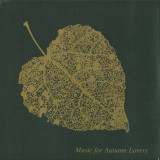
Set for release at the height of the season it’s dedicated to, ‘Music For Autumn Lovers’ by Adam Scrimshire is an eight track album of lush, mostly acoustic based, minimal instrumentals eliciting a mixture of feelings for this special time of year.
Four tracks originally released on an EP in 2022 are joined by new compositions ‘Hawthorn’, ‘Hazel’, ‘Willow’ and ‘Blackthorn’. Gently finger-picked acoustic guitars cosy up alongside pianos, synthesisers, strings and horns; filtered through an autumnal hue of susurrous production and effects. In turns comforting, melancholic and evolutionary; it feels like an album that can be kept being made and remade forever, like a season in itself.
Both a relentless creator and inspiring champion of new music; South London based Scrimshire has been recording, producing and DJing since the mid 2000s. Amongst his credits, he was featured by the Guardian as one of three producers behind the new wave of UK soul, alongside Inflo (Michael Kiwanuka, Sault, Lil Simz) and Swindle (Joel Culpepper, Greentea Peng, Kojey Radical). His bold 2023 album ‘Paroxysm’ was a response to the absurdity of the breakdown in the UK government, picking up an Album of the Week award on Huey Morgan’s BBC 6 Music show, and 2021’s beautiful ‘Nothing Feels Like Everything’ received an Album of the Year nomination at the Gilles Peterson Worldwide Awards. Scrimshire also somehow finds the time to support a wealth of talent on his label Albert’s Favourites, formed with Dave Koor and Jonny Drop, where they have recently released albums by And Is Phi, Huw Marc Bennet, Inês Loubet, Irini Arabatzi, Jonny Drop & Andrew Ashong, and Qwalia.
Radio Support: Gilles Peterson (BBC Radio 6 Music), Tom Ravenscroft/Deb Grant – New Music Fix (BBC Radio 6 Music), Huey Morgan (BBC Radio 6 Music) Guy Garvey (BBC Radio 6 Music)
out of Stock
Last delivered 23 months ago available to reorder, subject to availability
Computer Future is the sprawling and ambitious third album by amorphous Brisbane, Australia garage rock outfit Velociraptor! The 14-song opus is the best recorded capture yet of everything that makes the ‘Raptors so beloved, a stream of addictively catchy rockers characterised by stupidly infectious melodies, an overabundance of earworm hooks, guitars aplenty plus of course their trademark gang vocals and harmonies. The shadowy cabal behind Velociraptor have returned from a spell away from the spotlight with renewed vigour and focus, more committed to and appreciative of their combined talents and chemistry than their younger selves, who were perhaps more about concerned about chasing good times rather than long ones. These days there are more cooks in the ‘Raptors kitchen than before but that’s only allowed them to expand the palette of the Computer Future menu without compromising on quality. Their distinctively melodic take on the garage rock form is still entirely evident, only it’s now augmented by quirkily compelling sonic detours into psych and new wave realms, the band all the while sounding wholly like themselves and nobody but themselves (apart from perhaps the Devo-indebted title tracks). In their halcyon days Velociraptor were a force to be reckoned with, an amorphous collective sometimes up to 12 members strong - many of them wielding guitars of some description - who partied hard and played even harder, attacking their live shows with unbridled glee and genuine gusto. They toured Europe/UK, and staged with bands the calibre of Black Lips, New York Dolls, OFF!, Radio Birdman and Violent Soho. The unparalleled camaraderie of their renowned live blitzes - plus sheer size of the band - at times threatened to overshadow the genuine strength of their songwriting and recorded output, but now with Computer Future those concerns are firmly in the past!
The seeds of composer Rafael Anton Irisarri’s latest LP were first planted during his 2016 tour in Italy, months before that Autumn’s unexpected presidential election. The linguistic glitch of an innocuous diner in Milan named “il Mito Americano” – meant as “The American Dream” but translated literally to English as “The American Myth” – sparked a series of ideas, both conceptual and musical.
Amid the chaos of 2020, while exploring the stark world of brutalist architecture and inspired by the false fronts of Potemkin villages, a vision started to take shape: FAÇADISMS. Composed over three years, it’s a late capitalist lament of simmering electric despondency.
Irisarri’s obsession with repeating motifs mirrors the cyclical nature of our tumultuous political history. The album’s eight tracks heave and storm like a tempest being drained of its rage. This is the sound of majestic dissipation, of morning afters, fashioned from a mournful haze with cavernous guitars and granular twilight. A euphony of a receding tide as one sifts through the remnants of what remains: dust, delusion, and memory.
Opening with the somber gauze of “Broken Intensification," FAÇADISMS moves fluidly between moments of absence and abandon. Ashen swaths of electronics billow above smoldering embers of melody, guitar, and scattered streaks of processed strings and voice, as on the rapturous doom of “Control Your Soul's Desire for Freedom,” featuring Julia Kent on cello and Hannah Elizabeth Cox on vocals. "The impoverished peoples of the Americas have known all along that 'freedom' is a cruel illusion crafted by the elites, akin to Potemkin's fake villages designed to impress Catherine the Great," Irisarri indicates. "FAÇADISMS illustrates a twisted inversion where the rulers deceive their subjects with illusions of safety, democracy, and free speech to create a grotesque mirage of control over their own lives.”
Elsewhere, Irisarri leans into passages of hushed oblivion (“Hollow,” “Dispersion of Belief”), while ragged drones rumble and disintegrate into wind-battered ambient wreckage. One has the sense that it’s all too late. The hour of fury has passed. The beauty has come and gone. Irisarri’s muse has become the crack in the façade of the unraveling myth.
The record closes with a climax of grand departure. Co-written with Kenyan sound artist KMRU, “Red Moon Tide” surges from flickering elegy to celestial disquiet, roiling waves of hymnal descent, and bristling noise. The effect is unsettling and unmooring: a soundtrack for the soul leaving the body, only to discover a void. It’s the sound of the center not holding, of shared illusions being dissolved in a tunnel of white light.
The cover photograph captures a profound sense of desolation. Taken in the historic shanty town of La Perla, Puerto Rico, where Irisarri spent his childhood, brutal colonial mysteries are lost to time. A skeletal concrete structure decays against an expansive blue horizon. Only the shadow of its shell ripples on the empty sea.
Has the American myth finally run its course?
out of Stock
Last delivered 23 months ago available to reorder, subject to availability
The seeds of composer Rafael Anton Irisarri’s latest LP were first planted during his 2016 tour in Italy, months before that Autumn’s unexpected presidential election. The linguistic glitch of an innocuous diner in Milan named “il Mito Americano” – meant as “The American Dream” but translated literally to English as “The American Myth” – sparked a series of ideas, both conceptual and musical.
Amid the chaos of 2020, while exploring the stark world of brutalist architecture and inspired by the false fronts of Potemkin villages, a vision started to take shape: FAÇADISMS. Composed over three years, it’s a late capitalist lament of simmering electric despondency.
Irisarri’s obsession with repeating motifs mirrors the cyclical nature of our tumultuous political history. The album’s eight tracks heave and storm like a tempest being drained of its rage. This is the sound of majestic dissipation, of morning afters, fashioned from a mournful haze with cavernous guitars and granular twilight. A euphony of a receding tide as one sifts through the remnants of what remains: dust, delusion, and memory.
Opening with the somber gauze of “Broken Intensification," FAÇADISMS moves fluidly between moments of absence and abandon. Ashen swaths of electronics billow above smoldering embers of melody, guitar, and scattered streaks of processed strings and voice, as on the rapturous doom of “Control Your Soul's Desire for Freedom,” featuring Julia Kent on cello and Hannah Elizabeth Cox on vocals. "The impoverished peoples of the Americas have known all along that 'freedom' is a cruel illusion crafted by the elites, akin to Potemkin's fake villages designed to impress Catherine the Great," Irisarri indicates. "FAÇADISMS illustrates a twisted inversion where the rulers deceive their subjects with illusions of safety, democracy, and free speech to create a grotesque mirage of control over their own lives.”
Elsewhere, Irisarri leans into passages of hushed oblivion (“Hollow,” “Dispersion of Belief”), while ragged drones rumble and disintegrate into wind-battered ambient wreckage. One has the sense that it’s all too late. The hour of fury has passed. The beauty has come and gone. Irisarri’s muse has become the crack in the façade of the unraveling myth.
The record closes with a climax of grand departure. Co-written with Kenyan sound artist KMRU, “Red Moon Tide” surges from flickering elegy to celestial disquiet, roiling waves of hymnal descent, and bristling noise. The effect is unsettling and unmooring: a soundtrack for the soul leaving the body, only to discover a void. It’s the sound of the center not holding, of shared illusions being dissolved in a tunnel of white light.
The cover photograph captures a profound sense of desolation. Taken in the historic shanty town of La Perla, Puerto Rico, where Irisarri spent his childhood, brutal colonial mysteries are lost to time. A skeletal concrete structure decays against an expansive blue horizon. Only the shadow of its shell ripples on the empty sea.
Has the American myth finally run its course?
out of Stock
Last delivered 23 months ago available to reorder, subject to availability
The seeds of composer Rafael Anton Irisarri’s latest LP were first planted during his 2016 tour in Italy, months before that Autumn’s unexpected presidential election. The linguistic glitch of an innocuous diner in Milan named “il Mito Americano” – meant as “The American Dream” but translated literally to English as “The American Myth” – sparked a series of ideas, both conceptual and musical.
Amid the chaos of 2020, while exploring the stark world of brutalist architecture and inspired by the false fronts of Potemkin villages, a vision started to take shape: FAÇADISMS. Composed over three years, it’s a late capitalist lament of simmering electric despondency.
Irisarri’s obsession with repeating motifs mirrors the cyclical nature of our tumultuous political history. The album’s eight tracks heave and storm like a tempest being drained of its rage. This is the sound of majestic dissipation, of morning afters, fashioned from a mournful haze with cavernous guitars and granular twilight. A euphony of a receding tide as one sifts through the remnants of what remains: dust, delusion, and memory.
Opening with the somber gauze of “Broken Intensification," FAÇADISMS moves fluidly between moments of absence and abandon. Ashen swaths of electronics billow above smoldering embers of melody, guitar, and scattered streaks of processed strings and voice, as on the rapturous doom of “Control Your Soul's Desire for Freedom,” featuring Julia Kent on cello and Hannah Elizabeth Cox on vocals. "The impoverished peoples of the Americas have known all along that 'freedom' is a cruel illusion crafted by the elites, akin to Potemkin's fake villages designed to impress Catherine the Great," Irisarri indicates. "FAÇADISMS illustrates a twisted inversion where the rulers deceive their subjects with illusions of safety, democracy, and free speech to create a grotesque mirage of control over their own lives.”
Elsewhere, Irisarri leans into passages of hushed oblivion (“Hollow,” “Dispersion of Belief”), while ragged drones rumble and disintegrate into wind-battered ambient wreckage. One has the sense that it’s all too late. The hour of fury has passed. The beauty has come and gone. Irisarri’s muse has become the crack in the façade of the unraveling myth.
The record closes with a climax of grand departure. Co-written with Kenyan sound artist KMRU, “Red Moon Tide” surges from flickering elegy to celestial disquiet, roiling waves of hymnal descent, and bristling noise. The effect is unsettling and unmooring: a soundtrack for the soul leaving the body, only to discover a void. It’s the sound of the center not holding, of shared illusions being dissolved in a tunnel of white light.
The cover photograph captures a profound sense of desolation. Taken in the historic shanty town of La Perla, Puerto Rico, where Irisarri spent his childhood, brutal colonial mysteries are lost to time. A skeletal concrete structure decays against an expansive blue horizon. Only the shadow of its shell ripples on the empty sea.
In a world of division, BEÃTFÓØT’s delayed second album is as an invitation to unite at a utopian celebration of life. Originally scheduled for release in October 2023 but postponed due to the ongoing Israel/Palestine war, the intrinsically-political ‘TOO CUTE’ has taken on more prominence than the Tel Aviv duo of Udi Naor and Adi Bronicki could have imagined.
“It's more urgent than ever for us to share this now, even though the album has been ready for a while,” says producer Naor. “BEÃTFÓØT are against any war, and believe that people should talk and not use violence - never,” he adds vehemently. “We feel the pain of Palestinians and Israeli loss of life, and are devastated by it. We hope the war will be finished soon and that peace and prosperity will come soon for both sides.”
While both Naor and vocalist Bronicki have been active in protests, charity work and community efforts over the past year - explicitly against the current government in Israel - such values of peace, acceptance, coexistence, inclusiveness and anti-hate from all sides are further instilled in the songs that form ‘TOO CUTE’.
“We're really trying to highlight that there are people here working tirelessly for a brighter future for our ill kids and our neighbour’s kids,” adds Naor, who is also co-founder of techno duo Red Axes. Having had to flee the country with his family, it’s through music that Naor and Bronicki have found hope.
In light of such conflict, the multi-layered yet sonically-bonkers record also enables escapism, which is needed more now than ever. Following their self-titled 2021 debut (released on DJ Tennis’ label Life and Death), ‘TOO CUTE’ is a refreshingly-ridiculous dark-rave rollercoaster which careers between hard-dance, big-beat, post-punk, techno, hyperpop, country and everything in between.
Things blast off at breakneck speed with the chaotic title track’s hyperpop snares, instantly-catchy lyrics (which feel ominously striking considering the war) and a stadium-ready chorus that erupts into rolling breakbeats, punishing EDM and even a nod to The Bloodhound Gang’s ‘The Magic Touch’. Somehow, we’re just three minutes into the record.
The tongue-in-cheek ‘HEART OF LEAD (TAKE IT OFF)’ still bangs despite its silliness, like if Kero Kero Bonito got in the studio with will.i.am. Later, ‘LEO’S SONG (THE SOCIAL MEDIA GUY)’s wittily satirical one-liners - “I just wanna get high with AI” - come thick and fast amid a barrage of glitches and guitars. ‘SUKC MY DIKC !!!’, meanwhile, pairs flute with pulsing hardstyle beats.
While their first record’s experimental explosion captured the pure carnage and energy of the BEÃTFÓØT universe in a conceptual fashion (though remaining polished in its own way), album two is primed to connect with a bigger audience thanks to its pop melodies, structures and songwriting.
Much of ‘TOO CUTE’ was written while the duo toured Europe for the first time, with rough sketches of tracks created in the moment during their incendiary live shows, and then recorded in planes and cars.
If their first record was a case of testing the vibes, album two is more assured and confident within their sonic world. “In the first album, we stepped into the club, metaphorically, and started making eye contact with everyone to figure out the energy,” Bronicki says. “But, this time round, I already had an idea of the story that I wanted to tell to these random people.”
And what is that story? “Radical silliness, or radical fun – that’s the essence of BEÃTFÓØT,” Naor confirms. “What we really want to do is goof around and have fun, and that brings out something very profound and honest,” he explains. A sense of nostalgic freedom is also at the album’s core, thanks to the removal of adult predetermined social constructs that decide how people should behave or look. “There’s a very honest and positive energy in holding onto your childlike wonder and trying to explore that with others,” Bronicki suggests, adding that “the adult world can be so wrong and angering”.
She feels this relates to both the album’s lyrics and the artistic state of mind that the duo always work to: “the goal is to feed a really thought-out and profound idea, but through a playful spoon,” she says. With this in mind, the recurring theme of ‘TOO CUTE’ stems from the duo’s “radical and lived experience of existing in a place that holds a lot of guilt and fear – because death is so imminent and prevalent in a very confronting way”. This is clearly represented on ‘FOOTYLICIOU$’, on which Bronicki screams “someone’s gonna die tonight!” before emphatically shouting “NOT ME!”
The album title is BEÃTFÓØT’s response to that: “We want to be a celebration of life, and that applies to all lives, of all backgrounds, including animals… that’s our guiding light,” Bronicki says.
“We create in the context of living in a country where the current government’s anti-democratic measures are limiting who is included in the celebration of life. Because different people are always being pushed out and excluded: whether it’s queers, Palestinians or people from different religions.”
BEÃTFÓØT - who have found a home among the LGBTQIA+ community - are fighting back against oppression. “We want everybody to come to the party and celebrate life together,” says Naor, setting out his and Bronicki’s mission… “and our goal is to widen that party as wide as it can go.”
c MANIAC ft. Princess Rani
e WHERE HAVE I BEEN ALL MY LIFE ft. Bugle Boy
c MANIAC ft. Princess Rani
[e] WHERE HAVE I BEEN ALL MY LIFE [ft. Bugle Boy]
[c] MANIAC [ft. Princess Rani]
[e] WHERE HAVE I BEEN ALL MY LIFE [ft. Bugle Boy]
out of Stock
Last delivered 23 months ago available to reorder, subject to availability
Unbound by place or genre, mercurial, experimental pop duo Soft as Snow find freedom to intuitively reflect the disarray of human connection with their intricate, shape-shifting pop production. With each successive release, the duo evolves, unfurling into their own poetic sound, now fully realized on their intimate, third full-length, Metal.wet.
The oft-present trappings of male-female duos are eschewed here as the Berlin-based Oda Starheim and Øystein Monsen contribute equally across a canvas of analogue synthesizers, samplers, live drums, and processed guitars. At once a part of and yet apart from the zeitgeist, their forward-thinking modernity stretches the limits of expectations across Metal.wet's ten insouciant tracks. Fans of Tirzah, Hype Williams, and even Angelo Badalamenti will find much to love in this haunting work peppered with ASMR moments and rough sampling wrapped in high production –– twinkling glasses and sirens in the distance, rhythms and voices up front. The result is synth-driven, noisy, and dripping with laidback, confident sensuality.
Although Starheim's voice begins the album in a whisper, it quickly becomes apparent that the group has jettisoned their previous tendency to bury and distort her vocals. Nested in a bed of thorny electronics and broken rhythms, her multifaceted vocals might bring to mind Kazu Makino of Blonde Redhead or Hope Sandoval fronting Massive Attack. London MC Brother May (Mica Levi, CURL) makes an appearance on the driving and ethereal “Whip,” while Øystein’s own voice appears for the first time in a state of languid background haze.
Soft as Snow create and record across Europe. Defiantly averse to genre, the pair become vessels for their “electronic music pushed to the brink of collapse” (The Wire), previously released by Infinite Machine and Houndstooth. Informed by backgrounds in film and performance art, “there’s a surrealism that comes with watching Soft as Snow in the flesh,” (Vice) as seen at L.E.V. and Lunchmeat Festivals. Collaborations with visual artist Guynoid, designer AGF Hydra, and sculptor Camilla Steinum add depth to the corporeality of their “strange, mesmerising and utterly unforgettable” electronic experimentations. (DJ Mag).
Peni Candra Rini (she/her), the Indonesian composer and performer whose musical practice encompasses a wide range of traditional and experimental Javanese styles, announces her new album Wulansih (July 12, 2024) via New Amsterdam Records. Kronos Quartet's David Harrington, a frequent collaborator of Rini, recently called her “one of the world's greatest singers”, and on Wulansih she places her voice in conversation with a wide array of experimental and traditional musicians, including Andy McGraw, Lester St. Louis, Shahzad Ismaily, John Priestley, Curt Sydnor, and many others. Produced by Ismaily at New York's Figure 8 Recording, Wulansih creates a world all its own.
The 8 songs on Wulansih exert a deep sense of spiritual calm and act as, in Rini’s words, “a reminder that you are still human, listening to expressions of other humans.” Her music is deeply inspired by the poetry of Rumi and Hafez, Wayang Kulit (Indonesian shadow play), and Serat, the tradition of Sufi thought in Central Javanese court poetry. Rini says that Wulansih aims to “express my inner feelings, my soul, to provide inspiration to younger Indonesian composers, and to introduce Indonesian new compositions to new global audiences.”
Wulansih is a small encyclopedia of Indonesian music. Rini explains: “The album mixes a wide range of materials, including traditional Javanese gamelan singing, Balinese chant, stringband music of the 1960s, and intercultural improvisations, bringing them all together through my contemporary compositional approach. We created experimental ensembles, and even experimental instruments and tunings to create an album that, whatever you think of it, sounds like nothing else.”
Rini’s lyrics are poems, strongly inspired by Javanese Sufism, with a deep emphasis on love and the inner self. Estu explores the idea of “love as a sacrifice; it takes a commitment to put one’s heart in the right place. It requires the seriousness of an artist,” while Warahsih explores how “always through understanding and sincerity, teaching Love to those who study the ways of life, through the ages.”
The music on Wulansih transforms these poems of love and compassion into open and lush sonic spaces that are crafted using synthesizers, traditional Indonesian instruments, Rini’s wide vocal range, guitars, and Ismaily’s production.
The Boysnoize Records catalogue contains more than a decade of milestones in the life of Angeleno DJ and producer PILO. His signatures—a focus on sound design, and a digital crunch evocative of hardware rather than software—are present from the very beginning, but the evolution of Pilo’s skill and sophistication is clear as he stretches from electro to experimental to techno and back again in a slowly oscillating gradient. Yet despite his dozen or so releases in just as many years, G.L.A.M. (dropping November 8th, 2024 from BNR) is Pilo’s first proper album. That the record embraces the cyclical nature of time is apropos; the artist’s journey towards self-actualized mastery always ends with a new beginning.
Over the eight tracks of G.L.A.M., Pilo reaches deep into the dream that first ignited the passion that has driven him since. For a chosen few internet-connected American teens in the aughts, the sounds of European electro (and electroclash) trickled down their ethernet cables and instilled a fantasy of exotic, sartorial, sexually-fluid hedonism that felt a world away from the hard-edged masculinity of the hip-hop and skate cultures dominant at home. Pilo opens G.L.A.M. expressing this idealized fantasy with the track “Superstar DJ,” channeling the tongue-in-cheek self-celebritizing of Miss Kitten and The Hacker’s seminal work. “I’m a superstar, come meet me at the bar,” hiss Pilo’s heavily effected vocals, over a bassline of chopped mentasm synths driven by a swift, club-ready rhythm. The fingerprint of 2000’s electro a la International Deejay Gigolo Records is recognizably present, yet Pilo is too adept, too confident in his studio abilities to let his tracks rely on the retro. A great joy of this album is the future-facing richness of its production, always nodding to its spiritual guide of the past, while constantly breaking new sonic ground.
G.L.A.M. continues with “Girls Rule The World,” its vicious, droning bassline and sticky, titular hook making it the perfect electroclash soundtrack for a revenge plot on an ex-boyfriend. “What you Want” offers an instrumental exercise in “synthesizers are the new guitars,” and Pilo’s FX chops really shine as he warps and distorts his sounds into an undiscovered dimension existing somewhere between both. “Loverboy” enters the more melodic, Legowelt-inspired realm of electro, pushing above and beyond the foundation of analogue minimalism with flourishes of impressive sound design to construct something both climactic and cathartic. Scopa lends her perfect coldwave sprechgesang to titular track “G.L.A.M.,” with Pilo’s vocal processing offering surprises throughout and his FX chains wielded as instruments unto themselves.
On the track “A Slow Thinning Halo,” Pilo might be conjuring the haunting vocal chops and chiptune simplicity of early Crystal Castles, but the whiplash snap of his drums and sizzling production are all his own. “Spend the Night” is G.L.A.M.’s least nostalgic—and most unashamedly pop—offering, with the mic being passed between Sana and DEEVIOUS (previously featured on Pilo and Boys Noize’s 2023 track “Pvssy.”) DEEVIOUS’ sultry singing rides atop the bassline as it hypnotically struts across the floor, while Pilo’s skillful arrangement, deft rhythm programming, and atmospheric control elevate the songcraft into full-spectrum worldbuilding.
As the penultimate track, the contemporaneity of “Spend the Night” serves as transition away from the album’s previous, past-leaning exercises, allowing Pilo to step fully into the future with “One Last Embrace.” The closing track still references aughts sounds, but it borrows so widely and prolifically that Pilo’s reassemblage can only be described as singular. Here, Pilo pushes his engineering into psychoacoustic territory, as the eerie, beautiful melancholy of “One Last Embrace” explodes into a thrashing bassline that warbles like a drowning memory, struggling against the sinking weight of time. Pilo allows it to survive for 16 electrifying, gut-wrenching bars before letting go. In G.L.A.M., as in Pilo’s career, as in life, every ending can only be a new beginning.
out of Stock
Last delivered 38 days ago available to reorder, subject to availability
Two of the most sensitive and sweet big room bangers to ever fill a floor, here’s Stay Here and Writer, the results of a recent machine jam between heavyweights of emotional dance music, Fort Romeau and Gold Panda.
Stay Here strikes first with slowly simmering synthesizers intertwining with slinky guitars and delicate vocal samples, while b-side Writer shows up to the party loaded with restrained euphoria, steady beats paving the path for the fragile acoustic elements of its glorious, beatless ending.
All of this spiked with just the right amount of acid to keep things constantly entrancing!
The record comes wrapped up in designer Eliot Axelsson's blurry shapes and vivid colours, arriving on vinyl and in digital form through Studio Barnhus on November 8.
out of Stock
Last delivered 15 months ago available to reorder, subject to availability
Ltd Silver Vinyl, DL card. From a long-forgotten trunk; two extended jams, twin slabs, circa 1989. Continuing Fire Records' series of classic remastered albums from Royal Trux, 'Hand Of Glory' is released on silver vinyl. This bad-ass black, white and blue magic is a kind of Burial Dub_ or so preached the sleeve of 'Hand Of Glory' on its original release in 2002. Legend has it, the two sides of this 40-minute gem were recorded between 1985 and 1989. The resultant mountain of creativity from where they hail were inevitably left under a scuzzy sofa as life and a career that ebbed and flowed over nine albums. Royal Trux became an inspirational tipping point for everyone from Pavement & Sonic Youth to the Black Keys, Kurt Cobain, The Avalanches & Hot Chip's Alexis Taylor. "I urge and encourage you to enter the harmolodic multiverse of their music." Alexis Taylor, Hot Chip. 'Hand Of Glory' is not like their other albums but then again none of their albums are alike, it's a two-faced masterpiece. Side one's 'Domo Des Burros'/'Two Sticks' is on par with Beefheart's sprawling 'Trout Mask Replica'. It plays out in 19 minutes, sounding like it was laid down on Warhol's sofa in The Factory; like Dylan's sprawling 'Desolation Row' with, background squalls, interruptions and both Neil Hagerty and Jennifer Herrema's overlayed stream of consciousness peeping through a multi-layered backdrop. It's just staggering. "Royal Trux were nothing if not fearless." Pitchfork. Side two's 'The Boxing Story', a loose homage to William Burroughs, moulds and morphs from tape to tape, a multi-speed soundtrack, while the dynamic duo press pause, guitars ring, occasional melodic lines arrive and evaporate. Lou Reed's pastoral 'Metal Machine Music' could perhaps be recognized as an older and perhaps less challenging sibling. A two-sided masterpiece featuring two wayward pieces of creative genius.
This 1986 album by The Primates remain as the only recording ever released by these four 60s r&b and garage fans. Originally published on Greg Shaw's very own Voxx (Bomp! sublabel focused on revival garage/psychedelia) and produced by Shaw himself, this valuable musical document that portraits the essence of the L.A. 80s garage scene, has been out of print for more than 20 years! So we thought it would be a perfect record to reissue as part of our Bomp! reissue series. The Primates were formed in 1984 and cut their teeth at L.A. spots such as the Cavern Club, as part of a growing scene of devoted Nuggets/Pebbles fans, fascinated with 1960s garage punk classics. The core of the band were Brett Miller and Ted Edlefsen, sporting Vox guitars, and Erik Bluhm as front man, with different drummers, mostly Brian Corrigan but then also Eric from Threw the Looking Glass and Gene from The Miracle Workers. The opener 'I Ain't Like You', 'Bad Luck' or the fun cover of Neil Sedaka's 'I Go Ape' reflect the wild, party-driven mood of the entire album, making you wonder how crazy their shows were in the golden era of the L.A. 80s garage scene. Combining originals and versions (check their great take on Q65's 'I Got Nightmares'), "We Are The Primates" remains as a wild, raw, party album that every fan of garage music should own. Munster is thrilled to reissue this essential '80s garage gem as part of a series of releases celebrating Bomp! 50th anniversary. Our issue includes a booklet with liner notes and rare photos and ephemera.
There is NO LIGHT at the end of this tunnel! BROWN ACID: The Nineteenth Trip fires ten more savage nails deep into the coffin of ‘60s psychedelic idealism. This series is THE premier top dog journey into the rarest and most wasted early local eruptions of heavy rock, unleashed at a time when harsh reality, human nature and disillusionment drove prevailing underground rock glimpses of a ‘better’ world into ever darker selfabsorbed comedowns. Mind expanding ’60s love energies transform into toxic aggression right before your ears! The great thing is that these moves are totally justified, ‘we are all one’ is cosmically good in theory but ‘get it while you can’ ends up perhaps better advice in the light of human history. Both of those angles of awareness can coexist, some of these bands deliver unrelenting sideways positive energy but they aren’t over-thinking it, they are youthfully driven by hunger for life and satisfying the undeniable urges their DNA thrusts upon them. Sonically, the results in the BROWN ACID series never fail to breathe hot and heavy, the guitars kill it every time, the variety of approaches these tracks take keep the scenery shifting into new places. The key element that makes this stuff so potent is that THEY (the bands) are in control. Captured genuinely with no compromise, right out of the gate. No doubt they had ambition with high hopes for the future when they laid down these primal efforts, the fact that they captured their energy so vividly at a moment in time when the only direction imaginable was UP creates a hard hitting life affirming subtext to the proceedings. That is the core energy of blues and rock and roll, dealing with the struggles of existence by flipping a gigantic ‘what the fuck’ high energy bird right in the face of the moronic defective reality these bands were born into. If you take this stuff too ‘seriously’ you are utterly missing the point, it is beyond analysis, it is life itself! No amount of thinking will get you there quicker! BROWN ACID: The Nineteenth Trip is scary... the bottomless pit of deranged vintage heavy rock the series presents continually expands over time... one deadly dose too many and you might be trapped in the bad trip loop forever... enjoy it or lose your mind!
Pique is the sensational debut solo album from Dora Morelenbaum, one of the key talents spearheading Brazil’s new musical wave. A member of the Latin Grammy award-winning band, Bala Desejo, Dora showcases a new side to her solo productions on this special LP. Whereas Dora’s first solo EP, Vento de Beirada, was a leap of faith, Pique sees her soaring as one of Brazil’s standout stars, emboldened, emphatic but ever elegant. Building bridges between past and present, it’s a funkier, more groove-based affair, weaved together with those signature, slower, celestial tracks. Touching on disco, MPB, soul, R&B and jazz, the album is enriched with an indie pop aesthetic courtesy of fellow Brazilian star and co-producer, Ana Frango Elétrico.
With an ethereal, enveloping air few can match, Dora’s gift shines through both the serene and the spirited songs contained within. The blissful, sun-soaked ‘Não Vou Te Esquecer’ opens, before the funk-fuelled, feel-good ‘Venha Comigo’ and ‘Sim, Não.’ give a glimpse of the creativity bursting from the production partnership between Dora and Ana Frango Elétrico. Elsewhere, the album reclines into hazy lean-back realms via ‘A Melhor Saída’ and ‘Petricor’, virtuoso jazz funk in the form of ‘VW Blue’ and radiant MPB through the album’s title track ‘Pique’.
The drumming is tight, fresh and swung, the horns and strings deftly arranged, as funk-driven basslines and strutting guitars mesh with playful production touches that give an added vibrancy to the record. It is an album that exhibits every side of Dora and one she has been involved in from the ground up, from the songwriting, singing, arrangement and production to booking the studio time and sourcing the artwork designer, Maria Cau Levy.
An exchange of musical ideas powers every great scene and Rio’s contemporary landscape is no different - a family of interconnected musicians and friends that collaborate on each other’s productions. Pique is graced by a wealth of these leading Brazilian lights including her Bala Desejo bandmates Lucas Nunes, Julia Mestre and Zé Ibarra, as well as Guilherme Lirio, Alberto Continentino and Tom Veloso to name just a handful. This exchange crosses generations merging tradition with modernity. In a full circle moment, Dora’s parents Paula and Jaques Morelenbaum, who featured in countless recordings from Tom Jobim's Nova Banda and Ryuichi Sakamoto to Gal Costa and Gilberto Gil, join on the album through backing vocals and arrangement.
Pique sees Dora embrace a freedom through fresh forms, showcasing the depth and diversity of her creative artistry. An infinitely listenable release that nods to Brazilian greats like Gal Costa, Banda Black Rio and Lincoln Olivetti, fused with the indie pop edge of Ana’s production. The result is truly unique and sure to be a future Brazilian classic.
out of Stock
Last delivered 10 months ago available to reorder, subject to availability
Camelot, the legendary seat of King Arthur's court in Early Middle Ages Britain, was probably not a real place. A corruption of the name of a real Romano-Briton city, the word "Camelot" accumulated symbolic, mythic resonances over centuries, until achieving its present usage as a near-synonym of "utopia." In the mid-20th century alone, Camelot inspired an explosion of representations and appropriations, among them the violent, affectless Arthurian court of Robert Bresson's 1974 film Lancelot du Lac and the absurdist iteration of Monty Python's 1975 Holy Grail, both of which feature armored knights erupting into fountains of blood; the mystical Welsh world of novelist John Cowper Powys's profoundly weird 1951 novel Porius, with its Roman cults, wizards and witches, and wanton giants; and the nationalist nostalgia of President John F. Kennedy's White House. Unsurprisingly there are fewer Camelots in more recent memory. Camelot, Canadian songwriter Jennifer Castle's extraordinary, moving 2024 chronicle of the artist in early middle age, charts a realer, more rooted, and more metaphorical place than the fabled Camelot of the Early Middle Ages (or its myriad depictions), but it too is a space more psychic than physical. In Castle's Camelot, the fantastic interpenetrates the mundane, and the Grail, if there is one, distills everyday experience into art and art into faith, subliming terrestrial concerns into sublime celestial prayers to Mother Nature, and to the unfolding process of perfecting imperfection in one's own nature. Co-produced by Jennifer and longtime collaborator Jeff McMurrich, her seventh record is at once her most monumental and unguarded to date, demonstrating a mastery of rendering her verse and melodies alike with crisply poignant economy. For all their pointedly plainspoken lyrical detail and exhilarating full-band musical flourishes, these songs sound inevitable, eternal as morning devotions. "Back in Camelot," she sings on the lilting, vulnerable title track, "I really learned a lot / circles in the crops and / sky-high geometry." The album opens with a candid admission of sleeping "in the unfinished basement," an embarrassing joke that comes true. But the dreamer is redeemed by dreaming, setting sail in her airborne bed above "sirens and desert deities." If she questions her own agency_whether she is "wishing stones were standing" or just "pissing in the wind"_it does not diminish the ineffable existential jolt of such signs and wonders. This abiding tension between belief and doubt, magic and pragmatism, self and other, sacred and profane, and even, arguably, paganism and monotheism, suffuses these ten songs, which limn an interior landscape shot through with sunstriped shadows of "multi-felt dimensions" both mystical and quotidian. The epic scale and transport of "Camelot," with its swooning strings, gives way dramatically to "Some Friends," an acoustic-guitar-and-vocals meditation in miniature on Janus-faced friends and the lunar and solar temperatures of their promises_"bright and beaming verses" versus hot curses_which recalls her minimalist last album, 2020's achingly intimate Monarch Season. (In a symmetrical sequencing gesture, the penultimate track, the incantatory "Earthsong," bookends the central six with a similarly spare solo performance and coiled chord progression, this time an ambiguous appeal to _ a wounded lover? a wounded saint? our wounded planet?) Those whom "Trust" accuses of treacherous oaths spit through "gilded and golden tooth"_cynics, critics, hypocrites, gurus, scientists, doctors, lovers, government, the so-called entertainment industry_sow uncertainty that can infect the artist, as in "Louis": "What's that dance / and can it be done? What's that song / and can it be sung?" Answering affirmatively are "Lucky #8," an irrepressible ode to dancing as a bulwark against the "tidal pools of pain" and the "theory of collapse," and "Full Moon in Leo," which finds the narrator dancing around the house with a broom, wearing nothing but her underwear and "big hair." But the central question remains: who can we trust, and at what cost faith, in art or angels or otherwise? Castle's confidence in her collaborators is the cornerstone of Camelot. Carl Didur (piano and keys), Evan Cartwright (drums and percussion), and steadfast sideman Mike Smith (bass) comprise a rhythm section of exquisite delicacy and depth. This fundamental trio anchors the airiness of regular backing vocalists Victoria Cheong and Isla Craig and frames the guitars of Castle, McMurrich, and Paul Mortimer (and on "Lucky #8," special guest Cass McCombs). Reprising his decennial role on Castle's beloved 2014 Pink City, Owen Pallett arranged the strings for Estonia's FAMES Skopje Studio Orchestra. On the ravishing country-soul ballad "Blowing Kisses"_Pallett's crowning achievement here, which can be heard in its entirety in the penultimate episode of the third season of FX's The Bear_Jennifer contemplates time and presence, love and prayer_and how songwriting and poetry both manifest and limit all four dimensions: "No words to fumble with / I'm not a beggar to language any longer." Such rare moments of speechlessness_"I'm so fucking honoured," she bluntly proclaims_suggest a state "only a god could come up with." (If Camelot affirms Castle as one of the great song-poets of her generation, she is not immune to the despairing linguistic beggary that plagues all writers.) Camelot evinces a thoroughgoing faith not only in the natural world_including human bodies, which can, miraculously, dance and swim and bleed and embrace and birth_but also in our interpretations of and interventions in it: the "charts and diagrams" of "Lucky #8," a daydreamt billboard on Fairfax Ave. in LA in "Full Moon in Leo," the bloody invocations of the organ-stained "Mary Miracle," and all manner of water worship, rivers in particular. (Notably, Jennifer has worked as a farmer and a doula.) The album ends with "Fractal Canyon"'s repeated, exalted insistence that she's "not alone here." But where is here? The word "utopia" itself constitutes a pun, indicating in its ambiguous first syllable both the Greek "eutopia," or "good-place"_the facet most remembered today_and "outopia," or "no-place," a negative, impossible geography of the mind. Utopia, like its metonym Camelot, is imaginary. Or as fellow Canadian songwriter Neil Young once sang, "Everyone knows this is nowhere." "Can you see how I'd be tempted," Castle asks out of nowhere, held in the mystery, "to pretend I'm not alone and let the memory bend?"
"Five years since her debut album Delivery, Mikaela Davis has moved away from her hometown of Rochester, shared the stage with the likes of Bob Weir, Phil Lesh, Christian McBride, Bon Iver, Lake Street Dive and Circles Around the Sun and entered a new decade. But it’s the ever-evolving relationships between her closest friends and bandmates that has propelled the Hudson Valley-based artist onto her latest album And Southern Star––a truly collaborative effort that ruminates on the choices we make, and the people we always come back to.
The band, made up of Davis (harp/vocals), Alex Coté (drums), Cian McCarthy (guitars/vocals), Shane McCarthy (bass/vocals) and Kurt Johnson (steel guitar), have been playing together for over a decade and it’s the first time they’ve appeared on a full length record together. Weaving 60s pop-soaked melodies, psychedelia and driving folk rock, And Southern Star picks apart the reflection we used to recognise, while trying to build a new one. It navigates the periphery of past selves, the coexistence of isolation and excitement in a new environment and the tension of growing away from what we thought we wanted, tackling it with a luscious, kaleidoscopic grace. “I finally feel like this album is more me than anything else that’s been released,” Davis says, adding that producing the album along with her four bandmates allowed them to carve out their own ideas, rather than someone else’s. It’s the band’s collective step into adulthood that has informed much of And Southern Star’s thematic landscape."
Pedals is the second studio album from post-hardcore band Rival Schools, released 10 years after their debut record United by Fate was first released. Pedals was recorded by the entire original cast, whom were seen as a tremendous influence within the post-hardcore movement. Where United by Fate was an album often ready to burst at the seams with energy, Pedals shows a more matured and controlled feel, even somewhat experimental at moments with bass tones and frequent use of acoustic guitars and distortion effects. Much like the 2022 reissue of Rival School's first LP, this reissue features packaging updates curated specifically by the band to create the definitive version of this record. The album's artwork has been updated with new gatefold packaging and a slip-case cover along with an updated set of lyrics and liner notes. In addition to all ten original tracks, the second disc of this edition includes three b-sides and four live tracks.
. For Fans Of: The Weather Station, Weyes Blood, Adrianne Lenker, Phoebe Bridgers, Joan Shelley, Lana Del Rey, Cass McCombs, Angel Olsen & Neil Young. Camelot, the legendary seat of King Arthur’s court in Early Middle Ages Britain, was probably not a real place. A corruption of the name of a real Romano-Briton city, the word “Camelot” accumulated symbolic, mythic resonances over centuries, until achieving its present usage as a near-synonym of “utopia.” In the mid-20th century alone, Camelot inspired an explosion of representations and appropriations, among them the violent, affectless Arthurian court of Robert Bresson’s 1974 film Lancelot du Lac and the absurdist iteration of Monty Python’s 1975 Holy Grail, both of which feature armoured knights erupting into fountains of blood; the mystical Welsh world of novelist John Cowper Powys’s profoundly weird 1951 novel Porius, with its Roman cults, wizards and witches, and wanton giants; and the nationalist nostalgia of President John F. Kennedy’s White House. Unsurprisingly there are fewer Camelots in more recent memory. Camelot, Canadian songwriter Jennifer Castle’s extraordinary, moving 2024 chronicle of the artist in early middle age, charts a realer, more rooted, and more metaphorical place than the fabled Camelot of the Early Middle Ages (or its myriad depictions), but it too is a space more psychic than physical. In Castle’s Camelot, the fantastic interpenetrates the mundane, and the Grail, if there is one, distills everyday experience into art and art into faith, subliming terrestrial concerns into sublime celestial prayers to Mother Nature, and to the unfolding process of perfecting imperfection in one’s own nature. Co-produced by Jennifer and longtime collaborator Jeff McMurrich, her seventh record is at once her most monumental and unguarded to date, demonstrating a mastery of rendering her verse and melodies alike with crisply poignant economy. For all their pointedly plainspoken lyrical detail and exhilarating full-band musical flourishes, these songs sound inevitable, eternal as morning devotions. “Back in Camelot,” she sings on the lilting, vulnerable title track, “I really learned a lot / circles in the crops and / sky-high geometry.” The album opens with a candid admission of sleeping “in the unfinished basement,” an embarrassing joke that comes true. But the dreamer is redeemed by dreaming, setting sail in her airborne bed above “sirens and desert deities.” If she questions her own agency whether she is “wishing stones were standing” or just “pissing in the wind” it does not diminish the ineffable existential jolt of such signs and wonders. This abiding tension between belief and doubt, magic and pragmatism, self and other, sacred and profane, and even, arguably, paganism and monotheism, suffuses these ten songs, which limn an interior landscape shot through with sunstriped shadows of “multi-felt dimensions” both mystical and quotidian. The epic scale and transport of “Camelot,” with its swooning strings, gives way dramatically to “Some Friends,” an acoustic-guitar-and-vocals meditation in miniature on Janus-faced friends and the lunar and solar temperatures of their promises—“bright and beaming verses” versus hot curses which recalls her minimalist last album, 2020’s achingly intimate Monarch Season. (In a symmetrical sequencing gesture, the penultimate track, the incantatory “Earthsong,” bookends the central six with a similarly spare solo performance and coiled chord progression, this time an ambiguous appeal to … a wounded lover? a wounded saint? our wounded planet?). Those whom “Trust” accuses of treacherous oaths spit through “gilded and golden tooth” cynics, critics, hypocrites, gurus, scientists, doctors, lovers, government, the so-called entertainment industry sow uncertainty that can infect the artist, as in “Louis”: “What’s that dance / and can it be done? What’s that song / and can it be sung?” Answering affirmatively are “Lucky #8,” an irrepressible ode to dancing as a bulwark against the “tidal pools of pain” and the “theory of collapse,” and “Full Moon in Leo,” which finds the narrator dancing around the house with a broom, wearing nothing but her underwear and “big hair.” But the central question remains: who can we trust, and at what cost faith, in art or angels or otherwise? Castle’s confidence in her collaborators is the cornerstone of Camelot. Carl Didur (piano and keys), Evan Cartwright (drums and percussion), and steadfast sideman Mike Smith (bass) comprise a rhythm section of exquisite delicacy and depth. This fundamental trio anchors the airiness of regular backing vocalists Victoria Cheong and Isla Craig and frames the guitars of Castle, McMurrich, and Paul Mortimer (and on “Lucky #8,” special guest Cass McCombs). Reprising his decennial role on Castle’s beloved 2014 Pink City, Owen Pallett arranged the strings for Estonia’s FAMES Skopje Studio Orchestra. On the ravishing country-soul ballad “Blowing Kisses” Pallett’s crowning achievement here, which can be heard in its entirety in the penultimate episode of the third season of FX’s The Bear Jennifer contemplates time and presence, love and prayer and how songwriting and poetry both manifest and limit all four dimensions: “No words to fumble with / I’m not a beggar to language any longer.” Such rare moments of speechlessness “I’m so fucking honoured,” she bluntly proclaims suggest a state “only a god could come up with.” (If Camelot affirms Castle as one of the great song-poets of her generation, she is not immune to the despairing linguistic beggary that plagues all writers.) Camelot evinces a thoroughgoing faith not only in the natural world including human bodies, which can, miraculously, dance and swim and bleed and embrace and birth but also in our interpretations of and interventions in it: the “charts and diagrams” of “Lucky #8,” a daydreamt billboard on Fairfax Ave. in LA in “Full Moon in Leo,” the bloody invocations of the organ-stained “Mary Miracle,” and all manner of water worship, rivers in particular. (Notably, Jennifer has worked as a farmer and a doula.) The album ends with “Fractal Canyon”s repeated, exalted insistence that she’s “not alone here.” But where is here? The word “utopia” itself constitutes a pun, indicating in its ambiguous first syllable both the Greek “eutopia,” or “good-place” the facet most remembered today and “outopia,” or “no-place,” a negative, impossible geography of the mind. Utopia, like its metonym Camelot, is imaginary
Just under a year after their acclaimed self-titled debut, dreampop duo deary release a brand new six-track EP – Aurelia – via Sonic Cathedral on November 1. It includes the singles ‘The Moth’, ‘Selene’ and ‘The Drift’ and features Slowdive drummer Simon Scott playing on three songs. It will be available on three different vinyl variants, a CD with three bonus tracks and digitally. It’s a stunning record, which displays a new-found maturity in terms of production as well as musically and lyrically. The band – singer Rebecca ‘Dottie’ Cockram and guitarist/producer Ben Easton – have had to grow up in public since the release of their debut single at the start of 2023, supporting legends such as Slowdive and Cranes and TikTok sensations like Wisp along the way. An aurelian is a rare old term for a lepidopterist – someone who studies and collects moths – derived from the Latin aurelia, meaning chrysalis. The perfect title for an EP which is based around the theme of metamorphosis and change. “It leans on the natural world, the human body, the earth and sky as well as human emotion,” says Ben of how the EP represents physical and metaphysical growth. “Change can be daunting but equally exciting, which is something we’ve come to learn.” “While writing the EP, I found a letter I had written to myself when I was 22,” adds Dottie. “I was fresh out of university and had moved back in with my parents as Covid was in full force. I was uninspired and lost and reaching out to my future self for some hope. It was a physical representation of what can happen in a few years; how much can change and how you never know what’s coming next. “I found it interesting that – at the age of 26 – here I was looking back to my younger self for hope or just some comfort in the fact that things will and do move on. It was important to me to bring both of these versions of myself into the new songs.” “Personally, I had noticed a change in myself; a new level of social anxiety, a strange disassociation to things that once brought me joy as well as negative repetitions in my daily life,” reveals Ben. “I began the year sober which allowed me to finish the writing process as a letter of care to my own mental health. There are motifs throughout the EP – for example the riffs in ‘The Moth’ and ‘The Drift’ being reminiscent of each other – which are like musical reflections of these repeated cycles.” It’s musically where the change deary have undergone is most obvious. ‘The Moth’ mixes howling guitars atop a strident breakbeat making it more Curve than Cocteaus; ‘Selene’ is a slow-building wall of noise; ‘The Drift’ combines a perfect pop melody with an incredible sense of urgency. These three singles are balanced by the brief but beautiful ‘Where You Are’ which leads into the Portishead-style trip-hop of ‘Dream Of Me’. The title track has been a staple of their live sets for about a year as ‘Can’t Sleep Tonight’, but its mix of The Cure circa Disintegration and Mezzanine Massive Attack has grown and evolved so much that they renamed it ‘Aurelia’ as the embodiment of the change they have been through. “We’ve allowed deary to naturally grow over the past year, we didn’t want to force it to take a certain shape or sound,” explains Dottie of the duo’s slow and steady approach. “A lot of the last EP was written by sending ideas back and forth over WhatsApp, but this time we were able to sit in the same room and I think that really shows. We know each other a lot better now as we have experienced this journey together and that benefits the writing process as we are more open with each other and can be vulnerable.” “Aurelia definitely feels a lot more collaborative, more personal and more fully realised than the first EP,” concludes Ben. “It feels like a real document of what has been a very important time in both of our lives. Ironically, the band has changed and matured even more since the recording, so we’re both excited to document the next stage
The wait is over, Return To The 37th Chamber is El Michels Affair's highly anticipated follow up to 2009's underground cult classic Enter the 37th Chamber. Churning out classic records since then for the likes of Lee Fields, The Arcs, The Shacks, and tons more, it is clear that EMA's signature sound is stronger & sharper than ever. This time, in addition to re-interpreting the Wu compositions for a live band, EMA pays homage to the production and sonic fog that makes a RZA beat so recognizable. Producer and bandleader Leon Michels recorded the album completely analog, sometimes hitting 6 generations of tape before it was ready for mixing, giving the Return to The 37th Chamber it's own hazy sound. Adding to the unique fidelity, the record is laced with psychedelic flourishes, John Carpenter' synths, heavy metal guitars, triumpha0nt horns, and traditional Chinese instruments that make up for the lack of the Wu's superlative vocals. From start to finish it's a dark trip that walks the line between RZA's timeless hip-hop aesthetic and the cinematic soul EMA has become known for. El Michels Affair tackles some classics like 4th Chamber and Wu Tang Aint Nuthin to Fuck Wit, as well as some deeper cuts like Ol Dirty Bastard's Snakes, Raekwon's Verbal Intercourse, and Shaolin Brew, Wu-Tang's contribution to the St. Ide's Hip Hop endorsement campaign from 1994. This time El Michels brings some of the Big Crown family along for the ride. Lee Fields handles vocal duties on Snakes and is joined by Shannon Wise of The Shacks for their version of Tearz, which pays as much homage to the Wendy Rene sample as it does to the Wu-Tang Clan. Lady Wray makes an appearance on the cover of Method Man's hit, All I Need, lending her vocal prowess to what gave the Wu one of their biggest hits of all time. Interspersed throughout the record are some original interludes that are like the rug that ties the room together,' giving Return To The 37th Chamber a cinematic narrative that makes it a proper El Michels Affair record and not just a collection of covers. From the music to the presentation, this album is a perfect example of what can only be achieved through diversity. The end result is as much a kaleidoscope of influences and multiculturalism as the city it was recorded in. El Michels Affair is once again, sounding out the city' that raised them, pulling elements of art and culture from across the country and around the globe to create an album truly unique in it's own right.
Orchestre Tout Puissant Marcel Duchamp’s latest album, “Ventre Unique”, is a dynamic exploration that seamlessly blends folk, krautrock, post-punk, and African rhythms, delivering an emotionally charged yet exuberant listening experience. Helmed by Geneva-based Vincent Bertholet, the orchestra’s ever-evolving lineup and distinctive sound pay homage to both African music traditions and avant-garde artist Marcel Duchamp, while pushing the boundaries of contemporary music.
Recorded over ten days in the outskirts of Paris at Studio Midilive, the album features an eclectic international cast of 12 musicians. The result is a beautifully organic sound that balances Bertholet’s simple, loop-based compositions with intricate arrangements of marimba, horns, strings, and angular guitars.
Ventre Unique is the group’s sixth album and follows their acclaimed 2021 release, “We’re Ok But We’re Lost Anyway”. While their previous work captured the disarray of the world during the pandemic, “Ventre Unique” reflects on shared human experiences, inviting listeners to find common ground through music
Next up on Feral Child, sees not only a second ever release from New Zealand based VOR-STELLEN but a teaming up with one of label head dom’s favourite ever labels, the mighty Flying Nun. Despite some patchy European distribution the first VS release “Parallelograms”, was a constant player at FC HQ; 4 superb tracks of super laid back, kraut flavoured slow burners, (lead track “Voyager” especially, comes hugely recommended with its accompanying film clip), so when the band OK’d a second release for Feral Child, we were stoked. Vor-stellen is the experimental project of Brendan Moran, which blends fixated guitars and drums with ad-hoc electronic layers producing perforated waves of sustain which echoes off the fourth wall. Brendan has released work previously as part of avoid!avoid (their album “Particle and Wave” was released by Flying Nun in 2016) and The Subliminals, of which Flying Nun re-released -in 2021- a vinyl edition of their highly acclaimed album “United State”. With Vor-stellen he picks up where those other projects have left off as a foray into 'kraut' inspired compositions “which seek to transform pre-determined ideas of music into open-ended sound objects, untethered from any sense of conventional outcomes”. On this, second VS record, he teams up with his Subliminal buddies once again to continue on an exploration, “folding the weird and the eerie into a dark ecology of long-sound via indefatigable environments of modulation and improvisation, creating sonic counterpoints that hinge on a reanimation of musical gestures”. The record features two side long slow builders and are released in a beautiful Brendan Moran designed sleeve.
"Cerulean Blue vinyl limited to 700 units! On her second full-length record as Waxahatchee, former P.S. Eliot singer Katie Crutchfield’s compelling hyper-personal poetry is continuously crushing. Cerulean Salt follows American Weekend -- a collection of minimal acoustic-guitar pop written and recorded in a week at her family’s Birmingham home. On this new record, Crutchfield’s songs continue to be marked by her sharp, hooky songwriting; her striking voice and lyrics that simultaneously seem hyper-personal yet relentlessly relatable, teetering between endearingly nostalgic and depressingly dark. But whereas before the thematic focus of her songcraft was on break ups and passive-aggressive crushing, this record reflects on her family and Alabama upbringing. Whereas American Weekend was mostly just Crutchfield and her guitar, Cerulean Salt is occasionally amped up, with a full band and higher-fi production.
At times, Cerulean Salt creeps closer to the sound of PS Eliot: moody, 90s-inspired rock backed by Keith Spencer and Swearin’ guitarist Kyle Gilbride on drums and bass. The full band means fleshed-out fuzzy lead guitars on “Coast to Coast”, its poppy hook almost masking its dark lyrics. Big distorted guitars and deep steady drums mark songs like “Misery over Dispute” and “Waiting”.
There’s plenty of American Weekend‘s introspection and minimalism to be found, though. “Blue Pt. II” is stripped down, Crutchfield and her sister Alison singing in harmony with deadpan vox. She’s still an open booking, musing on self-doubt versus self-reliance, transience versus permanence. “Peace and Quiet” ebbs and flows from moody, minimal verses to a sing-song chorus. “Swan Dive” tackles nostalgia, transience, indifference, regret — over the a minimal strum of an electric-guitar, the picking at a chirpy riff and the double-time tapping of a muted drum. The album closes with a haunting acoustic-guitar reflection on “You’re Damaged,” possibly the best Waxahatchee song to date."
"‘Dancing Undercover’ was released in 1986 as RATT toured North America with a brand new LA band called POISON as the opening act. Lead single “Dance” hit the Billboard Hot 100 and spawned another music video hit with “Slip Of The Lip”, while “Body Talk” was featured in a key scene in the Eddie Murphy film, ‘The Golden Child’. ‘Dancing Undercover’ became RATT 3rd consecutive PLATINUM album and reached #26 on the Billboard Top 200.
The album features the classic line up of Stephen Pearcy (vocals), Warren DeMartini (guitars), Robbin Crosby (guitars), Juan Croucier (bass/vocals), and Bobby Blotzer (drums), and is now available on CD and Limited Edition red, black & white stripe vinyl."
"RATT released their last full-length record of the Atlantic era, Detonator, in 1990. Music was changing, but ‘Detonator’ was still a success, peaking at #23 on the Billboard Top 200 and going GOLD. The first album to feature major outside songwriting contributions (Desmond Child, Diane Warren) and guests (Jon Bon Jovi, Michael Schenker). Lead single “Lovin’ You’s A Dirty Job” hit #18 on the Rock Charts while the power ballad “Giving Yourself Away” reached #39.
The album features the classic line up of Stephen Pearcy (vocals), Warren DeMartini (guitars), Robbin Crosby (guitars), Juan Croucier (bass/vocals), and Bobby Blotzer (drums), and is now available on CD and Limited Edition red vinyl."
"Ratt’s 2nd full length album, ‘Invasion Of Your Privacy’ was released in 1985. Certified double platinum and also reaching #7 on the Billboard Top 200, ‘Invasion of Your Privacy’ also featured the classics “Lay It Down” (#40 Billboard Hot 100) and “You’re In Love”.
The album features the classic line up of Stephen Pearcy (vocals), Warren DeMartini (guitars), Robbin Crosby (guitars), Juan Croucier (bass/vocals), and Bobby Blotzer (drums), and is now available on CD and Limited Edition black, grey & white segment vinyl."
HOO - master builders of woozy dynamics, songs unfurl with a mysterious, hooky logic all their own to create deeply emotive, chaotic, cinematic and - surprisingly, with this album ‘III’ - indie pop tunes! Songs clocking in just over 2 or 3 minutes, driven by heavy grunge guitars & potty Moog magic, opening out at times during the breathtaking prog Ov Violence/ Evil Weeks and the epic gothy final track Method Papers. ‘III’ has been 10 years in the making and features friends Simon Rowe (Chapterhouse, Mojave 3), Ian McCutcheon (Mojave 3, Slowdive), Paul Blewett (Moon Attendant), Lee Lavender & long-time collaborator & award-winning folk artist Jackie Oates. The themes and feel of the songs meant they had to lay in wait in HOO’s church-like studio, patiently growing & spawning like a 70's Dr WHO monster. Newer songs like the almost indie disco Snake & Myself When I Am Real finally gave the album foundation. HOO songwriter Nick Holton explains “All my music, including stuff in the past with Coley Park & Neil Halstead (Slowdive), is made at home in my own studio ‘Oaki Room’, so they blend into one another and my broader life. This is why musicians like Paul Blewett, Ian McCutcheon and Simon Rowe are always in the band or on my records - because they are part of my life. I have always made music this way and intended to. Jackie’s beautiful lead on England Theme, a high for me, was a simple idea. A mirror, as is so much of what I write about, here pride and disappointment in your world. Politics, religion, conflict, human frailty & alien tentacles, the collapsing environment all feature heavily and inspire. Despite this, we aim to make these dark songs engaging & endearing, skipping about you at volume in a psychedelic fug.” “I cannot and will not explain what is going on, but ‘III’ definitely closes a door and feels the most complete work of my life” Holton concludes. ’III’ is playful, eccentric, explosive and shamelessly takes itself seriously. Finished and mastered by Heba Kadry (Beach House, Bjork, Slowdive). We hope you now enjoy HOO’s third album. “Highly recommended to those who dig cinematic dream pop & Krautrock.” Echoes & Dust “50s sci-fi meets peak Reading shoegaze. It’s an ideal soundtrack for the new normal” Mojo “Shoegaze guitars, space-folk synths, otherworldly drones & krautrock drums into soundscapes immersive, possibly hallucinogenic.” Uncut “Textural & cinematic guitar driven epic” Shindig “A place where you see shadows of ghosts and echoes of your imagination” HiFi World Highlights “50s sci-fi meets peak Reading shoegaze. It’s an ideal soundtrack for the new normal” Mojo feat ex-Slowdive & Coley Park
HOO - master builders of woozy dynamics, songs unfurl with a mysterious, hooky logic all their own to create deeply emotive, chaotic, cinematic and - surprisingly, with this album ‘III’ - indie pop tunes! Songs clocking in just over 2 or 3 minutes, driven by heavy grunge guitars & potty Moog magic, opening out at times during the breathtaking prog Ov Violence/ Evil Weeks and the epic gothy final track Method Papers. ‘III’ has been 10 years in the making and features friends Simon Rowe (Chapterhouse, Mojave 3), Ian McCutcheon (Mojave 3, Slowdive), Paul Blewett (Moon Attendant), Lee Lavender & long-time collaborator & award-winning folk artist Jackie Oates. The themes and feel of the songs meant they had to lay in wait in HOO’s church-like studio, patiently growing & spawning like a 70's Dr WHO monster. Newer songs like the almost indie disco Snake & Myself When I Am Real finally gave the album foundation. HOO songwriter Nick Holton explains “All my music, including stuff in the past with Coley Park & Neil Halstead (Slowdive), is made at home in my own studio ‘Oaki Room’, so they blend into one another and my broader life. This is why musicians like Paul Blewett, Ian McCutcheon and Simon Rowe are always in the band or on my records - because they are part of my life. I have always made music this way and intended to. Jackie’s beautiful lead on England Theme, a high for me, was a simple idea. A mirror, as is so much of what I write about, here pride and disappointment in your world. Politics, religion, conflict, human frailty & alien tentacles, the collapsing environment all feature heavily and inspire. Despite this, we aim to make these dark songs engaging & endearing, skipping about you at volume in a psychedelic fug.” “I cannot and will not explain what is going on, but ‘III’ definitely closes a door and feels the most complete work of my life” Holton concludes. ’III’ is playful, eccentric, explosive and shamelessly takes itself seriously. Finished and mastered by Heba Kadry (Beach House, Bjork, Slowdive). We hope you now enjoy HOO’s third album. “Highly recommended to those who dig cinematic dream pop & Krautrock.” Echoes & Dust “50s sci-fi meets peak Reading shoegaze. It’s an ideal soundtrack for the new normal” Mojo “Shoegaze guitars, space-folk synths, otherworldly drones & krautrock drums into soundscapes immersive, possibly hallucinogenic.” Uncut “Textural & cinematic guitar driven epic” Shindig “A place where you see shadows of ghosts and echoes of your imagination” HiFi World Highlights “50s sci-fi meets peak Reading shoegaze. It’s an ideal soundtrack for the new normal” Mojo feat ex-Slowdive & Coley Park
The French group consolidates its soul, rock and Americana roots in a liberating and timeless second album.
In 2021, Lowland Brothers, the first self-titled album from the group led by Nico Duportal (vocals, guitars, lyrics), Hugo Deviers (percussion, guitar, lyrics) and Max Genouel (bass, keyboards) built an unprecedented transatlantic bridge between soul, rock and the woody sounds of Americana. " We have some
African-American, but our desire is to transport this baggage and take it elsewhere,” specifies the group from the West and North of France.
Red Vinyl. Listening to Fashion Club's self-produced second album A Love You Cannot Shake feels like being caught in the crossfire of a profound beam of light. You can't help but feel both enlivened and exposed as its aberrant synth lines, artful strings and disfigured guitars swell into larger-than-life crescendos, which evoke a divine yet probing spotlight. Pascal Stevenson, the Los Angeles-based musician behind Fashion Club, likens the experience of hearing A Love You Cannot Shake to staring into the sun, and though the record wasn't written with religion in mind, its heavenly sonics and emotional sagacity also make it feel like a prophetic encounter. The album was shaped by Stevenson's gender transition and sobriety journey and parses her fluid emotions surrounding these events and other personal trials and tribulations. But as much as it's a dialogue between Stevenson's current and former selves, it's also an invitation for listeners to join her in the work of discarding bitterness and re-centering hope, especially when such efforts feel futile. Musically, A Love You Cannot Shake is an unshackling of expectations, as Stevenson's previous stint as bassist in the L.A. post-punk outfit Moaning and her first record as Fashion Club, 2022's Scrutiny, didn't necessarily reflect the full range of her taste, which includes ambient, pop, classical and dance music, or embody her sensitive tenderness and femininity. A Love You Cannot Shake also thrives on a fluid sonic palette. The album's magnetic immersiveness hinges on its strange dynamic shifts, jagged production and ambitious song structures with parts that don't repeat_choices influenced by her love of left-field electro-pop and her classical music background. While Stevenson handled most of the instrumentals on Scrutiny, this LP is much more collaborative, featuring an array of contributors who lent strings, piano, pedal steel and more. Plus, this album boasts country harmonies from Perfume Genius ("Forget"), high-pitched coos from Jay Som ("Ghost") and gauzy whispers from Julie Byrne ("Rotten Mind"). Stevenson's vocal evolution is also on display with this record, embracing a softer delivery that's more reflective of her personality and identity.
Strange Power!, the fifth record from Durham, NC-based songwriter and poet Anne Malin Ringwalt, emerges from the darkest waters of the self into a world remade. Releasing in conjunction with her second book of poetry, What Floods (Inside the Castle, Oct. 2024), Strange Power! overflows with Ringwalt's teeming and sensuous personal symbolry: glowing lilacs and gentle queens, dolphins wild and girls who grew up brave _ T.S. Eliot sung by Cat Power, backed by Mount Eerie. She sings: "I rose up from water." Ringwalt writes and performs with the authority of a lifetime spent harnessing the alchemy of storytelling; her belief in the power of words to heal and transform is palpable in each achingly- delivered lyric. Made amidst profound inner and outer change, Strange Power! also sees Ringwalt taking up the role of self-producer for the first time, mirroring and supporting the record's Orphic quest by gathering contributions from a coterie of friends wielding an electric range of American instruments. Violins, vibraphones, drum machines, electric guitars dappled with spring reverb, wind-blown shells, and a host of other numinous sounds form an unfurling and shadowy world which was then carefully honed during the mixing process (shepherded by Michael Cormier-O'Leary and Lucas Knapp) _ settling the final record in an eerie meridian between spareness and verdancy. The result is a beguiling and darkly blooming realm: the sound of a personal cosmos being remade, piece by piece. Ringwalt is at the height of her spirit as both songwriter-poet and singer, her willowy voice by turns conjuring and keening as she reckons with her deep past and the stories told since. Opening track "The Pines" sets the stage for a record of truly life-long scope: "I was a child, now I hold her / I was asleep for many years." Some songs, like the gorgeous "North Carolina" and "The Saint," were written as early as 2013 but, Ringwalt says, "insisted upon being remembered" as the record took shape; in its final form, they serve as inciting moments of self-discovery before the journey to come. "The Visionary" recalls one of Ringwalt's earliest musical breakthroughs _ her re-rendering of an Emily Brontë poem into a song at age 15 _ and, she says, "`cites' the melody of that song in the context of this new one _ a holding of the past and present and every layer in between/beyond, in utter solitude _ a solitude that reflects certain aspects of abandon as a child and an adult..." This unusually lengthy time-scale lends Strange Power! a deeply moving sense of narrative fullness. Stretches of the record _ particularly the "Judgment Day" ? "River" ? "Lilac Bloom" trifecta that form the black heart of Side 1 _ may recall familiar wanderings of personal underworlds such as Mount Eerie's Lost Wisdom Pt. 2 or Neil Young's Ditch Trilogy. Yet this hollowed landscape is in turn exorcized by the a capella "I Know," in which Ringwalt sings "I won't be gutted by you / For giving and trying to heal / I won't be gutted, I am not a fool / I deserve a love that is new" before the song concludes with a piano passage that recalls hymnal music _ suggesting a faith in life itself to offer new beginnings. Side 2 features some of Ringwalt's most powerfully introspective writing to date, as the songwriter casts off myth after myth in her search for personal transformation. By the final song, "Stories," the energy that has been gathering all throughout the record breaks loose as Ringwalt reflects: "I wrote so many stories, not knowing what the end was." But at this stage in the journey, we know there is no such thing as an ending; if the healing process is never complete, the storyteller's strange power is what finally offers liberation.
In 2007 an Italian film festival invites Mouse on Mars to score a film of their choice. The organizers claim to be able to clear the rights for any movie the band chooses. Werner Herzog’s fictional documentary Fata Morgana, which merges footage of several desert explorations by Herzog and his team into one continuous association, has long been a band’s favorite. The film comes with a soundtrack by Mozart, Leonard Cohen, Third Ear Band and field recordings. Andi Toma and Jan St. Werner are sent a DVD to Düsseldorf and start working. The idea is to score the film in real time so instrumentation has to be readily at hand: guitar, percussion, electronics, mouth harp, pedals, software, tapes, samplers. Once the arrangement for the three-part film is sorted Mouse on Mars bring their score to stage. Herzog Sessions is performed twice: first when the band still thought the rights had been cleared, and a second time at London’s Southbank Center knowing that Herzog would have never approved a new score.
--
Mouse On Mars – London Queen Elizabeth Hall soundtracking Werner Herzog.
By Mike Diver, 24.04.2009
Filmed in 1971, Fata Morgana is perhaps not one of Herzog’s best-known works (think Grizzly Man, Rescue Dawn, et cetera…), but then Mouse on Mars have never been ones to embrace the mainstream, quietly letting their modern, experimental take on krautrock do the talking over the years, thus producing some quietly brilliant electronica that far outweighs their modest profile.
The film itself is not altogether dissimilar to the wonderful, Phillip Glass-scored Koyaanisqatsi, with sweeping landscape shots and no obvious plot or narrative, though Fata is concentrated purely in one place – in and around the Sahara Desert, switching from images of barren wasteland to desert tribes and dead, skeletal cattle.
The obvious thing to do when soundtracking such powerful imagery is to vie for dreamy electronic soundscapes which can be sustained for a long period, and whilst this ambient shoegaze approach was present and correct (also carefully constructed and highly effective), Mouse on Mars added a human element to the performance, incorporating a live dimension by using and looping guitars, harmonicas, processed vocals and even a live horn player (quite possibly a flugelhorn. Look it up if you don’t believe me) for the final section of the film.
Some of the most interesting points arose when the duo suddenly switched from solemn, ambient tones to glitchy, bouncing electro (reminiscent of their more upbeat work) whilst on the same film shot – causing the audience mood to flick from tripped-out bliss to attentive semi-wired, utterly subverting any idea of a narrative the film may have possessed. Clever stuff.
Ranging from sinister to surreal to humorous, all the moods portrayed in Fata Morgana were successfully matched by Mouse on Mars’ live rescore – no mean feat. The duo also went above and beyond the call of duty with their own soundtrack, adding a fascinating personal signature to an already unique film.
out of Stock
Last delivered 23 months ago available to reorder, subject to availability
"""Population Four"" is the fourth studio album by the British alternative rock band Cranes, released in 1997. This album marks a major change in the lineup. With bassist Cope leaving the band, Jim Shaw took on the role of lead guitar, Francombe transitioned to bass, and new member Manu Ros joined as the drummer. The album showcases a more traditional sound, as Cranes move away from stark and mysterious vocals toward acoustic guitars and standard drums, while maintaining their distinctive ethereal blend of dream pop and gothic rock. Alison Shaw's haunting vocals continue to take center stage, as the band embraces a more mature and refined sound. Tracks such as ""Brazil"" and ""Angel Bell"" demonstrate their ability to blend lush melodies with introspective lyrics. The single “Can’t Get Free” is a haunting and atmospheric track that encapsulates the band's unique ethereal style, cementing their status as a cult favorite. This re-release comes as a limited edition of 1000 individually numbered copies on silver & black marbled vinyl."
Nuclear's seventh studio release brings something different to the table. Three new rabid songs and three covers songs are going to be way too much brutality for you to easily process. Beware; this new album will transport you to the early 90s and will not let you go until it ends. Thick sounding guitars, insanely fast drumming and non-stop deafening screams are the key ingredients for the perfect storm: VIOLENT DNA.
Not to be missed songs: "Violent DNA" and "Psychological Infanticide", are just a hint of this short but effective aggression from this south American quintet. Even without listening to it, you'll be caught by just looking at the graphic and gruesome cover art.
Without a doubt, VIOLENT DNA will become a MUST for all metalheads in 2024.
This is something we cannot change: This is our Violent DNA.
Sound Like: Early Sepultura, Vomitory, Sodom, Exodus, Obituary, Slayer and Napalm Death.