French techno titan Madben unveils his much anticipated ‘Troisième Sens’ LP on Maceo Plex’s Ellum Audio.
Madben started absorbing the techno of Jeff Mills, Dave Clarke and Speedy J in the 90s, growing up in Lille in northern France. He retains a passion for DIY culture and warehouse parties thanks to youthful raving at Brussels' Fuse, Gent's Kozzmozz or in abandoned factories in Courtrai. All this has shone through in his music, including a debut album on Astropolis in 2018 that featured a collaboration with Laurent Garnier and a recent EP for Garnier and Scan X’s label.
Over the last decade, he has become a European club and festival favourite playing places like Berghain and Awakenings. His studio boasts a fine array of machines utilised to full effect on this latest opus. ‘Troisième Sens’ perfectly reflects what the artist has always loved, listened to and played, keeping one eye on the dance floor but never at the expense of musical narrative. It’s a genuinely progressive, multi-genre body of work that allows listeners to fully immerse themselves in the seemingly limitless depths of the Frenchman’s sonic capabilities.
He says, “Over the years, I learned to have more fun with the gear in my studio, and this has been the result. The album took three years to finish; I started in an underground basement studio in Paris before moving to Nantes. Therefore, it may surprise listeners with such a diverse selection of moods. It's dark in places but happy in others.”
'Departure' kicks off with uplifting synth work and broken techno beats that have a celebratory feel. 'Addicted' is a lithe cut with steamy vocals and a more fulsome combo of drums and bass, while 'Circuit Breaker' cuts loose in the cosmos. Acid wobbles, smeared synths and metallic percussion all make for a bouncy cut before 'Fade In Fade Out' continues the cosmic trip with vastly oversized synth patterns that will light up a dark space with overwhelming euphoria.
The brilliant 'It's 1 am In A Rave' is a dark, heads-down banger with 'Lost Memories' then layering up melancholic synths and Plastikman-style drum loops into something full of deep thought. There is no let up with the superb acid techno gymnastics of 'No fear', and 'The March' is a turbulent mix of sheet metal synths that whip about over steel-plated drums. 'You Dance Like A Robot' is end-of-the-world electro with a menacing robot vocal, and the electro tip continues with expert drum programming and menacing leads on 'Deep In The Jungle'. 'Meta' is a flailing rhythmic workout that sounds like the machines are in meltdown, and 'I Made A Dream During This Nightmare' is a serene techno soundscape for ruminating about the future of the human race.
Intelligent yet immediate, impactful but emotional, ‘Troisième Sens’ is another standout techno record from Madben.
Suche:gy ro
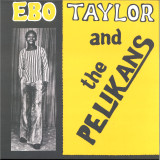
A Ghanaian funk LP from the afrofunk master. one of Ebo Taylor's rarest and most sought-after!
Ebo Taylor and The Pelikans is being reissued on vinyl by Comet Records, pressed on high quality vinyl, with label designs and artwork as per the original release.
Originally released by Ghanian Abookyi label in 1976, Ebo Taylor and The Pelikans is one of Taylor’s most elusive releases, and marked the first time he sang on the seminal Ghana Funk anthem “Come Along”.
The album saw the legendary musician, producer, composer and arranger joining forces with 12-piece Cape Coast Ghanian band ‘The Pelikans’ led by Bessa Simmona with rhythm guitarist Fifi Orleans Lindsay.
Put simply, there has never been a musician and artist quite like Ebo Taylor. As an artist, arranger, musician and producer he’s a combination of James Brown, Nile Rodgers and Quincy Jones: He not only created some of the greatest funk songs ever recorded but as much if not more than that, his genius as an arranger gave the signature sound to high life and afrobeat that was made famous by his one-time London roommate (from when they were both music students, in The early 1960s) Fela. And his funky guitar brought a percussive sound to the rhythm section that didn't exist before.
Nach dem Release von "Inspirations" im Jahr 2021, ist "More Inspirations" das zweite Album mit Coverversionen, mit denen Saxon ihren musikalischen Einflüssen huldigen, die Inspirationen, die sie in ihrer über 40-jährigen Karriere begleitet haben.
Als erste Single kommt die überraschende Version von "The Faith Healer" der The Sensational Alex Harvey Band. Ob es ihre Version von "We've Gotta Get Out Of This Place" von den Animals ist oder das dynamische "From The Inside" von Alice Cooper oder aber die grimmig vorgetragene Version von Kiss' "Detroit Rock City", More Inspirations ist ein unkonventioneller Trip der Saxon Männer, die ihre
Musik noch heute im Original zu Hause und im Tour Bus hören.
Produziert wurde das Ganze von Biff Byford, aufgenommen mit der Hilfe seines Sohnes Seb Byford, gemixt von Jacky Lehmann.
More Inspirations beinhaltet passionierte Songs von Rainbow, ZZ Top und Cream, das dröhnende "Razamanaz? von Nazareth, eine eigene,
geschmackvolle Version von "Substitute? (The Who) oder das mit einem fetten Groove angereicherte "Gypsy? von Uriah Heep. Diese Aufnahmen zeigen deutlich, aus welcher Ecke Saxon kommen.
Nach dem großen Erfolg der Seize the World Tour 2022 kommt Saxon im März mit einigen Dates zurück auf Tour, diesmal mit den deutschen Metal-Titanen Rage als Support.
The MYTHOS rocks! Neptune Kings are presenting a magnificent follow-up to their 2019 debut album "TRITON" in long-play format on vinyl.
"The Neptune Kings play intelligent fusion, which clearly has its roots in 70's music, as performed by bands and musicians such as Return To Forever, Spyro Gyra, The Crusaders, Lee Ritenour and celebrated by many others.", jazzandrock March 26th, 2019)
After their debut, which was equally celebrated by electrified fans and the euphoric press, the four guys from Germany are even upping the ante with their second album. Its title "MYTHOS" can be taken literally. Sophisticated compositions, spherical sounds and energetic songwriting take the listener into a fabulous world of sound, in which the imagination is tickled for 37 minutes and everyone can experience their very own MYTHOS!
Catchy melodies, which come alternately from Nicolas Kozuschek's keys, Daniel Hinte's guitar or Calvin Lennig's bass, run as a central theme through the 7 tracks. Collaborating their dynamic arrangements, in which Dennis Schendzielorz creates a great arc of suspense encompassing his usual energetic drumming, it never gets boring.
As a bonus, every vinyl comes with the CD of the album free of charge.
Oriental Beat by Hanoi Rocks gets the redux treatment, officially mixed and revived from the original sessions, and released on March 17th on deluxe vinyl, CD and digital formats. The CD and vinyl come with the song lyrics, checked and approved by Michael Monroe. Dubbed the “re(al) mix”, this 40th anniversary edition was mixed by Petri Majuri at E-Studios in Finland in collaboration with the band. Vocalist Michael Monroe calls this release “the longest and slowest album project ever,” stating that “40 years in the making, it's not just a remix, but the REAL MIX supervised and approved by Hanoi Rocks”. Recorded in London, UK in 1981, for 200 pounds a day, Oriental Beat was made during the height of the British punk + New Wave movement, when the band was hanging out with everyone from Phil Lynott to the Damned. Hanoi Rocks’ original drummer Gyp Casino says of Oriental Beat that: “Back in the days we gave heart, soul and a bit of pain to make this record something else” but the sound of the album, originally released in 1982, did not match their efforts at the time. Bassist Sami Yaffa called it “the worst sounding album of our career” and Michael Monroe said that “the producer of the album didn’t have a clue what the band was about and his mix of the album was horribly wrong”. Oriental Beat’s original engineer Peter Wooliscroft, was not a rock producer, and according to Hanoi Rocks’ manager Richard Bishop he “tried to mix the album to sound like Spandau Ballet”. Released before the band could remix or rerecord it, as the label had run out of money, and the master tapes had gone missing, the band has always considered the original mix of Oriental Beat to be a “disaster”. With the tapes mysteriously showing up in the Universal vault recently, the band was finally able to mix and resequence the album the way they wanted it to sound. Oriental Beat is a defining masterpiece made when Hanoi Rocks was about to explode onto the world scene and written at the absolute peak of lead guitarist Andy McCoy’s creativity as a songwriter. Rhythm guitarist Nasty Suicide says “only now, with stripping it down to the bare essentials and tweaking it to bring out what was really laid down it became our dream come true! THIS is what it's all about” as this definitive edition of Oriental Beat now fully displays the ultimate arrogance and attitude which defined the band.
- A1: Whispering Grass (Don't Tell The Trees) (Don't Tell The Trees)
- A2: To Each His Own
- A3: If I Didn't Care
- A4: Prisoner Of Love
- A5: I'm Beginning To See The Light
- A6: Address Unknown
- A7: You Were Only Fooling (While I Was Falling In Love) (While I Was Falling In Love)
- A8: We Three (My Echo, My Shadow & Me) (My Echo, My Shadow & Me)
- B1: Into Each Life Some Rain Must Fall (With Ella Fitzgerald)
- B2: The Gypsy
- B3: My Prayer
- B4: You're Breaking My Heart
- B5: I Don't Want To Set The World On Fire
- B6: Stop Pretending (So Hep You See) (So Hep You See)
- B7: Maybe
- B8: Don't Get Around Much Anymore
Along with The Mills Brothers, the Ink Spots blazed the way for
black music groups, creating a path for many to follow. They
proved tremendously influential, with Bill Kenny's lead tenor
inspiring such as Sonny Til (The Orioles), Curtis Mayfield (The
Impressions), Frankie Lymon (The Teenagers) and scores of
others, while Hoppy Jones's trademark talking bass role inspired
an equal number of followers.
Daje Funk Records is back with Vol. 4 of the legendary ‘Slam Dunk’ series of EPs, this time featuring Souldynamic - Musta - Les Inferno - Groovemasta !!!
On the A-side, the supremely talented Souldynamic kicks things off with ‘Tales From Q.J.’ - a delicious chunk of late summer grooves bathing in sun-drenched keys and strings. The rolling bassline acts as the hook, and what follows is a gloriously constructed melodic masterpiece sprinkled with heavenly vocals. Fall in love with this, you will.
A2 sees Italian maestro Musta crack open the deep reggae vibes with ’Soup’. You’ll find it hard to resist this bubbling broth of twisted, rhythmic precision bass, ‘one drop’ beats and tight, short skanking guitar riffs. With ‘Soup’, Musta demonstrates his complete understanding of this genre. Darkened room or bar sun terrace - you decide.
On the B-side, label co-owner Les Inferno spices things up several notches with the aptly titled ‘Hot Burn’. And boy, does this track sizzle. A hustling rhythm that takes over your dance nodes from the get go, Les Inferno lovingly sprinkles Latino and Afro vibes all over this searingly hot dish. It’s furious, intense and relentless - and the brass breakdown acts as the tabasco sauce. Drink water. Plenty of water.
Closing Vol. 4 out on B2 is Groovemasta with ‘That Funk’. A track that treats its funky beats and chunky bass like royalty, this 118bpm monster wastes no time in demanding ‘Gimme that funk’. And you’re gonna hand it over. The swirling, gyrating sexiness of ‘That Funk’ can’t be understated - impossible not to lose yourself in this guaranteed dance floor time bomb.
Slam Dunk Vol. 4 seriously raises the bar for this already excellent series, and has to be in any self-respecting vinyl junky’s record box. Grab it while you can!
- A1: Freight Train
- A2: Careless Love
- A3: Sail Away Ladies
- A4: Streamline Train
- A5: Take This Hammer
- B1: No Other Baby
- B2: Gypsy Davy
- B3: This Loving Light Of Mine
- B4: In The Evening When The Sun Goes Down
- B5: Yonder Comes A Sucker
- B6: Travelin' Blues
- C1: Gov Don't Allow
- C2: Come On In
- C3: Streamlined Cannonball
- C4: Greenback Dollar
- C5: Oh Lonesome Me
- C6: I Wish I Was An Apple On A Tree
- C7: I'm So Lonesome I Could Cry
- D1: I'm Movin' On
- D2: Cold Cold Heart
- D3: Worried Man Blues
- D4: Cotton Fields
- D5: Green Rocky Road
Blue Vinyl[36,93 €]
Es dürfte nicht überraschen, dass Van Morrison ein vom Skiffle inspiriertes Album aufgenommen hat, denn Van Morrisons Liebe zum Skiffle reicht bis in seine Kindheit zurück.
Er verbachte viel Zeit in dem berühmten Plattenladen Atlantic Records in Belfast, wo er Folk, Blues und Jazz aus dem frühen 20. Jahrhundert hörte.
Es dauerte nicht lange, bis Van Morrison in der Schule in einer Skiffle-Band spielte.
Mehrere Jahrzehnte später besinnt sich Van Morrison mit seinem neuen Album ”Moving On Skiffle”, das am 10. März 2023 erscheinen wird, wieder auf seine Liebe zu diesem Genre. Der Fokustrack ”Streamline Train” kündigt das kommende Album mit insgesamt 23 Titeln an.
Mit ”Moving On Skiffle” greift Van Morrison einen Musikstil auf, der Mitte der 1950er Jahre in Großbritannien explosionsartig aufkam, und
verleiht ihm ein Maß an Raffinesse und Soulfulness.
- A1: Freight Train
- A2: Careless Love
- A3: Sail Away Ladies
- A4: Streamline Train
- A5: Take This Hammer
- B1: No Other Baby
- B2: Gypsy Davy
- B3: This Loving Light Of Mine
- B4: In The Evening When The Sun Goes Down
- B5: Yonder Comes A Sucker
- B6: Travelin' Blues
- C1: Gov Don't Allow
- C2: Come On In
- C3: Streamlined Cannonball
- C4: Greenback Dollar
- C5: Oh Lonesome Me
- C6: I Wish I Was An Apple On A Tree
- C7: I'm So Lonesome I Could Cry
- D1: I'm Movin' On
- D2: Cold Cold Heart
- D3: Worried Man Blues
- D4: Cotton Fields
- D5: Green Rocky Road
Black Vinyl[36,93 €]
Es dürfte nicht überraschen, dass Van Morrison ein vom Skiffle inspiriertes Album aufgenommen hat, denn Van Morrisons Liebe zum Skiffle reicht bis in seine Kindheit zurück.
Er verbachte viel Zeit in dem berühmten Plattenladen Atlantic Records in Belfast, wo er Folk, Blues und Jazz aus dem frühen 20. Jahrhundert hörte.
Es dauerte nicht lange, bis Van Morrison in der Schule in einer Skiffle-Band spielte.
Mehrere Jahrzehnte später besinnt sich Van Morrison mit seinem neuen Album ”Moving On Skiffle”, das am 10. März 2023 erscheinen wird, wieder auf seine Liebe zu diesem Genre. Der Fokustrack ”Streamline Train” kündigt das kommende Album mit insgesamt 23 Titeln an.
Mit ”Moving On Skiffle” greift Van Morrison einen Musikstil auf, der Mitte der 1950er Jahre in Großbritannien explosionsartig aufkam, und
verleiht ihm ein Maß an Raffinesse und Soulfulness.
I:Cube has made a new album. It is a very “hands on” album, as the eight tracks on show were created almost entirely by improvising with electronic hardware – synthesizers, sequencers, drum machines and effects units – and recorded in real time, with very little after-editing. It is also his first album in a decade, should you be keeping track.
During the time he spent recording it, which was in part inspired by the processes behind his ‘Cubo Live Sessions’ series, I:Cube had fun, experimented, unleashed the raw, primitive energy of his machines, and emptied his head of thought. The resultant tracks are instinctive, immersive and otherworldly, driven by the emotion of the moment rather than the formulaic structures of dance music. They are unpolished and immediate, but also immersive and sincere.
Think of it as a soundtrack to time spent alone in the studio, daydreaming in darkness and light, translating mental and physical messages in real time. It is not calculated, overblown or over-produced like much modern electronic music, but gently odd, engaging and pleasingly rough round the edges. In some ways, it is I:Cube’s most personal and emotional album to date.
Matt Annis
- A1: Under The Moon
- A2: Lonely Dance
- A3: Gymnopedies
- A4: Love Dream
- A5: Moonlight Sonata
- A6: Sentimental
- B1: Summer
- B2: Penthouse Suite
- B3: Florescence
- B4: The Swan
- B5: Winter Morning
- B6: Canon
In den letzten Jahren verbreitete sich ein neues Musikgenre vor allem durch Streaming-Playlisten: »Lo-Fi Beats« sind ruhige instrumentale Hip-Hop-Stücke, die dank ihrer verrauschten, leiernden Ästhetik klingen, als kämen sie direkt von einer mehrfach überspielten Kassette.
L.Dre aus Los Angeles ist einer der Meister dieses Stils, doch auf seinem Album LoFi Symphony für Deutsche Grammophon hat er sich einer vollkommen neuen Herausforderung gestellt: Lo-Fi Beats mit hochqualitativen Aufnahmen klassischer Orchestermusiker:innen zu verbinden.
Der Produktionsprozess von LoFi Symphony gestaltete sich deutlich aufwendiger als bei einem üblichen Projekt in diesem Genre. In einem ersten Arbeitsschritt sampelte L.Dre die bekannten Stücke für eine
Rohversion eines Beats, dann wurde die »neue« Komposition transkribiert und einem Orchester aus ausgewählten Musiker:innen zur Neueinspielung vorgelegt.
Gerade die Spannung, die sich aus der Kombination von Lo-Fi-Ästhetik und Hi-Fi-Aufnahmen ergibt, macht LoFi Symphony so lebendig, interessant und innovativ. Streicheraufnahmen treffen auf Vintage-Sounds eines originalen Steinway-Flügels aus den
1920er-Jahren, auf das genretypische Vinylknistern und die charakteristisch gedämpften Drumsounds.
»Dies ist definitiv anders als alles, was ich je zuvor gemacht habe«, bringt er die Besonderheit dieses Albums auf den Punkt. »Ich glaube nicht, dass so etwas überhaupt schon mal gemacht wurde.«
Matador
Gaz Coombes veröffentlicht die Neuauflage seines zweiten Soloalbums – ”Matador” - das 2015 erschien.
Ein Gefühl von Freiheit durchdringt jede Sekunde des Albums, das unter anderem die 2013er Single ”Buffalo” enthält. Von der astralen Pracht von ”The Girl Who Fell To Earth” bis zu den träumerischen Klängen von ”Oscillate” ist es der Sound eines Songwriters, der musikalische Grenzen wie Schnee zum Schmelzen bringt und Elemente von Neu!, Disney-Musicals, den schwedischen Psychedelikern Goat, Gyorgy Ligeti und Eno in einer eisigen Klanglandschaft vereint, die ebenso anspruchsvoll wie schön ist.
Das Ergebnis ist ein Album im klassischen Sinne. ”Matador” ist der Sound eines der größten britischen Songwriters, der mit Freude in die Zukunft blickt.
World’s Strongest Man
”World’s Strongest Man” ist die großartige Neuauflage des dritten Soloalbums von Gaz Coombes, das auf das 2015 erschienene ”Matador” folgte. Inspiriert von Grayson Perrys ”The Descent of Man”, Frank Oceans ”Blonde”, kalifornischem Gras, britischen Wäldern, unkontrollierter Männlichkeit, Neu! und HipHop (und vielem mehr), ist es eine wahrhaft bemerkenswerte Sammlung von elf zutiefst persönlichen Songs, die alle von einer raumfüllenden, fesselnden Melodie begleitet werden. Vom tiefgründigen Titeltrack bis
zum mitreißenden ”Deep Pockets”, über die wunderschöne rhythmische Ballade ”Slow Motion Life”, ist ”World’s Strongest Man” ein kühnes, ehrgeiziges, frei denkendes, zukunftsweisendes Rock’n’Roll-Album.
Country songwriter from Brooklyn's indie underground, Dougie Poole blurs the lines between genre and generation on his third solo album, The Rainbow Wheel of Death. Rooted in sharp songwritingvand the organic sounds of a live-in-the-studio band, it's a classic-sounding record for the modern world. The Rainbow Wheel of Death's title nods to the colorful pinwheel that appears onscreen whenever a computer's application stalls. For Poole _ who found himself working as a freelance computer programmer once the pandemic brought his touring schedule to a temporary halt in 2020 _ it's also a reference to the holding pattern that's left much of society feeling stuck, unable to move ahead in an uncertain world. That feeling was pervasive when he in his New York City bedroom and wrapping up the songwriting process in the recording studio itself. Once hailed as the "patron saint of millennial malaise" for his sardonic wit and topical, tongue-in-cheek songwriting, Poole broadens his reach here. "High School Gym" builds a bridge between 2020s lo-fi textures and 1980s pop vibes, while "Must Be In Here Somewhere" _ whose narrator sits at a lap top, searching through "every server burning in North Carolina" for a digital souvenir of a long-lost relationship _ mixes modern concerns with classic country instrumentation. If records like 2017's Wideass Highway and 2020's breakthrough release The Freelancer's Blues told stories about uninspired Millennials languishing in dead-end jobs and no-good relationships, then The Rainbow Wheel of Death focuses on more universal issues like mortality, love, and the passing of the time. With The Rainbow Wheel of Death, Dougie Poole breathes new life into country music, retaining the acclaimed elements of his previous work _ drum machines, synthesizers, and his deep-set voice _ while pushing toward something warm, organic, and prismatic.
- A1: Olga Gutierrez - A Veces He Pensado
- A2: Hermanas Mendoza Suasti - Alas De Sombra
- A3: Benitez Y Valencia - Amor En Tus Ojos
- A4: Caspi Shungo - Mal Pago
- A5: Gladys Viera - Palomita Cuculi
- A6: Orquesta Nacional - Ponchito Al Hombro
- B1: Lida Uquillas - Tengo Un Amor
- B2: Los Inaquingas - Blanco Lirio
- B3: Segundo Bautista - La Naranja
- B4: Benitez Y Valencia - Lindos Ojos
- B5: Los Barrieros - Siendo Triste Vivo Alegre
- B6: Segundo Bautista - Soledad
- C1: Raul Emiliani Y Hector Bonilla - Imploracion Indigena
- C2: Caspi Shungo - Indio Soy
- C3: Duo Aguayo Huayamabe - Mi Ultima Ilusion
- C4: Conjunto Caife - Huasipichay
- C5: Hermanas Mendoza Suasti - Para Ti
- C6: Olga Gutierrez - Despedida
- C7: Lucho Munoz - Lamparilla
- D1: Hermanos Valencia - Destrozado Corazon
- D2: Luis Alberto Valencia - Toro Barroso
- D3: Los Barrieros - Ashcu De Primo
- D4: Duo Aguayo Huayamabe - Panuelo De Penas
- D5: Hermanas Mendoza Suasti - Alma Enamorada
- D6: Benitez Y Valencia - Lamparilla
- D7: Orquesta Nacional - Atahualpa
Impatiently returning to the golden age of Ecuadorian musica national, this second round of retrievals is more of a selectors’ affair: less reverent, more free-flowing, with more twists and turns. There is no let-up in musical quality, maintaining the same judicious, heart-piercing balance between emotional desolation and dignified endurance, the same bitter-sweet play between affective excess and musical sublimity.
This time around, the woman steal the show. Laura and Mercedes Suasti were child stars, with an exclusive Radio Quito contract. Unlike nearly all the men here, they lived long and prospered: Mercedes died last year, at the age of 93. Gladys Viera and Olga Gutierrez both came to Ecuador from Argentina. To start, Gladys plugged the scandalous new Monokini swimwear; Olga performed for visiting British royalty in 1962. Olga was glamorous but tough. She would make little of the amputation of one of her legs: ‘I don’t sing with my leg.’ She is accompanied on our opener by quintessentially reeling, sultry musica national: haunted-house organ, twinkling xylophone, Guillermo Rodriguez’ heart-plucking guitar-playing, and lilting, dance-to-keep-from-crying double-bass. ‘Sometimes I think that you will leave me with no memories,’ she sings, ‘that you hold only disappointments in store for me… In the future your love will search me out, full of regret. By then it will be too late, there will be no consolation, only disappointment awaiting you.’
Other highlights include the two contributions of Orquesta Nacional: Ponchito Al Hombro, like an off-the-wall forerunner of the Love Unlimited Orchestra, beamed into the tropics from an unknowable time and space; and the tone poem Atahualpa, a mystical yumbo invoking Quito’s most ancient inhabitants, the Kichwa. Also the tremulous, gypsy-flavoured violin-playing of Raul Emiliani, who arrived in Quito from Italy, suffering PTSD from the Second World War; the inscrutable, sardonic experimentalism of organist Lucho Munoz; and the mooing and whistling of Toro Barroso — school of Lee Perry — in which a muddy bull dashes home to his darling chola, fearless, full of desire.
Lavishly presented, with a full-size, full-colour booklet, with transporting art-work and expert notes. Luminous sound, by way of Abbey Road, D&M and Pallas.
Repress !
The long-awaited reissue of the best ever album of rare Eastern and psychedelic Jazz music by this famous Hungarian guitarist
Gabor Szabo, originally released in 1968. For the first time as extended edition with 2 bonus tracks: radio versions of Fire Dance
/ Ferris Wheel from the 1969 7” single 7”. Deluxe 8-sided Digipak CD and Gatefold Vinyl come with long, exclusively written
inner notes by the famous researcher and biographer Douglas Payne. Remastered by Martin Bowes at Cage Studios (UK).
Gabor Szabo was one of the most original guitarists to emerge in the 1960s, mixing his Hungarian folk music heritage with a deep
love of jazz and crafting a distinctive, largely self-taught sound. Born in Budapest, on March 8, 1936, Szabo was inspired by a Roy
Rogers cowboy movie to begin playing guitar when he was 14 and often played in dinner clubs and covert jam sessions while still
living in his hometown. He escaped from his country at age 20 on the eve of the Communist uprising and eventually made his way
to America, settling with his family in California.
He attended Berklee College (1958-1960) and in 1961 joined Chico Hamilton's innovative quintet featuring Charles Lloyd. Urged
by Hamilton, Szabo crafted a most distinctive sound; as agile on intricate, nearly-free runs as he was able to sound inspired during
melodic passages. Szabo left the Hamilton group in 1965 to leave his mark on the pop-jazz of the Gary McFarland quintet and the
energy music of Charles Lloyd's fiery and underrated quartet featuring Ron Carter and Tony Williams.
Szabo initiated a solo career in 1966, recording the exceptional album, Spellbinder, which yielded many inspired moments and
"Gypsy Queen," the song Santana turned into a huge hit in 1970. Szabo formed an innovative quintet (1967-1969) featuring the
brilliant, classically trained guitarist Jimmy Stewart and recorded many notable albums during the late '60s. The emergence of
rock music (especially George Harrison, Eric Clapton, and Jimi Hendrix) found Szabo experimenting with feedback and more
commercially oriented forms of jazz.
During the '70s, Szabo regularly performed along the West Coast, hypnotizing audiences with his enchanting, spellbinding style.
From 1970, he locked into a commercial groove, even though records like Mizrab occasionally revealed his seamless jazz, pop,
Gypsy, Indian, and Asian fusions. Szabo had revisited his homeland several times during the '70s, finding opportunities to perform
brilliantly with native talents. He was hospitalized during his final visit and died in 1982, just short of his 46th birthday.
Repress !
The long-awaited reissue of the best ever album of rare Eastern and psychedelic Jazz music by this famous Hungarian guitarist
Gabor Szabo, originally released in 1968. For the first time as extended edition with 2 bonus tracks: radio versions of Fire Dance
/ Ferris Wheel from the 1969 7” single 7”. Deluxe 8-sided Digipak CD and Gatefold Vinyl come with long, exclusively written
inner notes by the famous researcher and biographer Douglas Payne. Remastered by Martin Bowes at Cage Studios (UK).
Gabor Szabo was one of the most original guitarists to emerge in the 1960s, mixing his Hungarian folk music heritage with a deep
love of jazz and crafting a distinctive, largely self-taught sound. Born in Budapest, on March 8, 1936, Szabo was inspired by a Roy
Rogers cowboy movie to begin playing guitar when he was 14 and often played in dinner clubs and covert jam sessions while still
living in his hometown. He escaped from his country at age 20 on the eve of the Communist uprising and eventually made his way
to America, settling with his family in California.
He attended Berklee College (1958-1960) and in 1961 joined Chico Hamilton's innovative quintet featuring Charles Lloyd. Urged
by Hamilton, Szabo crafted a most distinctive sound; as agile on intricate, nearly-free runs as he was able to sound inspired during
melodic passages. Szabo left the Hamilton group in 1965 to leave his mark on the pop-jazz of the Gary McFarland quintet and the
energy music of Charles Lloyd's fiery and underrated quartet featuring Ron Carter and Tony Williams.
Szabo initiated a solo career in 1966, recording the exceptional album, Spellbinder, which yielded many inspired moments and
"Gypsy Queen," the song Santana turned into a huge hit in 1970. Szabo formed an innovative quintet (1967-1969) featuring the
brilliant, classically trained guitarist Jimmy Stewart and recorded many notable albums during the late '60s. The emergence of
rock music (especially George Harrison, Eric Clapton, and Jimi Hendrix) found Szabo experimenting with feedback and more
commercially oriented forms of jazz.
During the '70s, Szabo regularly performed along the West Coast, hypnotizing audiences with his enchanting, spellbinding style.
From 1970, he locked into a commercial groove, even though records like Mizrab occasionally revealed his seamless jazz, pop,
Gypsy, Indian, and Asian fusions. Szabo had revisited his homeland several times during the '70s, finding opportunities to perform
brilliantly with native talents. He was hospitalized during his final visit and died in 1982, just short of his 46th birthday.
Renoir Of The Toys is a deep dive into the world of Youri Kun, the nom de plume of Japanese guitarist, singer and songwriter Hiroshi Nar. It follows a similar compilation, Unheld Ball, released in 2022 on Japanese label Inundow; like that album, Renoir Of The Toys draws from the rich catalogue of outsider psych-garage and rock recorded by Youri Kun over the past two decades. Deeply wired into the history of Japanese underground music, Nar was a founding member of legendary ‘70s outfit Datetenryu, and a member of both Brain Police (Zuno Keisatsu) and Les Ralllizes Dénudés (Hadaka No Rallizes), appearing on the latter’s ’77 Live.
After going to ground during the 1980s, Nar started making music with Niplets in the mid-90s, and releasing music at a prolific pace in 2000 – an excellent run of (sometimes archival) CD-Rs on the Hello Goodbye Studio label, both solo, and with his groups Molls, Niplets and Port Cuss; an album on P.S.F. by Jokers, where he was joined by fellow Rallizes member Yokai Takahashi, and drummer Toshiaki Ishizuka (Brain Police, Vajra, Cinorama, etc.); and sixteen albums (and counting) as Youri Kun, for labels Gyunne Cassette, Inundow, and Hören. He’s also fallen in with the Acid Mothers Temple crowd, guesting on a few of their albums, and recording a live set with Kawabata Makoto’s Nishinihon trio.
All Nar’s music shares a deceptive primitivism; it moves with the simplicity of the best 1960s garage punk, but its edges are blurred and stretched, allowing for all kinds of weird, elliptical, and psychedelic moves to happen in its margins. His guitar playing on songs like “Kakunin” (from 2011’s Yamaimo Boogie) shimmies and slurs magnificently; “Kurokami”, from 2012’s Su, has clanking six strings scrawling over loose, spaced-out synth; there are clunky psychobilly moves (“Oshiro no Ninjya”), spirited rave-ups for rattling organ and sputtering guitar (“Totsugeki”), and some lovely, drowsy, melancholy moments (“Sora”).
The constant throughout is Nar’s blues-blurred, drawling voice, as unique a tool as the non-idiomatic speak-sing styles of solo Syd Barrett, Jad Fair, or Dave E. McManus. There are also three Les Rallizes Dénudés covers here, where Nar locates the pop genius at the heart of songs like “Shiroi Yoru” and amplifies this with his simple garage-reverential take on things. Renoir Of The Toys is yet more evidence that Hiroshi Nar was, and is, one of Japan’s musical visionaries, a lonesome voice dedicated to a singular, streamlined vision, one that’s in eternal pursuit of the joy and kicks at the heart of rock’n’roll, and a reminder of what a great, unpretentious rock’n’roller truly should be.
- A1: Lucky Dog
- A2: New Fixture
- A3: Shakes The Walls At Night
- A4: Here Come The Barbarians
- A5: I've Told You Better
- A6: Pressure Points
- A7: Brain Dial
- A8: Start A House Fire
- B1: My Head
- B2: Some Blood For Luna
- B3: Some Marionette
- B4: Blume (Like A Child) (Like A Child)
- B5: Field For The Lion's Cage
- B6: Yankee Boy
- B7: My Sore Eyes
- B8: Gym Shoe Rocket Show
- B9: Goodbye Lucky Dog


