Amazzonia is the new album by Alex Puddu and the second volume following the erotic series
I Desideri Di Sadie (Piaceri Tropicali), where the inspiration took us to an imaginary journey in Southeast Asia. With this new album “Amazonia,” Alex Puddu takes us on a trip to Central America, the Caribbean islands, and South America, exploring a new groove of Latin-funk, reggae, and seductive sleazy disco . Here, Sadie’s adventures unfold, from the jungle to the cities and onto the enchanting tropical beaches. Another journey through temptations, on the islands, discovering the beauty of Alex Puddu’s “Erotic World.”
"Amazzonia" was written, arranged, produced, and recorded by Alex Puddu, who plays all the instruments on the album himself. He was assisted by two of the best bassists on the Italian nu-disco and Balearic scene: Domenico Andria—who has played with Pellegrino/Zodyaco and worked closely with Alex Puddu on several releases—and Daniele Labbate, who has performed as a session bassist for artists including Nu Genea and Mystic Jungle.
Other featuring musicians on the album are:
Imelda : Lead and backing vocals
Adrian Wilding: Vocal on Gimme Dub
Hendrik Jørgensen: Trumpet
Jesper Løvdal: Saxophone
Forty years of cassette releases, pressed for the first time on vinyl
First of two instalments exploring the previously unreleased sonic archives of one of Poland’s most enigmatic
living artists - with its first volume focused on his deep listening practice and spiritual reverie (recorded 1990–2013)
The last time Andrzej Dudek-Dürer took a banknote bearing the face of the Polish anarchist Jarosław Dąbrowski from his pocket to trade it for a pair of shoes was in 1969. He bought them for 120zł - the equivalent of 100€ today - and never replaced them since then. Only rebuilt them, year after year, drawing a needle and thread through the leather each time it split, closing one wound before the next one opened. It became a ritual of precision, stitching a record of another year into their soles.
That same year, in Wrocław, he arrived at a conclusion that would recalibrate everything that followed. Convinced he was the reincarnation of Albrecht Dürer, he adopted the surname Dudek-Dürer, stopped cutting his hair and began wearing the same garments every day. It was the first ritual of many, though he wouldn't have called it that yet. Look closely enough, over the decades, and it is always the same gesture, returning in different material: hair growing in a single unbroken strand, a needle drawing thread through leather, sitar strings pulled taut across a neck he built with his own hands and magnetic tape spooling forward inside the cassette boxes stacked against his walls.
None of this began in a vacuum. Dudek-Dürer emerged from the Wrocław neo-avant-garde, in a Polish art world where an exhibition could be cancelled overnight by the stroke of a censor's pen. In 1973, his exhibition Auto-crucifixion was shut down by the state, and for a time he found himself blocked from exhibiting his own art at all - the one force in his life that ever came close to cutting the thread.
He seemed to experience it differently. In 1974, after long, patient research into sitar craftsmanship, he built his first prototype with his brother, a knowledgeable luthier. In 1978, in a smoked-out jazz club, he took his first steps into sound recording with the unreleased album Jazz From Underground with his first band. By 1979, recognition started to travel further than he could.
Turning toward Far-Eastern philosophy, meditation and the idea of reincarnation was another language of freedom for him. It was a way of claiming an inner territory the state could not reach, a border it could not close. Mail Art served a parallel function, reaching further out: in a country that restricted travel and expression, sending and receiving art through the postal system became an act of quiet rebellion.
The body, in his understanding, is only an envelope readied for constant transformation. From this came Metaphysical Telepathy: during the years he could not leave Poland, he treated that confinement as a rehearsal room, sending his mind out ahead on the same thread his body would later follow. Living Sculpture grew from the same root with performances of stillness beside static art objects, until the boundary between the object and the man beside it simply dissolved. Camera Meditation extended the same instinct into photography: a shutter click flattening three dimensions into two so that a single instant could be held forever. Inspired by the pioneers of self-portrait photography like Robert Cornelius, he used it to document time itself, and kept explaining to me: "You know. This is not about vanity. This is about observing time passing.”
The isolation did not end suddenly. It ended the way his own philosophy had already predicted it would, from the inside first. Mail Art quietly solved the problem politics couldn't. Correspondence built during years of confinement slowly worked its way through doors the state itself had kept locked. Contacts made through folded paper and stamps became invitations. Ultimately, invitations became passports.
In 1983 he made his first trip outside Poland, to Germany, in search of the audio technology he couldn’t get his hands on before. In 1985, he was invited by the Indian embassy in Poland to give a sitar concert on an instrument he had spent a decade patiently stringing together - half sitar, half tanpura, built from patience and determination. After the collapse of the People's Republic of Poland, the travels kept unspooling: South Korea, then Mexico, then Australia, Canada, New Zealand, Singapore, Japan and the United States - each stop leaving behind its own small knot of tape, tied off and carried home.
In the decades since, recognition arrived at the same unhurried pace: he conducted workshops at UC Berkeley, served as vice-president for artistic affairs of the Union of Polish Art Photographers and the Union of Polish Visual Artists between 2010 and 2014 and received the Bronze Medal for Merit to Culture - Gloria Artis. His visual work gradually entered collections including the National Museums of Warsaw, the Stedelijk Museum, Tate Modern, MoMA and the Venice Biennale. His musical practice, by contrast, never found that kind of room - left to circulate quietly, sharing his cassette tapes directly, waiting for someone willing to follow it further.
It took months before I could find a way to reach Andrzej Dudek-Dürer - his presence online is very close to nonexistent. Surprisingly, LinkedIn turned out to be the only door still open, a faintly absurd irony given everything else about him. I packed the strict minimum for a three-day trip and an empty notebook and made my way to Wrocław. His headquarters sits in the neighbourhood of Grabyszyn: a two-storey pre-war house that has belonged to his family for generations. The man who opened the door was long-haired, long-bearded, in his trademark leather shoes and patched jeans. We sat in his living room, in front of a computer where decades of recordings sat organised in cryptically named files, surrounded by books and objects that had arrived one layer at a time, leaving room for only two chairs in the middle. His shoes sat by the door, rebuilt so many times they had become their own quiet sculpture. Cassette tapes filled boxes against the walls, almost unlabelled, each one a spool of thread holding decades of sound that had never once been asked for, until now.
I listened for hours: meditating in front of strangers on the porch of a Seoul temple until the tourists stopped taking photos and simply waited with him; a stand-off with border guards at the US–Mexico crossing over an instrument they couldn't identify and didn't trust; a session with the Stockhausen family that he still, decades later, describes like it happened last week. All of it interrupted, occasionally, by the smell of soup boiling and fresh bread warming on the ceramic stove. After two days, it felt like being handed the end of a very long thread and asked, gently, to keep following it. I left with a USB drive holding his full discography, signed with his unmistakable signature.
Astral Meditations From A Living Statue is a length of that thread, drawn out from the boxes stacked against his walls - recordings gathered from different rooms, different countries, different decades. This first record breathes slowly: incense-thick, meditative, built for stillness. A cutting-edge séance in outer space where machines learn how to dream.
It begins with the neo-classical improvisations of Andrzej, space-delayed, recorded at Klub Muzyki i Literatury in Wrocław in 2002. 'When..So' opens the curtains with a deep-rooted meditation accompanied by slow-decaying piano figures illuminated by a candle-lit spirit gathering.
Los Angeles, 1990: a dormant villa, a grand piano, the voice of Bonnie Barnett. 'Exception' is captured in a single room, in a single afternoon - voice and keys circling each other, neither one leading, until the silence between the notes starts to feel like the instrument.
'The Meta...' and 'Tired Of...', recorded at Studio Morandi in Ponte Nossa, Italy, in 1992, settle into a sitar drone built entirely from patience - overtones stacking and beating against each other, strung by a man who never once set foot in India. 'Mastery Of...' follows, recorded the same year at Studio Suski in Łomianki, pushing that same hum further still, until pitch dissolves into a spectral reverie. 'Transcendental Sound', from 2000, closes the first record in a slow bath of celestial frequency - better heard beside the shores of the Odra river.
More than fifty years after deciding that a life could become an artwork, Andrzej Dudek-Dürer continues to inhabit that decision. His shoes keep wearing thin against the earth's crust. His hair keeps growing, one strand at a time. His cassette tapes keep spooling in the dark of their boxes.
Now the thread finds its last shape: a single unbroken groove, spiralling inward from the outer edge to the label at the centre. Never cut - the way nothing else in his life ever was. Drop the needle and it will find that groove and follow it, the same way a needle once followed leather, once followed a border it couldn't cross, once followed string into an instrument that didn't exist until he built it. This record is the other end of a thread that has been travelling for fifty years. For the length of both sides, it rests here, in your hands. This is a timeless proof that the Lord of the New Age was never lost."
12 Inch Lovers - Celebrating 15 Years of Vinyl Culture!
Belgian vinyl-only event concept 12 Inch Lovers celebrates its 15th anniversary with two new additions to its established sampler series. Now entering its seventh year, the series reflects the music and atmosphere of the events, combining dancefloor favourites with carefully selected discoveries.
Samplers 13 & 14 bring together sought-after classics, hard-to-find gems and selected tracks and versions making their vinyl debut. Each volume features nine full-length tracks across two 12-inch records, making both releases essential additions for DJs and collectors alike.
Sampler 13 includes Sorry I Am Late by Kollektiv Turmstrasse, Marea (We've Lost Dancing) by Fred again.. & The Blessed Madonna, and Lifetimes by Slam feat. Tyrone Palmer. Further highlights include Tocadisco's Morumbi and the Martijn ten Velden Remix of Guitarra G.
Sampler 14 features Dreams by Deep Dish feat. Stevie Nicks, All That Matters by Kölsch feat. Troels Abrahamsen, and the NiCe7 Remix of It's Yours by Jon Cutler feat. E-Man. Belgian favourites Decoy & Roy with Inner Life and The Mackenzie with Higher In The Sky add to the selection.
Rooted in 15 years of vinyl-only events, these two compilations capture the distinctive sound of 12 Inch Lovers, offering lasting appeal for long-time fans, record collectors and DJs looking to bring proven classics back to the dancefloor.
Nothing But (Future) Classix, Straight From Vinyl!
Sampler 13 opens with Kollektiv Turmstrasse - Sorry I Am Late, the club track many will recognise from Solomun's legendary Boiler Room set in Tulum. Its unmistakable bassline sets the mood straight away. Next comes Skape D'Jear - Everything In You (Dedicated Clubba Mix), a
lesser-known house gem making its first appearance on vinyl.
Side B features Karmon feat. Terry Shand - Take My Hand, a melodic house track with a strong vocal performance that remains hard to find on vinyl. Tocadisco - Morumbi then takes things up a notch. With its driving percussion, this is a record that has blasted through the speakers of countless Belgian clubs and beyond.
Side C brings Fred again.. x The Blessed Madonna - Marea (We've Lost Dancing). A track about missing the shared experience of dancing, it became closely linked to the return to the dancefloor for many. Next, we head to Berlin with Kotai - Sucker DJ (Marcin "Highfish" Kozlowski Remix), a distinctive club classic that still holds its own. Daddy's Groove & Little Nancy - It's Not Right, But It's Okay closes this side with a groovy reworking of Whitney Houston's well-known song, now available on vinyl for the first time.
Side D captures the spirit of Ibiza with G Club presents Banda Sonora - Guitarra G (Martijn ten Velden Remix). Its recognisable guitar lines and gradual build make this a track to lose yourself in. This remix makes its vinyl debut here. Closing the sampler is Slam feat. Tyrone Palmer -
Lifetimes. Palmer's distinctive voice and the Scottish duo's outstanding production make this a record that still hits home after all these years.
Nine tracks across two 12-inch records, each in its full-length version. Much-loved classics, lesser-known gems and tracks making their vinyl debut. Selected with the same love for music that has driven 12 Inch Lovers' events for 15 years.
12 Inch Lovers - Celebrating 15 Years of Vinyl Culture!
Belgian vinyl-only event concept 12 Inch Lovers celebrates its 15th anniversary with two new additions to its established sampler series. Now entering its seventh year, the series reflects the music and atmosphere of the events, combining dancefloor favourites with carefully selected discoveries.
Samplers 13 & 14 bring together sought-after classics, hard-to-find gems and selected tracks and versions making their vinyl debut. Each volume features nine full-length tracks across two 12-inch records, making both releases essential additions for DJs and collectors alike.
Sampler 13 includes Sorry I Am Late by Kollektiv Turmstrasse, Marea (We've Lost Dancing) by Fred again.. & The Blessed Madonna, and Lifetimes by Slam feat. Tyrone Palmer. Further highlights include Tocadisco's Morumbi and the Martijn ten Velden Remix of Guitarra G.
Sampler 14 features Dreams by Deep Dish feat. Stevie Nicks, All That Matters by Kölsch feat. Troels Abrahamsen, and the NiCe7 Remix of It's Yours by Jon Cutler feat. E-Man. Belgian favourites Decoy & Roy with Inner Life and The Mackenzie with Higher In The Sky add to the selection.
Rooted in 15 years of vinyl-only events, these two compilations capture the distinctive sound of 12 Inch Lovers, offering lasting appeal for long-time fans, record collectors and DJs looking tobring proven classics back to the dancefloor.
Nothing But (Future) Classix, Straight From Vinyl!
Sampler 14 opens with Jon Cutler feat. E-Man - It's Yours (NiCe7 Remix). This remix pairs the recognisable vocal with a punchy house groove. A fresh take on a familiar classic that sets the tone straight away. Next comes Sterac Electronics - Destination Reached, with Steve Rachmad
showcasing his feel for electronic funk. Tight rhythms and an infectious groove make this a record with lasting appeal.
Side B features Swen Weber - Maya (Rerub), a powerful club track whose build and driving rhythm keep the dancefloor moving. Deep Dish feat. Stevie Nicks - Dreams then delivers a familiar moment. Stevie Nicks' distinctive voice and Deep Dish's warm, immersive house sound
give this well-known song a character all of its own.
Side C brings Kölsch feat. Troels Abrahamsen - All That Matters, a melodic track in which the vocaland gradual build complement each other beautifully. The kind of record that feels equally at home deep into a club night or under the first rays of sunshine at a festival. Next is Chew Fu feat. Steve Clisby - Purple Rain (Mousse T.'s Home A Lone Mix). Mousse T. gives this interpretation of the Prince classic a warm, soulful house groove, leaving plenty of room for Steve Clisby's voice to shine.
On side D, Jürgen Paape - We Love takes over. Playful, melodic and full of character, it adds a different flavour to the selection. Decoy & Roy - Inner Life follows with a generous dose of nostalgia and a sound that perfectly reflects a love for Belgian club classics. Closing the sampler is The Mackenzie - Higher In The Sky, whose dreamy melodies and uplifting energy provide a fitting finale.
Nine tracks across two 12-inch records, each in its full-length version. Much-loved classics, inspired remixes and lesser-known gems, brought together withthe same love for music that has driven 12 Inch Lovers' events for 15 years.
Mexican producer/musician MONSIEUR VAN PRATT returns to our TSTD shores with his second two track Edit trip into the world of Mexican obscure, super rare Coverversions.
His first 7 Inch (with an amazing Edit of a Cover of Bobby Caldwell's "What You Won't Do For Love") has been the most repressed and highest selling Issue in our long ongoing TSTD EDIT Vinyl series.
For the upcoming 7 inch he delivers two brandnew fun reworks:
Side A is a slow disco edit of a super rare Mexican late 70s cover version of Bill Withers' classic love song "Just The Two Of Us".
Side B is a midtempo Rework of a Mexican cover of "Upside Down" by Diana Ross w/ Nile Rogers
“I am not sure which of us it is that's writing this page” - Jorge Luis Borges. There are places where a river runs through the story even when you cannot see it. Austin Cash grew up in the Arkansas Delta, and Nathan Smerage in the Chicago suburbs, their paths crossing years later in Fayetteville, Arkansas, where both became members of the Ozark Free Music Society, a loose congregation of musicians who made free and experimental music in non-traditional venues across the city. ‘River Season’ began as an impulsive text sent to Smerage in the summer of 2024, Cash suggesting they should make an album of guitar duets. Calling his bluff, Smerage returned a folder of recordings within a week. Cash had a handful of pieces of his own, originally written for an unreleased film about an Ozarks ceramicist. The songs began traveling back and forth between them by email, however, after opening for the Magic Tuber String Band and playing the compositions live for the first time together, realised the decision to record them live was the only true option. For four days, in the basement apartment where Cash lived, they recorded River Season live. The result is a meticulously composed collection of steel-string guitar music: part folk record, part road map.
Fahey and Ackerman are somewhere in the distance, alongside Bert Jansch, Nick Drake, Marisa Anderson, Nathan Salsburg, Loren Connors, and others. But River Season belongs to neither Arkansas nor Chicago entirely. Cash grew up in Arkansas before moving to Chicago, whereas Smerage grew up in Illinois before moving to Arkansas. River Season catches the two musicians at an intersection in their paths; it belongs to the stretches of road and rivers between them, real and imagined. "This new collaboration between Austin and Nathan is intimate and tonally diverse. Many of the tracks see Austin playing acoustic and Nathan on electric. The statements are succinct (all but two clock in under four minutes) and idiosyncratic. "Bell Harp" and "Painting Friend" are two stand out examples for me in which the textures of the electric/acoustic pairing play off each other in a way that I can't say I have encountered before." -Evan Morgan (Magic Tuber Stringband)
Jozef Van Wissem and Jim Jarmusch’s Bocca di Lupo and Mouth of the Wolf were recorded in July 2025 in Bologna, Italy. The recording sessions took place just after several live dates in New York and Chicago, and a week before they began a short European tour which included Paris, London, Ghent, Porto, and a first date in Bologna.
Below are notes from Jozef and Jim directly.
“With thanks to Gian Luca Farinelli and Rosanna Mordini from the extraordinary Cineteca di Bologna, we were able to secure recording days in the very cool Fonoprint Studios — located on Via Bocca di Lupo in Bologna, hence the titles of these two LPs. (“In bocca al lupo” — in the mouth of the wolf — is the Italian idiom for wishing one good luck; equivalent to “break a leg” in English.)
Bocca di Lupo starts with a new version of our own “Only Lovers Left Alive,” and “Apology” is a new version of a pre-existing piece by Jozef. All other tracks are new originals. We were honored to have guest duet vocals from the iconic Courtney Barnett on “Never Like You Said.” The lyrics of the song arrived spontaneously in a single take in the studio. It’s not directed at a specific person, but more an emotional response to several disingenuous, deceitful people — a closing of the door on their toxic behavior. And a casually recorded conversation (concerning the haunted auras of particular pieces of vintage women’s clothing) between Adriana Coppi and Veronica Mayrr (from Deux Femmes) is woven as a background into the track titled “Pour Deux Femmes.” “Black Roses” is an original poem written in Bologna, and recited from within its own musical setting. All other tracks are instrumentals.
Mouth of the Wolf, the second LP, consists of two longer, darkly ecstatic instrumental studio tracks — “In A” and “Massa Damnata.” Both were created with two electric guitars, and derived from our live performances. We consider it to be a musically separate album, and is therefore presented in its own sleeve and with its own artwork.
Our music has many inspirations — everything from our friends in Sunn O))) and Swans to Terry Riley and Morton Feldman; from Hildegard Von Bingen and WIlliam Lawes to Psychic Ills and Spacemen 3; from Les Rallizes Dénudés and NEU! to Nadja and Glenn Branca; from Ian Svenonius and Dead Skeletons to Son House and Gwenifer Raymond…from sunset to sunrise…full moon to new moon…”
a 01. Only Lovers Left Alive 4:36
b 02. Never Like You Said 5:23
[c] 03. Apology [5:11]
[d] 04. Black Roses [2:44]
[e] 05. On Twofold Nature [9:37]
[f] 06. Pour Deux Femmes [8:09]
[g] 07. In Bocca Al Lupo [5:58]
[h] 01. In A [12:56]
[i] 02. Massa Damnata [17:51]
[a] 01. Only Lovers Left Alive [4:36]
[b] 02. Never Like You Said [5:23]
[c] 03. Apology [5:11]
[d] 04. Black Roses [2:44]
[e] 05. On Twofold Nature [9:37]
[f] 06. Pour Deux Femmes [8:09]
[g] 07. In Bocca Al Lupo [5:58]
[h] 01. In A [12:56]
[i] 02. Massa Damnata [17:51]
[a] 01. Only Lovers Left Alive [4:36]
[b] 02. Never Like You Said [5:23]
[c] 03. Apology [5:11]
[d] 04. Black Roses [2:44]
[e] 05. On Twofold Nature [9:37]
[f] 06. Pour Deux Femmes [8:09]
[g] 07. In Bocca Al Lupo [5:58]
[h] 01. In A [12:56]
[i] 02. Massa Damnata [17:51]
[a] 01. Only Lovers Left Alive [4:36]
[b] 02. Never Like You Said [5:23]
[c] 03. Apology [5:11]
[d] 04. Black Roses [2:44]
[e] 05. On Twofold Nature [9:37]
[f] 06. Pour Deux Femmes [8:09]
[g] 07. In Bocca Al Lupo [5:58]
[h] 01. In A [12:56]
[i] 02. Massa Damnata [17:51]
[a] 01. Only Lovers Left Alive [4:36]
[b] 02. Never Like You Said [5:23]
[c] 03. Apology [5:11]
[d] 04. Black Roses [2:44]
[e] 05. On Twofold Nature [9:37]
[f] 06. Pour Deux Femmes [8:09]
[g] 07. In Bocca Al Lupo [5:58]
[h] 01. In A [12:56]
[i] 02. Massa Damnata [17:51]
»Breathing Soil« is the third full-length album by Swiss musician and performance artist Elischa Heller. As a member of groups such as Film 2, Beurre, or 222Rn as well as in his live practice as a solo artist and his performances, notions of physical and temporal presence have always informed his multi-genre approach. These two side-long compositions centre around drone music and are both intended as an invitation to listen deeply as they are a product of deep listening itself. Drawing on Heller’s live practice, which aims to create shared social experiences, this music mediates between matter and metaphysics.
»If we recognise that we and the world around us are nothing but vibrations and oscillations, drone music can get in touch with a profound aspect of our ways of being,« says Heller. »It enables us to get in tune with our surroundings and each other.« Hence, resonance serves as the guiding principle of his work. As Heller explains, the title »Breathing Soil« can be read in two ways: As a description of how one breathes in the soil and gets in touch with the Earth through the sound, or that it is the soil itself that resonance, with sound serving as the connective tissue between different forms of being.
»Breathing Soil« relies on radical forms of reduction that treat sound as raw form—as vibrations and oscillations whose subtle acceleration and deceleration can have wide-reaching consequences. Meant to be played on speakers, the subtle shifts in dynamics, timbre, and volume of these two pieces are supposed to resonate with the rooms in which they are played. This music aims to make the things sing.
Tiger Stripes continues the ‘A Tiger Never Loses Its Stripes’ EP series on Rekids, with part two arriving 30th October 2026. The EP follows part one, released earlier this month, and previews his upcoming sophomore album, his first in two decades, due out later this year.
First up, Tiger Stripes’ 'Strike' is a raw, heavy, swinging warehouse cut with stark lasers and a moody vocal refrain that will lock the floor into a steady march. 'ID' flips the script with funkier bass riffs and dub effects hanging above a lighter, funkier groove, but still locked into irresistible loops. There is a playful touch to 'Nothing To Do', too, where dusty drums, darker synths and prying bass motifs all shuffle and swing with confidence. The soulful 'Free As A Bird' closes with a delightfully dubby skip, lush chords, and expert sound design that brings immeasurable character alongside a well-worked vocal.
Founder of the Strange Idols label, Tiger Stripes has spent over two decades forging his own path with standout releases on Hot Creations, Kaoz Theory, Kwench Records, and more. After stepping back to focus on his indie-rock project Little Lies, he made a full return in 2024 and quickly recaptured the form that’s made him an international favourite.
Radio Slave’s Rekids was founded in 2006 and has since spawned successful offshoots with the Techno-focused Rekids Special Projects in 2017 and its newest sublabel, REK’D, in 2024. With Matt Edwards as the sole A&R, Rekids has been crucial in developing early artist careers and has become a haven for established acts in House and adjacent genres, recently featuring Harry Romero, Tal Fussman, DJ Minx, The Hacker, and many more.
Marking Dwarde’s debut on Up Ya Archives, the first single ‘Show Me’ from his forthcoming EP ‘Energy Exchange’ carries the torch of ‘94-style hardcore while sitting comfortably alongside the new-gen jungle spirit both the label and DJ himself hav e become known for. Built on the energy and rhythmic vocabulary of the old school, but bringing the rawness and euphoria of that era onto modern dancefloors.
Speaking on the single, Dwarde said:
“I was in the middle of making lunch as the house tune with the piano sample came on the radio. It’s a big fave of mine and I was surprised that although it’s 32 years old it hadn’t ever been sampled in hardcore before, so I made the tune immediately after - it came together really quickly.”
Hailing from Darlington and now based in London, Dwarde is a key figure in the contemporary breakbeat and jungle revival as a producer and DJ. With releases on labels like Future Retro and Deep Jungle, and gigs at parties like Rupture, Dekmantel, Distant Planet and Outlook - he’s established himself as one of the scene’s most distinctive voices.
‘Energy Exchange’ brings both sides of that sound together across four tracks: two jungle cuts and two leaning into the brighter, happier end of hardcore, each with big vocals at its centre. Speaking on the EP, Dwarde said:
“I wanted to represent both jungle and the happier hardcore styles, so I’m glad that two of each will be released, all with big vocals at the centre! They’re actually the first set of tunes I’ve finished in a couple of years so I was buzzing to put them all out.
Intersecting sharpness and passion. An innovative work born from the collision of two rare and extraordinary talents.
On one side was Hiroshi Suzuki, a trombonist in such demand that people said, “If you want to record a good work, secure his schedule.” On the other hand was Masahiko Togashi, a drummer who rose to prominence at a young age and dominated the jazz world, from modern jazz to free jazz. The collision of these two personalities and talents created a new current in the Japanese jazz scene. From "Castle Cats," which moves between jazz rock and free jazz, to "Suzu No Uta," where Yuji Ohno’s piano spins a beautiful melody amid the sound of bells falling like rain, and "Passion," where each musician cuts in with sharp intensity, the entire work is filled with creativity and passion. Recorded in 1969, this is said to be the first work in Japan in which new jazz and free jazz were recorded and released as an album. From this turning point, Japanese jazz began to move in a major way.
Although nearly two decades after its release the legendary album Eksel by D'Arcangelo has achieved cult status, it is worth remembering that it all started in the early 90s in Rome. The twin brothers Fabrizio and Marco D'Arcangelo sculpted this electronic IDM treasure with a minimalist arsenal of hardware and analog synthesizers, achieving a raw though sophisticated sound that immediately caught the attention of Aphex Twin & Grant Wilson Claridge, Rephlex record label heads themselves.
While in 1993 and 1994 a large part of the European scene was carried away by the faster, more commercial rhythms of hardcore or eurodance, the D'Arcangelo brothers preferred to look toward the mental landscapes and abstract textures coming out of Detroit and Warp Records. By fusing the machine-like coldness of electro with melancholic melodies and complex rhythm structures, the Italian duo became one of the undisputed pioneers of braindance music in Mediterranean Europe.
Looking back, Eksel—released on Rephlex in 2007—stood as a challenge to the listening habits of its time. Positioned between mental experimentation and dancefloor functionality, the album moves effortlessly between hypnotic club contexts and intimate, detail-rich home listening. Now twenty years later, its legacy continues to resonate among collectors and lovers of analog sound. Eksel stands as proof that electronic innovation extended far beyond the major hubs of London or Berlin, strengthening the dialogue between British IDM and the Italian school, and establishing D'Arcangelo as architects of a distinctive sound.
Marco D'Arcangelo looks back on the album's origins with characteristic wit: "Eksel was conceived to celebrate our 40th Birthday. At Rephlex, they thought we should include a Roman attribute, just to remind people of our so-called 'ancestry'—which isn't really anything, but being born in Rome did sound cool. The XL in Roman numerals is 40, spelled 'Eksel'. And funnily enough, this year we are turning 60 (oh my god!), and 60 in Roman numerals is LX, spelled 'Leks'."
For this release, the partnership brings together a range of elements into a cohesive and refined sonic language. D'Arcangelo seamlessly blend leftfield electronica, avant-garde techno, and glitch, shaping a forward-thinking sound. Vintage synthesizers intertwine with crisp programmed percussion, while melodic structures interact with classic 808 rhythms. This deluxe reissue also exclusively includes RFLX1902 and Electronic Lounge, two tracks from the same era never before pressed on vinyl. The result is a warm and reflective body of work, deeply rooted in electro's legacy, yet unmistakably oriented toward the future.
A quiet intensity permeates Chantal Michelle’s music, like a veiled flame. Even at its most spare and delicate, an undulating tension unsettles the ear through wavering microtonal interference and uncanny spatial juxtaposition. She takes seriously the mandate of the composer to foster new relationships between various types of sounds, bringing together disparate field recordings, instrumental stems, and the sounds of circuitry in unheard configurations. Resolution is elusive, in its place a sense of oblong cyclicality and prickly uncertainty. When the veil is pulled back, we find more depth, more complexity, and more mystery.
Unit of Heart, Michelle’s second album of 2026, presents two interrelated pieces that highlight diverging compositional modes. Here she brings in two key collaborators: Patrick Shiroishi, who contributes flutes and saxophones throughout, and poet Funto Omojola, whose words and voice bookend the title composition. Both compositions unfold gradually, but where the album’s a-side “Sudden Oceans” presents a minimal tonal palette focused entirely on the subtle grain of wind instruments, “Unit of Heart” proceeds linearly, moving through passages of synthesizer, environmental recordings, and full-cheeked wails of saxophone. Both encourage a state of focused listening as the scope of the music deepens and widens.
“Sudden Oceans” allows the listener to hover in rippling currents of air, breath overlapping breath in a shimmering patchwork. All flutes and saxophones on the piece are played by Shiroishi, which are molded by Michelle into a pattern that resembles the flow of tidal waters, surging and receding moment to moment as the tonal density increases. Expansive and recursive, it reflects both the restorative awe and eerie disquiet of encountering the sublime. The first and last sounds we hear are the gentle rush of unmediated breath as Shiroishi connects and disconnects from his flute.
Michelle’s skill at presenting the familiar as preternatural comes to the fore on “Unit of Heart, ” one of her most ambitious works. Omojola’s voice begins with a melody that could be a lullaby, but as it’s bounced around the stereo field it takes on a haunted quality. Their poem, reprinted on the LP’s inner sleeve, hints at a similar type of transformation: “I mean this is where our mouth turns saliva into spears only a throat can recognize. ” Pads of downy synthesizer billow and are subsumed by a discordant ringing. The climactic section features atonal electronics and field recordings, first of water and then the evening call of insects, processed in such a way to transform them into pulsating bursts of noise. What we think we know about the world, what is elemental, can change with even the slightest adjustment of the lens.
With the stunning Planes In Reverse, Sascha Funke, the Berlin-born producer and DJ, and long-time member of the Kompakt family, releases his first album in almost a decade, since 2017’s Lotos Land. It’s a welcome return for one of the most eloquent and elegant producers in electronic and dance music, someone who’s always been able to say more with less, and the ten tracks here, moving effortlessly between techno, house, minimalism, disco house, and home listening tunes, are all gorgeously sculpted miniatures. With guest appearances from partner Julienne Dessagne (Fantastic Twins), with whom Funke has also worked in Saschienne, there’s something homely and family about it, too; a family of sounds, a home of tone. There’s also something consummate about Planes In Reverse, as though Sascha Funke has perfected the album format. There’s no flab here, no excess – it plays out like a perfectly designed experience, ten tracks, coming in under fifty minutes, an album where every moment matters.
It’s full of variety, but everything has the unmistakable Funke thumbprint, one that was developed during the late ‘90s / early ‘00s minimal techno and microhouse moment, but which was always open to other ideas and other sounds, too. Planes In Reverse came together quickly for Funke: “Last winter, I had two or three new tracks, which gave me a core feeling: ‘Ah, this could be the direction of something like an album.’ Sometimes it can be very easy that you wrap it up and then it becomes something coherent and solid. This happened within two or three months; it was very fast and direct.” Everything fell into place – the ten tracks revealed themselves, the album sat together as a whole, and the final piece of the puzzle was returning home again to Kompakt, who have supported Sascha Funke from the very start, releasing his first single, “Campus”, back in 1999.
Planes In Reverse opens stealthily with “What You See”, where rhythms percolate and bass prowls while gaseous textures fill the sonic spectrum. It’s also the first appearance of Fantastic Twins on the album; here, she speaks a hypnotic mantra, a prelude to the title track, where Dessagne has a pure pop moment, her voice ecstatic and vibrant. Indeed, Planes In Reverse plays out like thesis and antithesis ending in synthesis, the tracks nestling next to each other even as they shuttle between sounds, genres, perspectives. There are some beautiful moments dropped throughout Planes In Reverse – the heavenly textures that make the title track feel so cloud-bound; the glassy and orbital tones that drop from the skies through the disco house inspired “Karat”; the clamour and clatter of hyper-edited voices shuffling through “Splitter”; or the field recordings of Sascha’s son football training session that drop “Zockers” into a different place and space, slowly giving way to a beautifully paced electro-pop mantra. “In Germany,when the kids play a computer game, or when they play football, we describe it as zocken. They’re the players, they’re the Zockers.“ Funke explains.
Planes In Reverse winds down with the beautiful “Kruso”, where ticklish, loving arpeggios careen around the room, and drift-work chords shimmer and shuttle between your ears. It’s a perfect comedown to an album that feels breathes in and out at an organic pace, nothing above 130 BPM, everything sitting together just so. Indeed, that’s the feeling you take away from Planes In Reverse; it sums up the spirit of Sascha Funke productions perfectly, while also existing beautifully as its own world dreamt unto itself. It’s Sascha Funke down to the very essence. Nothing unnecessary, nothing extraneous: Pure Funke.
Statik Selektah links with Nina Sky for a limited 7" release, bringing together two names deeply rooted in the city’s hip-hop and club history.
Boston-born producer and DJ Statik Selektah has spent the last two decades building one of the most consistent catalogs in underground and independent hip-hop, working with artists including Nas, Joey Bada$$, Bun B, Action Bronson and countless others. Nina Sky — twin sisters Nicole and Natalie Albino — broke through in the early 2000s with their global hit “Move Ya Body,” becoming a defining voice in New York’s crossover between hip-hop, R&B, dancehall and club music.
The full vocal version appears on the A-side, backed with the instrumental on the flip.
Pressed in a strictly limited edition of 100 copies, this one is made for collectors, DJs and anyone looking to add a proper modern 45 to the crates.
Thirty tracks to celebrate three decades in the game, the LP is home to music from artists that have helped shaped the sound of the label over the years. Featuring a mixture of both original tracks and iconic catalogue remixes, expect to hear top-shelf cuts from the likes of Netsky, Grafix, S.P.Y, Etherwood, Nu:Logic, Lens, Hoax, Gabriella Bongo and more.
Pressed across five 12" white vinyl records and housed in a premium two-piece lift-off box, this special 30th anniversary edition is the ultimate collectors item.
TIN081 lands from Norwegian ‘V.Christie’ & Dane ‘ELOQ’ who connected via TikTok before quickly realising in ELOQ’s Copenhagen studio that their connection was gonna spark something truly incendiary.
By now we all know about the Danish capital's bass fuelled garage scene – thanks in no small part to their now TIN label mate & ATW boss Main Phase amongst others – well now it’s time to add ELOQ & V.Christie to the list of Copenhagen based producers shaping the future of the sound. Over four tracks the pair show a preternatural ability for speed garage and bassline and a deep grasp of rolling two-step flow. Their sound is full of life and is pushing UKG forward.
Run the tracks…
‘Coldsnap’ is a bouncy af Speedy G chune, packed full of stabs and vocal chops but it’s the bassline that makes this one cook. The bones are classic speed garage but that bassline is something new. Chef’s kiss.
When ‘Fools’ starts with that phone ringing and you know these two are up to no good. Icy, crowd tested and with a vertigo inducing buildup this is club-ready, peak-time business. And when that bassline collides with the reese… Ignition.
‘Nightshifter’ is a BIG WARPER.. ominous and spooky. Watch for the bells.. annnd the bassline.
Copenhagen’s contributions to electronic music are many. The Copenhagen ‘Fast Techno’ sound championed by artists like Mama Snake & Courtesy has been long applauded so when ELOQ & V.Christie close out the EP in euphoric style it makes total sense. ‘Anchor’ is a fast, hands up crescendo of hard house, trance and speed garage. A proper set closer. Hug your pals. Another lethal combo: huge chords & reese bass.
From heads down to hands up ELOQ & V.Christie got you covered.
*Originally pressed in 2021 - this is a brand new master and cut.**
In partnership with Analogue Foundation, Oshu Records is proud to present the exclusive vinyl repress of "Laroyê" in a thick cardboard tip-on gatefold jacket on 2x 180g vinyl.
Acclaimed Hungarian, Berlin-based producer, composer and pianist Àbáse (AKA Szabolcs Bognár) returns, sharing a special, 5 anniversary remaster of his breakthrough project 'Laroyê'. Releasing on Friday 1 May via Bridge The Gap & Oshu Records, this sensitive exploration of Afro-Brazilian culture originally began as an audio diary, documenting Szabolcs’ travels and collaborations in Brazil through a collection of voice memos, fragmented beats, sketches and field recordings. As his journey progressed, and his collaborations and research deepened, the music project started to take on its own life:
"Laroyê evolved through weeks and months of research and collaborations into the album that it is now. That means that all the sessions were done in different apartments, small studios, often with borrowed equipment, which all adds to the character, but makes the creation of a coherent sound a challenge. Benjamin Tierney, Erik Breuer and Analogue Foundation did an incredible job with the mixes and with this new remaster. I truly believe that we are able to hear the tracks in a new light, with even more depth and clarity."
Coming from the West African Yoruban language, Àbáse stands for "collaboration" – a key element of the music perfectly encapsulated on 'Laroyê'. Recorded in Rio de Janeiro and Salvador, Àbáse spent five months working with diverse artists, from young talents to veterans of the Brazilian scene including Letieres Leite, Luciane Dom, Dofono d'Omolu, Afrojazz and more. The album explores the rich heritage of afro-brasilian culture through samba, MPB and Candomblé, mixing these with broken beat, hip hop and afrobeat, creating a contemporary homage to the classic Brazilian sound. Szabolcs shares:
"Despite already leading and managing musical projects that are close to my hearth, I always felt that one day I would like to start a solo project, where I could take full responsibility for the artistic direction and the music would reflect a truly personal vision. In 2017, I decided to take five months to fulfil a childhood dream and travel to Brazil to expand my creative horizon and expose myself to new influences."
An album standout is the bass-heavy, afro-brazilian ‘Agangatolú, which Àbáse describes as "best exemplifying the story and concept of Laroye as a collaborative effort - a research project exploring the rich heritage of Afro Brazilian culture through my own lens." The track features singers and percussion players Jadson Xabla and Gabriel Santana - two artists based out of one of the oldest terreiros (houses of worship) in Bahia, whilst drummer Jorge Dubman is an integral part of one of the most famous afrobeat bands from Salvador IFA. The contributions of one of Szabolcsoldest collaborators - Hungarian flautist Fanni Zahar - also made the track a full-circle moment.
On a quest for cosmic grooves of unity, Àbáses music pulls from an eclectic blend of global reference points, including modal jazz, Hungarian folk, West African, Brazilian, hiphop and underground electronic music. His work has drawn widespread critical acclaim from the likes of MOJO, Songlines, Soulection and The Guardian, and been supported by key tastemakers including Gilles Peterson, Jamz Supernova and BAMBII. As a keyboard player, Szabolcs has also collaborated with the likes of Wayne Snow, Dele Sosimi, Patti Smith, Emmanuel Wilkins, Gulty Simpson and Zeitgeist Freedom Energy Exchange.
'Laroyê' (2026 Remaster) will release on Friday 1st May via Bridge The Gap & Oshu Records.
Limen brings together two artists whose musical paths converge around a shared sensitivity to listening, resonance, and the evocative power of sound.
Recorded at Ritmo e Blu Studio during a five-day residency between spring and summer 2025, the album emerged from a series of spontaneous encounters free from predetermined structures. The pieces preserve their original form, retaining the immediacy and temporal flow of the dialogues as they first unfolded.
Subsequent interventions were conceived not as revisions, but as an exploration of the open spaces already present within the recordings—deepening what remained unspoken and extending resonances without altering the music's natural evolution.
The title, derived from the Latin word for “threshold,” reflects the nature of the project itself: a place of passage between improvisation and composition, silence and vibration, memory and imagination. Limen inhabits a suspended territory where listening becomes an experience of openness, presence, and transformation.
---
Lino Capra Vaccina
Lino Capra Vaccina is one of the most distinctive voices in Italian experimental music. A percussionist, composer, and pioneer of minimalist and meditative sound practices, he first emerged in the early 1970s as a founding member of the influential group Aktuala, whose visionary fusion of ancient traditions, improvisation, and contemporary research anticipated what would later become known as world music.
Over a career spanning more than five decades, Vaccina has cultivated a unique artistic language centred on vibration, resonance, and the transformative power of sound. His landmark 1978 album Antico Adagio remains a touchstone of European minimalism, while his collaborations have included figures such as Franco Battiato, Juri Camisasca, Markus Stockhausen, Keith Tippett, Paolo Tofani, and many others.
Whether working with percussion, piano, electronics, or voice, Vaccina's music seeks a state of suspension and contemplation. His compositions unfold as immersive sonic environments whereancient echoes and contemporary sensibilities meet, inviting listeners into an experience that is at once intimate, spiritual, and timeless.
---
Luca Formentini
Luca Formentini is an Italian composer, sound artist, and improviser whose work unfolds at the intersection of experimentation, atmosphere, and deep listening. Active since the late 1990s, he has developed a highly personal language in which guitar, voice, field recordings, and electroacoustic processes become tools for exploring memory, perception, and the expressive potential of sound itself.
His music resists easy categorization, moving freely between ambient, contemporary composition, improvisation, and sound art. Throughout his career he has released numerous solo works and collaborated with a wide range of internationally acclaimed musicians, including Holger Czukay, Robert Rich, Markus Stockhausen, Steve Jansen, Theo Travis and Steve Lawson.His recordings have appeared on labels across Europe, Asia, Australia, and the United States.
Rooted in a practice of attentive listening and sonic exploration, Formentini creates evocative musical landscapes that invite reflection rather than certainty, opening spaces where silence, texture, and resonance become as meaningful as melody itself.
A landmark of 1970s Turkish psychedelic funk, Zafer Dilek’s Oyun Havaları returns to vinyl 50 years after its original 1976 release on the legendary Yonca Müzik label.
One of the defining figures of the 1970s Turkish studio scene, Zafer Dilek transformed Anatolian melodies through his distinctive microtonal electric guitar and groove-driven arrangements. Across twelve instrumental reinterpretations of regional Turkish melodies, psychedelic guitar, bağlama, heavy bass and tightly locked percussion meet in a sound deeply connected to the golden age of Yeşilçam cinema and embedded in Turkish collective memory.
The album’s influence reaches directly into today’s global Anatolian psychedelic movement: Altın Gün later reinterpreted two tracks from the record, while Khruangbin championed the cult dance-floor cut “Yekte.”
Long sought after by collectors in its scarce original pressing, Oyun Havaları is finally available again as an official archival reissue, restored from the original master tapes, mastered and lacquer cut by Frank Merritt at The Carvery, London, and pressed on 180g black vinyl at Record Industry, the Netherlands.
21 Bum Salute is the fifth album from Sydney experimental psych-noise-pop duo Party Dozen. The work of Kirsty Tickle (saxophone, vocals) and Jonathan Boulet (drums, loops, production), 21 Bum Salute finds the critically-acclaimed, semi-improvised duo feeling liberated - from their peers, their worries, and what the nell they're supposed to sound like now.
Emerging in 2017 from the warehouses of the Sydney experimental noise-rock scene, Party Dozen arrive at the release of their fifth album, 21 Bum Salute, in peak form. Over the course of four, increasingly perverse albums of psych-tinged rock peppered with pop noise and bursts of doom in equal measure, they've transformed from gleeful noise-makers producing DIY albums from a tiny room in Marrickville, NSW, to globe-hopping, critically-adored favourites - producing DIY albums from a tiny room in Marrickville.
As well as tours with Amyl and the Sniffers, King Gizzard and the Lizard Wizard, Tropical F*ckstorm, Algiers and more, Party Dozen had Nick Cave appear on 2022 single Macca The Mutt', collabed with New York rapper billy woods, performed an incendiary live set on KEXP, signed international deals, firstly with Temporary Residence LTD (Mogwai, Explosions in the Sky,
Along the way Party Dozen self-released their first two albums, The Living Man (2017) and Pray For Party Dozen (2020), struck a chord internationally with album The Real Work (2022), which sent them on tours of Europe, North America, Japan, China and New Zealand, while fourth LP, Crime in Australia (2024), an ode to Aussie noir that leaned beyond rock into moodier moments, repeated it.
Party Dozen recorded, mixed and mastered 21 Bum Salute completely themselves, over a three month span. Inspired by spooky "old recordings" as well as the primal impulses of acts like ESG and Bikini Kill, 21 Bum Salute - named after a peculiar, larrikin ritual in Australia's arid Northern Territory - condenses consecutive years of jam sessions, loops and improvisations into just over half an hour's worth of fizzing, strutting, striking sonics from the fringes.
21 Bum Salute is the fifth album from Sydney experimental psych-noise-pop duo Party Dozen. The work of Kirsty Tickle (saxophone, vocals) and Jonathan Boulet (drums, loops, production), 21 Bum Salute finds the critically-acclaimed, semi-improvised duo feeling liberated - from their peers, their worries, and what the nell they're supposed to sound like now.
Emerging in 2017 from the warehouses of the Sydney experimental noise-rock scene, Party Dozen arrive at the release of their fifth album, 21 Bum Salute, in peak form. Over the course of four, increasingly perverse albums of psych-tinged rock peppered with pop noise and bursts of doom in equal measure, they've transformed from gleeful noise-makers producing DIY albums from a tiny room in Marrickville, NSW, to globe-hopping, critically-adored favourites - producing DIY albums from a tiny room in Marrickville.
As well as tours with Amyl and the Sniffers, King Gizzard and the Lizard Wizard, Tropical F*ckstorm, Algiers and more, Party Dozen had Nick Cave appear on 2022 single Macca The Mutt', collabed with New York rapper billy woods, performed an incendiary live set on KEXP, signed international deals, firstly with Temporary Residence LTD (Mogwai, Explosions in the Sky,
Along the way Party Dozen self-released their first two albums, The Living Man (2017) and Pray For Party Dozen (2020), struck a chord internationally with album The Real Work (2022), which sent them on tours of Europe, North America, Japan, China and New Zealand, while fourth LP, Crime in Australia (2024), an ode to Aussie noir that leaned beyond rock into moodier moments, repeated it.
Party Dozen recorded, mixed and mastered 21 Bum Salute completely themselves, over a three month span. Inspired by spooky "old recordings" as well as the primal impulses of acts like ESG and Bikini Kill, 21 Bum Salute - named after a peculiar, larrikin ritual in Australia's arid Northern Territory - condenses consecutive years of jam sessions, loops and improvisations into just over half an hour's worth of fizzing, strutting, striking sonics from the fringes.
Polygonia and Simon Popp present ‚Apiformes‘, the second collaborative release from the two Munich-based artists.
As with 2023‘s ‘Candid’, ‘Apiformes’ was born from pure improvisation. Originating from the stems of four concerts, additional elements were built on from a foundation of live recordings — an intuitive endeavor by the musicians with such integrated effects to give one the impression of a sole sonic organism, and mystifying which sound is coming from which performer. Rapid creative decisions create an intriguing sense of aliveness, producing a uniquely vibrant buzz of jazz and electronic influences.
The duo set an otherworldly tone in their latest release, with leanings towards acoustic and percussion-heavy instrumentation, combined with playful synthetic musings which create a sense of opening up: an intriguing and earnest exploration of the ethereal, and what is available in nature as a window to the divine. Named for the scientific name for bees, the project’s mix of warm, dynamic improvisation and sequenced synth instrumentalisation mimic the similarly complex mathematical structures of a bee colony: a visual and sonic world made up of geometric shapes, mating dances and navigation patterns, sensations perhaps most energetically available through a sense of wonder rather than logical extrication.
Bondage-Music proudly welcomes back Mihai Popoviciu with his latest EP, “Pick Up The Phone.” A familiar name on the label, Popoviciu returns with another refined selection of deep, groove-driven house music, combining his trademark rolling rhythms, warm basslines and subtle atmospheric elements.
With a sound that effortlessly balances depth, hypnotic grooves and dancefloor energy, Mihai Popoviciu has established himself as one of the distinctive voices of contemporary house music. “Pick Up The Phone” continues this signature approach across four tracks, delivering a focused and timeless club release.
For this edition, Bondage-Music presents the EP as a Limited Splatter Edition on 180G vinyl. Adding to its collectability, two tracks are available exclusively on vinyl, making BOND12086 a special release for DJs and vinyl enthusiasts alike.
Lower the drawbridge, raise the gates. Texas-based composer Graham Reynolds (A Scanner Darkly, Before Midnight, Hit Man) returns to the world of The Portcullis with a brand-new LP of music. This deluxe edition brings together the original album and The Portcullis Expansion Pack across two LPs, housed in a die-cut slipcase.
Following the original album’s release in May 2026, the Expansion Pack ventures deeper into a medieval world of knights and merchants, almoners and thieves. Percussive medieval textures, fretted guitars, brass fanfares, atmospheric strings and piano reshape dungeon synth into something vividly Reynolds’ own: an imagined soundtrack steeped in folklore, fantasy and adventure.
What began as an investigation into Reynolds’ family lineage, tracing his name back to Launceston Castle, has grown into a world extending beyond the record.
Released via Fire Records as part of the Weird Walk Record Cult, the deluxe edition arrives alongside an expanded dice game and a special Portcullis porter created with Skipton Brewing Company.
“One of the most unique and addictive albums of 2026 so far” - Loud and Quiet
“Of all the RPG-infused dungeon synth, medieval ambient records released this year, Graham Reynolds’ will be the finest.” - Loud And Quiet
“Ominous, stark environment that rumbles with sounds evocative of the natural world, in both its beauty and despair” - The New York Times
“A work of great scope, subtlety, and powerful suggestion. (…) Prepare yourself for an immersive experience, full of color and personality.” - Time Out
Alek Lee and vocalist Margeeah come together for a boutique 7″ pressing limited to 200 copies, featuring two tracks blending soul, reggae, disco and dub. Lee, whose catalogue includes releases on Antinote and Isle of Jura, brings his background in slower, dub oriented productions to a collaboration built around Margeeah’s vocals and live instrumentation. The sound sits somewhere between Massive Attack’s Blue Lines and Grace Jones.
Margeeah comes from the Israelite community, whose musical history includes The Soul Messengers. Her debut album, Looking for Love, was recorded in 1983 with Kingdom Sounds, originally issued as a private press LP and reissued by Frederiksberg Records in 2025. Its musicians included Abshalom Ben Shlomo, associated with Sun Ra. Her vocal style spans soul, jazz, funk and reggae, with reference points including Roberta Flack and Doug & Jean Carn.
For this release, Lee records his own live drums and percussion for the first time, alongside his signature smoky melodica lines. The production develops the reggae elements of Margeeah’s singing, combining bass driven arrangements with live rhythms, spacious guitar lines and dubby approach.
On the A side, “The Music Inside”, Margeeah effortlessly projects Lee’s lyrics about optimism and the desire for inner and outer freedom. Built around a recurring vocal refrain, the track places her voice over a rooted reggae arrangement.
The B side, “Can You Feel It?”, moves seductively towards a slower disc-dub sound. Bass and drums provide the foundation, with the percussion developing from a restrained groove into a fuller live kit arrangement. Melodica and guitar weave around Margeeah’s lead vocal and the hypnotizing title phrase.
An acclaimed international cast of forward-looking artists – Jan Jelinek, KMRU, Lia Kohl, J. Albert, Laurie Torres, Jefre Cantu-Ledesma, Giuseppe Lelasi, Jung DJ and Smoke Point – remixes/remodels tracks from Arp’s transfixing late 2025 album Drifts for Barcelona-imprint Modern Obscure Music (Actress/ Sakamoto, Merzbow). Reflecting Arp’s stylistically-omnivorous approach, each remixer on Echo–Variations represents a unique corner of the music landscape, from the jazzy ambient glitch of storied German producer Jan Jelinek to the overdrivendrone landscapes of Kenyan ambient auteur KMRU to Smoke Point’s no frills club-tool to the haunted ambience of cellist Lia Kohl’s gorgeous electro-acoustic work. One can hear elements of hauntology, post-rock, minimal techno, glitch, spiritual jazz at play. Arp adds a few alternate mixes and two new tracks for good measure, ambient techno floater “Chlorophyll (1998 Mix)” and perhaps the most surprising of all, the dub techno heater “MMXXVI (Dub Mix).” Heart all together, its classic sounding heart RIYL Touch, Millie Plateaux: Creative,meditative, brain cleansing, thought provoking hauntological futurism.
Remix by Shubostar, artwork by Neasden Control Centre
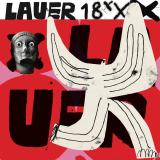
We're thrilled to welcome Lauer to XXX the label with XXX018.
Delivering his unmistakable blend of driving rhythms, uplifting melodies and club energy, Lauer presents three originals that capture his signature sound: fast-paced, euphoric and built for the dancefloor.
On remix duties, Shubostar takes things into deeper territory with a slower, hypnotic interpretation, stretching the originals into a cosmic journey while preserving their infectious groove.
A meeting of two distinct yet complementary visions, this is XXX018. Wrapped in an original artwork by Neasden Control Centre, the release finds its visual counterpart in bold shapes, playful abstraction and a touch of surrealism.
Celestial Echo Records presents Nathaniel Best – Set Your House In Order, an incredible gospel soul LP from 1986, finally back in circulation.
Originally released on Spirit Records of Nevada, the album is very much of its time in the best way — gospel music with drum machines, warm synths and basslines that push it right into modern soul and boogie territory. Nathaniel Best’s voice carries the whole record with real conviction, joined by group vocals and arrangements that give the album that rich, uplifting 80s gospel soul sound.
For us, the standouts are clear. “Call Him” is the boogie dancer — bright, driving and full of movement, the kind of gospel cut that sits perfectly in a modern soul or boogie set. The title track, “Set Your House In Order”, is something else entirely: a beautiful downtempo soul glider, deep and heartfelt, with that slow-burning quality that makes the whole LP feel so special.
Those two tracks tell the story, but the magic runs through the whole record. Scattered across the album are these amazing slower gospel soul moments, balanced with enough groove and lift to keep it moving. It’s not just a one-tracker, it’s a proper LP with feeling, range and a sound that collectors have been chasing for years.
Best’s musical story runs deep. He grew up around gospel, recorded from a young age, played piano in church, sang with the Love Center Choir under Bishop Walter Hawkins, and later worked with names including The O’Jays and The Fairfield Four.
Original copies have always been hard to come by, and the album has built a serious reputation with gospel, soul and boogie collectors over the years.
DJ Support: Ben Wal, Lammer, Helena Lauwaert, Kyle Starkey, Two Faced, OLLIE LISHMAN
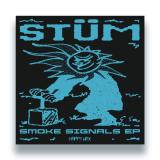
Smoke Signals is a cornerstone release in my discography — five tracks that trace the arc of the biggest run of my career to date, from the closing weeks of his second European tour through into an Australian summer that felt like a genuine turning point for me personally. The A-side carries three of the biggest tracks from that run, road-tested in front of crowds from Europe to home soil long before they ever had a release date. The B-side turns inward, a more introspective look at his sound and the world behind it. Five tracks, one defining period of my life.
Celestial Echo Records presents Nathaniel Best – Set Your House In Order, an incredible gospel soul LP from 1986, finally back in circulation.
Originally released on Spirit Records of Nevada, the album is very much of its time in the best way — gospel music with drum machines, warm synths and basslines that push it right into modern soul and boogie territory. Nathaniel Best’s voice carries the whole record with real conviction, joined by group vocals and arrangements that give the album that rich, uplifting 80s gospel soul sound.
For us, the standouts are clear. “Call Him” is the boogie dancer — bright, driving and full of movement, the kind of gospel cut that sits perfectly in a modern soul or boogie set. The title track, “Set Your House In Order”, is something else entirely: a beautiful downtempo soul glider, deep and heartfelt, with that slow-burning quality that makes the whole LP feel so special.
Those two tracks tell the story, but the magic runs through the whole record. Scattered across the album are these amazing slower gospel soul moments, balanced with enough groove and lift to keep it moving. It’s not just a one-tracker, it’s a proper LP with feeling, range and a sound that collectors have been chasing for years.
Best’s musical story runs deep. He grew up around gospel, recorded from a young age, played piano in church, sang with the Love Center Choir under Bishop Walter Hawkins, and later worked with names including The O’Jays and The Fairfield Four.
Original copies have always been hard to come by, and the album has built a serious reputation with gospel, soul and boogie collectors over the years.
Hope & Sorrow turns 20: Wax Tailor announces a limited collector's edition in Orange & Black Marbled double vinyls.
Twenty years ago, Wax Tailor released Hope & Sorrow, his second album. Following the success of Tales of the Forgotten Melodies, this new record confirmed and amplified a trajectory already well underway. Gold record certification, a world tour, an Indie Music Award in the United States, and a nomination at the Victoires de la Musique in the "Best Electronic Artist" category: Hope & Sorrow would firmly establish his singular world, blending trip-hop, finely cut samples, and cinematic arrangements, far beyond French borders.
Two decades later, Hope & Sorrow has lost none of its power. To celebrate this anniversary, Wax Tailor unveils a limited collector's edition on double gatefold vinyl, crafted both for those who have followed the album since its release and for those discovering it today.
An opportunity to revisit a pivotal record in his discography, one that played a major role in establishing Wax Tailor on the international stage.
Following his appearance on Artist Series 2, Beppu returns to Alt Dub with Forms, a new release exploring the deeper, more experimental side of his dub aesthetic.
Recorded and shaped through analogue equipment, tape, mixing desk and effects, Forms is an exercise in space, texture and repetition. Deep bass weight, drifting echoes and finely layered electronic tones move through each piece, creating a sonic world that feels both stripped back and richly detailed.
Forms sits comfortably on the exploratory edge of the Alt Dub catalogue, drawing on the fundamental principles of dub while pushing them into more atmospheric and experimental territory. It is music built for deep listening—minimal in its ingredients, expansive in its effect.
The release is completed by two remixes of Traces from Stephen Hitchell, appearing under his CV313 and Intrusion monikers.
His respective Morning Dub and Evening Dub interpretations take the track in contrasting directions, extending its hypnotic qualities through deeper, more spacious treatments.
With its combination of analogue warmth, deep-space atmospherics and restrained dub experimentation, Forms is a carefully crafted addition to the Alt Dub catalogue.
Active since 2007, Toronto's Raz Fresco has built one of the most respected catalogs in underground hip-hop as both a rapper and producer. From his acclaimed Magneto Was Right series to collaborations with legendary producers including DJ Muggs (Soul Assassins), Pete Rock, Cookin Soul, Nicholas Craven, Futurewave, and many others, Raz has consistently delivered uncompromising, self-contained bodies of work that have earned him a devoted global following.
Described by Raz himself as "the album that defines everything Raz Fresco has worked towards," WHY EQUALS SELF stands as his most personal and fully realized statement to date. Blending razor-sharp lyricism with rich, self-produced soundscapes, the album reflects nearly two decades of artistic growth while reaffirming his place as one of the underground's most prolific and enduring voices.
Strut proudly presents an expansive deep dive into the world of Quatermass Sound Lab, the prolific under-the-radar East London studio founded and run by producer, engineer and The Heliocentrics co-founder Malcolm Catto. Over the last two decades, Catto has quietly established himself as a sought-after sonic architect in contemporary music. Revered for his analogue-first approach, he has built Quatermass Sound Lab around vintage recording equipment, valve preamps and live performance, creating recordings that feel warm and timeless. Equally inspired by punk, hip-hop, psychedelic rock, jazz, funk and electronic music, Catto has developed a production style that rejects genre boundaries in favour of instinct and atmosphere. Describing himself as "50% musician and 50% listener," Catto approaches each session as a collaborator rather than a conventional producer. That philosophy has made Quatermass Sound Lab a creative home for an extraordinary range of musicians, from established innovators to emerging voices. His remarkable discography spans collaborations with Yussef Dayes, DJ Shadow, Madlib, Quantic, Mulatu Astatke, Orlando Julius, Idris Ackamoor & The Pyramids and countless others, each project using analogue wizardry to shape bold, contemporary recordings with a character all of their own.
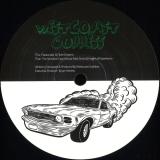
The A-side delivers two sublime cuts drenched in that unmistakable Italo-Balearic magic. Warm chords, sun-kissed melodies and effortless grooves transport you straight back to the golden days of mid-'90s Italian house music. Eyes closed, you're cruising along the Riviera with the top down, lost in pure bliss.
Flip it over and the mood shifts firmly toward the dancefloor.
The B-side explores deeper territory, moving through a range of shades while keeping things locked into a tough, clubfocused framework. There's a distinct New York stomp running through these tracks—driving, hypnotic and full of attitude— yet they never lose the emotional depth and musicality that have become a Westcoast Goddess trademark.
Just when you think the journey is complete, the EP saves its ace for last. Closing things out is a hypnotic funk groove built around silky Rhodes, a tight rhythm section and an iconic bassline—a fitting finale that leaves a lasting impression. A seriously strong package from start to finish, and another essential chapter in the ever-expanding world of D3 Elements.
Two Thou’s Oraculu releases a full length spiritual electronics LP with tubaredefining Theon Cross, homeboy Taymour Khajah, soulful presence of D’Monk and Division81 vibe designer Sonny Daze. The sun-inspired record sets a high energy moment for Oraculu, blurring all the lines between the dancefloor, the horns, Berlin, London, Chicago, and Sardinia. This record is about change. I’ve started to be less interested in the fire of the sun, the explosion, the heat. The consistency, the orbit, the return got my full attention. Until it clicked, that repetition is a fundamental aspect of change.
Coming from deep within the city that brought us Master P’s legendary No Limit Dynasty and Lil Boosie comes an artist who uniquely encapsulates the crossing point between lowslung Hip Hop and forward thinking, emotive electronic music. 22-year-old New Orlean’s based Suicideyear AKA James Prudhomme brings his own Southern Gothic perspective to the table with new album ‘Color The Weather,’ set for release on July 6th via LuckyMe. Although not his debut album per se - 2015’s ‘Japan’ on OneOhTrix Point Never's Software label was a collection of previously released beats – ‘Color The Weather’ represents the first time Suicideyear has specifically sought to create a complete body of work, further developing different textures and sounds that were hinted on last year’s critically acclaimed ‘Hate Songs’ EP. Within these tracks lie the ghosts of Prudhomme’s past - a difficult childhood truncated in his teens by his family home burning down. When he left Baton Rouge for his new home in New Orleans he found himself further entrenched in the Southern Rap scene whilst he soaked up the avant-garde electronic music he found online. Balancing his tender instrumentation alongside some of the tightest drum programming in the game - these tracks twist and turn - new elements are built and destroyed constantly encompassing a huge emotional range. On the records’ two vocal features he expounds on this innovative and ambitious duality – Domino Records own Georgia filling the track with longing and hope whilst Prudhomme deconstructs the track around her. The Casey MQ featured ‘Said and Done’ goes further - the last third of the track slowing to a codeine induced haze paying a nod to the Chopped and Screwed sound of James youth. “Color The Weather is about the ability to build or form security after trauma/betrayal & building personal coping mechanisms to get through said traumas. Doing what it takes to control your life when powers are working against it. The total resilience of the human spirit.” James Prudhomme
LA producer/vocalist Sweet Love Under Tyranny arrives with her self-titled EP (à La Carte Records, 11/6) — four tracks, nineteen minutes of nocturnal dance music built on coldwave and Italo pulled through new romantic melodrama. Co-produced with Matia Simovich (Inhalt) at Infinite Power Studios, mastered by Josh Bonati. The reference points span the pop confidence of Stacey Q and early Madonna, the airtight vocal architecture of Yazoo, and the coldwave romance running through the artist's own history as co-writer on Kontravoid's "Maskerade" (~200k Spotify streams since 2021's "Faceless" LP). Her voice cuts from aching falsetto to guttural growl over synth lines placed with the precision of someone thinking hard about where a chorus should sit in a mix. Post-punkcom: "a nocturne of neon-kissed bliss, a siren's serenade whispered through the haze of LA's twilight pulse." Pressed as a limited single-sided 12" in two variants (black-in-clear; clear).