"mounaiki - By The Bright Of Nigt" Heißt Das Vierte Album Des Niederländisch-neuseeländischen Trios My Baby. Die Band Ist Bekannt Für Einen Roots-getriebenen Hypnotic-dance-style, Bestehend Aus Elementen Von Psy-trance, 70s Funk, Desert-blues (nordafrika), Gwana (marokko), Raga (indien) Und Einem Touch An Edm, Über Dem Schamanenhafte Vocals Zwischen Gospel, Blues Und Antikem Folk Schweben. Mit Diesem Psychedelischen Stilmix Gehen Sie Quer Durch Europa Auf Tour, Nachdem Sie Bereits Bekannte Festivals Wie Glastonbury (uk), Fusion (de), Sziget (hu), Lowlands (nl) Oder Pinkpop (nl) Gespielt Haben.
Suche:hab
Iraqi band Babylon Trio from Brussels plays an electrified ravey mix of contemporary Iraqi and Arabic music styles, such as choubi choubi, dabke, maqam and electronic hybrids that put the dancefloor on fire. Their debut album 'Habibi' features songs about their old life in Iraq and new life in Brussels, Belgium, with topics such as separation from loved ones, love, beauty, honour and pure Arabic party bangers. This year will mark the power of the contemporary Iraqi street sound of Babylon Trio throughout Belgium, Europe and beyond.
- A1: Sonrise
- A2: The Season
- A3: Good Times
- A4: Shades Of Green
- A5: Keep Up
- A6: Slim Pickings
- A7: Everyday
- A9: The Feeling (Part 2)
- B1: Dusk To Dawn
- B2: Uhuru
- B3: Call It Love
- B4: Never Walk Alone
- B5: Old Soul
- B6: Love
- C1: Sonrise (Instrumental Edit)
- C2: The Season (Instrumental Edit)
- C3: Good Times" (Instrumental Edit)
- C4: Shades Of Green" (Instrumental Edit)
- C5: Keep Up" (Instrumental Edit)
- C6: Everyday" (Instrumental Edit)
- C7: The Feeling" (Instrumental Edit)
- D1: Dusk To Dawn" (Instrumental Edit)
- D2: Uhuru" (Instrumental Edit)
- D3: Call It Love" (Instrumental Edit)
- D4: Never Walk Alone" (Instrumental Edit)
- D5: Old Soul" (Instrumental Edit)
- D6: Love" (Instrumental Edit)
Wir Freuen Uns Mit "uhuru" Das Debütalbum Der Summers Sons & C.tappin Zu Veröffentlichen. Das Trio Besteht Aus Turt (rap), Slim (beats) Und C.tappin (gesang + Keys) Und Lebt In London Und Bristol. Turt Und Slim Heißen Mit Nachnamen Summers Und Sind Brüder. Mit Tappin Sind Sie Seit Frühen Jugendtagen Befreundet. Die Musik Der Summers Sons Lässt Sich Als Rap Mit Viel Jazz Beschreiben. Wir Nennen Es Cool Bap. Fans Von Loyle Carner, Mos Def Und Alfa Mist Kommen Hier Genauso Auf Ihre Kosten Wie Beatheads, Die Gerne Flofilz Oder Twit One Hören (mit Letzteren Haben Die Sons Bereits Zusammengearbeitet). "uhuru" Heißt Auf Swahili "freiheit". "uhuru Peak" Ist Gleichzeitig Der Name Des Höchsten Gipfels Des Kilimandscharo-massivs, Den Die Band Während Eines Längeren Aufenthalts In Tansania Vor Drei Jahren Gemeinsam Bestiegen Hat. Der Trip Legte Den Grundstein Für Die Arbeit Am Gleichnamigen Album. Dass Die Sons & Tappin Ihre Ersten Musikalischen Gehversuche Mit Grime (turt), Uk Garage (slim) Und Indie Rock (tappin) Gemacht Haben, Hört Man "uhuru" Nicht An. So Entspannt Und Ausgejazzt Und Mit Viel Soul In Den Hooks Kommt Das Album Daher. Dazu Raps, Die Neben Cleveren Rhyme-patterns Durch Kluge, Persönliche Und Philosophische Texten Überzeugen. So Gesehen Sind Die Frühzwanziger Das, Was Man Auf Englisch "old Souls" Nennt. Dabei Fangen Sie Gerade Erst An ...
Pyramids. Jagged Teeth Pushing Through Immaculate Skies. The Ever-changing Light. The Expansive Sense Of Freedom. The Wide Open Spaces. The Textured Landscape Seen From Above. Mountains. Watchful And Immobile For Thousands Of Years, Weathering Seasons, Transcending Change.
It's December 2016. I've Left The London Madness To Hit The Reset Button And Compose New Music In A Tiny Village In The Swiss Alps. I'm Over 10,000 Feet High, It's Minus 15 Degrees And The Snow Is Scintillating Under A Rich Blue Sky. I Turn Around And Suddenly This Gigantic Pyramid-shaped Peak Is Towering Over Me, Staring Me In The Face. Mind Blown. Senses Overwhelmed. Perspective. Lightbulb Moment. I Have My Album Concept.
I Wanted To Put Into Sound My Cathartic Experiences Of The Mountains. Every Track Title Was Chosen Before Composing. The Title Would Be A Catalyst For Visual Memories, Narrative And Overall Vibes. I Continued Developing The Tracks On Occasional Trips To Switzerland, But Mainly Back In The Gritty Habitat Of London's Hackney Wick. The Urban-nature Contrast Had An Impact On The Music Too.
I Use A Lot Of Found Sound, Stuff I Have Collected Over The Years, And A Lot Of Resampled Guitar Sounds And Textures. I Love Imperfections In Sound. Detuned Synths. Distortions And Glitches. Rhythmic Flutters And Percussive Frenzy. 'manual' Cut-ups. I Love Moving To House And Disco And Getting Lost In The More Melodic Side Of Techno. I Love Polyrhythms And Melodic Counterpoints. I Love The Energy And Rawness Of A Live Rock Band. I Channel All This To Create My Own Sonic Palette.
Artwork By Jimmy Turrell, Graphic Artist And Video Director Who Combines A Love Of Handmade Collage, Drawing, Screen Printing And Painting Alongside Digital Techniques. He Has Worked For Universal Music, Nike, Lexus, Levis, Mtv, The New Yorker, Intro, Capitol Records, The New York Times, Green Peace, Beck, The Prodigy/xl Recordings, Channel 4, The Guardian, Gq, The Times, La Times, Newsweek, Getty Images, Adidas, Sony Music, New York Magazine, Wired, Glastonbury Festival, And Vanity Fair Amongst Others.
The Debut Album 'pyramids' Comes Out Worldwide On Limited Double, Green Vinyl (including Download Code).
- A1: Zavoloka -.Transmutatsia
- A2: Mimicof - Love Control Feat. Hprizm
- A3: Benjamin Brunn - Joy
- A4: Retina.it - Horses
- B1: Mads Emil Nielsen - Unfold
- B2: Mads Emil Nielsen - Untitled Percussion Loop
- B3: Mimicof - Spark
- B4: Pierce Warnecke - Bogusstratagem
- B5: Mads Emil Nielsen - Circles
- C1: Zavoloka - Inflame
- C2: Retina.it - Rodeo
- C3: Retina.it - Gauchos
- C4: Benjamin Brunn - Alloy
- D1: Pierce Warnecke - Shiftform
- D2: Pierce Warnecke - Hddxenoglossy (And The Machine Spoke)
- D3: Mads Emil Nielsen - Framework 12
- D4: Mimicof - Cycle
- D5: Benjamin Brunn - Coy
»sichten« refers both to »opinions« as well as the »examination of material«. in lose sequence, we will invite friends and colleagues, but especially music lovers to share their opinions on music with us or to look through their collected materials in order to present music that tends to be out of the focus of current media channels. as a label for electronic music our focus is on examining exactly this genre. but in the context of the series, we are rather looking for more hidden, unknown, perhaps forgotten music. we want to present the yet undiscovered, and also offer a platform for other cultural environments with different musical approaches. each issue will be supervised and compiled by a curator. an introductory text shall explain the ar- tistic approach of the respective curator. in this sense, the format of a double lp can only provide a first insight and wants to invite to a more in-depth research. for the first issue of the series, »sichten 1«, we asked frank bretschneider to compile his own, very personal selection of current electronic music. his choice fell on six artists, whose different styles me- ander between accessible music on the one hand and very abstract compositions on the other hand.
"sichten" bezieht sich sowohl auf "Meinungen" als auch auf die "Auseinandersetzung mit dem Material". In loser Folge laden wir Freunde und Kollegen, vor allem aber Musikliebhaber ein, ihre Meinung zur Musik mit uns zu teilen oder ihre gesammelten Materialien durchzusehen, um Musik zu präsentieren, die nicht im Fokus der aktuellen Medienkanäle steht. als label für elektronische musik liegt unser schwerpunkt auf der untersuchung genau dieses genres. im rahmen der serie suchen wir aber eher nach verborgener, unbekannter, vielleicht vergessener musik. wir wollen das noch unentdeckte präsentieren und auch eine plattform für andere kulturelle umgebungen mit unterschiedlichen musikalischen ansätzen bieten. Jede Ausgabe wird von einem Kurator betreut und zusammengestellt. Ein einleitender Text soll den künstlerischen Ansatz des jeweiligen Kurators erläutern. In diesem Sinne kann das Format einer Doppel-LP nur einen ersten Einblick geben und will zu einer vertieften Recherche einladen. für die erste ausgabe der serie "sichten 1" haben wir frank bretschneider gebeten, seine eigene, sehr persönliche auswahl aktueller elektronischer musik zusammenzustellen. seine auswahl fiel auf sechs künstler, deren unterschiedliche stilrichtungen ich zwischen zugänglicher musik einerseits und sehr abstrakten kompositionen andererseits unterscheiden.
At first, it's difficult to pinpoint exactly what makes Our Girl so special, or why the Brighton-formed, London-based trio's music stands out within a busy crowd of fellow guitar-wielding-types. But if an explanation didn't jump out when they first emerged with a debut EP of mighty fuzz-soaked songs in November 2016, it surfaces with 'Stranger Today', a debut album of personal, emotional juggernauts that could have only been made by these three people: Guitarist / vocalist Soph Nathan, bassist Josh Tyler and drummer Lauren Wilson.
Since forming in Nathan and Tyler's Brighton home four years ago - Wilson joining as a late recruit when she was wowed by a demo of their self-titled debut track, and 'Stranger Today''s opener - Our Girl's members have only had pockets of time to work together. A day booked in a local studio here, a soundcheck there, full-time jobs and other projects meant the three rarely had a concentrated, collective patch. This changed in September 2017, when they stayed in Eve Studios in Stockport for a week, recording with Bill Ryder-Jones. Their week in Stockport became a crucial catalyst for what would follow. Ryder-Jones is a guitar virtuoso himself ('He did stuff neither me or Soph had ever seen anyone do before,' Tyler remarks), and he became an unofficial fourth member of the group.
'Stranger Today' is a special debut for several reasons: First, because it's the sound of a band beginning to grasp their own value and place in the world. Secondly, because you can hear the trio's hunger to finally get in the same room and put to tape years' worth of scrapbooks, half-finished ideas, and a slowly-forming feel for how their first album would actually sound. 'What band isn't itching to make their debut But it's quite frightening, knowing you're about to do it,' Wilson remembers.
The real clincher, however, is Our Girl's dynamic, and how it plays out across 'Stranger Today'. Best friends in person, the trio share the same close kinship and chemistry on record. On one side is Nathan's visceral lyricism, which has a habit of detailing and chipping away at precise moments; the first heart-flutter of a new crush; the moment a long-term friendship begins to ebb away. Around her, Tyler and Wilson's rhythm section carefully mirrors each feeling Nathan conveys. When she sings pointedly about love ('I Really Like It'), she's backed by a major-key afterglow. When the subject turns on its head ('Josephine'), out steps a wall of taut, earth-shaking noise. They each 'serve the song,' in Wilson's words, moving in sync but with their own personal slant. Not least on the closer 'Boring', where all restraint is thrown aside and the trio let out one final, violent thrash. They inhabit a space bigger than the first loves, sleepless nights and growing pains that define this record.
Nathan remembers being in Brighton four years ago, shortly after Our Girl formed, and realising, 'I was finally in the band I wanted to be in.' Almost half a decade later, and this eureka moment is sewn up on 'Stranger Today'. It's the sound of three friends totally at ease in their own space, discontent with being anywhere else; a vibrant document of what it's like to be young, invigorated and amongst people who feel the same.
The music on this EP was conceived in China, between 1989 and 1993. The original tracks were mixed to DAT in real time, in a small neighbour-proof studio inside my apartment in Macau, a 19th floor with a view to the hurricanes. There's a small, unexpected or improbable story behind each track, some little magic fused with the local atmosphere, certainly guaranteeing their lasting authenticity 25 years later.
TAIPEI DISCO
Late 80s Guangzhou was an exotic city where the traditional past coexisted in harmony with the present and even already with the future.
I'd rather spend my weekends in Guangzhou than diving into Hong Kong consumerism - as most ex-pats in Macau did. I took a cab at the border and travelled 150 Km through chaotic roads with family and friends until reaching the hot, humid, mega South China metropolis.
We ate on street joints in the evenings, went on to a karaoke bar and ended up at Taipei Disco, the only proper club in town. All the others were inside hotels and played generic music or they were seedy, sleazy, smoky cabarets.
Taipei Disco used to be a cinema and played cantonese pop music and anglo-saxon pop/rock (that was new). The spacious dance floor was generously lighted, the atmosphere was airy and modern. Boys and girls were in the habit of dancing in pairs, one in front of the other, observing a respectful yet sensual distance. When the girl took a few steps back, the boy went along and vice versa. With legs and feet (more than the upper bodies) synchronized with the music, they never exceeded in extroversion. Cool.
I always carried a MicroComposer and a portable DAT recorder in my travels through China and weekends in Canton. Any spontaneous musical idea was imediately recorded and memorized. The MicroComposer allowed multitrack recording, which was very handy on the road. Based on the emphatic choreography of Taipei Disco's dancers, i started to compose a rhythm track while sitting at a table, with headphones, listening to Cantopop in the background. As if by magic - not a rare occasion in music - everything began fitting together. Odd as it may seem, the track ended up sounding more germanic (Kraftwerkian) than Cantonese pop.
The story ends in a circle: the cantonese DJ at Taipei Disco, whom i used to ask to play certain records, wanted to play my music at the disco when it was basically only just a rhythm track and little else. From a cupboard under his set up he took out a battered keyboard (unrecognizable brand) and invited me to play over the track with the available sounds on the keyboard. The circle was complete, with Cantonese clubbers happily dancing forwards and backwards, as if it were another Cantopop hit.
I didn't get payed but the house offered us free ice cream cups in which little Portuguese flags were sticked.
The track would be finished later, in studio, with vocoder strings ensemble and synth solos.
TAIPEI DISCO (LIVE)
The live version of 'Taipei Disco' was recorded during a live set at the China Pop venue, in Macau, 1993. China Pop was a rock club built in the ample space of an old fishing warehouse, located in the labyrinthic Inner Harbour area. It was decorated with large Mao Zedong and Cultural Revolution posters and memorabilia and had a unique atmosphere, fusing Pop Art with film noir. We began our performance at 1AM, pretty early for Macau's nightlife standards. We were lucky. An audience showed up. And in Macau there were always several friends among the audience, which tranformed a musical performance into a relaxed party.
The atmosphere was particularly surreal on that night. The front row was dominated by French Crazy Horse dancers, a sort of Oriental Moulin Rouge. The girls had finished their last performance of the evening at the Crazy Horse and were still energized from their show. During our performance, right in front of us and perfectly synched, we could hear the famous irreverent screams of can-can dancers. You always had to expect the unexpected in Macau.
RED MAMBO (IMPROMPTU)
I was familiar with the Portuguese-speaking African countries well before having lived in China. I found myself returning several times to one in particular, always attracted by its magic and very distinct, identitary culture and music: Cape Verde.
During the early years of DWART a lot of the inspiration for drum machine rhythms (Roland's TR series) came from African music, especially from new musical trends that gained full autonomy with Cape Verde's independence from Portugal, as was the case with funaná.
I had the privilege of having known and befriended some of the greatest Capeverdian composers, musicians and singers during the 70s and 80s, such as Bana, Luís Morais, Cesária Évora, Paulino Vieira, Chico Serra, Tito Paris, and historical bands such as Bulimundo (ambassadors of funaná) and Os Tubarões (great innovators of morna, coladera and funaná, with the sonic impact of an afro-beat big band).
When Luís Filipe de Barros began playing Os Tubarões for the first time on Portuguese radio, that was the turning point for African music in Portugal. The 'Tabanca' album was so widely heard and talked about that it quickly got a Portuguese release through one of the big labels of the time.
The mystic of this band from the Santiago Island would reach the East. Os Tubarões played to a packed room in Macau in 1992, and after the bombastic gig we arranged a dinner and party at my place.
We ate and drank generously and the moment came for a jam session at the small studio on the 19th floor. Because Os Tubarões didn't all fit in the studio, we recorded an impromptu with only three of the musicians: Tótó Silva (electric guitar), Mário Russo Bettencourt (bass) and Zeca Couto (piano). And there we were improvising without barriers, suddenly detached from cultural roots, labels and constraints, a truly unique moment. The track is now being released exactly as it was recorded, imbued with the real communion between the musicians. And it could only be titled 'Red Mambo'. I wish to dedicate it to the memory of Ildo Lobo and Jaime do Rosário, founders of Os Tubarões, sadly and too soon departed from the land of music.
Das ursprünglich 2013 erschienene und international gefeierte Werk "Stories" war das erste Album, das der in Berlin lebende Komponist und Vibraphonist Masayoshi Fujita unter eigenem Namen veröffentlichte. Es bildete den Auftakt für eine Trilogie von Solo-Vibraphon-Alben, dessen letzter Teil, "Book Of Life", im Sommer 2018 bei Erased Tapes herauskommt. "Book Of Life" ist letztlich auch der Grund dafür, warum das Londoner Label "Stories" als weltweite Neuauflage noch einmal in die Läden bringt. Der Zeitpunkt ist gut gewählt, da 2018 perkussiver Ambient eine Art Renaissance erlebt, unter anderem befeuert durch die Wiederveröffentlichung von Midori Takadas wegweisendem Album "Through The Looking Glass" in 2017 sowie Ryuichi Sakamotos "Comeback", dessen Soundtracks durchaus Parallelen zu Masayoshis Storytelling-Klangwelten aufweisen. In den vorangegangenen Jahren fokussierte der ausgebildete Schlagzeuger sein künstlerisches Schaffen ausschließlich auf das Vibraphon und prägte so einen ganz eigenen Ansatz zwischen Ambient und moderner Komposition. Das Vibraphon "ist ein recht junges Instrument, und doch wird es fast immer auf dieselbe Art gespielt", so der Berliner Exilant. "Ich habe das Gefühl, dass es da noch viel mehr zu erkunden gibt mit dieser spannenden Erfindung."
- A1: Paula, Mi Habitación
- A2: Salomé, Soy Muy Poca Cosa
- A3: Cocky Mazzetti, ¿Por Qué ¿Por Qué
- A4: Elsa Baeza, Guapa
- A5: La Nueva Generación, Tim Dom Dom
- A6: Bruno Lomas, Nuestro Momento
- A7: Seison Show, La Muchacha Del Week-End
- B1: Antonio González, Notarás Que Aún Te Quiero
- B2: Antonio Prieto, Chove Chuva
- B3: Los 3 Sudamericanos, Un Hombre Y Una Mujer
- B4: Los Aguacates, Agua De Beber
- B5: Hermanas Benítez, Nada, Nada
- B6: Los Millonarios, Más Que Nada
- B7: Richard Y Sus Bambucos, Música En La Bahía
Mid last century. Commercial Music is a machine that generates dances that run each other over in the urge to reach the audiences and mark their place in time and history.
A never-ending list of choreographies co-habit: hully gully, madison, rock, limbo, twist and a long etcetera, until a new dance, bossa nova takes over the dance floors. Joao Gilberto, Tom Jobim or Vinicius de Moraes reach stardom in Brazil with this mix of samba and jazz, but the genre doesn't explode internationally until a few American jazzmen decide to import it. From there it reaches Europe, via France, thanks to Sacha Distel, the first on the continent to record an EP completely dedicated to this phenomenon.
It is 1962.
Shortly after in Spain, the number of artists including original or adapted tracks in their albums, escalate: Tony Vilaplana, Mina, Duo Dinámico, Latin Combo, Los 4 Brujos, Gina Baró, Grau Carol, Salomé or Marisol, who popularizes the new trend by recording 'Marisol rumbo a Río', a blockbuster film partially filmed in Brazil. The maestro Augusto Algueró writes the films soundtrack.
For this compilation we have consciously dug into the archives of three Barcelona based labels like Belter, Discophon and Olympo to serve Spanish sung bossa nova songs that have never, inexplicably, been released on vinyl, all songs are recorded during those two (musically speaking) prodigious decades: the twentieth centuries sixties and seventies.
- A1: Le Cercle Rouge
- A2: Corey Revient Chez Lui
- A3: Final Inédit Version 2
- A4: Sur Les Toits
- A5: Corey Et Mattei
- A6: Vogel S'enfuit
- A7: Quand Les Hommes Ont Rendez-Vous
- A8: Razzia Chez Boucheron
- A9: Barrage Policier (First Time On Vinyl)
- A10: Les Habitants Du Placard
- B1: Avenue Paul-Dourmer
- B2: Avant Le Casse Version 1
- B3: Un Indicateur Scruppuleux
- B4: Corey Et Vogel
- B5: Melvillade
- B6: Avant Le Casse Version 2
- B7: De La Prison Au Train
- B8: Le Voyage De Corey
- B9: Cercke Désincarné
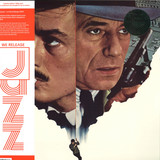
Original Soundtrack - Super Deluxe Version, (including 4 tracks never released on vinyl before, this feature is exclusive to this edition, see the tracklisting), 180g vinyl, mastered at half speed, heavy cardboard old Stoughton tip-on sleeve, obi, gold sticker Info We Release Jazz is delighted to present the official reissue of the original soundtrack of Jean-Pierre Melville's 1970 film noir classic Le Cercle Rouge (starring Alain Delon, Bourvil, Gian Maria Volontè, and Yves Montand) composed by French soundtrack master Eric Demarsan, available on limited edition 180g vinyl LP mastered at half speed and including 4 bonus tracks not available on previous pressings of the album. Eric Demarsan's compositions for Le Cercle Rouge draw from the orchestral spirit of the Modern Jazz Quartet (as requested by Melville who loved John Lewis' work), abstraction and minimalism to create a suspenseful and hypnotizing audio landscape which elegantly underlines the tense atmosphere of unavoidable fate that shrouds the movie and the doleful beauty of its characters. Simply put, it's the finest combination of underworld existentialism, coldblooded chic, and crime jazz! Le Cercle Rouge boasts the participation of celebrated jazz players Guy Pedersen (bass), Daniel Humair (drums), Georges Arvanitas (piano), and Bernard Lubat (vibraphone). Starting as a collaborator of François de Roubaix and Michel Magne in the 60s, Eric Demarsan went on to become a mainstay of French cinema soundtracks, composing for directors such as Jean-Pierre Mocky, Costa-Gavras, and Patrice Leconte among others. He also recorded the cult album Pop Symphony (for Pierre Cardin in 1970) under the Jason Havelock pseudonym.
- A1: Ramirez Remix E.p. Part Ii (La Musica Tremenda) - Ramirez
- A2: Ramirez Remix E.p. Part Ii (Volcan De Pasion) - Ramirez
- B1: Ramirez Remix E.p. Part Ii (Hablando) - Ramirez
- B2: Ramirez Remix E.p. Part Ii (Un Minuto Para Evacuar) - Ramirez
- C1: Mary's Prayer (Club Mix) - Pointguards
- C2: Mary's Prayer (Ole Van Dansk Remix) - Pointguards
- D1: Mary's Prayer (Chris Deelay Remix) - Pointguards
- D2: How Do You Feel - Pointguards
- E1: To The Top (Mike Nero Mix) - Dj Freaky Baresi
- F1: Elevator (Club Mix) - Dj Freaky Baresi
- G1: Summer Of Energy (Gigi D`agostino Viaggio Mix) - Gigi D`agostino & Datura
- H1: Summer Of Energy (Solsticio Largo) - Gigi D`agostino & Datura
- I1: Without Love (Eric Kupper Discofied Radio) - Sun
- I2: Without Love (Motivo/Antillas Club Mix) - Sun
- J1: Without Love (Tony Moran/Jody Den Broeder - Radio) - Sun
- J2: Without Love (Jimmy Harry - Album Version) - Sun
Benjamin Vigneron, also known as Vronsky, was born in 1991 in Aix-en-Provence, France.
As a Teenager, drawn simultaneously to Visual Arts, Cinema and Musiproduction, he made his first contact with Techno by working for a local club as a graphic designer. During his 20s, while living between Montreal, Canada and Marseille, France, it was revealed to Benjamin he suffered from a heavy bipolar disorder. As a reaction, he started losing himself in free parties and increasingly dangerous habits.
Gradually learning to love himself despite his flaws, he kicked his risk-taking after he realized the love of music prevailed over anything else.
Equipped with a strong desire to share his vision despite not being able to perform as a DJ, Benjamin started a youtube channel and a collective named Listening Blue.
Moscow Is Mythologized For Its Grandeur And Gravity But Its Parable Pleasures Offer Splendor And Even Absurdity. Over The Ten, Symmetrical Pieces Of For, Kate Nv Scores Her Native Urban Environment With Just Enough Whimsy To Gurgle Through The City Cracks And Grow Psychotropic Foliage. Each Sound Assumes Its Own Personality, Moving Through The Album Metropolis Like Miniature, Mutating Molecules Viewed From Nv's Apartment Window.
Alternately A Guitar-wielding, Post-punker And One Within The Multitude Of Moscow Scratch Orchestra's Avant-garde, Nv Is A Versatile Artist That Maneuvers Instinctively In Whatever Musical Environs She Finds Herself. Nv's Second Solo Album Is An Even More Abstract Endeavor Than The Hybrid Pop Of 2016's Binasu. Inspired By Casual Moments Of Ephemeral Sound From Within And Beyond Her Apartment Walls, The Record Has A Clarity Arrived Altogether And From Right Under Her Nose. Recorded At Home, Nv Says It Was As If The Music Was Not Written By Herself, But Her Chair.
For Inhabits A Stage That Piero Milesi & Daniel Bacalov, Ann Southam, Or Hiroshi Yoshimura May Have Written Music For And Dresses It With Viktor Pivovarov's Psychedelic Depictions Of Moscow - Contorting Bodies, Flying Pencils, And Multi-dimensional Faces Dance With Subtle Arpeggiations, Conversational Voice Synthesis, And Anthropomorphic Midi. Animating Objects Is Essential To The Album. Like A Surreal Still Life, Each Piece Is An Alien Arrangement Of Common Elements That Extend The Everyday Ritual Into An Eternal Landscape Of Unconscious Activity. Somewhere Along That Landscape, Kate Awaits And Greets With Apples For Hands And Fish For Feet.
Like The Album Title, Each Composition Contained Within Is Represented As A Three Letter Word, In Russian And English. The First Half Of For Was Written In The Spring. Starting With yxo Ear,' Previously Released On The Peaceful Protest Compilation Cassette In 2017, Melodies Meander And Lollygag. a Two' Incorporates Human Breath Played Like Notes On A Pump Organ. Oak' Offers A Warm Tune To Tango. How' Loops Curious Notes That Bump Into Each Other With A Chirpy Acknowledgement. You,' The Only Track On For With Lyrics, Sets A Wassily Kadinsky Poem To Song.
The Second Half Of The Album Was Written In The Autumn. The Feathery Edges Of One' Extend Like Watercolors Bleeding Off A Rubber Scroll. See' Is A Subdued, Shadowy Variation Of How', As If The Same Song Were Played In Different Weather, Dimmer Light, Or By Kate's Devious Doppelganger. The Electronics Unravel And Unwind On Dog' Until The Final Track, Who,' Ends With Vague Solemnity And Rattled Metals.
A Short Online Film Series By Shura Kulak Will Accompany The Release Of For. The Films Follow A Solitary Figure Performing Ordinary Tasks Through A Slow, Warped Lens — Each Song Enacting A Daily Habit: Waking, Dressing, Reading, And So On. In Her Live Performances Around The Album, Kate Nv Will Play Each Song From Memory, Allowing For Variation From The Recorded Tracks, And Scenes From The Films Will Be Re-created And Improvised In The Moment.
It's been over 10 years since the release of Gui Boratto's breakthrough full length debut 'Chromophobia'. As to what its title suggests, he shook up the techno game with a contrast of lushly coloured minimal grooves and melody, whilst many will recall that the album included the highlight single Beautiful Life' which became a dance floor anthem for that era. Four albums in and countless EPs and remixes under his belt, the Brazilian producer's unique savoir-faire in carving out a functional album out of diversely routed singles and features is back at it on his fifth studio LP, 'Pentagram'. Here Gui Boratto lays down a nuanced 12-track narrative that reinvigorates his signature sound into a refreshingly different perspective that feels all too familiar - including the return of Beautiful Life' vocalist (and Gui Boratto's wife) Luciana Villanova on the single "Overload".
Through his signature kaleidoscopic approach, Boratto delivers an album built as a far-reaching hub-and-spoke system, broadly inclusive as can be. From the opening cut, 'The Walker' - hot on the trail of Tears For Fears 'Elemental' (one of Boratto's "favourite 80's bands") - to the hi-NRG euphoria of 'Forgotten' and its pounding tech alter ego 'Forgive Me'. "I was going into 2 different directions", Boratto says, "the typical indie- electronic-rock' Boratto kind of production like It's Majik' or Like You' and a much more techno approach." He goes on, "I decided to split them into two twin sister songs. When I play live I always put these two songs together."
The Brazilian Producer further embraces the pop-friendly essence of his past work on tracks like 'The Phoenix', featuring vocalist Nathan Berger, and 'Overload', both melding acidulous synthlines with laser-precise breaks, vox hooks and drops calibrated for extended radio and club use, although sieved through his distinctive rainbow-hued musical prism. For the symbolists out there, the album's pared-down closer '618' duration accidentally happens to equate the proportions of the said pentagram. "Coincidence" Boratto questions, and capsulises, "not so ufanista and supporter of Brazilian neo-concretism, but I guess the brazilian sculptor Lygia Clark also inspired me a lot. Not the meaning of her sculptures, but the shape of the hinge of most of her work. I've wanted to transmit the scientific pentagram's point of view. It's not a religious kind of thing."
Whereas 'Spur' (a field-tested 808 and 909-heavy "purist track", "very, very old school" Boratto insists) and 'Alcazar' are sheer smooth-edged four-to- the-floor epics, the album also shares its lot of startling moments, such as with the John Barry'esque 'Scene 2' (with a hint of Amon Tobin, 'Easy Muffin' style, throw in) and its refined string-laden buildup, 100% fitted for a 007 opening credit sequence, or with 'Hallucination' (feat B.T.) and the further James Holden-ish title-track 'Pentagram' (think 'The Idiots Are Winning'), "one of those exercises I did when I got my Buchla modular synth" Boratto analyses, "I think I've used more then 30 different snares, with different delays and reverbs. The whole song is alive". And so is 'Pentagram' in its entirety: alive and definitely just as manifold and hopeful as its architectonics are the stuff of science and dreams all at once.
Es ist zehn Jahre her seit der Veröffentlichung von Gui Borattos bahnbrechendem Debütalbum - Chromophobia . So wie der Titel vermuten ließ, war das Album mit seinen kontrastreichen Minimalgrooves und den üppig gefärbten Melodien ein Schocker im besten Sinne. Ihr erinnert euch sicher noch an die Hit-Single - Beautiful Life , eine Dancefloor-Hymne aus dieser Zeit. Nach vier Alben und unzähligen EPs und Remixen ist das einmalige Savoir-faire des brasilianischen Produzenten, aus vielfältigen Singles und Features stimmige Alben zu schaffen, auch auf seinem fünften Studioalbum - Pentagram zu hören. Hier legt Gui Boratto ein Zwölf-Track-Narrativ vor, das seine Handschrift auf erquickende Weise wiederbelebt. Wiederbelebt wird auch die Stimme von - Beautiful Life (die der Frau Gui Borattos gehört) auf dem Stück - Overload .
Durch seinen charakteristisch kaleidoskopischen Ansatz liefert Boratto ein Album, das gebaut ist wie die Speichen deines Fahrrads, von dem Opener - The Walker - direkt auf der Spur von Tears For Fears - Elemental (einer von Borattos - favourite 80's bands ) - zur Hi-NRG-Euphorie von - Forgotten und seinem stampfenden Counterpart - Forgive Me . - Ich bin in zwei unterschiedlichen Richtungen gegangen , sagt Boratto: - den typischen ,Indie-Electronic-Rock'-Weg wie in - It's Majik oder - Like You und den Techno-Weg. Er fügt hinzu: - Ich hab mich entschieden jedem Track seinen Zwillings-Track an die Seite zu stellen. Immer wenn ich live spiele lege ich die zwei Stücke zusammen.
Der brasilianische Produzent erschließt weiter die Pop-Essenz seiner vergangenen Arbeit auf Tracks wie - The Phoenix (feat. Nathan Berger) und - Overload . Beide kombinieren zwitschernde Synthi-Melodien mit lasergenauen Breaks, Hooklines, Drops und sind wie gemacht für die Rotation und den Club. Und für die Symbolisten da draußen: die Länge des reduzierten Closers - 618 beträgt zufälliger Weise genau die Proportionen des besagten Pentagramms. - Fügung , fragt Boratto und fasst zusammen: - Ich bin kein Anhänger des brasilianische Neo-Konkretismus , aber ich glaube die brasilianische Künstlerin Lygia Clark hat mich sehr inspiriert. Nicht die Bedeutung ihre Skulpturen aber die Form der meisten ihrer Arbeiten. Ich wollte den wissenschaftlichen Blickwinkel auf das Pentagramm übersetzen. Nicht im religiösen Sinne oder so."
Während - Spur (ein erprobter - purist track auf der Basis von 808 und 909, - sehr, sehr old school , wie Boratto betont) und - Alcazar glatte Vierviertel-Epen sind, hält das Album auch Überraschungsmomente bereit. Z.B. das John Barryschen - Scene 2 (auch eine Spur von Amon Tobins - Easy Muffin ist darin zu hören) und seinem Streicher-Aufbau, der hundertprozentig geeignet wär für eine Eröffnungssequenz in einem Bond-Film. Auch - Hallucination (feat. B.T.) oder der James-Holden-hafte Titeltrack - Pentagram (wir denken da an - The Idiots Are Winning ) wäre da zu nennen. - Einer dieser Übungen, die ich gemacht habe, als ich meinen Buchla-Modular-Synthesizer bekommen habe, war , erinnert sich Boratto, - mehr als 30 verschiedene Snares, Delays und Reverbs zu verwenden. Der ganze Song sollte am Leben sein. Und so ist - Pentagram im Ganzen: lebendig und sicher genau so vielfältig wie sein Bauplan, der auch der Wissenschaft und den Träumen zugrundeliegt.
Die vierte Ausgabe der Modeselektion war längst überfällig und fällt deshalb extra energisch aus, dafür sorgen viele große Namen der internationalen Clubszene und eine ganze Reihe aufstrebender Künstler: Actress, Rødhâd, Peder Mannerfelt, rRoxymore, Sarah Farina und all die anderen setzen zwischen roughem und clever gebautem Techno, kosmischen Breakbeats und Dub- und-Bass-Eskapaden die unterschiedlichsten Akzente und erzeugen trotzdem einen starken, stringenten Vibe. Die als Doppel-CD und vierteilige 12"-Serie erhältliche Compilation enthält 17 Tracks von Künstlern, die zur aktuellen Speerspitze in Sachen anspruchsvoller Dance Music zählen - so sehen es zumindest Modeselektor, aber wann hat uns ihr Gespür je enttäuscht Wie jede Modeselektion ist die vierte Ausgabe kein schnödes Mixtape: Alle Künstler wurden eigens um passende, unveröffentlichte Musik gebeten, und das Ergebnis kann sich sehen lassen. "Wir sind stolz und fühlen uns geehrt, dass wir die Compilation genau so zusammenstellen konnten", schwärmen die Selektoren. "Volume 04 ist wahrscheinlich die funktionalste und eingängigste Modeselektion, die wir bis dato gemacht haben."