
Сделать предзаказ21.11.2025
он должен быть опубликован на 21.11.2025
26,01 €
он должен быть опубликован на 21.11.2025

Gi Gi describes his process as “dubwise sampledelia.” It begins with fragments and ends somewhere else entirely, destabilizing its source material until it stops pointing backward. A borrowed sound, looped and bent, eventually forgets where it came from; it stops referencing anything but itself.
This liquid sensibility shaped his earlier work, music that hovered between drift and propulsion, suggesting the dance floor without fully stepping onto it. Presence was implied, edges stayed soft. The center was always there, but diffused like mist on a screen.
With In Lieu, that center comes into focus. Half written in Texas, half in Australia, the shift isn’t simply geographic, but internal. The record moves with a coiled, anticipatory energy; the drums arrive with more force and the bass organizes the room instead of melting into it. It's dense with the feeling of more bodies in the frame. Textures still smear and refract, but they move around a clearer axis.
Where past records circled their core, these inhabit it, pulling closer to the body. “Some Of” and “Arque” lean into low-end pressure without abandoning his instinct for drift. "Pink Dirt" circles around mechanical drums and dizzying vocal chops, head-down and visceral. Elsewhere, voices gain newfound contour, materializing in “Downswept” with intimate musings and nearly forming a lead vocal on the title track before dissolving again.
In Lieu moves with a newfound confidence, compressing inward, sounding closer to the source of its own pulse.
Есть у нас в наличии и готов к отправке

In the late summer of 1994, Upadhmanyia (John Mackaay & Michel Rehatta) invited Leo Verhoef (LFU) to collaborate on a track. They met a few more times afterward at a power station converted into a studio in IJsselstein, The Netherlands. "Hasiya" was quickly born and was already in stores by early November 1994. John & Leo drove to house club iT in Amsterdam, where they gave the track to DJ Marcello, resulting in an iT hit! The track was quickly picked up by DJs worldwide, and Richie Hawtin used it in a live set in Denver on November 19th of that year, which can be heard on SoundCloud (Hasiya is mixed around 43:00). The track was also a huge hit on dance floors in England and Spain.
In late 1994, Hasiya appeared on a CNR Music EP titled "Welcome To The Club," along with four other hits from producers like Pete Lazonby, The Shaker, and Drum Club. A double CD of the same name followed in early 1995, released in Belgium, featuring Hasiya alongside artists like Robert Miles, Digital Express, Aura, Natural Born Grooves, and other hits of the era. In early 1995, Arcade released "House Party '95 the Kinky Klubmixx," mixed by Koen Groeneveld & Addy van der Zwan. The same CD was released in Scandinavia as "House Party '95 (5)." Hasiya flourished among the most popular house tracks of the time. The record spent three weeks in the Dance Music Mega Top 30 and peaked at number 22 around the holidays of late 1994.
For 31 years, Hasiya was only available on record, CD, tape, or YouTube. Starting November 21, 2025, it will be resurrected from the underground into the world of digital downloads and streaming. The 2025 Remaster, along with five new mixes, will be widely available, including a limited vinyl release of 350 copies. The 30 test pressings have already been received with open arms by various DJs and received immediate support from Eris Drew and Octa Octa during ADE.
Because Hasiya was created in 1994, the only available remix material is the original DAT tape, which, thankfully, was still stored in an old box in a dusty attic. Most of the sounds for the new versions have been recreated and re-recorded.
Rehatta's Reanimated Mix:
This remix - created by one of the two founders of Upadhmaniya - combines driving, percussive beats with a thrilling, progressive break featuring ascending, dizzying strings. This trick returns shortly afterward to rev things up again. An accessible remix for dance floors worldwide.
LFU 2025 Version:
This straightforward, raw techno version with a touch of acid is ready to rock dance floors. LFU's updated version of the 1994 original, which he created with Michel & John, will undoubtedly remain a head shaker from here on out.
John Consemulder Metaphysical Mix:
With a pumping groove and a funky bassline as an intro, John Consemulder's remix immediately strikes a chord. A refined and elegant approach to the original, with sounds as mysterious and exciting as the flowing lava in the 'Gruta das Torres' - a cave in the Azores - the setting where this tech-trance remix was created.
Davje Remix:
Davje's version begins with the typical club and hard-trance bassline of the late '90s. You're drawn into a trance journey where beat changes sometimes try to throw you off track. Davje's creative Hammond organ interpretation of the Hasiya theme surprises and transports you back to the hippie era by the end of his remix.
Bojcot Remix:
Junglist Bojcot creates an exciting, nuanced, and mathematical remix with a beat that feels like jungle and half-tempo. He conjures up the sounds of LFU's 2025 Version, creates a bassline that sounds like a disturbed bumblebee, and adds a surprising string section. Massive!
Есть у нас в наличии и готов к отправке

CHAPTER 1[26,26 €]
"Throughout all my time as a musician and producer, ever since Jack the Tab, I've been focused on developing a single idea: Blending psychedelic sounds and effects with rhythm." Richard Norris, Strange Things Are Happening White Rabbit 2024
Over the past few years Eskimo Recordings have invited some of thebest crate diggers around to curate compilations that don't just reveal the hidden contents of their record bags but something about themselves too. Now, following in the footsteps of the likes of Bill Brewster and Psychemagik, producer, musician, DJ, writer and more, Richard Norris, takes us on a globetrotting psychedelic journey with the epic 42 track collection, Mr Norris Changes Brains.
For over forty years Richard has played a part in many of the UK's most important music subcultures. Whether sharing stages with the likes of Tracey Thorn as a pubescent punk in St. Albans, or running freakbeat nights in Liverpool and working at the pioneering psychedelic label Bam Caruso, co-producing the UK's first acid house inspired LP with Throbbing Gristle's Genesis P. Orridge or riding the wave of creativity that the second summer of love unleashed all the way to the Top of the Pop studios as The Grid, Richard's career has continually seen him work to expand both his own and the public's musical horizons.
With Mr Norris Changes Brains it's the most recent part of his mercurial career that he's focused on. Drawing inspiration from his post 2006 adventures as one half of Beyond the Wizard's Sleeve, alongside Trash's Erol Alkan, this compilation shows how a more connected world has blown the dust off a paradoxically sometimes straightjacketed scene. The result is a dizzyingly wide-ranging collection that explores the further out there reaches of worldwide psychedelia and dancefloor mayhem.
"A lot of these tracks are fairly recent discoveries, things that I've discovered from around the time I started working with Erol and going right up to today," Richard explains. "Whether that's from going out to play and finding new records in places like Istanbul or just connecting with people online from all around the world. Psych can sometimes be a sort of narrow-minded field, with everything having to sit in its specific niche, but more and more people are open to new sounds and that's allowed for a much broader selection."
Despite their disparate origins what does unite these tracks is that they aren't just there to zone out to on a bean bag as projections of swirling coloured oils and psychedelic patterns wash over you. Mr Norris may change brains but his DJ sets also move feet, and whether it's their killer guitar riffs, oscillating synths floor shaking drums or soulful Hammond organs these are all cuts that from festival tents to underground clubs have proven time and time again to get people dancing.
"With a lot of these tracks there's a kind of fun element in them," says Richard. "It's still psychedelia, but they've also got these solid, funky grooves. They sound phenomenal on the dancefloor and as much as these records might excite old psych heads, this compilation is also for a new generation out there who might have never heard anything like this before and, just like when I was 18 and heard The 13th Floor Elevators for the first time, think 'Oh, my God, what on earth is this and more importantly what else is out there?'"
Есть у нас в наличии и готов к отправке

You’re NEXUS 21, central to the dizzy zeitgeist of the 1991 adrenaline rammed UK House Music juggernaut, and you have just recorded a masterpiece of an album MIND MACHINES.
DON’T DO IT LIKE THAT - somehow even though your record label love the album it does not get released.
DO IT LIKE THIS - it finally gets issued now.
When Mark Archer and Chris Peat flew back from a seminal recording session at Kevin Saunderson’s KMS Studio in Detroit there was a palpable feel of excitement. Instead of merely paying homage to their Techno forerunners, they were now creating their own just as innovative waveforms.
In the can was a gem - DON’T DO IT LIKE THIS, DO IT LIKE THAT. Motor City songstress Donna Black had unconsciously seemed to add Ma to the start of her name and her recorded in the dark vocals helped conjure up an almost Madonna and a drum machine meets Techno hybrid. This it was agreed could be a huge breakthrough single which - preceded by strategically released set up tracks - would build up Nexus 21’s surely inevitable rise to glory. And the release of the MIND MACHINES album. But it never happened. Instead one day Mark and Chris burst into Network’s Birmingham office excitedly brandishing no less than 8 new recordings infused with a propulsive Rave energy flash compared to their more cerebral Nexus 21 work. The label agreed that the new tracks should be released under a new artist name and an initial suggestion. Alien 8 replaced by Altern 8. What was planned as temporary dalliance became a long term relationship. You all know the score - Altern 8 became surf riders supreme on the rave tsunami, not just music makers but myth creators. The plan has been to run Nexus 21 and Altern 8 parallel, a kind of schizophrenic experiment by two men, a drum machine and a mad for it record company. History shows that Altern 8 became too DOMIN 8 and the lovingly recorded Nexus 21 album was left on the proverbial shelf (actually a box in Birmingham)
So now MIND MACHINES finally meets the World. First thing that screams out that it hasn’t half aged well. Obviously it is a wet dream for the anoraks of electronica, that goes without saying. But above and beyond the history lesson of how 2 young UK techno mad kids got the dots from Detroit and deconstructed them to create something very British the music they created, sometimes naive but frequently knowledgeable, sounds .. well just great.
The four Detroit recordings - NEXODUS, TOGETHER, DON’T DO IT LIKE THAT, DO IT LIKE THIS and EVERYTHING (NO STATUES) - variously feature contributions from Motor City luminaries Marc Kinchen and Anthony Shakir.
Only two of the twelve recordings were properly released in 1990/1991 with two more making it on a withdrawn white label 12 inch at the time. Three of the tracks, including a live recording at London’s Brain Club that has been retrieved from a DAT that was thought to have disappeared, are previously unreleased. And as well as two previously unreleased much altered versions of Nexus 21 gems there is the legendary much tougher mix of the duo’s signature techno treasure Self Hypnosis.
NEXUS 21
LOST AND NOW FOUND
Есть у нас в наличии и готов к отправке

microCastle’s third offering of 2023 welcomes Ditian back to the label for his first artist EP. Splitting time between Buenos Aires, Berlin and Barcelona, the Argentinean artist has carved out a unique place in the electronic underground over the last half decade. With an immediately recognizable sonic signature, Ditian channels languages of varied musical landscapes, churning them into his own complex rollercoaster of intricate electronica. A sound that is equally at home on rebellious dance floors around the world or in the sweet spot of a late-night leftfield listening session. A short but meticulous discography reflects Ditian's choosy nature; with Exit Strategy, Innervisions and TAU serving as the primary landing spots for his musical output. Having remixed Ivory’s ‘Arpstairs’ for his microCastle debut last summer, a project which was followed by a contribution to Dixon and Ame’s Secret Weapons 15 collection to begin the year, Ditian now returns to the label with a four-track showcase entitled ‘Serpenta’.
The crushing title track crashes in and sets any preconceived ideas of Ditian’s music alight, forecasting jet force propulsions and wild signal bending synths. As somewhat of a departure from his previous experiments, Ditian’s clustered pungi mutations provide an enduring main theme, while a wonderfully warped break is sure to cast a paranoid spell over the dancefloor.
‘Venena’ follows in fine style and further hammers down Ditian’s elusive vision. Dizzying, rapid-fire sequences of rhythm, granular textures and heavily manipulated synths travel to the very edges, while maelstroms of drums and contorted basslines highlight a high-octane second act.
‘Inertia’ lands at the collection’s midway point and does so in remarkably twisted fashion, stepping decisively on the gas and steering into shadowy transgressions. Never one to shy away from darkness or pushing boundaries, Ditian’s metallic storyboarding rises and falls across act one, consciously withholding energy, as grooves pulse and effects orbit, creating tension that eventually gets resolved as clusters burst open and oscillate in kaleidoscopic fashion.
Ditian’s creative attitude reveals itself further on collection closer ‘Influenza’. Presenting some of his most club-adjacent rhythms yet, it’s a clever coax of billowing tones and scrappy melodica which get wrapped up in a concordant fog, eventually getting washed away; because after all, the oceanic drones are all the better when they’re magnified to full size.
Cover art: Mauricio Seidel
Есть у нас в наличии и готов к отправке
Rave At Your Fictional Borders is not beyond borders. The band simply denies any notion thereof. Driven by a sense of community, it defines human existence as one bio-organism with planet Earth. Now comprising members Dave De Rose, Marius Mathiszik, and Salim Akki, this incarnation of Rave At Your Fictional Borders first released the 'Entanglement' and 'Utopia' tracks in March 2025. Analogue Nomadism is the project's first album release. Recorded in Morocco and then co-produced and mixed by Dan Nicholls, it is an album of dizzying, trance-inducing scope. Rave music stripped of all external signifiers. Repetition, noise, krautrock, avant-garde sensibilities. This is a search for a groove that both connects and interlocks. The soul of improvisation and exploration runs through all seven pieces on Analogue Nomadism. Genres are referenced and transcended. The open-ended is perpetually embraced.
It is neither night nor day, but there is a half-light all the time. What used to be disconcerting is now not alien anymore. The sky boasts a faint light. Certain shapes are laid out, but get changed through communal ritual. Analogue Nomadism is the music of a feeling of community. It builds and breaks down. It is accepting of the psychedelic standards of the groove. Transportative and vertiginous. Endless.
он должен быть опубликован на 25.04.2026

A cocktail of rebellious queer vocal fragments, deceptive percussive granules and swaying hammered vibrations, upsammy and Valentina Magaletti's first collaboration trembles with suspense. The seeds of 'Seismo' were sown following a commission from Amsterdam's Rijksmuseum to soundtrack an exhibition of work from the Museum Boijmans van Beuningen in Rotterdam and the duo didn't want to approach their collaboration flippantly. So, wandering the museum's maze of rooms, they recorded various improvised percussive sounds with their arsenal of microphones, using the space to inform various rhythms and textures that were sculpted later into electroacoustic vignettes. This was just the starting point, though; as Magaletti and upsammy began performing together, the project evolved and 'Seismo' began to take shape. The duo had struck on a salient aesthetic concept, using mostly digital and acoustic mallet instruments to blur the boundary between their roles and create friction between the synthetic and the authentic. And the finished record is a phantasmagoric push-and-pull between its various conflicting elements: harmony and dissonance, randomness and predictability, openness and constraint. 'Seismo' isn't the first time that upsammy has studied her environment in search of revelation. On her acclaimed second album, 2024's 'Germ in a Population of Buildings', the Amsterdam-based DJ, producer and multidisciplinary artist erected her complex, unorthodox rhythms and eerie melodies around a modernist frame of field recordings collected in various cityscapes, countering heavyweight basslines with subtle, microscopic sounds. London-based Italian vanguard Magaletti, meanwhile, has applied her unique logic to innumerable projects at this point, working with everyone from batida icon Nídia and hardcore-dub outfit Moin to French writer Fanny Chiarello and British bass scientist Shackleton. For years she's approached the drums with criticism, attempting to challenge any preconceptions, something that's most visible on 2020's 'A Queer Anthology of Drums'. And both artists' thoughtful perspectives are welded together seamlessly on 'Seismo', a dizzying suite of eight eccentric statements that's fragile but never insecure, gauzy but not indistinct. An unnerving sense of space characterizes 'It Comes to an End' as Magaletti's in situ improvisations herald for upsammy's microscopic glitches and chiming pitch-bent melodies. It's almost unbalancing to witness the track's impossible dimensionality, the interplay between reverberant marimba hits and bone-dry synths, or percussion that's been recorded and processed in consciously different settings. A new architecture emerges in the sound itself that the two artists scan and explore meticulously, testing its boundaries with undulating hybridized rhythms on the invigorating 'Superimposed' and offsetting the powdery drums with liquified smacks and alien voices. The duo's vibrations are knotted with piano flourishes on 'Hyperlocalize', balanced with artificial clanks and clangs that disappear into the track's sonorous atmosphere, replaced by whispers and half-hallucinated insectoid chirps. 'Seismo' is an album that feeds off the energy generated by its juxtapositions: the tension and anticipation that's melted by rapid, hyperactive movement and the finely drawn rhythms disrupted by a layer of indistinct, barely perceptible microsounds. It's a collaboration that sounds like two minds challenging each other but not wrestling, each peering from their own distinct vantage point and imagining a third landscape shaped by optimistic, queer vibrations.
Закажите сейчас, и мы закажем товар для вас у нашего поставщика.

West Mineral returns with lushly amorphous actions by Shiner, Pontiac Streator & Ben Bondy aka Shinetiac; together fused for an immersive flux of vapoured dub, chopped and droned Billie Eilish, and fidgety algorithmic jams.
There's not a single, specific sound you can peg to the West Mineral axis at this stage in the label’s evolution - it's rather a set of shared aesthetics that freely bend into various interconnected shapes. Shinetiac's contemptuous, critic-baiting gear is the ideal example; on their last album, 2023's 'Not All Who Wander Are Lost', skittery, ketamized IDM sparkled over Spice Girls samples and the Foo Fighters' 'Everlong' was transmuted into Sneaker Pimps-style trip-hop. 'Infiltrating Roku City' might be a little less blatant with its out-and-out poptimism, but it takes a similarly dim view of conservative "big ambient" snobbishness. Just a few minutes of 'Bluemosa' should be enough to let you know what's up; the overall character of the sound is hazed, with frozen pads and garbled, dubbed-out voices smudged into a mess of effects and samples. But it sups up different nuances as it wriggles, absorbing scampering breaks, dizzy acoustic guitar strums and half-heard wordless vocals, flipping in the third act to emerge from its shell as minimalist balearic folk-pop - something like Bon Iver doing 'Electric Counterpoint'.
Brooklyn's Shiner, Philly's Pontiac Streator and Berlin-based Ben Bondy navigate the labyrinthine streaming landscape, guided by their own private experiences of mindless doom-scrolling and cruising the darkest corners of YouTube. They formulated 'Infiltrating Roku City' while they were rehearsing last year and spent the winter stitching together various recordings and jams into a layered, dry-witted commentary on our algorithmic reality. Laden with inside jokes and refried memes, it's surprisingly elegant gear; handling the most unseemly elements like sonic recyclers, earnestly repurposing pop and nostalgia to create an atmospheric echo of contemporary reality.
Screwing Chief Keef's enduring 'Citgo', 'Clublyfe (hulu)' emphasises the original's AFX-pilled euphoria with Robert Miles-style piano hits, replacing Young Ravisu's brittle 128kbps trap rhythm with a glitchy rattle that picks up dembow spikes as it rolls. 'I Hate Being Sober' vaporises the Chicago drill pioneer's 'Hate Bein' Sober', blocking out his voice with glitchy, downsampled interference and elasticated Rhodes. The trio team up with Orange Milk's goo age on the sublime 'Crisis Angel', catching a ray of Malibu's sunshine in the process, and reduce Billie Eilish's voice to a Romance-does-Celine cinder on 'Billie', stretching it to fit next to gassed Future ad-libs and swooping 808 Mafia sub womps. And although the album takes a murky diversion on 'Roku Axes Ultra’, and a cloud-stepping centrepiece ‘Purelink’ in homage to the eponymous dubbed ambient dynamos, it's back on course with 'Jiafei (NETFLIX)', taking aim at TikTok bot videos and welding screams from Florida metal band Underoath to AI-strength vocal curlicues.
Закажите сейчас, и мы закажем товар для вас у нашего поставщика.

It’s been ten years since Drew Lustman aka FaltyDL last released on Planet Mu. In the meantime he's been running his own label Blueberry Records, been in-house producer for Mykki Blanco and has become a dad. The best things come out of play and it was Drew’s relationship with his young daughter that switched on this playful side of his music. The album in question, ‘Neurotica,’ expresses Drew’s fun in creating such energetic pieces people will want to move to. It's a dizzying sugar-rush at a high-speed bounce; the music is fresh and inviting and most important of all, joyful."Summer of ’24, we were in Catalonia. My girl, our young daughter, the old folks. Days by the village pool, afternoons on the dirtbike. At night, I made salads. Simple things. Good things. One afternoon, lying back, phone in hand, I saw a friend post a GRWM. The music behind it stopped me. A song grabbed hold. The track was ‘Secret’ by Mietze Conte, which is fast-paced euro-pop dance music, like soft fluffy gabber with childlike vocals. I hunted down the full version. Played it again. And again. Twenty times over the next few days. It unlocked something. The best music does that. Like the first time I heard Burial. Had to know what was happening under the surface. That time, it led to ‘Love Is A Liability’ in 2009. This time, it led to ‘Neurotica.’“ “I started to record, getting down fast, bright, sugar-rush sounds. 185 to 200 BPM. I wrote them quick—half a day per track. In between, I slowed things down. Gave space for breath. Mike Paradinas helped shape the album, his ear guiding the flow. I tested the tracks. Played them for kids barely out of diapers and grown folks who still move like they are. It worked, on all ages. I kept it simple. Only two rules: keep it moving and don’t look at my phone. Cut the vocals like I used to.” ‘Neurotica’ is FaltyDL with his mojo refreshed, a new life squared, do yourself a favour, crack a smile and feel the joy.
Закажите сейчас, и мы закажем товар для вас у нашего поставщика.

Award-winning producer and composer Giorgi Koberidze offers up a head-spinning debut of Georgian modern classical music shot through with 360° electroacoustic textures.
Giorgi Koberidze is an electronic and classical music composer from Georgia. He currently serves as a professor of music at Tbilisi State Conservatoire, as well as at Ilia State University, and the private music school "303 Herz". Giorgi's work is rooted in the Georgian musical tradition, cross-pollinating indigenous instrumentation with electronic and western classical timbres. He recently won first prize in the Tbilisi Conservatoire Composers Awards, and received Georgia's most prestigious cultural gong, the Tsinandali Award.
The Album was premiered in Georgia at the Kutaisi Film Festival, and later showcased at the Tbilisi Film Festival. Working from graphic scores, Giorgi's ensemble includes strings, woodwind and traditional instruments from the Caucasus (doli, chuniri). Fleeting voices, field recordings and skittering percussion converge to paint a storied map of Tbilisi, and its surrounding terrain of forested polyphony and microtonal peaks and crags.
Each listen of the album is projectively rich, like a dizzying series of sonic inkblot images. The piece is designed to be absorbed in the surround sound of darkened movie theatres, conjuring a multiverse of narratives in the half-light of sensory acuity. At home, Giorgi invites listeners to set aside time to experience the record in a dark, comfortable space absent of external stimuli.
This album was made with the support of the Tbilisi State Conservatoire. The recordings were funded by Nicolas Jaar. Thank you. We are beyond proud to present this incredible project.
Recommended for fans of Pierre Bastien, Roméo Poirier, Jan Jelinek.
он должен быть опубликован на 25.07.2025
CHAPTER 2[26,26 €]
"Throughout all my time as a musician and producer, ever since Jack the Tab, I've been focused on developing a single idea: Blending psychedelic sounds and effects with rhythm." Richard Norris, Strange Things Are Happening White Rabbit 2024
Over the past few years Eskimo Recordings have invited some of the best crate diggers around to curate compilations that don't just reveal the hidden contents of their record bags but something about themselves too. Now, following in the footsteps of the likes of Bill Brewster and Psychemagik, producer, musician, DJ, writer and more, Richard Norris, takes us on a globetrotting psychedelic journey with the epic 42 track collection, Mr Norris Changes Brains.
For over forty years Richard has played a part in many of the UK's most important music subcultures. Whether sharing stages with the likes of Tracey Thorn as a pubescent punk in St. Albans, or running freakbeat nights in Liverpool and working at the pioneering psychedelic label Bam Caruso, co-producing the UK's first acid house inspired LP with Throbbing Gristle's Genesis P. Orridge or riding the wave of creativity that the second summer of love unleashed all the way to the Top of the Pop studios as The Grid, Richard's career has continually seen him work to expand both his own and the public's musical horizons.
With Mr Norris Changes Brains it's the most recent part of his mercurial career that he's focused on. Drawing inspiration from his post 2006 adventures as one half of Beyond the Wizard's Sleeve, alongside Trash's Erol Alkan, this compilation shows how a more connected world has blown the dust off a paradoxically sometimes straightjacketed scene. The result is a dizzyingly wide-ranging collection that explores the further out there reaches of worldwide psychedelia and dancefloor mayhem.
"A lot of these tracks are fairly recent discoveries, things that I've discovered from around the time I started working with Erol and going right up to today," Richard explains. "Whether that's from going out to play and finding new records in places like Istanbul or just connecting with people online from all around the world. Psych can sometimes be a sort of narrow-minded field, with everything having to sit in its specific niche, but more and more people are open to new sounds and that's allowed for a much broader selection."
Despite their disparate origins what does unite these tracks is that they aren't just there to zone out to on a bean bag as projections of swirling coloured oils and psychedelic patterns wash over you. Mr Norris may change brains but his DJ sets also move feet, and whether it's their killer guitar riffs, oscillating synths floor shaking drums or soulful Hammond organs these are all cuts that from festival tents to underground clubs have proven time and time again to get people dancing.
"With a lot of these tracks there's a kind of fun element in them," says Richard. "It's still psychedelia, but they've also got these solid, funky grooves. They sound phenomenal on the dancefloor and as much as these records might excite old psych heads, this compilation is also for a new generation out there who might have never heard anything like this before and, just like when I was 18 and heard The 13th Floor Elevators for the first time, think 'Oh, my God, what on earth is this and more importantly what else is out there?'"
Закажите сейчас, и мы закажем товар для вас у нашего поставщика.

"So the bad news is, in a fit of pique, I asked Chat GPT (nicely) to compose a one-sheet for the new Shit and Shine double album, Mannheim HBF. The even worse news (yes, even worse than resorting to such tactics) is that the resulting biography is halfway passable and on some levels, superior to the sort of thing being published by what’s left of our weekly coupon-shoppers. But for fuck’s sake my friends, Craig Clouse did not get to where he is today today by settling for halfway passable and neither should you. That Shit and Shine’s discography is vast and dizzying is already well established; what’s not nearly as established are these recordings being specifically dizzying. I don’t know if there’s anyone else in modern music as skilled in waltzing around the periphery of so many disparate idioms ('noise', being one of the least prominent this time around) and somehow, against all odds, tying ‘em together in the most intricate of knots. And who doesn’t love knots? We all have our favorite ways to experience music that’s all-engulfing, but whether your preferred method is thru a stadium sized sound system or ear buds affixed as you’ve leapt off the tallest building in Bastrop, TX (the Jerry Fay Wilhelm Center for the Performing Arts, since you asked), not for the first time, Shit and Shine is entirely appropriate in either instance, possibly every instance. There are moments where I think this is a club record. The Friars Club, however. Far be it from me to provide guidelines for how and when you take in Mannheim HBF. 'No interruptions', 'no distractions' are merely suggestions on the label’s part, though we cannot be held responsible for what happens if you ignore ‘em. Thank you."
он должен быть опубликован на 09.05.2025

Here, gleaming tensile techno forms clean, straight lines while scratchy acoustic guitars scuff up edges to produce
ghostly audio. Poetry is snatched from the overhead, removed from the overheard; words borrowed from the ether are
spun into dizzying new shapes, sometimes reappearing in new settings, twisted back to front, side to side. Each track a
very different room - some soundtracked by little more than metronomic kick drum and robotic voice, others deep in
layer upon layer of melody and euphoric noise - and each room unmistakably, uniquely Underworld. The only advice
from Underworld’s Rick Smith and Karl Hyde upon entering: “Please don’t shuffle.”
Strawberry Hotel features the singles ‘and the colour red’ and ‘denver luna’, as well as new release ‘Black Poppies’ - a
celestial love song, a hymn to the universe and to boundless, positive change. Ambient and beatless, Black Poppies is
a celebration of full dancefloors and the beauty of life itself.
Underworld are Rick Smith and Karl Hyde. Their peerless first album - dubnobasswithmyheadman - was released to universal acclaim in 1994. In the thirty years since that mould breaking debut, the band have established their reputation as one of the most groundbreaking and important electronic acts of all time, one that constantly pushes creative boundaries, twists genres, and refuses to stay still. In those thirty years, their music has soundtracked approximately 100,000,000 nights out, and the mornings after. In the past year alone, Underworld have played live in front of over half a million people across the globe.
Закажите сейчас, и мы закажем товар для вас у нашего поставщика.

Operating from the depths of London’s musical underground since the late ‘90s, Infinity Plus One has been quietly toiling away, letting his music do the talking for the past two and a half decades. Cyphon Recordings draft in the veteran producer for a rare four-track EP of Detroit-infused, future-facing house and techno laced with the compelling lyricism of JaronX.
The Rebellion EP sees Infinity Plus One in some of his finest form to date. Leading the charge, ‘Context is Broken’ opens with JaronX’s poignant and passionate lyric on the state of global media, where sensationalism sells more copies than facts. From there, you dive headfirst into a hit of heavy-duty, contorted house. Crisp hats, punchy kicks and echoing stabs are interspersed with twisted electronics and JaronX’s arresting vocals. A sub-rattling bassline hits you square in the chest taking this neural club cut to the next level.
‘Say The Truth’ follows. A glitching, syncopated roller, woven with an entrancing monologue that is modulated and layered into tripped-out harmonies that echo around your brain.
On the flip side, ‘Identity Keeps Changing’ is a morphing techno weapon, where voices and synthesisers oscillate through different forms with every new turn. Rave-infused synth lines, breakbeats and a warped bassline channel that ‘90s warehouse flavour for a kinetic dose of dancefloor bedlam.
Rounding off the EP, the surging chords of ‘Utopia’ ping between your ears. A pulse that rides the kick drum, as dizzying arps and heavenly strings are layered into the mix to form a transfixing, gravity-defying techno immersion.
Fusing lyricism with the depth and dynamism of house and techno’s roots, Infinity Plus One hardwires meaning within his music. Visceral and thought-provoking, it’s a welcome respite in a sea of conformity.
Закажите сейчас, и мы закажем товар для вас у нашего поставщика.

Black Vinyl[32,98 €]
Purple Vinyl[36,56 €]
Cassette[14,08 €]
Black triple LP[38,61 €]
Dexys are back! 11 years since the release of their last album of original music, the acclaimed One Day I'm Going to Soar, the band return with a stunning new record, The Feminine Divine, out July 28th on 100% Records.
The Feminine Divine’s arrival is heralded by today’s release of the glorious first single ‘I’m Going To Get Free’, soaked in horns and with a heavy dance-hall feel. "The character is optimistically breaking free from internalised trauma, depression and guilt," Kevin Rowland said of the track.
The Feminine Divine is Dexys’ fifth album of original material produced once again by Pete Schwier, along with acclaimed session musician and producer Toby Chapman. After taking some time out to refocus his energy, Kevin Rowland came back to music with a fresh perspective and new-found positivity. A personal, if not strictly autobiographical, record portraying a man whose views have evolved over time. Not just on women, but the whole concept of masculinity he had been raised with: an education and an un-learning that is traced across the arc of The Feminine Divine with dizzying effect.
With two tracks on the album with Goddess in the title in ‘My Goddess Is’ and ‘Goddess Rules’, it’s no surprise Kevin chose to use a painting inspired by Pele, the Hawaiian goddess of fire and volcanoes, for the artwork.
Dipping into the archives for a song he’d originally written in 1991, the album’s opener, ‘The One That Loves You’, is a tough-guy feint before he lifts the curtain on “what I really feel”, as announced by a classic bit of Kevin spoken word that leads into the second track, ‘It’s Alright Kevin (Manhood 2023)’.
The record’s first half is full of music hall-esque swagger, much of it written with original Dexys’ trombonist Big Jim Paterson. The second side of the record is like nothing Dexys have done before. A saucy, synth-heavy cabaret, written in collaboration with Sean Read and Mike Timothy. It’s steamy, fizzing and sultry, at times doom-laden and heavy and at other times raunchy and funky. Quite a heady mix.
Today the band is more of an “organic” assemblage – Kevin, Jim (a non-touring band member), Sean Read and Mike Timothy. “It’s always just natural with me,” says Kevin. “The inspiration comes first, I think about what I can do, what songs I’ve got, then approach the band.” He describes their current lineup as “very much the nucleus, these days.”
With over a billion worldwide streams, three top 10 albums in the UK, two number 1 singles, a Brit Award and a multi-platinum selling album with their sophomore release Too-Rye-Ay (as Dexys Midnight Runners), Dexys are as vital and exciting today as ever. With live shows set to be announced shortly in support of the record, The Feminine Divine marks a new chapter in a book that just keeps getting better and better.
“I’ve been doing this a long time,” says Kevin. “But I feel I’ve got to it now.”
он должен быть опубликован на 24.05.2024

Black Vinyl[32,98 €]
Purple Vinyl[36,56 €]
Cassette[14,08 €]
White triple LP[38,61 €]
Dexys are back! 11 years since the release of their last album of original music, the acclaimed One Day I'm Going to Soar, the band return with a stunning new record, The Feminine Divine, out July 28th on 100% Records.
The Feminine Divine’s arrival is heralded by today’s release of the glorious first single ‘I’m Going To Get Free’, soaked in horns and with a heavy dance-hall feel. "The character is optimistically breaking free from internalised trauma, depression and guilt," Kevin Rowland said of the track.
The Feminine Divine is Dexys’ fifth album of original material produced once again by Pete Schwier, along with acclaimed session musician and producer Toby Chapman. After taking some time out to refocus his energy, Kevin Rowland came back to music with a fresh perspective and new-found positivity. A personal, if not strictly autobiographical, record portraying a man whose views have evolved over time. Not just on women, but the whole concept of masculinity he had been raised with: an education and an un-learning that is traced across the arc of The Feminine Divine with dizzying effect.
With two tracks on the album with Goddess in the title in ‘My Goddess Is’ and ‘Goddess Rules’, it’s no surprise Kevin chose to use a painting inspired by Pele, the Hawaiian goddess of fire and volcanoes, for the artwork.
Dipping into the archives for a song he’d originally written in 1991, the album’s opener, ‘The One That Loves You’, is a tough-guy feint before he lifts the curtain on “what I really feel”, as announced by a classic bit of Kevin spoken word that leads into the second track, ‘It’s Alright Kevin (Manhood 2023)’.
The record’s first half is full of music hall-esque swagger, much of it written with original Dexys’ trombonist Big Jim Paterson. The second side of the record is like nothing Dexys have done before. A saucy, synth-heavy cabaret, written in collaboration with Sean Read and Mike Timothy. It’s steamy, fizzing and sultry, at times doom-laden and heavy and at other times raunchy and funky. Quite a heady mix.
Today the band is more of an “organic” assemblage – Kevin, Jim (a non-touring band member), Sean Read and Mike Timothy. “It’s always just natural with me,” says Kevin. “The inspiration comes first, I think about what I can do, what songs I’ve got, then approach the band.” He describes their current lineup as “very much the nucleus, these days.”
With over a billion worldwide streams, three top 10 albums in the UK, two number 1 singles, a Brit Award and a multi-platinum selling album with their sophomore release Too-Rye-Ay (as Dexys Midnight Runners), Dexys are as vital and exciting today as ever. With live shows set to be announced shortly in support of the record, The Feminine Divine marks a new chapter in a book that just keeps getting better and better.
“I’ve been doing this a long time,” says Kevin. “But I feel I’ve got to it now.”
он должен быть опубликован на 24.05.2024

Fucked Up are one of the most prolific hardcore punk bands of our generation. Since their 2001 inception, they’ve challenged listeners with thoughtful artful chaos and a seemingly limitless drive for musical experimentation. Because of this, they’ve also become a record collectors worst nightmare; releasing over 80 recordings and collaborations on countless labels that include Arts & Crafts, Matador, Jade Tree, and more. Fucked Up “Year of the Hare” is the latest installment of their Zodiac themed releases. Over a two year period, it was recorded and constructed at Electrical Audio, Key Club Studios, and Candle Studios. Title track “Year of the Hare” is a 21 minute epic that frantically mixes traditional instrumentation, piano/synths, flutes and sax, experimental editing/soundscapes, and guest vocals from great Isla Craig into one dizzying experience. While B-Side “California Cold” slowly builds and deconstructs over an 8 and a half minute stretch. Organically shifting from jangly melodic-punk anthem into a fuzzed out psychedelic jam session. Eclectically blending musical styles and voices in the most, well, Fucked Up way possible.
он должен быть опубликован на 17.05.2024
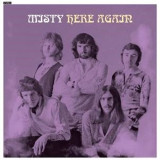
First ever vinyl release of the album recorded in 1969/70 by UK prog-psych band Misty. Including their terrific mod-psych “Hot Cinnamon” 45.
A dazzling fusion of classically-inspired progressive rock and song-based psychedelic pop with an organ-based sound, in the vein of Procol Harum and The Nice.
“In October 1969, King Crimson released their debut, In The Court Of The Crimson King, Pink Floyd unleashed Ummagumma and Led Zeppelin put out their second LP. At the same time, Misty were in London’s Regent Sound Studios recording what turned out to be the only album of their career with producer, Adrian Ibbetson, who had cut his teeth as an engineer working with everyone from the Beatles to the Equals.
After only a handful of gigs, Misty signed a deal with Parlophone and began to gather momentum with the release of Hot Cinnamon. Although they received a lot of airplay, the single failed to chart and the band’s hopes of releasing their debut album were dashed. Reluctantly, Misty went their separate ways and the Here Again master tapes sat gathering dust on a shelf until Gelardi came across the original acetate and decided it was time for the album to finally see the light of day.
Bridging late psych and early prog, songs like Life Has Just Begun, Witness For The Resurrection and the title track were played with a perfect mix of high-flying experimentation and virtuosic musicianship. Blurring the fine lines between rock, jazz, classical and chamber pop, Here Again is a transcendent kaleidoscope of colour that is beyond definition.
Maybe you can tell an album is truly timeless when it takes half a century for it to be properly appreciated. Misty were a rare bird, a brilliant, truly original band who should have left an indelible mark instead of joining what now seems like the never-ending line of half-remembered and long-forgotten flotsam and jetsam of the psychedelic era.
Both the first and the final statement from a group who never really got their chance to be heard, Here Again is a slice of pristine psychedelic pop that so embodies the dizzying energy and the progressive spirit of the time, it’s astonishing that it stays afloat under the weight of its own intentions. But float it does, like mist in the air - a half-forgotten diaphanous dream slowly coming back to you after 50 years of silence.” – Jonathan Wingate
он должен быть опубликован на 01.03.2024

Brontez Purnell has been making music since the ‘90s. The Southern-raised, Oakland-based American musician and writer has centered his queerness and Blackness in projects Gravy Train!!! and Younger Lovers as well as in his award-winning books ‘100 Boyfriends’ and ‘Since I Laid My Burden Down’. He is also a dancer, film maker and choreographer.
CRYSTAL CLEAR VINYL.
Hot on the heels of recent 7” singles for Sub Pop, PPM and his first solo electronic record ‘No Jack Swing’ (Dark Entries / Papi Juice), Brontez returns in DIY-punk band formation for a new album entitled ‘Confirmed Bachelor’, out Sept 15th on Upset The Rhythm. These twelve songs presented are of the no-time-wasted variety. Fuzzed-out pop songs, hotly delivered from the heart, often sassy, sometimes sappy, always snappy! Brontez’s band includes the multifaceted talents of Vice Cooler (who also produced and mixed the album), Sean Teves (of Younger Lovers) on drums, Kevin Preston (Prima Donna, Green Day) on guitar, Aaron Minton (Prima Donna) on piano and saxophone, and Laena Myers-Ionita on violin. The album was recorded in Los Angeles at The VCR earlier this year.
‘Bachelors Theme’ opens ‘Confirmed Bachelor’ and sets the scene perfectly with the heady, rush along swoon “That's when I heard the doctor singing to me, "Son; you got all those boys in love, I wish I knew what you were saying to them. Their storming castles are coming for you!” It’s a tour de force of bop and bravado. This is what the album does so well, it sweeps you off your feet first, making its lyrical disclosures all the more affecting.
‘Rude Life’ begins in lilting, measured contemplation. “You're the rudest boy I know, and I've a real rude life” confesses Brontez as the violin laces through his vocal. This is all shook up at the halfway mark though when the adrenaline kicks in and the drums pummel. ‘Sky Opens Up’ similarly dials up the tumbling, careening clamour and energy buzz. ‘Hellish Banger’ is more of slow dance meets grunge reverie. The album also boasts an amazing spiraling auto-tuned cover of The Amps ‘Bragging Party’. ‘No Cigarettes / Stay Monkey’ is pulse-grabbing rally of unadorned declarations split into two fleeting sketches.
‘Hey Boy’ and ‘Boy With Butterfly Wings’ are more reflective in intent, both yearning and unapologetically poetic. In fact the little details observed in the lyrics across the whole album are quietly elegiac; winter nights, electric bills, ticking clocks and many allusions to hauntings only lending pathos to the love-drunk / lovelorn axis of the record. ‘Confirmed Bachelor’ is a hot wonder, upbeat, witty and ever-lively only with a forlorn core, a resolute focus and defiant honesty. It’s a rare triumph, a record you can dance your Friday night away to, whilst the songs’ subtly work on your emotions from the inside out.
of it all. Jagged riffs, bubblegum bounce and Brontez’s vocal effortlessly racing to dizzying effect.
он должен быть опубликован на 10.11.2023

Recorded in 1989 on the remaining ten minutes left at the end of Swiz’s Hell Yes I Cheated reel-to-reel and originally released at the time as a 33 RPM 7-inch, this 2023 release presents a 12-inch 45RPM version remastered by Tim Green with an extra song recovered from the tape archives of Jason Farrell. The brief story of Fury: At some point in 1989, members of Washington DC punk bands Swiz and Ignition formed Fury as a loose experiment with no intentions beyond being a diversion. The band existed for a few months, wrote six songs, and played two shows. Shawn Brown and Chris Thomson switched their musical roles from their regular bands as vocalist and bass player. The eyes-closed leap into those unfamiliar positions imbued the recording its feeling of deranged chaos, while the well-seasoned duo of Jason Farrell and Alex Daniels nailed down each song with the signature agility and power displayed in their more familiar work together. The recording is a vexing listen that sounds like a Neapolitan swirl of Swiz, Void, and the Germs. Was it precision theatre? Or was it a natural step back into a more primitive and comfortable place for four young veterans that just wanted to fill the daily void of existential restlessness? The track “Resurrection” famously made it onto the final Swiz LP. The final track “Last One” got cut off halfway through recording and the band looped and spliced it into a dizzying psychedelic nightmare / masterpiece. The recording has faded into somewhat of an obsurity, a footnote to the larger careers of all of its members. In its time, it was revered by a small cult of obsessives from numerous early ’90s underground punk circles. It notably had a pronounced influence on the emerging Gravity Records scene, where its echoes can be heard on quite a few of the earlier releases. Resurrection is finally getting the deluxe treatment that it deserves after 34 years!
он должен быть опубликован на 15.09.2023

Black Vinyl[32,98 €]
Purple Vinyl[36,56 €]
Black triple LP[38,61 €]
White triple LP[38,61 €]
Dexys are back! 11 years since the release of their last album of original music, the acclaimed One Day I'm Going to Soar, the band return with a stunning new record, The Feminine Divine, out July 28th on 100% Records.
The Feminine Divine’s arrival is heralded by today’s release of the glorious first single ‘I’m Going To Get Free’, soaked in horns and with a heavy dance-hall feel. "The character is optimistically breaking free from internalised trauma, depression and guilt," Kevin Rowland said of the track.
The Feminine Divine is Dexys’ fifth album of original material produced once again by Pete Schwier, along with acclaimed session musician and producer Toby Chapman. After taking some time out to refocus his energy, Kevin Rowland came back to music with a fresh perspective and new-found positivity. A personal, if not strictly autobiographical, record portraying a man whose views have evolved over time. Not just on women, but the whole concept of masculinity he had been raised with: an education and an un-learning that is traced across the arc of The Feminine Divine with dizzying effect.
With two tracks on the album with Goddess in the title in ‘My Goddess Is’ and ‘Goddess Rules’, it’s no surprise Kevin chose to use a painting inspired by Pele, the Hawaiian goddess of fire and volcanoes, for the artwork.
Dipping into the archives for a song he’d originally written in 1991, the album’s opener, ‘The One That Loves You’, is a tough-guy feint before he lifts the curtain on “what I really feel”, as announced by a classic bit of Kevin spoken word that leads into the second track, ‘It’s Alright Kevin (Manhood 2023)’.
The record’s first half is full of music hall-esque swagger, much of it written with original Dexys’ trombonist Big Jim Paterson. The second side of the record is like nothing Dexys have done before. A saucy, synth-heavy cabaret, written in collaboration with Sean Read and Mike Timothy. It’s steamy, fizzing and sultry, at times doom-laden and heavy and at other times raunchy and funky. Quite a heady mix.
Today the band is more of an “organic” assemblage – Kevin, Jim (a non-touring band member), Sean Read and Mike Timothy. “It’s always just natural with me,” says Kevin. “The inspiration comes first, I think about what I can do, what songs I’ve got, then approach the band.” He describes their current lineup as “very much the nucleus, these days.”
With over a billion worldwide streams, three top 10 albums in the UK, two number 1 singles, a Brit Award and a multi-platinum selling album with their sophomore release Too-Rye-Ay (as Dexys Midnight Runners), Dexys are as vital and exciting today as ever. With live shows set to be announced shortly in support of the record, The Feminine Divine marks a new chapter in a book that just keeps getting better and better.
“I’ve been doing this a long time,” says Kevin. “But I feel I’ve got to it now.”
он должен быть опубликован на 28.07.2023

NoCorner and Stone King proudly presents the first official collaboration between Ossia and Andy Mac. Both are fresh off a series of high-profile releases and projects - Ossia with recent releases on Berceuse Heroique and Blackest Ever Black, and Andy with his new Deep Street label and the 2nd Diving Bird 12 that just came through on Idle Hands.
Featuring three tracks written & recorded between 2015 and 2017, the record sees Andy & Ossia's mutual love for Jamaican and African rhythms, dusty records and a tape-saturated approach to guide a fresh, dubwise production process involving a battered old Roland Sampler and Ossia's infamous half-broken analogue Trident Mixing desk.
A Side Soup Riddim serves itself up as a hybrid slab of dancehall, dub and perhaps even the looser stylings of house - a fresh twist with an eternally-universal emphasis on space, and the movement within it. On the flip, Cado leans even further into negative space, allowing a gorgeous piece of samplism to drive the rhythm all the way to its conclusion in the blink of an eye, with the soft insistence of the percussion playing with the listener's sense of time. This feeling intensifies in the final track, Linguine Loop. A shapeshifting low-frequency hum underpins a hypnotic melodic loop that develops, delays and distorts into a dizzying crescendo of feedback and noise. The final minutes serve as a final reflection on what came before as the melody slowly re-filters into the mix as a ghostly, half-there form of itself, drawing the reductive conclusion to this EP, a triple version excursion of far-away sounds.
Edition of 300, six times (at least) hand-stamped, in kraft sleeve.
Mastered and cut by Lewis at Stardelta.
Закажите сейчас, и мы закажем товар для вас у нашего поставщика.

Black Vinyl[32,98 €]
Cassette[14,08 €]
Black triple LP[38,61 €]
White triple LP[38,61 €]
Dexys are back! 11 years since the release of their last album of original music, the acclaimed One Day I'm Going to Soar, the band return with a stunning new record, The Feminine Divine, out July 28th on 100% Records.
The Feminine Divine’s arrival is heralded by today’s release of the glorious first single ‘I’m Going To Get Free’, soaked in horns and with a heavy dance-hall feel. "The character is optimistically breaking free from internalised trauma, depression and guilt," Kevin Rowland said of the track.
The Feminine Divine is Dexys’ fifth album of original material produced once again by Pete Schwier, along with acclaimed session musician and producer Toby Chapman. After taking some time out to refocus his energy, Kevin Rowland came back to music with a fresh perspective and new-found positivity. A personal, if not strictly autobiographical, record portraying a man whose views have evolved over time. Not just on women, but the whole concept of masculinity he had been raised with: an education and an un-learning that is traced across the arc of The Feminine Divine with dizzying effect.
With two tracks on the album with Goddess in the title in ‘My Goddess Is’ and ‘Goddess Rules’, it’s no surprise Kevin chose to use a painting inspired by Pele, the Hawaiian goddess of fire and volcanoes, for the artwork.
Dipping into the archives for a song he’d originally written in 1991, the album’s opener, ‘The One That Loves You’, is a tough-guy feint before he lifts the curtain on “what I really feel”, as announced by a classic bit of Kevin spoken word that leads into the second track, ‘It’s Alright Kevin (Manhood 2023)’.
The record’s first half is full of music hall-esque swagger, much of it written with original Dexys’ trombonist Big Jim Paterson. The second side of the record is like nothing Dexys have done before. A saucy, synth-heavy cabaret, written in collaboration with Sean Read and Mike Timothy. It’s steamy, fizzing and sultry, at times doom-laden and heavy and at other times raunchy and funky. Quite a heady mix.
Today the band is more of an “organic” assemblage – Kevin, Jim (a non-touring band member), Sean Read and Mike Timothy. “It’s always just natural with me,” says Kevin. “The inspiration comes first, I think about what I can do, what songs I’ve got, then approach the band.” He describes their current lineup as “very much the nucleus, these days.”
With over a billion worldwide streams, three top 10 albums in the UK, two number 1 singles, a Brit Award and a multi-platinum selling album with their sophomore release Too-Rye-Ay (as Dexys Midnight Runners), Dexys are as vital and exciting today as ever. With live shows set to be announced shortly in support of the record, The Feminine Divine marks a new chapter in a book that just keeps getting better and better.
“I’ve been doing this a long time,” says Kevin. “But I feel I’ve got to it now.”
он должен быть опубликован на 28.07.2023

Purple Vinyl[36,56 €]
Cassette[14,08 €]
Black triple LP[38,61 €]
White triple LP[38,61 €]
Dexys are back! 11 years since the release of their last album of original music, the acclaimed One Day I'm Going to Soar, the band return with a stunning new record, The Feminine Divine, out July 28th on 100% Records.
The Feminine Divine’s arrival is heralded by today’s release of the glorious first single ‘I’m Going To Get Free’, soaked in horns and with a heavy dance-hall feel. "The character is optimistically breaking free from internalised trauma, depression and guilt," Kevin Rowland said of the track.
The Feminine Divine is Dexys’ fifth album of original material produced once again by Pete Schwier, along with acclaimed session musician and producer Toby Chapman. After taking some time out to refocus his energy, Kevin Rowland came back to music with a fresh perspective and new-found positivity. A personal, if not strictly autobiographical, record portraying a man whose views have evolved over time. Not just on women, but the whole concept of masculinity he had been raised with: an education and an un-learning that is traced across the arc of The Feminine Divine with dizzying effect.
With two tracks on the album with Goddess in the title in ‘My Goddess Is’ and ‘Goddess Rules’, it’s no surprise Kevin chose to use a painting inspired by Pele, the Hawaiian goddess of fire and volcanoes, for the artwork.
Dipping into the archives for a song he’d originally written in 1991, the album’s opener, ‘The One That Loves You’, is a tough-guy feint before he lifts the curtain on “what I really feel”, as announced by a classic bit of Kevin spoken word that leads into the second track, ‘It’s Alright Kevin (Manhood 2023)’.
The record’s first half is full of music hall-esque swagger, much of it written with original Dexys’ trombonist Big Jim Paterson. The second side of the record is like nothing Dexys have done before. A saucy, synth-heavy cabaret, written in collaboration with Sean Read and Mike Timothy. It’s steamy, fizzing and sultry, at times doom-laden and heavy and at other times raunchy and funky. Quite a heady mix.
Today the band is more of an “organic” assemblage – Kevin, Jim (a non-touring band member), Sean Read and Mike Timothy. “It’s always just natural with me,” says Kevin. “The inspiration comes first, I think about what I can do, what songs I’ve got, then approach the band.” He describes their current lineup as “very much the nucleus, these days.”
With over a billion worldwide streams, three top 10 albums in the UK, two number 1 singles, a Brit Award and a multi-platinum selling album with their sophomore release Too-Rye-Ay (as Dexys Midnight Runners), Dexys are as vital and exciting today as ever. With live shows set to be announced shortly in support of the record, The Feminine Divine marks a new chapter in a book that just keeps getting better and better.
“I’ve been doing this a long time,” says Kevin. “But I feel I’ve got to it now.”
он должен быть опубликован на 28.07.2023

In the quiet surrounding the pandemic, Madeline Kenney made sonic sketches in the basement studio she shared with her then-partner. She arranged phrases that called her—the sharp knife of a synth cutting a path along a blooming arpeggio, drums stuttering firm and tight. Working this way, she amassed a collection of songs she had no particular aims for. Some formed her 2021 EP Summer Quarter, others languished.
But in 2022, Kenney’s partner left suddenly and without warning, plunging her into the solitary act of untangling what happened. In the wake of her ensuing depression, she revisited these songs and found in them something prescient. She’d already laid the foundation for A New Reality Mind.
That her relationship’s end came without warning is only half true, though. The warnings were in the feelings and fears that inspired Kenney’s critically-acclaimed third album, Sucker’s Lunch (2020), which was co-produced by Jenn Wasner (Flock of Dimes) and centered around the idea of flinging oneself freely into the seemingly-assured destruction of new love, come what may.
If sonically Sucker’s Lunch was letting yourself be pulled into the warm bath of a good story, A New Reality Mind reflects the harsh light of truth coming to break the spell. But as sobering as morning light can be, there’s brilliance to it, too. To see in the clarity of day is a gift. A revolution. Rather than reckoning with love lost, the songs on A New Reality Mind grapple with the self that chose to fall. “I guess I only needed to look twice / Reflected in my attitude, my constant compromise,” Kenney sings on “Red Emotion,” the musical landscape screeching and gasping around her observations of how she made herself small to keep the dream of love alive.
These notions of sight and vision pervade the record as Kenney stands before the infinity mirror of selves she’s been to preserve bonds in her life. On “I Drew a Line,” Kenney contends with the stories she’s told herself to keep plodding along, and the way those stories shape her perceived reality. She invokes John Berger’s Ways of Seeing—“Everything around the image is part of its meaning,” we hear him say. “Everything around it confirms and consolidates its meaning.” Here, Kenney isn’t interested in shaming herself for being carried away by the fantasies of the heart, but rather in investigating the unavoidably human propensity to do so. “I, like everyone else, am muddling through my most ordinary disaster of a life,” she acknowledges, a sentiment which reverberates through album opener “Plain Boring Disaster.” “I don’t need to start again,” she sings at the song’s close. “But I can change when it ends.” We may all be doomed to repetitive, ordinary heartbreaks, Kenney realizes, but at least we can cultivate a capacity to witness our missteps and build new realities for ourselves.
This is Kenney’s most expansive work, while also her most solitary. Produced and recorded alone in her basement, these songs are manifestations of what it feels like to be transformed by pain. Textures collide and collude; sonic ornaments emerge and dissipate capriciously; saxophones soar untamed, as on the 80s pop elegy to self-sacrifice, “Reality Mind”. These songs beg you to dance, then pull the rug out from under you once you’ve caught the beat, leaving you dizzy like the whiplash of love’s end.
But in the propulsive power of A New Reality Mind, there’s also acceptance, self-forgiveness, and a willingness to move forward into life, with all its ways of making a sucker of you. “That way of living, I’m over it,” Kenney declares of the habits that hold her back on “Superficial Conversation”. “I do not need to be reminded of what I did,” she assures, the song opening wide and beaming, like a smile expanding to taste a new breath of air.
он должен быть опубликован на 28.06.2023

Following on from the Bergisch-Brandenburgisches Quartett’s anarchic Live ’82 (BT095), Black Truffle continues its deep dive into the archives of legendary drummer/accordionist/photographer/composer/conceptual prankster Sven-Åke Johansson with Scheisse ’71. Recorded in November 1971 during the Berliner Jazztage at a heavy-hitting concert that also included the Spontaneous Music Ensemble and groups led by Peter Brötzmann, Manfred Schoof, and Masahiko Sato, Scheisse ’71 is the only document of a wild, otherwise unrecorded quintet featuring Johansson on drums, accordion and oboe d’amore, legendary free jazz vocalist Jeanne Lee, her husband Gunter Hampel on vibes, flute and bass clarinet, live electronics pioneer Michael Waisvisz on modified Putney (VCS 3) synthesizer, and the unknown Freddy Gosseye on electric bass. Part of a festival centred on giants of jazz like Duke Ellignton and Dizzy Gillespie, the radical performance shocked its audience, who can be heard heckling and yelling abuse at points, including the titular exclamation of ‘Scheiße!’ Clocking at just over half an hour and recorded in raw but detailed stereo by Johansson himself, the music burns with intensity while also making room for spacious passages and frequent dynamic movement. Beginning with Lee’s voice, Hampel on flute and Johansson on oboe d’amore in a bird-like game of call and response, the unexpected entry of Waisvisz’s tortured, squelching synth bursts prompts the first of many changes in energy and instrumentation, as Gosseye’s busy, roving bass enters and Johansson moves to the kit, his swinging cymbal work and juddering toms extending the approach of Sunny Murray or early Milford Graves. The presence of synthesizer, electric bass, and Lee’s highly amplified voice moves the quintet away from conventional free jazz textures, at times pushing into zones of abstract free sound reminiscent of what groups like MEV, AMM or Johansson’s MND were exploring in the same years. But the energy and joyful melodicism of the music keep it rooted in the tradition of American fire music and its European inheritors. Capable of changing gears in an instant from ferocious blow outs to fragile tapestries of chiming vibes and fizzing synth, the music finds space for Lee’s post-bop free scat (which integrates shrieks and howls just as a post-Ayler saxophonist might), Gosseye’s virtuosic bass runs (a rare attempt to apply the classic free jazz style of players like Alan Silva or Henry Grimes to the electric instrument), Johansson’s folkish accordion interjections, and even a sustained passage of unison bass clarinet and electric bass riffing in its second half. Special mention should be made of Waisvisz’s Putney performance, one of the earliest documents of this under-recorded instrument inventor and player, here playing a major role in giving the music its wildly exploratory, primordial air, his buzzing glissandi and bubbling filter sweeps at times howling like a distressed monkey. Arriving in an austerely stylish sleeve with beautiful black and white photographs by Johansson, Scheisse ’71 is an essential recording that adds yet another layer to our appreciation of this golden era of radical free music.
Закажите сейчас, и мы закажем товар для вас у нашего поставщика.

First LP from Donna Candy, the bass-vocal-drums trio trawled from the sub genres of experimental rock and busy pushing to the front of heavy music. Nu metal bass riffs, switch-pitched fuzz vocals and big, splashy drums layer over unsettling narratives and extreme loops to bring a bit of the pit to the dancefloor.
Begun as an off the cuff party band with the idea of finding a live sound that would fit between 4am trance sets, the trio soon found themselves addicted to the euphoric sludge they created. Swapping their usual guitar for a bass, JS Donny drives Donna Candy with simple riffs, split half clean and half shredded with Boris / Sunn O))) like distortion. Head-banging the whole way, they’ll switch speed or stop suddenly, bending and drawing out notes to ratchet things up for release. Nadja's vocals tear through the top layer - heavily processed and warped with weird imagery. Together there’s a feeling of what it might be like to see Sightings slowed by codeine but with Elvin Brandi on the mic.
Always set up facing each other, off stage and surrounded by the audience, Donna Candy encourage catharsis - reciprocally transforming energy between themselves and the crowd. They build a queer euphoria that pulls apart metal’s narrow dichotomy of nihilistic machismo vs. hyperfemininity, and begins to make the visceral faux-hybridity of nineties nu metal feel possible this time around. ‘Blooming’ brings us six offerings from the band on a four way split release that speaks for itself - once on board with the DC energy you’ll want to be a part of it.
он должен быть опубликован на 13.05.2023

„Forever Forever“ ist das neue Album von Genevieve Artadi, der in L.A. lebenden Singer-Songwriterin, Produzentin, Bogenschützin und Dr. Mario-Liebhaberin. Artadi ist ein kreativer Tornado und bekannt für ihre Mitwirkung bei KNOWER, Expensive Magnets und ihrer früheren Band Pollyn. 2020 unterzeichnete sie bei Brainfeeder, um ihr Soloalbum, „Dizzy Strange Summer“, mitten in der Corona-Pandemie zu veröffentlichen. Im darauffolgenden Jahr arbeitete sie mit Thundercat, Raedio und Louis Cole an ihrem Track, „Satellite Space Age Edition“, für den Soundtrack der fünften Staffel von „Insecure“ (HBO). „Forever Forever“ umfasst eine wahrhaft kaleidoskopische Bandbreite an Einflüssen, die eine stilistische Eingrenzung unmöglich macht. Verwurzelt im Jazz, aber auch im alternativen Rock oder Avant-Pop, stehen sie in der Tradition der legendären Grenzgänger:innens Stereolab und Talking Heads. Artadi gehört zur unverschämt talentierten Crew, zu der auch Louis Cole, Pedro Martins, Sam Gendel, Sam Wilkes, Jacob Mann und Chiquita Magic gehören, die ein ähnliches Fundament aus klassischen und Jazz-Traditionen mit einer gesunden Punk-Attitüde und einer Leidenschaft für musikalische Hybridität und Fusion mitbringen. Sie gibt zu, dass es sie selbst motiviert, wenn sie von diesen talentierten Menschen umgeben ist, etwas zu schaffen. Die Hälfte der Songs für „Forever Forever“ wurde ursprünglich für eine Big Band geschrieben, da Artadi in Kontakt gekommen war mit der Grammy-nominierten Norrbotten Big Band aus Schweden, mit der sie als ‚Composer in Residence‘ tätig war und viele Male live aufgetreten ist. Auf der Suche nach einem „kreativen Funken“, so sagt sie, hörte sie Duke Ellington und Gil Evans mit Miles Davis. „Der Rest ist, glaube ich, einfach alles aus meiner Vergangenheit, was in meinem Unterbewusstsein ist.“, sagt sie. „Zufällige Inspirationsblitze von Chopin, Bach (ich habe während des Lockdowns einige zweistimmige Inventionen gelernt), Debussy, Nancy Wilson, Björk, Ryan Power, Nobukazu Takemura, den Beatles, Dionne Warwick…”
он должен быть опубликован на 17.03.2023

Red Vinyl
Initial LP copies pressed on opaque red vinyl! As its name suggested, the intimate and sultry Cuntry Covers Vol. 1 was always going to have a follow-up. Led by the brooding vocals of Bria Salmena, Cuntry Covers Vol. 2 is every bit as potent as its predecessor whose noir-inflected alternative country-rock stood in sharp contrast to the singer's commanding delivery as leader of post-punk revivalists FRIGS. Debuting the project in 2021, the languid, reverb-drenched Cuntry Covers Vol. 1 saw her artfully collaborating with multi-instrumentalist Duncan Hay Jennings and reimagining a carefully picked collection of Americana anthems. Vol. 2 pushes the envelope further and harder. Encompassing feverish takes on tracks by Gillian Welch, Paula Cole, Mary Margaret O'Hara, Robert Lester Folsom, Glenn Campbell - by way of Nick Cave - and the late, great Loretta Lynn, Bria's deliciously dark approach shimmers through these six startling songs. Created during a break from Salmena and Jennings' work in Orville Peck's world-conquering backing band, Vol. 2 was recorded directly after Peck's second album and Bria's US tour supporting Wolf Alice. Embracing contrast, the sunny circumstances in which Vol. 1 was made were flipped on their head. Instead of a bucolic barn in the Canadian countryside, they recorded the new tracks in chilly Toronto, huddled together in their tiny makeshift home studio, with Jennings at the controls. They enlisted the help of local Toronto musicians Lucas Savatti (FRIGS), Simone Baril (US Girls, The Highest Order, Darlene Shrugg, Partner), Andrew Manktelow, and frequent collaborator Jaime Rae McCuaig. While Vol. 1 was Bria's attempt at subverting country music's conservative roots and primarily white and heterosexual agenda, here the emphasis was on experimentation. While Vol. 2 might be less personal, it's just as idiosyncratic, with half of the reversions staying true to the originals and others taken to a different universe entirely. Building on the tried-and-true/bold-and-new duality of Cuntry Covers' first offering, Vol. 2 delivers a deeper dive into the duo's brilliant alchemy of traditional and contemporary reinterpretations. The added experimental flourishes, from dizzying electronica and pulsing bass to sax-driven soul, take Bria's new EP into previously uncharted territory, signalling a thrilling new step in Bria's adventurous evolution.
он должен быть опубликован на 24.02.2023

Originally released 2020 on cassette and digitally.
Forged alone in a cave on the island of Java, and recorded in a fortress in Poland, Antonina Nowacka’s “Lamunan” is an intimate exploration of a mysterious darkness and the earliest of musical forms. Nowacka has co-created raw electronics and audiovisuals as half of WIDT and the enigmatic Mentos Gulgendo, but her solo practice focuses solely on the voice’s inherent connection to mental states, its ability to speak wordlessly, and the apparatus of speech itself – leading her to a six-month trip to study traditional music in Indonesia.
A day trip to visit a Javanese volcano turned into days of exploring, Nowacka eventually stumbling across a cave. “Rarely does anyone come there because Indonesians are afraid of the dark and the cave is poorly lit,” explains Nowacka. “I could sit there and sing for hours without feeling the passage of time.”
Hours spent in the dizzying darkness and echoes of Seplawan Cave produced a series of unaccompanied vocal motifs. Moans, chants, hums, and wordless cries met with the multi-million year-old facades of the stone walls. The freely flowing compositions seem forged from the same natural material as that stone, carved into shape by nothing but water, time, and solitude.
Upon returning to Poland, Nowacka recorded with Rafal Smoliński in the cave-like sonic conditions of the Modlin Fortress some 50km north of Warsaw. The intimate and surreal sound of the cave is recreated, Nowacka overlapping multiple vocal lines to create delicately interwoven chamber choral pieces, musically minimalist and emotionally maximalist. The album’s title – "Lamunan" – comes from the Indonesian word for ‘dreaming’ or ‘fantasy’.
Закажите сейчас, и мы закажем товар для вас у нашего поставщика.

Primetime Entertainment’ is PET NEEDS’ second studio album and is produced by friend and fan Frank Turner. Simultaneously loud and quiet, raucous party anthems sit alongside thought-provoking personal songs; it’s the sound of a band stepping up a gear to match their catapult on the big stages across the world. Having already toured Europe supporting Frank Turner in the first half of 2022, including Germany, Netherlands, France and more – the touring continues joining Frank on his mammoth 50 States in 50 Days tour of the US throughout June and July and then finally across the UK in September and October. ‘Primetime Entertainment’ is released on 9th September and will be available on CD, LP, digital and cassette. Timeline: Track 1 – ‘Get On The Roof’ – released as a single on 24th June ‘22 "After a gruelling 8 hour drive from a gig in South Devon back to Essex, I was reunited with my wonderful partner Lorna. We threw an old mattress out of our bedroom window onto our roof and clambered out, armed with a rucksack full of the remainder of last night's rider. We listened to cinematic theme tunes as the sun set over the chimneys on the horizon. Come early morning, we rolled back into the house. I grabbed my acoustic guitar, pressed "record" on my phone and sung a dizzy, euphoric stream of consciousness to my voice notes. It felt good, but they always do at that time of night, haha. On second listen in the morning, I felt excited about the tune and started to refine it. As soon as it hit the practice room we turned it into a party banger!"
он должен быть опубликован на 09.12.2022

Primetime Entertainment’ is PET NEEDS’ second studio album and is produced by friend and fan Frank Turner. Simultaneously loud and quiet, raucous party anthems sit alongside thought-provoking personal songs; it’s the sound of a band stepping up a gear to match their catapult on the big stages across the world. Having already toured Europe supporting Frank Turner in the first half of 2022, including Germany, Netherlands, France and more – the touring continues joining Frank on his mammoth 50 States in 50 Days tour of the US throughout June and July and then finally across the UK in September and October. ‘Primetime Entertainment’ is released on 9th September and will be available on CD, LP, digital and cassette. Timeline: Track 1 – ‘Get On The Roof’ – released as a single on 24th June ‘22 "After a gruelling 8 hour drive from a gig in South Devon back to Essex, I was reunited with my wonderful partner Lorna. We threw an old mattress out of our bedroom window onto our roof and clambered out, armed with a rucksack full of the remainder of last night's rider. We listened to cinematic theme tunes as the sun set over the chimneys on the horizon. Come early morning, we rolled back into the house. I grabbed my acoustic guitar, pressed "record" on my phone and sung a dizzy, euphoric stream of consciousness to my voice notes. It felt good, but they always do at that time of night, haha. On second listen in the morning, I felt excited about the tune and started to refine it. As soon as it hit the practice room we turned it into a party banger!"
он должен быть опубликован на 09.12.2022

Written and recorded in the midst of a dizzying stretch in which nearly everything about the way the band lived and worked was turned on its head, Motel Radio's "The Garden" is indeed a work of relentless hope. The songs are profoundly vulnerable here, and the performances are warm and breezy, calling to mind everything from Andy Shauf and Cass McCombs to Beck and Tame Impala with an easygoing demeanor that belies the deep emotional work underpinning them. Motel Radio generated early buzz in their adopted hometown of New Orleans on the strength of their 2015 debut EP, Days & Nights, which helped land them dates with the likes of Kurt Vile and Drive-By Truckers in addition to festival slots at Firefly, Jazz Fest, and more. The band followed it up with the similarly well-received Desert Surf Films in 2016 and their first full-length, Siesta Del Sol, in 2019, touring the country on a seemingly endless loop as they built up their devoted following one night at a time. Since then, the band had set a goal of becoming more self-sufficient and learning to record on their own, and when it came time to cut The Garden, they dove in headfirst, cutting half the collection in an old fishing camp south of New Orleans with the help of engineer Ross Farbe (Video Age, Esther Rose) and the other half fully remotely while engineering themselves. "There was this real creative freedom that came with working remotely and learning how to run the sessions on our own," explains co-lead singer Ian Wellman. "Synths, samples, beats, plug-ins; suddenly these whole new worlds of sound were at our fingertips and the possibilities were limitless." That creative liberation is easy to hear on The Garden, which opens with the mesmerizing "Wise." Like much of the album, it's a gentle meditation on finding joy and fulfillment, on spreading love and positivity. "I've gotta open my eyes," co-lead singer Winston Triolo sings over dreamy guitars and a hypnotic digital drum loop. "I only get one life, well now how can I live it wise?" The airy "Outta Sight" celebrates the simple pleasures of letting go and being present, while the washed-out "Sweet Daze" revels in the warmth of human connection, and propulsive "Happiness Pie" looks for ways to share the comfort and contentment that comes with self-acceptance. On The Garden, they've realized there's no sweeter garden than the one you grow yourself.
он должен быть опубликован на 18.10.2022

Primetime Entertainment’ is PET NEEDS’ second studio album and is produced by friend and fan Frank Turner. Simultaneously loud and quiet, raucous party anthems sit alongside thought-provoking personal songs; it’s the sound of a band stepping up a gear to match their catapult on the big stages across the world. Having already toured Europe supporting Frank Turner in the first half of 2022, including Germany, Netherlands, France and more – the touring continues joining Frank on his mammoth 50 States in 50 Days tour of the US throughout June and July and then finally across the UK in September and October. ‘Primetime Entertainment’ is released on 9th September and will be available on CD, LP, digital and cassette. Timeline: Track 1 – ‘Get On The Roof’ – released as a single on 24th June ‘22 "After a gruelling 8 hour drive from a gig in South Devon back to Essex, I was reunited with my wonderful partner Lorna. We threw an old mattress out of our bedroom window onto our roof and clambered out, armed with a rucksack full of the remainder of last night's rider. We listened to cinematic theme tunes as the sun set over the chimneys on the horizon. Come early morning, we rolled back into the house. I grabbed my acoustic guitar, pressed "record" on my phone and sung a dizzy, euphoric stream of consciousness to my voice notes. It felt good, but they always do at that time of night, haha. On second listen in the morning, I felt excited about the tune and started to refine it. As soon as it hit the practice room we turned it into a party banger!"
он должен быть опубликован на 09.09.2022

I’m Jimmy Reed underlined the very raw nature of the recordings, yet it immediately showed
why his music was embraced so much by others as the songs offered more melody and variety
than other Blues players. Ain't That Lovin' You Baby has fine melodic hooks that could easily
be transcribed into rocking versions, while Boogie In The Dark set the template for so many
groups in the sixties. The slower tracks like You Got Me Crying and Little Rain provided useful
contrasts, while Honest I Do gives added meaning to the phrase 'stripped down'. Jimmy Reed
was easily the most commercially successful Bluesman in America during the 1950s, and as
such his material was readily available to be plundered by artists wanting to enrich their live
repertoire. This reached its height during the UK Beat boom when virtually every working group
included his songs in their sets. The Rolling Stones, The Yardbirds, Them and The Animals all
covered his songs liberally during the first half of the sixties. In his homeland, The Grateful
Dead, The Steve Miller Band, Johnny Winter, Wishbone Ash and, bizarrely, even Bill Cosby
followed suit!
он должен быть опубликован на 01.08.2022

Precious Metals are excited to announce "Chaos Butterfly", the debut album from the Vietnamese-Canadian electronic music producer, vocalist and filmmaker, x/o. “Chaos Butterfly” is an epic tale of catharsis and self-actualization explored through metamorphosis. It is a free-falling kaleidoscopic journey into a beautiful nightmare, both cataclysmic and tender. Expanding on the themes present in their first EP “Cocoon Egg”, the album builds a parallel world from a different perspective. “Chaos Butterfly” tells a loose narrative about an anti-hero navigating trauma through whirlwinds of grief and anger; a vengeful spirit who finds true strength in inner healing and forgiveness. An allegory for transcending societal concepts of gender, “Chaos Butterfly” is a journey of self-acceptance and reflection of x/o’s own path towards their non-binary identity. Throughout the voyage, x/o pulls apart and collides masculine and feminine tropes both theoretically and musically by utilising contrasts between soft and hard, internal and external, calmness and anger, loud and quiet. This system of symbolism and influences reveal a pattern that is the overarching theme of duality. Colliding disparate but interconnected influences, x/o references Playstation 2’s Final Fantasy X world-building, Fight Club, the half-yoma warriors in the anime Claymore, as well as the real legends of the Vietnamese Trưng Sisters. Musically, “Chaos Butterfly” resists easy categorisation, playfully fusing moments of reversed breakbeat, with elements of solemn ambience, distorted metal, and trip-hop catharsis, with inspiration from artists such as Yoko Kanno, to Bone Thugs-n-Harmony as well as Deftones, Massive Attack, Orbital, and Aaliyah. The album journey begins with opener “Chrysalis Wrath”, a prologue to the story, and emblematic of the metamorphosis of the album. A soft and unassuming exterior to the hard shell and bone that lies beneath. Delicately cascading melodies and disembodied vocals are torn asunder by a brooding, ominous synth, punctuated by blasts of percussion, like dark clouds forming on the horizon, the egg cracks; a foretelling of what is to come and a reference to what has been. This is followed by “Red Alert,” the first single from the release, which blends airy melancholic vocals with a flurry of drum breaks and synths plucks, an ambitious and cinematic exploration of intuition against recurring trauma. Melodies drifting and out of focus under the swirling vocal, like the blur of neon street lights reflecting in a rain-soaked cityscape. It’s a liminal poem about listening to your inner voice to protect you from harm. Duality is never more apparent than on “Promise : Armour” delicate piano melodies drift and settle like snowfall before crushing blows of hardstyle kicks blast through the ether, as their soulful, but anguished vocal harmony is overcome by a demonic refrain “Cross your heart, don’t cross me”. x/o is a founding member of s.M.i.L.e, a trail-blazing collective of like-minded artists in Vancouver pushing the boundaries of club experimentation, showcasing artists such as Actress, Hitmakerchinx, Mechatok, Nídia, and Shygirl. This is an album that reaches dizzying heights, and in 2022 we expect x/o to do the exact same.
он должен быть опубликован на 20.05.2022

While previous albums, most notably Leland and Minutes of Sleep (2014) as well as two albums released as one half of the duo Aris Kindt (most notably the stellar Swann and Odette from 2017) have relied on singular thematic and narrative drives that were often of a personal, collaborative, or hermetic in nature, Thresholds is an album that aspires to sonic universality and the presentation of a fully formed psychoacoustical world. That being said it is not an “album of ideas”. Inspired by the ecological and political upheavals of the present and the role of speculative thought as an avenue of global transformation Thresholds is the work of a mature artist fully in control of his powers. Both expansive and nuanced the album widens the aperture of the affective possibilities of the electronic assemblage; themes skip from one track to the next, elevating and informing each other in tangible fields of abstract figuration. The titles, while often heady, concisely allude to strategies implicit in the construction and arrangement of the works: Cut Up, within the context of the album, is exactly that. Luck Takes a Step juxtaposes stately synths with just the right touch of playful fluctuation and latent atonality. The title track itself is a knotted mass of uncertainty and propulsive beats the breakdown of which is a nervous series of fits and starts that resonate not just within the track but as the fulcrum of the entire album: the threshold of our Threshold: “…we are caught up in our own original transversals of time to the point of dissolution, and that which remains a part of the contrivance of ourselves is ultimately that which crosses the threshold and is somehow, miraculously, reconstituted on the other side of it. Because it is via the threshold that we can best observe the conditions of experience as lived even as we cross to the other side of understanding, rejoining the ancient equilibriums of which we, in our depths, are comprised.” (From the liner notes)
No track overstays its welcome and with the help of standout vocalist Eliana Glass, and instrumentation by Dave Harrington (Darkside with Nicolas Jaar), Mark Nelson (Pan American), Will Shore, Greg Paulus and Gareth Redmond, and mixed by Phil Weinrobe, the result is a dizzyingly pure inward gaze that is first and foremost an album about connection.
Закажите сейчас, и мы закажем товар для вас у нашего поставщика.

LIMITED 180GM OPAQUE ORANGE VINYL.
BUFFET LUNCH are a Scottish group who make it their mission to craft satisfyingly imperfect pop songs filled with imagery and humour.The group’s elementary parts are Perry O’Bray (Vocals/Keys/Guitar), Neil Robinson (Bass), John Muir (Lead Guitar) & Luke Moran (Drums), united by a shared love of music on the ABBA-to-Beefheart axis.
These four ricochet between Glasgow and Edinburgh, creating music that bristles with DIY spirit and upbeat wonkiness. Their tracks are vigorous excursions, meandering into clattersome terrain as often as hiking up into the breezy, melodious foothills.The desire to lead the listener along a curious tale helps tie things together, showcasing a lyrical playfulness that pins down their puzzle of sound.
Having been an active band for a few years, playing regularly north of the border with like-minds such as Irma Vep, Robert Sotelo and Kaputt, Buffet Lunch spent early 2020 working on the follow-up to their two EPs on Permanent Slump.The fruits from such labour bore out as the band’s debut album ‘ThePower of Rocks’, out may 7th on UpsetTheRhythm.
‘ThePower of Rocks’ was recorded in a Crofters cottage/studio on the banks of Upper Loch Fyne in Argyll, over four nights and five days at the beginning of March 2020, before Covid-19 made itself such an ongoing concern. Back then four people could occupy the same space and make music, lunch and dinner together. Days fell into a pattern of long sessions and long meals.The album came together as a luminous mix of Buffet Lunch’s live chestnuts, some sparky recent songs and some new material entirely written and recorded in situ. All tracks were recorded by Neil Robinson acting as the in-house engineer.
As the seriousness of the virus and talk of national lockdowns developed - there was a feeling of anticipation more than fear in the air, but being holed up in cottage in a wild corner of Scotland surrounded by snowy mountains still took on an apocalyptic feel, albeit an apocalypse where the band were safe and overdubbing vocals. After leaving the cottage, reality (as it must) set in and finishing the album became a more remote task.
Over the following months, an extended period of listening awarded the recordings a deeper realisation, as they bounced between band members computers. Perry also started writing on his Casio keyboard and collaborated on a couple of songs (‘Ten Times’ & ‘Ashley’s New Haircut’) with Jayne Dent (of electronic music project Me Lost Me), drawing on her ethereal singing voice as a counterpoint to his own more ‘spoken’ vocals on the album. These gauzy, dreamlike tracks were then sent to other members of Buffet Lunch to add their respective parts, creating evocative new dimensions to close each half ofthealbum with.
The Power of Rocks’ rattles along like a short-story collection, exploring a variety of narratives. When it comes to the music itself, Perry describes their approach as “see what happens” but admits to a preference for simple synth melodies, plenty of percussion, and prickly guitar-parts. ‘Red Apple’ opens the album with a dizzy swagger, guitars and keyboard notes swirling in forays whilst its lyric tackles notions of social bravado. ‘Orange Peel’ follows equally serpentine with its blattering tune and jagged, yet jolly melodic twists.The themes across the album are wide-ranging and personal, from irritation with out of touch politicians (‘Pebbledash’), to love letters to seaside living (‘Bladderwrack’), to even the frailty and confusion of old age (‘Said Bernie’, ‘It Helps to Know’). Title track ‘ThePower of Rocks’ is an ode to the power of nature sunk within a rolling wave of cheery jangle. “Do you believe in the power of rocks when the sun is too hot on your face?” sings Perry as the song zigzags with consequence. ‘He Wore Two Hats’ sports similarly bop-worthy riffs and addictive nods as it deals with its story of savvy man who’d bitten off more than he could chew.
Buffet Lunch’s debut album accomplishes a lot in its brief 38 minutes. It stuns and startles, intrigues and entwines, drawing the listener further into its characterful world. When asked about any intent posed with this debut record Perry confides that “we hope people can hear the joy the band had making the album and the curiosity and frustration that went into the writing. There was no process or design, but there is detail, and deliberateness in our wish to explore and create.” It’s this attentive focus alongside a keen sense of humour that really sets Buffet Lunch apart, with ideas darting wilfully to and from the poignant truths at hand.
он должен быть опубликован на 07.05.2021

Ryley Walker currently resides in New York City. But his latest LP is a Chicago record in spirit. The masterful Course In Fable, the songwriter’s fi@h solo effort,
draws from the deep well of that city’s ferCle 1990s scene, when bands like Tortoise, The Sea and Cake and Gastr del Sol were reshaping the underground,
mixing and matching indie rock, jazz, prog and beyond.
Walker spent his formaCve years in Chicago, absorbing those heady sounds and finding ways to make them his own. Even though he emerged at first in folkrock
troubadour mode, it makes sense that he’s arrived at this point; each LP has grown more intricate and assured, his influences disClling into something
original and unusual. To put it simply: Course In Fable is Walker’s best record yet, full of acCve imaginaCon and endless possibiliCes.
Last October, Ryley went straight to one of the primary architects of the Chicago sound to make the LP. John McEn:re, Course In Fable’s producer/engineer/
mixer, can rightly be called a legend for his work with Tortoise, Stereolab, The Red Krayola, Jim O’Rourke and countless others over a prolific career that now
spans more than three decades. Seeing his name in an album’s liners is preVy much a trademark of quality.
Another Windy City exile, McEnCre is based on the west coast these days, working out of the Portland, OR studio he’s dubbed Soma West. On the seven songs
here, he delivers the signature shimmering and prisCne sonics he’s become known for over the years. But McEnCre was also inCmately involved with Course
In Fable’s overall creaCve process. “I told him to take the mixes and have at it,” Walker says.
The result is a rich, immersive affair — a headphones record if ever there was one. Course In Fable’s songs are twisty, labyrinthine things, stuffed full of ideas
(Walker half-jokingly calls it his “prog record”). But no maVer how complex it gets, the album is never overwhelmingly busy. Wiry guitars melt into gorgeous
string secCons (arranged by Douglas Jenkins of the Portland Cello Project). Tricky Cme signatures abound but feel as natural as can be. Melodies o@en dri@ in
unexpected direcCons but remain downright hummable. Like Walker’s beloved Genesis, the pop element is never too far from the surface even when shit
gets weird. (And speaking of weird, Ryley says that in addiCon to Genesis, much of the album’s inspiraCon comes from “Australian extreme scooter riders on
YouTube and balding gear heads on Craigslist.” Go figure.)
To help put together these various puzzle pieces, Ryley assembled a band made up of several longCme collaborators. Bill MacKay (another Chicago mainstay)
and Walker have made two excellent instrumental duo records of interlocking guitars and warm give-and-take — a rapport very much in evidence
throughout Course In Fable. The freakishly talented drummer Ryan Jewell has performed with Walker for years now in a variety of seangs, from
straighborward song-centric sets to blown-out improv extravaganzas. Bassist Andrew ScoJ Young (Tiger Hatchery, Health&Beauty) has logged many miles on
tour with Walker; he and Jewell are frequently astonishing, a buoyant-but-always-locked-in rhythm secCon, able to navigate someCmes dizzying turnarounds
with apparent ease. Listening to the interplay between Walker and these musicians and you might be fooled into thinking they’d spent a year roadtesCng
Course In Fable’s songs. But it all came together relaCvely fast, thanks to demos, rehearsals and the kind of musical empathy that comes from years of
playing together.
Beneath the wondrous interplay, you’ll find some of Walker’s most personal – if sCll typically crypCc — lyrics, hinCng at some of the trials the songwriter has
been dealing with in recent years. Balanced with necessary doses of dark humor and oddball poetry, Course In Fable feels most of all like a life-affirming
record, fresh air in the lungs, sun on your skin. “Fuck me, I’m alive,” Ryley sings at one point, a moment of both disbelief and pure joy.
Walker has released his albums on a who’s-who of independent labels over the past decade — Tompkins Square, Dead Oceans, Thrill Jockey and Drag City
among them. This Cme around, he’s doing it DIY-style, puang Course In Fable out on his own Husky Pants imprint. You’re in good hands. This is an album that
sounds great (mastered by Greg Calbi), looks great (artwork by Jenny Nelson and design by Michael Vallera). It probably even smells great. Whether you’ve
been onboard since the beginning or are new to the Ryley Walker universe, you’re in for a treat.
он должен быть опубликован на 30.04.2021
