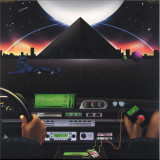
Mobach drops his lush melodic debut album ''Cold Rain'' on Syncom Data Records. Four years after his ''Metrobots'' twelve inch Mobach delves deeper into his unique hybrid form of techno, house, electro, dub and downbeat experimental electronics. Ten tracks full of infectious melodies, clever beats and weird soundscaping that creates this typical Mobach audiosyncratic world, probably best reflected in the beautiful artwork, also from the hand of the artist.
The duo of DJ producers DJ Marrrtin and Deheb reunite after a five-year hiatus, during which they each pursued solo
projects. Deheb released the LP Jazz Mirrors, while Marrrtin put out a Disco Funk EP titled Aktshun, a hip-hop album La
Pie Bavarde in collaboration with Dayton, Ohio rapper Tino, and his third solo project Cyclothymix.
They return with a new 11-track album steeped in Jazz-Funk flavor, blending heavy breakbeats—recalling their earlier
albums that have been featured at major international breakdance events—with nods to their shared influences: Jazz, Latin
Funk, Hip Hop, Psychedelic Groove, Library Music, and Blaxploitation soundtracks. The record plays like an imaginary film
score, a sonic illustration of a relentless chase scene—picture The J.B.'s jamming with Piero Piccioni, accompanied by
Mongo Santamaria.
The album features a lineup of international collaborators, including:
Saucy Lady (USA) on Tambourine,
Felix (Fusik, USA) on Payback Run,
Roma Scotch (True Flavas Band, Russia),
Leo Debroise (Namas Trio, France),
Medline (My Bags, France),
Louise Chavanon, an incredible 18-year-old flutist from France,
and Antoine Laloux (The Selenites Band).
This album further develops the duo’s signature sound—a perfect blend of powerful grooves and deeply soulful musicality.
500 Copies , Covers hand made screenprinted and Hand Numbered
400 white with Black ink
100 with various colours
Facta returns to Wisdom Teeth with ‘GULP’: a zippy, hi-def mini-album full of scrambled vocals, blown-out basslines, dripping synths and spring-loaded grooves that together map out his playfully psychedelic corner of contemporary club music. Written in a quick creative burst in late 2024, the record brings together a range of the producer’s distinct creative strands into a sharp, cohesive whole. Sitting snugly within the stylistic niche carved out by his A&Ring and DJ sets (alongside label co-founder K-LONE), we hear the influence of 00’s minimal, tech house, UK soundsystem music, ambient electronica, dub and more rubbing shoulders in a way that feels effortless and personal. Many of the tracks began life as sketches penned on the road - dotting between festivals, European club shows, and on tour in Japan - and so the record carries with it a sense of movement and forward momentum, and feels populated by voices, memories, people and places.
The Londoner’s characteristic approach to sound design and genre interplay are on full display here. Generative vocal hooks melt and warp into strange fluid forms, while synths stretch, detune, bend and dissolve into space before snapping back into shape again. Keyboards mirror human vocal formants, forming melodies that feel at once organic and alien. Basslines warp and distort, as if being re-moulded out of different synthetic properties.
Across the record there’s a commitment to expressing simple or familiar ideas in new and unexpected ways, whilst experimentations and innovations are presented clearly and intuitively. Cherished genre references are lovingly deployed as personal touchstones across the record - bleeping minimal- and tech-house; breakbeat dubstep and funky; Chicago house; dub techno - yet sounds and influences are combined and meshed in unexpected ways. Each track is tightly engineered and reduced down to its key elements, which are then manipulated, flipped, warped and pushed to breaking point. As is typical of Facta’s music, uncanny contrasts are worked throughout the music in unexpected ways. Warm, balmy moods come laced with seams of tension or uncertainty, whilst the record’s darker moments are handled with a light, playful touch.
With 15 years experience writing, DJing and A&Ring under his belt, ‘GULP’ is testament to Facta’s love of creation and curation - of seeking out, absorbing, experimenting, and channeling new sounds to create your own sonic world. A record borne of playful experimentation and happy accidents, ‘GULP’ shines bright with a simple, pure energy - a testament to writing quickly and intuitively and, above all else, enjoying the process.
The album’s artwork features photography by award-winning Boston-based photographer, Pelle Cass, whose complex time-lapse composites present hyperreal yet impossible tableaus of seemingly simple everyday scenes - an approach that parallels the record’s blurring of the familiar and the unfamiliar. Cass’s work has been widely exhibited, collected, and published, including solo shows at Gallery Kayafas, Boston, the Photographic Resource Center, Boston, and the Houston Center for Photography, and in collections such as the Fogg Art Museum, the Peabody Essex Museum, and the Museum of Fine Arts, Houston. He was twice a Critical Mass Top 50 photographer and has received two fellowships from Yaddo and one from the Berkshire Taconic Foundation.
Getting You Back to the Game of Life Records’ opening release, ‘Comme des mots’ LP is a journey through diverse sonic textures and energies from label-founder Lil Ronin.
Getting you back to the game of life is the headline of a physical and mental health therapy center. Casually popped in your conscience from an advertising board and let you in a strange place. But what is the game of life?
This label could be that space to get you back, to forget and perhaps find a form of youthful innocence again.
As a first solo project Lil Ronin freely experimented between different influences and genres that present his intimate universes, juggling with abstract, ballad and more dancefloor music, mostly recorded in Parisian suburb Alfortville between 2022 and 2024.
‘Comme des mots’ means ‘like words’ and evokes the ambiguous presence of his voice in the album, hidden in different characters, sometimes raving other times being conscious. Finally becoming a schizophrenic presence guiding you for the trip.
The cover follows the same ambivalence showing a typography with a distinct message that loses its readability in abstraction. The record also includes an insert with a childhood photo of Lil Ronin.
The LP was mastered in Paris by artist and engineer Krikor KOUCHIAN,
(past works for Simo Cell, Maoupa Mazzocchetti, Tolouse Low Trax…);
The design was created by sculptor artist and designer Marie-Mam-Sai BELLIER,
(past works for Erwan Sene’s JUnQ LP - PAN record, Zulu’s Hear The Sound Of My Feet - Association fatale etc.); The handmade drawings are by Vincent BENTOLILA (associated with the ‘Isengard’ label and parties in Brussels) ; The cover was handmade through silk-screen printing by the Lyon-based printer Olivier BRAL (whose past projects include Brigade Cynophile, Ateliers Dénudés, and Megabasse).
Since launching in 2019, NuNorthern Soul’s Summer Selections series has become something of a must-check release for those seeking the sun-soaked pulse of the White Isle of Ibiza. It not only acts as a sampler for forthcoming digital-only EPs due for release over the summer season, but also a showcase for both established artists and label newcomers.
2025’s ‘selections’, the fifth in total, marks the popular series’ return after a three-year hiatus. Once again, it boasts six tracks, each taken from a forthcoming NuNorthern Soul EP, and touches on a variety of Ibiza-ready styles and sounds.
Up first are Manchester twosome Nightdubbing, who’s eponymous ‘Nightdubbing’ – first featured on their self-released 2023 debut album – is remixed by Archeo Recordings label boss Manu Archeo. He opts to brilliant blend slow motion electronic grooves and deep, warming bass with waves of ambient textures, eyes-closed melodic motifs and attractive lead lines.
George Koutalieries steps up next with the languid shuffle of ‘Seasons’, where imaginative vocalisation arrangements, mazy synth bass, calming acoustic guitars and cosmic electronics create a yearning afternoon delight, before label newcomer James E Burton combines pleasingly live-sounding drums and bass with picturesque electronics and the dreamiest of chords.
Next up is a teaser of what’s to come from recent signings Visions of Light, a fresh collaboration between Free Booter Lounge label founder Simon Sheldon and two of his artists, Muzka and Dan Dub Lounge. ‘The Mandela Vortex’ is a lightly dub-flecked Balearic shuffler rich in infectious hand percussion, meandering guitar solos, heady aural textures and echoing melodic motifs.
To draw the expansive collection to a close, we’re treated to two more yearning, picturesque and atmospheric treats. The first comes from another label debutant, Seafront International and Strictly Dub Records founder Saimon under the Roots Artefact alias. Deep, toasty and smothered in vintage effects, ‘The Big Calm Dubwise’ is a picture-perfect Balearic dub classic in the making.
Rounding things off is former Les Yeux Orange Contributor – and rising star of the French Balearic movement – Jilo, who gently takes us by the hand and leads us towards the dancefloor. Underpinned by a heavily electronic, nu-disco adjacent groove, ‘Shadow’s Tango’ is smile-inducing aural joy writ large – all huggable chords, Italo-house pianos, chugging bass and the most kaleidoscopic of chords. It provides a wonderfully uplifting conclusion to another fine collection of ‘Summer Selections’.
* Limited edition 2 x LP vinyl with full colour outer sleeve and printed inners.
* The sound of a D&B original. Carlito's debut LP blends timeless vibes with fresh energy and presents a masterclass in liquid funk.
* A long-awaited debut from one of liquid drum & bass's true pioneers, Fiesta En La Playa sees Carlito step out solo on Liquid V with a full-length that's been years in the making. Known for his work with DJ Addiction and iconic releases on labels like Moving Shadow, Creative Source, Hospital Records and Defunked, Carlito helped shape the early sound of soulful D&B, and here he refines it with maturity, depth and a forward-thinking touch.
* Includes the standout singles Fiesta En La Playa, Wide World, Savanna Rain and Take Me Down, plus a host of new tracks exclusive to the LP.
* An album that brings Carlito's classic touch into the present — deep, melodic and musical, with the weight and clarity to hold its own in any modern DJ set. Also featuring vocal contributions from V regular MC T.R.A.C.
* "I've always loved the more musical side of things," says Carlito, "and with this album I really wanted to stay true to my sound but bring it into the now."
* A personal and creative milestone, marking Carlito's return to the scene and celebrating the spirit of D&B culture past, present and future.
* Full support from Bryan Gee, DJ Marky, LTJ Bukem, Jumpin Jack Frost and the V family, with roots that run deep and a sound that continues to inspire across generations.
* Built around standout singles and brand new material, the LP is as much about feel as it is finesse, lush, rolling and warm, but with weight where it matters. From start to finish, it's the sound of a producer reconnecting with the craft: "I still get the same buzz turning the kit on, not knowing where a session might go."
* With a legacy that spans decades, Carlito delivers a record that speaks to both long-time heads and the new wave alike — soulful, confident and packed full of funk.
For customers of the Rush Hour shop, this item ships for its may 23rd release date. Any items ordered along with this will ship then also
After five years spent largely confined to the United States, Ron Trent is set to return to global touring in 2025. To mark the occasion, he’s partnered with Rush Hour to release Lift Off, a brand-new album of music recorded at different points over the last decade.
Arriving almost 35 years since he wowed the world with his game-changing debut, the Afterlife EP, Lift Off was inspired by Trent’s desire to ‘let the imagination speak for itself’ while exploring the diverse influences that have shaped his unique musical perspective. A departure from his previous album, 2022’s downtempo masterpiece as Warm, What Do The Stars Say To You, the 10-track set features a mixture of epic instrumentals, inspired collaborations and vocal cuts whose music was written with certain singers in mind.
While it features music that ripples with the experienced producer’s familiar aural trademarks – rich rhythms, warm chords, impeccable instrumentation, inspired arrangements, and lashings of heady hand percussion – it also consciously explores a variety of sounds and tempos, in the process blurring the lines between dance music’s past, present and future. It’s a vision, in his words, of what dance music can become.
For proof, check the five impeccable cuts on part one. There’s the tactile, Wally Badarou-inspired wonder ‘Hot Ice’, the mind-soothing chords, lilting synth-strings and samba-soaked percussion of ‘Woman of Color’, the warming deep house jazziness of ‘Jazz Funk’ and the restless, far-sighted brilliance of ‘Sexstrology’, where relaxed electric piano solos dance atop an infectious, locked-in dancefloor groove.
Best of all though is Leroy Burgess collaboration ‘Let Me See You Shining’ – an inspired musical meeting of minds that cannily fuses Trent’s signature deep house sound with the soulful, vocal-driven brilliance of the New Yorker’s iconic boogie-era work. Even by the two artists’ dizzyingly high standards, it’s a very special song.
Multi platinum-selling musician and multi-instrumentalist Jamie Cullum today announces The Pianoman At Christmas - The Complete Edition. Due for release on 19th November via Island Records. The deluxe album completes last year’s critically acclaimed hit album The Pianoman At Christmas Part 1, with its Second Part - featuring 11 covers of classic Christmas songs, as well as two original songs, including lead single ‘Christmas Don’t Let Me Down’, out now.
Drawing from the past and inspired by the present, The Pianoman At Christmas - The Complete Edition sees Jamie team up with London jazz innovators Kansas Smitty’s, as well as composer and producer The Vernon Spring and acclaimed LA-based jazz singer Lady Blackbird to complete a piece of work that is imbued with seasonal sophistication. Alongside his two original tracks, Jamie breathes new life into classics such as ‘Winter Wonderland’, ‘Silent Night’ and ‘Frosty The Snowman’, ranging from ‘Amazing Grace’ to ‘Man With The Bag’ and ‘Sleigh Ride’. The Complete Edition will be released on double CD and double black vinyl formats, alongside a limited run of 180G Heavyweight coloured vinyl in red and gold.
Speaking on the release, Jamie said -
“I had a huge amount of fun creating part two of TPAC. Recorded live, all in the room together - it’s the party after the big show, with friends, drinks and some of the finest musicians on planet earth.”
Released almost a year to the day before The Complete Edition is due out, The Pianoman At Christmas featured 11 original songs played by 57 of Britain’s best musicians, recorded in Abbey Road’s famous Studio 2 and produced by Greg Wells whose The Greatest Showman soundtrack spent 28 weeks at number 1. The album sold over 37,000 copies, spending 6 weeks in the album chart and peaking at number 11. In December Jamie broke the Guinness World Record for the largest music lesson ever, when he held a virtual piano lesson for 2,282 people, teaching them the carol ‘In The Bleak Midwinter’ with special guests Robbie Williams, Sigrid and Dodie.
With 10 million album sales and over 890 million streams to date, Jamie is a celebrated musician the world over with loyal fans in every corner of the globe. With a career spanning over 20 years, his legendary live shows have seen him perform and work alongside artists as diverse as Herbie Hancock, Pharrell Williams, Kendrick Lamar and IDLES - Jamie writing on the latter’s album Ultra Mono. The success of Jamie’s major label breakthrough, Twentysomething in 2003 and its follow up Catching Tales saw him nominated for a BRIT, Grammy and numerous other awards around the world. In 2020 he won an Ivor Novello Award for his track ‘Age of Anxiety’, taken from his acclaimed 9th studio album Taller. In addition to his enduringly successful recording career, Jamie has also established himself as a multi-award winning music broadcaster; his BBC Radio 2 show celebrated its 11th year on air this year.
With her debut album Black Acid Soul earning critical praise, Lady Blackbird is a revelatory new talent with music that transcends the jazz scene through which the LA-based artist is rooted. Reflecting influences as varied as Billie Holiday, Gladys Knight, Tina Turner and Chaka Khan, with critics drawing comparisons to Adele, Amy and Celeste, Lady Blackbird’s distinct and beguiling voice is not one to be missed.
UK band Kansas Smitty’s have developed a musical voice wholly unique from what’s happening around them. They are led by band leader and producer Giacomo Smith who's cinematic compositions feature on their releases, most recently 2021's acclaimed Things Happened Here for Berlin based label !K7. In 2015 they launched their own east London venue and bar, of the same name, which became one of the conception points for the current UK jazz boom.
Londoner Sam Beste aka The Vernon Spring is a polymath in music who has production, writing and performance credits as eclectic as Amy Winehouse, Matthew Herbert, Kano, Joy Crookes, Beth Orton, Blood Orange, Gabriels and MF DOOM. Since 2019 he has been making waves with solo project The Vernon Spring, which foregrounds his rare capacity to hold sophistication and simplicity in the same hands through highly intimate muted-piano compositions and improvisations.
Archeo Recordings is a record label. Old, lost, obscure and forgotten gems and a boundless focus on the new Balearic scene for a wider audience of collectors, DJs and music lovers. All releases are limited edition. This release is a Limited Edition EP (250 on black vinyl). New life and an expanded treatment of Quiroga's epic Electronic/Future Jazz/House Snaporaz (Really Swing 2020), from none other than L.U.C.A. (AR029). Archeo delights us with this luscious and limited release featuring Quiroga's sleek jazz-house UFO "Snaporaz". This edition includes an exclusive extended version, a brand-new cut from the Neapolitan groover, and a completely cosmic overhaul from the mighty L.U.C.A. Operating at the nexus of future jazz, beatific electronics and deft house, Quiroga (Walter Del Vecchio to his nearest and dearest) has carved his own irresistible niche over the past two decades, gracing countless labels with nuanced body movers and forging his impressive Really Swing imprint, the original home to this melodic masterpiece. Tucked away on Del Vecchio's 2020 EP "Chords and Desire", the sunny and sultry Snaporaz fell foul of our communal pandemic preoccupation, missing out on the widespread acclaim, appreciation and ass-shaking it so richly deserves. Archeo steps in as patron, giving this Rhodes-led jazz-house heater the full 12" treatment it was born for. On the A1, Quiroga's extends the ecstasy of "Snaporaz", stretching its original elements into a loosely grooving, dopamine-deep delight. Sunkissed keys and tender pads ride the rhythm of a bubbling bassline while the sophisticated percussion snaps, crackles and pops in the background - the perfect environment for the P&P leadline to flourish. If that wasn't enough to have you slipping straight into your party pumps, Walter makes the most of the extra runtime with a HOT hand drum freakout down the final stretch, adding the most enticing icing to an already heady cake. A comparative cooldown follows in A2 offering "Escorpião", a fusion-tinged flirtation for aperitivo everywhere. Cutting back on the kick to save space for the swing, Quiroga leads us through a sublime sequence of hooks, riffs and solos, without ever overwhelming the ears but keeping the groove alive. It's a dizzying delight from start to finish and features one of the finest keytar and cowbell interplays you're likely to hear. The B-side belongs to the frankly legendary Francesco de Bellis, a house, disco, Italo and electro hero, appearing here under his deliciously downbeat alias L.U.C.A. Imbuing Quiroga's original with the atmospheric stylings of his Edizioni Mondo oeuvre, the Roman producer delivers a radical rework, slowing the tempo by 20 bpm and translating those jazzy tones into a drifting new age dancer for the cosmic crowd. Zero gravity rhythms meet mystical melodies uptown as the house hippies get down. Lest we overlook the batshit brilliance of the drum programming, L.U.C.A. caps it off with a bonus beats version sure to delight DJs and dancers alike in its otherworldly oddness.
Dave Lee continues to be one of Britain's most accomplished disco dons. An established remixing extraordinaire, proven once more here as he tackles some stunning Disco-Funk heaters. First is the Psychedelic Funk mix of '2001 Disco Party' a hypnotic, sweat inducing slab of frenzied funk-action, did we mention this release brings the funk enough? His Synth Vamp mix of 'Potion Of Love' is a must for hi-energy synth solo aficionados, backed up with glorious strings, pulsating guitar and classic disco diva vocals. Last of all his 'Strut Your Strat Dub' of the opener brings irresistible guitar frets to the party, doubling down on the groove factors for some serious heads down, hands up feet stomping.
One of the most iconic labels in house music made a major return in 2024. King Street Sounds is celebrating its legacy with a series of re-releases that dive into its extensive back catalogue, showcasing some of its biggest releases. One of these being Dennis Ferrer’s iconic debut solo album The World As I See It from 2006. A body of work that sounds as good today as it did 19 years ago and, in that time, has gone on to become one of the greatest house music albums of the last 25 years. This release will be the first time all ten tracks from the album have been included in one vinyl package, and will include a frameable, double sided record sleeve sized poster. With copies of previous editions of the album costing close to £100 on the second-hand market, this limited sky blue vinyl edition will give a new generation of house & electronic music fans an opportunity to own this piece of dance music history.
Over the last ten years, Brazil’s Millos Kaiser has cultivated a reputation as a top-ranking selector passionate about bringing his home country’s underappreciated music to the world. After starting as a punk and indie musician in Niterói, Rio de Janeiro, he turned his hand to DJing in the late 2000s and relocated to Sāo Paulo. There, he spent the 2010s rocking city squares, warehouse parties and street parties with DJ Trepanado in the Selvagem duo before cofounding the celebrated Selva Discos label in 2017.
Since 2019, Millos’s focus has shifted to his solo DJ career and ventures as an edit maker, reissue compilation curator, audiophile bar co-owner, and now producer. Planet Trip Records has been very good friends with Millos for a long time and is very pleased to present his first original release, the Te Quero Perto (I Want You Close) EP, available in vinyl and digital formats.
Assembled like a DJ-friendly 12” for late 20th-century nightclub specialists, Te Quero Perto kicks off with Millos’ original ‘club mix’ and an accompanying ‘instrumental’ version (digital.only). Driven by an uptempo machine beat straight out of the mid-'80s, rave pianos, 303 acid bass, and an explosive Brazilian pop vocal sung by Juju Bonjour, it’s an absolute belter of a tune and a masterclass in in-period styling.
Elsewhere on the EP, Millos’s European friends Lipelis & Orion Agassi turn in an equally belting Latin Freestyle remix in vocal, dub and instrumental mixes (instrumental is digital only). Rounding things out, fellow Rio de Janeiro producer Paco Cabana throws the tune into a cocktail shaker before pouring a sunkissed, percussion-heavy reimagining for us to sip on. Front to back, it’s an all-killer, no-filler debut from a generational talent.
This is my second solo vinyl EP, inspired by my life in Berlin and playing in Europe. It was an unforgettable time, which I tried to reflect in the music you hear. The record is very different, but I think it was meant to be.
This release is on one of my favorite labels and club which is located in the most beautiful city of Verona, Italy. This place means a lot to me and it’s an honor to be a part of this history.
‘Colours Revisited’, a revision of Adam F’s MOBO Award-winning 1997 debut album is a story of musical rebirth and passion. Adam F, realising that ‘Colours’ had found a new audience—partly thanks to artists like PinkPantheress—decided to recreate the album. Instead of simply remastering the tracks, Adam went all in. Over two years, he meticulously reworked the original music, from restoring vintage instruments like his Fender Rhodes piano to enlisting UK jazz legends like Julian Joseph. Vocalists including Kirsty Hawkshaw and the late MC Conrad re-recorded their parts, while new solos from world-class musicians added fresh life to the tracks.
“Colours holds a special place in my heart because it was not only my first solo album, but also because I had the opportunity to collaborate with diverse talents,” says the seminal producer on his ground-breaking album. “Musicians of a calibre such as Dave Ital (Guitars), The Jazz Great Julian Joseph (Keyboards and Fender Rhodes), MC Conrad (MC/Artist), Roni Jordan (Jazz a guitarist who had a hit with Miles Davis’ “So What”), Tim Philbert/Tim the Bass (Bass), Greg Leicester (Bass), Maurice Capillaire/MC MC (Live MC)…”
Adam continues “We were honoured to be nominated for MOBO “Best album of the year” alongside renowned acts of that time, including Hinda Hicks, Des’ree, Lighthouse Family, and Massive Attack. In fact, I was so convinced that we wouldn't win that I didn't prepare a speech, and that definitely showed in my genuine surprise. Colours also went on to be a top 20 UK National Chart hit which lead to Metropolis winning Tune of the Year at the Underground Awards. Music In My Mind from the same album was inspired from Herbie Hancock ‘Rocket’ and ‘I Thought It Was You’.
“Fast forward to 2020, I never thought of ever revisiting ‘Colours’. But it seems that time has come round full circle, the interest is there.” The revisited album deftly weaves together the energy of new live instrumentation with the 80’s British electronica and jazz fusion inspired sounds of the original.
The result is a project which not only brings the album into the glistening present but somehow manages to add further depth and sense of understanding of the original ‘Colours’, the influences latent within it and how and why it has gone on to influence so many others since it’s inception throughout the world. This is a must have album which pays homage to what has become a cornerstone of British electronic music history.
‘Colours Revisited’, a revision of Adam F’s MOBO Award-winning 1997 debut album is a story of musical rebirth and passion. Adam F, realising that ‘Colours’ had found a new audience—partly thanks to artists like PinkPantheress—decided to recreate the album. Instead of simply remastering the tracks, Adam went all in. Over two years, he meticulously reworked the original music, from restoring vintage instruments like his Fender Rhodes piano to enlisting UK jazz legends like Julian Joseph. Vocalists including Kirsty Hawkshaw and the late MC Conrad re-recorded their parts, while new solos from world-class musicians added fresh life to the tracks.
“Colours holds a special place in my heart because it was not only my first solo album, but also because I had the opportunity to collaborate with diverse talents,” says the seminal producer on his ground-breaking album. “Musicians of a calibre such as Dave Ital (Guitars), The Jazz Great Julian Joseph (Keyboards and Fender Rhodes), MC Conrad (MC/Artist), Roni Jordan (Jazz a guitarist who had a hit with Miles Davis’ “So What”), Tim Philbert/Tim the Bass (Bass), Greg Leicester (Bass), Maurice Capillaire/MC MC (Live MC)…”
Adam continues “We were honoured to be nominated for MOBO “Best album of the year” alongside renowned acts of that time, including Hinda Hicks, Des’ree, Lighthouse Family, and Massive Attack. In fact, I was so convinced that we wouldn't win that I didn't prepare a speech, and that definitely showed in my genuine surprise. Colours also went on to be a top 20 UK National Chart hit which lead to Metropolis winning Tune of the Year at the Underground Awards. Music In My Mind from the same album was inspired from Herbie Hancock ‘Rocket’ and ‘I Thought It Was You’.
“Fast forward to 2020, I never thought of ever revisiting ‘Colours’. But it seems that time has come round full circle, the interest is there.” The revisited album deftly weaves together the energy of new live instrumentation with the 80’s British electronica and jazz fusion inspired sounds of the original.
The result is a project which not only brings the album into the glistening present but somehow manages to add further depth and sense of understanding of the original ‘Colours’, the influences latent within it and how and why it has gone on to influence so many others since it’s inception throughout the world. This is a must have album which pays homage to what has become a cornerstone of British electronic music history.
Over three years in the making, Needle Mythology Records is delighted to announce a super deluxe, expanded remastered reissue of The Lilac Time’s 1991 masterpiece, Astronauts. Released as a triple vinyl, triple CD or single vinyl, only 1000 copies of each format will be produced, there will be no further pressings. Both the 3LP and 3CD editions will come with an extensive 11,000 word oral history of Astronauts and liner notes by Needle Mythology co-founder and longtime Stephen Duffy fan, Pete Paphides.
All three albums including a 2024 remaster, a collection of works in progress entitled‘Softened By Rain The Making Of Astronauts’ and a live compilation ‘Any Road Up The Lilac Time Live 1990/91’ have been mastered for vinyl by Miles Showell at Abbey Roadand will be housed in a triple gatefold sleeve with a colour inner sleeve and new artwork for each disc, which has been especially created by designer Mike Storey. The main sleeve for Astronauts itself will replicate the original artwork but with the four distinctive “blobs” rendered in a red “foil” texture. In addition to these three disc sets, 1000 single vinyl remastered copies of Astronauts will also be made available, in a cherry red vinyl edition to match the outer sleeve.
With the shoegaze and baggy movements at their zenith, The Lilac Time’s fourth album was released at a moment when the left-field music zeitgeist was shaped by the nascent shoegaze, baggy and grunge movements. Whilst Astronauts conformed to none of those trends, neither was it the record Stephen had in his head when he finally finished working on it. We’ll never know how that record would have sounded, but it’s hard to imagine a better version of the album he did end up making. The songwriter who brought ‘A Taste of Honey’ and ‘Hats Off, Here Comes The Girl’ into the world envisaged the sort of choruses that would jump from the single speaker of your favourite transistor and lodge themselves into the collective memory bank.
But while he really was writing some of his most beautiful melodies, Astronauts is a family of songs that demands to be kept together in the sundazed cloud of inspiration that created it. It constitutes a partial retreat from the outwardfacing utopianism of its predecessors, choosing instead to dwell on the journey taken to get to this point. That this is an audibly different band to the pastoral expeditionaries of the group’s previous releases is almost entirely down to the departure of Nick Duffy and the arrival of Sagat Guirey. Suddenly, accordions, banjos and mandolins are out; jazz guitar is in. Sagat’s filigree work on the outro of ‘A Taste for Honey’ acts as a sublime parting shot to a lyric which acts as a wiser, wistful companion piece to Stephen’s 1985 solo hit ‘Kiss Me’, something tantamount to the camera retreating to reveal the years elapsed between the time depicted and the present day. The distance between the carefree youth of pop stardom and the first intimations of mortality can be measured between the first and second verses of the quietly devastating ‘Madresfield’; from the depiction of the deserted cricket pavilion obscured by fresh snowfall to the sudden shift in perspective from subject to protagonist: ‘No one ever told me/That killing time is harmful/For time cannot recover/What soon the ground will offer.’ For all of that, however, the resulting album didn’t correspond to the vision its creator had for it. At a loss as to what to do with it, Stephen surrendered Astronauts to Creation with no plans to promote or draw attention to it. The consciousness shift of which Stephen had hoped The Lilac Time might be a precursor hadn’t happened. Or, rather, it had – but it had happened elsewhere, in the Haçienda and Shoom and in Ibiza. Not on the hills of Herefordshire. In a nod to that sea change, Stephen handed over one song, ‘Dreaming’ to Hypnotone, who
1. Watermelon Man
This track version actually came from an improvisation that Allesandro IIona (Keys) made on a live show at RonnieScott's at the start of the year. I think we were were having some issues with one of the monitors on stage and it juststarted making this beeping sound. Then I remember Alleh just came in with that piano riffat the start and the rest was history. This one of thefirst tracks we recorded for the EP and I'm super pleased with how this one turned out. Afterseeing Herbie Hancock live for thefirst time the year before, this felt like the perfect tribute to him!
2. Mandible
The majority of the writing on this album was done at my studio space in Hither Green, where I am every tuesday! I usethis space to record but mainly a space to develop my art. So this EP all came from a few sessions there. We all haveour own creative things going on so it was really great to collaborate as a band and trash out some ideas we had.Mandible is one of my favourite tracks on the EP. It's very simple but leaves us a lot of space to explore some more freeimprovisation. I think in some of my previous recorded music I was more focused on creating well crafted music withgreat melodies and harmony. Whereas here there's a bit more focus on playing as a group and being more explorative inimprovisation. We also didn't have a melody for this track until a week before the recording! Sometimes it just takes awhile tofind that melody or it might just pop into your head one day.
3. Slum
This is a tune that was actually written by myself in 2017/18. Round about that time, I had been playing at a jam night ata warehouse unit in Limehouse called Unit 31. The night was ran by Pianist Raffy Bushman and Drummer Sam Michnikand was focused on hiphop and Jazz fusion. We would usually play a set of instrumental music before it opened up forvocalists and other instrumentalists to come and jam. It was a great place to try out new ideas, so I wrote this tune for itbut we never recorded it. It was really nice to revisit this tune and get it recorded properly at 'That SoundStudios' (Seven Sisters). This track is all about dynamics and a slow build throughout. Descending to more chaos at theend!
4. Red Pistachio
For thefirst two sessions we wrote with a different bass player to Edmondo Cicchetti who is on the recordings. A greatbass player and friend of mine Tom Driessler. This track started kinda exactly how it starts on the record, with that basshook. I'm very influenced by Christian Scott Atunde Adjuah and his melodic writing. Particularly on his album 'StretchMusic'. So this felt really inspired by that album. The chords don't really move around too much until the solo sectionwhere it becomes more like a blues. Then Allesandro get's a bit more loose at the end with the descending sequence.
5. Jerome arrived Late
Quite simply we started writing this tune before Jerome (Drums) arrived late. In the recording session we were a bitundecided about what to do in the solo section. We tried out a few different options before we eventually landed onfeaturing Gabriele Pribetti on Sax. I'm really into his solo on this as it's rhythmically and dynamically really exciting. As Imixed the record it was also a great solo to mess with and run through lots of different plug-ins. There's some weirddelays and phasing going on that and I added some octaves too in places.
Konstantin Sibold makes his debut on Adam Beyer’s revered imprint with compulsively danceable, highenergy, abrasively dark yet, in Sibold’s expert hands, somehow upbeat three-tracker ‘Lost In Space’. Previously releasing on Afterlife, Running Back, Aufnahme + Wiedergabe and Innervisions, the German producer eschews any genre straitjacket with his underground roots and mix of very diverse sub-genres. As a DJ, Sibold plays iconic venues worldwide inc.
Panorama Bar, Fabric, Tomorrowland, Awakenings and is famed for his marathon B2B sessions with artist inc. Solomun, Kobosil, Kerri Chandler, Kevin De Vries, and his remixes of such differing luminaries as Vintage Culture, Rebuke, Adriatique, Lana Del Rey, Laibach, Royksopp & many more. For the title track, Konstantin collabs with rising 20-years-young Brazilian talent KAF3R who aims to bring ‘sentimental and memorable experiences’ to all, creating a maelstrom of yin & yang. ‘Lost In Space’: This Peaktime Mainstage Melodic Techno monster efficiently resets the dance floor and turns it upside down at the same time.
A spacey robot vocal riff predicts a massive synth orchestrated shutdown. Konstantin Sibold debuted this beast at Tomorrowland Winter Mainstage. Heavily supported by Kolsch, Vintage Culture, ANNA, Kevin De Vries, Innellea and many more. ‘The Arrival’: This catchy stadium singalong hymn unites the dance floor with its Hands-Up hook, gated vocals and rolling baseline. Feels like a retro futuristic classic you already seem to know from a distant euphoric memory. ‘Dark Matter’: A hypnotic, recurring melody transcends between light and darkness. Referring to Konstantin Sibold’s old melodic techno hits such as 'Mutter', but with the addition of a trippy, alarming vocal fragment.
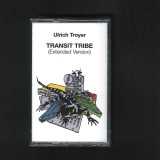
Ulrich Troyer has been producing music now solidly for over twenty years within a largely genre free framework, but whilst navigating forms such as avant-garde, techno, leftfield, field recording, electronica, glitch and ambient it is the aesthetics of dub that guide his creative direction. Not really recognisable in an orthodox form as remixed versions of roots reggae songs but in the way sonics are manipulated with space, the application and layering of delay, reverb and echo that fixes his output well within the scope of what might be called futurist dub.
The nearest comparisons to his new album TRANSIT TRIBE can only be established by a synthesis of some of the more adventurous explorations in modern music such as African Head Charge, Jon Hassell, Pole (Stefan Betke), Bill Laswell or even Miles Davis; featuring a diverse selection of artists and friends not only from Vienna and environs but also from around the world, sounds are not so much fused but allowed to float along the continuous flowing tide of warm waves of bass.
Rather than to allow the names of Ulrich Troyer's collaborators be merely listed in the album credits, what they bring to this joyful affair needs to be outlined, albeit briefly: Co-producer credits go to Osman Murat Ertel from Istanbul, who employed a variation on the old foolproof Nick Lowe method for checking out the impact quality of his own sound productions by playing tracks through his car sound system speakers!
Murat is a member of the electro-psych-folk group Baba Zula where he plays electric saz, oscillators and theremin and played a key part in the creative development of the album. Mamadou Diabate, the balafon master originally from Burkina Faso and now resident in Vienna, has developed his own unique technique of playing solos that replicate the sound of three instruments playing in unison; however the multi-talented Mamadou is engaged here on singing and playing the talking drum. From South Tyrol Reinhilde Gamper is a member of the experimental trio Greifer who are bringing the sound of the zither into the twenty-first century using new playing techniques and electronic gadgets. Susanna Gartmayer is an Austrian composer and bass clarinetist specialising in improv and multimedia sound research. Diggory Kenrick has been engaged with creating new dub fusions and also re-energising classic rocksteady and roots reggae classics, renowned for his interventions on flute. Didi Kern is an electronic dance musician and drummer from Vienna with a focus on free improvised music. Hamidou Koita, a singer and multi-instrumentalist, is from a traditional Griot family in Burkina Faso but now resident in Vienna and a regular musical partner of Mamadou Diabate playing drums and calabash. Austrian Lukas Lauermann is both a studio and live musician playing cello, also working on electronic sound design and writing string arrangements. He has recorded extensively and appeared on stage with both Mark Lanegan and Hans-Joachim Roedelius. Martin Mallaun is a Tyrol-born specialist in both the development of the zither in modern music and also as a researcher in the effects of climate change on the vegetation of Alpine ecosystems. Mystica Tribe is the musical alias of Tokyo-based dub/techno producer Taka (Takafumi) Noda. He collaborated with Vienna's own Vegetable Orchestra on 2020's "Transplants (Mystica Tribe Version)". After studying classical percussion Flip Philipp is now a jazz vibraphone player and member of the Vienna Symphony Orchestra. Wolfgang Pfistermüller is a member of the Vienna Trombone Quartet and the developer of the incredible bass-trombone Aurora with its uniquely warm and resonant sound. Roger Robinson is a renowned British poet, winner of many contemporary poetry prizes and member of the experimental music group King Midas Sound. Kwame Yeboah is a Ghanaian born UK based keyboard wizard who tours regularly with Yusuf / Cat Stevens, Ms. Dynamite and Pat Thomas.
So contained on the album is an astonishing mix of musicians and instruments: sounds of cowbells recorded in the South Tyrolean alps processed by modular synthesizers and heavy analogue bass synths combined with instruments such as zither, bass-zither, electro saz, flute, talking drum, trombone, cello, vibraphone, marimba, djembe, contra-alto clarinet, melodica, Farfisa - all bound together by organic live-drums and dub effects.
Always endeavoring to drop it a little way different, Ital Counselor Records once again stretch things in a forward direction while paying full and forceful tribute to that which has come before. This heartical 7" is a tribute to the late great Prince Lincoln Thompson in the form of a reimagined take on his composition "Kinky Money Game."
It is with great honor that ITAL COUNSELOR records has been able to work with two legends of the music business on this slab of plastic. Firstly, Jeb Loy Nichols comes with a storied history in music and the visual arts. He first came to ITAL COUNSELOR’s attention upon discovering the 1981 compilation, “Wild Paarty Sounds” via Cherry Red/On-U Sound. Later would be greater, with projects skirting the realms of country, soul, reggae, and leftfield. Bands like the Fellow Travelers, solo albums with Adrian Sherwood, and more recently writing songs for Horace Andy’s latest On-U album have all contributed to an impressive body of work.
Over the years when Jeb is not making music, he can be found writing books or churning out block prints of birds, leaves, pithy phrases, and the odd sleeve art for labels like Pressure Sounds, and, yes ITAL COUNSELOR. His sleeve work on this 7” indeed captures the essence of the music hiding under the cardboard exterior. Lo-fi, retro while poignantly on time. Social commentary manifested auditorily and visually.
Jeb’s reinterpretation of Thompson's original bubbles over a slow burning one drop built by none other than Studio One, Riz Records, and Tuff Scout Records alum Gil Cang. In yet another musical first brought to you by ITAL COUNSELOR, this piece of wax represents the only time Jeb and Gil have worked together. The results are a magical mix equally at home in the hands of a sound system operator unconstrained by the current ‘steppers’ norms as it is on a home stereo where one can deeply sit with the lyrics of depth and significance. An old time something feel for these nowadays times. An ITAL COUNSELOR Records essential.