Razor-N-Tape goes big for their first ever edits VA on their legendary white label series! Timed to drop at their Detroit Movement weekend event, this spicy 12 Inch includes contributions from four of the artists on the bill: Glenn Underground, Rahaan, The Patchouli Brothers and JKriv. Classic RNT style, all killer no filler disco heat on this one!
Special collaborative project ARUM lands on the ESHU imprint. Something that every ESHU release has in common is that each project originates from friendship or a cooperation between like minded souls. This release is no different from that. "Guus" refers to the owner of a little cabin studio where a group of friends came together to create some beats. ARUM consists of Kaap (De Lichting), Jasper Wolff (Indigo aera), Luna Ludmila and ESHU head honcho Ivano Tetelepta himself. After an extended weekend of studio sessions this was the last jam created on a hazy Sunday afternoon when the crew headed into deep dub territories. The result is a five minute long smooth dub techno ride honoring Guus and the perfect Sunday ethos. If you talk dub techno, you talk about Deadbeat. Nothing would suit this release more than a remix by this true icon in dub techno and a close friend to the ESHU family. Happy Sundayzzz.
T.Recs is back with another salty rub of peak time house goodness on vinyl.
‘Urban Deep’ will ring several bells with the Gen X audience – especially once the iconic throbbing bassline hook and happy-clapping beats kick in. The big surprise comes from the throwback dreamy vocal laid perfectly across the production, which fits like a velvet glove on a well-manicured hand. ‘Urban Deep’ is a 122bpm stomper of a tune that will flood any dance floor at any time of the night, guaranteed.
For ‘Franklin & Marshall’ we head willingly and confidently into ‘classic house anthem’ territory. All the ingredients are in the mix here; from the unmistakeable Prophet 2000 generated piano riffs and Roland TR-909 drum box presenting the beats on a gold platter. You think you’ve got this one in the bag until the gospel sounding, smoky vocal arrives like a packed tram car. Epic, energetic, fantastical and full of pride, ‘Franklin & Marshall’ will be the preferred weekend weapon of many a DJ.
The main idea behind the LP “Companions” was to combine Marc’s different tastes of electronic music on a record and to deliver a variety of moods aimed to be companions in your daily life. Music to work out, to dance to or really just for home listening. This record is a journey into the musical mind of the artist and tells the story of the ever ongoing battle between light and darkness. That's why you’ll find happy and uplifting tracks as well as deeper melancholic songs on this 12th installment of Houseum.
Reissue of Elizio De Buzios's "Tamanquiro". Remastered and pressed on 45 RPM!
Sitting a good 90-minute drive away from Rio de Janeiro’s crowded beaches and packed tourist hot-spots, Campo Grande is not a neighbourhood that attracts travellers from around the World. Traditionally it is home to the city’s lower middle-class, whose aspirations of moving up the social ladder were played out in a suburb that has always been solidly working-class.
Campo Grande is home to Elizio De Buzios, a Brazilian musician who started playing music in the late 1970s and early 1980s. De Buzios began as a drummer, before learning to play guitar and starting to compose and sing his own music. When he turned 18, De Buzios joined a local band formed by some of his friends and other like-minded local musicians: Sol da Terra. The band mostly played samba in neighbourhood bars and small venues around Camp Grande, but De Buzios was interested in more than just samba. While he naturally admired great samba composers such as Cartola and Beth Carvalho, his musical pass went far beyond Brazil’s national music. He also loved MPB and bossa-nova and at home he listed to Joäo Bosco, Milton Nascimento, Luis Melodia, Tom Jobim, and many bossa-nova singers.
In 1980 De Buzios was noticed by a local representative of international major label Polygram, who gave him the opportunity to record two songs. He was excited, so started searching for inspiration for the songs he would eventually lay down. He found that inspiration close to home while passing a neighbourhood shop which made and sold clogs. After noticing a display of then fashionable Portuguese clogs outside the store, De Buzios popped inside to talk to the owner. It turned out that he was a tamanqueiro – as clog-makers are traditionally called in his native Portugal – and was as passionate about music as he was about the footwear he made. Thus inspired, De Buzios returned home to work more on the lyrics and music.
The next day, he headed into the studio to record the song, with Vale Ribeiro, who later went on to produce tracks for Marcos Valle, behind the desk. With Ribeiro’s assistance, De Buzios managed to record two songs in one day: ‘Tamanqueiro’ and ‘Sou Um Louco’, a ballad with English lyrics blended into the mostly Portuguese text. From the start, it was clear that ‘Tamanqueiro’ would be the single’s A-side. Incredibly catchy and funky, with some subtle disco elements, the song remained distinctively Brazilian thanks to the use of the cuíca. Listening back all these years on, De Buzios’ lyrics seem almost spontaneous, carry the track forward, and make it almost impossible not to sing along. Its infectiousness and funkiness made it an instant hit with the first few people to hear it.
When it was released, responses to the song were enthusiastic, even if it never became the Brazil-wide smash it should have been. It resonated well in the local clubs and on the radio, but unfortunately the marketing was handled by an inexperienced Polygram employee who failed to adequately promote the track. As a result, the record sank without trace and De Buzios’ dreams of stardom evaporated. Having just started a family, he realized he could not live off the uncertainty of being a musician. Instead, he got a job at city hall as a civil servant, a role he continued until his retirement a few years ago. ‘Tamanqueiro’ and ‘Sou Um Louco’ remain the only two songs he ever recorded.
In the early 2000s, with the rise of diggers’ culture, ‘Tamanqueiro’ slowly surfaced again. It became a sought after, hard to find seven-inch single, finding its way onto the airwaves once more and into the ears of a new generation of listeners. Some started appreciating the song so much that it was referred to as the “best-Jorge-Ben-song-Jorge-Ben-never-recorded”. And they are right: ‘Tamanqueiro’ does have that Jorge Ben-straight-forwardness. It’s a completely honest song that’s almost impossible not to fall in love with. Thanks to this remastered reissue on Rush Hour, De Buzios may now get the props his sole record so richly deserves.
Now for the good news: De Buzios is still singing in local bars and clubs in and around Campo Grande. He is surprised, but also incredibly proud, that the record he had almost forgotten about is appreciated so much by a group of music lovers he didn’t even know existed. But above all, he is happy that more than 40 years after the recording session, the record lives on – not only on this re-release, but also in his weekend sets in the bars of Campo Grande.
Manonmars’ 3rd album sees him at his most amorphous and psychedelic, at points sharper and laser focused, and at others more blurred and impressionistic than his previous records. Many of the core players remain the same, all of the production is once again handled by O$VMV$M (the duo of Neek and Amos Childs of Jabu) while Paulina Korobkiewicz (also of Young Echo) makes a return handling both the album’s cover artwork and contributing a series of diaristic field recordings and voice notes.
‘The project references movies, cartoons, fictional characters and video games, among other things. The album title is open to interpretation but all of these elements are forms of visual entertainment which have their own unique ability to transcend things like language barriers and cultural divides. The visual element is key because those details bridge the gap on a communicative level.’ - Manonmars
The album blends abstract, blurred braggadocio with more immediate personal details such as on ‘Volcanic Shield’ a posse cut of sorts featuring Bristol improv luminary Dali de Saint Paul and Franco Franco (½ of cyborg rap duo Kinlaw & Franco Franco) - where Mars recalls;
‘Memories of brighter days, happy meal hit the spot
Mum was spinning vinyl playing Super Ape or Pressure Drop
I would spend the weekend with the Turkish mandem on the block
single parent household, mum was studying or on the job
money came and went always was an on and off
made it back from school time to see what’s on the box’
The beat fades away to leave one of Korobkiewicz’s recordings of Mars’ mum talking about her life in London in the 80s, spending her money on reggae records as an ambient chord fades in like an echo of a jungle intro – stretching out as a link between generations of UK music.
The production by and large is brighter and more kinetic than earlier Manonmars records – with O$VMV$M drawing on everything from modern underground rap and drill through to jazz and acid ambient passages.
London is also a central character here, bustling and constantly shifting, either when bleeding in through field recordings, or as an ever-present backdrop in the lyrics;
‘I’m a fusion of Tippa Irie and Topper Harley
Hit the target like the black Atari
I dropped a tab now shit’s A Scanner Darkly
Got the munchies, Imma yam a sarnie
Pour the Wray and Ting like man at Carni
Exit Peckham Rye and turn left, walk past Hannah Barry
Get your (w)raps up like its January’
‘I've always considered London my home, despite spending some time in the South West of England too. My mum had been living in London for 25 years (...) That was a pretty big deal in some ways because it removed us from multicultural society during the period which overlapped with my teenage years. (...) I never got used to how quiet it was in the countryside (...) Bristol was the closest city to where we lived and it was through travelling there and making connections that I became involved in making music and playing gigs.’ - Manonmars
Mars’ practice as a painter (under his given name Jack Martyn Richardson) and photographer also loom heavy over the album, he cites Paul Verhoeven, Abdul Mati Klariwein and H.R Giger as influences – as well as Miles Davis, Drakeo the Ruler and DJ Rashad.
As with much of Richardson’s work the raps at times feel blurred to a point of almost inscrutability, creating a distance between the audience and himself. A process that ties into his visual work and the way he experiences the world as mainly abstract colour without his glasses. He explores this further in an ongoing visual collaboration with Korobkiewicz, ‘Fun and Games’ which serves as a visual archive of one of London's largest and oldest travelling fairgrounds.
‘I was diagnosed with very severe short-sightedness at the age of seven. I remember my early formative years as visually blurred. Some of my photography reflects this experience of partial vision and uncertainty, referencing memory and perception rather than fixed representation.’
Manonmars’ first public outing as a rapper was at a Young Echo radio event, broadcast shambolically from a practice room just off Jamaica street, Bristol in 2011, as much as things have moved on both stylistically and in terms of focus - strong links back to the city remain a key foundation throughout the collaborations and guest appearances.
‘I have no problem with being an outsider looking in. One of the things I enjoy about London is the anonymity (...) it's easy to be a stranger here when so much is happening. I feel like thats more valuable than people may realise.’
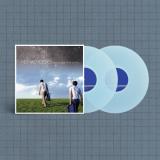
Hey Mercedes, formed from members of Chicago's emo band Braid, included Bob Nanna, Todd Bell, Mark Dawursk, and Damon Atkinson. They debuted with a self-titled EP (Polyvinyl Records) in 2000 and followed up with extensive touring and two full-length albums: Everynight Fire Works (Vagrant Records) in 2001 and Loses Control (Vagrant Records) in 2003 along with two more EP's: The Weekend EP (Vagrant Records) in 2002 and Unorchestrated (Grand Theft Autumn) in 2004. Dawursk left at the end of 2001 and was replaced by Mike Shumaker. After 359 shows and several releases, the band disbanded in April 2005.They played a reunion show in 2007 and celebrated the 15th anniversary of Everynight Fire Works in 2016 with a remastered re-release and select live performances. In 2025, the band made their live comeback at Las Vegas's second annual Best Friends Forever Festival and will continue to play more shows in 2026. In March 2026, Polyvinyl Records will reissue the complete Hey Mercedes catalog. With several EPs and albums currently out of print, this release will provide Hey Mercedes fans with the opportunity to obtain every Hey Mercedes title on vinyl. LP FORMAT DETAILS: Clear blue vinyl with download card in a gatefold jacket.
Vilhelm Hasselgren is a Gothenburg-based producer and DJ with a focus on Jungle and productions that move between 160-170 bpm. Vilhelm focuses a lot on complex rhythms and ambient soundscapes and takes inspiration from both older and modern Jungle, as well as other electronic acts such as Basic Channel, Mala, Skee Mask and Arkajo. Vilhelm tries to create soundscapes that move between different musical starting points.
He has previously released on Rezonant Body, Canape Records, Bukva Sound and Of Paradise Records. Also has an upcoming EP releasing on Bukva as well as a V.A on Western Lore. In 2025, Vilhelm also has a residency at London-based Subtle Radio.
Vilhelms words:
Central Line EP is an EP that I'd myself consider to be my debut EP. The tracks were created within a two-and a half year span, with some tracks being re-worked and replaced. Later ending up with the final track-list, which I am very happy in how it ended up in the end. One of the tracks that were later added onto the EP being 1000 a co-production with my brother Einar (Local Arms), which we spontaneously recorded at our parents house over a weekend.
I mostly start from percussion, onto bass and later melody in my productions. The title track "Central Line" was started when I lived in Brighton for half a year, together with Theo Soderlund (Theomega). The Eski sample is a bit tricky one, but wanted to experiment with it, further I chopped an Amen and a Think break with an idea to create a pretty simple rhythm that could leave the riff to speak for itself. Even though the tracks were created within a pretty long span of time, I feel like they portray a sound that I want to further explore and produce at this point. Also Arcne adding a monster remix of Central Line that has been getting lot of love. Could not be happier to release it on Bukva Sound which prior releases I think really captivate a sound that has been really inspiring throughout the process.
Googling “paradise house”, the first results to pop up are an endless list of European b&b’s with whitewashed lime façades, all of them promising “…an unmatched travel experience a few steps from the sea”. Next, a little further down, are the institutional websites of a few select semi-luxury retirement homes (no photos shown, but lots of stock images of smiling nurses with reassuring looks). To find the “paradise house” we’re after, we have to scroll even further down. Much further down.
It feels like yesterday, and at the same time it seems like a million years ago. The Eighties had just ended, and it was still unclear what to expect from the Nineties. Mobile phones that were not the size of a briefcase and did not cost as much as a car? A frightening economic crisis? The guitar-rock revival?! Certainly, the best place to observe that moment of transition was the dancefloor. Truly epochal transformations were happening there. From America, within a short distance one from the other, two revolutionary new musical styles had arrived: the first one sounded a bit like an “on a budget” version of the best Seventies disco-music – Philly sound made with a set of piano-bar keyboards! – the other was even more sparse, futuristic and extraterrestrial. It was a music with a quite distinct “physical” component, which at the same time, to be fully grasped, seemed to call for the knotty theories of certain French post-modern philosophers: Gilles Deleuze, Félix Guattari, Paul Virilio... Both those genres – we would learn shortly after – were born in the black communities of Chicago and Detroit, although listening to those vinyl 12” (often wrapped in generic white covers, and with little indication in the label) you could not easily guess whether behind them there was a black boy from somewhere in the Usa, or a girl from Berlin, or a pale kid from a Cornish coastal town.
Quickly, similar sounds began to show up from all corners of Europe. A thousand variations of the same intuition: leaner, less lean, happier, slightly less intoxicated, more broken, slower, faster, much faster... Boom! From the dancefloors – the London ones at least, whose chronicles we eagerly read every month in the pages of The Face and i-D – came tales of a new generation of clubbers who had completely stopped “dressing up” to go dancing; of hot tempered hooligans bursting into tears and hugging everyone under the strobe lights as the notes of Strings of Life rose up through the fumes of dry ice (certain “smiling” pills were also involved, sure). At this point, however, we must move on to Switzerland.
In Switzerland, in the quiet and diligent town of Lugano, between the 1980s and 1990s there was a club called “Morandi”. Its hot night was on Wednesdays, when the audience also came from Milan, Como, Varese and Zurich. Legend goes that, one night, none less than Prince and Sheila E were spotted hiding among the sofas, on a day-off of the Italian dates of the Nude Tour… The Wednesday resident and superstar was an Italian dj with an exotic name: Don Carlos. The soundtrack he devised was a mixture of Chicago, Detroit, the most progressive R&B and certain forgotten classics of old disco music: practically, what the Paradise Garage in New York might have sounded like had it not closed in 1987. In between, Don Carlos also managed to squeeze in some tracks he had worked on in his studio on Lago Maggiore. One in particular: a track that was rather slow compared to the BPM in fashion at the time, but which was a perfect bridge between house and R&B. The title was Alone: Don Carlos would explain years later that it had to be intended both in the English meaning of “by itself” and like the Italian word meaning “halo”. That wasn’t the only double entendre about the song, anyway. Its own very deep nature was, indeed, double. On the one hand, Alone was built around an angelic keyboard pattern and a romantic piano riff that took you straight to heaven; on the other, it showcased enough electronic squelches (plus a sax part that sounded like it had been dissolved by acid rain) to pigeonhole the tune into the “junk modernity” section, aka the hallmark of all the most innovative sounds of the time: music that sounded like it was hand-crafted from the scraps of glittering overground pop.
No one knows who was the first to call it “paradise house”, nor when it happened. Alternative definitions on the same topic one happened to hear included “ambient house”, “dream house”, “Mediterranean progressive”… but of course none were as good (and alluring) as “paradise house”. What is certain is that such inclination for sounds that were in equal measure angelic and neurotic, romantic and unaffective, quickly became the trademark of the second generation of Italian house. Music that seemed shyly equidistant from all the rhythmic and electronic revolutions that had happened up to that moment (“Music perfectly adept at going nowhere slowly” as noted by English journalist Craig McLean in a legendary field report for Blah Blah Blah magazine). Music that to a inattentive ear might have sounded as anonymous as a snapshot of a random group of passers-by at 10AM in the centre of any major city, but perfectly described the (slow) awakening in the real world after the universal love binge of the so-called Second Summer of Love.
For a brief but unforgettable season, in Italy “paradise house” was the official soundtrack of interminable weekends spent inside the car, darting from one club to another, cutting the peninsula from North to centre, from East to West coast in pursuit of the latest after-hours disco, trading kilometres per hour with beats per minute: practically, a new New Year’s Eve every Friday and Saturday night. This too was no small transformation, as well as a shock for an adult Italy that was encountering for the first time – thanks to its sons and daughters – the wild side of industrial modernity. The clubbers of the so-called “fuoriorario” scene were the balls gone mad in the pinball machine most feared by newspapers, magazines and TV pundits. What they did each and every weekend, apart from going crazy to the sound of the current white labels, was linking distant geographical points and non-places (thank you Marc Augé!) – old dance halls, farmhouses and business centres – transformed for one night into house music heaven. As Marco D’Eramo wrote in his 1995 essay on Chicago, Il maiale e il grattacielo: “Four-wheeled capitalism distorts our age-old image of the city, it allows the suburbs to be connected to each other, whereas before they were connected only by the centre (…) It makes possible a metropolitan area without a metropolis, without a city centre, without downtown. The periphery is no longer a periphery of any centre, but is self-centred”.
“Paradise house” perfectly understood all of this and turned it into a sort of cyber-blues that didn’t even need words, and unexpectedly brought back a drop of melancholic (post?)-humanity within a world that by then – as we would wholly realise in the decades to come – was fully inhuman and heartless. A world where we were all alone, and surrounded by a sinister yellowish halo, like a neon at the end of its life cycle. But, for one night at least, happy."
pas en stock
Dernière livraison il y a 3 mois réapprovisionnement sans garantie
Volume 1 of this expertly curated project of 90s Italian House - put together by Don Carlos.
If Paradise was half as nice… by Fabio De Luca.
Googling “paradise house”, the first results to pop up are an endless list of European b&b’s with whitewashed lime façades, all of them promising “…an unmatched travel experience a few steps from the sea”. Next, a little further down, are the institutional websites of a few select semi-luxury retirement homes (no photos shown, but lots of stock images of smiling nurses with reassuring looks). To find the “paradise house” we’re after, we have to scroll even further down. Much further down.
It feels like yesterday, and at the same time it seems like a million years ago. The Eighties had just ended, and it was still unclear what to expect from the Nineties. Mobile phones that were not the size of a briefcase and did not cost as much as a car? A frightening economic crisis? The guitar-rock revival?! Certainly, the best place to observe that moment of transition was the dancefloor. Truly epochal transformations were happening there. From America, within a short distance one from the other, two revolutionary new musical styles had arrived: the first one sounded a bit like an “on a budget” version of the best Seventies disco-music – Philly sound made with a set of piano-bar keyboards! – the other was even more sparse, futuristic and extraterrestrial. It was a music with a quite distinct “physical” component, which at the same time, to be fully grasped, seemed to call for the knotty theories of certain French post-modern philosophers: Gilles Deleuze, Félix Guattari, Paul Virilio... Both those genres – we would learn shortly after – were born in the black communities of Chicago and Detroit, although listening to those vinyl 12” (often wrapped in generic white covers, and with little indication in the label) you could not easily guess whether behind them there was a black boy from somewhere in the Usa, or a girl from Berlin, or a pale kid from a Cornish coastal town.
Quickly, similar sounds began to show up from all corners of Europe. A thousand variations of the same intuition: leaner, less lean, happier, slightly less intoxicated, more broken, slower, faster, much faster... Boom! From the dancefloors – the London ones at least, whose chronicles we eagerly read every month in the pages of The Face and i-D – came tales of a new generation of clubbers who had completely stopped “dressing up” to go dancing; of hot tempered hooligans bursting into tears and hugging everyone under the strobe lights as the notes of Strings of Life rose up through the fumes of dry ice (certain “smiling” pills were also involved, sure). At this point, however, we must move on to Switzerland.
In Switzerland, in the quiet and diligent town of Lugano, between the 1980s and 1990s there was a club called “Morandi”. Its hot night was on Wednesdays, when the audience also came from Milan, Como, Varese and Zurich. Legend goes that, one night, none less than Prince and Sheila E were spotted hiding among the sofas, on a day-off of the Italian dates of the Nude Tour… The Wednesday resident and superstar was an Italian dj with an exotic name: Don Carlos. The soundtrack he devised was a mixture of Chicago, Detroit, the most progressive R&B and certain forgotten classics of old disco music: practically, what the Paradise Garage in New York might have sounded like had it not closed in 1987. In between, Don Carlos also managed to squeeze in some tracks he had worked on in his studio on Lago Maggiore. One in particular: a track that was rather slow compared to the BPM in fashion at the time, but which was a perfect bridge between house and R&B. The title was Alone: Don Carlos would explain years later that it had to be intended both in the English meaning of “by itself” and like the Italian word meaning “halo”. That wasn’t the only double entendre about the song, anyway. Its own very deep nature was, indeed, double. On the one hand, Alone was built around an angelic keyboard pattern and a romantic piano riff that took you straight to heaven; on the other, it showcased enough electronic squelches (plus a sax part that sounded like it had been dissolved by acid rain) to pigeonhole the tune into the “junk modernity” section, aka the hallmark of all the most innovative sounds of the time: music that sounded like it was hand-crafted from the scraps of glittering overground pop.
No one knows who was the first to call it “paradise house”, nor when it happened. Alternative definitions on the same topic one happened to hear included “ambient house”, “dream house”, “Mediterranean progressive”… but of course none were as good (and alluring) as “paradise house”. What is certain is that such inclination for sounds that were in equal measure angelic and neurotic, romantic and unaffective, quickly became the trademark of the second generation of Italian house. Music that seemed shyly equidistant from all the rhythmic and electronic revolutions that had happened up to that moment (“Music perfectly adept at going nowhere slowly” as noted by English journalist Craig McLean in a legendary field report for Blah Blah Blah magazine). Music that to a inattentive ear might have sounded as anonymous as a snapshot of a random group of passers-by at 10AM in the centre of any major city, but perfectly described the (slow) awakening in the real world after the universal love binge of the so-called Second Summer of Love.
For a brief but unforgettable season, in Italy “paradise house” was the official soundtrack of interminable weekends spent inside the car, darting from one club to another, cutting the peninsula from North to centre, from East to West coast in pursuit of the latest after-hours disco, trading kilometres per hour with beats per minute: practically, a new New Year’s Eve every Friday and Saturday night. This too was no small transformation, as well as a shock for an adult Italy that was encountering for the first time – thanks to its sons and daughters – the wild side of industrial modernity. The clubbers of the so-called “fuoriorario” scene were the balls gone mad in the pinball machine most feared by newspapers, magazines and TV pundits. What they did each and every weekend, apart from going crazy to the sound of the current white labels, was linking distant geographical points and non-places (thank you Marc Augé!) – old dance halls, farmhouses and business centres – transformed for one night into house music heaven. As Marco D’Eramo wrote in his 1995 essay on Chicago, Il maiale e il grattacielo: “Four-wheeled capitalism distorts our age-old image of the city, it allows the suburbs to be connected to each other, whereas before they were connected only by the centre (…) It makes possible a metropolitan area without a metropolis, without a city centre, without downtown. The periphery is no longer a periphery of any centre, but is self-centred”.
“Paradise house” perfectly understood all of this and turned it into a sort of cyber-blues that didn’t even need words, and unexpectedly brought back a drop of melancholic (post?)-humanity within a world that by then – as we would wholly realise in the decades to come – was fully inhuman and heartless. A world where we were all alone, and surrounded by a sinister yellowish halo, like a neon at the end of its life cycle. But, for one night at least, happy.
pas en stock
Dernière livraison il y a 84 jours réapprovisionnement sans garantie
Aesthetically, Ed Schrader’s Music Beat hates to tread water. At the same time, the Baltimore-based two-piece of vocalist Ed Schrader and bassist Devlin Rice won’t force their songs to fit a preconceived style. “The next album’s always gotta be different from the last one. We’re different people from record to record. So, writing authentically to ourselves will always bring our work to a place that we haven’t been to yet,” Rice said. Schrader added, “We’re terrified of turning into AC/DC. We never want to be married to one scene or time or sound. We want to be the Boba Fett of bands! Constantly altering the way in which we make records has been pretty key in that process.”
For Orchestra Hits, the band’s latest, that alteration was welcoming longtime musical comrade Dylan Going into the fold as a co-writer and co-producer. A songwriter in his own right, a guitar sideman for ESMB on their last two tours, and a collaborator with Rice in the noise riffage band Mandate, Going had both a unique vision and an intimate familiarity with the ESMB vibe.
“Dylan came to every show we’ve ever played in New York—no matter how weird it was,” Schrader said. “He’d be standing there ready to move an amp or feed us barbecued cactus after the gig and toss on some Golden Girls so we could decompress. It felt like family as soon as we began working, but I honestly had no idea how damn good he was at tossing out these hooks.”
According to Schrader, the songs “just poured out of us” over the course of a highly caffeinated three-day weekend in a tiny room in Devlin’s house while his cat, Sandy Goose, screamed continually. “It was like three kids hiding from the world to get into some lovely mischief,” they said. The lack of external pressure in the process gives Orchestra Hits an almost paradoxical vibe. For all of the album’s layers, that mix live and sequenced instruments, it never loses the raw energy of a small handful of friends in the same room plugging in, cranking up, and playing until they pass out.
Lyrically, the album finds Schrader, now 45, meditating on experiences in their youth to make sense of the present moment. “We are not into the garden,” Schrader wails on the relentless “Roman Candle,” a song about the sad debacle of Woodstock ’99, and a direct response to Joni Mitchell’s “Woodstock,” a utopian ode to hippie idealism. A 19-year-old Schrader, having snuck into Woodstock ’99 through a hole in the fence, was there the night members of the crowd used candles intended for a vigil for victims of the Columbine High School massacre to set fires all over the grounds. Even before the fires, Schrader remembered feeling disconnected from the music, the nostalgic cash grab, and the meatheads in the crowd. After watching a press tower collapse, they boarded a random shuttle bus and were dropped off near a Denny’s. “It was a far cry from the Garden of Eden,” Schrader said. “That experience defined what I didn’t want to be a part of, and yet America is more like Woodstock ’99 than ever.”
With percolating synthesizer arpeggios, and climbing bass grooves, “IDKS” is the album’s dance-floor slapper. “’IDKS’ is a funny one,” Schrader said. “We already had a pretty satisfying suite of songs when Dylan was packing up to head back to New York, but he missed the train because of a freak snowstorm. Realizing he’d be stuck in town another day, he says to me, ‘Here’s this other weird thing I have.’ It was ‘IDKS.’ The hooks were so good I felt like Homer Simpson at a free donut convention. I just dove right in, and we cranked that baby out in like 20 minutes.”
Lyrically, “IDKS” is a letter from the true self to public-facing self. “It’s an angry song,” Schrader said. “Because the public-facing self is always looking for an easy escape, but it forces the true self into a cage. I honestly thought my lyrics were corny and was about to change them, but Dylan was digging it just the way it was. So that’s what you hear.”
With the soaring “Daylight Commander,” the band went against all of their musty-basement-bred instincts. “I went full High School Musical with the vocals,” Schrader said. “At first it felt almost embarrassing, but I remember reading somewhere that Bowie recommended always floating a little bit above your comfort zone, and that’s what we did here.” The song is part exercise in absurdity and part pop Trojan horse. “If ever we had a ‘Shiny Happy People’ moment, I guess this is it,” Schrader said.
Auf ihrem drittem Oceanator-Album stellt die Brooklyner Musikerin Elise Okusami ihr aussergewöhnliches Gespür für Pop unter Beweis und liefert 11 Songs voller melodischer Tiefe und lebendiger Energie. "Everything Is Love And Death" wurde vom Grammy-nominierten Engineer/Produzenten Will Yip (Title Fight, Turnstile, Bartees Strange) produziert und enthält einige der kühnsten Songs, die Okusami je geschrieben hat, wie z.B. das hymnische "Drift Away" mit Backingvocals von NNAMDÏ. Szenemedien wie Stereogum, Pitchfork oder SPIN loben Oceanator als "die Art von Stimme, die einen Raum zum Schweigen bringen kann".
We are delighted to bring you the first in the Ivan The Tolerable Archive Reissue Series, Autodidact!
Originally released on a 10” lathe cut by Ack Ack Ack Records in February 2018, this has now been remastered and repackaged, and will now be available on ltd edition khaki vinyl, with only 250 copies pressed. Here’s a bit about the record in Oli Heffernan’s aka Ivan The Tolerable own words-
“I recorded the bulk of this record over a weekend in January 2018, in the midst of a very minor breakdown that was to last for pretty much the entire year. I was living in a big house all on my own, smoking too much and not really seeing any people. Happy days indeed.
It was tracked in the back room of 97 Hambledon Road, Middlesbrough using two questionable microphones, a broken HH 100 amp, my friends drums and a Tascam DP08 (that wasn’t to see the year out, RIP 2009-2018) When I was done, Robbie came round and recorded a ton of violin drones through my amp and i remember feeling like I’d gone into a trance a few times, then Ben recorded his parts at home and sent them over. Mixed and mastered the same night - I released it myself a month later as a lathe cut 10”and then promptly moved on. I listened to the album for the first time in years to write this sleeve note and I think it is possibly the closest I’ve ever got to capturing the sound I hear in my head - I love how grubby and cavernous it sounds, claustrophobic and swirling - the track Autodidact I have recorded 4 more times since this version and I’ve never got that sound back. I’II keep trying.’’
“Oli Heffernan, June 2023’’
pas en stock
Dernière livraison il y a 2 ans réapprovisionnement sans garantie
- Iconic UK indie band Flowered Up, seen as London's answer to Happy Mondays and The Stone Roses, reissue their debut album 'A Life With Brian' remastered and ehnhanced via London Records.
- 2 x Vinyl edition also includes the 1992 cult epic 13 minute 'Weekender' song and the much sought after Andrew Weatherall remix, both for the first time added to the LP !
- The reissue follows a BFI documentary on the video of 'Weekender' and it's legendary status in UK club culture of the time
- The album remastering was overseen by Flowered Up keyboard player Tim Dorney.
pas en stock
Dernière livraison il y a 2 ans réapprovisionnement sans garantie
Repressed clear yellow w/ red splatter vinyl! This is the 5th full length for London-based USA Nails full of post-punk noise rock that's as grating as it is catchy. USA Nails release their fifth album "Character Stop" on October 23rd 2020 through Hex Records. The new album from London-based USA Nails (and 2nd for Hex Records) is a post-punk, noise-rock platter that is as grating as it is catchy. The record was tracked live over 4 days at Bear Bites Horse in London with producer Wayne Adams. Though "Character Stop" still features the pummeling noise-punk that USA Nails have become renowned for, it's balanced with more sober, downbeat moments. On it they explore identity - like the online personas of aggressive twitter users, influencers and vloggers, as well as more introspective takes on mental health, giving up on dreams, the joy (and despair) of being a part-timer, and contemplating who they would be if they decided to hang up their guitars for good. Guitarist Gareth Thomas comments, "For me "Character Stop" is the best album USA Nails have ever made by miles. It's more varied than anything we've ever done before and I think it's stronger for it. I feel like it's more fully realized, and more complete as a collection of songs. Every time we get in a room together and write, the dynamic of our relationship as writers (and mates) develops a bit further, we get better at anticipating and complimenting each other. We've always tried to be efficient in our creativity, to do what feels natural and just let things flow. I'm obviously still really happy with all the music we've written up to this point, but on this record everything seemed to come together so sweetly. " Comes on clear green vinyl. USA Nails will tour Europe and the US in 2021, following a clutch of UK album launch shows in late 2020 - COVID permitting. In the last few years, USA Nails have toured with Sub-Pop lovelies Metz, completed numerous USA and European headline stints, and supported the likes of Mission Of Burma, John, Future Of The Left, Mclusky*, Cocaine Piss, Viagra Boys and Murder Capital. Ffo Pissed Jeans, Wire, Gang Of Four, Pinko, Blacklisters, Drive Like Jehu Press Quotes: 'Heavy, crushing, and aggressive post-hardcore' _The Needle Drop 'A mix of Drive Like Jehu headbangers, nods to psychedelia and a throttling of hardcore for good measure' _The Skinny
From Northern Ireland and the South of England hail Jetplane Landing - which, for the last two decades has been variously composed of: Jamie Burchell (Bass/Vocals), Raife Burchell (Drums), Andrew Ferris (Vocals/Guitars), Cahir O’Doherty (Guitars/Vocals) and Craig McKean (Drums). Big Scary Monsters are releasing their debut album Zero For Conduct on vinyl this January as well as putting their entire back catalogue back on streaming services. Their debut album ‘Zero For Conduct’, was recorded on an 8-track tape machine in Jamie's parents' garage in Bognor Regis and mixed during engineer Sean Doherty’s downtime in a London studio owned by a diamond mining company. Hailed a 'masterpiece’ (5Ks - Kerrang!) upon its release in 2001 - it contains fan favourites ‘This Is Not Revolution Rock’ and ‘Summer Ends’ and perfectly encapsulates the vitality of the 00's post-hardcore DIY scene that inspired its creation. Deriving their name from the moment a blissed-out Burchell/Ferris witnessed At The Drive-In perform ‘One Armed Scissor’ on their debut British TV performance - “Fuck me Ferris, they sound like a jet plane landing!” - ZFC channels that riotous energy across its heart-felt eleven cuts. Delicate acoustic confessionals sit alongside full-throated math-rock experimentation; this is an album as varied as it is ambitious. Jamie: “We initially set out to track the record during a two-week period Andrew had off from work. At the end of those two weeks, we didn’t even have all the drums recorded let alone the overdubs. So the idea emerged that Ferris and I would drive down every weekend from London to my parents’ house and we would make the album that way. Cut to… one year later…” Andrew: “When I listen back now, I can physically feel the conversations we had on those long drives, all those micro-decisions - getting the songs to be… right. It was a long process, but truthfully I’d have been happy to let it go longer. Jamie gave me so much confidence and pushed me to places I didn’t know I had or even needed to be. It was a really special time.”. Jamie continues, “There was this weird fusion between us musically which seemed to just work.” Fans of Elliot Smith, Nick Drake, J Mascis, and Stephen Malkmus will feel right at home with this lovingly crafted set. Spoiler alert: heavier sounds and bigger rooms were to come for Jetplane but on Zero For Conduct their musical universe feels at once expansive and deeply personal.
Despite his popularity in Peru as a famous comedian, Melcochita devoted himself to music for many years and worked as in-house studio musician for the label Discos MAG, taking part in countless sessions. This album was recorded between 1967 and 1968, accompanied by the orchestras of Betico Salas, Joe di Roma, Nilo Espinoza, Carlos Muñoz and Tito Chicoma. The album comprises amazing guarachas, mainly international hits, and the hilarious bolero 'Cobardía' where Melcochita brings in his comedian talent. First time reissue! - Back in 1968, the year "Dejen bailar al loco" was released, Pablo was still known as Pacocha (the name of a popular brand of soap) and worked during the day as a session musician for the MAG label. At night, from eight to six in the morning, he used to play percussion in clubs. Then, at the weekends, he performed on the popular variety show La Peña Ferrando, which featured "Quality acting; very funny, simple sketches", impersonations and musical performancs. Most of the guarachas on the album are international hits, such as 'El limoncito' and 'Pa' gozá candela'. The track, 'Quiero casarme contigo' has Mexican origins, and it has been adapted to guaracha style by Betico Salas' orchestra. The humorous 'No es un gato' hails from Colombia, while 'Ahorita va a llové' and 'Carta de mamita' come from Cuba. 'Dejen bailar al loco' and 'Libre de pecado' are also from the Caribbean Island. 'Cobardía' and 'Dos almas' are classic boleros, which were already part of the repertoire of most singers back then and were also included on this album. The only way to perform them to the demanding audience at La Peña without being booed was to put a new spin on the songs, deconstruct them and reinvent the structure, as the Tito Chicoma and Joe di Roma orchestras did, and above all Melcochita, who sang them in a supernatural voice and a created Creole scat that must have wowed the audience, who would then burst into applause and laughter, going home happy after a great night out.
pas en stock
Dernière livraison il y a 16 mois réapprovisionnement sans garantie
2x February Griessmuhle closing party, it was a Monday during the day I had a hard weekend but I know the last party from Griessmuhle is still running (one day longer already) I ended up playing that night because Tham made the closing with the other synoid resident Acierate in B2B. We ended up doing an eternal afterparty at my place until Wednesday morning when he showed me this track and immediately closed it for KAOS.
Following this iconic moment in the history of contemporary Berlin club culture. Alexander Repro strikes the third tune on KAOS being the first one to made it to such a number. This techno-trance cinematic bomb will make the basements and warehouses shake whenever they let us rave in them. The Soundtrack for the post-corona movement that we all hope is about to come.
Stealing the show with his first appearance, you may have heard of him with his continuous prolific bomb outcome in Lobster Theremin, his classy Eurodance edits or his mighty U4E compilation. One of the most talented out there right now. And we will hear much more from him soon. Warm welcome to Julian Muller with a song dedicated to his mother Nancy. Keep the fire bro!
Closing the record, one of the classiest of its kind, Binary Digit post-melancholia around 150BPM acid that will make you feel as hopeful as happy and as sad. Feelings overload.
In pure Herrensauna fashion, wearing DIY decolored pants I type: "this is bleached punk" for disc-jockeys and collectors.
pas en stock
Dernière livraison il y a 10 mois réapprovisionnement sans garantie
Baka G is a Happiness Therapy stalwart. Her relationship with the label dates back to May 2020, where she first appeared on Happy House Vol. 1, the trailblazing first edition of the imprint’s friends and family compilation release. Next up was 3 Years Of Happiness Therapy, where she made a lauded appearance via The Heat Beat, and now comes something particularly special: her first full-length debut with the six-track EP Weekend.
pas en stock
Dernière livraison il y a 3 mois réapprovisionnement sans garantie
Combining elements of indie-pop, punk, emo and just a little bit of 2009 vintage math-rock for good measure, adults are four pals trying to find their way in a disintegrating world. for everything, always reflects on how we look after ourselves, one another and people in our community; it’s a riotous collision reminiscent of Johnny Foreigner, The Beths or Trust Fund, bursting with crunching guitars, speedy drums and yelping dual vocals. The first single all we’ve got // all we need is a song about individual torments: “having a breakdown on the Megabus to Bristol", and about collective support: “mutual aid, building strong networks of community resistance to the hostile environment, to food insecurity, to the homophobia and transphobia by the state and about trying to look after one another”. the secret song to end side one deals with loss, guilt, rejection and anxiety, exploring the travails of a messy breakup and the masculine urge to bury everything deep down despite the fact that that only hurts people more. tfl has a lot to answer for is a “reflection of drinking way too much in yr mid 20s, staying up too late, burning yrself out and how it impacts on yr relationships and mental health”. Recorded and produced by Rich Mandell (Happy Accidents, ME REX) over a couple of weekends in the summer of 2021, for everything, always is the constantly naive, but optimistic, outlook: always striving for a better future in the face of modern society’s bullshit. lts are a noisy pop band desperately clinging on to the ghosts of 2009. Their songs are a silly, joyful, and occasionally sad, look back at the tail end of their 20s, a way to grapple with breakups, parties, alcohol and loneliness, and looking hopefully into the future. They’ve released singles with Art Is Hard and For The Sakes Of Tapes, and self released an EP (The Weekend Was Always Almost Over), which was subsequently released on vinyl by Caballito records. adults are based in south London. Faster, messier and sillier than they have any right to be, adults are hopeful and joyous, fighting through the existential angst of youth to try and find their place in a world on the brink, as grown ups, as adults. Like the octopus on the artwork says: “we're all we've got, we're all we need”. // “a cacophony of clattering drums and belt-it-out choruses Los Campesinos! or Martha would be proud of evidence that adults seem to have stumbled into something rather marvellous” For The Rabbits // “There’s an ample buoyancy from the vocal work, and the guitars are crunchy, though I like how they’re a bit tempered here; think of Martha having to play at your local library…hooks, but just a little more subdued. There’s just something about this that radiates joy” Austin Town Hall // Tracklist: A1) I Had A Little Snooze & Now I Will Probably Never Arrive At Yr House A2) Janine (JG Forever) A3) All We’ve Got // All We Need A4) Tfl Has A Lot To Answer For A5) 2 Sqs A6) The Secret Song To End Side One B1) Things We Achieve B2) The Nod B3) The Pitch And Yaw Of The 6.12 To Brighton (Plain Wrong) B4) Between Buildings B5) Killing & Dying & Something More Positive B6) The High Watermark (Thoughts Of U) B7) Wasn’t Like That
Shinedoe readies her fifth album ‘Freedom Riders’ on her MTM Records imprint with the release of her vinyl-focused ‘Wake Up’ EP, offering a four-track preview into the project while unveiling a selection of diverse electronic productions for home listening through to the dancefloor.
Over two decades, Dutch DJ and producer Chinedum Nwosu, aka Shinedoe, has established her presence as one of house and techno’s most loved talents, while carving a true path to her own vision. Based in Amsterdam and featuring as a key part of the city’s rich and blossoming underground scene, with performances across De Martkantine, Shelter and Thuishaven to international institutions such as Berghain to fabric, her releases on the likes of Rekids, Cocoon, Bpitch Control and her 2021 release ‘The Observer’ on Jeff Mills’ iconic Axis cemented her reputation as one of the scene’s first talents. Having launched her own label MTM Records in 2018, releasing four EPs on the label to date, October signals the arrival of the label’s first album in the form of her ten-track ‘Freedom Riders’ - an expansive and diverse project created in lockdown capturing sonics from across the spectrum - with the LP preceded by Nwosu’s four-track album sampler EP titled ‘Wake Up’.
“Freedom Riders is about living in a world where there is peace, and all our basic needs are fulfilled. Each being having the right to live in peace, be happy and to be. We are all Freedom Riders, some of us get lost and need to get back to the source.” - Shinedoe.
Opening production ‘Wake Up’ is a tension-building journey through metallic textures, warped vocals and eerie interludes, while album title cut ‘Freedom Riders’ fuses hazy atmospherics, rich chords, crisp percussion and sweeping acid lines to offer a late-night ride through smoky territories. On the flip, B1 ‘Peace’ offers an exemplary balance of light and dark with delicate yet vibrant leads guiding murky undertones and sharp percussion throughout, before closing with the hypnotic, off-kilter and mind-altering sonics of ‘Safety First’, traversing soundscapes to showcase and excellently crafted early-morning cut.
Cuts across the album continue this wide-reaching and rich variation, with the likes of ‘Shine’ and ‘Lockdown’ drawing on classic and modern house influences to offer striking additions for the dancefloor, while ‘Floor Action’ and closing track ‘See The Light’ veering into more dubby, paired back territories to offer up a sense of space and tranquillity - with the ten-track project showcasing a carefully crafted album rich in sound design showcasing one of Amsterdam’s finest talents.
DJ FEEDBACK
early support from
Laurent Garnier: Really like PEACE & SAFETY FIRST niiiiiiiiice
Marcel Dettmann: thx
Luke Slater: nice release thanks!
Ame (Innervisions): thanks
Ben Sims: safety first my fave, thx!!
Slam (Soma): Thanx
Chris Liebing (CLR): great vibe
Radio Slave (Rekids): Woah ! "Freedom Riders" is great... and just in time for the weekend ! Thankyou x
Bambounou (50 Weapons / Sound Pellegrino): There's a vibe I like it thanks
Anthony Parasole (The Corner) this is so good
Truncate: Solid cuts!
pas en stock
Dernière livraison il y a 4 mois réapprovisionnement sans garantie
Not much is known about the mysterious pop sensation Vumani or his short musical career. Originally from KwaZulu Natal he made his way to Johannesburg in the mid 80’s to follow his dream of becoming a recording artist. He was able to make that dream come true when talent scouts from Decibel Music came across the charismatic youngster. At the time Decibel was still a small fish trying to make waves and the label believed in Vumani they had found the star they were looking for. Being a label with mostly groups signed to the catalog they needed a Front Man to push into the growing demand for Solo Artists that were dominating the airwaves and catching the hearts of youngsters.
Up to this point Decibel had one major hit record. In 1986 they released a single by an artist named David Thanzwane. The music was a direct rip off of the first hit Single by Shangaan Disco pioneer Paul Ndlovu. Copying the music of both sides of the original single the “covers” offered different lyrics and hooks also sung in xiTsonga. This was enough to trick the masses and the single led to record sales for the small label. The unintentional outcome of the single was that from then on the producers and label had one sound they wanted to pump out in hopes of recreating that magic. This desire to create another Shangaan Disco hit would be the backbone of the Vumani sound and what makes his music so special and collectable after all these years.
That same year Vumani would release two Singles, Black Mampatile and Guy Fawkes. Musically these playful and fun singles would have great appeal to youngsters as they sung of daily life in the Townships. Black Mampatile being a game of Hide and Seek, Banana Kari referring to the trucks that would go around the Township exchanging chips and snacks for glass bottles and of course every child’s favourite reason the dress up on November 5th, Guy Fawkes Day. Both singles were received well and a few more tracks were later recorded to create the full album Isiqedakoma. Although he would sing in Zulu the music was unmistakable for Shangaan Disco. The synth heavy bass lines and happy melodies along with relatable fun lyrics were a perfect blend for an album that would make people dance if they were out at a Tavern or Shabeen on a weekend or just enjoying at home with family and friends.
Vumani quickly became the Label’s top priority with managers making sure he always had the freshest clothing styles to go along with his persona, and he never missed any performances or opportunities to impress a crowd. His popularity grew in the Township’s but with that came the unfortunate and all too common problems with fame. He started getting mixed with wrong crowds. He would record another album for Miracle Music, the Decibel sub label that had emerged to focus on the more underground sounds of the post synth pop era. Musically things were going well for Vumani but it would be his life off the stage that would catch up with him. Always known for his commitment to his music and fans one day he uncharacteristically failed to show up and was never heard from again. His body would later be found in a burnt car on the outskirts of Soweto. What led to his tragic death was never known but with the company he kept it is not hard to imagine what one of the many situations that led to that horrific ending could be. His funeral was attended by the entire Township it seemed as people packed the service and flowed out onto the streets, a testament to his popularity and the love the people had for one of their own.
pas en stock
Dernière livraison il y a 2 ans réapprovisionnement sans garantie
"'AYII' is a collection of roadside Souvenirs on the rural highway of our
inevitable evolution," shares Jon Stone.
"Polaroids
Storms. Open fields. Tears. Therapy. Burning of fields to make way for new
growth. We've attempted to open personal doors that have been patiently waiting,
annoyingly, stubbornly waiting for a sliver of truth. Hopefully we've delivered."
Kristy Osmunson adds, "Parenthood. This album was created during the most
pivotal time in life made while creating two humans. If I could capture the
process this music brought about in five words I would say, sobriety, health,
growth, responsibility and joy. This last five years has been a massive transition.
Playing festivals, weddings, funerals, therapy sessions, and music lessons has
become the soundtrack of life. 'Gonna Be You' landed on this planet the same
weekend as my first son so I will love that song through eternity. As she always
does, this music brought about a full revolution in my existence as a human." The
11-track project was produced by American Young, Kyle Schlienger, Lee Brice, and
John Vesley.
On vinyl for the first time in the UK as a RSD exclusive on pink vinyl. Uncle Dysfunktional is a fifth and most recent studio album from Happy Mondays. Released in 2007, it was their first album since Yes Please! in 1992. Despite Factory Records having closed 15 years before, Tony Wilson personally assigned Uncle Dysfunktional a FAC number, FAC-500. The artwork has been re-worked by Central Station Design. Limited to 2000 copies world-wide.
pas en stock
Dernière livraison il y a 4 ans réapprovisionnement sans garantie
Abrakadabra The success and acclaim of You Can’t Kill My Rock N’ Roll inspired the band significantly and writing for the next record enthusiastically started whilst out on tour. Connecting with so many fans, old and new has helped to influence the shape and sound of the new record, with Adde commenting that the new album “feels like the record we should have released after the Black album”. Abracadabra will be released worldwide on March 25 - 2022, containing 10 hard hitting songs exploding with riffs, attitude, intensity and that magical feeling you get when work is over and the weekend is here. This is an album for the fans and best shared with great friends, cold beers and very loud speakers!! Recorded in 2020 and early 2021 at both Österlyckan and Bombastik in Musikens Hus - Gothenburg, the decision was made early on to once again work with Johan Reiven, who was responsible for production duties on the bands ‘Black Album’. Adde states “Working with Johan was like stepping back in time, there’s a shared intensity and commitment to excel that collectively drives us and ultimately brings out the best in us all… I am 100% happy with the result”. This shared intensity can be heard on every one of the tracks from the defiantly rebellious “Dream in Red” through to the bar soaked philosophy of “One For All” and the thundering powerhouse that is “Catch Me If You Can”. Abracadabra is uncomplicated, Rock N’ Roll escapism and entertainment at its best… sprinkled with a little bit of magick for good measure --
Abrakadabra The success and acclaim of You Can’t Kill My Rock N’ Roll inspired the band significantly and writing for the next record enthusiastically started whilst out on tour. Connecting with so many fans, old and new has helped to influence the shape and sound of the new record, with Adde commenting that the new album “feels like the record we should have released after the Black album”. Abracadabra will be released worldwide on March 25 - 2022, containing 10 hard hitting songs exploding with riffs, attitude, intensity and that magical feeling you get when work is over and the weekend is here. This is an album for the fans and best shared with great friends, cold beers and very loud speakers!! Recorded in 2020 and early 2021 at both Österlyckan and Bombastik in Musikens Hus - Gothenburg, the decision was made early on to once again work with Johan Reiven, who was responsible for production duties on the bands ‘Black Album’. Adde states “Working with Johan was like stepping back in time, there’s a shared intensity and commitment to excel that collectively drives us and ultimately brings out the best in us all… I am 100% happy with the result”. This shared intensity can be heard on every one of the tracks from the defiantly rebellious “Dream in Red” through to the bar soaked philosophy of “One For All” and the thundering powerhouse that is “Catch Me If You Can”. Abracadabra is uncomplicated, Rock N’ Roll escapism and entertainment at its best… sprinkled with a little bit of magick for good measure --
Strut presents the first compilation of legendary Afghan Ghazal singer Dr. Mohammad Sadiq Fitrat a.k.a. Nashenas, recorded at the Radio Afghanistan Studios and later released on singles by the Royal label in Iran. Nashenas first made his move towards music aged 16 in 1951 when he approached Afghanistan’s national radio station, Radio Kabul, with an idea for a broadcast and, impressed with his language skills, they offered him a permanent job. “I was in close contact with some of the big names in Afghan music like Jalil Zaland,” Nashenas explains. “My father had a gramophone and we listened to other singers like Ustad Qasim Khan and Kundan Lal Saigal.” After unsuccessful initial forays into singing sessions for the station, he honed his skills as a writer, singer and musician, playing the harmonium. Inspired by a movie he had seen at the cinema, Nashenas wrote a new poem and sang on air again after the evening news, using the name ‘Nashenas’ (meaning ‘unknown’) for the first time. Following a wave of positive feedback from the public, he was given a new weekend slot and built his reputation through film song interpretations, famous poems set to music and his own compositions sung in Dari and Pashto. Nashenas would witness turbulent times as Afghanistan found itself caught up in the Cold War and the early ‘90s civil war until it became too dangerous to stay in the country. Through a friend in the U.N., he was able to seek asylum for himself and his family and take up residence in London, continuing to work as a musician and giving concerts globally. Most of Nashenas’ recordings during this period were only made for broadcast, later surfacing on singles through the Royal label in Iran. Life Is A Heavy Burden is compiled from these singles by Chris Menist and Mads Jensen. All tracks are remastered by The Carvery and both formats feature new liner notes including an interview with Nashenas. The album is part of the new United Sounds of Asia series curated by Chris Menist and Maft Sai of Paradise Bangkok.
pas en stock
Dernière livraison il y a 4 ans réapprovisionnement sans garantie
"The core of confusion and upheaval that drove some of the band's most fiery earlier work, however, is replaced by a more stabilized undercurrent, a mentality that's reflected in songs not afraid to try new things and honestly explore uncomfortable feelings. When combined with exciting production and songwriting choices, that mindset helps make Feels So Good // Feels So Bad one of the Shivas' best albums.” - AllMusic "Portland, Oregon-hailing psych-surf band The Shivas accomplish another time-traveling, reverb-ridden sound that refuses to get boring. Jared Molyneux’s guitar work knows when to be bright or bashful at the right times, breaking into guitar solos that possess a late-’60s groove… The Shivas seem to blissfully flourish” - Paste "a consistent treat for the ears” - The Vinyl District "Though the psych-tinged guitar riff that drives 'Feels So Bad' was written while The Shivas were still on the road, its lyrics didn’t fall into place until the band was well into lockdown, unsure of when they’d be able to return to their most imperative true love: Live shows... Accordingly, 'Feels So Bad' permeates with a sense of urgent desperation, building off a chugging prog-rock instrumental.” - Consequence (on “Feels So Bad”) "They hooked the audience with their throwback rock sounds. The guitar strums and rhythmic drum beats were layered atop smooth and hallucinogenic vocals. The eyes can tell the take at times and there was a sparkle there that said that the band members just love doing live performances." - California Rocker "This single layers on the fuzz but keeps it dreamy, with an especially sticky guitar riff sure to lodge itself in your brain with minimal effort." - Portland Monthly (on “If I Could Choose”) “'My Baby Don’t' translates the genuine vibrant joy
of the live experience into the studio, bringing the band’s ‘60s garage rock roots, sharp pop vocal harmonies, and fervent performances along for the ride." - Under The Radar "Perfectly straddling the line between a solid-head bopping track and an introspective deep cut, The Shivas’ 'Undone' is a rock & roll gem. The track sounds straight out of the late 60s and fits seamlessly in the Portland band’s electrifying catalog." - The Luna Collective "The first time I clicked play on this track, I knew it was a yes for me." - Ear To The Ground Music (on “If I Could Choose”) "The harmonies would make the “Happy Together” Turtles blush, but the unsettling guitar doesn’t shy away from the woollier implications of the ’60s." - Willamette Week (on “If I Could Choose”) "'Undone' is just the perfect song for the good days and the bad ones." - GlamGlare "another hit" - Austin Town Hall (on “Undone”) "one of the best forthcoming albums of the year" - Austin Town Hall RADIO: #3 Most Added @ NACC - 50 official adds BIO Every working musician has had their life turned upside down by Covid-19. For The Shivas, who had recently released a new LP and normally keep a rigorous touring schedule, it was a particularly screeching halt. “We were about to go to SXSW, the following weekend was Treefort in Boise, and then we were going to open for our friends’ band on tour in the US before going to Europe,” Jared Molyneux remembers. Then everything just stopped. They were faced with a dilemma. “It forced us to adapt or just quit,” Molyneux says. “The reality is that shows are our job.” In truth, live shows aren’t just The Shivas job: they are the band’s greatest love. Shivas shows are bombastic, explosive and thoroughly communal live rock and roll experiences where barriers between the performers and their audience seem to dissolve into the sweat and sound. The stage—or the basement, or the living room—that’s The Shivas’ true element. It’s their raison d’etre. It’s their religion. The band’s live urgency may have been born in 2006, when the band’s young members—who began booking West Coast tours while still in high school—waited without fanfare on sidewalks or in parking lots, before being rushed onstage for their sets at 21-and-up clubs. Maybe it developed a little later, as The Shivas blasted their way through Portland’s storied and unsanctioned mid-aughts house show scene. Whatever the origin of their famously kinetic live experience, it’s the show that keeps them coming back after over 1,000 performances spread over 25 countries in 15 years. In those 15 years, The Shivas have grown tight-knit as a group. Guitarist/singer Jared Molyneux, bassist Eric Shanafelt and drummer/singer Kristin Leonard have all been with the band since its earliest days; guitarist Jeff City, another high school friend, joined in 2017. Together they’ve learned to thread a seemingly impossible needle: They’ve honed and tightened their performances without sacrificing the element of surprise that makes each show special. And despite touring and recording for most of their lives, they speak about their project with humility, in the DIY vernacular of their Pacific Northwest upbringing. They talk up their own favorite bands, play all-ages shows as much as possible, and bring a sort of blue-collar humanism to the live performances they relish so much. “We just want to make people feel good,” Molyneux says. “We want them to forget they have to work tomorrow.” Kristin Leonard elaborates, “The live show is all about that feeling of catharsis—in ourselves and in everyone who comes out. We’re creating this safe space where we can all let go. Where we can exhale. And it feels really good when we are able to facilitate that.” So when Covid hit, the band knew it was time for transformation. After a settling realization that live music would be grounded for the foreseeable future, The Shivas booked significant studio time with Cameron Spies, who also produced the 2019 Dark Thoughts LP. They also transformed their lives: three of the band’s four members found work with a local nonprofit serving unhoused Portland residents. They became engaged in protests and fundraisers for social justice. They spent a whole summer actually living in Portland, settling into the city they had always called home, but that sometimes felt like a temporary stop between tours. “We got into a more community-minded headspace,” Leonard says. “And that did give us some purpose. It felt cool to see everybody come together to stick up for what they believe in. It feels like an incredibly formative last twelve months.” The album that emerged from this new moment finds The Shivas reborn as a band that seems seasoned and perfectly at home with itself. There is a calm, even a hopefulness, to Feels So Good // Feels So Bad that sounds new. The Shivas didn’t write or record the album with a particular theme in mind, but one seems to have emerged: where Dark Thoughts was about confronting your demons with fearless self-examination, much of Feels So Good // Feels So Bad is about what happens once you find that peace: how being honest with yourself changes your relationships and your priorities. “I do think it’s about acceptance,” Leonard says. “There’s a weird relaxation that comes with being at peace with things you can’t control or have regrets about.” Maybe that’s why the squealing, riff-laden break-up song opener, “Feels So Bad,” is such a shock to the system. But it’s more of an exorcism than a melodrama: more a song about not being able to do the thing you love (in
this case, playing live shows) than splitting with a partner. “It’s like part of you goes to sleep,” Leonard says. As bandmates who are also in a long-term relationship, Molyneux and Leonard know that their songs might be seen as glimpses into their personal lives, but their songwriting is rarely autobiography. Leonard compares their process to something more akin to screenwriting. “There’s bound to be some autobiographical material in there,” she says. “But the common denominator is the exploration of universal feelings: ones that everyone experiences or can relate to.” The goal is to use the music to drill down into something genuine and sincere, beyond genre or stylistic affectation. That’s where The Shivas have arrived. Whatever growth led the band to Feels So Good // Feels So Bad, plenty of their fascinations remain. They’re still turning love songs into psychedelic, transcendent epics. “Tell Me That You Love Me” subverts doo-wop extravagance and dabbles in Flamenco rhythms. “Rock Me Baby” is a bubblegum anthem soaked in so much reverb that we might just be hearing it from the stadium nosebleeds. “Sometimes” is almost impossibly huge, like a witchy outtake from the Brill Building era. Those songs feel like logical expansions from a band that has always excelled at a timeless sort of rock and roll that tinkers with and explodes elements from every era. But on the towering and mournful “You Wanna Be My Man,” a slow-burning six-minute shoegaze prayer for a higher sort of love, there is a level of emotional nuance that feels like something altogether revolutionary. It’s there again in the stripped-down vulnerability of the album-closing elegy “Please Don’t Go.” Yes, Feels So Good // Feels So Bad is an album about acceptance. Sometimes that acceptance feels enlightened and sometimes it feels like the end result of a lot of kicking and screaming. The Shivas have adapted in both of those ways. With new tours scheduled and a new album on the way, they’re still hoping--like all of us--for a new era of vibrant, cathartic live music. The lessons they learned from having their normal upended, though, have only helped them grow
‘Zola’ (Original Motion Picture Soundtrack), featuring
incredible original score by Mica Levi (‘Monos’, ‘Under
The Skin’, ‘Jackie’) intertwined with dialogue from the
Janicza Bravo film.
Pressed on white vinyl, the soundtrack comes housed
in a deluxe spined sleeve featuring original cover
artwork by Kezia Harrell, with the records themselves
housed in a double sided printed inner sleeve.
Includes digital download card.
Mica Levi is a musician and composer born in
Guildford and living in South East London. They are
currently a member of the groups CURL, Good Sad
Happy Bad and Tirzah.
From acclaimed writer / director Janicza Bravo, Zola’s
stranger-than-fiction saga, which she first told in a
now-iconic series of viral, uproarious tweets, comes to
dazzling cinematic life. Zola (newcomer Taylour
Paige), a Detroit waitress, strikes up a new friendship
with a customer, Stefani (Riley Keough), who seduces
her to join a weekend partying in Florida. What at first
seems like a glamorous trip full of ‘hoeism’ rapidly
transforms into a 48-hour journey involving a nameless
pimp, an idiot boyfriend, some shady guys in Tampa,
and other unexpected adventures in this wild, see-it-tobelieve-it tale.
Tiga's drops BUGATTI. Another irresistible one-liner on the dance-floor that can't be missed or forgotten.
So much sex and attitude, so few elements. A staccato kick-snare rhythm, a robo-funk synth line, a futuristic pad, a detuned ride, a cheeky vocal hook and a one-note acid line that brings it all together. That's it. All you need if you know what you're doing and have an experienced pair of Canadian Electro-godfather balls intact. Tiga has made a career out of being catchy: from Sunglasses to Mind Dimension, from Plush to Pleasure From the Bass, from You Gonna Want Me to Let's Go Dancing. How does he do it
It's his ability to drop a clever turn of phrase that separates him from the pack, but the strength and character of his production choices keep things clear of kitsch and make him a perennially hot-tipped cool-commodity everywhere from the great American EDM stage to the hallowed-haus of Panorama's deep underground credibility. His career is like a Veyron - stable AND insane.
So listen to it, get it stuck in your head. This track is crazy dope, it doesn't sound like anyone else, and it's the most hip-hop thing all you house DJs are likely to fit into your sets this weekend so go on, get loose and take it for a ride.
This is what Tiga had to say about the Vinyl-Only remixes 12" :
For this, my most personal record, i hand selected remixers of the highest order. Cliff Lothar, absolute legend, and current king of the enigma groove, delivers an absolute masterpiece. It's seriously a 10 on 10, and I never say that. Vinyl only bitches. Perth Drug Legend, somebody else who I kinda know and yet totally don't know (or I guess I just thought I knew) slams the 'gatti with raw tribal funk: again suitable for a warehouse or a particularly forward-thinking car dealership. Rebolledo, one of the few men i actually trust, comes in with a slightly electrofied extended party mix. God I'm happy. Full disclosure: there were a few people who did remixes that were rejected. I will reveal their names publicly in good time. Good day. T.
pas en stock
Dernière livraison il y a 74 jours réapprovisionnement sans garantie
Adam Cook aka Tommy Rawson returns to Bergerac with another killer EP of uplifting, tropical deep house, broken beat and Brit funk vibes. Following on from 2018s Gilles Peterson hammered 'Deep Blue' EP, he returns to Red Rack'ems Bergerac label with an absolutely killer 3 tracker which showcases the Watford, England based producers world class musical chops. Surely a contender for THE summer record with a sun kissed Brit funk A side which is tailor made for the WWFM and We Out Here crew. A tropical house and broken beat burner make up an equally strong flip. We are very happy (and relieved) to be presenting to you an absolutely belting EP of UK soulful dance music.
It's nothing short of a miracle that the A side track 'Illusions' has ever made it on to vinyl. Jonna from City Fly remembers 'Adam had this on a CDR at Southport in 2008 and it became our official track of the festival as we all partied together the whole weekend it got played again and again back at our Chalet parties'. But then as these things often sadly go, the funk diamond was lost for a few years in the digital ether. Fast forward to 2014 and Danny Berman aka Red Rack'em is playing a 320 of 'Illusions' everywhere but alas it's just a demo and Adam can't locate the arrangement to complete the track as it's on a broken computer in his Mums attic.
Then finally this year, after many pleading emails and plenty of gentle cajoling, there's some amazing news! Adam has located the broken computer and after a day of digital open heart surgery, and then a re-edit over Zoom (no really) we finally had the killer, classic UK soulful anthem you're listening to today. A voice over from a disco documentary cleverly introduces each instrument on the intro before Tommy pushes the button marked 'biggest bassline of the year' and takes us into boogie heaven.
'Sound Crazy' on the flip is another one of those classic Afrobeat tinged Tommy rollers. Big room vibes but with a lot of soul. Rolling broken drums and a huge bassline combine with plenty of spicy, tropical atmosphere on top. The trademark Rawson uplifting chords begin after an anticipatory vibe filled breakdown, taking you to the stratosphere.
'Ads Mood' is the most 'classical' broken beat track on the record, but they are all playable in multiple environments and transcend mere genres. Heavy bass and extra funky syncopated beats climax into a beautiful almost orchestral feel to close off an exemplary EP of higher quality moods and emotions. Don't sleep.
pas en stock
Dernière livraison il y a 8 jours réapprovisionnement sans garantie
After the first EP release on visible spectrum a year ago, we are happy to announce the second EP on this label. It was a crazy year of radical change, that has also affected the label and its curator for the choice of this release. For the second EP label founder Yuri Boselie, aka Cinnaman, dives into deep listening territories with the five track “Kingfisher” EP. With two guest contributions by Oko Ebombo and Tom Trago, he completed a refined and well-rounded dreamy ambient narrative.
The first track ‘Verité' is the exciting collaboration with the Parisian street jazz artist Oko Ebombo. It originated two years ago as Oko came to Amsterdam for a friendly visit, resulting in a weekend long musical session that produced this blissful slow house trip. The track ‘Lima' is inspired by a trip Yuri made to this wonderful city, where he made field recordings of sea pelicans flying over the sea while walking on the beach. The collaboration ‘Changes' with Tom Trago came together early 2020, in which emotional and painful events were captured in a deeper ambient piece.
Artwork is by Marilyn Sonneveld. 150 copies with post card insert.
pas en stock
Dernière livraison il y a 5 ans réapprovisionnement sans garantie
Nach Crazy Rhythms Of Mata Hari, Shake Your Bones, dem Cool Cat Club und Born To Hula! Folgt nun der 5. Teil der DJ-Set Serie auf Stag-O-Lee. Wie auch bei den Vorgängern handelt es sich hier um einen auf 80 Minuten eingedampftes DJ-Set von einem verdienten Recken der Zunft - Keb Darge. Gaz Mayall folgt direkt mit Volume 6. Linernotes: Rockabilly didn't cross my world until the early nineteen eighties at a Dirtbox weekender in Bournemouth, until then I was a pure northern soul boy. I didn't really get stuck into collecting the stuff until a decade later, but when I did what a wonderful world of tunes opened up to me, and I went wild on it. I was very lucky to be doing a record stall in Camden market at the time just across from Boz Boorer and Neil Scott's stall. They along with other serious collectors Dave Vickers, Barney Koumis, Cosmic Keith, Jim Fox, Dave Crozier, and many others taught me all I needed to know. I only ever made one great rockabilly discovery which none of them knew, "Little Bit Lonesome" by Charles Ross, but I was happy enough buying all their recommendations as they were all new and exciting for me. I have done several rockabilly comps before, but sadly the Philippines typhoon in 2013 destroyed my village and forced me to sell the bulk of my collection. Here are some of my favourites that I never got round to putting out before that happened. Two of the aforementioned collectors are no longer with us. I therefore dedicate this comp to Dave Vickers and Cosmic Keith who both had a huge influence on my life and my musical taste.
Thembisa’s Hot Soul Singers were formed in 1975 by promoter and producer Sam “Jiza Jiza” Mthembu. In the early years the trio was called the Thembisa Happy Queens and consisted of sisters Ntombifuthi and Nombuso Mabaso and Lindiwe Ndlovu. The trio would start out playing Jive, Zulu Disco and other popular sounds of the 70s . In 1979 they became the Hot Soul Singers and would begin a career in the emerging Disco scene which their group name was now more fitting for.
Their first single under the new name was a tribute to their producer Sam, and their first album “Together” would come 2 years later in 1981. It contained their Lamont Dozier rip off from a year earlier, and biggest hit to date “ Give Me My Love Back” which was playing in jukeboxes across the country. At this time the Hot Soul Singers were also gaining popularity due to their demand as an opening act for American groups. Sam’s ongoing pursuit to be a successful promoter also helped to ensure they were always in the headlines and playing shows. It would be in 1983 that the group would temporarily step away from a major label and go onto record their first Maxi single with the independent Raintree Records new Lyncell Imprint.
Like most places in the world the early 80s was a fast changing time in music for South Africa. Although the Maxi had a disco standard for years in other parts of the world it had only recently been popularized in South Africa. Thanks to the Brenda and the Big Dudes smash, Weekend Special, the maxi took over as the preferred format for pop music, replacing the cheaper but time restricting 7” single. Singles were being pushed to the limits in the early 80’s with running times of 4+ minutes a sides by some labels. The Maxi allowed for groups to extend their grooves onto a full side and later album art containing smiling musicians infant of cheesy backdrops became the norm. Synthesizers had been used in pop music for years already but the DX7 wouldn’t land in the country for another year. Drum machines were being used but had yet to fully replace live drummers like would happen in the years to come. The recording of this new single would require a full band resulting in it being one of the gems of the crossover period before the complete midi takeover. Durban’s Graham Handley was recording some of the best upcoming Disco sounds for labels like Heads Music and groups like Kabasa and Masike Mohapi and was tasked as engineer. Other known musicians in the session would be Jimmy Mgwandi from the group Image, who’s signature bass playing can be heard on both songs. A young Daniel Phakoe aka “sox” was also present and took care of the male parts of the vocal line. Both musicians have writing credits along with lead singer Nombuso. Other possibilities of musicians would be Thami Mduli aka Professor Rhythm who had been with the group since their early days as well as a young Chicco who was best friends with Jimmy at the time.
The single, which was packaged in a customized but simple company disco sleeve, went on to do quite well. Less than a year later they would feature on a track with Sunset which would lead to them singing with Sounds of Soweto records label. The group would enjoy the growing fame when tragedy struck in 1984. On their way to a show in Mpumalanga they were involved in a car accident which took the life of Nombuso and left her husband Sam with a leg injury he limps with to this day. Upon recovering Sam would organize a tribute concert at Soweto’s Jabulani Amphitheatre. Even though the tragedy left the group broken and without a member the band went back to work to record their second full length album. They worked with Mac Mathunjwa who had written Nombuso’s favourite song “Going Crazy”. This album would be released with two different names and covers. One took the former singer’s favourite song as the album name and used a photo consisting of all three girls where the other released under the name “ A Tribute” and would only have the remaining members on the cover.
Although the tragedy never halted the group, moving forward the trio of singers would see a few members change. Lindiwe would leave to join Freeway and then become Linda “Babe” Majika so by the time they were ready to record in1986, now with Teal records, the only original member was Ntombifuthi. She would also shortly leave the group and provide backing vocals to other artists including her old band mate Linda. The Hot Soul Singers would be kept alive by Jiza Jiza and go on to record 5 more albums before calling it quits in 1990 after a successful 15 year career. Today the only core member left is Sam Mthembu who still lives in Thembisa and is occasionally promoting live events. Even though he did produce a handful of artists back in the 70s, his most significant additions to the music industry were the Hot Soul Singers and his event promotions, which is what he is best known for and will most likely be the legacy of his career.
pas en stock
Dernière livraison il y a 5 ans réapprovisionnement sans garantie
Released in April 1987, the Happy Mondays debut album was a perfect snapshot of a very different kind of pop culture coming from beyond the fringes. It would be an underground album but a game changer. Produced by Velvet Underground legend, John Cale, this was the accidental sound track for the endless housing estates sailing away from Manchester City centre and into Salford-perfectly captured by this gang of misfits.
With artwork lovingly replicated by original Manchester designers Central Station Design, this album is on vinyl for the first time since it's original release. Featured the singles "Tart Tart" and "24 Hour Party People"
pas en stock
Dernière livraison il y a 6 ans réapprovisionnement sans garantie
The Conspiracy Hailed From Mount Pleasant, A College Town In The Center Of Michigan. Originally Formed As The Allusions, They Became Nino & The Nomads Before Changing Their Name To The Conspiracy In 1966. For The Next Few Years The Group Stayed Busy On The Live Circuit. "we Were Booked All Over The State," Remembers Singer Aquilino Soriano. "every Weekend We'd Be Somewhere. We Were About Two And A Half Hours From Detroit, So We'd Go Down South, We'd Go Up North, We'd Go Everywhere. There Was This Network Of Teen Clubs Where Kids Didn't Have To Be 21 And Everybody Could Go. It Was Fantastic." In 1967 The Group Had What Aquilino Describes As "probably Our Apex Moment". Kustom Amplifiers Sponsored A Statewide Battle Of The Bands Tournament, And The Conspiracy Battled Through Several Rounds Of Competition To Make It All The Way To The Finals In Saginaw. "it Was A Statewide Thing That Culminated There," Remembers Aquilino. "question Mark & The Mysterians And A Couple Of Others That Were Notables Were Also In It - And We Won It! We Got Our Award From Bob Seger." The Prize Was Thousands Of Dollars Worth Of Gigs And A Tuck And Roll Kustom Pa System, Which The Band Put To Use As They Moved Forward Into 1968, Brimming With Confidence. A Roving Capitol A&r Man Caught Their Show In Cadillac, Michigan, And Encouraged Them To Write Some Original Songs And Go Into The Studio. So In 1968 That's What They Did. `dream World' And `with You' Were Recorded At A Studio In Grand Rapids And The Session Turned Out Exceptionally Well. "it Just Floored Me That We Didn't Sit Down And Write Some More Songs," Says Aquilino, "because I Thought We Did A Pretty Good Job." `dream World' Is Particularly Great With A Soulful Lead Vocal, An Insistent Fuzz Guitar Line, Waves Of Hammond Organ, A Catchy, Harmonized Chorus And An Insistent Dance Groove. Shades Of The Doors, The Young Rascals, The Blues Magoos And Src. A Mixdown Of The Tape Was Forwarded To Their Contact At Capitol Records, But Ultimately No Deal Was Signed. "we Were Just Starting To Separate From High School," Remembers Aquilino. "it Was The Start Of That Transition. I Was Class Of '67, They Were Class Of `68. There Was The War In Vietnam. You Could Go To College To Avoid The Draft. It Was A Lot Of Decisions And I Guess What Happened Is Nothing Really Happened From Us Recording. I Mean They Liked It, They Made Us An Offer, But I Think That The Parents Weren't Really Happy With That. I Think That There Was Some Dissent In The Band Too." The Conspiracy Broke Up In Early 1969 And The Tape Of The Only Original Songs They Ever Played Remained Unreleased And Unheard Until 2018, When Soriano Brought The Original 1" 8-track Session Tape Into Earthling Studios In El Cajon, California, Where It Was Mixed And Mastered By Mike Kamoo For This Release. "getting This Out On Vinyl - It's What We Dreamed Of!" Aquilino Grins. "even If It Took Fifty Years To Happen!" Mike Stax