Comes with insert and download coupon.
Imagine a Latin remake of Back to the Future. The mad scientist is Arsenio Rodriguez (the godfather of salsa) and the young student who travels through time with him is Eblis Alvarez (Meridian Brothers). This album can only be described as the perfect soundtrack for that movie that never was.
After the massive buzz generated by his first solo album, Mentallogenic, Alex Figueira got back in the studio to work in a more collective fashion this time, carefully assembling the second album of his largest project to date, Conjunto Papa Upa; a team of 6 musicians, spanning 3 generations of some of the best talent in the Latin and avant-garde scenes.
In an era where tropical music is dominated by purely electronic and rhythmically uniform sounds, the ten songs encompassed in “Fruta Madura” (“Ripe Fruit”) wander through the most diverse tempos, rhythms, and motifs effortlessly. A real breath of fresh air that gracefully incorporates soul, funk, jazz, psychedelia, and electronics into a solid tropical, irresistibly polyrhythmic foundation, without ever succumbing to the many genre clichés.
The distinctive production and catchy songwriting of Figueira shine in a very distinctive light on this second full-length. Living up to his reputation (Miles Cleret, founder of Soundway Records, called him “one of the scene's truly authentic and eccentric producers”), he takes the opportunity to show he’s not afraid to keep walking his own path.
Taking the band for a wild ride through the traditions of Africa, America, and the Caribbean; contrasting them with a ridiculously wide plethora of vintage, contemporary, and futuristic sounds, and pivoting on the exuberant musicality displayed by his musicians; the result leaves no doubt: this album is destined to be considered a future classic of the exciting tropical psychedelic music of the 21st century.
Addressing the most diverse themes in this new collection of songs, things take on a much more mature tone, as the title clearly suggests.
The opening track “El segundo es más sabroso” (“The second one is tastier”) sets the tone in the most assertive way imaginable, with the band boldly declaring, through multiple metaphorical references (laid upon a crazy mix of Dominican merengue, Detroit techno, classic and free jazz, dub, and electro), that the bar will be set higher with this second album.
The remaining compositions touch upon the most diverse subjects, with a fair dose of humor, sarcasm, and postmodern “magic realism”. “El Algoritmo” (The Algorithm) is a parranda-cumbia hybrid (for lack of a specific term) about the omnipresence of technology in our lives. The sophisticated Latin soul of the titling track “Fruta Madura” makes a case for the beauty of the maturity process. Some key philosophical teachings of Marcus Aurelius (the role of causality, the impositions of “the logos” and the importance of self-control) get a twisted cumbia treatment on “Reos del Deseo” (Prisoners of Desire). “No le pongas Coca-Cola” (“Don’t put Coca Cola in it”) shows us the most satirical side of the band, accusing those who mix Coca Cola with Rum of committing "sacrilege", on a powerful base of Dem Bow (the grandfather of Reggaeton), intertwined with touches of soul, salsa, and Cuban comparsa.
"Háblame Claro" (“Talk to me clearly”) is a story of heartbreak that evokes in its first part the spirit of the erotic salsa of the 80s (a subgenre deeply despised by purists), and after an unexpected samba interlude, leads to the hardest salsa of the 70s (a subgenre adored by purists), to end up in the surprising form of pure Afro-Cuban ceremonial music.
“Tu mamá tenía razón” ("Your Mom Was Right") is an attempt to exalt the spirit of the Latin American soap opera in the key of “acid bachata”, to recount a real-life case, witnessed by the band on countless occasions: the partying woman who arrives at the show accompanied by her bitter husband, who obviously does not like to dance. A very cheeky song to talk about the very serious and pertinent topic of female empowerment.
“La misma vaina” (“The same thing”) with its indescribable blend of bantú, candomblé, and Mozambique rhythms with abstract synthesizers, is an ode to adventure in favor of the aversion to taking risks and seeking predictability.
“Amigas picadas” (“Salty friends”) is another humorous song recounting another real-life case witnessed by the band on countless occasions: a love encounter sabotaged by the girlfriend's friends, who all happen to fancy the same guy. A jazzy take on the ancient Dominican rhythm of pambiche (grandfather of merengue), with generous psychedelic touches, resembling the classy late 60s releases of Guadeloupe's legendary producer / label owner Henri Debs.
“Vinimos a hablar” (“We came to talk”) takes sarcasm to the highest level, to ridicule the absurdity (also experienced by the band firsthand) seen in live music venues where people pay a ticket to go and have conversations that could be carried out much better on any bar, where no band is playing. The music alternates between a delicate melody with loose, sparse percussion and a full-on, pumping Angolan semba, with a techno kick drum included; bringing things to an apotheotic grooving finale, where the peculiar swing of Venezuelan calypso from the Callao region is thrown on top of all the precedent elements; closing the album in the most uplifting, “end of the carnival parade” feel.
The artwork is a delicate and impactful oil painting by Colombian artist Kevin Simón Mancera, who has collaborated many times with the label before (“Maracas, tambourines and other hellish things” tape and the Lola’s Dice LP).
What the experts are saying:
“Alex (Figueira) dove into this work with a brutal cohesion between lyrics and synths. Timbre poetry, sound poetry (you name it). And that, superimposed on his always impeccable percussive base, confirms the title of “avant-garde visionary of our beautiful Latin music”".
EBLIS ALVAREZ (MERIDIAN BROTHERS)
“Papa Upa's infectious quirkiness is a balm against boredom. A mature album, but without an expiration date”.
GLADYS PALMERA
“Here there is a lot of strength, drum, cadence and psychedelia, lost dance rhythms, united in an intercontinental Latin/African/and Caribbean journey, a unique winning combination that we could consider the new “Ritmo Figueira”.
DISCODELIC
Conjunto Papa Upa are:
Alex Figueira - Timbales, percussion, vocals.
Gerardo Rosales - Congas, percussion, vocals.
Ramón Mendeville - Bongos, percussion, vocals.
Randy Winterdal - Bass.
Andrew Moreno - Guitar.
Nico Chientarolli - Organ, piano, synths.
All songs written by Alex Figueira.
Arranged and performed by Conjunto Papa Upa.
Recorded, produced, mixed and mastered by Alex Figueira at Heat Too Hot, Amsterdam.
Suche:hard g
Seoul native DJ Sina Hill debuts with “Digital Soul” EP full of drum breaks and dusty beats. The record is made with the spirit of D.I.Y. from the record’s design and its production. The record takes you on a journey through a variety of styles such as Detroit house, Trip-hop and Breakdancing vibes. The beats on “Digital Soul” are straight from analogue hardware such as the MPC. “Digital Soul” is Sina Hill’s debut EP on the Korean Independent label Sambo Records..
Repress!
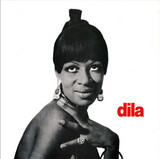
Far Out Recordings proudly presents the first and only album from the mysterious Brazilian vocal sensation Dila (pronounced “Jee-la”). Having reportedly died in a car crash shortly after the album’s release in 1971, there is very little known about the woman behind the voice. But the joyous music Dila left behind, gives us a picture as good as any, of a powerful feminine soul at the top of her game.
The liner notes on the elusive original LP, written by composer Arnoldo Medeiros attest: “Friend, look out! Because when this girl starts to sing, you’re in trouble. Hold the railing so you don’t fall down the stairs, because she’s coming this way and shaking up everything.”
Arranged and produced by Durval Ferreira, alongside his studio band affectionately known as “Os Grillos” (The Crickets), Dila (1971) is a rare glimpse into the authentic soulful Samba sound of Rio’s favelas in the late sixties and early seventies.
A blast of funky, percussive Brazilian breaks, scorching hot brass and swing-laden piano, the music is as iconic as the album’s stark cover, as is clear on opener ‘Inez’, composed by The Crickets’ bassist Romildo. There’s a fantastic interpretation of the Ivan Lins classic ‘Madalena’ (made famous by Elis Regina), a moving version of the Tom Jobim and Vinicius De Moraes classic ‘O Morro Não Tem Vez’, and a number of sunny original compositions by Arnold Madeiros, who’s other writing credits include music for Marcos Valle, Wanderlea, Evinha and Dom Salvador.
With original LPs extremely hard to come by, this rare treasure of Brazilian soul, which fans of Gal Costa, Celia, Evinha and Elis Regina will love, gets a much-deserved official reissue: remastered and pressed to 180g vinyl.
Experimental black metal from Brooklyn featuring members of Pyrrhon, Krallice, Sigur Rós, The Glen Branca Ensemble, Steve Reich. Recorded by Colin Marston (Dysrhythmia, Krallice, Liturgy). Follow-up to the bands well received 2022 debut Aveilut. The Promise Of Rain, the sophomore album of the experimental black metal band Scarcity, is an embodiment of the hard-to-believe truth that burdens are easier to bear when distributed, a realization Brendon Randall-Myers (conductor of the Glenn Branca Ensemble) grappled with extensively while writing this record. This is a sweat-drenched album about dispersion, about spreading, about the collective relieving of burdens through shared experience: one doesn’t have to go through everything alone. When Scarcity’s debut album Aveilut was written in early 2020, Randall-Myers and vocalist Doug Moore (Pyrrhon, Weeping Sores, Glorious Depravity, and Seputus) never expected to be able to play their songs live. The cathartic experience of playing something that came from a place of isolation out to people in a live setting is the root of the intensity in The Promise Of Rain. The Promise Of Rain begins where the craziest climaxes of Aveilut end, and is the first Scarcity record to include Tristan Kasten-Krause (Sigur Ros, Steve Reich, LEYA) on bass, Dylan Dilella (Pyrrhon) on guitar and Lev Weinstein (Krallice) on drums. Rather than building density with the quasi-orchestral layering on Aveilut, Scarcity challenged themselves to document what five people in a room could do, recording most of The Promise Of Rain in one or two takes, capturing the physical effort and urgency of a live performance. Scarcity forges a completely fresh sound in The Promise Of Rain with their alarming guitar work and melodic arpeggiating, shedding dead skin and breaking ground with sheer vulnerability. The lyrics for The Promise Of Rain were inspired by a trip Moore took to the high deserts of southern Utah in 2023. “To thrive in the desert is an act of abnegation—” he observes, “you do right by the land and receive its gifts, or it does away with you.” The necessity of adaptation is as evident in the desert as it is to the landscape of the human experience. The transformation of ideas and beliefs, the grief of losing relationships that had to end, and the fear involved in forming new ones under the grip of mental illness is conjured over and over again on this panoramic album.
Filipovich is one of a kind. The Belarus-born, Paris-based artist works in a multitude of media - found footage films, painting, silkscreening and performance to name a few. It's her musical output that has caught the attention of late, though, with Filipovich dropping a run of releases in recent years which began with 2021's Magnificat on Time Released Sound. Filipovich takes as much of a novel approach to her music-making as she does with her other artistic endeavours - Magnificat was centred around treated samples of Sergei Rachmaninov's All-Night Vigil, and she's also combined classical composition with contemporary electronic techniques on her subsequent drops.
For Idealized, Filipovich's debut on Sheffield's Central Processing Unit, she maintains the gothic air which characterised her previous releases and applies it to a record of widescreen contemporary techno joints. These tracks represent something of a gear shift for CPU, a label which has long made its name by delivering top-quality electro and machine-funk jams, but such is the quality of Idealized that these superbly-executed techno productions are sure to win over label fans both old and new.
Idealized is very much schooled in the German tradition of minimal/dub techno. Tracks like 'Physical', 'Wave' and 'Dance Minor' all anchor themselves on single, steady drum pulses and delay-drenched single-chord loops. Filipovich generally lets the central idea of these tracks play out across several minutes while introducing increasingly disorientating elements into the rest of the mix - wiccan atmospherics, clashing chords, spiralling delays and so forth. It's an approach at once respectful of Filipovich's predecessors - Basic Channel, Deepchord, Ellen Allien and so on - but also full of idiosyncrasies and individuality.
Many of the club cuts here hardwire us into the moody, murky environs of the darkest Berlin Basements. 'Ultra Red' rides forward on a crisp drum machine snap, a menacing burble of bassline and an eerie single-note synth whistle in the upper end of the mix; 'Dance Minor' shows off a bit of KiNK in the brain-bending modular loop that waxes and wanes at its centre; the second-half run from 'Wave' to closer 'Small Cave' travels ever-further out into deep space - the kick drums remain insistent, yet the textural elements are delivered with an edge and flair that evidences Filipovich's ability to think outside the box.
Filipovich's unusual methods, and the influence of sound art and electroacoustic composition on her music, are drawn out further when Idealized steps away from the dancefloor. 'Hydra' comes off like a more gothic version of Pole - its central pulse draws from dub techno but never quite settles into a danceable groove, and this beat is combined with the kind of unnerving keyboard work that would make John Carpenter proud. Although closer 'Small Cave' eventually locks into another dark-room techno roller, the opening section of the track delivers a weightless soundscape of bright, tinny chords and a scene-setting field recording.
Idealized, the first drop on Central Processing Unit from Paris-based Belarusian Lina Filpovich, broadens the label's horizons with a selection of finely crafted minimal/dub techno joints.
RIYL: Andy Stott, Deepchord, Ellen Allien, Moritz von Oswald
The Fire is the fourth studio album by the American post-hardcore band Senses Fail. Widely looked on by fans and critics alike as one of the band's finest studio album, the record features singles including title track 'The Fire, 'New Years Eve' and 'Lifeboats'. Originally released on October 26th 2010, this new pressing is the first since it's original release, packaged in a hand-numbered sleeve with accompanying lyric insert, and comes complete with bonus track 'Ghost Town'. Released via Hassle Records for the UK/EU in conjunction with Vagrant Records to celebrate their 25th Anniversary. "The Fire showcases an immense growth in both the band's songwriting and arrangements, proving that these scenes stalwarts are not about to rest on their laurels." Revolver "The Fire is proof that Senses Fail consistently toe the line between singing and screaming better than most of their peers." Alternative Press
Warehouse Find!
Avision storms into 2020 in fine fashion with his first EP for Maceo Plex's Ellum Audio label.
Playing the decks since just 12 years of age, this American artist grew up in the musically rich New York City scene and is now at the sharp end of it with his own new school techno sound. He has released on key labels like Ben Sims’ Hardgroove, Mark Broom’s Beardman and Teksupport, and is someone that icons like Adam Beyer and Chris Liebing often reach for in their own sets.
He starts off his latest offering with 'Innocence', a bustling techno track with bulky drum programming that is brilliantly loose. It jostles you into action as dark vocals add intensity and makes for a perfectly physical dance floor workout.
Keeping up the pressure is 'Time Lapse', with big hi hats and a driving bassline all interwoven with thundering kick drums that will get the whole club up on its toes. A rising synth in the background adds an air of cosmic exploration and means this tasteful techno trip is enthralling from start to finish.
These are two superbly stylish and high powered techno cuts from this contemporary tastemaker.
The magic and majesty of Holger Czukay’s late career works for Claremont 56 is being celebrated on a new compilation. The former Can bassist – a musical maverick renowned for his freewheeling approach to composition, recording and promotion – released a string of inspired tracks on Paul Murphy’s label between 2009 and 2012, typically delivering hard-to-pigeonhole workouts, bona-fide epics and radical reinventions of some of his most beloved tracks.
The collection has been a labour of love – fitting given the sonic details and inventive musicality that marked out the late artist’s solo career – for Claremont 56 founder Paul Murphy AKA Mudd, who first reached out to Czukay after witnessing his now legendary live performance at the Roundhouse in 2009. As Murphy details in his introductory liner notes, it led to a productive working relationship between the pair that included collaborative recording sessions with Ben Smith in Czukay’s legendary Innerspace Studio – a former cinema in Cologne in which much of Can’s music was recorded.The impact of that Roundhouse gig on Murphy is reflected in the fact that two of the tracks on the collection are based on that celebrated performance. There’s ‘Ode To Perfume’, a languid and solo-laden version of one of Czukay’s most celebrated solo records that ratchets up the original’s inherent dreaminess, and a jaunty take on quirky kraut-pop number ‘Photosong’ featuring a spoken introduction recorded at the concert in question.
Murphy’s ability to coax Czukay into delving into his archives is evident across the compilation. Opener ‘A Perfect World (Remix)’ is an eccentric, ever-building masterpiece originally recorded in 1984 – but later re-imagined for Claremont 56 – featuring vocalist Sheldon Ancel and former Can band-mates Jaki Leibezeit and Michael Karoli, while ‘Fragrance’ is a subtly re-wired slab of picturesque Balearic kraut-dub which was initially recorded as a coda for ‘Ode To Perfume’ but lay unreleased for decades.
Then there’s ‘Let’s Get Cool’, a bright and breezy, French horn-sporting 2009 take on 1979 avant-disco classic ‘Cool In The Pool’; ‘My Persian Love (Remix)’, a 2010 re-take of one of his earliest solos recordings; and the near 18-minute brilliance of ‘Music Is A Miracle’. Originally recorded for his fans in the 1980s – but only released three decades later – this widescreen epic not only features drums by Jaki Leibezeit and a fine spoken word vocal by Czukay, but also numerous nods to some of his most revered tracks.
It's fitting, too, that two of the most potent cuts feature Czukay’s much-missed wife and musical muse Ursa Major: the dense, trippy and fittingly out-there ambient soundscape ‘In Space’, and the mesmerising ‘Music To be Murdered By’. Partially inspired by hearing painfully out of tune violin practice through his studio windows, the track was originally recorded for an unreleased album but finally found a home on Claremont 56’s 10th anniversary box set ion 2017. A genuinely spaced-out and mind-mangling slab of organic dub in Czukay’s distinctive style, it delivers a fine curtain call to the iconic artist’s endlessly inventive career.
Diego Ruiz, aka DFRA, is an Argentine music producer very active in the last five years with several productions in the underground deep house scene. Now he's definitely setting the bar at the highest level with this project. He's introducing a full band of musicians with jazzy roots, and the result is a four-track EP that's a clear fusion of how jazz and electronic music merge in a unique way. It incorporates classic Deep House and House sounds plus the fusion of Modal Jazz, Bebop, and Hard Bop style melodies.
Gamma' is the highly anticipated new album from the enigmatic French techno producer Gesaffelstein, and is the follow up to his 2019 release 'Hyperion'. While 'Gamma' retains Gesaffelstein's trademark raw and industrial sound, it also finds him giving 'the mask' a new voice for the first time via Yan Wagner's vocals. 'Gamma' was produced, recorded and mixed in its entirety by Mike Levy in Paris and New York. "Gamma" is an x11 trk single Black LP Vinyl. Promo & marketing activity. Limited stock.
Much time has passed since the Queer Australian/Italian-Armenian, multifaceted artist, Kristian Bahoudian aka Kris Baha, swapped the parched red earth and searing midday sun of the Australian landscape for the brutalist communist-era apartment blocks and slate-grey skies of former East Berlin. Kris is now a fixture in Berlin’s club scene and has toured most of the world as a DJ & live artist with his own unique production style of cyber industrial, EBM, wave, post punk, and early ‘90s IDM mutations. Remixing some of the scene’s most notable artists such as Boy Harsher and techno pop lord Boys Noize, Kris has garnered respect and trust in the electronic music scene for the last 13 years. To respond to the current AI revolution, Kris uploads himself to the cyber ether through his latest project: GHOSTS IN THE MACHIИE.
Across Dual Timelines —
” GHOSTS IN THE MACHIИE ” unfolds as a sci-fi cyberpunk concept project inhabiting dual timelines. In one, we glimpse a trans-humanist future where human consciousness exists as intricate sequences of binary code, entwined and controlled by omnipresent AI systems. In this coded future, a profound awakening stirs among a select few who manage to mutate the code they were governed by, unlocking memories of their history that was erased by the AI. Through this discovery they realize they can traverse temporal boundaries and utilize this power to send warning messages back in time to their former fully human selves. These eerie missives carry a dire warning for humanity, urging them to rectify the course of society before the relentless march of artificial intelligence deprives humanity of its essence. In this terrifying future, humans are rendered mere specters within the digital expanse, stripped of their souls, to become Ghosts In The Machine.
Collaboration with the future self —
The cyber odyssey unfolds from a unique perspective— Kris’s very own future self (his future ghost): a spectral entity endeavoring to caution its present incarnation against the ominous path it treads, attempting to avert a dystopian future.Sonic Alchemy —
A fuse of cybernetic synth waves, hyper-punk, and pulsating drum and bass laid out against the dystopian, industrial sonic landscape of this grim future “civilization”. Each track recounts a new chapter in the gripping narrative, drawing listeners deeper into their own story and the role we all play as a collective society with the future possibilities of unregulated AI.Recorded in Berlin with software and hardware synthesisers. AI was used to assist me with lyric themes, concepts and ideas. I also used a trained AI model of my own voice as backing vocals in ‘Haunting Me’.ll music, words & concepts by Kristian Bahoudian aka Kris Baha and his future ghost,
GHOSTS IN THE MACHIИE
1982 erschien in Eigenregie die LP „Revival“ von Winterhawk.
Der ausufernde Hardrock mit Heavy Metal-Tendenzen und
vielen zweistimmigen Gitarrensoli fand einst nur im Raum
Chicago Verbreitung, doch irgendwann wurden Sammler auf
die Platte aufmerksam. Das rief 1998 das Label Monster
Records auf den Plan, die sich zeitweise auf amerikanischen
Hardrock und Heavy Metal zwischen Ende der Siebziger und
Anfang der Achtziger spezialisert haben. Recht schnell waren
Winterhawk in der Szene ein Name.
Die Sensation war aber erst perfekt, als sich die Möglichkeit
ergab, eine frühe Liveaufnahme von 1978 zu überarbeiten
und ebenso auf CD zu veröffentlichen. Mit bestechender
Klangqualität legt „There And Back Again“ sogar noch
eine Schippe drauf. Die Spielfreude ist nicht mit Worten
zu beschreiben und allein die zweistimmigen Gitarrensoli
müssten einen Grammy gewinnen. Dabei erinnert man immer
wieder an die Frühphase von Rush („Rusch“, „Fly By Night“),
während man
Cinderella's album Still Climbing is a testament to the band's enduring legacy in the realm of hard rock. This fourth and last studio album was released in 1994, combined gritty guitars with Tom Keifer's signature raspy vocals making it an authentic rock record. The track ""Hot & Bothered"" first appeared on the soundtrack of 90s comedy film Wayne's World, which starred Mike Meyers and Dana Carvey. Further standout songs from the album are ""Bad Attitude Shuffle"", ""Freewheelin"" and ""Through The Rain"". Still Climbing includes an insert with lyrics.
- A1: Spectres From The Black Moss
- A2: Tunguska Feat. Corlyx
- A3: A Lifetime In The Service Of Darkness Feat. Ulrike Goldmann
- A4: Cut In A Place Feat. Madil Hardis
- B1: Cutscenes Feat. Danny Blu
- B2: Wild Eyes Feat. Madil Hardis
- B3: Sleeping With A Knife
- B4: Stalker
- CI1: S That Your Uniform
- C2: You And Me Apart From The World Feat. Anna Rose
- C3: One Trick Pony Feat. Massive Ego
- C4: Ghost Electric
- D1: Bitter Flavour Feat. Alia Synesthesia
- D2: The Good The Bad And The Birds
- D3: In The Dark
Endlich ist es soweit: Schwedens Electro/ Synth-Pop-Sternchen Ashbury Heights melden sich zurück mit ihrem neuen Album “Ghost House Sessions - Vol. 1”. Bekannt für Anders Hagström’s einzigartige Stimme, einen unverkennbaren Musikstil und ihre mitreißenden Live Shows, liefern Ashbury Heights nun einen brandneuen Longplayer mit 23 neuen, wunderbar eingängigen und tanzbaren Songs mit Ohrwurmgarantie. “Ghost House Sessions - Vol. 1” ist ein außergewöhnliches Produkt aus langer, intensiver Arbeit und einer aufregenden sowie anstrengenden Zeit der Band: “Das vergangene Jahr war unglaublich inspirierend. Es gab großartige Höhen, aber auch unschöne Tiefen. Diese Achterbahn der Gefühle nimmt nun Gestalt in Form neuer Musik an”. In ihren nun schon fast 20 Jahren, haben Ashbury Heights nie aufgehört, ihren Sound aus New Wave, Electro, Synth Pop und Industrial weiterzuentwickeln und zu perfektionieren und beschenken uns wieder einmal mit einzigartigen Meisterwerken, die wirklich alle Füße und Hüften schwingen werden lassen.
This album was recorded in Philadelphia in 1977 by Rare Feelings, a band led by Rick Mason, who was fully involved as songwriter, arranger, and producer while also supporting the band's groove as bassist. This is a superb example of one of the few soul and funk hard diggers that every hard digger has wished to have and has been lucky enough to acquire, and it is a masterpiece that is numbing not only in its sound but also in its vintage-inspired artwork! Rick Mason's bass roars, the organ and horns fold in and out, and a faintly haunting vocal (?) enters, blended with an exquisite psychedelic feel. The opening track "Rare Feelings" (A1) blends exquisite psychedelic sensation with slap bass, swirling intro, raging horns and organ, and then suddenly changes the tone to mid-tempo with the intertwining of bewitching vocals again. The song suddenly changes to a mid-tempo and leads to "Dope" (A2) with its bewitching vocals, a sound that is worthy of being called rare groove! The instrumental number "Metamorphosis Funk" (B2), which features not only bass and organ, but also continuous drum fill-in, fast cutting guitar and solo, and flute lead, is sure to get the floor going! This is the first official reissue in the world!
Repress auf purple & red splatter Vinyl. Das zweite, alles auf seinem Weg liegende vernichtende Album der Hardcore Thrasher aus Texas: POWER TRIP. Möglicherweise das beste Thrash Album des letzten Jahrzehnts! Massiv, riesig, über alle Dimensionen. Aufgenommen von Arthur Rizik (INQUISITION), gemastert von Joel Grind (POISON IDEA, TOXIC HOLOCAUST) mit Coverartwork von Paolo Girard. POWER TRIP sind eine echte Band, unvergleichlich. Ihre rohe Intensität, ihr musikalisches Können, die perfekte Songstruktur, fetter Sound, wilde Riffs, ihre Entschlossenheit und ihre bloße Einstellung machen sie zu einer der Speerspitzen im Metal, Punk und Hardcore Underground der USA. In den letzten Jahren haben POWER TRIP beinahe non-stop getourt und dabei Bands wie ANTHRAX, LAMB OF GOD, CRO-MAGS, NEGATIVE APPROACH, TURNSTILE, BACKTRACK, EYEHATEGOD, BANE, OFF! Und weitere supportet und Festivals in den USA, Europa und darüber hinaus beehrt.
- A1: Hard To Say I'm Sorry/Get Away
- A2: Look Away
- A3: Stay The Night
- A4: Will You Still Love Me?
- A5: Love Me Tomorrow
- A6: What Kind Of Man Would I Be?
- B1: You're The Inspiration
- B2: I Don't Wanna Live Without Your Love
- B3: Hard Habit To Break
- B4: Along Comes The Woman
- B5: If She Would Have Been Faithful
- B6: We Can Last Forever
"Greatest Hits 1982–1989 is the third greatest hits album by the American band Chicago, released by Full Moon/Reprise Records on November 21, 1989.1 It became one of Chicago's biggest selling albums. Spanning from Chicago 16 in 1982 to Chicago 19 in 1988, the set includes founding vocalist Peter Cetera and his successor Jason Scheff. It includes a remix of ""What Kind of Man Would I Be?""
Highlights: On a sea blue colour vinyl for the first time as part of Rhino’s Summer Vinyl Campaign"
2024 Repress
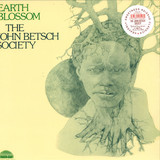
180 Gram, Tip On Sleeve RSD version of this classic. One of the rarer records of the mythical Strata East albums is finally reissued for the first time on Heavenly Sweetness!
The recording of Earth Blossom, the John Betsch Societys one and only album, seems something of an enigma nowadays. For even though Nashville is clearly one of the towns in the US with the highest number of recording studios, who would have thought that the capital of country music would give birth to one of the forgotten masterpieces of 1970s spiritual jazz. The path leading to the album starts in 1963 when John Betsch, originally from Jacksonville in Florida, arrives in Nashville to study at Frisk University. He is a young drummer and joins Bob Holmes trio. Holmes is one of the towns major jazz organists and pianists; he becomes Betschs mentor and, over the space of two years, John will play alternately with him and with the trumpeter Louis Smiths group. However, in 1965, John leaves town to go to the prestigious Berkeley University in Boston and do a two-year course along with his fellow debutants with names like John Abercrombie, Ernie Watts and Alan Broadbent. Two years later, he is invited by a pianist friend, Billy Chilf, to join the legendary singer/songwriter Tim Hardins group. Just after Woodstock, John Betsch and Tim record a psychedelic album Columbia will never release together with the members of the future group Oregon: Colin Walcott, Glen Moore, Paul McCandles and his friend Billy Chilf. But he soon leaves this group to return to Nashville where he hooks up again with his friend Bob Holmes. Two years later, he is accepted on Archie Shepp and Max Roachs famous course at the University of Massachusetts Amherst (UMASS) and for the next four years he participates in this collective of intellectuals and musicians under the aegis of the two masters.
During this period he returns to Nashville to form his Society whose music is obviously influenced by the Afrocentric ideas of the UMASS student and political movement. However, the album, recorded in one day and in one take, also bears the hallmark of their generations psychedelic experiences, and in the themes and playing of the musicians we can hear a less violent form of music than the radical free jazz of New York or Chicago. Nature and environmental themes are the inspiration behind tracks touched by the spirit of Coltrane but also of Flower Power.
After Amherst, John Betsch joins Marion Browns group in 1976, leaves Tennessee for good and makes his home in New York over the next ten years or so. He plays and records with Dollar Brand, Kalaparusha Maurice McIntyre and many others, before heading off to France. He has lived in Paris for the last twenty years and played in Steve Lacy, Mal Waldron and Archie Shepp bands, as well as forming groups of his own. He now lives in Paris and plays with many musicians/bands.
2024 Reissue
Rare, spiritual and groovy, this is the ultimate live album, the pinnacle of the spiritual jazz scene! Detroit's proud drummer Roy Brooks' epic blackness is back!
Hardcore craftsman artist and drummer, who began his career in the 50s and remained at the forefront of the scene until his death in 2005, starting with the Horace Silver Combo in the early 60s and continuing with bands such as Stanley Turrentine, Youssef Latief and Charles Mingus. Roy Brooks. The drummer, who also played on Detroit's Wenden Harrison albums and was part of Max Roach's renowned M'boom project, recorded this live performance in NYC in November 1973 under the name The Artistic Truth, a group he led in the early '70s. Recorded live in NYC in November 1973 under the name of The Artistic Truth, this album easily surpasses the Baystate release in terms of quality and density. The band featured Reggie Workman (b), Olu Dara (tp), Joe Bonner (p), Cecil Bridgewater (tp), Sonny Fortune (as) and other prominent black musicians, with Eddie Jefferson joining on vocals on two tracks. This is a live document of five songs and 48 minutes of spiritual soul, packed with the raw, unrelenting groove of spiritual jazz from this era
- A1: Swollen Tongue Bums
- A2: Three Rocks Blessed
- A3: Images Of .44 Casings
- B1: The Untraveled Road
- B2: Praise Be The Man
- C1: And Hell Is Coming With Us
- C2: Pelt I’s To End (Demo Instrumental)
- C3: Gates Of Dawn (Instrumental)
- D1: Praise Be The Man (Remix)
- D2: Cement (Demo Instrumental)
- D3: Sweetwood Sound Session 404
Wiederveröffentlichung des Albums von 1998, mit dem für dälek alles begann, diesmal mit sechs Bonustracks. Enthält ein 12-seitiges Booklet mit Liner Notes von John Morrison und neuen Grafiken von Mikel Elam & Paul Romano.
Als Däleks Debüt 'Negro Necro Nekros' im Herbst 1998 erschien, befanden sich die ästhetischen und kommerziellen Konventionen des Hip-Hop im Umbruch. Während der Mainstream-Rap den Prozess der vollständigen Integration in die Mainstream-Popkultur mehr oder weniger abgeschlossen hatte, war im Underground-Hip-Hop eine aggressive Gegenbewegung entstanden.
Die Experimental-Hip-Hop-Pioniere Dälek haben Jahrzehnte damit verbracht, sich eine einzigartige Nische zu schaffen, in der sie Hardcore-Hip-Hop und Noise mit einer klanglichen Radikalität verschmelzen. Von Anfang an traten Dälek in die Fußstapfen ihrer Vorgänger Public Enemy und schöpften aus so unterschiedlichen Einflüssen wie My Bloody Valentine und den deutschen Experimentalisten Faust. Dälek ist es gelungen, der Rap-Musik völlig neue strukturelle Dimensionen zu verleihen. Seit 1998 haben sie sieben Studioalben und unzählige EPs, Singles und Kollaborationen veröffentlicht.