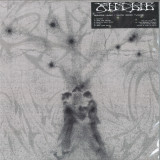
2023 was a breakthrough year for EABS in many ways. It was all thanks to the well received, fully self-produced album entitled In Search of a Better Tomorrow, recorded in collaboration with the Pakistani band Jaubi. EABS' forthcoming sixth album is a return to their roots – literally and figuratively. It is an in-depth study on rhythm, which materialised in the form of the album titled Reflections of Purple Sun.
The back to the roots part not only manifests itself in the lack of guest instrumentalists, but also in a renewed focus on the history of Polish jazz. The band's debut album Repetitions... was dedicated to Krzysztof Komeda. This time, the band picked up the entire Purple Sun album, which Tomasz Stańko recorded half a century ago. From the POV of Purple Sun fans, a hard-to-find and somewhat forgotten album, it may seem like a doomed undertaking. However, in order to pay tribute to one of the most iconic figures of Polish jazz, it was worth embarking on this mission and attempting to engage in a non-verbal conversation with the Slavic spirit that Master Tomasz Stańko undoubtedly was.
You can learn more about Reflections of Purple Sun through the comprehensive booklet accompanying the record. The cover art was created by the label's regular collaborator, Animisiewasz, whose design pays tribute to Pia Burri's original Purple Sun concept. Release date is 10 May 2024.
Suche:hard g
Yes, *that* Al Hirt record. Featuring the godlike "Harlem Hendoo", looped unforgettably by De La Soul for the legendary Buhloone Mind State cut, "Ego Trippin' (Part Two)"!
Al Hirt's infamous Soul In The Horn is inextricably tangled up in crate-digger lore. Originally released in 1967, the album has been in heavy, heavy demand for over 30 years, entirely down to the majestic soul-jazz fire of "Harlem Hendoo". And it's a song so good, so vital, so timeless, that it will always tower above everything else in its proximity. This one track alone is worth the price of admission - even if the cost of entry were $100 or even $1000.
However, it would be an error to dismiss this record as merely a one tracker, loaded as it is with dope samples for adventurous beat makers. Certainly the funkiest Al Hirt record, it definitely lives up to the "soul" in the title. Thanks to composer Paul Griffin and arranger Teacho Wiltshire, Hirt got uncharacteristically free and groovy throughout. It comes on more like an obscure KPM library funk record than the easy listening Al was notorious for.
A Louisiana trumpeter and band leader who made Allen Toussaint’s “Java” famous, Al Hirt was also known for TV themes, Dixieland, Swing and being a minority owner of the New Orleans Saints. Unlike every other Al Hirt record - and despite most "diggers" claiming otherwise - this here gem is genuinely hard to come across "in the wild". Normally, you can't give Al Hirt records away, except this particular one, which raises pulses in the crate digging community to life-threatening levels. For every owner claiming to have found their copy for a dollar, there's scores more claiming to have *never* unearthed one in the field. So, paradoxically, you can consider this the most tricky-to-pull "thrift store record", ever. This is why we're finally making it available for everyone, not just those with endless hours to spend scouring the global goodwills!
Soul In The Horn represented an expressive detour into authentic soul-jazz for Al Hirt. Throughout, we're struck by a fierce, fiery energy that's otherwise absent from his typically easy listening work. Without question, the slinky, magical "Harlem Hendoo" is the standout, here. It's also the reason why the record is so scarce and commands awe among crate diggers, sounding like something from an obscure and deeply revered spiritual jazz record. As is often the case, the true genius of the song is tricky to do justice to; it's like a minor miracle of songwriting and performance that simply swooned down from the heavens on the back of horns, bells and harpsichord. It's one of the sweetest musical compositions ever recorded inside a studio - it's only failing is that it's just too short. Sampled brilliantly by De La Soul, it has also been used by The Roots for "Stay Cool" and Nightmares On Wax for "Damn".
The rest of the record makes for a mighty fine listen. From the opening cover of Booker T. & The MG's "Honey Pot", to the propulsive, ultra-funky "Mess Around", it's nothing but a good time. Given its title, the elegant stepper "Calypsoul" sounds exactly as you'd hope whilst the melancholic, wistful "Long Gone" hurts so good. Truly, this is just dying to be looped up, Al's muted playing capturing a soulful longing only horns can often achieve. The bluesy, slo-mo swing of "Sweetlips" oscillates between cool disaffection and swelling pride whilst the graceful, low-key funky "Girl" closes out the A-Side in the fine style. Ushering in the B-Side, the brief but brilliant strut of "Love Ya' Baby" shines brightly before the skipping funky-jazz of true highlight "Sunday-Goin' To Meetin' Time" demands both your attention and your dancing shoes. The mellifluous piano-funk of bass and horn-drenched "Snap Back" serves as the sumptuous prelude to "Harlem Hendoo"'s main character energy before the irrepressible, upbeat R&B of "Ludwig" closes out this quite remarkable album. An album deserving of a place in every serious record collection.
The audio for Soul In The Horn has been carefully remastered by Be With regular Simon Francis, ensuring it sounds better than ever. Cicely Balston's expert skills have made sure nothing is lost in the cut whilst the records have been pressed to the highest possible standard at Record Industry in Holland. The original sleeve has been restored here at Be With HQ as the finishing touch to this long overdue re-issue. This is after-hours music. Let it speak for itself. Listen. Listen to the soul in Al Hirt's horn.
2025 Repress
Macedonia's own Stojche is Fuse's next guest for the club's freshly made imprint. The long standing DJ and producer has been known to keep Detroit's playfully hybrid style as the focus of his work and 'Metaphor' is the case in point. His four tracks bounce through a nostalgic balance of techno, house, and more with a modern crisp. A refreshing take on club music, Stojche keeps techno's sometimes nonchalant attitude at arms length with a charismatic record that hits its mark with every measure.
The record's first track 'Counterpunch' features heavily lined percussion but still brews up a storm far and wide with resonant dub stabs and open hi hats. The drum machine boasts a full spectrum, rolling through a light show of melodic flashes, perfect for a room compressing soundsystem. The maximalist, vintage detail that Stojche brings to his compositions blurs the lines between classic genres in a time of hasty hybridization, which gives it a sort of authenticity that can't be taken for granted. 'Chordal Tribe', on the other hand, raises the general euphoria of the EP. Luring in the listener with bright pads and full-on drums, Stochje's work is reliable main slot material that adds color to any mix while providing a persuasive low end. Shimmering hi hats give it an ethereal quality making it an appropriate interlude for almost any context. Moving on to the B side, the producer sharpens up his rhythm and emphasizes the hardgroove influence in 'Signal Drive'. Softening the pace of his drums with free use of melodic chord stabs, Stojche opens up his dance floor for a crowd bonding record once again, complete with filter transitions and pummeling toms. As the final contribution, his title track 'Metaphor' begins with a more obscure opening to conclude his EP for Fuse. Leaning more to a techno cut, the record remains flamboyant as ever with open hats and rides shuffling through his arrangement. A muted main synth becomes apparent to focus the energy of the track while allowing for liveset-like drum flickering to take shape beneath, claiming the immortality of old club records with the technical precision of a seasoned modern producer.
shipping to EU only!
Xone:96. The long-awaited follow-up to a genuine club classic.
A new, uncompromising analogue DJ mixer, destined to be the heart of your creativity, Xone:96 takes the legendary soul of the acclaimed Xone:92 and redelivers it, enhanced, and with state-of-the-art digital connectivity.
It’s all here. The huge, detailed, space-shaking analogue sound that only Xone delivers. A refined, precision 4-band EQ. Unrivalled dual Xone:VCF filters with CRUNCH harmonic distortion. And a dual 32-bit USB soundcard (24 Channels @ 96kHz) with Traktor Scratch certification right out of the box.
Xone:96 lets you connect your whole rig, from laptops and turntables, to pedals, synths and drum machines.
Two dedicated FX sends, four stereo input channels (with 4-Band EQ), two stereo input channels with all new 3-Band Parametric EQ + two auxiliary stereo return channels. And a separate master insert for your outboard hardware.
Explore new possibilities with a familiar layout of beautifully tactile controls. And rely on the industrial build quality that exceeds the demands of relentless back-to-back performances, night after night.
Xone96: You mixed. We listened.
Features:
• Type Analogue
• Channels 6 + 2
• EQ
o Channel 1-4, 4-Band EQ
o Channel A-B, 3-Band Parametric EQ
• USB Soundcards Dual 24 Channel (12 in / 12 out)
o Hi-Speed USB2.0 / Mac Class Compliant
o 32bit / 96kHz
o MIDI over USB
• Line Inputs 4 x RCA (CH 1-4)
o 4 x 1/4″ TRS (CH A-D) Mono/Stereo
• Phono Inputs 4 x RCA (CH 1-4)
o LN/PH Switch for DVS
• USB Inputs 6 x USB (CH 1-4 + CH A – CH B)
• Mic Input 2 x XLR
• Master Output 1 x XLR (Balanced)
• Master 2 Output 1 x 1/4″ TRS (Balanced)
• Booth Output 1 x 1/4″ TRS (Balanced)
• Record Output 1 x RCA (Un-balanced)
• Master Insert 1 x 1/4″ TRS
• MIDI Out 1 x 5-Pin DIN
• Send/Return I/O
o 2 x 1/4″ TRS Send
o 4 x 1/4″ TRS Return
o 1 x LN/Hi-Z Switch (SND1/RTNA)
o Filter 2 x VCF Filter
o HPF / BPF / LPF
o Adjustable Frequency & Resonance
o Assignable CH 1-4 + CH A-B
o CRUNCH (Controlled Harmonic Signal Distortion)
• X-Link 1 x RJ45
• Headphones 2 x 1/4″
o 2 x 3.5mm
o Split Cue Monitoring
• Channel Faders 60mm VCA / Replaceable
• Chanel Meters 9 Segment LED
• Channel Fader Curve 3 Types
• X-Fader InnoFADER / 45mm VCA / Replaceable
• X-Fader Curve 3 Types
• Earth Ground Terminals x 2
• Headroom 20dB
• AC Mains
o 100 to 240V
o AC 50/60Hz
o Consumption 45W max
o Mains Adaptor 3 pin IEC socket
• Height 109mm / 4.3″
• Width 336mm / 13.25″
• Depth 410mm / 16.2″
• Weight 7kg / 15.4 lbs.
DirtybLends 13 comes from these 2 misfits that split the 4th edition on the label which is Zodiac and The Jak..Zodiac kicks off the a-side with a Thanksgivin beat...food is served and your stone cold munching.
Fuk Christopher Columbo and the pilgrims. It's all about eating p@#$$.
Stuff your gullet with this heat and be thankful..
The flip side of this disc come from the leader of the the klan as “Itz In Ur Mind” is created strictly for Ron Hardy as this is the 3rd conceptual idea to follow “Hardy’s Haunted Box” from the 2nd edition of dirtybLends.
repressed !
Known for his hardware-harnessing live shows and acidic jams, the Bristol-based Miles Otto’s ‘Skitter’ EP is alive with propulsive electro rhythms and dreamy synth melodies. ‘CV Swizzly’ grabs your attention with its wistful analogue tones and percussive crunch, before a burbling bassline burrows through the arrangement, while the 303-laced ‘Vectron’ takes cues from Detroit electro with its menacing riffs and eerie synth drifts. ‘Skitter’ itself subtly reveals its details layer by layer, with crisp drum machine hits and low tones opening out into mystic harmonies, and Plant43 recasts ‘CV Swizzly’ in his distinct image, adding metallic synth bass and urgent keys to finish the EP in fine style.
“It’s just too easy to make a standard dance track,” Aphex Twin said of his mindset back in 1992. “You’ve got to put a bit of thought into it to get something a bit different.”
‘Didgeridoo’ was released on the Belgian R&S Records label in 1992, and originally peaked at #55 in the UK singles chart in May of that year. Over the last 32 years the track has become one of the essential Aphex Twin tracks in a gargantuan catalogue that continues to amaze and inspire.
“I wanted to have some tracks to play to finish the raves I used to play in Cornwall, to really kill everybody off so they couldn’t dance,” Richard D James, AKA Aphex, told Select magazine back in the 90s. “Digeridoo came out of that.”
Released as a 4 track EP that also included early Aphex productions (now classics) including the industrial, acidic clang of ‘Flap Head’ and hyperbolic futurism of ‘Isopropanol’, the release cemented a relationship with the R&S label that went on to release the ‘Xylem Tube’ EP and the pivotal album ‘Selected Ambient Works 85-92’ in the same year. The label’s owner & A&R Renaat Vandepapeliere reflected “When I first heard Aphex Twin’s music I said, ‘This is it!’, and everybody else said, ‘You’re crazy!’ …a lot of the hardcore R&S fans dropped us. To them it wasn’t music.”
‘Didgeridoo’ (Expanded Edition) is the first time the EP has been re-issued with extra material. Whilst digging in his DAT archive (allegedly stored in an airtight military ammo box), Richard James revisited the recordings, encoding them through a Nakamichi CR7e cassette deck, using the customised deck with vari-speed to encode at speeds “felt right at the time”. Alongside these CR7e versions, the original mixes have been remastered by Beau Thomas at Ten Eight Seven Mastering, offering a dilated insight into one of electronic music’s most endearing releases.
‘Digeridoo’ (Expanded Edition) by Aphex Twin is available on R&S Records from 31st May 2024.
We've been overdue to let off a modern gem from the Wackie's vaults, so here we go. Another of our favorite 12 Tribes related artists, the late great Judah Eskender Tafari, on a hard and moody but uplifting digital stepper straight from the Bronx. B-side features a great ghostly raw rhythm version from Bullwackie.
Promised Land is the long-awaited debut album from contemporary showstopper Vintage Culture. Enlisting the help of peers NomBe, Maverick Sabre, The Temper Trap, and Elderbrook, the album marks the producer and DJ's seguing from progressive house to electro, evincing a globetrotting, jetsetting sound that hardly ever fails to hold back on emotion. Including prior single 'Come Come' alongside newer, angelic progressive cuts like 'Weak' with Sabre, this is a stark debut from the Brazilian creative force.
Probaly no one will tag Rockets into the Italo Disco movement as this is very well know Progressive Rock band. But Tino Silvestri made two incredible remixes from the Atomic album in 1983 in a super italo disco mood. A really hard to find re-issued on yellow vinyl (like the original release, Orange and black vinyl). Don't miss it, It's a imited numered release.
The Mental Groove Classic series returns with a treasure trove of rare and hard to find tracks plucked from the personal collection of label founder Olivier Ducret, a pivotal figure in Switzerland's acid house and rave-era party scene.
On Volumes Two and Three of the series - the first installment hit stores in 2017 - the Mental Groove and Musique Pour La Danse label founder takes us back to the turn of the '90s, a time he spent promoting parties in fields, squats, forests, warehouses and former factories in and around Geneva and behind the counter of a record shopof the same name. While others in Switzerland's emerging dance music scene gravitated towards US house and garage, Olivier and his crew opted for a bass, breaks and techno-focused sound inspired by regular trips to clubs, raves and record shops in the UK.
Drawing directly from his own record box and a memory bank full of snapshots of euphoric dancefloor moments, Mental Groove Classics volumes Two and Three sees Olivier reaching for cuts of near-mythical rarity, genuinely overlooked gems, and undeniably brilliant tracks that have left a long-lasting impression on the local raving landscape. It's an autobiographical audio document, historical archive and personal musical statement all rolled into one, inspired by a moment in time where musical boundaries were being redrawn in a wave of carefree optimism and freedom inspired new rave scenes across Europe and far beyond.
Matt Anniss
Original artwork by Soho's Brain Club co-owner and artist of early British club culture Mark Wigan.
File under house, breakbeat, techno and warehouse rave music
The Mental Groove Classic series returns with a treasure trove of rare and hard to find tracks plucked from the personal collection of label founder Olivier Ducret, a pivotal figure in Switzerland's acid house and rave-era party scene.
On Volumes Two and Three of the series - the first installment hit stores in 2017 - the Mental Groove and Musique Pour La Danse label founder takes us back to the turn of the '90s, a time he spent promoting parties in fields, squats, forests, warehouses and former factories in and around Geneva and behind the counter of a record shop of the same name. While others in Switzerland's emerging dance music scene gravitated towards US house and garage, Olivier and his crew opted for a bass, breaks and techno-focused sound inspired by regular trips to clubs, raves and record shops in the UK.
Drawing directly from his own record box and a memory bank full of snapshots of euphoric dancefloor moments, Mental Groove Classics volumes Two and Three sees Olivier reaching for cuts of near-mythical rarity, genuinely overlooked gems, and undeniably brilliant tracks that have left a long-lasting impression on the local raving landscape. It's an autobiographical audio document, historical archive and personal musical statement all rolled into one, inspired by a moment in time where musical boundaries were being redrawn in a wave of carefree optimism and freedom inspired new rave scenes across Europe and far beyond.
Matt Anniss
Original artwork by Soho's Brain Club co-owner and artist of early British club culture Mark Wigan.
File under house, breakbeat, techno and warehouse rave music
The Issues label keeps up its fine early momentum with a new EP from Pau Roca with a remix from Crue. It is another tasteful 12" that comes on the heels of a deep outing from Dubbyman and an inaugural release featuring fresh versions of Joan Bibiloni by Kiko Navarro & Willie Graff.
Opener 'Daradada' is a spiritual deep house cut with swirling pads and classic vocals drifting next to the jazzy keys. It's expansive and cosmic in design and one that touches the heart on many levels.
'Here Comes The Moon' is another cut that shows off Roca's mastery of astral melodies. His gorgeous chords and delicate keys rise up to the stars as warm, dynamic drums bring the weight down low and spoken words unfurl in a seductive fashion. The Crue remix of 'Daradada' then brings more drive with harder but still organic house drums and hits.
The chords take on a melancholic quality and an elastic bassline pumps the party with a playful sense of energy. Last of all is 'Get Down' which once again sinks you into a beautifully warm and heady world of soft focus chords and late-night synth work.
- A1: Saylo
- A2: Can't Take The Hood To Heaven
- A3: Attack Of The Dreadlocks (Feat Rae Khalil)
- A4: Lynn's Lullaby (Interlude)
- A5: Brownskin Cinnamon
- A6: Grey Seas (Feat Reaper Mook)
- A7: Cowboy Leather (Feat Pink Siifu)
- A8: Overseas Sam
- B1: Bullets From A Butterfly
- B2: Pearly Gates Playlist
- B3: Things Grandma Told Me
- B4: Bygones
- B5: Lagonda (Feat Goya Gumbani)
- B6: The Card Players (Feat Jayellz)
- B7: When I Met Rose
Cassette[10,88 €]
Forest Green Vinyl
Seafood Sam is a futuristic artifact. If that description might sound confusing at first, it matches the eclectic dualities found in true originals. With his effortless cool and timeless style, the North Long Beach native defies convention and exact comparison. He's a virtuosic rapper, a stop-you-in-your tracks singer, and a symphonic producer. Welcome to the lavish life of a laid-back transcontinental man of mystery, rolling in old school Cadillacs, eating caviar with a blade in his pocket, and making plays in vintage Pelle Pelle gear. A blaxploitation icon for the Instagram age, blessed with the bars of a `90s legend and 23rd century swagger. Seafood Sam is a true hero of modernity. On his full-length album debut for up-and-coming label drink sum wtr (Kari Faux, Deem Spencer, Aja Monet) debut, Standing on Giant Shoulders, Sam splits the difference between Snoop Dogg and D' Angelo, Curren$y and David Ruffin. The songs reveal a forward-thinking sensibility rooted in ancestral soul. He creates spiritual hymns for the streets that tap into universal ideals and irrepressible groove. In an era plagued by short-term thinking, his ambitions reveal a crate-digging depth of music history and a meticulous ear for detail. The giant shoulders in the album's title refer to James Brown, Bobby Brown, and Miles Davis - the holy trinity who inspired Sam's process. From the Godfather of Soul, Sam took a perfectionist's rigor and focus. The example of Bobby Brown lent an unshakeable confidence and self-belief. While the constant artistic left turns of the trumpeter that birthed Ccool offered an aspirational archetype. The story starts in the glory days of Long Beach hip-hop. As a young child, the G-Funk era soundtracked rides in Sam's father's car. Some of his earliest memories are trying to memorize Snoop's verse on "Nuthin' But a "G" Thang." Beyond gangsta rap, the LBC has historically doubled as a capital of lowrider soul and carwash oldies. At any intersection, you could hear Dogg Food or Brenton Wood, Warren G or Barbara Lynn. This too was absorbed via osmosis. It also just so happened that the art of performance was always in Sam's blood. So at family functions, he and his sister supplied entertainment by singing karaoke renditions of The Isley Brothers. While his Harlem Shake remains a thing of local lore. Long Beach is a culturally diverse mecca of skate parks and gang life, street fashion and tricky dance moves. This is the place that raised Sam on a diet of Wu-Tang and Nelly Furtado, Lil Bow Wow and Allen Iverson. He was the middle ground between his two older brothers: one who gangbanged, the other who graduated with a master's degree from UC-Santa Barbara. But it wasn't until the end of high school that Sam started to take rap seriously. Alongside long-time collaborators like Huey Briss and Reaper Mook, Sam's name began to make waves on the northside of the city, but he was partially distracted by a modeling career that paid the bills and took him all to way to walk in Paris' fashion week. The first turning point arrived with 2018's "Ramsey," a self-produced, slick-talk anthem with over 10,000,000 streams across all platforms. With each subsequent release, Sam showcased his peerless consistency, building buzz both online and in the city streets. Spin hailed his "smooth and unhurried cadences and understated lyricism_ that sounds like nothing else in Long Beach." Clash raved about Sam's "evolution as an artist, cruising through nostalgic production with slick, witty rhymes." The culmination arrives with Standing on Giant Shoulders. It's the evidence of a master, a young sensei in the model of Quincy Jones. All rhymes, singing, production, and arrangements were handled by Sam - with an assist from his close Long Beach kinsman Tom Kendall from the group Soular System. It's hard-edged and lyrical enough for disciples of Larry June and Roc Marciano, but orchestral and melodic enough for fans of Anderson .Paak and H.E.R.
Warehouse Find - Test Pressing!
Time to welcome Kresy to the label with three original tracks of immaculate left of centre house. With only a clutch of releases his name may be new to many but if you dig deeper you'll find he's definitely moving the right circles. His debut release on John Talabot's Hivern Discs gave some broad exposure, picking up spins from the likes of Four Tet's Keiren Hebden, Jenifer Cardini and Nick Hoppner. Remix requests followed too with releases on Exquisite Pain, Southern Fried and Lovemonk all getting the Kresy treatment.
2014 looks equally busy with material forthcoming on Jay Shepheards Retrofit as well as DJ dates taking in Corsica Studios and Panarama Bar.
On his Freerange debut Kresy kicks off with Sweet Dangerous MC's, a shuffling, raw, 90's inspired cut which treads firmly forward rather than backward. The beats are crunched and jacked to perfection while the pads hiss and fizz all the while punctuated by the sweet dangerous MC in person.
Next up is Last Cocktail Of Stallone where echoes of Studio54 combine with the stomp of jacking Chicago house to produce a fresh fusion for 2014.
Flipping over we have a brilliant reinterpretation of Last Cocktail Of Stallone by west coast house heroes Vin Sol and MATRiXXman. Here the duo clearly had a fun session firing up the hardware drum machines and delays, reworking the rhythm track into a steady yet subtly massive warehouse jam primed for the dancefloor.
Finally, we're treated to the elegant beauty of Midnight In Manhattan where melancholic piano chords lay the foundation for an echoing sax riff to take centre stage. An original, interesting and above all deep slice of house that demonstrates Kresy's diversity and talent perfectly.
Bad Info is a new label set up primarily to reissue the music of Corker Conboy released first in the early 2000's mainly on London's Vertical Form which also released music by Pub and Pan American.
"Rich with cinematic overtones. 'Light...' carries echoes of tortoise, Ennio Morricone & Talk Talk, but its hardly just another remake, Slip into a world where the screen never goes dark"-XLR8R
"I discovered this album in 2007..The instruments felt small and delicate but collectively they elicited a heavy emotional response: a seductive moodiness, a soporific joy, soundtracking both post-party mornings and late night writing. it remains a record that still inspires me to this day." Adam janota Bjowski ( Composer- Black Mirror, Saint Maud, Femme, Out of Darkness)
Post-rock.electronic duo Corker Conboy aka Adrian Corker & Paul Conboy announce a newly remastered reissue of the project's debut album 'In Light Of That Learnt Later'.
Originally released in 2003, and available for the first time digitally, featuring new artwork by graphic designer Joe Gilmore. Alongside the reissue, Corker Conboy will release a limited edition 12" /digital single featuring a track from the album, backed with a new remix, sampling multiple tracks from the album, by acclaimed New York-based ambient dub trio Purelink (The 50 Best Albums of 2023 Pitchfork,'Ambient Dub that glows from within 'Philip Sherburne).
The album is remastered by Paul Conboy, with the remix single mastered/remastered by Stephan Mathieu.
"Deep Dancefloor Jams of African Disco, Funk, Boogie, Reggae & Proto Electro Music 1977-1986reggWhen a passionate DJ and crate digger intuitively selects music for a DJ compilation, without artistic compromise and without the burden of trends, AfroMagic vol.1 emerges from the depths of his soul. Herewith we present the new favorite phonomancer’s tool for all the DJs who experience the dance floor as a sanctuary and a source of freedom and love.
The most fundamental thing that defines African music is that it was created for dancing. In African dance, there is often no clear distinction between ritual celebration and social recreational entertainment – one can seemlessly merge with the other. Because dance and rhythm have more power than gesture and more richness than words, and because they express the deepest experiences of human beings, dance is in itself a complete and self-sufficient language. It is truly an expression of life with all of its emotions – joy, love, sadness and hope – without which there is no African music and dance. For the African people, dance and music are integral parts of the body and soul, thus depicting the expression of life, current emotional states, visions or dreams. Through hypnotic repetitive music and dance, people communicate with each other and with the souls of the dead, the animals, the plants, the stars, the Gods… They free the body and the spirit through ecstatic states, reaching a healing sense of freedom, happiness, and satisfaction.
Throughout history, this transcendental perception of rhythm and dance originating from Africa, influenced popular music worldwide, thus creating new living and breathing forms of musical genres – freeing them from their industrial mold. Funk, disco, soul, boogie, reggae, dancefloor jazz etc., developed in parallel all over the world. It is foolish to perpetually discuss where they originated from and who were the creators of all these fiery dance floor genres – being obvious that they directly or indirectly originate from the African continent and its people who were as well, over the centuries, influenced by disturbing socio-cultural factors of colonialism. However, no one can enslave the soul. The seeds of free and uninhibited dance and rhythm, true to their original form, initially first sprouted onto the USA’s fertile fields of clubbing and popular music while later evolving in other parts of the world.
The disco funk club culture manifested itself as a phenomenal explosion of artists and grooves in the second half of the 70s in the USA. Shortly it spread around the world continually reigning over charts in its various forms – to this day. Clubs emerged where the DJ is an almighty shaman and the dancers are a tribe united under one roof. This urban ritual had and still has a single goal: togetherness, freedom, and love. Clubs have evolved into temples where we free ourselves from the burden of a consumerist lifestyle and suppressed emotions – a place where we receive love and give love – to be who we really are.
Disco funk clubbing was such an influential global phenomenon that its influence can be observed in various other genres from the disco funk era i.e. progressive rock, which mutated by layering complex rock arrangements with a disco funk groove resulting in hybrids, highly sought by today’s diggers, producers and collectors. The profit-hungry music industry of the 80s very quickly commercialized the original disco funk sound by amputating of its original Afro groove to be able to easily ‘sell’ it globally. So, the original disco funk groove became underground again, and it has remained so until this day. Today, for a DJ to unearth that ravishing groove that will lead the dancers to the stars, he must dig passionately like a true musical archaeologist in search of that groove that picks you up after just a few initial beats. That groove which forces the atoms in your body to vibrate, that groove which unites the body and releases the burden.
The AfroMagic compilation series is created as a tool for real DJs who stick to the aesthetics and essence of clubbing.
This continuation of the Afromagic compilation by DJ Borovich was created in a private jam session which served as an escape route from intense and complex love problems.
Unconsciously driven by intuition and emotion and following a live mix tape framework where many tunes are arranged instantaneously, Borovich narrates his story with a strong rhythm that cuts loose even the most blocked off energy nodes and restores happiness to the spirit and the body.
The musical experience of the groove is completed by the lyrics of the songs, which symbolically give DJ Borovich universal answers to his questions arising from questioning the boundaries, nuances and other forms of love.
When considering that Borovich’s selection was created to facilitate an escape from the burdens of reality through rhythm and dance, we can be sure that Afromagic Vol. 2 will have a 100% uplifting, energized and spaced-out effect on the listeners.
The intro to A1, “Feeling Happy” by the Apostles, introduces us to an experienced and slow, cool and irregularly tight groove containing a confidently sung chorus that instantly gives a sense of freedom and hints at the remainder of Afromagic Vol. 2: “I’m gonna feel happy, ´cause I know I’m gonna be myself.” After the anthemic song mantra of the Apostles, Aigbe Lebarty uncompromisingly continues with a dirty disco rhythm. Acidified by accented synths that elevate it to shamanic levels and held together by a female tribal choir, we embark on an uncompromising ritual disco journey. Without a moment to take a breather the prog funk band Mighty Flames and their Road Man launch a highly vicious and raw, thick funk groove spiced with acid synths and dirty RnR breaks, raising the bar for the A side. Jimi Hendrix himself would surely praise it given the ultimate freedom and virtuosity in the solo sections. With the last tune on A side DJ Borovich decides to burn the floor with Geraldo Pino’s psychedelic, acid furious groove and lyrics which describe this HEAVY part of love problems: “The way she walk, the way she talk, the way she does a funky dances, she is really really heavy – that woman”.
While the A side represents a compact intoxicating afro groove machine that separates us from reality and lifts us up to the stars in over 23 minutes, the B side is a treasure trove of proto sub-genres gems. This selection represents the mission of the Afromagic: to find singular events in African recorded discography of popular music from the 70s and 80s that give evidence to the birth of new modern genres on the Dark Continent even before they emerged in the U.S.A. or Europe. The beginnings of electronic music influenced genres are represented back to back with 80s synth jazzy pop, all painted in African colours.
The B side opens big with Jake Sollo and a huge reggae blues number singing about the humiliation of a man – goosebumps guaranteed! “You think I’m nobody that’s why, you don’t know the way for me, I’m somebody I know, I found myself at last”. Adolf Ahanotu then enters the scene with a hard sliding tackle at B2 and an exotic rare disco funk dancefloor napalm. A ‘Sensation’ that would ignite even the coldest of introverts. While we approach the end of the compilation the narrative revolves again and takes a different turn. No less and no more than to the proto-electro that Baad John Cross serves us in “Give Me Some Lovin´”. The fat and repetitive broken electro synth groove, championing many early 90s electro tracks, is presented here without hesitation and with constant tension accompanied by a mantric chorus “Gimme some, gimme some, gimme some looooovin’, EVERBODY!!!”. Finally, we’re guided to the end of Afromagic Vol. 2 by Eji Oyevole’s 80s synth pop style presented in an authentic afro manner, giving us a glimpse at yet another released Afromagic edition, as well as giving an answer to DJ Borovich’s love problems. A smoothly broken electronic rhythm resembling electrified highlife sounds, carried on the wings of a virtuoso dreamy saxophone on top of which Eji presents the most intimate parts of himself. Finalizing the track with a symbolic chorus, on the surface referring to the dancefloor and simply having fun, but in actuality referring to the skill and happiness of living: “I´m a dancer, I can dance”. So, get up and dance among the stars with DJ Borovich and Afromagic.
Repress
The third 2021 release from your favorite alter-ego's favorite alter-ego. TAFKAMP presents his Most Wanted Digital Dubplates Volume 1 for the 5th release on his own Revenge Techniques label - a six-tracker (!!) 12" featuring a selection of most wanted club bangers taken from the numerous SoundCloud uploads from the Revenge Techniques labelhead.
Upfront business from London’s Baby Rollén. Kaleidoscope EP is a club ready four-tracker exploring a fusion of sounds from the dazzling arps of the title track, to the groovy bassline pulse throughout Nerve Glider.
Hitting hard on the A1 with Psychology which takes equal measure from early Detroit techno and fuses with the steadily popular Baby Rollén blueprint of contrasting pads and melodies. Voodoo combines influences of jungle with euphoric piano hooks, scattering throughout an extended arrangement.
This new opus marks a major comeback for Samuel Sanders, who made a name for himself in the 2000s with his first productions alongside Max Walder on Ghoststyle, whose track "Cyclone" was covered by big names such as Ken Iishi, Marco Bailey, Frank Biazzi, Technasia, Marco Carola ... but also on the Invasion label with "Dependance" (N.E.W.S label) and among others on the Kevlar "Illusion" label, where this EP received great support from Dave Clarke, Carl Cox, Chris Liebing ... He also produced alongside Manu Kenton on the Kentek, Frenchtek and Fanatix labels. With N.O.B.A, he returned to production, choosing Vibes Addikt for his comeback.
The A-side "Do You Like ... 2024" is a remake of a track he and N.O.B.A created in 2008 on Reaktion, in a much more Hard Techno version with a spirit all its own.
Side B is dedicated to Samuel Sanders himself and presents his new productions:
B1 "Desolation" a hypnotic spirit with a touch of Acid on the cover for lovers of this spirit
The B2 "Don't Be Afraid" is close to Hard Techno with a more clubby style for fans of this style.