Nightmare is back on Return Of the Vibe but this time alongside the mighty Stu Chpman who makes his debut on the label
4 tracker, big pianos brand new 130bpm breakbeat hardcore made in the Old Skool 1992 style - Intercontinental ballistic Beats EP.
Поиск:hard left
Все
Nightmare is back on Return Of the Vibe but this time alongside the mighty Stu Chpman who makes his debut on the label
4 tracker, big pianos brand new 130bpm breakbeat hardcore made in the Old Skool 1992 style - Intercontinental ballistic Beats EP.
Claus Voigtmann's Life Miles LP was another fine bit of work from the London-based German, and now two of the singles from it get served up on a new 12" next to remixes from a pair of tasteful underground producers. First up is LA-based Liquid Earth who brings some low-end wonk to 'North Of The Sun' next to acid-soaked grooves and driving 909s. The original pumps a bit harder with a Leftfield cosmic edge. Then comes Youandewan on the flip. He twists 'Lowrider' into a murky and late-night dub cut with warped bass and a signature sense of crispy tech funk. The original is a more high-speed and silky, electro-inspired space cruise with lovely broken beats.
STAR CREATURE's Global Caress series started this year off with a bang with newcomer ARSENE's "JACK SHIT" 7" selling out almost immediately. The followup here might just do the same… Another gruesome twosome of hard hitting, left field, electro acid. The half-Finnish, half-Estonian duo LLL add a distinctly Baltic outsider edge to the classic combo of Chicago jackin' house meets UK sound system culture. The fellahs tap an arsenal of original gear rescued and revived over the years to create hyper-saturated textures, thuggish rhythmic beats, squelchy acidic synths and mischievous microphone miscellany
- Zero
- Farewell To Words
- Lies, And Release From Silence
- Left Hand
- A Cradle Of Arguments And Anxiousness
- Mystery And Peace
- Invisible Thread
- The Spiral Manipulation
- A Cage It Falls Into
- The Light Of My Footprints
- Your Shoes And The World To Come
Ursprünglich 2001 auf dem angesehenen japanischen Punk-Label H.G. Fact veröffentlicht, erschien "All the Footprints You've Ever Left and the Fear Expecting Ahead" in Amerika 2003 in Lizenz für eine limitierte Veröffentlichung auf Dim Mak Records. Die Originalpressung war fast sofort ausverkauft und das Album erzielte auf eBay und Discogs zunehmend obszöne Preise. Temporary Residence brachte 2008 den Backkatalog von envy neu heraus, was ein noch größeres und breiteres Interesse an der Band weckte. Das Herzstück dieses historischen Backkatalogs ist "All the Footprints You've Ever Left and the Fear Expecting Ahead", das weithin als innovativer Höhepunkt des Hardcores gilt. Zusammen mit dem Nachfolgealbum "A Dead Sinking Story" wird es zu Recht als unverzichtbarer Post-Hardcore-Klassiker angesehen, dessen monumentale Fußstapfen unendliche Wellen schlugen. Jetzt erhältlich als "Pearlescent Metallic Silver Vinyl" LP.
New London-based label Plasticity Records hits the ground running with a hard-hitting, dancefloor-focused VA featuring four varied tracks, connected by a raw, propulsive sound thread running throughout.
Kicking off the A side is established Barcelona-based duo Nulek & Roto with Eternal Space — a stuttering, pitch-black techno/electro piece featuring an ominous vocal that sends shivers down your spine. Rounding out this side is Study Nights by Uruguayan talent Flhez, leaning heavily into the country’s rich musical tradition with plenty of spooky synths and rough analogue textures.
Over on the B side, Barcelona-based Romanian Mar.C delivers Not Normal — a tough-asnails, EBM-tinged techno number that’s sure to get any dancefloor moving. Last up is the broken and decidedly wonky Nuclear Era from Lima-based Venezuelan purveyor of all things percussive and leftfield, Acid Charlie.
COMPUMA's new new album “horizons”now available on vinyl via his own label Something About!
The album “horizons” is a further development of COMPUMA's “horizons EP”, which was released in July 2023 as a digital-only EP on his Bandcamp. The songs are inspired by the scenery and environment of Lake Ezu, Kumamoto, where the artist's roots lie, and by his walks in various places around Japan.
Horizons 1”, in which the undulations of electronic sounds seem to represent a leisurely walk across a clear expanse of sky and lake scenery, and the vocoder voice somewhat reminds us of people's activities, and the piece changes to a more minimalistic play of rhythms and electronic sounds, as if focusing on introspection in the midst of walking. The album also includes “horizons 2,” which changes with exquisite salinity, “horizons 3,” which pays homage to early electronic music, and “horizons 4,” a more stoic minimal electro-dubwise piece that seems to be immersed in the act of walking, The last track on the album, “horizons 5,” is a non-beat ambient track with a hint of the waterfront, as if the artist is gazing at the vast sky, as if the steps of the first half of the album are expanding into a faint memory, and is accompanied by a field recording. The album includes “horizons 5”, a non-beating ambient taste that is covered by field recordings and depicts the atmosphere of a wandering waterfront, and five versions of “horizons” that remind us of the days of “walking”, sometimes immersed in the scenery and walking, sometimes lost in thought, with “horizons interlude” in between, which reminds us of the surface of a bobbing lake, and is a self-titled version of “View 2” from the previous album, “A View”. The album contains seven songs in total, including a self-remix of “View 2” and an electro version of “view 2 electro”, reminiscent of the shimmering surface of a lake.
Personally speaking, this work reminds me somewhat of Kraftwerk's “Autobahn,” which depicted the countryside of West Germany with minimal electronic sounds, and this work also seems to depict a scene of a “walk” with electronic sounds. However, what is different from “Autobahn” is that there is an element in the middle part of the album that seems to go into introspection in the midst of walking, and it is a work that shows various views (including feelings) throughout the album. From a macro perspective, this album is a new response to the recent environmental music revival and generalization of ambient music, which he has introduced as a DJ and record buyer for a long time.
The album was co-produced by hacchi, who also works with Deavid Soul, Urban Volcano Sound, and as a recording/mastering engineer, and mastered by Nakamura Soichiro of Peace Music, a studio that has produced many masterpieces, including Shintaro Sakamoto's solo work. The package artwork is by designer Seiichiro Suzuki. The package artwork is by designer Sei Suzuki. (The package artwork was designed by designer Sei Suzuki.)
******
Compuma is a Tokyo-based log-serving DJ whose extensive knowledge of obscure and left-field music across so many genres and different regions of the world established himself as one of the most respected record buyers in Japan,
a country well known as record collectors’ paradise. While he built his career in record business over decades, he has also been sharing his expertise in music as a DJ just as long. Not only the breath and the depth of where his selection derives are hard to compete, the way he blends them all together is also a state of art. Often intricately layered and collaged, Compuma is capable of sculpting something entirely new with bits and pieces of existing tracks in various forms such as ambient soundscapes to dubbed out club sets. In 2017, his unique ability caught the attention of Berlin Atonal directors and he was invited to play at the festival in Berlin.
He extends his skills into remixing which can be heard on the released from EM Records - “Compuma meets Haku” (2015) and “Bangkok Nights” (2017.) In June 2022, he released his first solo album, A View.
He is also an active member of a DJ trio called Akuma No Numa (which translates to “devil’s swamp”) in which he explores darker and more psychedelic periphery of dance music.
Holding Onto Strings Better Left to Fray wurde ursprünglich am 17. Mai 2011 als fünftes Studioalbum von Seether veröffentlicht und erhielt später in den USA Goldstatus. Produziert von Brendan O’Brien, der für seine Arbeit mit Pearl Jam, Stone Temple Pilots und Bruce Springsteen bekannt ist, debütierte das Album auf Platz 2 der Billboard 200 in den USA und erreichte sowohl die Spitze der Alternative Albums als auch der Hard Rock Albums Charts. Die mit Mehrfach-Platin ausgezeichnete Leadsingle Country Song wurde ein großer Hit und erreichte Platz 1 der US-Rock-Song-Charts und Platz 12 der Alternative-SongCharts. Zusätzlich zu Country Song wurden Titel wie Tonight, Here and Now und No Resolution als Singles veröffentlicht. Das Album wird oft als ein entscheidender Moment in der Karriere von Seether angesehen, da es ihre Fähigkeit zur Innovation unter Beweis stellte, während sie gleichzeitig ihrem typischen Sound treu blieben. Angetrieben von vier Hit-Singles findet das Album weiterhin großen Anklang bei den Fans und hat bis heute über 360 Millionen Streams weltweit erreicht. Dies ist das erste Mal, dass das Album auf Vinyl veröffentlicht wird.
- A1: The Ladder
- A2: Impossible (Ft. Alison Goldfrapp)
- A3: This Time, This Place (Ft. Beki Mari)
- B1: The Girl And The Robot (Ft. Robyn)
- B2: Here She Comes Again (Ft. Jamie Irrepressible)
- B3: Monument (Ft. Robyn)
- C1: Oh, Lover (Ft. Susanne Sundfør)
- C2: Unity (Ft. Karen Harding)
- C3: You Don't Have A Clue (Ft. Anneli Drecker)
- D1: The "R
- D2: Breathe (Ft. Astrid S)
- D3: Running To The Sea (Ft. Susanne Sundfør)
- D4: What Else Is There? (Ft. Fever Ray)
- 14: Never Ever (Ft. Susanne Sundfør)
- 15: Sordid Affair (Ft. Man Without Country)
- 16: I Had This Thing (Ft. Jamie Irrepressible)
- 17: Feel It (Ft. Maurissa Rose)
- 18: Do It Again (Ft. Robyn)
- 19: Like An Old Dog (Ft. Pixx)
Svein Berge and Torbjorn Brundtland have carved out a singular space for themselves in electronic music and here the Norwegian pair offer us a live album, a document of their 2023 tour. It's a sprawling affair, clocking in at over two hours and featuring a diverse cast of vocalists. The tracklist reads like a who's who of leftfield pop, - - Alison Goldfrapp, Robyn, Susanne Sundfor and Fever Ray among them - each voice adding a different shade to Royksopp's already nuanced sound. 'What Else Is There?', a reworking of the Royksopp classic featuring Fever Ray, is an early highlight, a brooding, intense rendition that transforms the original into a pulsating dancefloor beast. Elsewhere we get the Robyn collaboration 'Do It Again' and 'Running To The Sea' featuring Susanne Sundfor, and even die-hard fans will find something to discover here, with subtle tweaks and re-imaginings offering a fresh perspective on familiar material. A fitting tribute to Royksopp's enduring appeal and their ability to continually evolve and innovate.
[a] A1 | The Ladder [True Electric]
[b] A2 | Impossible (ft. Alison Goldfrapp) [True Electric]
[c] A3 | This Time, This Place (ft. Beki Mari) [True Electric]
[d] B1 | The Girl And The Robot (ft. Robyn) [True Electric]
[e] B2 | Here She Comes Again (ft. Jamie Irrepressible) [True Electric]
[f] B3 | Monument (ft. Robyn) [True Electric]
[g] C1 | Oh, Lover (ft. Susanne Sundfør) [True Electric]
[h] C2 | Unity (ft. Karen Harding) [True Electric]
[i] C3 | You Don't Have A Clue (ft. Anneli Drecker) [True Electric]
[j] D1 | The "R" [True Electric]
[k] D2 | Breathe (ft. Astrid S) [True Electric]
[l] D3 | Running To The Sea (ft. Susanne Sundfør) [True Electric]
[m] D4 | What Else Is There? (ft. Fever Ray) [True Electric]
[n] 14 | Never Ever (ft. Susanne Sundfør) [True Electric]
[o] 15 | Sordid Affair (ft. Man Without Country) [True Electric]
[p] 16 | I Had This Thing (ft. Jamie Irrepressible) [True Electric]
[q] 17 | Feel It (ft. Maurissa Rose) [True Electric]
[r] 18 | Do It Again (ft. Robyn) [True Electric]
[s] 19 | Like An Old Dog (ft. Pixx) [True Electric]
"JUJU" drops on May 17th (WERF Records) and is programmed at Gent Jazz Festival (July 11th)
Juju continues the work done on the second album half, with the Terre Sol Four quartet: Willems' voice, drums, percussion objects, keyboards and field recordings accompanied by the saxes of Marc De Maeseneer, Vincent Brijs and John Snauwaert.Juju fits perfectly in Willems' output. Also: in the coherent oeuvre it has become, it is perhaps her most consistent release yet. It's infectious as hell, carefully crafted, packs a punch and more accessible than ever before.
Everything is connected. Not just in the grand scheme of things - politically, culturally, socially,... - but also in the colourful universe of Karen Willems. A lifelong quest for profound experiences through organizing sound led to the crucial Terre Sol-series, four tapes released in 2020. Out of that fertile well, Grichte (2022) was born. A double LP that presented Willems as an original explorer as well as a committed bandleader, it was her boldest statement to date.
While the first (solo) album halfalready received a follow-up in K A A P M I J (2023), another tape release that suggested there's still a lot of ground left to uncover, Juju continues the work done on the second album half, with the Terre Sol Four quartet: Willems' voice, drums, percussion objects, keyboards and field recordings accompanied by the saxes of Marc De Maeseneer, Vincent Brijs and John Snauwaert. It was already something to behold on Grichte, swerving from introspective exploration to expressionist riff rock and semi-Dadaist avant-garde.
On Juju, the four-piece digs even deeper and the results are utterly spellbinding. One of the many attractions of Willems' recent work is that it combines relentless artistic experimentation with a commitment to broader socio-political issues. In essence, the artist tries to set up a discussion with her surroundings, sending out musical invitations to connect and participate, reminding ourselves of responsibilities that are too easily forgotten in these hectic, self-centered times. The refugee crisis is one, ecology awareness another, and it's hard not to consider "Voor De Stranden Verdrinken" ("Before The Beaches Drown") a caustic warning. Things need to change.
As said earlier, the music on Juju remains as adventurous as before, but this time around, the playing feels even more confident, diverse and punchy. If the album opener accentuates its urgency with a throbbing pulse and reed sirens, "Tako Deli" continues with rich vocal arrangements, roaring saxes and sweeping melodies. What follows strikes with vigor and consistency: "Nuuki" is as dense as it is infectious, while "Fuzzy Williams" manages to combine Ellingtonian abundance with Swans-like preaching.
And there's more, much more. Eccentricity and playfulness ("The Woo Woo Room, Dance Back In Style", "In Open Veld") go hand in hand with smoldering exercises in tension and release ("Koortsdromen") and a ridiculously infectious call for connection in antisocial times ("Come Vai"). Guest contributions by Nabou Claerhout, Kapinga Gysel, Esther Lybeert and Filip Wauters enrich the band's sound considerably. By the time you reach album closer "When Daytime Lands", Willems takes you on a short trip through that eerie soundscape-land she previously explored.
In short: Juju fits perfectly in Willems' output. Also: in the coherent oeuvre it has become, it is perhaps her most consistent release yet. It's infectious as hell, carefully crafted, packs a punch and more accessible than ever before. It's the sound of an artist at the peak of her powers, not just expanding her range, but digging deeper with obvious glee. It's not just intriguing; it's inspiring to witness..
- Annunciation 06:12
- Riel 04:52
- Stone Leaf And Pond 04:11
- Katwijk 04:01
- Dongen 05:20
- Tilburg 03:09
- Maryam 04:51
- Two Wings 04:53
Originally released on Ben Chasny's own Pavilion imprint in 2011.
"I was invited by the Incubate Festival and the city of Tilburg to participate in an artist residency where I would explore the region’s unique chapels built for the Virgin Mary. After writing the music for about six months by drawing on memories of the encounters with the chapels and using techniques inspired by Gaston Bachelard’s Poetics Of Reverie, I flew back to Tilburg to perform the music at the Incubate Festival. We recorded the evening and I released the result on my Pavilion label. Each cover was hand painted white on white in the old Pavilion style. I created a stencil and used graphite powder to make the design that is inspired by the sun imagery in Athanasius Kircher diagrams."
Roadside chapels express the identity of the inhabitants of North Brabant, a Dutch province, bordering on Belgium. Roman Catholicism has been the dominant religion in this southern part of the Netherlands since the eighth century. For about a century and a half this religion was strongly suppressed. Only when the French revolutionaries preached freedom of belief around 1800 could the people of North Brabant exercise their faith again. This was the start of a very strong emancipatory development from which a special form of the Roman Catholic faith arose that fully determined everyday life of the people here. This faith was the determining factor in life and the measure of all things. After the second Vatican Council (1962-1965) the reins of the catholic faith in Brabant were loosened as well. This was the start of a revolutionary process of secularisation. Within a decade hardly anything was left of the almighty influence of the Roman Catholic Church and this situation has lasted up to the present day.
In spite of the almightiness of the official, Vatican ruled, Roman Catholic faith, North Brabant has always and perhaps notoriously fostered an undercurrent of popular belief as well. This is a kind of belief in which elements of the official faith and age-old pre-Christian traditions are combined. Worshipping relics, holding pilgrimages and processions, the use of water from holy wells, popular art, recitations and songs, festivals, rituals, folk traditions, superstition and the like are all examples of popular devotion. These matters have strongly influenced and formed the identity of the present-day population of North Brabant. It is part of their immaterial heritage.
An obvious and still very much visible form of popular devotion are the roadside chapels. In Brabant some 400 can be found, most of which have been devoted to Mary. Chapels are small buildings in which Mary or other saints are worshipped. They can be found within villages or towns or in natural surroundings. Always at the finest spots! The beauty of the environment adds a primary religious or mystical feeling to the visitor. Local people attach great value to their chapels. In spite of the overall secularisation in society they are still at the centre of cultural and social life. Where people in North Brabant can hardly be found in the churches nowadays, this doesn’t mean at all they are no longer religious. On the contrary, religious feelings are perhaps stronger than ever, but now people have to find their own expression of them. That’s why they fall back on the age-old popular belief in which chapels play an important role. We can even witness new forms of popular belief with chapels as their focal point. An example of this is the scattering of ashes of people who have been cremated. Chapels clearly also play a role in the lives of young people. On an average five new chapels are added every year.
I have studied the popular culture and belief and the identity of the inhabitants of North Brabant for over thirty years. I have published over forty books on these subjects. In 2010 I was approached by the organisation of the Incubate Festival in the North Brabant town of Tilburg. Their request was for me to lead the American composer and guitarist Ben Chasny around a number of chapels in the province devoted to Mary. He had been invited to North Brabant to write some new compositions. Ben Chasny then chose to be inspired by these chapels and that’s how we met. I was especially curious how an American would react to something as specific and small as a roadside chapel in North Brabant, since we tend to think here of (people in) America in terms of ‘big-bigger-biggest’. Would an inhabitant of this enormous country with this prevailing culture be able to grasp and respect the identity of some 2.5 million people in North Brabant with their chapels? The answer to this question lies hidden in the compositions he made and that can be listened to on this album. Yes, Ben Chasny has been able to convert the phenomenon of a simple chapel devoted to Mary into music. The physical and the spiritual have found each other. What a beautiful world…just listen! - Paul Spapens
It says a lot about the interconnectedness of the global dubwise underground that it took downtime with Bristolian Neek in Portland to spur the link between ZamZam and Feel Free Hi Fi out of the Minneapolis Twin Cities. Once he put us on to them we were hooked- not only by their brilliant music but by their rigorously DIY approach and aesthetic. Heavily inspired by the more esoteric angles of early digi-era JA dancehall and UK dub (Shaka, Disciples, Mixman and Gussie P being some touchstones) the duo create a sound both reverential and unique, steeped in the traditions but striking out hard left into idiosyncratic territory all their own. Releasing all of their works up to this point on their own fantastic Digital Sting label, we’re excited to showcase them on ZamZam.
- Black Magic
- Just Like Me
- In Time
- Red Shadows
- Flowers By The Door
- American Zone
- It S Gray
- John
- Nice Guys
- How Do
"Change Today? is the third studio album by the American rock band T.S.O.L. (True Sounds Of Liberty), released in 1984. It was the band's first album with singer/guitarist Joe Wood and drummer Mitch Dean, replacing founding members Jack Grisham and Todd Barnes who had left the band in late 1983.
The album was recorded using money loaned to T.S.O.L. by the Dead Kennedys, and found the new incarnation of the band moving away from the Hardcore Punk associations of the original lineup in favor of a traditional Rock and Gothic Rock sound. Over the course of four nights at Mad Dog Studio in Venice, California T.S.O.L. recorded their new songs with recording engineer Stuart Schanwetter and producer Chris Grayson. The album was mastered by Eddy Schreyer. Change Today? is available as a limited numbered edition of 1000 copies on white coloured vinyl and it contains an insert"
• Within a year of her ground-breaking Double-Album “Bad Girls”, Donna Summer left Casablanca Records
to become the first Artist signed to the new Geffen Records label.
• The third album released for the label was 1984’s “CATS WITHOUT CLAWS”, which was produced by
Michael Omartian, who followed-up his production duties on “She Works Hard For The Money” by giving
the album a mid-80s dance/pop themed sound. The album includes the singles ‘Supernatural Love’, ‘There
Goes My Baby’ and ‘Eyes’.
• “CATS WITHOUT CLAWS” reached the Top 30 in several countries across Europe, also becoming a Top 40
album in the USA and Japan.
• Michael Omartian’s production credits include albums with Michael Bolton, Peter Cetera, Christopher
Cross, Amy Grant, Whitney Houston, The Jacksons, and Rod Stewart. Alongside Quincy Jones, he coproduced USA For Africa’s 1985 No. 1 hit, "We Are the World".
• Donna won a Grammy Award for Best Inspirational Performance for the album’s final track, ‘Forgive Me’.
• This special edition revisits the original album on 180g Pink Colour vinyl.
Change Today? is the third studio album by the American rock band T.S.O.L. (True Sounds Of Liberty), released in 1984.
It was the band’s first album with singer/guitarist Joe Wood and drummer Mitch Dean, replacing founding members Jack Grisham and Todd Barnes who had left the band in late 1983.
The album was recorded using money loaned to T.S.O.L. by the Dead Kennedys and found the new incarnation of the band moving away from the Hardcore Punk
associations of the original lineup in favor of a traditional Rock and Gothic Rock sound.
Over the course of four nights at Mad Dog Studio in Venice, California T.S.O.L. recorded their new songs with recording engineer
Stuart Schanwetter and producer Chris Grayson. The album was mastered by Eddy Schreyer.
Change Today? is available as a limited numbered edition of 1000 copies on white coloured vinyl and it contains an insert
This debut release is a collaboration between two renowned Dutch labels, Zodiak Commune Records and Shipwrec, both with decades of rich history. This collaboration fused experimental electronics driven by Roland's TB 303's with IDM, electro, and jungle influences, aiming to provide thought-provoking music for both the dance floor and relaxed listening amid today's oversaturated dance music scene. Enter the Ghost Ship is the work of G303, a Zodiak Commune resident producer, stepping out of his hard acid comfort zone to explore a more emotional, dystopian, and sophisticated sound.
*180g virgin leaded vinyl in a deluxe textured heavy gatefold cover, with paste-on artwork and special anti-static innersleeve.* Note: The pressing is absolute on point!!!!
Vincent Gallo and Harper Simon with a beautifully recorded suite of songs and instrumentals.
" More than two decades since he blew minds with a suite of brilliant releases on Warp, Vincent Gallo returns to the world of music at long last in Butterfly, his duo with Harper Simon, with the project’s full-length debut, “The Music of Butterfly”. A gesture of gentle, DIY / bedroom left-field pop, falling within the rough territory for which Gallo became renowned during the late '90s and early 2000s, while interweaving fascinating flirtations with minimalism and experimentalism, it’s a truly captivating piece of work that’s hard to get off the turntable after the first needle drop.
In the arts, the lines between genius and madness, as well as fact and fiction, often blur. Such, it seems, has always been the life of the artist, filmmaker, actor, musician, and composer Vincent Gallo. A cult figure and a member of various creative undergrounds for the better part of half a century, Gallo has courted controversy, ruffled feathers, and made some of the most singular statements to flirt at the outer edges of popular culture that can be called to mind. Arguably most well known for his work in film, during the late '90s and early 2000s - notably with his soundtrack for “Buffalo 66” and a suite of releases on Warp - Gallo became something of a sensation in the world of independent music for a visionary, incredibly unique and sensitive approach to sonority. For a time, the world was abuzz, waiting on bated breath for more, and yet time passed. Bar a few fragments, appearing here and there, almost nothing has been heard from Gallo, within the world of music, for more than 20 years. That is, until now, with the release of “The Music of Butterfly”, the debut full-length of Butterfly, his duo with Harper Simon: beautifully produced and issued by Family Friend Records - Gallo’s own label, founded in 1981 - in a deluxe edition that simply left us speechless: 180g vinyl in textured heavy gatefold cover with paste-on artwork and thick anti-static innersleeve. More or less picking up from where we last encountered him, spinning captivating melodies and gentle song-craft within the quieter temperaments of DIY, left-field pop, once again, and at long last, Vincent Gallo, encountered in an incredibly successful collaboration with Harper Simon as Butterfly, reminds us that he’s as much a force within the realm of music as he is within film. Not to be missed. This one isn’t going to sit around for long.
Vincent Gallo’s biography reads like the stuff of blaring beauty: a figure of moderate fame in his own right, who has remained at the centre of cultural ferment as the decades have rolled by. Born in 1961, in Buffalo, New York, as the story goes he ran away to New York City at the age of 16 and fell into the brewing counterculture of the Downtown scene, William Burroughs and John Giorno, in addition to the cream of his own peers, and began making paintings, music, and experimenting with film. In addition to being a member of the now legendary band Gray, with the artist, Jean-Michel Basquiat, and the filmmaker, Michael Holman, Gallo appeared in the cult 1981 film “Downtown 81”, before slowly beginning a career as an actor and catching the eye of Claire Denis, who brought his talents into the broader cultural gaze. Catapulted into the public by his own subsequent career as a filmmaker with “Buffalo '66” (1998) and “The Brown Bunny” (2003), both of which were marked by controversy and praise, Gallo further captivated the public with a partially brilliant, if not relatively brief, flurry of activity in the realms of music.
While Gallo had already been making music for roughly two decades at the time of his release of the “Brown Bunny” soundtrack, and the four release issued by Warp in rapid succession between 2001 and 2002 - “When”, “Honey Bunny”, “So Sad”, and “Recordings of Music for Film” - the almost fanatical fandom reached a fever pitch at the moment, allowing him, for some, to be regarded as much, if not more, as a musical artist than an actor and filmmaker. Anyway you cut it, in a few short years, he proved himself to be a polymath of rare talent. Somewhere along the way, while both were working as members of Yoko Ono's Plastic One Band, Gallo met the New York based, highly regarded singer-songwriter, guitarist, and producer, Harper Simon, who also happens to be the son of Paul Simon. The pair fell into an incredibly fruitful duo collaboration, which came to be called Butterfly, and “The Music of Butterfly” being their debut full-length release.
Written, performed, and recorded by Vincent Gallo and Harper Simon in New York City between the winter of 2018 and the spring of 2019, the ten tracks comprising “The Music of Butterfly” are cumulatively a gesture of gentle, DIY / bedroom left-field pop, falling within the rough territory for which Gallo became renowned during the late '90s and early 2000s, making one feel like barely a moment had passed since we’d encountered his graceful hand at song-craft. Stripped back and raw, while retaining a sense of warmth and intimacy, across the length of “The Music of Butterfly” the duo of Gallo and Simon weave something completely captivating at the juncture of minimalism, experimentalism, and pop: meandering moments of texture and tone, slowly forming toward flirtations of melody that flower into song and back again. Somehow playful and light, while also remarkably emotive and personal, it’s almost as though each of these tracks crystallised out the air, unlabored and exactly as they should be without a note or beat more.
An engrossing immersion into both Gallo and Simon’s remarkably accomplished minds, having followed the path toward one another after radically different experiences and careers, “The Music of Butterfly” is one of those records that’ll be hard to get off the turntable after that first needle drop, and rarely leave the listening pile for some time to come. Issued by Family Friend Records in a beautiful deluxe edition that is unmatched even among the most stunning recent productions we can call to mind - 180g vinyl in textured heavy gatefold cover with paste-on artwork and thick anti-static innersleeve - it’s lovely to have Gallo back in the musical mix after so many years. "
- A1: Do U Fm
- A2: Novelist Sad Face
- A3: Green Box
- A4: Dusty
- A5: The Linda Song
- A6: Dm Bf
- B1: I Tried
- B2: Melodies Like Mark
- B3: Wildcat
- B4: How U Remind Me
- B5: Pocky
- B6: Bon Tempiii
- B7: Pt Basement
- B8: Alberqurque Ii
- B9: Mary's
Yellow Coloured Vinyl[29,37 €]
Kneading dough is tricky – you should know how it’s supposed to feel. If you try too hard you could make it worse. It’s a beautiful practice – creation with a gentle touch, to work at something so it can be left alone. “If it’s too drawn out it’s awful. It’s easy to give too much.” Dance in the mirror. Contemplate your veiny hands. Who do they remind you of?
You begin by mixing flour and water. “What happens when your people die? Why’d they move the rock to the other side of Ulster Park?” Eliza Niemi asks two seemingly unrelated questions in a rising melody with guitar accompaniment, like fingers playing spider up to the nape of your neck. Gentle pressure. Strands of gluten form to bind the mix. A new question lingers in the binding. When she admits “but I don’t know how to tell if I’m feeling it or not,” that question surfaces through the text. It is reiterated throughout the album. When I’m working with dough I think the same thing to myself.
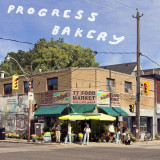
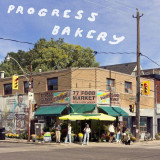
On Progress Bakery, her second album as a solo artist, Eliza knows to leave some questions alone – to let juxtaposition and tension be the proof. It doesn’t have to be hard. The feelings and revelations they provoke rise in the heat. The smell is sweet. Crispy on the outside and soft all the way through. She playfully slip-slides through words and sounds and images, delighting in surprise, skimming ideas like stones cast across clear water, touching down briefly with uncommon grace.
The question provoked between those opening lines resurfaces in the strands between songs – “Do U FM” is fully formed and beautifully layered, while “Novelist Sad Face” is a short, acapella rendering of gentle curiosity. What is holding these ideas together? Some songs demand more, seem to carry a whole load – eventually the skipping stone will halt to sink and resume its idle duty – while others drift in and out of focus, the way thoughts and dreams become interwoven before the mind is sunk into true sleep.
Music and words don’t always have to interact. Where she decides to keep them apart gives a new contour to where and how she puts them together. The kind of thing you’re supposed to take for granted with songs and their singers comes alive in Eliza’s hands – the little miracle of mixing, kneading, stretching, and stopping.
So often on Progress Bakery, Eliza teases out truth and meaning by asking questions. “Do I wanna be crying?” “Do you want me good or do you want me bad?” “Do I need an eye test?” “I’m writing songs in my head while you’re going over stuff with me — is that cruel??” In “Pocky” Eliza ends with a question that feels to me like the actual biography, succinct and revealing:
I don’t wanna be made to see
I just wanna ask “what’s that?”
Grace that ought to be rare, but in its care and precision is offered humbly, with great generosity, and without announcing itself. Eliza’s simple, miraculous music is given further form and shape by a group of collaborators – invaluable guest musicians Jeremy Ray, Evan Cartwright, Steven McPhail, Kenny Boothby, Ed Squires, Carolina Chauffe, Dorothea Paas, Louie Short, and Avalon Tassonyi. Together with Louie Short, who recorded, mixed, and produced the album along with Jeremy Ray and Lukas Cheung, Eliza has cultivated a richness in sound and texture that prods and provokes the ticklish ear. Barely audible guitar tinkering, a brief lo-fi field recording of trumpets, the harmonic clicking of a looped synthesizer, a flourish of reeds, a child’s conversation, each uncanny sound perfectly placed, rippling out under a soft breeze.
Lay in bed alone at night and ask aloud to the stillness,
“What were you doing at the Albuquerque Airport?
What were you doing there??”
And hear your question answered by a dream of swelling, undulating cellos. Try to grasp at the melody and structure. It’s not an answer (if there could be one), but it moves deeper, closer to the weird layer of fleeting moments and disconnected images, barely perceptible at its core. Wait for the dream reel to click into place.
Eliza took me for a ride in Nicole (her beloved Dodge Grand Caravan) and told me she’d been thinking of the album as an embodiment of transition – and I think every transition, known or unknown, carries the weight of new meaning, skittering off the surface tension of life as you know it, creating ripples, sometimes bouncing off and sometimes breaking through. There is a trick you can use to tell if a dough is glutinous enough. You’re supposed to stretch it out as thin as you can without breaking it and hold it up to the light. If you can see through, even if it renders the world murky and uncertain, you should leave it alone. I love this trick. It’s one that Eliza seems to know intuitively: work gently and ask questions and don’t always expect answers, and when you can, take a glimpse at something new, and then leave.
Kneading dough is tricky – you should know how it’s supposed to feel. If you try too hard you could make it worse. It’s a beautiful practice – creation with a gentle touch, to work at something so it can be left alone. “If it’s too drawn out it’s awful. It’s easy to give too much.” Dance in the mirror. Contemplate your veiny hands. Who do they remind you of?
You begin by mixing flour and water. “What happens when your people die? Why’d they move the rock to the other side of Ulster Park?” Eliza Niemi asks two seemingly unrelated questions in a rising melody with guitar accompaniment, like fingers playing spider up to the nape of your neck. Gentle pressure. Strands of gluten form to bind the mix. A new question lingers in the binding. When she admits “but I don’t know how to tell if I’m feeling it or not,” that question surfaces through the text. It is reiterated throughout the album. When I’m working with dough I think the same thing to myself.
On Progress Bakery, her second album as a solo artist, Eliza knows to leave some questions alone – to let juxtaposition and tension be the proof. It doesn’t have to be hard. The feelings and revelations they provoke rise in the heat. The smell is sweet. Crispy on the outside and soft all the way through. She playfully slip-slides through words and sounds and images, delighting in surprise, skimming ideas like stones cast across clear water, touching down briefly with uncommon grace.
The question provoked between those opening lines resurfaces in the strands between songs – “Do U FM” is fully formed and beautifully layered, while “Novelist Sad Face” is a short, acapella rendering of gentle curiosity. What is holding these ideas together? Some songs demand more, seem to carry a whole load – eventually the skipping stone will halt to sink and resume its idle duty – while others drift in and out of focus, the way thoughts and dreams become interwoven before the mind is sunk into true sleep.
Music and words don’t always have to interact. Where she decides to keep them apart gives a new contour to where and how she puts them together. The kind of thing you’re supposed to take for granted with songs and their singers comes alive in Eliza’s hands – the little miracle of mixing, kneading, stretching, and stopping.
So often on Progress Bakery, Eliza teases out truth and meaning by asking questions. “Do I wanna be crying?” “Do you want me good or do you want me bad?” “Do I need an eye test?” “I’m writing songs in my head while you’re going over stuff with me — is that cruel??” In “Pocky” Eliza ends with a question that feels to me like the actual biography, succinct and revealing:
I don’t wanna be made to see
I just wanna ask “what’s that?”
Grace that ought to be rare, but in its care and precision is offered humbly, with great generosity, and without announcing itself. Eliza’s simple, miraculous music is given further form and shape by a group of collaborators – invaluable guest musicians Jeremy Ray, Evan Cartwright, Steven McPhail, Kenny Boothby, Ed Squires, Carolina Chauffe, Dorothea Paas, Louie Short, and Avalon Tassonyi. Together with Louie Short, who recorded, mixed, and produced the album along with Jeremy Ray and Lukas Cheung, Eliza has cultivated a richness in sound and texture that prods and provokes the ticklish ear. Barely audible guitar tinkering, a brief lo-fi field recording of trumpets, the harmonic clicking of a looped synthesizer, a flourish of reeds, a child’s conversation, each uncanny sound perfectly placed, rippling out under a soft breeze.
Lay in bed alone at night and ask aloud to the stillness,
“What were you doing at the Albuquerque Airport?
What were you doing there??”
And hear your question answered by a dream of swelling, undulating cellos. Try to grasp at the melody and structure. It’s not an answer (if there could be one), but it moves deeper, closer to the weird layer of fleeting moments and disconnected images, barely perceptible at its core. Wait for the dream reel to click into place.
Eliza took me for a ride in Nicole (her beloved Dodge Grand Caravan) and told me she’d been thinking of the album as an embodiment of transition – and I think every transition, known or unknown, carries the weight of new meaning, skittering off the surface tension of life as you know it, creating ripples, sometimes bouncing off and sometimes breaking through. There is a trick you can use to tell if a dough is glutinous enough. You’re supposed to stretch it out as thin as you can without breaking it and hold it up to the light. If you can see through, even if it renders the world murky and uncertain, you should leave it alone. I love this trick. It’s one that Eliza seems to know intuitively: work gently and ask questions and don’t always expect answers, and when you can, take a glimpse at something new, and then leave.
Mit "Glory" veröffentlicht Mike Hadreas aka Perfume Genius sein siebtes Studioalbum. Zusammen mit seinem Partner Alan Wyffels und Produzent Blake Mills ist eine Platte entstanden, die nach außen hin strahlt, in seinen makabren Bildern und seinem aufgewühlten Innern aber das Tor in eine Welt von Entfremdung, Sehnsucht und Verlangen aufmacht. Es ist der Konflikt zwischen dem Außen und dem Innen, der Hadreas beschäftigt, der Widerspruch zwischen einem künstlerischen Leben in der Öffentlichkeit und dem Wunsch nach Isolation. In seinen Charakterskizzen betrachtet der US-Künstler mit der Sorgfalt eines Schriftstellers Szenen von Freundschaft, Verlangen und Intimität durch eine queere Prima, während er sich musikalisch geöffnet und in seinem Songwriting-Prozess mehr Raum für Gruppendynamik gelassen hat: "Es ist auf eine Weise kollaborativ, die es besser macht", so Hadreas, "aber auch beängstigender - es fühlt sich verletzlicher an". Dass Glory dennoch ein zutiefst persönliches Album geworden ist, liegt auch daran, dass Hadreas seine eigenen Ängste vor dem Hintergrund der Entwicklung einer den Zeitgeist durchdringenden, allgemeinen Paranoia reflektiert. Mit seinen fein gesponnenen Tracks wirkt "Glory" beizeiten wie eine Kollektion neuer Standards für queere Romantiker und alte Seelen im Tumult der Gegenwart.