The Modulator, AKA Freddy Fresh is back in town !
LTD 100 COPIES !!!
To share this event in the best way i asked him a few questions...
Official Interview now begins :)
Tool : The last Analog Records USA was in 2000... Why did you stop it and why do you wish to realese vinyls again ?
Mr Fresh : Ii actually never stopped I just made alot of other styles of music that I do not think were proper for my Analog and E.M.F. labels (Analog is now run by Mike McLure of SAuto Kinetic we work together on that label and Electric Music Foundation is all my label.. we did some great digital releases on E.M.F. recently with ADSX / Scott Radke/Dave Olson / Poor Boy Rich etc.. and can be found here
for me my last Techno Analog vinyl 12” Release was in 1997 Quiver 12"
But I did release a few Techno/Electro style tracks on my Electric Music Foundation labels as 12” singles
in 2003 I made these
Black Out
Orange Krush
I always continue to make music and have hundreds of unreleased songs that I think some are not worth putting on 12” single as I fear to weird, experimental etc.. I try to isolate myself and make unique music hopefully not sounding like what others are making but try to be my own self
Tool : What are you favourite machines or software to make music these days ?
Mr Fresh : I still use many vintage synths like my Jupiter 8, Arp 2600, Roland System 100M, 303’s etc.. but now I also use some Eurorack Modules E950, Clouds, Metropolis Sequencer etc.. also TR8, Twisted Electrons Acid 8, Teenage Engineering Factory, PO Calculators, Korg Volca Sampler, Electrix Filter Factory, Space Echo (Boss) and MPC 4000 controlling Hardware and I usually record random ideas to a flash recorder and sometimes import into ableton tracks etc.. then use Reaktor or some other soft synths but I always start Analog. I also use Critter and Guitari Looper to record organic sounds to use for percussion.
Tool : What are your forthcoming projects on vinyl in the near future ?
Mr Fresh : I have a remix electro style for New Zealand Independent Cardboard and Computers soon on 12” single
I have COMACID EP coming out of Belgium on 12” single very soon which features some older tracks (Binder, Scared, Slow Death, Spacefunk) mainly re-release of Techno/Acid stuff all analog of course
Then I have two releases with Toolbox Records and possible new stuff with Acid.Paris and hopefully we start a nice relationship with Toolbox for a long term ha ha! My daughters start school next month so I am preparing new Eurorack Modules and getting Syncussion to really hit it and spend some serious time in the studios. I am really inspired to do the more electronic vibes now and feeling the A.C.I.D. alot lately with the newer technology
Search:hard stuff
The Keith Tippett Group's Dedicated to You, But You Weren't Listening is a landmark in cutting edge fusion/avant-jazz. A vital and profoundly adventurous Jazz-Rock record that still swings very hard, it was first released on Vertigo in 1971.
Original copies are now very tricky to score and, as most of you really should know, it’s aged ridiculously well.
A legendary work, this Be With re-issue has been newly remastered from the original Vertigo master tapes, demonstrating just why this deserves to be back in press. The stunning gatefold jacket fully restores Roger and Martyn Dean's original, arresting album artwork to complete this must-have reissue.
Alive and bursting with a joyful energy that has to be heard to be believed, Dedicated to You, But You Weren't Listening flirts with perfection. It's truly magical and forever essential.
A brilliant jazz pianist, composer, arranger and bandleader "who could make the outlands of modern music feel like the most hospitable of places" (The Guardian), Keith Tippett's second album is oft-regarded as his Canterbury album.
Indeed, not only does he draw heavily on Soft Machine members past, present and future but the album title itself archly references a Soft Machine composition. Ray Babbington handles bass alongside Neville Whitehead and the drums are shared between Brian Spring (Nucleus), Robert Wyatt(!) and Phil Howard (who would go on to replace Wyatt in Soft Machine). Gary Boyle (Isotope) is on guitar whilst the great percussionist Tony Uter is enlisted for his conga and cow bell expertise. Elton Dean on Alto Saxello, cornetist Marc Charig and Nick Evans on trombone round out this quite stunning ensemble.
Dedicated to You, But You Weren't Listening presents a collective of superhuman musicians really, *really* enjoying themselves in the studio. The sheer exuberance of the performance is totally infectious. It's wild, energetic, atmospheric and, bluntly, bordering on chaotic at points. In a word, it's beautiful.
Robert Wyatt's drumming opens the record with a bang on the majestic Be With favourite "This Is What Happens". Some have described his work here as "easily the most inspired of his career on record." It's an ultra-funky conga-driven groove that truly sparks via the duelling interplay between the three horn players. In the background, Keith's insistent piano, in conversation with those unignorable drums, is the anchor that keeps this piece rollicking away. Breathtaking.
The epic, energetic "Thoughts to Geoff" is a 10-minute jammer that tends towards the dissonant and improvisational but becomes more fluid, laconic and melodic as it unravels. The interplay between soloists and ensembles is particularly dazzling here - blazing solos by Evans, Charig and Tippett himself in a flourish of angular arpeggios interspersed with chordal elocution. Phew.
Up next, the no less-urgent Mingus-referencing "Green and Orange Night Park" is a soaring example of ambitious jazz mixed with rock aggression, with Dean strutting his stuff by launching into a scorching solo. An absolutely jaw-dropping piece. Arguably the highlight of this album of huge highlights!
Though much of the album tends to fall on the raucous side ("Gridal Suite" approaches free-jazz at its most chaotic and, dare we say it, "difficult"), there are a few more sedate, at times spacey numbers, such as the deeply impressionistic "Five After Dawn". The rhythmically complex "Black Horse" is the most accessible track here, a sort of swinging Big Band number with tight grooves, soaring horn & reed melodies, a sizzling Boyle guitar solo and tasty electric piano riffs from Tippett. An hypnotic climax to a staggering record.
This Be With edition of Dedicated to You, But You Weren't Listening has been re-mastered from the original Vertigo master tapes, Simon Francis’ mastering working together with Cicely Balston's cut at Abbey Road Studios to weave their usual magic with these wonderful recordings. The stunning gatefold sleeve has been restored in all its brainchild glory so you know you're dealing with the definitive reissue, here. Now, are you listening?
- A. Mighty Diamonds - The Roots Is There (Raw Cut)
- B. Mighty Diamonds & Curtis Lynch - Raw Version 7
After their epic run with Channel One beginning in the mid 1970's, the Mighty Diamonds moved to producer Gussie Clarke for a string of albums starting in 1979 and running thru the 1980s. Among the many many great tunes from this run, the title track of their 1982 album "The Roots Is There" is simply one of the Diamond's best ever, and probably the most lyrically militant tune they ever made. This tune was never released as a single at the time, though new mixes were released as a single in 2017. But prior to the release of the album back in the day, this song was played on dubplate in a raw mix without the horns and added percussion that made it onto the final album mix. This raw vocal cut, followed by a raw instrumental version, changes the whole tone of the tune and brings it into another level of militancy right up there with the hardest stuff you can name, even in an era filled with so many extra tough stepping classics. Rather than remaster from an old dubplate, for this 45 we had producer Gussie Clarke and Music Works' close associate engineer Curtis Lynch go back to the original tapes, and with an original dubplate as reference, perfectly recreate the original raw cut, now released in pristine tape quality. Again we present this release on Music Works' original early 1980s dubplate label design, just like the original slate would have been adorned with. If you only know the sweet harmony side of the Diamonds, give this one a try to see their other tuff side, and listen to the lyrics, as relevant to the struggles of right now as they were in 1982.
- Skylarking
- Reno
- Keiji Dreams
- Graut
Cassette[14,71 €]
The successor to 2022"s Bajascillators glides easily into frame, but once there, Inland See is deceptively immediate. It"s so dialed in, you hardly even feel how present the music (and you the listener) is. Time wharping"s always been a resident magic for Bitchin Bajas, as is flow, which is translucent like water here. That"s the Inland See vibe, unique unto itself. In turn, each of the four songs here are entirely within themselves, all together forming an essential whole. The coincision"ll cause yer breath to shorten, like an exciting and non-fatal kind of exercise! New freedoms, yet more molecular structure in each one. With every successive Bitchin Bajas release, we see that the real key for them is a sense of discovery, that tingle that comes when you feel something breakíing through. The sky opening up. The stuff that fills this Inland See holds you up powerfully, as if you"re floating, saltwater or helium-wise - effervescent, effortless, elemental.
- All Together Now
- Strugglinh
- Straight Out Of Detox
- Note To Self
- Disbelief
- See Me Now
- Human Is Human
- I4: Ni
- Las Ventanas
- Dead Friends
- Johnny Aplleseed
Nach dem rasanten The Ride (2020) meldet sich die Punk-Truppe aus Los Angeles mit Lighten Up zurück, produziert von NOFXs Fat Mike. Eine perfekte Band für Fans von melodischem SoCal-Punk mit feministischem Einschlag. Die vierköpfige Band überzeugt mit unendlicher Power und Energie auf der Bühne, inklusive zweier Hauptsängerinnen. Und musikalisch stehen sie nicht still, sondern erweitern sich jedes Mal. "Life is hard, but it's still beautiful. Stop picking the hard shit to look at_look at the beautiful stuff too. Lighten up." Lighten Up (Fat Wreck Chords), das vierte Album der SoCal-Punkband Bad Cop Bad Cop, zeichnet ein eindrucksvolles Porträt der hart erkämpften Siege und Verluste des Lebens. Aufgenommen wurde das Album im Compound in Long Beach, der Heimat des erfahrenen Produzenten Antoine Arvizu (Sublime, Ryan Bingham). Die Band liebte es schon, die Singles ,Shattered" und ,Safe and Legal" dort 2023 mit Arvizu und Migs (Sublime, Slightly Stoopid, Long Beach Dub Allstars) aufzunehmen. Bad Cop / Bad Cop strecken ihren charakteristischen, melodischen Punk in unerwartete Gefilde, wie das jazzige ,Las Ventanas", das Dub-infizierte ,Note to Self" oder ,Johnny Appleseed", eine Neuinterpretation des Joe Strummer and the Mescaleros-Klassikers. Nach dem Einspielen der Instrumente verbrachte die Band zehn intensive 12-Stunden-Tage damit, die Vocals mit Mitstreiter John E. Carey Jr. (Old Man Markley, NOFX, Get Dead) aufzunehmen. "Der Gesang war der wichtigste Teil für uns. Wir haben wirklich alles ausprobiert", sagt Dee und fügt hinzu, dass Gallarza zum ersten Mal die dritte Harmonie gesungen hat. Lighten Up profitiert auch von Windsor, einem erfahrenen Gitarristen, der nicht nur schreddert (siehe z.B. das Ende von ,I4NI"), sondern dessen musiktheoretisches Wissen sich als unschätzbar erwiesen hat. ,Alex' Gitarrenspiel ist einfach fantastisch und hat unser Songwriting wirklich aufgewertet", sagt Dee. Alles an Lighten Up fühlt sich erhaben und echt an. "Das war das erste Mal, dass wir uns einen Dreck darum scherten, was andere machen oder von uns erwarten. Lighten Up war/ist für uns", sagt Dee. ,Es hat uns total viel Spaß gemacht, es zu machen und wir lieben es so sehr." CD, schwarze LP und limitiertes, hellblaues Vinyl erhältlich!
Le Le - the electronic cult trio of Piet Parra, Rimer London, and Pepijn Lanen (Faberyayo) - brings together their finest work on a double LP for the very first time. Great Stuff is a carefully curated selection of their most beloved tracks, newly remastered for this release. From dance floor classics like Breakfast to eccentric pop gems like Skinny Jeans, Great Stuff showcases why Le Le has held a unique place in the Dutch music and art scene since their debut. Now available for the first time on double LP - a must-have for fans and collectors alike.
- A1: Union Jack – Lady Masham
- A2: Light Fire – Heavy Chain
- A3: Roland And His Bluesworkshop – Your Trip Is Not Like Mine
- A4: Injun Joe – Someone
- A5: The Midgets – My Beer
- A6: Georgia Brown - Pollution
- A7: The Invocation - Third Letter From The Underworld
- B1: The Carriage Company – In Your Room
- B2: John Woolley & Just Born – You’re Lying
- B3: Orange – The Sun
- B4: The Sonny Boys/Splendid – Shadow
- B5: Paul’s Collection– What Have I Done?
- B6: Jess & James – The Question
Starman Records, the Belgian label also specialized in re-releases of Belgian rock from the 60s, 70s, and 80s, has so far released five volumes in the highly anticipated and widely acclaimed Belgian Vaults Series, praised by both press and fans.
These unique albums focus entirely on the sixties and early seventies, compiling many very hard-to-find tracks—mainly originally released as singles on small, long-forgotten labels. Pop, beat, rock ’n’ roll, psych... gems worth rediscovering. The Belgian Vaults are not just collector’s items; the albums feature restored and remastered sound quality and are carefully curated to appeal to all sixties rock enthusiasts.
Record Collector (4-star review): “Devotees of late 60s/early 70s fuzz will be entranced.” — “All high vaultage stuff.”
Shindig: “True obscurities, long overdue their moment in the sun.”
OOR: “A marvelous piece of rock history.”
De Standaard (4-star review): “An amazing piece of Belgian heritage.”
Cobra.be: “The Belgian equivalent of ‘Nuggets’!
Subjekt mints a new limited edition series with a first vinyl pressing of some Biz (Transmat, Acquit Records) tunes that have previously been available only digitally via his Bandcamp. The Aussie is a real pioneer of techno in his homeland and has also made a mark around Europe with outings on top labels like Further Electronix and Tronic. He always delivers deep, hard-hitting cuts that draw on experiences picked up in the scene since the late '80s. This one opens with 'Tears,' which is a deep and atmospheric sound with fuzzy chords and melancholic moods over a mid-tempo rhythm. 'Worlds Collide' brings some Detroit mysticism, then 'Dark Mofo' taps into electro for a deft, kinetic rhythm and icy melodies that come back from the future. 'Fallen Apache' is a deep and dubby roller with an introspective edge, and 'Teach Em A Lesson' shuts down with an astral odyssey and more fluid synth work over analogue drums. Tasteful stuff from this vital veteran.
- 1: Revealed In Reflection
- 2: I Know So Little (So Well)
- 3: Rejuvenate
- 4: Alone On My Birthday
- 5: Hated To Love
- 6: Refusal
- 7: Whole Wide World
- 1: Helpless
- 2: Beyond Planet Earth
- 3: Time’s Ticking Away
- 4: Man Or Beast
- 5: In Praise Of Others
- 6: Eleventh Day Of The Moon
Shelter is best known for its founder and frontman, Ray Cappo, who is considered as one of the most prominent representatives of the ‘krishnacore’ scene, which mixes the elements of hardcore
with a strong spiritual message. Formed in the early 90’s, Shelter was Cappo’s second band - previously he was the frontman of Youth of Today.
Originally released in 1997, their second album Beyond Planet Earth finds Shelter moving more in a “Pop-core” direction, with songs averaging 2-3 minutes. Some pretty catchy stuff can be found on this album.
Listen to tracks: “Alone on My Birthday”, “Refusal” and “Time is Ticking Away”.
If you appreciate hardcore’s energy, but feel that the music and lyrics are too one-dimensional for your taste, chances are you’ll find those missing elements in Shelter’s music.
Beyond Planet Earth is available as a limited edition of 1000 individually numbered copies on purple coloured vinyl and contains an insert.
- A1: Design - Premonition
- A2: Vision - Lucifer’s Friend
- A3: Richard Bone - Alien Girl
- A4: John Howard - I Tune Into You
- A5: Ian North - We’re Not Lonely
- A6: Selwin Image - The Unknown
- B1: Harry Kakoulli - I’m On A Rocket
- B2: Rich Wilde - The Lady Wants To Be Alone
- B3: Billy London - Woman
- B4: Alan Burnham - Science Fiction
- B5: The Microbes - Computer
- B6: The Goo-Q - I’m A Computer
- C1: Gerry & The Holograms - Gerry & The Holograms
- C2: The Warlord - The Ultimate Warlord
- C3: Die Marinas - Fred From Jupiter
- C4: Dee Jay Bert & Eagle - I Am Your Master
- C5: Peta Lily & Michael Process - I Am A Time Bomb
- C6: Sole Sister - It’s Not What You Are But How
- D1: Alasdair Riddell - Do You Read Me?
- D2: Karel Fialka - Armband (The Mystery Song)
- D3: John Springate - My Life
- D4: Idncandescent Luminaire - Famous Names
- D5: Disco Volante - No Motion
- D6: Dream Unit - A Drop In The Ocean
Compiled by Philip King
“And then came the rise of synth pop : blokes with dodgy haircuts hunched over keyboard-operated
machines stuffed with wires and do-it-yourself tone oscillators making sounds like a brood of geese
passing gas in a wind tunnel. Whoopee! This is the way the ‘70s ended : not with a blood-curdling bang
bang but with a cheap, synthesized, emasculating whimper.”
NICK KENT, NME.
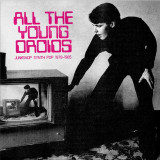
All The Young Droids: Junkshop Synth Pop 1978-1985 is a new compilation that charts the
underbelly of the epoch-defining sound of the synthesiser in 80s popular music. Compiled by Philip
King (previously seen compiling All The Young Droogs, Glitterbest and Boobs - The Junkshop
Glam Discotheque), the music here connects the dots between DIY synth enthusiasts grappling with
new, cheap synthesisers at the tail-end of punk and wannabe, jobbing songwriters enthral to the new
music pioneered by Gary Numan, Depeche Mode and Daniel Miller’s Mute Records. Featuring rare
tracks of auto-didactic progressive pop music, proto-techno punk, shoot-for-the-stars-land-in-the-gutter
chart flops and heralded, underground synth classics, School Daze paints a picture of beautiful failure.
Complete with extensive sleeve notes written by King and never before seen imagery, all 24 tracks
were remastered by RPM in-house engineer Simon Murphy, many from vinyl copies due to lost master
tapes. The story told on All The Young Droids is one of the dawning opportunity presented by both the
emergence to the market of cheaper analog synthesisers and the distribution networks plus indie labels
that exploded with the advent of punk music in 1976. While the music that sprouted out all over the
globe in the wake of these factors was decried as fake, plastic, a refutation of punk’s guitar-led
revolution, it’s telling that much of the music on All The Young Droids.. was created in bedrooms,
ramshackle studios and home-made set ups with often borrowed equipment. In the era of record labels
jumping to capitalise on the success of The Sex Pistols, The Clash (both on major labels, of course)
these artists struggled to stand out from a new gold-rush with next to no budget or PR team. With radio
and labels desperate for the new Yazoo, what resulted was a testament to necessity being the mother
of invention.
At the time, the synthesiser was the music of the future, a shiny new machine that could paint like an
orchestra with a single finger and a 4-track. In the hands of Manchester avant-pranksters Gerry & The
Holograms it’s a pulsing, sardonic weapon.. the only instrument on the Messthetics classic lampooning
of New Wave fashion. In Hamburg, a 16 year old Andreas Dorau used it to write and record (with his
female classmates on vocals) a global smash in Fred Vom Jupiter (later licensed to Mute Records).
The hard-to-find English version (Fred From Jupiter, natch) is included here. Many artists with alreadystoried careers caught the bug and recorded synthesiser-fuelled peons to space, computers, the future
and, of course, love-interests. Harry Kakoulli, late of Squeeze, recorded a solo album in 1979 that
included the incredible power-synth-pop smash-that-never-smashed I’m On A Rocket. Similarly, Ian
North of Neo and American Power Pop stalwarts Milk ’n’ Cookies bought a Korg MS20 and used a
tape machine to record We’re Not Lonely, an absolute lost-classic of minimal synth pop. We’re Not
Lonely also features on the Junkshop Synth Pop sampler 7” twinned with John Howard unreleased
track You Will See, released April 12th 2025.
There are plenty of compilation debuts in evidence. Sole Sister were a mysterious trio who were
featured on the Scaling Triangles compilation of female-fronted, queer-adjacent post-punk /
underground music that also featured The Petticoats. Selwin Image were from San Francisco and
featured members of the recently defunct power pop/punk group The Pushups. Their stupidly catchy
The Unknown fizzes with New Wave energy - think XTC to Sparks but remains unreleased until now.
Dream Unit’s A Drop In The Ocean is an early synth wave cut, positively teaming with Joy Division
instrumentation, previously only released on a long-forgotten and super rare, self-released EP.
Incandescent Luminaire’s Famous Names belies an archetypal struggle of a small-town trying to
make it in a cruel industry but is a thrilling New Romantic-Synth Wave cross over with a OMD
gloominess that’s a joy to hear. Feminist Minimal Wave track I Am A Time Bomb by performance artist
Peta Lilly and Michael Chance is a revelation destined for new found cult status. It was released on 7”
and lost until now.
The flipside to the subterranean, never-made-it synth pop mentioned above are the ambitious, even
fruity attempts at success that have a perennial elegance to their confidence. New Jersey-ite Billy
London (real name Ed Barth) tried to cash in on the synth boom with Woman, released by a major
label, a lurching new wave track built on the Louie Louie rhythm and a wonderfully camp Lou Reedstyle sleazy vocal before exploding in the synthesised chorus. The song bombed but with a chorus like
this, you have to wonder why? Ex-Glitter Band member John Springate’s My Life is truly epic, with
doomed chord progressions and massive sounding drums turning into at least 3 different songs in the
course of the track. Before you wonder what’s going on the song resolves with a glorious return to the
main refrain.
The dry-ice-dressed dance floor is well catered for too. Design’s Premonition and Vision’s Lucifer’s
Friend are stone-cold minimal synth bangers, well loved but given a new lease of life here. The
Warlord’s The Ultimate Warlord was released in 1978, a homespun proto Hi NRG banger that was
later re-recorded by The Immortals in Canada who had a club hit with it. One-man- band Disco
Volante’s No Motion was re-issued by Synth wave label Medical in 2012 but makes its first vinyl
compilation appearance here. Close your eyes and you can imagine what Lawrence of Felt would have
sounded like with some cheap Korgs a little earlier in his career. Gibraltar-based trio The Microbes
imagined a computer programming people to dance - how prescient - and ended up with a propulsive,
robo-funk track with splendid rubbery bass playing over a tectonic drum machine. Previously picked up
by Belgian label Stroom TV, Dee Jay Bert & Eagle’s heavily Euro-accented I Am Your Master
demands the listener to “come to paradise!” In a frankly terrifying manner.
All The Young Droids is the first compilation to peel away from the narrative that dour, Minimal Synth
and Cold Wave were the only musical children of the first rush of synth pop. Philip King and School
Daze Records describe a much more complicated world: along with the austere, Brutalist children of
Daniel Miller (who produced Alan Burnham’s Bowie-Low-influenced Science Fiction here) was a
plethora of desperate cash-ins, accidental mainstream hits, ambitious pop dramas and major label
punts that went nowhere. Crucially, the compilation blurs the line between junk and treasure. What if the
two things are interchangeable. What if it’s all science fiction?
- A1: Design - Premonition
- A2: Vision - Lucifer’s Friend
- A3: Richard Bone - Alien Girl
- A4: John Howard - I Tune Into You
- A5: Ian North - We’re Not Lonely
- A6: Selwin | Image - The Unknown
- B1: Harry Kakoulli - I’m On A Rocket
- B2: Rich Wilde - The Lady Wants To Be Alone
- B3: Billy London - Woman
- B4: Alan Burnham - Science Fiction
- B5: The Microbes - Computer
- B6: The Goo-Q - I’m A Computer
- C1: Gerry & The Holograms - Gerry & The Holograms
- C2: The Warlord - The Ultimate Warlord
- C3: Die Marinas - Fred From Jupiter
- C4: Dee Jay Bert & Eagle - I Am Your Master
- C5: Peta Lily & Michael Process - I Am A Time Bomb
- C6: Sole Sister - It’s Not What You Are But How
- D1: Alasdair Riddell - Do You Read Me?
- D2: Karel Fialka - Armband (The Mystery Song)
- D3: John Springate - My Life
- D4: Incandescent Luminaire - Famous Names
- D5: Disco Volante - No Motion
- D6: Dream Unit - A Drop In The Ocean
Compiled by Philip King
“And then came the rise of synth pop : blokes with dodgy haircuts hunched over keyboard-operated
machines stuffed with wires and do-it-yourself tone oscillators making sounds like a brood of geese
passing gas in a wind tunnel. Whoopee! This is the way the ‘70s ended : not with a blood-curdling bang
bang but with a cheap, synthesized, emasculating whimper.”
NICK KENT, NME.
All The Young Droids: Junkshop Synth Pop 1978-1985 is a new compilation that charts the
underbelly of the epoch-defining sound of the synthesiser in 80s popular music. Compiled by Philip
King (previously seen compiling All The Young Droogs, Glitterbest and Boobs - The Junkshop
Glam Discotheque), the music here connects the dots between DIY synth enthusiasts grappling with
new, cheap synthesisers at the tail-end of punk and wannabe, jobbing songwriters enthral to the new
music pioneered by Gary Numan, Depeche Mode and Daniel Miller’s Mute Records. Featuring rare
tracks of auto-didactic progressive pop music, proto-techno punk, shoot-for-the-stars-land-in-the-gutter
chart flops and heralded, underground synth classics, School Daze paints a picture of beautiful failure.
Complete with extensive sleeve notes written by King and never before seen imagery, all 24 tracks
were remastered by RPM in-house engineer Simon Murphy, many from vinyl copies due to lost master
tapes. The story told on All The Young Droids is one of the dawning opportunity presented by both the
emergence to the market of cheaper analog synthesisers and the distribution networks plus indie labels
that exploded with the advent of punk music in 1976. While the music that sprouted out all over the
globe in the wake of these factors was decried as fake, plastic, a refutation of punk’s guitar-led
revolution, it’s telling that much of the music on All The Young Droids.. was created in bedrooms,
ramshackle studios and home-made set ups with often borrowed equipment. In the era of record labels
jumping to capitalise on the success of The Sex Pistols, The Clash (both on major labels, of course)
these artists struggled to stand out from a new gold-rush with next to no budget or PR team. With radio
and labels desperate for the new Yazoo, what resulted was a testament to necessity being the mother
of invention.
At the time, the synthesiser was the music of the future, a shiny new machine that could paint like an
orchestra with a single finger and a 4-track. In the hands of Manchester avant-pranksters Gerry & The
Holograms it’s a pulsing, sardonic weapon.. the only instrument on the Messthetics classic lampooning
of New Wave fashion. In Hamburg, a 16 year old Andreas Dorau used it to write and record (with his
female classmates on vocals) a global smash in Fred Vom Jupiter (later licensed to Mute Records).
The hard-to-find English version (Fred From Jupiter, natch) is included here. Many artists with alreadystoried careers caught the bug and recorded synthesiser-fuelled peons to space, computers, the future
and, of course, love-interests. Harry Kakoulli, late of Squeeze, recorded a solo album in 1979 that
included the incredible power-synth-pop smash-that-never-smashed I’m On A Rocket. Similarly, Ian
North of Neo and American Power Pop stalwarts Milk ’n’ Cookies bought a Korg MS20 and used a
tape machine to record We’re Not Lonely, an absolute lost-classic of minimal synth pop. We’re Not
Lonely also features on the Junkshop Synth Pop sampler 7” twinned with John Howard unreleased
track You Will See, released April 12th 2025.
There are plenty of compilation debuts in evidence. Sole Sister were a mysterious trio who were
featured on the Scaling Triangles compilation of female-fronted, queer-adjacent post-punk /
underground music that also featured The Petticoats. Selwin Image were from San Francisco and
featured members of the recently defunct power pop/punk group The Pushups. Their stupidly catchy
The Unknown fizzes with New Wave energy - think XTC to Sparks but remains unreleased until now.
Dream Unit’s A Drop In The Ocean is an early synth wave cut, positively teaming with Joy Division
instrumentation, previously only released on a long-forgotten and super rare, self-released EP.
Incandescent Luminaire’s Famous Names belies an archetypal struggle of a small-town trying to
make it in a cruel industry but is a thrilling New Romantic-Synth Wave cross over with a OMD
gloominess that’s a joy to hear. Feminist Minimal Wave track I Am A Time Bomb by performance artist
Peta Lilly and Michael Chance is a revelation destined for new found cult status. It was released on 7”
and lost until now.
The flipside to the subterranean, never-made-it synth pop mentioned above are the ambitious, even
fruity attempts at success that have a perennial elegance to their confidence. New Jersey-ite Billy
London (real name Ed Barth) tried to cash in on the synth boom with Woman, released by a major
label, a lurching new wave track built on the Louie Louie rhythm and a wonderfully camp Lou Reedstyle sleazy vocal before exploding in the synthesised chorus. The song bombed but with a chorus like
this, you have to wonder why? Ex-Glitter Band member John Springate’s My Life is truly epic, with
doomed chord progressions and massive sounding drums turning into at least 3 different songs in the
course of the track. Before you wonder what’s going on the song resolves with a glorious return to the
main refrain.
The dry-ice-dressed dance floor is well catered for too. Design’s Premonition and Vision’s Lucifer’s
Friend are stone-cold minimal synth bangers, well loved but given a new lease of life here. The
Warlord’s The Ultimate Warlord was released in 1978, a homespun proto Hi NRG banger that was
later re-recorded by The Immortals in Canada who had a club hit with it. One-man- band Disco
Volante’s No Motion was re-issued by Synth wave label Medical in 2012 but makes its first vinyl
compilation appearance here. Close your eyes and you can imagine what Lawrence of Felt would have
sounded like with some cheap Korgs a little earlier in his career. Gibraltar-based trio The Microbes
imagined a computer programming people to dance - how prescient - and ended up with a propulsive,
robo-funk track with splendid rubbery bass playing over a tectonic drum machine. Previously picked up
by Belgian label Stroom TV, Dee Jay Bert & Eagle’s heavily Euro-accented I Am Your Master
demands the listener to “come to paradise!” In a frankly terrifying manner.
All The Young Droids is the first compilation to peel away from the narrative that dour, Minimal Synth
and Cold Wave were the only musical children of the first rush of synth pop. Philip King and School
Daze Records describe a much more complicated world: along with the austere, Brutalist children of
Daniel Miller (who produced Alan Burnham’s Bowie-Low-influenced Science Fiction here) was a
plethora of desperate cash-ins, accidental mainstream hits, ambitious pop dramas and major label
punts that went nowhere. Crucially, the compilation blurs the line between junk and treasure. What if the
two things are interchangeable. What if it’s all science fiction?
- Ghost Of Myself
- Comanche
- Tiger Lilies
- Falling Down
- Nursery Rhyme
- Let It Lie
- Lost In My Idlin
- My Kin
- Rablin Woman
There's no real way around it: Kelsey Waldon's new album, Every Ghost, is heavy stuff. Across its nine songs, she confronts addiction, grief, generational trauma, and even herself - and comes through it stronger and at peace. "There's a lot of hard-earned healing on this record," Waldon says. As she sings in the album's title track and first song, 'Ghost of Myself,' she's put in the work not only to better herself and leave behind bad habits, but also to learn to love her past selves. Compassion is a throughline on Every Ghost, whether it's for Waldon herself, for the person in the throes of addiction in 'Falling Down,' or for a suffering world in 'Nursery Rhyme.' The people in Waldon's songs aren't irredeemable - they're struggling.
- A1: Raz Fresco– Who Mapped The Earth
- A2: Romderful– Maybe With You
- A3: Dowker– Call Me
- A4: Speak– Sakuraba
- A5: Cookin' Soul, Ovrkast– Flying
- A6: Monster Rally, Demahjiae– Clooney
- A7: Mr Scruff– Flute Boom
- A8: 645Ar– Shooting Star
- B1: Peanut Butter Wolf, Waragainstgod?, Mikah 9– Organic A I
- B2: Chuck Strangers, Graymatter– Marigold
- B3: La Jay, Pigeon John– Thank You
- B4: Dj Harrison– Applechopchutney
- B5: Monster Rally, Homeboy Sandman– I Love You
- B6: Low Leaf– Faerie Function
- B7: Pouya, Boobie Lootaveli– Bitch, Park Backwards
- C1: Eddie Chacon, John Carroll Kirby– Comes And Goes (Live At Isc)
- C2: Devin Morrison– Givin Up
- C3: Suzi Analogue– King
- C4: Lee Perry– Morning Star
- C5: Dayytona Fox– Woooaaah
- C6: Bombay , Rvyo– Kflex
- C7: Crimeapple, Don Leisure– Vic Damone
- C8: Eyebriss– Don't Clap When I Win
- D1: Ncy Milky Band, Quelle Chris– High Speed Clouds
- D4: Swum, Big Lordy– Shinto
- D5: Xavier Wulf– 2 Can Wulf
- D6: Tommy Wright Iii– Chrome Thang
- D7: Tjil– Metta
- D2: Mr Mumblz, Daniel Son – Snake Eyes
- D3: Girl Talk, Freeway, Waka Flocka Flame– Tolerated
Vinyl[22,90 €]
**Gangster Music Vol.3: The Most Gangster Music Trilogy of All Time Comes to a Triumphant Close**
Imagine curating a dream lineup of MCs and producers from every corner of the rap world—sounds impossible, right? Not for artist and illustrator Gangster Doodles, who has been bringing this vision to life for the past decade. Now, with “Gangster Music Vol.3”, the trilogy reaches its grand finale, and it’s bigger, bolder, and more unpredictable than ever before.
Gangster Doodles himself puts it best:
"It’s hard to believe that I’ve been actively working on this Gangster Music series for the past 10 years. The most gangster music trilogy of ALL TIME is almost complete!! And in my humble opinion Vol.3 is the most exciting out of the 3, both from a music standpoint (special shout-out to all my music heroes on Vol.3) and artistically speaking this is the most fun I’ve had in years”
Since launching Volume 1 in 2019 and following up with the second volume in 2022, Gangster Doodles has been shaping the Gangster Music series into a one-of-a-kind sonic universe—an unfiltered mix of underground titans, unsung legends, and rising stars. Volume 3 is the biggest installment yet, boasting a staggering 30 tracks that traverse the entire spectrum of rap and beat culture.
This time around, the lineup is as eclectic as ever. From legendary pioneers like Lee Perry and Tommy Wright III, to veteran producers such as Mr. Scruff and Peanut Butter Wolf, the album pays homage to hip-hop’s roots while pushing forward into fresh territory. The roster also includes established up-and-comers like Devin Morrison, Low Leaf, DJ Harrison, Quelle Chris, Homeboy Sandman, and Suzi Analogue, ensuring a mix of classic flavors and new-school innovation. The bubbling underground is well represented too, with artists like Raz Fresco, Atlanta’s 645AR, and Pro Era’s Chuck Strangers bringing their own distinct heat.
From pioneering SoundCloud rappers like Pouya to genre-bending composer John Carroll Kirby, from Birmingham’s Romderful to Chile’s RVYO, the album encapsulates a truly global soundscape, proving once again that Gangster Doodles’ ear for cutting-edge talent is second to none.
As always, the cover art is a vital piece of the puzzle. This time, Bootleg Garfield & Friends take center stage, bringing the same playful irreverence that has defined Gangster Doodles’ artwork for years. Fans are encouraged to engage, remix, and make the cover their own, staying true to the spirit of interactive creativity that has always fueled the series.
After years of meticulous curation, countless DMs, emails, and behind-the-scenes wrangling, Gangster Music Vol.3 is here to complete the trilogy in legendary fashion. Expect boundary-pushing beats, next-level lyricism, and a lineup that celebrates hip-hop in all its many forms.
“Thanks to everyone who’s actively supported and continues to tap-in. Believe & trust when I say I've got more dope stuff cookin’. STAY TUNED!! GANGSTER DOODLES 4EVER. 1LUV."
Gangster Music Vol.3 is out April 7th on All City. Stay tuned, stay tapped in, and get ready for the most gangster music experience yet.
*180g virgin leaded vinyl in a deluxe textured heavy gatefold cover, with paste-on artwork and special anti-static innersleeve.* Note: The pressing is absolute on point!!!!
Vincent Gallo and Harper Simon with a beautifully recorded suite of songs and instrumentals.
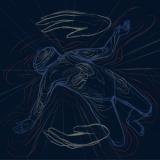
" More than two decades since he blew minds with a suite of brilliant releases on Warp, Vincent Gallo returns to the world of music at long last in Butterfly, his duo with Harper Simon, with the project’s full-length debut, “The Music of Butterfly”. A gesture of gentle, DIY / bedroom left-field pop, falling within the rough territory for which Gallo became renowned during the late '90s and early 2000s, while interweaving fascinating flirtations with minimalism and experimentalism, it’s a truly captivating piece of work that’s hard to get off the turntable after the first needle drop.
In the arts, the lines between genius and madness, as well as fact and fiction, often blur. Such, it seems, has always been the life of the artist, filmmaker, actor, musician, and composer Vincent Gallo. A cult figure and a member of various creative undergrounds for the better part of half a century, Gallo has courted controversy, ruffled feathers, and made some of the most singular statements to flirt at the outer edges of popular culture that can be called to mind. Arguably most well known for his work in film, during the late '90s and early 2000s - notably with his soundtrack for “Buffalo 66” and a suite of releases on Warp - Gallo became something of a sensation in the world of independent music for a visionary, incredibly unique and sensitive approach to sonority. For a time, the world was abuzz, waiting on bated breath for more, and yet time passed. Bar a few fragments, appearing here and there, almost nothing has been heard from Gallo, within the world of music, for more than 20 years. That is, until now, with the release of “The Music of Butterfly”, the debut full-length of Butterfly, his duo with Harper Simon: beautifully produced and issued by Family Friend Records - Gallo’s own label, founded in 1981 - in a deluxe edition that simply left us speechless: 180g vinyl in textured heavy gatefold cover with paste-on artwork and thick anti-static innersleeve. More or less picking up from where we last encountered him, spinning captivating melodies and gentle song-craft within the quieter temperaments of DIY, left-field pop, once again, and at long last, Vincent Gallo, encountered in an incredibly successful collaboration with Harper Simon as Butterfly, reminds us that he’s as much a force within the realm of music as he is within film. Not to be missed. This one isn’t going to sit around for long.
Vincent Gallo’s biography reads like the stuff of blaring beauty: a figure of moderate fame in his own right, who has remained at the centre of cultural ferment as the decades have rolled by. Born in 1961, in Buffalo, New York, as the story goes he ran away to New York City at the age of 16 and fell into the brewing counterculture of the Downtown scene, William Burroughs and John Giorno, in addition to the cream of his own peers, and began making paintings, music, and experimenting with film. In addition to being a member of the now legendary band Gray, with the artist, Jean-Michel Basquiat, and the filmmaker, Michael Holman, Gallo appeared in the cult 1981 film “Downtown 81”, before slowly beginning a career as an actor and catching the eye of Claire Denis, who brought his talents into the broader cultural gaze. Catapulted into the public by his own subsequent career as a filmmaker with “Buffalo '66” (1998) and “The Brown Bunny” (2003), both of which were marked by controversy and praise, Gallo further captivated the public with a partially brilliant, if not relatively brief, flurry of activity in the realms of music.
While Gallo had already been making music for roughly two decades at the time of his release of the “Brown Bunny” soundtrack, and the four release issued by Warp in rapid succession between 2001 and 2002 - “When”, “Honey Bunny”, “So Sad”, and “Recordings of Music for Film” - the almost fanatical fandom reached a fever pitch at the moment, allowing him, for some, to be regarded as much, if not more, as a musical artist than an actor and filmmaker. Anyway you cut it, in a few short years, he proved himself to be a polymath of rare talent. Somewhere along the way, while both were working as members of Yoko Ono's Plastic One Band, Gallo met the New York based, highly regarded singer-songwriter, guitarist, and producer, Harper Simon, who also happens to be the son of Paul Simon. The pair fell into an incredibly fruitful duo collaboration, which came to be called Butterfly, and “The Music of Butterfly” being their debut full-length release.
Written, performed, and recorded by Vincent Gallo and Harper Simon in New York City between the winter of 2018 and the spring of 2019, the ten tracks comprising “The Music of Butterfly” are cumulatively a gesture of gentle, DIY / bedroom left-field pop, falling within the rough territory for which Gallo became renowned during the late '90s and early 2000s, making one feel like barely a moment had passed since we’d encountered his graceful hand at song-craft. Stripped back and raw, while retaining a sense of warmth and intimacy, across the length of “The Music of Butterfly” the duo of Gallo and Simon weave something completely captivating at the juncture of minimalism, experimentalism, and pop: meandering moments of texture and tone, slowly forming toward flirtations of melody that flower into song and back again. Somehow playful and light, while also remarkably emotive and personal, it’s almost as though each of these tracks crystallised out the air, unlabored and exactly as they should be without a note or beat more.
An engrossing immersion into both Gallo and Simon’s remarkably accomplished minds, having followed the path toward one another after radically different experiences and careers, “The Music of Butterfly” is one of those records that’ll be hard to get off the turntable after that first needle drop, and rarely leave the listening pile for some time to come. Issued by Family Friend Records in a beautiful deluxe edition that is unmatched even among the most stunning recent productions we can call to mind - 180g vinyl in textured heavy gatefold cover with paste-on artwork and thick anti-static innersleeve - it’s lovely to have Gallo back in the musical mix after so many years. "
- A1: Do U Fm
- A2: Novelist Sad Face
- A3: Green Box
- A4: Dusty
- A5: The Linda Song
- A6: Dm Bf
- B1: I Tried
- B2: Melodies Like Mark
- B3: Wildcat
- B4: How U Remind Me
- B5: Pocky
- B6: Bon Tempiii
- B7: Pt Basement
- B8: Alberqurque Ii
- B9: Mary's
Yellow Coloured Vinyl[29,37 €]
Kneading dough is tricky – you should know how it’s supposed to feel. If you try too hard you could make it worse. It’s a beautiful practice – creation with a gentle touch, to work at something so it can be left alone. “If it’s too drawn out it’s awful. It’s easy to give too much.” Dance in the mirror. Contemplate your veiny hands. Who do they remind you of?
You begin by mixing flour and water. “What happens when your people die? Why’d they move the rock to the other side of Ulster Park?” Eliza Niemi asks two seemingly unrelated questions in a rising melody with guitar accompaniment, like fingers playing spider up to the nape of your neck. Gentle pressure. Strands of gluten form to bind the mix. A new question lingers in the binding. When she admits “but I don’t know how to tell if I’m feeling it or not,” that question surfaces through the text. It is reiterated throughout the album. When I’m working with dough I think the same thing to myself.
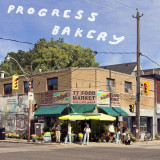
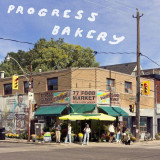
On Progress Bakery, her second album as a solo artist, Eliza knows to leave some questions alone – to let juxtaposition and tension be the proof. It doesn’t have to be hard. The feelings and revelations they provoke rise in the heat. The smell is sweet. Crispy on the outside and soft all the way through. She playfully slip-slides through words and sounds and images, delighting in surprise, skimming ideas like stones cast across clear water, touching down briefly with uncommon grace.
The question provoked between those opening lines resurfaces in the strands between songs – “Do U FM” is fully formed and beautifully layered, while “Novelist Sad Face” is a short, acapella rendering of gentle curiosity. What is holding these ideas together? Some songs demand more, seem to carry a whole load – eventually the skipping stone will halt to sink and resume its idle duty – while others drift in and out of focus, the way thoughts and dreams become interwoven before the mind is sunk into true sleep.
Music and words don’t always have to interact. Where she decides to keep them apart gives a new contour to where and how she puts them together. The kind of thing you’re supposed to take for granted with songs and their singers comes alive in Eliza’s hands – the little miracle of mixing, kneading, stretching, and stopping.
So often on Progress Bakery, Eliza teases out truth and meaning by asking questions. “Do I wanna be crying?” “Do you want me good or do you want me bad?” “Do I need an eye test?” “I’m writing songs in my head while you’re going over stuff with me — is that cruel??” In “Pocky” Eliza ends with a question that feels to me like the actual biography, succinct and revealing:
I don’t wanna be made to see
I just wanna ask “what’s that?”
Grace that ought to be rare, but in its care and precision is offered humbly, with great generosity, and without announcing itself. Eliza’s simple, miraculous music is given further form and shape by a group of collaborators – invaluable guest musicians Jeremy Ray, Evan Cartwright, Steven McPhail, Kenny Boothby, Ed Squires, Carolina Chauffe, Dorothea Paas, Louie Short, and Avalon Tassonyi. Together with Louie Short, who recorded, mixed, and produced the album along with Jeremy Ray and Lukas Cheung, Eliza has cultivated a richness in sound and texture that prods and provokes the ticklish ear. Barely audible guitar tinkering, a brief lo-fi field recording of trumpets, the harmonic clicking of a looped synthesizer, a flourish of reeds, a child’s conversation, each uncanny sound perfectly placed, rippling out under a soft breeze.
Lay in bed alone at night and ask aloud to the stillness,
“What were you doing at the Albuquerque Airport?
What were you doing there??”
And hear your question answered by a dream of swelling, undulating cellos. Try to grasp at the melody and structure. It’s not an answer (if there could be one), but it moves deeper, closer to the weird layer of fleeting moments and disconnected images, barely perceptible at its core. Wait for the dream reel to click into place.
Eliza took me for a ride in Nicole (her beloved Dodge Grand Caravan) and told me she’d been thinking of the album as an embodiment of transition – and I think every transition, known or unknown, carries the weight of new meaning, skittering off the surface tension of life as you know it, creating ripples, sometimes bouncing off and sometimes breaking through. There is a trick you can use to tell if a dough is glutinous enough. You’re supposed to stretch it out as thin as you can without breaking it and hold it up to the light. If you can see through, even if it renders the world murky and uncertain, you should leave it alone. I love this trick. It’s one that Eliza seems to know intuitively: work gently and ask questions and don’t always expect answers, and when you can, take a glimpse at something new, and then leave.
Kneading dough is tricky – you should know how it’s supposed to feel. If you try too hard you could make it worse. It’s a beautiful practice – creation with a gentle touch, to work at something so it can be left alone. “If it’s too drawn out it’s awful. It’s easy to give too much.” Dance in the mirror. Contemplate your veiny hands. Who do they remind you of?
You begin by mixing flour and water. “What happens when your people die? Why’d they move the rock to the other side of Ulster Park?” Eliza Niemi asks two seemingly unrelated questions in a rising melody with guitar accompaniment, like fingers playing spider up to the nape of your neck. Gentle pressure. Strands of gluten form to bind the mix. A new question lingers in the binding. When she admits “but I don’t know how to tell if I’m feeling it or not,” that question surfaces through the text. It is reiterated throughout the album. When I’m working with dough I think the same thing to myself.
On Progress Bakery, her second album as a solo artist, Eliza knows to leave some questions alone – to let juxtaposition and tension be the proof. It doesn’t have to be hard. The feelings and revelations they provoke rise in the heat. The smell is sweet. Crispy on the outside and soft all the way through. She playfully slip-slides through words and sounds and images, delighting in surprise, skimming ideas like stones cast across clear water, touching down briefly with uncommon grace.
The question provoked between those opening lines resurfaces in the strands between songs – “Do U FM” is fully formed and beautifully layered, while “Novelist Sad Face” is a short, acapella rendering of gentle curiosity. What is holding these ideas together? Some songs demand more, seem to carry a whole load – eventually the skipping stone will halt to sink and resume its idle duty – while others drift in and out of focus, the way thoughts and dreams become interwoven before the mind is sunk into true sleep.
Music and words don’t always have to interact. Where she decides to keep them apart gives a new contour to where and how she puts them together. The kind of thing you’re supposed to take for granted with songs and their singers comes alive in Eliza’s hands – the little miracle of mixing, kneading, stretching, and stopping.
So often on Progress Bakery, Eliza teases out truth and meaning by asking questions. “Do I wanna be crying?” “Do you want me good or do you want me bad?” “Do I need an eye test?” “I’m writing songs in my head while you’re going over stuff with me — is that cruel??” In “Pocky” Eliza ends with a question that feels to me like the actual biography, succinct and revealing:
I don’t wanna be made to see
I just wanna ask “what’s that?”
Grace that ought to be rare, but in its care and precision is offered humbly, with great generosity, and without announcing itself. Eliza’s simple, miraculous music is given further form and shape by a group of collaborators – invaluable guest musicians Jeremy Ray, Evan Cartwright, Steven McPhail, Kenny Boothby, Ed Squires, Carolina Chauffe, Dorothea Paas, Louie Short, and Avalon Tassonyi. Together with Louie Short, who recorded, mixed, and produced the album along with Jeremy Ray and Lukas Cheung, Eliza has cultivated a richness in sound and texture that prods and provokes the ticklish ear. Barely audible guitar tinkering, a brief lo-fi field recording of trumpets, the harmonic clicking of a looped synthesizer, a flourish of reeds, a child’s conversation, each uncanny sound perfectly placed, rippling out under a soft breeze.
Lay in bed alone at night and ask aloud to the stillness,
“What were you doing at the Albuquerque Airport?
What were you doing there??”
And hear your question answered by a dream of swelling, undulating cellos. Try to grasp at the melody and structure. It’s not an answer (if there could be one), but it moves deeper, closer to the weird layer of fleeting moments and disconnected images, barely perceptible at its core. Wait for the dream reel to click into place.
Eliza took me for a ride in Nicole (her beloved Dodge Grand Caravan) and told me she’d been thinking of the album as an embodiment of transition – and I think every transition, known or unknown, carries the weight of new meaning, skittering off the surface tension of life as you know it, creating ripples, sometimes bouncing off and sometimes breaking through. There is a trick you can use to tell if a dough is glutinous enough. You’re supposed to stretch it out as thin as you can without breaking it and hold it up to the light. If you can see through, even if it renders the world murky and uncertain, you should leave it alone. I love this trick. It’s one that Eliza seems to know intuitively: work gently and ask questions and don’t always expect answers, and when you can, take a glimpse at something new, and then leave.
- A1: Do U Fm
- A2: Novelist Sad Face
- A3: Green Box
- A4: Dusty
- A5: The Linda Song
- A6: Dm Bf
- B1: I Tried
- B2: Melodies Like Mark
- B3: Wildcat
- B4: How U Remind Me
- B5: Pocky
- B6: Bon Tempiii
- B7: Pt Basement
- B8: Alberqurque Ii
- B9: Mary's
Kneading dough is tricky – you should know how it’s supposed to feel. If you try too hard you could make it worse. It’s a beautiful practice – creation with a gentle touch, to work at something so it can be left alone. “If it’s too drawn out it’s awful. It’s easy to give too much.” Dance in the mirror. Contemplate your veiny hands. Who do they remind you of?
You begin by mixing flour and water. “What happens when your people die? Why’d they move the rock to the other side of Ulster Park?” Eliza Niemi asks two seemingly unrelated questions in a rising melody with guitar accompaniment, like fingers playing spider up to the nape of your neck. Gentle pressure. Strands of gluten form to bind the mix. A new question lingers in the binding. When she admits “but I don’t know how to tell if I’m feeling it or not,” that question surfaces through the text. It is reiterated throughout the album. When I’m working with dough I think the same thing to myself.
On Progress Bakery, her second album as a solo artist, Eliza knows to leave some questions alone – to let juxtaposition and tension be the proof. It doesn’t have to be hard. The feelings and revelations they provoke rise in the heat. The smell is sweet. Crispy on the outside and soft all the way through. She playfully slip-slides through words and sounds and images, delighting in surprise, skimming ideas like stones cast across clear water, touching down briefly with uncommon grace.
The question provoked between those opening lines resurfaces in the strands between songs – “Do U FM” is fully formed and beautifully layered, while “Novelist Sad Face” is a short, acapella rendering of gentle curiosity. What is holding these ideas together? Some songs demand more, seem to carry a whole load – eventually the skipping stone will halt to sink and resume its idle duty – while others drift in and out of focus, the way thoughts and dreams become interwoven before the mind is sunk into true sleep.
Music and words don’t always have to interact. Where she decides to keep them apart gives a new contour to where and how she puts them together. The kind of thing you’re supposed to take for granted with songs and their singers comes alive in Eliza’s hands – the little miracle of mixing, kneading, stretching, and stopping.
So often on Progress Bakery, Eliza teases out truth and meaning by asking questions. “Do I wanna be crying?” “Do you want me good or do you want me bad?” “Do I need an eye test?” “I’m writing songs in my head while you’re going over stuff with me — is that cruel??” In “Pocky” Eliza ends with a question that feels to me like the actual biography, succinct and revealing:
I don’t wanna be made to see
I just wanna ask “what’s that?”
Grace that ought to be rare, but in its care and precision is offered humbly, with great generosity, and without announcing itself. Eliza’s simple, miraculous music is given further form and shape by a group of collaborators – invaluable guest musicians Jeremy Ray, Evan Cartwright, Steven McPhail, Kenny Boothby, Ed Squires, Carolina Chauffe, Dorothea Paas, Louie Short, and Avalon Tassonyi. Together with Louie Short, who recorded, mixed, and produced the album along with Jeremy Ray and Lukas Cheung, Eliza has cultivated a richness in sound and texture that prods and provokes the ticklish ear. Barely audible guitar tinkering, a brief lo-fi field recording of trumpets, the harmonic clicking of a looped synthesizer, a flourish of reeds, a child’s conversation, each uncanny sound perfectly placed, rippling out under a soft breeze.
Lay in bed alone at night and ask aloud to the stillness,
“What were you doing at the Albuquerque Airport?
What were you doing there??”
And hear your question answered by a dream of swelling, undulating cellos. Try to grasp at the melody and structure. It’s not an answer (if there could be one), but it moves deeper, closer to the weird layer of fleeting moments and disconnected images, barely perceptible at its core. Wait for the dream reel to click into place.
Eliza took me for a ride in Nicole (her beloved Dodge Grand Caravan) and told me she’d been thinking of the album as an embodiment of transition – and I think every transition, known or unknown, carries the weight of new meaning, skittering off the surface tension of life as you know it, creating ripples, sometimes bouncing off and sometimes breaking through. There is a trick you can use to tell if a dough is glutinous enough. You’re supposed to stretch it out as thin as you can without breaking it and hold it up to the light. If you can see through, even if it renders the world murky and uncertain, you should leave it alone. I love this trick. It’s one that Eliza seems to know intuitively: work gently and ask questions and don’t always expect answers, and when you can, take a glimpse at something new, and then leave.
- Candyman
- Richland Woman Blues
- Police Dog Blues
- Shake Sugaree
- Vestapol
- Stagolee
- Green Green Rocky Road
- Frankie
- Police Sergeant Blues
- Buck Dancers Choice
- Delia
- Freight Train
Cassette[21,22 €]
Muireann Bradley is a young blues, ragtime, roots and folk guitarist and singer based in Ballybofey in County Donegal Ireland. “This is my first album. Most of these tunes were originally recorded by the great blues men and women who were making records from the 1920s and 1930s right up in some cases to the early 1970s. I have also found inspiration for the renditions recorded here in the playing of some of the musicians who began recording this music in the 1960s and later, and who in some cases learned at the feet of the greats. Many of these guitarists played pivotal roles in the 1960s blues revival and subsequent “rediscovery” of many of the greats of country blues. I grew up steeped in these old blues in the hills overlooking the valley of the River Finn just outside the town of Ballybofey in County Donegal. My father would play this music constantly at home and wherever we went in the car and talk about it endlessly whether anyone was listening or not, telling stories about the lives of these musicians as if they were legend, mythology or the evening news. My father could of course play all this stuff on guitar, I remember watching him when I was very young and thinking “I want to be able to do that”. When I was nine he agreed to teach me and bought me my first little travel guitar. I worked hard to learn how to play but as time wore on I seemed to have less and less time to practice as I became more and more invested in the combat sports I was regularly training and competing in. Then in March 2020 the first Covid lockdowns happened and all contact sports were shut down. I was lost for a while but soon found my way back to the guitar. I was now listening, playing and practicing with a new intensity and focus. In a very serious moment, I wrote out a list of tunes I was going to learn. The first tune on that list was Blind Blake’s “Police Dog Blues”. I’m not sure now how long it took to get that arrangement together but when it was ready we videoed me performing it and posted it on YouTube. It ended up getting a lot of attention, I remember my parents being quite shocked and soon after that Josh Rosenthal got in touch… and here we are! Each individual track on this album was recorded live in the studio and represents one entire take with me singing and backing myself up on guitar simultaneously. Most are either first or second takes. Nothing has been added or taken away, no overdubs or modern recording tricks of any kind have been used at all so at least in some respects this album has been recorded in the same way as those classics of the 1920s and 1930s
- A1: Floppy Boot Stomp
- A2: Owed T' Alex
- A3: Harry Irene
- A4: Flavor Bud Living
- A5: Human Totem Pole
- A6: Bat Chain Puller
- B1: Brickbats
- B2: Apes Ma
- B3: A Carrot Is As Close As A Rabbit Gets To A Diamond
- B4: 81 Poop Hatch
- B5: Seam Crooked Sam
- B6: Odd Jobs
Don Van Vliet is Captain Beefheart. 1000 only numbered 180 gram vinyl LPs gatefold sleeve purple vinyl. Sleeve design by legendary Led Zeppelin designer Steve Hardstaff (Jacuzzi). When Don Van Vliet sent these reels of tape to North West promoter Roger Eagle in the 1970s to make sure they got released in the UK they became stuff of legends.
Side 1 :
Side 2 :
Brazilian artist Acid Asian steps up to Charlotte de Witte's KNTXT imprint with his Deep Soul EP, which explores the many different facets of his sound from rap and trap to techno and psytrance.
Fábio Seiki is São Paulo-based and started this project in 2020 during the pandemic. Since then he has made an impact with his fresh blend of influences and love of his 303. In 2022 he was the first artist to release on Charlotte de Witte's sub label, RPM, with his Break Into Acid EP and followed it up last year with The Night EP.
On Deep Soul EP, he says: "The title track is one of my favourites because it represents me 100%. Focusing on the acid line with this mantra vocal, I wanted to express something more deep to this track. 'Space Colors' is a track with which I wanted to express this new hard techno era using the hardstyle's kick but keeping my style. 'Ain't Nobody Like Us' is my background from rap/trap and 'Humans' is my psytrance background, it's an off-beat track.”
Charlotte de Witte adds: “Acid Asian is back! From his first release with us in 2022, it's been such a pleasure to see him grow and gain respect in the techno scene. We've played many shows together and he's one of the most talented, most instinctive producers out there. Playing Space Colors as the closing track at the main stage of Tomorrowland Brazil where Fábio was dancing in the crowd, was a very wholesome moment. These four tracks are absolute bombs and also show the variety he has to offer as a producer. I'm very excited about this release and I hope you are too!”
Opener 'Deep Soul' is hard and fast with a hypnotic vocal and gurgling acid lines that shoot through the mix to electrifying effect. 'Space Colors' has slamming drums that are lit up with bright, shiny trance chords and underpinned by a rugged bassline that is sure to raise the roof. There is a fantastic rhythm to 'Ain't Nobody Like Us' with its fresh drum patterns and funky edge, narcotic trap vocals and trippy synths. 'Humans' shuts down with ghoulish vocal sounds and squelchy synths all stuffed into a driving, unrelenting hard techno groove.
This is a wonderfully expressive new EP from Acid Asian.
Warehouse Find!
Detroit Swindle continue their incredible run of form with a cracking new EP for for their Freerange follow up, suitably entitled Unfinished Business. It's pretty fair to say that the Dutch duos 2012 Freerange debut helped cement their reputation as one of the most exciting young house music acts to emerge in recent years. Their relentless tour schedule and stream of quality EP's for the likes of Tsuba, Dirt Crew and their own fledgling label Heist are testament to their success. Remixes for the likes of Waze & Odyssee, Sowar and Medlar all did the damage as did their immense Boiler Room takeover session which sealed the deal for any skeptics. Turning to the fresh stuff, we see DS delivering three brand new originals plus we have a hard as nails (by our standards anyway!) remix from the enigmatic Crue.
Title track Unfinished Business sets the tone with a driving, shuffling, tech tinged beauty loaded with their trademark cut-up, MAW style vox samples.
Under The Spell drops next with a more low slung groove, rhodes stabs and breakdowns that are tried and tested for maximum dancefloor pleasure.
The B1 sees Crue step up for his hard hitting remix which brings a darker, raw edge to the EP with a bad boy basement feel and garage swing bringing some peaktime intensity.
Finally we close the EP with Woman, a track that's probably about as close as the DS boys get to a smooching torch song. Lush pads and strings bring a deeper vibe to proceedings but the female spoken word samples keep the energy high and ensure things never stray too far from the floor.
"Bora Rokovic's MPS album, Ultra Native, is one of the most elusive titles in the catalogue and, until now, remained unissued since its original release in 1971. Inzalaco's 'J.B.W.' is a hard-grooving fusion piece with dark minor chords, opening with an almighty drum break – found here in a new all-analogue mastertape edit for this 45 release. 'Soft Hands Had the Rain' features Trunk strutting his stuff on Fender bass, as well as cello overdubs, with Rokovic's brooding improvisations on electric keys."
First vinyl release since 1971 and never before released on 7” single.
AAA Transfers from analogue mastertapes.
Audiophile-grade vinyl – limited-edition pressing of 500 copies.
New artwork authentically recreated on heavyweight gloss sleeves.
Cut at Abbey Road Studios by Grammy award-winning engineer, Sean Magee.
Continuing our quest to get all of the classic early AMT albums released on vinyl, we turn to 2004’s 'Mantra Of Love’, and with the help of Makoto Kawabata’s studio wizardry, we’ve made it possible.
This latest instalment in the ‘Acid Mothers Temple Vinyl Archives - First Time On Vinyl’ series (as with the three previous SOLD OUT releases in the series) have all been meticulously put together with the help of Makoto Kawabata with the original CD artwork recreated for these vinyl editions from archive photos stored in the vaults at the Acid Mothers Temple in Osaka, Japan and the original audio remastered by James Plotkin.
Here’s what others had to say upon it’s original CD only release back in 2004 …
“Acid Mothers are strong folk. You'd think they'd tire quickly, all tucked away on their island, strewn about on tree roots while baking their lungs and throats to a knotty green tinge. But instead of waltzing through life like hippies, they manage to not only tour and put out records every year, but also to fill those albums with 30-minute jams and assorted freakouts. And while evil jam bands would fill that space with guitar work taken from the Classic Rock Manual of Clichés, Makoto Kawabata and company assault listeners with frighteningly dense walls of white noise, psychedelic swirl effects and, yes, even guitar solos-- albeit ones that are more Merzbow or Keiji Haino than Gary Rossington. Truly, AMT's endurance and threshold for cosmic lashings are both worthy of admiration.
But how much AMT can you take in one sitting? If there's anything this band has taught us-- via records such as 2002's Electric Heavyland and the ferocious Acid Mothers Temple & the Melting Paraiso U.F.O-- it's that they're not afraid to reach for the upper regions of consciousness. On Mantra of Love, they offer two titles over the course of one hour, never faltering along the way, and it's as if we listeners are just brief visitors passing through a never-ending, spontaneous group trip. For all I know, Kawabata has hundreds of hours of this stuff on his hard drive-- at any single moment, this record's sheer volume of sound is a clamor to behold. However, if you aren't dialed into that the particular space AMT inhabits (for me, it's the mystical fire-baptism standby), you might not hear their glorious noise for all the, well, glorious noise.
"La Le Lo" begins as a lengthy psychedelic ballad sung by Cotton Casino (who doubles on "beer & cigarettes"), who is accompanied by her own ghostly backing vocals. The band is playing a mantra as Casino waxes earth-mother stylings to the moon. The serenity is broken by a patented AMT rave led by Kawabata's electric sitar (!) solo. Ace rhythm section Tsuyama Atsushi ("monster bass") and Koizumi Hajime hold things together, as does the generally decent recording quality (not a given for these guys), but the real money is in effects-- lots and lots effects. Much like France's Richard Pinhas or AMT's countrymen in Les Rallizes Denudes and High Rise, the band understands the collaborative power of solo + overdriven Moog sirens and screams. And, also like those artists, Acid Mothers can go on all night if need be. About 25 minutes into this piece, any hell that hadn't already broken loose gets its due, and the band speeds to a fiery climax before winding down into glimmering astro-ambience.
The second track, "L'Ambition dans le Miroir", also begins as a minor ballad featuring Casino's haunting solo vocal. The Mothers set her up with a faux-blues drag and a thick buffer of synth-rays; when Casino actually enters, she fights for airtime with an array of falling stars and cosmic dust. However, this time there is no overwhelming solo to power the comedown. Casino intermittently coos in the background while droning horns keep the auxiliary pixie haze from evaporating. As they showed on In C and La Novia, AMT are more than adept at creating calmer storms-- listeners just have to catch them in the right light. Mantra of Love doesn't necessarily capture the most inspired moments in their canon but as usual with this band's records, it's rarely at a loss for moments of horror or grandeur.”
Acid Mothers Temple & The Melting Paraiso U.F.O. : Cotton Casino - Vocal, Beer & Cigarettes - Tsuyama Atsushi - Monster Bass, Vocal, Cosmic Joker - Higashi Hiroshi - Synthesizer, Dancin' King - Koizumi Hajime - Drums, Percussion, Sleeping Monk - Kawabata Makoto - Guitar, Bouzouki, Electric Sitar, Violin, Hammond Organ, Speed Guru
Lennon & McCartney. Simon & Garfunkel. Ralf & Florian. Enema & GeJonte. The inventors of modern pop music as we know it. Joining forces in 1988, Orebro duo Kai Parviainen and Jonas Ohlsson put out four cassettes and a split album with Frak under the Enema & GeJonte guise, all teeming with clever and funny electronic pop songs. The sound? Imagine Duet Emmo jamming out with the Residents on a wheat field on Narkeslatten. Or picture early Severed Heads covering lost Philemon Arthur & The Dung tapes. Kai pushes his Sequential Circuits Pro-One synthesizer to its limits while Jonas makes discerning observations on everyday life in a Swedish small town. Mostly sung in Swedish, sometimes in English, but always with a touch of sweet naivety and innocence on par with lo-fi punk/pop geniuses Dan Treacy and Daniel Johnston. Typical song subjects: A friendly game of five-a-side football. The joy of rising at the crack of dawn to get on with the tasks of the day. A bus journey to Odensbacken to savour a semla at a local cafe and some small talk with the gas station manager. All delivered with a playfulness and ecstasy more commonly found on the records with Swedish Christian music Kai so devotedly collects than in contemporary industrial or electronic music. When Jonas moved to Amsterdam in 1996 the boys ceased making music together, leaving behind a treasure trove of unreleased material, some of which appeared on a couple of cassettes in the 00's. But the best stuff has remained buried until now. How dada pop gems like ''Joxa med trasan'' and ''Underground'' could dwell in obscurity for thirty-ish years beggars belief. Other standout tracks on this compilation: ''Plan 714 till NYC'', a wonderful waltz time instrumental performed in the vein of a drunken Bob Hund, and the En Halvkokt I Folie style cut up experiments of ''Gasten Harry''. So get ready for a glorious blast from the past, as the Swedish pioneers of the hypnotic groove cordially invite you to a sonic journey as adventurous and memorable as a trip on the lansbuss to Odensbacken. Get on board, grab a seat and enjoy the ride. Liverpool. New York City. Dusseldorf. Orebro. // Ulf Osterstrom
- 1: Dick Rabbit "You Come On Like A Train" 968 - Bay City, Michigan
- 2: Blizzard "Be Myself" 1974 - Oklahoma City, Oklahoma
- 3: Fox "Sun City - Part Ii" 1969 - San Francisco, California
- 4: Sweet Wine "Bringing Me Back Home" 1970 - Virginia, Minnesota
- 5: Enoch Smoky "Roll Over Beethoven" 1969 - Iowa City, Iowa
- 1: Flight "Get You" 974 - Elyria, Ohio
- 2: Quick Fox "Indian" 1978 - Berkshire, Massachusetts
- 3: Bonjour Aviators "The Fury In Your Eyes" 1976 - Boston, Massachusetts
- 4: Cedric "I'm Leavin'" 1970 - Tulsa, Oklahoma
- 5: Zane "Step Aside" 1976 - Malm?, Sweden
There is NO LIGHT at the end of this tunnel! BROWN ACID: The Nineteenth Trip fires ten more savage nails deep into the coffin of ‘60s psychedelic idealism. This series is THE premier top dog journey into the rarest and most wasted early local eruptions of heavy rock, unleashed at a time when harsh reality, human nature and disillusionment drove prevailing underground rock glimpses of a ‘better’ world into ever darker selfabsorbed comedowns. Mind expanding ’60s love energies transform into toxic aggression right before your ears! The great thing is that these moves are totally justified, ‘we are all one’ is cosmically good in theory but ‘get it while you can’ ends up perhaps better advice in the light of human history. Both of those angles of awareness can coexist, some of these bands deliver unrelenting sideways positive energy but they aren’t over-thinking it, they are youthfully driven by hunger for life and satisfying the undeniable urges their DNA thrusts upon them. Sonically, the results in the BROWN ACID series never fail to breathe hot and heavy, the guitars kill it every time, the variety of approaches these tracks take keep the scenery shifting into new places. The key element that makes this stuff so potent is that THEY (the bands) are in control. Captured genuinely with no compromise, right out of the gate. No doubt they had ambition with high hopes for the future when they laid down these primal efforts, the fact that they captured their energy so vividly at a moment in time when the only direction imaginable was UP creates a hard hitting life affirming subtext to the proceedings. That is the core energy of blues and rock and roll, dealing with the struggles of existence by flipping a gigantic ‘what the fuck’ high energy bird right in the face of the moronic defective reality these bands were born into. If you take this stuff too ‘seriously’ you are utterly missing the point, it is beyond analysis, it is life itself! No amount of thinking will get you there quicker! BROWN ACID: The Nineteenth Trip is scary... the bottomless pit of deranged vintage heavy rock the series presents continually expands over time... one deadly dose too many and you might be trapped in the bad trip loop forever... enjoy it or lose your mind!
A new SOS, from 024... Nijmegen Tekno crew !
A side from Wazig opening with a Breakbeat minimal killer threartening to fall 4/4... and doin' it !
Then will come his second tune, a Pumpin Mental Acid run !
Frixion side kicks harder, louder, kicker... Pityless swing in a Hardfloor ambiance. Heavy stuff !
This is a colored vinyl ! Red&Black transparent !
Bassline veteran and all-round soundsystem sorcerer Marcel Deptford lands on Sneaker Social Club with two ruff-n'-tuff rave-n'-b re-flips that run as a prelude to big things to come.
This is the first time you will have heard a record under the name Marcel Deptford, but he's got serious skin in the game with an imposing history in the legendary bassline scene from the late-00s. His records as DS1 are the stuff of legend for anyone keyed into the Niche-centric sound, but more recently he's put out some serious heat as Haider running his own Breaker Breaker label and popping up on Aus and the like.
If you're a fan of millennial RnB there's every chance you'll recognise the vocals that breathe life into Deptford's two tracks for this Sneaker release. Moving beyond simple edit territory, the voices are bedded deep down into gritty rave productions that boast the kind of dirt bag sonics that call straight back to the OG days of breakbeat hardcore. 'Rock The Boat' has bloated bass pushing into the red, clattering breaks chopped up with a rugged swagger and a dreamy, haunted dose of dub poured all over the vocals.
'Make It Hot' has a lighter, swung feel which nods to garage, but there's still plenty of weight on the low end. Once the lead vocal sample steps back to open up the space, Deptford's knack for strong melodic hooks comes through in a blown out arp line which the bassline dutifully follows.
Hitting every sweet spot from the low-down dirty rave receptors via moody head-nodding restraint on to iconic vocals, Marcel Deptford shows exactly what he's capable on this release ahead of a more extensive dive into his legacy, due further down the line.
Making his debut on Gated, Bristol-based Wiles brings the breaks across four tough but emotive tracks.
Wiles is a professional sound engineer who came up in the Norfolk electro and free party scene in the 2000s. During the lockdowns in 2020 he crystalised a live hardware setup that eventually became an EP for Batrachian.
But with Yellow Light he takes his sound even further, with washes of spaced out melodicism underpinned by punches of sub-bass and classic rave breaks, intricately programmed and devastating on a dancefloor at the right moment.
It’s atmospheric stuff for sure, with one eye on the future but rooted in the timeless dancefloor expressions of the past.
Forgetting You Is Like Breathing Water, the self-titled debut from the duo of trumpeter Will Evans and guitarist, synthesist, producer and multi-instrumentalist Theo Trump, arrives like a vault revelation. It feels like a decades-old yet newly unearthed masterwork of gorgeous ambient improvisation, the sort of thing scholars live to research and shepherd into deluxe reissue.
The patient, crystalline chords that swell and resonate like a series of confessions; the textured brass murmurs that suggest a ’60s or ’70s Fire Music master at their most poignant. Provocative found-sound experiments threading arcane religious recordings through dystopian soundscapes. Ear-shattering free-noise tumult. Where and when did this music come from? Who are these voices?
As it turns out, Forgetting You Is Like Breathing Water springs from an engrossing human story, though it isn’t necessarily the one you’d expect. This work of stunning maturity is in fact an entrance by two little-known explorers in their early 20s, who grew up together in Virginia, in the shadow of the Blue Ridge Mountains. It documents one of those perfect, sparkling moments in post-adolescence when big decisions and responsibilities are right around the corner, but for a spell, two young artists are able to create among the comforts and nostalgia of their shared past.
It also represents a reunion of sorts, as Evans and Trump connected as toddlers, became inseparable as boys, then pursued independent lives and creative paths as young adults. “Theo is my oldest friend,” Evans says, “and I feel like that’s what this band is — us meeting right in the middle of our interests.”
Now, having conjured this magic, they’ve detached once again: Evans, whose other works include the indie/avant-jazz unit Angelica X, is currently based in New York City. Trump recently moved to England, where he’d participated in his family’s theatre company, to go to school and further his solo ambient project. “This album didn’t start out as something super ambitious,” Evans explains. “It was more just an excuse to spend time together again and make music.”
***
In conversation, Evans and Trump are a delight, especially for cynics who might think that Gen-Z is only capable of doomscrolling. They come across as kindly young intellectuals who grew up using the internet as it was intended, for exposure to ideas and art across genres and generations. Trump points to indie-folk and the oracular post-rock of late Talk Talk, Bark Psychosis and Gastr del Sol. Pressed for his guitar heroes, he cites Bill Orcutt, Mary Halvorson and Marc Ribot, and mentions his devotion to alt-country. Heyday electro-industrial stuff like Skinny Puppy and Nine Inch Nails also meant a lot to him.
Evans is equally intrepid, though his background has a greater jazz focus. Ambrose Akinmusire, among today’s most thoughtfully commanding trumpeters, is a favorite. As for the soulful murmur he offers throughout Forgetting You, Pharoah Sanders’ wistful and lyrical contributions to Floating Points’ work is a touchstone.
The two grew up down the street from each other in the northern Piedmont town of Batesville, Virginia. Their families were friends, holidays were celebrated together and they became the most loyal of pals. As children they had a pretend band.
Then life unfolded, they attended different schools and their paths diverged. Evans discovered John Coltrane and became a jazz obsessive, as Trump found punk and hardcore and later began making ambient music. As a dedicated jazz trumpeter, Evans studied formally and widely; Trump was an autodidact, teaching himself guitar and absorbing synthesis and production techniques. The late teens and very early 20s brought moves away from home and back to home, as well as plenty of listening and learning. The Covid pandemic meant an opportunity to reconnect on long walks. Through it all, together and apart, they remained reverent of each other.
By early 2023, they found themselves living again among the Blue Ridge Mountains. In the evening, after giving trumpet lessons in Charlottesville, Evans would make the eerily beautiful trek “over the mountain” to Trump’s home in Staunton, Virginia. They’d talk and eat and begin to improvise, deep into the night. Evans played trumpet and sometimes drums. (Given the wee-hours recording schedule, the neighbors didn’t appreciate the latter.) Trump plugged a rickety, junk-store Telecaster-style guitar into a cheap solid-state amp and explored open tunings; he also layered on lap steel, electric bass, synths and electronics.
They locked in and relished each other’s gifts. In Trump, those include patience and intentionality and sonic decision-making; for Evans, a distinctive trumpet sound that both musicians think of as a singer’s voice. “Will’s playing is so thoughtful and well placed,” Trump says. “My goal from a producer’s mindset is that the trumpet will occupy the space that vocals would take.”
Often, they got lost in the best way. “The thing I look for most when I’m playing is that feeling of disappearing into what you’re doing,” Evans says. “Usually when that happens, the music is good.”
By the same token, they didn’t pursue free improvisation as an ethic, or as a pure process. Their goal was something closer to spontaneous composition. “We were trying to make good songs,” Evans says simply. Later, Trump did brilliant post-production work, expanding a modest setup into an enthralling soundworld. Under his judicious editorship, music that was wholly improvised sounds at times like a carefully composed new-music commission.
The results speak for themselves. “A Happy Death” summons up a swath of American desolation through the viewfinder of Wim Wenders. “Flesh of Lost Summers” and “Partings” are highlights from an essential ECM LP that never was. “A Collapse of Horses” infuses those seminal post-rock influences with the plod of doom metal or slowcore. The album’s final track, “The Mountains Are a Dream That Calls to Me,” was in fact the first thing the duo recorded, as an evocation of those twilit drives across the Blue Ridge Mountains. “Looking back at what we chose to name the songs,” Evans says, “and some of the sounds and how they make me feel, there is an air of impermanence and loss to this album.”
“I’m excited for everything that’s to come,” he adds, “but I recently thought, ‘Damn — that’s not going to happen again.’ It was a privilege for us to have that time together.”
Sasu Ripatti presents the fourth volume in his "Dancefloor Classics" series with five 10" releases coming throughout 2023. Music for imaginary dancefloors, released on Ripatti's own label "Rajaton".
”Look up, into the light” she said, while the camera shutter clicked. ”Like this? Does it look holy?” His neck felt stiff. Her reply: ”Yes, just like that. What do you mean holy? Like religious? ”No, more like trying to look very far, somewhere beyond what we can see.” ”Okay, stand still, I’m going to come close to you now. The light hits your face great.” click, click, click.
He noticed her fingernails. They were not polished. Natural. Even somewhat rugged, as if something wore out the fingers slightly. What had these hands held besides the camera? What made the edges of her fingernails drift off?
He thought it’s weird to look straight into the camera. The photographer had closed her left eye, the one not looking into the lens. Then it opened, she looked up, perusing the surroundings, then she closed her eye again, then looked up, closed, looking up, very quickly. It all seemed very professional. Maybe she calculated the light, making sure it’s close to perfect. ”What will these photos look like?” – the thought popped into his head briefly. It was liberating to think it wouldn’t matter.
”What’s that song playing?” he asked. ”Wait a sec, Ol’ Dirty Bastard?” she replied. ”Oh yeah, right. But the sample?” ”Hey, could you look up again, like that. No, lower.”
New directions: ”Look out from the window, turn left.” ”My left or yours?” ”Yours, I always try to think from the direction of my model.” How professional! This is a good shoot, so natural. Should I worry about how the photos look like? No, I don’t want to. His thoughts bounced around. What would the story be like? It’s a big newspaper, everyone will read it. Maybe someone drinks coffee and eats a stroopwafel while they do it. Will they place the waffle on top of the mug for a brief while, so that it gets hot and the syrup melts a little? Then it feels wet, and you can bend the cookie.
She broke his train of thought off midway through: ”Now turn right, but look left, and slightly up, but don’t turn your face right.” ”Umm, like this? Sounds like a set of pilates instructions.” she laughed ”You do pilates?” ”Yeah, it’s hard sometimes. Have you tried?” ”No”, she said. ”I’m not good for sports that are done in groups.” ”Yeah, but in pilates you can just be inside your mind, drowning in your private thoughts.”
”What are you thinking in pilates?” she asked, taking more photos. ”Well, mostly just which way is right. And which left.” click, click.
Q&A with Sasu Ripatti:
1) Tell us something about the EP series ”Dancefloor Classics”, what’s the idea and what can we expect?
I’ve been slowly writing these sort of dance music pieces and finally curated them together for a conceptual release. I like to create music for a dancefloor that exists only in my imagination and doesn’t try to suck up to the standardized reality.
2) Your vinyl format is 10” which is quite special (as opposed to LP / 12”). Why did you choose it?
It’s my favourite format, absolutely. The size is perfect, and you can make it sound really good @ 45 rpm. And you still can make great artwork.
3) You seem interested in sampling/repurposing, what does it mean to you as an artist to approach something already existing from a new angle? How does the source material inform you about the approach to take?
I guess i could flip it around and just say I’ve outgrown synths or electronic sounds to a great extend, and having gotten rid off all my synths already good while ago I’ve used samples as my main source material a lot. It’s obvious on this series that i’ve sampled existing music, but I also sample instruments and things in the studio and resample my own library that I have built over the years, it’s quite large. To me the end result matters, not so much how I get there. Once I have something on my keyboard and play around, it’s all an instrument, though with sampling other music it becomes a really interesting and complex one as you’re possibly playing rhythm, but also harmonic content and maybe hooks or whatever, all at once.
I never sample premeditadedly, like listening to records and looking for that mindblowing 3 sec part. I just throw the cards in the air and see what lands where, just full intuition and hopefully zero mind involved, playing tons of stuff, trying things, just recording hours of stuff. Then comes the interesting part to listen to hours of mostly crazy stuff and finding that mindblowing 3 sec part.
4) What is your relationship with the dancefloor (conceptually and/or in experiences / as a performer)?
Very complicated. I have never really felt comfortable on a dancefloor but have always wanted to. There’s something in club music, in theory, that really speaks to me. It has never really materialized for me – speaking mainly from a performer’s point of view who goes to check on a dancefloor for a moment after a concert. I never have DJ’d or felt much interest towards it. But again, I love the idea and concept of DJing. As well as producing music for imaginary DJs. Lately, as in the past 10+ years, I haven’t even performed in any sort of club spaces. So my relationship to the dancefloor is quite removed and reduced, but there’s quite a bit of passion and interest left.
All tracks composed and produced by Sasu Ripatti.
Artwork & photography by Marc Hohmann.
Mastering by Stephan Mathieu for Schwebung Mastering.
Vinyl cut by SST Brueggemann.
Publishing by WARP Music Ltd.
Dame Area's highly anticipated fourth studio album, "Toda la verdad sobre Dame Area" ("The Whole Truth about Dame Area"), a collaboration with the renowned labels Mannequin Records and Humo Records.
Formed in 2017 within the vibrant underground scene of Barcelona's Màgia Roja club, Dame Area comprises the Italian-Catalan duo Silvia Konstance and Viktor Lux Crux. They fuse industrial-tribal polyrhythms with minimalist synth basslines, drawing profound inspiration from avant-garde masters such as Esplendor Geometrico, Throbbing Gristle, Suicide, Einstürzende Neubauten, Can, Coil, Swans, Big Black, and Wolf Eyes.
This record represents a new phase in Dame Area's discography. It's a big step up in terms of sound, composition and ideas. This record it's the perfect representation of what they have been playing live the last three years and what most people know them for. Also it serves as a companion piece to 2022’s Toda la mentira sobre Dame Area ("All The Lies About Dame Area"), which had a stronger focus on melody, while this latest record is more aggressive and industrial-influenced, with a greater emphasis on percussion.
Tracks like the Suicide-influenced "Si no es hoy cuando es" and "Sempre Cambiare" are an onslaught of industrialism and experimentalism—formidable, volatile, and unpredictable avant-garde subversion. Silvia explains, "One of our biggest influences is doing what our influences wouldn't do. We're more into dynamics and structures atypical of electronic music, with changes in time signatures, starts and stops, and dynamics more typical of rock music. We use any musical idea from any genre. Some songs on the album are based on flamenco rhythms, others influenced by '60s experimental pop, heavy metal, or contemporary electronic music."
The confrontational "Vengo dall'aldilà" accelerates with heavy percussion, while "Tu me hiciste creer" builds into a rhythmic, transcendent noise of yelled vocals and hypnotic beats. Viktor adds, "This song took us more time to complete than any other we have recorded. It was a very organic process, evolving slowly from some instrumental percussive stuff we were doing live. Then we started using feedback as a rhythmic element (through a metallic sheet), and this was the first song where we incorporated this element, typical of noise-rock and experimental rock."
Elsewhere, "Esto Es Nuestro Ruido" represents a manic, eclectic form of contemporary industrial music, post-punk, and EBM. Silvia notes, "It's the first album we recorded outside a studio. Although we've been playing live with metallic percussion and floor tom from the very start, in the studio, with some exceptions, it was mostly sample-based until now. On Toda la verdad sobre Dame Area, all drums and almost all metallic percussion have been recorded live."
With a growing reputation as one of the best live bands around since their inception, Dame Area has toured extensively across Europe, performing at renowned festivals like Atonal, CTM, Nuits Sonores, Dour, and Fusion, as well as legendary clubs such as Berghain, Tresor, Apolo, and Spook Factory.
Recorded at Sol de Sants Studios and Estudio Hermetic between August and November 2023
Silvia Konstance: vocals, synths, percussions, electronics, production
Viktor L. Crux: synths, drums, percussions, electronics, production
Mixing and additional production by Guillermo Sánchez Rojo
Mastering by Paul Mac at Hardgroove Mastering
Designed by Leo Sousa
Photography by Fabio Calabretta
Photo concept by Dame Area
Ever been hit in the face with a wooden plank stuffed with rusty nails? Me neither, but I imagine the effect would be something like the sensation of having Montreal five-piece Puffer blasted into your eardrums. Put simply, this is the midpoint between hardcore and dirty ol’ rock’n’roll - part Poison Idea going dumpster-diving outside the garages of Melbourne’s punk scene, part Fucked Up playing their X records on a rotary sander. They’re equally at home with a pacy blur of riffs as they are going for a four-to-the-floor stomp; either way, the ragged larynx sits perfectly astride the roar, while the guitars go full Bob Stinson at his too-drunk-to-fuck-up best. You can practically hear the leather jackets creaking between phrases. This is music to move to. So what better place to start with this band than an LP compiling their must-have demo from 2022 and the remarkably excellent self-titled EP that followed in 2023? Originally released by New York’s increasingly-essential hc label Roachleg Records, these two highly digestible bursts of punk’n’roll complement each other perfectly. Whether you get your giddy thrills from the raw-as-hell likes of opener ‘Suffering’, or from the non-more-anthemic, holy-shit-I-need-to-bang-my-skull-against-the-wall double whammy of ‘Sister Marie’ and ‘Hard Way To Go’, you are guaranteed to find something to love here. You could always try hitting yourself with that plank, but you’ll probably find you return to this more often. Drunken Sailor delivers the goods again. Get the fuck involved.
- A1: Grateful (Instrumental)
- A2: Glorious Game (Instrumental)
- A3: I'm Still Somehow (Instrumental)
- A4: Hollow Way (Instrumental)
- A5: Protocol (Instrumental)
- A6: The Weather (Instrumental)
- B1: That Girl (Instrumental)
- B2: I Would Never (Instrumental)
- B3: Alone (Instrumental)
- B4: Miracle (Instrumental)
- B5: Glorious Game (Reprise) (Instrumental)
- B6: Alter Ego Feat Brainstory (Instrumental)
Sky High Coloured Vinyl[24,16 €]
Blood Smoke Vinyl. The Instrumental version of the underground classic El Michels Affair & Black Thought collaborative album Glorious Game When Leon Michels and El Michels Affair released their rst record, Sounding Out The City, in 2005, it was hard to guess what was next for Michels and his then-introduced, now-patented "cinematic soul" sound. Now, four EMA studio albums and scores of tribute and remix projects later_all while producing for some of the biggest names in the industry_Michels has trademarked his sound, with each project taking audiences somewhere new and pushing the boundaries of what he is known for. The man is a river, not a lake and this time he takes his golden touch into the realm of hip-hop laying down a musical bed for one of the greatest to ever rhyme into a microphone: Black Thought of The Roots crew. Releasing on Big Crown Records, the LP is called Glorious Game and it is a remarkable debut partnership in more ways than one. Michels provides his bottom-heavy, soul-tinged production for Black Thought who gives us some of the more personal and transparent verses we've ever heard from him. Michels and Black Thought have been in each other's orbit for a while now. The two rst met in the 2000s when Thought was rst getting familiar with the contemporary soul scene. "Out of that whole world, Menahan Street Band was probably my favorite," recalling the funk and soul group Michels was a founding member of back in 2007. Fast forward a few years and musicians from that collective_Dave Guy on trumpet and Ian Hendrickson-Smith on sax _are now full time players with The Roots. This connection eventually led Leon and Thought to doing a few fundraising events around NYC and Philly together. "Before long, Black Thought was coming around the studio and would jam with us from time to time," Michels explains. "Then, fast forward to 2020 and COVID lockdowns, he just hit me up out of the blue, wanting me to send him stuff to write to. We both were looking to stay busy." Being that Black Thought is the co-founder and emcee for, hands down, the best live-band group in hip-hop. Michels took a decidedly different approach to this project and instead of sending recorded tracks of live compositions, he pulled out the sampler and sampled himself and some records from his collection. "I'm a big fan of soul music," as if Michels has to remind us. "And part of hip-hop's appeal to me has always been the sample-based production" For Glorious Game, Michels would make wholly composed and recorded soul songs in his studio, sample himself, then chop and/or loop up his sounds and create instrumentals for Black Thought. On some tracks he took a more traditional hip-hop approach, starting from samples of other people's music but then adding live instrumentation on top. But for the most
Since first splashing on to the Southern California circuit in the mid-aughts, Geneva Jacuzzi (née Garvin) quickly cemented herself as the queen of the Los Angeles underground. Her immersive and unhinged multimedia performances are the stuff of legend, a psychotropic gallery of masks, costumes, confrontation, and massive art installations. Jacuzzi’s recordings are equally revered, catchy hooks and cryptic moods dusted in 4-track grit. The arrival of her third official full-length, and Dais Records debut, is cause for such celebration. Triple Fire vividly expands and crystallizes Jacuzzi’s signature fusion of midnight melody and mutant aerobics across a 12-track hit parade of wildcard synth-pop and sly post-apocalyptic camp. Her enthusiasm for the album is as bold as her body of work: “Halfway through, we started calling this the record of the prophecy, the record that’s going to save mankind.”
Opener “Laps of Luxury” sets the template – a strobe-lit dreamer’s delight of swaggering synth bass, Haçienda drum machinery, and sultry vocal spellcasting (“Tragic mysteries I’ve known for centuries / I burned all memories and turned to fantasy”). The collection burns through shades of sardonic strut (“Art Is Dangerous,” “Nu2U,” “Keep It Secret”), coldwave kiss off (“Speed Of Light,” co-produced by Andrew Clinco of Drab Majesty), retro-futurist body music (“Dry,” “Scene Ballerina,” “Bow Tie Eater”), and cheeky glitterball pop (“Take It Or Leave It,” “Heart Full Of Poison” co-produced by Roderick Edens and Andrew Briggs). She likens the eclectic spectrum of moods to the continuum of human emotions: “Funny, sexy, sad, scary, witty, hopeful, menacing. Eventually it deconstructs, turns into a party, and then ends sweet and soft.”
Taken as a whole, Triple Fire comes as close as any document yet to capturing Jacuzzi’s kaleidoscopic alchemy of pop sugar and chaos energy, flickering between icy and ironic, chic and surreal, hungry and heartsick. Hers is a muse as rare as it is regenerative, forever reborn at the precipice of the next chorus: “Someone said that Alcatraz had fallen into the sea / Almost sounded like an angel calling me in a dream / I felt an electric shock when I picked up the microphone.”
All killer, no filler type biz as Naarm hardware donny Furious Frank makes his Oyster Cult return.
Strictly dancefloor wreckers from beginning to end. Girder-strength rhythm and driving, direct torque on the menu as Frank opts in favour of club-ready ordnance. Those with a taste for the rough n’ ready have never been in safer hands.
He’s bringing the heft like it's going out of style while keeping true to sci-fi and hallucinatory tendencies. Future-proofed forays into acid and trance backed with some of the toughest breakneck groove you’re likely to hear this summer. Darting synths, flourishes of 303; all the good stuff.
Dealing damage from the controls of his drum machine, urgent basslines and lacerating percussion are primed for maximum impact. Quintessentially Furious."
Harde Smart is back again! With the new Harde Smart 7" Sampler, you get a taste of the upcoming Harde Smart Volume 2: Flemish & Dutch grooves from the 1980's, the successor to the acclaimed original Harde Smart compilation that showcased the best of the Dutch-linguistic territory back in the '70s. Even in the decade that followed, a whole host of gems were made that were remarkably danceable, catchy and playful, as proven by the two tracks on this sampler. Joost Belinfante puts it nicely on the B-side: 'nothing to prove, nothing to claim, it is as it is.' Harde Smart never disappoints.
Harde Smart Volume 2: Flemish & Dutch grooves from the 1980's
Harde Smart is on it with the sophomore compilation effort Flemish & Dutch grooves from the 1980's. Vinyl aficionado's No Sleep Richy and Micha Marva teamed up with Sjefke De Kok (one of Holland's illest to rack those crates!) to continue their journey. While raking deep in the dusty bins with Dutch and Flemish records, they once again discovered an exquisite selection of tracks. Too weird to play, too rare to throw away. From butt-shaking boogie to weird disco adventures on wax, this album is sounding like all the good stuff the eighties had to offer: both smooth and sexy as well as dark and wavy. Get ready for an atypical introduction into the Dutch lyric-driven music from the 1980's.
The Harde Smart 7" Sampler will be released on Friday 15 March 2024 via Sdban. Harde Smart volume 2: Flemish & Dutch Grooves From the 80's will be released soon via Sdban
Since first splashing on to the Southern California circuit in the mid-aughts, Geneva Jacuzzi (née Garvin) quickly cemented herself as the queen of the Los Angeles underground. Her immersive and unhinged multimedia performances are the stuff of legend, a psychotropic gallery of masks, costumes, confrontation, and massive art installations. Jacuzzi’s recordings are equally revered, catchy hooks and cryptic moods dusted in 4-track grit. The arrival of her third official full-length, and Dais Records debut, is cause for such celebration. Triple Fire vividly expands and crystallizes Jacuzzi’s signature fusion of midnight melody and mutant aerobics across a 12-track hit parade of wildcard synth-pop and sly post-apocalyptic camp. Her enthusiasm for the album is as bold as her body of work: “Halfway through, we started calling this the record of the prophecy, the record that’s going to save mankind.”
Opener “Laps of Luxury” sets the template – a strobe-lit dreamer’s delight of swaggering synth bass, Haçienda drum machinery, and sultry vocal spellcasting (“Tragic mysteries I’ve known for centuries / I burned all memories and turned to fantasy”). The collection burns through shades of sardonic strut (“Art Is Dangerous,” “Nu2U,” “Keep It Secret”), coldwave kiss off (“Speed Of Light,” co-produced by Andrew Clinco of Drab Majesty), retro-futurist body music (“Dry,” “Scene Ballerina,” “Bow Tie Eater”), and cheeky glitterball pop (“Take It Or Leave It,” “Heart Full Of Poison” co-produced by Roderick Edens and Andrew Briggs). She likens the eclectic spectrum of moods to the continuum of human emotions: “Funny, sexy, sad, scary, witty, hopeful, menacing. Eventually it deconstructs, turns into a party, and then ends sweet and soft.”
Taken as a whole, Triple Fire comes as close as any document yet to capturing Jacuzzi’s kaleidoscopic alchemy of pop sugar and chaos energy, flickering between icy and ironic, chic and surreal, hungry and heartsick. Hers is a muse as rare as it is regenerative, forever reborn at the precipice of the next chorus: “Someone said that Alcatraz had fallen into the sea / Almost sounded like an angel calling me in a dream / I felt an electric shock when I picked up the microphone.”